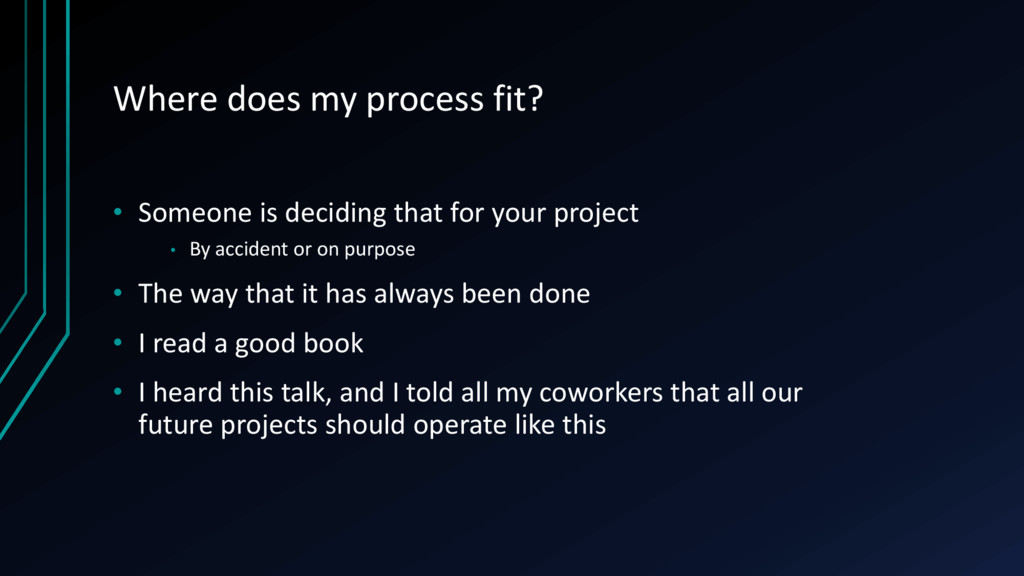
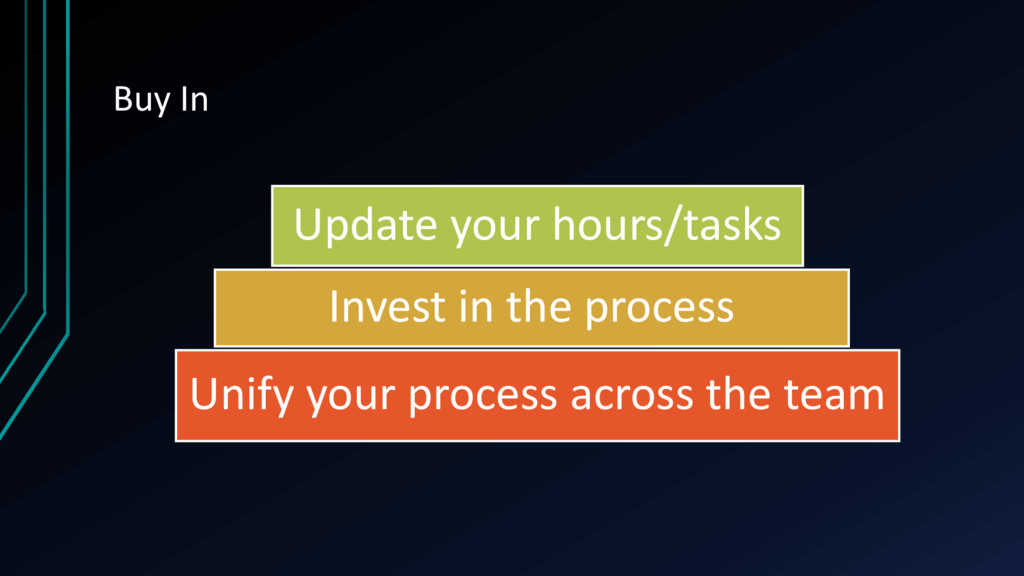
for your project • By accident or on purpose • The way that it has always been done • I read a good book • I heard this talk, and I told all my coworkers that all our future projects should operate like this
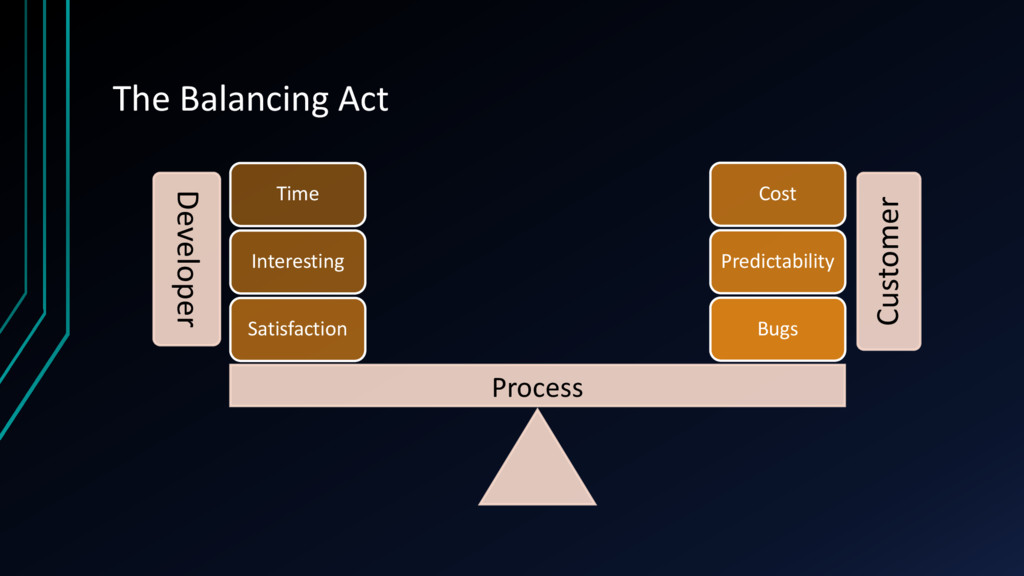
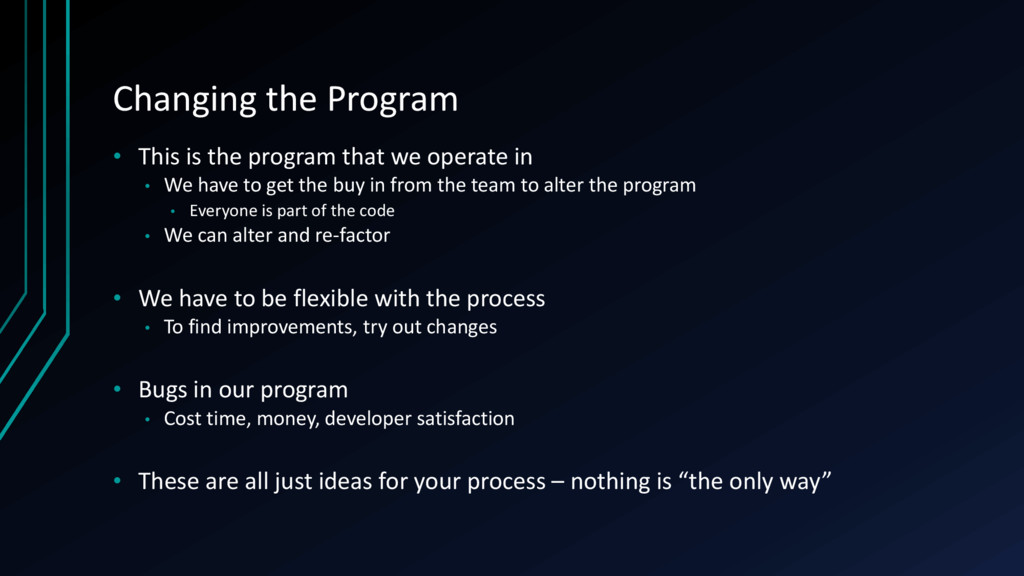
operate in • We have to get the buy in from the team to alter the program • Everyone is part of the code • We can alter and re-factor • We have to be flexible with the process • To find improvements, try out changes • Bugs in our program • Cost time, money, developer satisfaction • These are all just ideas for your process – nothing is “the only way”
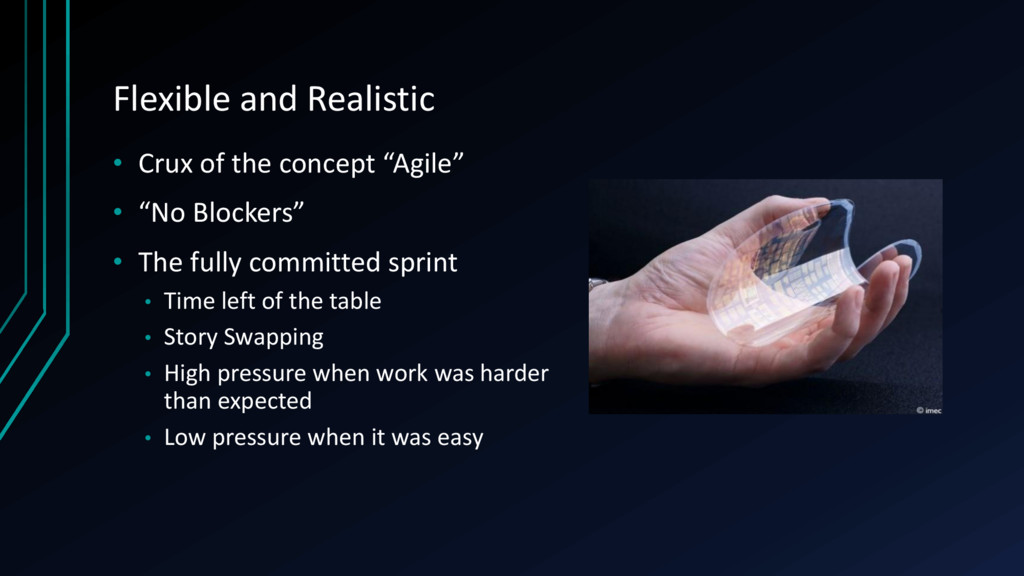
“No Blockers” • The fully committed sprint • Time left of the table • Story Swapping • High pressure when work was harder than expected • Low pressure when it was easy
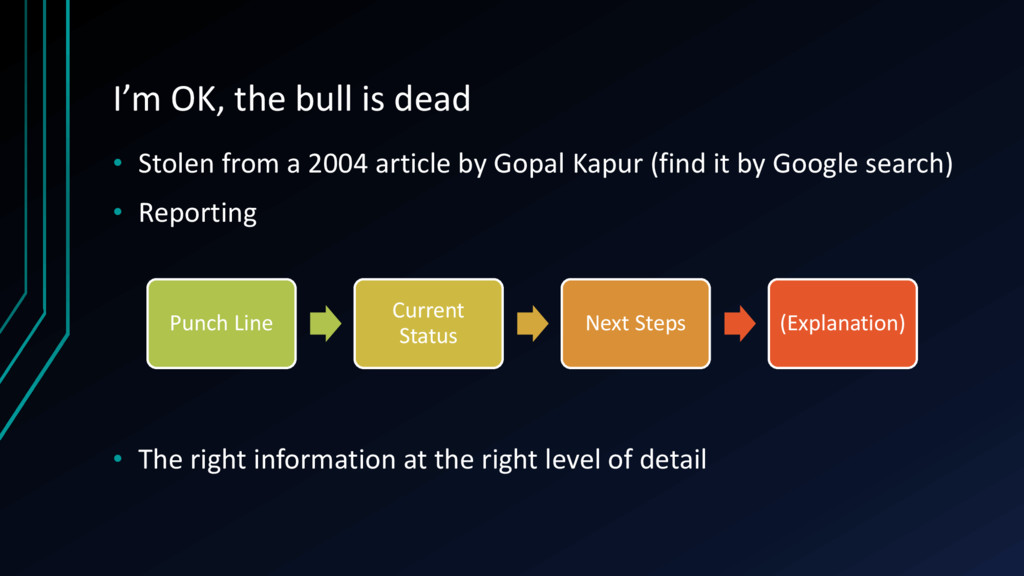
2004 article by Gopal Kapur (find it by Google search) • Reporting • The right information at the right level of detail Punch Line Current Status Next Steps (Explanation)
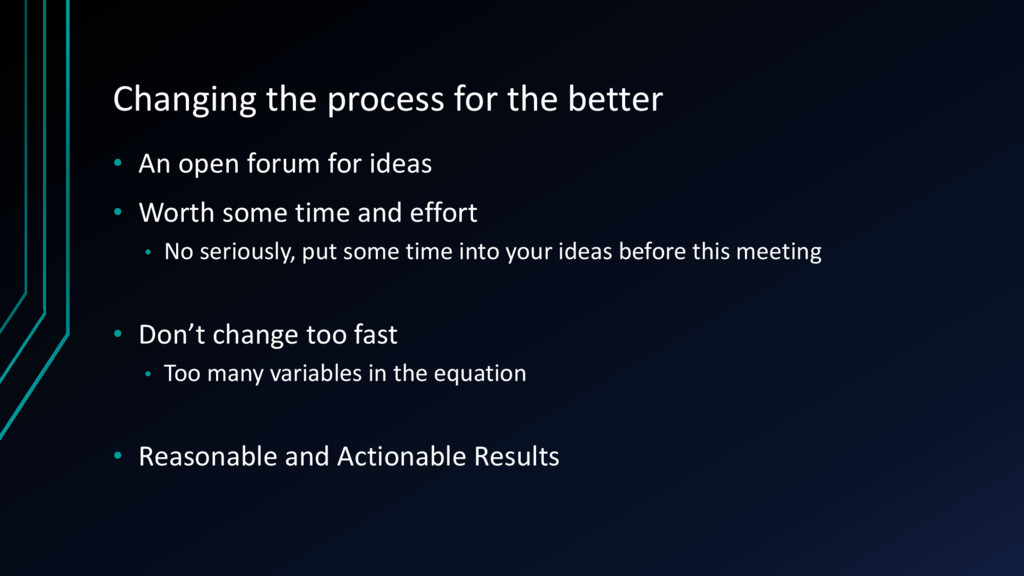
for ideas • Worth some time and effort • No seriously, put some time into your ideas before this meeting • Don’t change too fast • Too many variables in the equation • Reasonable and Actionable Results
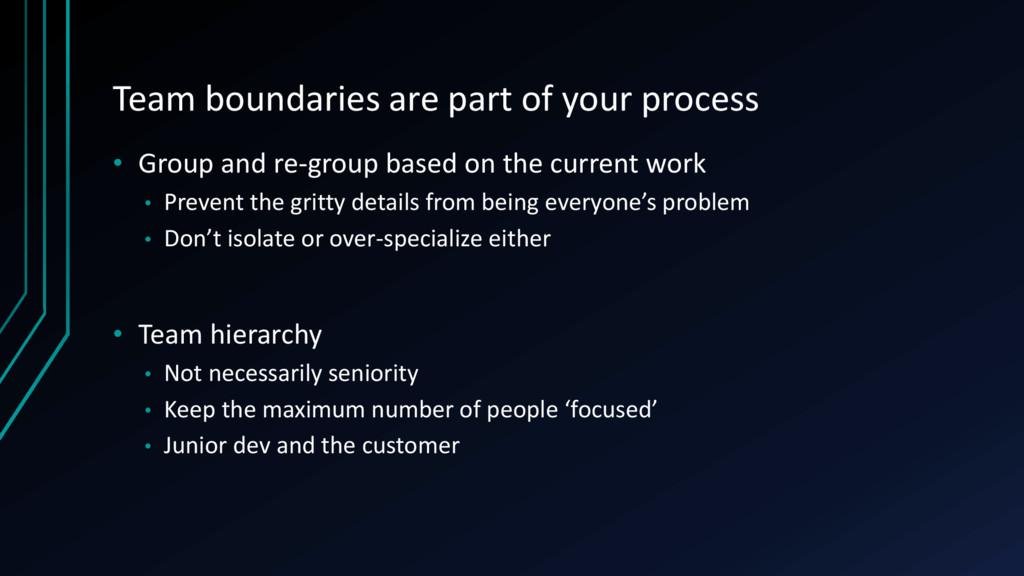
re-group based on the current work • Prevent the gritty details from being everyone’s problem • Don’t isolate or over-specialize either • Team hierarchy • Not necessarily seniority • Keep the maximum number of people ‘focused’ • Junior dev and the customer
• Make it ok to excuse yourself in the middle of a meeting • A culture change • Add as necessary rather than remove • Watch out for the person that just wants to be 'in' on everything (is it you?) • This isn't helpful for them or the project • You have to get over feeling "left out"
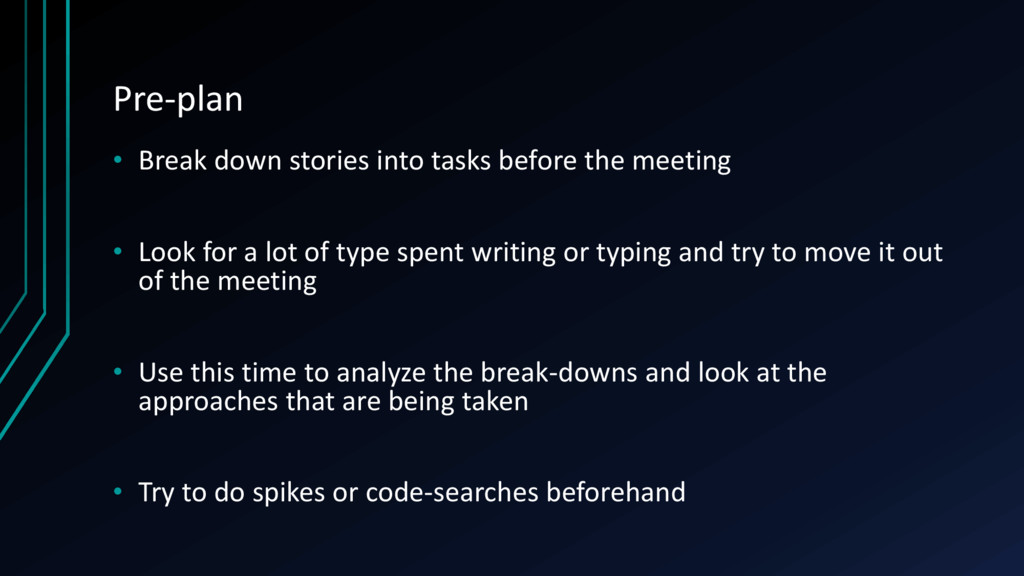
• Look for a lot of type spent writing or typing and try to move it out of the meeting • Use this time to analyze the break-downs and look at the approaches that are being taken • Try to do spikes or code-searches beforehand
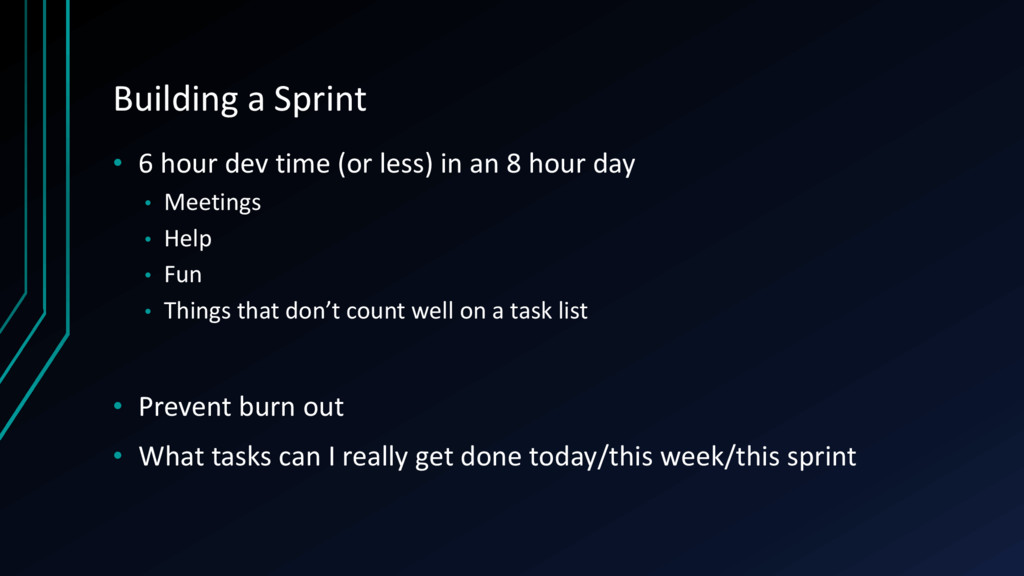
in an 8 hour day • Meetings • Help • Fun • Things that don’t count well on a task list • Prevent burn out • What tasks can I really get done today/this week/this sprint
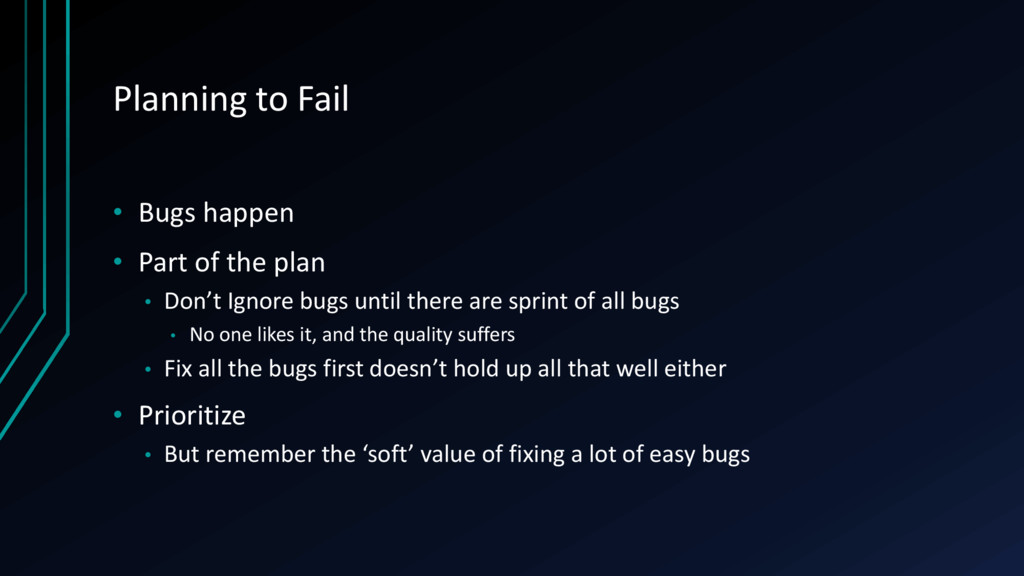
plan • Don’t Ignore bugs until there are sprint of all bugs • No one likes it, and the quality suffers • Fix all the bugs first doesn’t hold up all that well either • Prioritize • But remember the ‘soft’ value of fixing a lot of easy bugs
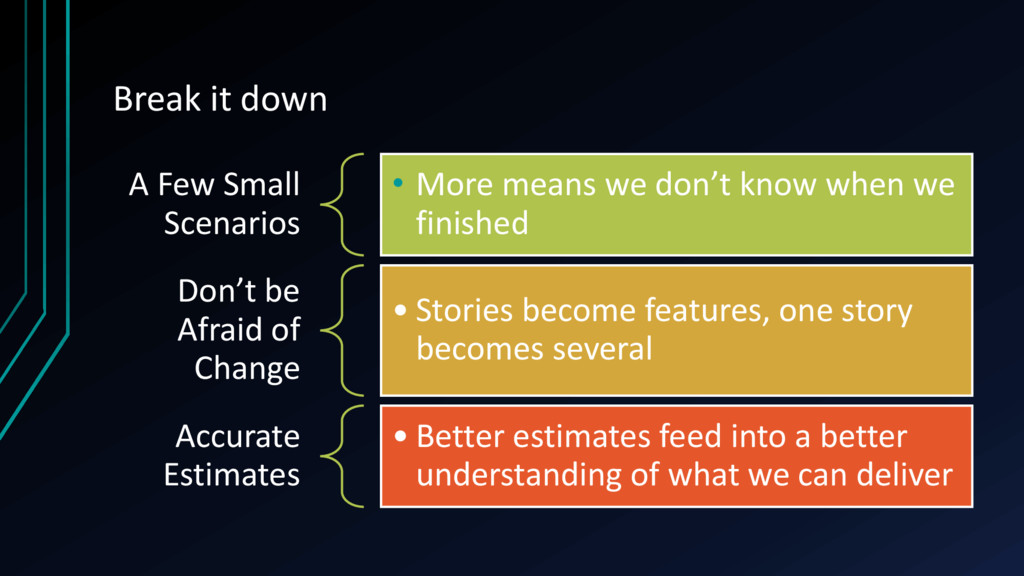
we don’t know when we finished Don’t be Afraid of Change • Stories become features, one story becomes several Accurate Estimates • Better estimates feed into a better understanding of what we can deliver
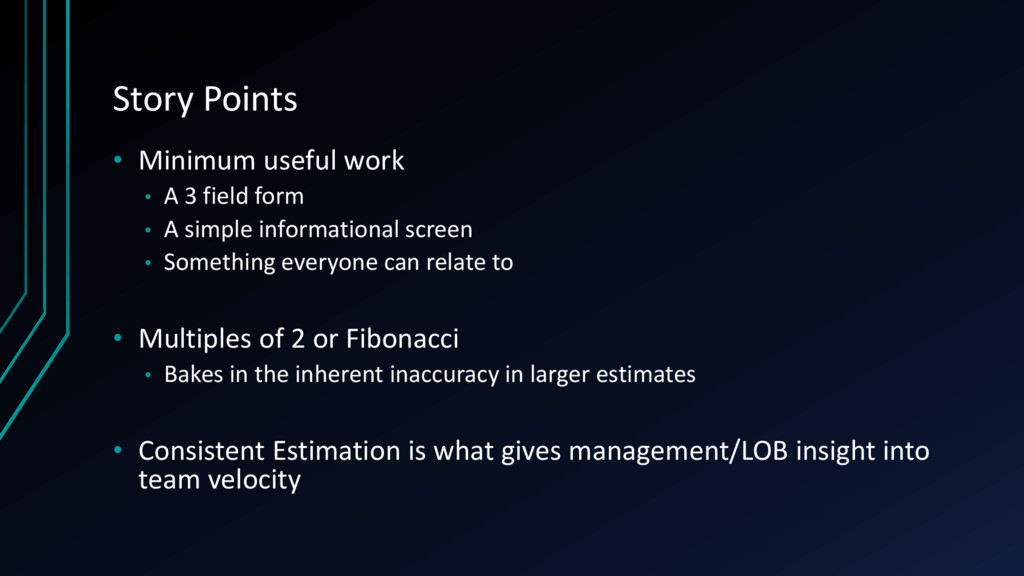
form • A simple informational screen • Something everyone can relate to • Multiples of 2 or Fibonacci • Bakes in the inherent inaccuracy in larger estimates • Consistent Estimation is what gives management/LOB insight into team velocity
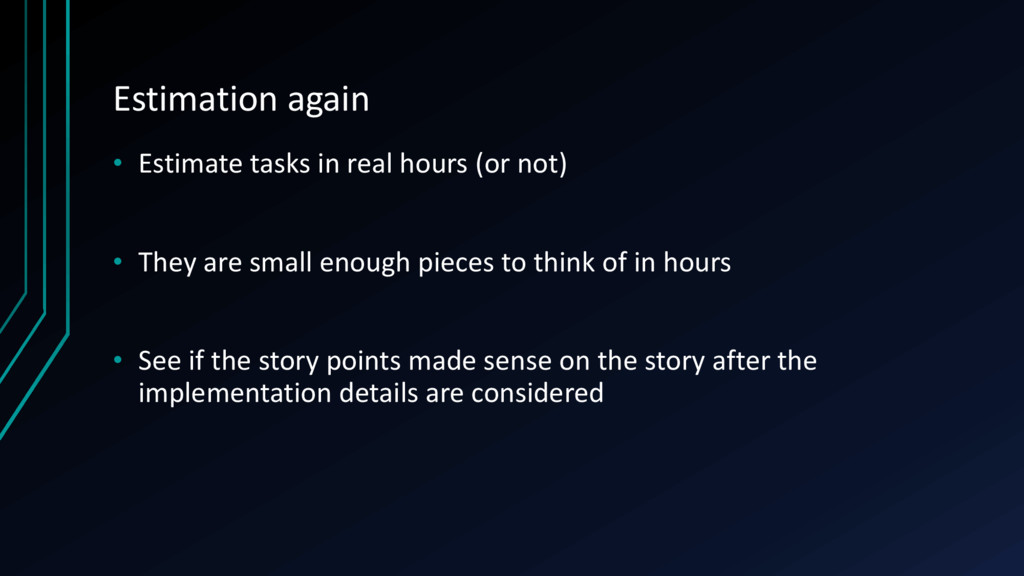
part of coding • Decide on an implementation afterward • Don’t be afraid to add/edit/remove tasks in a story while it is in progress • Timebox research tasks
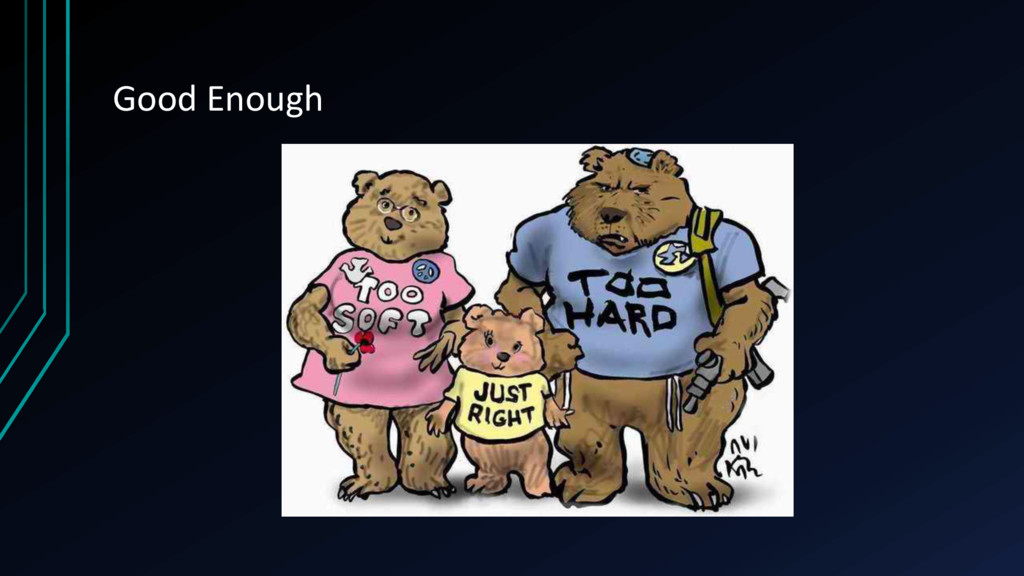
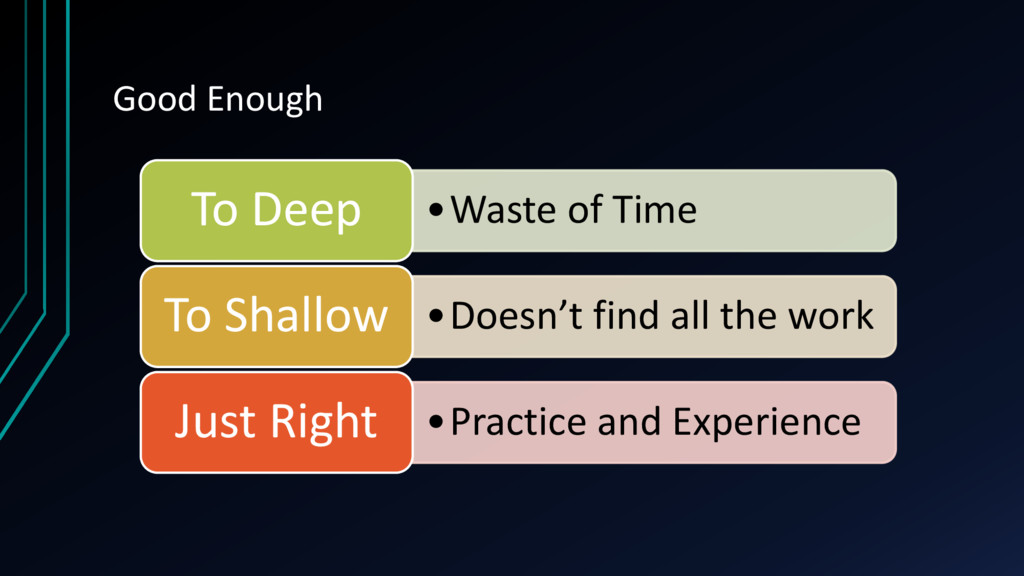
to improve • Remember the value of squishy things like morale and satisfaction • Don’t waste time • Unless it is fun • Avoid nit-picks that don’t add value • Question the way you have always done it


 dedac
dedac
 noguhiro2002
 seike460
 makun
makun
 raspython3
 achimnol
 uhooi
uhooi
 murabayashi
 tkikuc
 shorty5121
 shihochan
 cmkudo
 pkshadeck
 morganepeng
 aleyda
 trallard
 baasie
 akosma
 codingconduct
 rkendrick25
 quramy
.jpg) cargoodrich
cargoodrich
 rasmusluckow
 tammyeverts