Upgrade to Pro
— share decks privately, control downloads, hide ads and more …
Speaker Deck
Features
Speaker Deck
PRO
Sign in
Sign up for free
Search
Search
Un traguito de Elixir
Search
Fernando Perales
January 10, 2018
Programming
0
300
Un traguito de Elixir
Introduction to Elixir
Talk given at Unotalks meetup on January10th 2018
Fernando Perales
January 10, 2018
Tweet
Share
More Decks by Fernando Perales
See All by Fernando Perales
Anonimización de bases de datos con PostgreSQL - nerdearla
ferperales
0
81
Let's give REST a rest: exploring the state of gRPC in Ruby
ferperales
0
160
Guía Práctica para Convertirse en Contribuidor de Open Source en 10 Años (o más)
ferperales
0
77
¿Es convertirte en manager tan malo como todo mundo dice?
ferperales
0
76
Guía práctica para convertirse en contribuidor de open source en 10 años o más
ferperales
0
64
Anonimización de bases de datos con PostgreSQL
ferperales
0
83
Guía Práctica para Convertirse en Contribuidor de Open Source en 10 Años (o más)
ferperales
0
82
Guía práctica para convertirse en Senior Engineer en 10 años
ferperales
0
140
Consultoría y Open Source: buscando el balance entre beneficio y la diversión
ferperales
0
91
Other Decks in Programming
See All in Programming
CSC307 Lecture 10
javiergs
PRO
1
660
CSC307 Lecture 04
javiergs
PRO
0
660
humanlayerのブログから学ぶ、良いCLAUDE.mdの書き方
tsukamoto1783
0
200
AIで開発はどれくらい加速したのか?AIエージェントによるコード生成を、現場の評価と研究開発の評価の両面からdeep diveしてみる
daisuketakeda
1
2.5k
余白を設計しフロントエンド開発を 加速させる
tsukuha
7
2.1k
今から始めるClaude Code超入門
448jp
8
9.1k
izumin5210のプロポーザルのネタ探し #tskaigi_msup
izumin5210
1
140
生成AIを使ったコードレビューで定性的に品質カバー
chiilog
1
280
React 19でつくる「気持ちいいUI」- 楽観的UIのすすめ
himorishige
11
7.5k
開発者から情シスまで - 多様なユーザー層に届けるAPI提供戦略 / Postman API Night Okinawa 2026 Winter
tasshi
0
210
360° Signals in Angular: Signal Forms with SignalStore & Resources @ngLondon 01/2026
manfredsteyer
PRO
0
140
今こそ知るべき耐量子計算機暗号(PQC)入門 / PQC: What You Need to Know Now
mackey0225
3
380
Featured
See All Featured
Self-Hosted WebAssembly Runtime for Runtime-Neutral Checkpoint/Restore in Edge–Cloud Continuum
chikuwait
0
340
Docker and Python
trallard
47
3.7k
The Spectacular Lies of Maps
axbom
PRO
1
530
Java REST API Framework Comparison - PWX 2021
mraible
34
9.1k
Context Engineering - Making Every Token Count
addyosmani
9
670
GraphQLとの向き合い方2022年版
quramy
50
14k
Leo the Paperboy
mayatellez
4
1.4k
No one is an island. Learnings from fostering a developers community.
thoeni
21
3.6k
The MySQL Ecosystem @ GitHub 2015
samlambert
251
13k
<Decoding/> the Language of Devs - We Love SEO 2024
nikkihalliwell
1
130
Navigating Team Friction
lara
192
16k
Typedesign – Prime Four
hannesfritz
42
3k
Transcript
Un traguito de Elixir Fernando Perales @FerPeralesM
<me>
Fernando Perales Senior Software Engineer @ michelada.io Ing. En Computación
@ UdeG (CUCEI) Anfitrión @ RubyGDL Co-fundador @ RailsBridge México Instructor de Ruby on Rails @ Platzi Estudiante de Alemán y Bajo Eléctrico Fan de Gregory Sallust
</me>
¿Qué es Erlang? Lenguaje de programación funcional, concurrente, de propósito
general
¿Qué es Erlang? Creado en 1986 por la compañía Ericsson
Para realizar aplicaciones distribuidas, tolerantes a fallos, soft-real-time y de funcionamiento ininterrumpido
Erlang en números La máquina virtual de Erlang (BEAM) es
desarrollada por Joe Armstrong, Robert Virding y Mike Williams en 1985
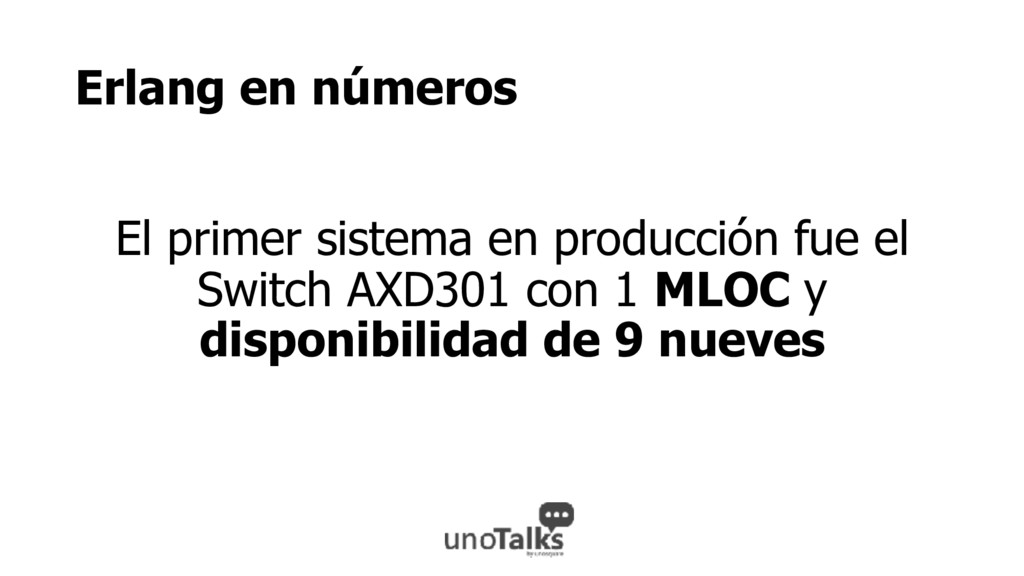
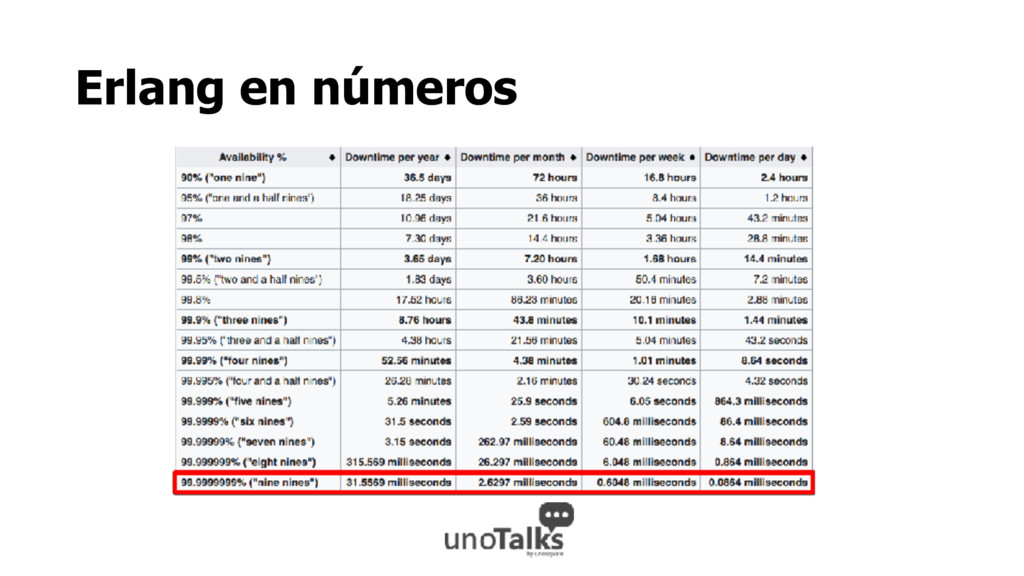
Erlang en números El primer sistema en producción fue el
Switch AXD301 con 1 MLOC y disponibilidad de 9 nueves
Erlang en números
Erlang en números
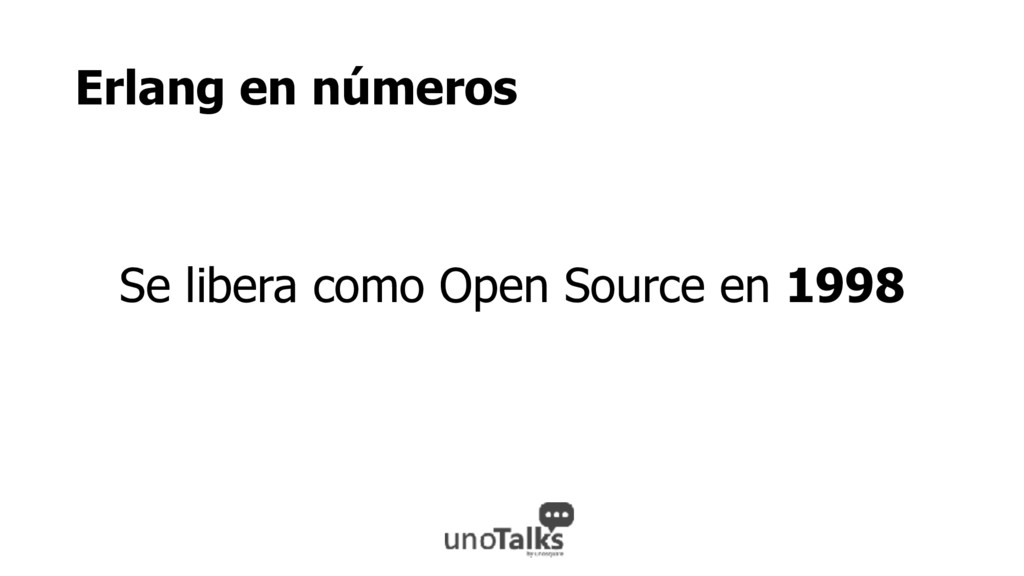
Erlang en números Se libera como Open Source en 1998
Erlang en números Más del 50% del tráfico de Internet
pasa por sistemas construídos con Erlang
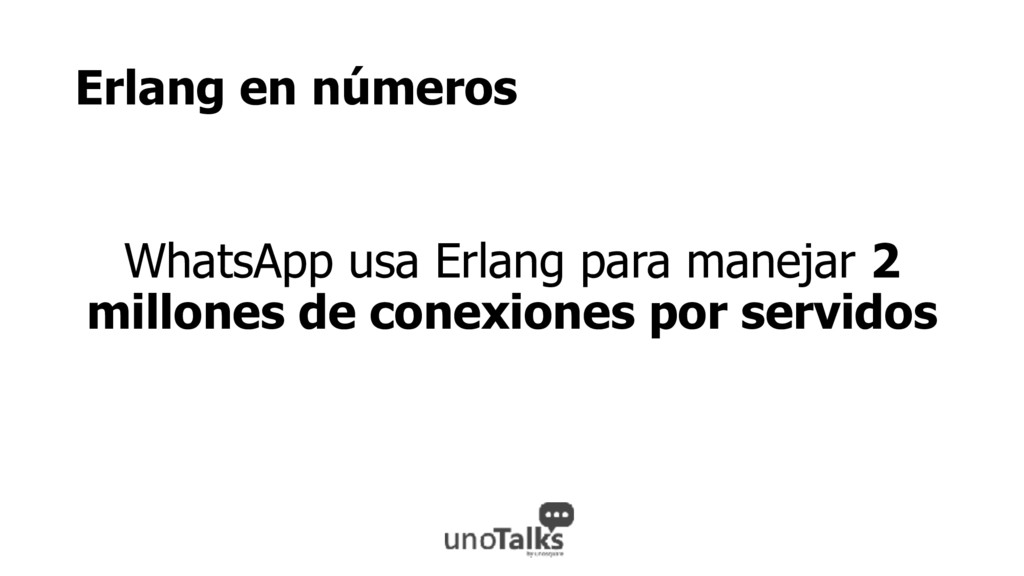
Erlang en números WhatsApp usa Erlang para manejar 2 millones
de conexiones por servidos
Erlang en números WhatsApp maneja 30 billones de mensajes diariamente
(347,222 msg/seg)
Erlang <> Elixir ¿Por qué mencionar Erlang cuando hablamos de
Elixir?
¿Qué es Elixir? Lenguaje de programación funcional, concurrente, de propósito
general que se ejecuta sobre la máquina virtual de Erlang (BEAM)
¿Qué es Elixir? Elixir fue creado en el 2011 por
José Valim. Un contribuidor de Ruby por bastantes años que buscaba cómo mejorar el desempeño del lenguaje para aprovechar múltiples CPUs
¿Qué es Elixir? Al investigar cómo otras tecnologías manejaban concurrencia,
encontró a Erlang
¿Qué es Elixir? Mientras la BEAM resolvía era perfecta para
el tipo de problemas que buscaba resolver, sentía que al lenguaje le faltaban características que otros lenguajes sí tenian
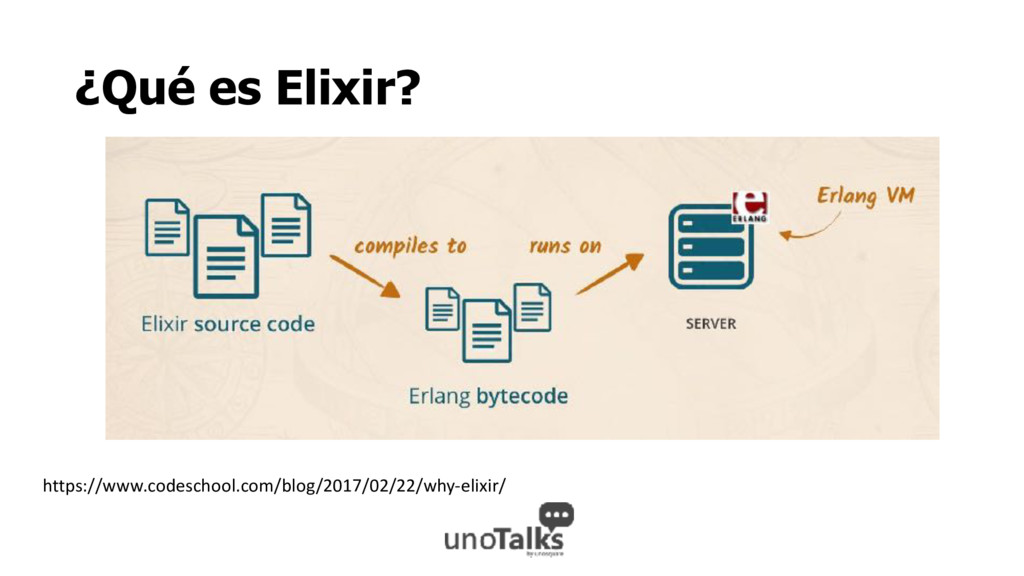
¿Qué es Elixir? Los programas creados en Elixir compilan a
bytecode de BEAM
¿Qué es Elixir? https://www.codeschool.com/blog/2017/02/22/why-elixir/
Ventajas heredadas de Erlang Usa una tecnología ampliamente probada por
más de 30 años
Ventajas heredadas de Erlang Facilidad de distribución de datos entre
procesos mediante GenServer
Ventajas heredadas de Erlang Auto-curación mediante Supervisors
Ventajas heredadas de Erlang Fácilmente escalable para cubrir las demandas
del futuro
Ventajas heredadas de Erlang Pattern-matching
Ventajas que Elixir aporta Sintaxis limpia y familiar
Ventajas que Elixir aporta Herramientas maduras
Ventajas que Elixir aporta Framework de pruebas unitarias integrado
Ventajas que Elixir aporta Meta-programación
Ventajas que Elixir aporta Documentación integrada
Ventajas que Elixir aporta Pipes
Ventajas que Elixir aporta Phoenix
Ventajas que Elixir aporta No hay costo de conversión al
usar código de Erlang en Elixir y viceversa
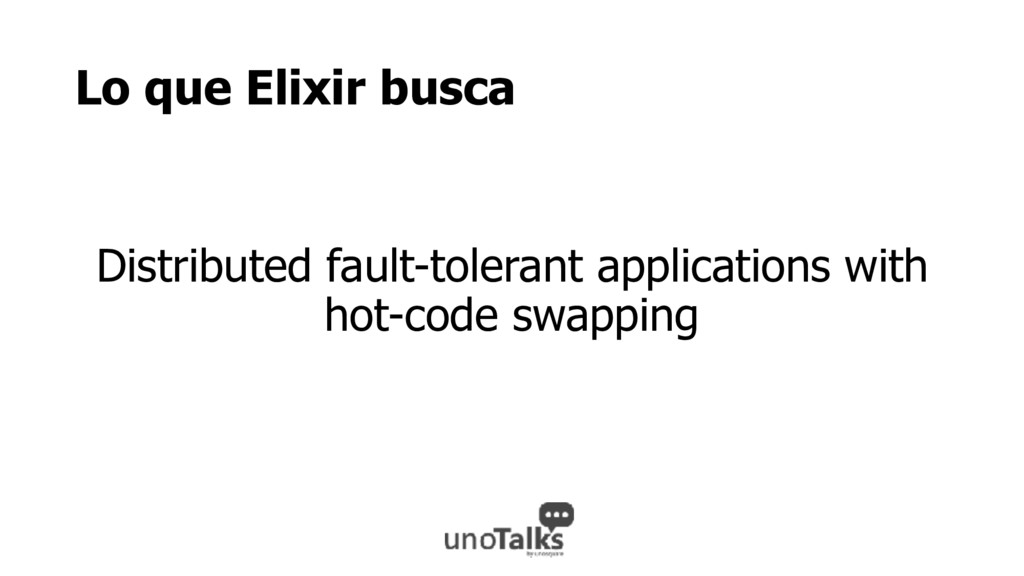
Lo que Elixir busca Distributed fault-tolerant applications with hot-code swapping
Ejemplos
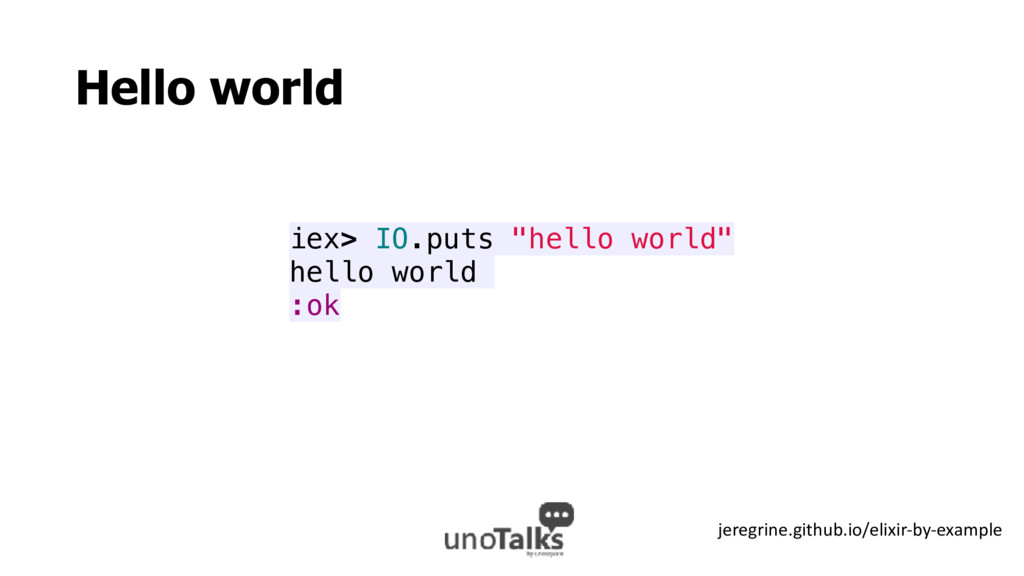
Hello world iex> IO.puts "hello world" hello world :ok jeregrine.github.io/elixir-by-example
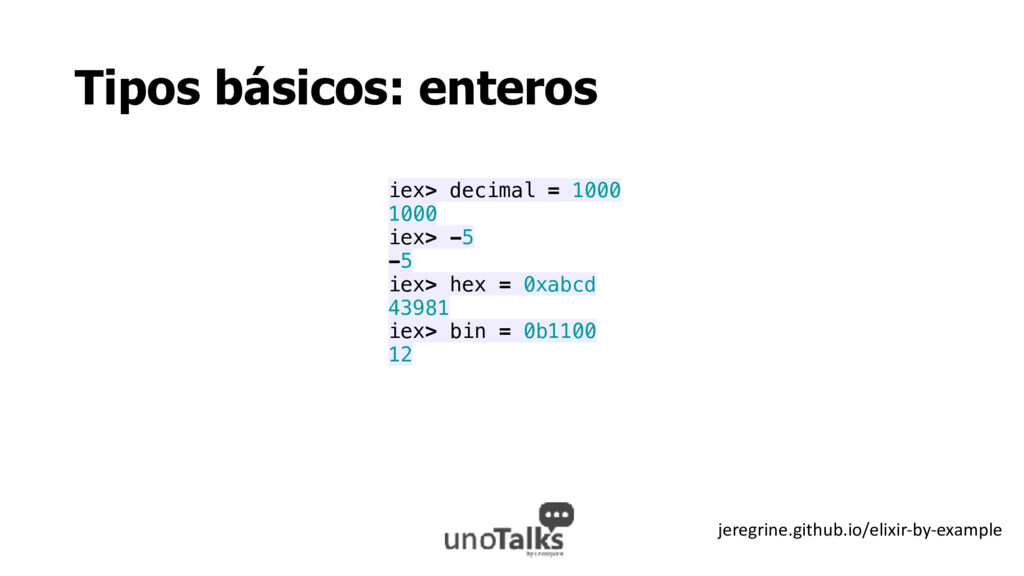
Tipos básicos: enteros iex> decimal = 1000 1000 iex> -5
-5 iex> hex = 0xabcd 43981 iex> bin = 0b1100 12 jeregrine.github.io/elixir-by-example
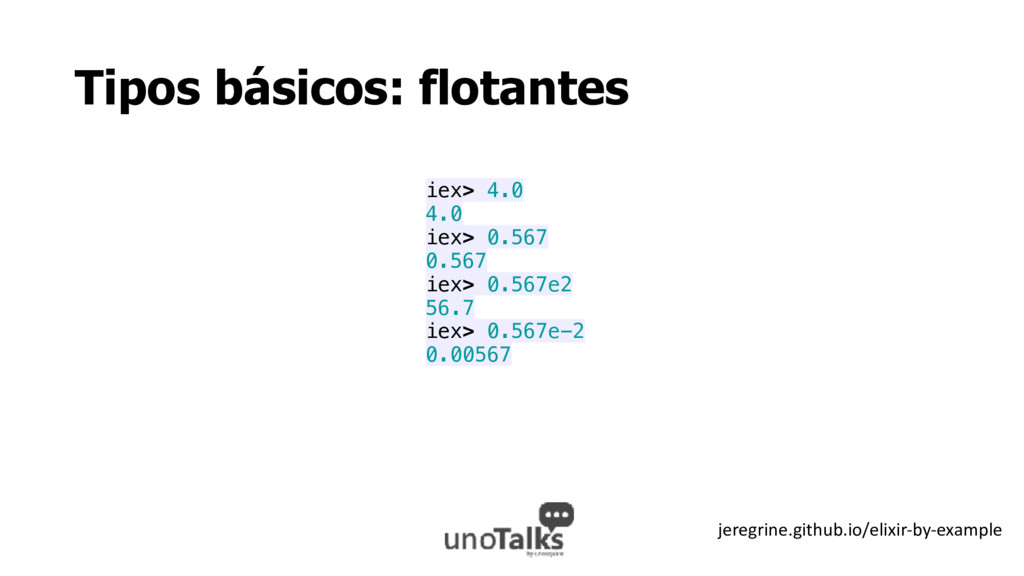
Tipos básicos: flotantes iex> 4.0 4.0 iex> 0.567 0.567 iex>
0.567e2 56.7 iex> 0.567e-2 0.00567 jeregrine.github.io/elixir-by-example
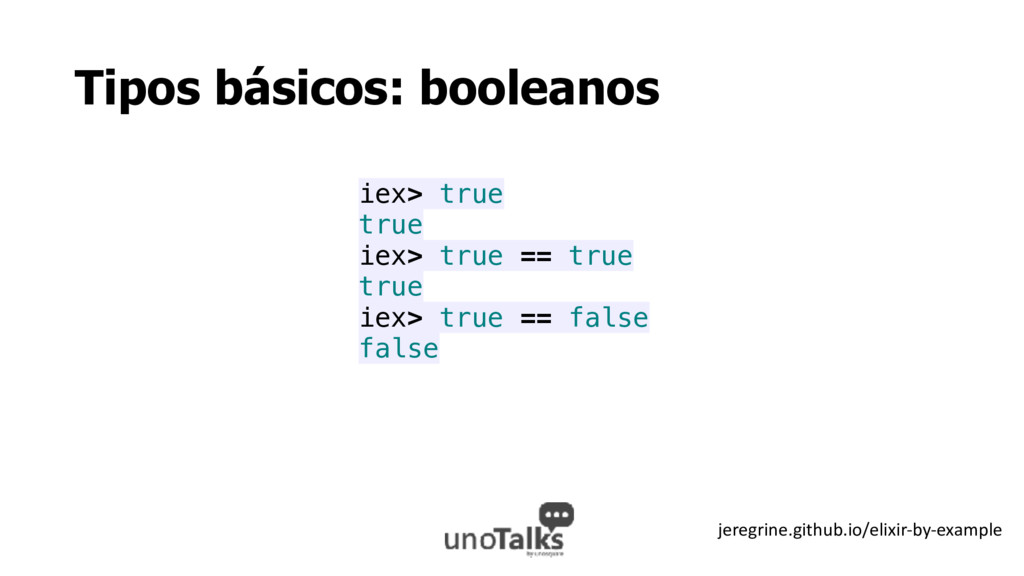
Tipos básicos: booleanos iex> true true iex> true == true
true iex> true == false false jeregrine.github.io/elixir-by-example
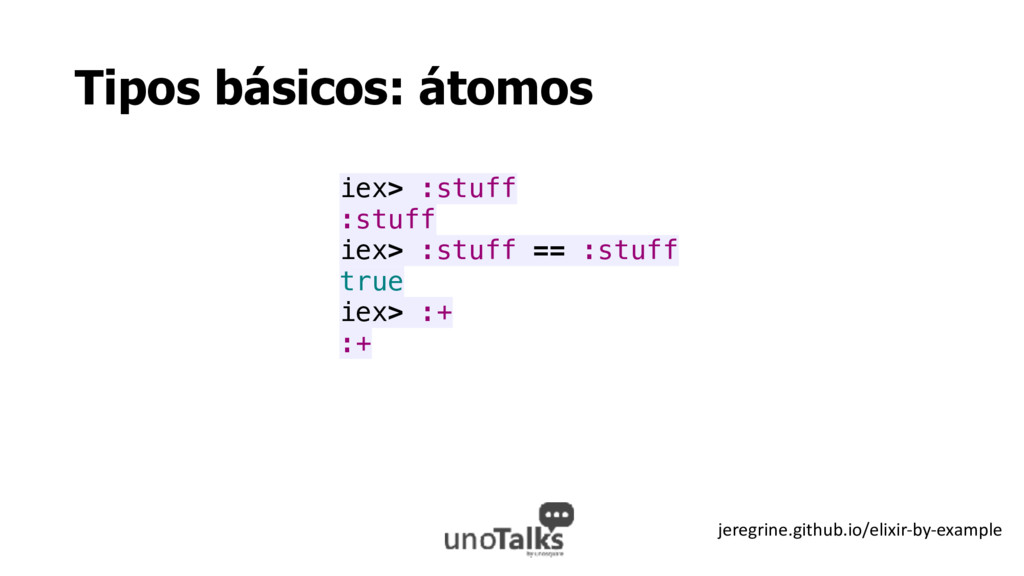
Tipos básicos: átomos iex> :stuff :stuff iex> :stuff == :stuff
true iex> :+ :+ jeregrine.github.io/elixir-by-example
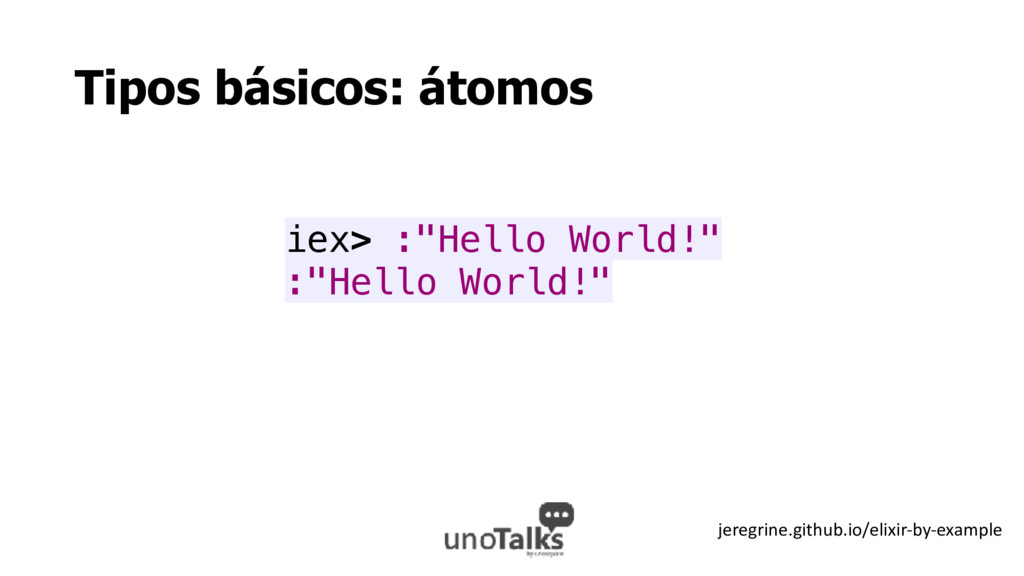
Tipos básicos: átomos iex> :"Hello World!" :"Hello World!" jeregrine.github.io/elixir-by-example
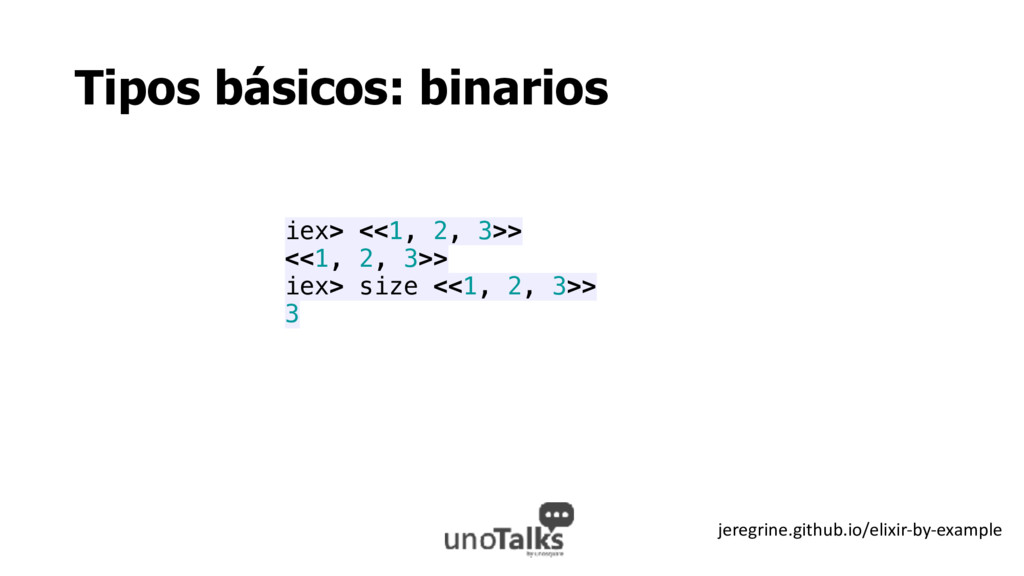
Tipos básicos: binarios iex> <<1, 2, 3>> <<1, 2, 3>>
iex> size <<1, 2, 3>> 3 jeregrine.github.io/elixir-by-example
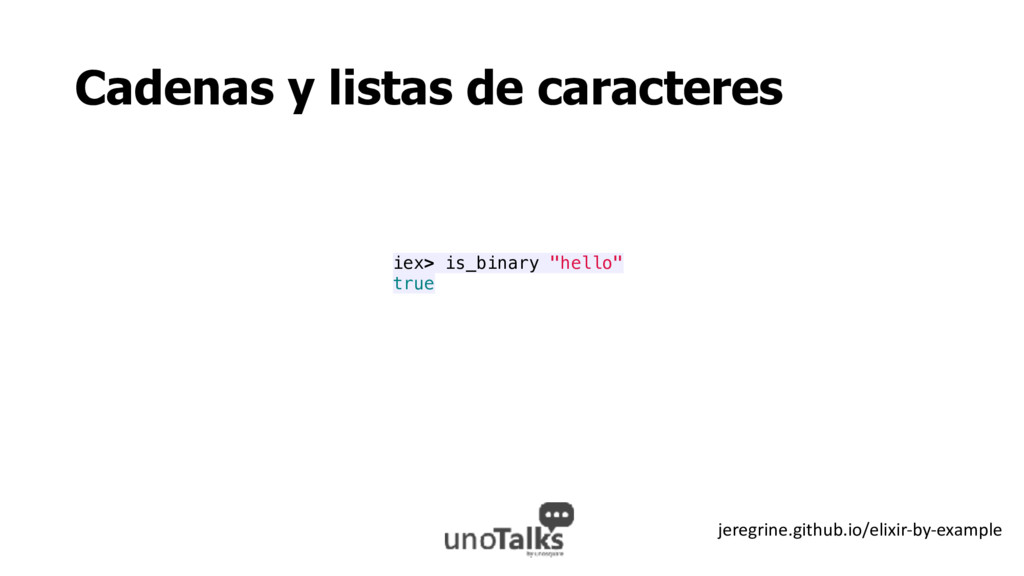
Cadenas y listas de caracteres iex> is_binary "hello" true jeregrine.github.io/elixir-by-example
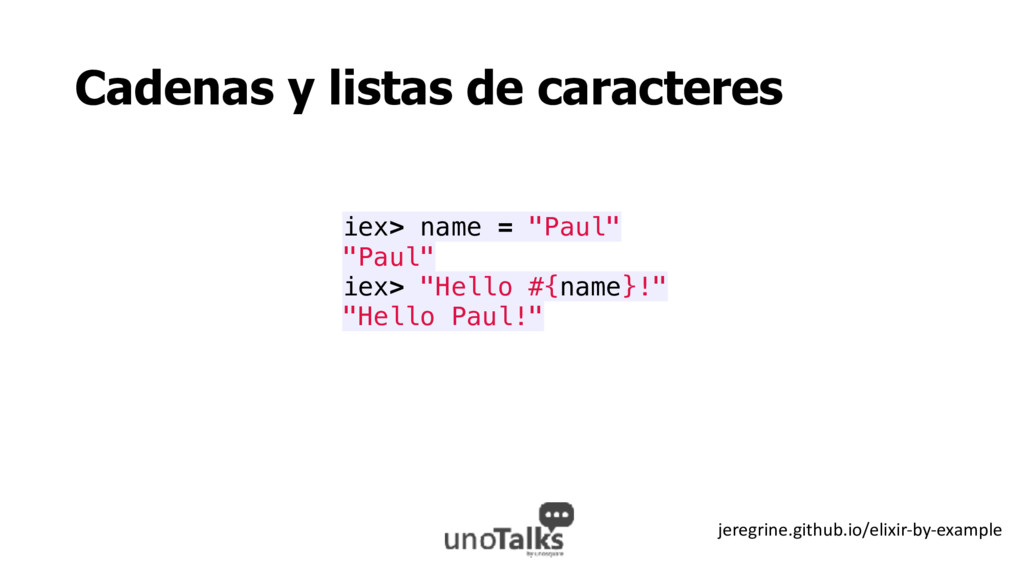
Cadenas y listas de caracteres iex> name = "Paul" "Paul"
iex> "Hello #{name}!" "Hello Paul!" jeregrine.github.io/elixir-by-example
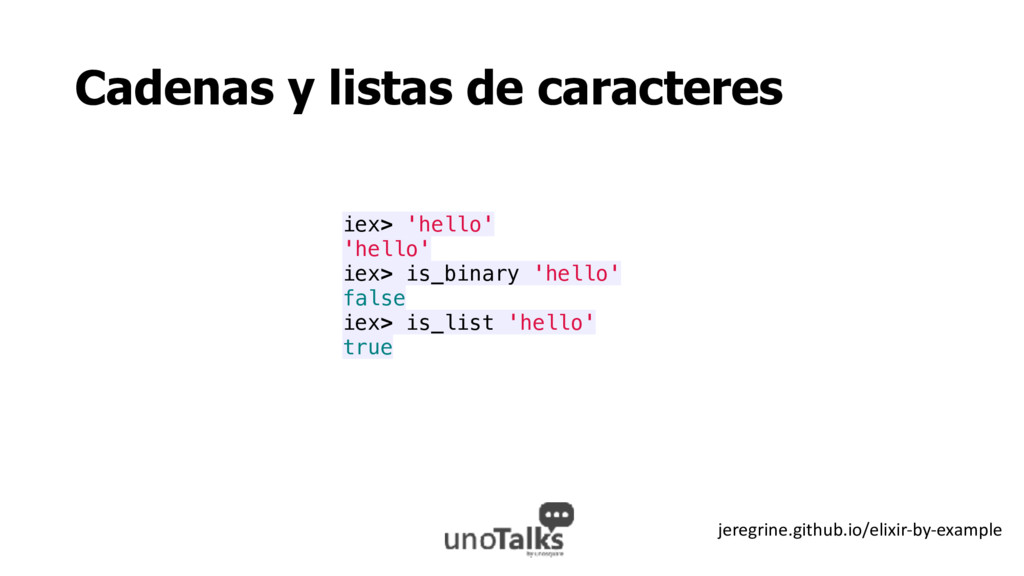
Cadenas y listas de caracteres iex> 'hello' 'hello' iex> is_binary
'hello' false iex> is_list 'hello' true jeregrine.github.io/elixir-by-example
Rangos iex> 1..3 1..3 iex> Enum.map 1..3, fn num ->
num * 2 end [2, 4, 6] jeregrine.github.io/elixir-by-example
Tuplas iex> {:stuff, 1, "things"} {:stuff, 1, "things"} jeregrine.github.io/elixir-by-example
Tuplas iex> {stuff, num, _} = {:stuff, 1, "things"} {:stuff,
1, "things"} iex> stuff :stuff iex> num 1 jeregrine.github.io/elixir-by-example
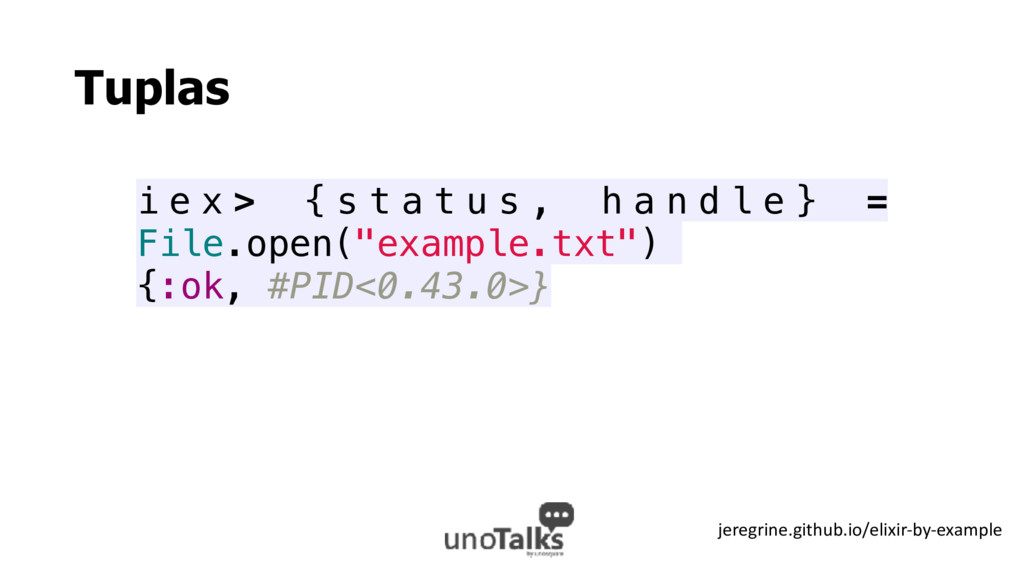
Tuplas i e x > { s t a t
u s , h a n d l e } = File.open("example.txt") {:ok, #PID<0.43.0>} jeregrine.github.io/elixir-by-example
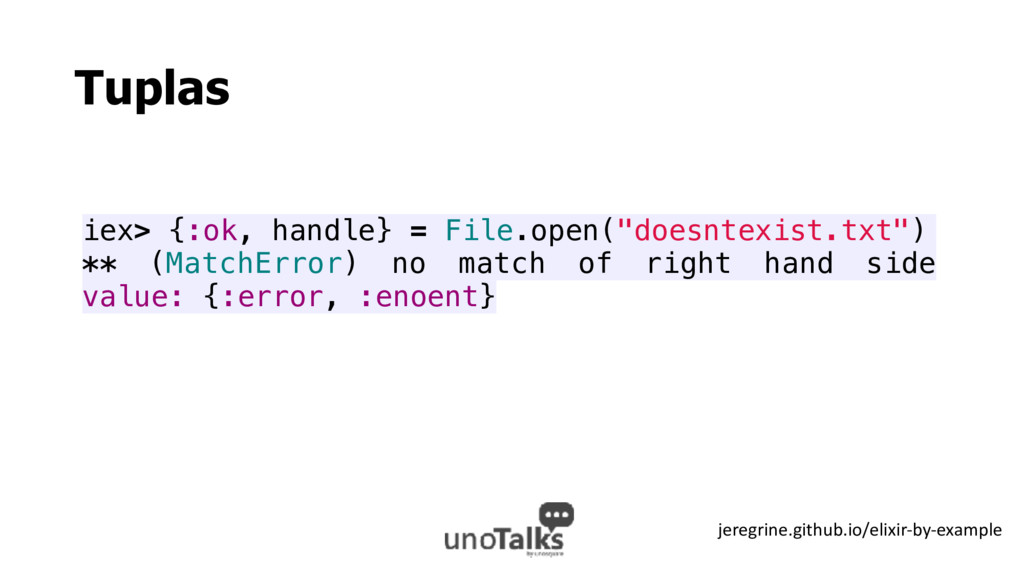
Tuplas iex> {:ok, handle} = File.open("doesntexist.txt") ** (MatchError) no match
of right hand side value: {:error, :enoent} jeregrine.github.io/elixir-by-example
Listas iex> [1, 2, 3] [1, 2, 3] iex> [:stuff,
1, "things"] [:stuff, 2, "things"] jeregrine.github.io/elixir-by-example
Listas iex> [_, two, _] = [1, 2, 3] [1,
2, 3] iex> two 2 iex> [head | tail] = [1, 2, 3, 4] [1, 2, 3, 4] iex> head 1 iex> tail [2, 3, 4] jeregrine.github.io/elixir-by-example
Listas iex> List.flatten [1, [2, 3], 4] [1, 2, 3,
4] iex> List.zip [[1, 2, 3], [4, 5, 6]] [{1, 4}, {2, 5}, {3, 6}] iex> List.foldl [1, 2, 3], 0, fn num, acc -> num + acc end 6 jeregrine.github.io/elixir-by-example
Keyword list iex> [head | tail] = [a: 1, b:
2] [a: 1, b: 2] iex> head {:a, 1} iex> Keywords.get [a: 1, b: 2], :a 1 iex> Keywords.get_values [a: 1, b: 2] [1, 2] jeregrine.github.io/elixir-by-example
Demo
FerPerales/exercises_for_programmers_elixir
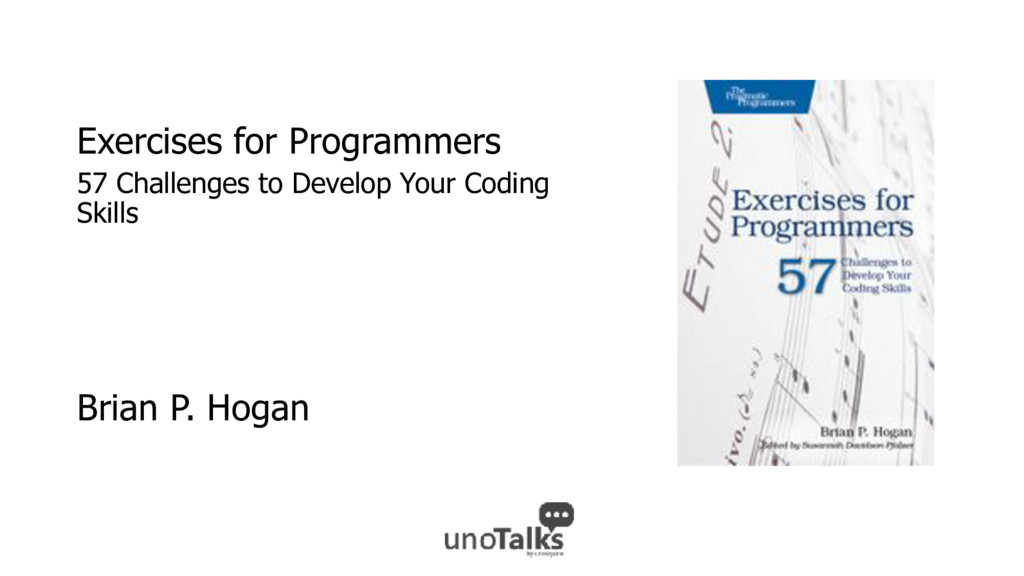
Exercises for Programmers 57 Challenges to Develop Your Coding Skills
Brian P. Hogan
¿Preguntas?
¡Gracias! @FerPeralesM
[email protected]


 ferperales
 javiergs
 tsukamoto1783
 daisuketakeda
 tsukuha
 448jp
448jp
 izumin5210
 chiilog
 himorishige
 tasshi
 manfredsteyer
 mackey0225
 chikuwait
 trallard
 axbom
axbom
 mraible
 addyosmani
 quramy
 mayatellez
 thoeni
 samlambert
 nikkihalliwell
 lara
lara
 hannesfritz













![Listas iex> [1, 2, 3] [1, 2, 3] iex> [:stuff,](https://files.speakerdeck.com/presentations/6d6d6ed8f69f468b912aff08e83f3196/slide_51.jpg)
![Listas iex> [_, two, _] = [1, 2, 3] [1,](https://files.speakerdeck.com/presentations/6d6d6ed8f69f468b912aff08e83f3196/slide_52.jpg)
![Listas iex> List.flatten [1, [2, 3], 4] [1, 2, 3,](https://files.speakerdeck.com/presentations/6d6d6ed8f69f468b912aff08e83f3196/slide_53.jpg)
![Keyword list iex> [head | tail] = [a: 1, b:](https://files.speakerdeck.com/presentations/6d6d6ed8f69f468b912aff08e83f3196/slide_54.jpg)
![¡Gracias! @FerPeralesM [email protected]](https://files.speakerdeck.com/presentations/6d6d6ed8f69f468b912aff08e83f3196/slide_59.jpg)