Upgrade to Pro
— share decks privately, control downloads, hide ads and more …
Speaker Deck
Features
Speaker Deck
PRO
Sign in
Sign up for free
Search
Search
Adopting Neo4j @ Enterprise scale
Search
Dmitrijs Vrublevskis
October 14, 2016
Programming
84
0
Share
Embed
Copy iframe code
Copy JS code
Copy link
Start on current slide
Adopting Neo4j @ Enterprise scale
Dmitrijs Vrublevskis
October 14, 2016
More Decks by Dmitrijs Vrublevskis
See All by Dmitrijs Vrublevskis
Cypher Editor
fylmtm
0
160
Cypher in JetBrains IDE
fylmtm
0
210
League of Graphs \w Neo4j
fylmtm
0
1.7k
Performance & Stability testing \w Gatling
fylmtm
0
230
Neo4j Magic Adventures
fylmtm
1
200
Vim introduction
fylmtm
1
130
Google I/O 2014 - Web updates
fylmtm
0
160
Other Decks in Programming
See All in Programming
分散システム、なんですぐ死んでしまうん?耐障害性を高めたいあなたのためのレジリエンスパターン入門
mshibuya
7
6.4k
鹿野さんに聞く!『TypeScriptコードレシピ集』で磨く実践力
tonkotsuboy_com
4
1.1k
SREは、MCPとSRE Agentをこう使え!
kazumax55
0
150
Honoでのサプライチェーン侵害対策 〜 3つのライブラリに学ぶ
yusukebe
7
1.9k
アルゴリズムは何を圧縮しているのか ─ Haskell から育った「圧縮代数」というメンタルモデル
naoya
16
3.5k
音楽のための関数型プログラミング言語mimiumにおける多段階計算の活用
tomoyanonymous
1
340
Claude Team Plan導入・ガイド
tk3fftk
0
210
これからAgentCoreを触る方へ トレンドはGatewayです
har1101
6
500
えっ!!コードを読まずに開発を!?
hananouchi
0
220
1年で人数1.5倍、PR数5.5倍増。 品質とアウトカムはどうなったか、 何が効いたか
ike002jp
0
140
20260623_Loop Engineeringで自分の分身の問い合わせBotを作る
ryugen04
0
220
The Bowling Game - From Imperative to Functional Programming - Part 1
philipschwarz
PRO
0
330
Featured
See All Featured
Getting science done with accelerated Python computing platforms
jacobtomlinson
2
330
Skip the Path - Find Your Career Trail
mkilby
1
170
The untapped power of vector embeddings
frankvandijk
2
1.8k
What's in a price? How to price your products and services
michaelherold
247
13k
Navigating the moral maze — ethical principles for Al-driven product design
skipperchong
2
420
The Art of Delivering Value - GDevCon NA Keynote
reverentgeek
16
2k
Navigating Team Friction
lara
192
16k
Tips & Tricks on How to Get Your First Job In Tech
honzajavorek
1
600
WCS-LA-2024
lcolladotor
0
720
The Impact of AI in SEO - AI Overviews June 2024 Edition
aleyda
5
1.1k
Fireside Chat
paigeccino
42
4k
How to build a perfect <img>
jonoalderson
1
5.8k
Transcript
Adopting Neo4j @ Enterprise scale
Dmitry Vrublevsky Software developer @ ƀ
[email protected]
@FylmTM Ambassador @
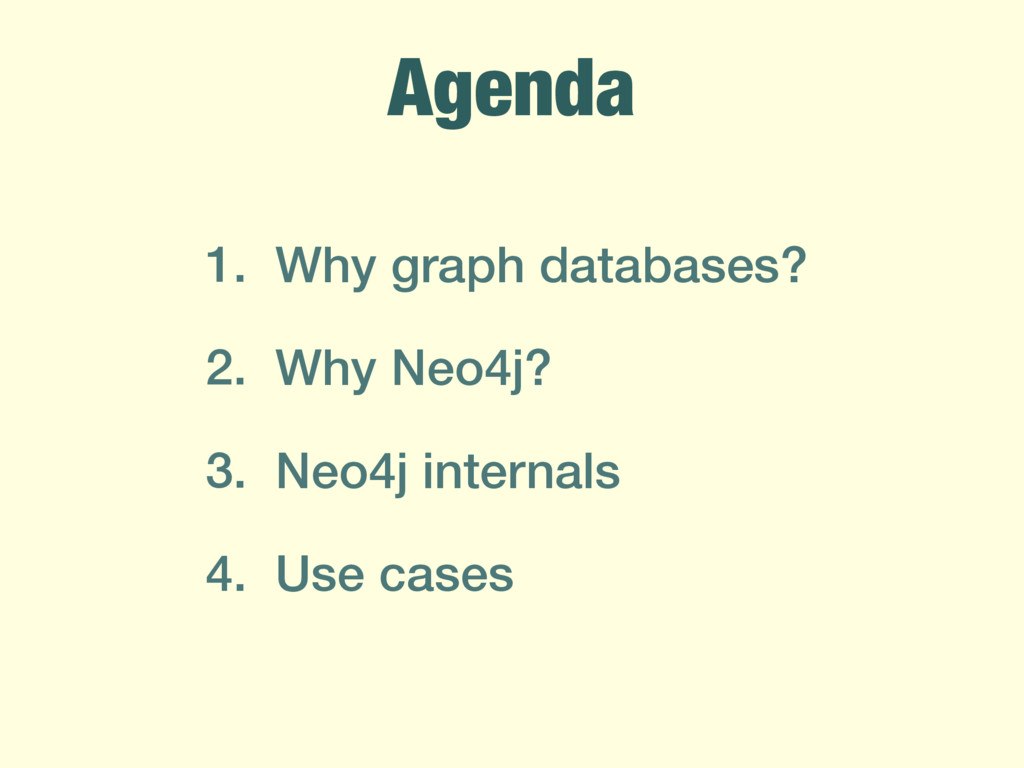
Agenda 1. Why graph databases? 2. Why Neo4j? 3. Neo4j
internals 4. Use cases
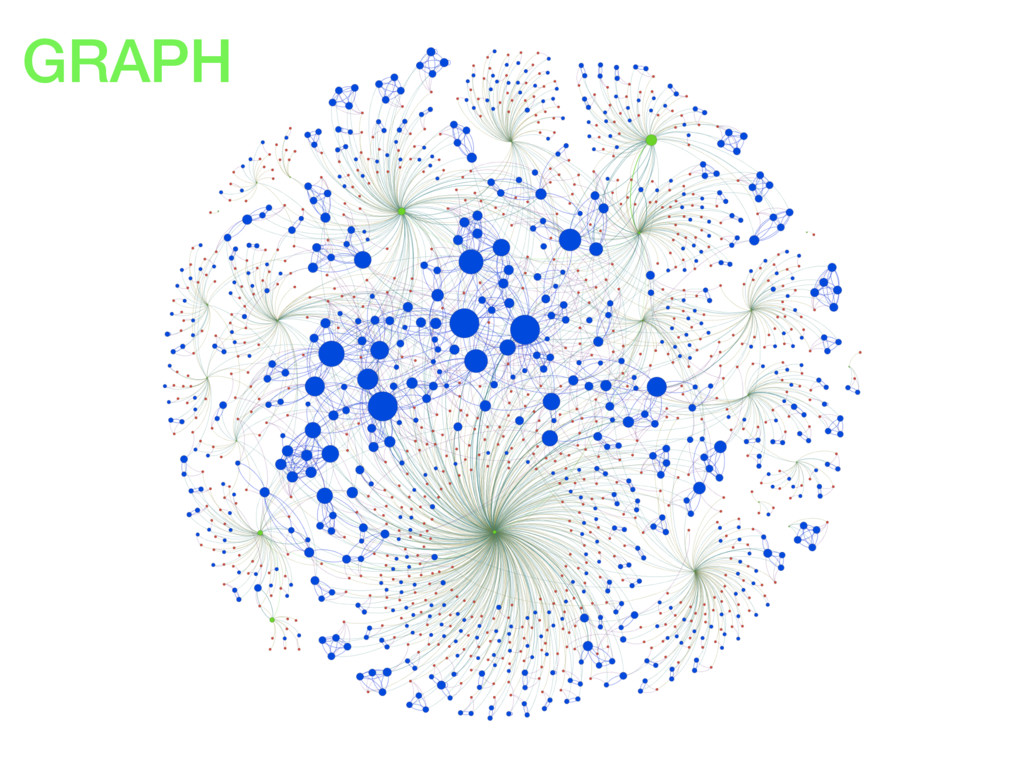
GRAPH
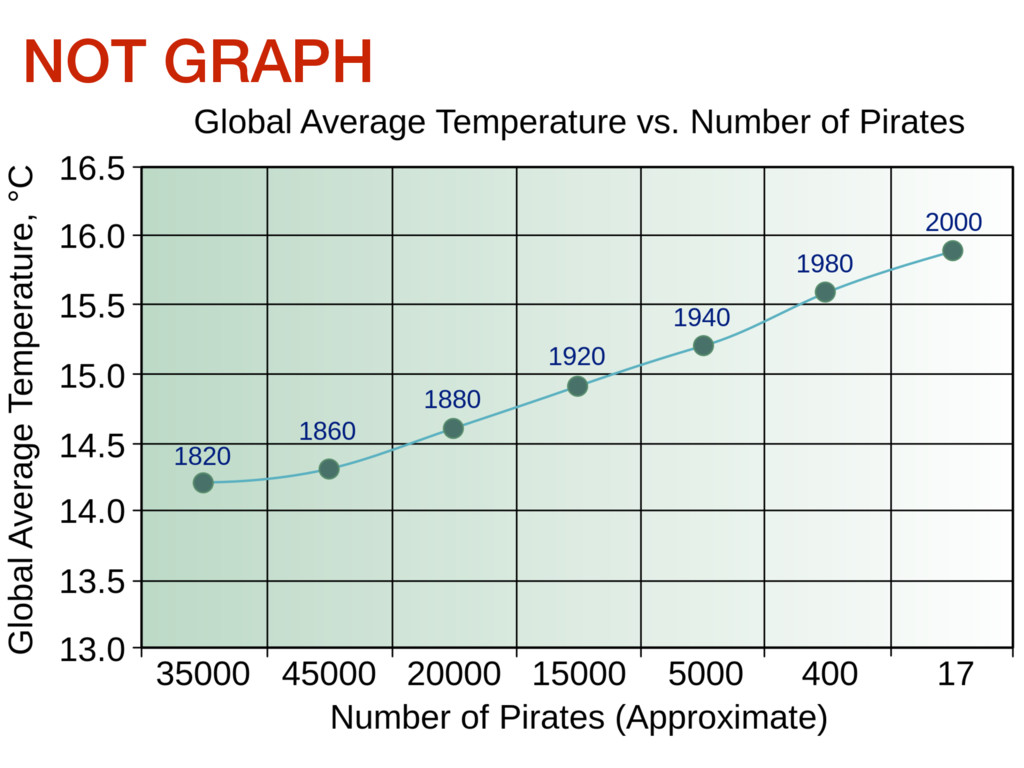
NOT GRAPH
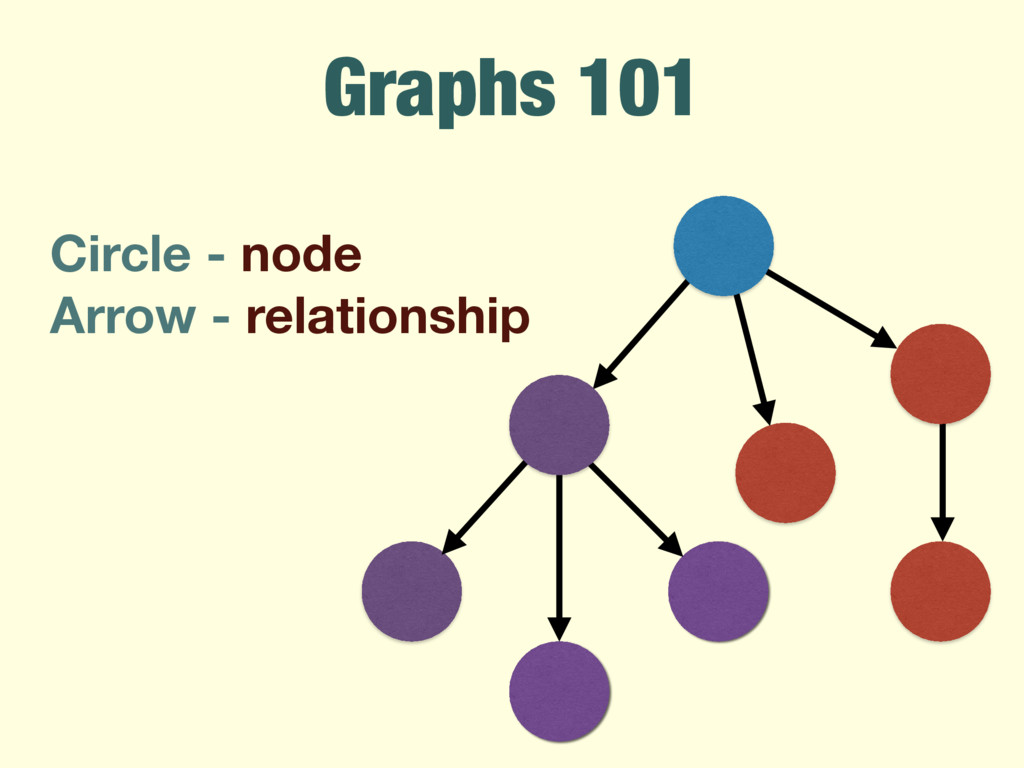
Graphs 101 Circle - node Arrow - relationship
Proof-of-Concept Evaluate Neo4j Graph Database as replacement to existing RDBMS
solution.
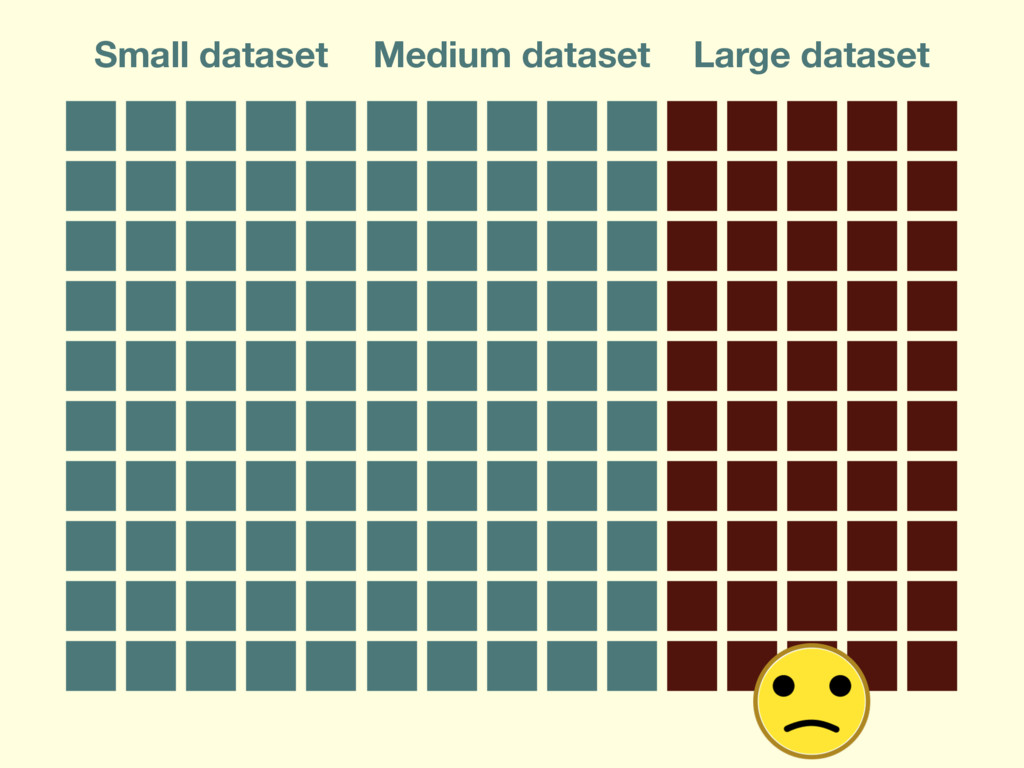
Small dataset Medium dataset Large dataset
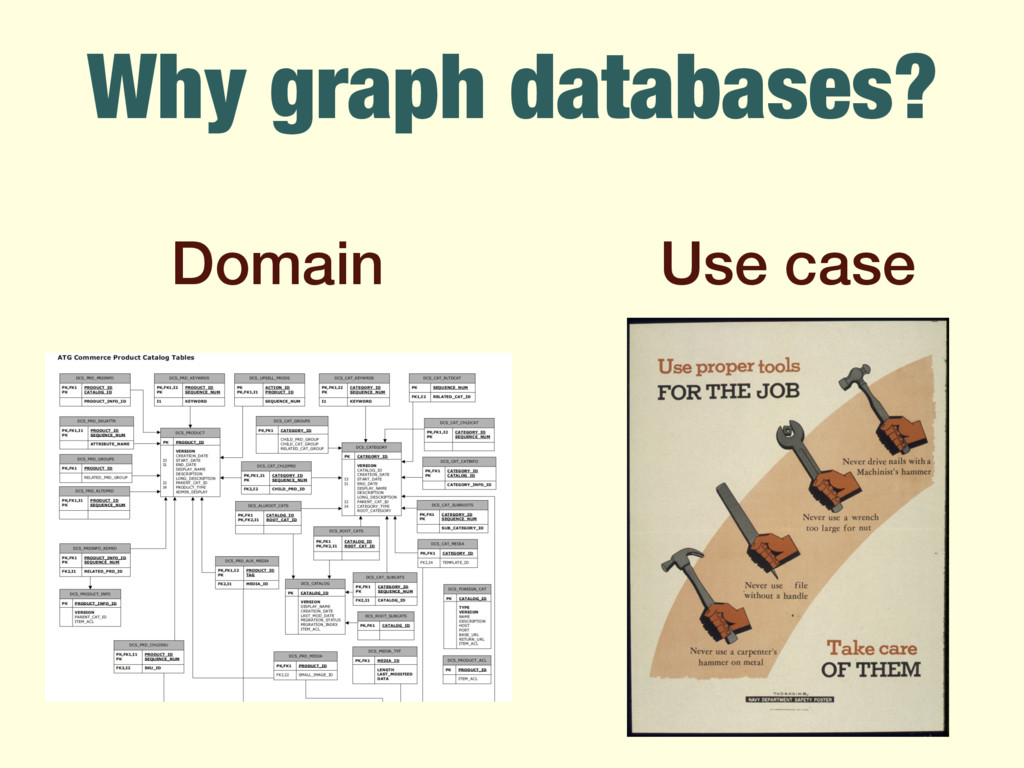
Why graph databases? Domain Use case
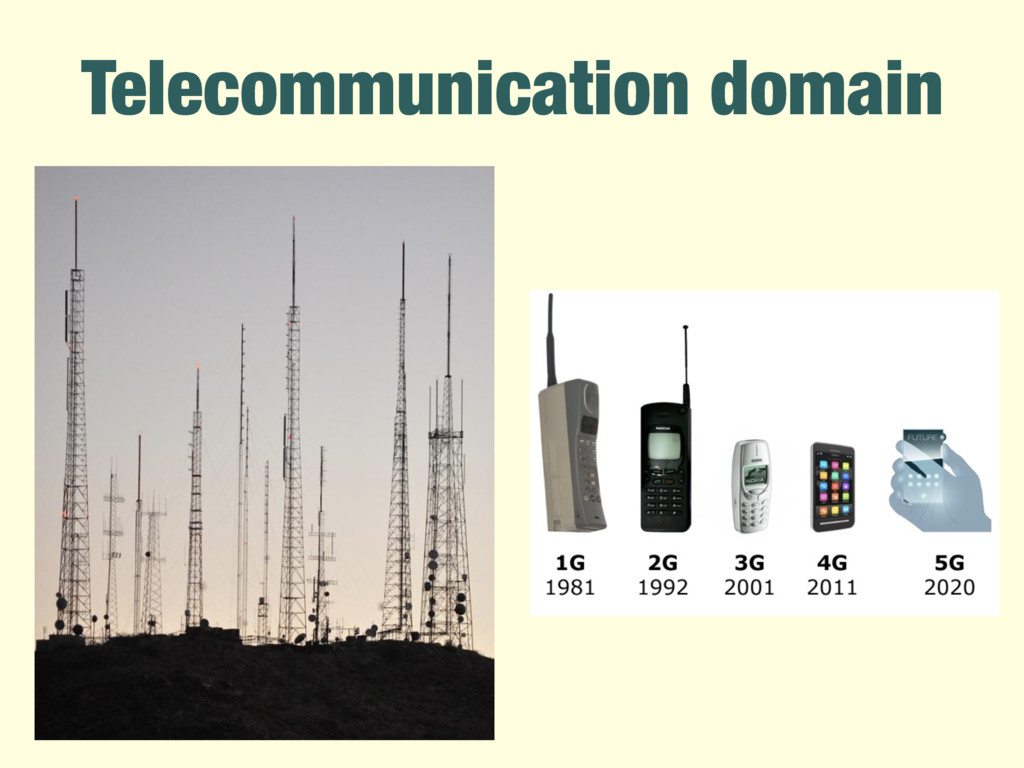
Telecommunication domain
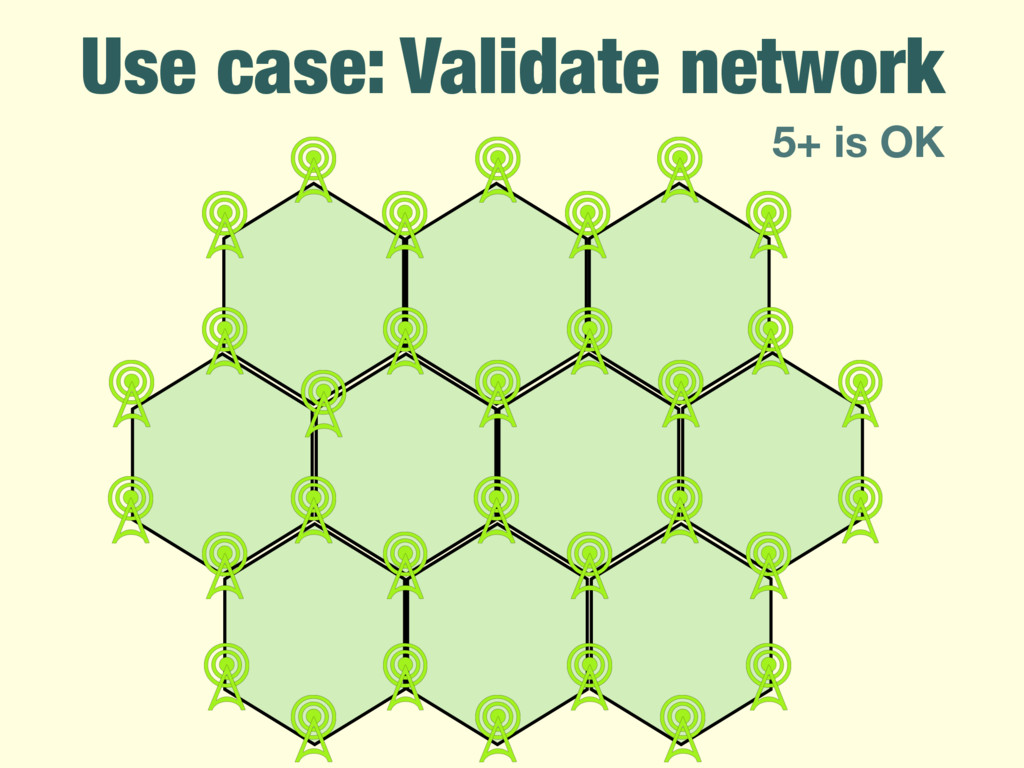
Use case: Validate network 5+ is OK
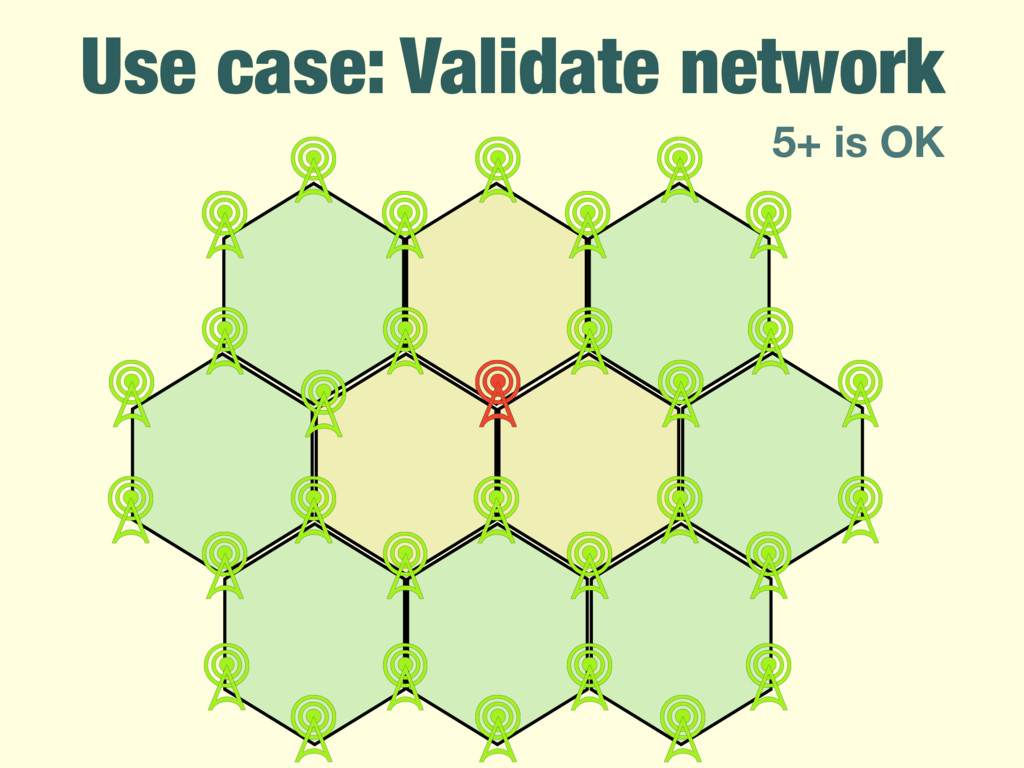
Use case: Validate network 5+ is OK
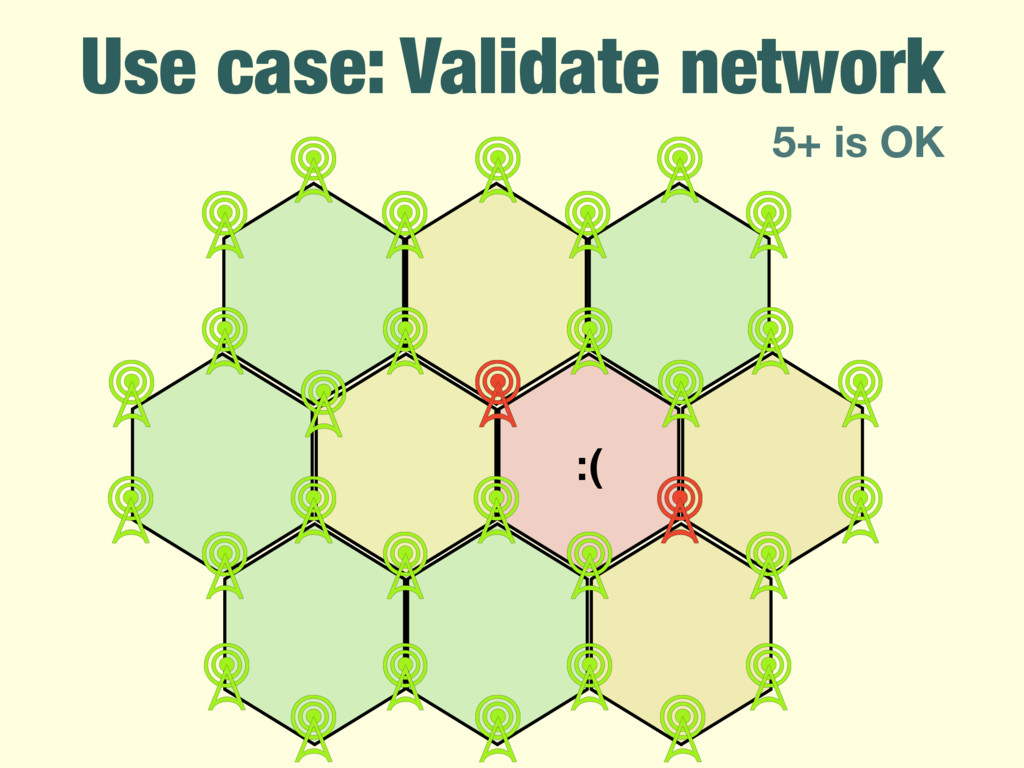
Use case: Validate network :( 5+ is OK
Why Neo4j? Highly scalable native graph database that leverages data
relationships as first-class entities. by Neo Technology, Inc.
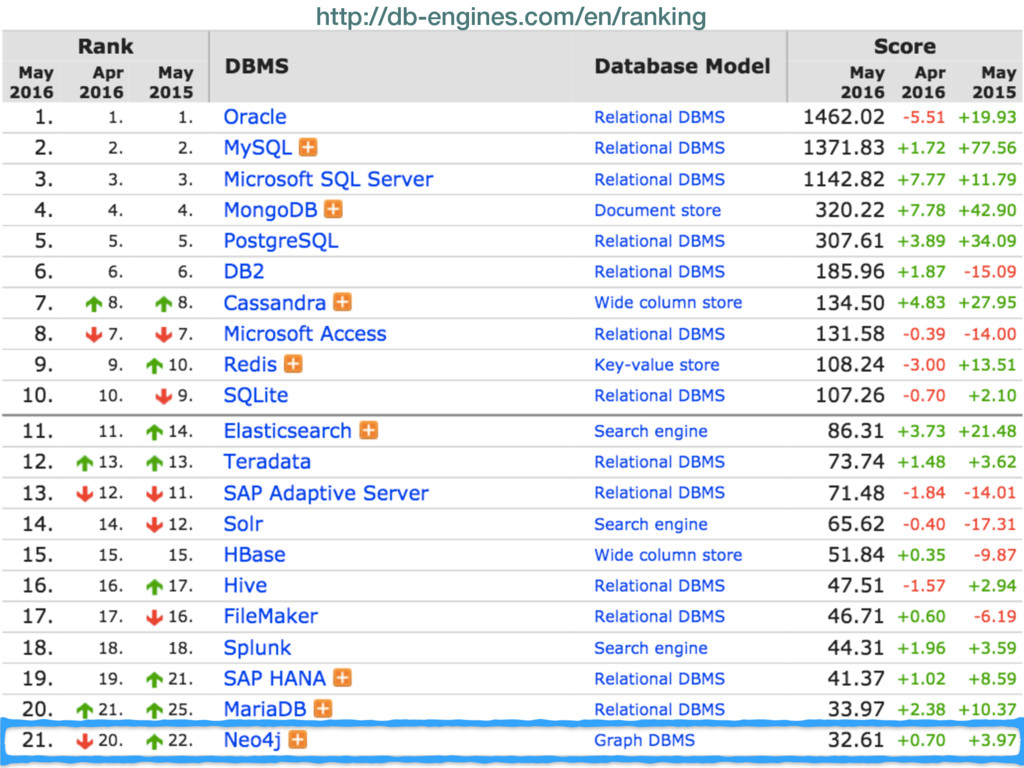
http://db-engines.com/en/ranking
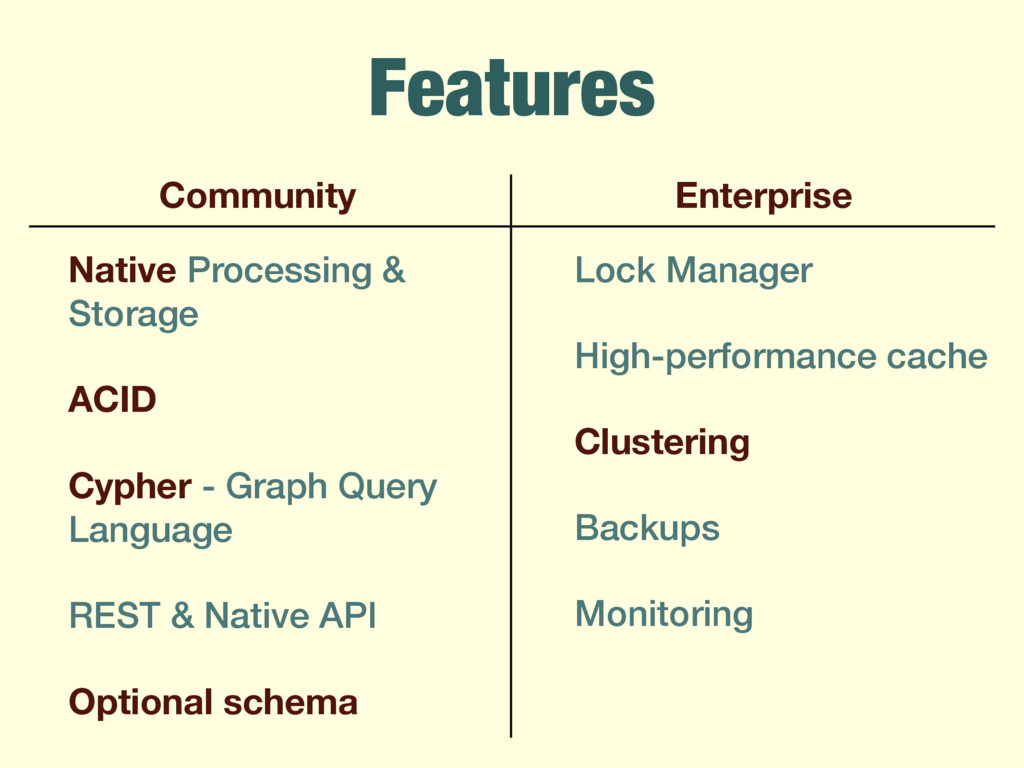
Features Native Processing & Storage ACID Cypher - Graph Query
Language REST & Native API Optional schema Lock Manager High-performance cache Clustering Backups Monitoring Community Enterprise
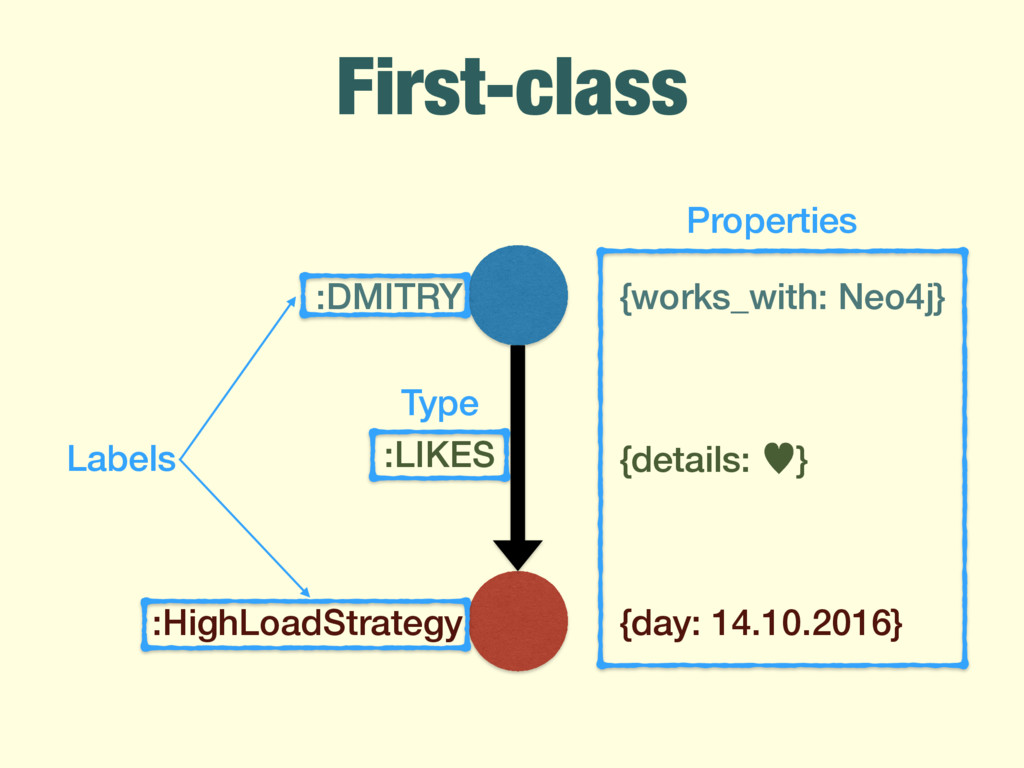
First-class Everything is an entity Entities have properties Entities have
a type
First-class {details: —} :LIKES :DMITRY :HighLoadStrategy {works_with: Neo4j} {day: 14.10.2016}
Properties Labels Type
Neo4j internals 1. Native storage 2. Native processing
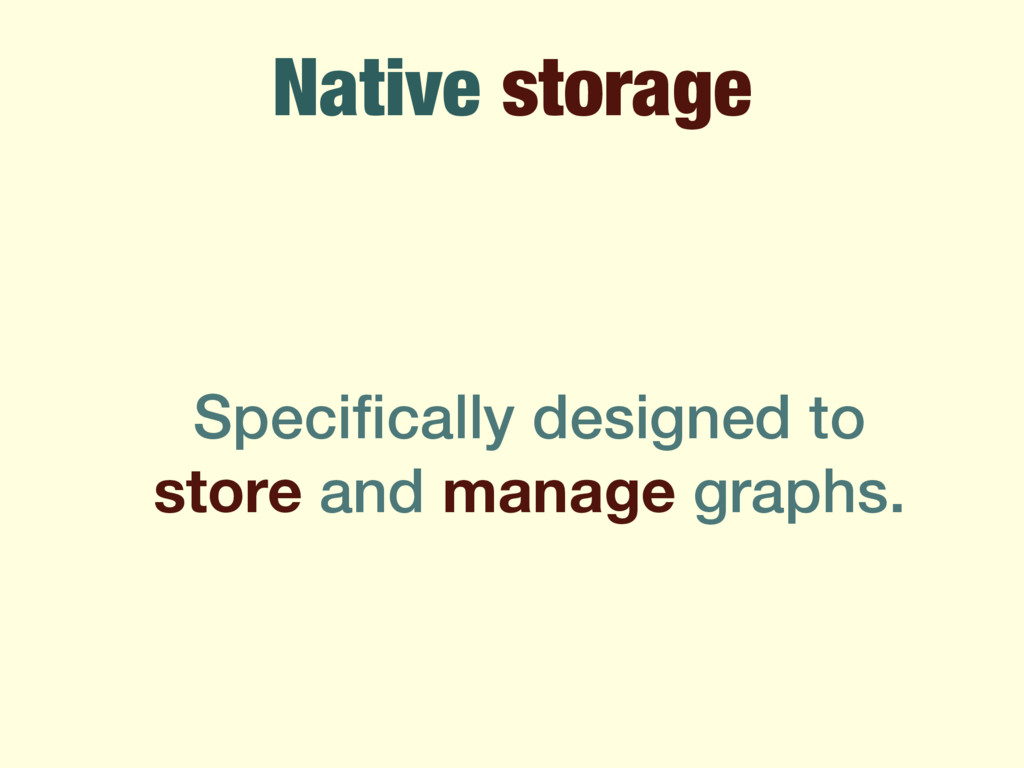
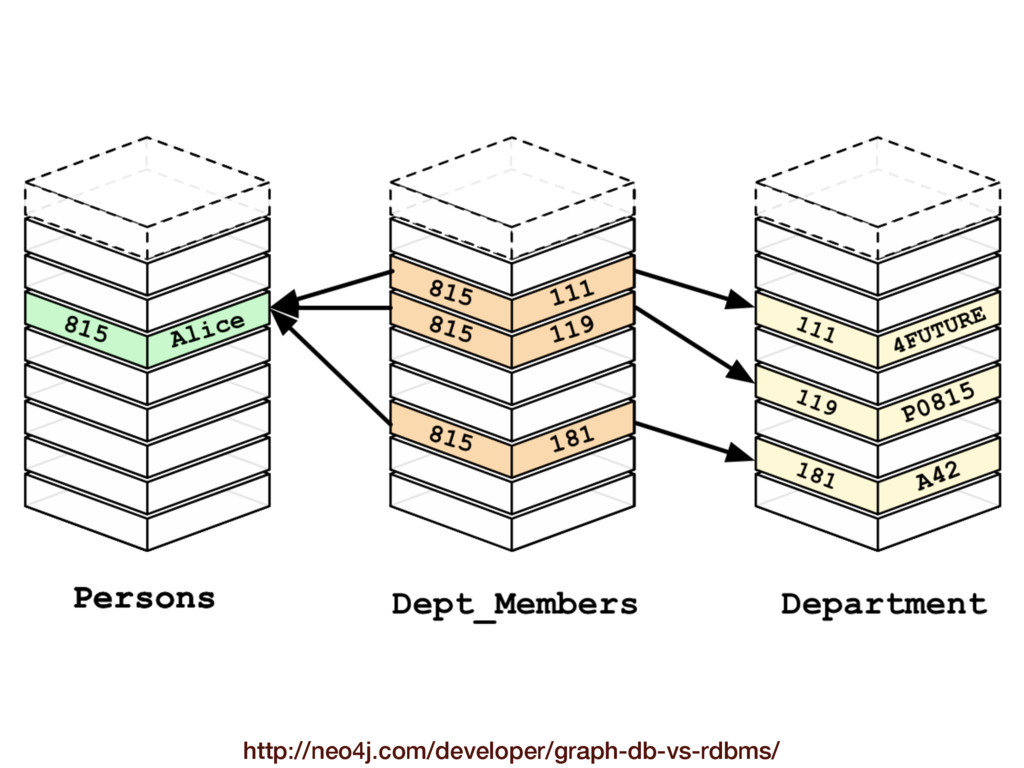
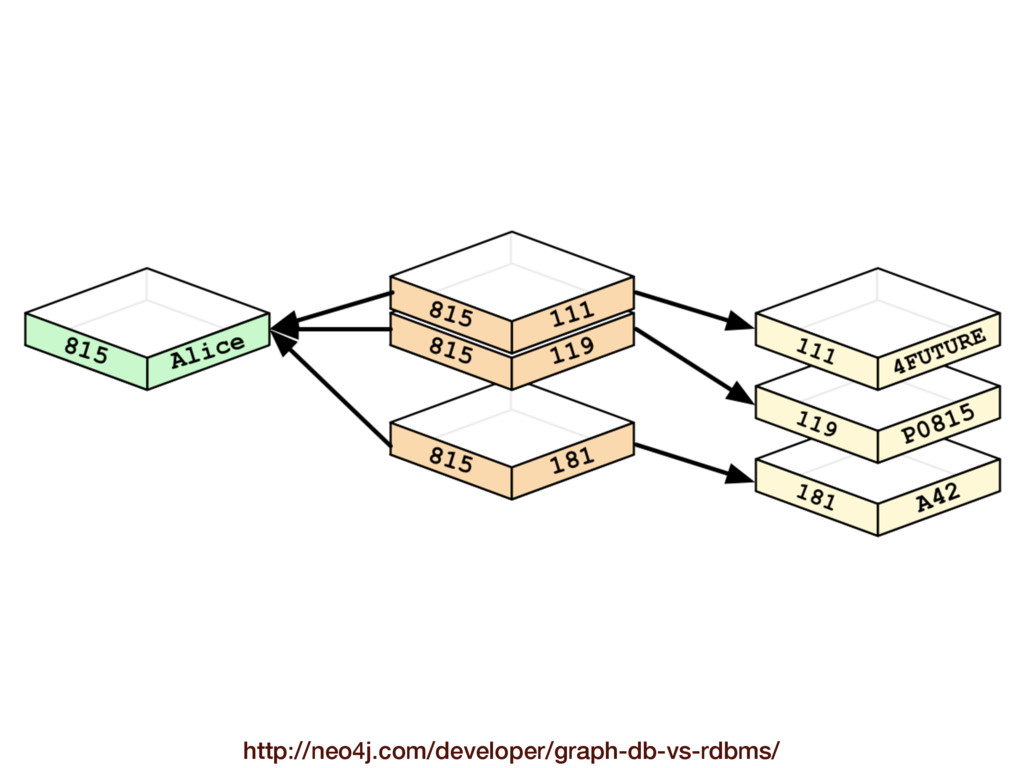
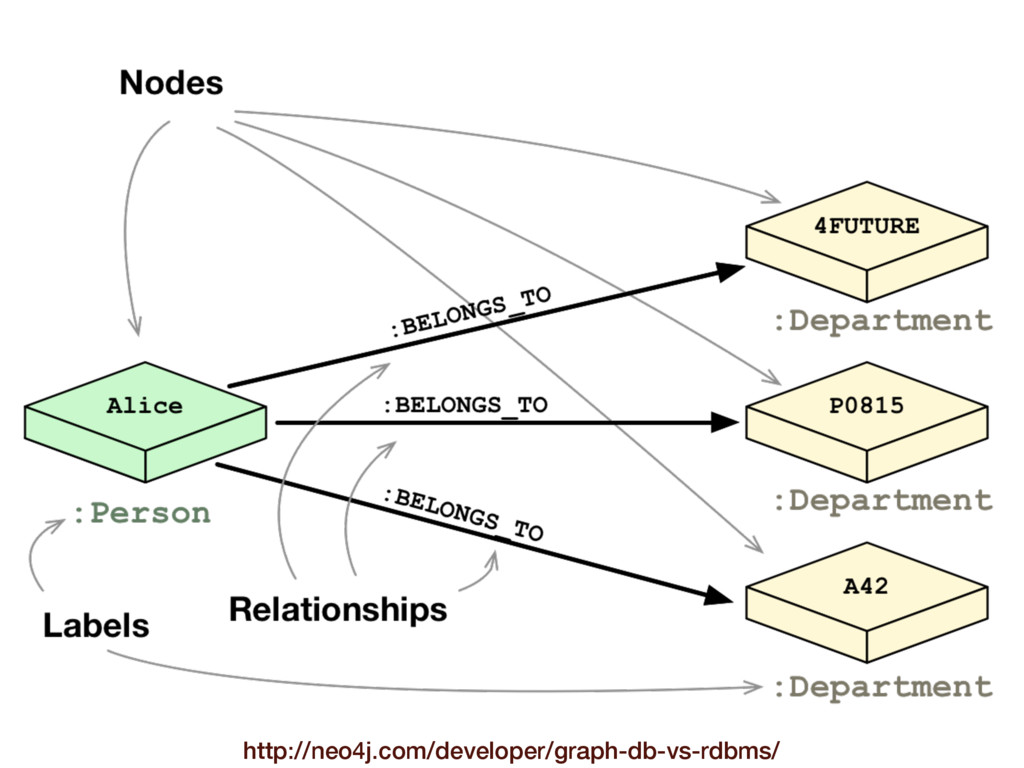
Native storage Specifically designed to store and manage graphs.
http://neo4j.com/developer/graph-db-vs-rdbms/
http://neo4j.com/developer/graph-db-vs-rdbms/
http://neo4j.com/developer/graph-db-vs-rdbms/
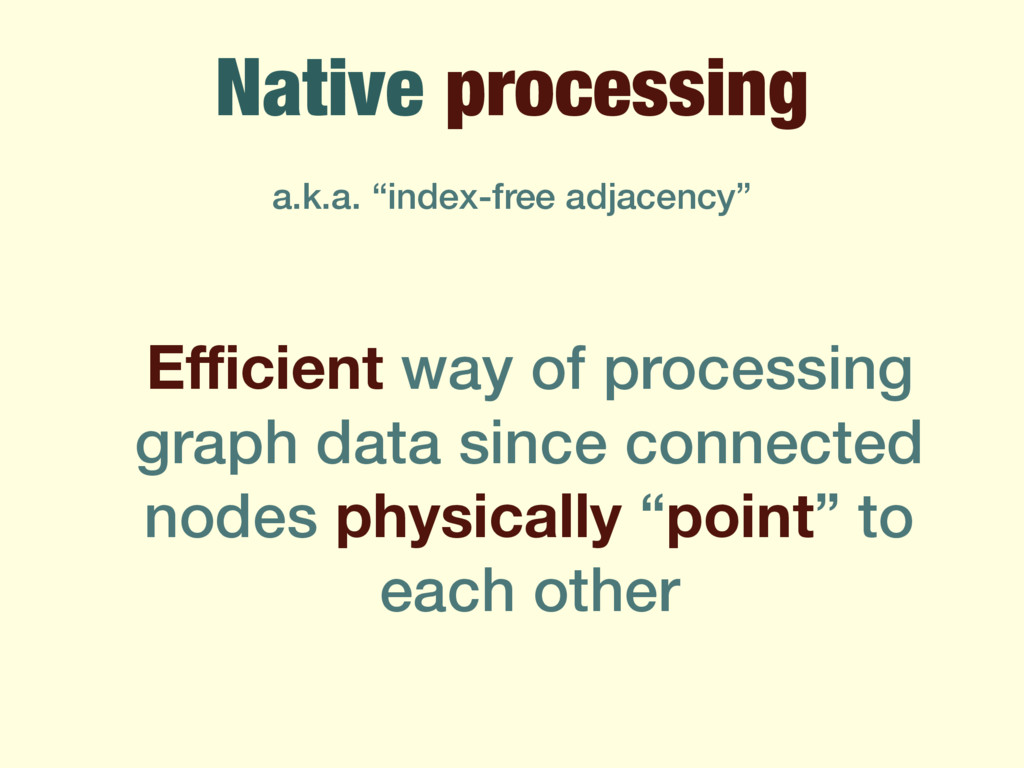
Native processing Efficient way of processing graph data since connected
nodes physically “point” to each other a.k.a. “index-free adjacency”
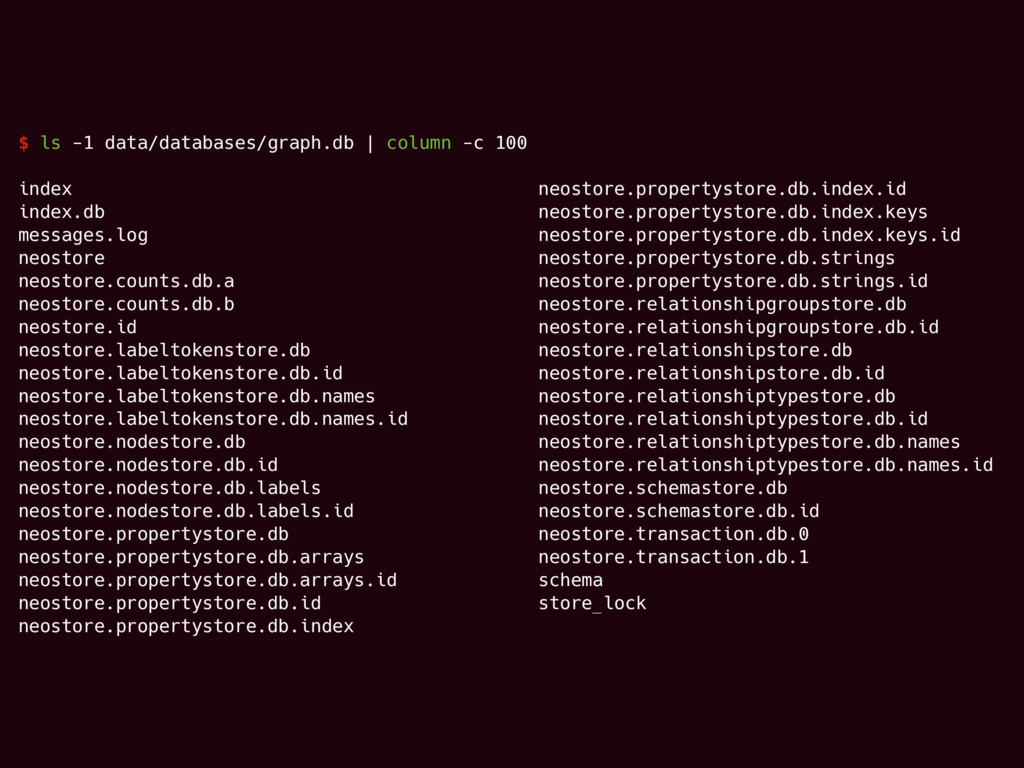
$ ls -1 data/databases/graph.db | column -c 100 index neostore.propertystore.db.index.id
index.db neostore.propertystore.db.index.keys messages.log neostore.propertystore.db.index.keys.id neostore neostore.propertystore.db.strings neostore.counts.db.a neostore.propertystore.db.strings.id neostore.counts.db.b neostore.relationshipgroupstore.db neostore.id neostore.relationshipgroupstore.db.id neostore.labeltokenstore.db neostore.relationshipstore.db neostore.labeltokenstore.db.id neostore.relationshipstore.db.id neostore.labeltokenstore.db.names neostore.relationshiptypestore.db neostore.labeltokenstore.db.names.id neostore.relationshiptypestore.db.id neostore.nodestore.db neostore.relationshiptypestore.db.names neostore.nodestore.db.id neostore.relationshiptypestore.db.names.id neostore.nodestore.db.labels neostore.schemastore.db neostore.nodestore.db.labels.id neostore.schemastore.db.id neostore.propertystore.db neostore.transaction.db.0 neostore.propertystore.db.arrays neostore.transaction.db.1 neostore.propertystore.db.arrays.id schema neostore.propertystore.db.id store_lock neostore.propertystore.db.index
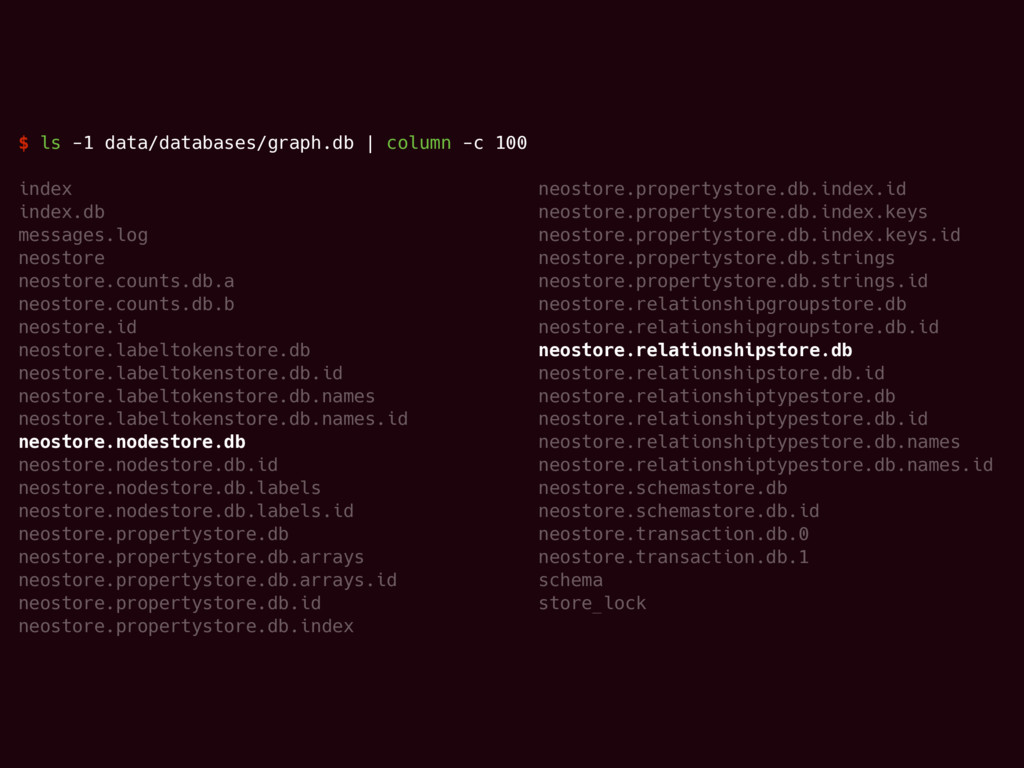
$ ls -1 data/databases/graph.db | column -c 100 index neostore.propertystore.db.index.id
index.db neostore.propertystore.db.index.keys messages.log neostore.propertystore.db.index.keys.id neostore neostore.propertystore.db.strings neostore.counts.db.a neostore.propertystore.db.strings.id neostore.counts.db.b neostore.relationshipgroupstore.db neostore.id neostore.relationshipgroupstore.db.id neostore.labeltokenstore.db neostore.relationshipstore.db neostore.labeltokenstore.db.id neostore.relationshipstore.db.id neostore.labeltokenstore.db.names neostore.relationshiptypestore.db neostore.labeltokenstore.db.names.id neostore.relationshiptypestore.db.id neostore.nodestore.db neostore.relationshiptypestore.db.names neostore.nodestore.db.id neostore.relationshiptypestore.db.names.id neostore.nodestore.db.labels neostore.schemastore.db neostore.nodestore.db.labels.id neostore.schemastore.db.id neostore.propertystore.db neostore.transaction.db.0 neostore.propertystore.db.arrays neostore.transaction.db.1 neostore.propertystore.db.arrays.id schema neostore.propertystore.db.id store_lock neostore.propertystore.db.index
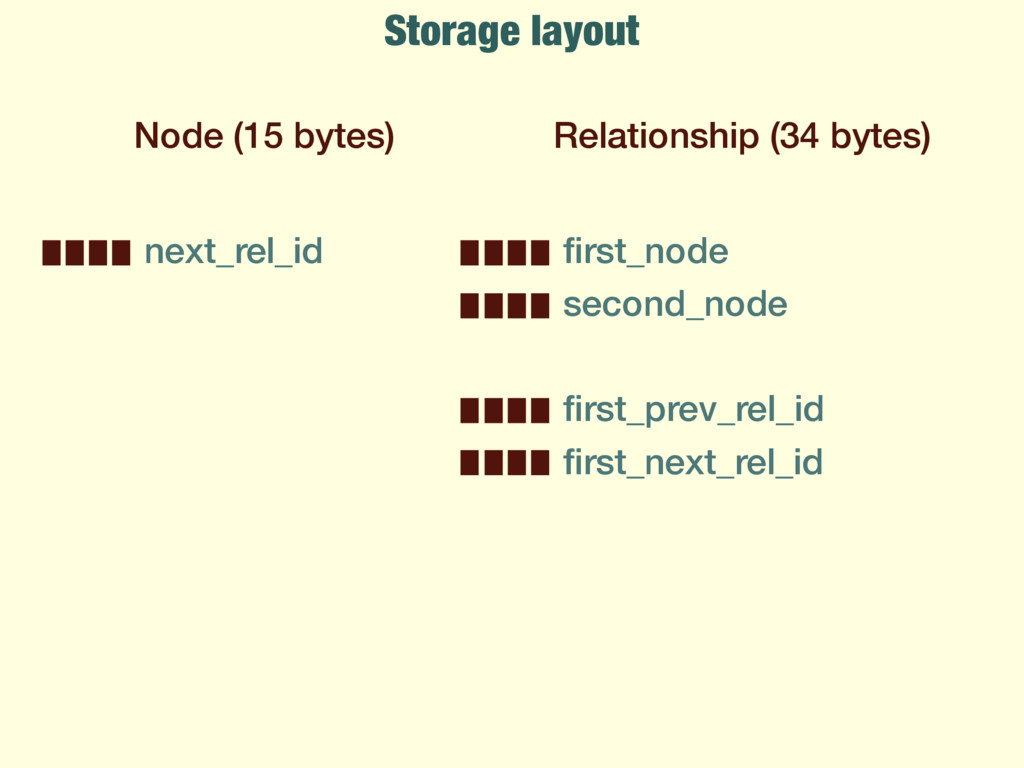
Storage layout Node (15 bytes) in_use next_rel_id next_prop_id labels extra
Relationship (34 bytes) directed | in_use first_node second_node rel_type first_prev_rel_id first_next_rel_id second_prev_rel_id second_next_rel_id next_prop_id first_in_chain_markers
Storage layout Node (15 bytes) next_rel_id Relationship (34 bytes) first_node
second_node first_prev_rel_id first_next_rel_id
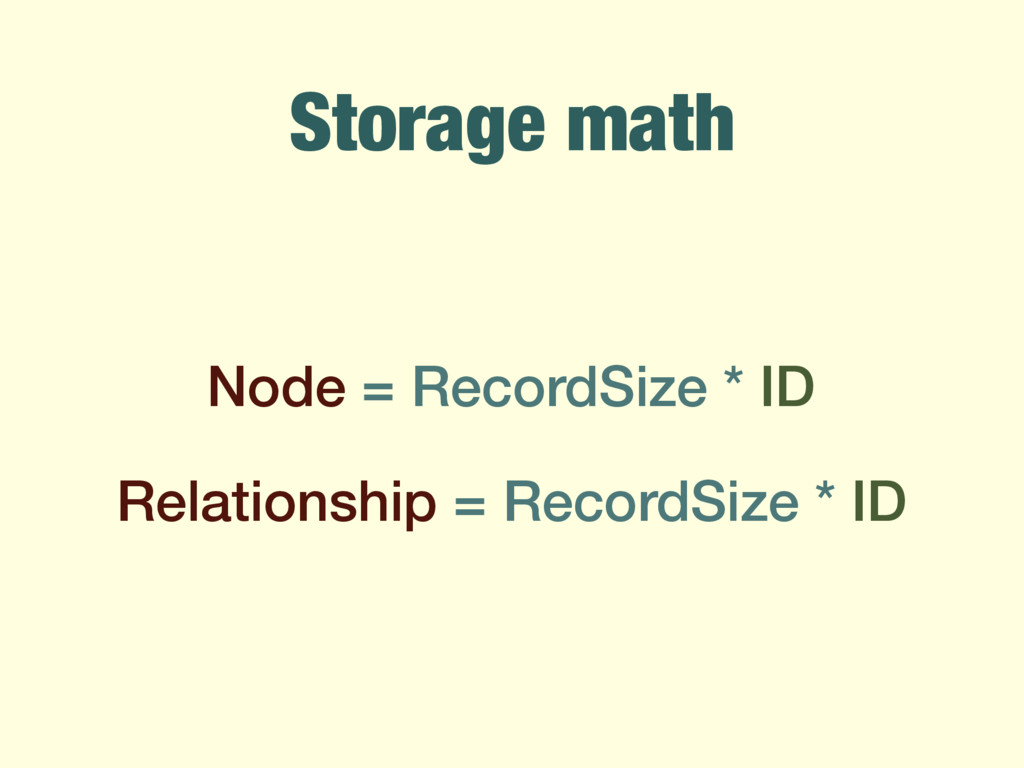
Storage math Node = RecordSize * ID Relationship = RecordSize
* ID
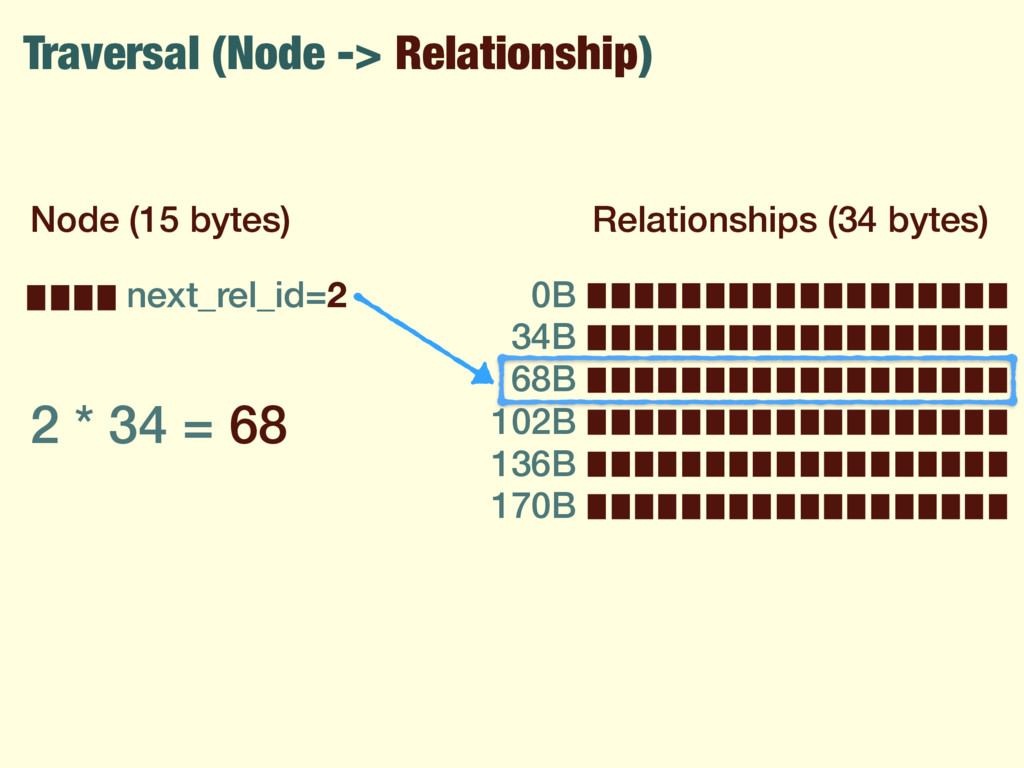
Traversal (Node -> Relationship) Node (15 bytes) next_rel_id=2 Relationships (34
bytes) 2 * 34 = 68 0B 34B 68B 102B 136B 170B
Traversal (Relationship -> Node) Relationship (34 bytes) Nodes (15 bytes)
0B 15B 30B 45B 60B 75B first_node=1 second_node=4 1 * 15 = 15 4 * 15 = 60
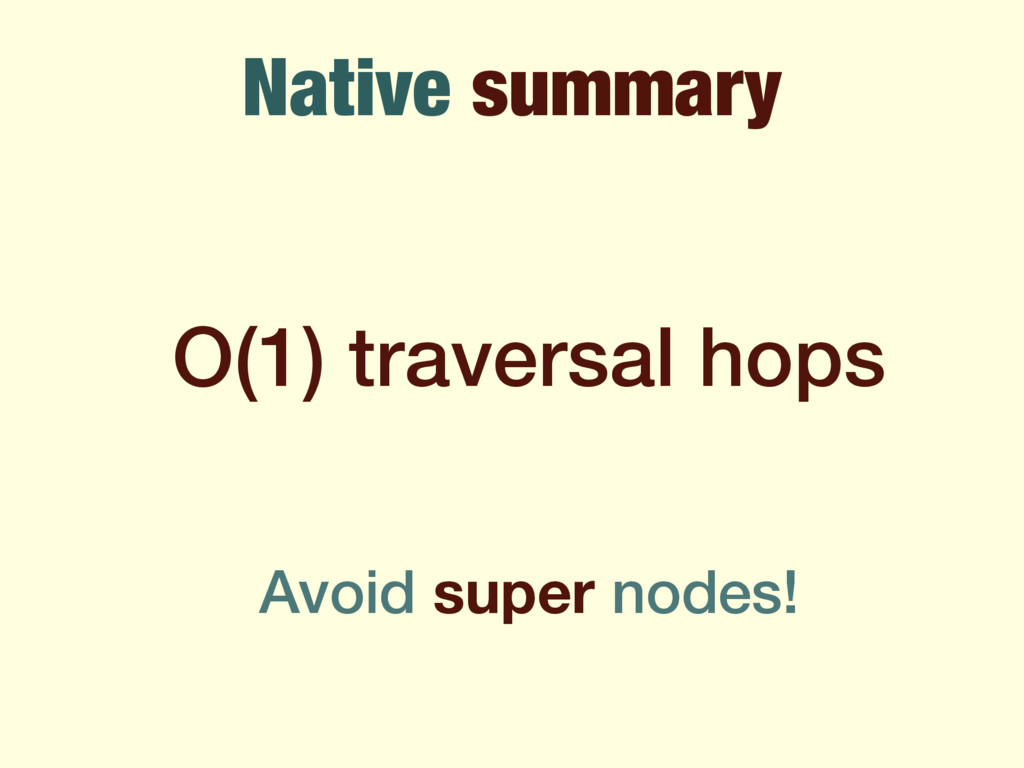
Native summary O(1) traversal hops Avoid super nodes!
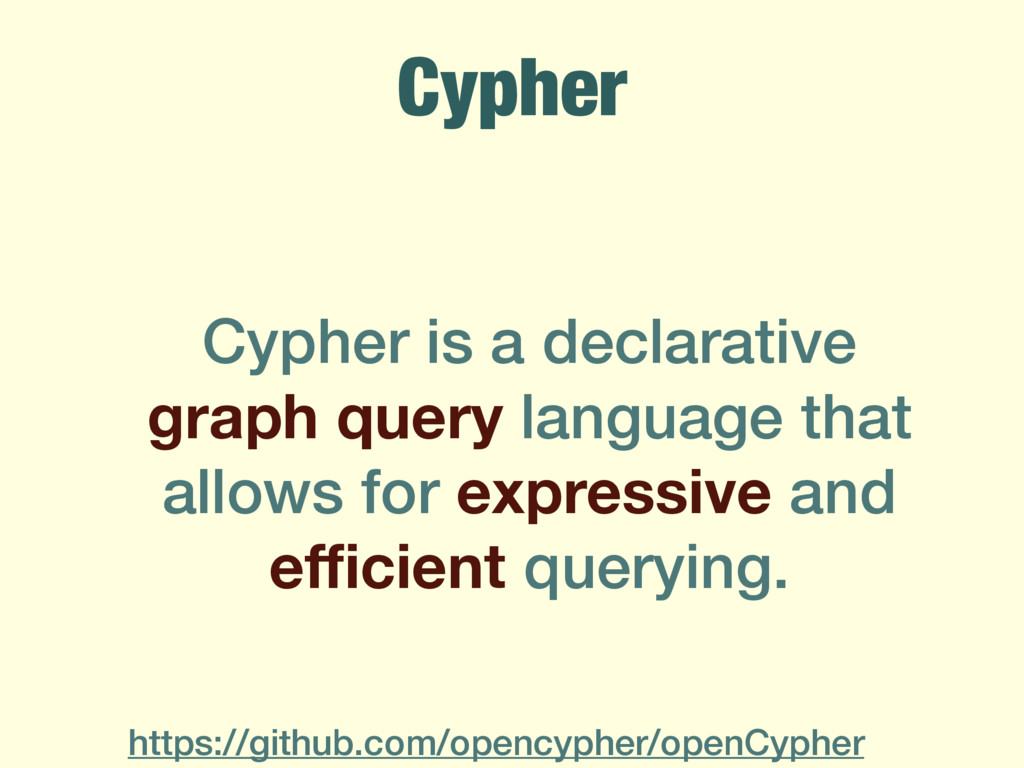
Cypher Cypher is a declarative graph query language that allows
for expressive and efficient querying. https://github.com/opencypher/openCypher
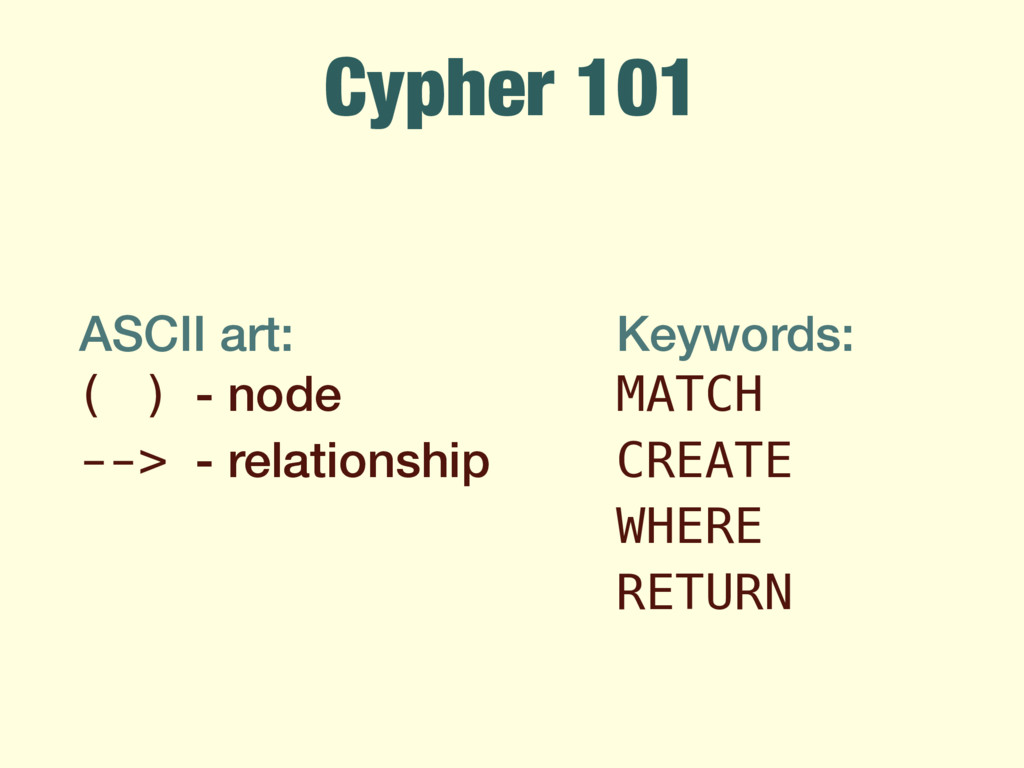
Cypher 101 ASCII art: ( ) - node --> -
relationship Keywords: MATCH CREATE WHERE RETURN
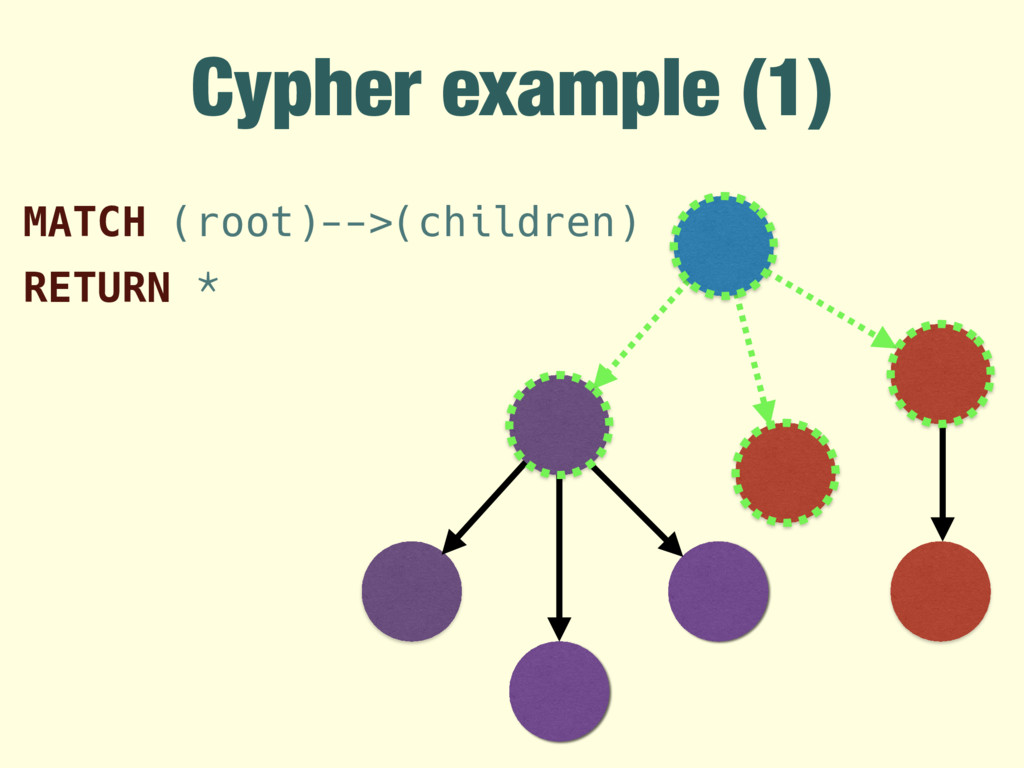
Cypher example (1) MATCH (root)-->(children) RETURN *
Cypher example (2) MATCH (t:Towers) -[:CHILDREN]-> (n:NetworkPiece) -[:CHILDREN]-> (e:Function) WHERE
NOT (t)-[:CHILDREN]->(:CellJCA) RETURN t
Neo4j adoption
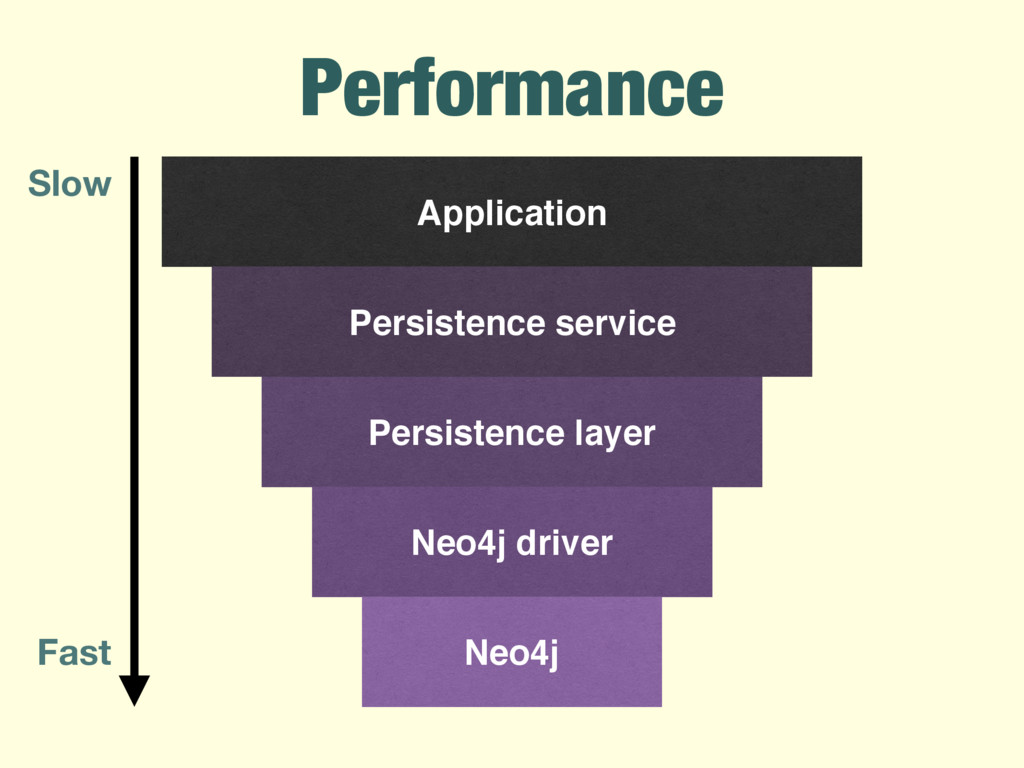
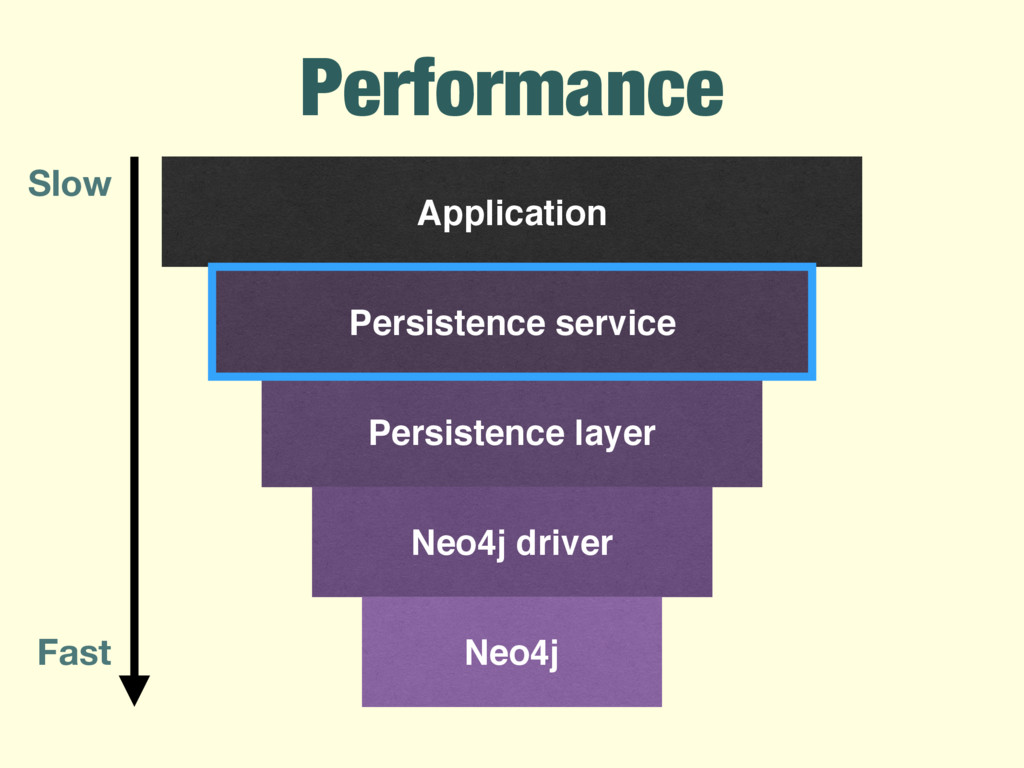
Application Persistence layer Neo4j driver Neo4j Performance Fast Slow Persistence
service
Application Persistence layer Neo4j driver Neo4j Performance Fast Slow Persistence
service
Use cases Measurement average, 98% Resource usage ~ same
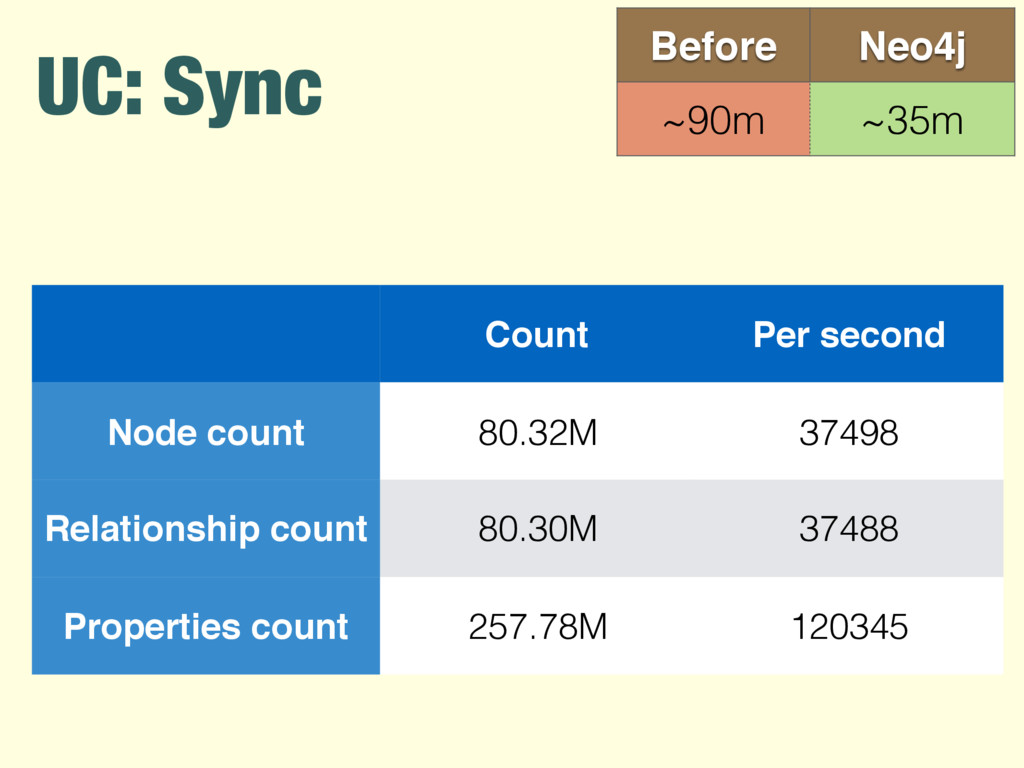
UC: Sync Before Neo4j ~90m ~35m Count Per second Node
count 80.32M 37498 Relationship count 80.30M 37488 Properties count 257.78M 120345
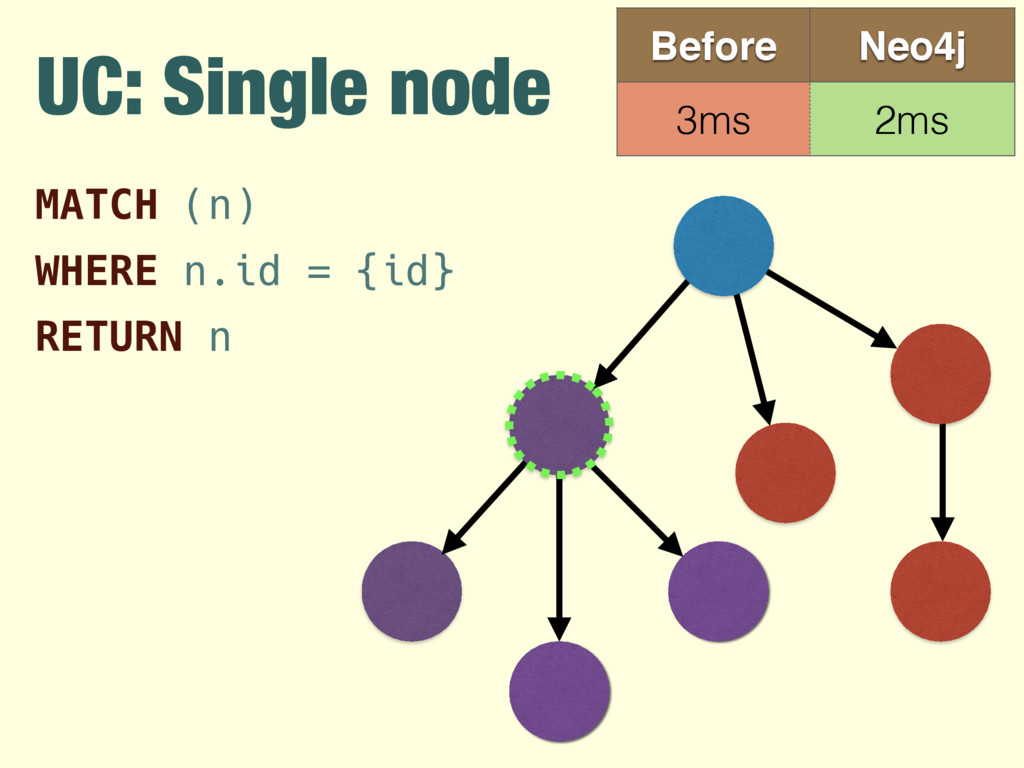
UC: Single node Before Neo4j 3ms 2ms MATCH (n) WHERE
n.id = {id} RETURN n
UC: Subgraph Before Neo4j 88ms 14ms MATCH (n)-[r*]->(c) WHERE n.id
= {id} RETURN *
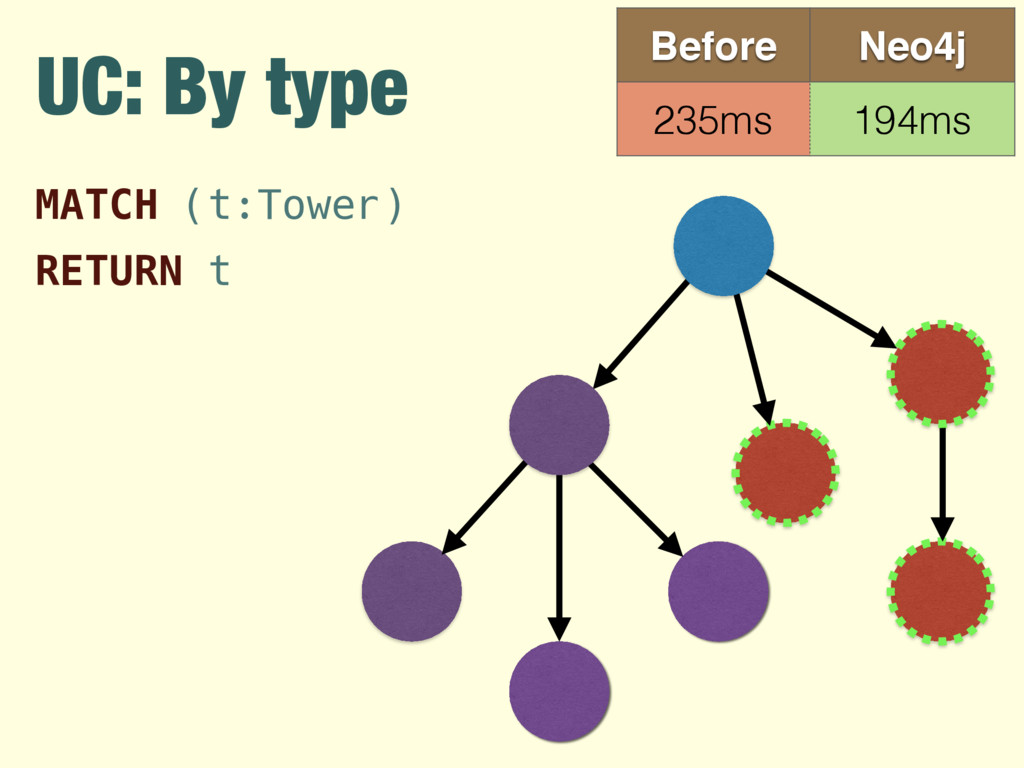
UC: By type Before Neo4j 235ms 194ms MATCH (t:Tower) RETURN
t
UC: Count Before Neo4j 32ms 16ms MATCH (n)-[r*]->(c) WHERE n.id
= {id} RETURN count(*)
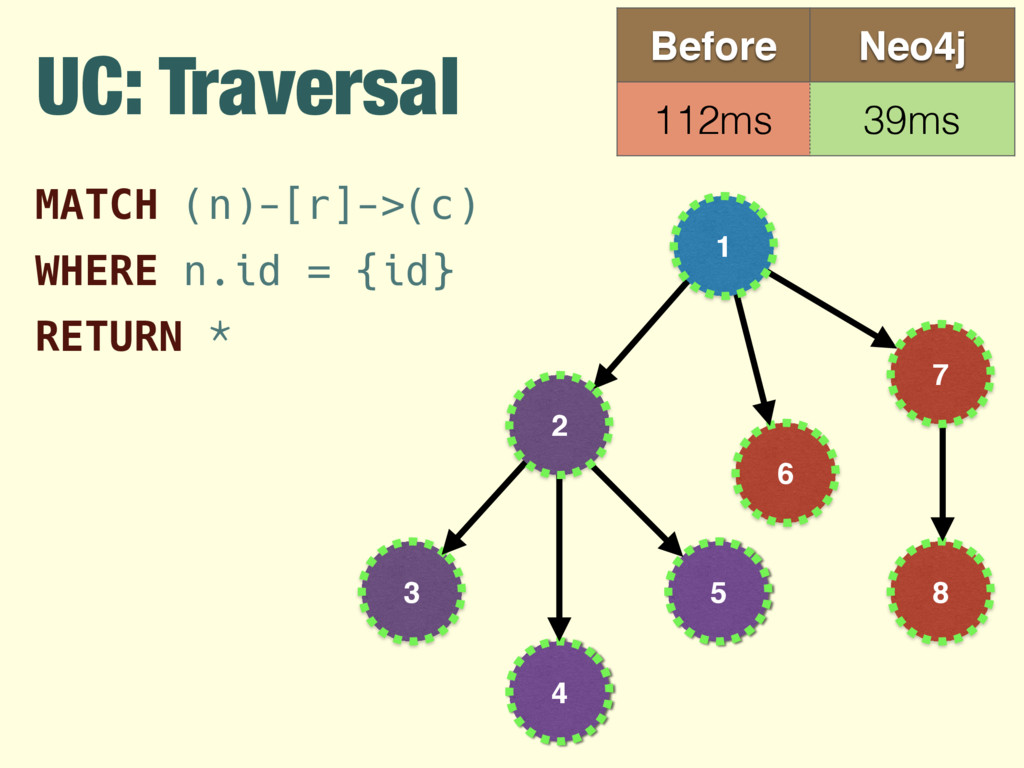
3 4 5 6 8 2 7 1 UC: Traversal
Before Neo4j 112ms 39ms MATCH (n)-[r]->(c) WHERE n.id = {id} RETURN *
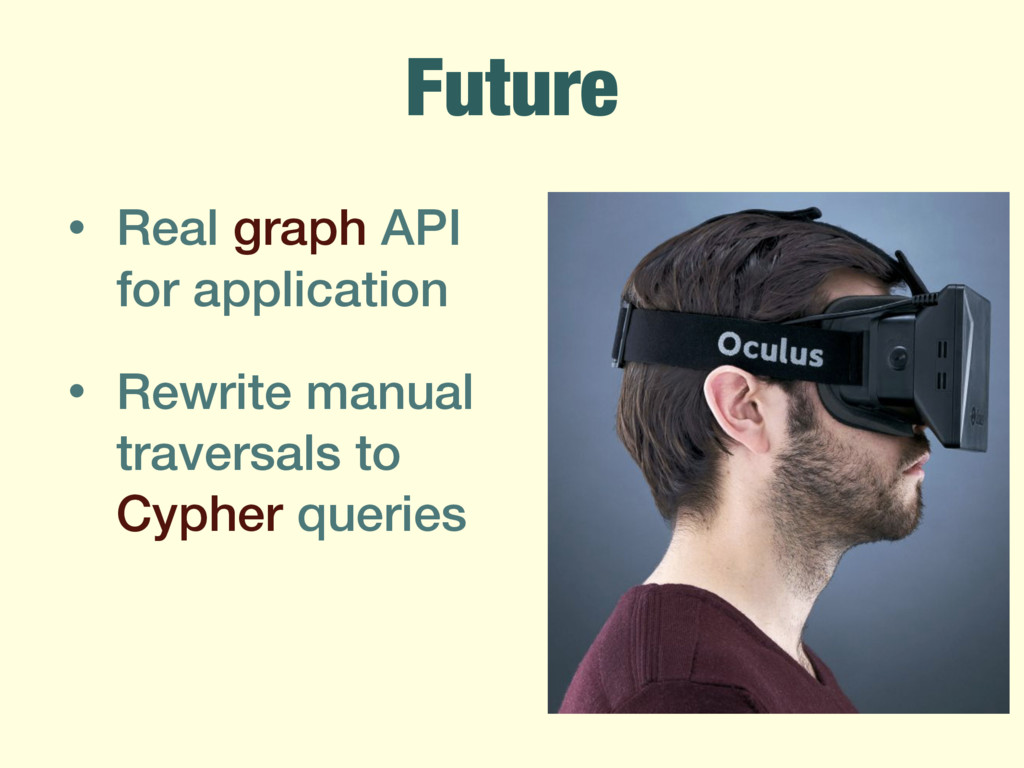
Future • Real graph API for application • Rewrite manual
traversals to Cypher queries
Deployment • Implemented in Java • Works everywhere • Writes
- vertical scaling • Reads - horizontal scaling • Extensions & Stored procedures
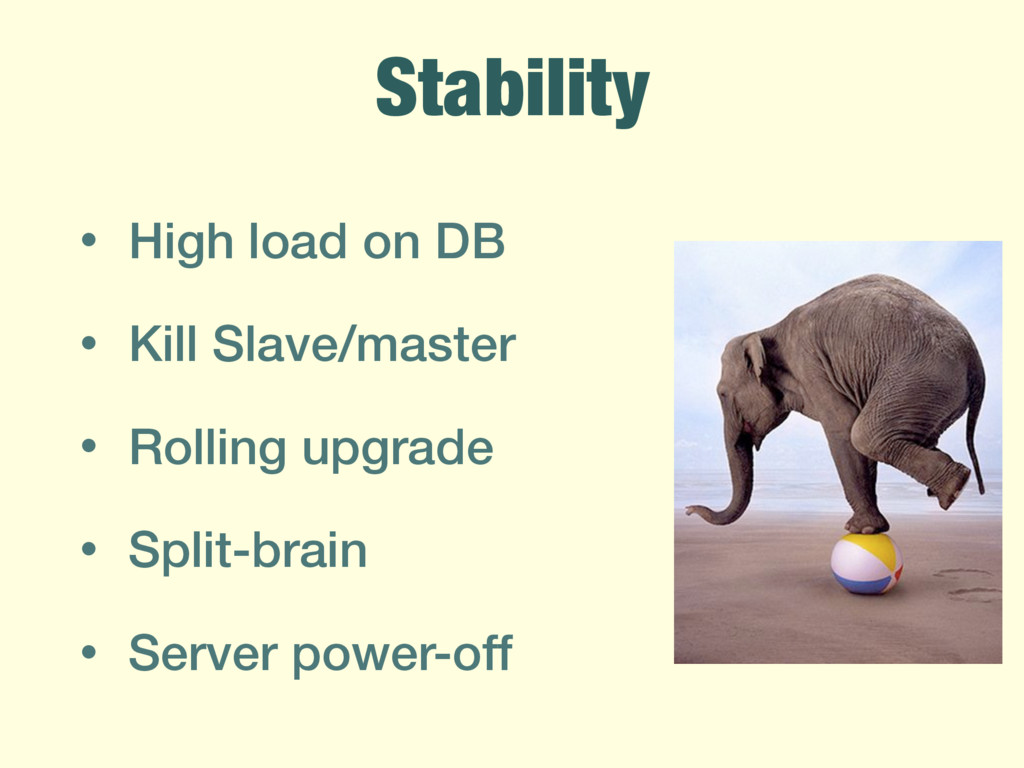
Stability • High load on DB • Kill Slave/master •
Rolling upgrade • Split-brain • Server power-off
None


 fylmtm
 mshibuya
 tonkotsuboy_com
 kazumax55
 yusukebe
 naoya
naoya
 tomoyanonymous
 tk3fftk
 har1101
 hananouchi
 ike002jp
 ryugen04
 philipschwarz
 jacobtomlinson
 mkilby
 frankvandijk
 michaelherold
 skipperchong
 reverentgeek
 lara
lara
 honzajavorek
 lcolladotor
 aleyda
 paigeccino
 jonoalderson

![Dmitry Vrublevsky Software developer @ ƀ [email protected] @FylmTM Ambassador @](https://files.speakerdeck.com/presentations/b88facd2bdc0408f94d66adc3a650834/slide_1.jpg)



![Cypher example (2) MATCH (t:Towers) -[:CHILDREN]-> (n:NetworkPiece) -[:CHILDREN]-> (e:Function) WHERE](https://files.speakerdeck.com/presentations/b88facd2bdc0408f94d66adc3a650834/slide_35.jpg)

![UC: Subgraph Before Neo4j 88ms 14ms MATCH (n)-[r*]->(c) WHERE n.id](https://files.speakerdeck.com/presentations/b88facd2bdc0408f94d66adc3a650834/slide_42.jpg)
![UC: Count Before Neo4j 32ms 16ms MATCH (n)-[r*]->(c) WHERE n.id](https://files.speakerdeck.com/presentations/b88facd2bdc0408f94d66adc3a650834/slide_44.jpg)