daily life, your professional life, and your relationships? Do you know the source of these problems or the reasons why they bring you discomfort? Understanding our mind can be much more complex than we imagine.
activity, or relationship that draws a person into self-destructive behaviours, though aware of the harm that will cause or is already causing. The addict gradually abandons their daily interests and activities to compulsively dive into the recidivism that gives them pleasure. As a result, a serious deterioration of their physical and mental health occurs.
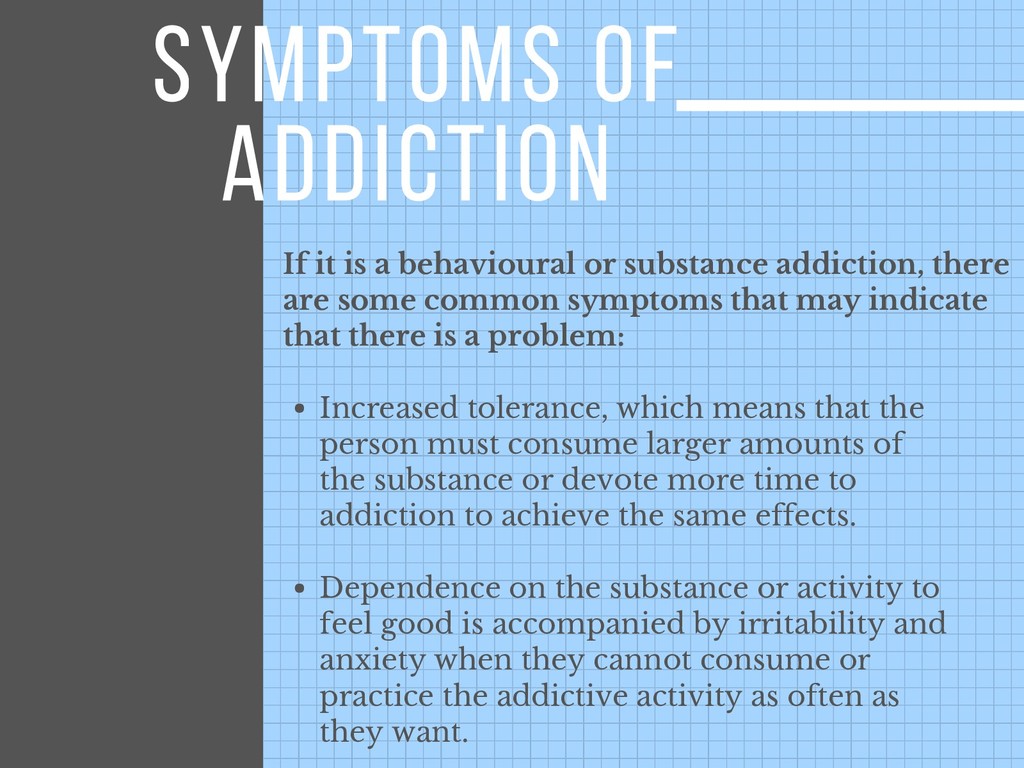
some common symptoms that may indicate that there is a problem: Increased tolerance, which means that the person must consume larger amounts of the substance or devote more time to addiction to achieve the same effects. Dependence on the substance or activity to feel good is accompanied by irritability and anxiety when they cannot consume or practice the addictive activity as often as they want. SYMPTOMS OF ADDICTION
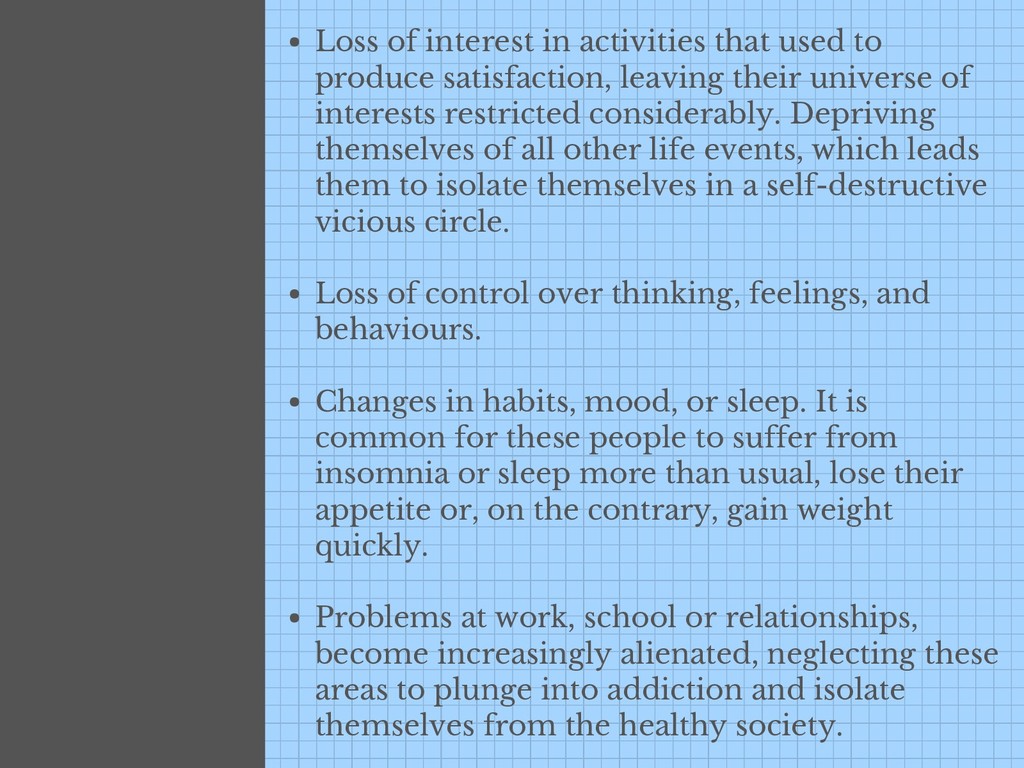
leaving their universe of interests restricted considerably. Depriving themselves of all other life events, which leads them to isolate themselves in a self-destructive vicious circle. Loss of control over thinking, feelings, and behaviours. Changes in habits, mood, or sleep. It is common for these people to suffer from insomnia or sleep more than usual, lose their appetite or, on the contrary, gain weight quickly. Problems at work, school or relationships, become increasingly alienated, neglecting these areas to plunge into addiction and isolate themselves from the healthy society.
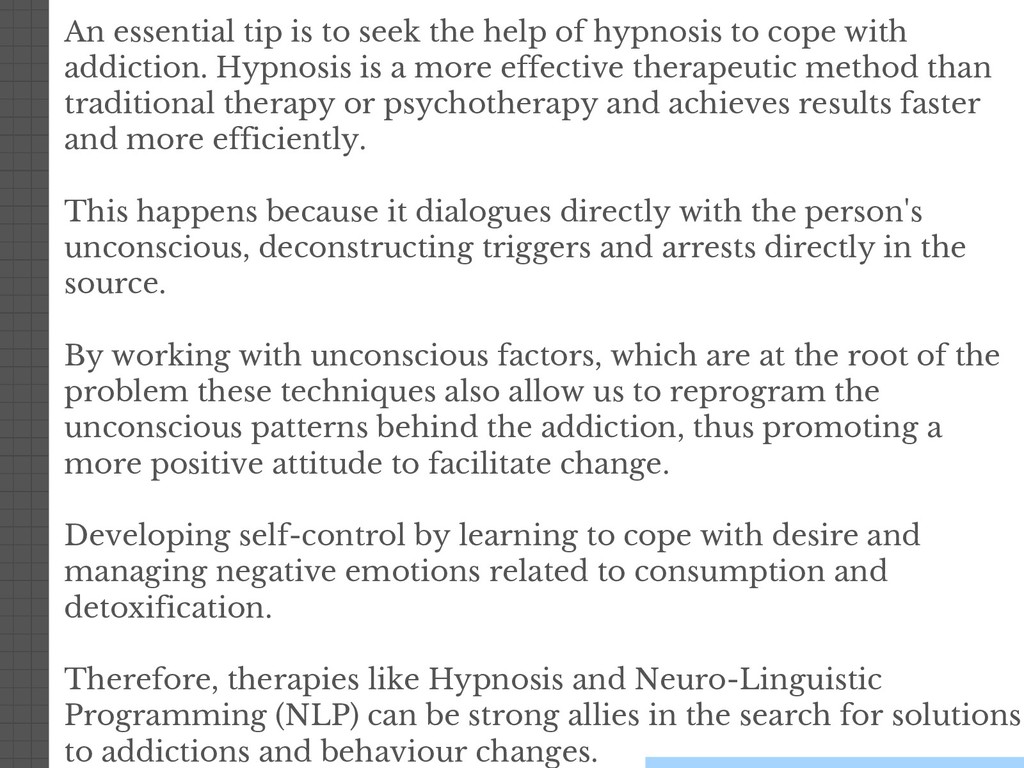
to cope with addiction. Hypnosis is a more effective therapeutic method than traditional therapy or psychotherapy and achieves results faster and more efficiently. This happens because it dialogues directly with the person's unconscious, deconstructing triggers and arrests directly in the source. By working with unconscious factors, which are at the root of the problem these techniques also allow us to reprogram the unconscious patterns behind the addiction, thus promoting a more positive attitude to facilitate change. Developing self-control by learning to cope with desire and managing negative emotions related to consumption and detoxification. Therefore, therapies like Hypnosis and Neuro-Linguistic Programming (NLP) can be strong allies in the search for solutions to addictions and behaviour changes.
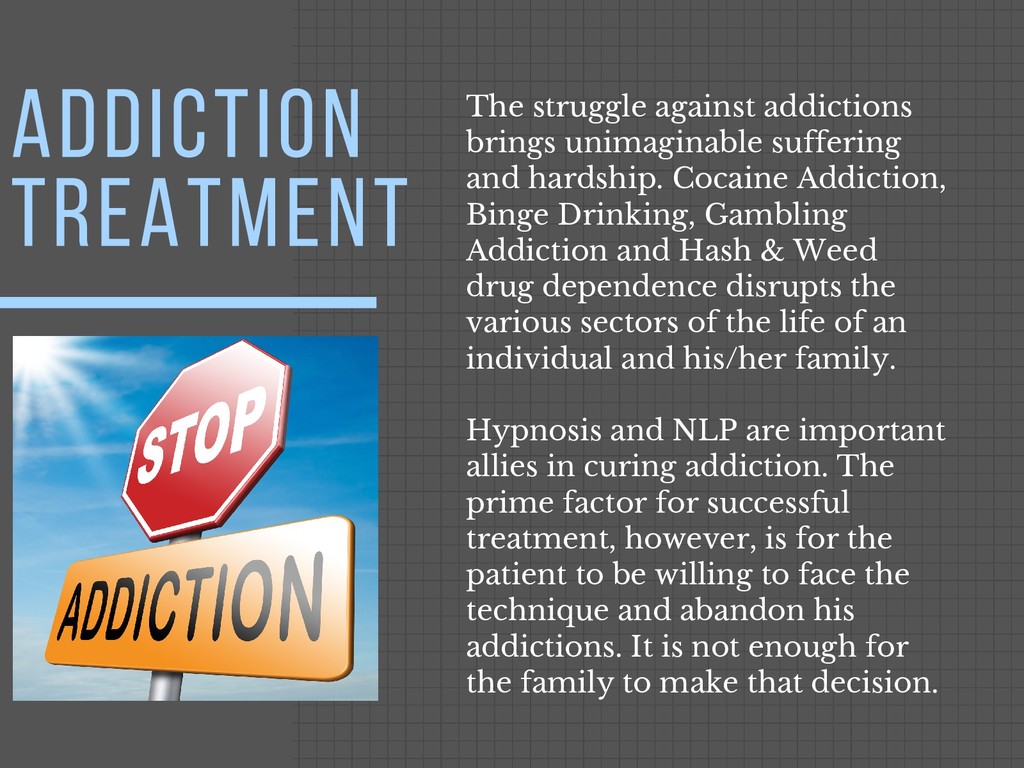
Addiction, Binge Drinking, Gambling Addiction and Hash & Weed drug dependence disrupts the various sectors of the life of an individual and his/her family. Hypnosis and NLP are important allies in curing addiction. The prime factor for successful treatment, however, is for the patient to be willing to face the technique and abandon his addictions. It is not enough for the family to make that decision. ADDICTION TREATMENT
live differently and healthy, away from drugs and that which causes dependence and get life back on track. Hypnosis is used to stop addictions from functioning by positive reinforcement of the conviction that life is possible without addiction, whether substance abuse, gambling, porn or any crutch that the individual uses to escape life, to stop self-sabotage and deal with problems in different new ways. It can also improve self-esteem. Hypnosis can also help with the physical symptoms of drug abstinence.
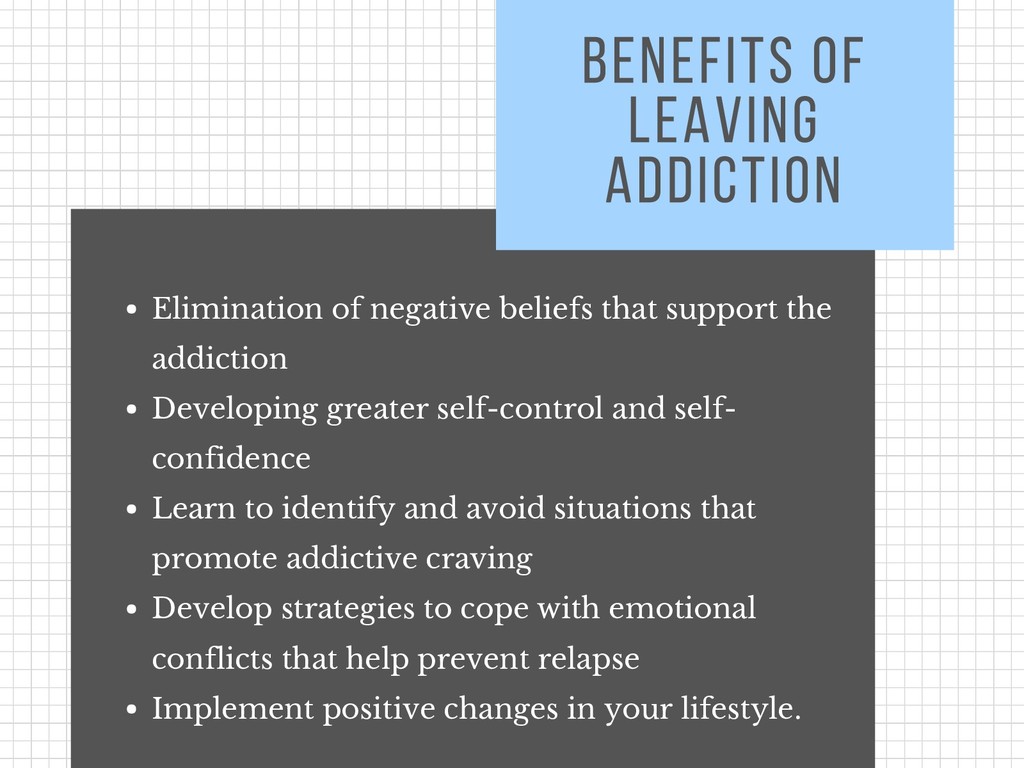
self-control and self- confidence Learn to identify and avoid situations that promote addictive craving Develop strategies to cope with emotional conflicts that help prevent relapse Implement positive changes in your lifestyle. BENEFITS OF LEAVING ADDICTION


 aki_iinuma
 aleyda
 lauravandoore
 jonoalderson
 joshbly
 lindahogenes
 sabderemane
 tammyeverts
 marktimemedia
 addyosmani
 tapps