Upgrade to Pro — share decks privately, control downloads, hide ads and more …

I Read It But Don't Get It, or Tackling Technic...

Avatar for Steve Lynch Steve Lynch
November 11, 2021
4

I Read It But Don't Get It, or Tackling Technical Texts

For many software engineers and developers interested in developing their thinking and skills, traditional book-length texts are useful go-to resources that are often recommended by more experienced or tenured professionals.

However, reading these books can often be challenging and even strong readers can struggle to get engaged in the thinking that would help them get more out of these texts.

This presentation proposes some strategies that readers of any comfort level can deploy while reading to become more engaged in the reading of these texts.

Avatar for Steve Lynch

Steve Lynch

November 11, 2021

Transcript

  1. I read it But don’t get it Or tackling technical

    texts Steve Lynch Software Engineer
  2. hey! I’m Steve. I used to teach middle school students

    how to read and write. And now I work in software. And I’m surprised how much they overlap.
  3. Learning target You should be able to use at least

    three more tools / questions you can ask yourself while reading a challenging text.
  4. What do i mean by “technical text”? A text about

    the writing of code, development of systems, code architecture, or theories about those practices.
  5. What do i mean by “technical text”? A text about

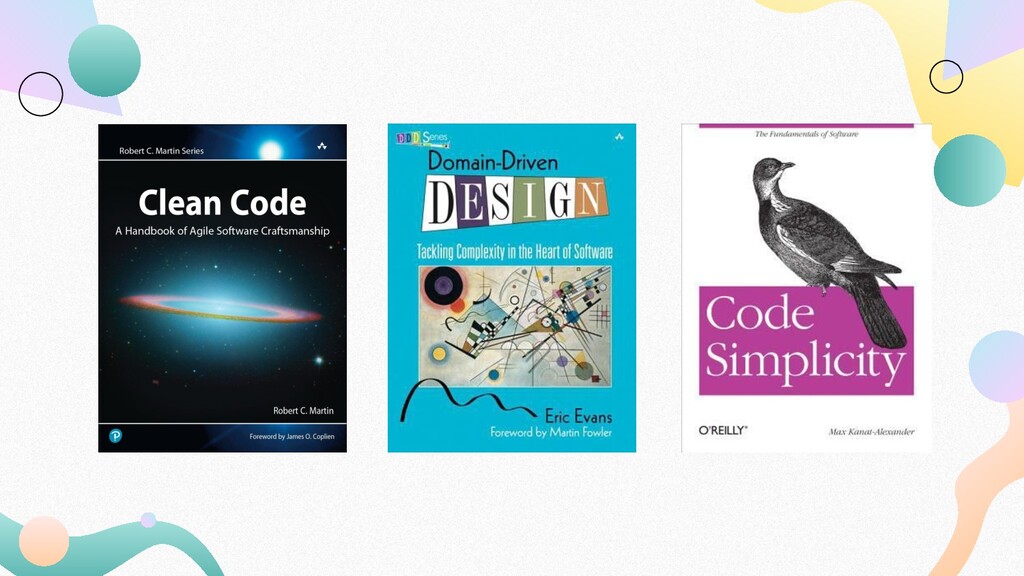
    the writing of code, development of systems, code architecture, or theories about those practices. Today, I mean book-length texts written with chapter formats.
  6. Why read technical texts? Technical texts / books are commonly

    used as tools for professional development.
  7. Why read technical texts? Technical texts / books are commonly

    used as tools for professional development. They often present longer arguments for particular approaches.
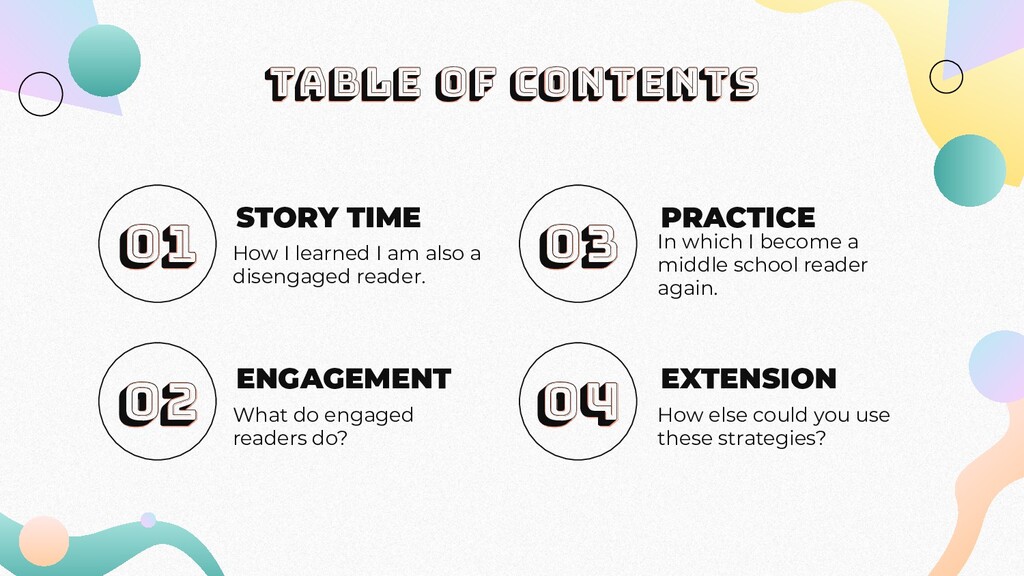
  8. TABLE OF CONTENTS STORY TIME How I learned I am

    also a disengaged reader. PRACTICE In which I become a middle school reader again. ENGAGEMENT What do engaged readers do? EXTENSION How else could you use these strategies? 01 03 02 04
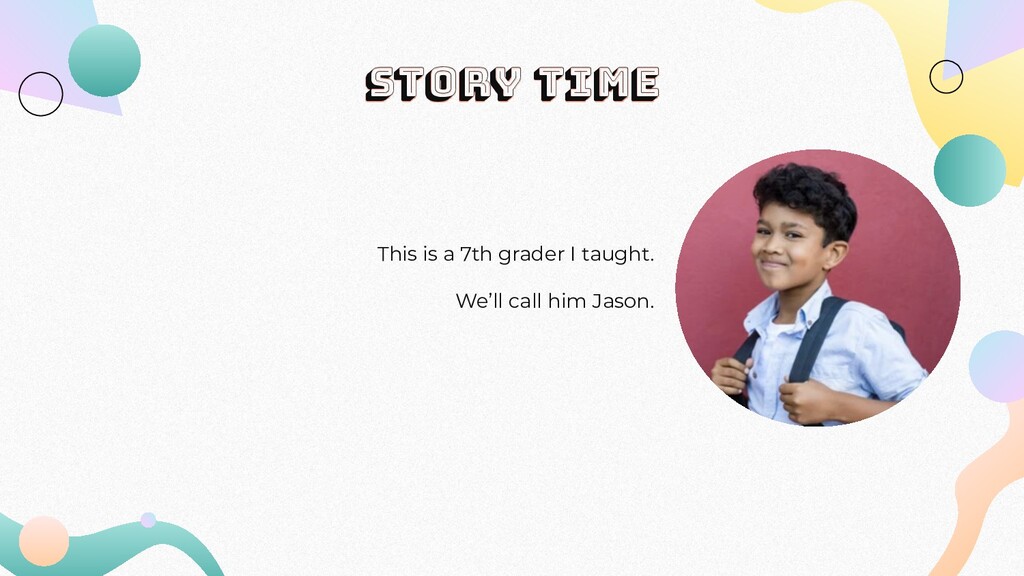
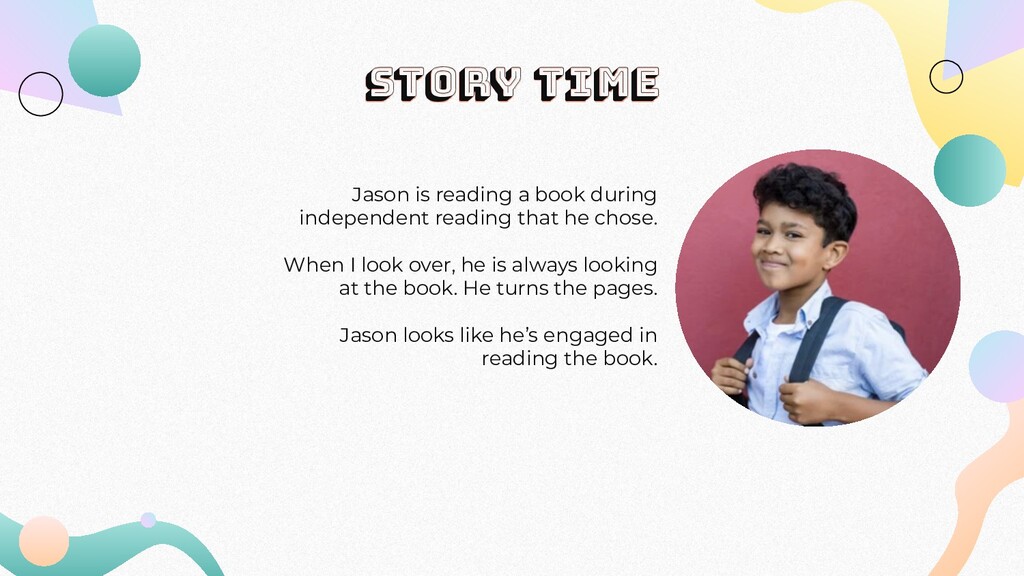
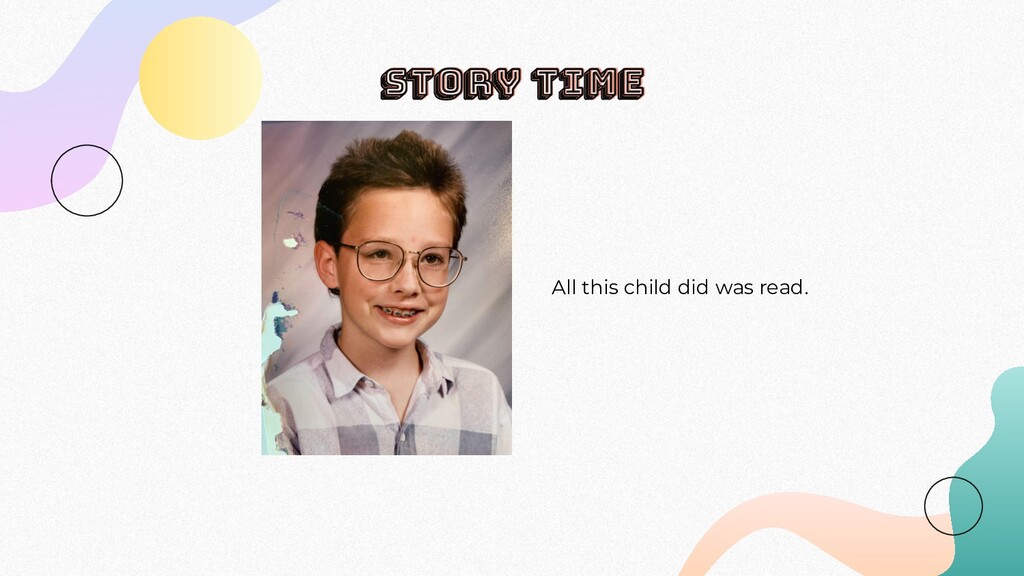
  9. Jason is reading a book during independent reading that he

    chose. When I look over, he is always looking at the book. He turns the pages. Jason looks like he’s engaged in reading the book. Story Time
  10. “How is your book?” Story Time “Good.” “What do you

    wonder about the main character?” “She’s nice.”
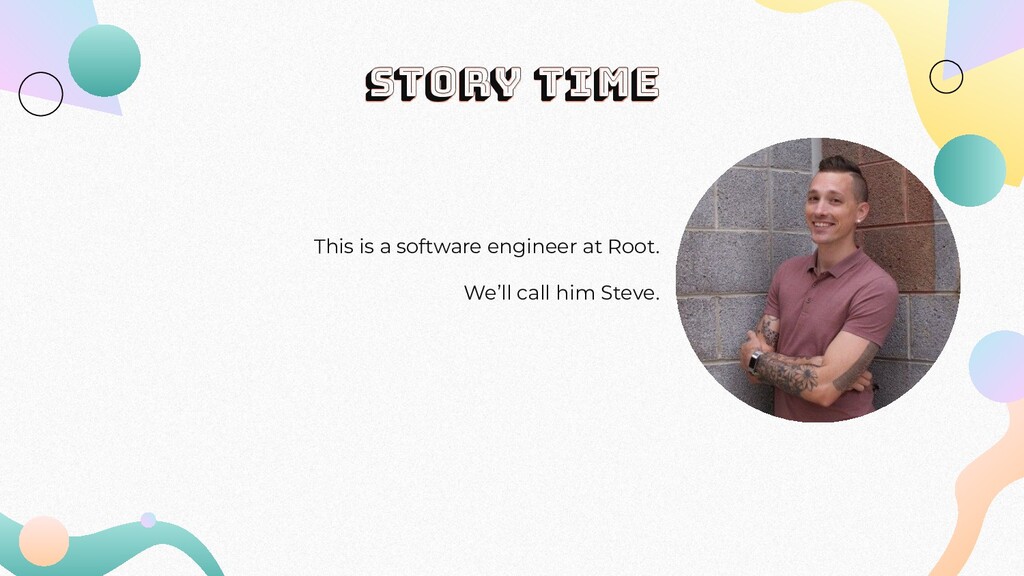
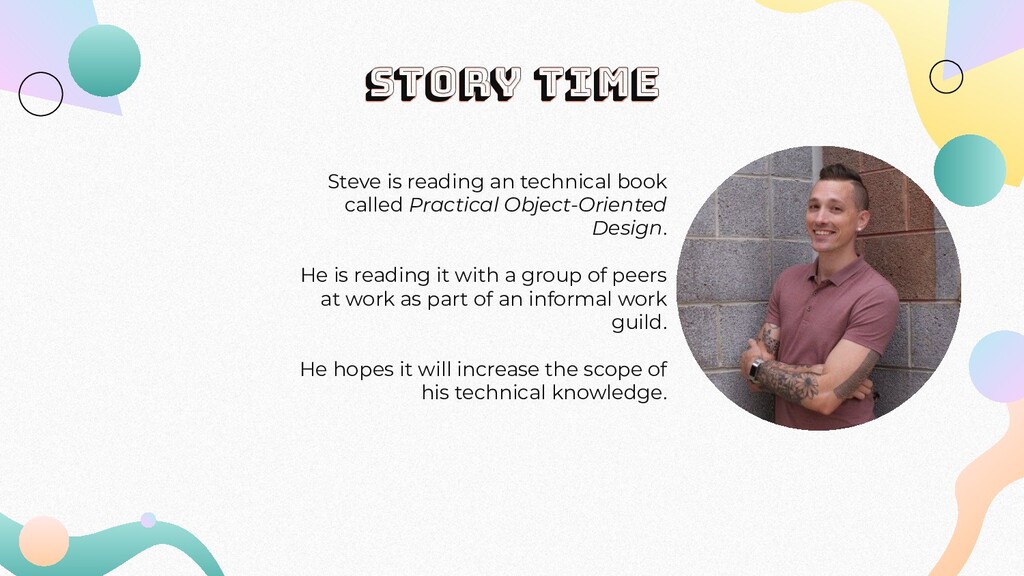
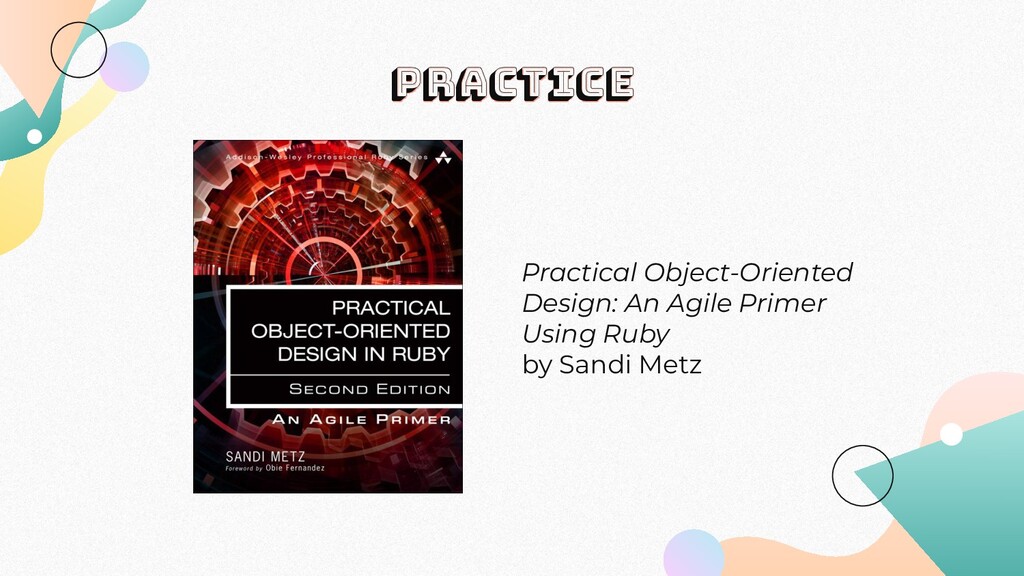
  11. Steve is reading an technical book called Practical Object-Oriented Design.

    He is reading it with a group of peers at work as part of an informal work guild. He hopes it will increase the scope of his technical knowledge. Story Time
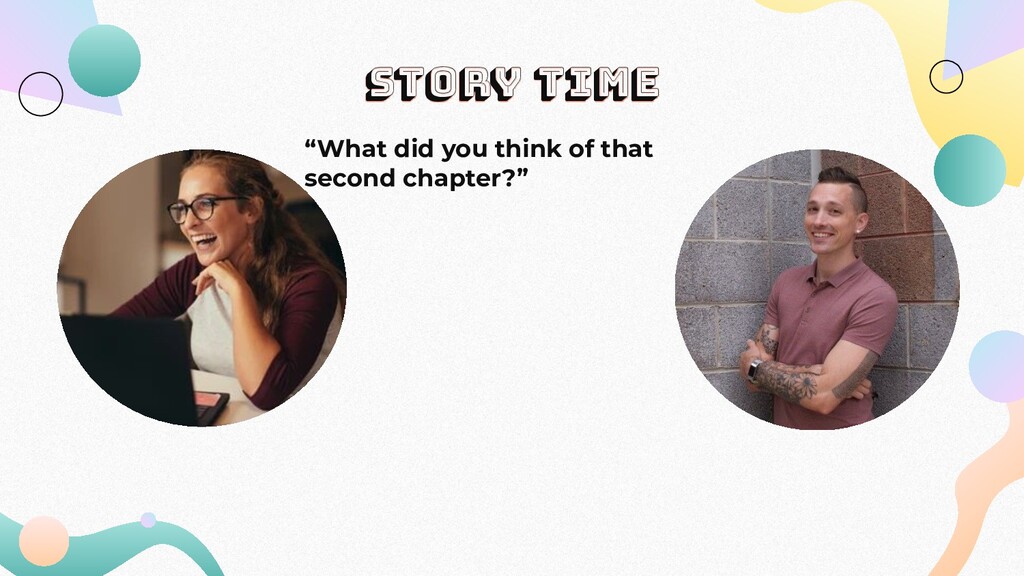
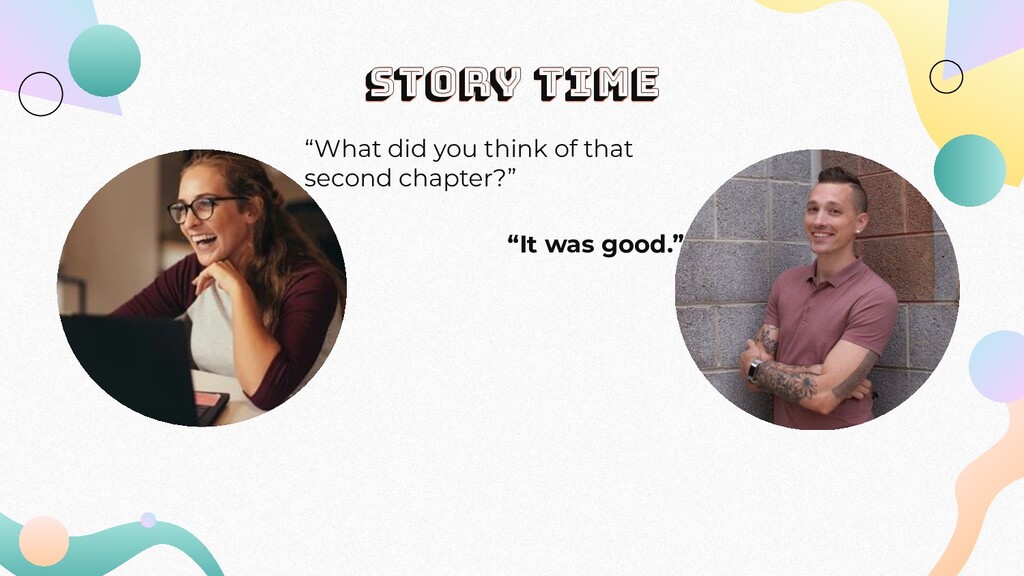
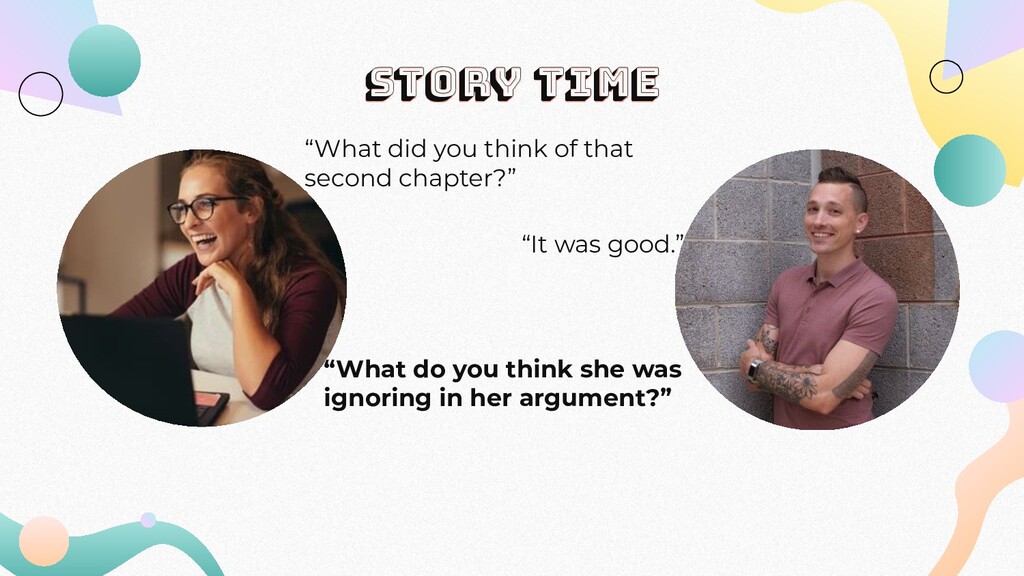
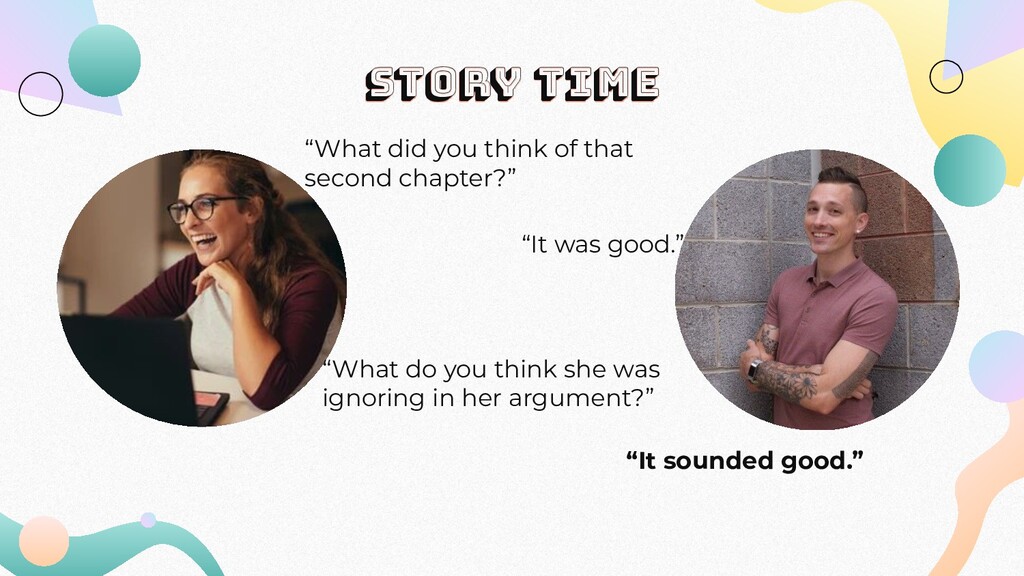
  12. Story Time “What do you think she was ignoring in

    her argument?” “It was good.” “What did you think of that second chapter?”
  13. “It sounded good.” Story Time “What do you think she

    was ignoring in her argument?” “It was good.” “What did you think of that second chapter?”
  14. What does it mean to be engaged? And how do

    readers do it? 02. ENGAGEMENT
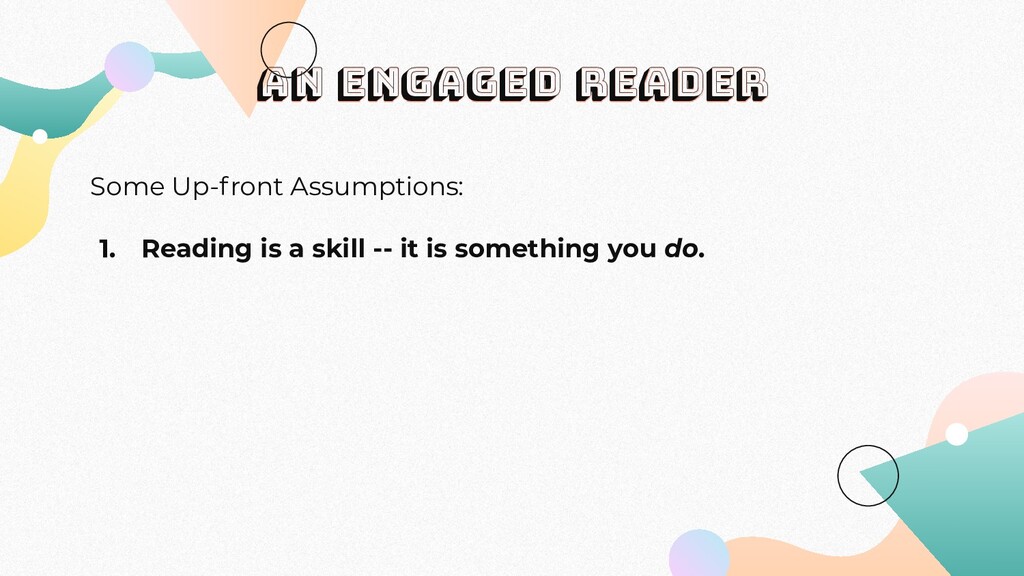
  15. Some Up-front Assumptions: 1. Reading is a skill -- it

    is something you do. An engaged reader
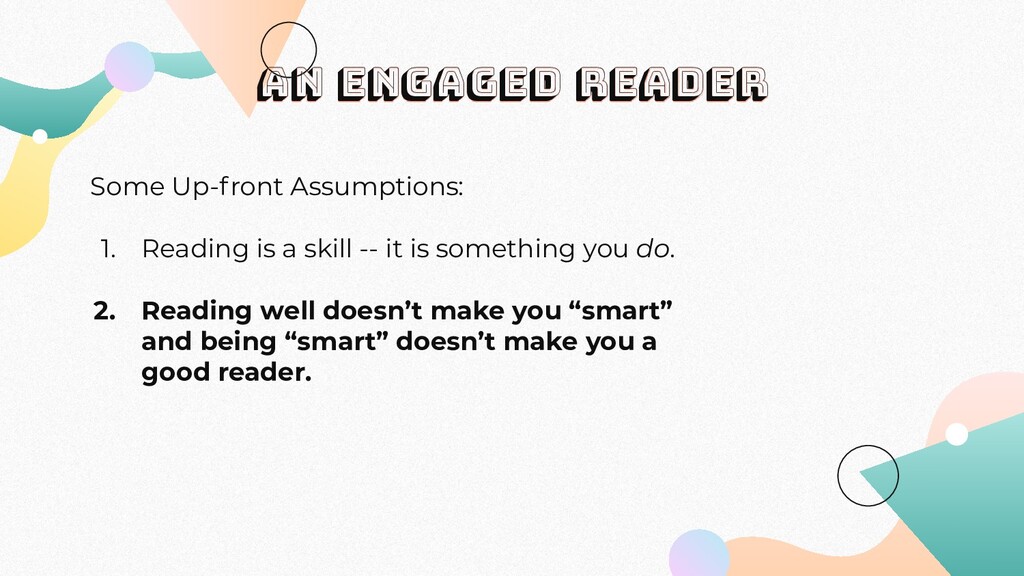
  16. Some Up-front Assumptions: 1. Reading is a skill -- it

    is something you do. 2. Reading well doesn’t make you “smart” and being “smart” doesn’t make you a good reader. An engaged reader
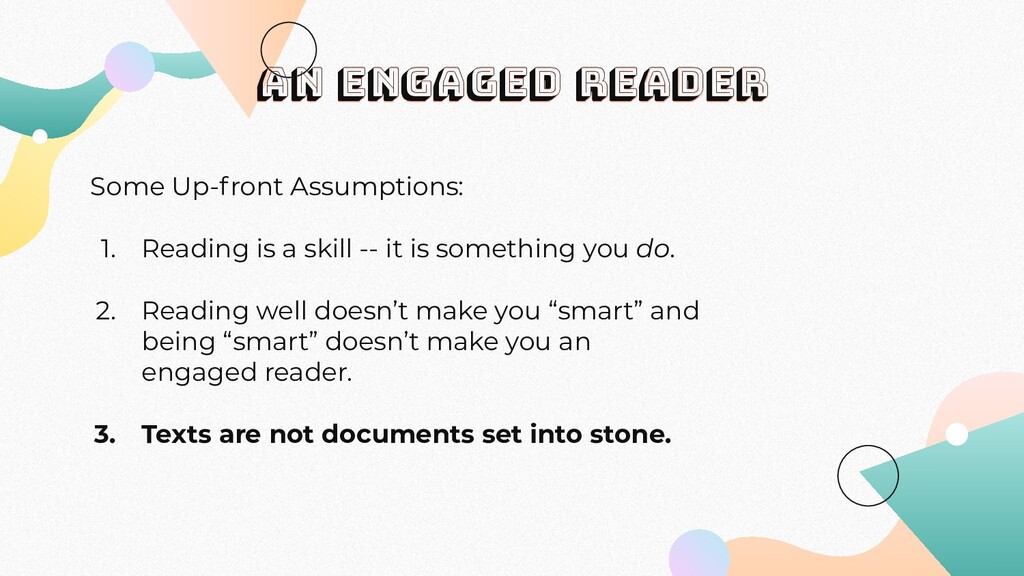
  17. Some Up-front Assumptions: 1. Reading is a skill -- it

    is something you do. 2. Reading well doesn’t make you “smart” and being “smart” doesn’t make you an engaged reader. 3. Texts are not documents set into stone. An engaged reader
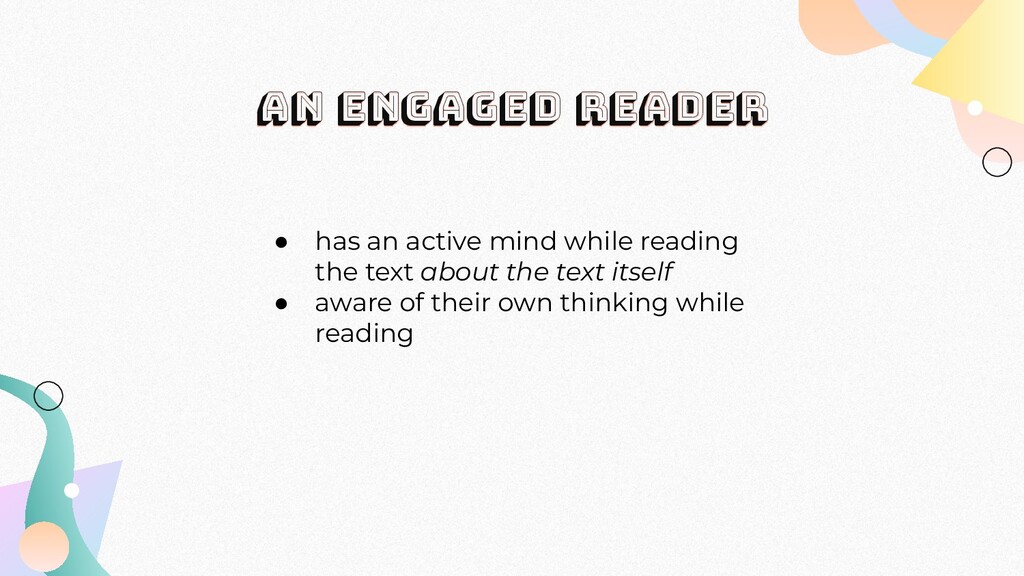
  18. An engaged reader • has an active mind while reading

    the text about the text itself • aware of their own thinking while reading
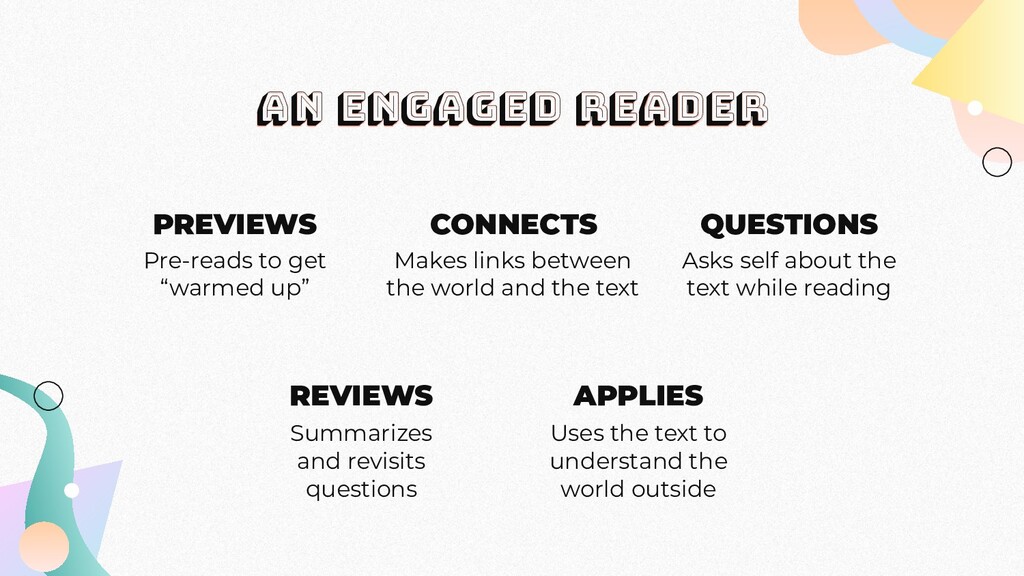
  19. PREVIEWS CONNECTS Makes links between the world and the text

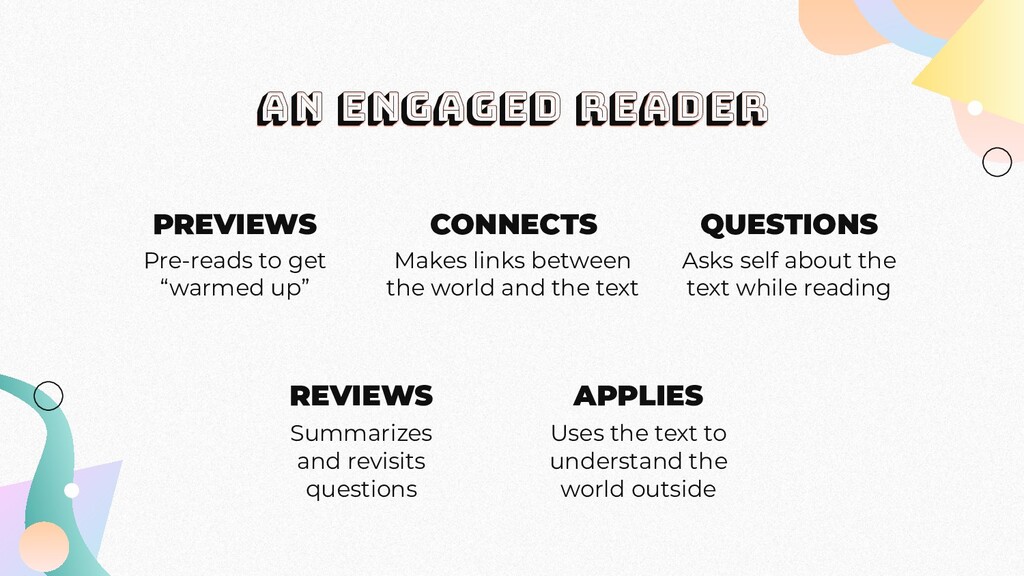
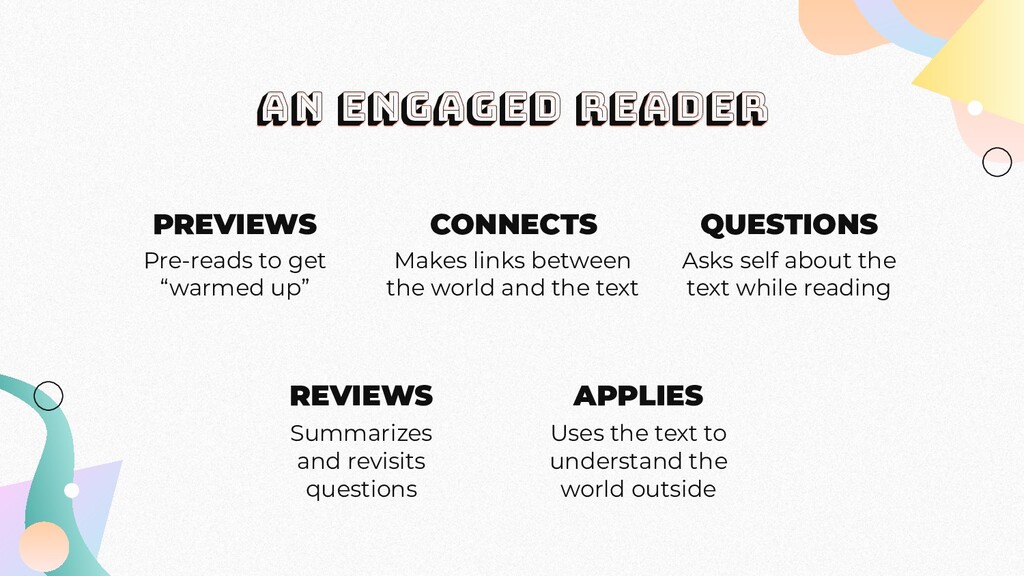
    Pre-reads to get “warmed up” QUESTIONS Asks self about the text while reading An engaged reader REVIEWS APPLIES Uses the text to understand the world outside Summarizes and revisits questions
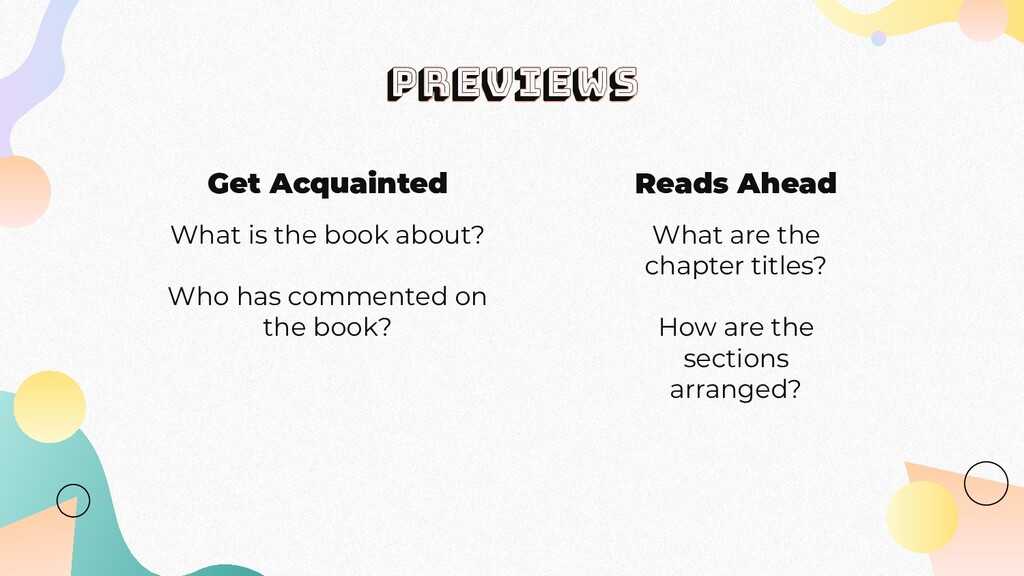
  20. Reads Ahead What are the chapter titles? How are the

    sections arranged? What is the book about? Who has commented on the book? Previews Get Acquainted
  21. Text to Text How does this match other things you’ve

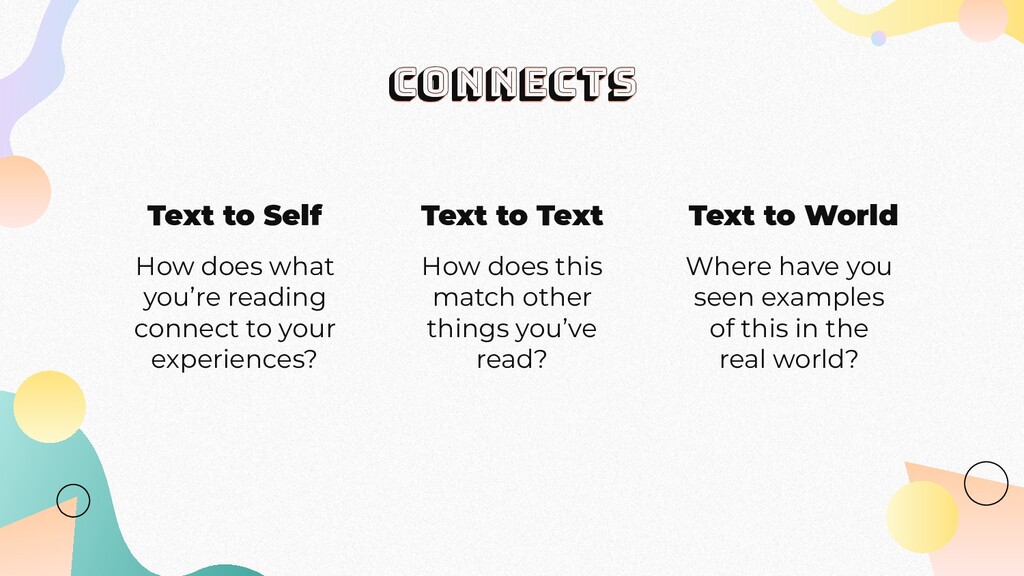
    read? How does what you’re reading connect to your experiences? Text to World Where have you seen examples of this in the real world? Connects Text to Self
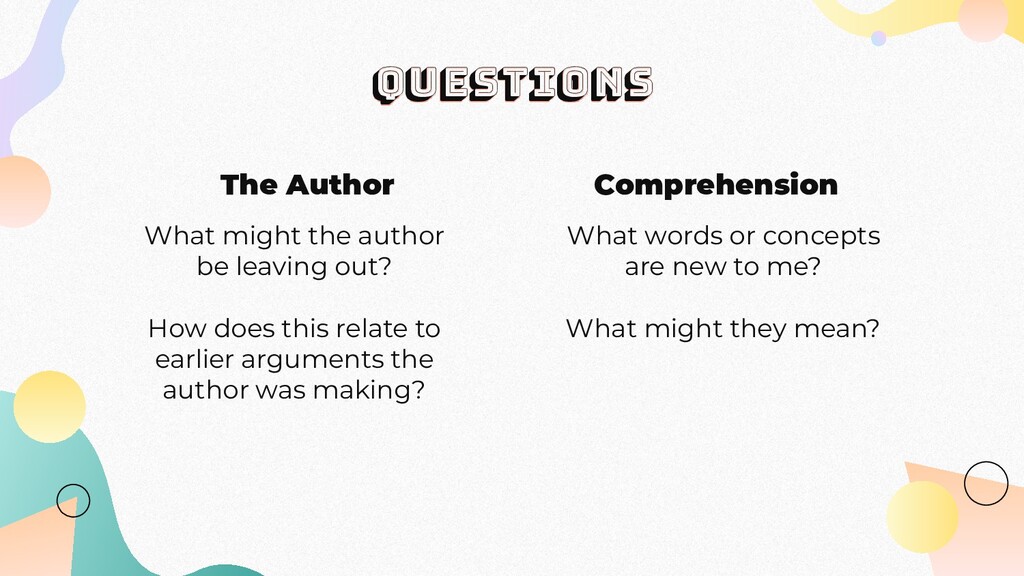
  22. Comprehension What words or concepts are new to me? What

    might they mean? Questions The Author What might the author be leaving out? How does this relate to earlier arguments the author was making?
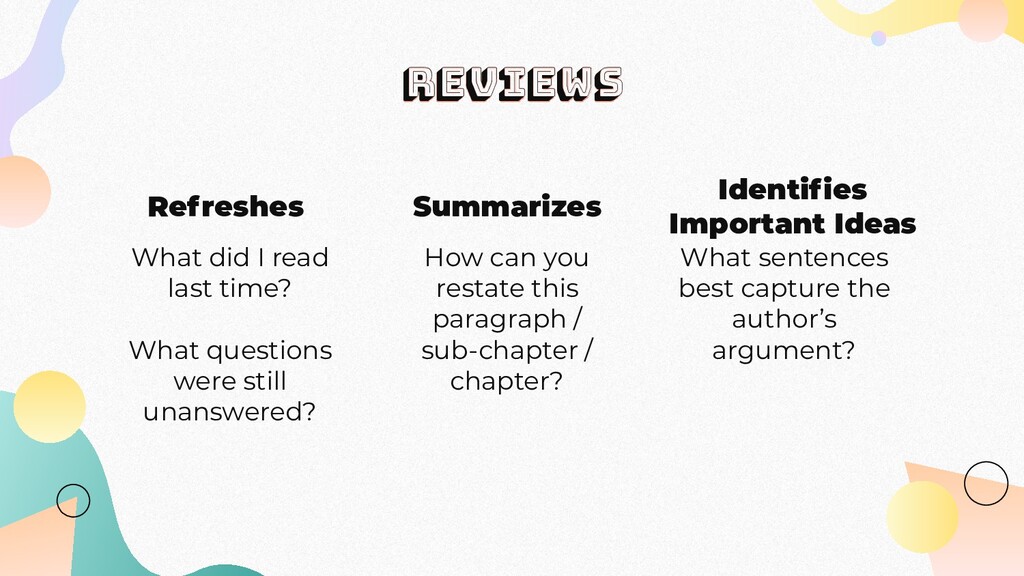
  23. Summarizes How can you restate this paragraph / sub-chapter /

    chapter? What did I read last time? What questions were still unanswered? Identifies Important Ideas What sentences best capture the author’s argument? Reviews Refreshes
  24. With Other Texts How does this text inform other texts

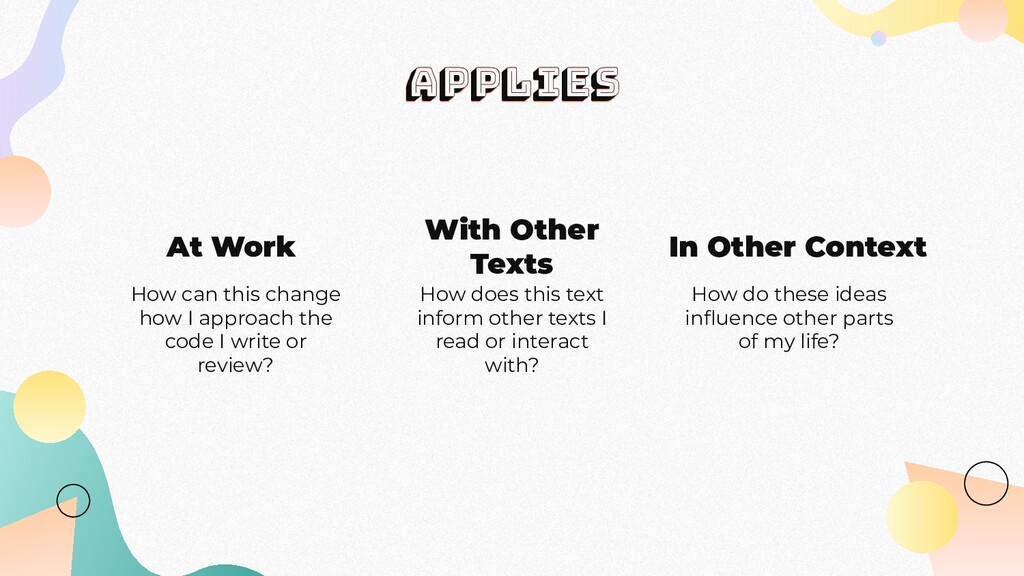
    I read or interact with? How can this change how I approach the code I write or review? In Other Context How do these ideas influence other parts of my life? Applies At Work
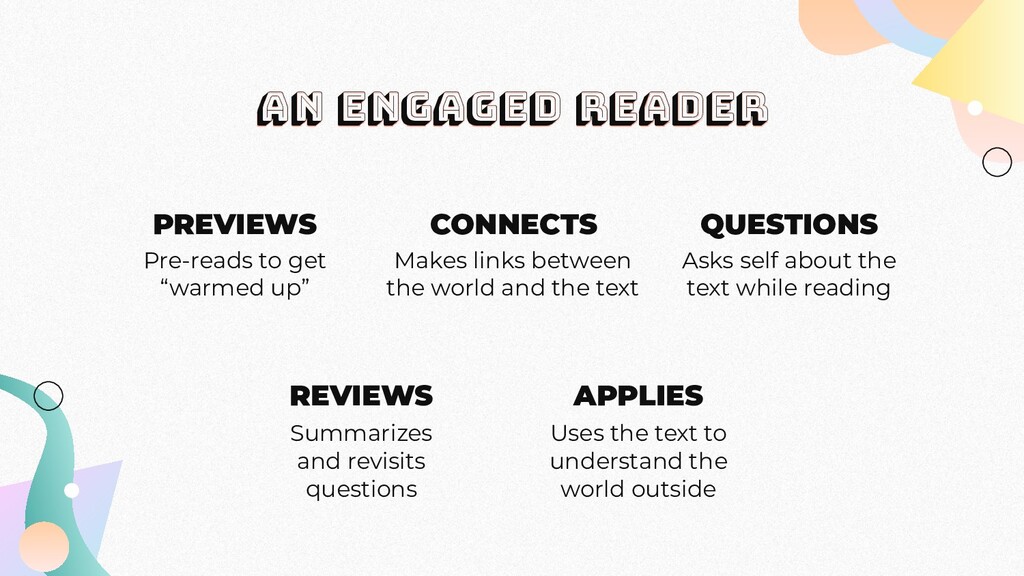
  25. PREVIEWS CONNECTS Makes links between the world and the text

    Pre-reads to get “warmed up” QUESTIONS Asks self about the text while reading An engaged reader REVIEWS APPLIES Uses the text to understand the world outside Summarizes and revisits questions
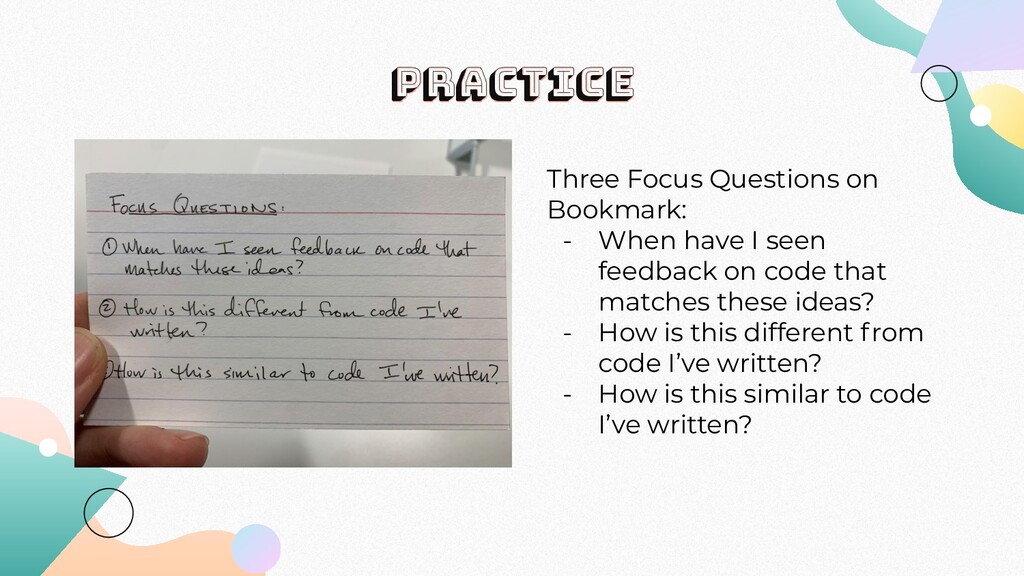
  26. practice Three Focus Questions on Bookmark: - When have I

    seen feedback on code that matches these ideas? - How is this different from code I’ve written? - How is this similar to code I’ve written?
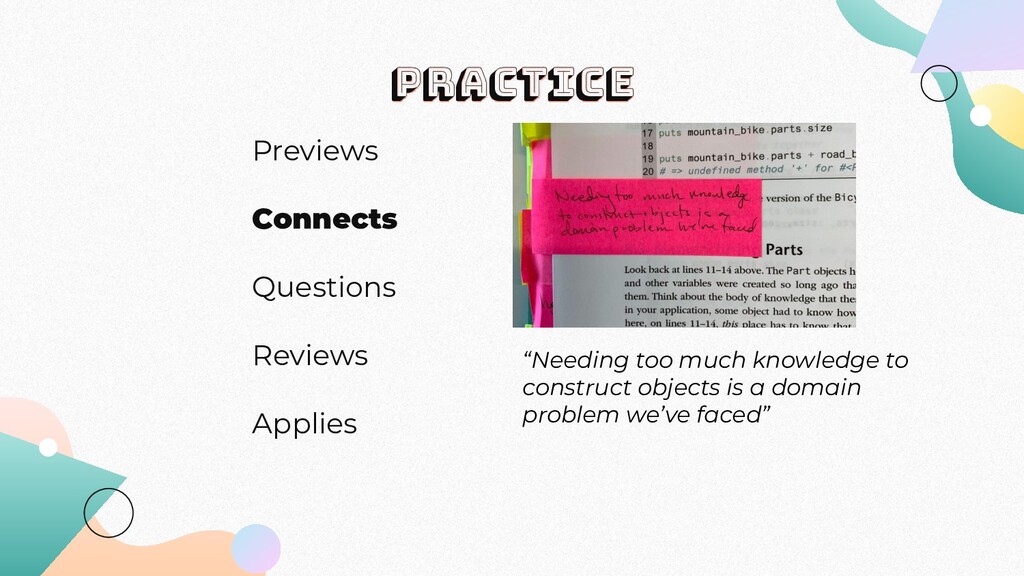
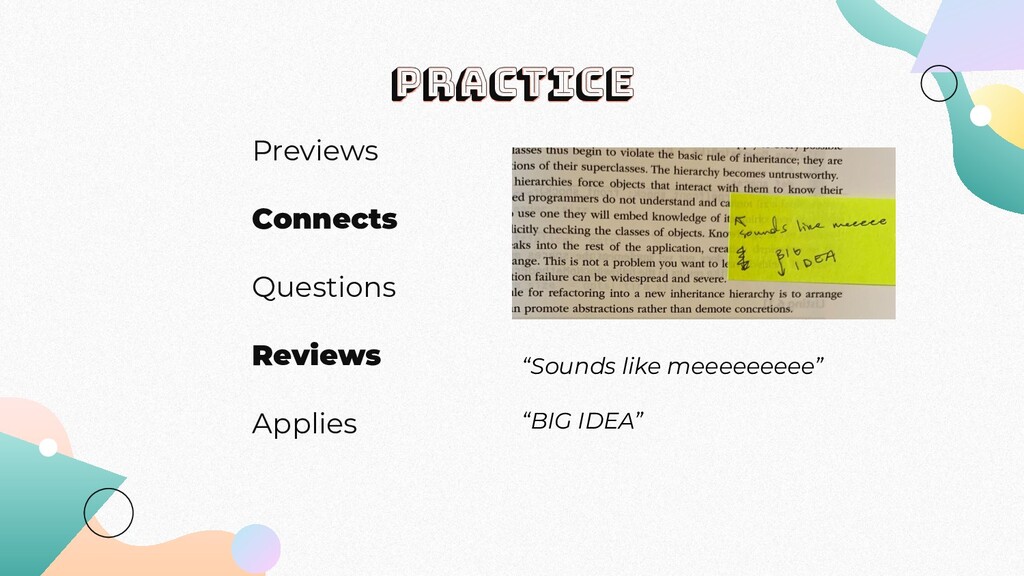
  27. practice Previews Connects Questions Reviews Applies “Needing too much knowledge

    to construct objects is a domain problem we’ve faced”
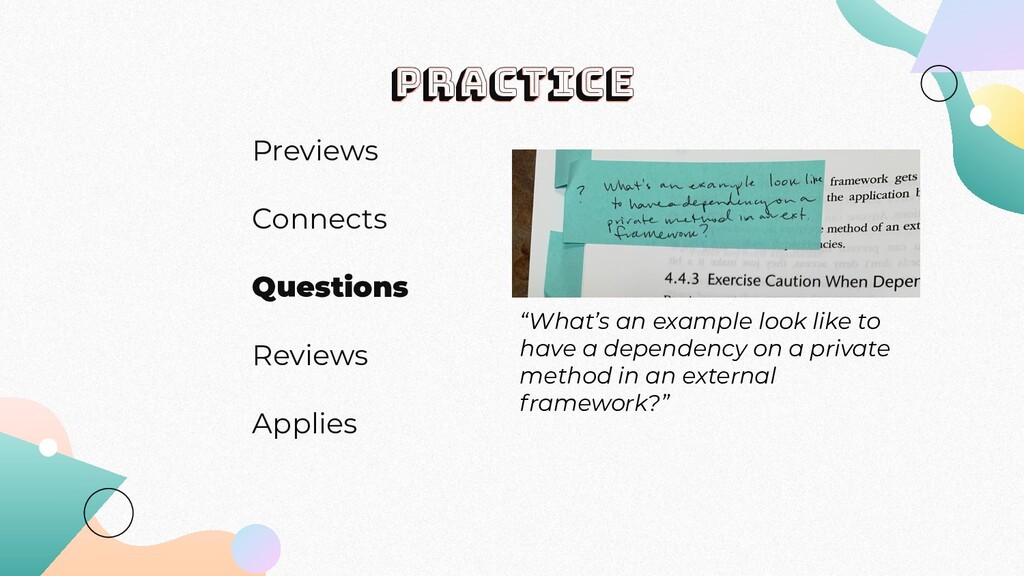
  28. practice Previews Connects Questions Reviews Applies “What’s an example look

    like to have a dependency on a private method in an external framework?”
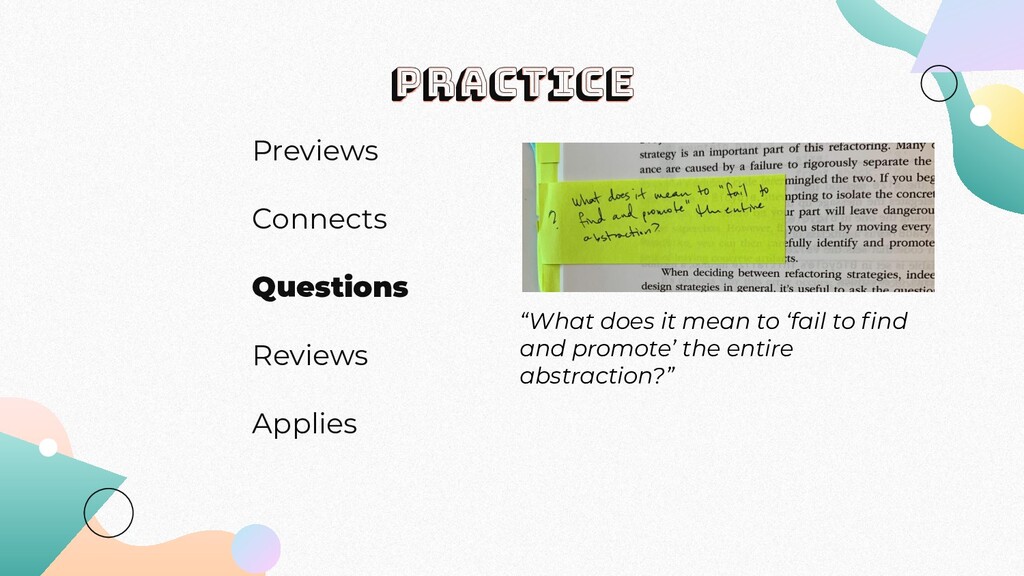
  29. practice Previews Connects Questions Reviews Applies “What does it mean

    to ‘fail to find and promote’ the entire abstraction?”
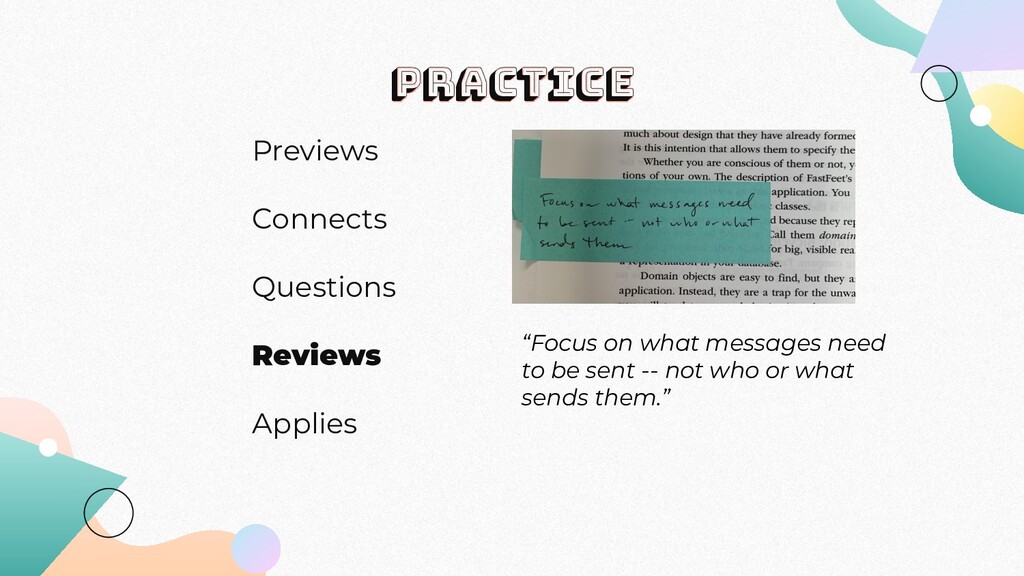
  30. practice Previews Connects Questions Reviews Applies “Focus on what messages

    need to be sent -- not who or what sends them.”
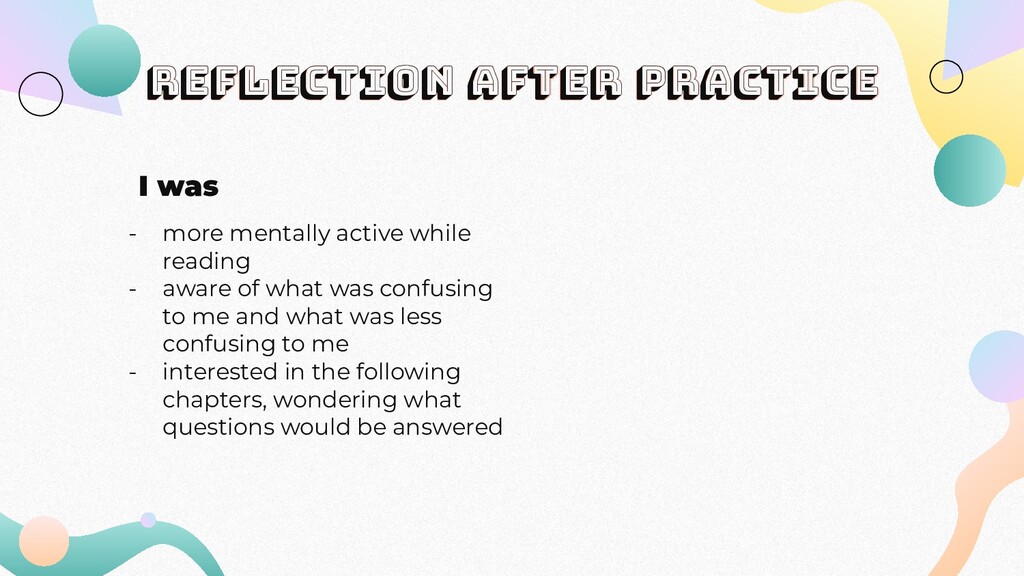
  31. - more mentally active while reading - aware of what

    was confusing to me and what was less confusing to me - interested in the following chapters, wondering what questions would be answered Reflection after practice I was
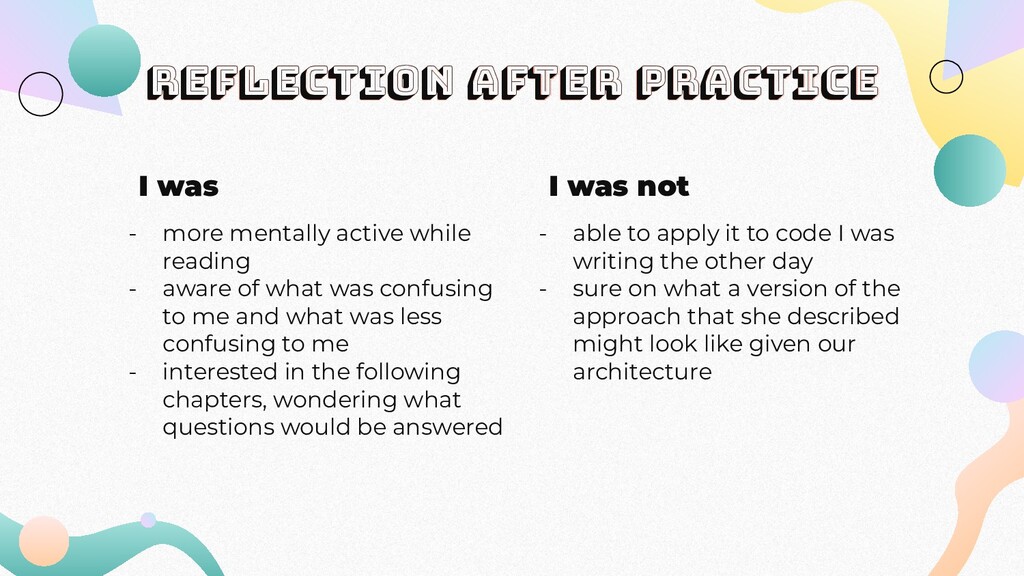
  32. - more mentally active while reading - aware of what

    was confusing to me and what was less confusing to me - interested in the following chapters, wondering what questions would be answered Reflection after practice I was - able to apply it to code I was writing the other day - sure on what a version of the approach that she described might look like given our architecture I was not
  33. PREVIEWS CONNECTS Makes links between the world and the text

    Pre-reads to get “warmed up” QUESTIONS Asks self about the text while reading An engaged reader REVIEWS APPLIES Uses the text to understand the world outside Summarizes and revisits questions
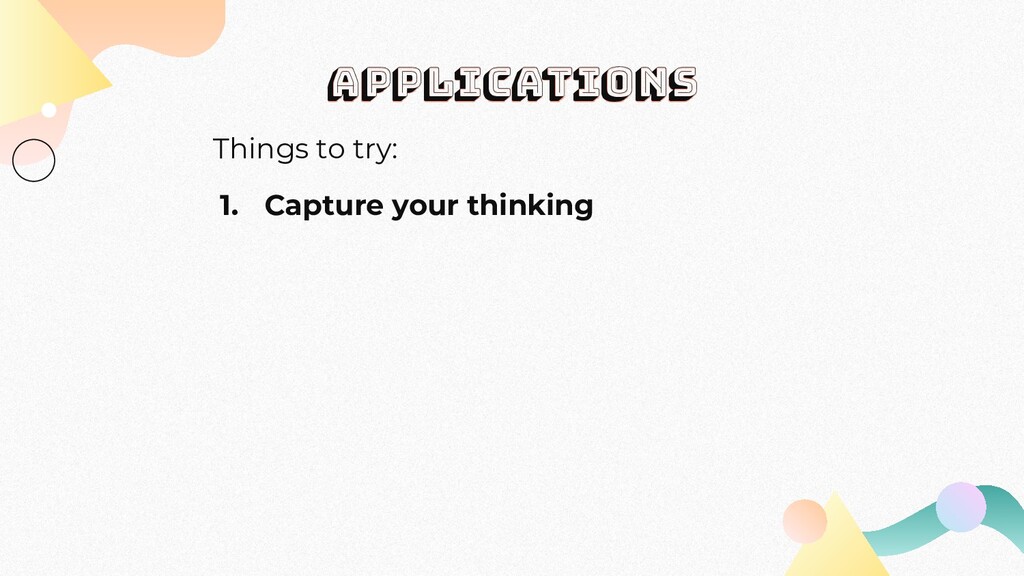
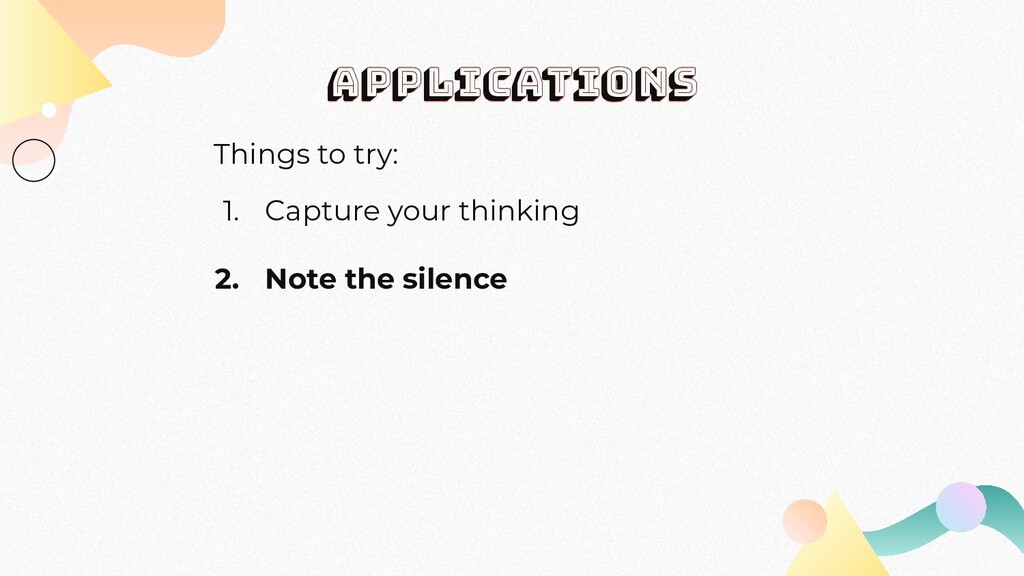
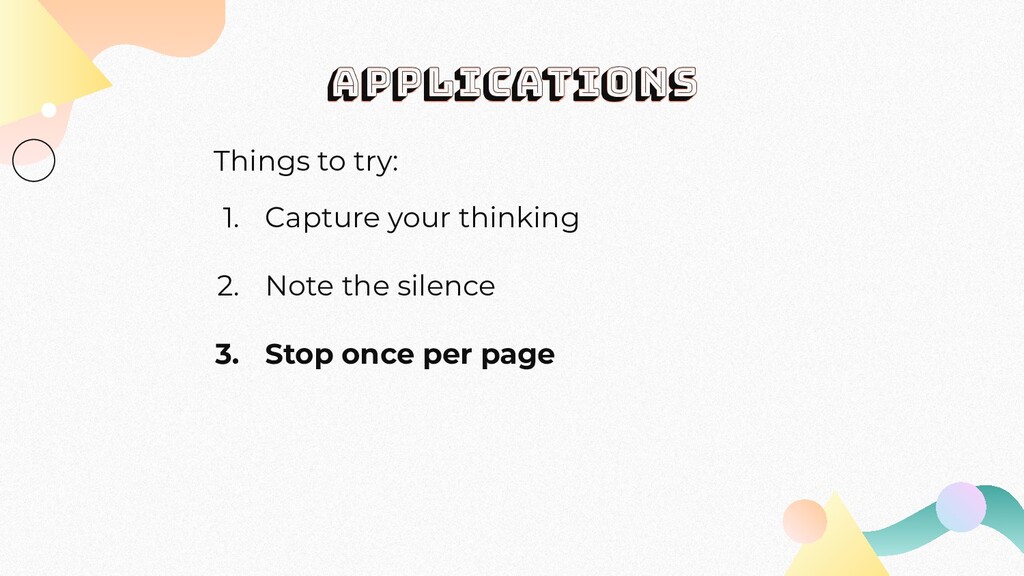
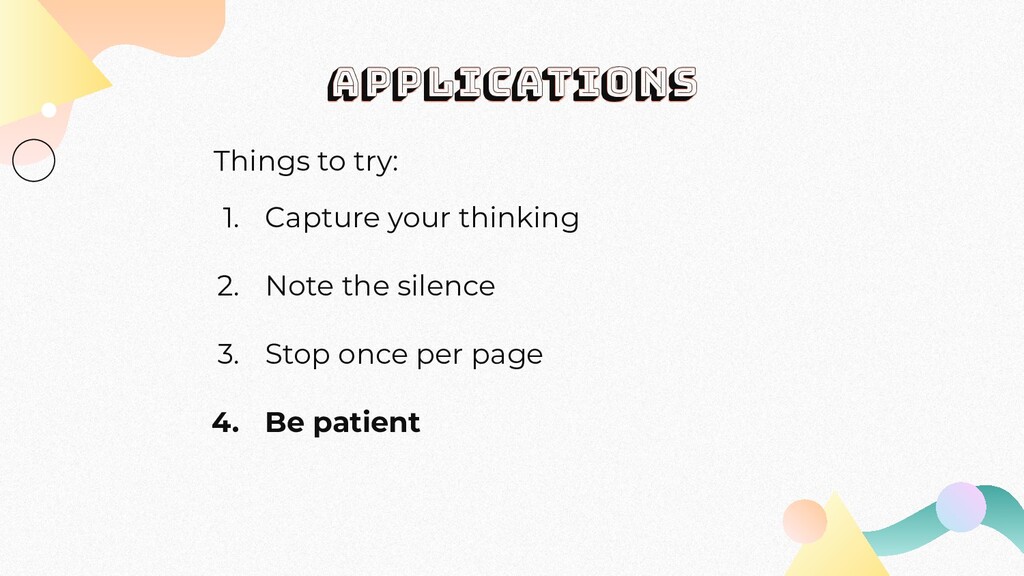
  34. applications Things to try: 1. Capture your thinking 2. Note

    the silence 3. Stop once per page 4. Be patient
  35. applications Further Questions: 1. How do we bridge the learning

    from texts into the practical application in day to day work?
  36. applications Further Questions: 1. How do we bridge the learning

    from texts into the practical application in day to day work? 2. How can this be applied to other confusing or challenging parts about being an engineer?
  37. PREVIEWS CONNECTS Makes links between the world and the text

    Pre-reads to get “warmed up” QUESTIONS Asks self about the text while reading An engaged reader REVIEWS APPLIES Uses the text to understand the world outside Summarizes and revisits questions
  38. CREDITS: This presentation template was created by Slidesgo, including icons

    by Flaticon, and infographics & images by Freepik Thanks! Steve Lynch [email protected]