• To solve a problem. • To answer a question. • To make a decision. • To fulfill a need to understand something. We think about lots of things every day, e.g. our current studies, postgraduate studies later on, career & future life. We also think about less complicated things, such as what to wear today, what to have for dinner tonight, whether to watch TV or go shopping, surf the Internet or check email, etc.
weight: 1.5 kg. • Average size: 1400 c.c. • Sends or receives messages through nerves. • Nourished by oxygen through blood supply. You can become a better thinker by learning how to use your brain to its maximum potential
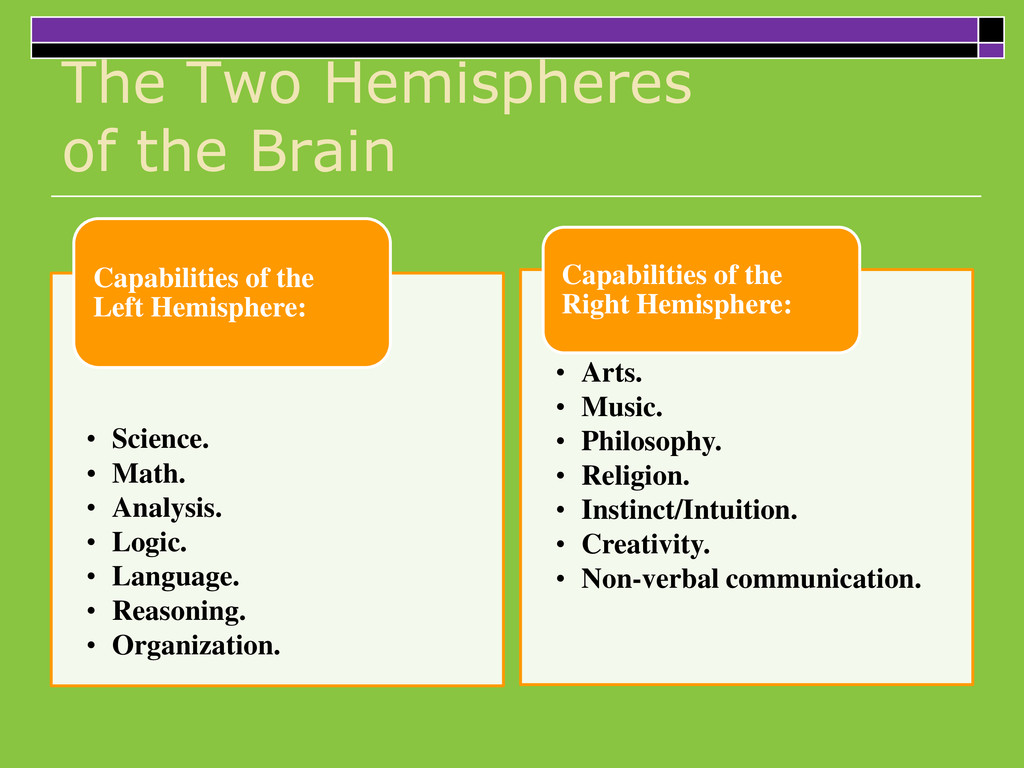
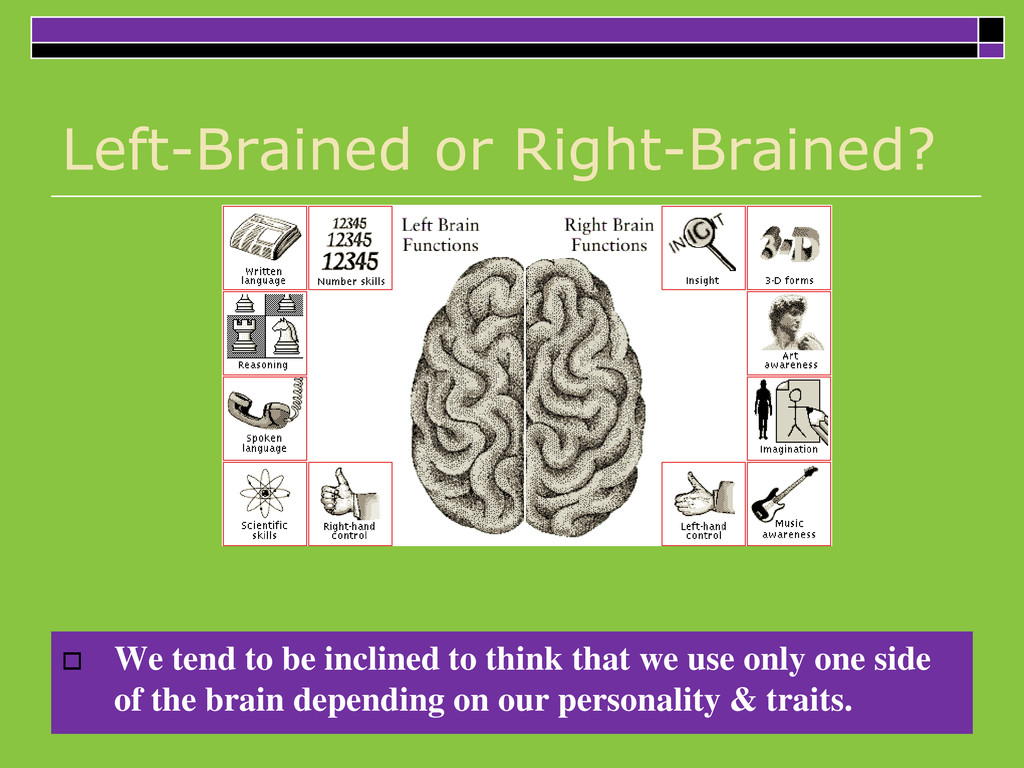
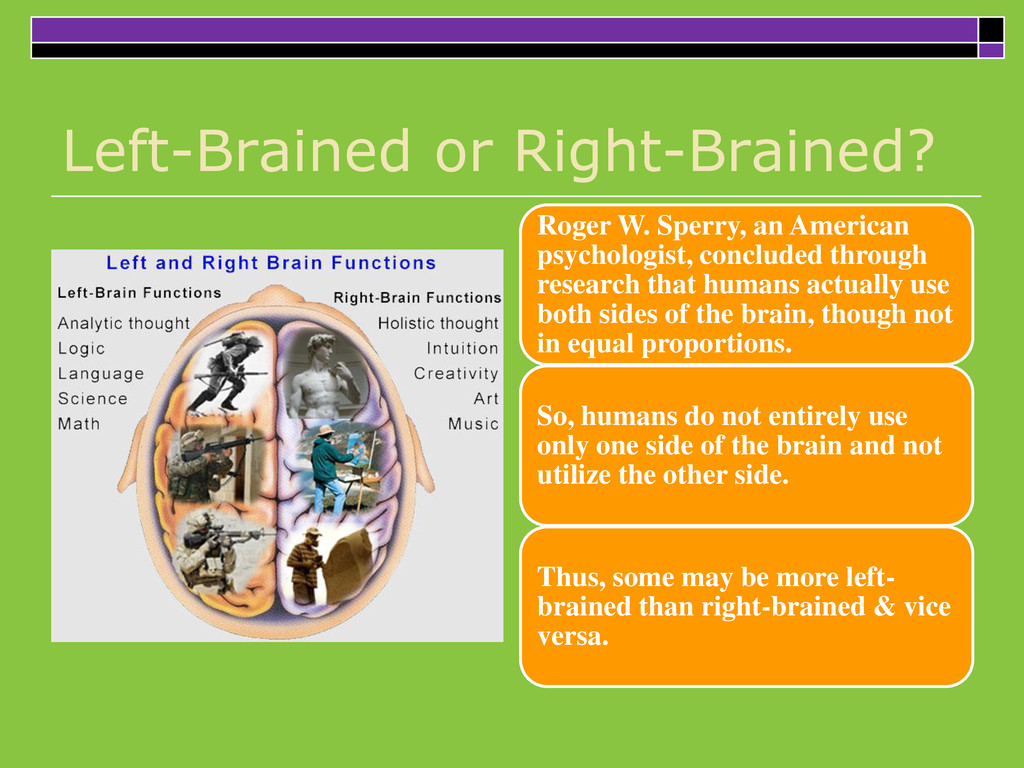
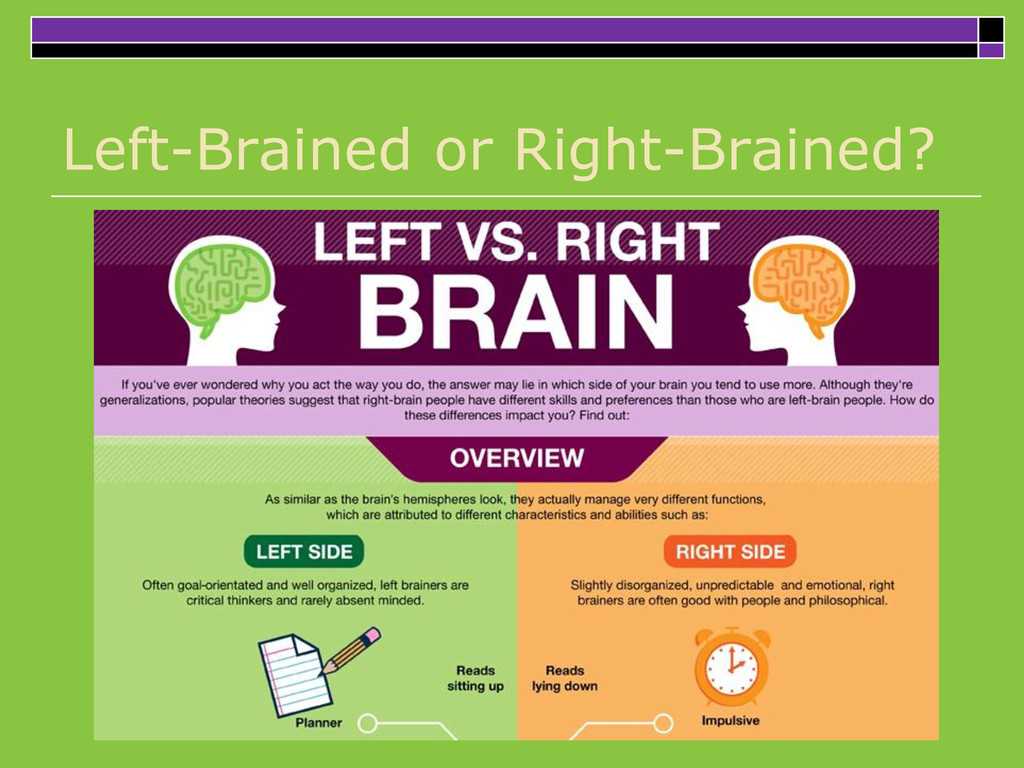
through research that humans actually use both sides of the brain, though not in equal proportions. So, humans do not entirely use only one side of the brain and not utilize the other side. Thus, some may be more left- brained than right-brained & vice versa.
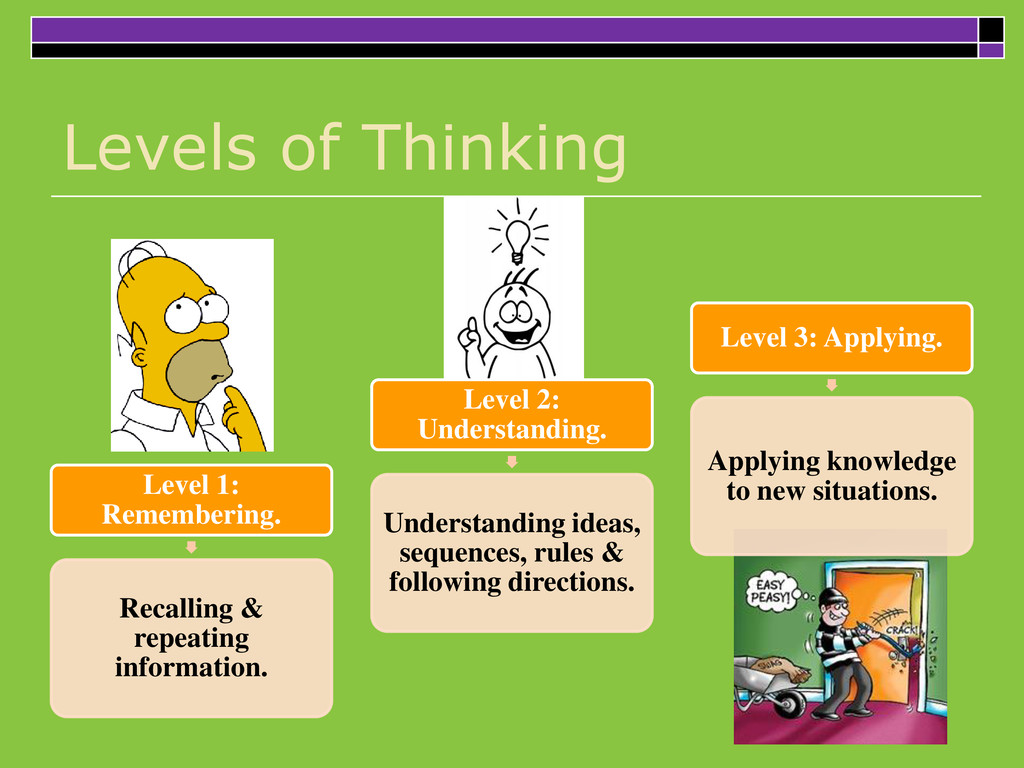
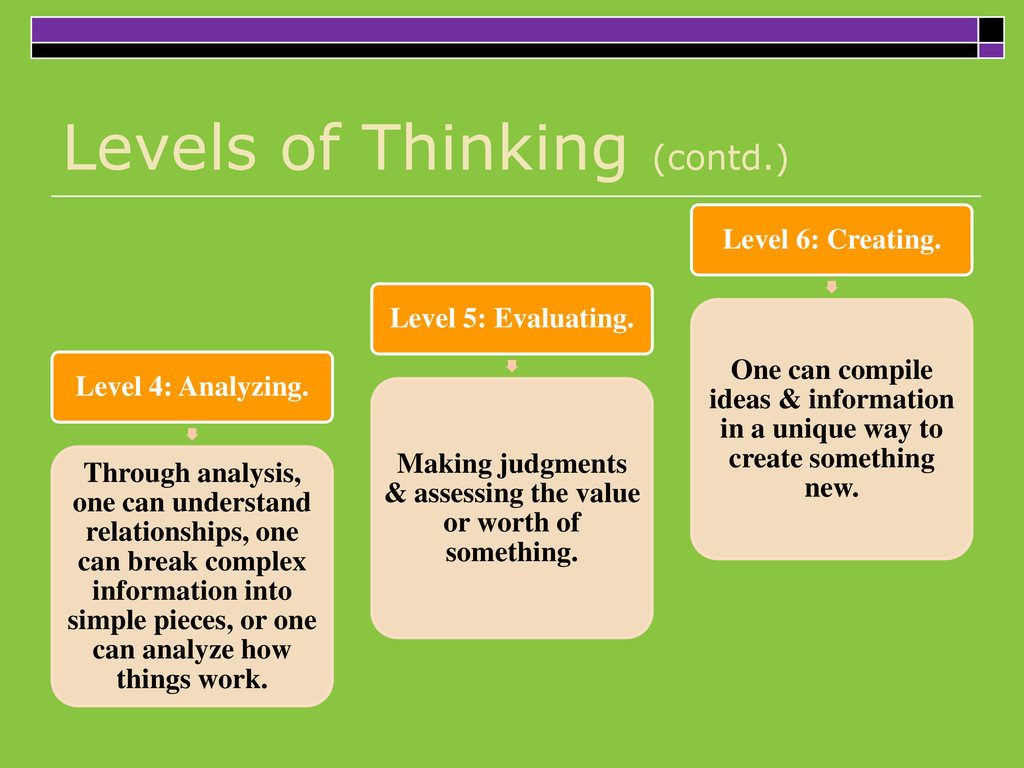
can understand relationships, one can break complex information into simple pieces, or one can analyze how things work. Level 5: Evaluating. Making judgments & assessing the value or worth of something. Level 6: Creating. One can compile ideas & information in a unique way to create something new.
of life. • To think about what we learn & study, as well as • To solve problems that come our way. During our education years, we are urged • Generating ideas • Solving problems that occur at work, & • Making decisions that help our organization become better. When we start working, we are expected to contribute to our workplace by
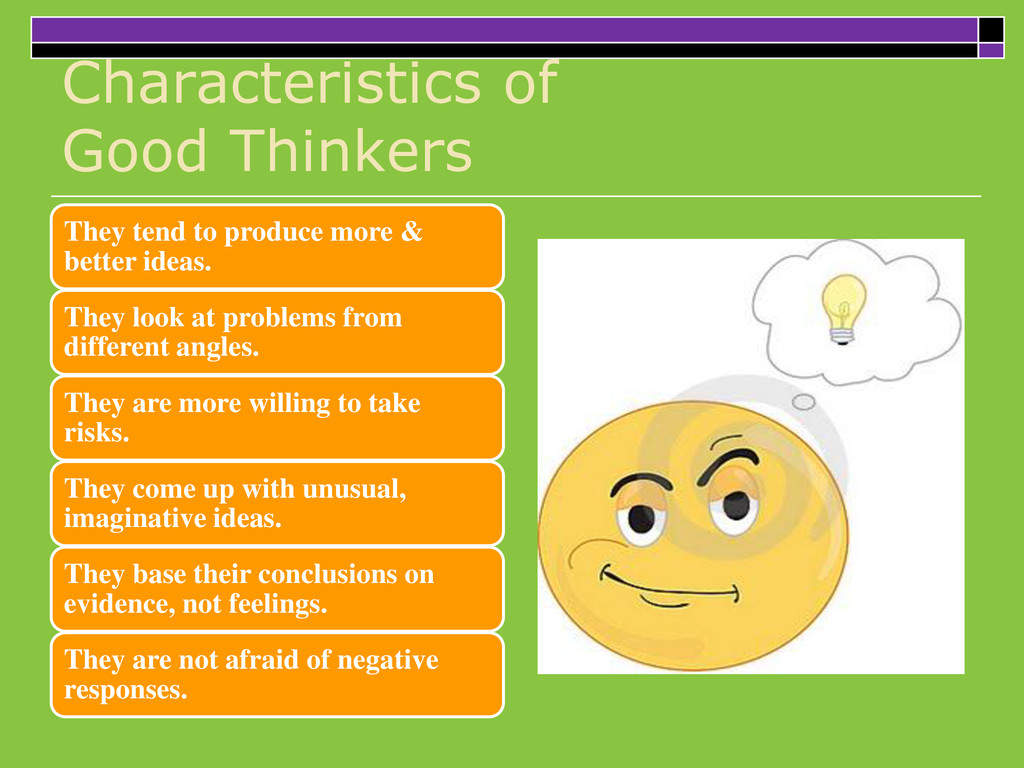
better ideas. They look at problems from different angles. They are more willing to take risks. They come up with unusual, imaginative ideas. They base their conclusions on evidence, not feelings. They are not afraid of negative responses.
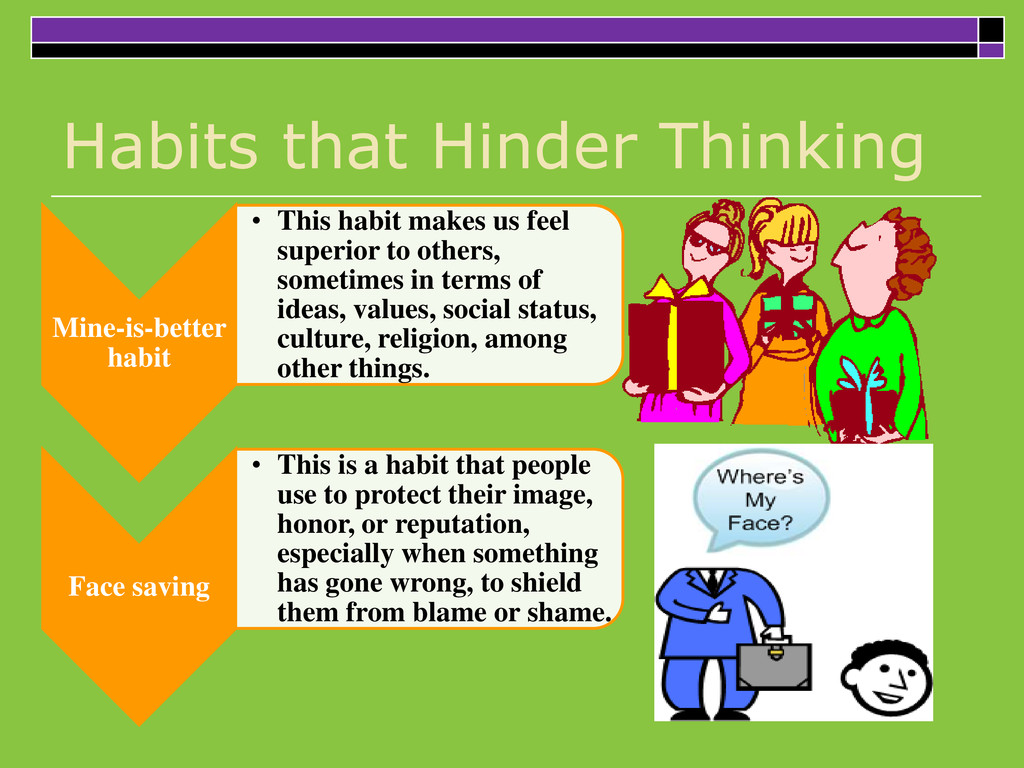
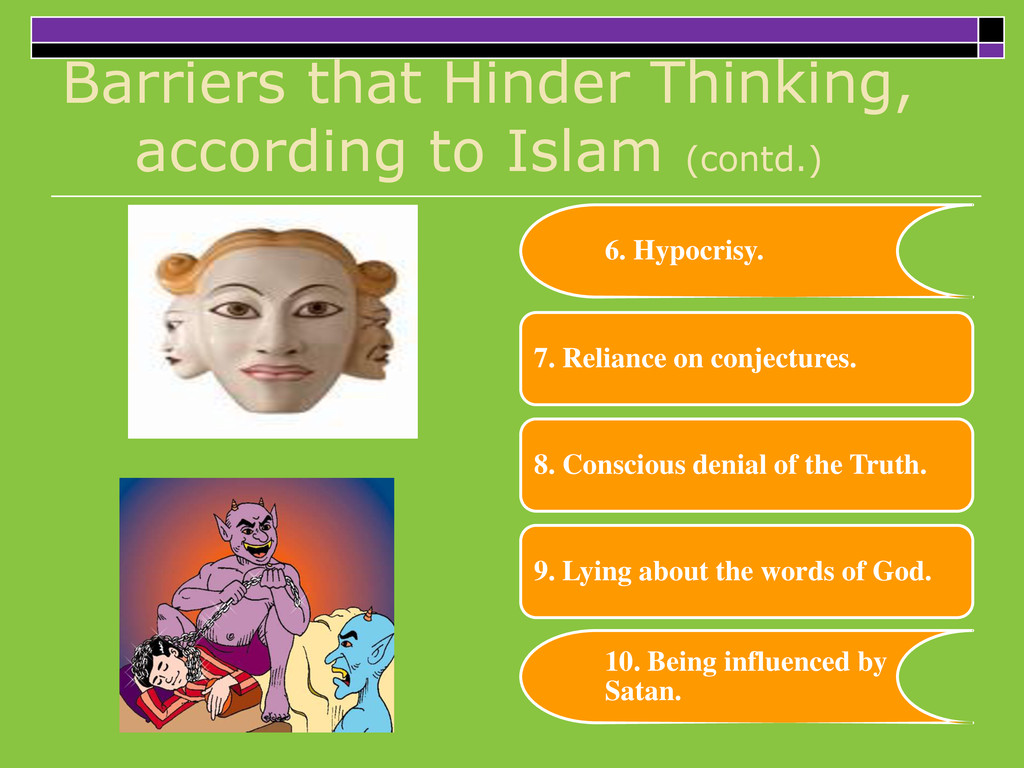
us feel superior to others, sometimes in terms of ideas, values, social status, culture, religion, among other things. Face saving • This is a habit that people use to protect their image, honor, or reputation, especially when something has gone wrong, to shield them from blame or shame.
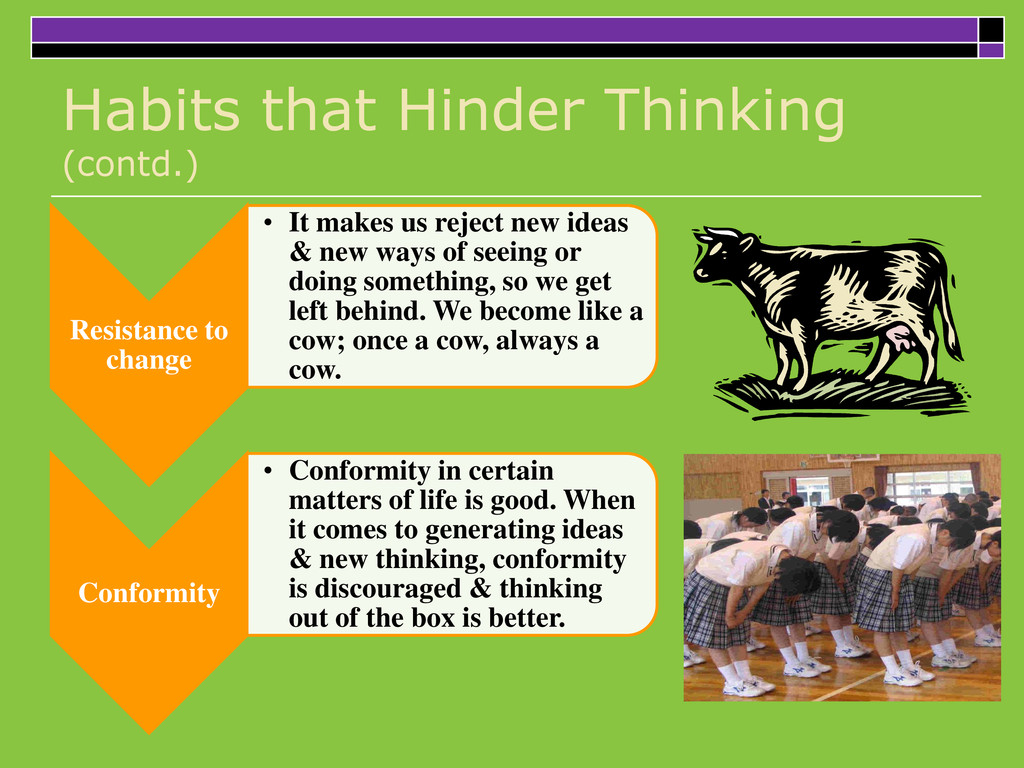
makes us reject new ideas & new ways of seeing or doing something, so we get left behind. We become like a cow; once a cow, always a cow. Conformity • Conformity in certain matters of life is good. When it comes to generating ideas & new thinking, conformity is discouraged & thinking out of the box is better.
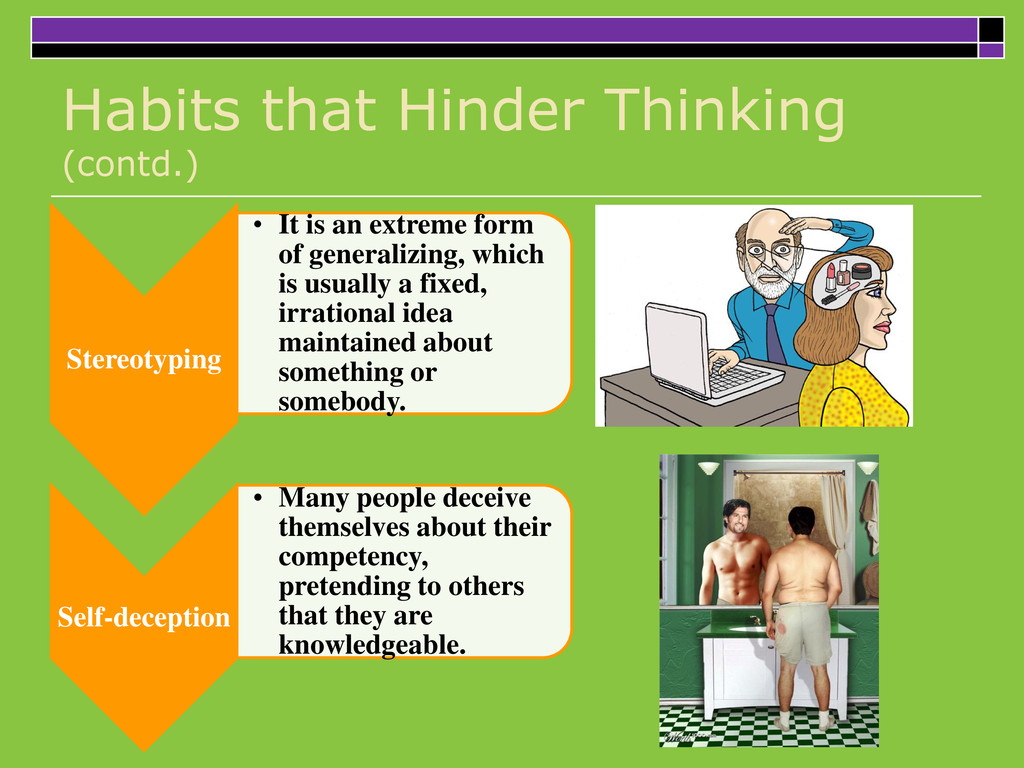
extreme form of generalizing, which is usually a fixed, irrational idea maintained about something or somebody. Self-deception • Many people deceive themselves about their competency, pretending to others that they are knowledgeable.
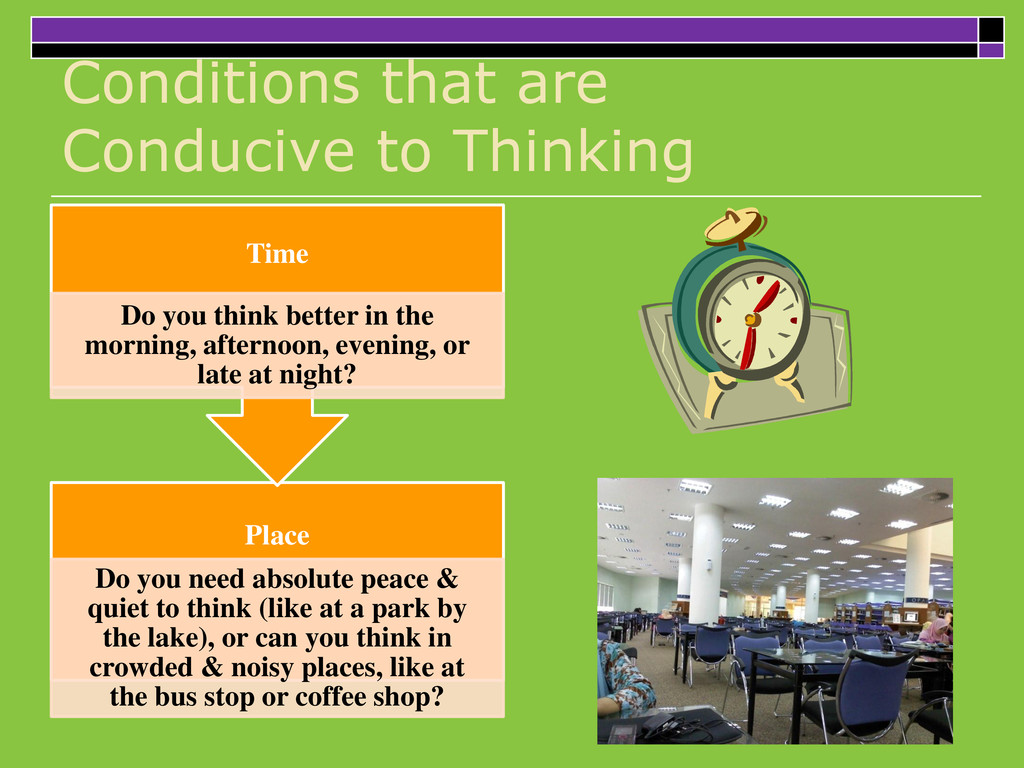
absolute peace & quiet to think (like at a park by the lake), or can you think in crowded & noisy places, like at the bus stop or coffee shop? Time Do you think better in the morning, afternoon, evening, or late at night?
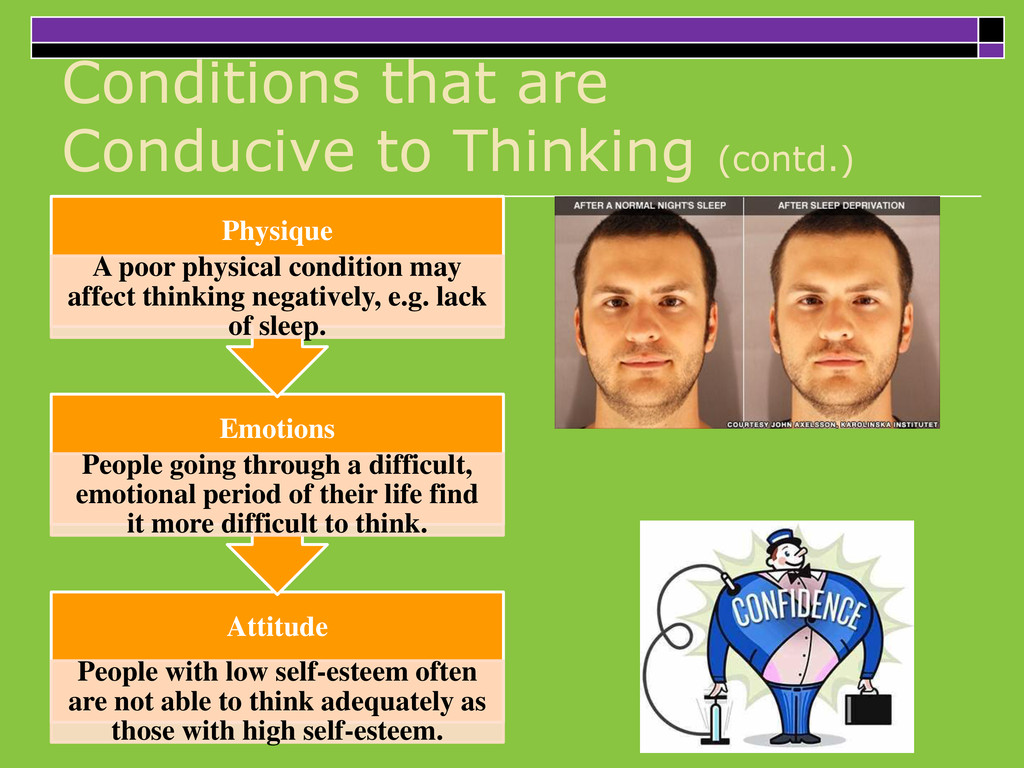
low self-esteem often are not able to think adequately as those with high self-esteem. Emotions People going through a difficult, emotional period of their life find it more difficult to think. Physique A poor physical condition may affect thinking negatively, e.g. lack of sleep.
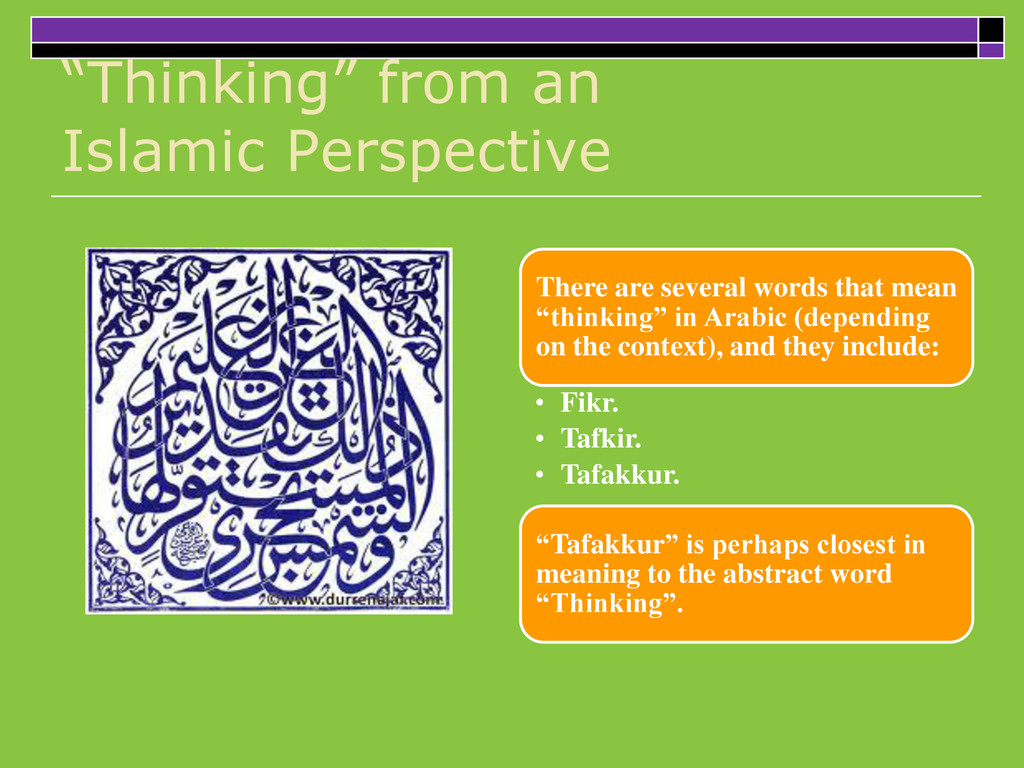
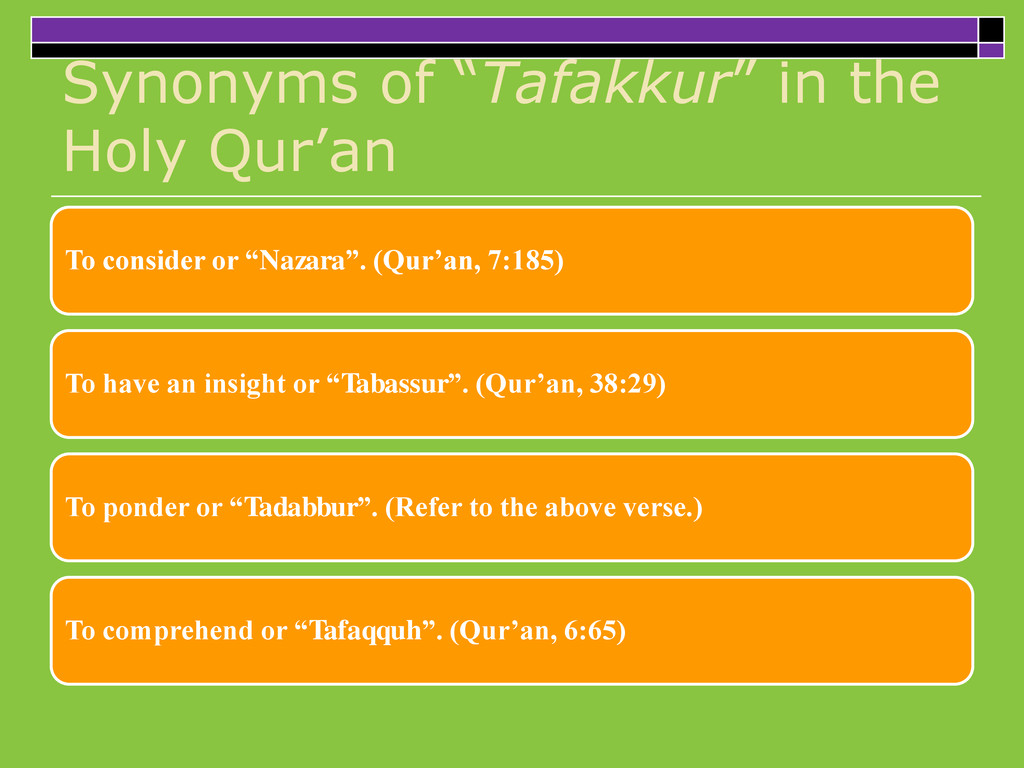
mean “thinking” in Arabic (depending on the context), and they include: • Fikr. • Tafkir. • Tafakkur. “Tafakkur” is perhaps closest in meaning to the abstract word “Thinking”.
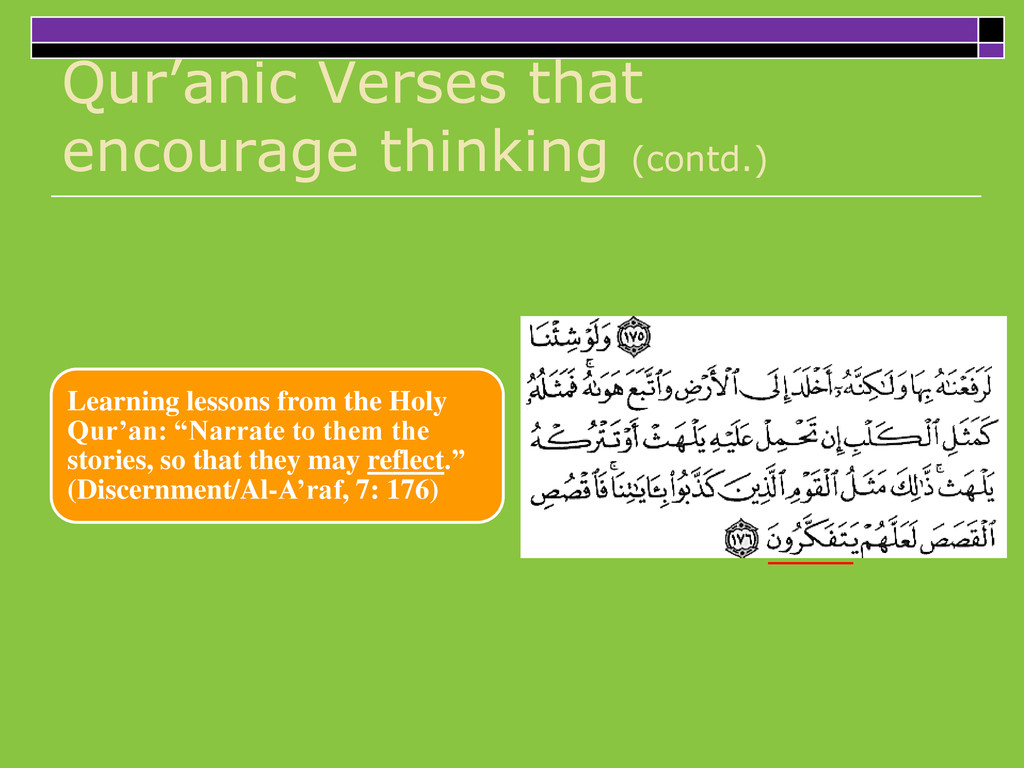
“Nazara”. (Qur’an, 7:185) To have an insight or “Tabassur”. (Qur’an, 38:29) To ponder or “Tadabbur”. (Refer to the above verse.) To comprehend or “Tafaqquh”. (Qur’an, 6:65)
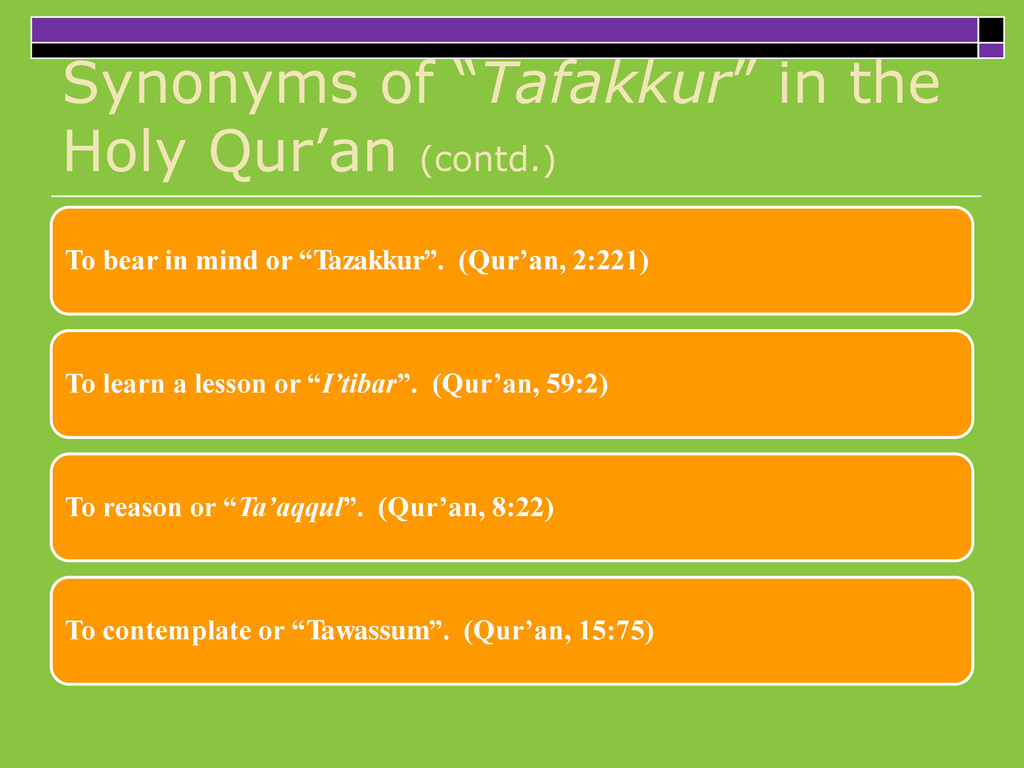
in mind or “Tazakkur”. (Qur’an, 2:221) To learn a lesson or “I’tibar”. (Qur’an, 59:2) To reason or “Ta’aqqul”. (Qur’an, 8:22) To contemplate or “Tawassum”. (Qur’an, 15:75)
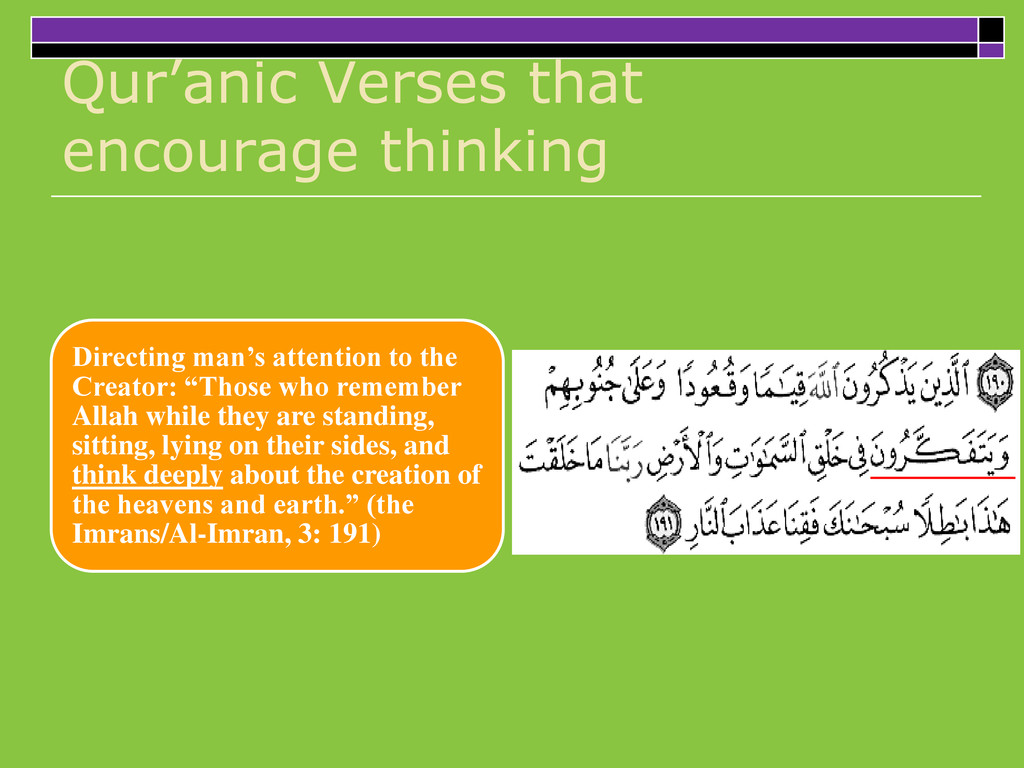
Creator: “Those who remember Allah while they are standing, sitting, lying on their sides, and think deeply about the creation of the heavens and earth.” (the Imrans/Al-Imran, 3: 191)
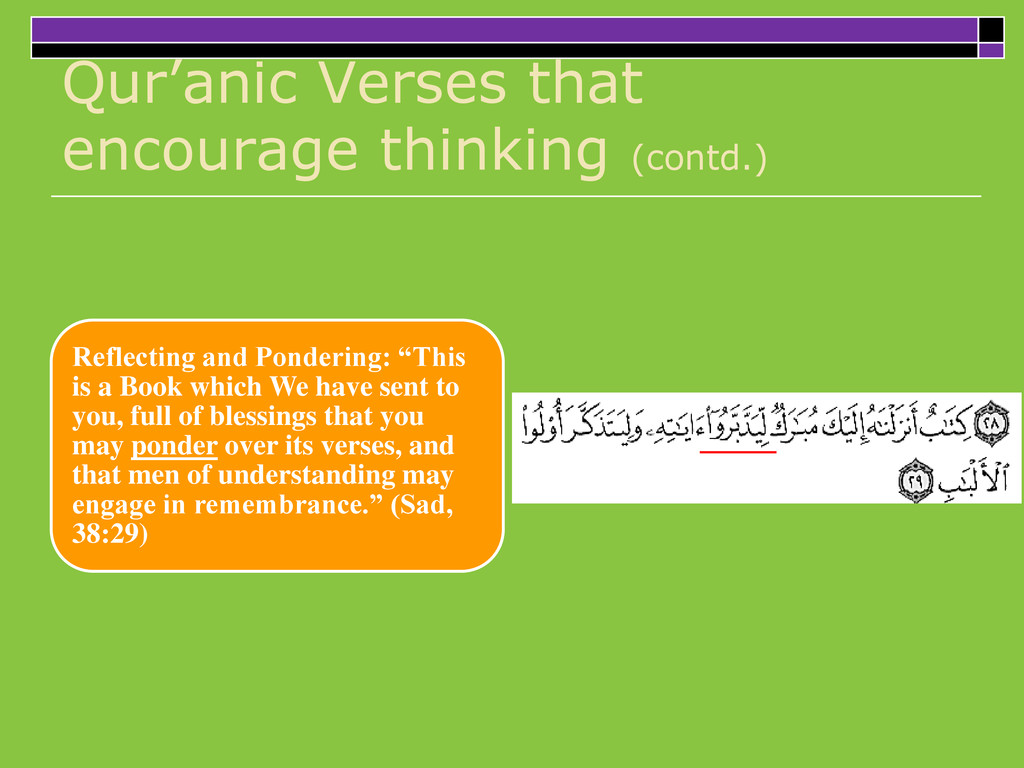
is a Book which We have sent to you, full of blessings that you may ponder over its verses, and that men of understanding may engage in remembrance.” (Sad, 38:29)
reflection & understanding: “Say to them (O Muhammad): I exhort you on one thing only, that you stand up for Allah’s sake in pairs and singly, and reflect.” (Sheba/Saba’, 34:46)
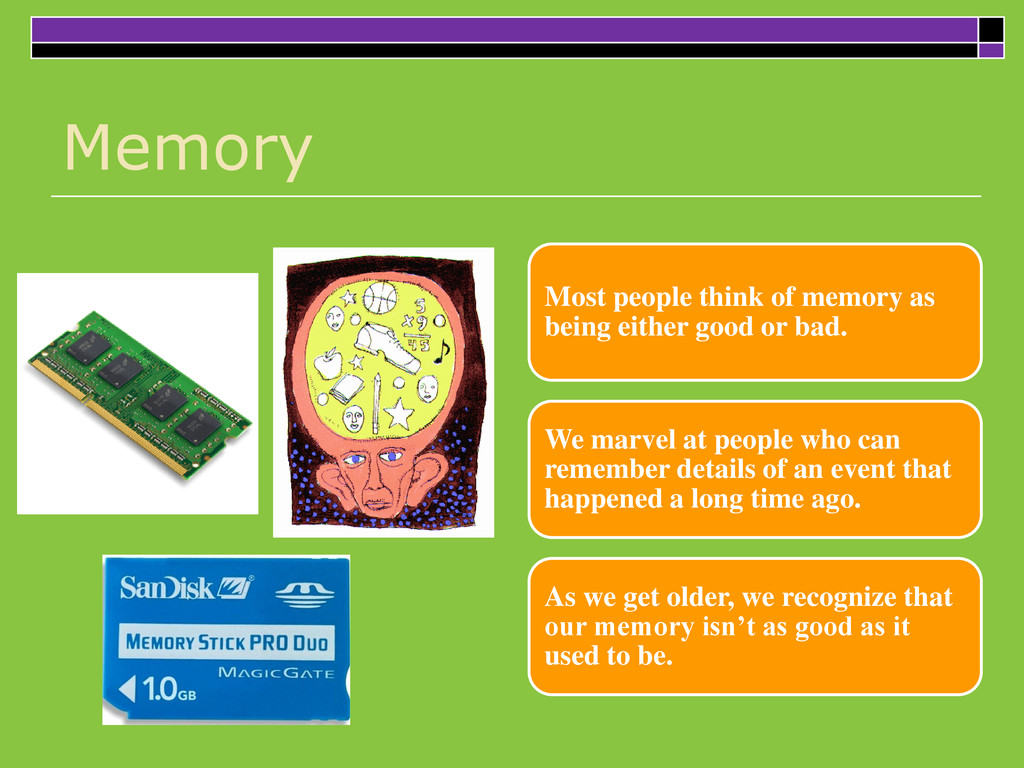
or bad. We marvel at people who can remember details of an event that happened a long time ago. As we get older, we recognize that our memory isn’t as good as it used to be.
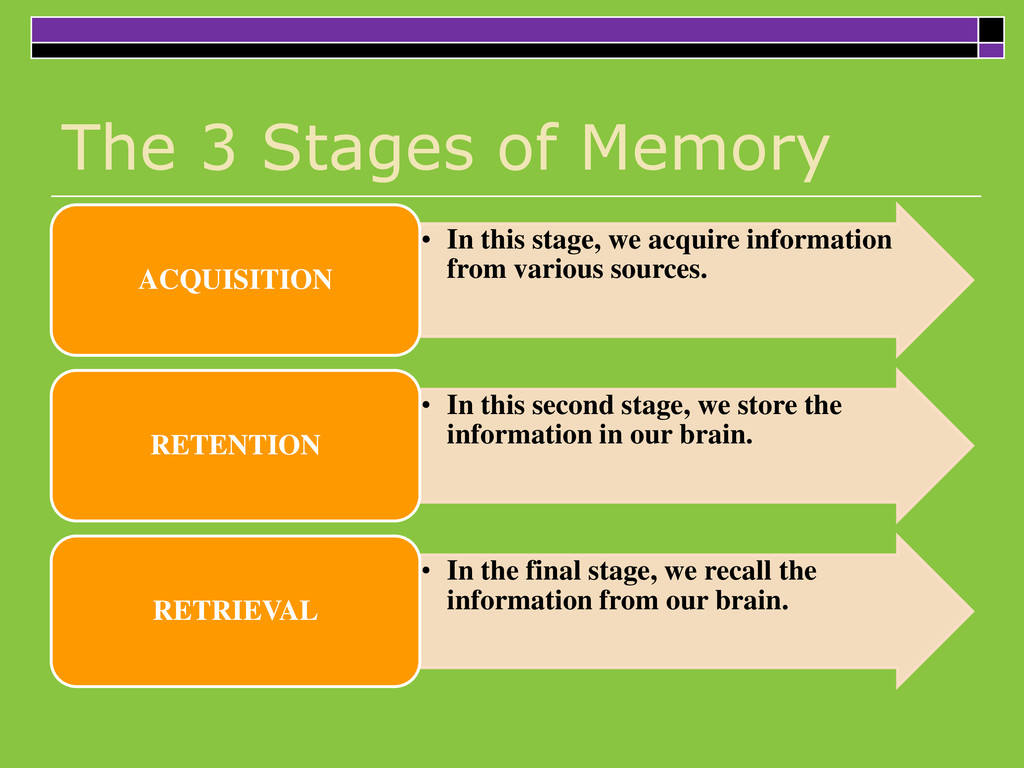
acquire information from various sources. ACQUISITION • In this second stage, we store the information in our brain. RETENTION • In the final stage, we recall the information from our brain. RETRIEVAL
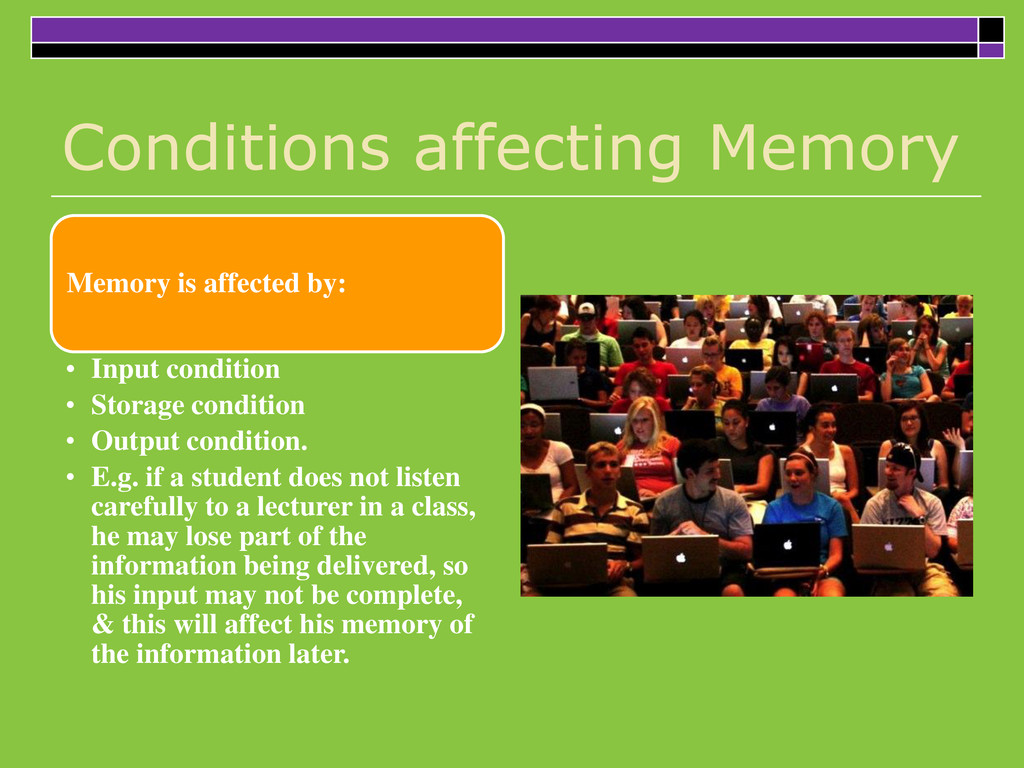
• Storage condition • Output condition. • E.g. if a student does not listen carefully to a lecturer in a class, he may lose part of the information being delivered, so his input may not be complete, & this will affect his memory of the information later.
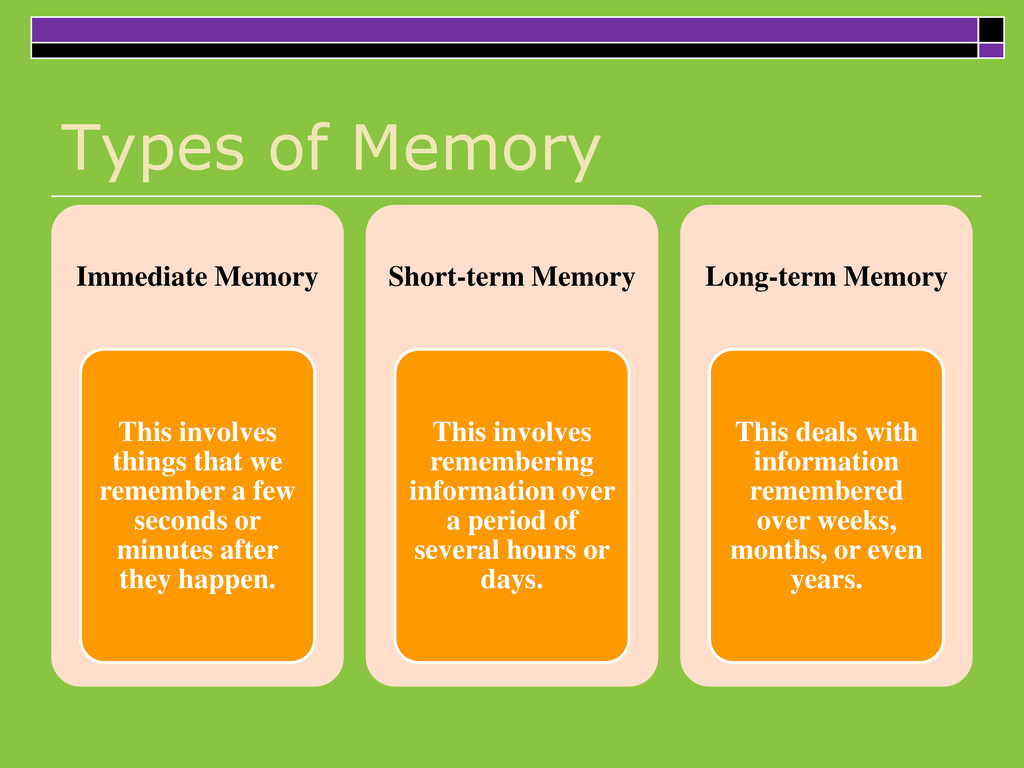
remember a few seconds or minutes after they happen. Short-term Memory This involves remembering information over a period of several hours or days. Long-term Memory This deals with information remembered over weeks, months, or even years.
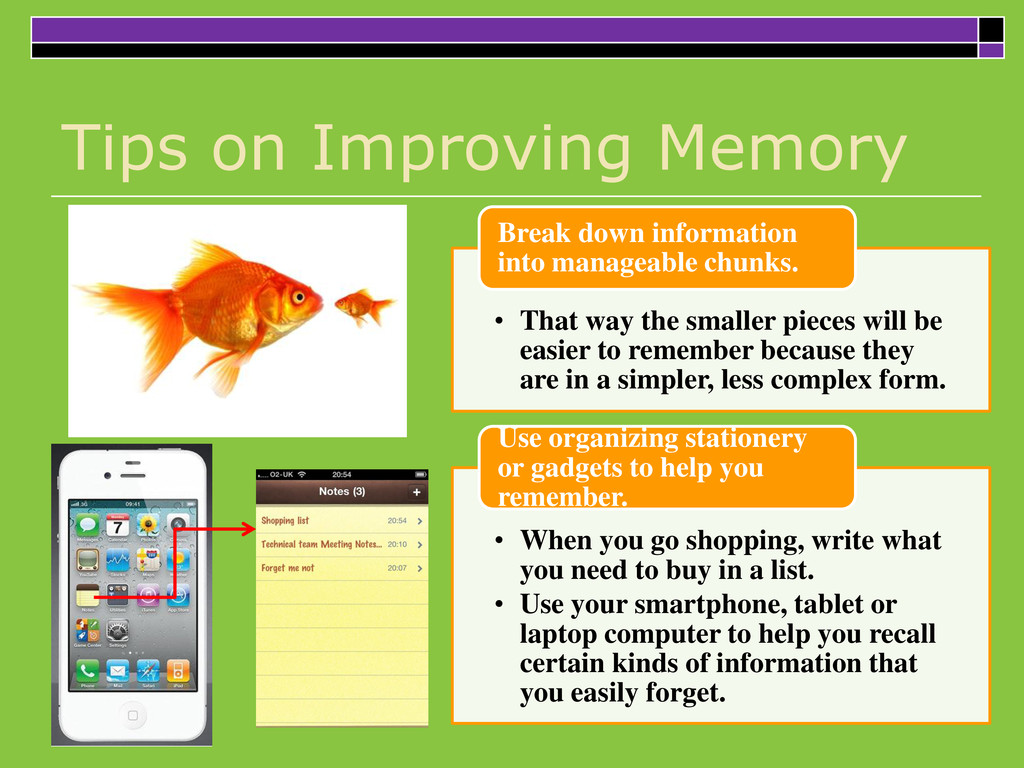
will be easier to remember because they are in a simpler, less complex form. Break down information into manageable chunks. • When you go shopping, write what you need to buy in a list. • Use your smartphone, tablet or laptop computer to help you recall certain kinds of information that you easily forget. Use organizing stationery or gadgets to help you remember.
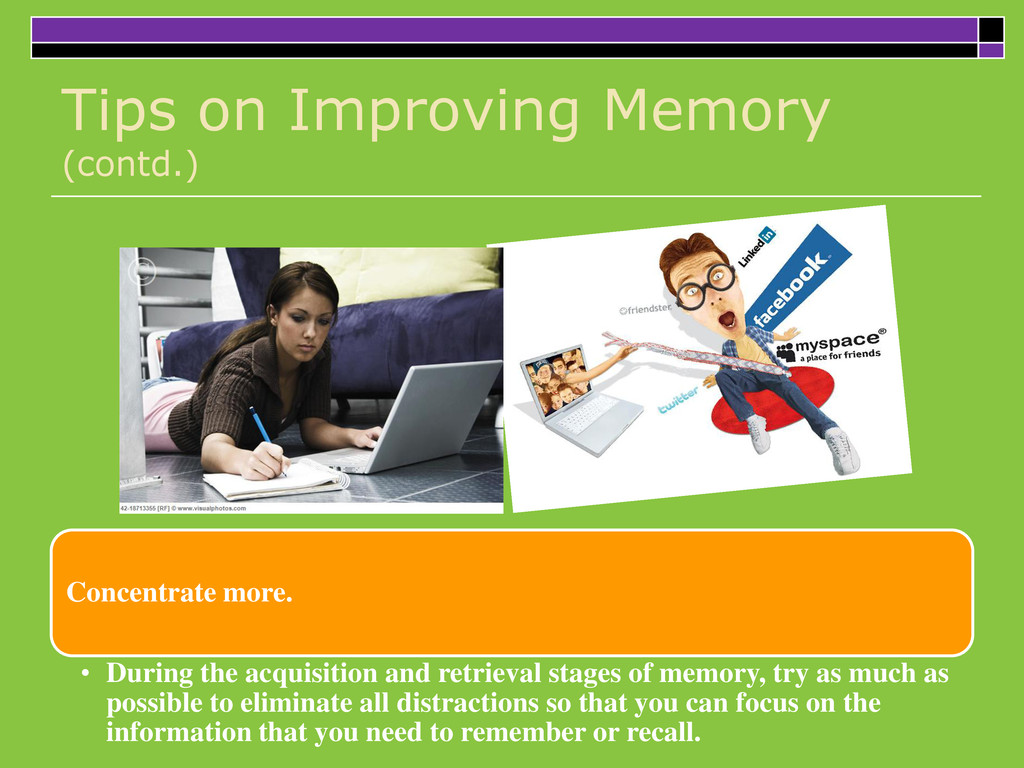
acquisition and retrieval stages of memory, try as much as possible to eliminate all distractions so that you can focus on the information that you need to remember or recall.
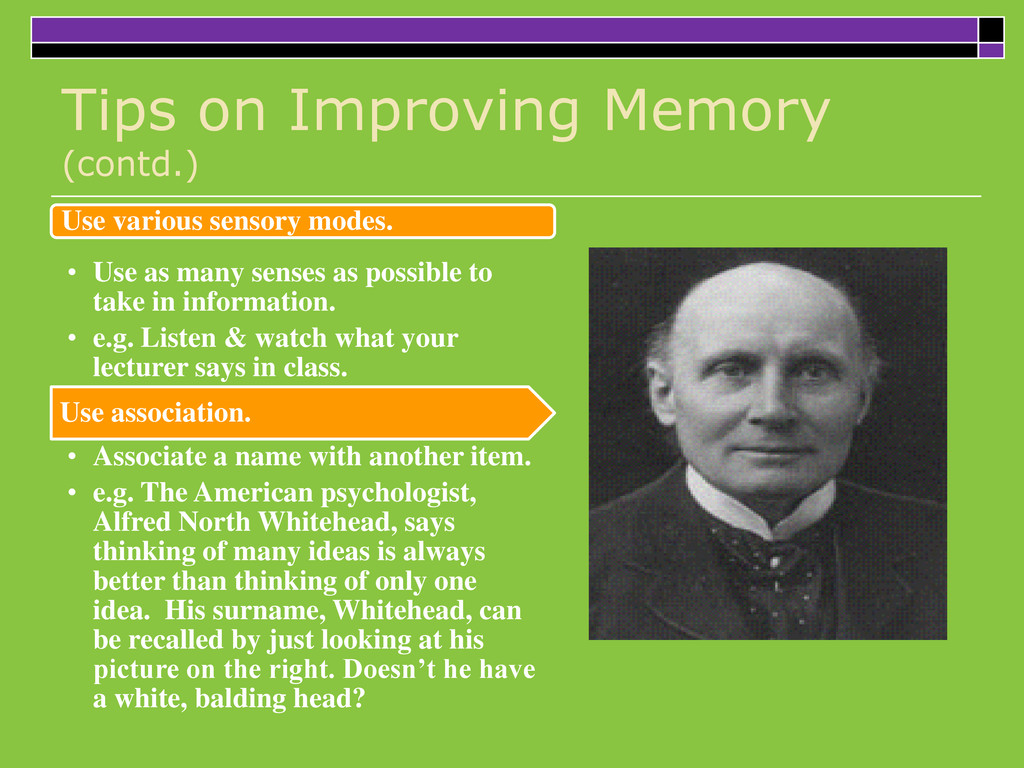
Use as many senses as possible to take in information. • e.g. Listen & watch what your lecturer says in class. Use association. • Associate a name with another item. • e.g. The American psychologist, Alfred North Whitehead, says thinking of many ideas is always better than thinking of only one idea. His surname, Whitehead, can be recalled by just looking at his picture on the right. Doesn’t he have a white, balding head?
short formats to remember certain information. E.g. the colors of the rainbow in English can be recalled through VIBGYOR (Violet, Indigo, Blue, Green, Yellow, Orange, Red). Relate present information to past information. • Relate what you learn today with relevant material that you learned last semester or last year.


 chrisshort
 sugarenia
 madoxten
 productmarketing
 geshan
 lara
 colly
 mfonobong
 eileencodes
 skipperchong
 destraynor
 honzajavorek