Upgrade to Pro
— share decks privately, control downloads, hide ads and more …
Speaker Deck
Sign up for free
Menu
Search
Features
All features
Private URLs
Password Protection
Custom URLS
Scheduled publishing
Remove Branding
Restrict embedding
Deck Collections
Notes
Features
All features
Private URLs
Password Protection
Custom URLS
Scheduled publishing
Remove Branding
Restrict embedding
Deck Collections
Notes
Explore
Featured decks
Featured speakers
Programming
Technology
Storyboards
Explore
Featured decks
Featured speakers
Programming
Technology
Storyboards
Pricing
Search
Sign in
Sign up for free
Tornado Web Framework
Search
Sponsored
·
Your Podcast. Everywhere. Effortlessly.
Share. Educate. Inspire. Entertain. You do you. We'll handle the rest.
→
cganterh
September 01, 2014
180
0
Share
Embed
Copy iframe code
Copy JS code
Copy link
Start on current slide
Tornado Web Framework
Un repaso rápido de las características proncipales de Tornado.
cganterh
September 01, 2014
Featured
See All Featured
CSS Pre-Processors: Stylus, Less & Sass
bermonpainter
360
31k
Lessons Learnt from Crawling 1000+ Websites
charlesmeaden
PRO
1
1.6k
HTML-Aware ERB: The Path to Reactive Rendering @ RubyCon 2026, Rimini, Italy
marcoroth
5
820
Ruling the World: When Life Gets Gamed
codingconduct
0
400
The Spectacular Lies of Maps
axbom
PRO
1
1.1k
Utilizing Notion as your number one productivity tool
mfonobong
4
620
First, design no harm
axbom
PRO
2
1.3k
My Coaching Mixtape
mlcsv
0
360
Paper Plane (Part 1)
katiecoart
PRO
2
12k
A brief & incomplete history of UX Design for the World Wide Web: 1989–2019
jct
2
530
Marketing to machines
jonoalderson
1
5.9k
Building Flexible Design Systems
yeseniaperezcruz
330
41k
Transcript
Tornado Cristóbal Ganter
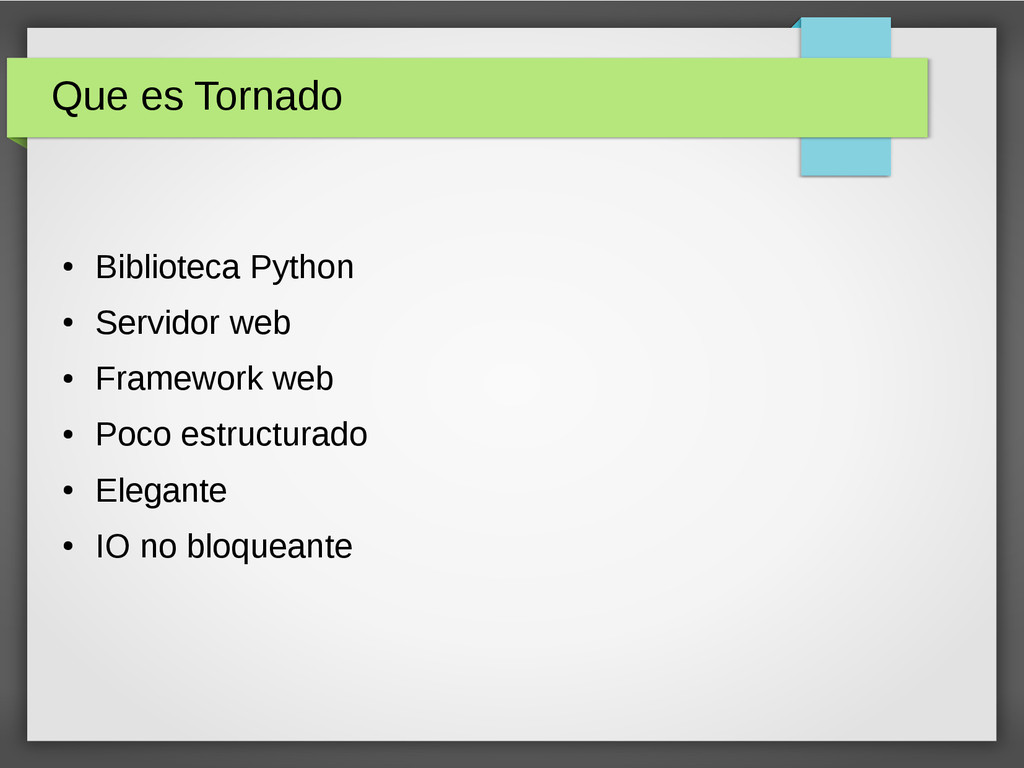
Que es Tornado • Biblioteca Python • Servidor web •
Framework web • Poco estructurado • Elegante • IO no bloqueante
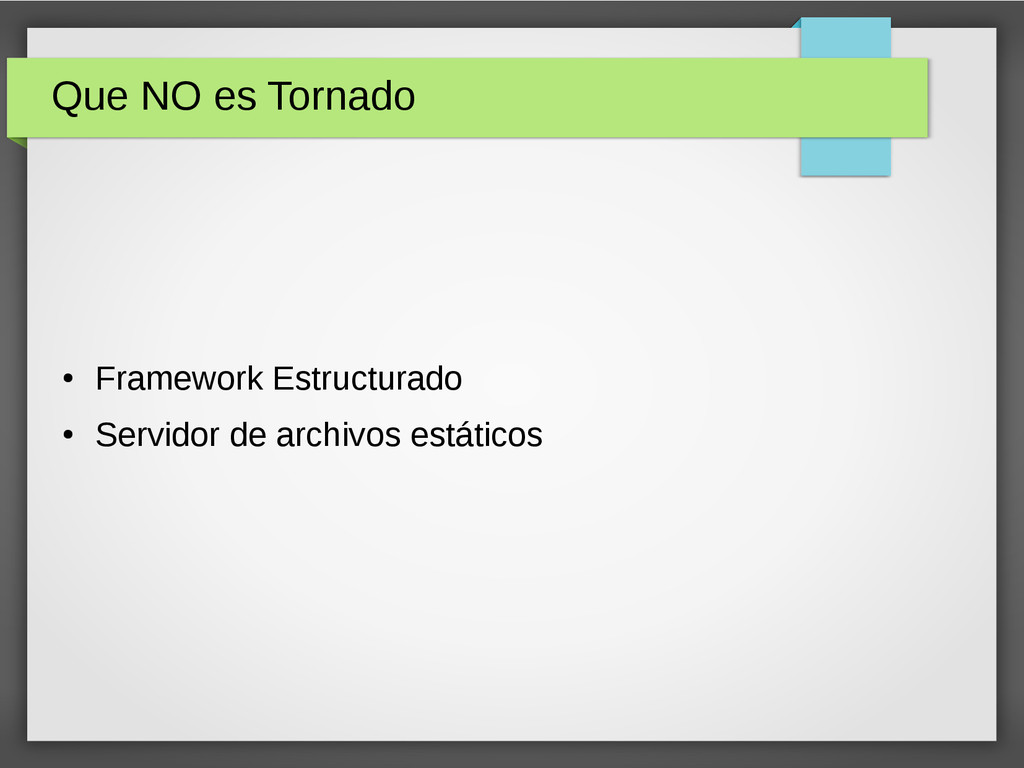
Que NO es Tornado • Framework Estructurado • Servidor de
archivos estáticos
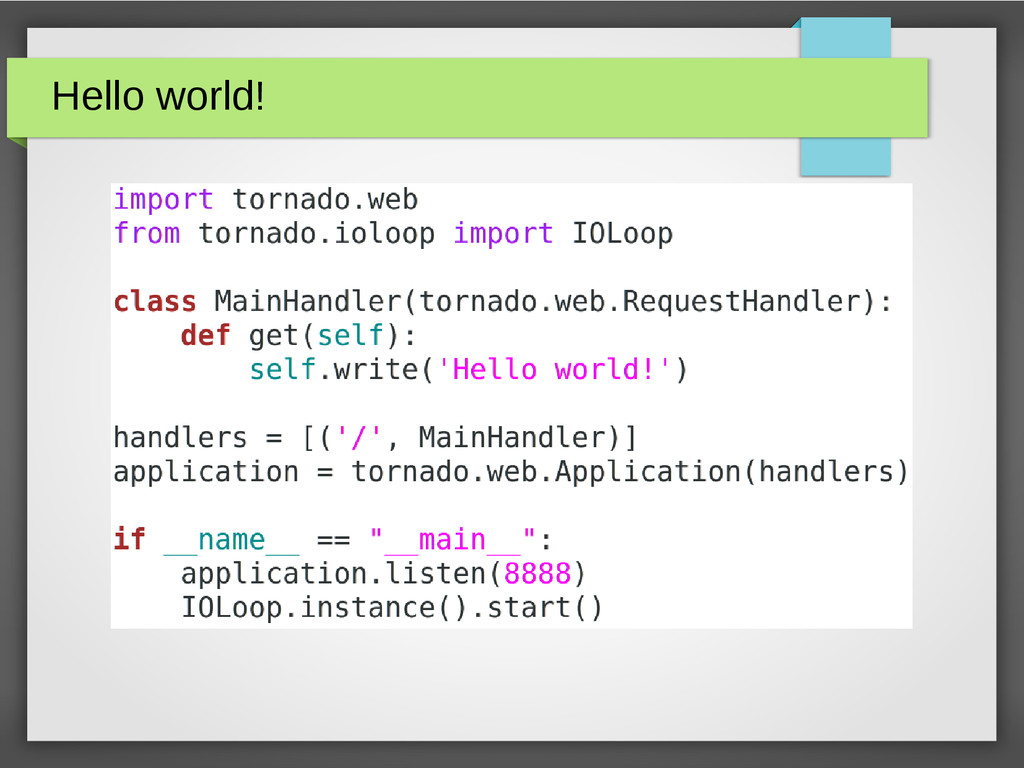
Hello world!
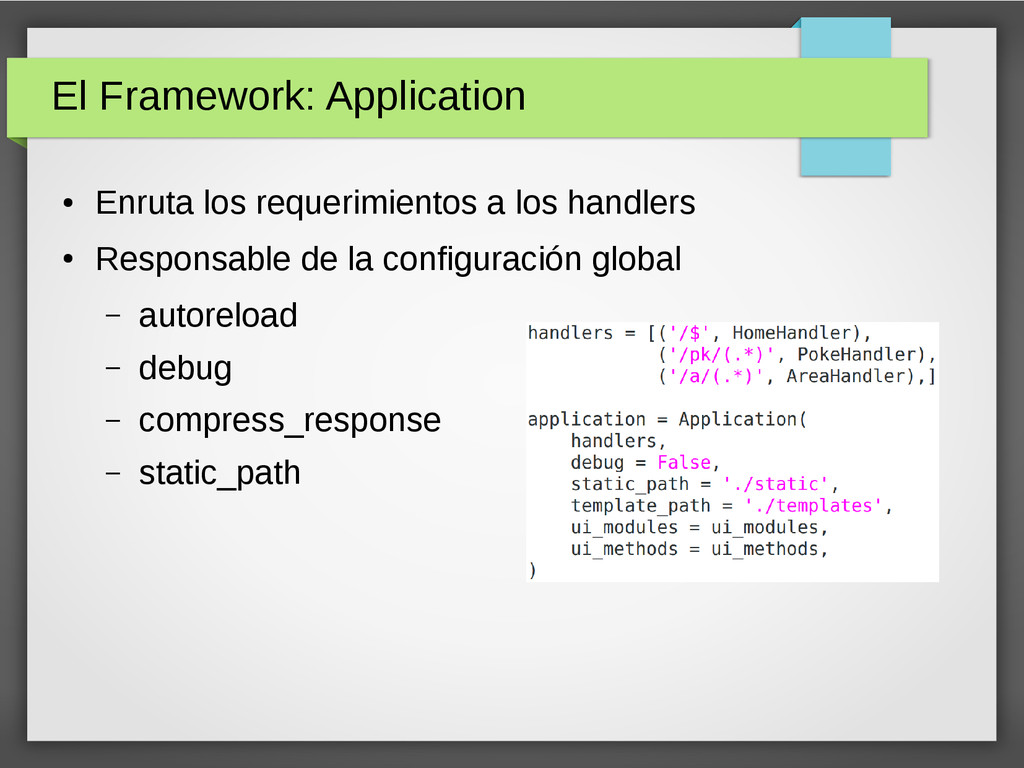
El Framework: Application • Enruta los requerimientos a los handlers
• Responsable de la configuración global – autoreload – debug – compress_response – static_path
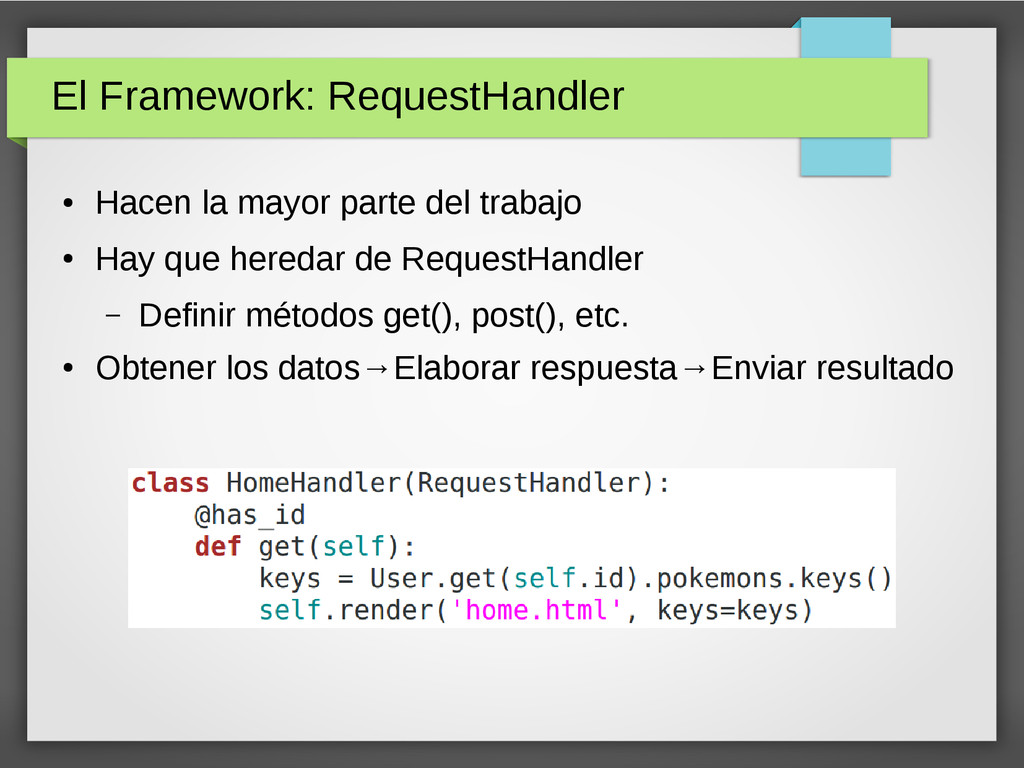
El Framework: RequestHandler • Hacen la mayor parte del trabajo
• Hay que heredar de RequestHandler – Definir métodos get(), post(), etc. • Obtener los datos→Elaborar respuesta→Enviar resultado
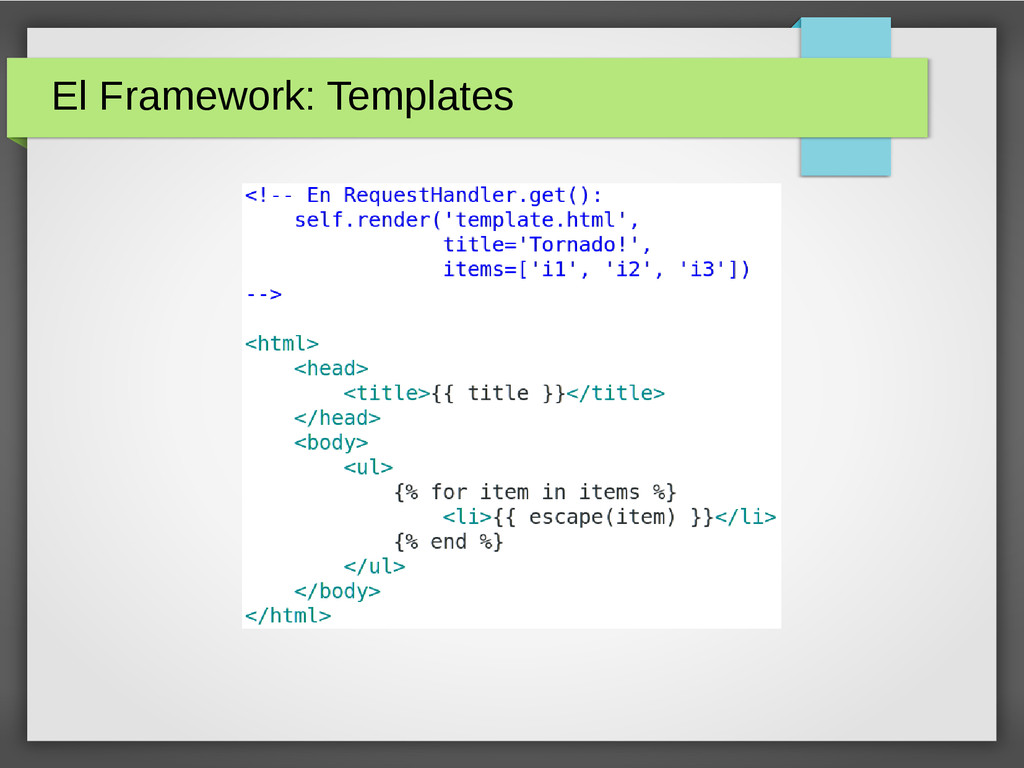
El Framework: Templates
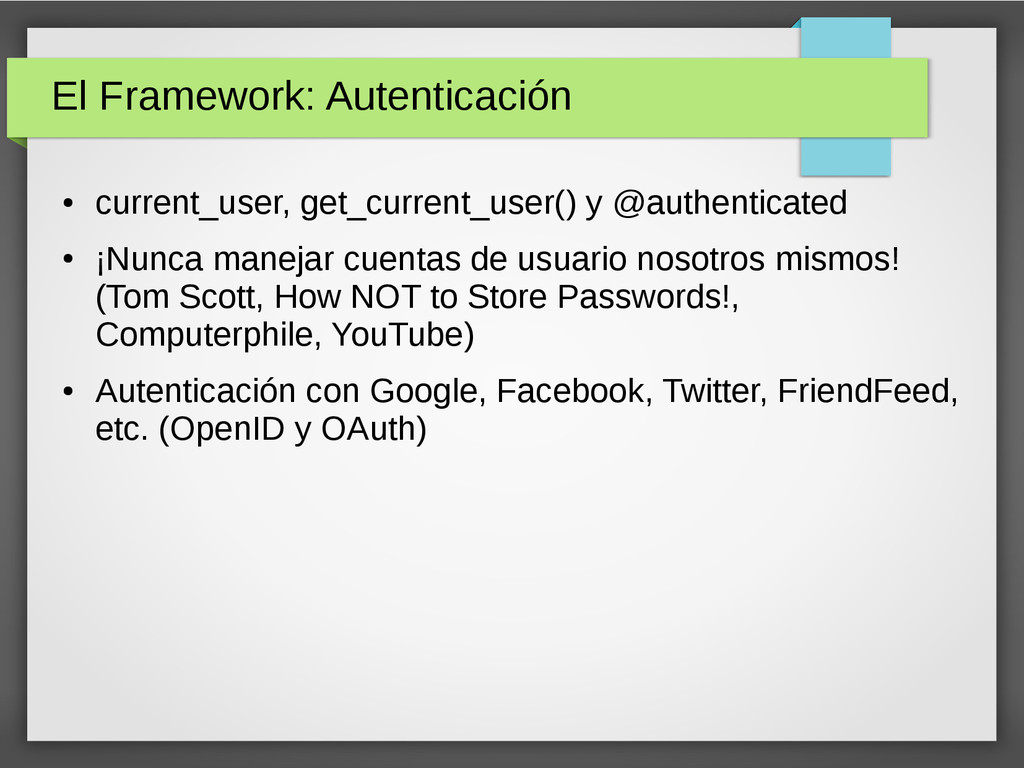
El Framework: Autenticación • current_user, get_current_user() y @authenticated • ¡Nunca
manejar cuentas de usuario nosotros mismos! (Tom Scott, How NOT to Store Passwords!, Computerphile, YouTube) • Autenticación con Google, Facebook, Twitter, FriendFeed, etc. (OpenID y OAuth)
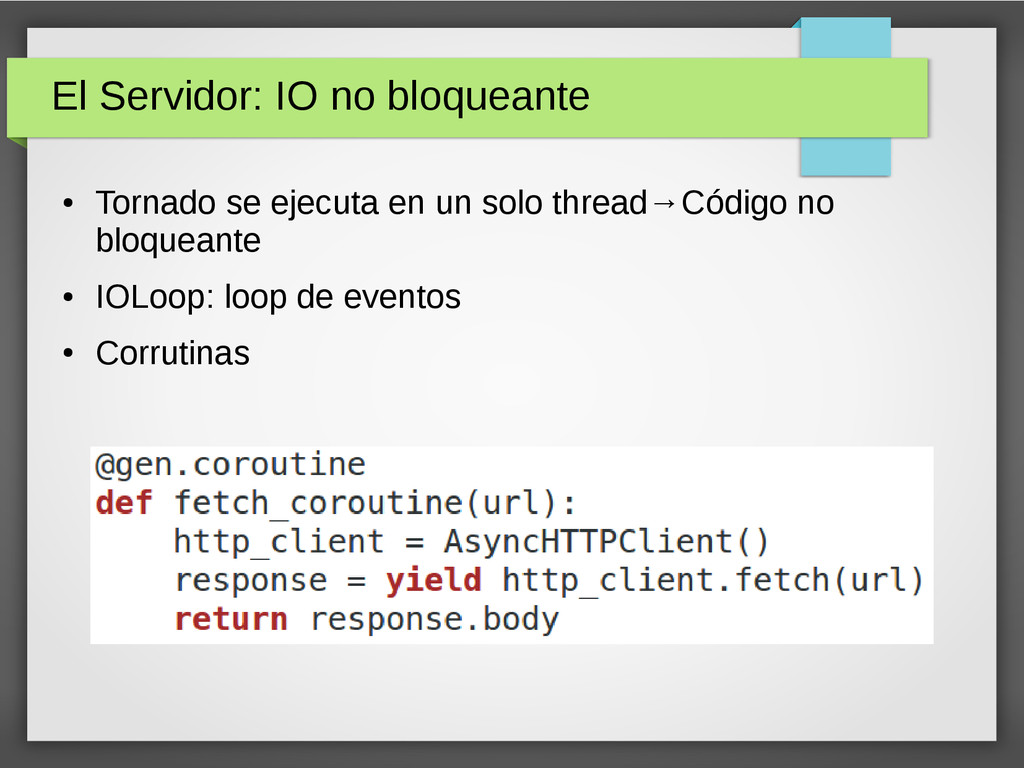
El Servidor: IO no bloqueante • Tornado se ejecuta en
un solo thread→Código no bloqueante • IOLoop: loop de eventos • Corrutinas
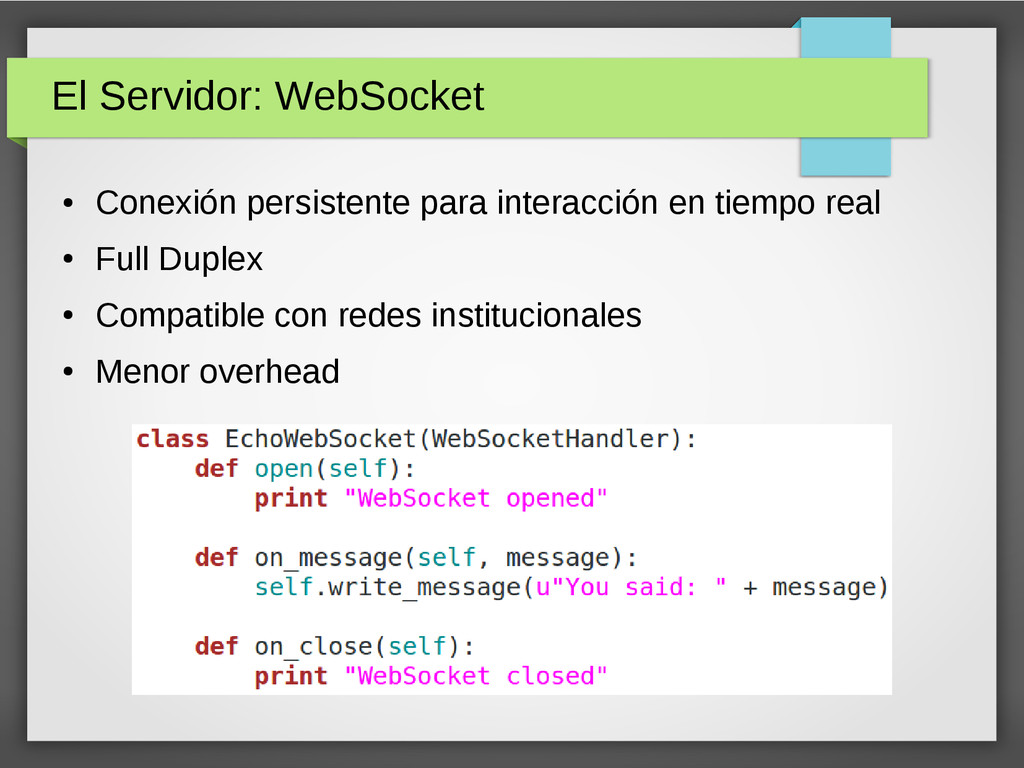
El Servidor: WebSocket • Conexión persistente para interacción en tiempo
real • Full Duplex • Compatible con redes institucionales • Menor overhead
Y mucho mas ...


 bermonpainter
 charlesmeaden
 marcoroth
 codingconduct
 axbom
axbom
 mfonobong
 mlcsv
mlcsv
 katiecoart
 jct
jct
 jonoalderson
 yeseniaperezcruz