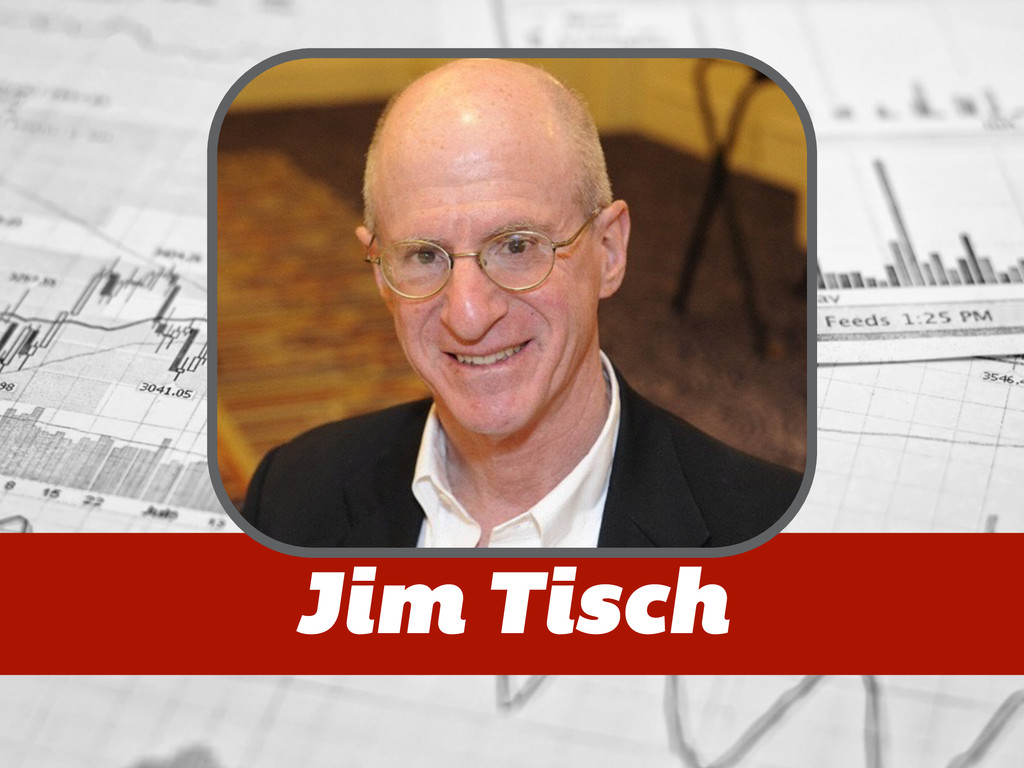
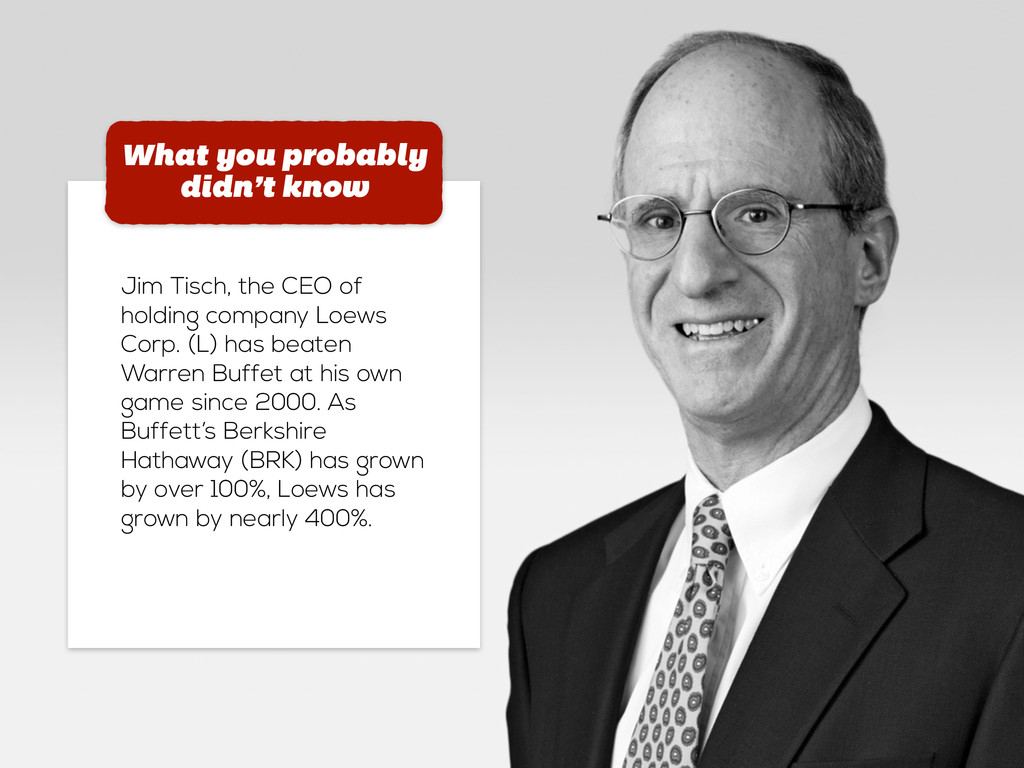
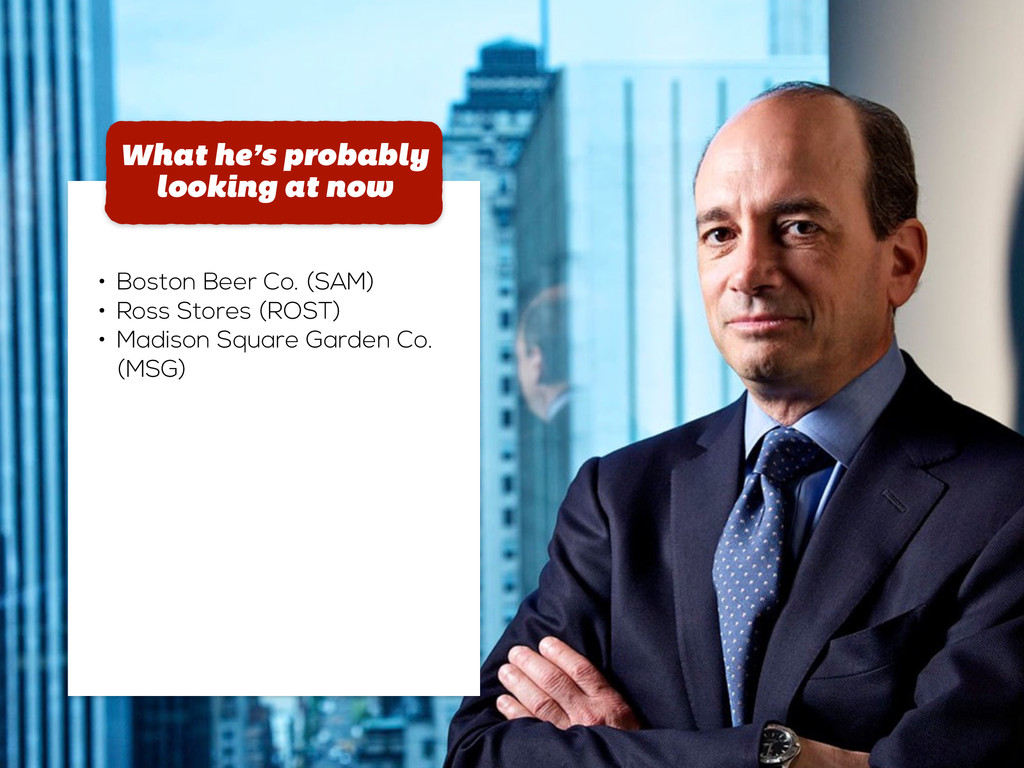
has beaten Warren Buffet at his own game since 2000. As Buffett’s Berkshire Hathaway (BRK) has grown by over 100%, Loews has grown by nearly 400%. What you probably didn’t know
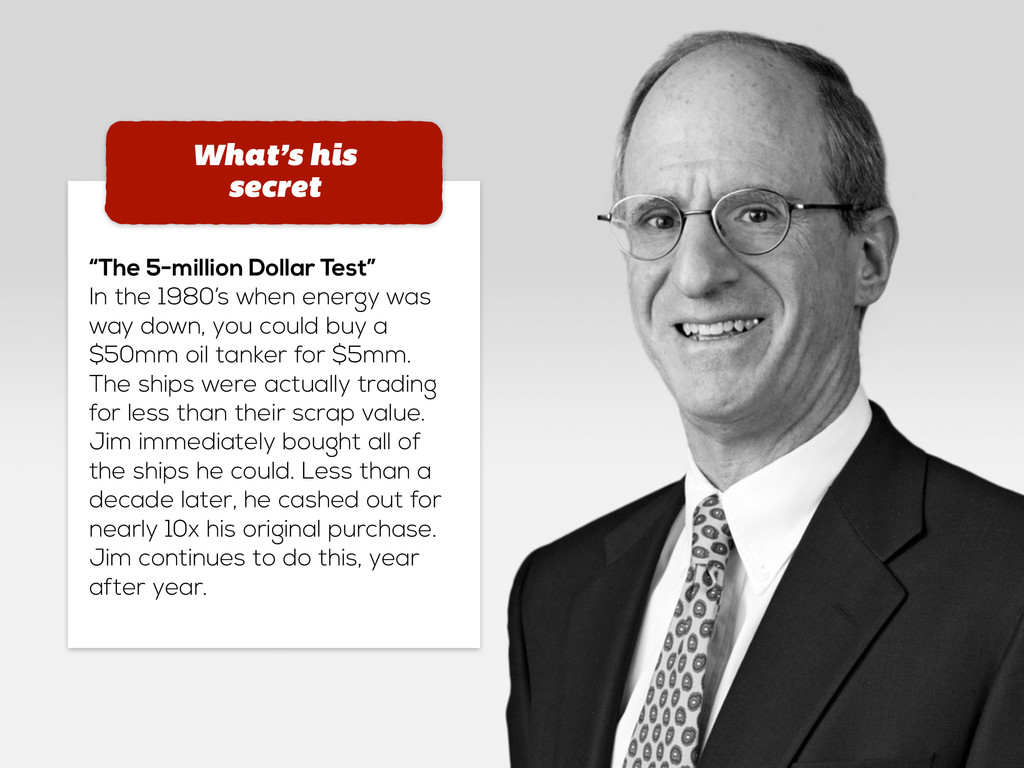
way down, you could buy a $50mm oil tanker for $5mm. The ships were actually trading for less than their scrap value. Jim immediately bought all of the ships he could. Less than a decade later, he cashed out for nearly 10x his original purchase. Jim continues to do this, year after year. What’s his secret
old; he purchased three shares of Cities Service Preferred with his sister. Over the following months, the stock dropped from $38.25 to $27. When the stock finally recovered to $40, Warren cashed out, netting a $5 profit. After selling though, the stock continued to rise until it hit over $200 per share. If had held on to the stock a little longer, he would have profited over $500.
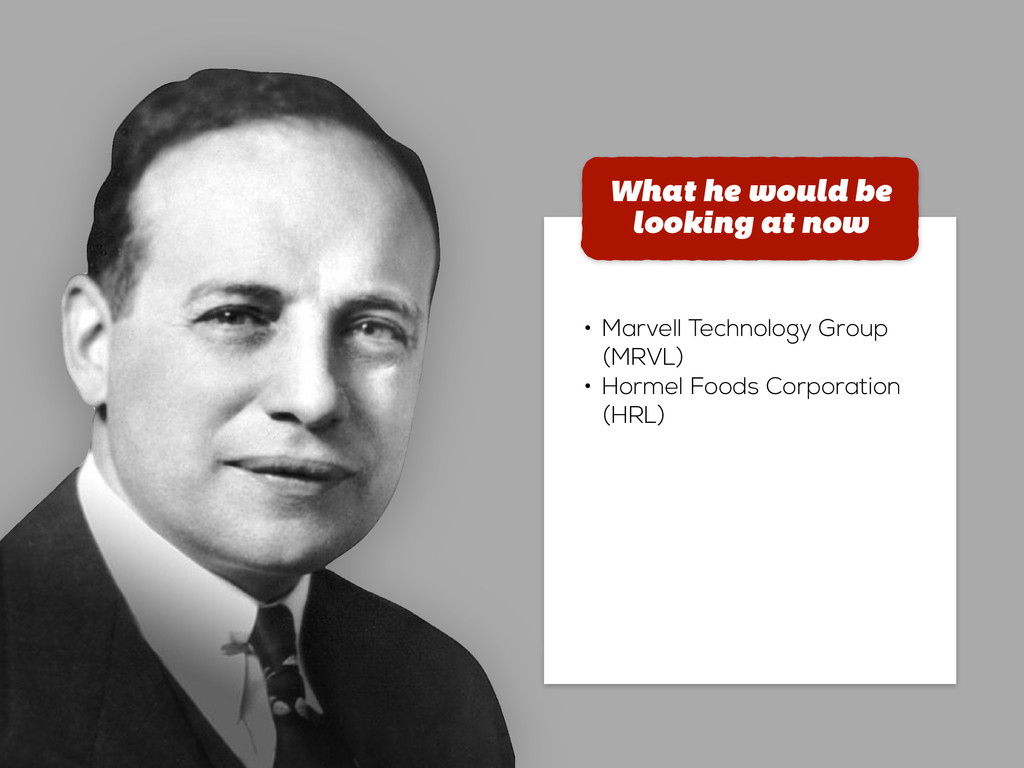
Buffett was 12 years old; he purchased three shares of Cities Service Preferred with his sister. Over the following months, the stock dropped from $38.25 t When the stock finally recovered to $40, Warren cashed out, netting a $5 profit. After selling though, the stock continued to rise until it hit over $200 per share. If had held on to the stock a little long have profited over $500. Strategy: Warren Buffett looks for companies that: (1) Have high Predictability Rank, that is, companies that can consistently grow its revenue and earnings. (2) Have competitive advantages. It can maintain or even expand its profit margin while growing its business (3) Incur little debt while growing the business (4) Are fair valued or under-valued. • What He Is Looking At Now: What’s his secret Warren Buffett looks for companies that: • Have high Predictability Rank, that is, companies that can consistently grow its revenue and earnings. • Have competitive advantages. It can maintain or even expand its profit margin while growing its business • Incur little debt while growing the business • Are fair valued or under-valued.
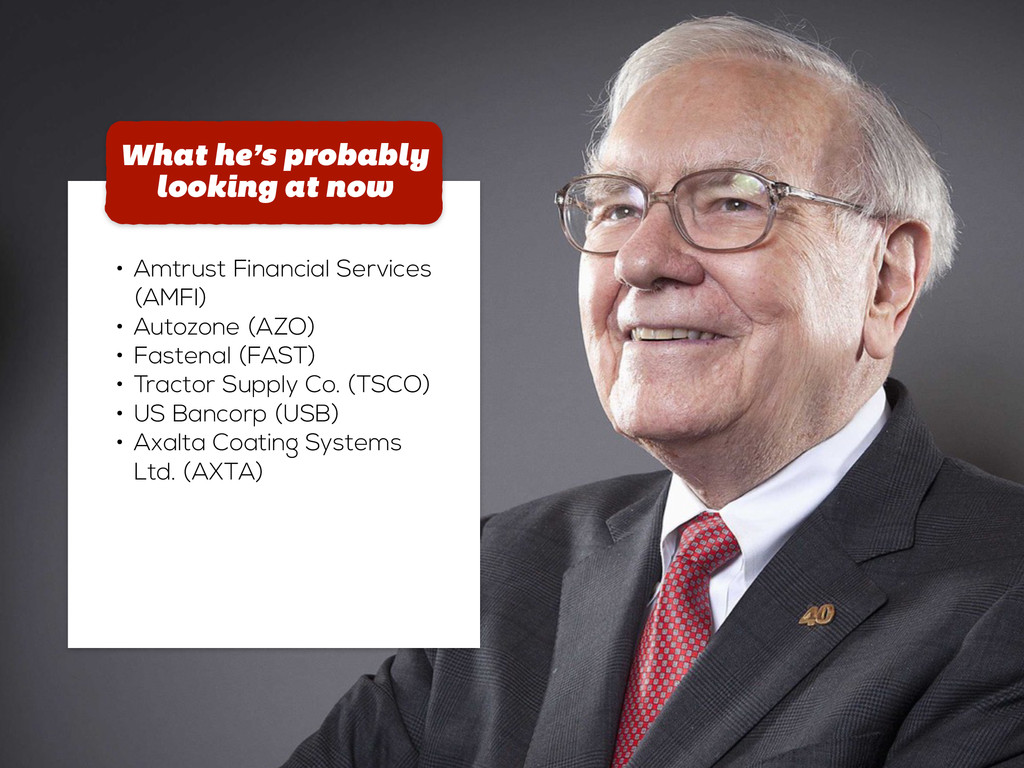
Buffett was 12 years old; he purchased three shares of Cities Service Preferred with his sister. Over the following months, the stock dropped from $38.25 t When the stock finally recovered to $40, Warren cashed out, netting a $5 profit. After selling though, the stock continued to rise until it hit over $200 per share. If had held on to the stock a little long have profited over $500. Strategy: Warren Buffett looks for companies that: (1) Have high Predictability Rank, that is, companies that can consistently grow its revenue and earnings. (2) Have competitive advantages. It can maintain or even expand its profit margin while growing its business (3) Incur little debt while growing the business (4) Are fair valued or under-valued. • What He Is Looking At Now: • Amtrust Financial Services (AMFI) • Autozone (AZO) • Fastenal (FAST) • Tractor Supply Co. (TSCO) • US Bancorp (USB) • Axalta Coating Systems Ltd. (AXTA) What he’s probably looking at now
in one of Graham’s classes at Columbia University. When Buffett asked for a job with Graham’s firm though, he was turned down. A persistent Buffett kept on asking and Graham eventually hired him. The two went on to became lifelong friends.
other words, companies that are trading for less than the cash they have in the bank, much less than their true book value, or for their cash and net assets. You are looking for a stock that is trading for $10, with more than $10 in assets backing it up. It’s a no-brainer.
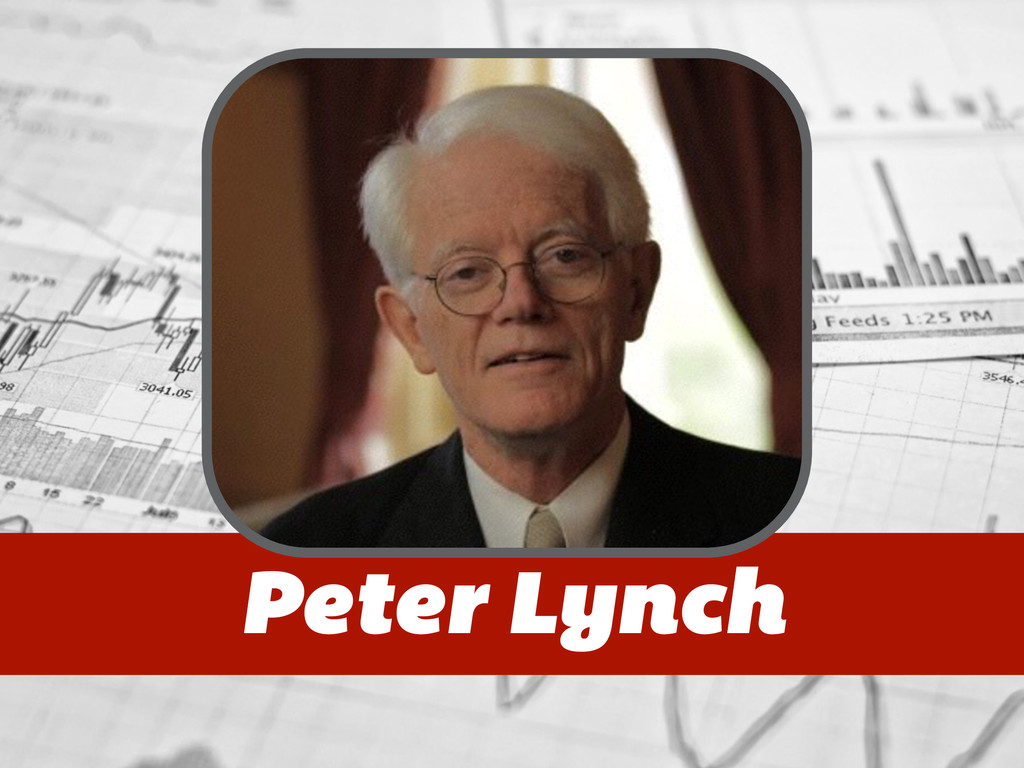
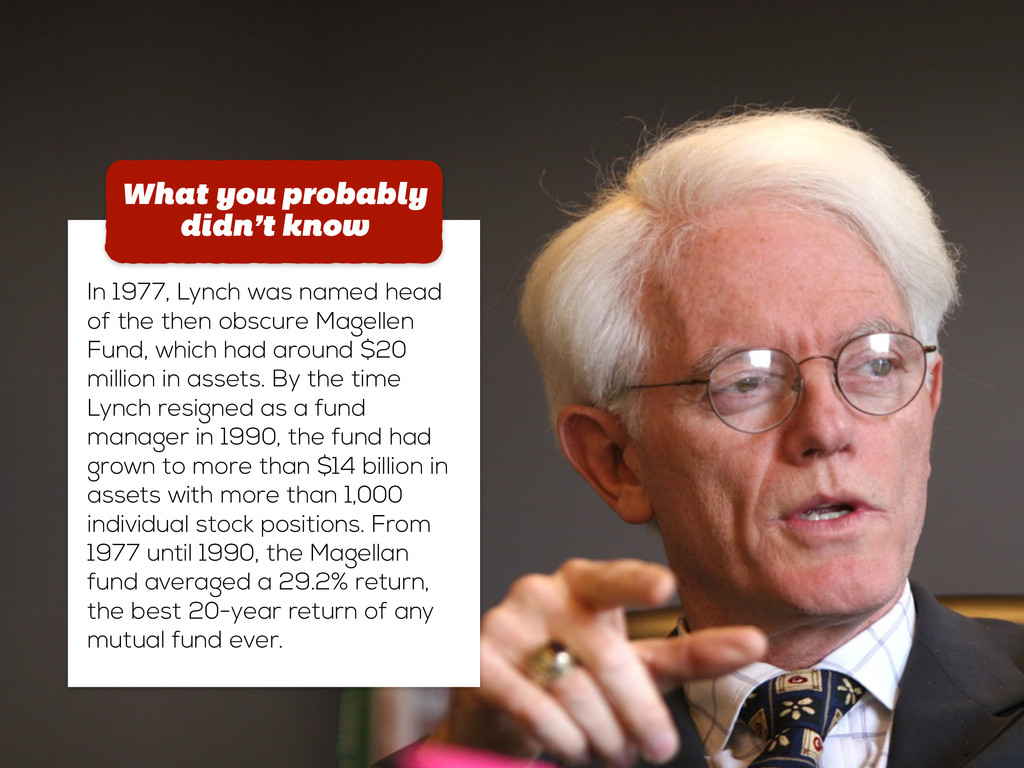
Lynch was named head of the then obscure Magellen Fund, which had around 20 million in assets. By the time Lynch resigned as a fund manager in 1990, the fund had grown to more than $14 billion in assets with more than 1,000 individual stock positions. From 1977 until 1990, the Magellan fund averaged a 29.2% return, the best 20-year return of any mutual fund ever What’s His Secret: Peter looks for what he calls, growth at a reasonable price (or GARP). It is a style that looks for both growth and value all at the same time. His method looks to find stocks with growth rates that are better than the market but with valuations that are below the market. He does this by dividing a stocks Price/Earnings ratio by its historic growth rate. What He Is Looking At Now: What you probably didn’t know In 1977, Lynch was named head of the then obscure Magellen Fund, which had around $20 million in assets. By the time Lynch resigned as a fund manager in 1990, the fund had grown to more than $14 billion in assets with more than 1,000 individual stock positions. From 1977 until 1990, the Magellan fund averaged a 29.2% return, the best 20-year return of any mutual fund ever.
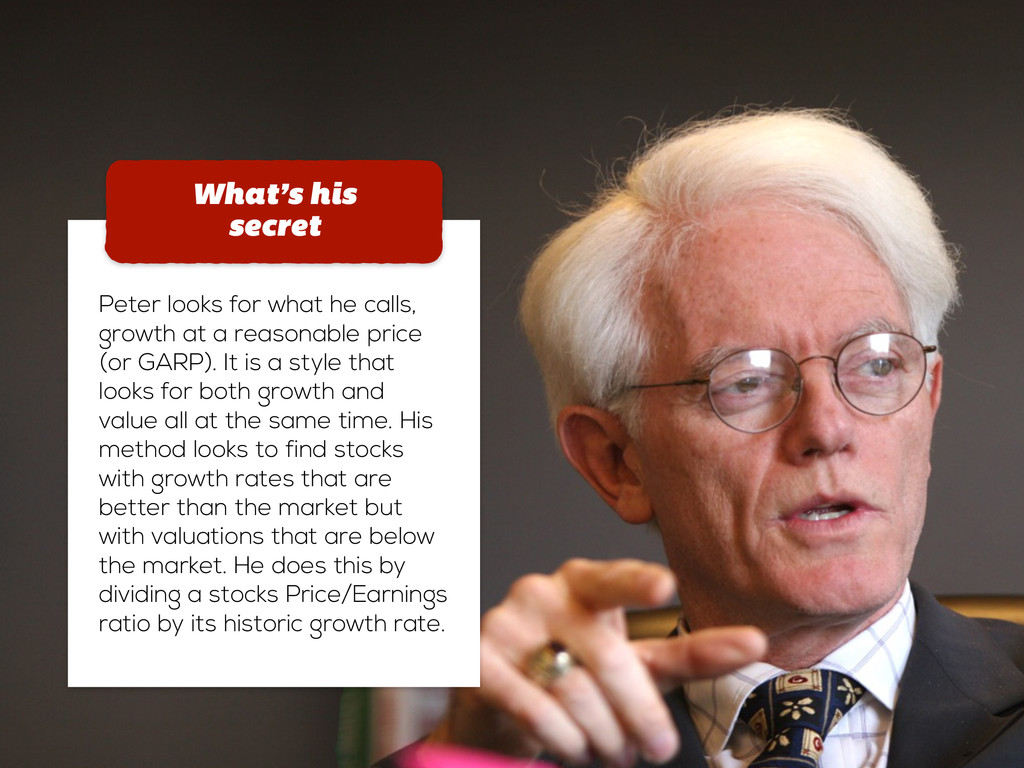
Lynch was named head of the then obscure Magellen Fund, which had around 20 million in assets. By the time Lynch resigned as a fund manager in 1990, the fund had grown to more than $14 billion in assets with more than 1,000 individual stock positions. From 1977 until 1990, the Magellan fund averaged a 29.2% return, the best 20-year return of any mutual fund ever What’s His Secret: Peter looks for what he calls, growth at a reasonable price (or GARP). It is a style that looks for both growth and value all at the same time. His method looks to find stocks with growth rates that are better than the market but with valuations that are below the market. He does this by dividing a stocks Price/Earnings ratio by its historic growth rate. What He Is Looking At Now: What’s his secret Peter looks for what he calls, growth at a reasonable price (or GARP). It is a style that looks for both growth and value all at the same time. His method looks to find stocks with growth rates that are better than the market but with valuations that are below the market. He does this by dividing a stocks Price/Earnings ratio by its historic growth rate.
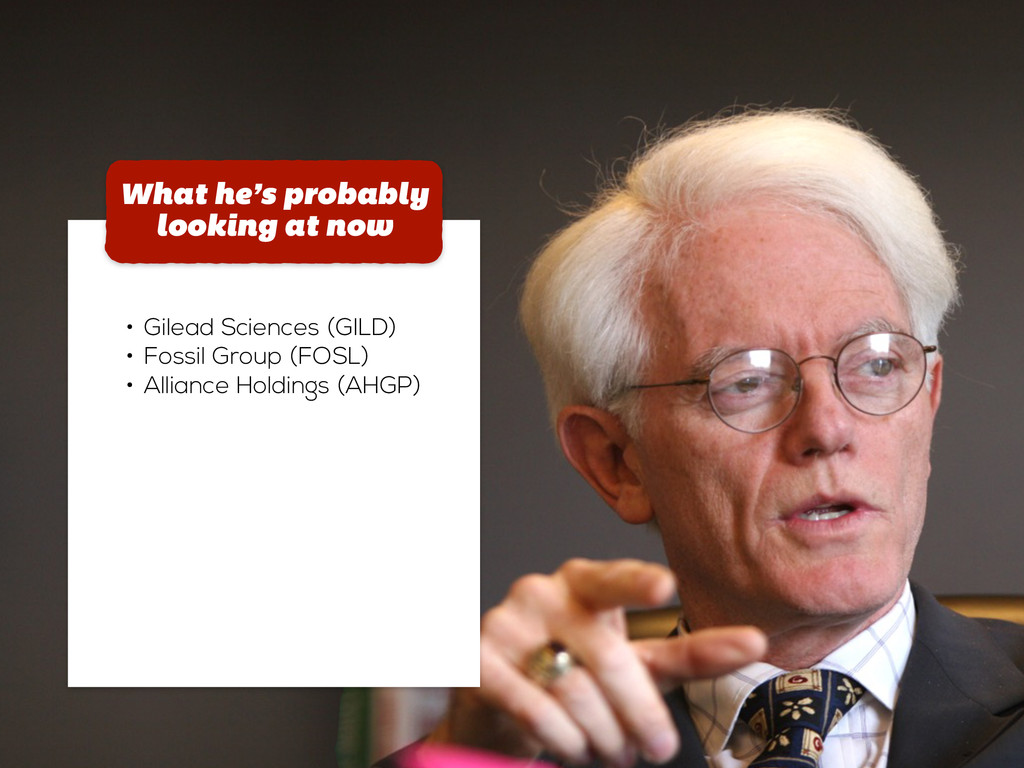
Lynch was named head of the then obscure Magellen Fund, which had around 20 million in assets. By the time Lynch resigned as a fund manager in 1990, the fund had grown to more than $14 billion in assets with more than 1,000 individual stock positions. From 1977 until 1990, the Magellan fund averaged a 29.2% return, the best 20-year return of any mutual fund ever What’s His Secret: Peter looks for what he calls, growth at a reasonable price (or GARP). It is a style that looks for both growth and value all at the same time. His method looks to find stocks with growth rates that are better than the market but with valuations that are below the market. He does this by dividing a stocks Price/Earnings ratio by its historic growth rate. What He Is Looking At Now: • Gilead Sciences (GILD) • Fossil Group (FOSL) • Alliance Holdings (AHGP) What he’s probably looking at now
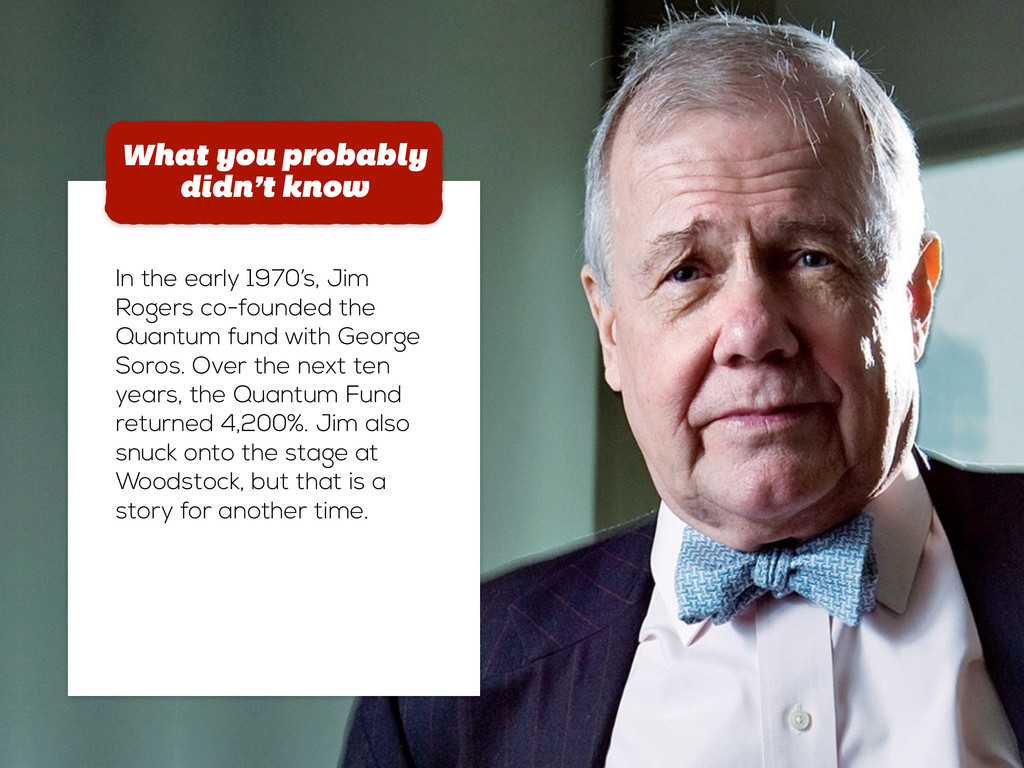
early 1970’s, Jim Rogers co-founded the Quantum fund with George Soros. Over the next ten years, the Quantum Fund returned 4,200%. Jim also snuck into Woodstock, but that is a story for another time. What’s His Secret: Jim has said that he is terrible at timing the markets. Instead, he uses a top-down economic model to spot long term trends. He looks for one of four different types of change that affect a country or industry: (1) Industries in trouble (2) New-Consumer Trends (3) Government Intervention (4) Over-bought Stocks What He (Would Be) Looking At Now: What you probably didn’t know In the early 1970’s, Jim Rogers co-founded the Quantum fund with George Soros. Over the next ten years, the Quantum Fund returned 4,200%. Jim also snuck onto the stage at Woodstock, but that is a story for another time.
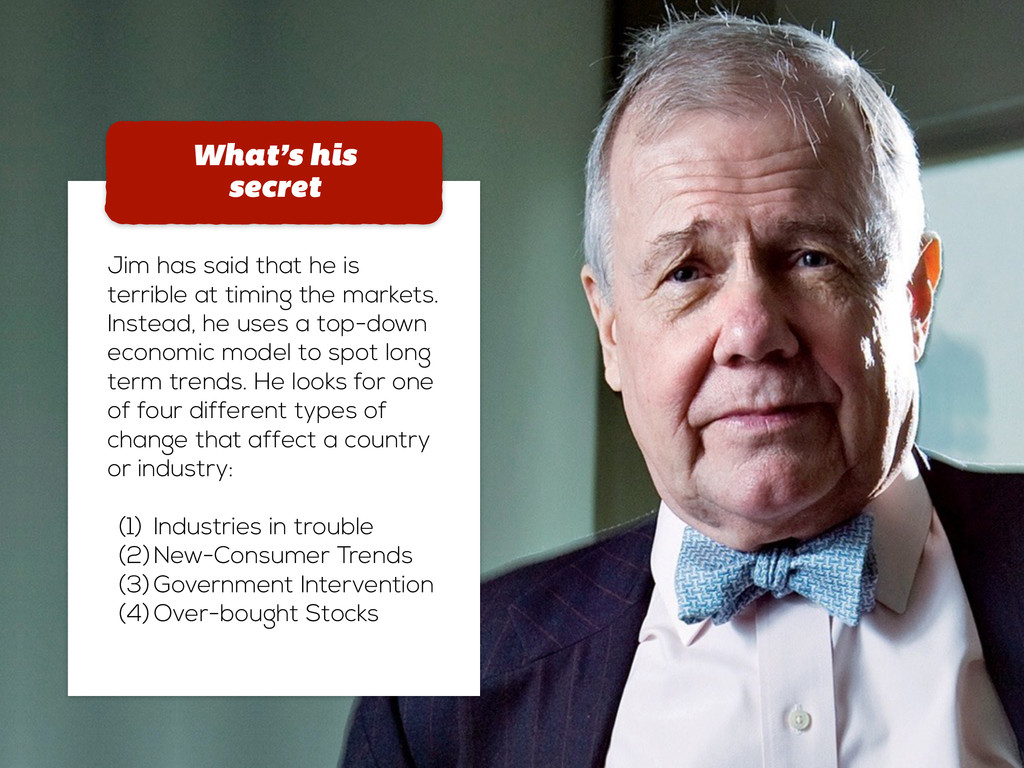
early 1970’s, Jim Rogers co-founded the Quantum fund with George Soros. Over the next ten years, the Quantum Fund returned 4,200%. Jim also snuck into Woodstock, but that is a story for another time. What’s His Secret: Jim has said that he is terrible at timing the markets. Instead, he uses a top-down economic model to spot long term trends. He looks for one of four different types of change that affect a country or industry: (1) Industries in trouble (2) New-Consumer Trends (3) Government Intervention (4) Over-bought Stocks What He (Would Be) Looking At Now: What’s his secret Jim has said that he is terrible at timing the markets. Instead, he uses a top-down economic model to spot long term trends. He looks for one of four different types of change that affect a country or industry: (1) Industries in trouble (2)New-Consumer Trends (3)Government Intervention (4)Over-bought Stocks
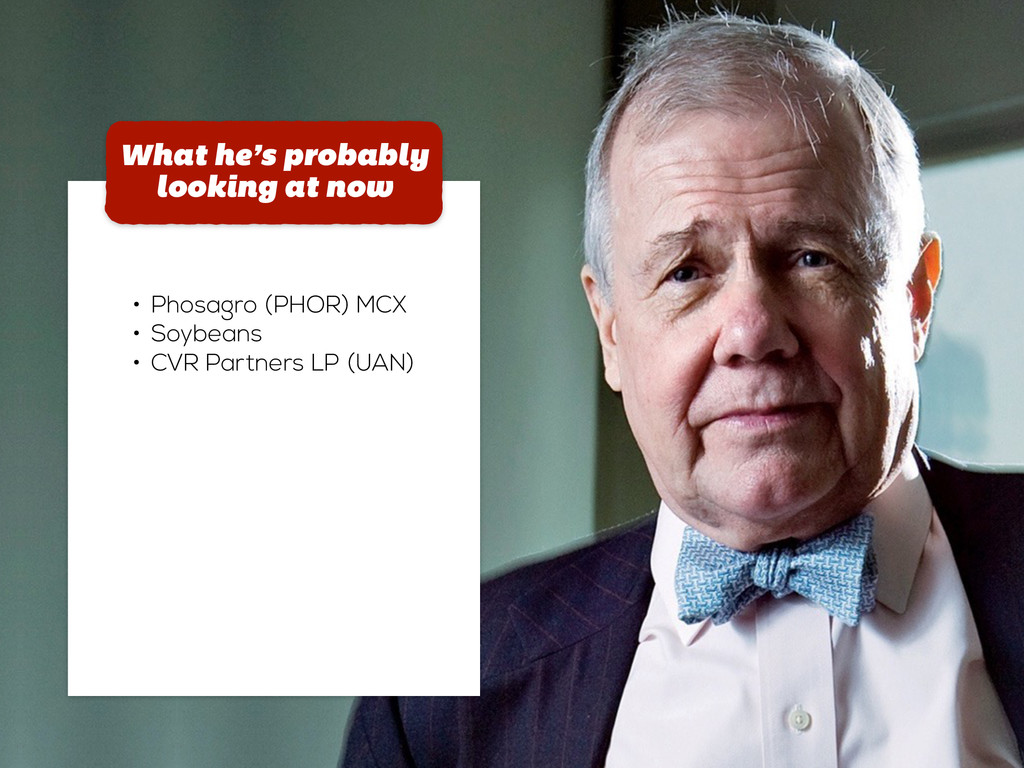
early 1970’s, Jim Rogers co-founded the Quantum fund with George Soros. Over the next ten years, the Quantum Fund returned 4,200%. Jim also snuck into Woodstock, but that is a story for another time. What’s His Secret: Jim has said that he is terrible at timing the markets. Instead, he uses a top-down economic model to spot long term trends. He looks for one of four different types of change that affect a country or industry: (1) Industries in trouble (2) New-Consumer Trends (3) Government Intervention (4) Over-bought Stocks What He (Would Be) Looking At Now: • Phosagro (PHOR) MCX • Soybeans • CVR Partners LP (UAN) What he’s probably looking at now
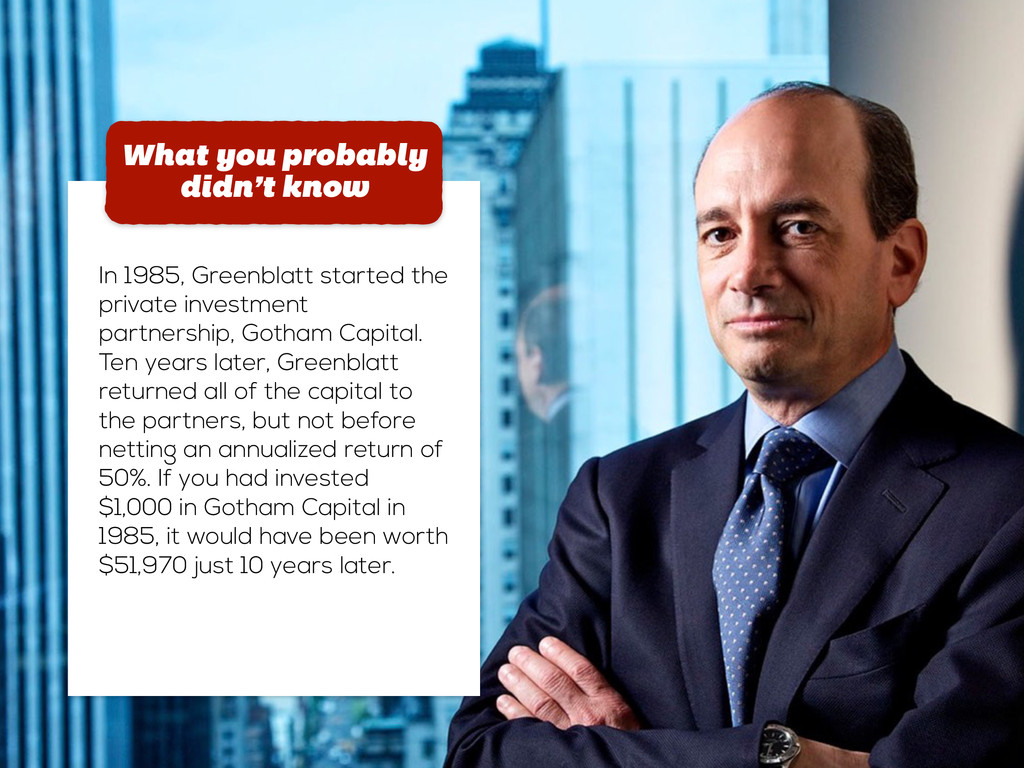
private investment partnership, Gotham Capital. Ten years later, Greenblatt returned all of the capital to the partners, but not before netting an annualized return of 50%. If you had invested $1,000 in Gotham Capital in 1985, it would have been worth $51,970 just 10 years later.
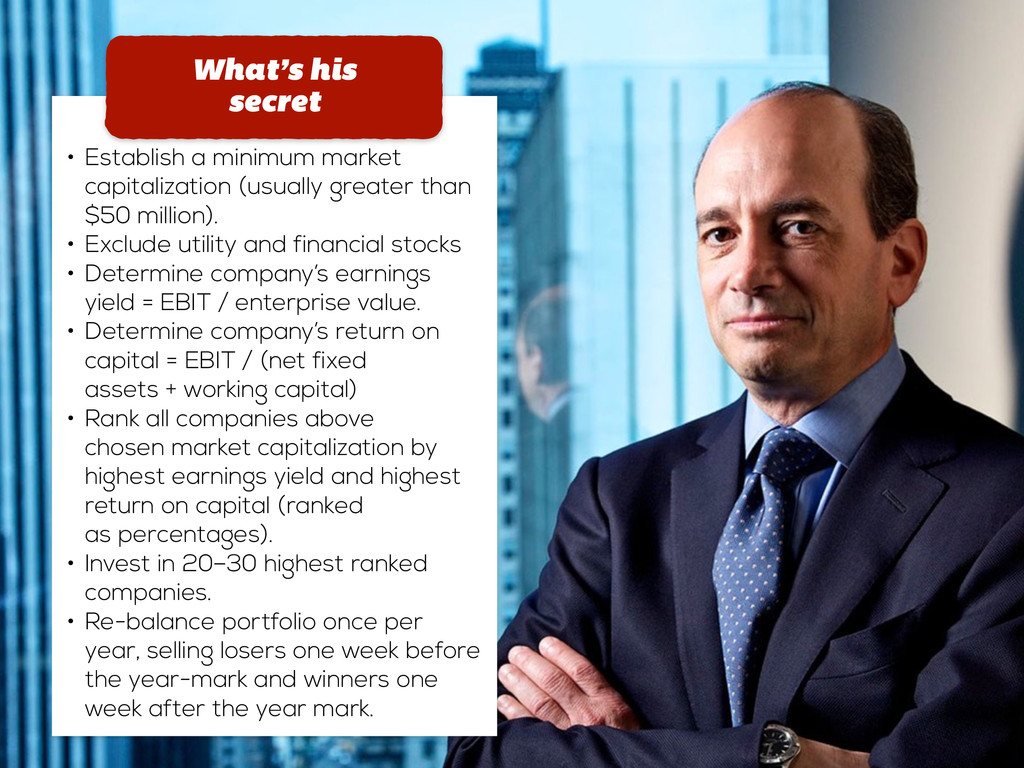
greater than $50 million). • Exclude utility and financial stocks • Determine company’s earnings yield = EBIT / enterprise value. • Determine company’s return on capital = EBIT / (net fixed assets + working capital) • Rank all companies above chosen market capitalization by highest earnings yield and highest return on capital (ranked as percentages). • Invest in 20–30 highest ranked companies. • Re-balance portfolio once per year, selling losers one week before the year-mark and winners one week after the year mark.
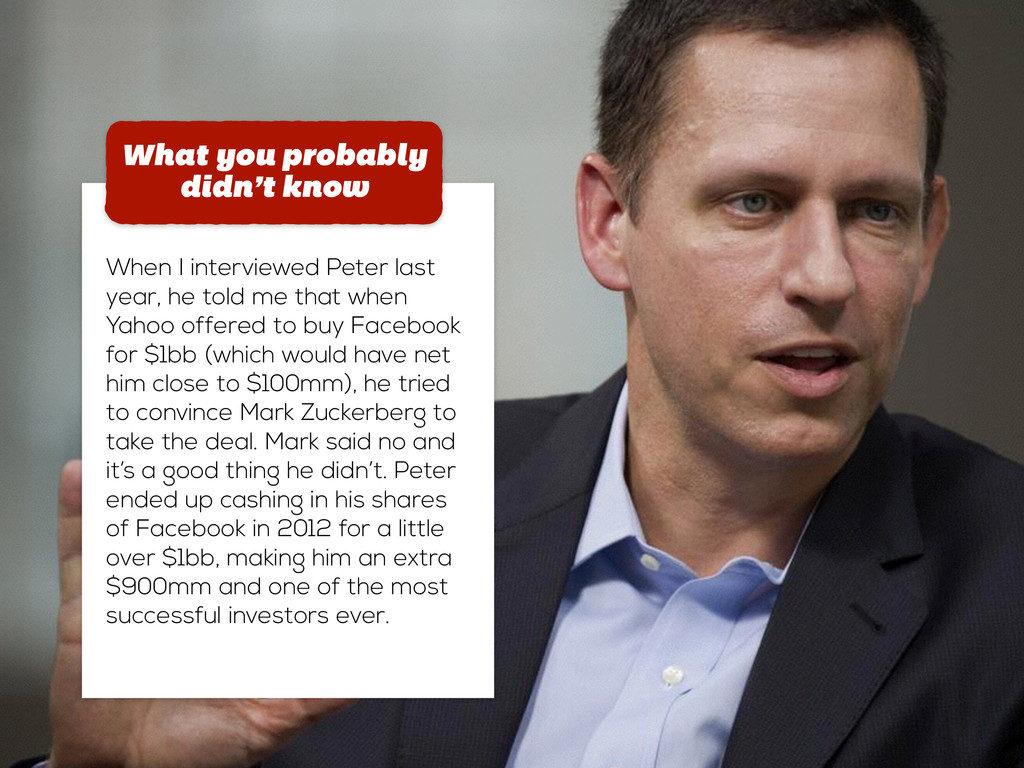
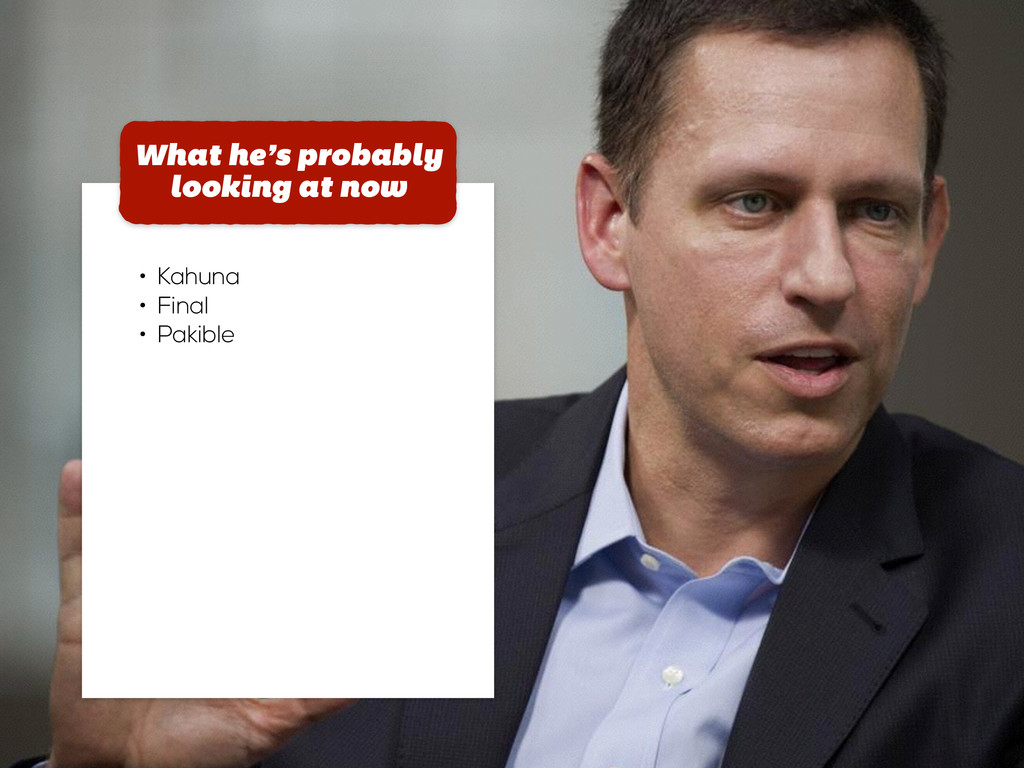
year, he told me that when Yahoo offered to buy Facebook for $1bb (which would have net him close to $100mm), he tried to convince Mark Zuckerberg to take the deal. Mark said no and it’s a good thing he didn’t. Peter ended up cashing in his shares of Facebook in 2012 for a little over $1bb, making him an extra $900mm and one of the most successful investors ever.
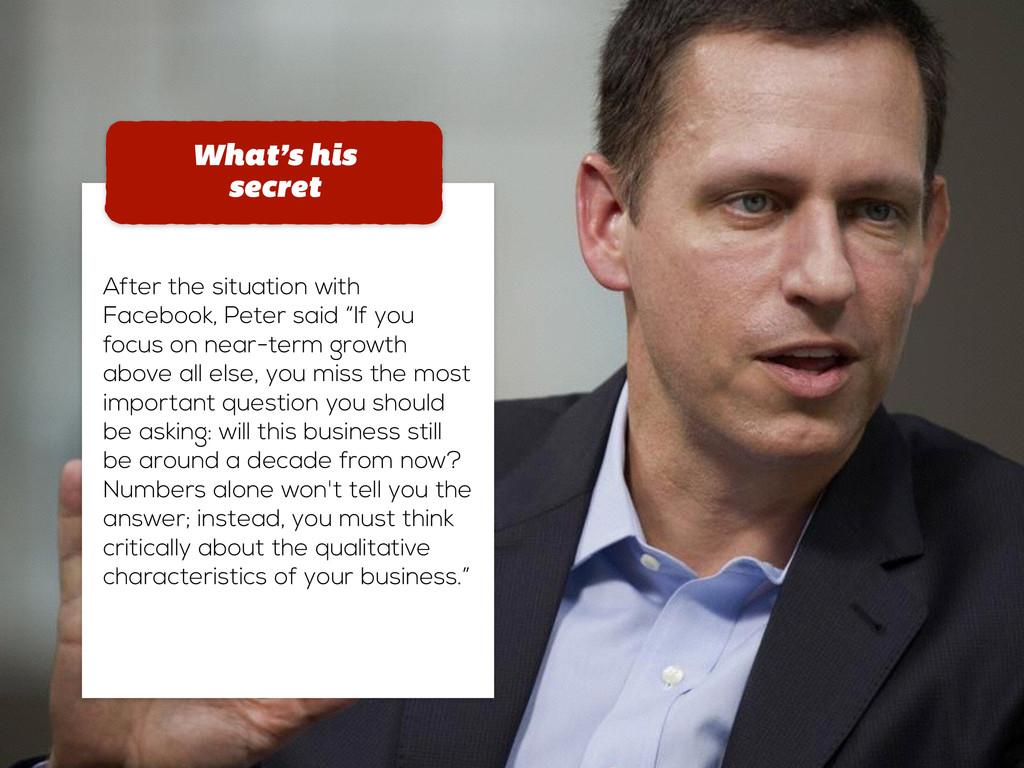
“If you focus on near-term growth above all else, you miss the most important question you should be asking: will this business still be around a decade from now? Numbers alone won't tell you the answer; instead, you must think critically about the qualitative characteristics of your business.”
ever. But now you may be asking yourself: “Who do I follow and which strategy should I use?” Over the last 20 years, I have developed a technique to discover only the top 1% of investments out of the hundreds these successful investors make every year. I will show you exactly how in the next email that you receive from me. Keep an eye on your inbox for it. -James Altucher


 davidcarrasco
 techseoconnect
 akashhashmi
 keithpitt
 chrislema
 aleyda
 caitiem20
 tamaranovitovic
 danielanewman
 szymonslowik
 lemiorhan
 livdayseo