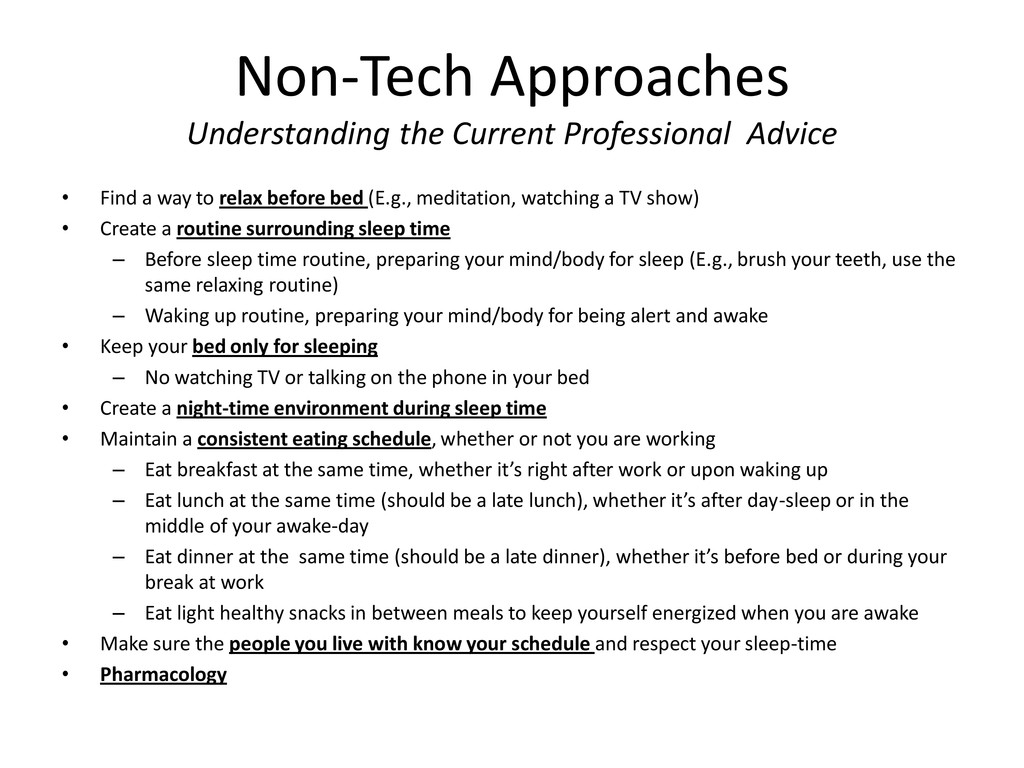
way to relax before bed (E.g., meditation, watching a TV show) • Create a routine surrounding sleep time – Before sleep time routine, preparing your mind/body for sleep (E.g., brush your teeth, use the same relaxing routine) – Waking up routine, preparing your mind/body for being alert and awake • Keep your bed only for sleeping – No watching TV or talking on the phone in your bed • Create a night-time environment during sleep time • Maintain a consistent eating schedule, whether or not you are working – Eat breakfast at the same time, whether it’s right after work or upon waking up – Eat lunch at the same time (should be a late lunch), whether it’s after day-sleep or in the middle of your awake-day – Eat dinner at the same time (should be a late dinner), whether it’s before bed or during your break at work – Eat light healthy snacks in between meals to keep yourself energized when you are awake • Make sure the people you live with know your schedule and respect your sleep-time • Pharmacology
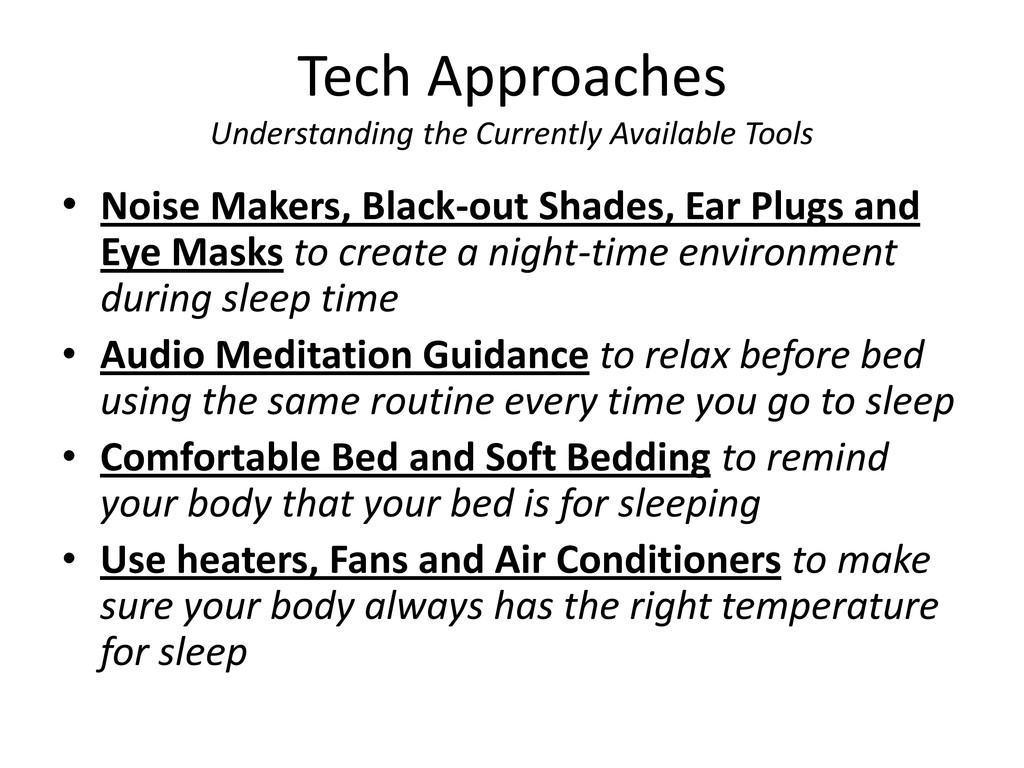
Black-out Shades, Ear Plugs and Eye Masks to create a night-time environment during sleep time • Audio Meditation Guidance to relax before bed using the same routine every time you go to sleep • Comfortable Bed and Soft Bedding to remind your body that your bed is for sleeping • Use heaters, Fans and Air Conditioners to make sure your body always has the right temperature for sleep
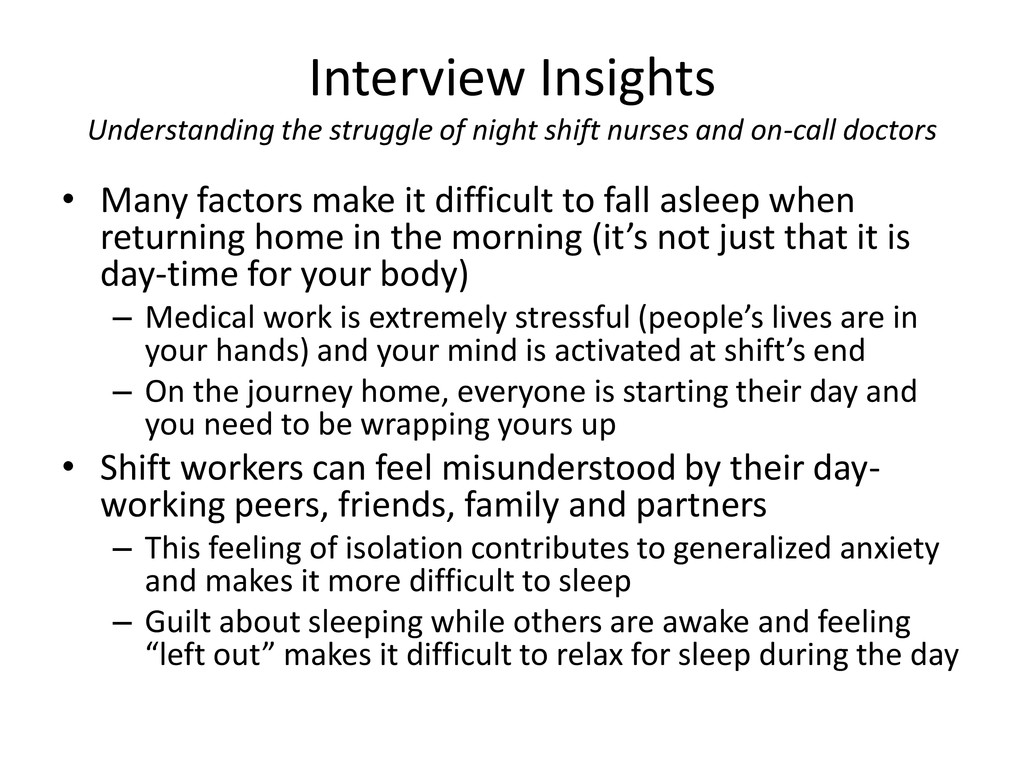
on-call doctors • Many factors make it difficult to fall asleep when returning home in the morning (it’s not just that it is day-time for your body) – Medical work is extremely stressful (people’s lives are in your hands) and your mind is activated at shift’s end – On the journey home, everyone is starting their day and you need to be wrapping yours up • Shift workers can feel misunderstood by their day- working peers, friends, family and partners – This feeling of isolation contributes to generalized anxiety and makes it more difficult to sleep – Guilt about sleeping while others are awake and feeling “left out” makes it difficult to relax for sleep during the day
of the week every week make any difference? • How individualized does a night time routine have to be? • Is the problem more falling asleep or staying asleep? • Is day-time sleeping the only problem, or is night-time sleeping on off-days also a significant problem?


 nwiizo
 codingconduct
 afnizarnur
 dougneiner
 ks91
 lara
 rakko
 matthewcrist
 coloredviolet
 szymonslowik
 inesmontani
 jonoalderson