Upgrade to Pro — share decks privately, control downloads, hide ads and more …

Event Driven in the Wild with kafka - BeJUG

Avatar for Jonas Geiregat Jonas Geiregat
May 07, 2025
99

Event Driven in the Wild with kafka - BeJUG

Avatar for Jonas Geiregat

Jonas Geiregat

May 07, 2025

Transcript

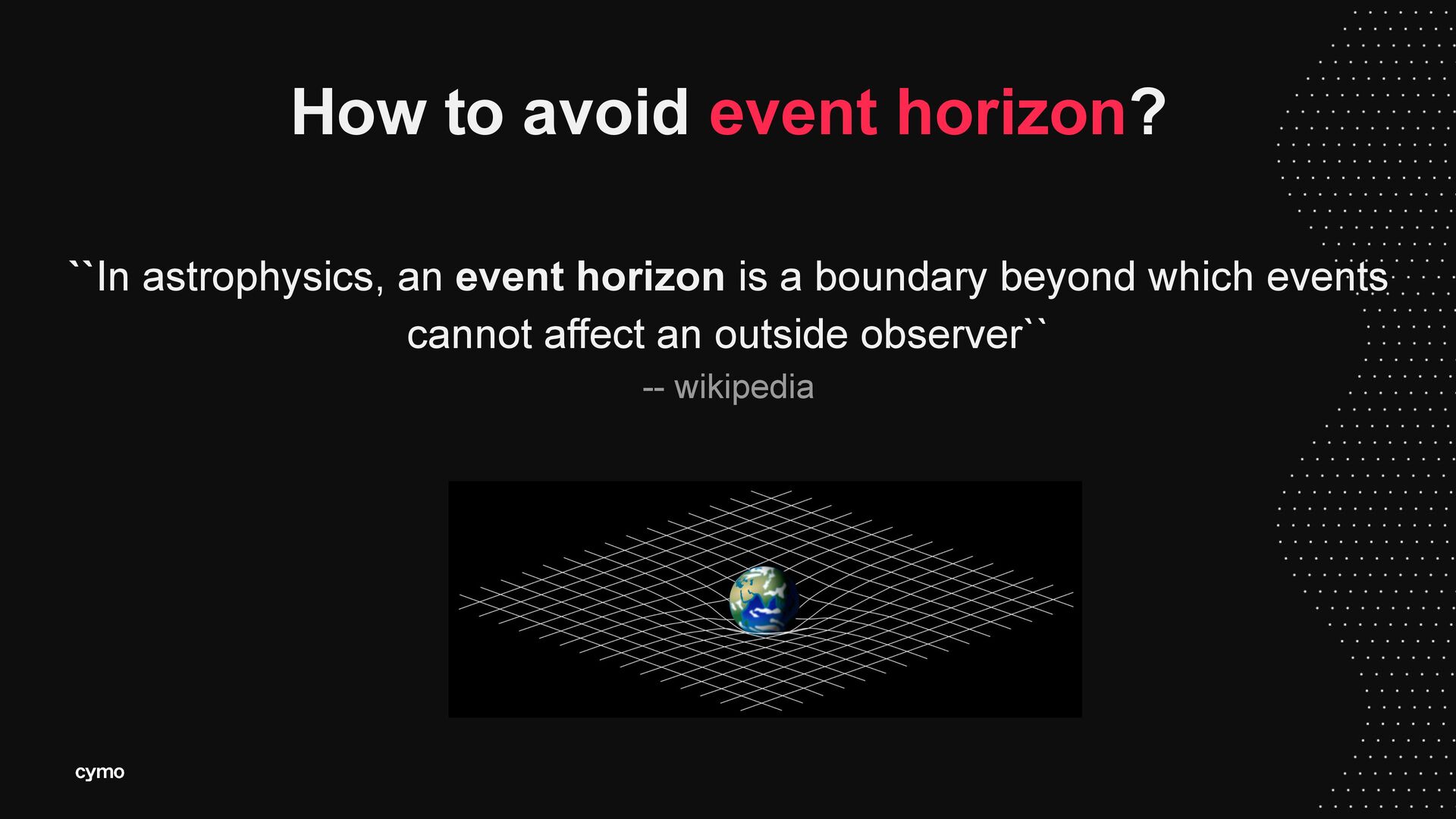
  1. How to avoid event horizon? ``In astrophysics, an event horizon

    is a boundary beyond which events cannot affect an outside observer`` -- wikipedia
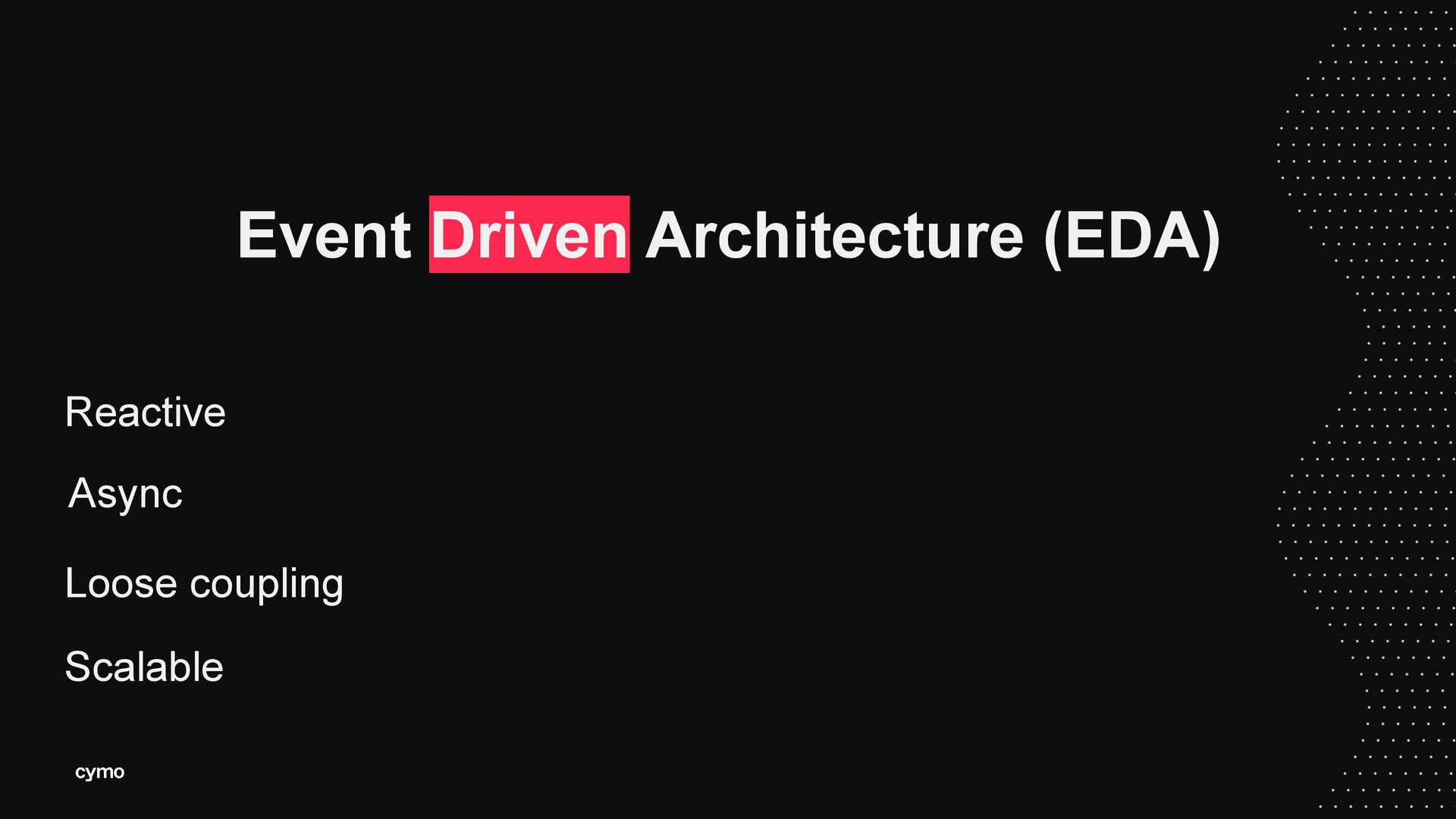
  2. Event Driven Architecture (EDA) Something that happened in the past

    Named as such - past tense Immutable Ubiquitous language
  3. Given an unregistered customer When they complete their registration Then

    the CRM system is notified Name the event UserCreated CustomerDTO CustomerCreated UserCreated CustomerDTO CustomerCreated CustomerRegistered ✅
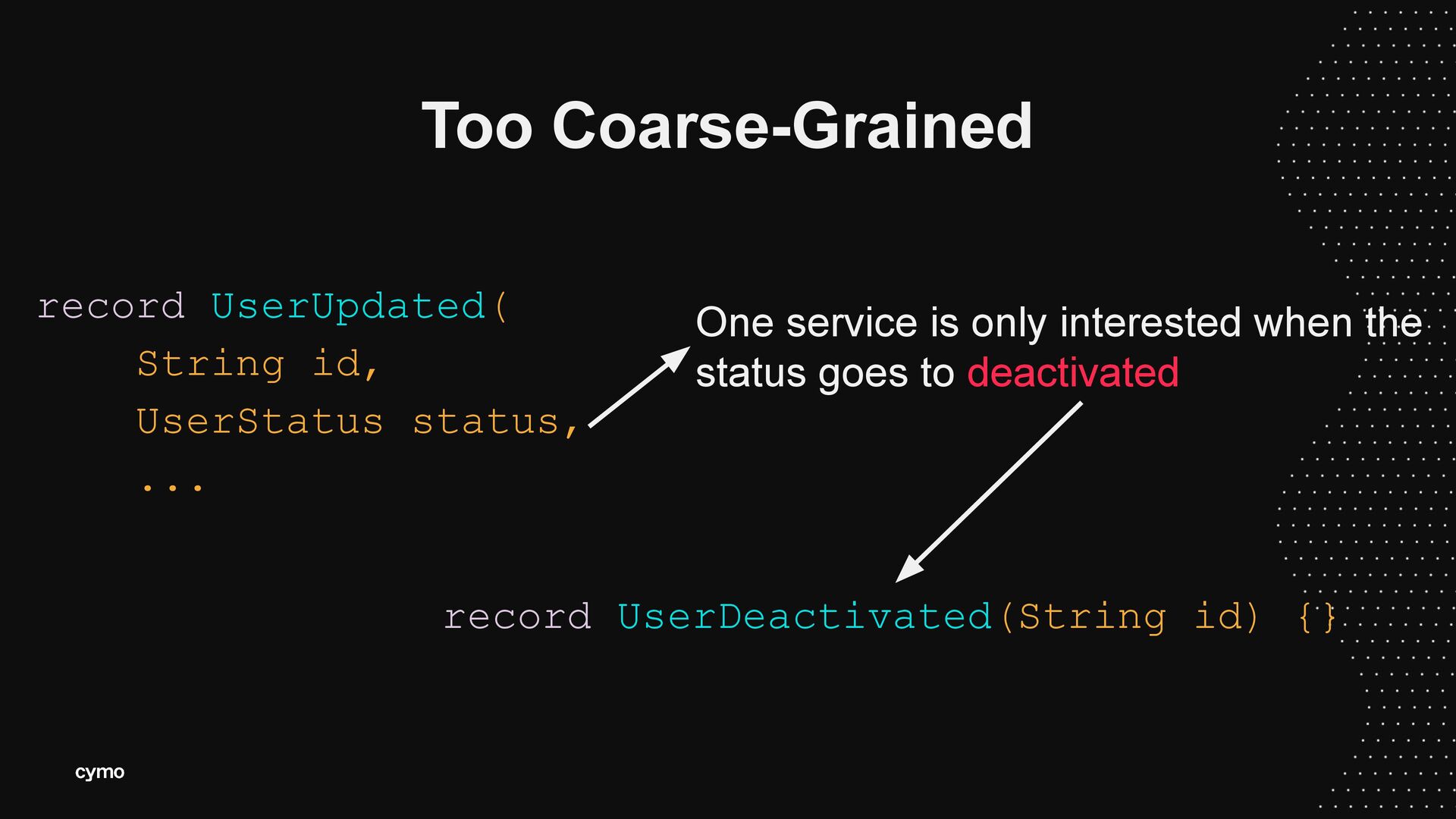
  4. record UserUpdated( String id, UserStatus status, ... Too Coarse-Grained One

    service is only interested when the status goes to deactivated record UserDeactivated(String id) {}
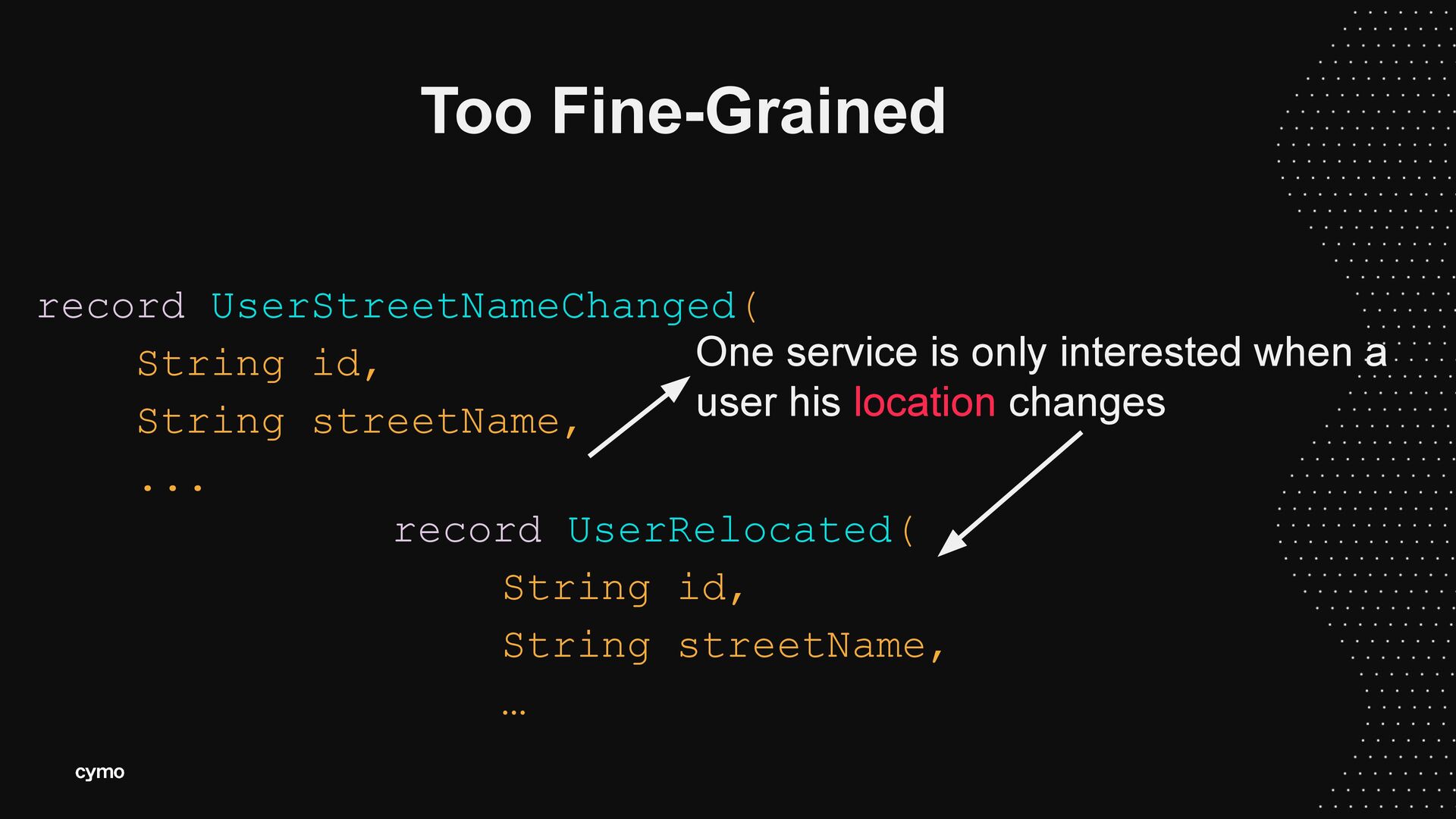
  5. record UserStreetNameChanged( String id, String streetName, ... Too Fine-Grained One

    service is only interested when a user his location changes record UserRelocated( String id, String streetName, …
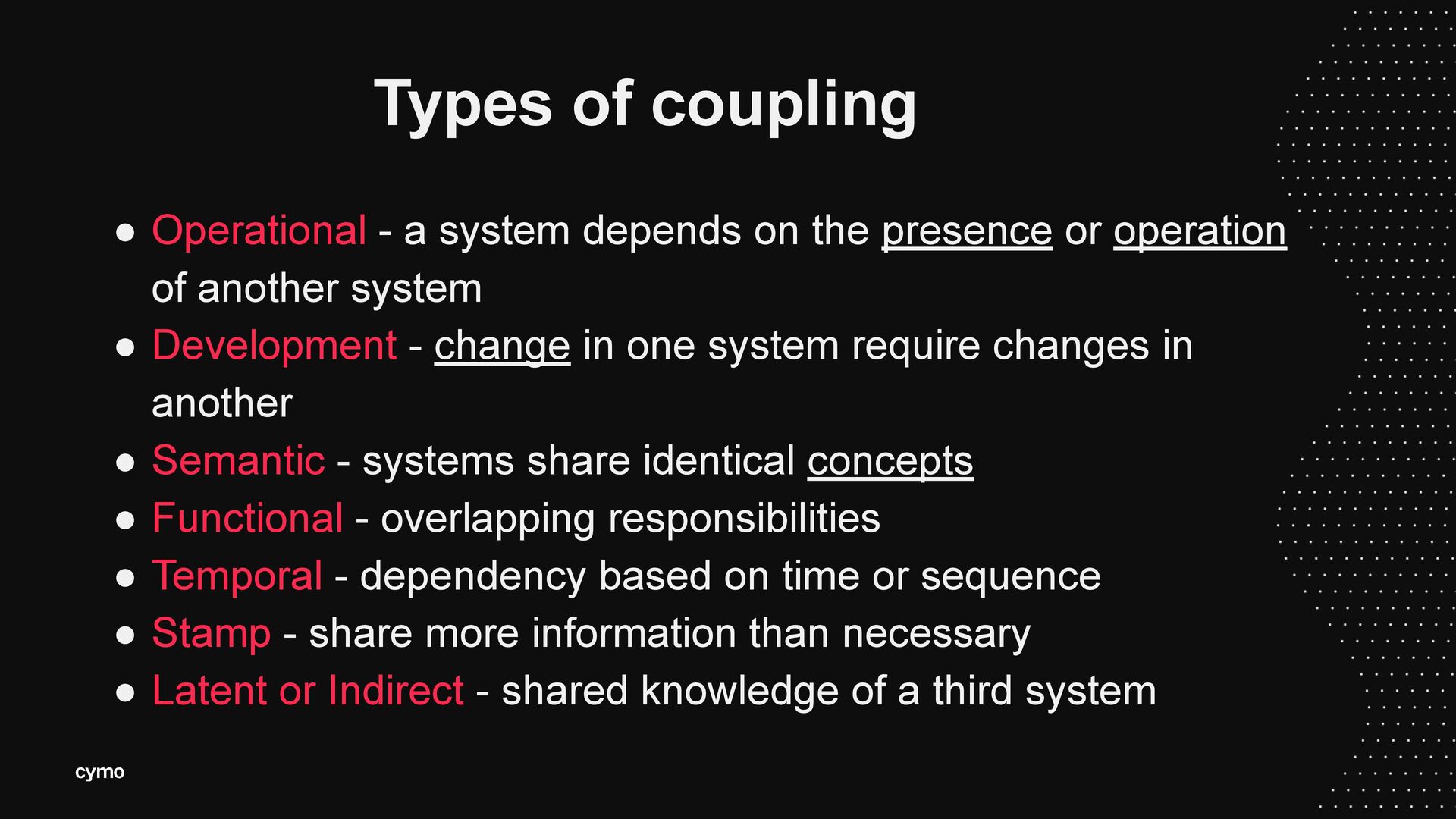
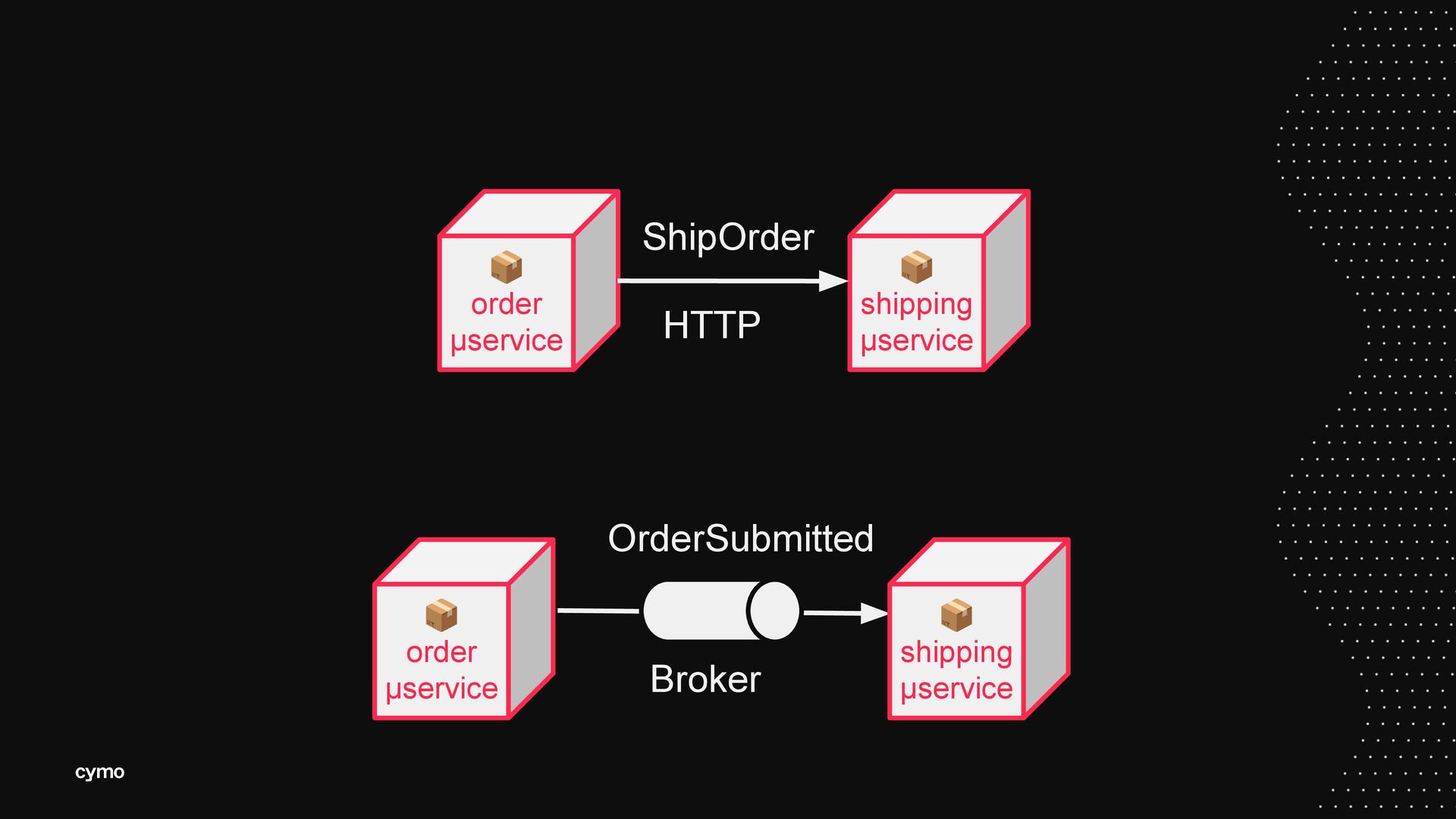
  6. Types of coupling • Operational - a system depends on

    the presence or operation of another system • Development - change in one system require changes in another • Semantic - systems share identical concepts • Functional - overlapping responsibilities • Temporal - dependency based on time or sequence • Stamp - share more information than necessary • Latent or Indirect - shared knowledge of a third system
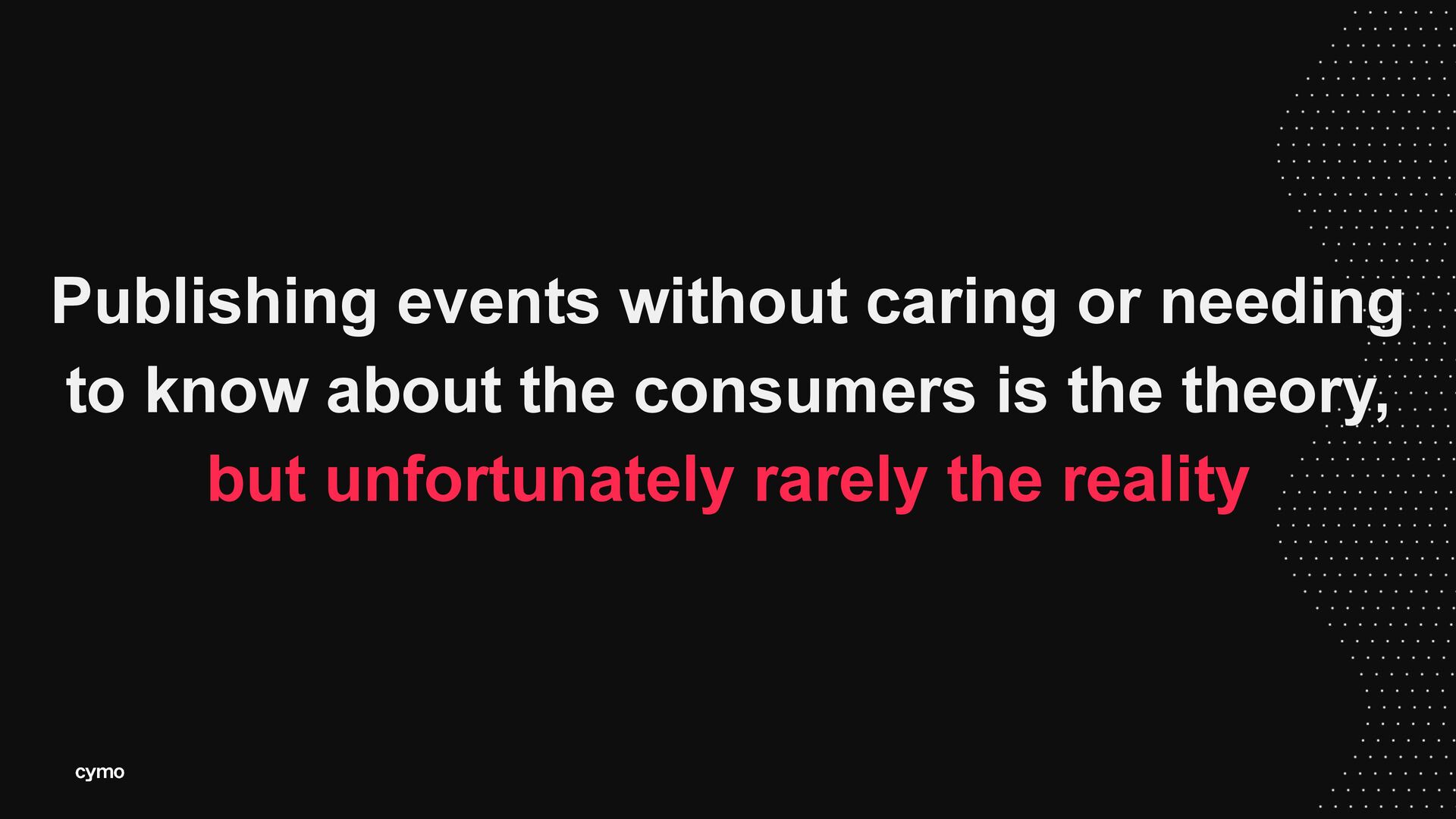
  7. Publishing events without caring or needing to know about the

    consumers is the theory, but unfortunately rarely the reality
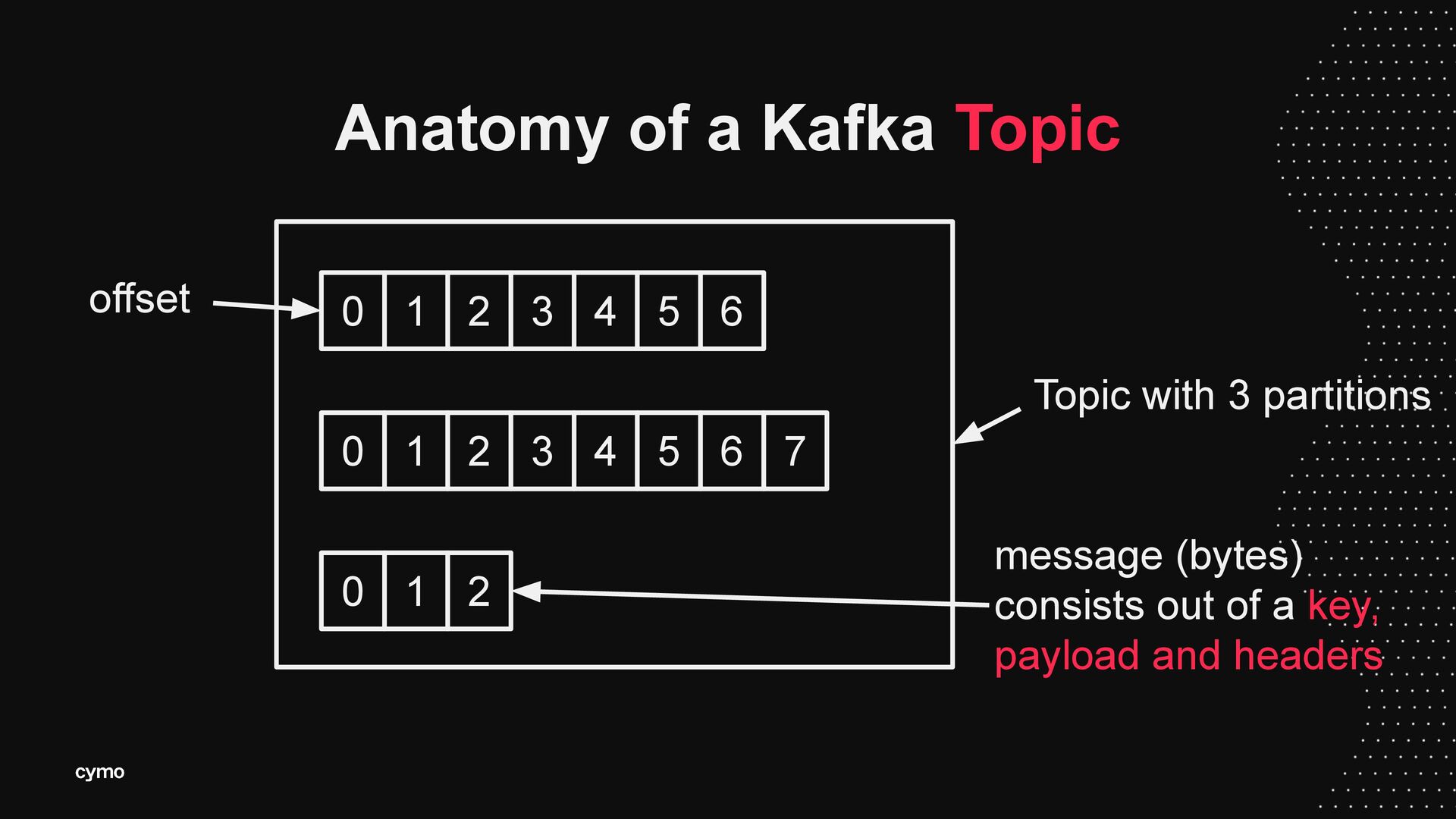
  8. Anatomy of a Kafka Topic 0 1 2 3 4

    5 6 0 1 2 3 4 5 6 7 0 1 2 Topic with 3 partitions offset message (bytes) consists out of a key, payload and headers
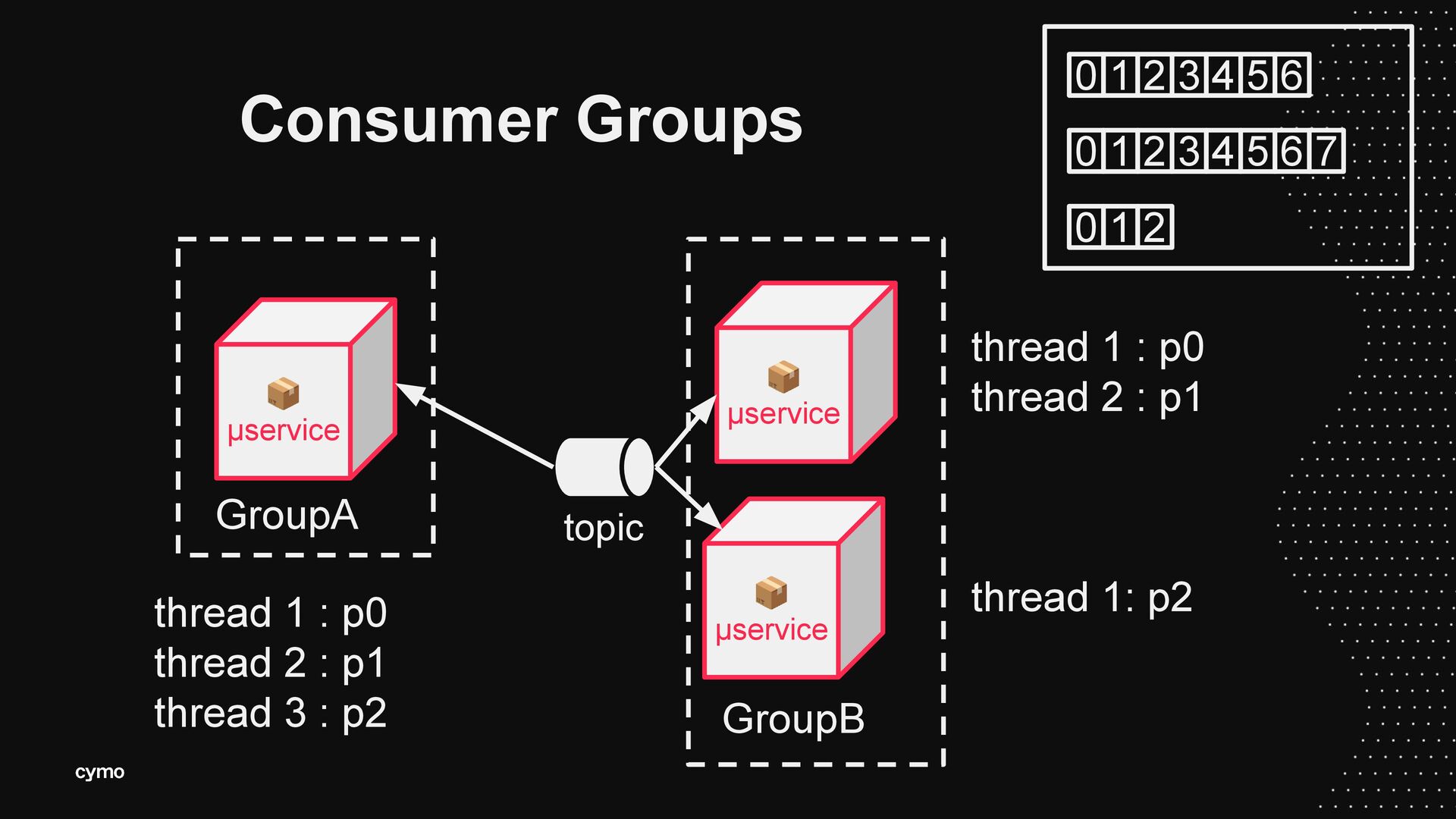
  9. Consumer Groups 📦 µservice 📦 µservice 📦 µservice topic 0

    1 2 3 4 5 6 0 1 2 3 4 5 6 7 0 1 2 GroupA GroupB thread 1 : p0 thread 2 : p1 thread 3 : p2 thread 1 : p0 thread 2 : p1 thread 1: p2
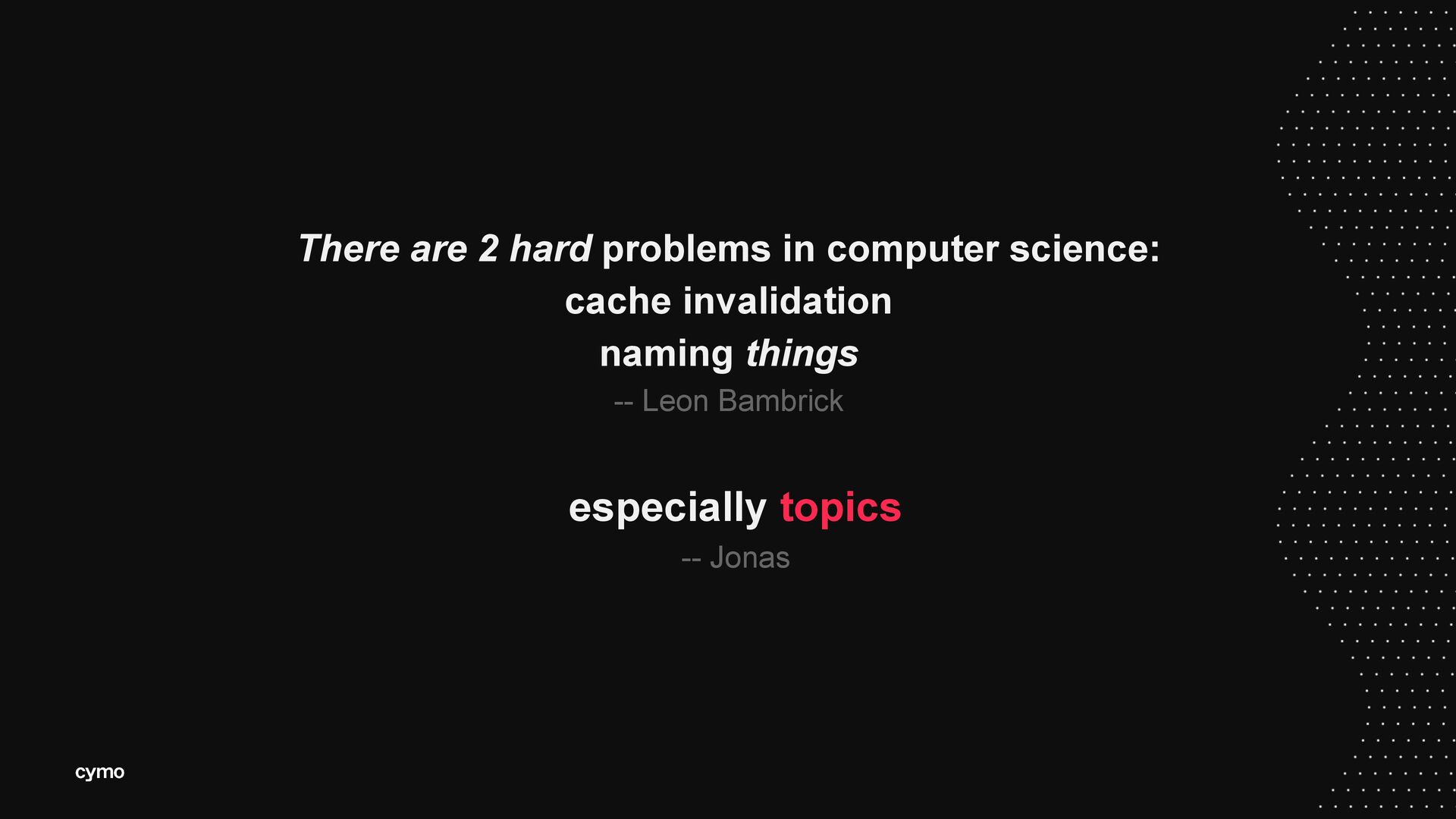
  10. There are 2 hard problems in computer science: cache invalidation

    naming things -- Leon Bambrick especially topics -- Jonas
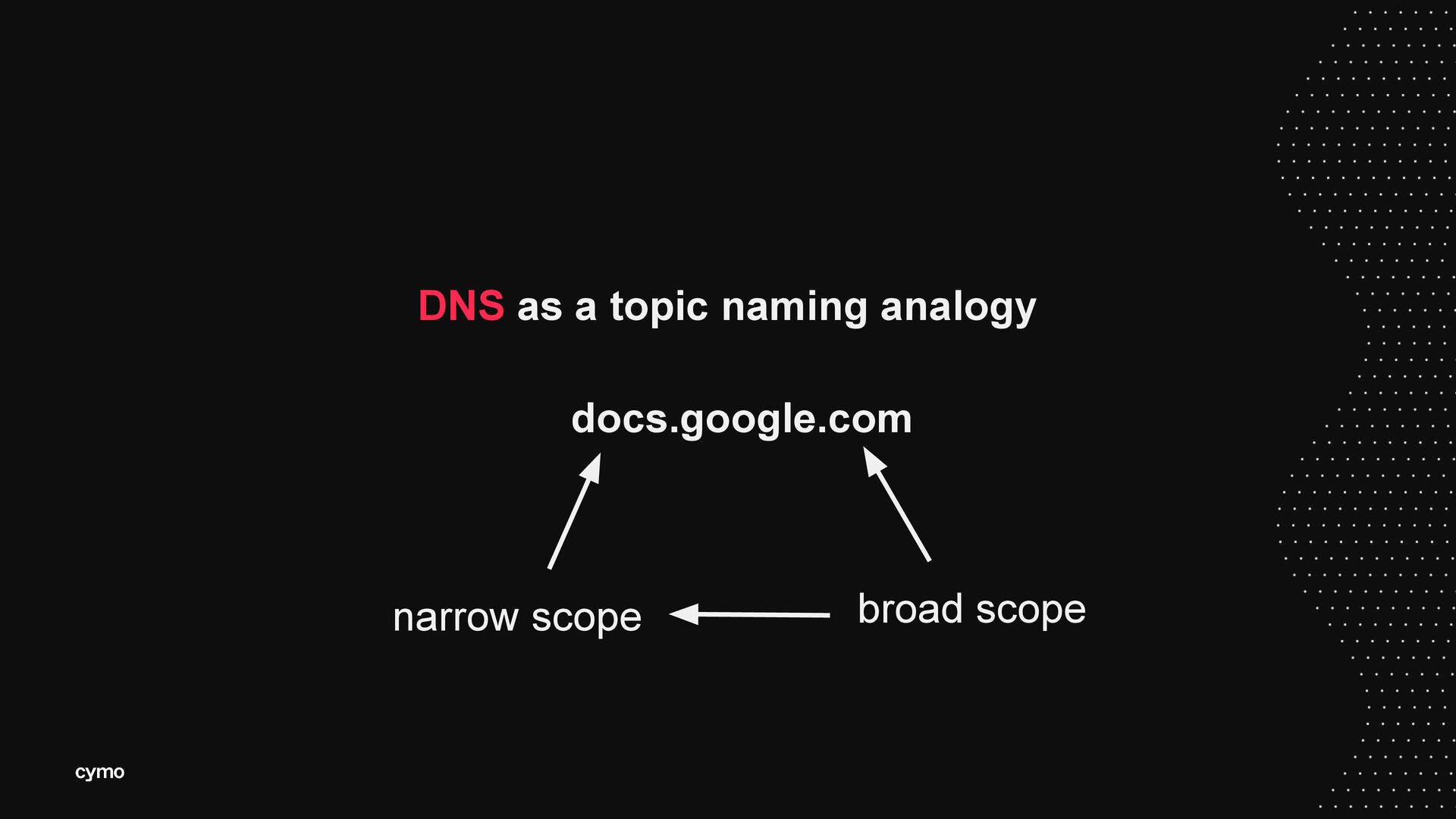
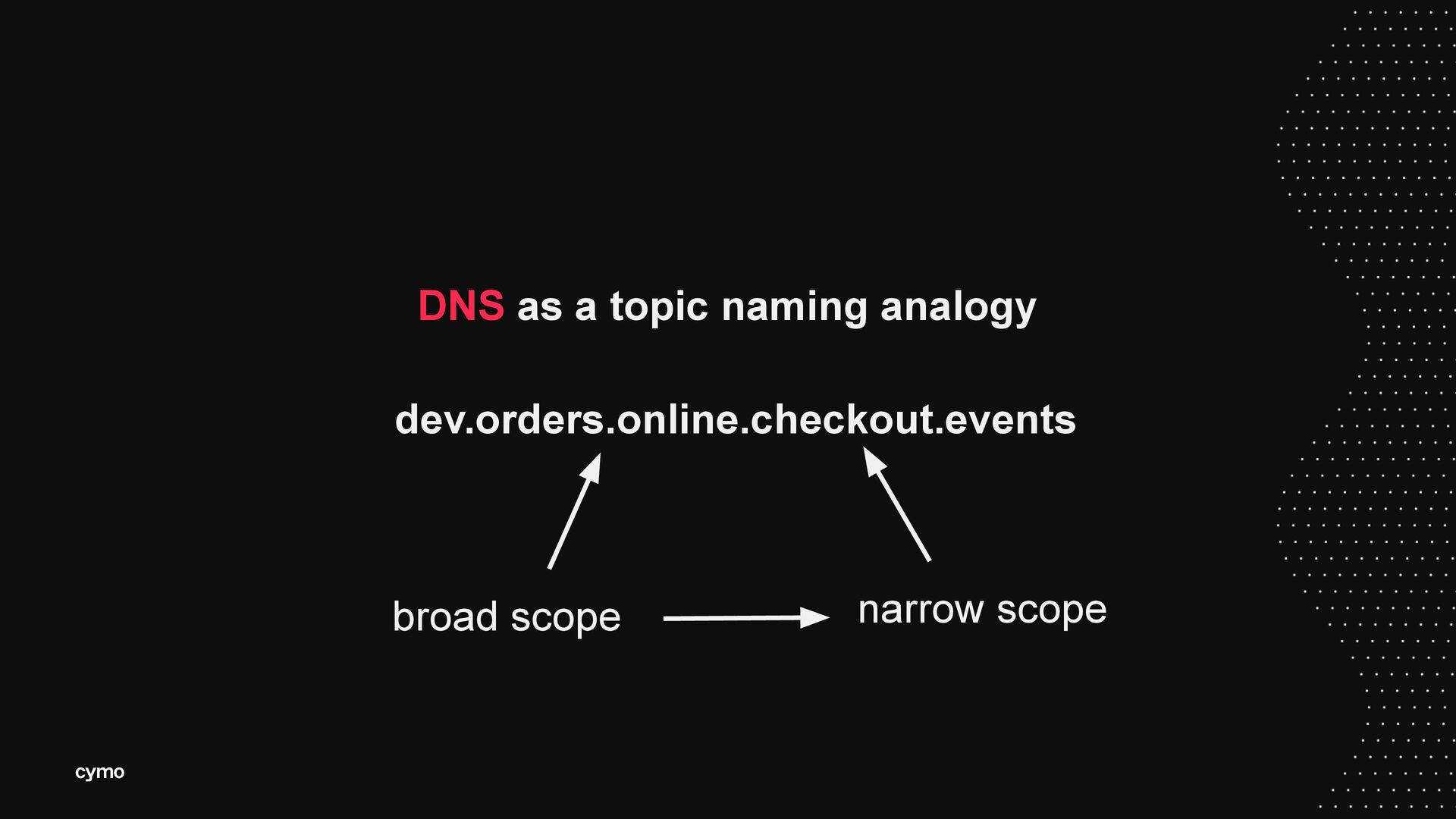
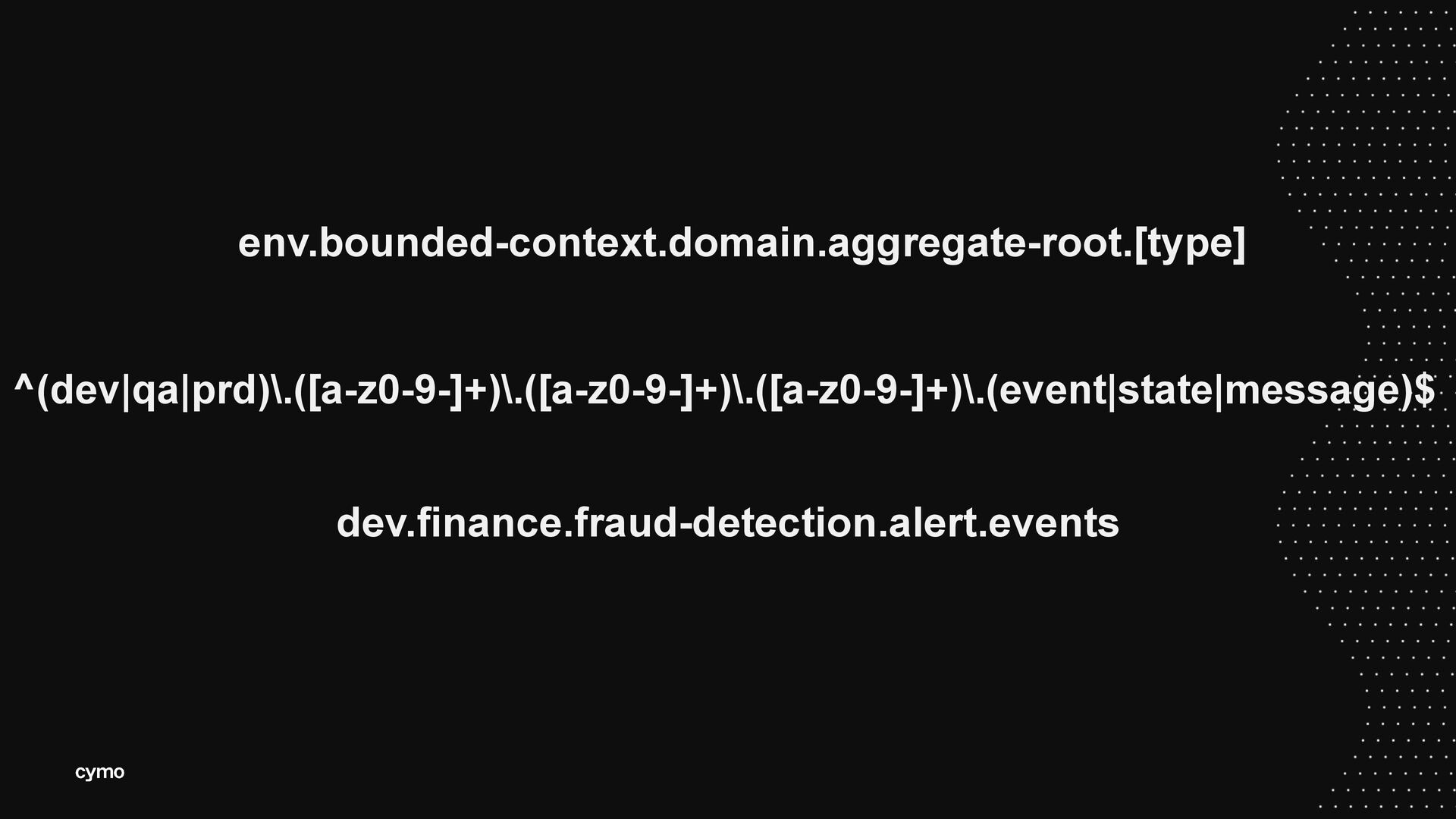
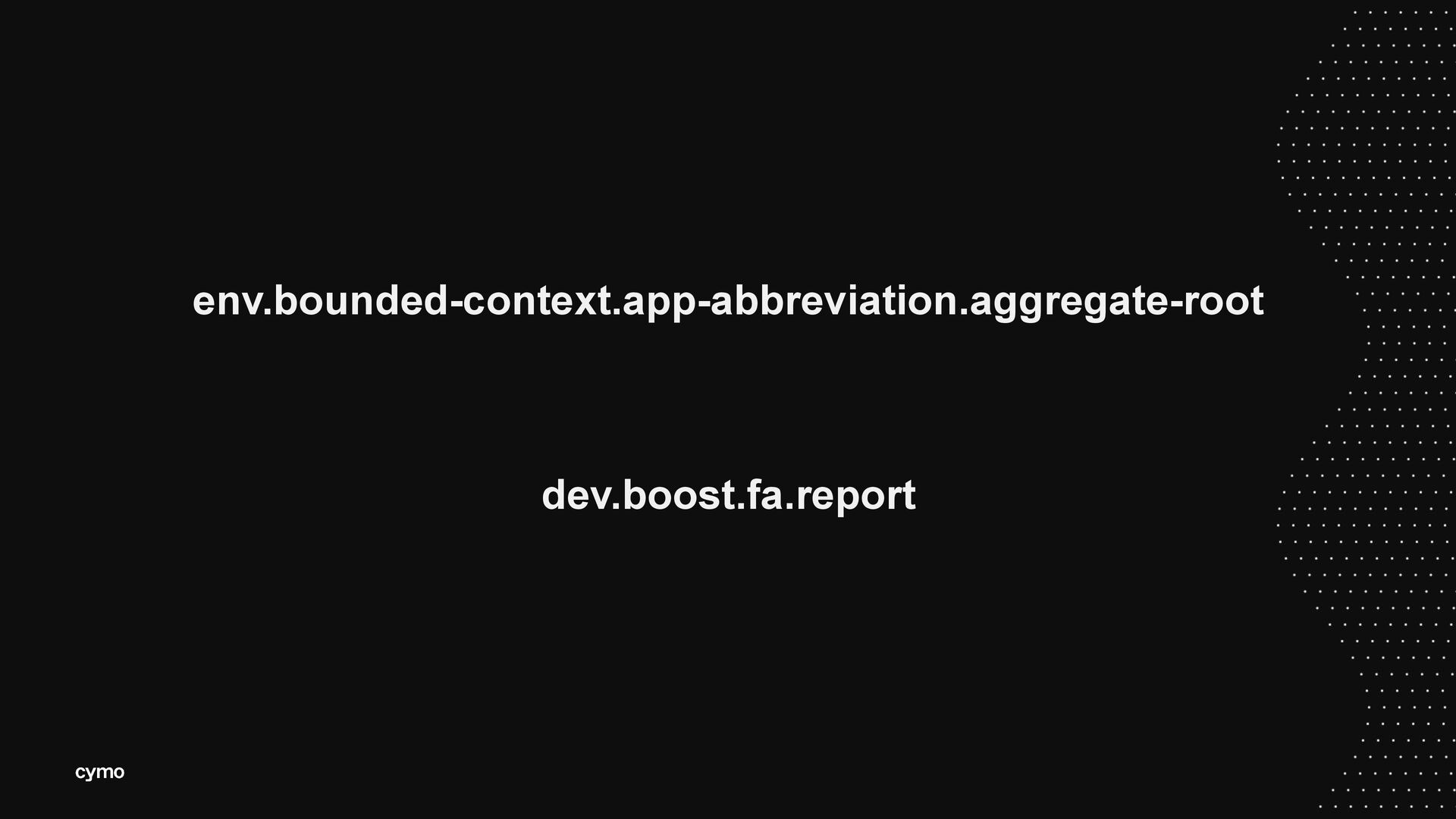
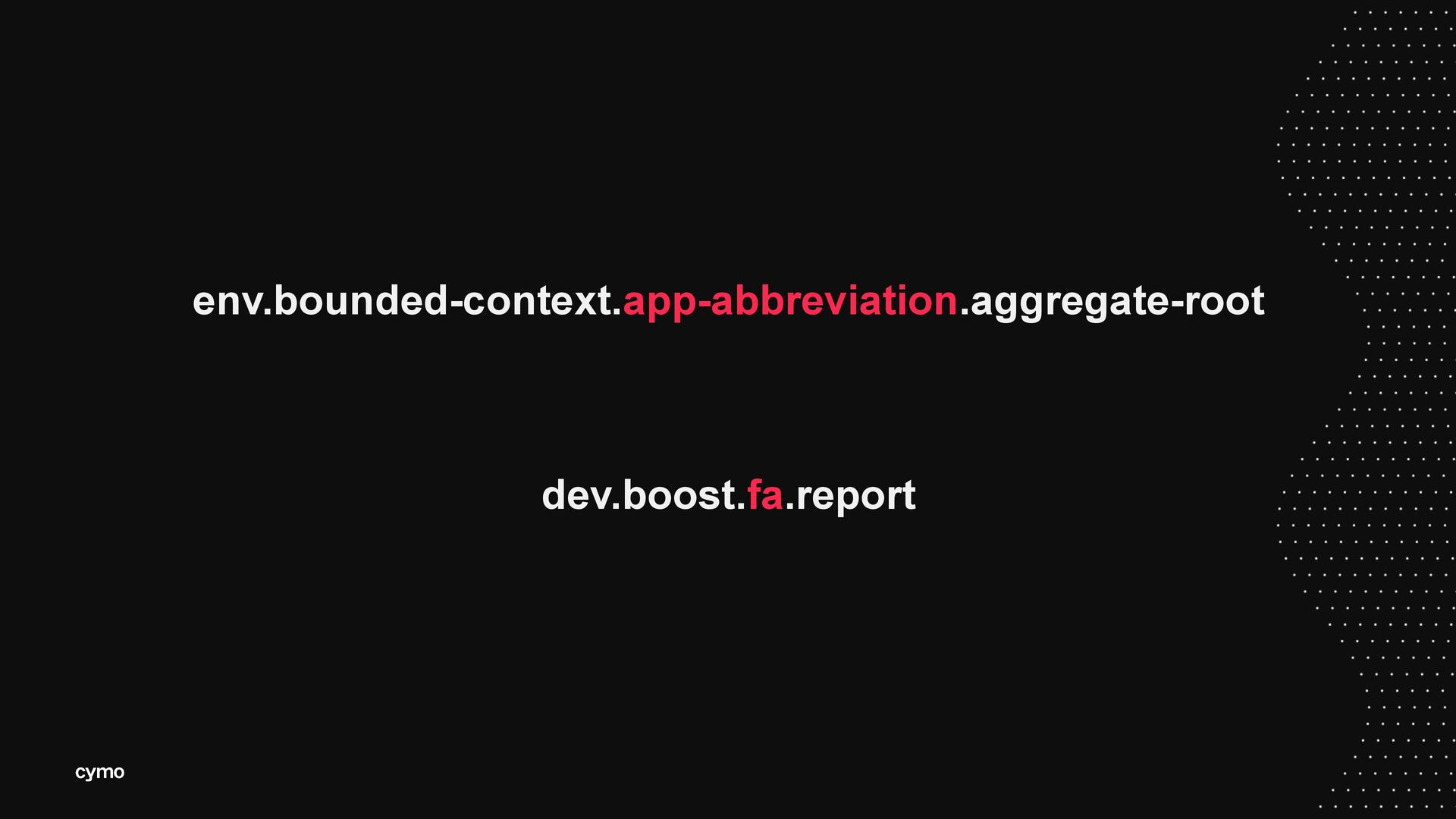
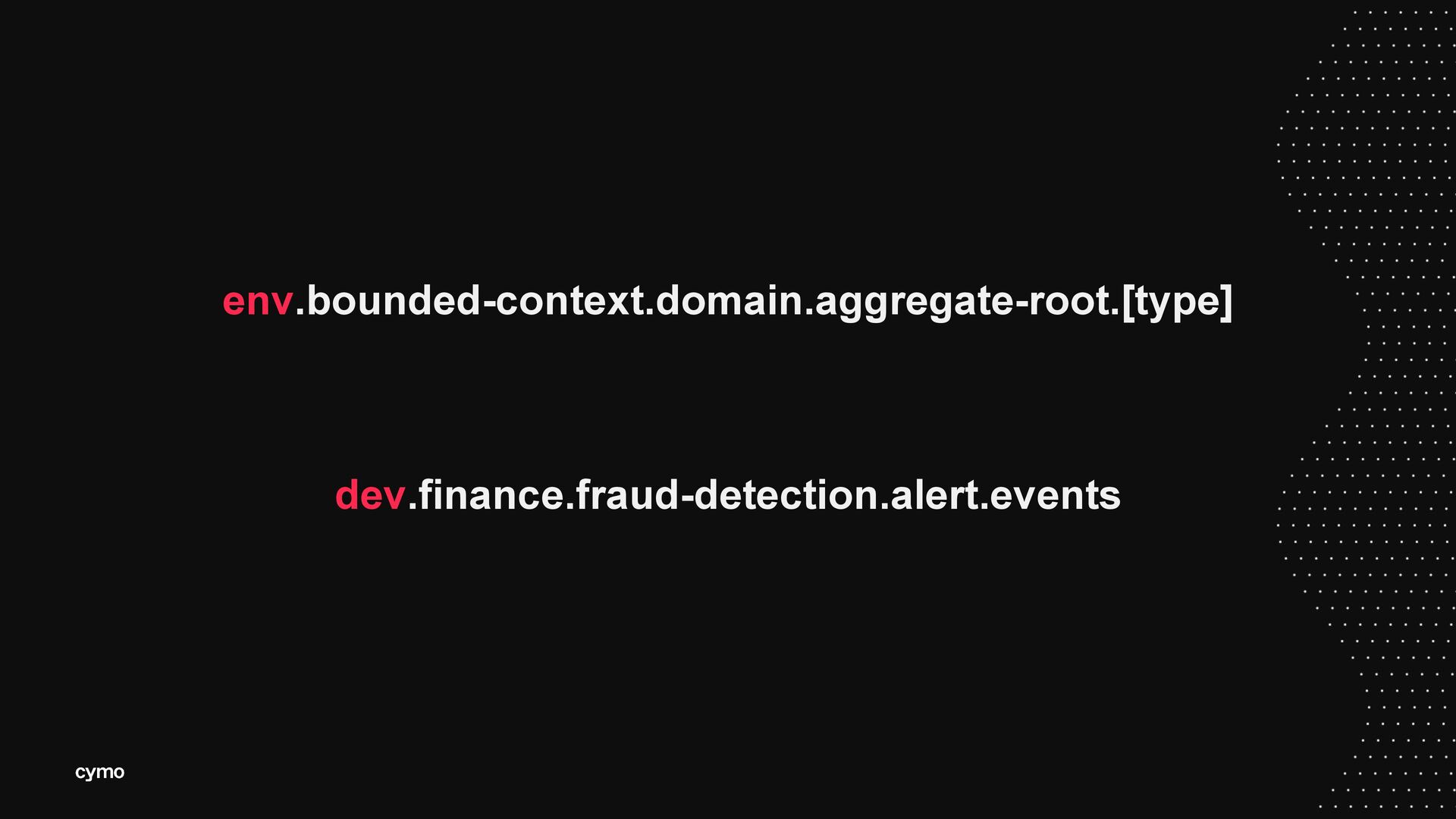
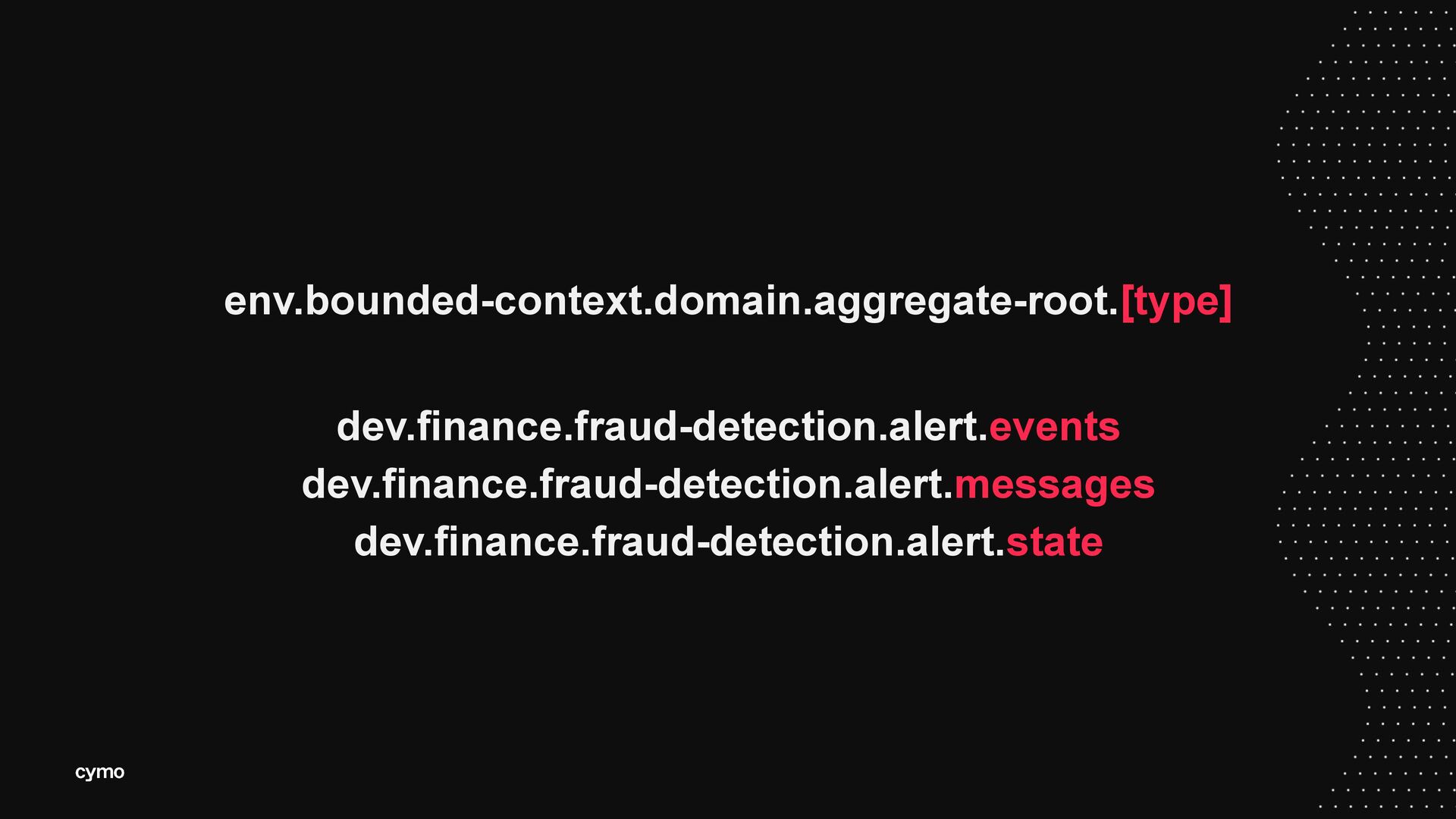
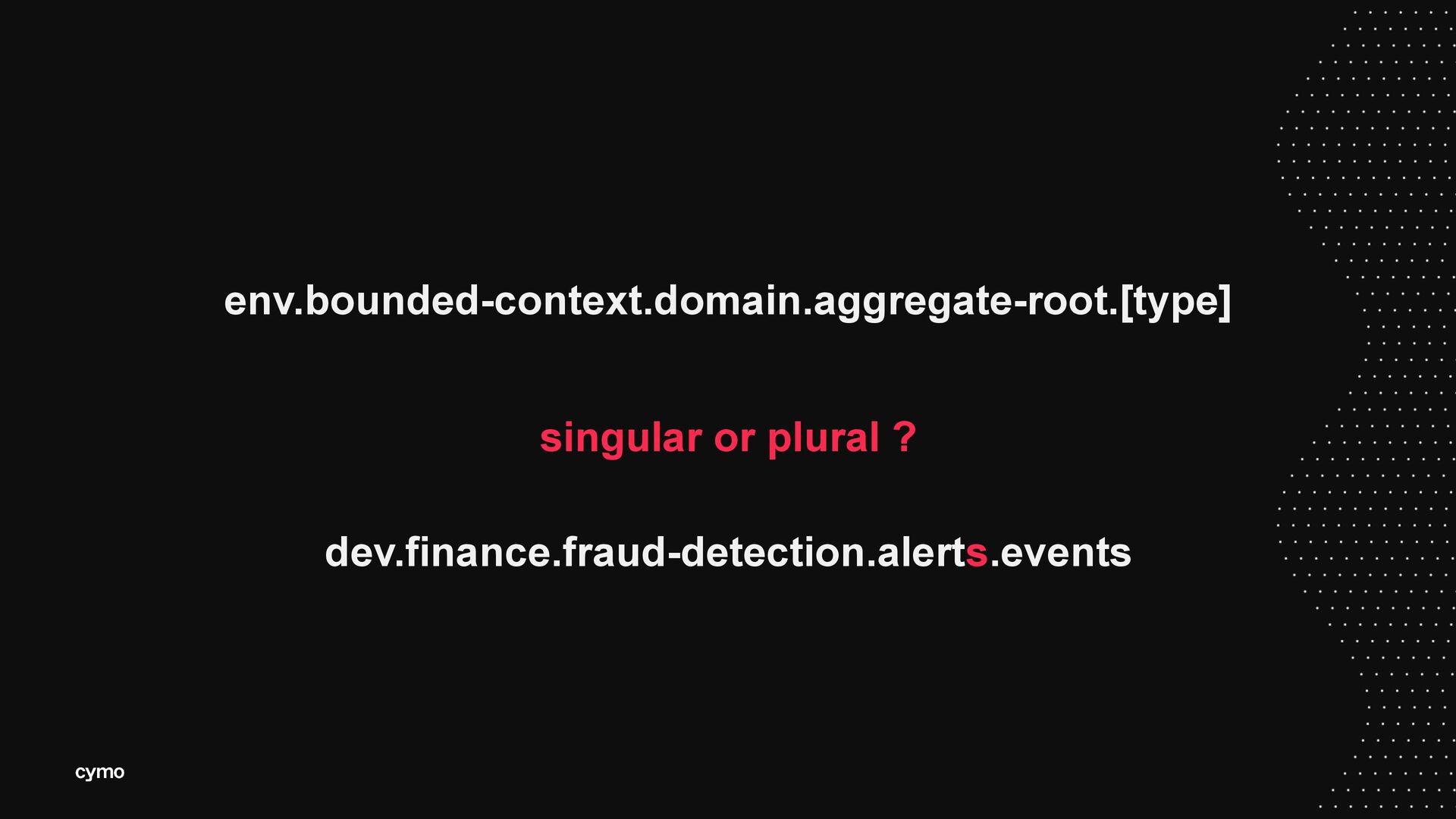
  11. DNS as a topic naming analogy narrow scope broad scope

    dev.orders.online.checkout.events
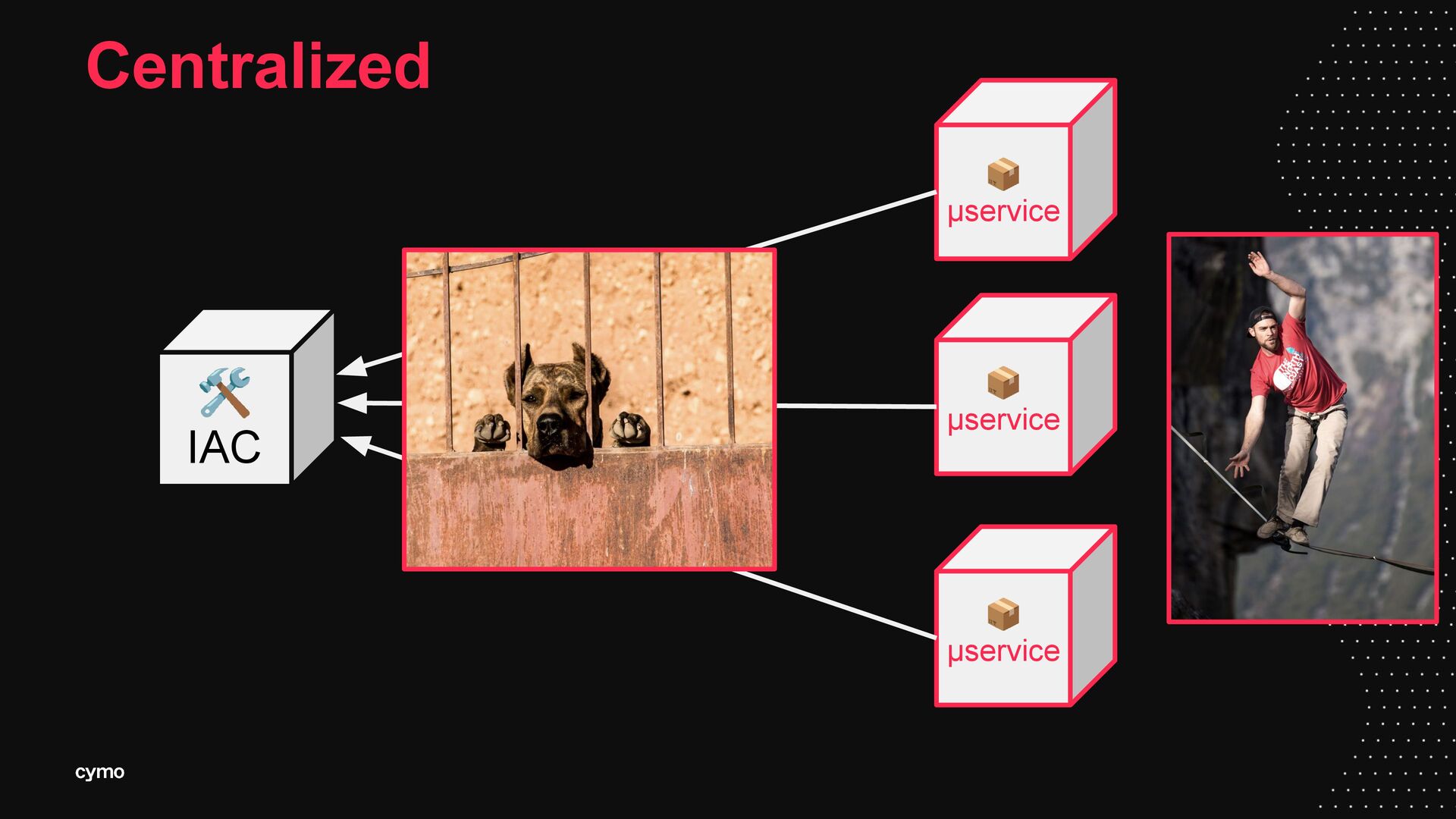
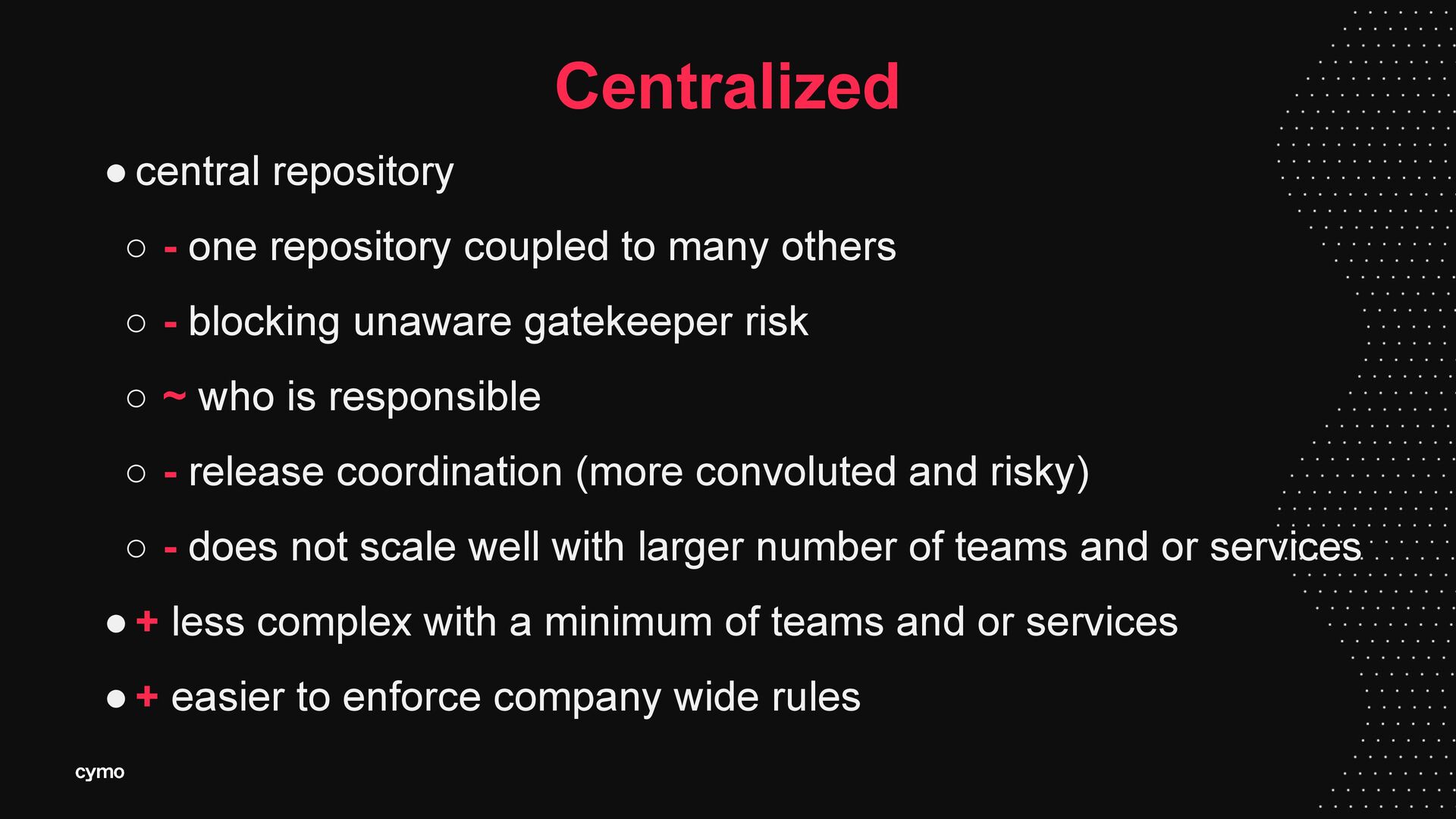
  12. Centralized • central repository ◦ - one repository coupled to

    many others ◦ - blocking unaware gatekeeper risk ◦ ~ who is responsible ◦ - release coordination (more convoluted and risky) ◦ - does not scale well with larger number of teams and or services • + less complex with a minimum of teams and or services • + easier to enforce company wide rules
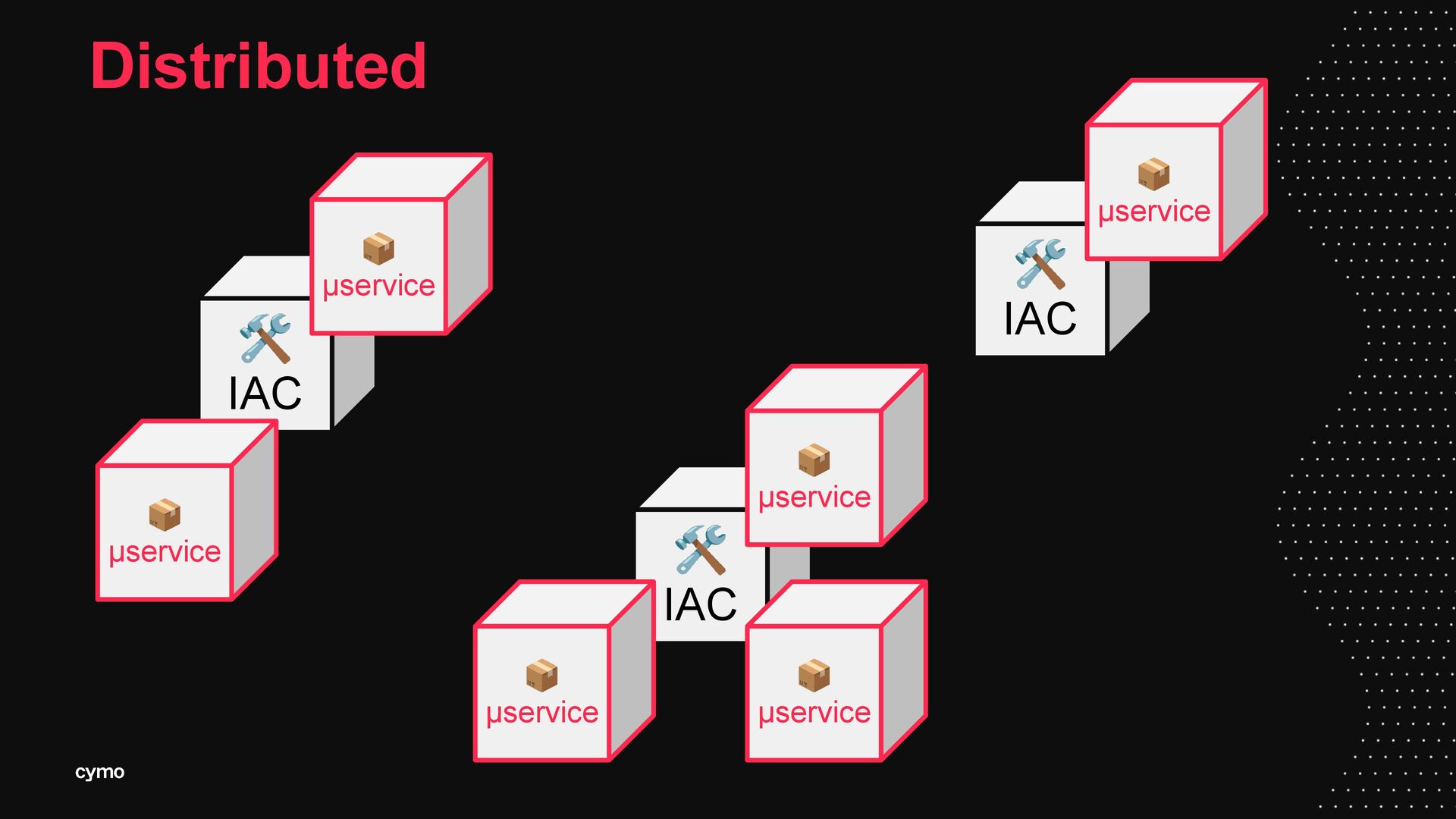
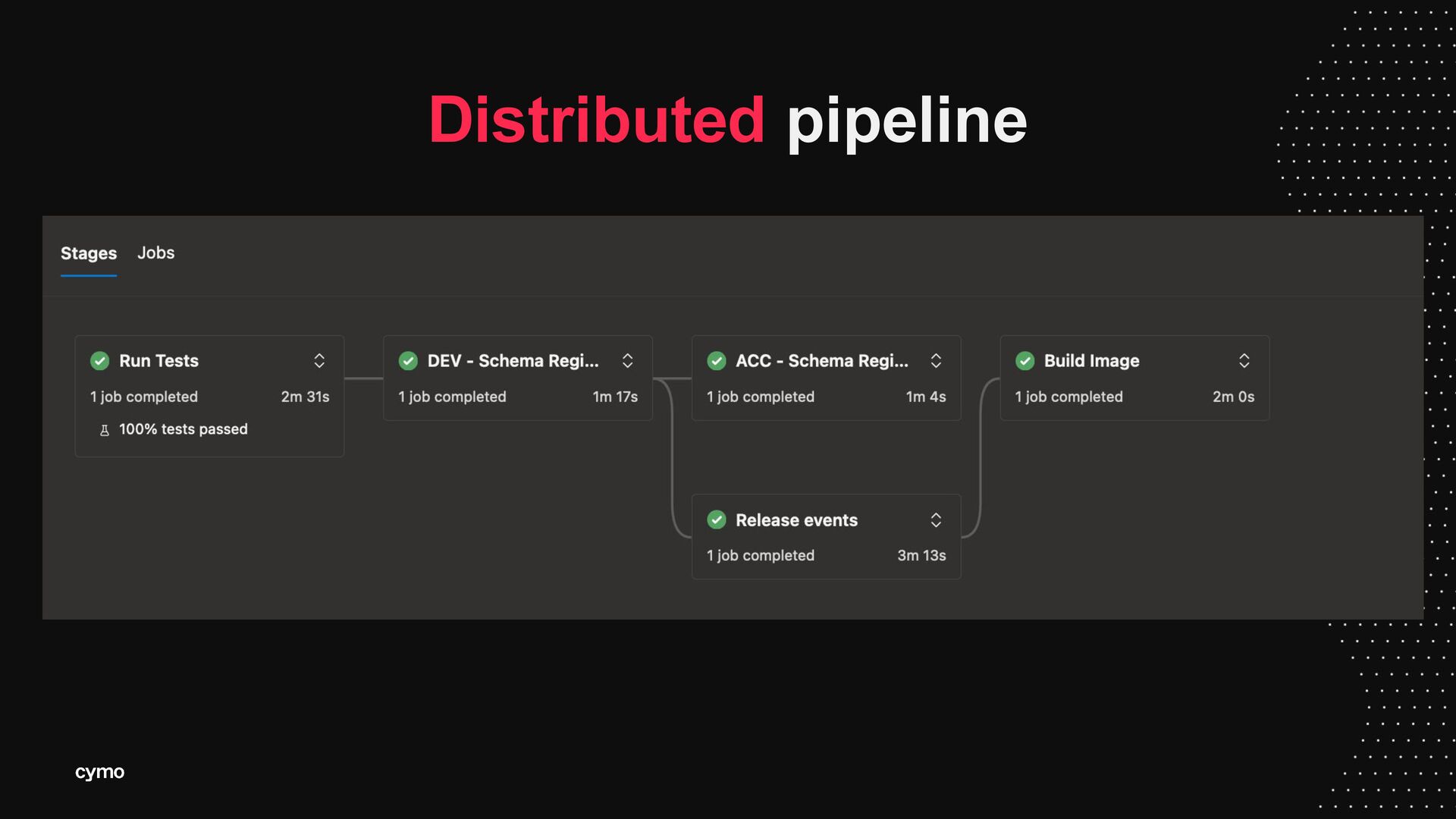
  13. Distributed 🛠 IAC 🛠 IAC 🛠 IAC 📦 µservice 📦

    µservice 📦 µservice 📦 µservice 📦 µservice 📦 µservice
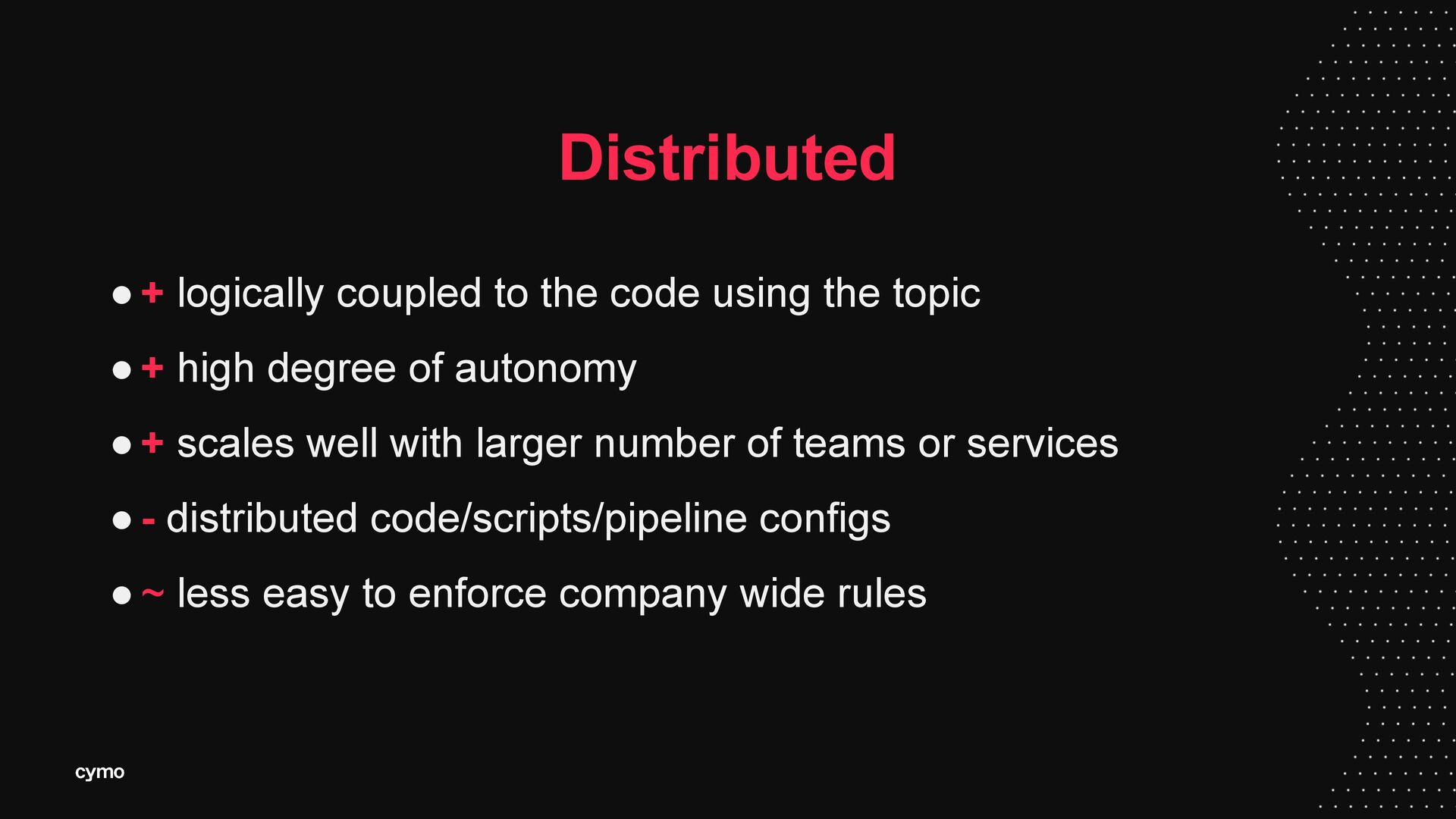
  14. Distributed • + logically coupled to the code using the

    topic • + high degree of autonomy • + scales well with larger number of teams or services • - distributed code/scripts/pipeline configs • ~ less easy to enforce company wide rules
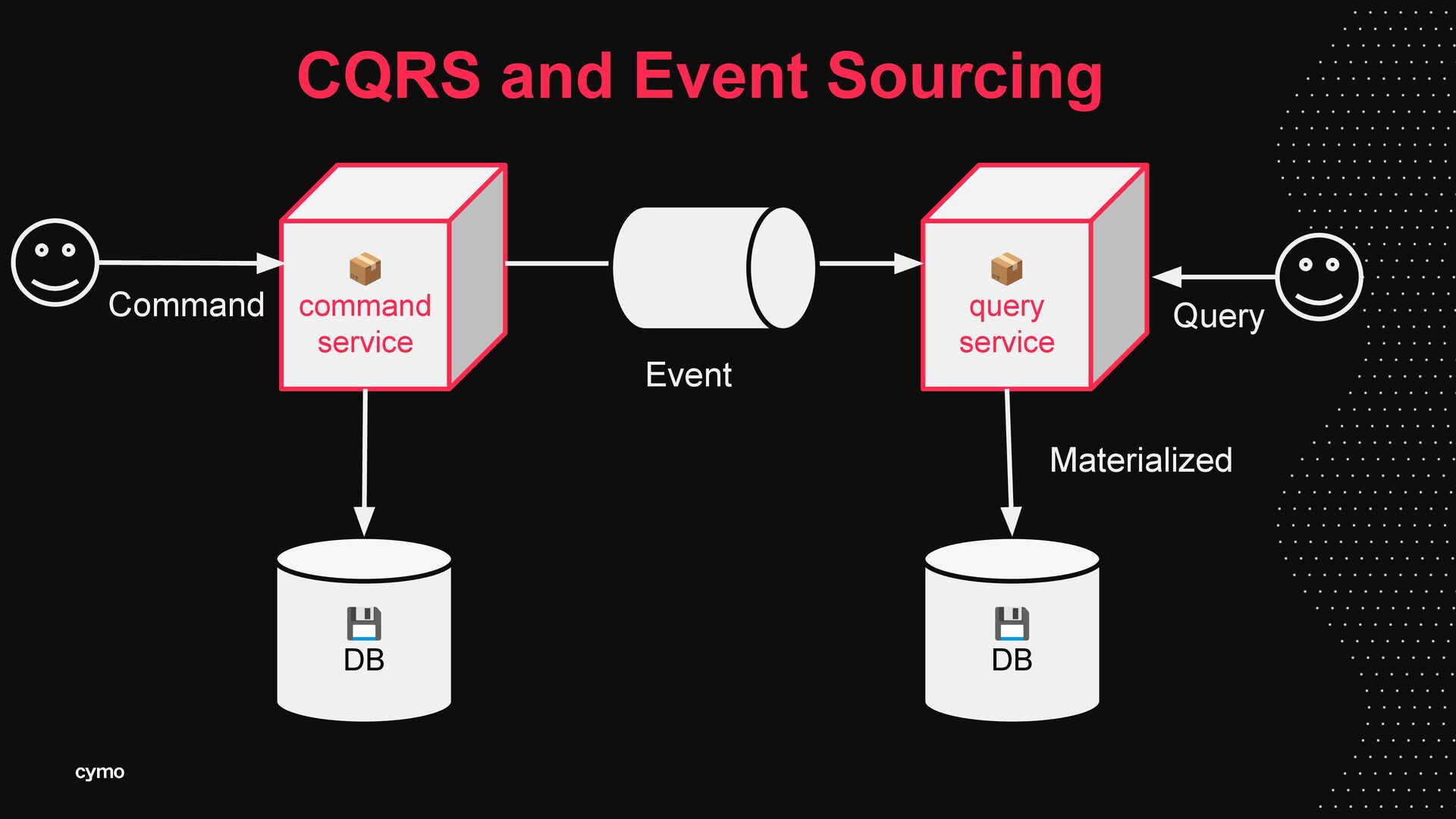
  15. CQRS and Event Sourcing 📦 command service 📦 query service

    💾 DB Command Event Query Materialized 💾 DB
  16. CQRS and Event Sourcing are NOT top-level architectures Only use

    Event Sourcing where you can make a competitive advantage
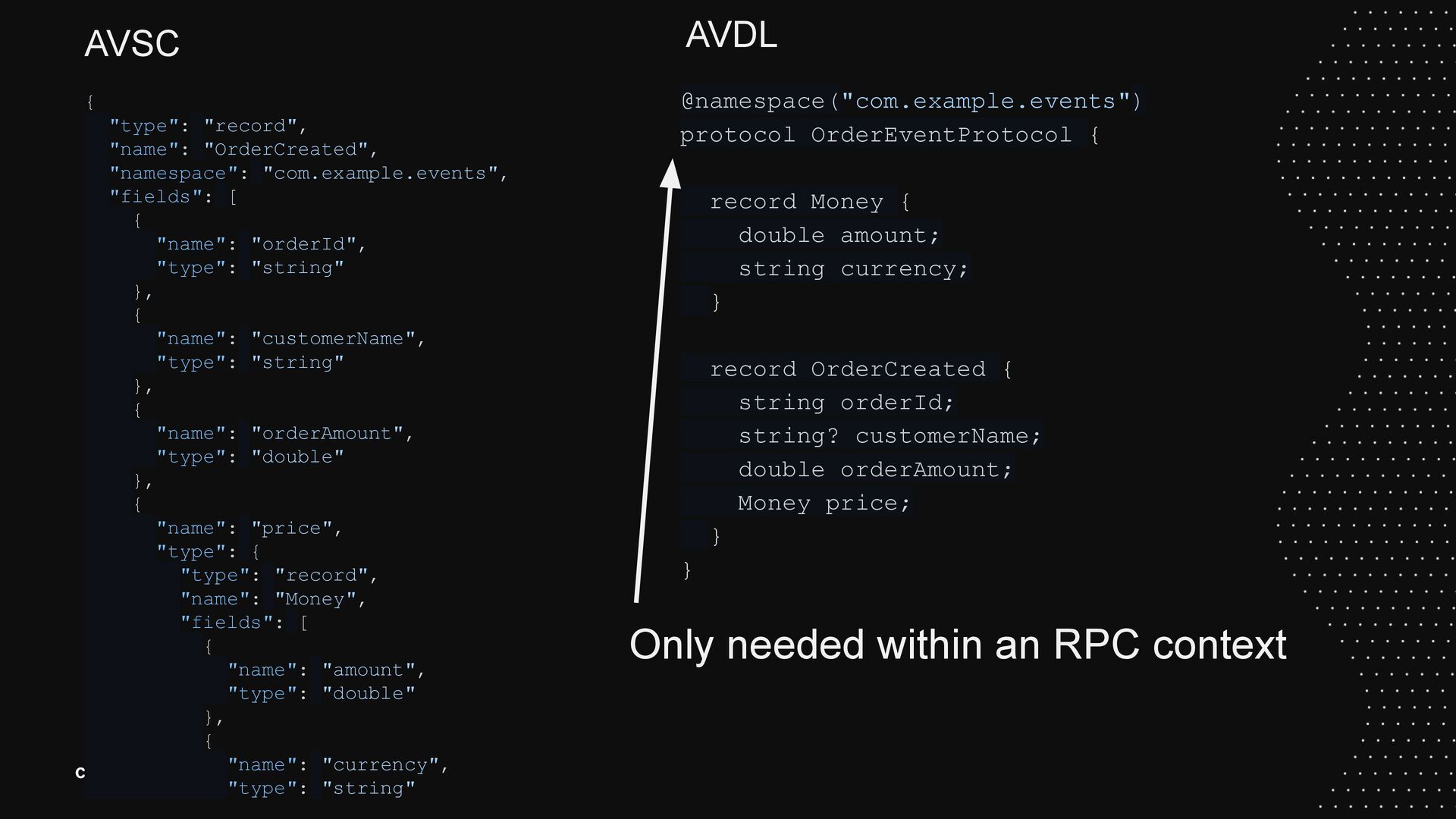
  17. AVSC { "type": "record", "name": "OrderCreated", "namespace": "com.example.events", "fields": [

    { "name": "orderId", "type": "string" }, { "name": "customerName", "type": "string" }, { "name": "orderAmount", "type": "double" }, { "name": "price", "type": { "type": "record", "name": "Money", "fields": [ { "name": "amount", "type": "double" }, { "name": "currency", "type": "string" @namespace("com.example.events") protocol OrderEventProtocol { record Money { double amount; string currency; } record OrderCreated { string orderId; string? customerName; double orderAmount; Money price; } } AVDL Only needed within an RPC context
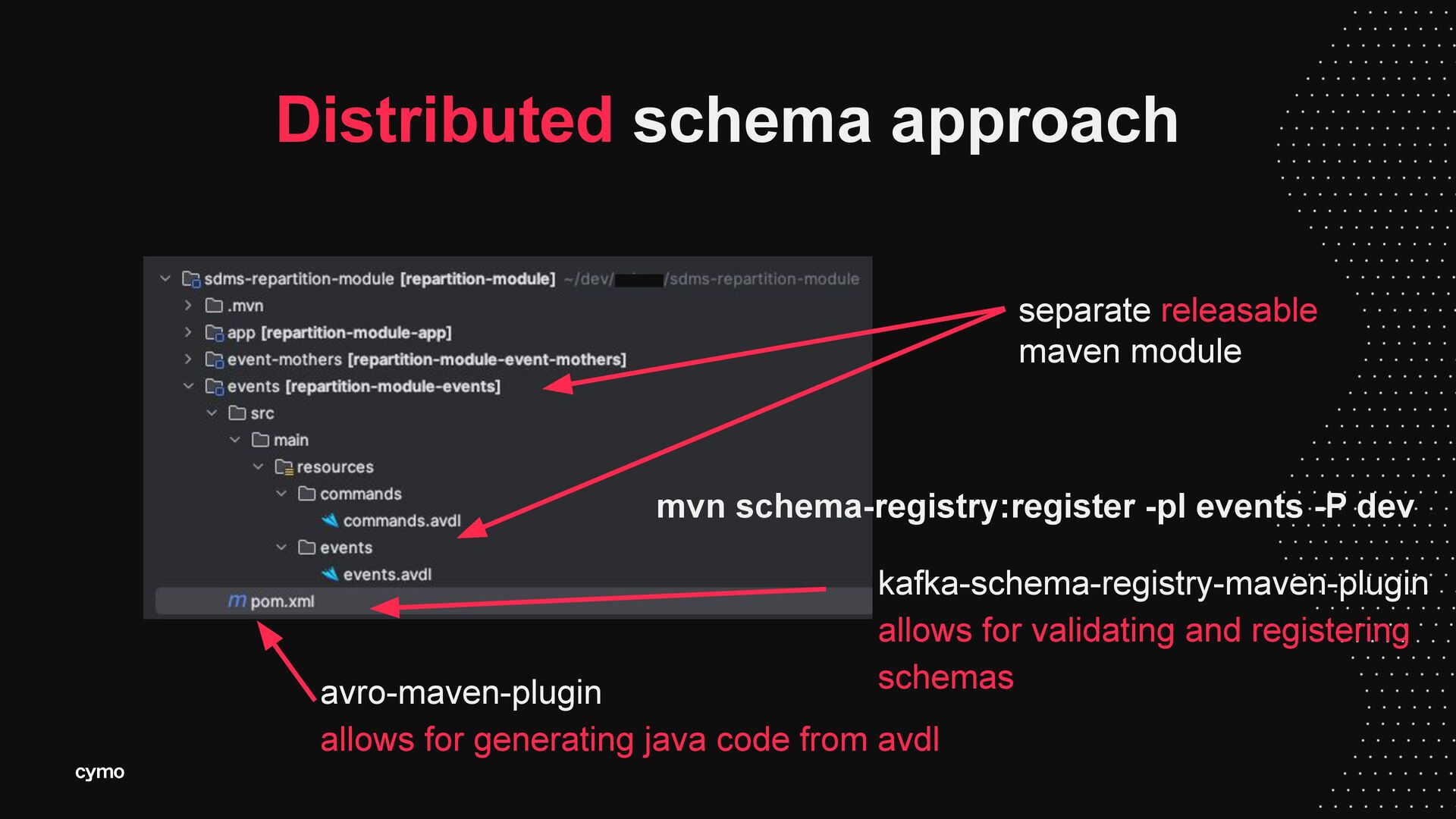
  18. Distributed schema approach separate releasable maven module kafka-schema-registry-maven-plugin allows for

    validating and registering schemas avro-maven-plugin allows for generating java code from avdl mvn schema-registry:register -pl events -P dev
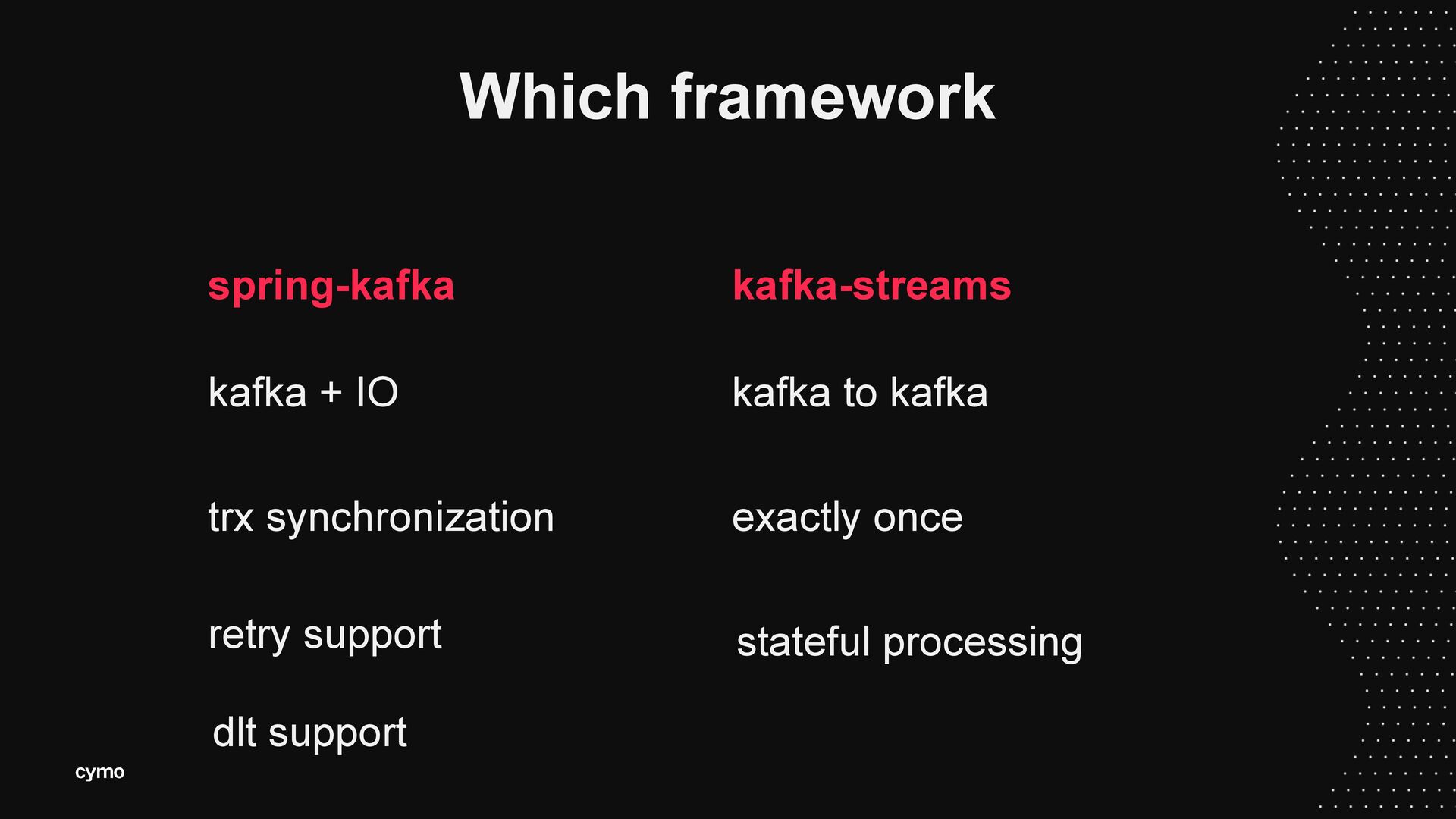
  19. Which framework kafka + IO trx synchronization retry support kafka

    to kafka exactly once kafka-streams spring-kafka dlt support stateful processing
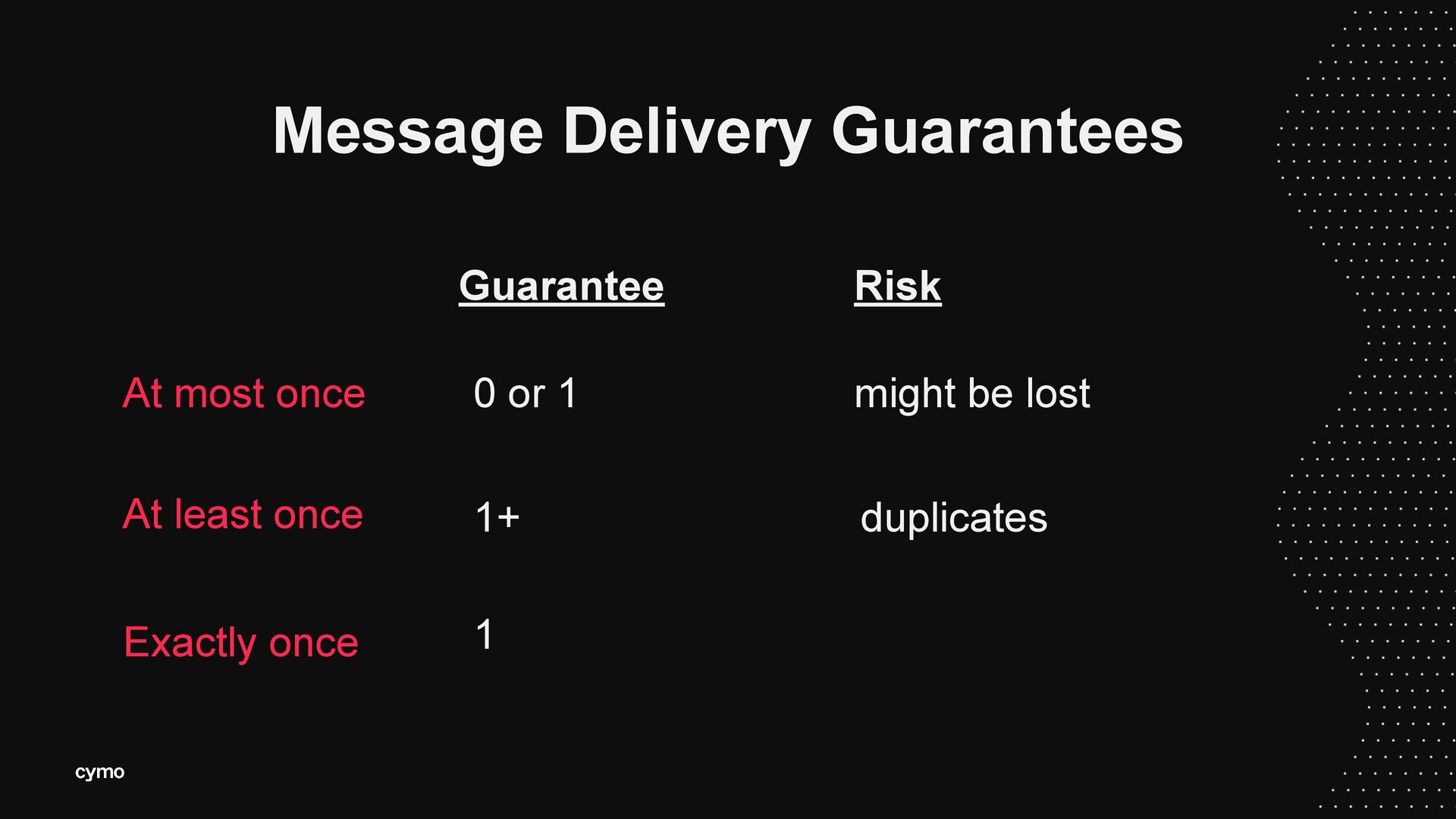
  20. Message Delivery Guarantees At most once At least once Exactly

    once 0 or 1 1+ 1 might be lost duplicates Risk Guarantee
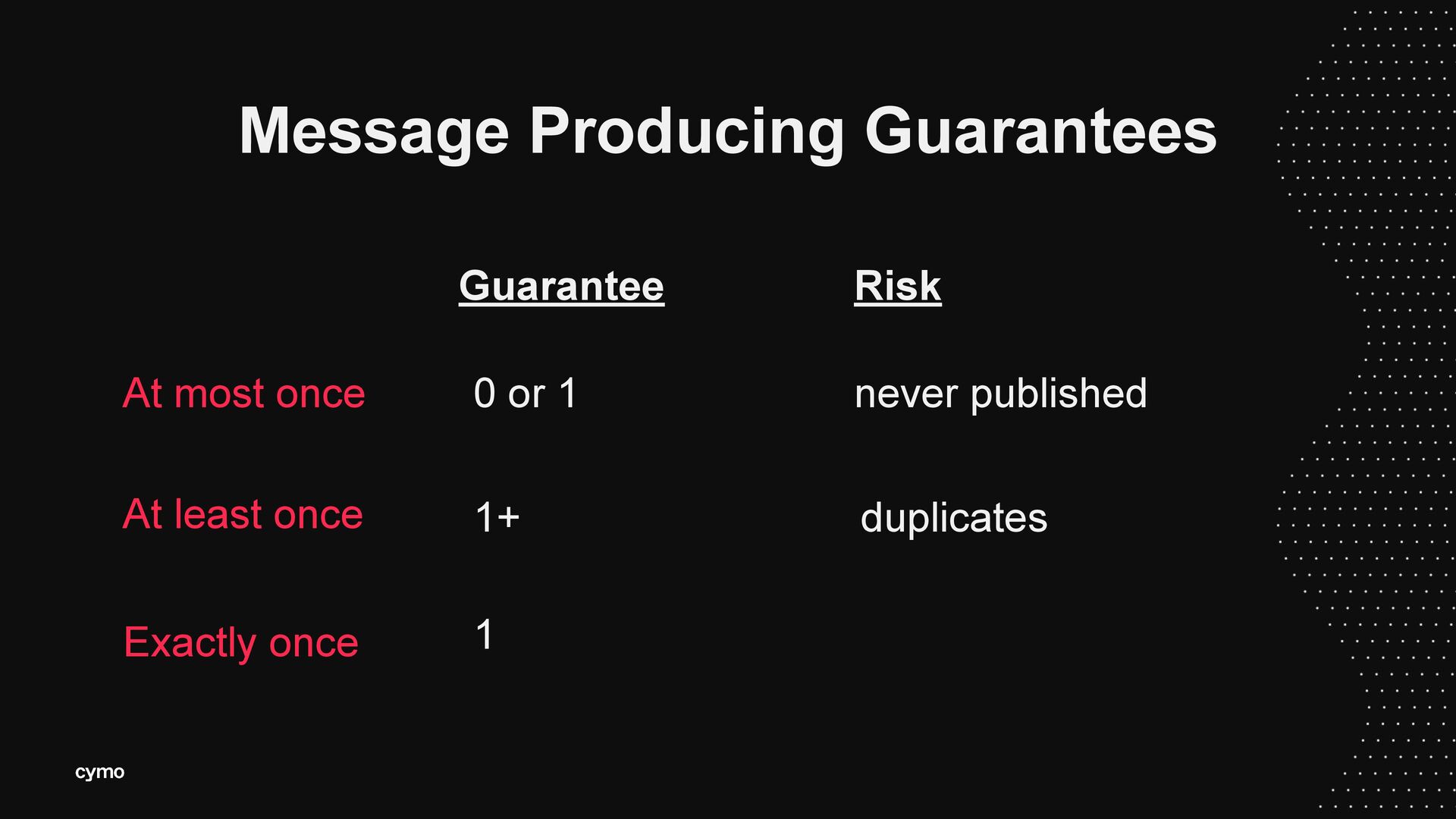
  21. Message Producing Guarantees At most once At least once Exactly

    once 0 or 1 1+ 1 never published duplicates Risk Guarantee
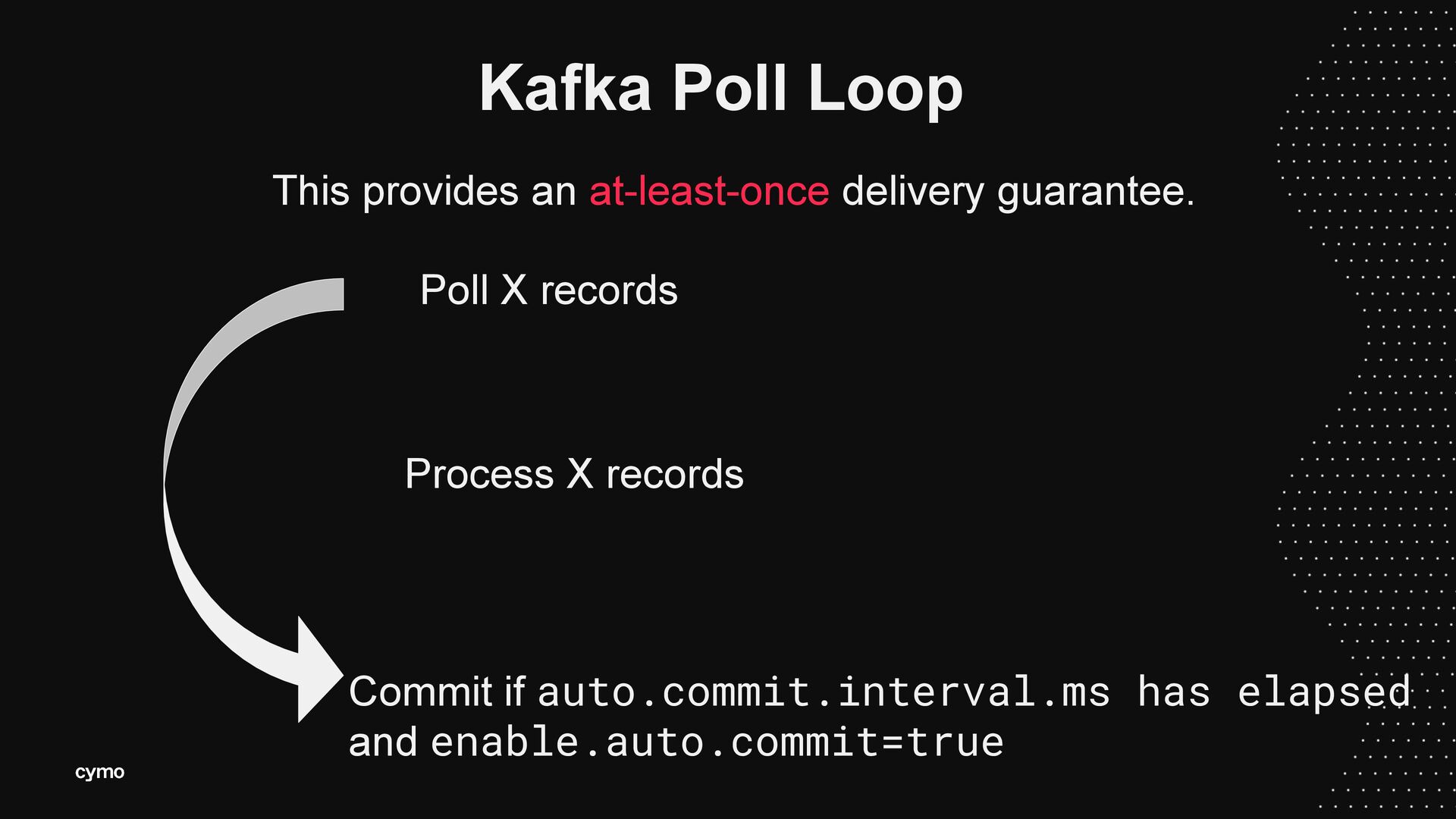
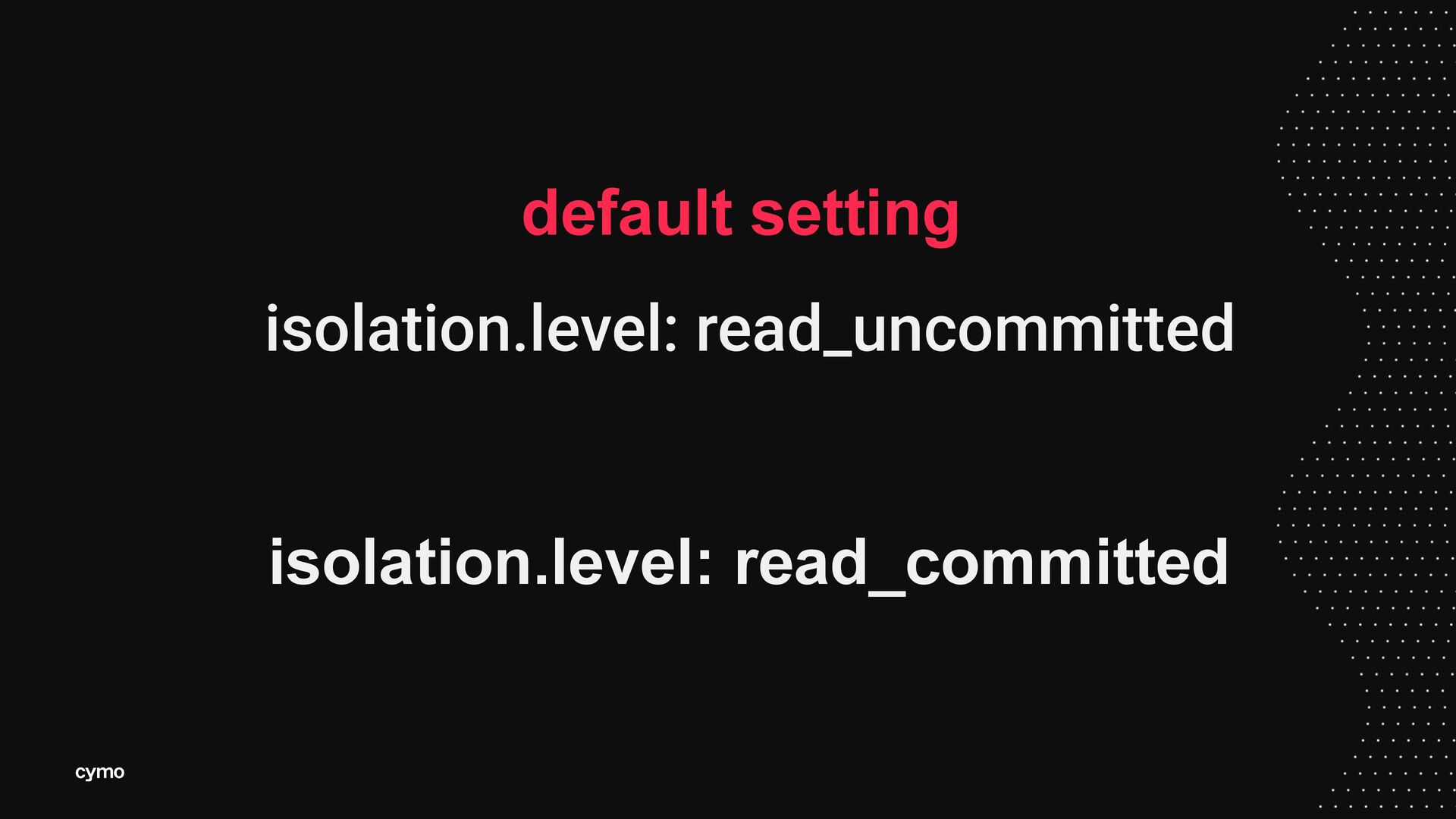
  22. Kafka Poll Loop Poll X records Process X records Commit

    if auto.commit.interval.ms has elapsed and enable.auto.commit=true This provides an at-least-once delivery guarantee.
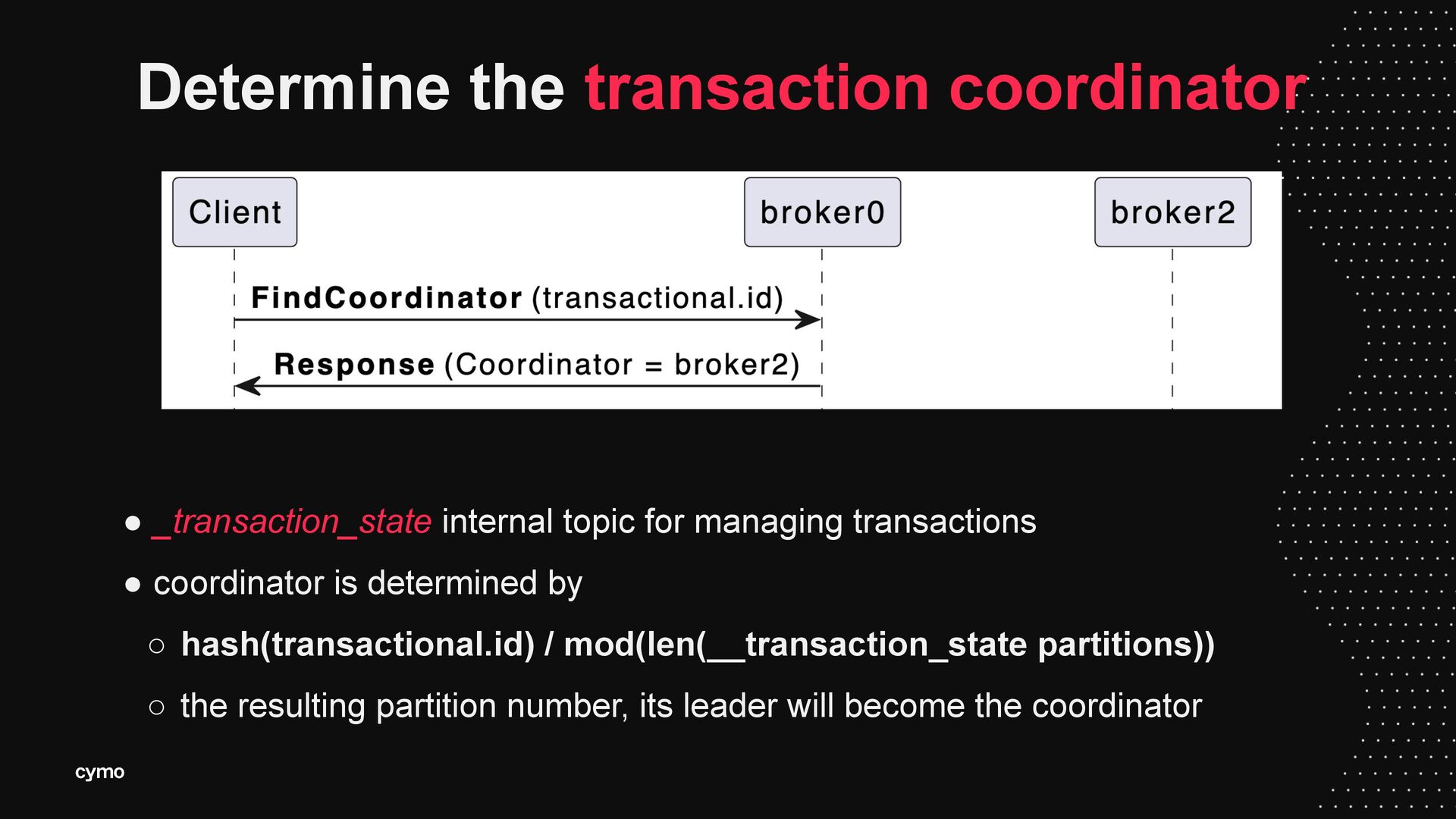
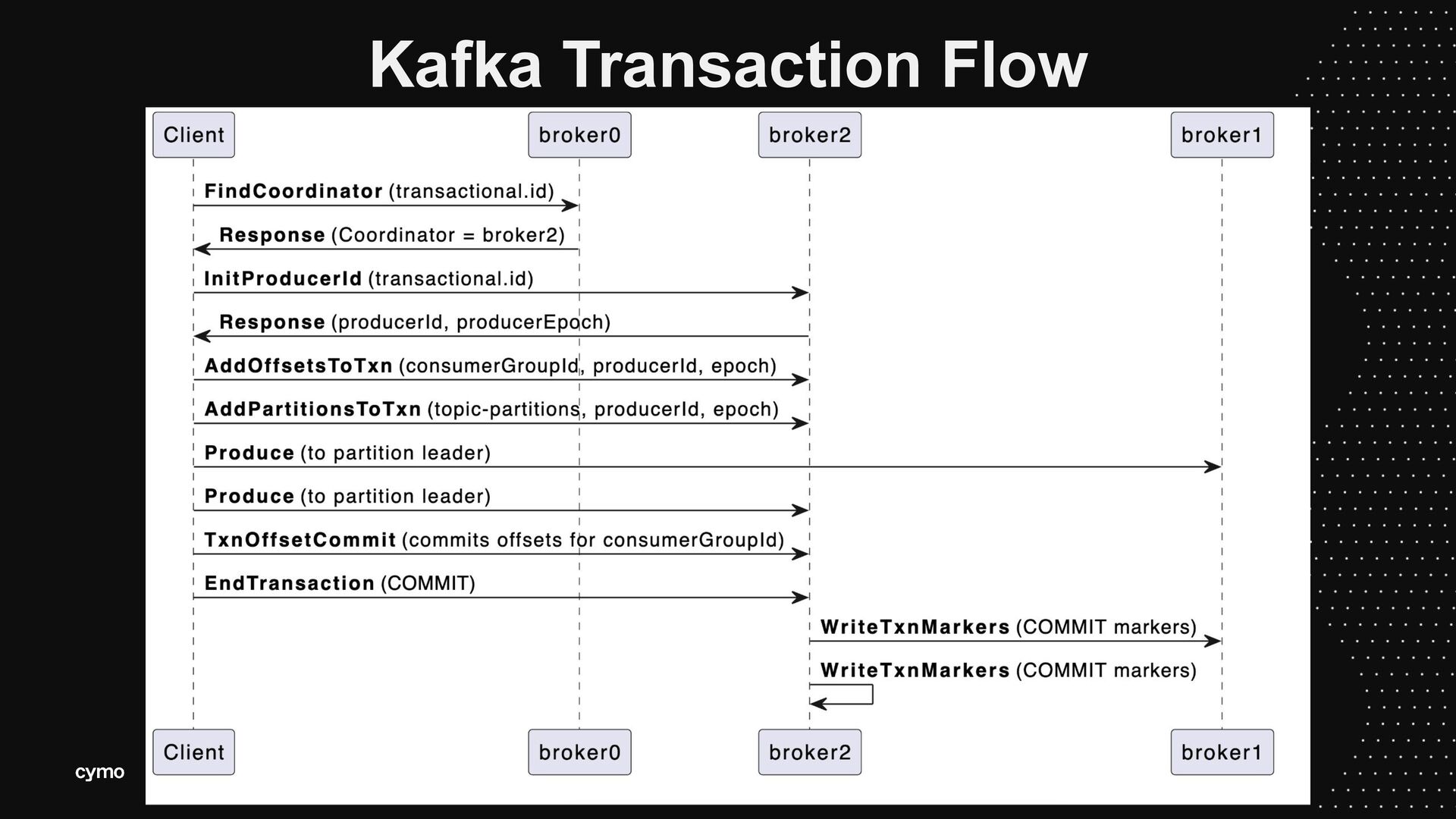
  23. Determine the transaction coordinator • _transaction_state internal topic for managing

    transactions • coordinator is determined by ◦ hash(transactional.id) / mod(len(__transaction_state partitions)) ◦ the resulting partition number, its leader will become the coordinator
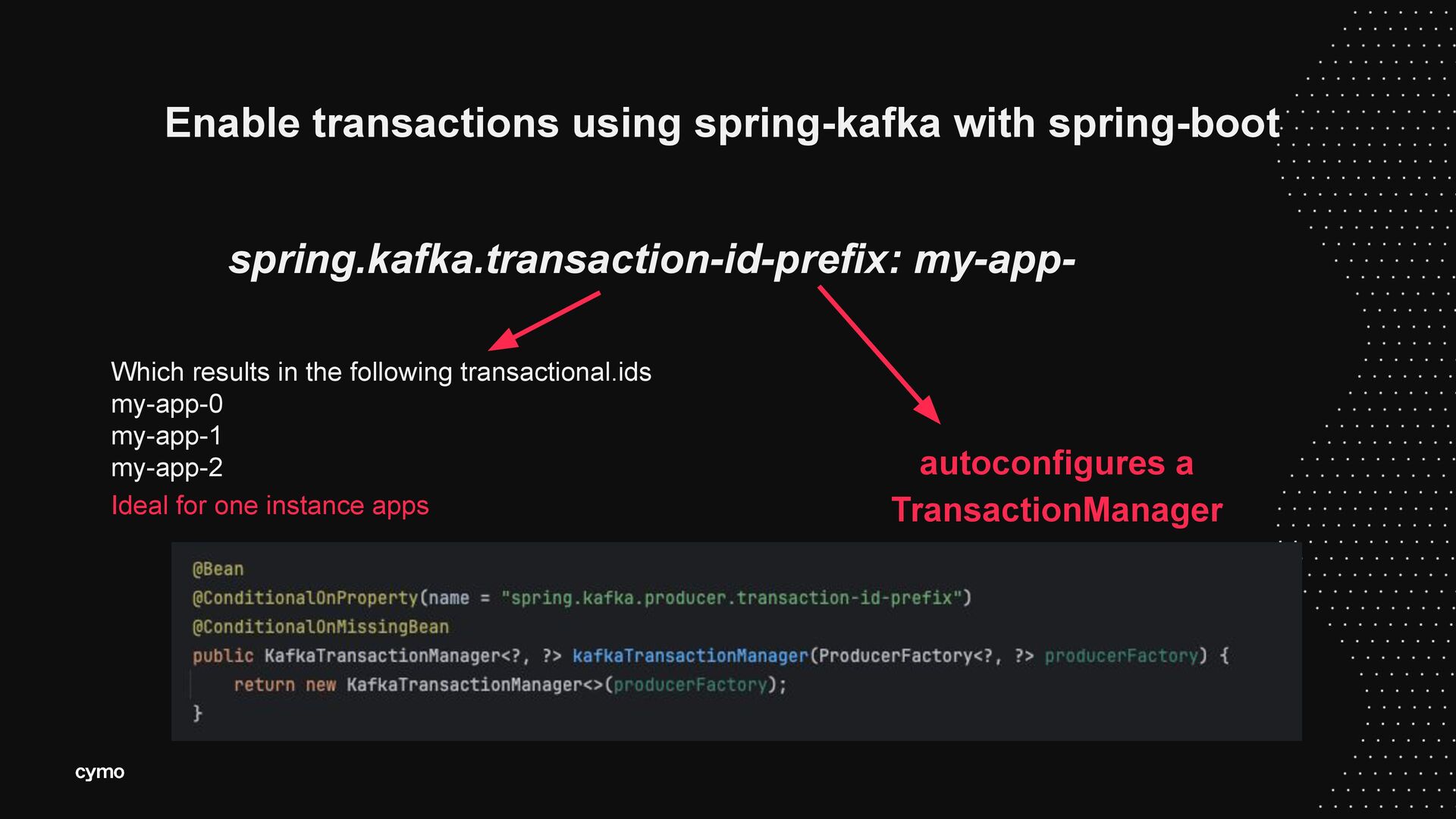
  24. spring.kafka.transaction-id-prefix: my-app- Enable transactions using spring-kafka with spring-boot autoconfigures a

    TransactionManager Which results in the following transactional.ids my-app-0 my-app-1 my-app-2 Ideal for one instance apps
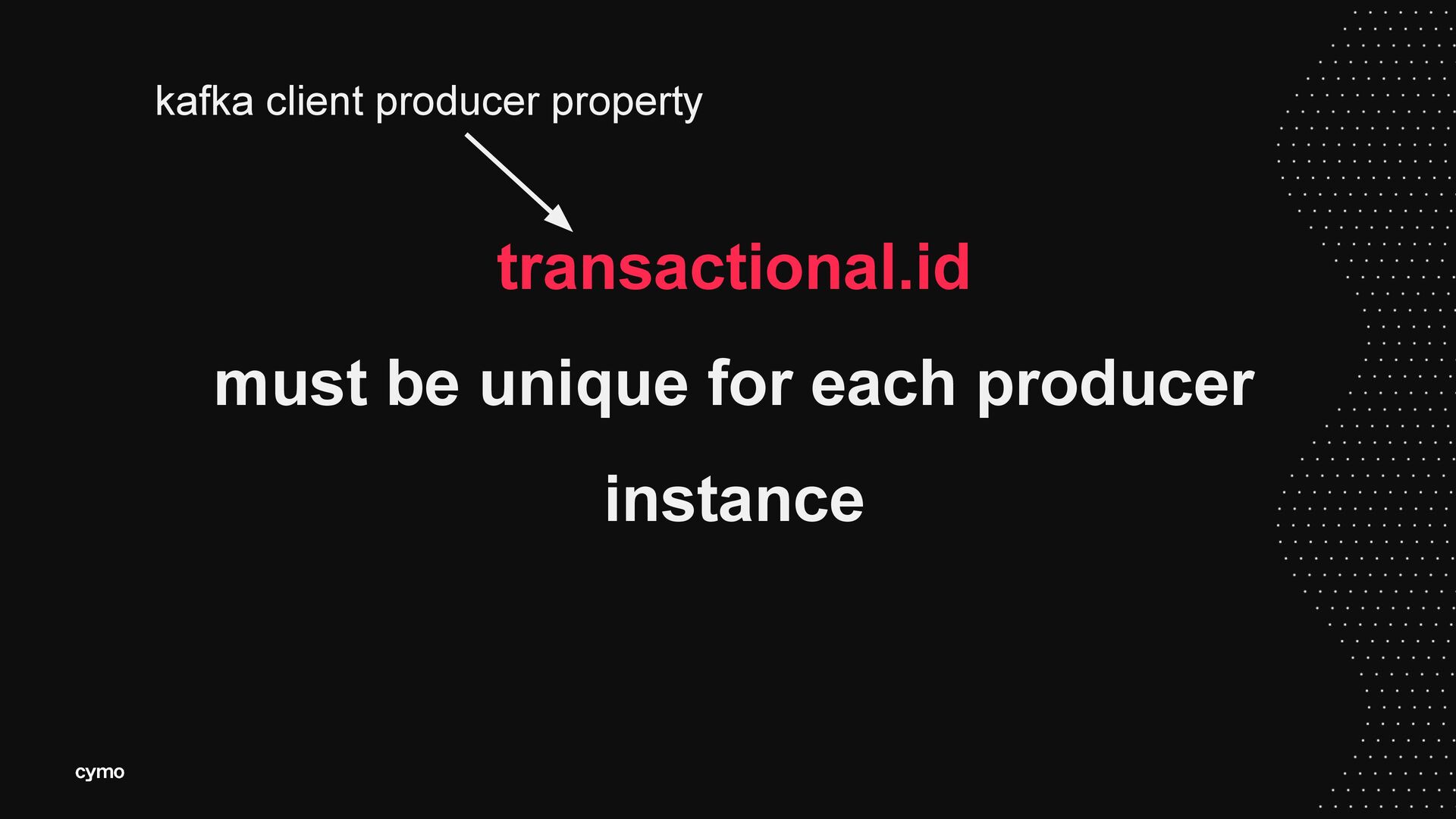
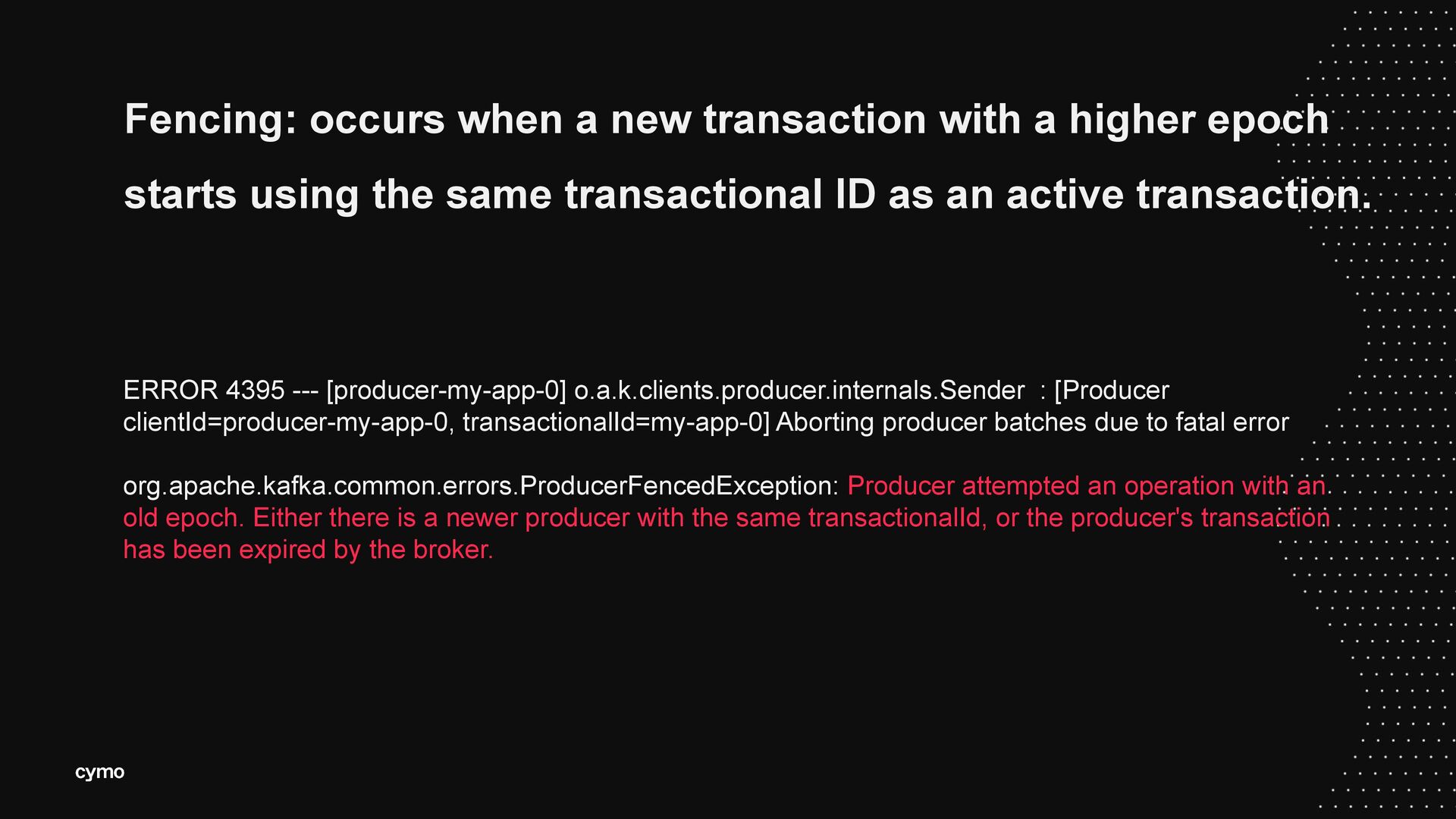
  25. Fencing: occurs when a new transaction with a higher epoch

    starts using the same transactional ID as an active transaction. ERROR 4395 --- [producer-my-app-0] o.a.k.clients.producer.internals.Sender : [Producer clientId=producer-my-app-0, transactionalId=my-app-0] Aborting producer batches due to fatal error org.apache.kafka.common.errors.ProducerFencedException: Producer attempted an operation with an old epoch. Either there is a newer producer with the same transactionalId, or the producer's transaction has been expired by the broker.
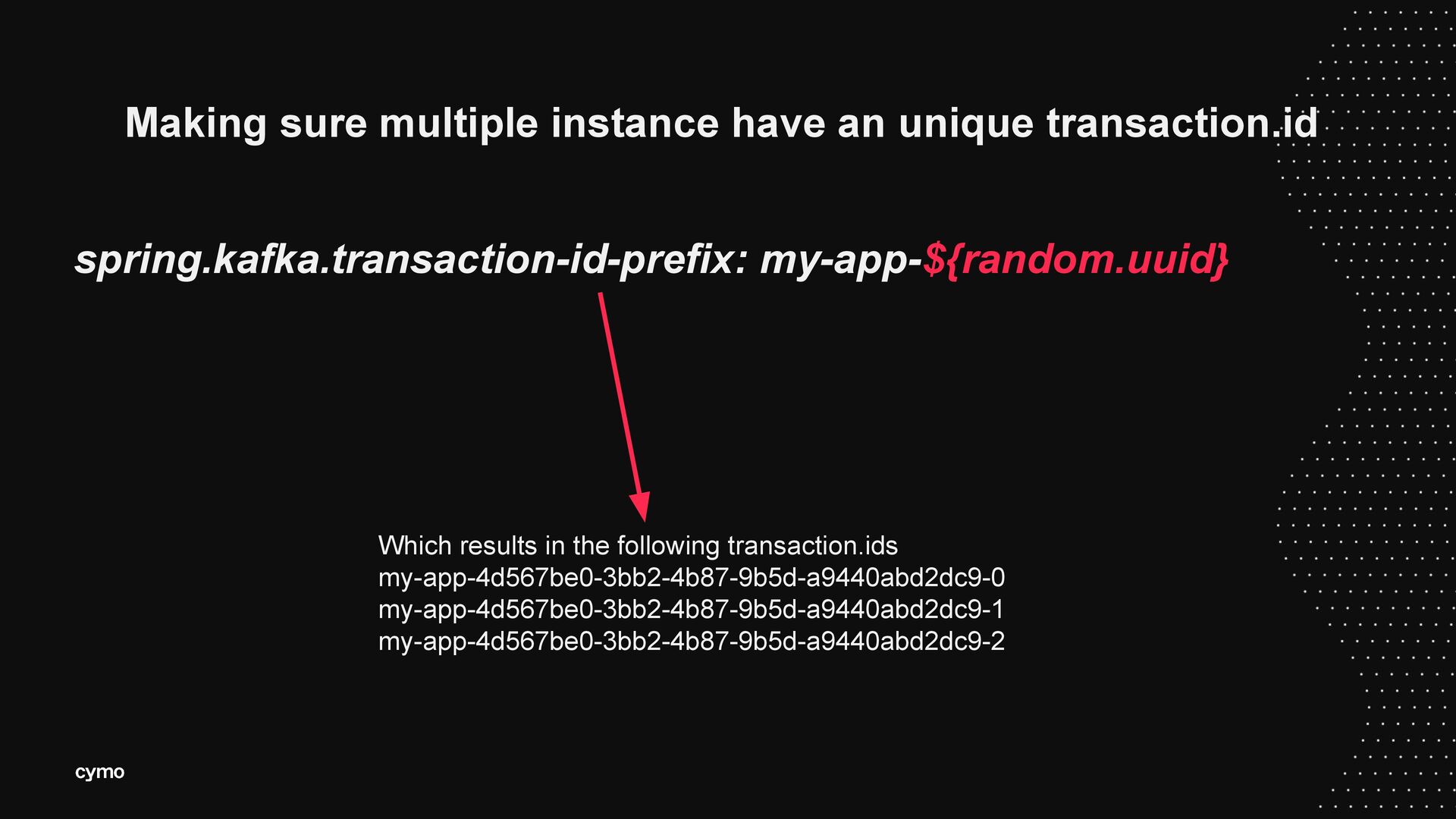
  26. spring.kafka.transaction-id-prefix: my-app-${random.uuid} Making sure multiple instance have an unique transaction.id

    Which results in the following transaction.ids my-app-4d567be0-3bb2-4b87-9b5d-a9440abd2dc9-0 my-app-4d567be0-3bb2-4b87-9b5d-a9440abd2dc9-1 my-app-4d567be0-3bb2-4b87-9b5d-a9440abd2dc9-2
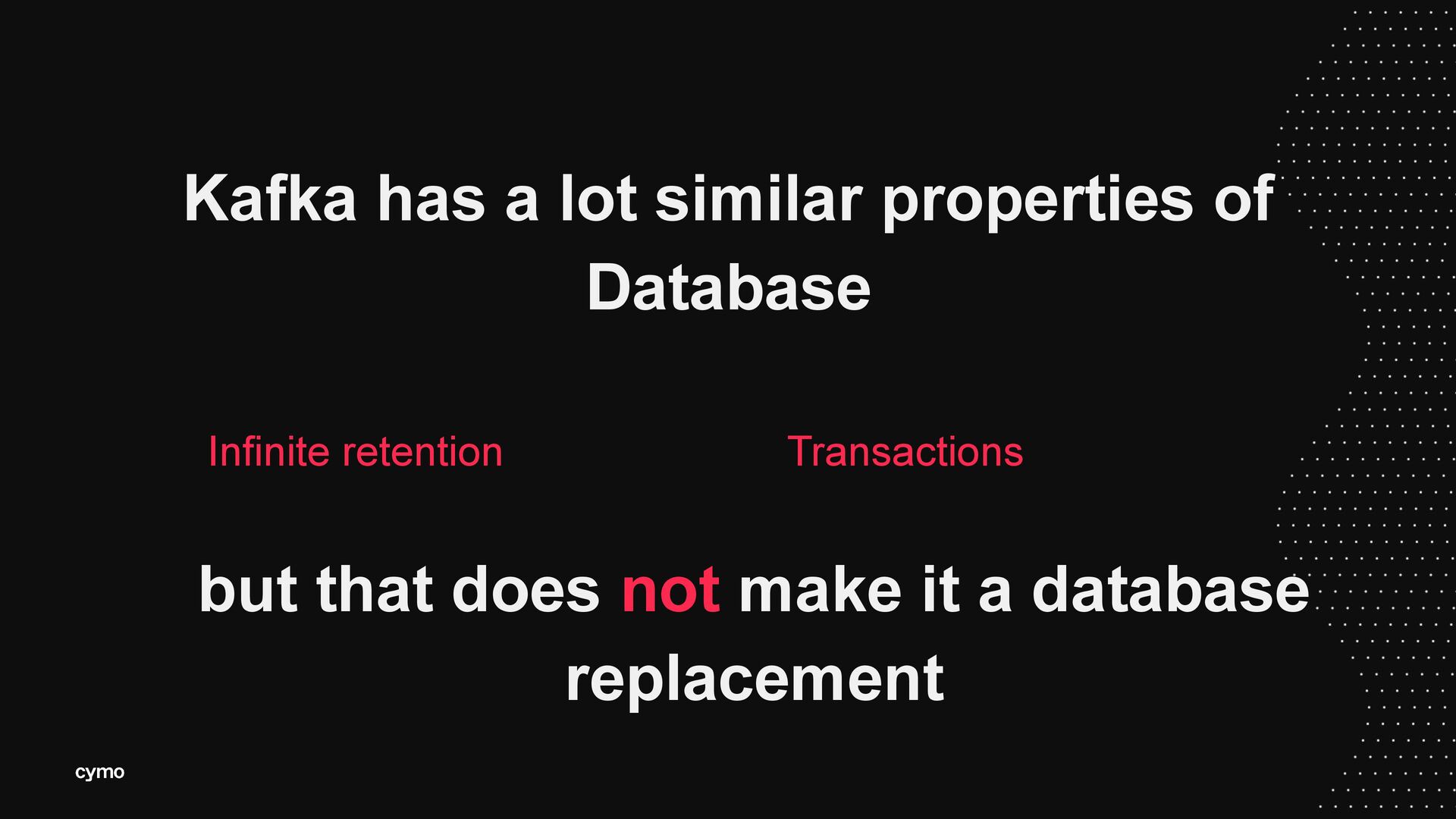
  27. Kafka has a lot similar properties of Database Infinite retention

    Transactions but that does not make it a database replacement
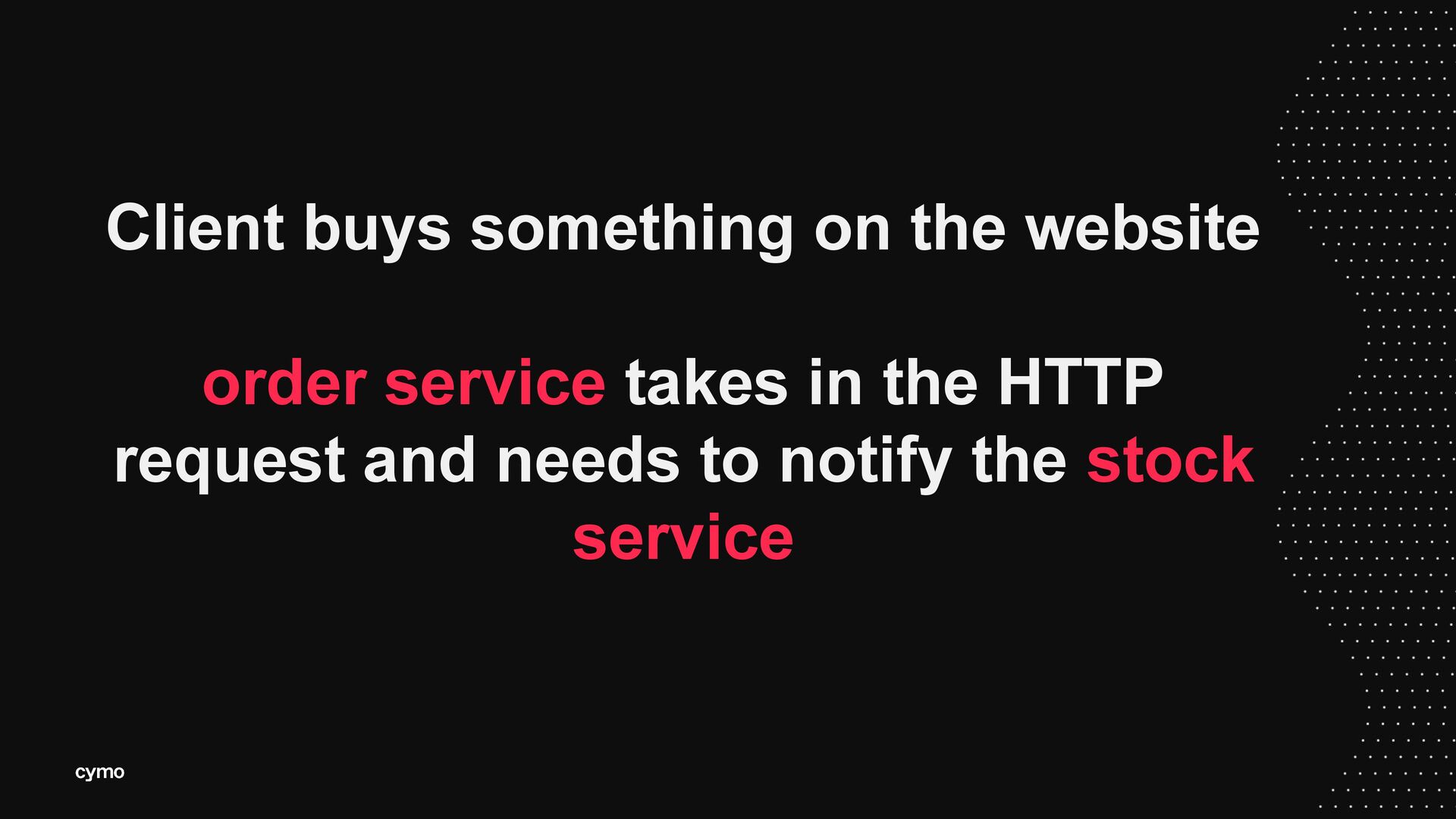
  28. Client buys something on the website order service takes in

    the HTTP request and needs to notify the stock service
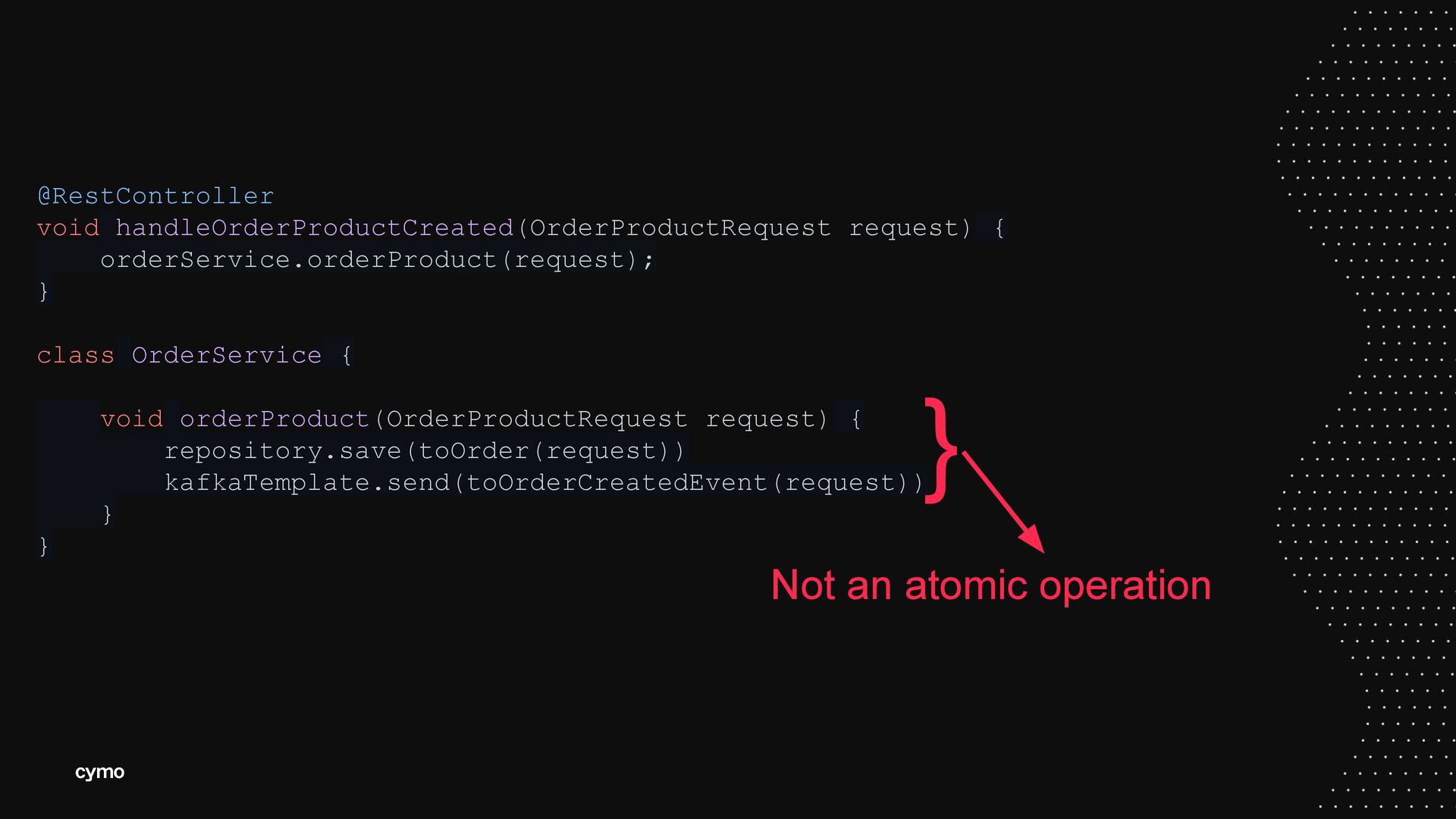
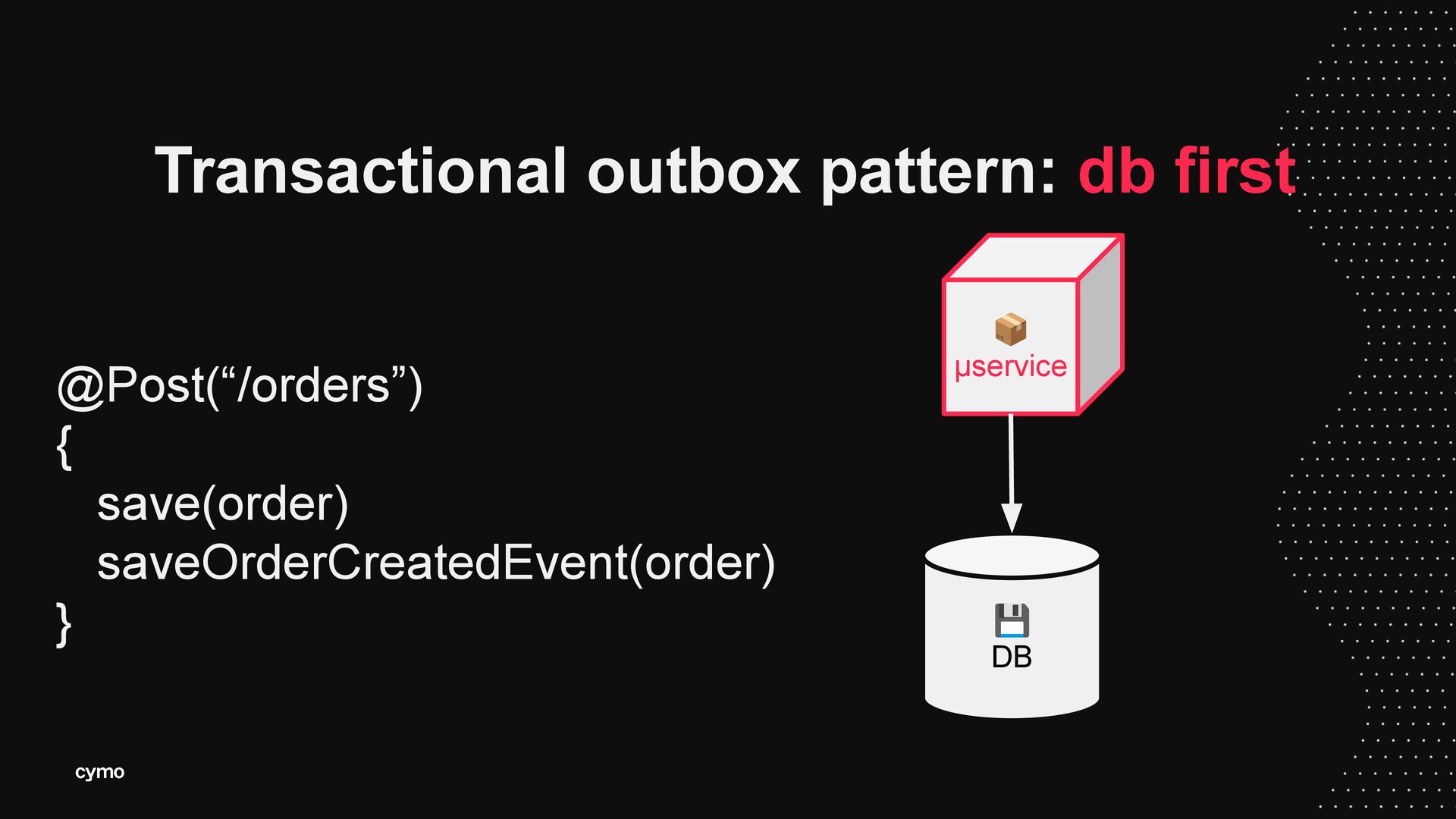
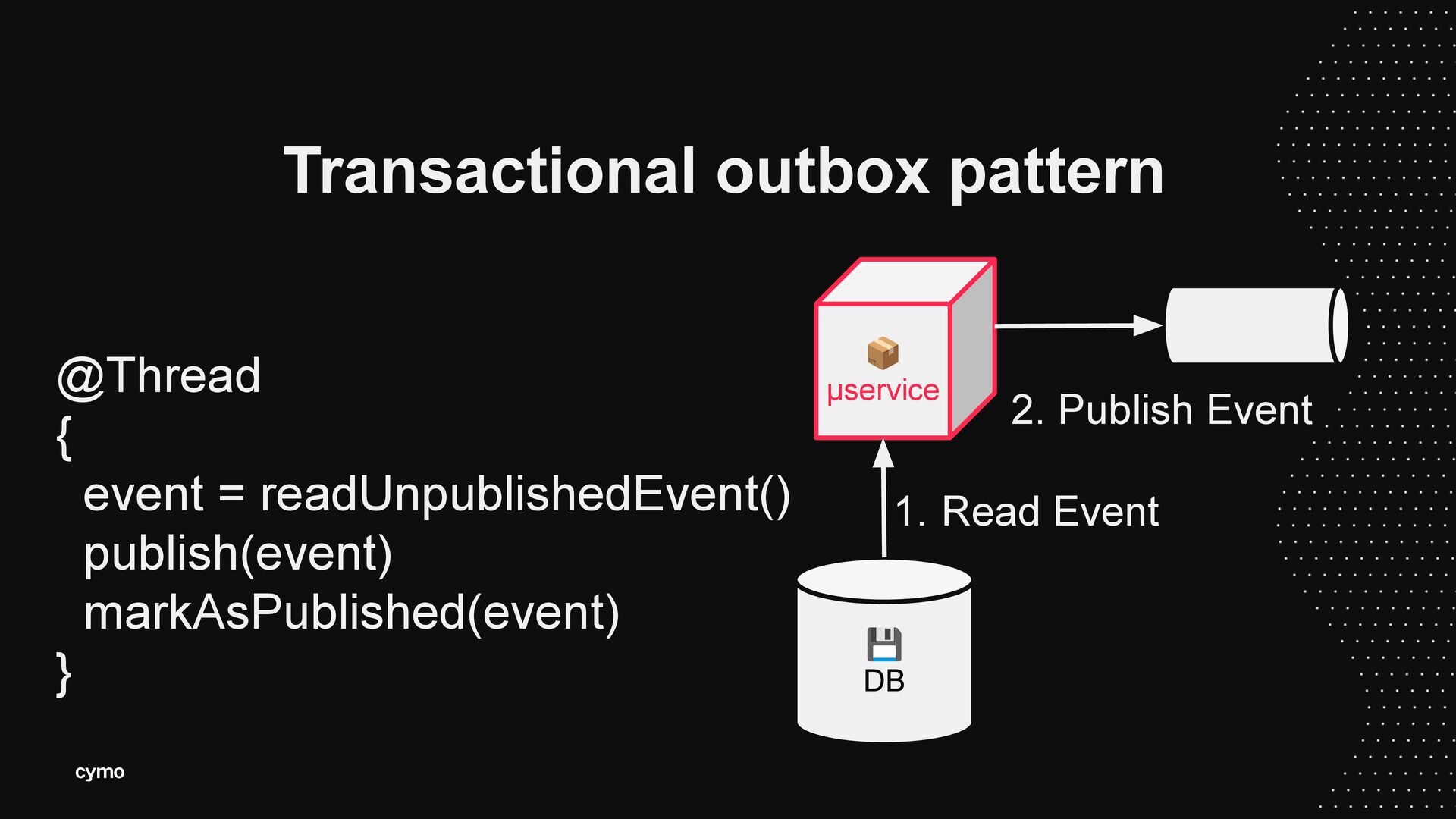
  29. @RestController void handleOrderProductCreated(OrderProductRequest request) { orderService.orderProduct(request); } class OrderService {

    void orderProduct(OrderProductRequest request) { repository.save(toOrder(request)) kafkaTemplate.send(toOrderCreatedEvent(request)) } } } Not an atomic operation
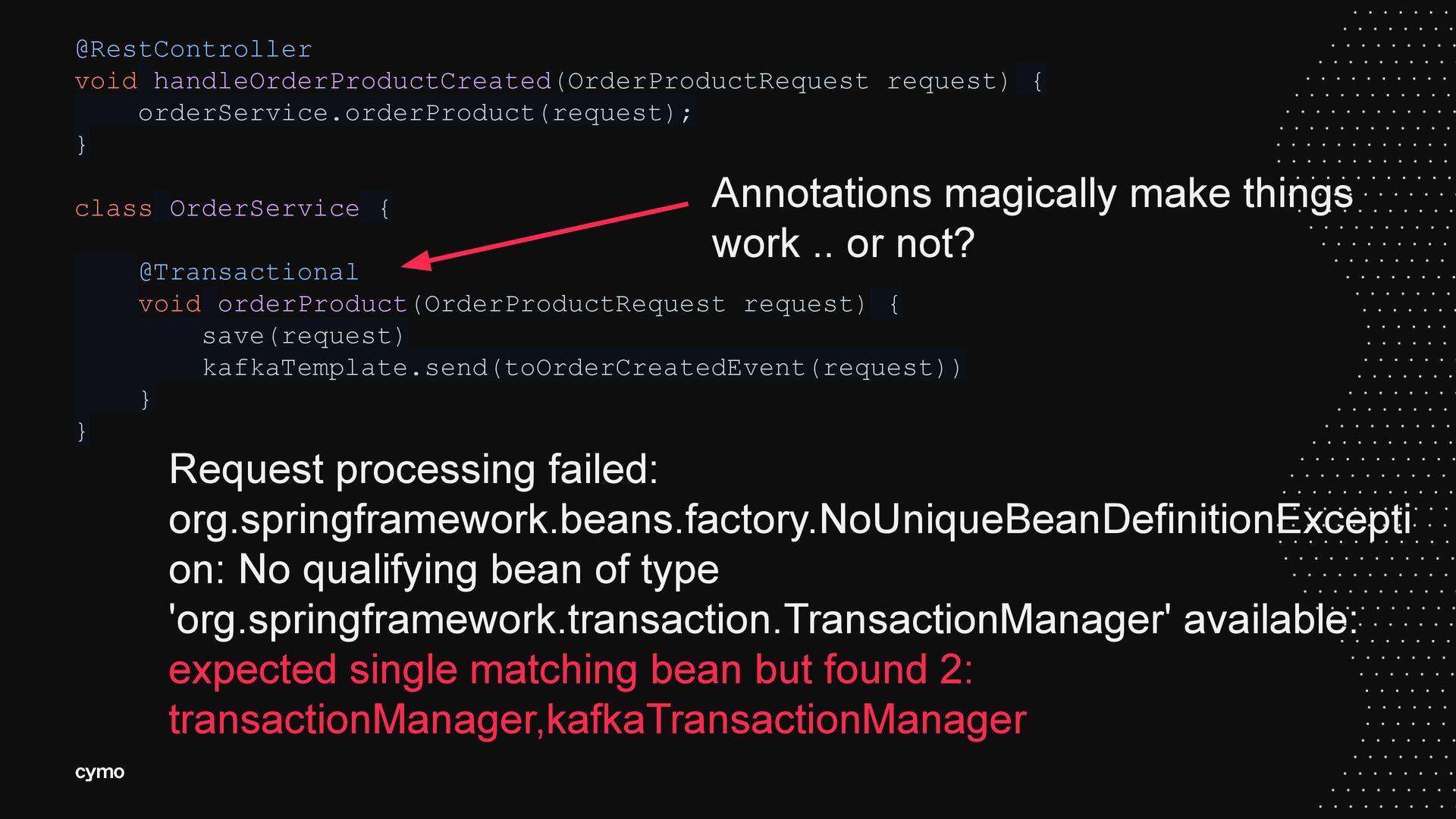
  30. @RestController void handleOrderProductCreated(OrderProductRequest request) { orderService.orderProduct(request); } class OrderService {

    @Transactional void orderProduct(OrderProductRequest request) { save(request) kafkaTemplate.send(toOrderCreatedEvent(request)) } } Annotations magically make things work .. or not? Request processing failed: org.springframework.beans.factory.NoUniqueBeanDefinitionExcepti on: No qualifying bean of type 'org.springframework.transaction.TransactionManager' available: expected single matching bean but found 2: transactionManager,kafkaTransactionManager
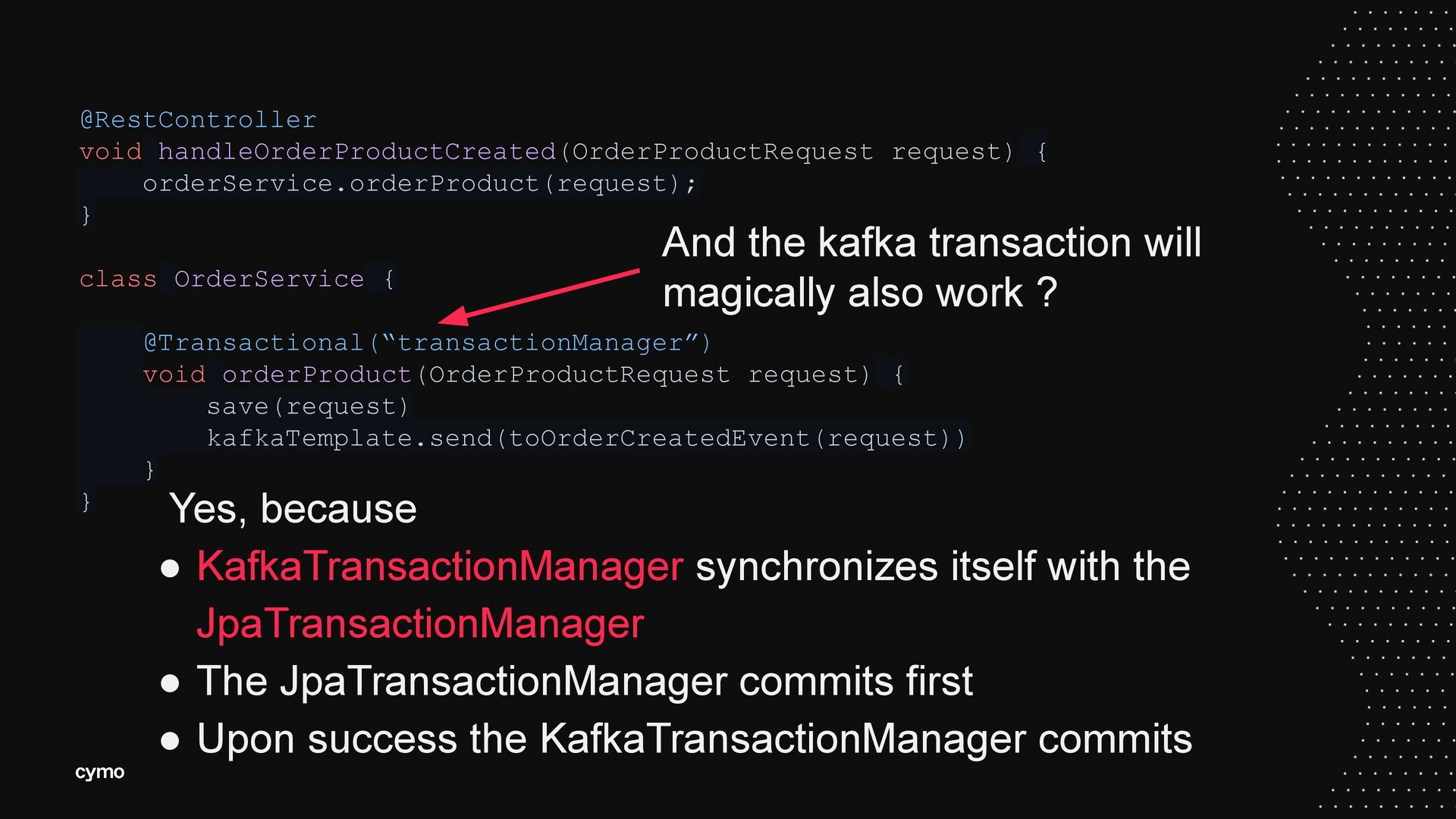
  31. @RestController void handleOrderProductCreated(OrderProductRequest request) { orderService.orderProduct(request); } class OrderService {

    @Transactional(“transactionManager”) void orderProduct(OrderProductRequest request) { save(request) kafkaTemplate.send(toOrderCreatedEvent(request)) } } And the kafka transaction will magically also work ? Yes, because • KafkaTransactionManager synchronizes itself with the JpaTransactionManager • The JpaTransactionManager commits first • Upon success the KafkaTransactionManager commits
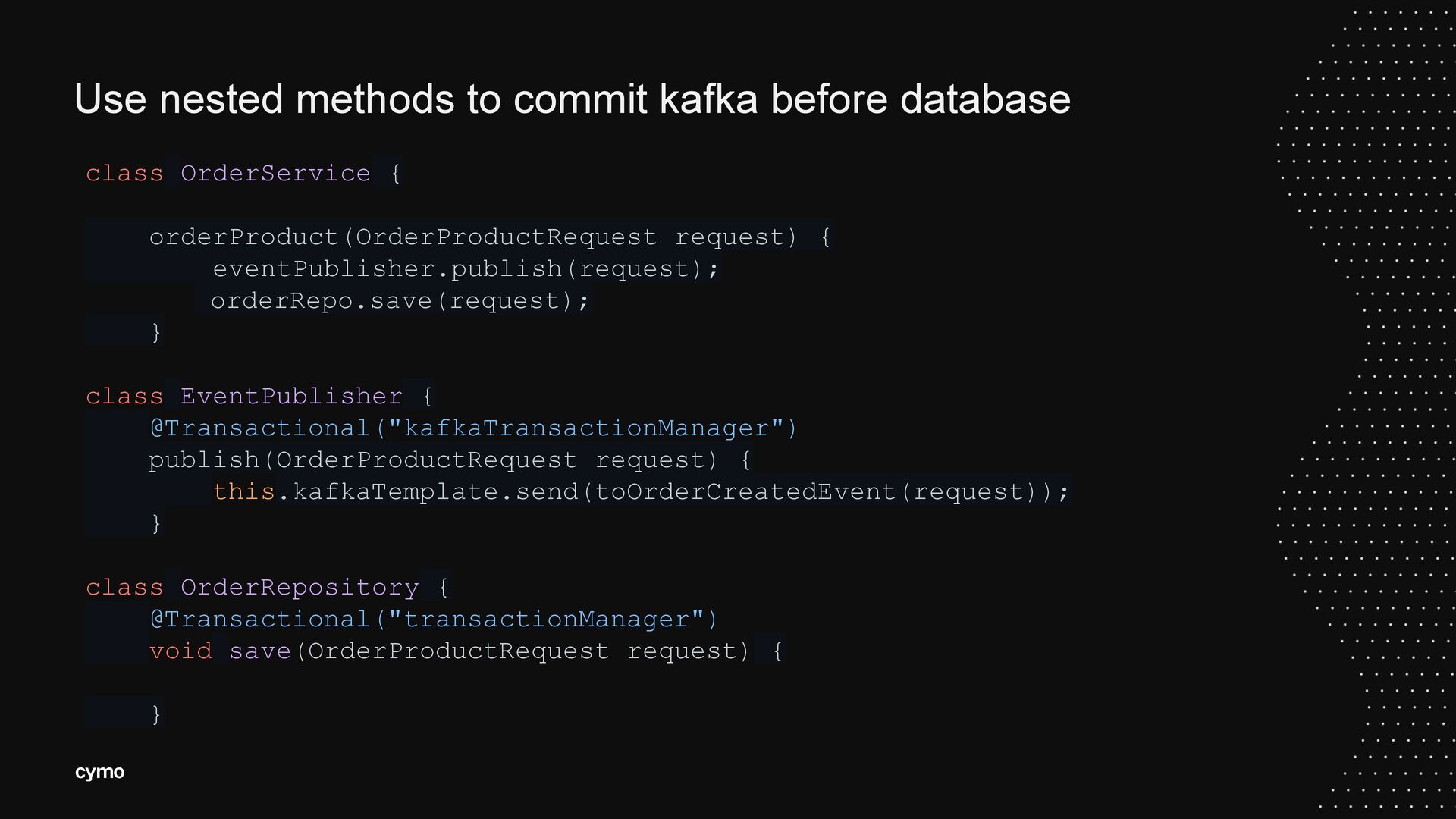
  32. class OrderService { orderProduct(OrderProductRequest request) { eventPublisher.publish(request); orderRepo.save(request); } class

    EventPublisher { @Transactional("kafkaTransactionManager") publish(OrderProductRequest request) { this.kafkaTemplate.send(toOrderCreatedEvent(request)); } class OrderRepository { @Transactional("transactionManager") void save(OrderProductRequest request) { } Use nested methods to commit kafka before database
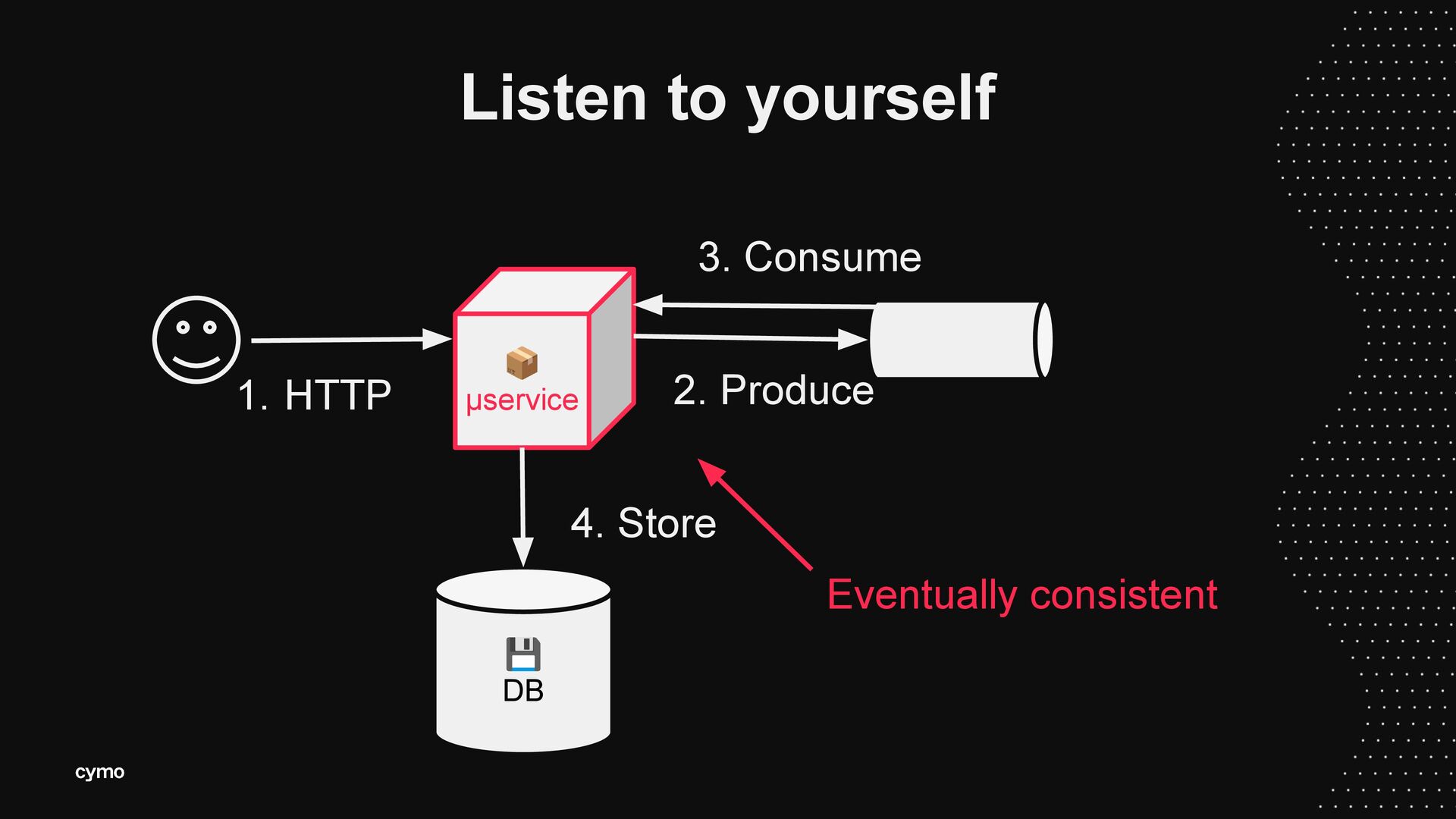
  33. Listen to yourself 📦 µservice 💾 DB 1. HTTP 2.

    Produce 3. Consume 4. Store Eventually consistent
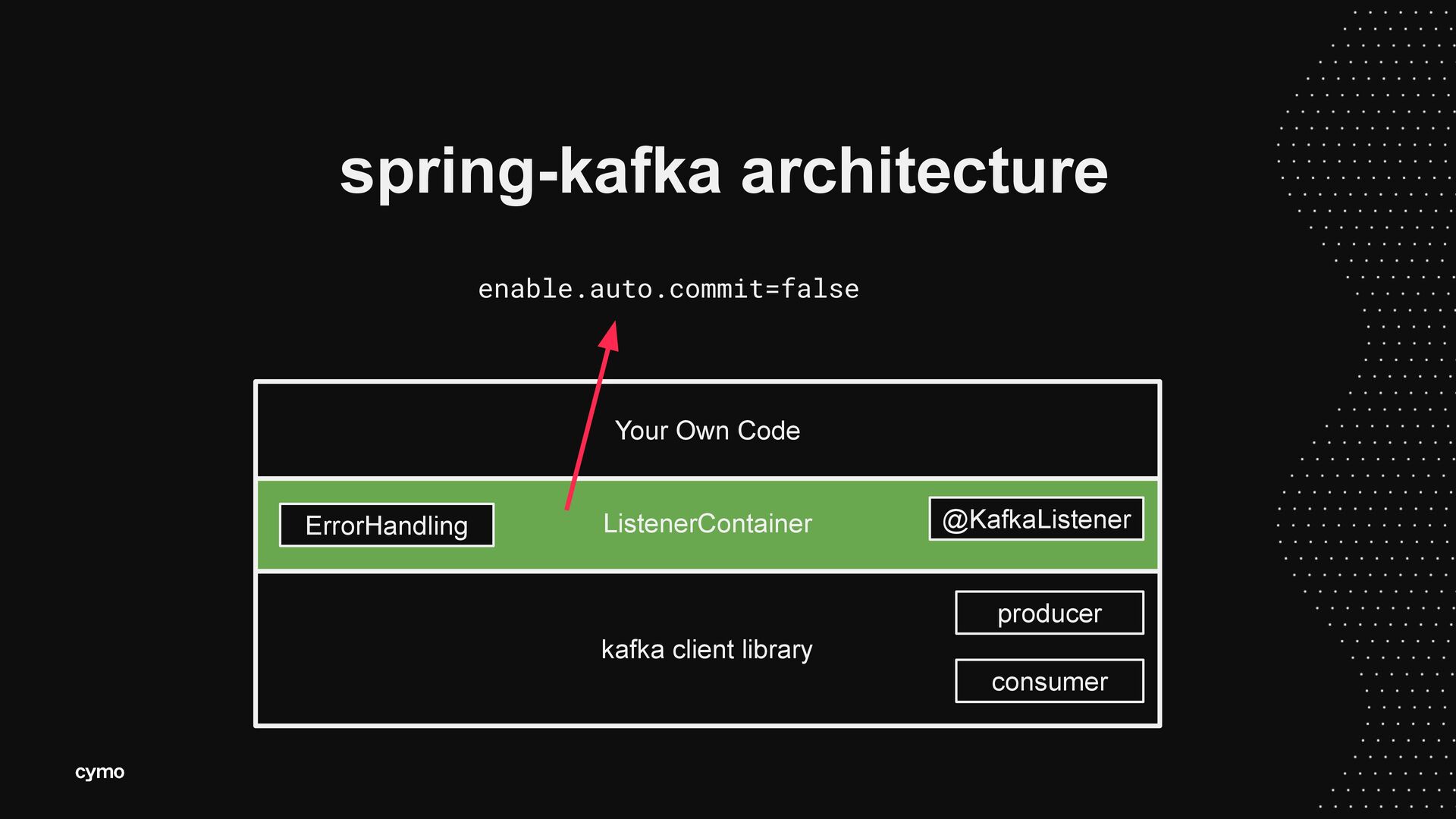
  34. spring-kafka architecture kafka client library ListenerContainer consumer producer Your Own

    Code @KafkaListener enable.auto.commit=false ErrorHandling
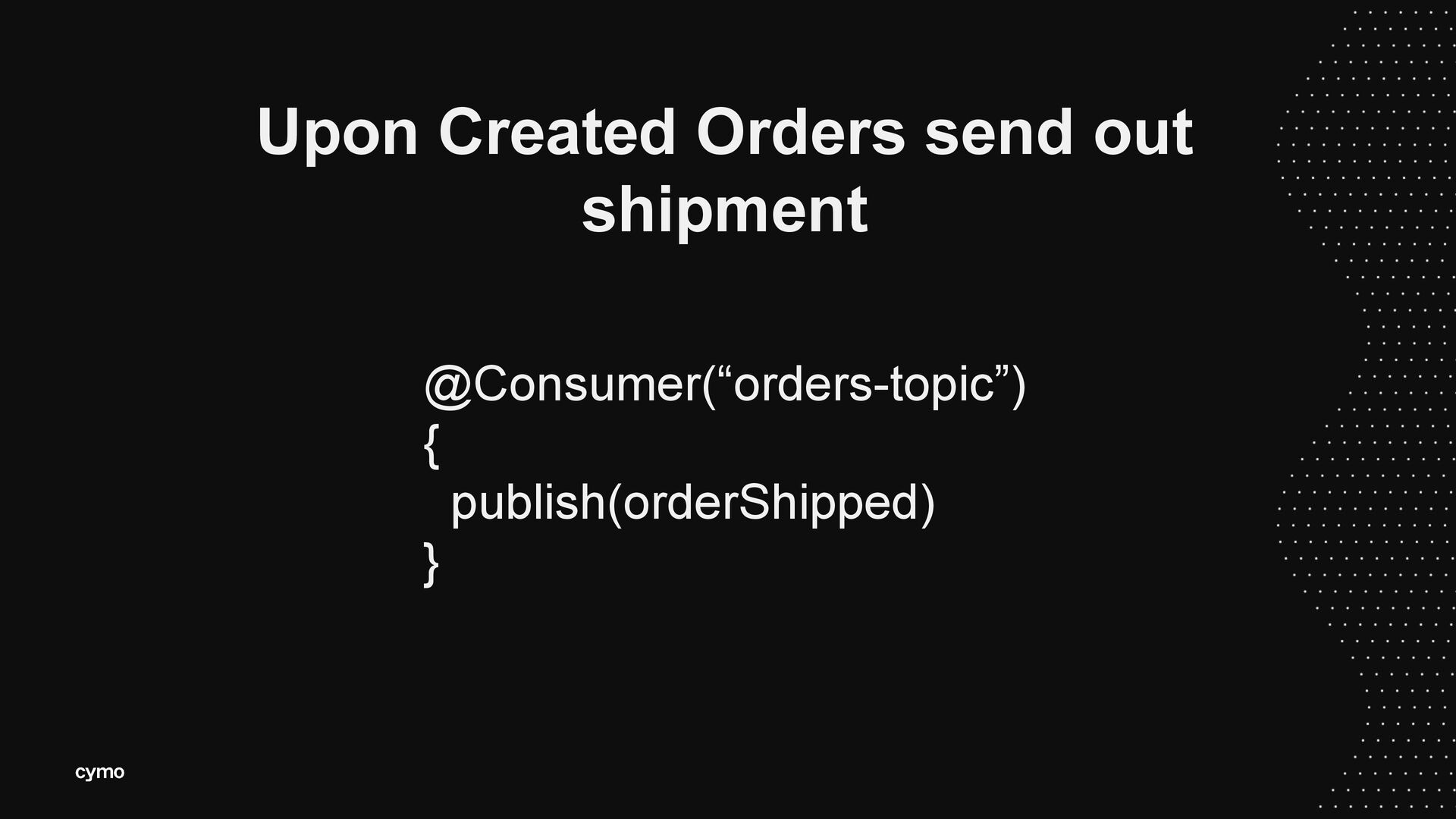
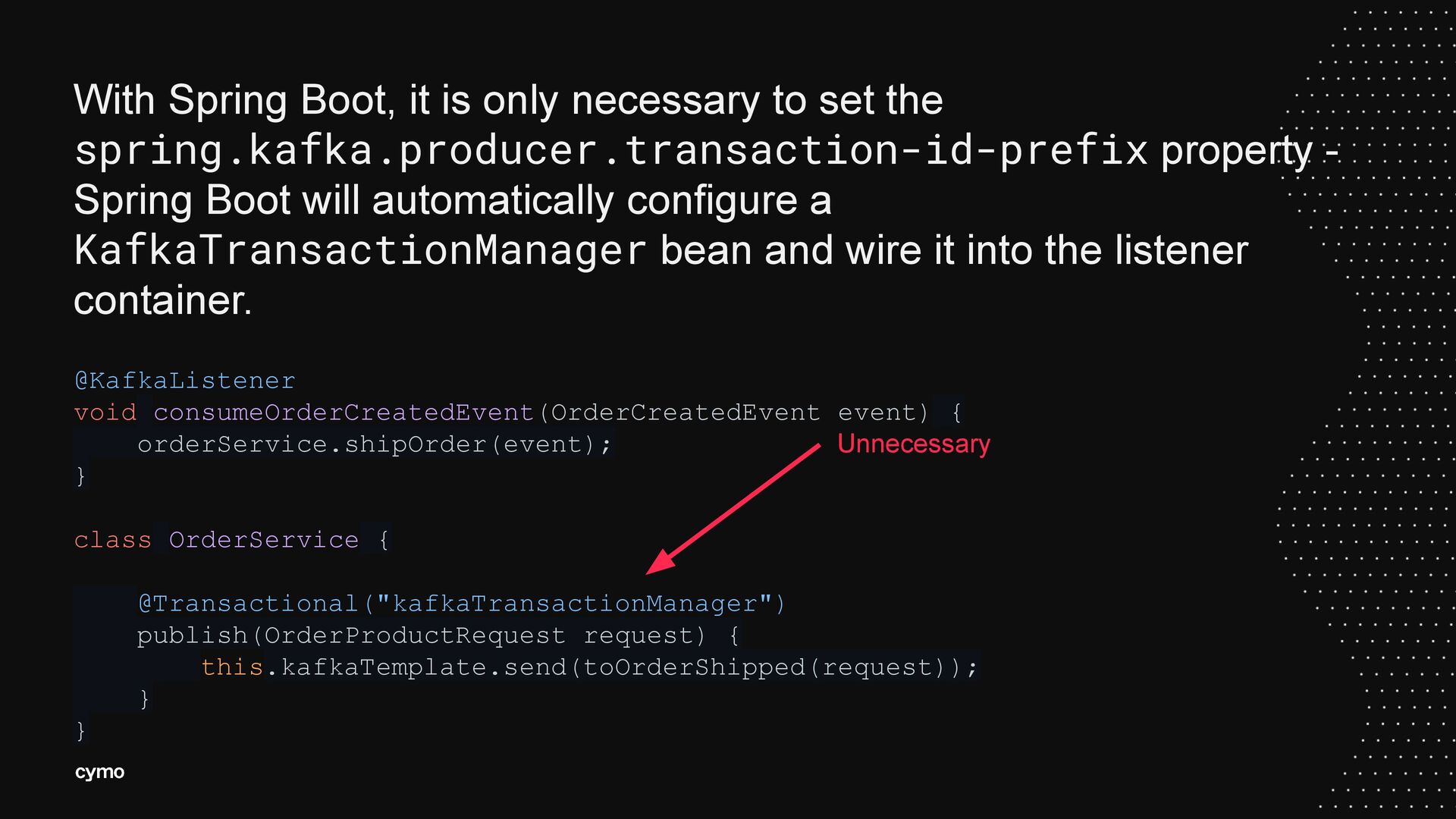
  35. @KafkaListener void consumeOrderCreatedEvent(OrderCreatedEvent event) { orderService.shipOrder(event); } class OrderService {

    @Transactional("kafkaTransactionManager") publish(OrderProductRequest request) { this.kafkaTemplate.send(toOrderShipped(request)); } } With Spring Boot, it is only necessary to set the spring.kafka.producer.transaction-id-prefix property - Spring Boot will automatically configure a KafkaTransactionManager bean and wire it into the listener container. Unnecessary
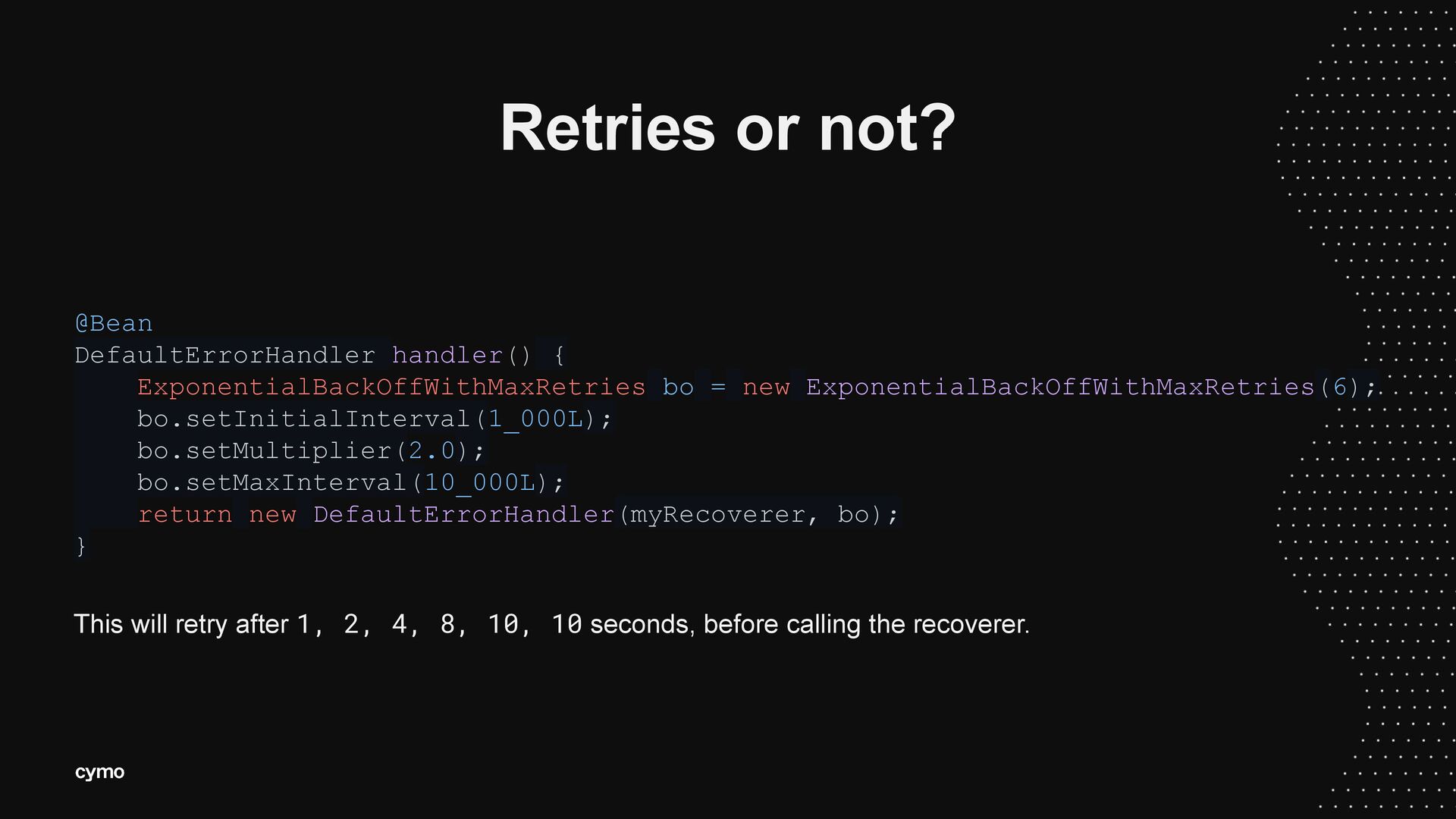
  36. Retries or not? @Bean DefaultErrorHandler handler() { ExponentialBackOffWithMaxRetries bo =

    new ExponentialBackOffWithMaxRetries(6); bo.setInitialInterval(1_000L); bo.setMultiplier(2.0); bo.setMaxInterval(10_000L); return new DefaultErrorHandler(myRecoverer, bo); } This will retry after 1, 2, 4, 8, 10, 10 seconds, before calling the recoverer.
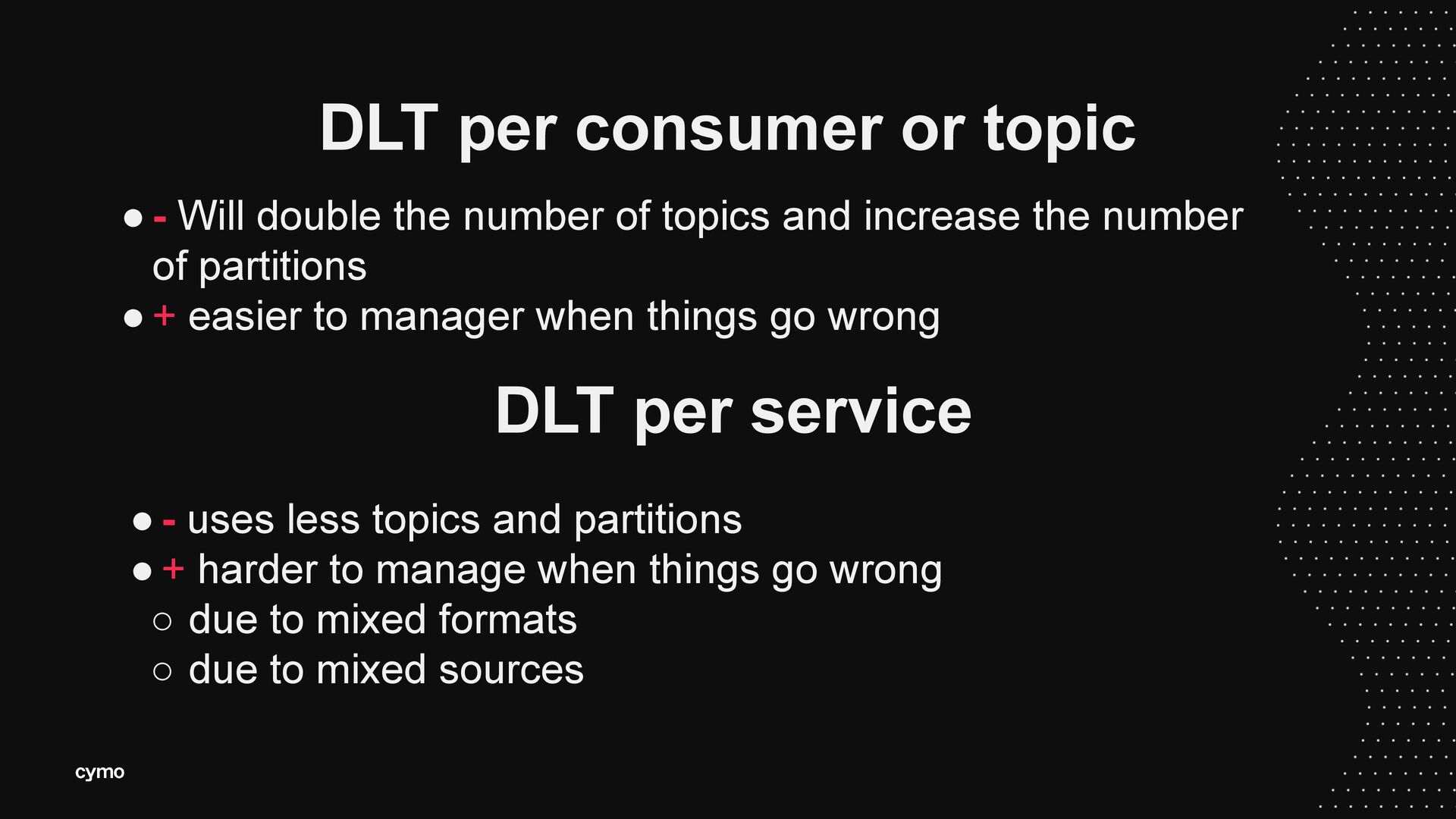
  37. DLT per consumer or topic • - Will double the

    number of topics and increase the number of partitions • + easier to manager when things go wrong DLT per service • - uses less topics and partitions • + harder to manage when things go wrong ◦ due to mixed formats ◦ due to mixed sources
  38. DLTs are powerful, but without a clear plan to address

    issues, they can become a liability