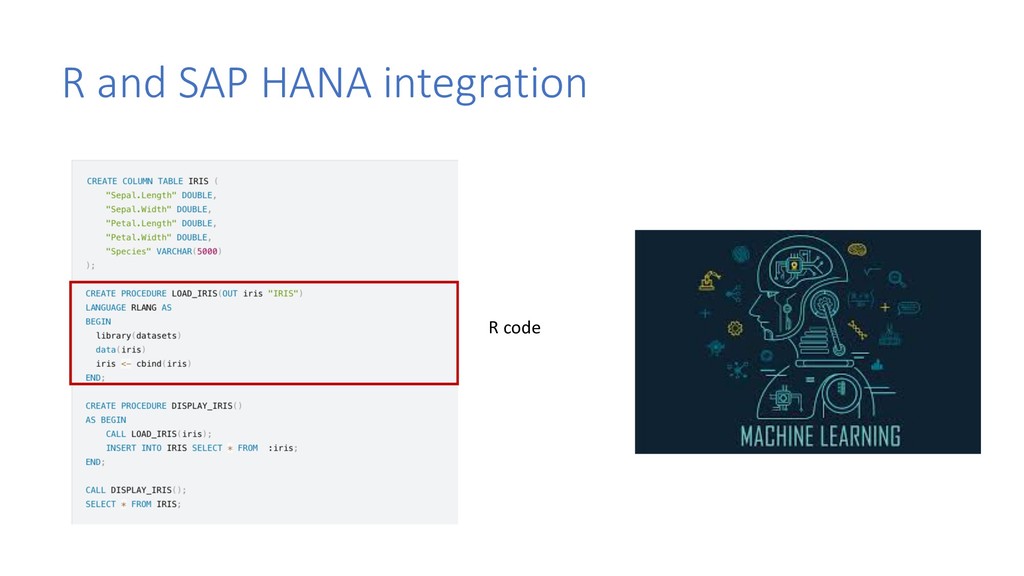
Gentleman in 1995 - GNU project, based on S language - Free - Open source programming language and programming environment (Rstudio) - Powerful and highly extensible coding tool.
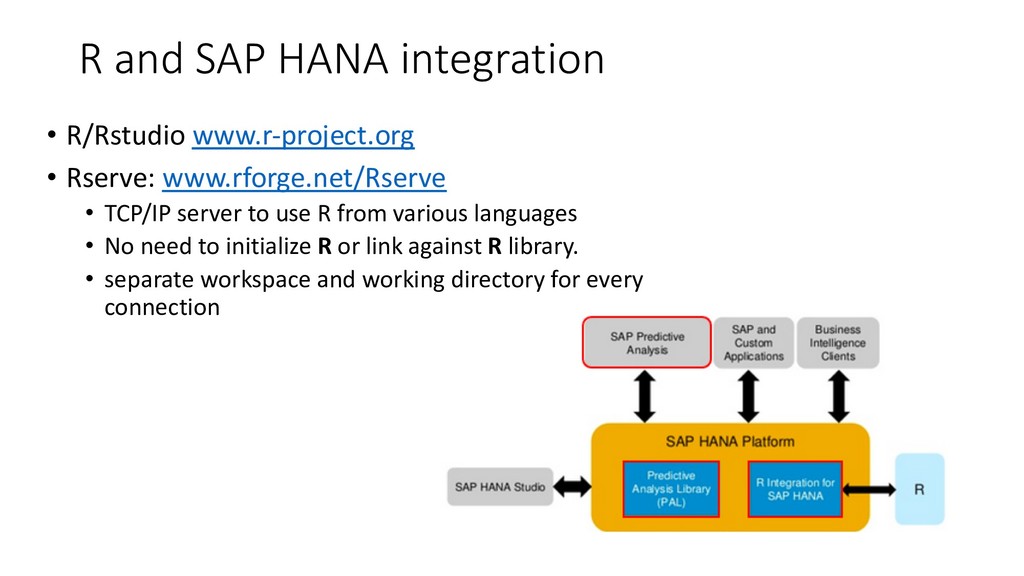
www.rforge.net/Rserve • TCP/IP server to use R from various languages • No need to initialize R or link against R library. • separate workspace and working directory for every connection
actually useful” (G. Box) • ML vs artificial intelligence • ML vs statistics • Supervised vs Unsupervised algorithms • Deep learning • Augmented analytics
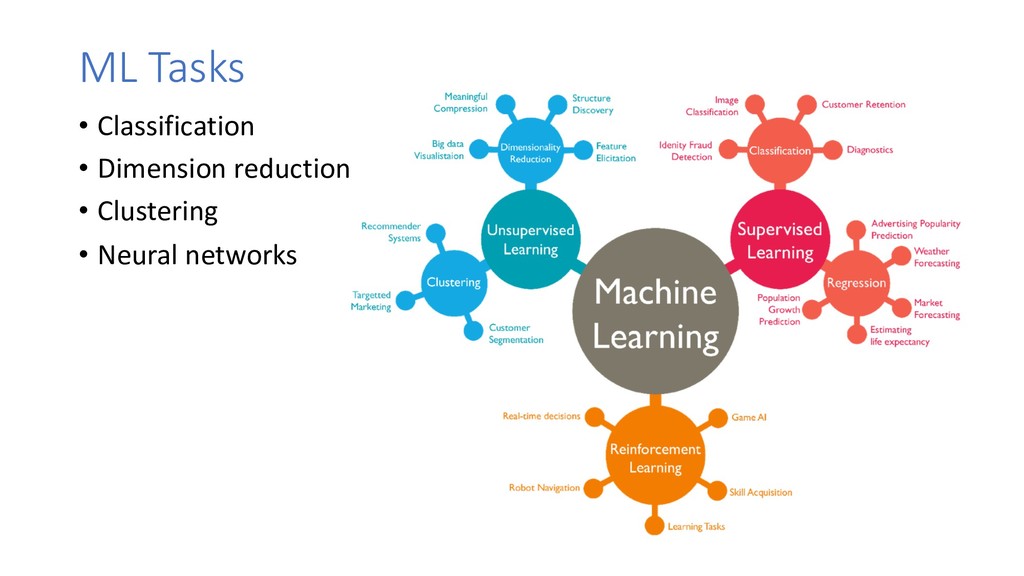
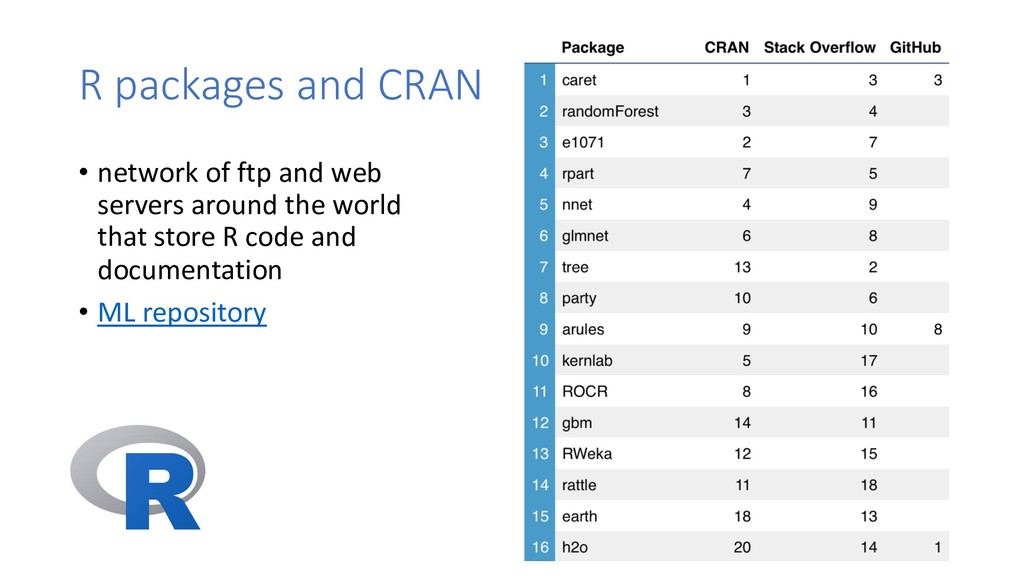
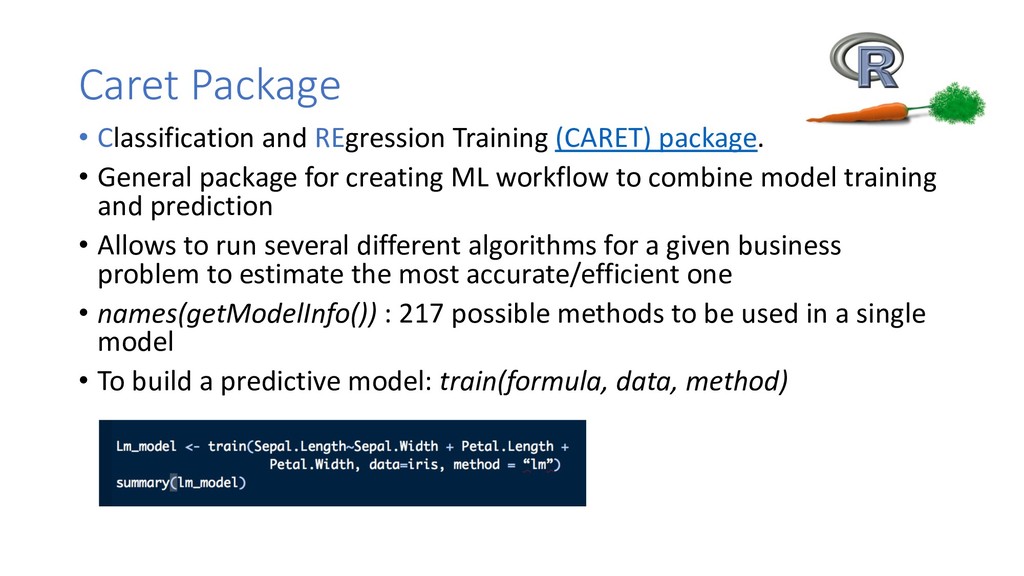
General package for creating ML workflow to combine model training and prediction • Allows to run several different algorithms for a given business problem to estimate the most accurate/efficient one • names(getModelInfo()) : 217 possible methods to be used in a single model • To build a predictive model: train(formula, data, method)
structure and function of the brain = artificial neural networks • free open-source software library for dataflow • developed by Google Brain Team – Machine Learning Crash Course Keras • high level API built on TensorFlow • “Being able to go from idea to result with the least possible delay is key to doing good research”.


 mariaprokofieva
 lara
lara
 elsirapls
 caitiem20
 csswizardry
 lindahogenes
 jonyablonski
 addyosmani
 tmiket
 eileencodes
 katarinadahlin
 carmenintech