Price Capital market structure and players Information asymmetry and lemons’ problem Agency problem and Corporate Governance Financial intermediaries vs information intermediaries
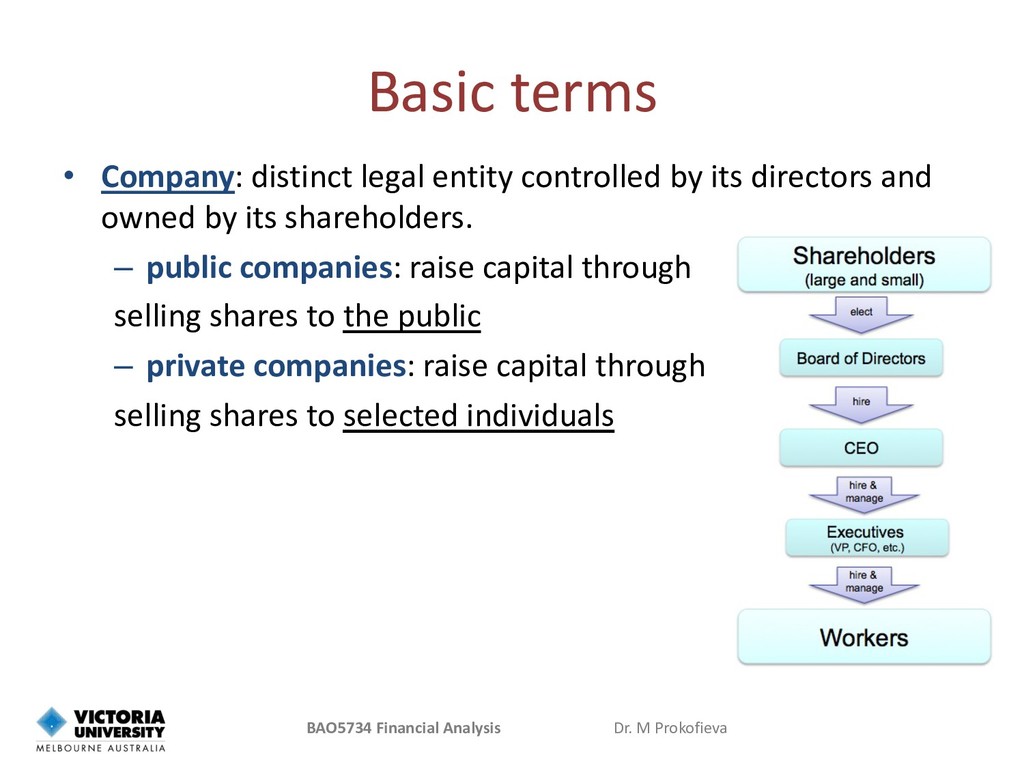
distinct legal entity controlled by its directors and owned by its shareholders. – public companies: raise capital through selling shares to the public – private companies: raise capital through selling shares to selected individuals
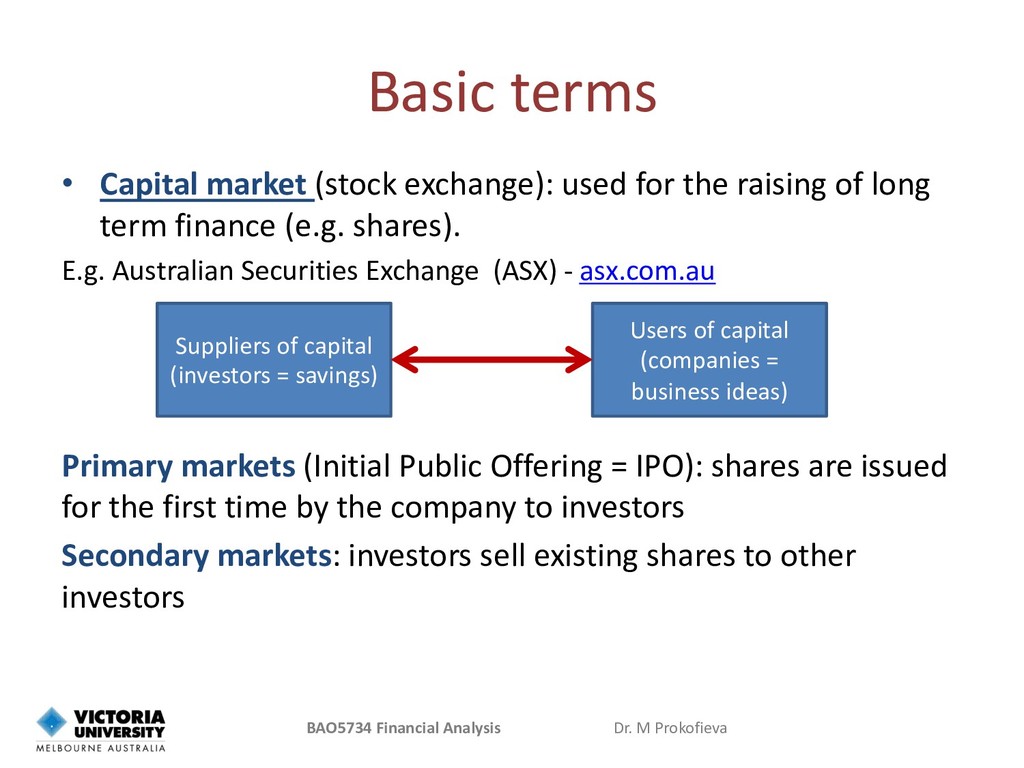
market (stock exchange): used for the raising of long term finance (e.g. shares). E.g. Australian Securities Exchange (ASX) - asx.com.au Primary markets (Initial Public Offering = IPO): shares are issued for the first time by the company to investors Secondary markets: investors sell existing shares to other investors Suppliers of capital (investors = savings) Users of capital (companies = business ideas)
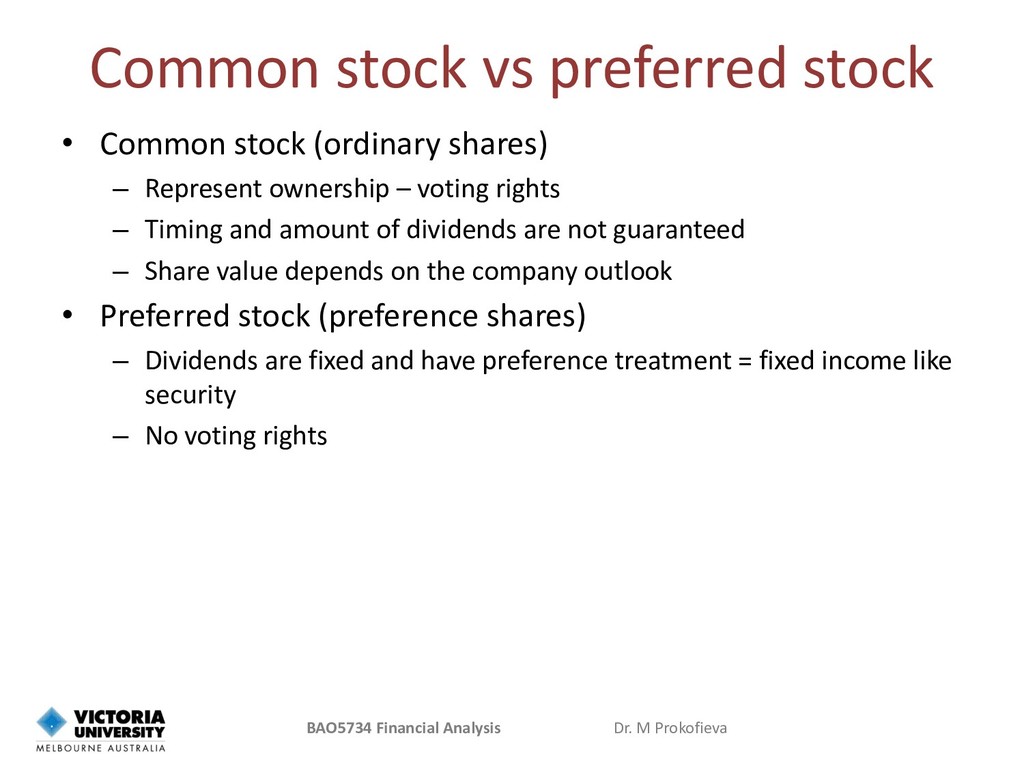
stock • Common stock (ordinary shares) – Represent ownership – voting rights – Timing and amount of dividends are not guaranteed – Share value depends on the company outlook • Preferred stock (preference shares) – Dividends are fixed and have preference treatment = fixed income like security – No voting rights
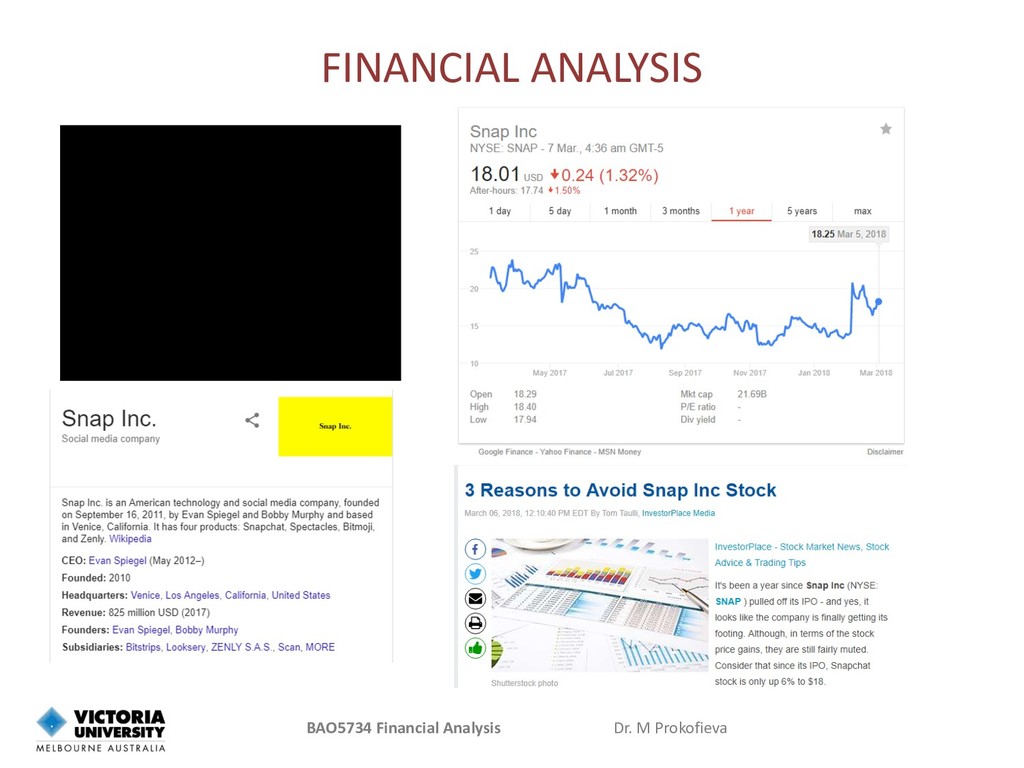
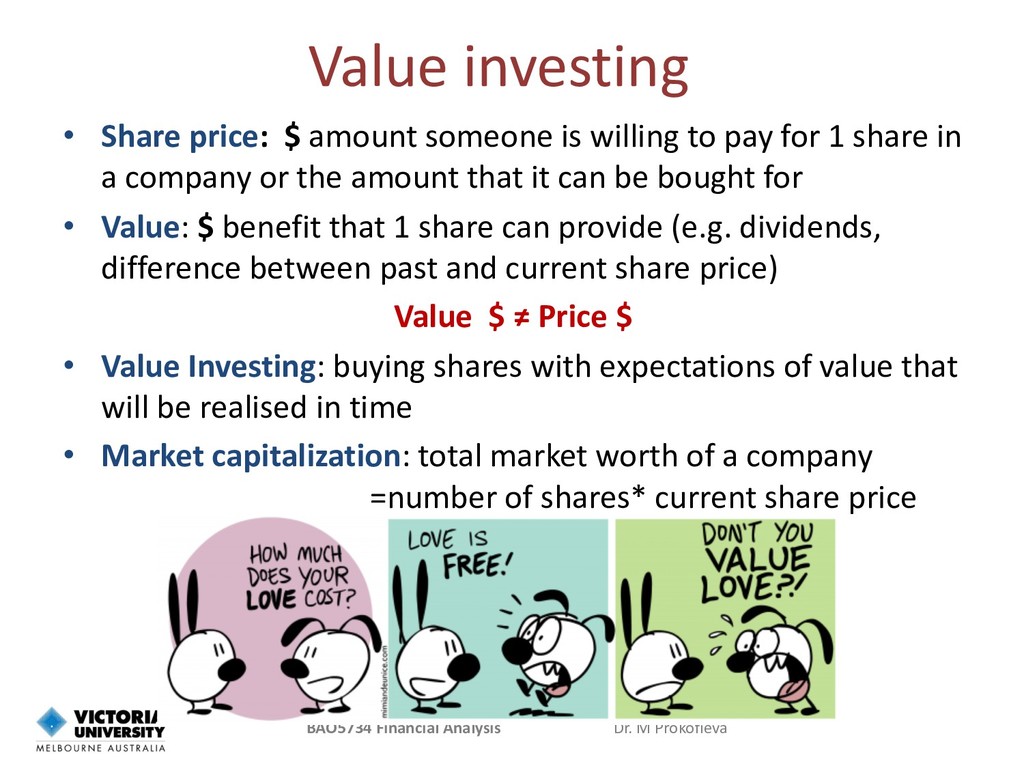
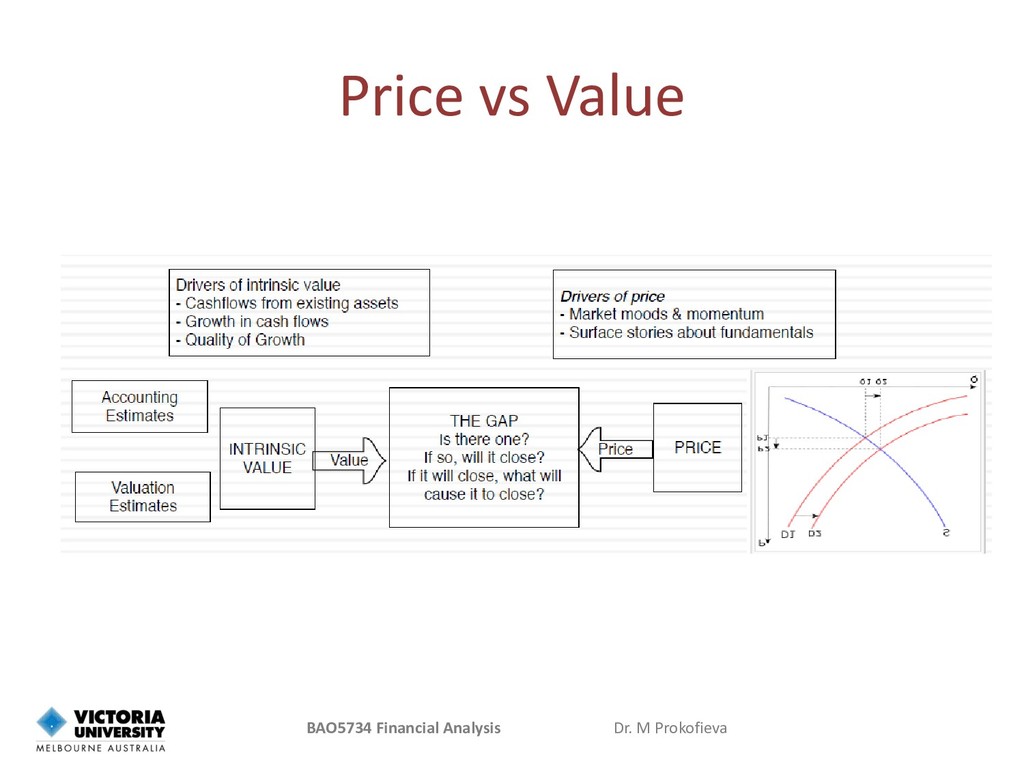
price: $ amount someone is willing to pay for 1 share in a company or the amount that it can be bought for • Value: $ benefit that 1 share can provide (e.g. dividends, difference between past and current share price) Value $ ≠ Price $ • Value Investing: buying shares with expectations of value that will be realised in time • Market capitalization: total market worth of a company =number of shares* current share price
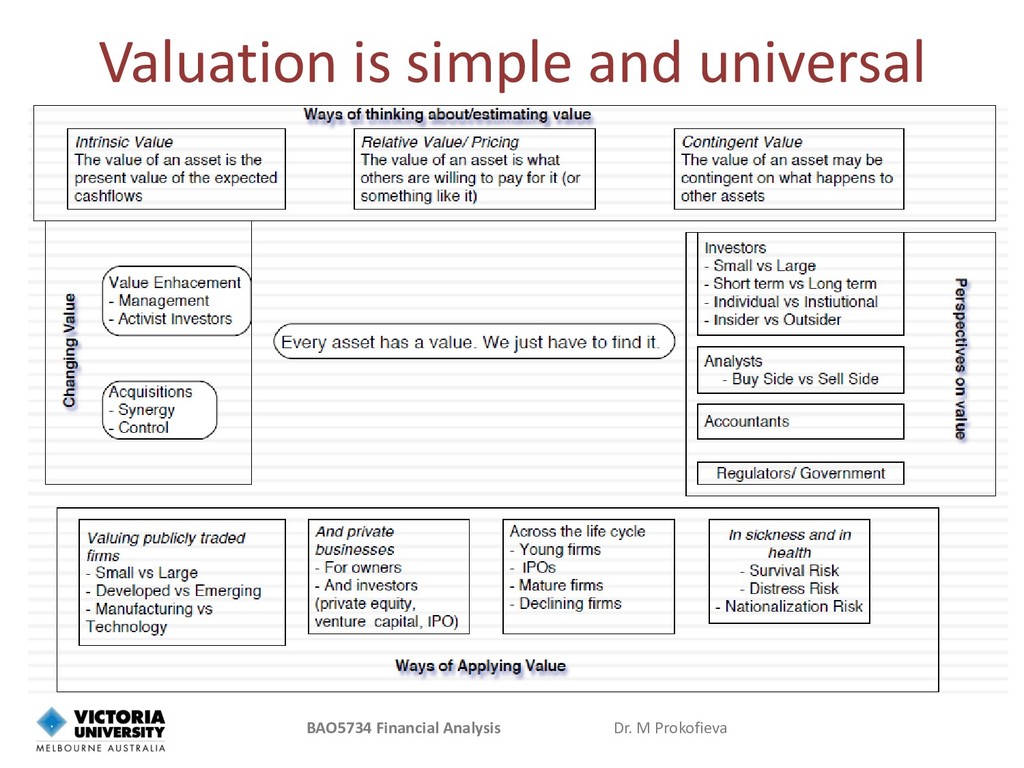
A valuation is an objective search for “true” value – Truth 1.1: All valuations are biased. The only questions are “how much” and in which direction. – Truth 1.2: The direction and magnitude of the bias in your valuation is directly proportional to who pays you and how much you are paid. • Myth 2: A good valuation provides a precise estimate of value – Truth 2.1: There are no precise valuations. – Truth 2.2: The payoff to valuation is greatest when valuation is least precise. • Myth 3: The more quantitative a model, the better the valuation – Truth 3.1: One’s understanding of a valuation model is inversely proportional to the number of inputs required for the model. – Truth 3.2: Simpler valuation models do much better than complex ones.
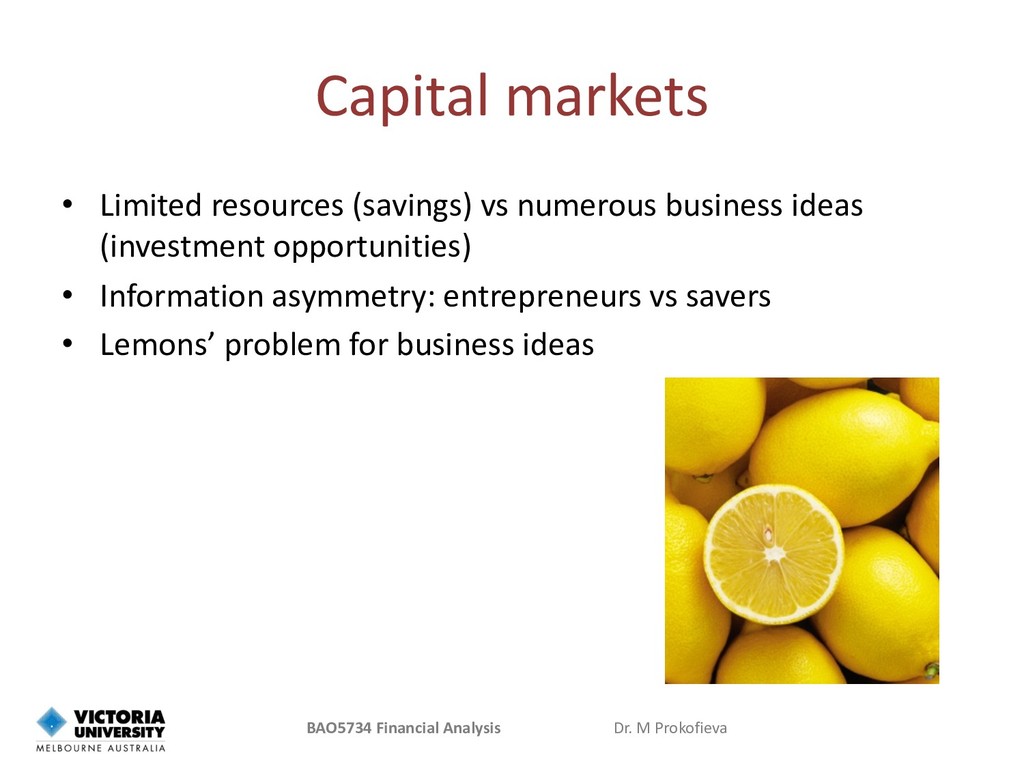
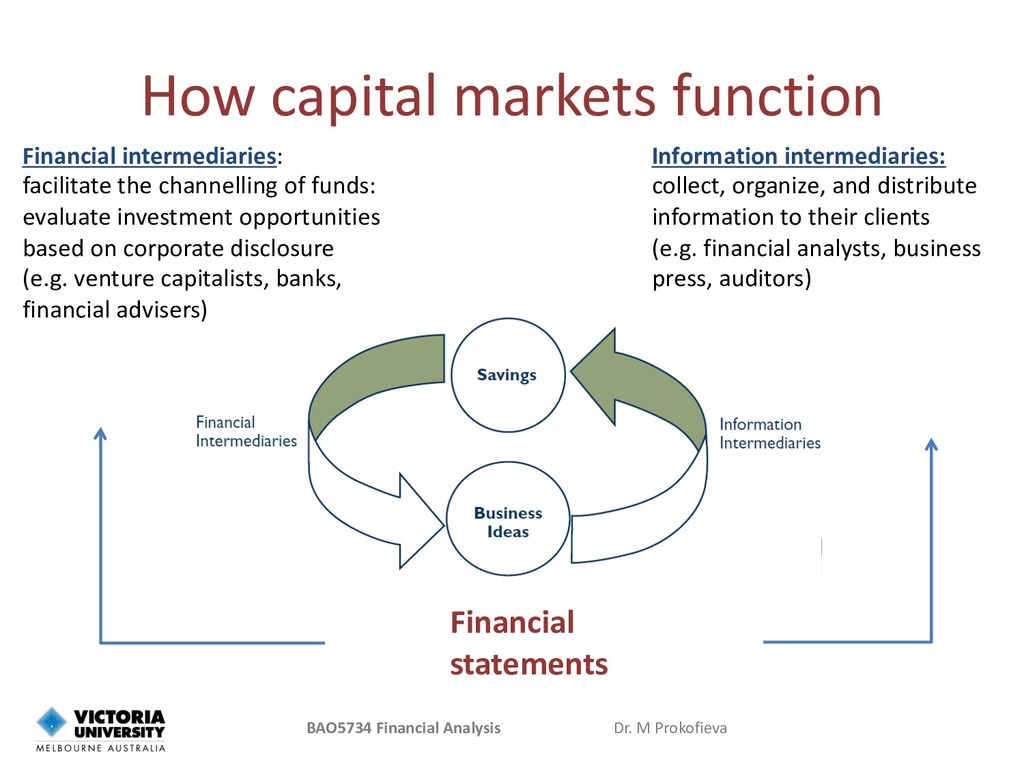
resources (savings) vs numerous business ideas (investment opportunities) • Information asymmetry: entrepreneurs vs savers • Lemons’ problem for business ideas
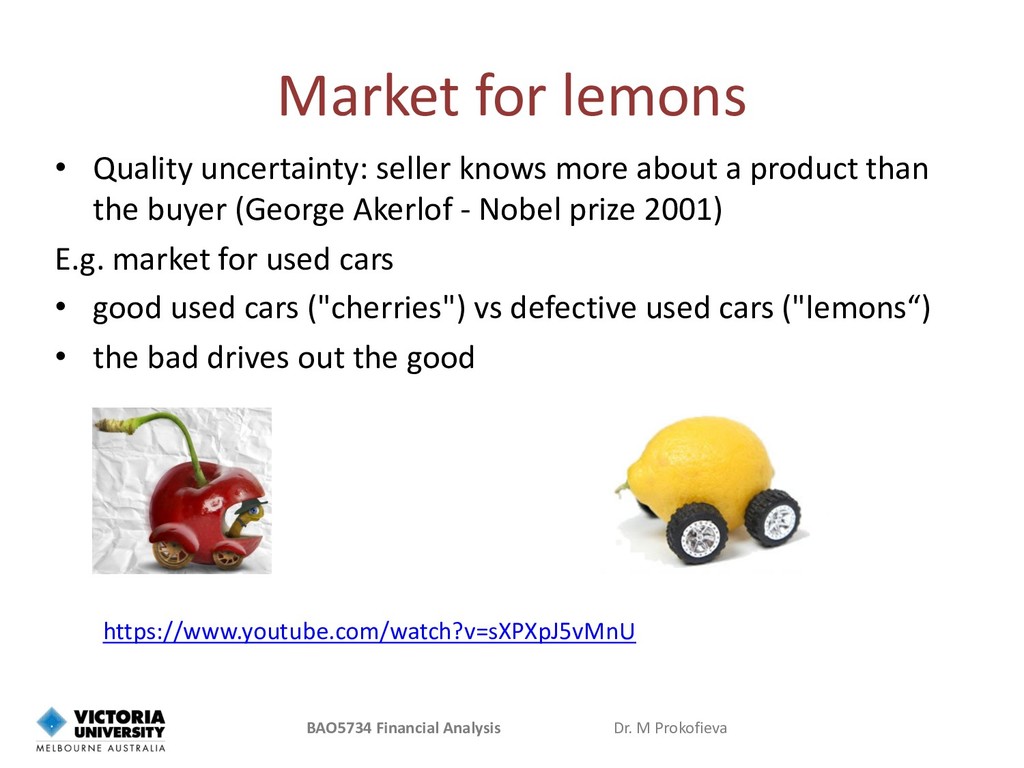
Quality uncertainty: seller knows more about a product than the buyer (George Akerlof - Nobel prize 2001) E.g. market for used cars • good used cars ("cherries") vs defective used cars ("lemons“) • the bad drives out the good https://www.youtube.com/watch?v=sXPXpJ5vMnU
Financial intermediaries: facilitate the channelling of funds: evaluate investment opportunities based on corporate disclosure (e.g. venture capitalists, banks, financial advisers) Information intermediaries: collect, organize, and distribute information to their clients (e.g. financial analysts, business press, auditors) Financial statements
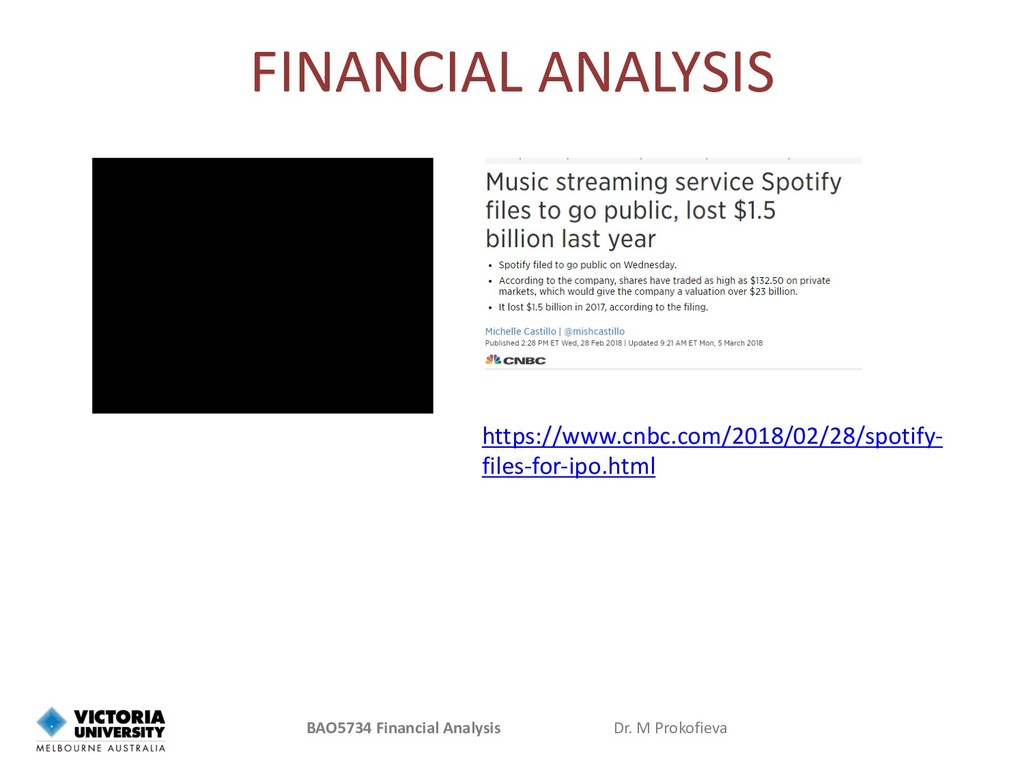
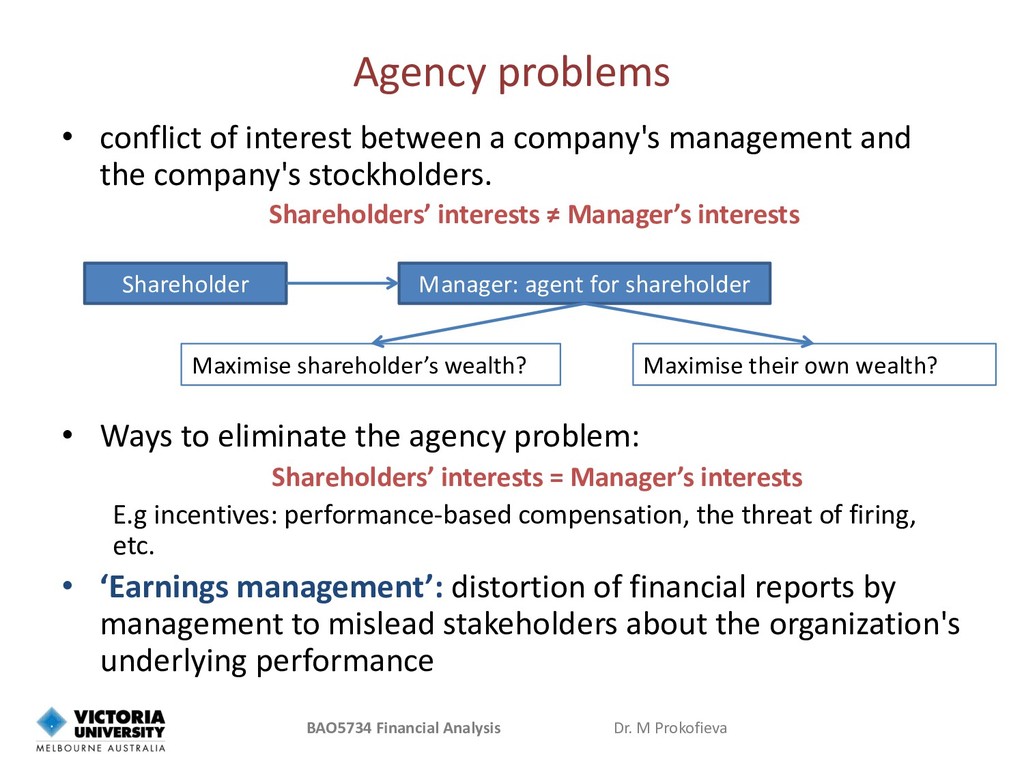
of interest between a company's management and the company's stockholders. Shareholders’ interests ≠ Manager’s interests • Ways to eliminate the agency problem: Shareholders’ interests = Manager’s interests E.g incentives: performance-based compensation, the threat of firing, etc. • ‘Earnings management’: distortion of financial reports by management to mislead stakeholders about the organization's underlying performance Manager: agent for shareholder Shareholder Maximise shareholder’s wealth? Maximise their own wealth?
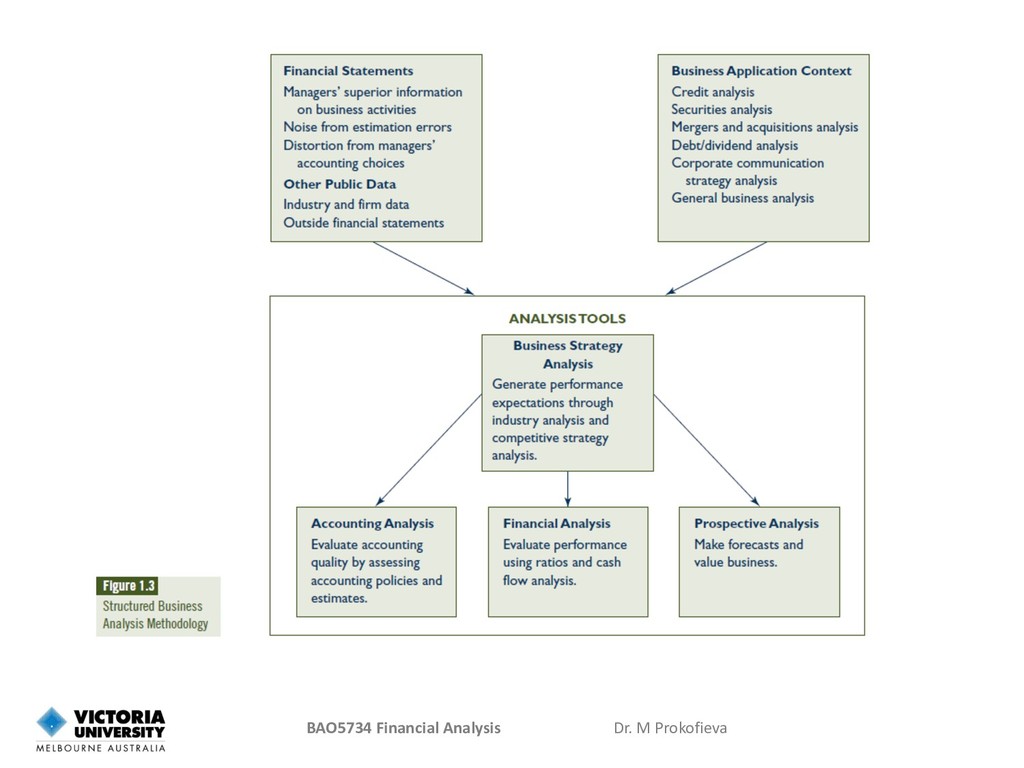
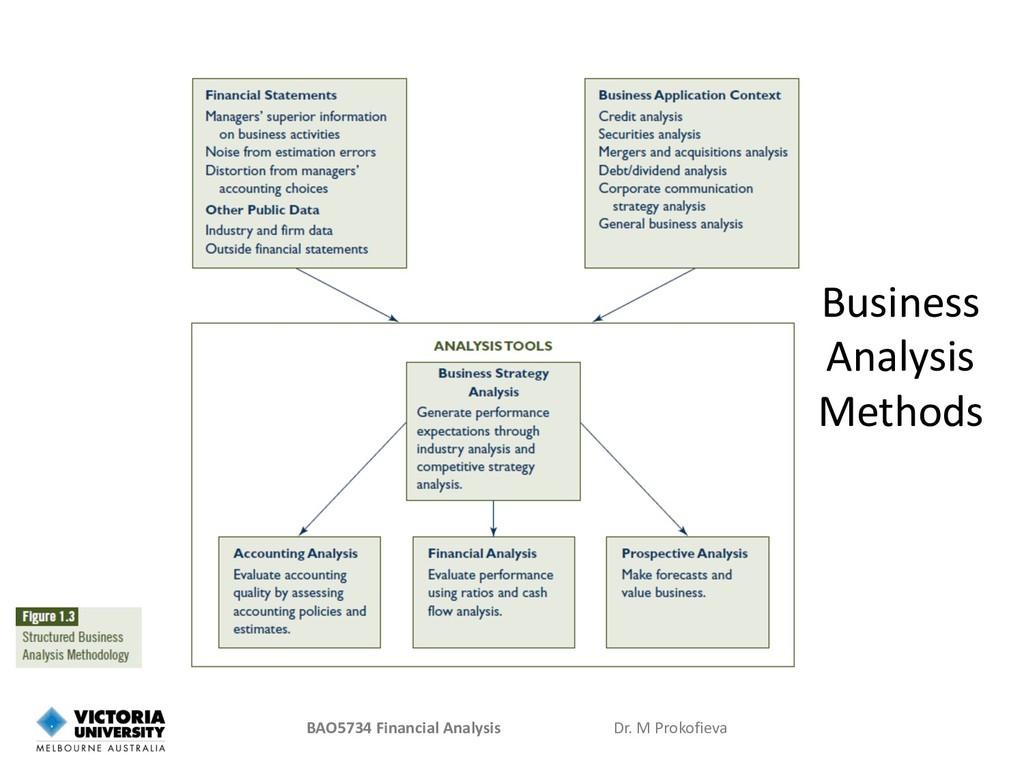
Financial statements are a source of data for capital markets. • Problems: information asymmetry (lemon’s problem) and agent problems • Role of information and financial intermediaries in capital markets and corporate reporting • Investment vs speculation • Business analysis framework to evaluate performance of a business entity


 mariaprokofieva
 kinsofficial
 behealthy
 neuroenergia
 m3c
m3c
 takeuchigroup
 kintotechdev
 kazumakitao
 tamosan01
 thomaspeham
 infcurion
 makaibito
 e5ua
e5ua
 nikkihalliwell
 aleyda
 tanoku
 dougneiner
 tapps
tapps
 lara
lara
.png) helenjbeal
helenjbeal
 kneath
 sstephenson
 holman
 morganepeng
 akihiro_kokubo