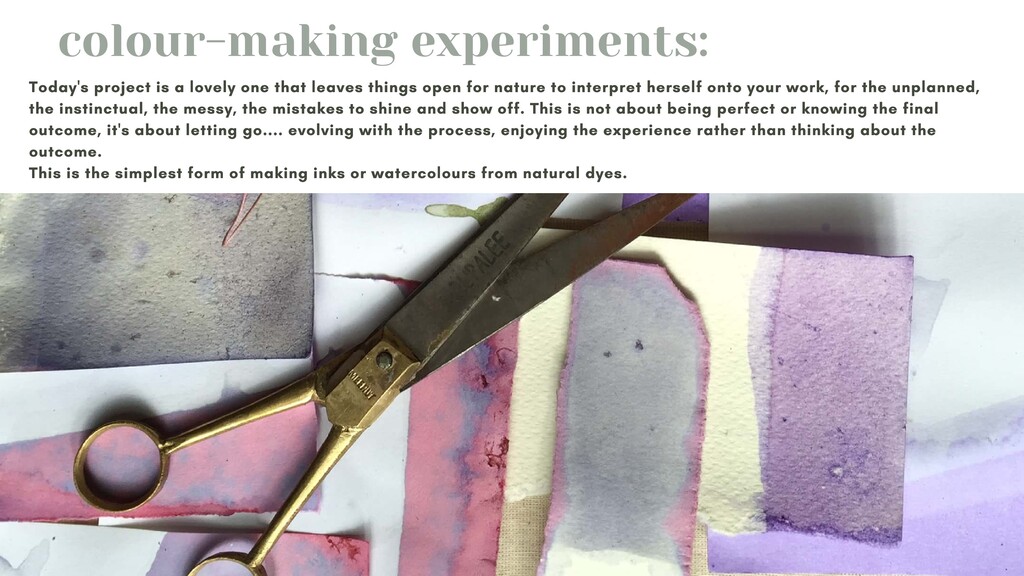
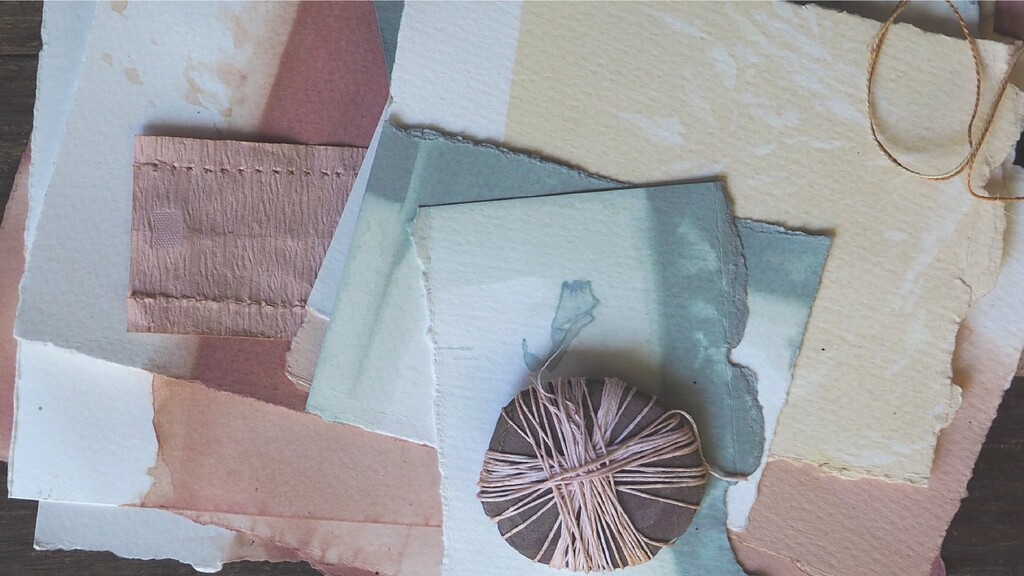
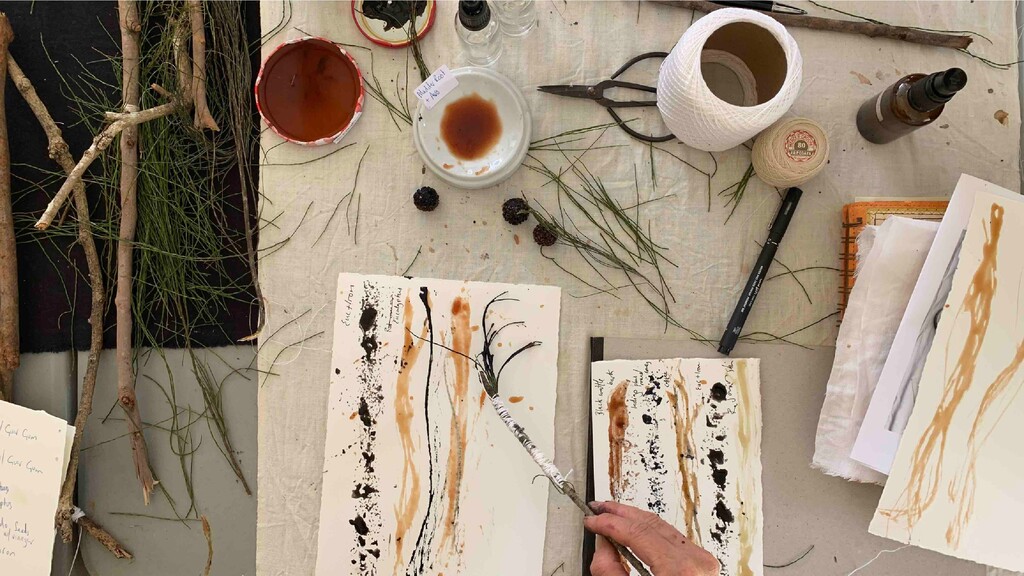
things open for nature to interpret herself onto your work, for the unplanned, the instinctual, the messy, the mistakes to shine and show off. This is not about being perfect or knowing the final outcome, it's about letting go.... evolving with the process, enjoying the experience rather than thinking about the outcome. This is the simplest form of making inks or watercolours from natural dyes.
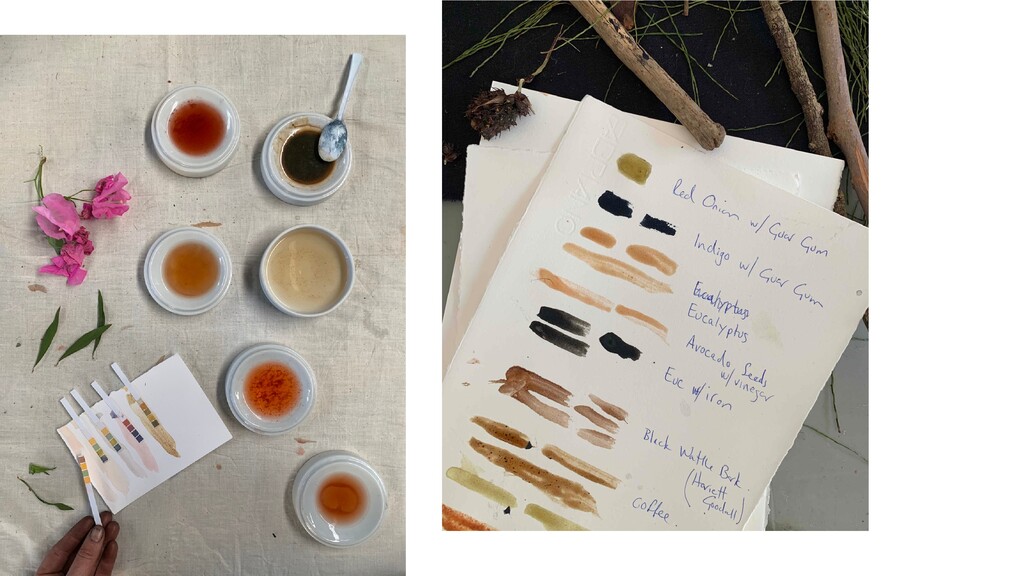
(ie, cotton rag or bamboo) vinegar will 'shift' (change) some colours - made two lots of ph-sensitive colours and see what happens when you add a splash of vinegar small jars, cups or vessels of some sort DYE STUFFS: - various teas, coffee, rooibus, hibiscus tea turmeric or spiralina powder carrot tops avocado seeds or skins (they need a slow extraction - do not boil at all, but gently simmer 1-2 cut up seeds, fully cleaned) red or brown onion skins red cabbage PROJECT: Colour-making with kitchen supplies on paper or cloth You will need:
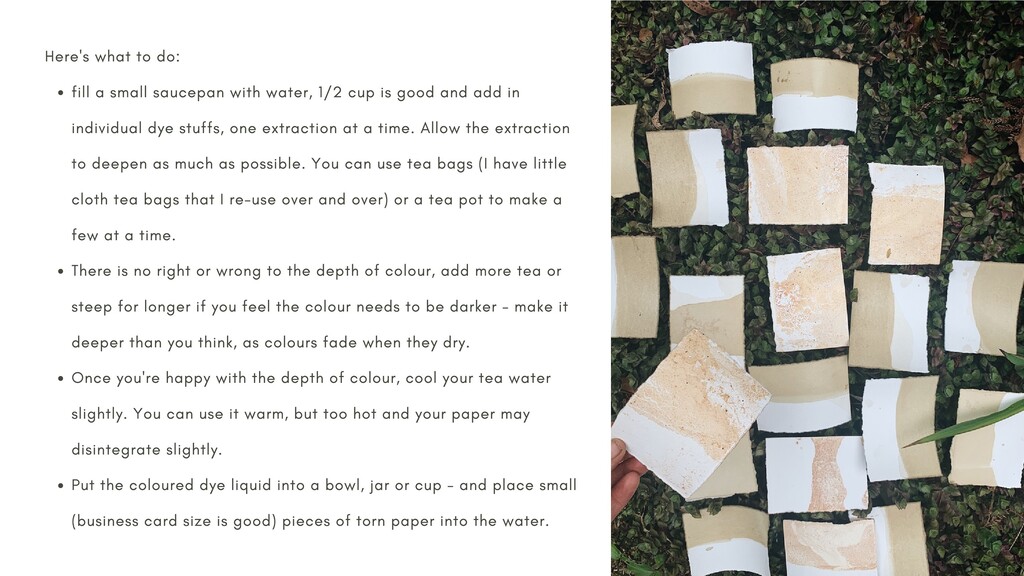
and add in individual dye stuffs, one extraction at a time. Allow the extraction to deepen as much as possible. You can use tea bags (I have little cloth tea bags that I re-use over and over) or a tea pot to make a few at a time. There is no right or wrong to the depth of colour, add more tea or steep for longer if you feel the colour needs to be darker - make it deeper than you think, as colours fade when they dry. Once you're happy with the depth of colour, cool your tea water slightly. You can use it warm, but too hot and your paper may disintegrate slightly. Put the coloured dye liquid into a bowl, jar or cup - and place small (business card size is good) pieces of torn paper into the water. Here's what to do:
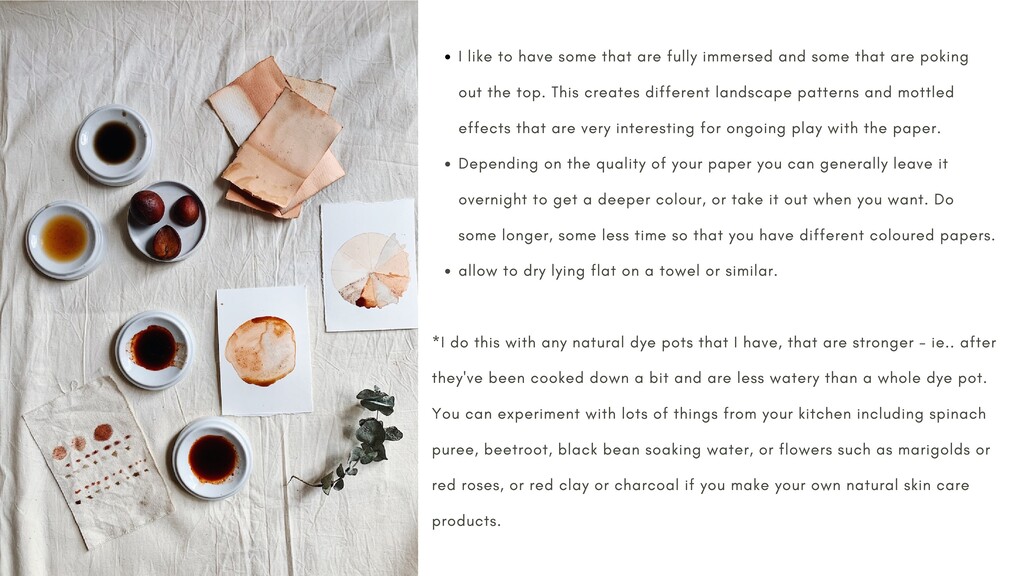
some that are poking out the top. This creates different landscape patterns and mottled effects that are very interesting for ongoing play with the paper. Depending on the quality of your paper you can generally leave it overnight to get a deeper colour, or take it out when you want. Do some longer, some less time so that you have different coloured papers. allow to dry lying flat on a towel or similar. *I do this with any natural dye pots that I have, that are stronger - ie.. after they've been cooked down a bit and are less watery than a whole dye pot. You can experiment with lots of things from your kitchen including spinach puree, beetroot, black bean soaking water, or flowers such as marigolds or red roses, or red clay or charcoal if you make your own natural skin care products.

 Your Podcast. Everywhere. Effortlessly.


 skipperchong
 ryanjones
 addyosmani
 jct
 varn
 panda_program
 jnunemaker
 eitanlees
 mraible
 lara
 portentint