Upgrade to Pro — share decks privately, control downloads, hide ads and more …

7 Tips to Help You Choose the Right Tech Course...

Avatar for Suzie Janson Suzie Janson
January 29, 2025
12

7 Tips to Help You Choose the Right Tech Course for Yourself

We are Yoobee College of Creative Innovation. Creating the future at the speed of culture, disrupting the norm, imagining the next - making you future ready and industry connected. We’re inspired by creativity that’s inspired by modern culture - in tune with what’s now and what’s next and where true creative innovation can flourish. And this all happens in an environment that’s open and inclusive - a place where you can truly find your creative identity, immersed in a culture you love with a tribe of like-minded people. Yoobee College of Creative Innovation is where you create the future.

Avatar for Suzie Janson

Suzie Janson

January 29, 2025

Transcript

  1. 7 Tips to Help You Choose the Right Tech Course

    for Yourself Created By Suzie Janson
  2. 1. Identify Your Career Goals Before you start looking at

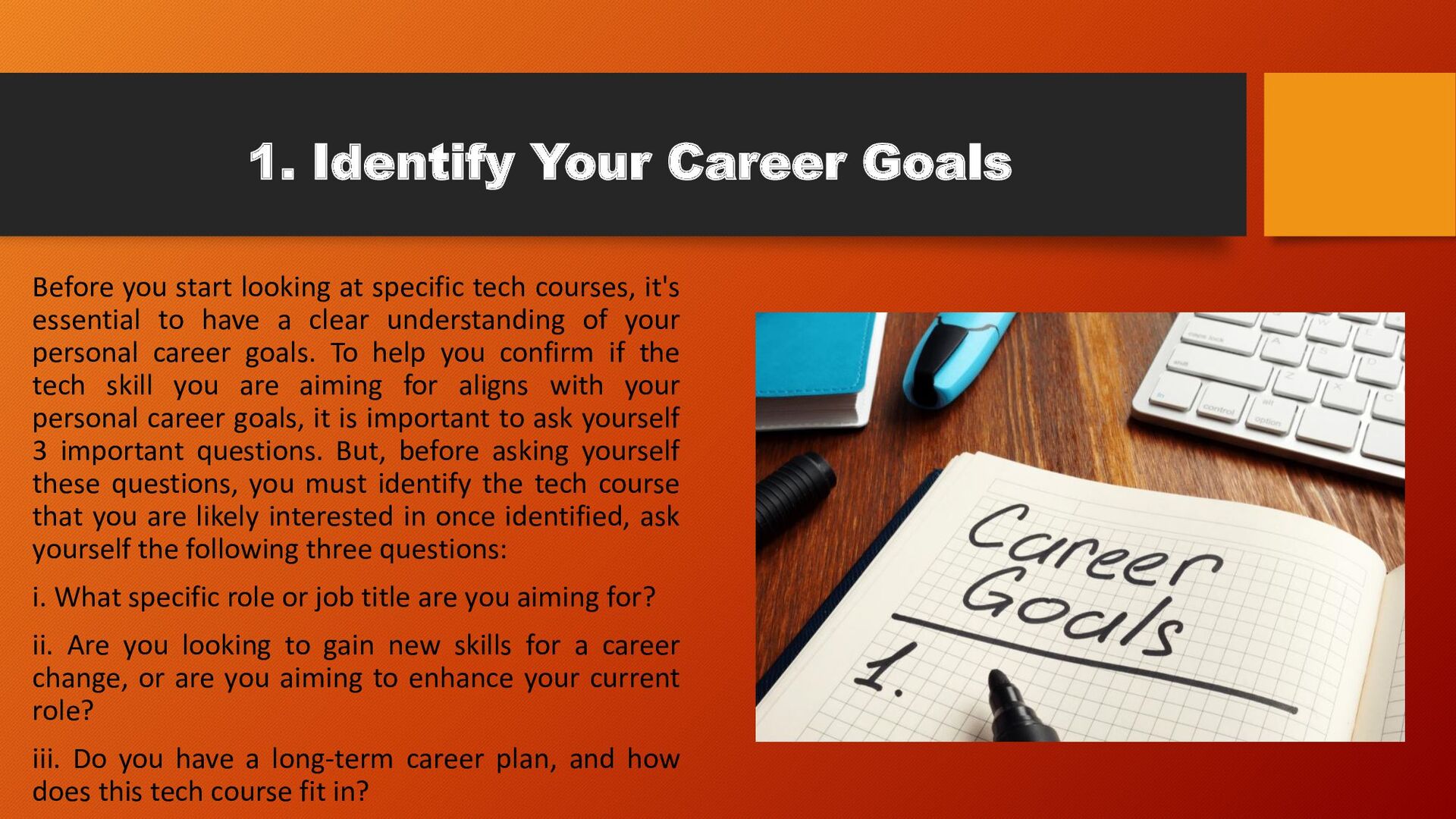
    specific tech courses, it's essential to have a clear understanding of your personal career goals. To help you confirm if the tech skill you are aiming for aligns with your personal career goals, it is important to ask yourself 3 important questions. But, before asking yourself these questions, you must identify the tech course that you are likely interested in once identified, ask yourself the following three questions: i. What specific role or job title are you aiming for? ii. Are you looking to gain new skills for a career change, or are you aiming to enhance your current role? iii. Do you have a long-term career plan, and how does this tech course fit in?
  3. 2. Assess Your Current Skill Level Evaluate your current skills

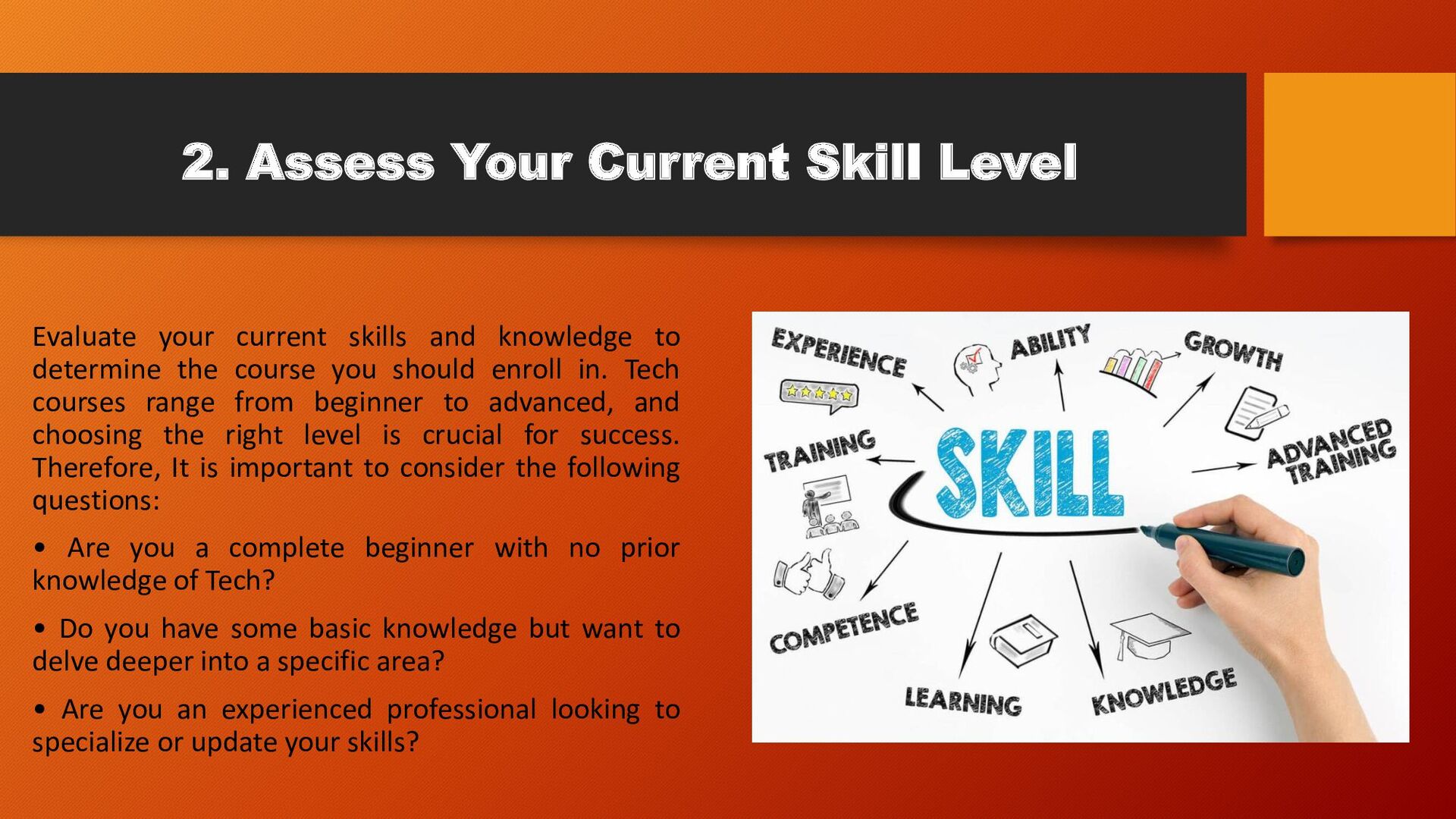
    and knowledge to determine the course you should enroll in. Tech courses range from beginner to advanced, and choosing the right level is crucial for success. Therefore, It is important to consider the following questions: • Are you a complete beginner with no prior knowledge of Tech? • Do you have some basic knowledge but want to delve deeper into a specific area? • Are you an experienced professional looking to specialize or update your skills?
  4. 3. Explore Different Tech Specializations It is important to note

    that the tech field is vast, with numerous areas to choose from. You may be missing out on interesting aspects if you are focused on one aspect of Tech that you are conversant with. Therefore, you must have a head knowledge of the major areas of Tech, this will help you align your choices with your area of interest.
  5. 4. Consider the Course Curriculum Look for courses that offer

    comprehensive, up-to- date content that covers all the essential topics in your chosen field. It is important to check for the following: Detailed course modules and topics covered • Practical assignments and projects • Hands-on experience with industry-standard tools and technologies • Opportunities for real-world application and case studies
  6. 5. Consider the Cost and Value While the price of

    the course is an important factor, it should not be the sole deciding factor. Consider the value the course offers in terms of content, practical experience, and career opportunities. Look for courses that provide a good balance of quality and affordability. Also, check if there are any additional costs for materials, certifications, or exams.
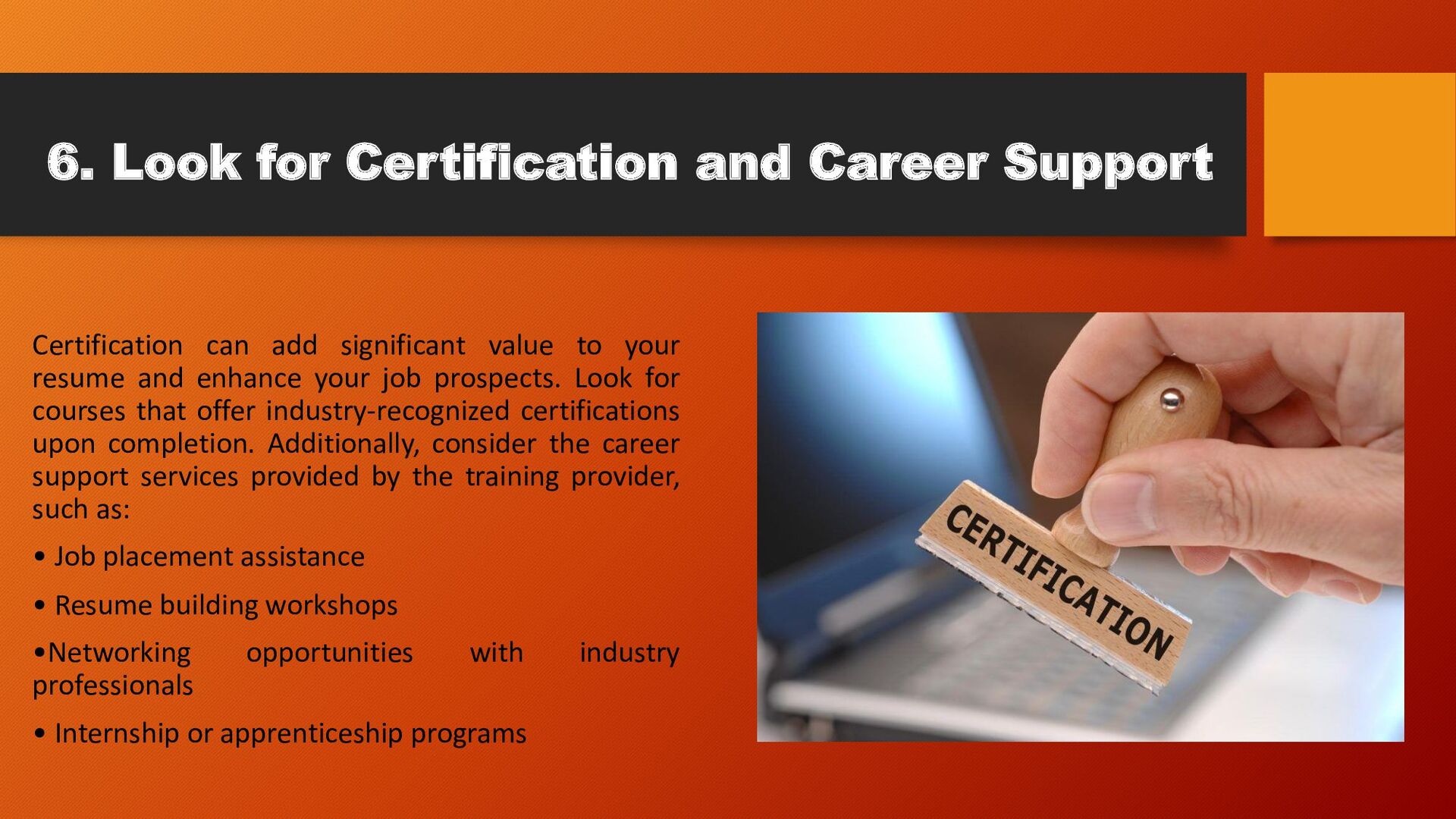
  7. 6. Look for Certification and Career Support Certification can add

    significant value to your resume and enhance your job prospects. Look for courses that offer industry-recognized certifications upon completion. Additionally, consider the career support services provided by the training provider, such as: • Job placement assistance • Resume building workshops •Networking opportunities with industry professionals • Internship or apprenticeship programs
  8. 7. Seek Advice and Guidance If you're still unsure which

    course to choose, seek advice from industry professionals, mentors, or career counselors. They can provide valuable insights and recommendations based on their experience and knowledge of the field.