Upgrade to Pro — share decks privately, control downloads, hide ads and more …

best treatment for nail fungus

Sponsored · Your Podcast. Everywhere. Effortlessly. Share. Educate. Inspire. Entertain. You do you. We'll handle the rest. →
Avatar for Site Site
June 24, 2025
7

best treatment for nail fungus

best treatment for nail fungus

Avatar for Site

Site

June 24, 2025

Transcript

  1. Best Treatment for Nail Fungus: Effective Solutions That Work Nail

    fungus, or onychomycosis, is a common condition that affects millions of people worldwide. It typically begins as a white or yellow spot under the tip of the fingernail or toenail. As the fungal infection spreads deeper, the nail may discolor, thicken, and crumble at the edge. Although often considered just a cosmetic issue, untreated nail fungus can lead to pain, discomfort, and even more serious infections best treatment for nail fungus. Finding the best treatment for nail fungus depends on the severity of the infection, your health condition, and how quickly you want results. Understanding Nail Fungus Nail fungus is caused by various fungal organisms, the most common being dermatophytes. Yeast and molds can also cause nail infections. It thrives in warm, moist environments such as sweaty shoes, public showers, or swimming pools. While anyone can get nail fungus, certain risk factors increase susceptibility. These include aging, poor circulation, a weakened immune system, wearing tight footwear, or having a history of athlete’s foot. Early signs of infection include white or yellow streaks on the nail, thickened nails, brittleness, distorted shape, and a foul smell. Prompt treatment can prevent the spread of the infection and help maintain healthy nails. Top Treatments for Nail Fungus There is no one-size-fits-all solution for nail fungus, but various treatment options are available. They range from topical medications to oral antifungals, home remedies, and even laser therapy. The best approach often depends on how deeply the infection has penetrated the nail. 1. Oral Antifungal Medications Prescription oral medications are often considered the most effective treatment for moderate to severe nail fungus. Drugs like terbinafine and itraconazole are commonly used and can help new nails grow free of infection. These medications are typically taken for 6 to 12 weeks, although results may take months to become visible as the nail slowly grows out. Pros: •​ High cure rates​ •​ Treats infection from within​ •​ Convenient dosage (usually once daily)​ Cons:
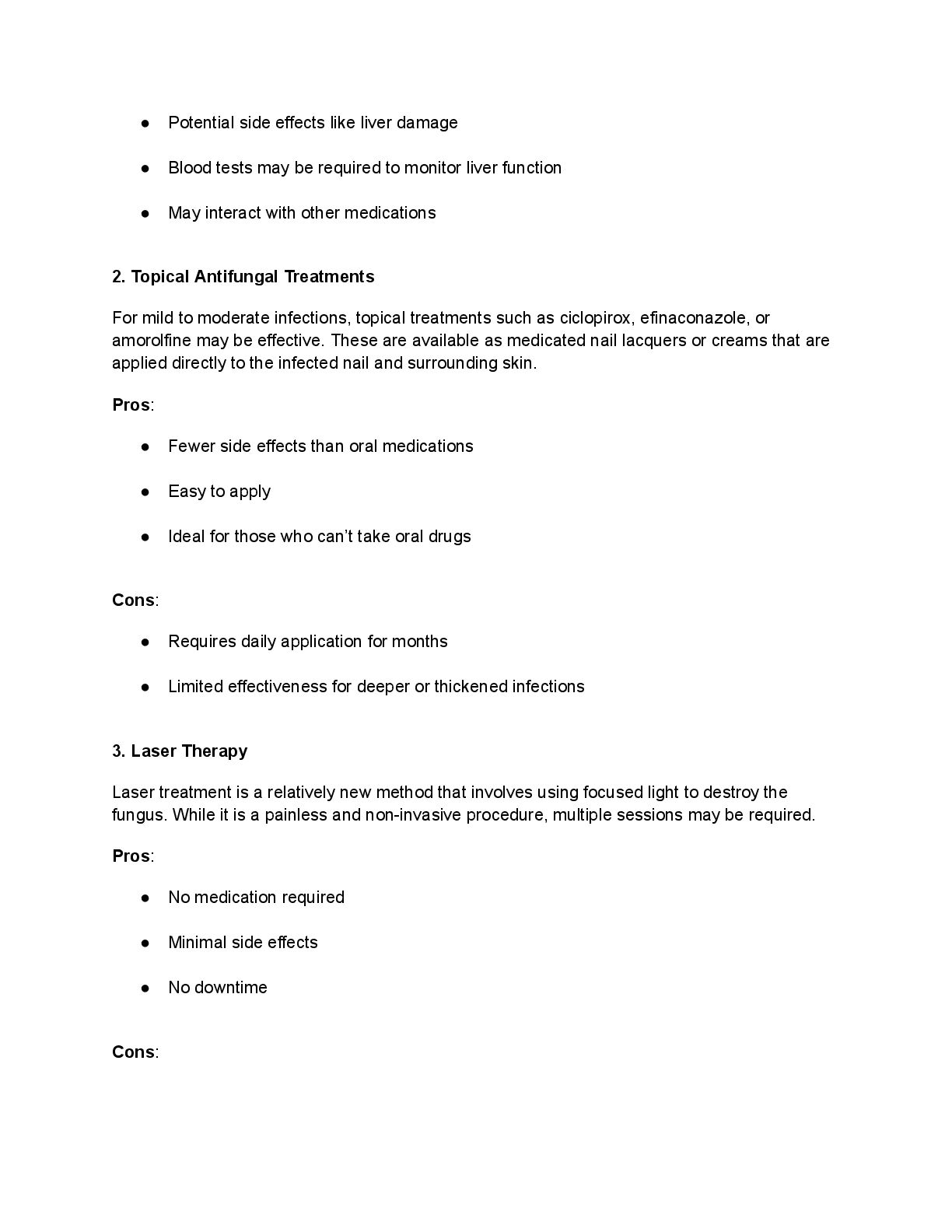
  2. •​ Potential side effects like liver damage​ •​ Blood tests

    may be required to monitor liver function​ •​ May interact with other medications​ 2. Topical Antifungal Treatments For mild to moderate infections, topical treatments such as ciclopirox, efinaconazole, or amorolfine may be effective. These are available as medicated nail lacquers or creams that are applied directly to the infected nail and surrounding skin. Pros: •​ Fewer side effects than oral medications​ •​ Easy to apply​ •​ Ideal for those who can’t take oral drugs​ Cons: •​ Requires daily application for months​ •​ Limited effectiveness for deeper or thickened infections​ 3. Laser Therapy Laser treatment is a relatively new method that involves using focused light to destroy the fungus. While it is a painless and non-invasive procedure, multiple sessions may be required. Pros: •​ No medication required​ •​ Minimal side effects​ •​ No downtime​ Cons:
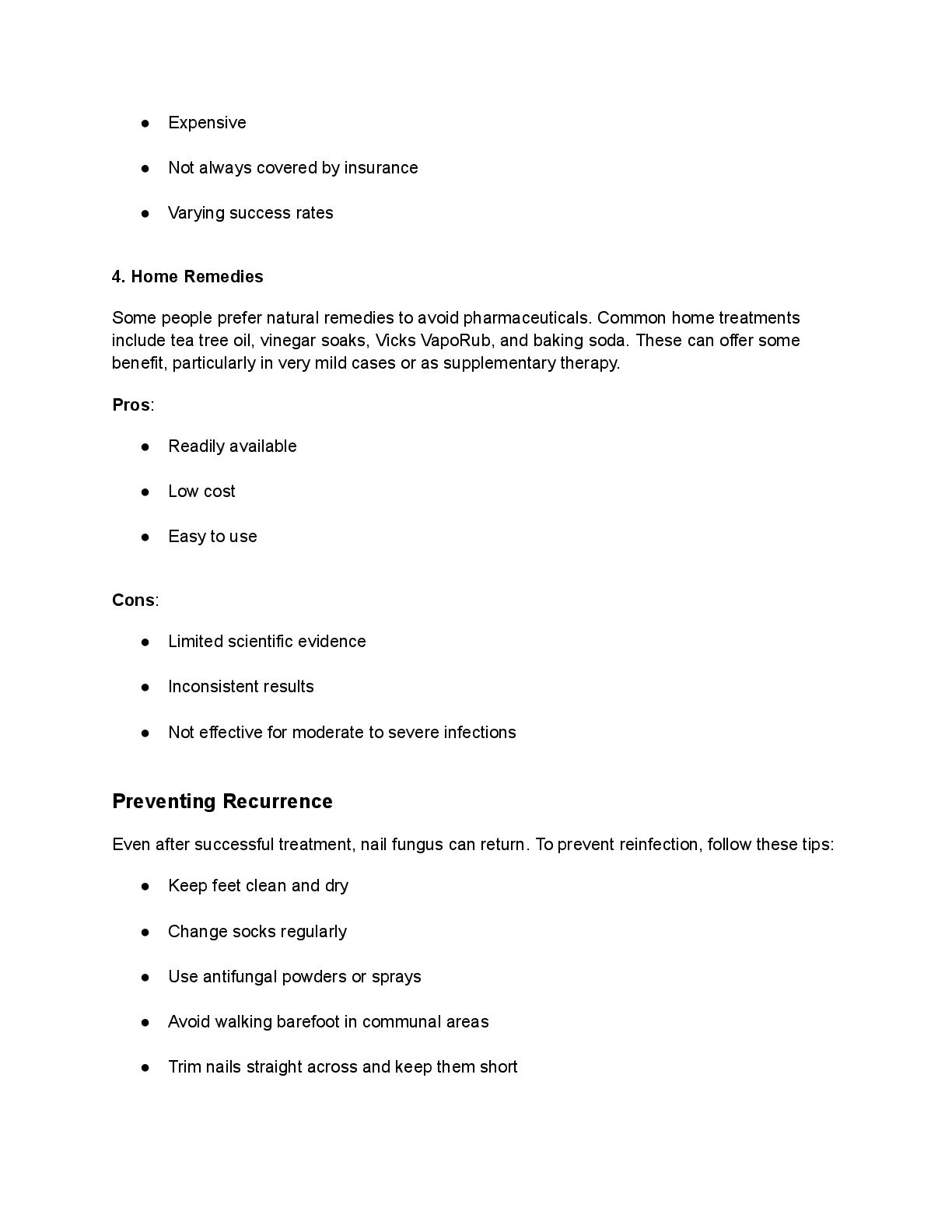
  3. •​ Expensive​ •​ Not always covered by insurance​ •​ Varying

    success rates​ 4. Home Remedies Some people prefer natural remedies to avoid pharmaceuticals. Common home treatments include tea tree oil, vinegar soaks, Vicks VapoRub, and baking soda. These can offer some benefit, particularly in very mild cases or as supplementary therapy. Pros: •​ Readily available​ •​ Low cost​ •​ Easy to use​ Cons: •​ Limited scientific evidence​ •​ Inconsistent results​ •​ Not effective for moderate to severe infections​ Preventing Recurrence Even after successful treatment, nail fungus can return. To prevent reinfection, follow these tips: •​ Keep feet clean and dry​ •​ Change socks regularly​ •​ Use antifungal powders or sprays​ •​ Avoid walking barefoot in communal areas​ •​ Trim nails straight across and keep them short​
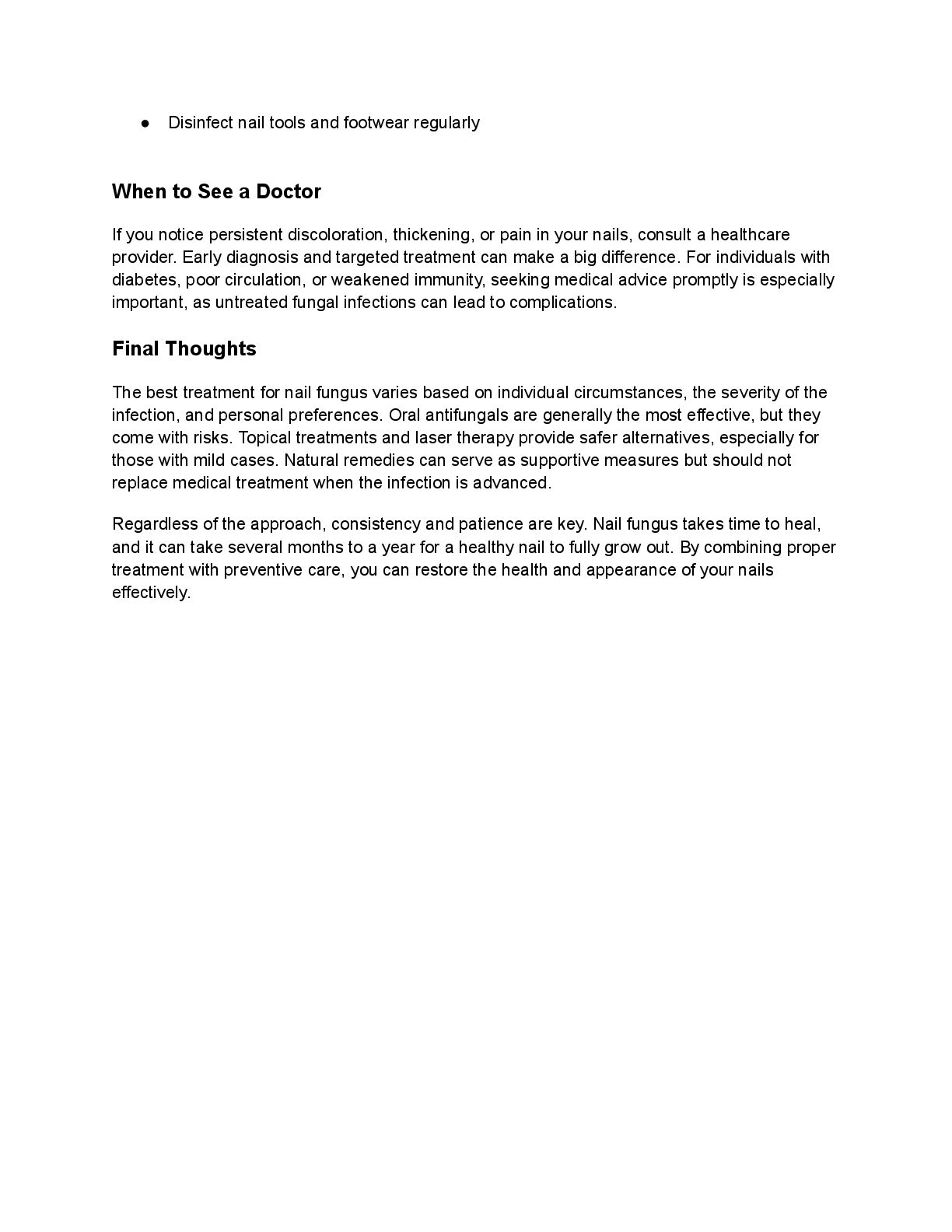
  4. •​ Disinfect nail tools and footwear regularly​ When to See

    a Doctor If you notice persistent discoloration, thickening, or pain in your nails, consult a healthcare provider. Early diagnosis and targeted treatment can make a big difference. For individuals with diabetes, poor circulation, or weakened immunity, seeking medical advice promptly is especially important, as untreated fungal infections can lead to complications. Final Thoughts The best treatment for nail fungus varies based on individual circumstances, the severity of the infection, and personal preferences. Oral antifungals are generally the most effective, but they come with risks. Topical treatments and laser therapy provide safer alternatives, especially for those with mild cases. Natural remedies can serve as supportive measures but should not replace medical treatment when the infection is advanced. Regardless of the approach, consistency and patience are key. Nail fungus takes time to heal, and it can take several months to a year for a healthy nail to fully grow out. By combining proper treatment with preventive care, you can restore the health and appearance of your nails effectively.