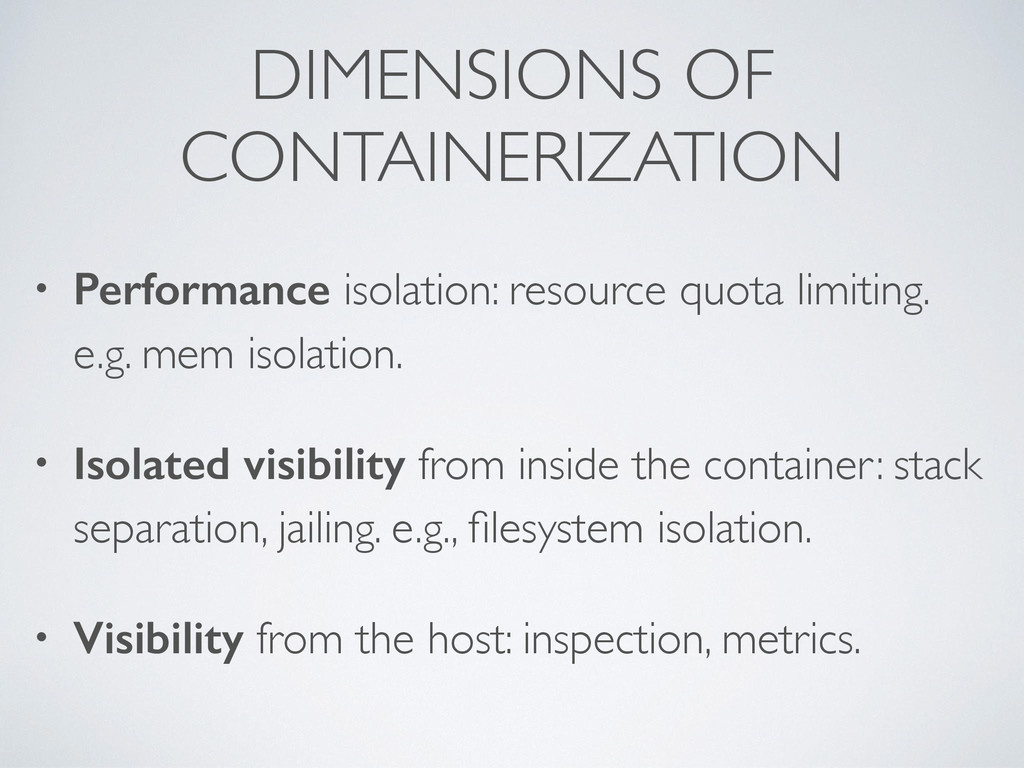
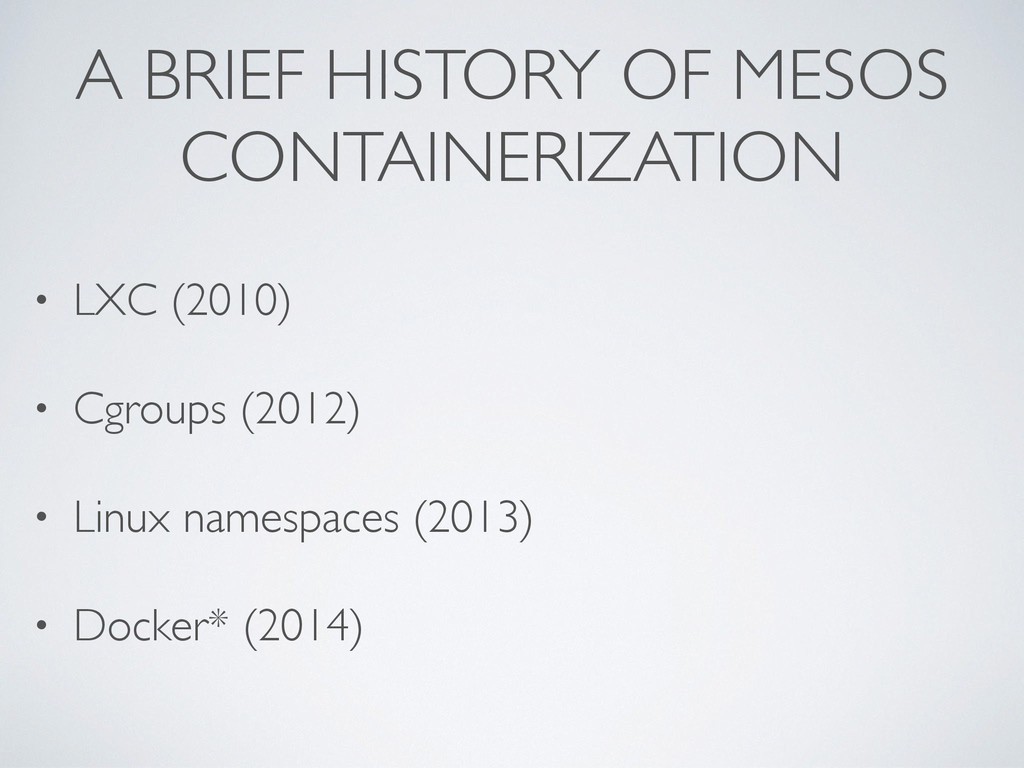
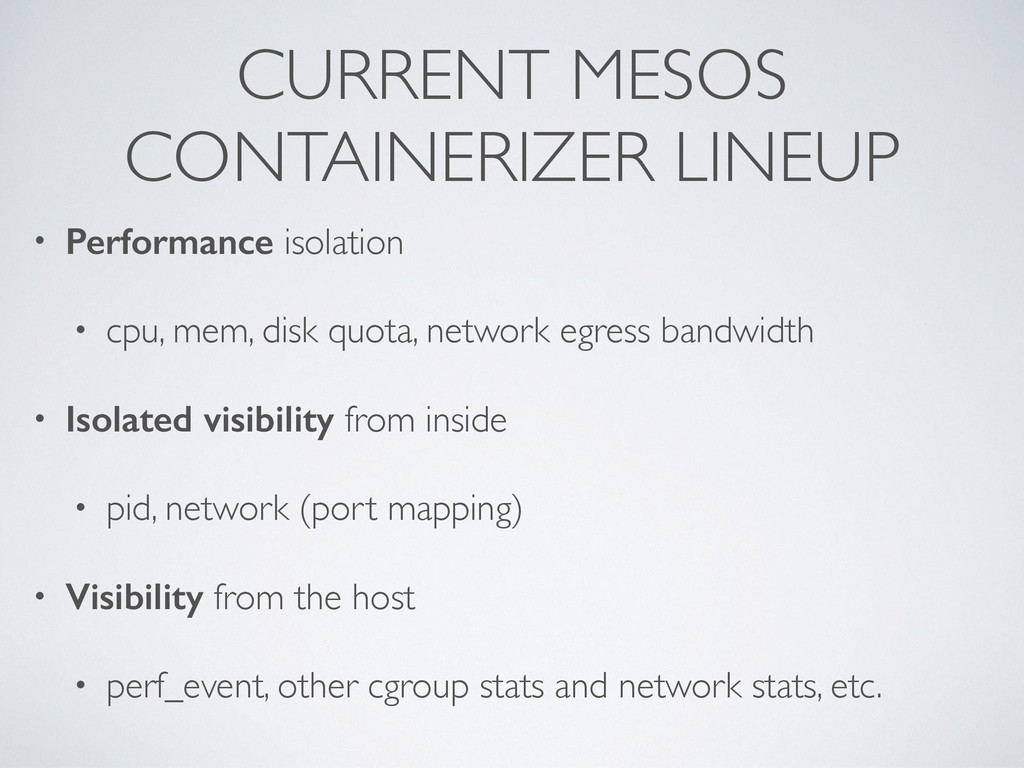
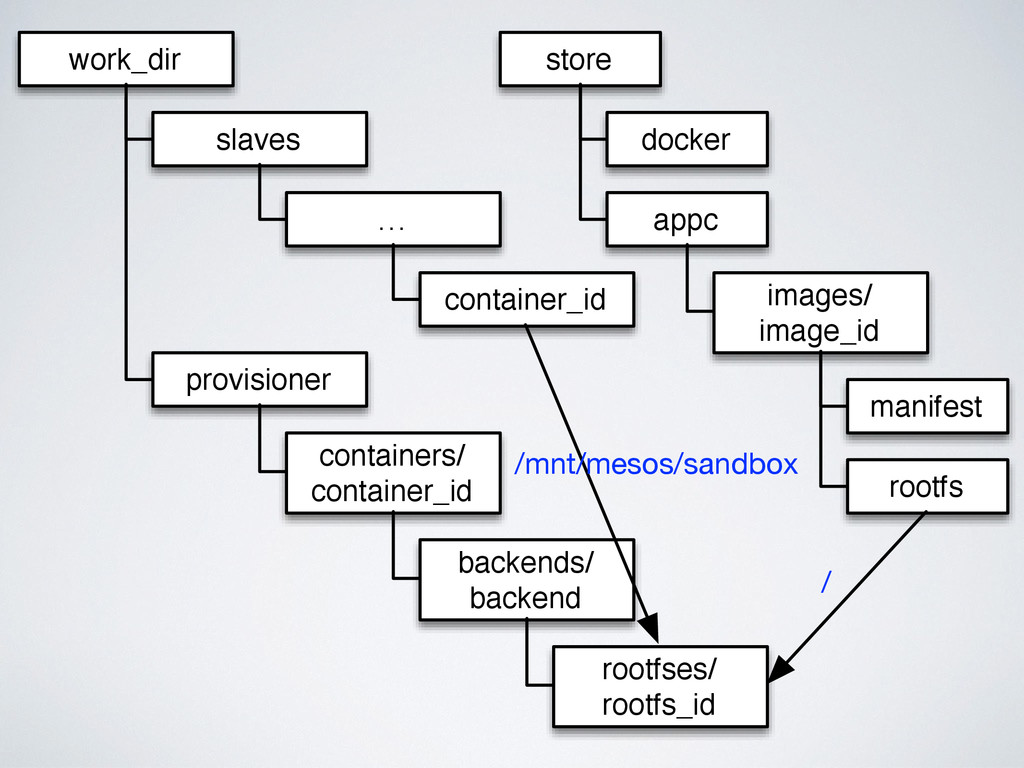
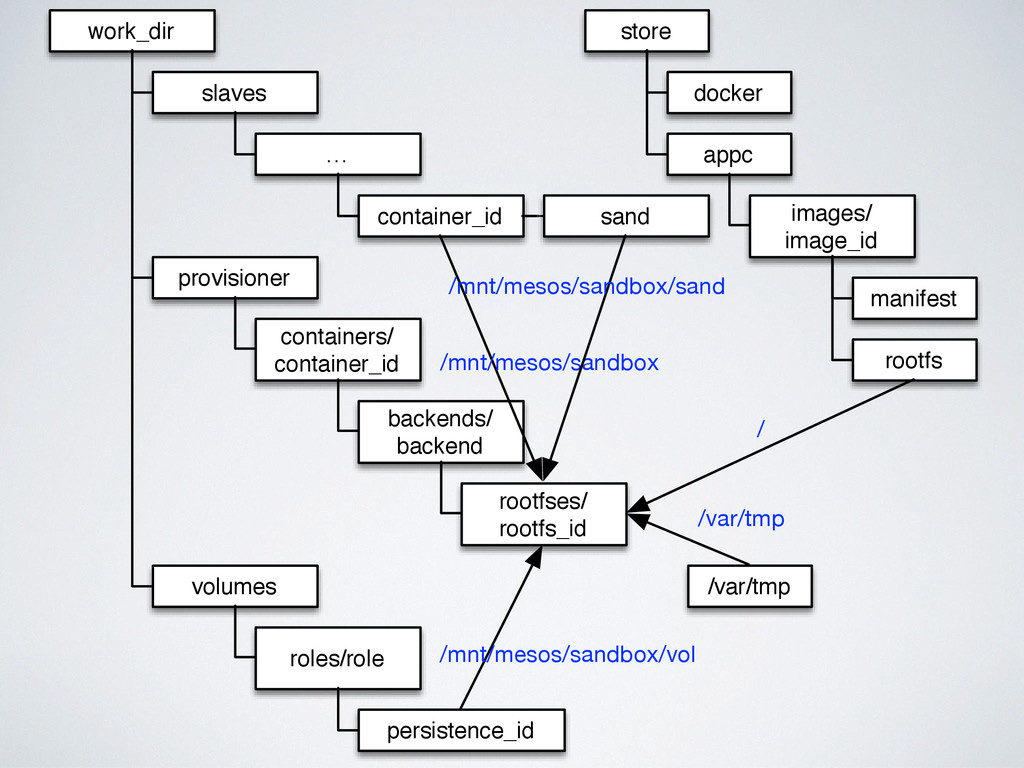
mem isolation. • Isolated visibility from inside the container: stack separation, jailing. e.g., filesystem isolation. • Visibility from the host: inspection, metrics.
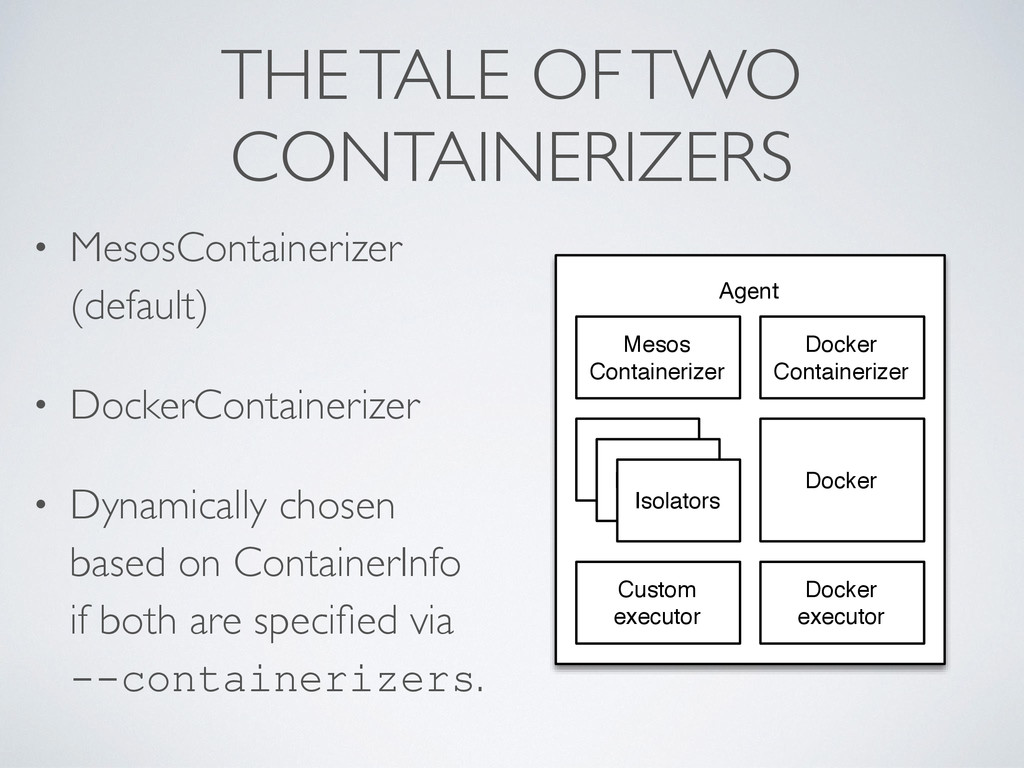
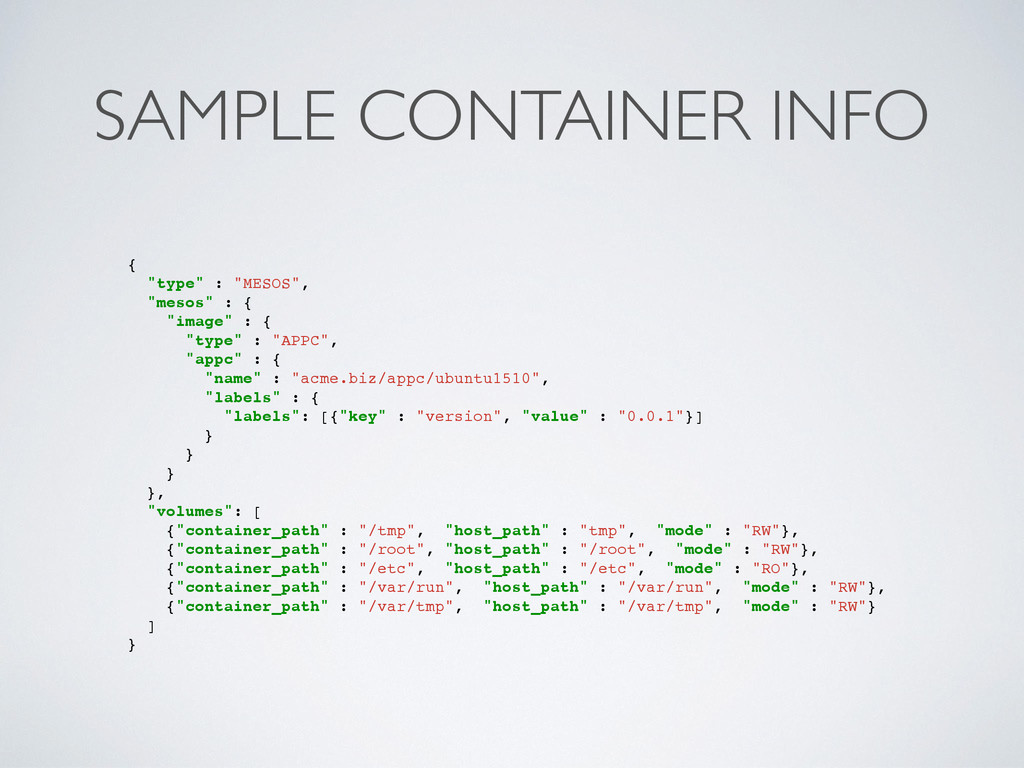
• Dynamically chosen based on ContainerInfo if both are specified via --containerizers. Mesos Containerizer Docker Containerizer Agent Docker Isolators Isolators Isolators Custom executor Docker executor
disk quota, network egress bandwidth • Isolated visibility from inside • pid, network (port mapping) • Visibility from the host • perf_event, other cgroup stats and network stats, etc.
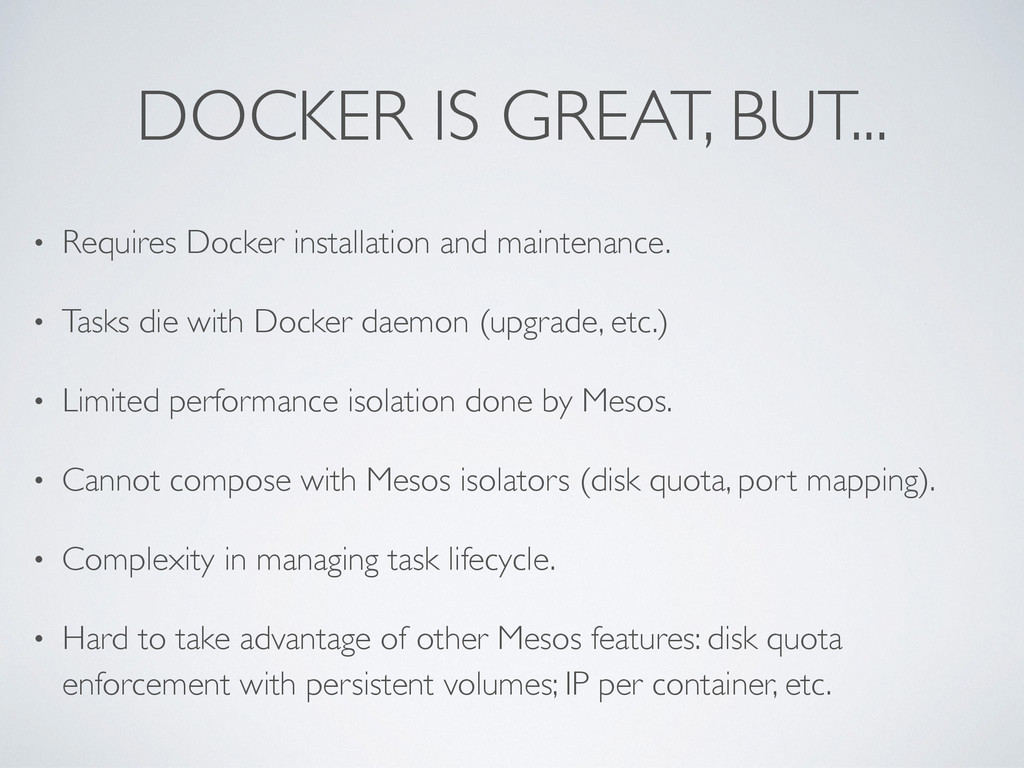
• Tasks die with Docker daemon (upgrade, etc.) • Limited performance isolation done by Mesos. • Cannot compose with Mesos isolators (disk quota, port mapping). • Complexity in managing task lifecycle. • Hard to take advantage of other Mesos features: disk quota enforcement with persistent volumes; IP per container, etc.
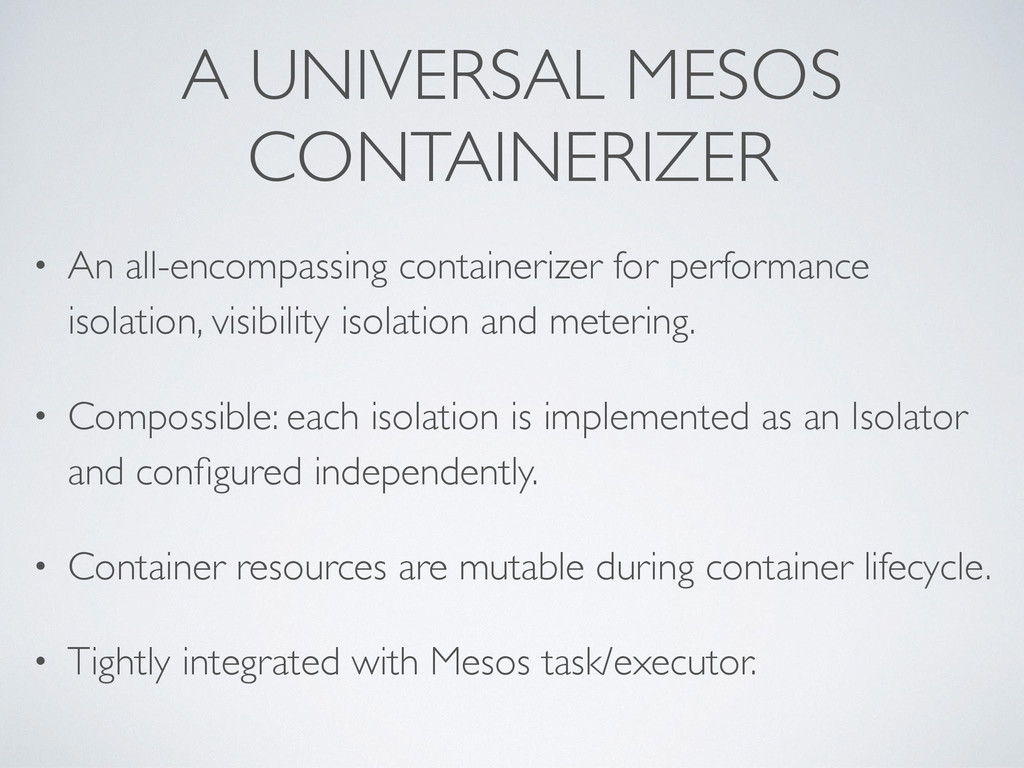
isolation, visibility isolation and metering. • Compossible: each isolation is implemented as an Isolator and configured independently. • Container resources are mutable during container lifecycle. • Tightly integrated with Mesos task/executor.
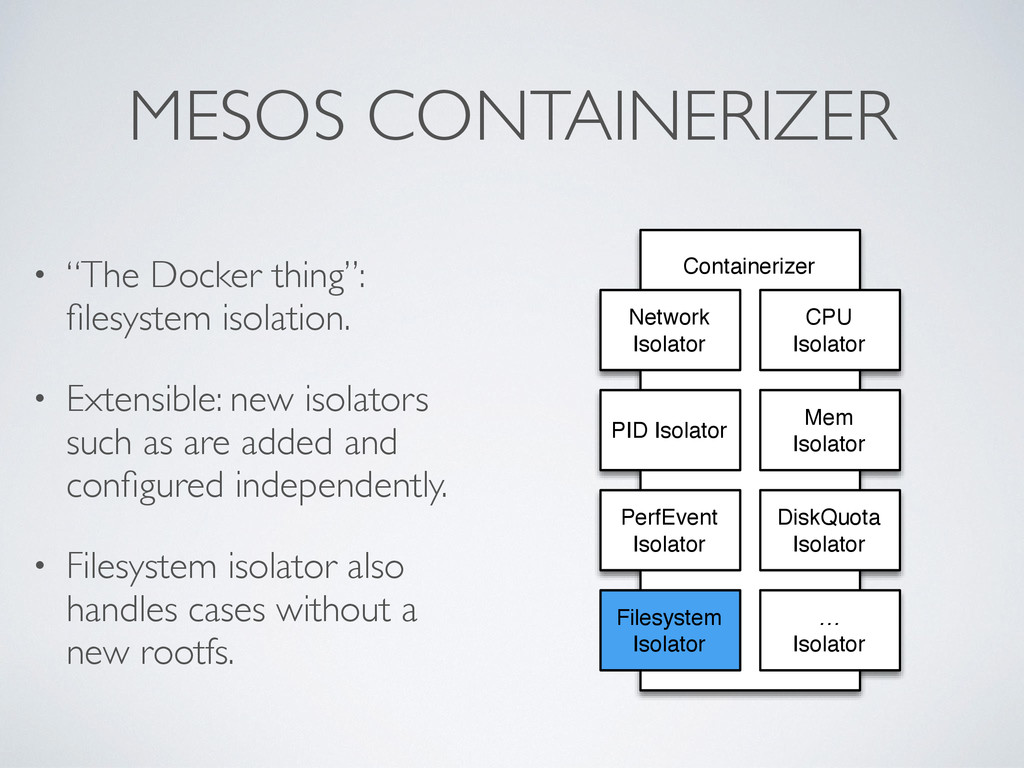
new isolators such as are added and configured independently. • Filesystem isolator also handles cases without a new rootfs. CPU Isolator Mem Isolator DiskQuota Isolator Network Isolator PID Isolator PerfEvent Isolator Containerizer Filesystem Isolator … Isolator
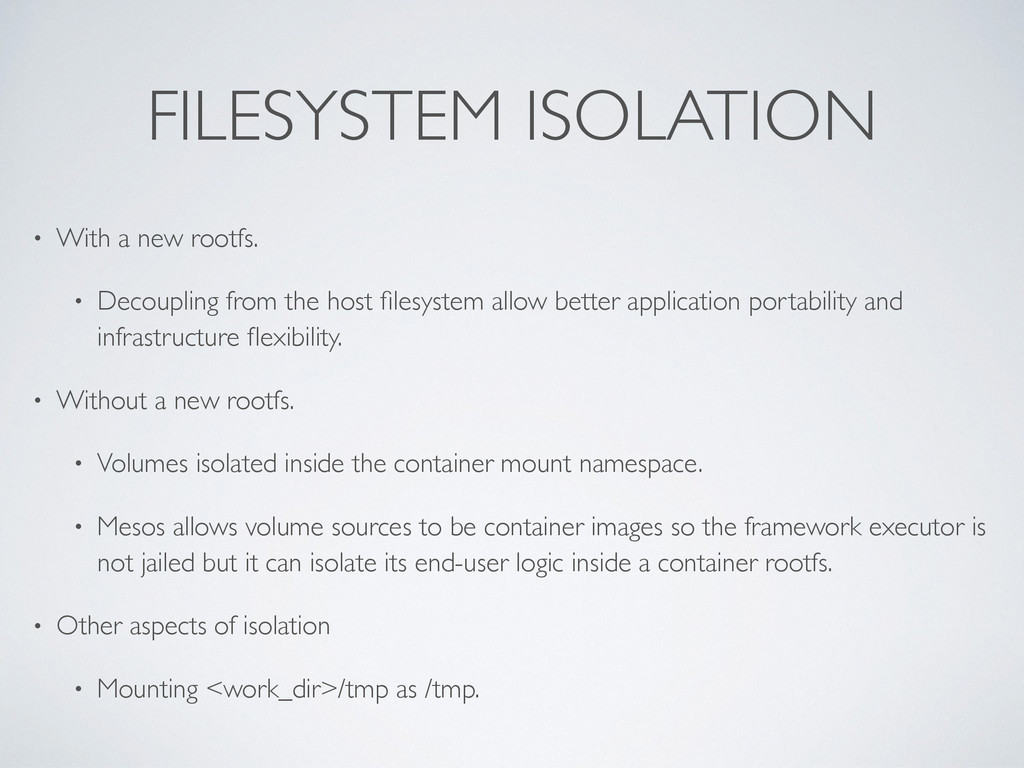
the host filesystem allow better application portability and infrastructure flexibility. • Without a new rootfs. • Volumes isolated inside the container mount namespace. • Mesos allows volume sources to be container images so the framework executor is not jailed but it can isolate its end-user logic inside a container rootfs. • Other aspects of isolation • Mounting <work_dir>/tmp as /tmp.
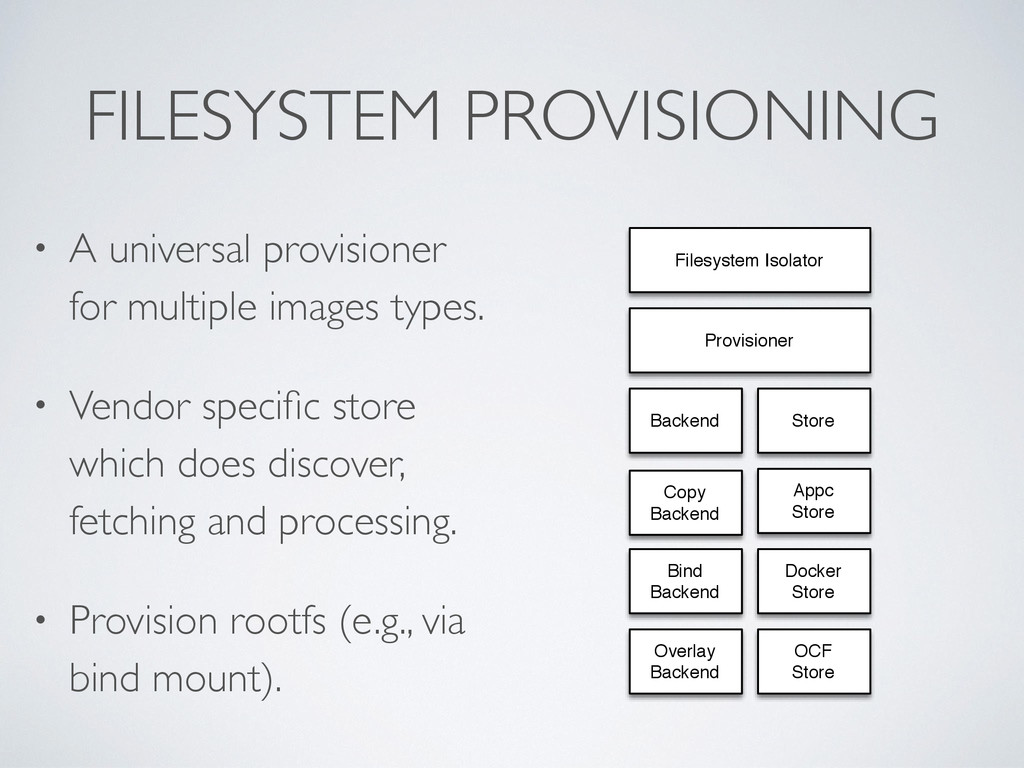
• Vendor specific store which does discover, fetching and processing. • Provision rootfs (e.g., via bind mount). Copy Backend Backend Bind Backend Overlay Backend Store Appc Store Docker Store OCF Store Provisioner Filesystem Isolator
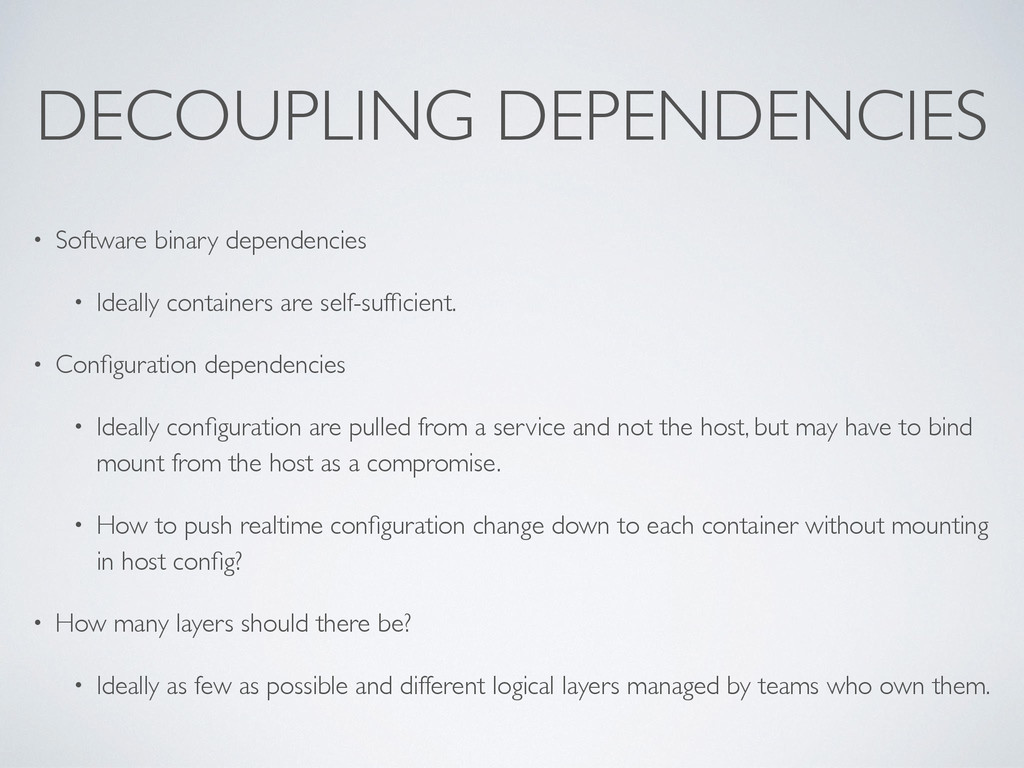
accumulated over time. • Start with a default container image identical to the host environment: fat images. • Decouple tasks from the host environment: shrink the images; make tasks self-sufficient. • Update the host environment independently from the containers. • Separate environment into (a limited number of) image layers.
self-sufficient. • Configuration dependencies • Ideally configuration are pulled from a service and not the host, but may have to bind mount from the host as a compromise. • How to push realtime configuration change down to each container without mounting in host config? • How many layers should there be? • Ideally as few as possible and different logical layers managed by teams who own them.
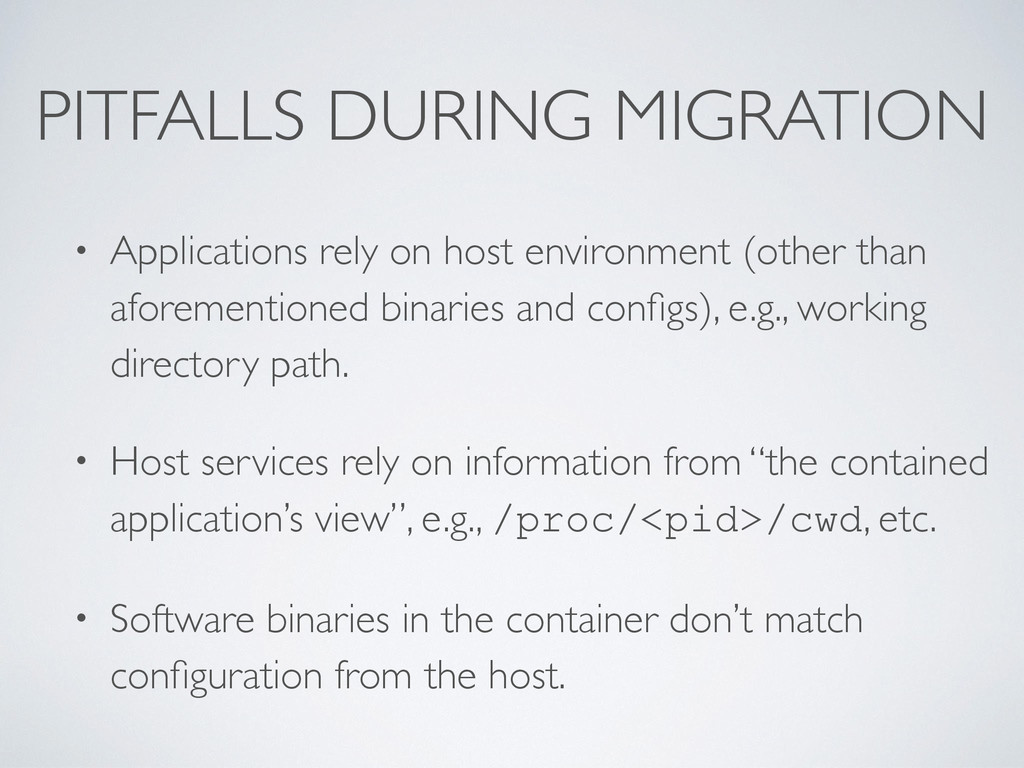
than aforementioned binaries and configs), e.g., working directory path. • Host services rely on information from “the contained application’s view”, e.g., /proc/<pid>/cwd, etc. • Software binaries in the container don’t match configuration from the host.
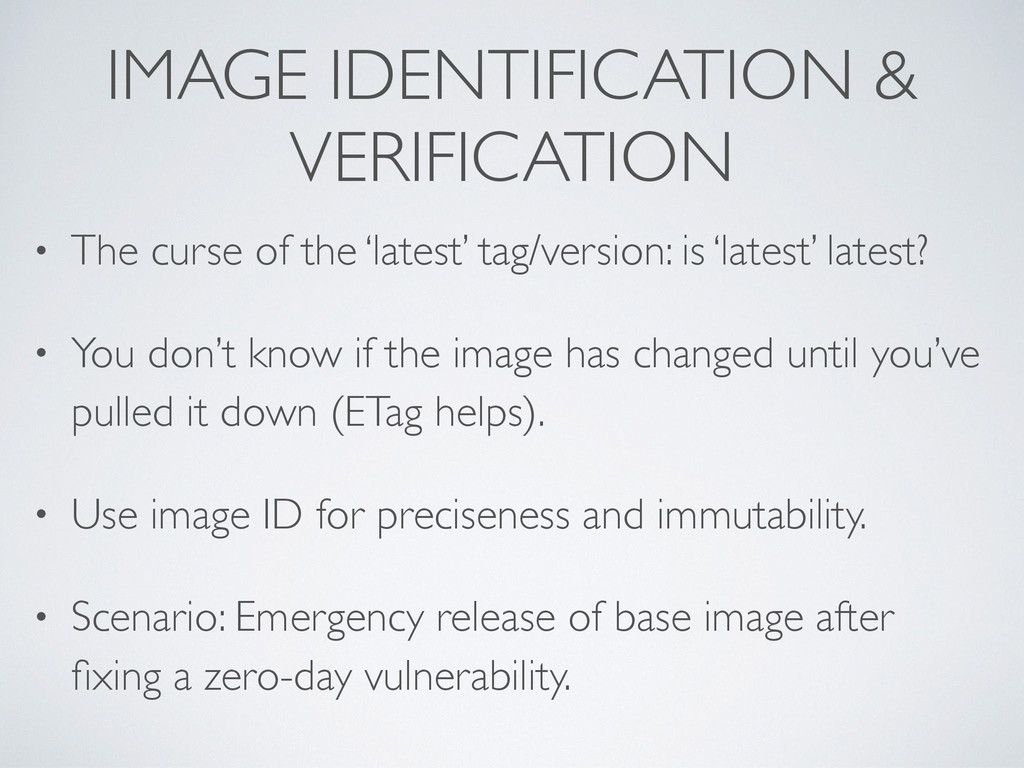
tag/version: is ‘latest’ latest? • You don’t know if the image has changed until you’ve pulled it down (ETag helps). • Use image ID for preciseness and immutability. • Scenario: Emergency release of base image after fixing a zero-day vulnerability.
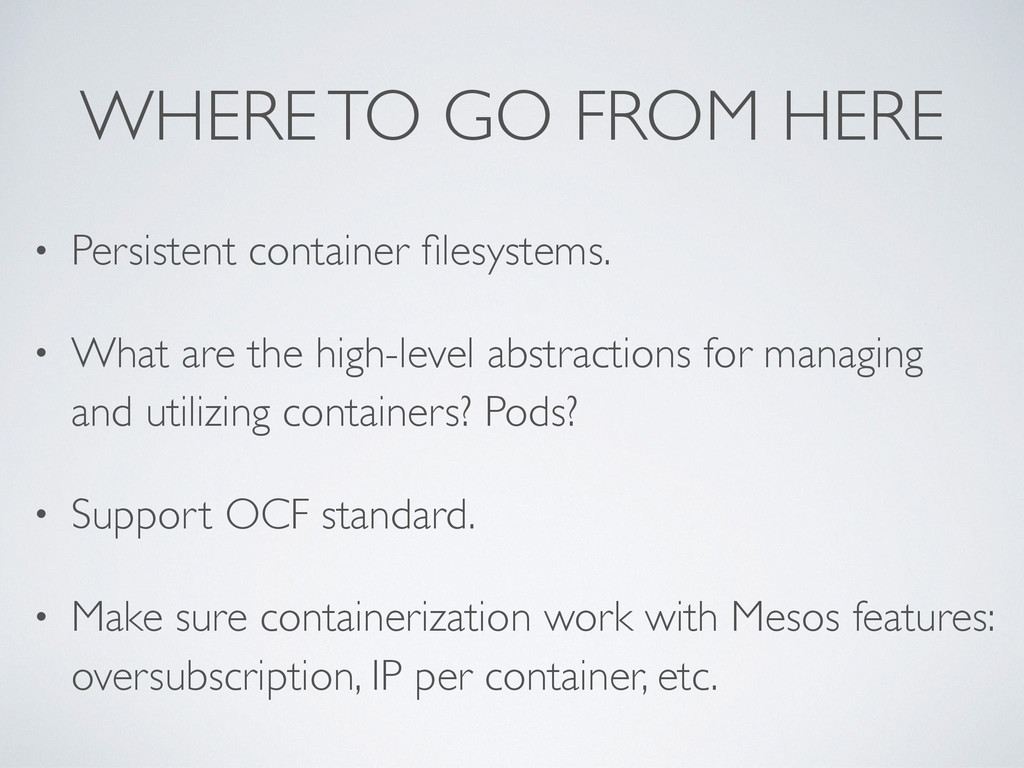
What are the high-level abstractions for managing and utilizing containers? Pods? • Support OCF standard. • Make sure containerization work with Mesos features: oversubscription, IP per container, etc.
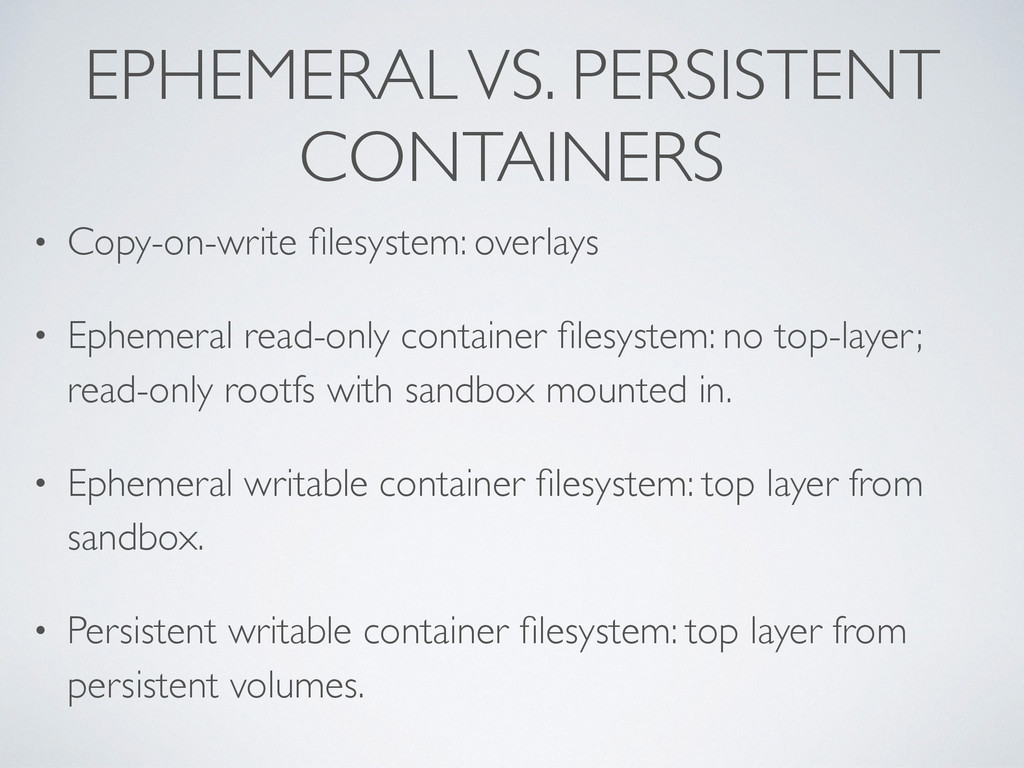
read-only container filesystem: no top-layer; read-only rootfs with sandbox mounted in. • Ephemeral writable container filesystem: top layer from sandbox. • Persistent writable container filesystem: top layer from persistent volumes.
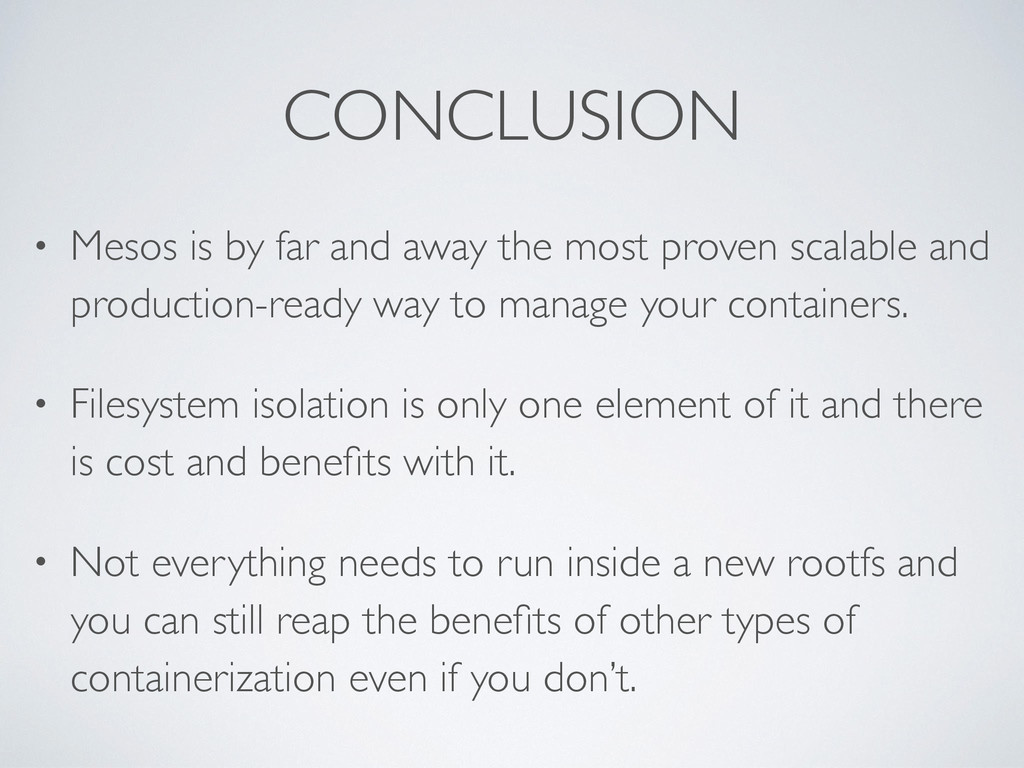
proven scalable and production-ready way to manage your containers. • Filesystem isolation is only one element of it and there is cost and benefits with it. • Not everything needs to run inside a new rootfs and you can still reap the benefits of other types of containerization even if you don’t.
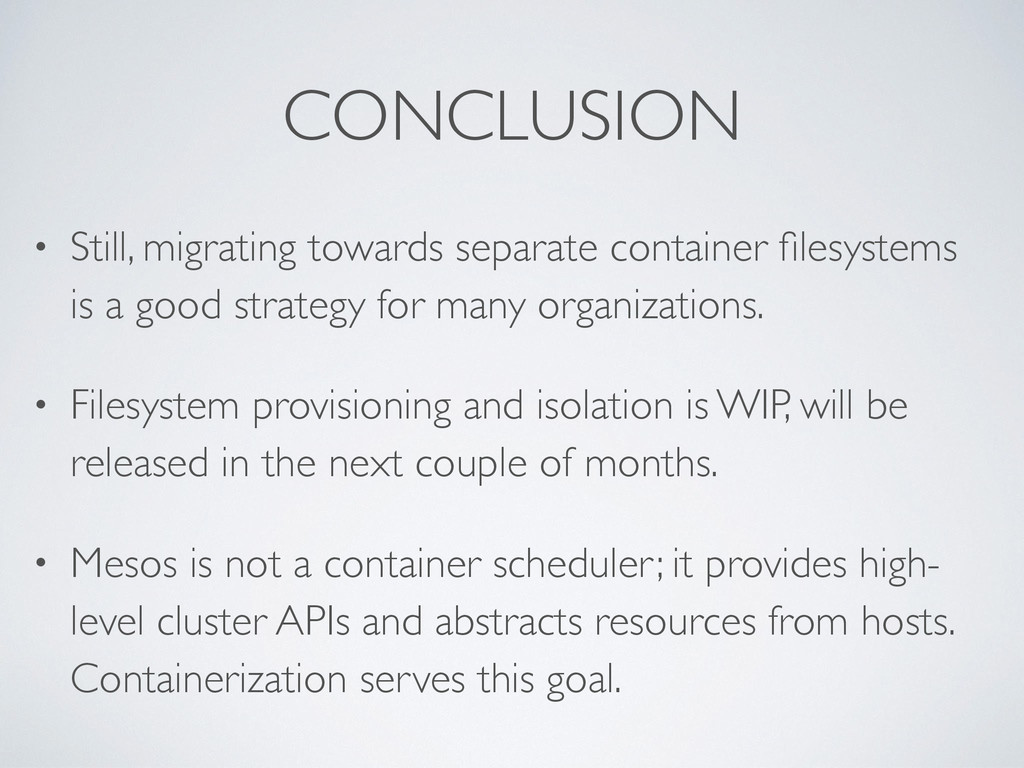
good strategy for many organizations. • Filesystem provisioning and isolation is WIP, will be released in the next couple of months. • Mesos is not a container scheduler; it provides high- level cluster APIs and abstracts resources from hosts. Containerization serves this goal.


 xujyan
 satomasahiro2005
 iktakahiro
 maimyyym
 ivry_presentationmaterials
 makocchi
 tetsuya28
 yamanoku
 shogo4131
 bitkey
 shuta13
 moznion
 masakiokuda
 ks91
 reverentgeek
 kevinliebholz
 jdejongh
 nwiizo
 thoeni
 jct
 chriscoyier
 stephaniewalter
 michaelherold
 samanthasiow
 elsirapls