Upgrade to Pro — share decks privately, control downloads, hide ads and more …

Profile of Surgical Care and Training in India ...

Sponsored · Your Podcast. Everywhere. Effortlessly. Share. Educate. Inspire. Entertain. You do you. We'll handle the rest. →
Avatar for Ahmad Ozair Ahmad Ozair
July 04, 2019
300

Profile of Surgical Care and Training in India and in KGMU

A comprehensive overview of surgical training in India and of the surgical care & education imparted at King George's Medical University (KGMU), Lucknow, India. KGMU has the largest residential hospital of South Asia with over 4500 beds and an annual outpatient attendance of over 1.5 million individuals.

Avatar for Ahmad Ozair

Ahmad Ozair

July 04, 2019

Transcript

  1. Profile of Surgical Care and Training in India and in

    KGMU King George’s Medical University (KGMU), Lucknow, India AHMAD OZAIR MEDICAL STUDENT, KGMU [email protected] 1
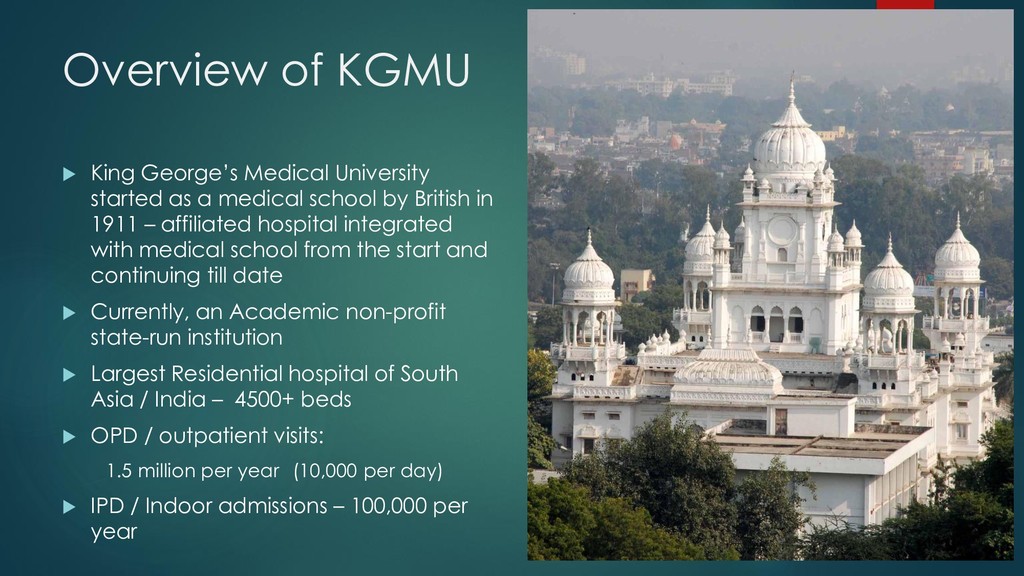
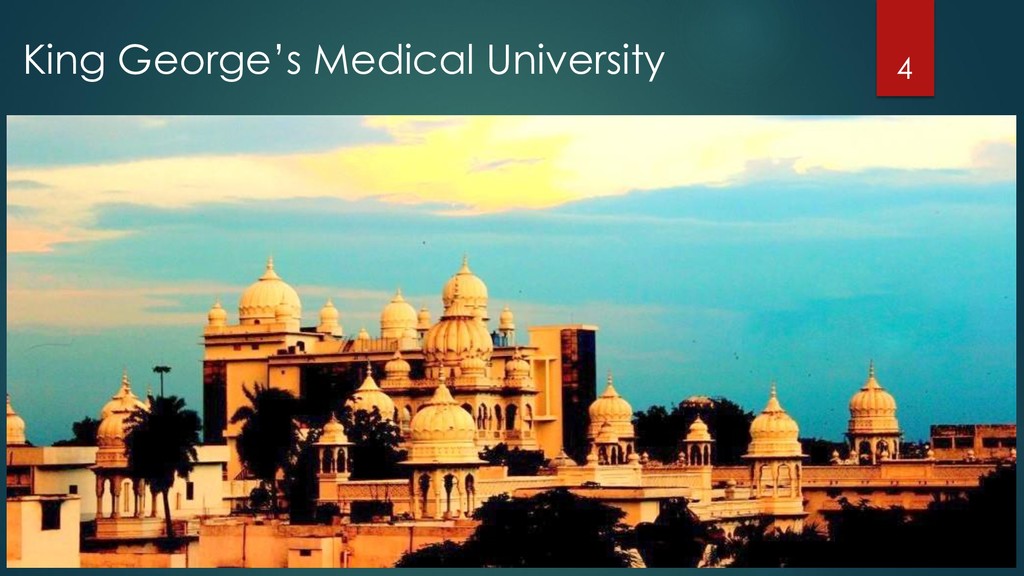
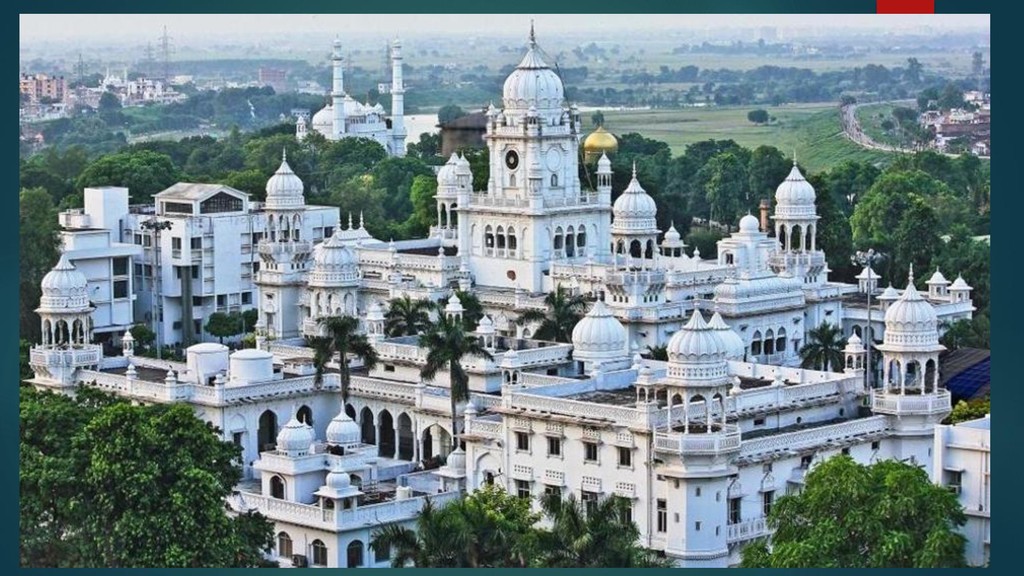
  2. Overview of KGMU  King George’s Medical University started as

    a medical school by British in 1911 – affiliated hospital integrated with medical school from the start and continuing till date  Currently, an Academic non-profit state-run institution  Largest Residential hospital of South Asia / India – 4500+ beds  OPD / outpatient visits: 1.5 million per year (10,000 per day)  IPD / Indoor admissions – 100,000 per year
  3. Overview of KGMU (contd.)  550+ MD faculty members (all

    disciplines)  700+ resident doctors  1250 medical students (class of 250 per year) in its own faculty of medical sciences  Also has 13 affiliated medical and dental schools to it, totalling over 5000 medical students  Tertiary/Quaternary referral centre and the nodal health centre of the province.  5th nationally-ranked medical training institution by the government (NIRF, 2018)  5th highest research output from a medical training institution in India  Ray S, Shah I, Nundy S. The research output from Indian medical institutions between 2005 and 2014. Curr Med Res Pract. 2016;6:49–58. 5
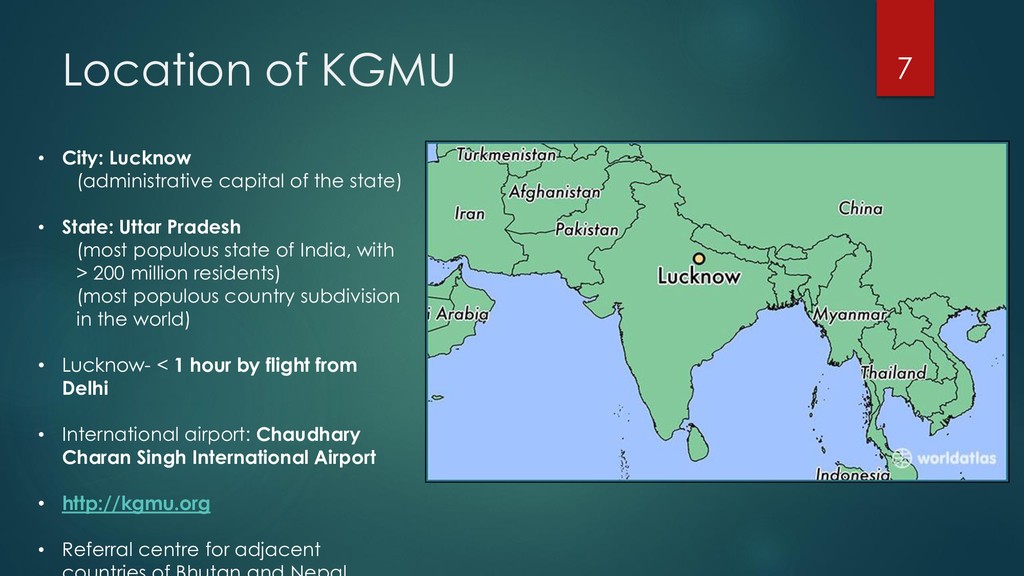
  4. Location of KGMU • City: Lucknow (administrative capital of the

    state) • State: Uttar Pradesh (most populous state of India, with > 200 million residents) (most populous country subdivision in the world) • Lucknow- < 1 hour by flight from Delhi • International airport: Chaudhary Charan Singh International Airport • http://kgmu.org • Referral centre for adjacent 7
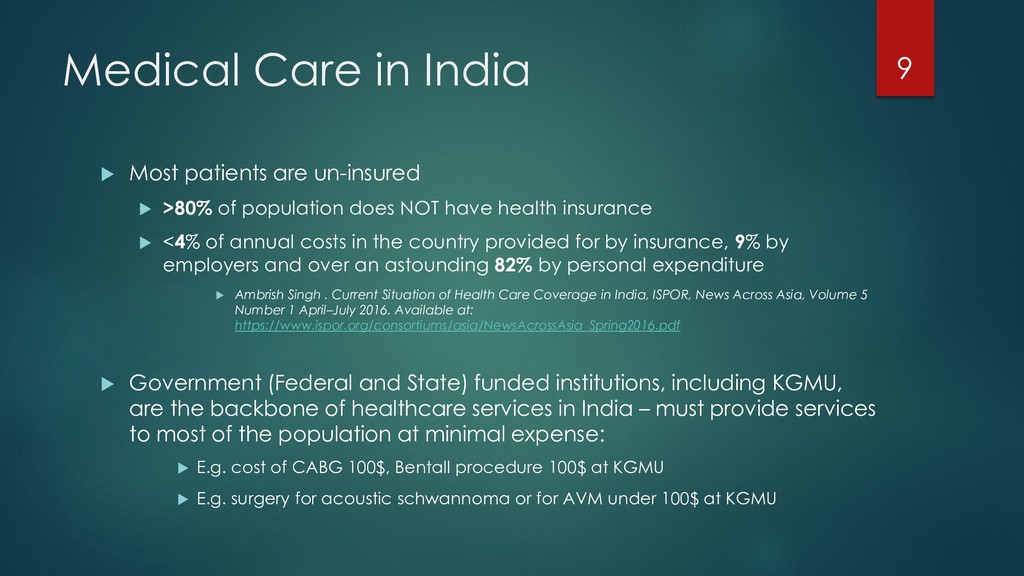
  5. Medical Care in India  Most patients are un-insured 

    >80% of population does NOT have health insurance  <4% of annual costs in the country provided for by insurance, 9% by employers and over an astounding 82% by personal expenditure  Ambrish Singh . Current Situation of Health Care Coverage in India, ISPOR, News Across Asia, Volume 5 Number 1 April–July 2016. Available at: https://www.ispor.org/consortiums/asia/NewsAcrossAsia_Spring2016.pdf  Government (Federal and State) funded institutions, including KGMU, are the backbone of healthcare services in India – must provide services to most of the population at minimal expense:  E.g. cost of CABG 100$, Bentall procedure 100$ at KGMU  E.g. surgery for acoustic schwannoma or for AVM under 100$ at KGMU 9
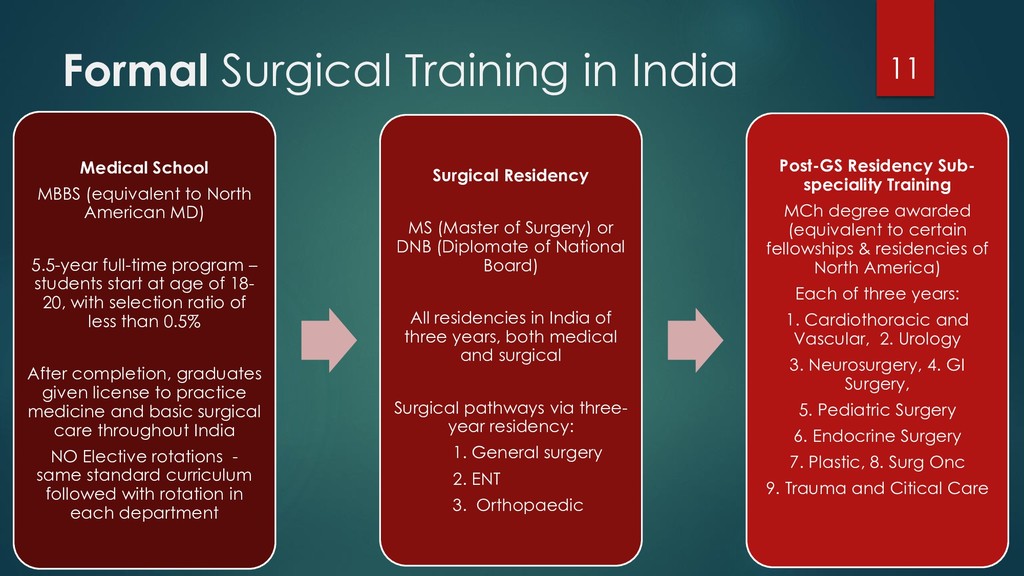
  6. Formal Surgical Training in India Medical School MBBS (equivalent to

    North American MD) 5.5-year full-time program – students start at age of 18- 20, with selection ratio of less than 0.5% After completion, graduates given license to practice medicine and basic surgical care throughout India NO Elective rotations - same standard curriculum followed with rotation in each department Surgical Residency MS (Master of Surgery) or DNB (Diplomate of National Board) All residencies in India of three years, both medical and surgical Surgical pathways via three- year residency: 1. General surgery 2. ENT 3. Orthopaedic Post-GS Residency Sub- speciality Training MCh degree awarded (equivalent to certain fellowships & residencies of North America) Each of three years: 1. Cardiothoracic and Vascular, 2. Urology 3. Neurosurgery, 4. GI Surgery, 5. Pediatric Surgery 6. Endocrine Surgery 7. Plastic, 8. Surg Onc 9. Trauma and Citical Care 11
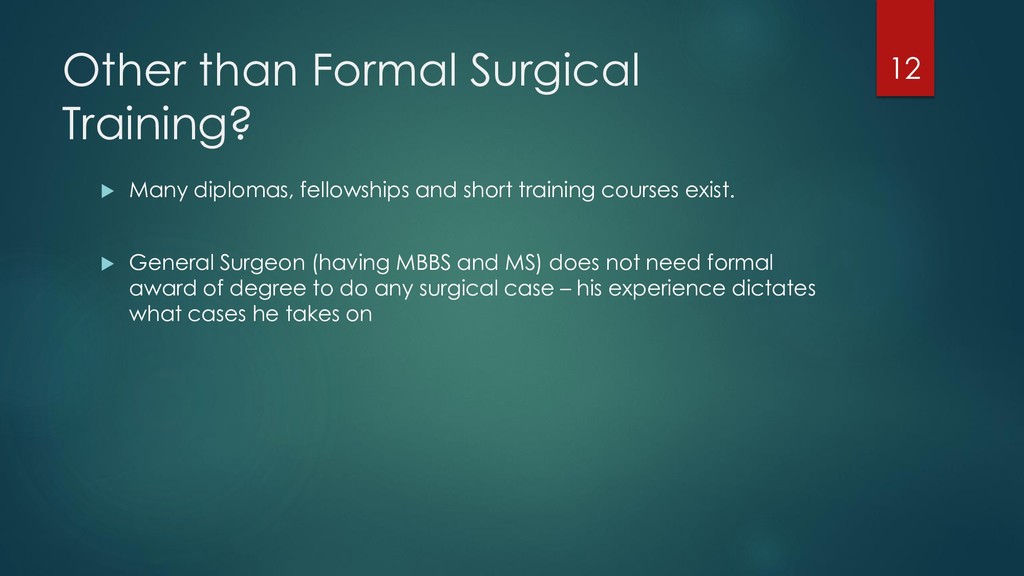
  7. Other than Formal Surgical Training?  Many diplomas, fellowships and

    short training courses exist.  General Surgeon (having MBBS and MS) does not need formal award of degree to do any surgical case – his experience dictates what cases he takes on 12
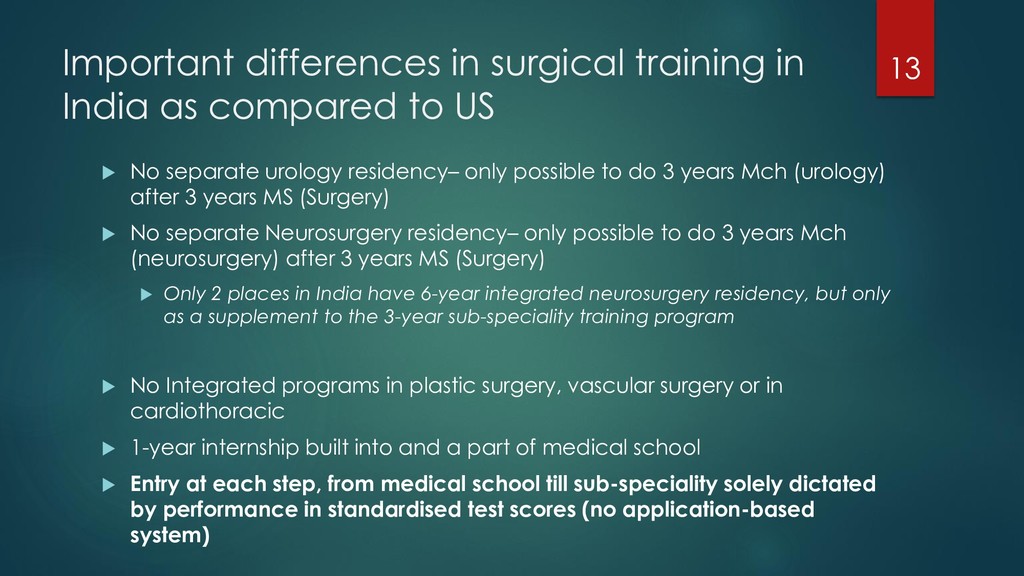
  8. Important differences in surgical training in India as compared to

    US  No separate urology residency– only possible to do 3 years Mch (urology) after 3 years MS (Surgery)  No separate Neurosurgery residency– only possible to do 3 years Mch (neurosurgery) after 3 years MS (Surgery)  Only 2 places in India have 6-year integrated neurosurgery residency, but only as a supplement to the 3-year sub-speciality training program  No Integrated programs in plastic surgery, vascular surgery or in cardiothoracic  1-year internship built into and a part of medical school  Entry at each step, from medical school till sub-speciality solely dictated by performance in standardised test scores (no application-based system) 13
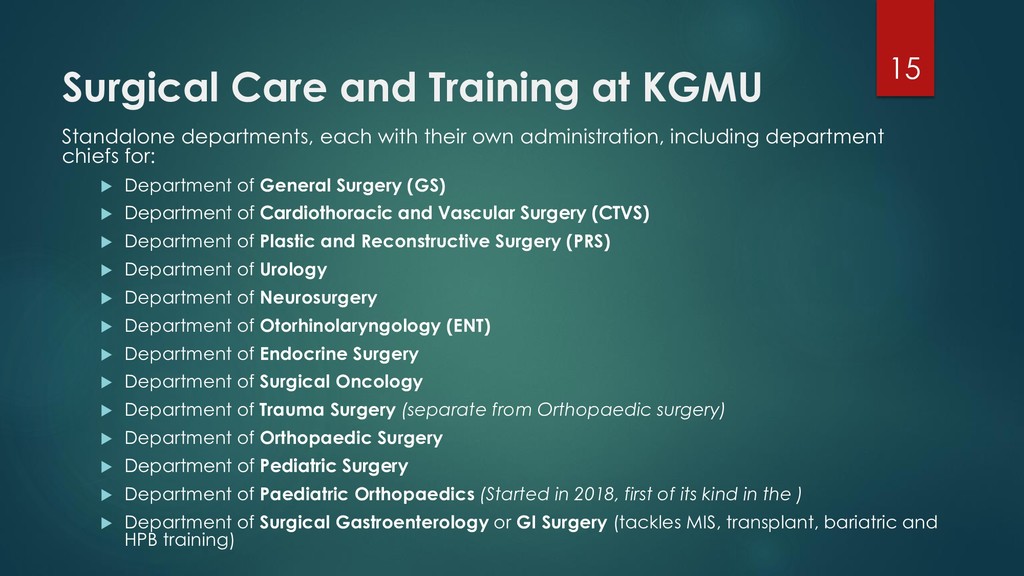
  9. Surgical Care and Training at KGMU Standalone departments, each with

    their own administration, including department chiefs for:  Department of General Surgery (GS)  Department of Cardiothoracic and Vascular Surgery (CTVS)  Department of Plastic and Reconstructive Surgery (PRS)  Department of Urology  Department of Neurosurgery  Department of Otorhinolaryngology (ENT)  Department of Endocrine Surgery  Department of Surgical Oncology  Department of Trauma Surgery (separate from Orthopaedic surgery)  Department of Orthopaedic Surgery  Department of Pediatric Surgery  Department of Paediatric Orthopaedics (Started in 2018, first of its kind in the )  Department of Surgical Gastroenterology or GI Surgery (tackles MIS, transplant, bariatric and HPB training) 15
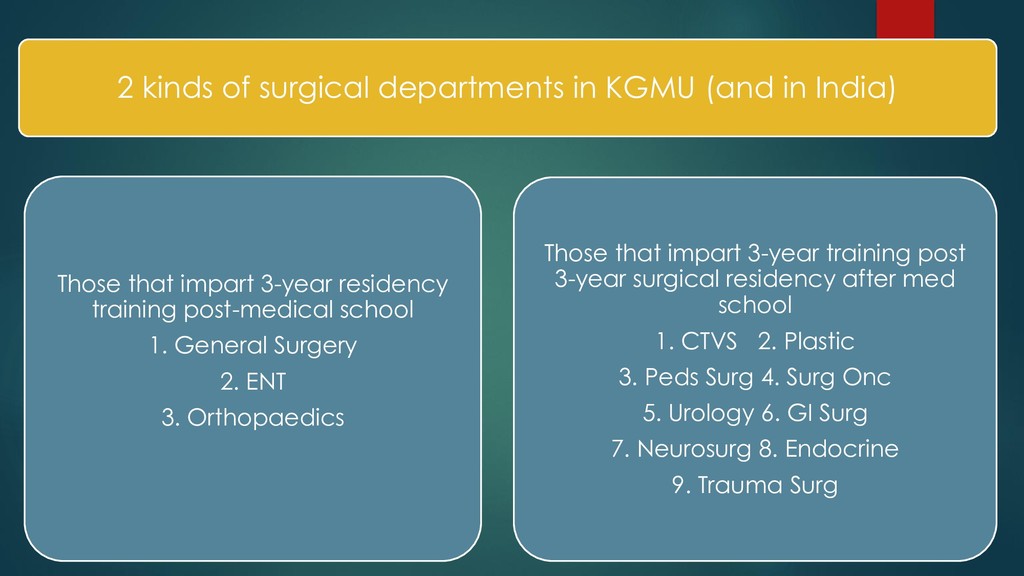
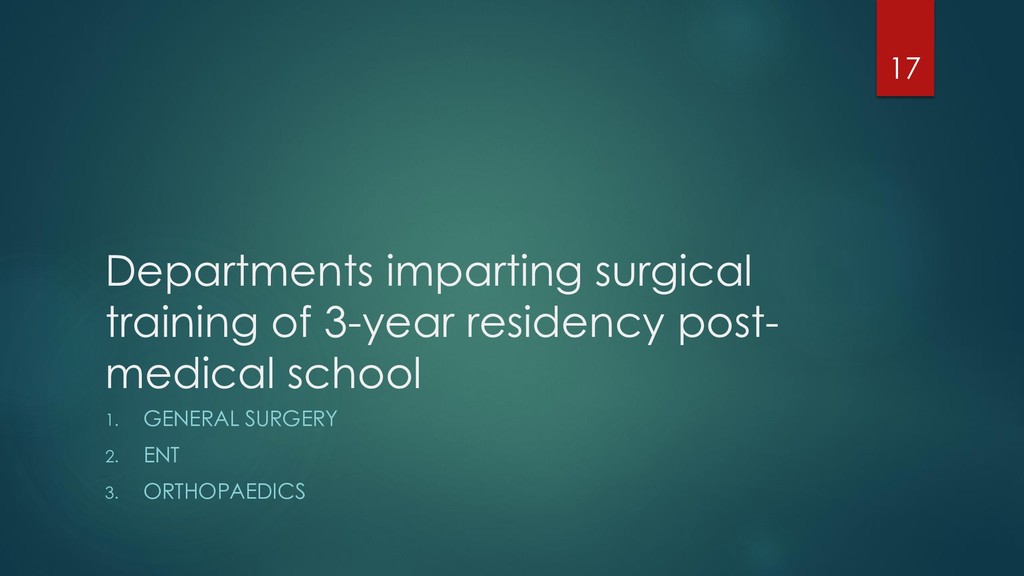
  10. 2 kinds of surgical departments in KGMU (and in India)

    Those that impart 3-year residency training post-medical school 1. General Surgery 2. ENT 3. Orthopaedics Those that impart 3-year training post 3-year surgical residency after med school 1. CTVS 2. Plastic 3. Peds Surg 4. Surg Onc 5. Urology 6. GI Surg 7. Neurosurg 8. Endocrine 9. Trauma Surg
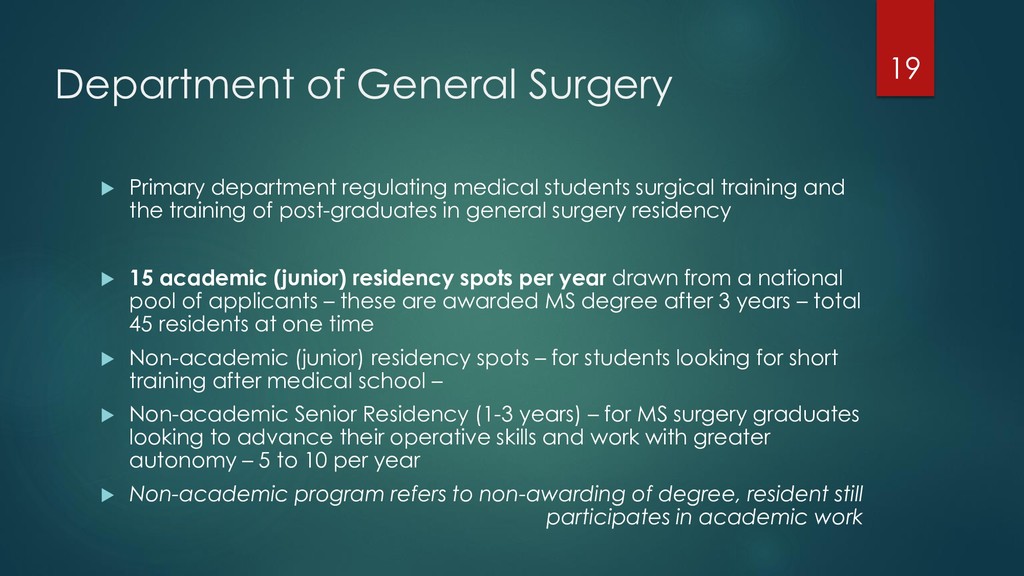
  11. Department of General Surgery  Primary department regulating medical students

    surgical training and the training of post-graduates in general surgery residency  15 academic (junior) residency spots per year drawn from a national pool of applicants – these are awarded MS degree after 3 years – total 45 residents at one time  Non-academic (junior) residency spots – for students looking for short training after medical school –  Non-academic Senior Residency (1-3 years) – for MS surgery graduates looking to advance their operative skills and work with greater autonomy – 5 to 10 per year  Non-academic program refers to non-awarding of degree, resident still participates in academic work 19
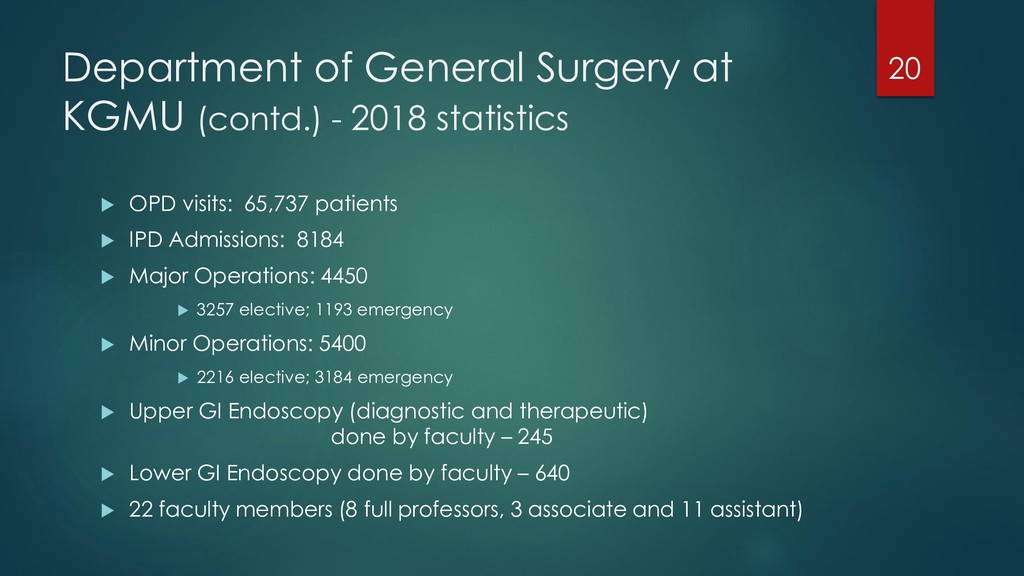
  12. Department of General Surgery at KGMU (contd.) - 2018 statistics

     OPD visits: 65,737 patients  IPD Admissions: 8184  Major Operations: 4450  3257 elective; 1193 emergency  Minor Operations: 5400  2216 elective; 3184 emergency  Upper GI Endoscopy (diagnostic and therapeutic) done by faculty – 245  Lower GI Endoscopy done by faculty – 640  22 faculty members (8 full professors, 3 associate and 11 assistant) 20
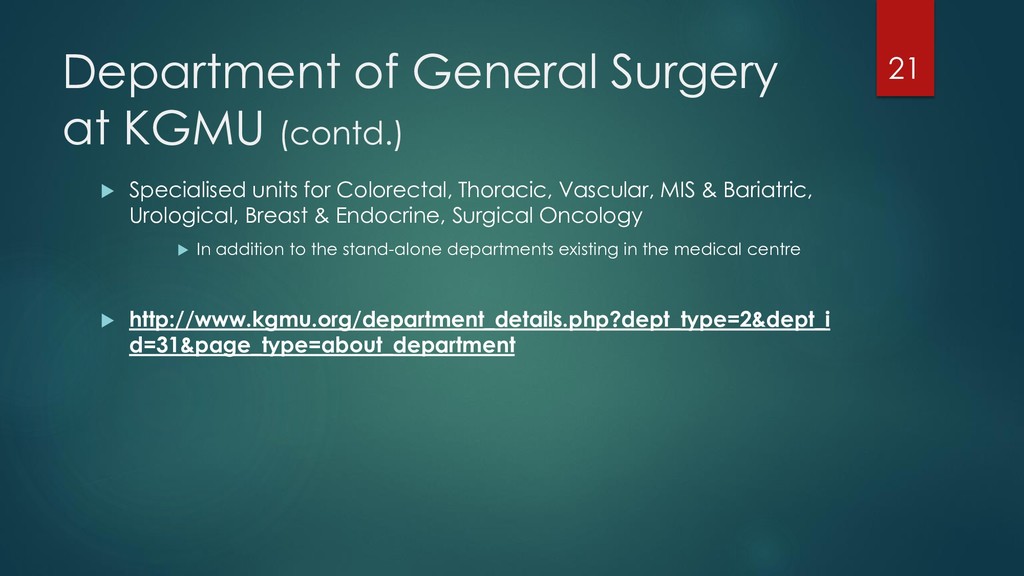
  13. Department of General Surgery at KGMU (contd.)  Specialised units

    for Colorectal, Thoracic, Vascular, MIS & Bariatric, Urological, Breast & Endocrine, Surgical Oncology  In addition to the stand-alone departments existing in the medical centre  http://www.kgmu.org/department_details.php?dept_type=2&dept_i d=31&page_type=about_department 21
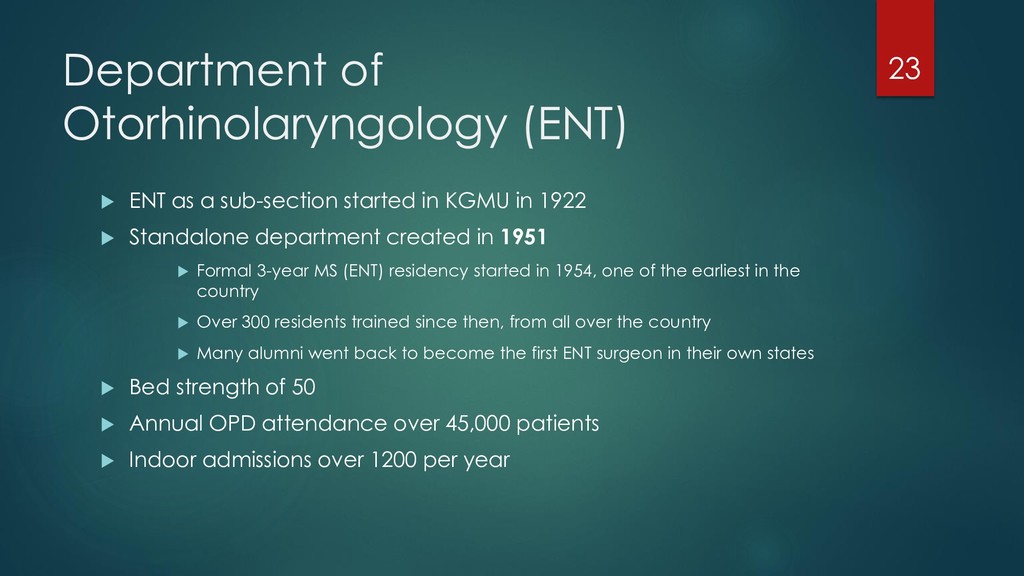
  14. Department of Otorhinolaryngology (ENT)  ENT as a sub-section started

    in KGMU in 1922  Standalone department created in 1951  Formal 3-year MS (ENT) residency started in 1954, one of the earliest in the country  Over 300 residents trained since then, from all over the country  Many alumni went back to become the first ENT surgeon in their own states  Bed strength of 50  Annual OPD attendance over 45,000 patients  Indoor admissions over 1200 per year 23
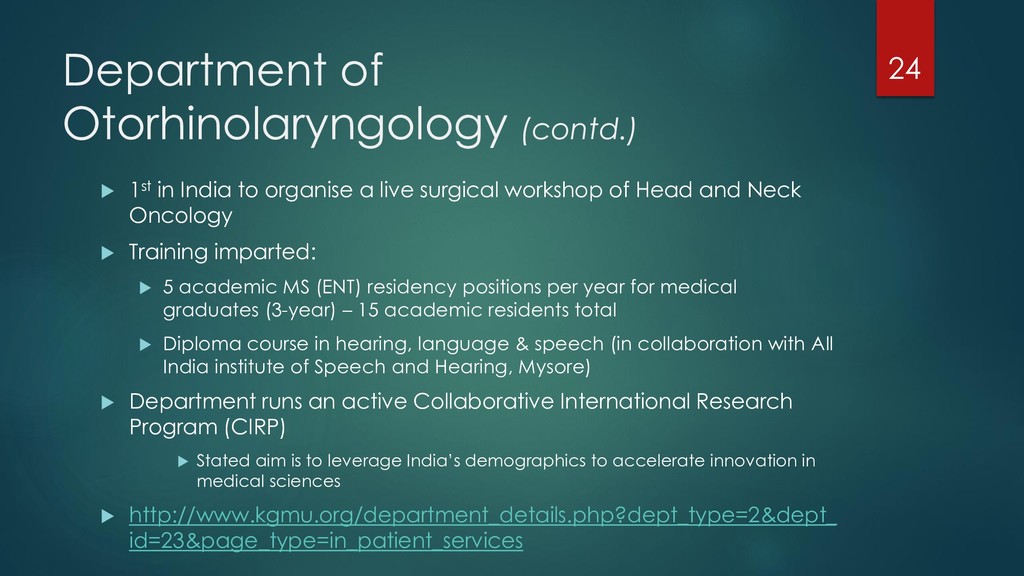
  15. Department of Otorhinolaryngology (contd.)  1st in India to organise

    a live surgical workshop of Head and Neck Oncology  Training imparted:  5 academic MS (ENT) residency positions per year for medical graduates (3-year) – 15 academic residents total  Diploma course in hearing, language & speech (in collaboration with All India institute of Speech and Hearing, Mysore)  Department runs an active Collaborative International Research Program (CIRP)  Stated aim is to leverage India’s demographics to accelerate innovation in medical sciences  http://www.kgmu.org/department_details.php?dept_type=2&dept_ id=23&page_type=in_patient_services 24
  16. Department of Otorhinolaryngology (contd.)  1st academic centre in India

    to start olfactory clinical research (in collaboration with Department of Otolaryngology and H&N surgery of University of Pennsylvania  Department introduced a novel trans-orbital approach to infra- temporal fossa to world literature  Department has designed and patented:  ‘Spheno-Palatine Fossa Dissector’ for surgical management of Juvenile nasopharyngeal angiofibroma Especially relevant for surgical centers in resource-limited settings  ‘Trans-orbital retractor for infratemporal fossa access’ (TORITA)  Pioneering work known across South Asia on Nasopharyngeal Angiofibroma 25
  17. Department of Orthopaedic Surgery  1st department in India to

    start formal residency training in orthopaedics  Established as an offshoot of Department of Surgery in 1951  6 MS(orthopaedics) academic residency seats per year – 18 academic residents total  162-bedded ward  13 clinical faculty members (5 full professors + 2 associate professors + 6 assistant professors) 27
  18. Department of Orthopaedic Surgery  Patient statistics  Annual out-patient

    attendance of over 55,000 patients  Annual in-patients admitted over 3500  Over 3000 major and over 3500 minor operations carried out annually  Other facilities:  Standalone physiotherapy unit for all in-patients and out-patients  Dedicated units for  Arthroplasty  Arthroscopy & Sports Injuries 28
  19. Surgical Sub-Speciality Departments in KGMU (IMPARTING 3-YEAR SENIOR RESIDENCY TRAINING

    TO GRADUATES OF 3- YEAR JUNIOR RESIDENCY IN GENERAL SURGERY, ORTHOPAEDICS OR ENT) 30
  20. Department of Cardiothoracic and Vascular Surgery  Unit established in

    1959 within Department of Surgery  Separate department established in 1998  Dedicated “Heart Surgery Centre” of KGMU  Adjoining Department of Cardiology housed in the nationally renowned “Lari Cardiology” provides the majority of patients, apart from referrals from physicians  2 academic residency spots per year (3-year super-speciality training)  Two non-academic senior residency positions (1-3 years) 32
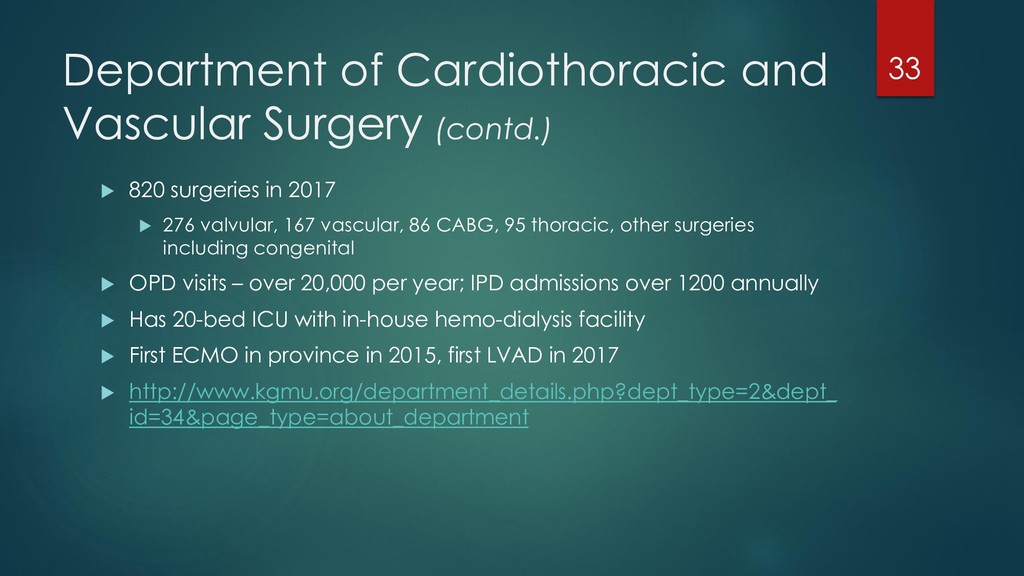
  21. Department of Cardiothoracic and Vascular Surgery (contd.)  820 surgeries

    in 2017  276 valvular, 167 vascular, 86 CABG, 95 thoracic, other surgeries including congenital  OPD visits – over 20,000 per year; IPD admissions over 1200 annually  Has 20-bed ICU with in-house hemo-dialysis facility  First ECMO in province in 2015, first LVAD in 2017  http://www.kgmu.org/department_details.php?dept_type=2&dept_ id=34&page_type=about_department 33
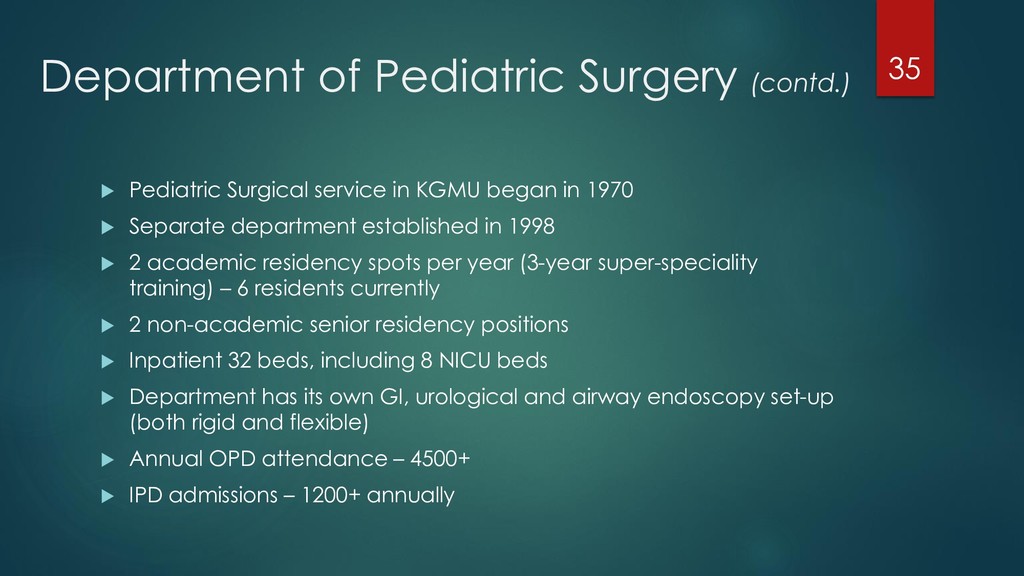
  22. Department of Pediatric Surgery (contd.)  Pediatric Surgical service in

    KGMU began in 1970  Separate department established in 1998  2 academic residency spots per year (3-year super-speciality training) – 6 residents currently  2 non-academic senior residency positions  Inpatient 32 beds, including 8 NICU beds  Department has its own GI, urological and airway endoscopy set-up (both rigid and flexible)  Annual OPD attendance – 4500+  IPD admissions – 1200+ annually 35
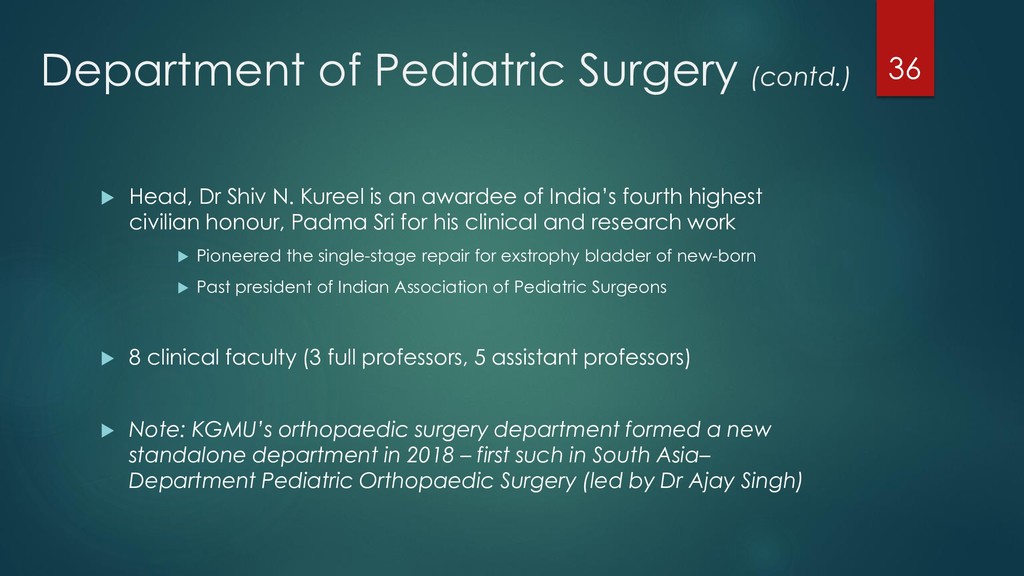
  23. Department of Pediatric Surgery (contd.)  Head, Dr Shiv N.

    Kureel is an awardee of India’s fourth highest civilian honour, Padma Sri for his clinical and research work  Pioneered the single-stage repair for exstrophy bladder of new-born  Past president of Indian Association of Pediatric Surgeons  8 clinical faculty (3 full professors, 5 assistant professors)  Note: KGMU’s orthopaedic surgery department formed a new standalone department in 2018 – first such in South Asia– Department Pediatric Orthopaedic Surgery (led by Dr Ajay Singh) 36
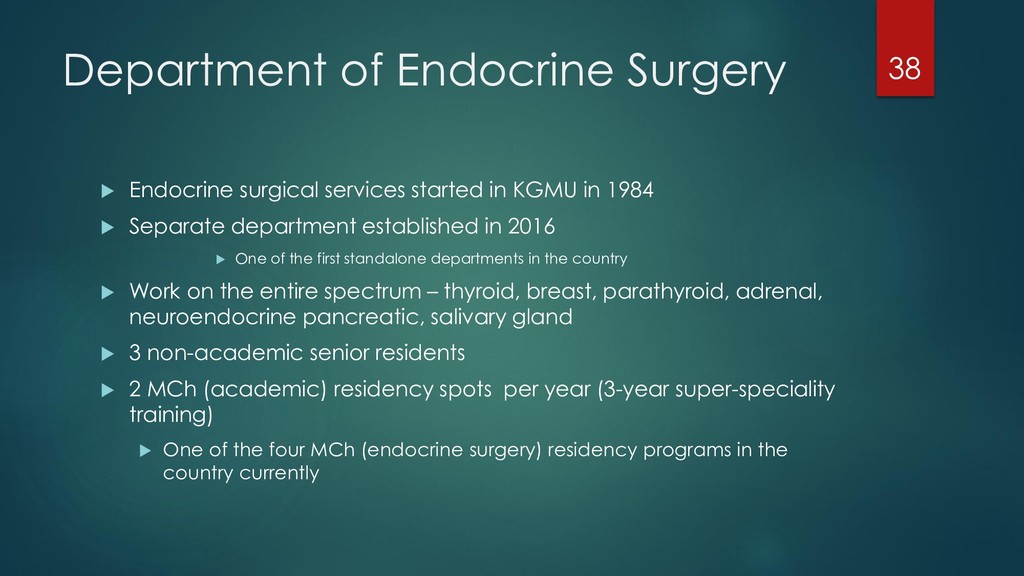
  24. Department of Endocrine Surgery  Endocrine surgical services started in

    KGMU in 1984  Separate department established in 2016  One of the first standalone departments in the country  Work on the entire spectrum – thyroid, breast, parathyroid, adrenal, neuroendocrine pancreatic, salivary gland  3 non-academic senior residents  2 MCh (academic) residency spots per year (3-year super-speciality training)  One of the four MCh (endocrine surgery) residency programs in the country currently 38
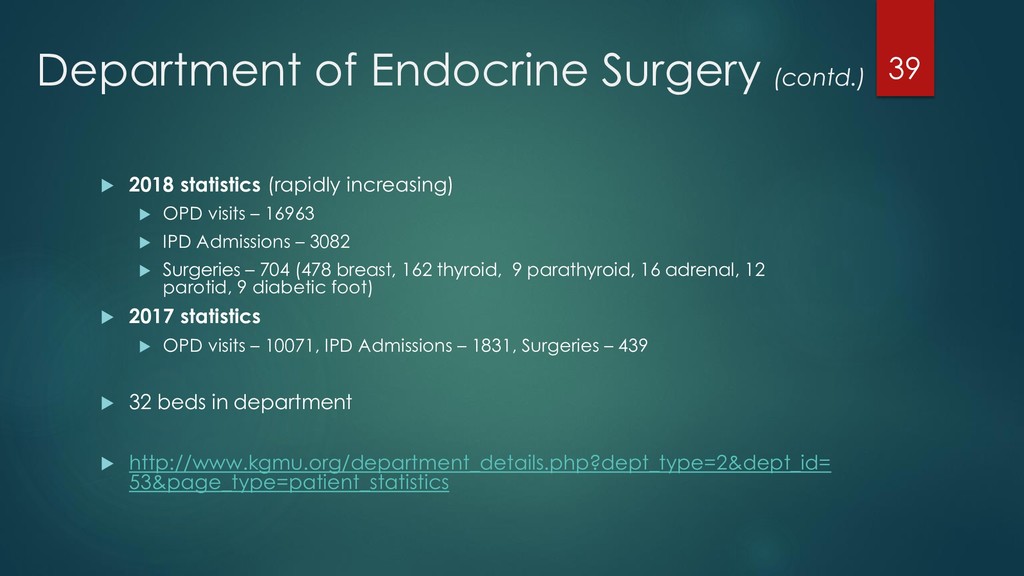
  25. Department of Endocrine Surgery (contd.)  2018 statistics (rapidly increasing)

     OPD visits – 16963  IPD Admissions – 3082  Surgeries – 704 (478 breast, 162 thyroid, 9 parathyroid, 16 adrenal, 12 parotid, 9 diabetic foot)  2017 statistics  OPD visits – 10071, IPD Admissions – 1831, Surgeries – 439  32 beds in department  http://www.kgmu.org/department_details.php?dept_type=2&dept_id= 53&page_type=patient_statistics 39
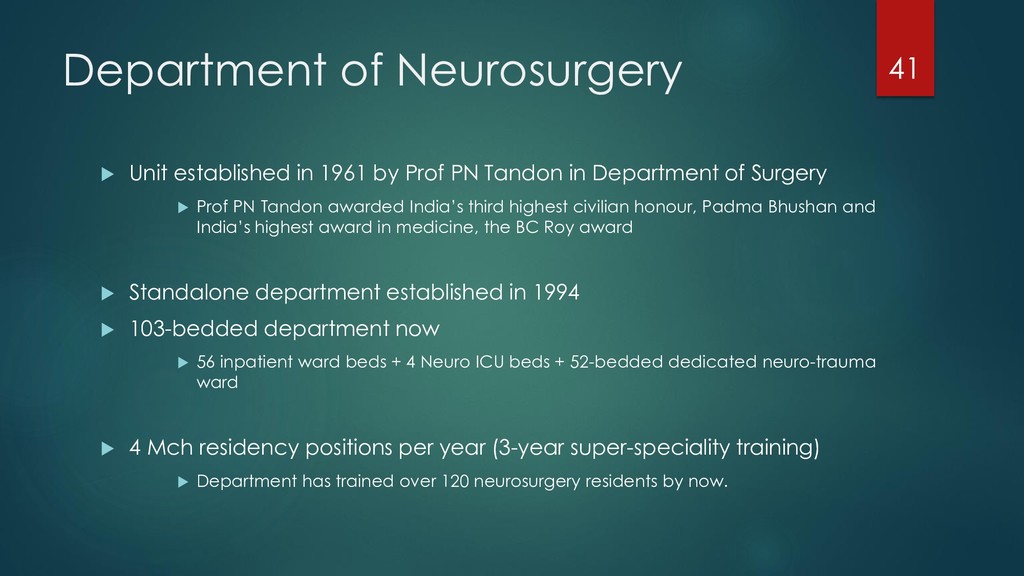
  26. Department of Neurosurgery  Unit established in 1961 by Prof

    PN Tandon in Department of Surgery  Prof PN Tandon awarded India’s third highest civilian honour, Padma Bhushan and India’s highest award in medicine, the BC Roy award  Standalone department established in 1994  103-bedded department now  56 inpatient ward beds + 4 Neuro ICU beds + 52-bedded dedicated neuro-trauma ward  4 Mch residency positions per year (3-year super-speciality training)  Department has trained over 120 neurosurgery residents by now. 41
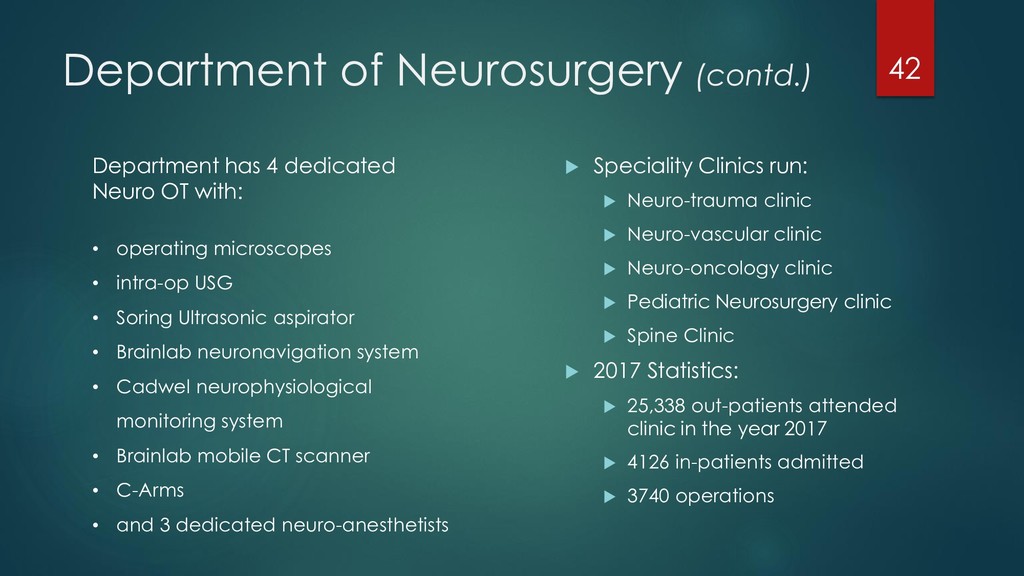
  27. Department of Neurosurgery (contd.)  Speciality Clinics run:  Neuro-trauma

    clinic  Neuro-vascular clinic  Neuro-oncology clinic  Pediatric Neurosurgery clinic  Spine Clinic  2017 Statistics:  25,338 out-patients attended clinic in the year 2017  4126 in-patients admitted  3740 operations Department has 4 dedicated Neuro OT with: • operating microscopes • intra-op USG • Soring Ultrasonic aspirator • Brainlab neuronavigation system • Cadwel neurophysiological monitoring system • Brainlab mobile CT scanner • C-Arms • and 3 dedicated neuro-anesthetists 42
  28. Department of Neurosurgery (contd.)  Department is pioneer of endoscopic

    neurosurgery in India  One of the earliest institutions in India to do ETV, Endoscopic pituitary surgery, Endoscopic lumbar disk surgery  Strong collaboration with Department of Plastic surgery for craniofacial defects  http://kgmu.org/department_details.php?dept_type=2&dept_id=19 &page_type=about_department 43
  29. Department of Plastic & Reconstructive Surgery (PRS)  Unit started

    in 1962 by late Prof RN Sharma in Department of Surgery,  Prof RN Sharma is considered the founder of plastic surgery speciality in North India  Formal training in plastic surgery started in 1966, one of the first in India  www.kgmuplasticsurgery.edu.in  Recognized regional center for treatment of Craniofacial disorders by the World Craniofacial Foundation  Recognised as ‘Advanced center for Jaw Surgery’ in cleft patients by Smile Train Inc. (USA)  Recognised by Govt. of India as ‘Nodal Centre for Leprosy Reconstructive surgery” 45
  30. Department of PRS (contd.)  70-bedded ward + 2 ICU

    beds  Speciality clinics run:  Cleft and craniofacial clinic  Wound clinic  Disorders of sexual development clinic  Department has in-house capabilities of:  Maxillofacial and Prosthetic lab  Speech Analysis and Speech Therapy lab  Physiotherapy and Splint Fabrication unit  Experimental Microsurgery lab  Naso-endoscopy room  Hyperbaric oxygen therapy unit 46
  31. Department of PRS (contd.)  Department has 2 OTs with:

     2 high-end laser machines for pigmented lesions, tattoos and vascular lesions: Nd-YAG & pulse dye laser; 2 carl zeiss opmi vario operating microscopes and a complete endoscopic plastic surgery system  2000+ surgeries performed per year  Department is ISO 9001:2008 standards accredited  2 MCh academic residency positions per year (3 year super- speciality training)  http://kgmu.org/department_details.php?dept_type=2&dept_id=25 &page_type=about_department 47
  32. Department of Trauma Surgery  Newly established department in KGMU

     Manages complex trauma cases in addition to cases handled by general surgery  Plan submitted to Govt. to start MCh Trauma and Critical Care (3- year super-speciality training post GS residency)  4 clinical faculty currently 49
  33. Department of Surgical Gastroenterology (SGE) MORE COMMONLY KNOWN IN INDIA

    AS DEPARTMENT OF GASTROSURGERY OR GI SURGERY 50
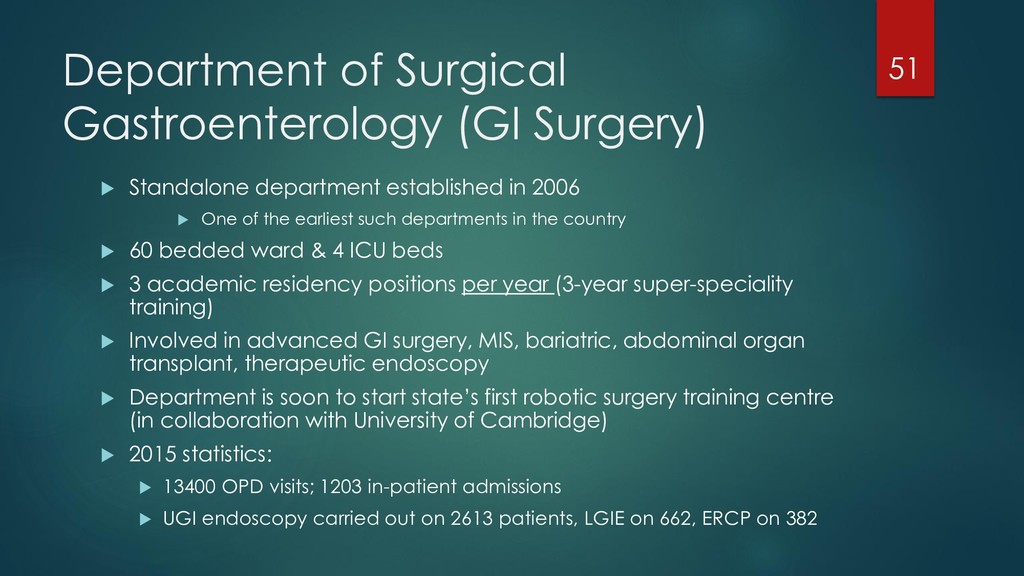
  34. Department of Surgical Gastroenterology (GI Surgery)  Standalone department established

    in 2006  One of the earliest such departments in the country  60 bedded ward & 4 ICU beds  3 academic residency positions per year (3-year super-speciality training)  Involved in advanced GI surgery, MIS, bariatric, abdominal organ transplant, therapeutic endoscopy  Department is soon to start state’s first robotic surgery training centre (in collaboration with University of Cambridge)  2015 statistics:  13400 OPD visits; 1203 in-patient admissions  UGI endoscopy carried out on 2613 patients, LGIE on 662, ERCP on 382 51
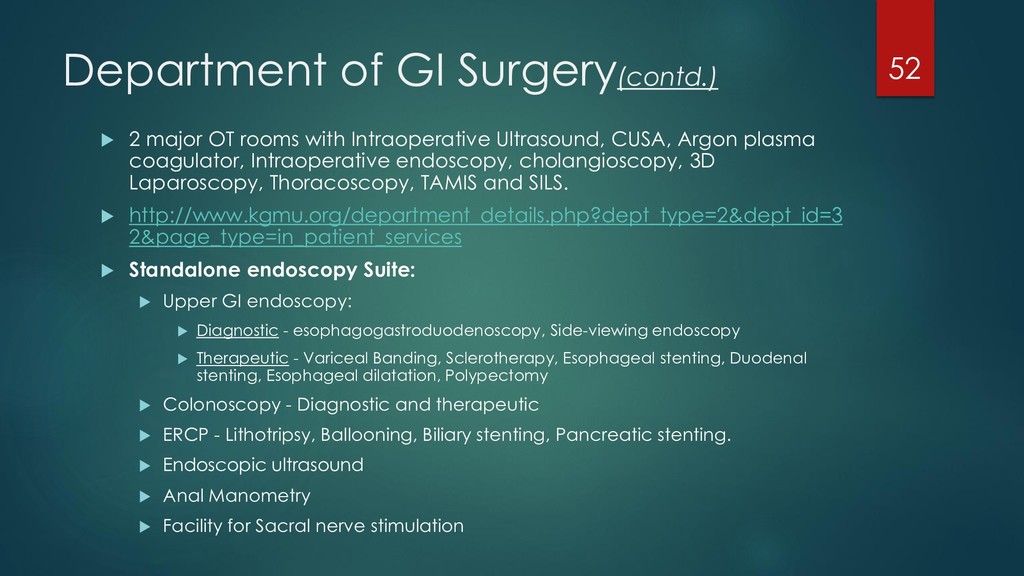
  35. Department of GI Surgery(contd.)  2 major OT rooms with

    Intraoperative Ultrasound, CUSA, Argon plasma coagulator, Intraoperative endoscopy, cholangioscopy, 3D Laparoscopy, Thoracoscopy, TAMIS and SILS.  http://www.kgmu.org/department_details.php?dept_type=2&dept_id=3 2&page_type=in_patient_services  Standalone endoscopy Suite:  Upper GI endoscopy:  Diagnostic - esophagogastroduodenoscopy, Side-viewing endoscopy  Therapeutic - Variceal Banding, Sclerotherapy, Esophageal stenting, Duodenal stenting, Esophageal dilatation, Polypectomy  Colonoscopy - Diagnostic and therapeutic  ERCP - Lithotripsy, Ballooning, Biliary stenting, Pancreatic stenting.  Endoscopic ultrasound  Anal Manometry  Facility for Sacral nerve stimulation 52
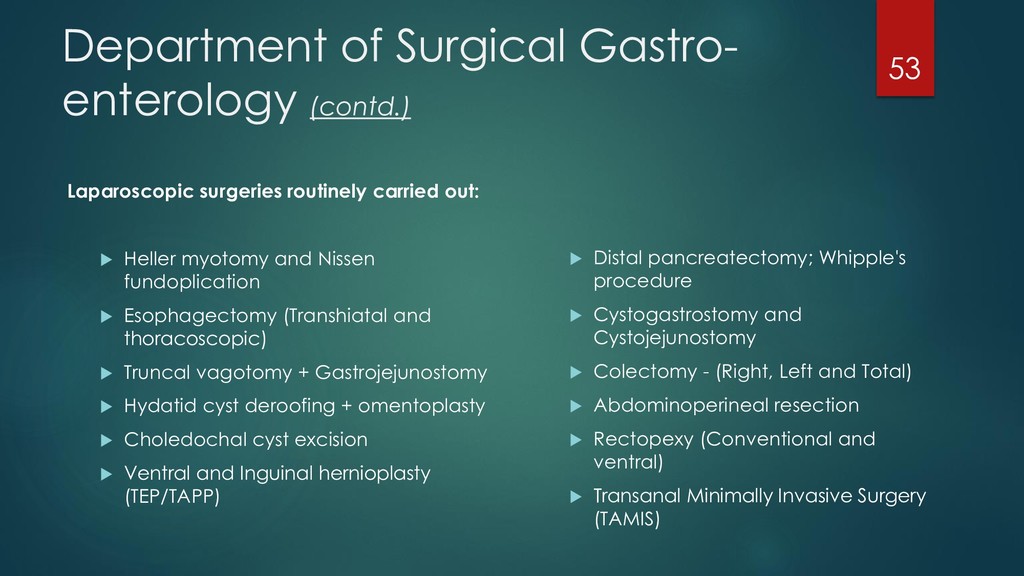
  36. Department of Surgical Gastro- enterology (contd.) Laparoscopic surgeries routinely carried

    out:  Heller myotomy and Nissen fundoplication  Esophagectomy (Transhiatal and thoracoscopic)  Truncal vagotomy + Gastrojejunostomy  Hydatid cyst deroofing + omentoplasty  Choledochal cyst excision  Ventral and Inguinal hernioplasty (TEP/TAPP) 53  Distal pancreatectomy; Whipple's procedure  Cystogastrostomy and Cystojejunostomy  Colectomy - (Right, Left and Total)  Abdominoperineal resection  Rectopexy (Conventional and ventral)  Transanal Minimally Invasive Surgery (TAMIS)
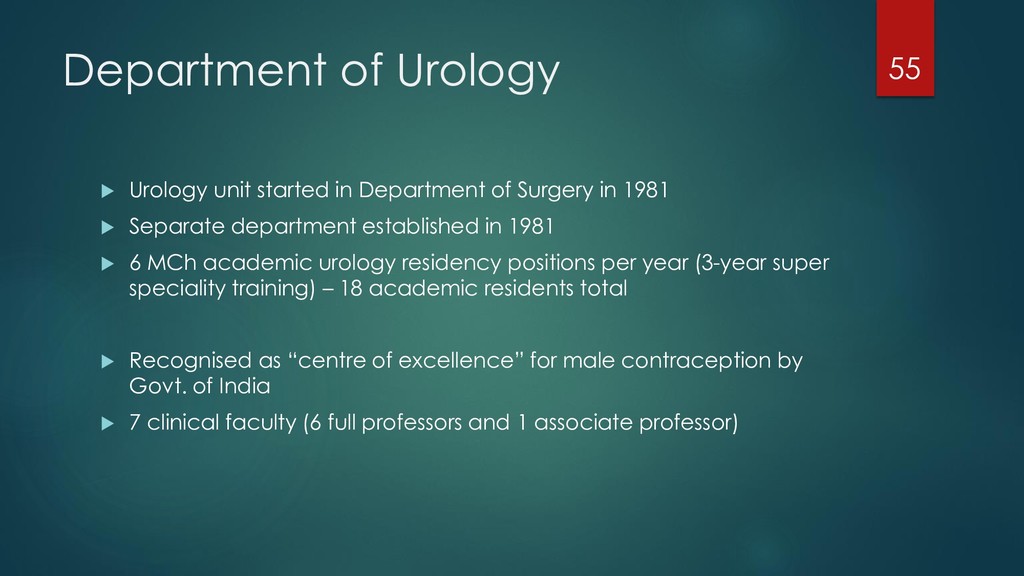
  37. Department of Urology  Urology unit started in Department of

    Surgery in 1981  Separate department established in 1981  6 MCh academic urology residency positions per year (3-year super speciality training) – 18 academic residents total  Recognised as “centre of excellence” for male contraception by Govt. of India  7 clinical faculty (6 full professors and 1 associate professor) 55
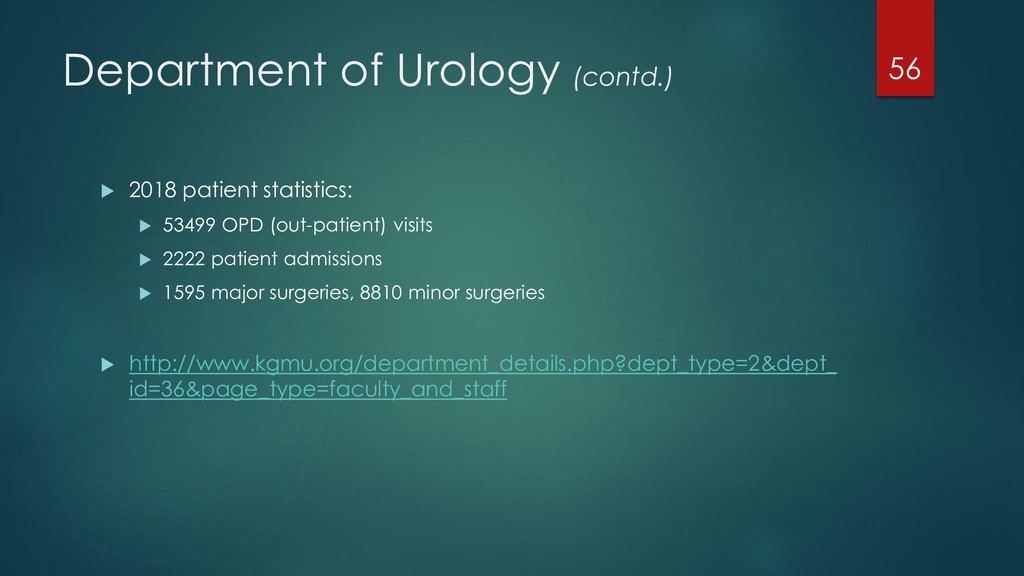
  38. Department of Urology (contd.)  2018 patient statistics:  53499

    OPD (out-patient) visits  2222 patient admissions  1595 major surgeries, 8810 minor surgeries  http://www.kgmu.org/department_details.php?dept_type=2&dept_ id=36&page_type=faculty_and_staff 56
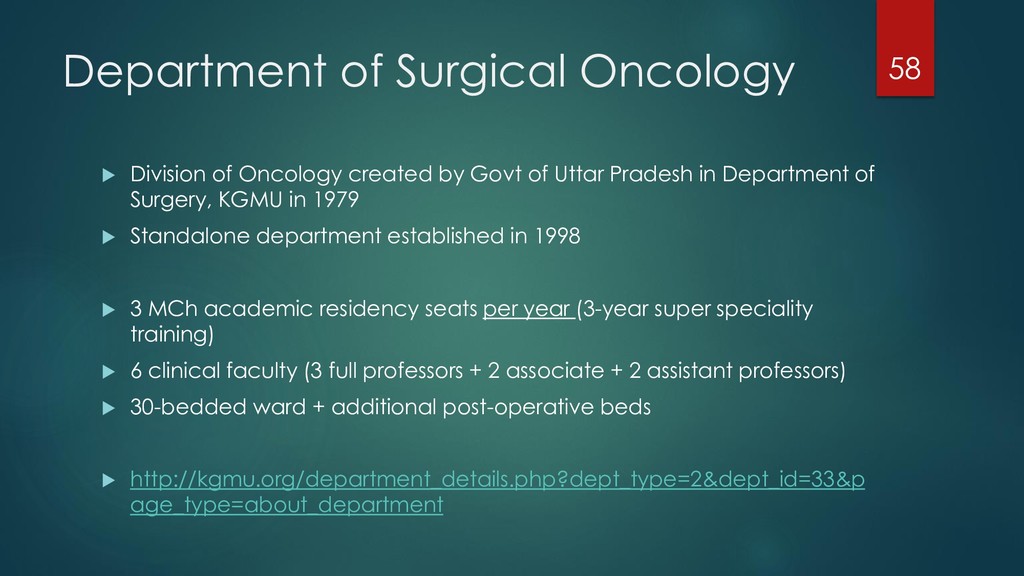
  39. Department of Surgical Oncology  Division of Oncology created by

    Govt of Uttar Pradesh in Department of Surgery, KGMU in 1979  Standalone department established in 1998  3 MCh academic residency seats per year (3-year super speciality training)  6 clinical faculty (3 full professors + 2 associate + 2 assistant professors)  30-bedded ward + additional post-operative beds  http://kgmu.org/department_details.php?dept_type=2&dept_id=33&p age_type=about_department 58
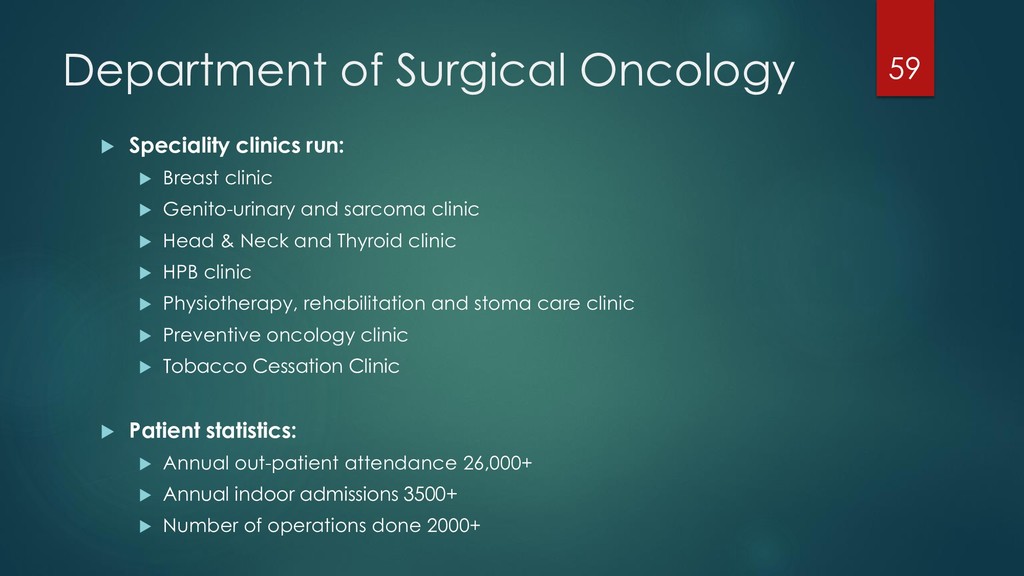
  40. Department of Surgical Oncology  Speciality clinics run:  Breast

    clinic  Genito-urinary and sarcoma clinic  Head & Neck and Thyroid clinic  HPB clinic  Physiotherapy, rehabilitation and stoma care clinic  Preventive oncology clinic  Tobacco Cessation Clinic  Patient statistics:  Annual out-patient attendance 26,000+  Annual indoor admissions 3500+  Number of operations done 2000+ 59
  41. Leader in Surgical Care and Training  Extremely high out-patient,

    in-patient and case volumes  Significant depth and breadth of surgical cases – only in developing countries like India are manifestations of truly advanced disease process seen.  Flagship, government-funded hospital of the most populous state of India, catering to a referral area of 200 million people.  Long history of excellence in surgical training  Formal training across the entire spectrum of surgical education  Delivering high quality surgical work under minimal charges to patients 61
  42. Questions? Ahmad Ozair Medical Student, King George’s Medical University [email protected]

    Prof. Abhinav A. Sonkar MD FACS FRCS Head of the Department of General Surgery, King George’s Medical University [email protected] 62