were born.” Cisgender, or sometimes just cis, describes someone whose gender identity aligns with the sex they were assigned at birth. Exclusion Hurts Everyone Trans people confront unique workplace challenges. A 2021 McKinsey & Company report found that more than half say they aren’t comfortable being out at work. Trans employees also make less money on average than their cisgender colleagues and feel less supported overall. These struggles don’t just hurt trans people— organizations also lose out on talent, engagement, and productivity. So what can workplaces do? Organizations seeking to build a trans-inclusive workplace have to tackle two priorities:
Your Processes 🔍 How long has it been since you took a look at your forms? Requiring people to check a box to choose “male” or “female” when they apply for a job or register for an event alienates folks who fall outside that binary. The same is true for processes that lock people into using their “legal” names to get things done. Normalize asking people for their pronouns and what name they want to be called. 1 Protecting and promoting the rights of people of all gender identities and expressions Helping cis employees understand and support their trans colleagues
even thinking of them that way. For example, does your organization have a dress code that requires men to wear ties or women to wear heels? A better option is to let employees select from a range of “professional” options, regardless of their gender or gender expression. Think about facilities, too. Do you have gender-neutral restroom options and an explicit policy ensuring that folks can safely use the restroom that matches their gender identity? Educate and Train 📖 Trans employees should not be responsible for educating their cis co-workers. Instead, make transgender inclusion an everyday priority from the top down in workplace learning. For example, do your anti-harassment, management, and diversity trainings include content that covers the trans experience—or offer imagery 2 3
that covers more specific information around gender identity and expression. Back Up Your Words 💬 Your non-discrimination, anti-harassment, and other policies should include the words “gender identity or expression” on the list of protected categories of people. That can also help clarify how your organization supports trans employees—and protects them in cases when others aren’t supportive. Medical coverage and other benefits should also be considered. Do they reflect the needs of trans employees throughout their lives? Trans Inclusion Helps Everyone 4
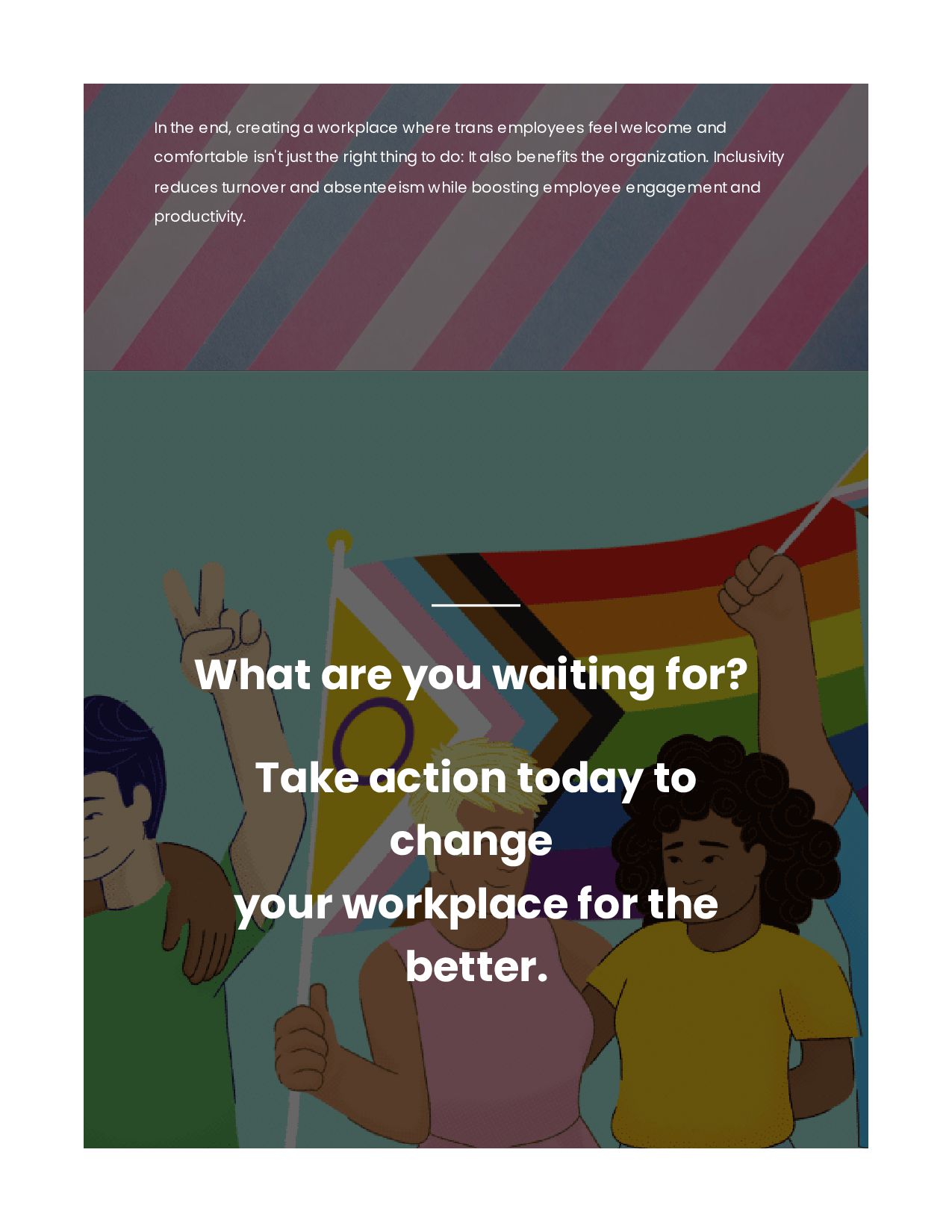
welcome and comfortable isn't just the right thing to do: It also benefits the organization. Inclusivity reduces turnover and absenteeism while boosting employee engagement and productivity. What are you waiting for? Take action today to change your workplace for the better.

 Your Podcast. Everywhere. Effortlessly.


 davidcarrasco
 mza
 joshbly
 kimpetersen
 eileencodes
 sabderemane
 jonoalderson
 keavy
 marktimemedia
 twada
 nmsamuel