Upgrade to Pro — share decks privately, control downloads, hide ads and more …

15 Psychological Traps Every Research Scholar F...

Sponsored · Your Podcast. Everywhere. Effortlessly. Share. Educate. Inspire. Entertain. You do you. We'll handle the rest. →
Avatar for Vikramjit Kakati Vikramjit Kakati
April 06, 2025
6

15 Psychological Traps Every Research Scholar Faces — And How to Outsmart Them

This presentation by Prof. Vikramjit Kakati (Assam Don Bosco University) explores 15 psychological and cognitive traps that commonly affect research scholars. From impostor syndrome and perfectionism to burnout and procrastination — each trap is explained with practical examples and simple strategies to overcome them. A must-read for every MPhil/PhD student, supervisor, or academic mentor.

Avatar for Vikramjit Kakati

Vikramjit Kakati

April 06, 2025

Transcript

  1. Prof. Vikramjit Kakati , Assam Don Bosco University, E-Mail: [email protected]

    Presented by Prof. Vikramjit Kakati Assam Don Bosco University Email: [email protected]
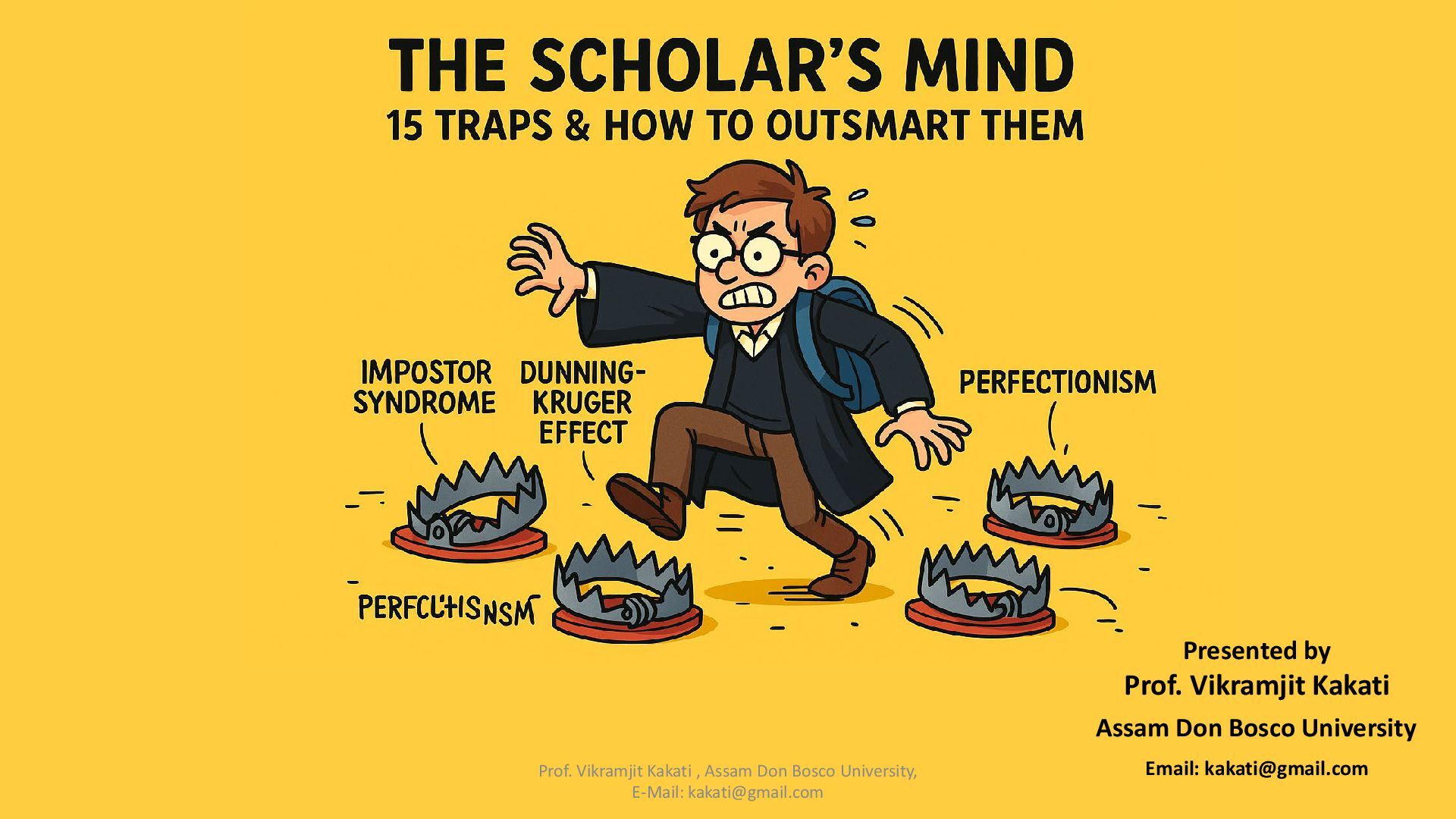
  2. The Scholar’s Mind: 15 Traps & How to Outsmart Them

    Understanding psychological traps that affect research scholars and practical ways to overcome them Prof. Vikramjit Kakati Director, Research & Development Cell Assam Don Bosco University Prof. Vikramjit Kakati , Assam Don Bosco University , E-Mail: [email protected]
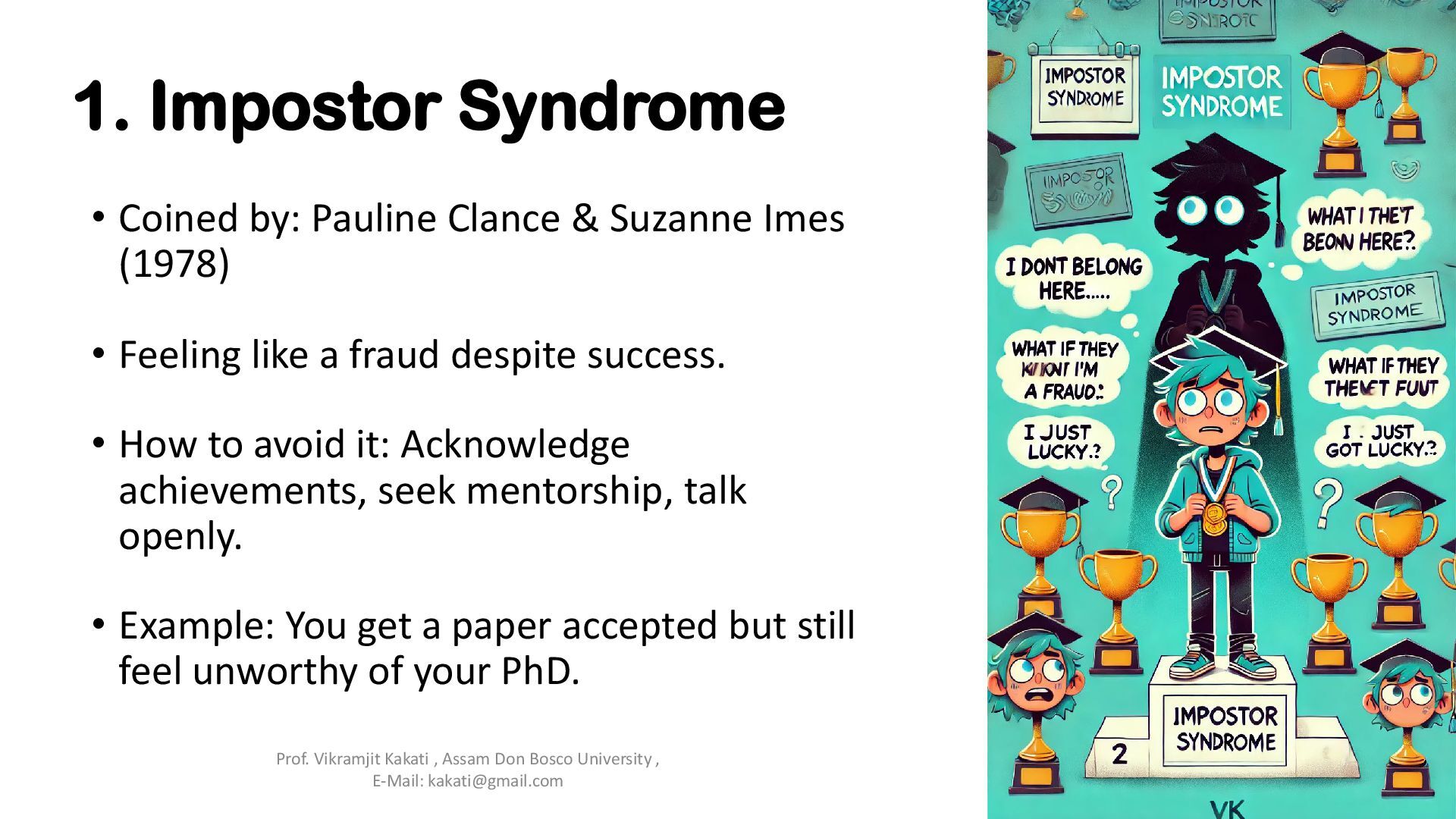
  3. 1. Impostor Syndrome • Coined by: Pauline Clance & Suzanne

    Imes (1978) • Feeling like a fraud despite success. • How to avoid it: Acknowledge achievements, seek mentorship, talk openly. • Example: You get a paper accepted but still feel unworthy of your PhD. Prof. Vikramjit Kakati , Assam Don Bosco University , E-Mail: [email protected]
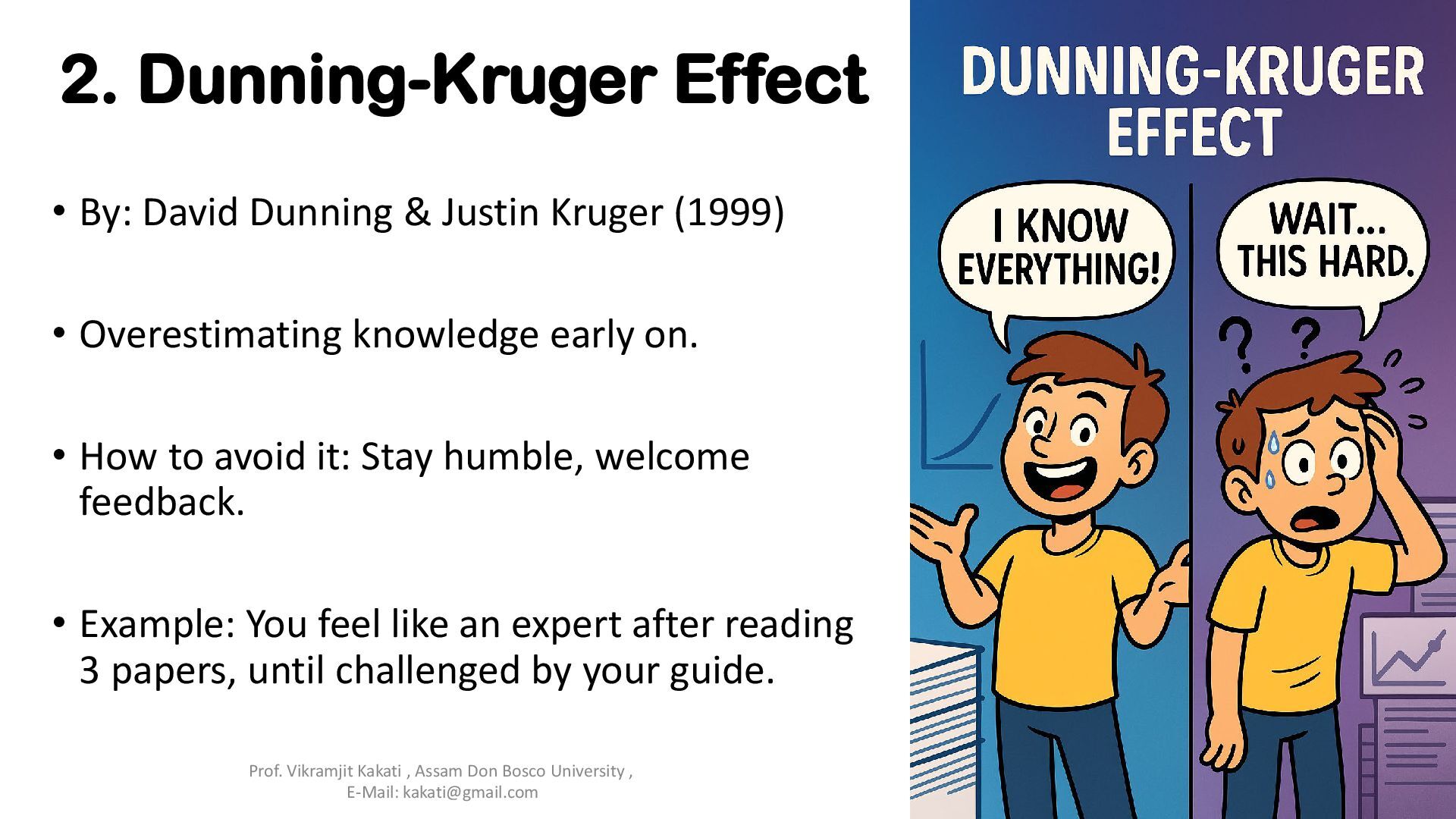
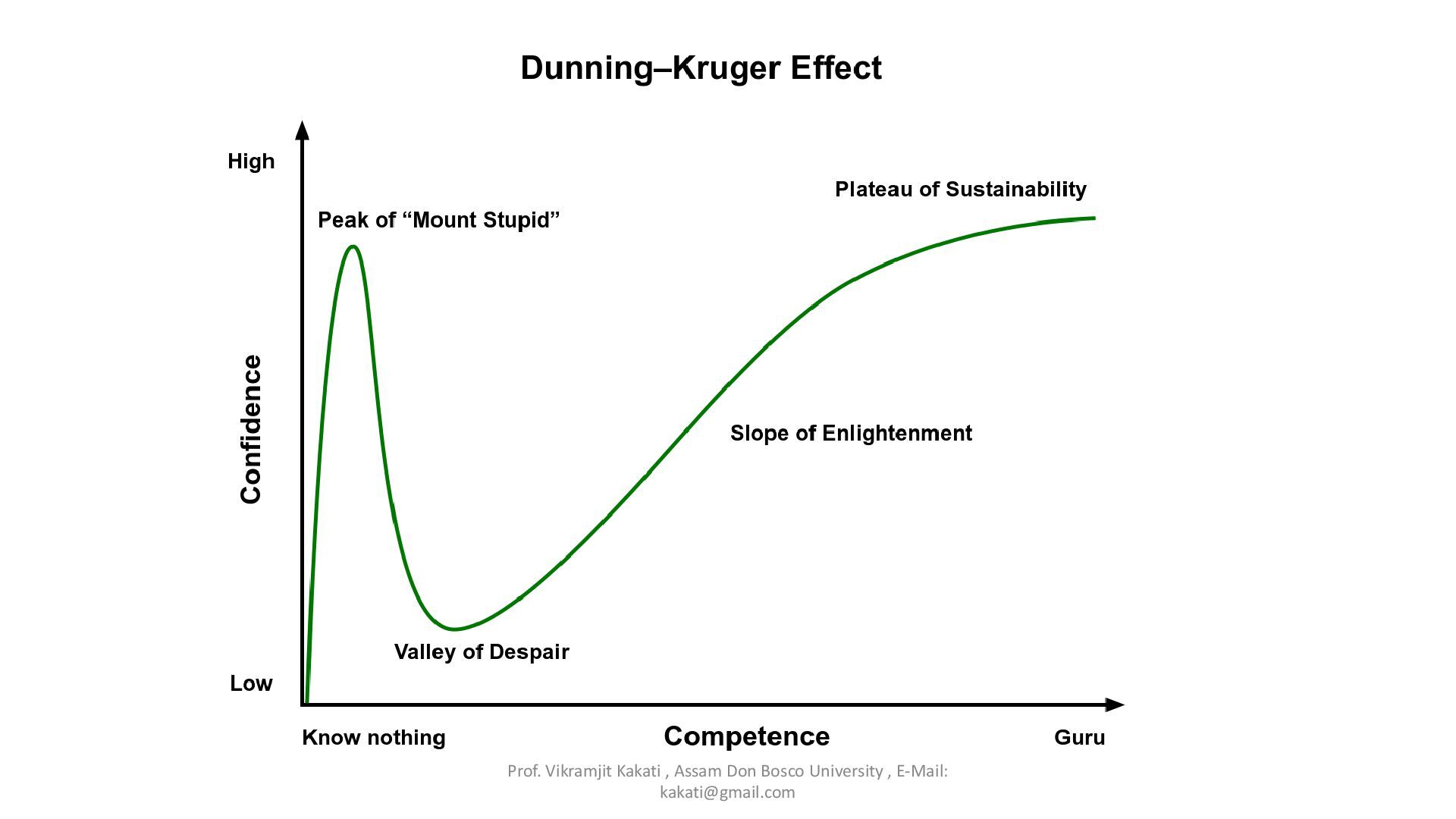
  4. 2. Dunning-Kruger Effect • By: David Dunning & Justin Kruger

    (1999) • Overestimating knowledge early on. • How to avoid it: Stay humble, welcome feedback. • Example: You feel like an expert after reading 3 papers, until challenged by your guide. Prof. Vikramjit Kakati , Assam Don Bosco University , E-Mail: [email protected]
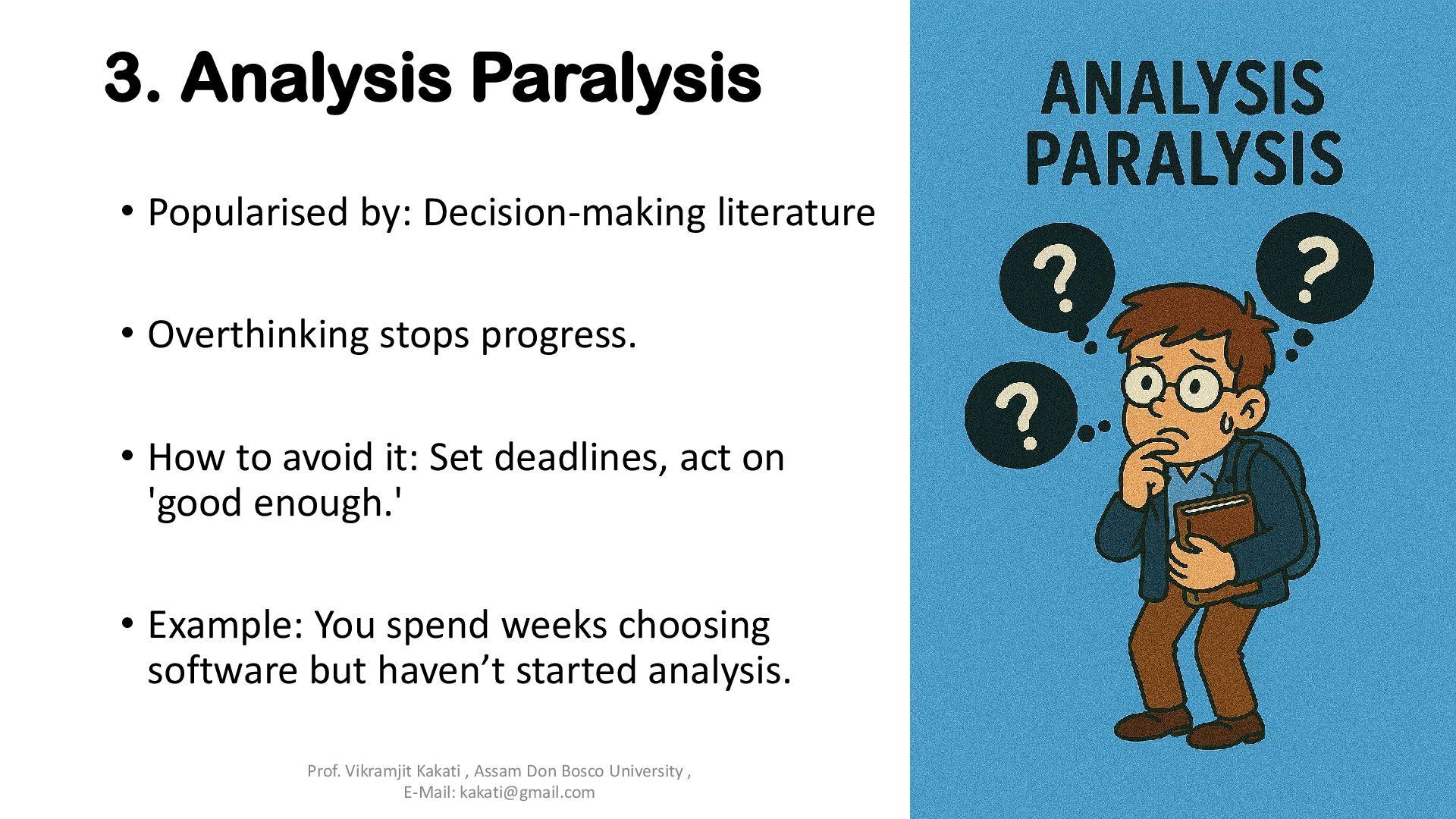
  5. 3. Analysis Paralysis • Popularised by: Decision-making literature • Overthinking

    stops progress. • How to avoid it: Set deadlines, act on 'good enough.' • Example: You spend weeks choosing software but haven’t started analysis. Prof. Vikramjit Kakati , Assam Don Bosco University , E-Mail: [email protected]
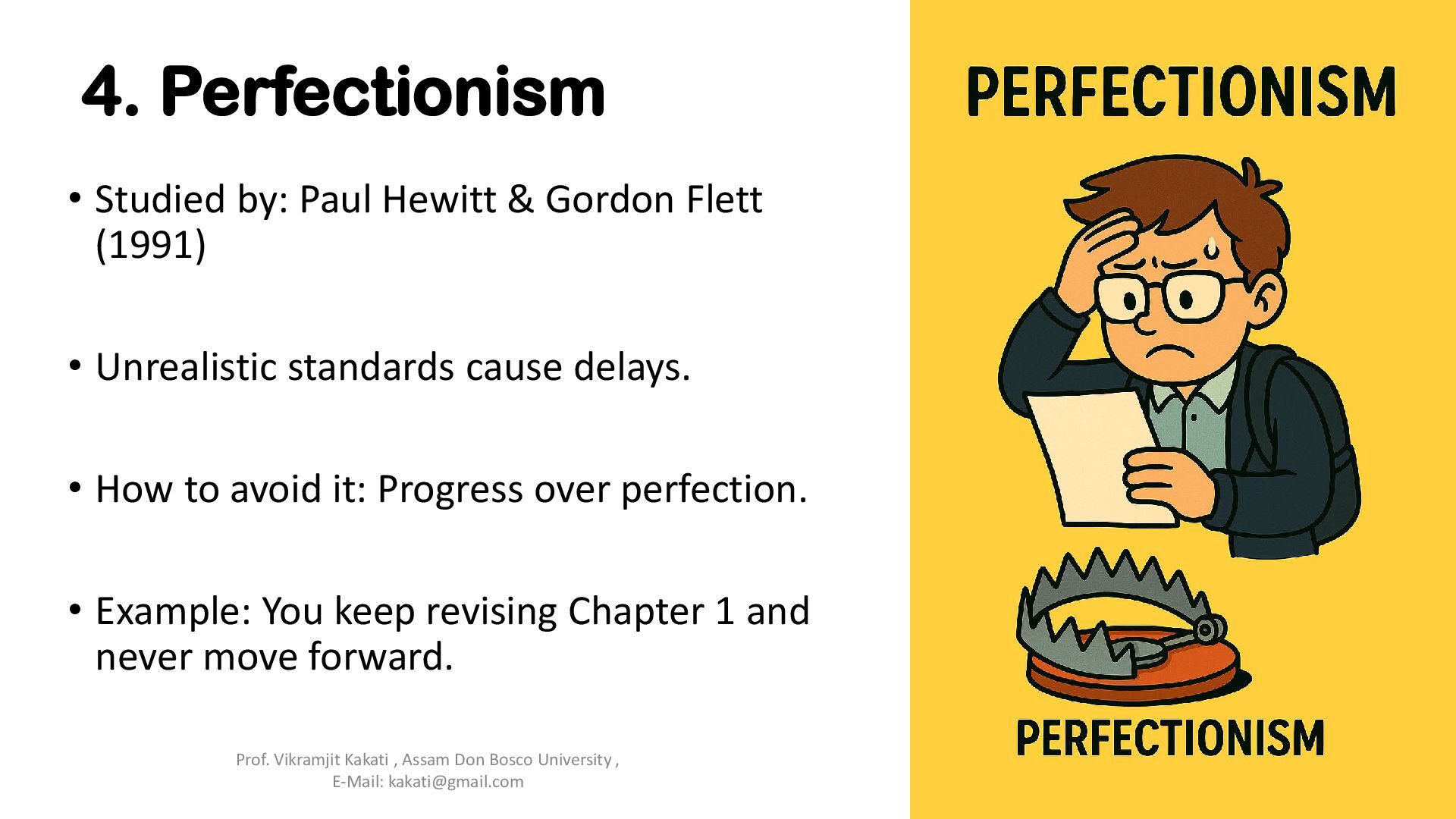
  6. 4. Perfectionism • Studied by: Paul Hewitt & Gordon Flett

    (1991) • Unrealistic standards cause delays. • How to avoid it: Progress over perfection. • Example: You keep revising Chapter 1 and never move forward. Prof. Vikramjit Kakati , Assam Don Bosco University , E-Mail: [email protected]
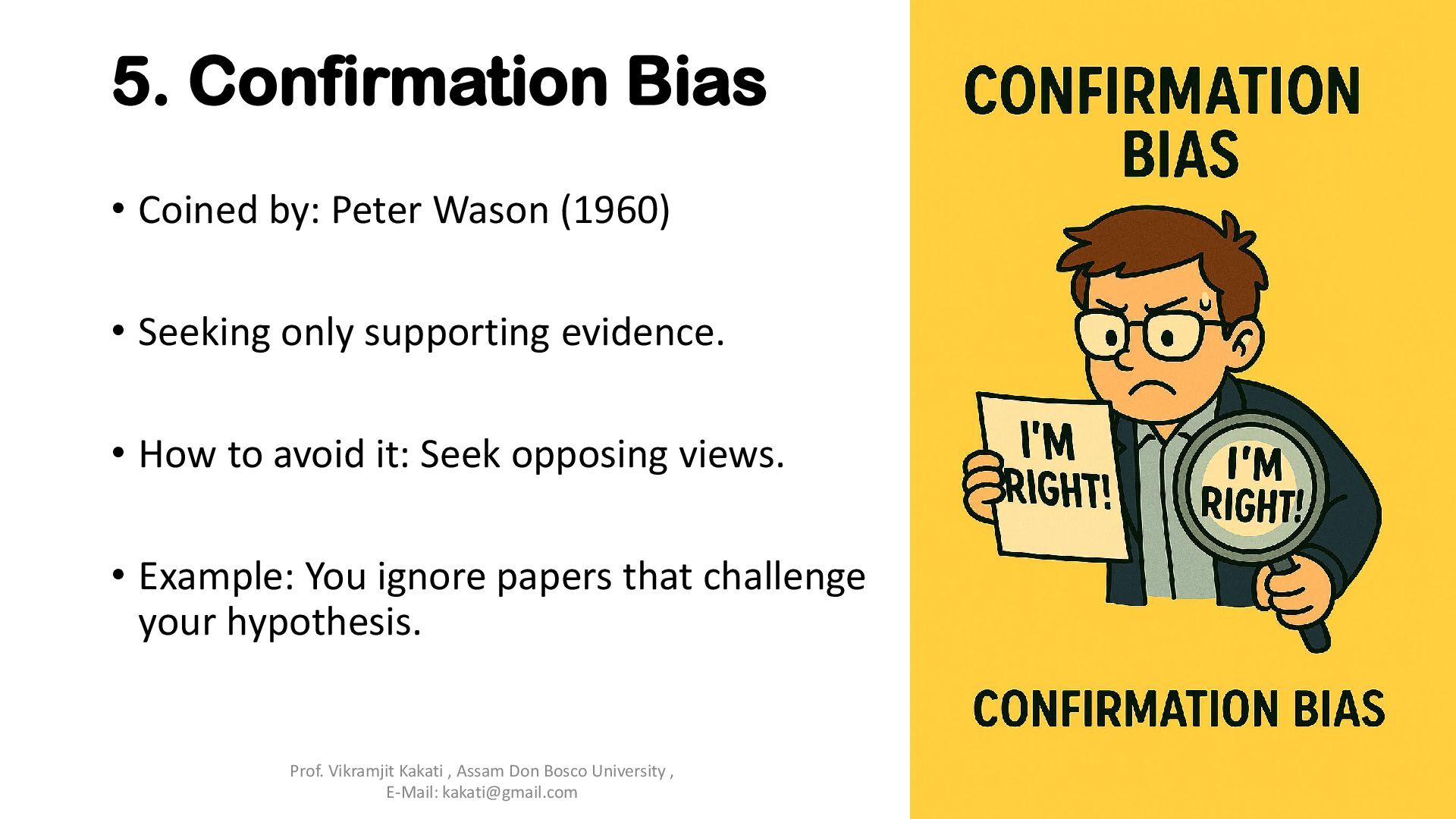
  7. 5. Confirmation Bias • Coined by: Peter Wason (1960) •

    Seeking only supporting evidence. • How to avoid it: Seek opposing views. • Example: You ignore papers that challenge your hypothesis. Prof. Vikramjit Kakati , Assam Don Bosco University , E-Mail: [email protected]
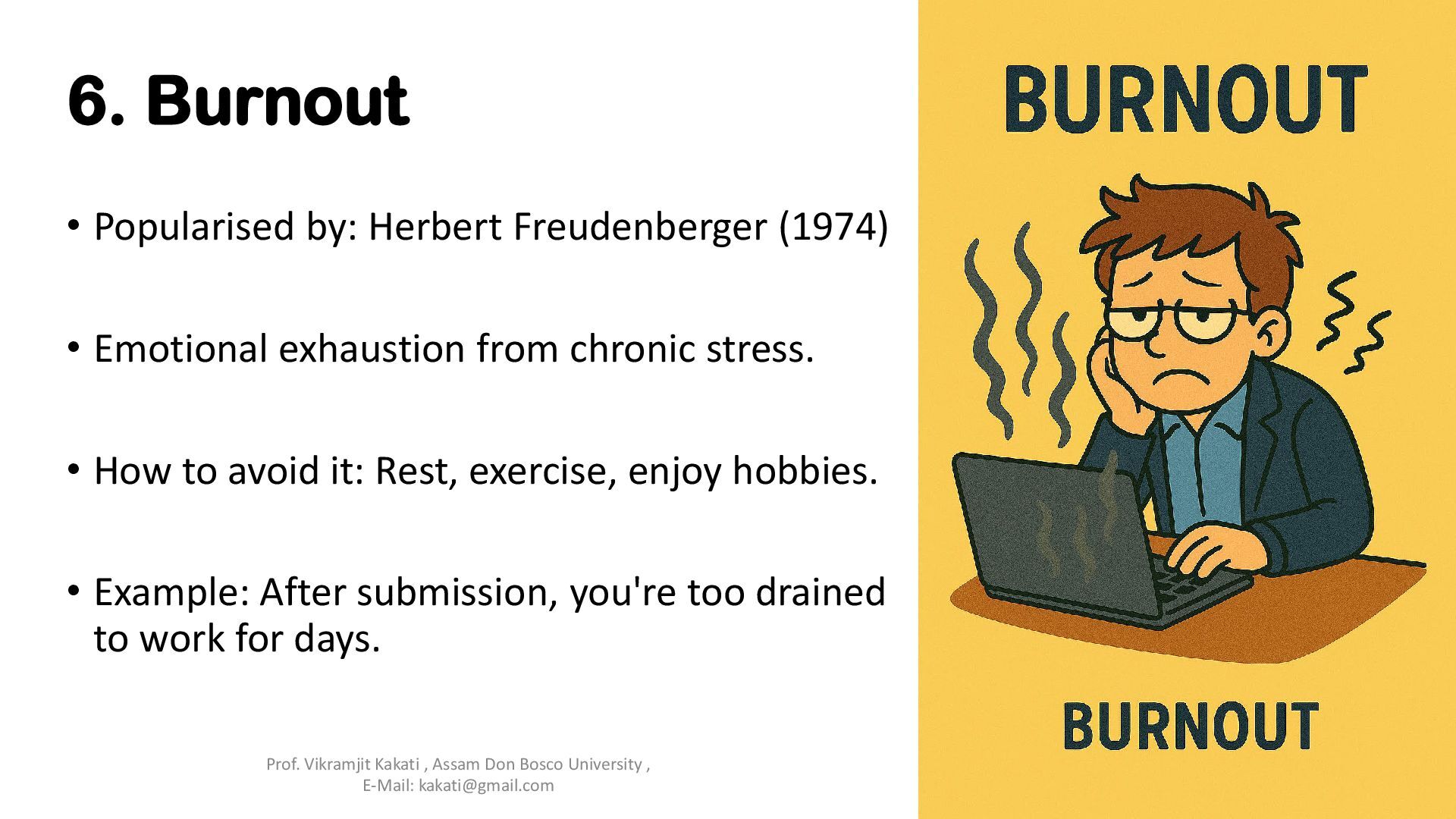
  8. 6. Burnout • Popularised by: Herbert Freudenberger (1974) • Emotional

    exhaustion from chronic stress. • How to avoid it: Rest, exercise, enjoy hobbies. • Example: After submission, you're too drained to work for days. Prof. Vikramjit Kakati , Assam Don Bosco University , E-Mail: [email protected]
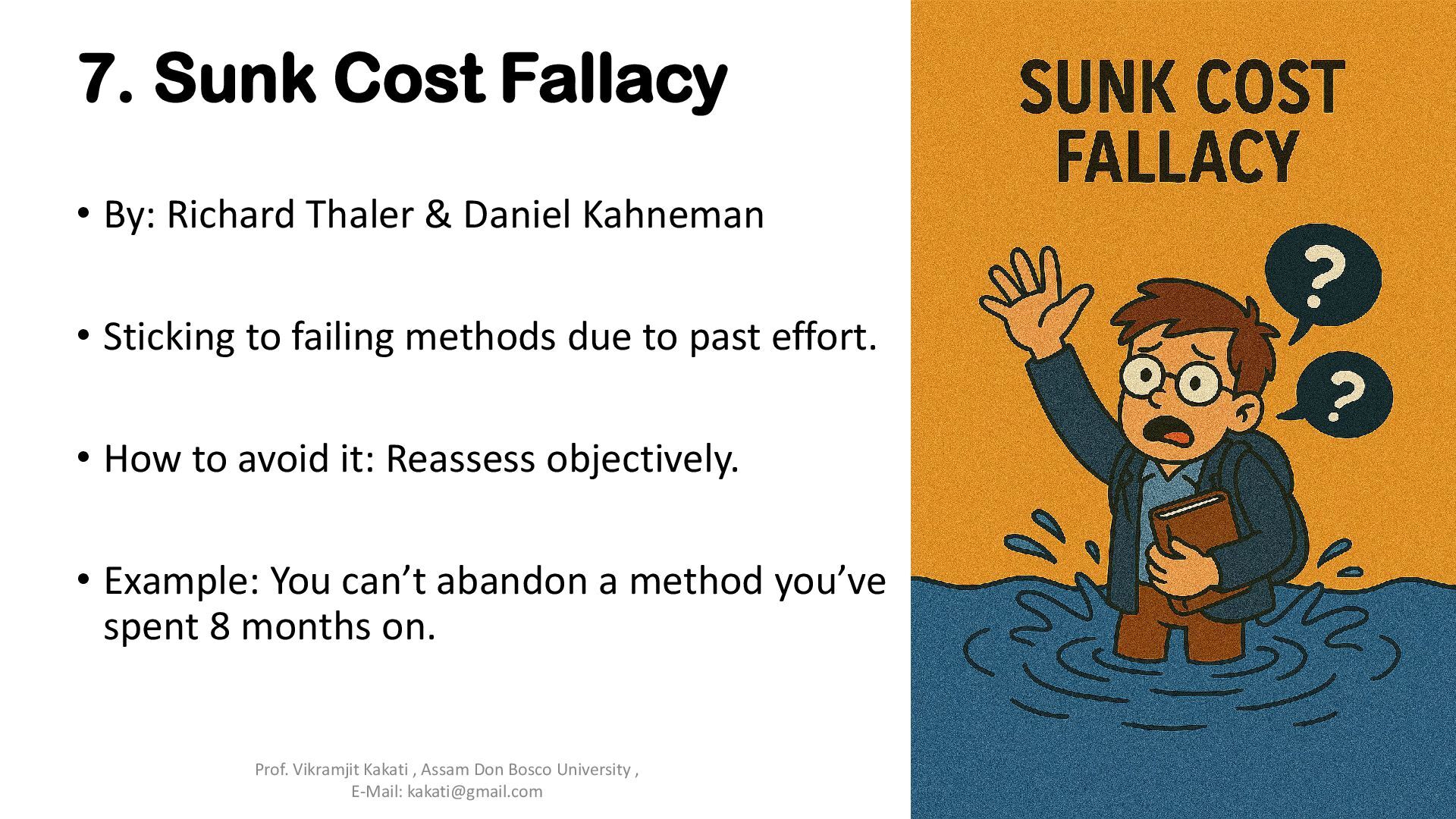
  9. 7. Sunk Cost Fallacy • By: Richard Thaler & Daniel

    Kahneman • Sticking to failing methods due to past effort. • How to avoid it: Reassess objectively. • Example: You can’t abandon a method you’ve spent 8 months on. Prof. Vikramjit Kakati , Assam Don Bosco University , E-Mail: [email protected]
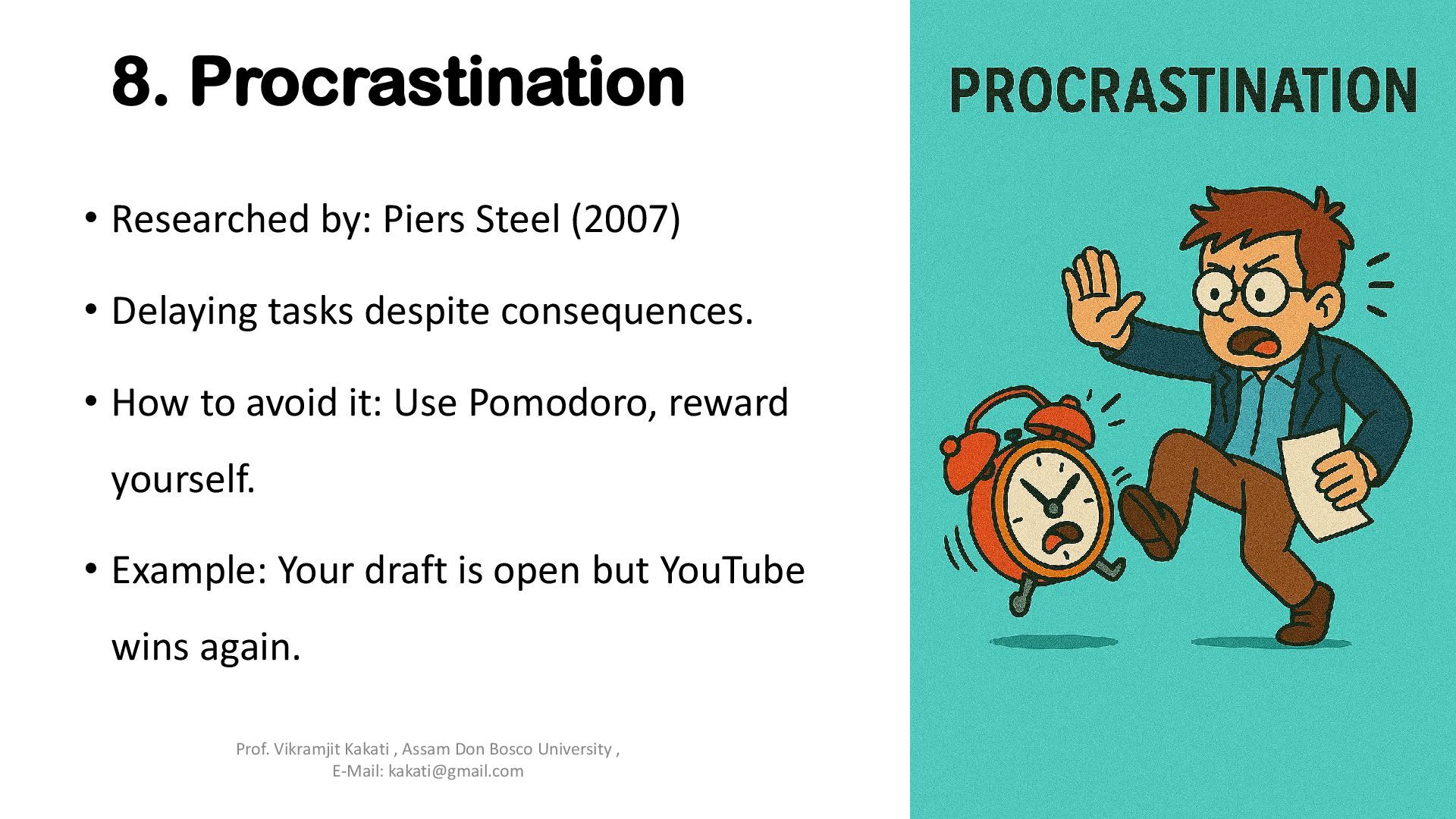
  10. 8. Procrastination • Researched by: Piers Steel (2007) • Delaying

    tasks despite consequences. • How to avoid it: Use Pomodoro, reward yourself. • Example: Your draft is open but YouTube wins again. Prof. Vikramjit Kakati , Assam Don Bosco University , E-Mail: [email protected]
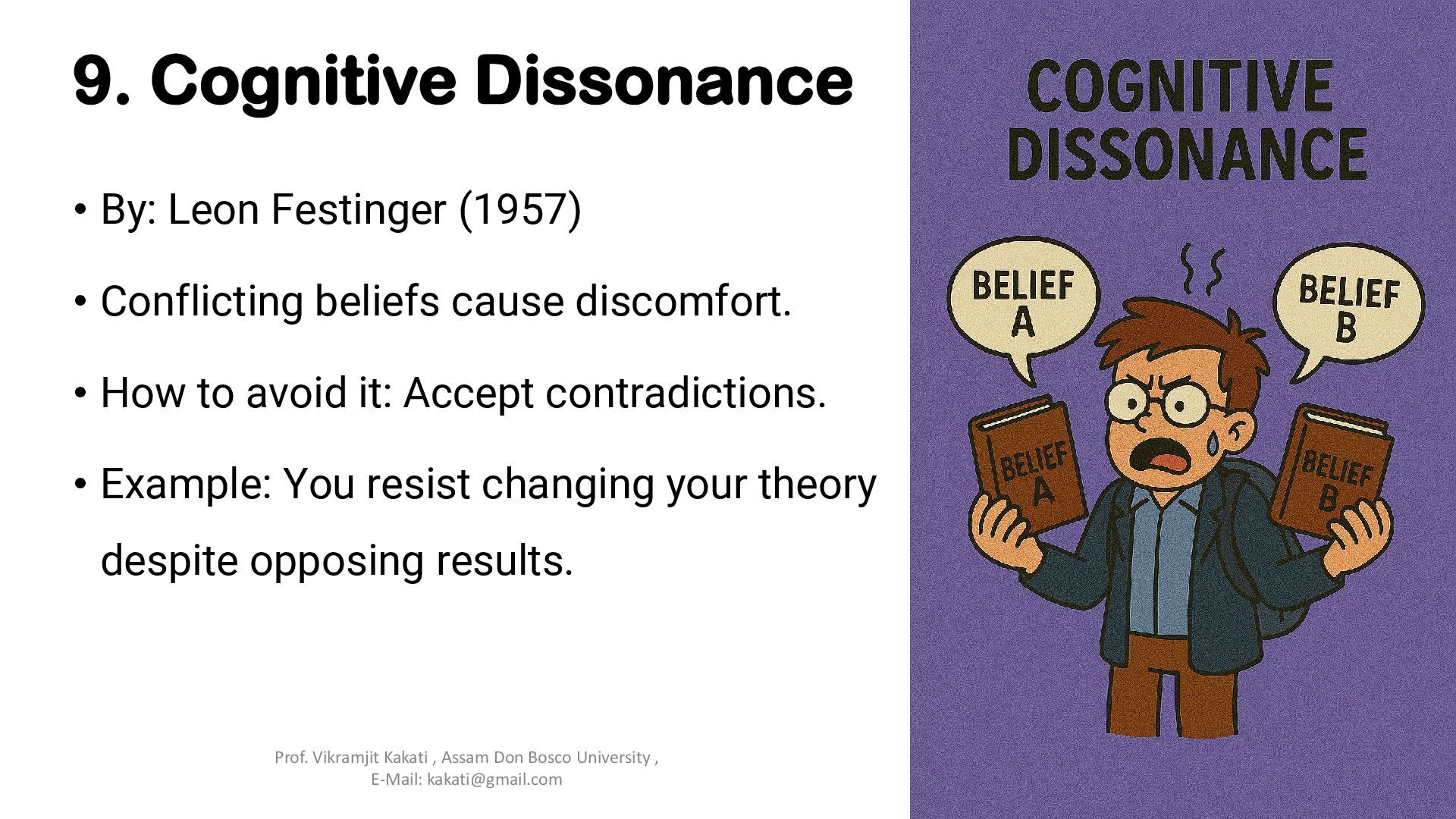
  11. 9. Cognitive Dissonance • By: Leon Festinger (1957) • Conflicting

    beliefs cause discomfort. • How to avoid it: Accept contradictions. • Example: You resist changing your theory despite opposing results. Prof. Vikramjit Kakati , Assam Don Bosco University , E-Mail: [email protected]
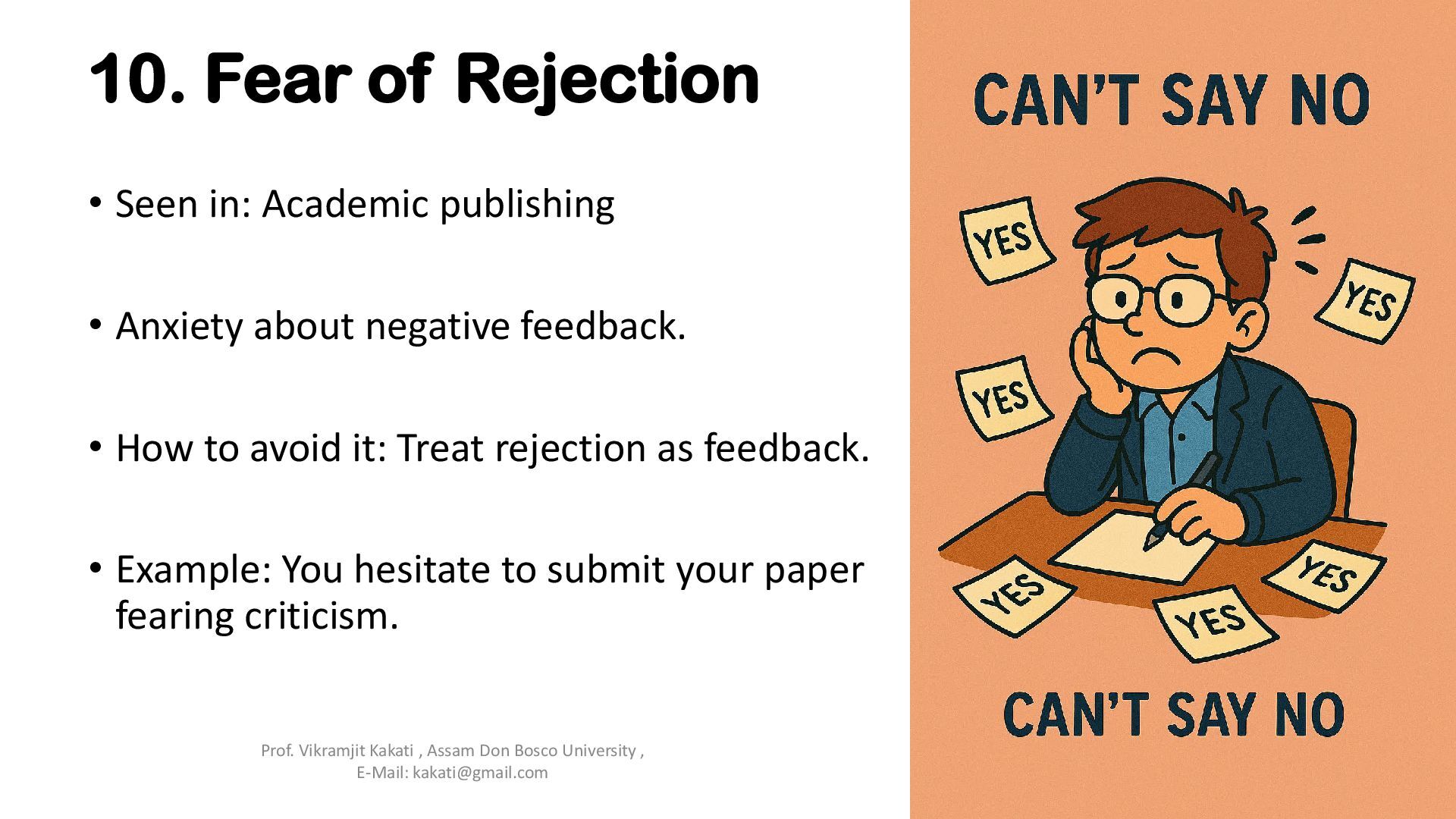
  12. 10. Fear of Rejection • Seen in: Academic publishing •

    Anxiety about negative feedback. • How to avoid it: Treat rejection as feedback. • Example: You hesitate to submit your paper fearing criticism. Prof. Vikramjit Kakati , Assam Don Bosco University , E-Mail: [email protected]
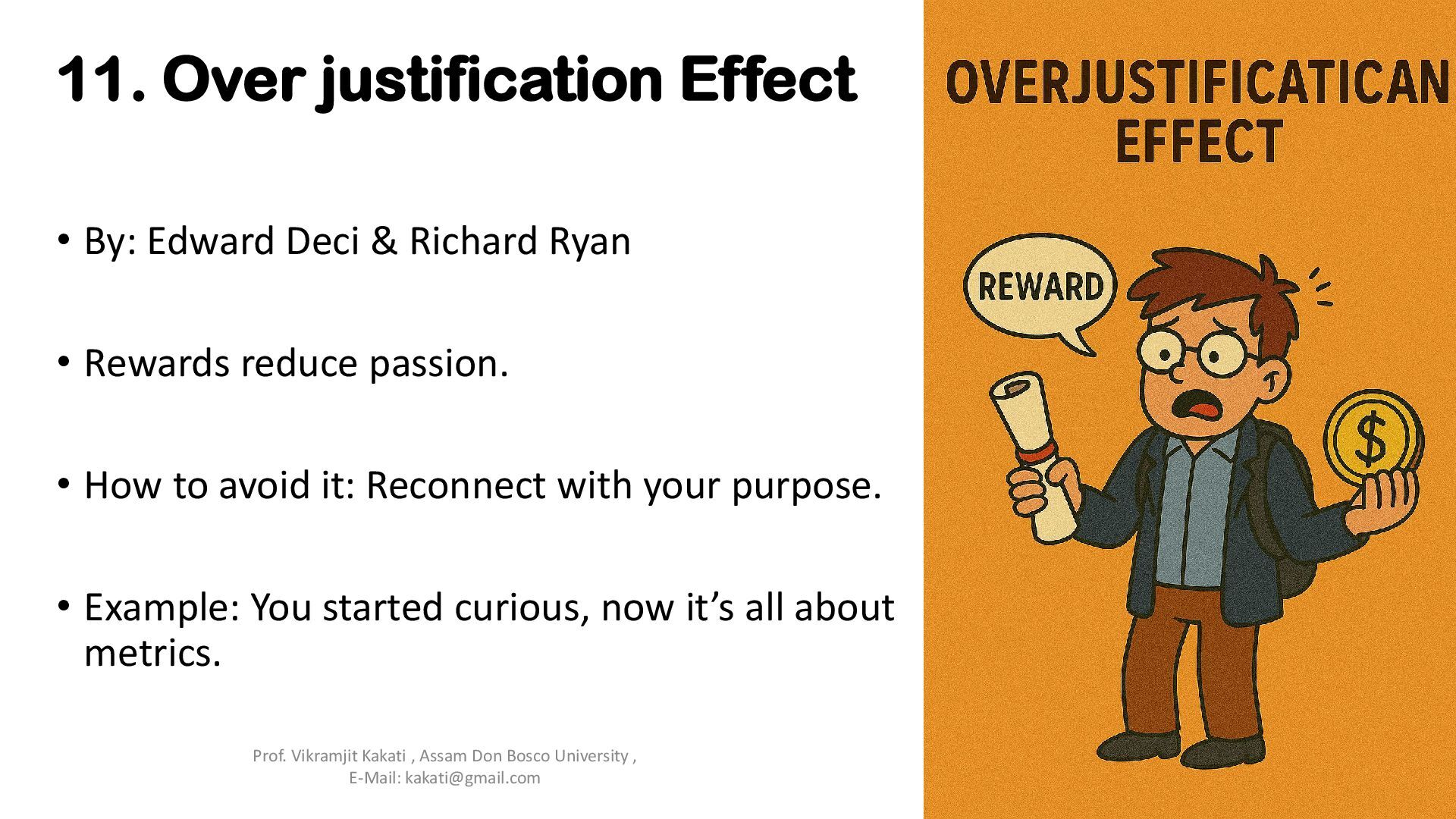
  13. 11. Over justification Effect • By: Edward Deci & Richard

    Ryan • Rewards reduce passion. • How to avoid it: Reconnect with your purpose. • Example: You started curious, now it’s all about metrics. Prof. Vikramjit Kakati , Assam Don Bosco University , E-Mail: [email protected]
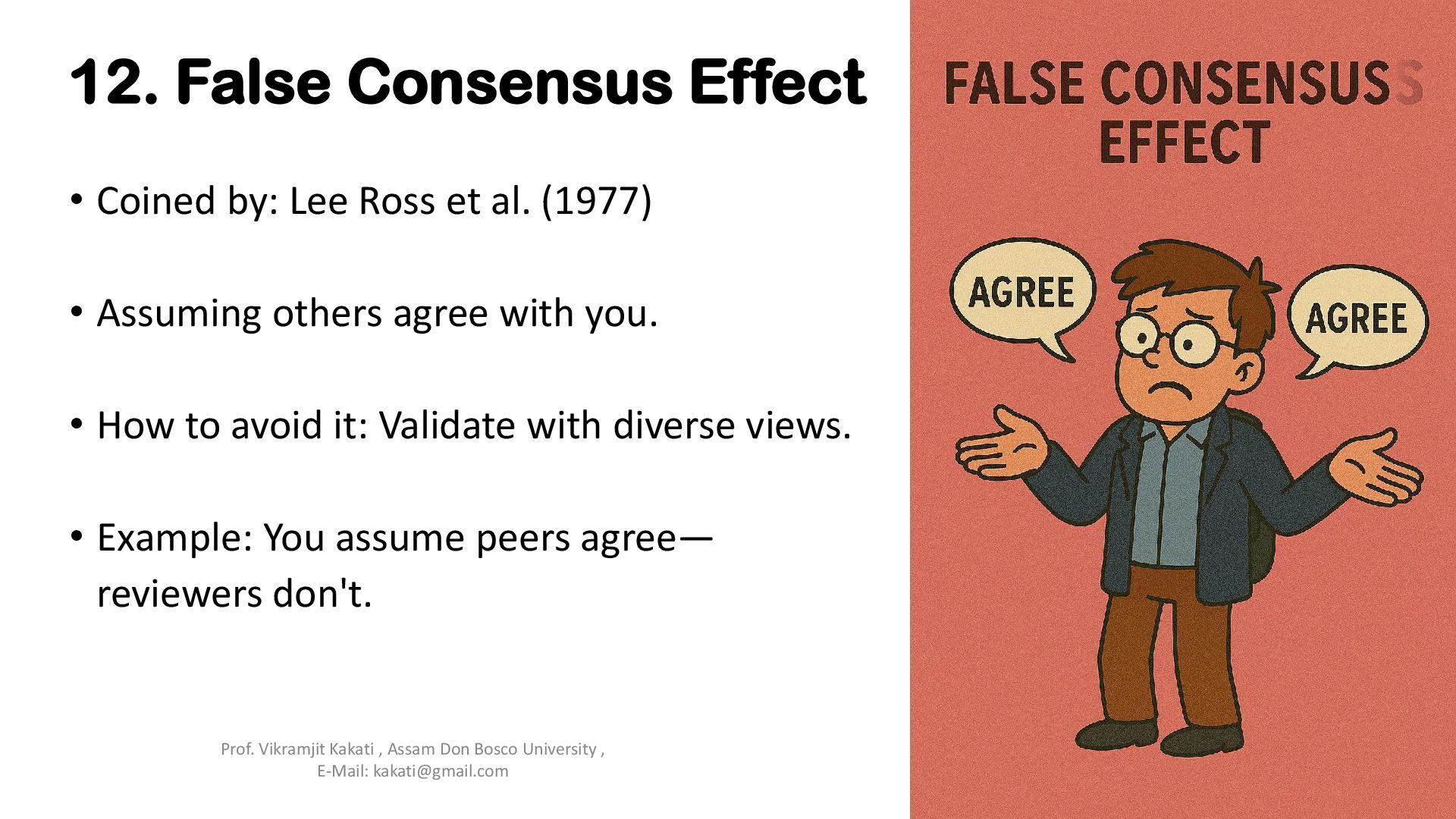
  14. 12. False Consensus Effect • Coined by: Lee Ross et

    al. (1977) • Assuming others agree with you. • How to avoid it: Validate with diverse views. • Example: You assume peers agree— reviewers don't. Prof. Vikramjit Kakati , Assam Don Bosco University , E-Mail: [email protected]
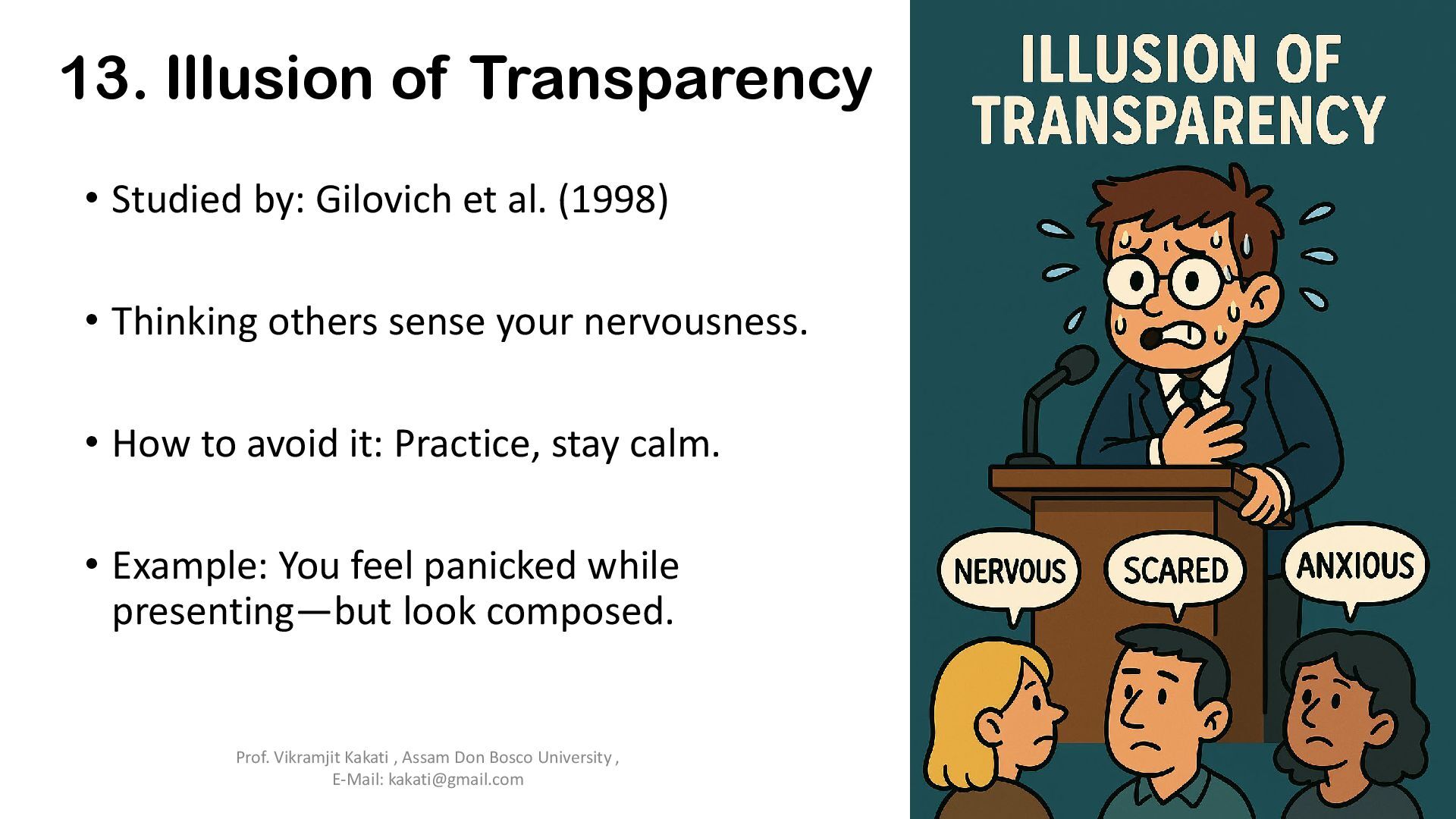
  15. 13. Illusion of Transparency • Studied by: Gilovich et al.

    (1998) • Thinking others sense your nervousness. • How to avoid it: Practice, stay calm. • Example: You feel panicked while presenting—but look composed. Prof. Vikramjit Kakati , Assam Don Bosco University , E-Mail: [email protected]
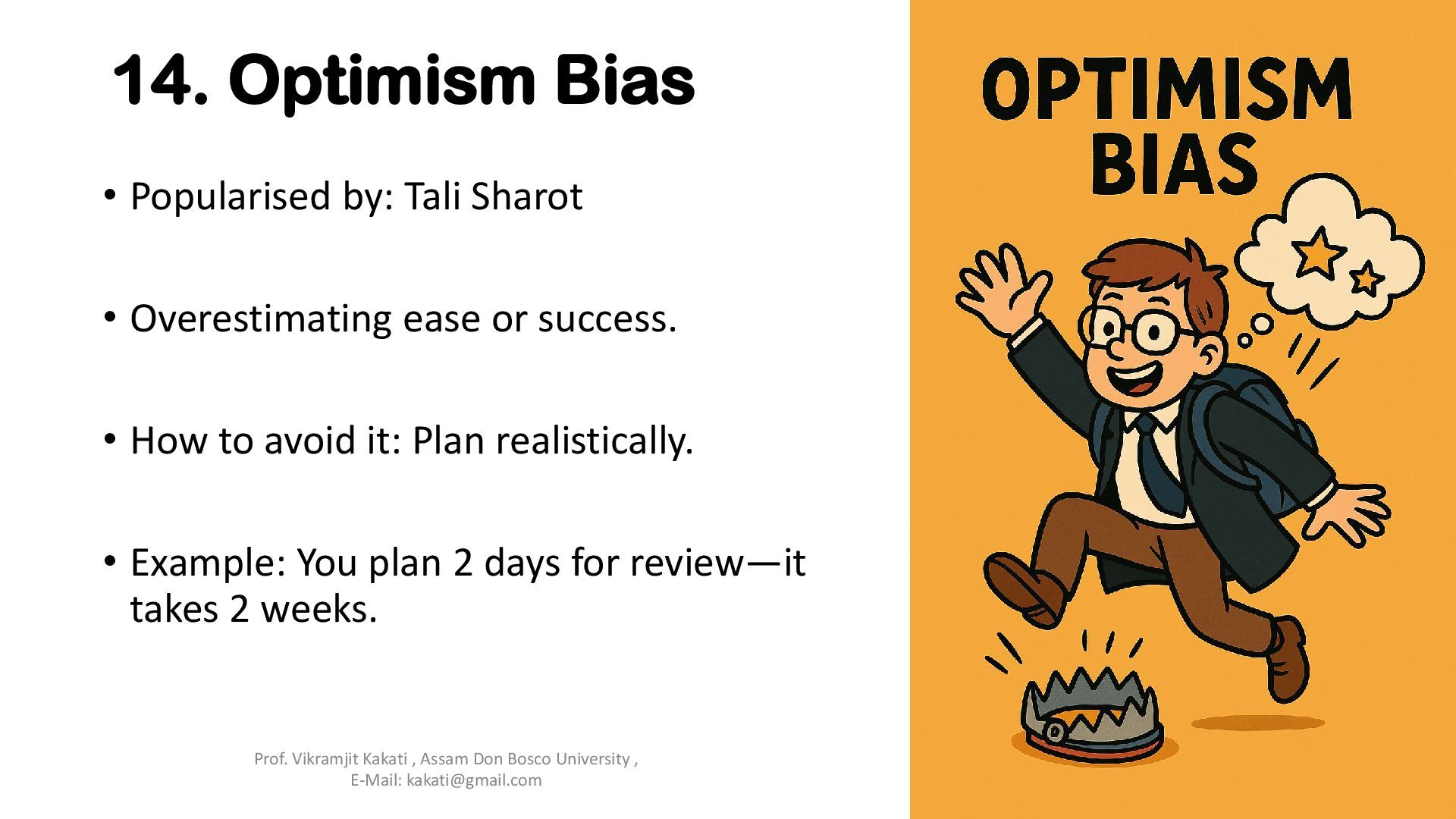
  16. 14. Optimism Bias • Popularised by: Tali Sharot • Overestimating

    ease or success. • How to avoid it: Plan realistically. • Example: You plan 2 days for review—it takes 2 weeks. Prof. Vikramjit Kakati , Assam Don Bosco University , E-Mail: [email protected]
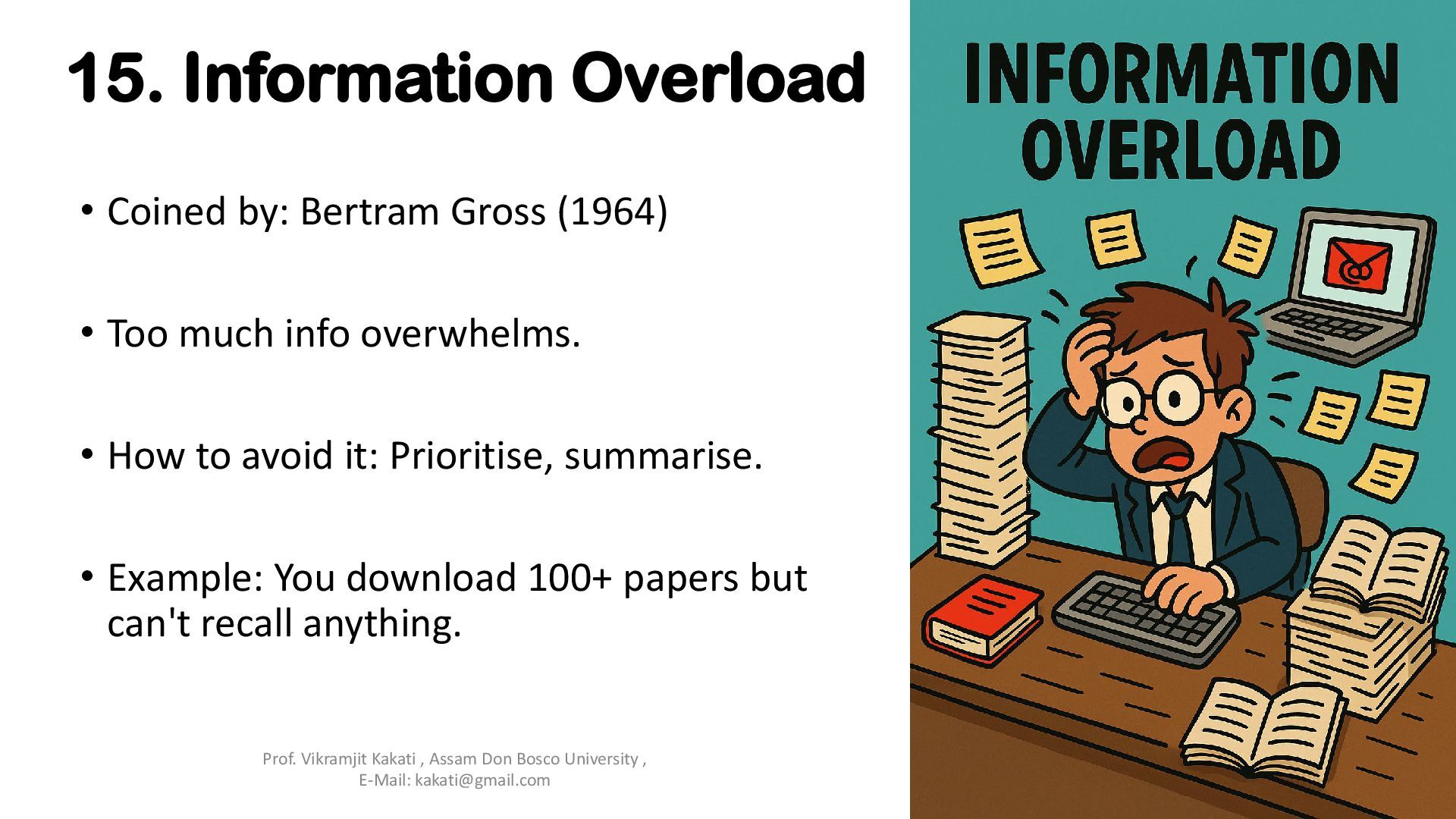
  17. 15. Information Overload • Coined by: Bertram Gross (1964) •

    Too much info overwhelms. • How to avoid it: Prioritise, summarise. • Example: You download 100+ papers but can't recall anything. Prof. Vikramjit Kakati , Assam Don Bosco University , E-Mail: [email protected]
  18. April 2025 Presented by Prof. Vikramjit Kakati Assam Don Bosco

    University Email: [email protected] Prof. Vikramjit Kakati , Assam Don Bosco University , E-Mail: [email protected]