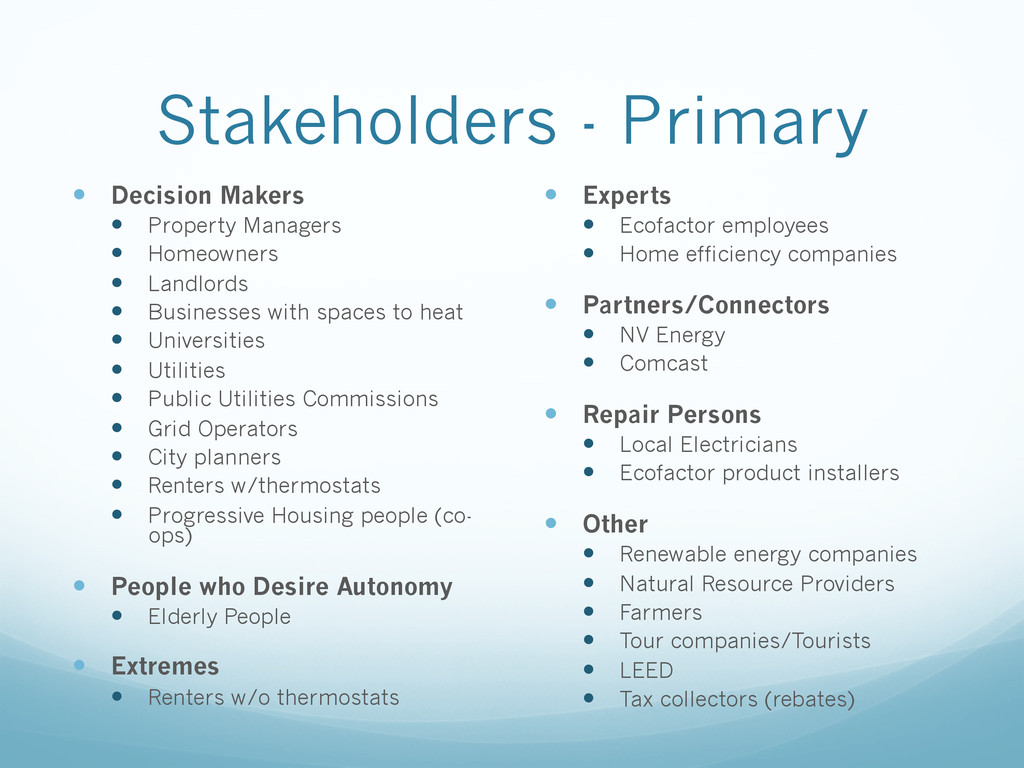
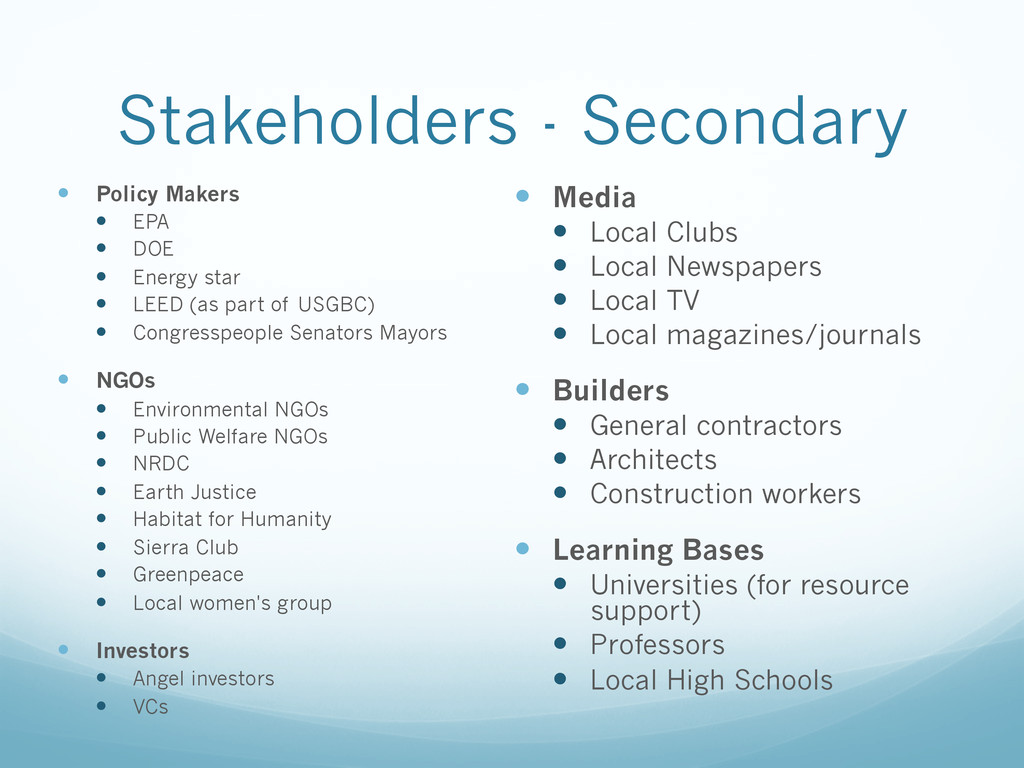
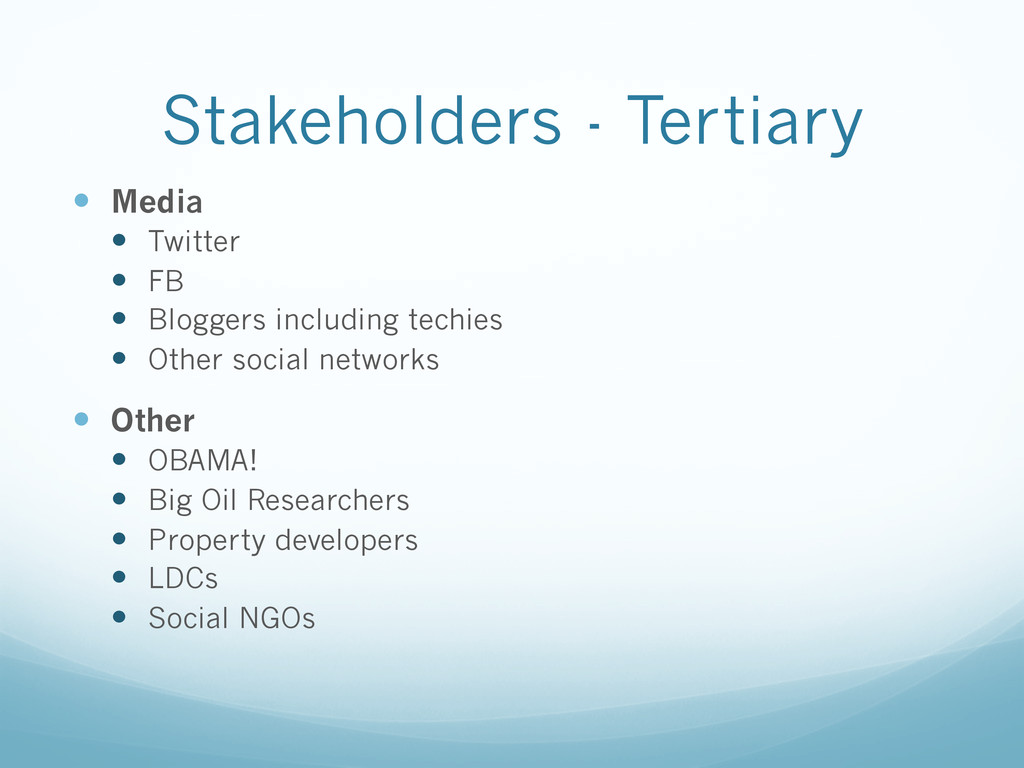
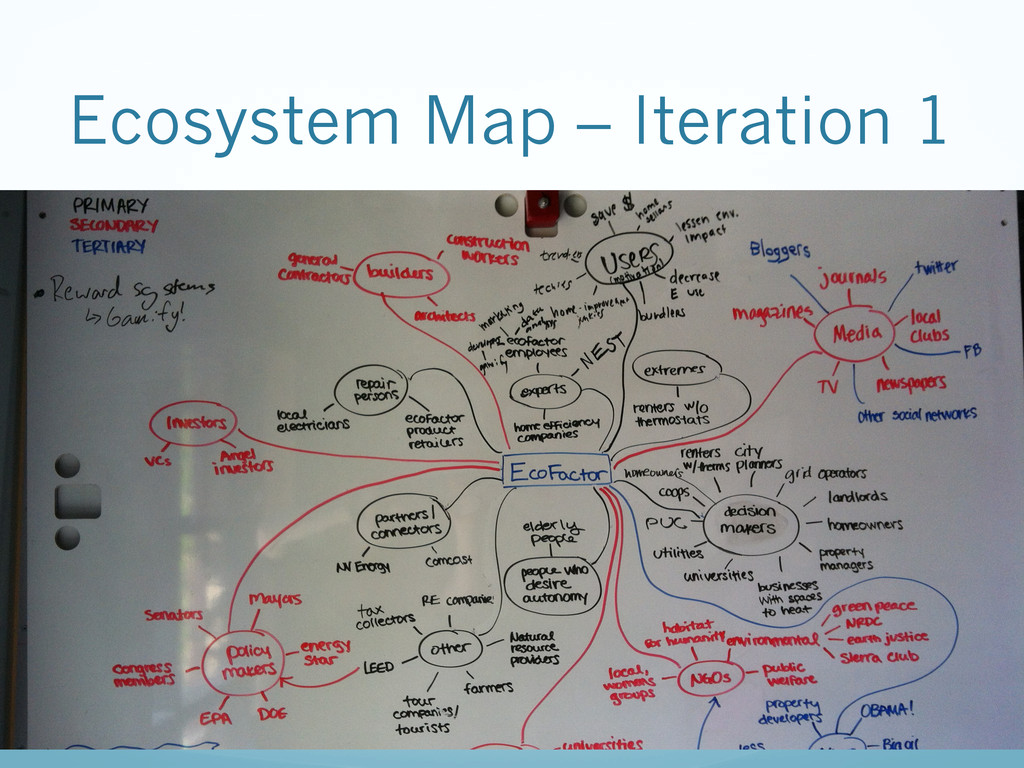
Energy star LEED (as part of USGBC) Congresspeople Senators Mayors NGOs Environmental NGOs Public Welfare NGOs NRDC Earth Justice Habitat for Humanity Sierra Club Greenpeace Local women's group Investors Angel investors VCs Media Local Clubs Local Newspapers Local TV Local magazines/journals Builders General contractors Architects Construction workers Learning Bases Universities (for resource support) Professors Local High Schools
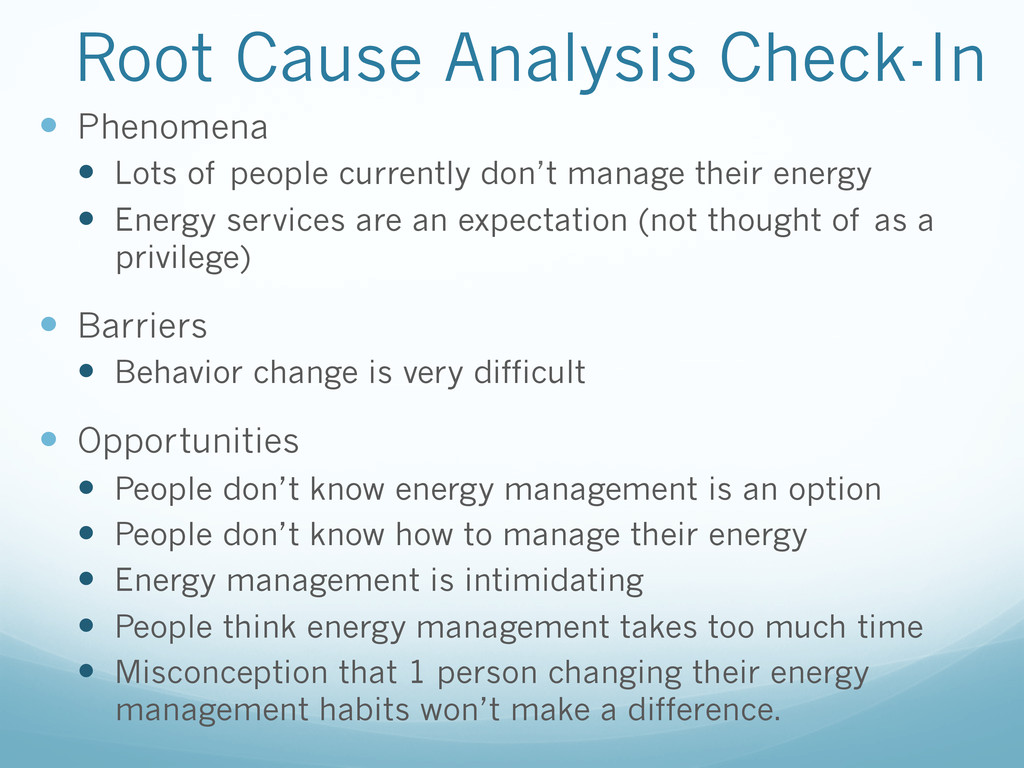
currently don’t manage their energy Energy services are an expectation (not thought of as a privilege) Barriers Behavior change is very difficult Opportunities People don’t know energy management is an option People don’t know how to manage their energy Energy management is intimidating People think energy management takes too much time Misconception that 1 person changing their energy management habits won’t make a difference.
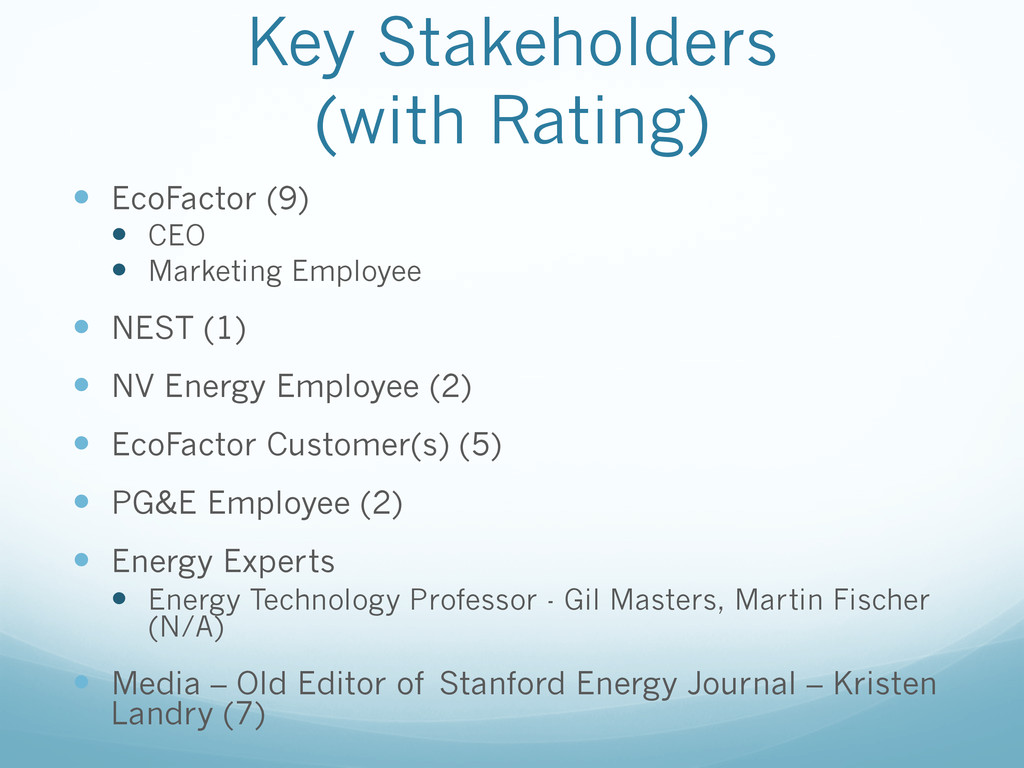
Marketing Employee NEST (1) NV Energy Employee (2) EcoFactor Customer(s) (5) PG&E Employee (2) Energy Experts Energy Technology Professor - Gil Masters, Martin Fischer (N/A) Media – Old Editor of Stanford Energy Journal – Kristen Landry (7)
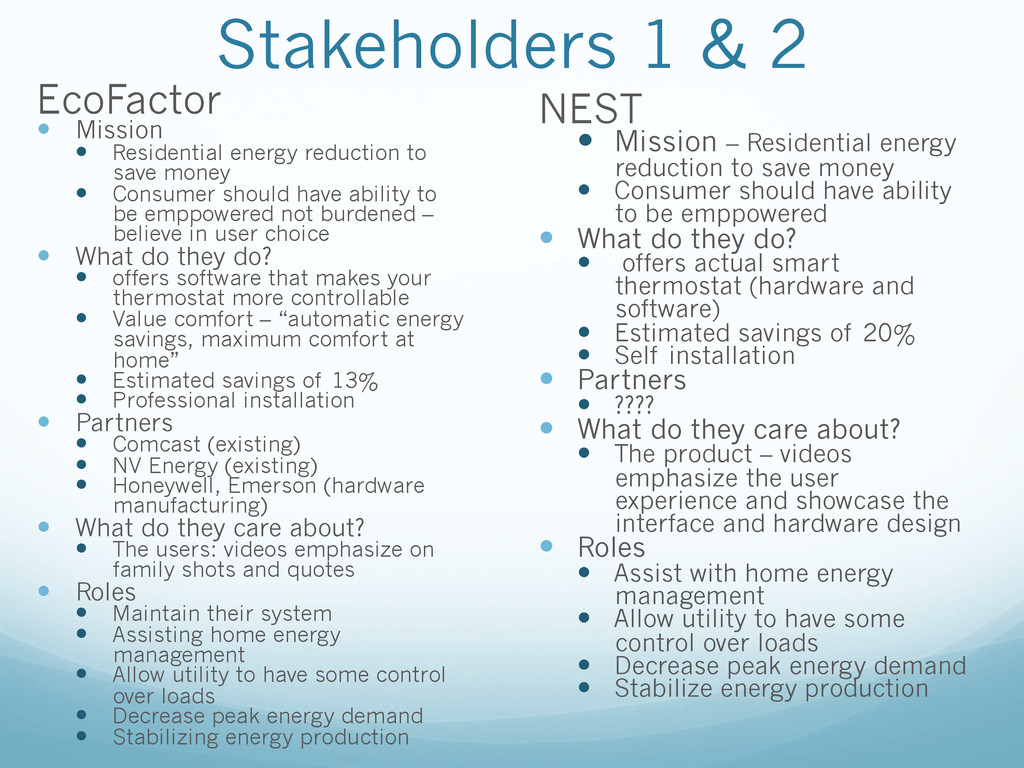
reduction to save money Consumer should have ability to be emppowered not burdened – believe in user choice What do they do? offers software that makes your thermostat more controllable Value comfort – “automatic energy savings, maximum comfort at home” Estimated savings of 13% Professional installation Partners Comcast (existing) NV Energy (existing) Honeywell, Emerson (hardware manufacturing) What do they care about? The users: videos emphasize on family shots and quotes Roles Maintain their system Assisting home energy management Allow utility to have some control over loads Decrease peak energy demand Stabilizing energy production NEST Mission – Residential energy reduction to save money Consumer should have ability to be emppowered What do they do? offers actual smart thermostat (hardware and software) Estimated savings of 20% Self installation Partners ???? What do they care about? The product – videos emphasize the user experience and showcase the interface and hardware design Roles Assist with home energy management Allow utility to have some control over loads Decrease peak energy demand Stabilize energy production
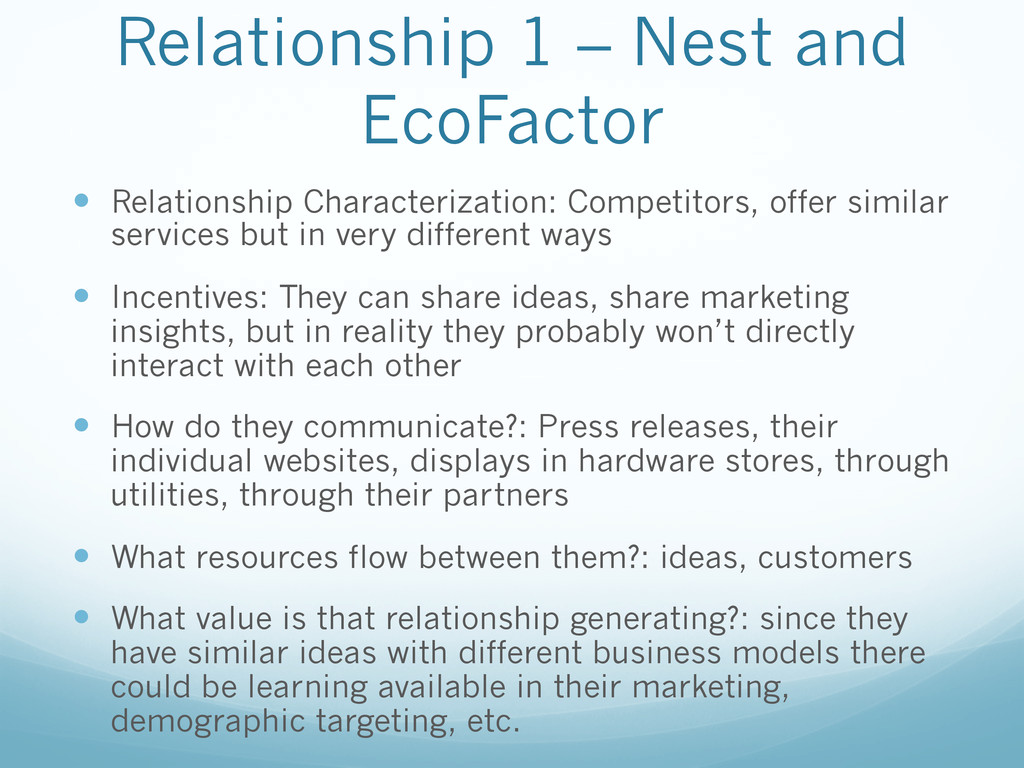
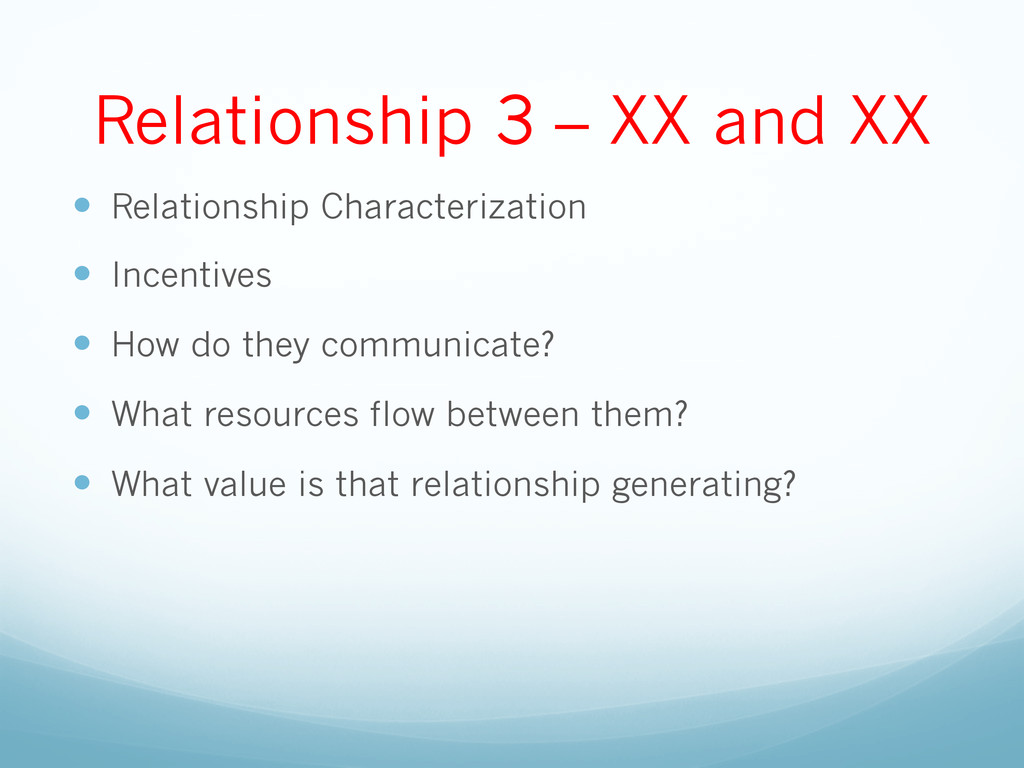
offer similar services but in very different ways Incentives: They can share ideas, share marketing insights, but in reality they probably won’t directly interact with each other How do they communicate?: Press releases, their individual websites, displays in hardware stores, through utilities, through their partners What resources flow between them?: ideas, customers What value is that relationship generating?: since they have similar ideas with different business models there could be learning available in their marketing, demographic targeting, etc.
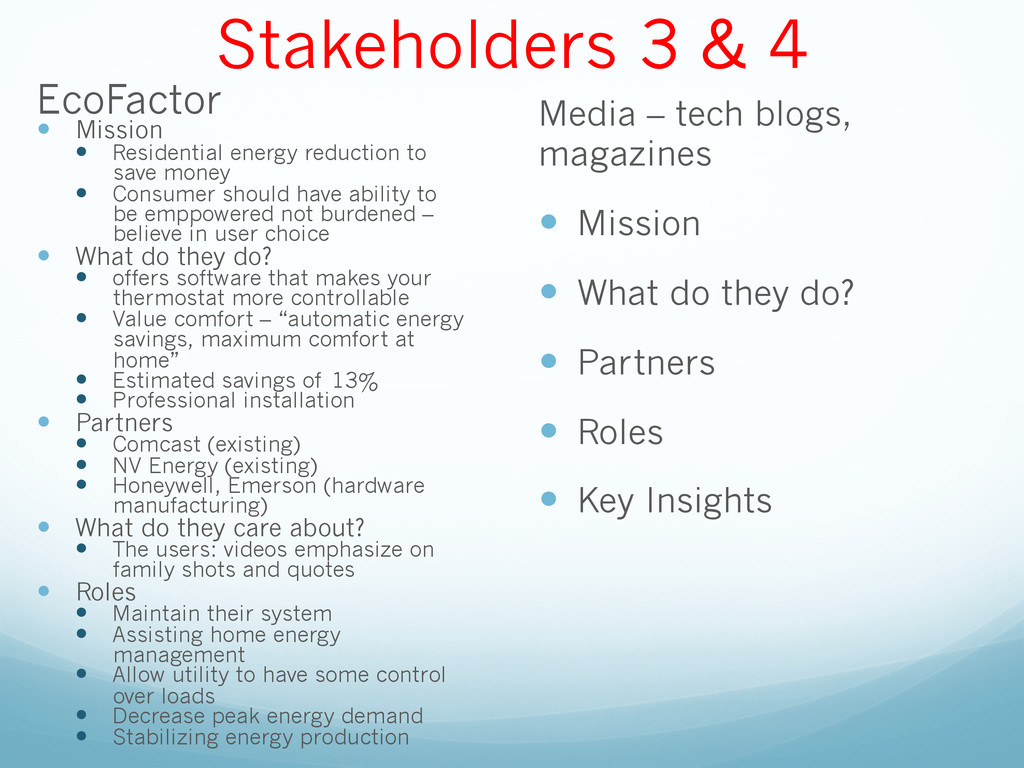
Mission What do they do? Partners Roles Key Insights EcoFactor Mission Residential energy reduction to save money Consumer should have ability to be emppowered not burdened – believe in user choice What do they do? offers software that makes your thermostat more controllable Value comfort – “automatic energy savings, maximum comfort at home” Estimated savings of 13% Professional installation Partners Comcast (existing) NV Energy (existing) Honeywell, Emerson (hardware manufacturing) What do they care about? The users: videos emphasize on family shots and quotes Roles Maintain their system Assisting home energy management Allow utility to have some control over loads Decrease peak energy demand Stabilizing energy production
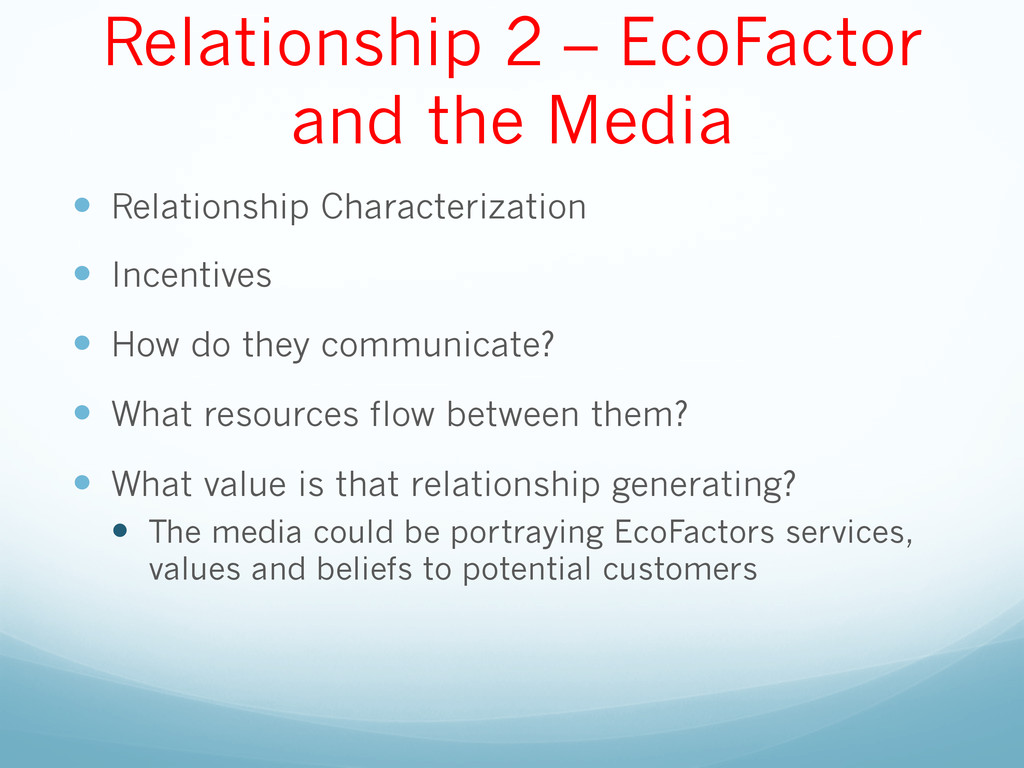
Incentives How do they communicate? What resources flow between them? What value is that relationship generating? The media could be portraying EcoFactors services, values and beliefs to potential customers
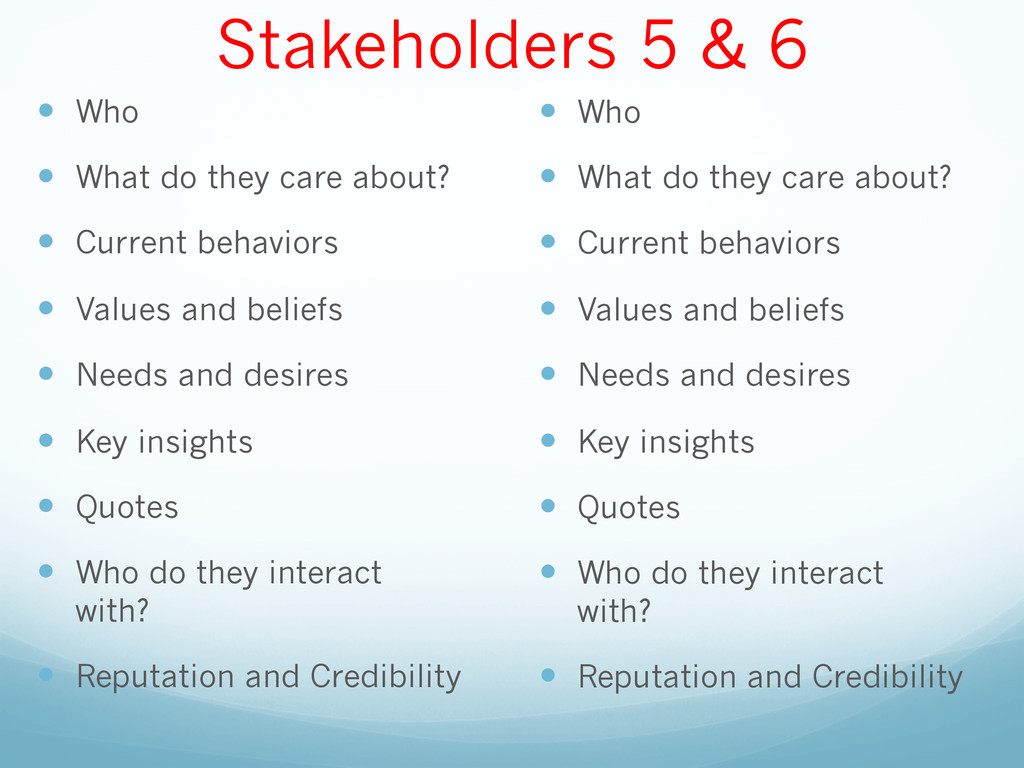
care about? Current behaviors Values and beliefs Needs and desires Key insights Quotes Who do they interact with? Reputation and Credibility Who What do they care about? Current behaviors Values and beliefs Needs and desires Key insights Quotes Who do they interact with? Reputation and Credibility


 baasie
 bermonpainter
 kneath
 techseoconnect
 jdejongh
 madoxten
 charlesmeaden
 geoffreycrofte
 jmmastey
 minecr
 jonyablonski
 mraible