Upgrade to Pro — share decks privately, control downloads, hide ads and more …

From Output to Outcome - Connecting a Global En...

saran
November 04, 2026
75

From Output to Outcome - Connecting a Global Engineering Team to Customer Value

How engineer connect the output to the outcome. Reflective practitioner mindset, psychological safety work environment

saran

November 04, 2026

Transcript

20 slides
  1. From Output to Outcome Connecting a Global Engineering Team to

    Customer Value Saran · Engineering Manager
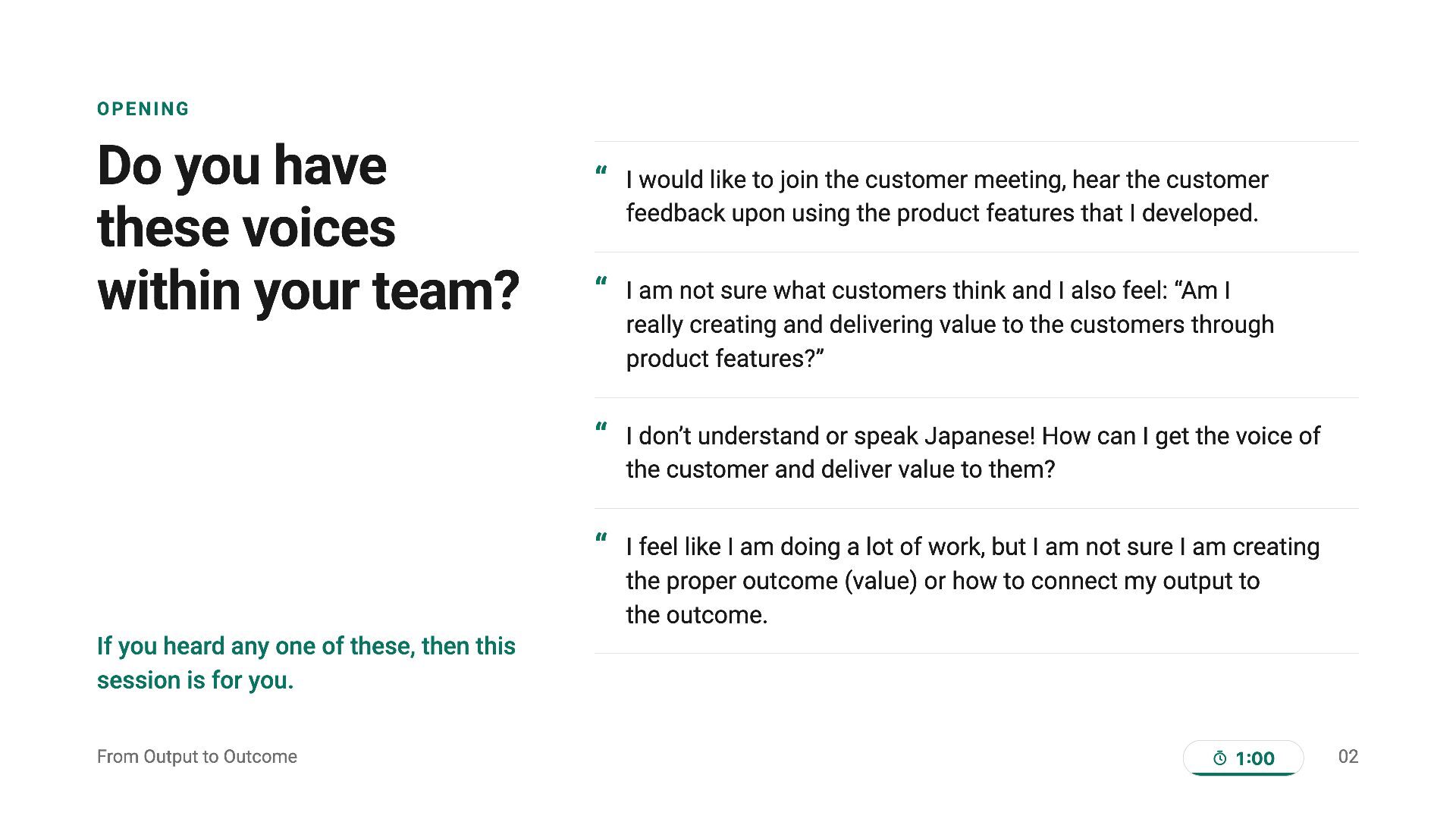
  2. Opening Do you have these voices within your team? “

    I would like to join the customer meeting, hear the customer feedback upon using the product features that I developed. “ I am not sure what customers think and I also feel: “Am I really creating and delivering value to the customers through product features?” “ I don’t understand or speak Japanese! How can I get the voice of the customer and deliver value to them? “ I feel like I am doing a lot of work, but I am not sure I am creating the proper outcome (value) or how to connect my output to the outcome. If you heard any one of these, then this session is for you. From Output to Outcome 02
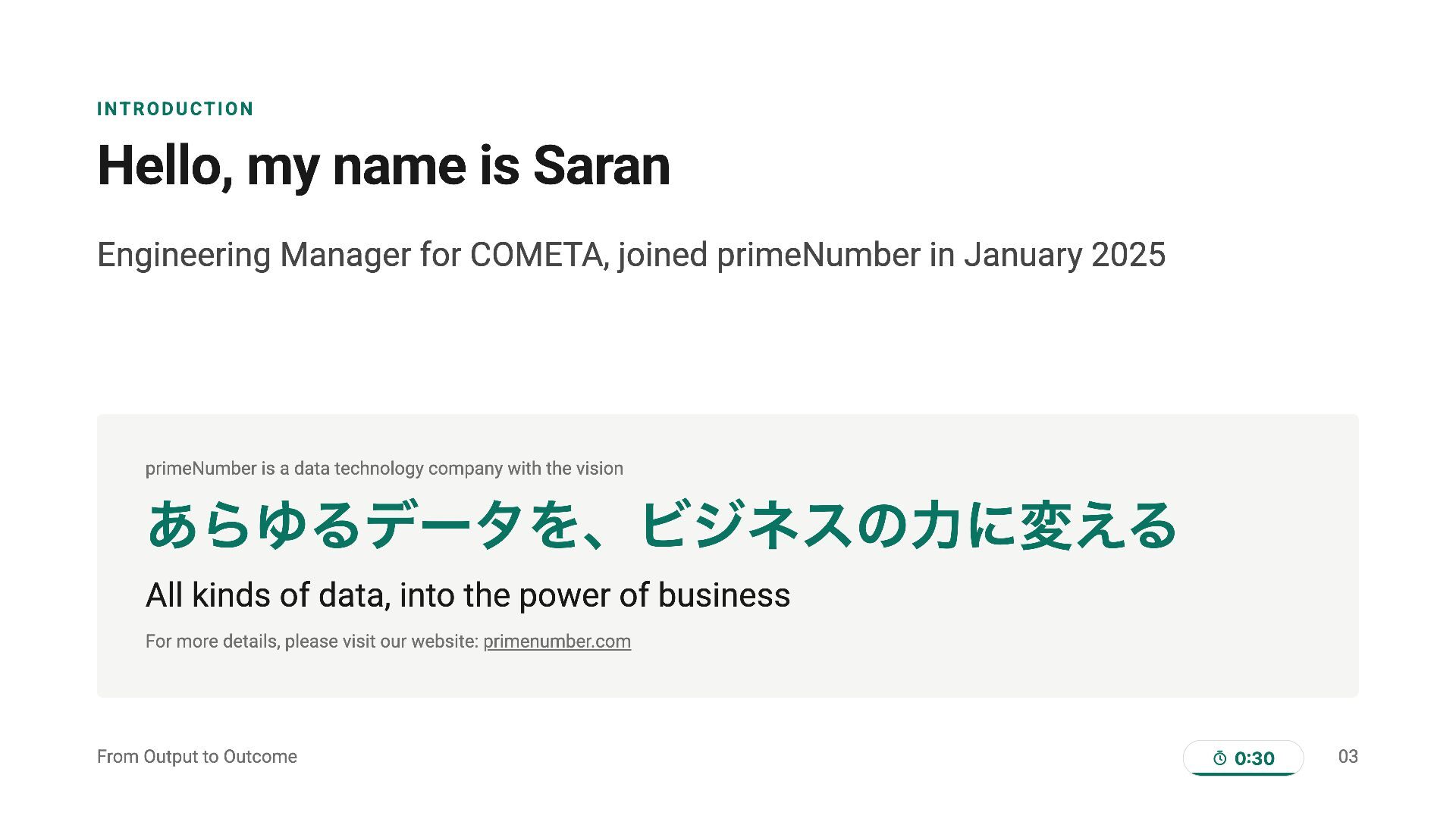
  3. Introduction Hello, my name is Saran Engineering Manager for COMETA,

    joined primeNumber in January 2025 primeNumber is a data technology company with the vision あらゆるデータを、ビジネスの力に変える All kinds of data, into the power of business For more details, please visit our website: primenumber.com From Output to Outcome 03
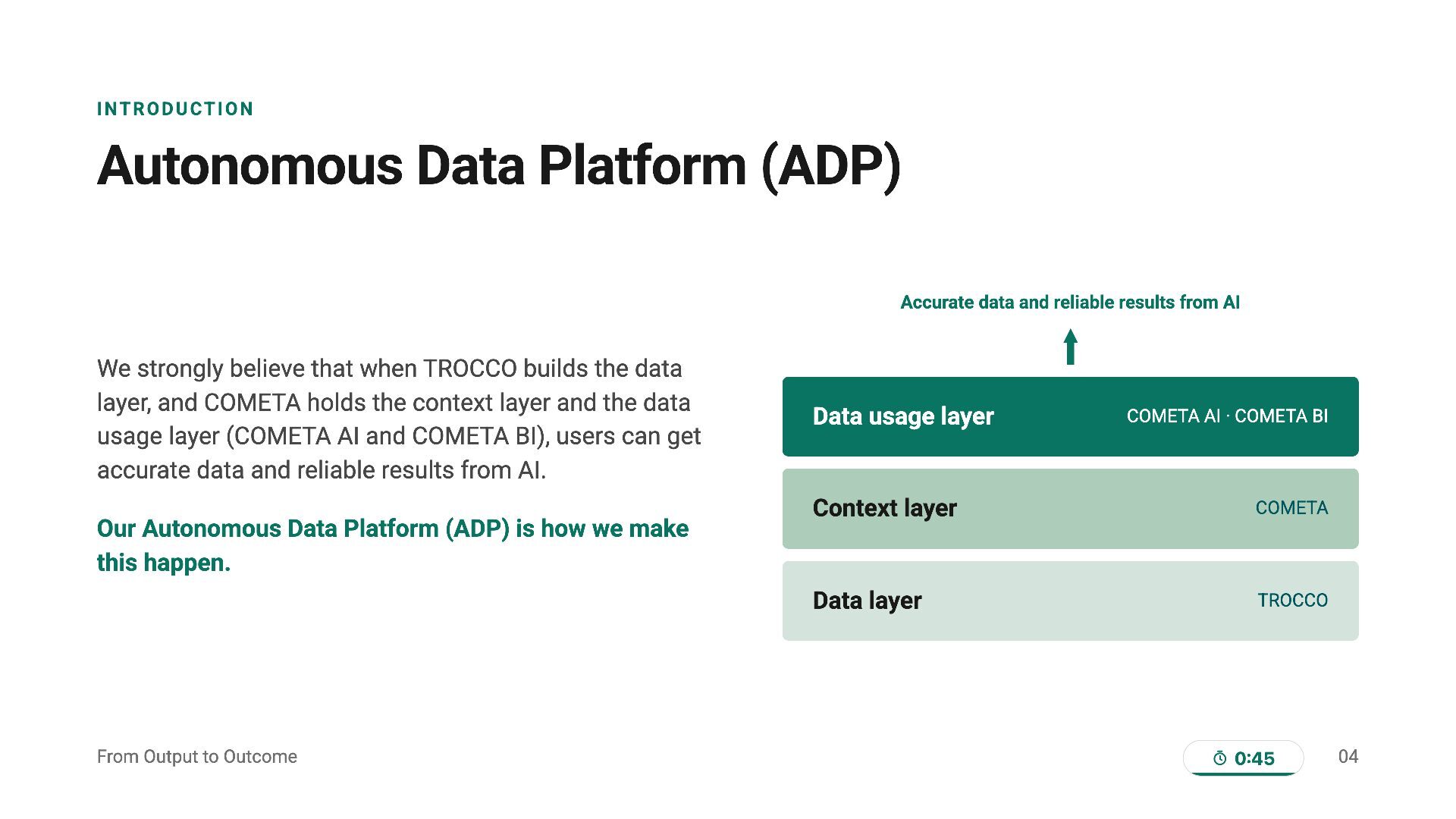
  4. Introduction Autonomous Data Platform (ADP) Accurate data and reliable results

    from AI We strongly believe that when TROCCO builds the data layer, and COMETA holds the context layer and the data usage layer (COMETA AI and COMETA BI), users can get accurate data and reliable results from AI. Our Autonomous Data Platform (ADP) is how we make this happen. From Output to Outcome Data usage layer COMETA AI · COMETA BI Context layer COMETA Data layer TROCCO 04
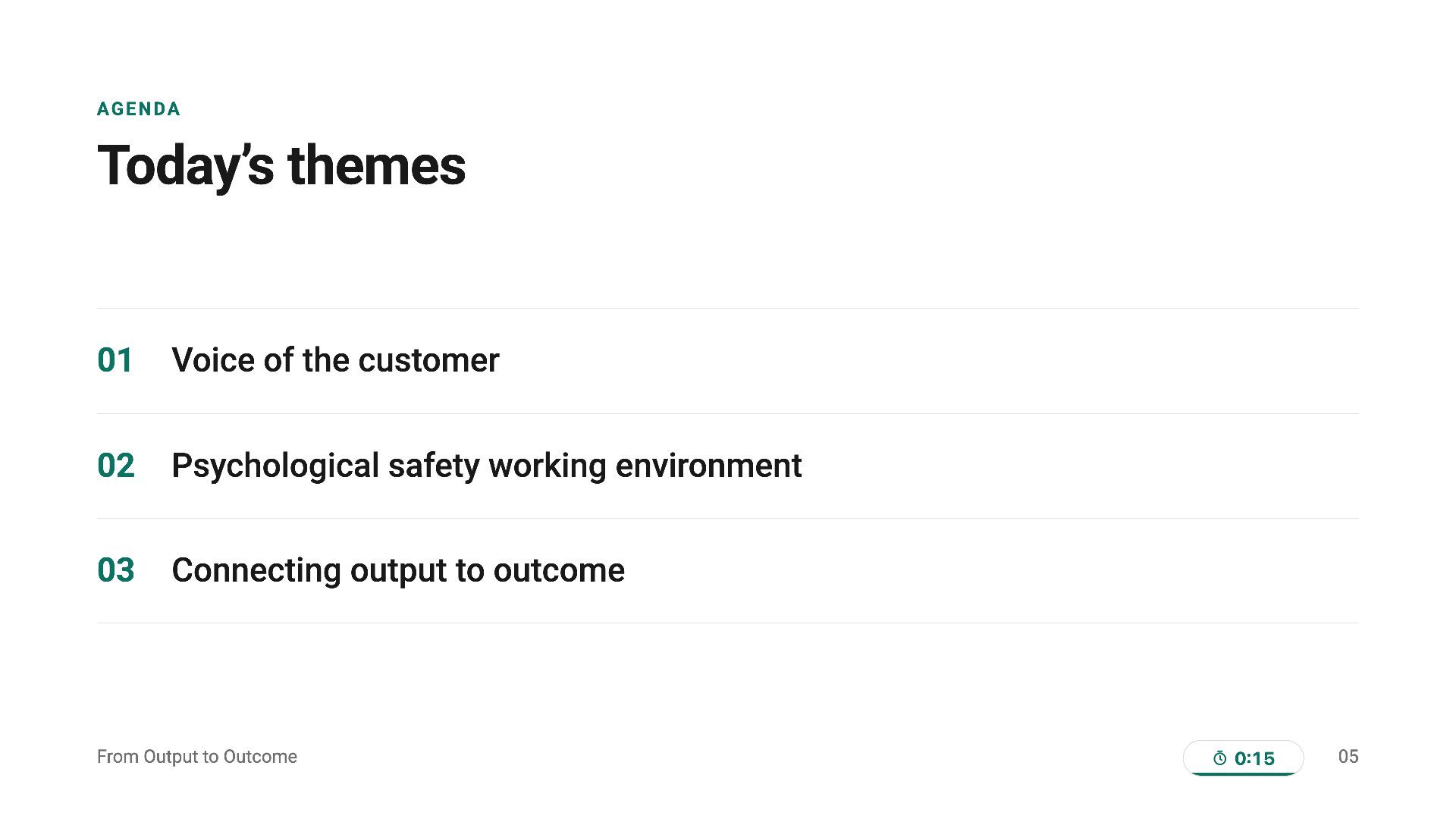
  5. Agenda Today’s themes 01 Voice of the customer 02 Psychological

    safety working environment 03 Connecting output to outcome From Output to Outcome 05
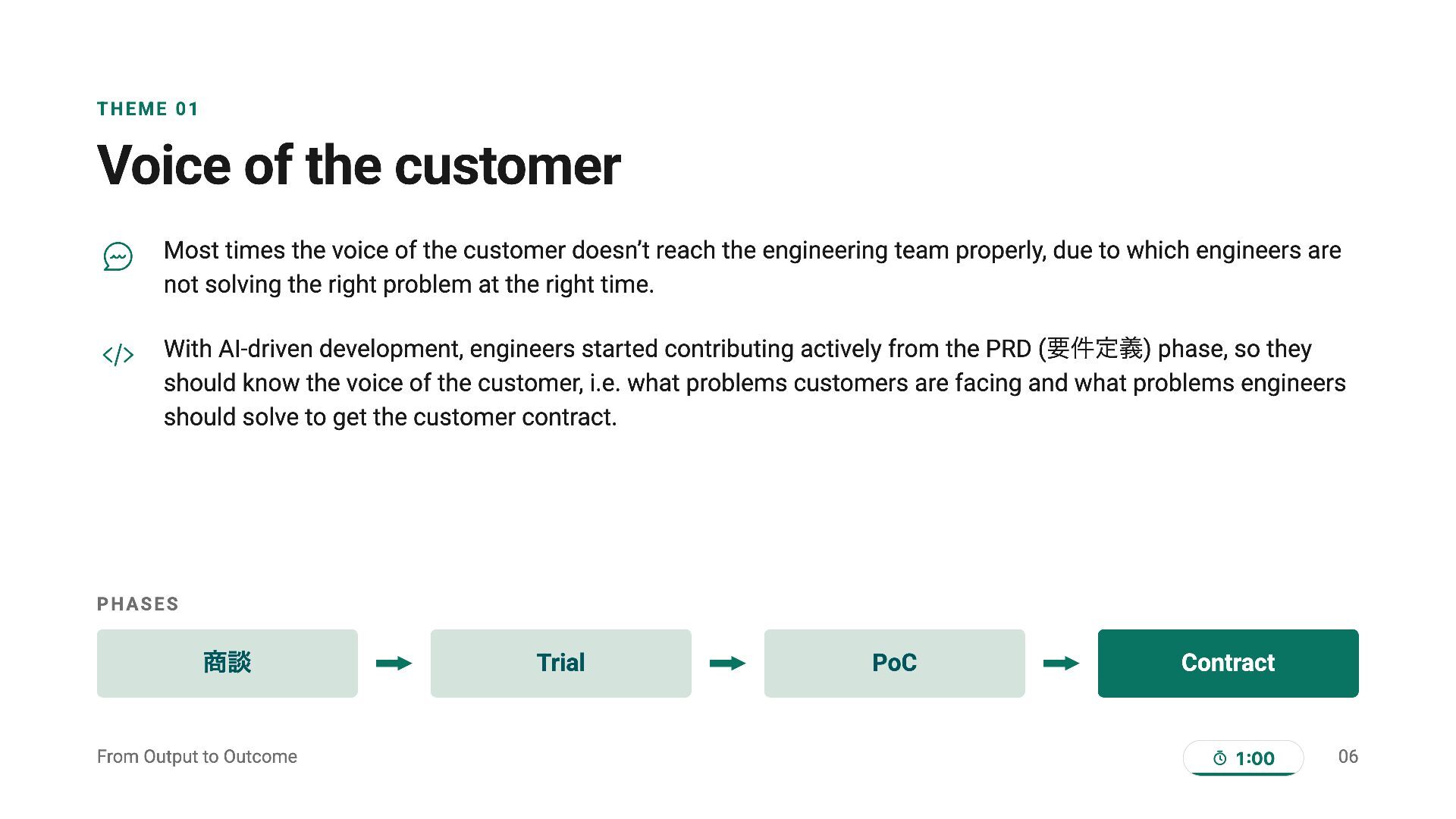
  6. Theme 01 Voice of the customer   Most times

    the voice of the customer doesn’t reach the engineering team properly, due to which engineers are not solving the right problem at the right time. With AI-driven development, engineers started contributing actively from the PRD (要件定義) phase, so they should know the voice of the customer, i.e. what problems customers are facing and what problems engineers should solve to get the customer contract. Phases 商談 From Output to Outcome Trial PoC Contract 06
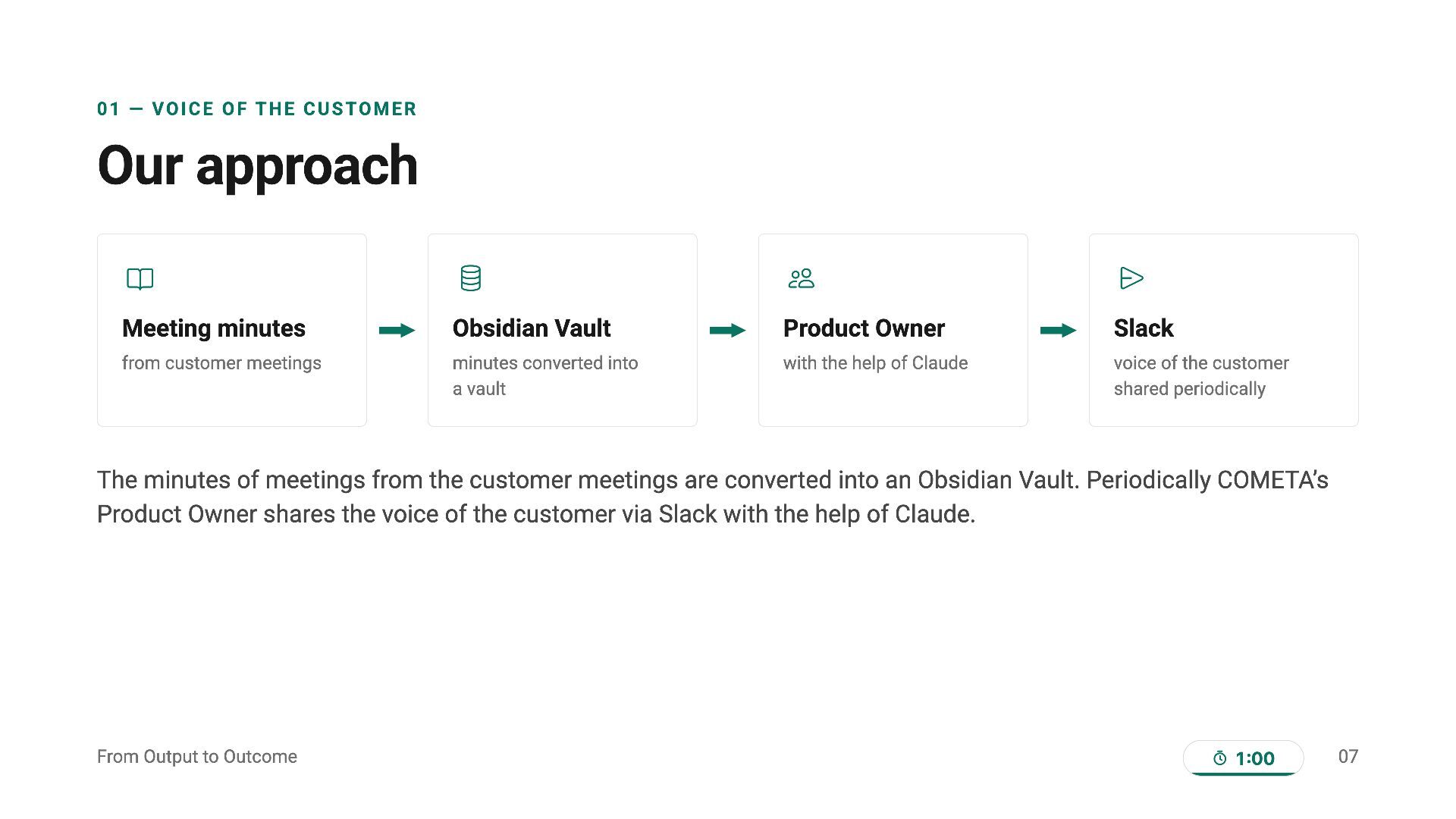
  7. 01 — Voice of the customer Our approach  

      Meeting minutes Obsidian Vault Product Owner Slack from customer meetings minutes converted into a vault with the help of Claude voice of the customer shared periodically The minutes of meetings from the customer meetings are converted into an Obsidian Vault. Periodically COMETA’s Product Owner shares the voice of the customer via Slack with the help of Claude. From Output to Outcome 07
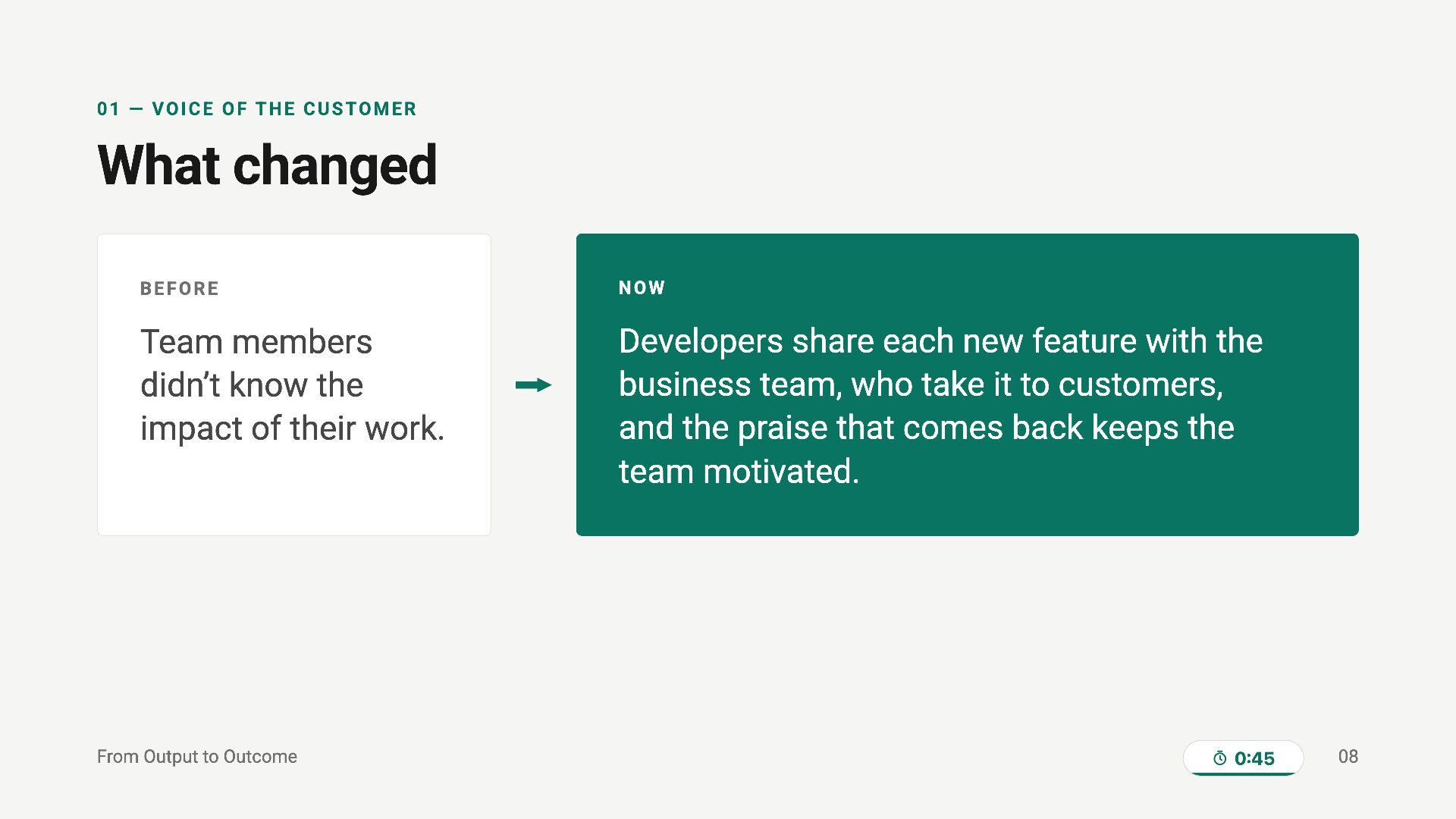
  8. 01 — Voice of the customer What changed Before Now

    Team members didn’t know the impact of their work. Developers share each new feature with the business team, who take it to customers, and the praise that comes back keeps the team motivated. From Output to Outcome 08
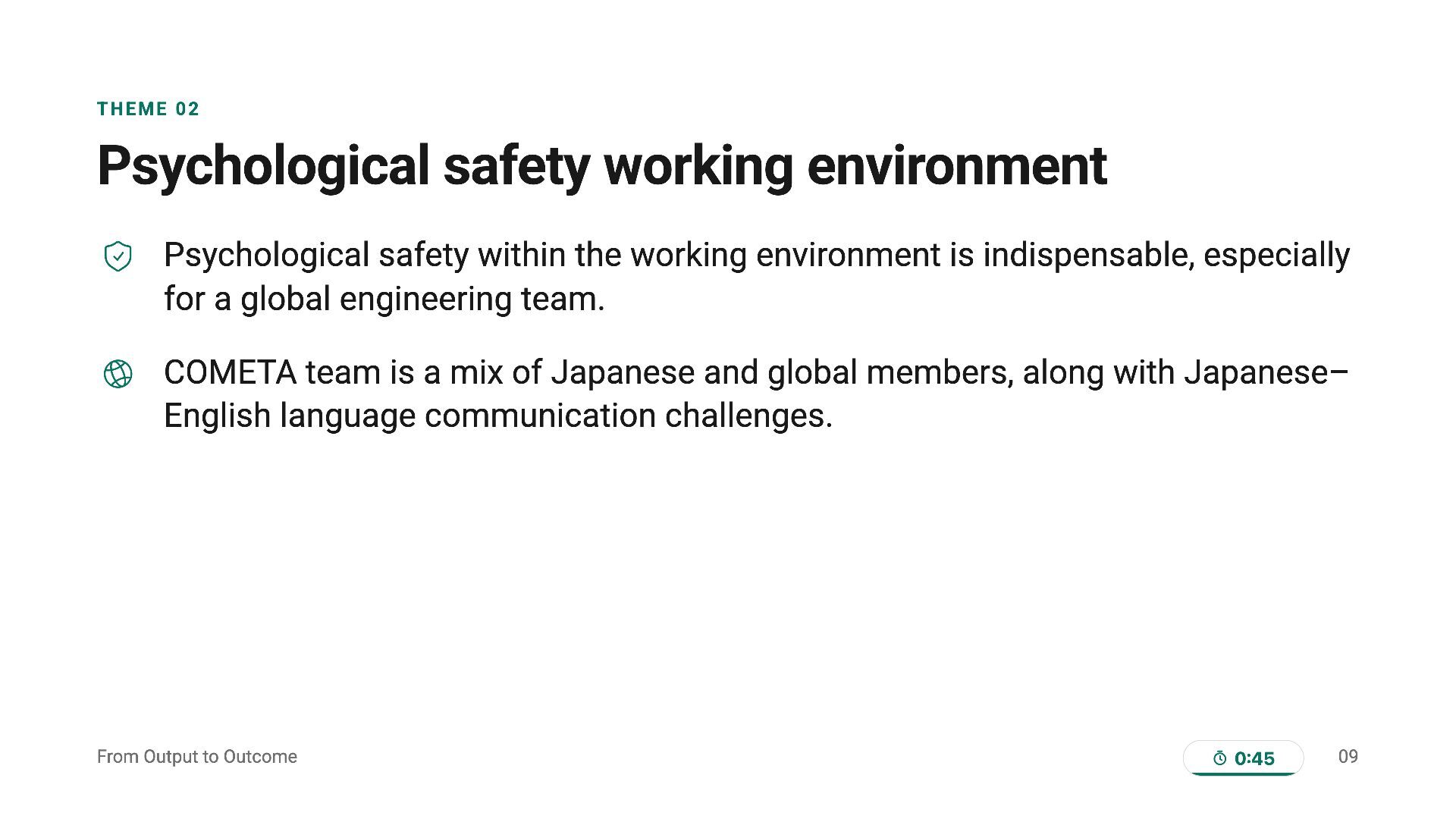
  9. Theme 02 Psychological safety working environment safety within the working

    environment is indispensable, especially  Psychological for a global engineering team. team is a mix of Japanese and global members, along with Japanese–  COMETA English language communication challenges. From Output to Outcome 09
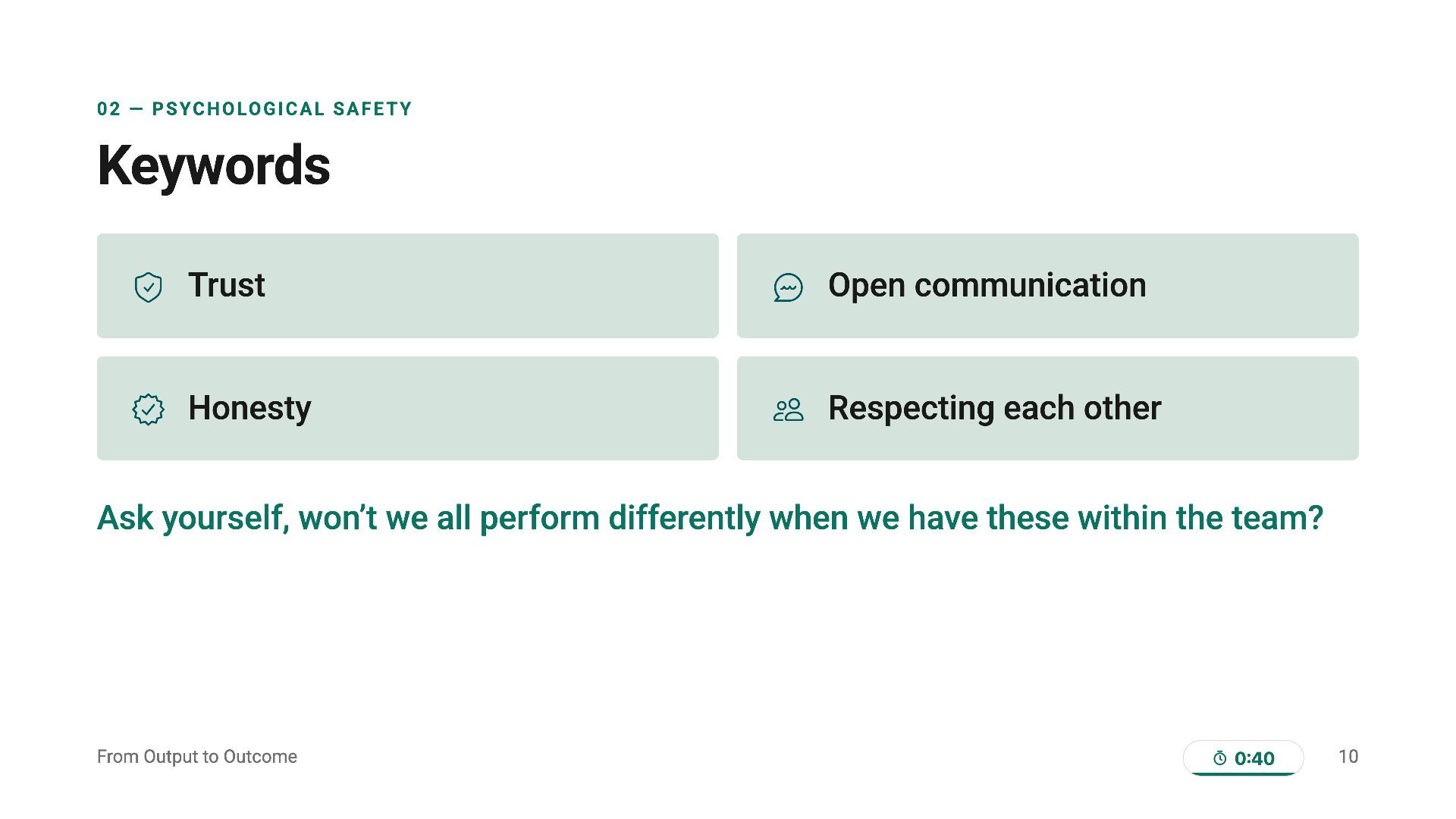
  10. 02 — Psychological safety Keywords  Trust  Open communication

     Honesty  Respecting each other Ask yourself, won’t we all perform differently when we have these within the team? From Output to Outcome 10
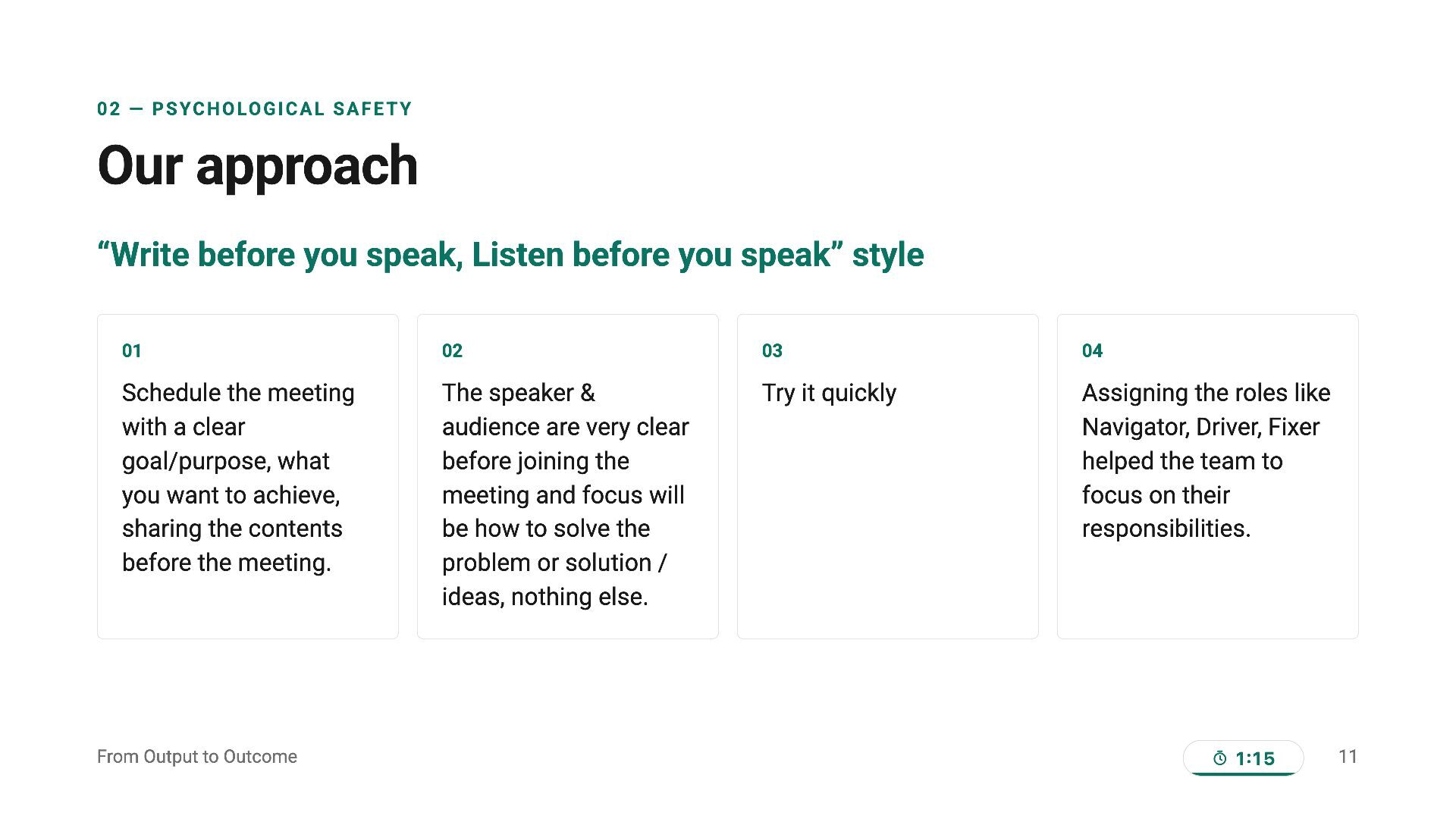
  11. 02 — Psychological safety Our approach “Write before you speak,

    Listen before you speak” style 01 02 03 04 Schedule the meeting with a clear goal/purpose, what you want to achieve, sharing the contents before the meeting. The speaker & audience are very clear before joining the meeting and focus will be how to solve the problem or solution / ideas, nothing else. Try it quickly Assigning the roles like Navigator, Driver, Fixer helped the team to focus on their responsibilities. From Output to Outcome 11
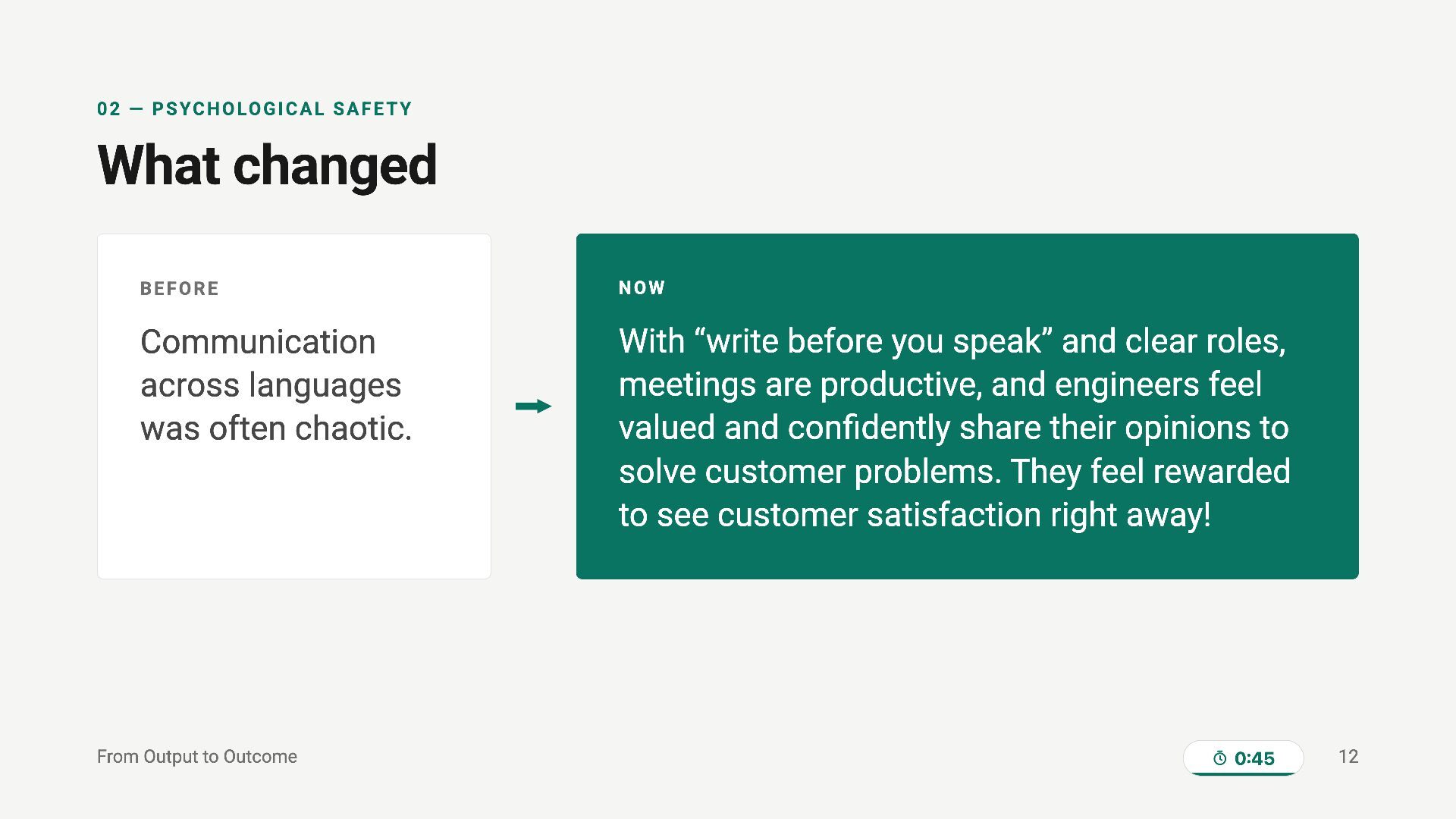
  12. 02 — Psychological safety What changed Before Now Communication across

    languages was often chaotic. With “write before you speak” and clear roles, meetings are productive, and engineers feel valued and confidently share their opinions to solve customer problems. They feel rewarded to see customer satisfaction right away! From Output to Outcome 12
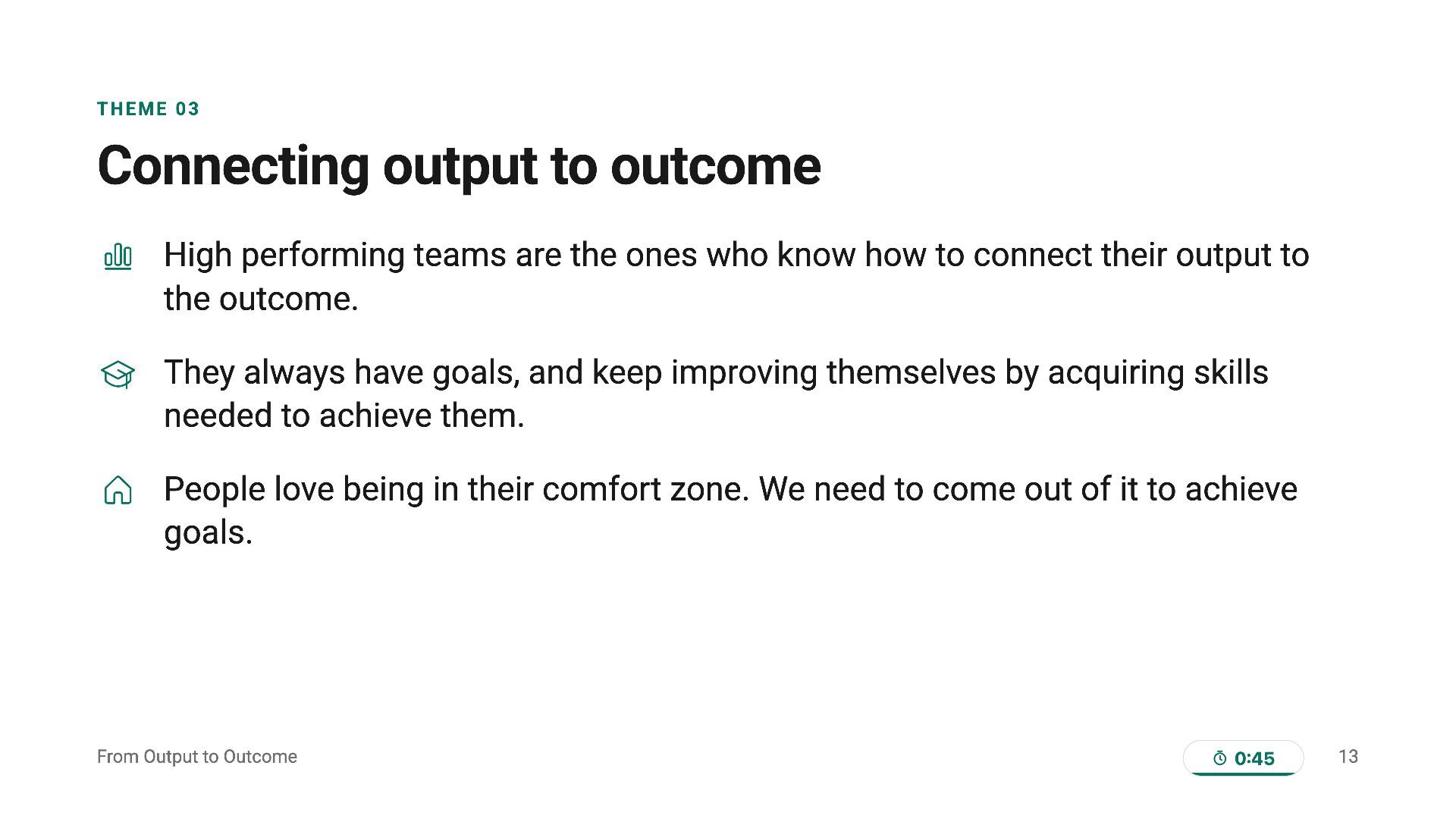
  13. Theme 03 Connecting output to outcome performing teams are the

    ones who know how to connect their output to  High the outcome. always have goals, and keep improving themselves by acquiring skills  They needed to achieve them. love being in their comfort zone. We need to come out of it to achieve  People goals. From Output to Outcome 13
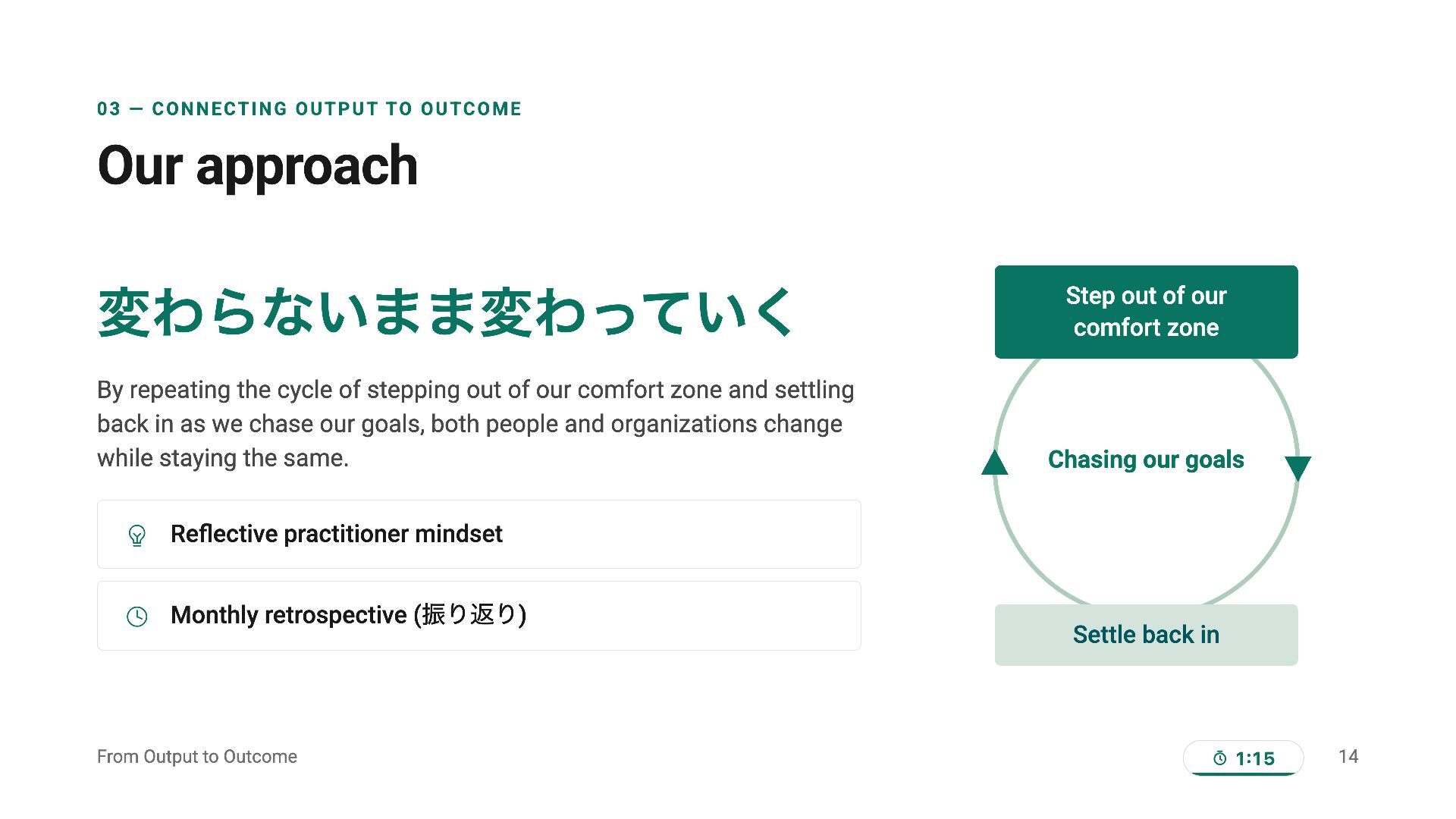
  14. 03 — Connecting output to outcome Our approach 変わらないまま変わっていく By

    repeating the cycle of stepping out of our comfort zone and settling back in as we chase our goals, both people and organizations change while staying the same.   Step out of our comfort zone Chasing our goals Reflective practitioner mindset Monthly retrospective (振り返り) From Output to Outcome Settle back in 14
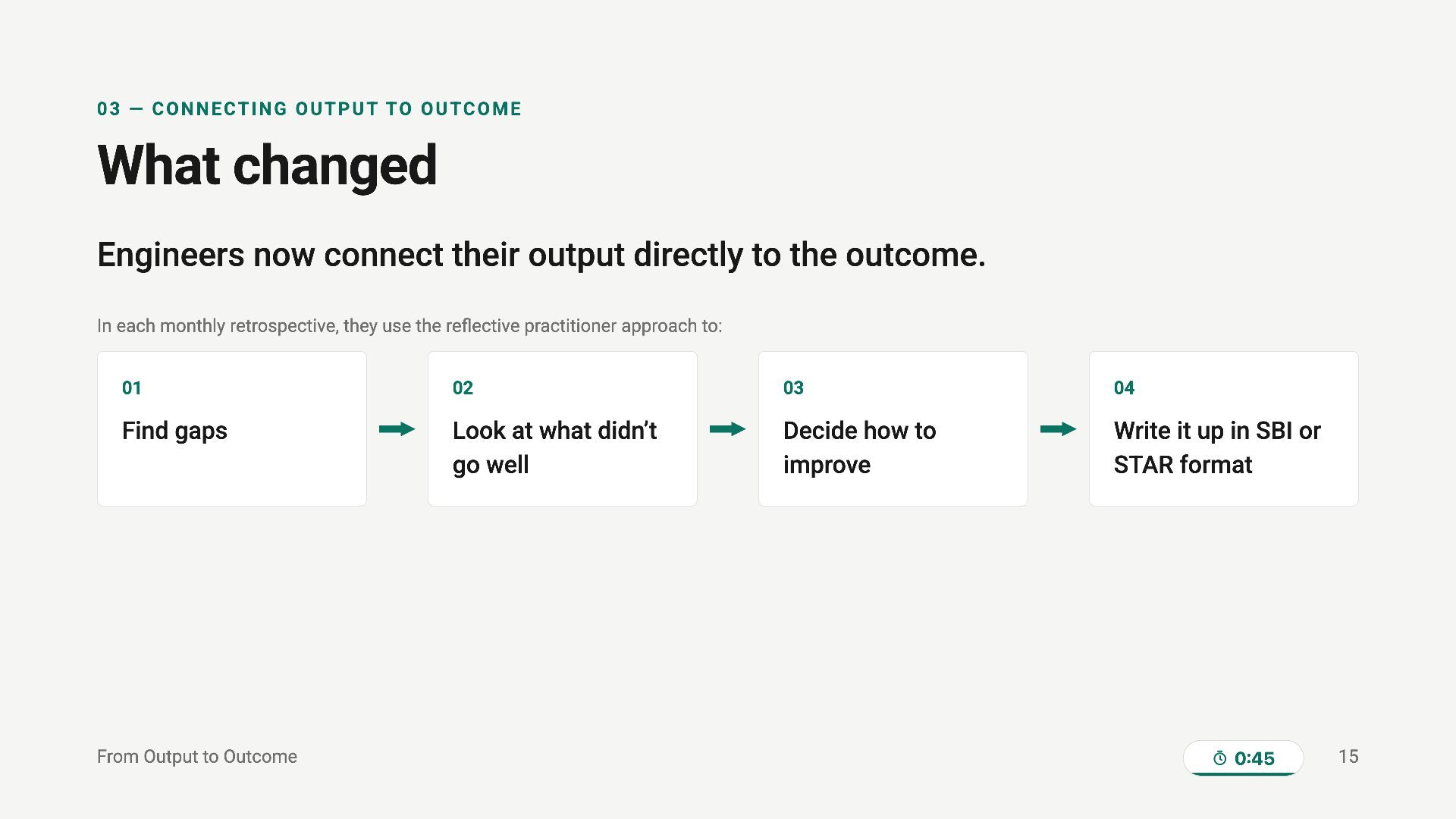
  15. 03 — Connecting output to outcome What changed Engineers now

    connect their output directly to the outcome. In each monthly retrospective, they use the reflective practitioner approach to: 01 02 03 04 Find gaps Look at what didn’t go well Decide how to improve Write it up in SBI or STAR format From Output to Outcome 15
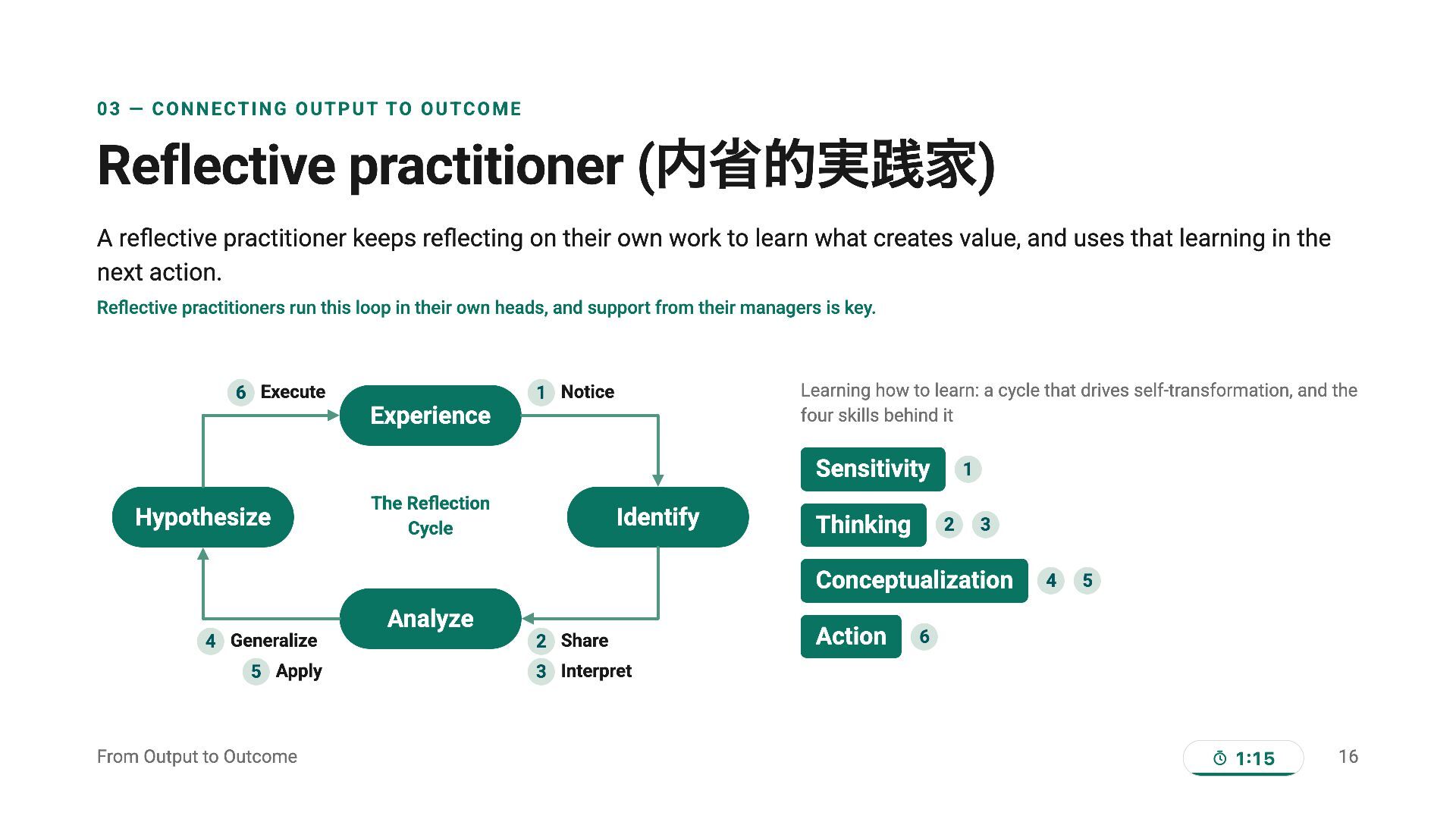
  16. 03 — Connecting output to outcome Reflective practitioner (内省的実践家) A

    reflective practitioner keeps reflecting on their own work to learn what creates value, and uses that learning in the next action. Reflective practitioners run this loop in their own heads, and support from their managers is key. 6 Execute Learning how to learn: a cycle that drives self-transformation, and the four skills behind it 1 Notice Experience Sensitivity Hypothesize The Reflection Cycle Identify Thinking 1 2 3 Conceptualization Analyze 4 Generalize 5 Apply From Output to Outcome 2 Share Action 4 5 6 3 Interpret 16
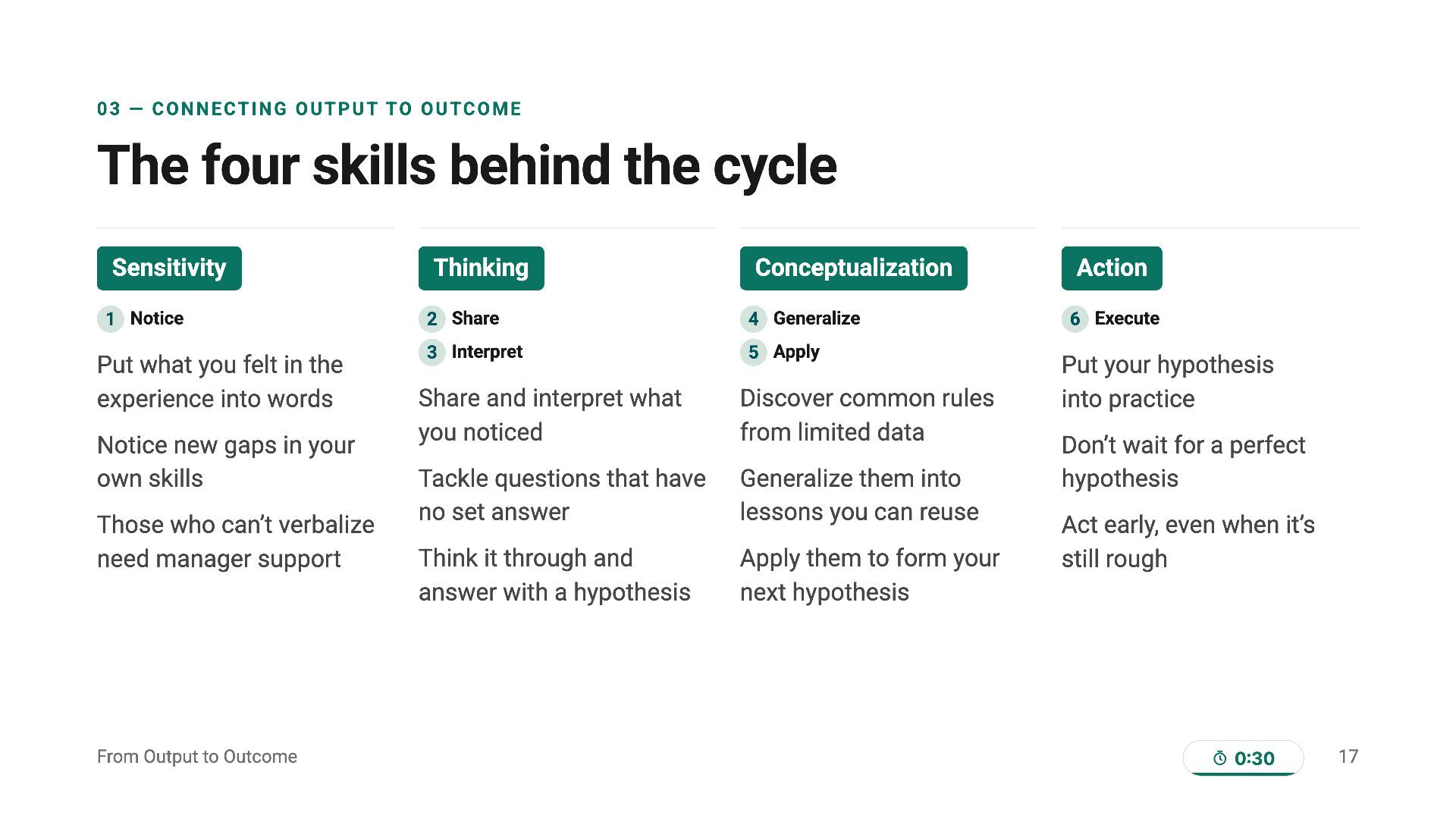
  17. 03 — Connecting output to outcome The four skills behind

    the cycle Sensitivity Thinking Conceptualization Action 1 Notice 2 Share 4 Generalize 6 Execute 3 Interpret 5 Apply Share and interpret what you noticed Discover common rules from limited data Tackle questions that have no set answer Generalize them into lessons you can reuse Think it through and answer with a hypothesis Apply them to form your next hypothesis Put what you felt in the experience into words Notice new gaps in your own skills Those who can’t verbalize need manager support From Output to Outcome Put your hypothesis into practice Don’t wait for a perfect hypothesis Act early, even when it’s still rough 17
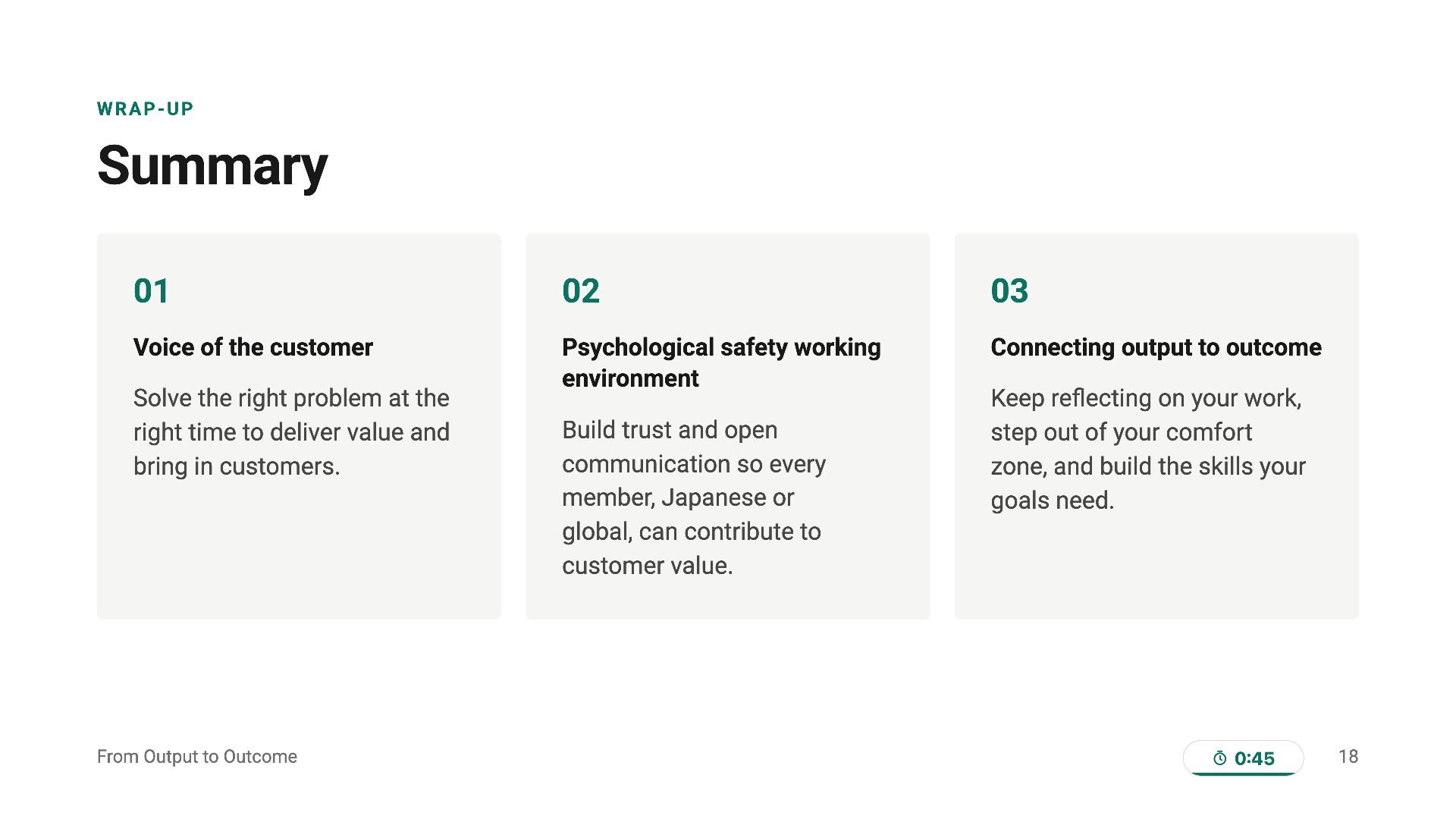
  18. Wrap-up Summary 01 02 03 Voice of the customer Psychological

    safety working environment Connecting output to outcome Solve the right problem at the right time to deliver value and bring in customers. From Output to Outcome Build trust and open communication so every member, Japanese or global, can contribute to customer value. Keep reflecting on your work, step out of your comfort zone, and build the skills your goals need. 18
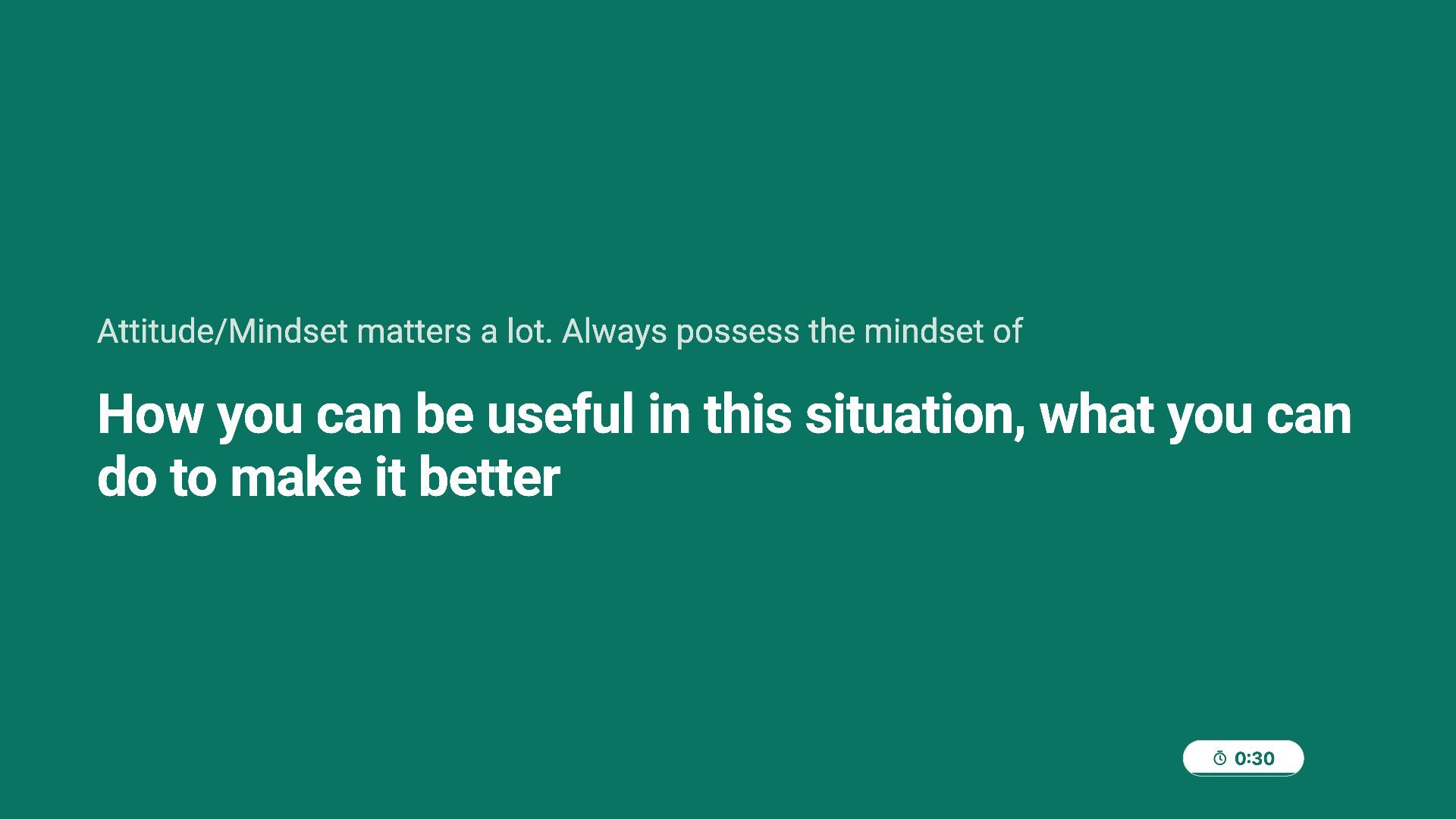
  19. Attitude/Mindset matters a lot. Always possess the mindset of How

    you can be useful in this situation, what you can do to make it better