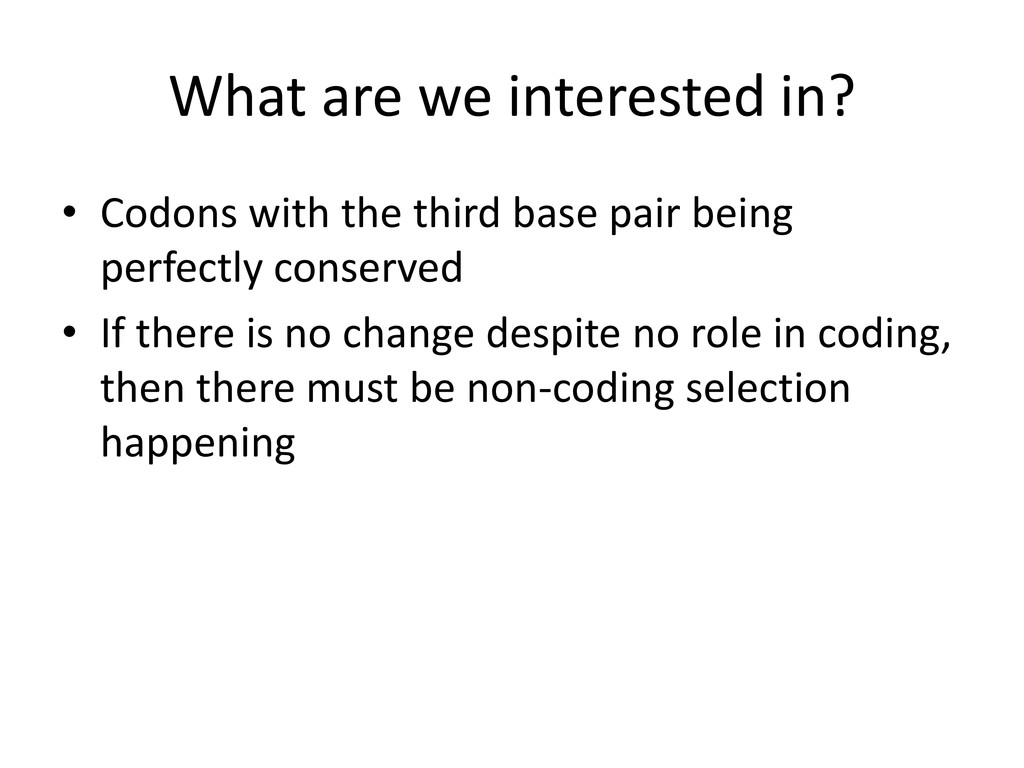
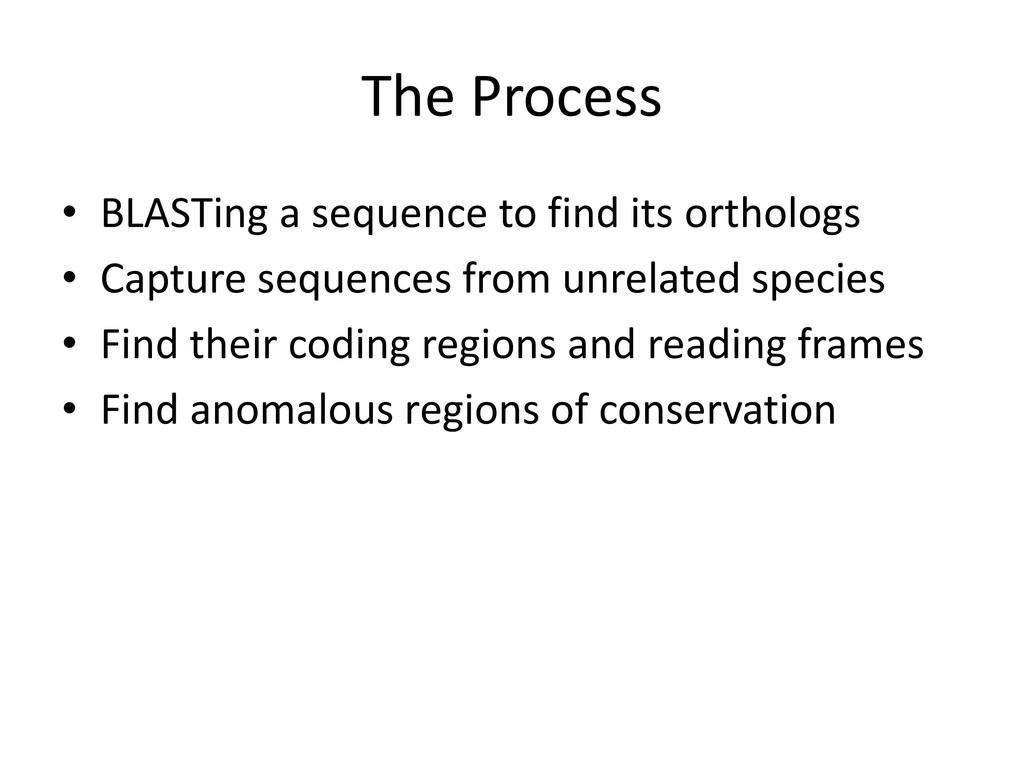
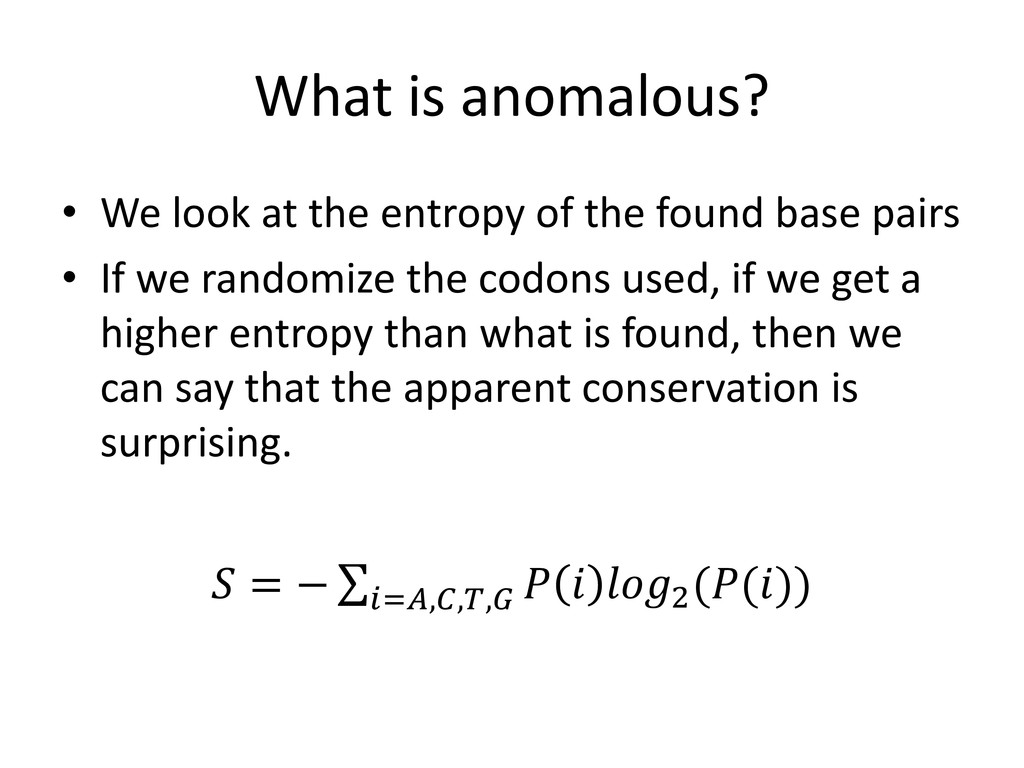
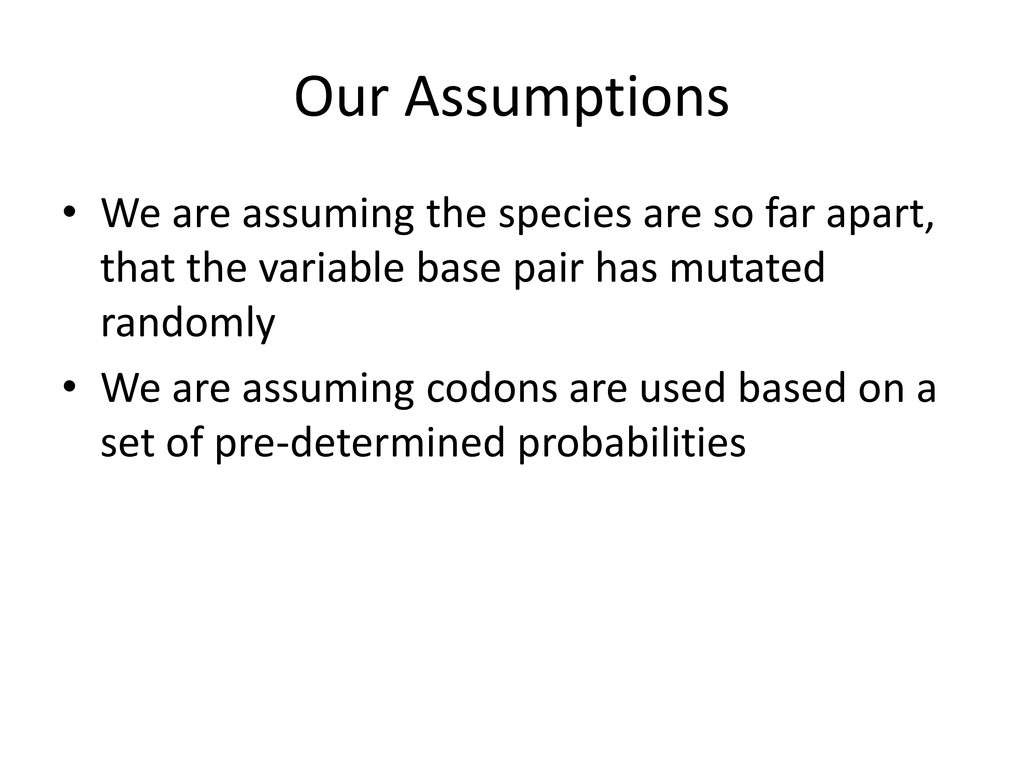
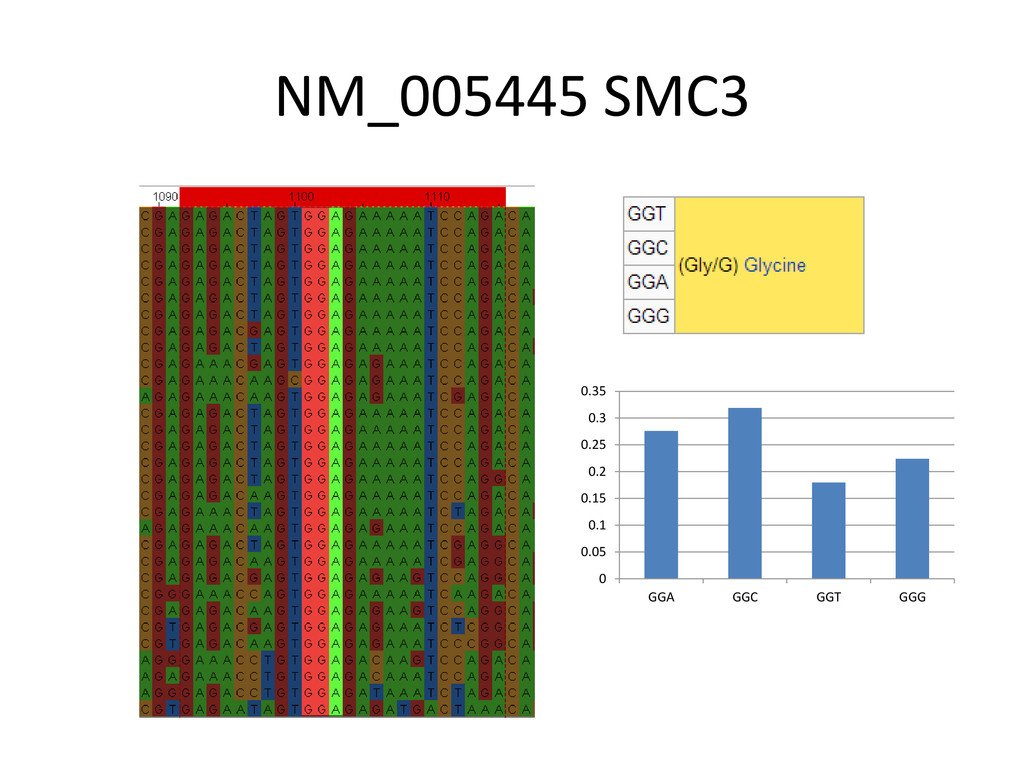
the found base pairs • If we randomize the codons used, if we get a higher entropy than what is found, then we can say that the apparent conservation is surprising. = − 2 (()) =,,,
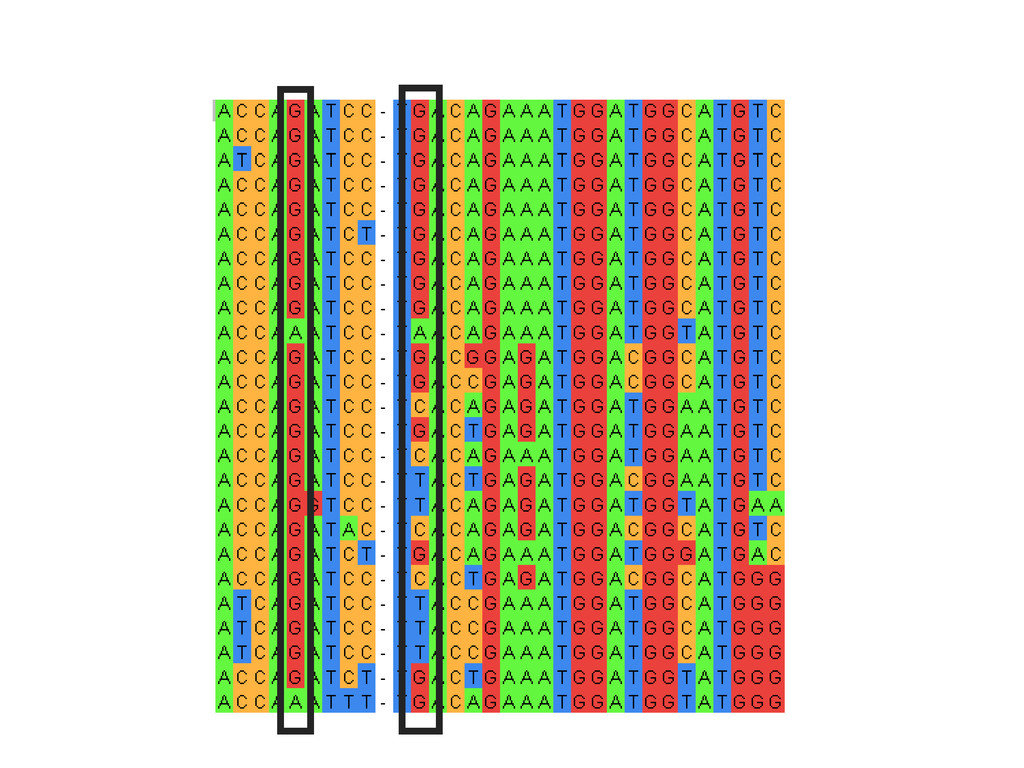
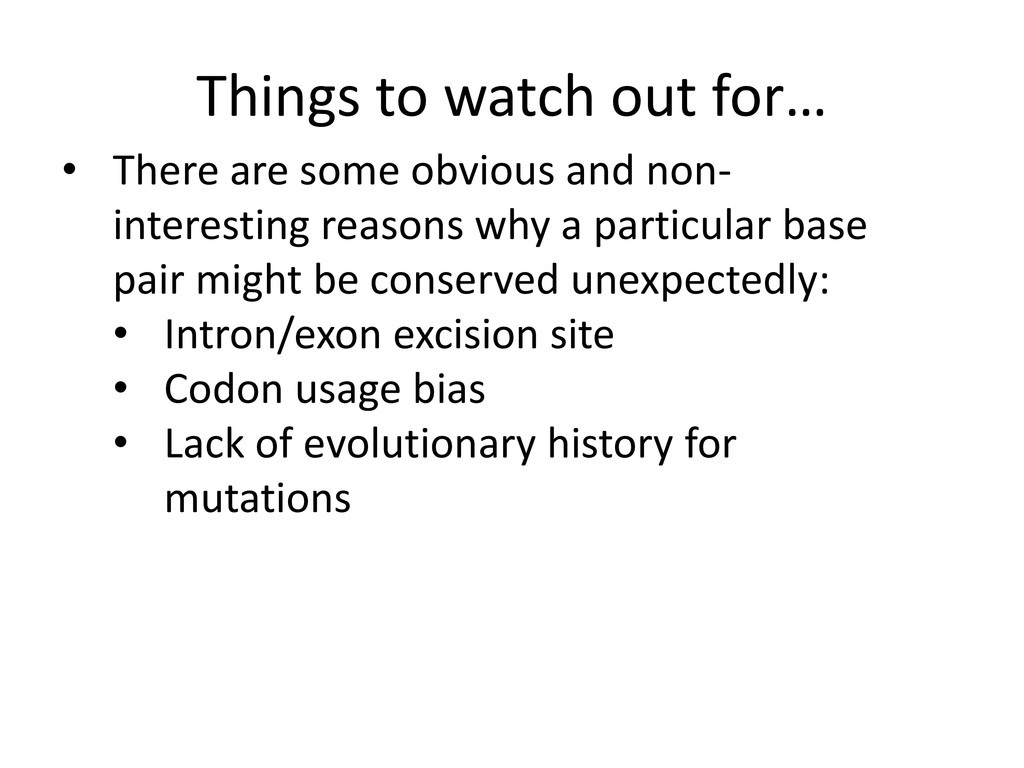
and non- interesting reasons why a particular base pair might be conserved unexpectedly: • Intron/exon excision site • Codon usage bias • Lack of evolutionary history for mutations
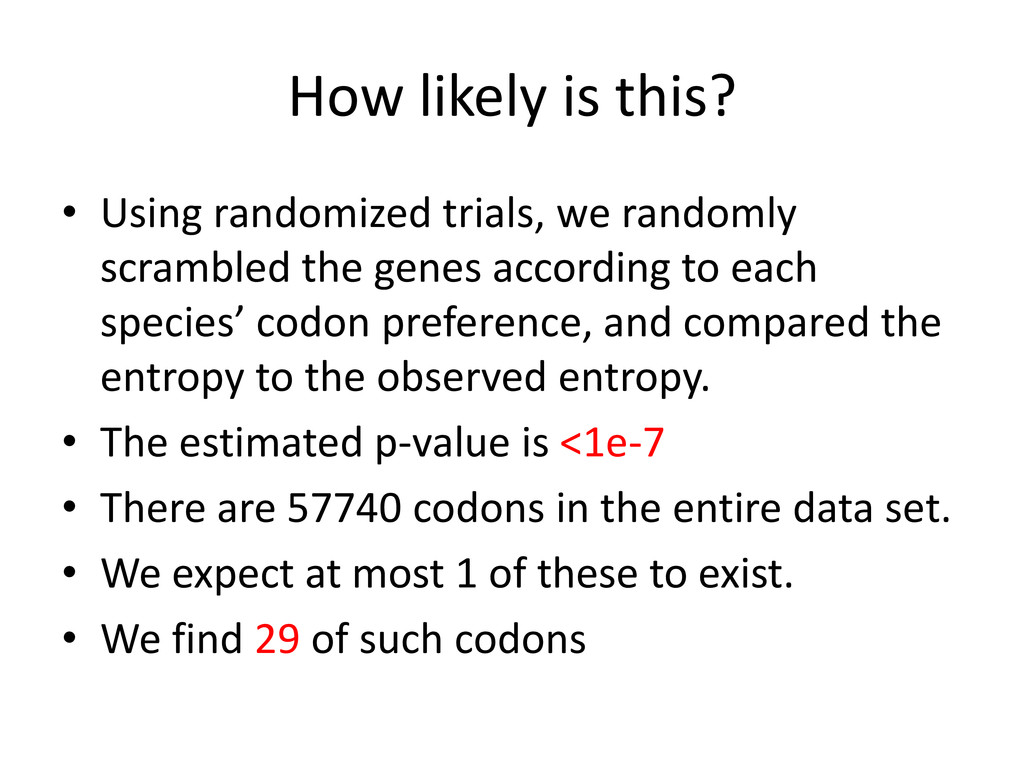
scrambled the genes according to each species’ codon preference, and compared the entropy to the observed entropy. • The estimated p-value is <1e-7 • There are 57740 codons in the entire data set. • We expect at most 1 of these to exist. • We find 29 of such codons
71 genes that we previously classified as “CRUNCS” genes, and 177 genes that are categorized as “CEGMA” – Core Eukaryotic Genes • In the CEGMA set, we find 38 of such codons out of 109817 in total. • CRUNCS more enriched in these “perfect codons”?


 jlugia
 techseoconnect
 lara
 auna
 greggifford
 baasie
 frankvandijk
 honzajavorek
 swwweet
 cassininazir
 orderedlist