decisions as investors, stakeholders, and regulatory bodies place greater emphasis on sustainability and corporate responsibility. The relationship between ESG performance and stock prices is debated, with evidence suggesting both positive and negative impact. This study aims to explore how ESG factors influence stock volatility, long- term performance, and investor performance.
significant barriers to accurately assessing and comparing the ESG performance of companies. How can more reliable, comprehensive, and standardized ESG can be achieved to enable better decision making by investors, regulators, and other stakeholders?
performance . Review studies that focus on specific aspects of ESG and their respective impact on stock prices. Discuss relevant financial theories such as Efficient market Hypothesis (EMH), Stakeholder theory, and modern portfolio theory in the context of ESG.
(2020). Looking back and forging ahead: the weighting of ESG factors. Annals of Operations Research, 294(1–2), 151– 189. https://doi.org/10.1007/s10479-020-03745-y 2) Keeley, A. R., Chapman, A. J., Yoshida, K., Xie, J., Imbulana, J., Takeda, S., & Managi, S. (2022). ESG metrics and social equity: Investigating commensurability. Frontiers in Sustainability, 3. https://doi.org/10.3389/frsus.2022.920955 3) HeinOnline. (2024, September 13). About - HeinOnline. https://heinonline.org/HOL/LandingPage?handle=hein.journals/betr8 &div=7&id=&page= Its hard to hit a target that doesn’t exist.
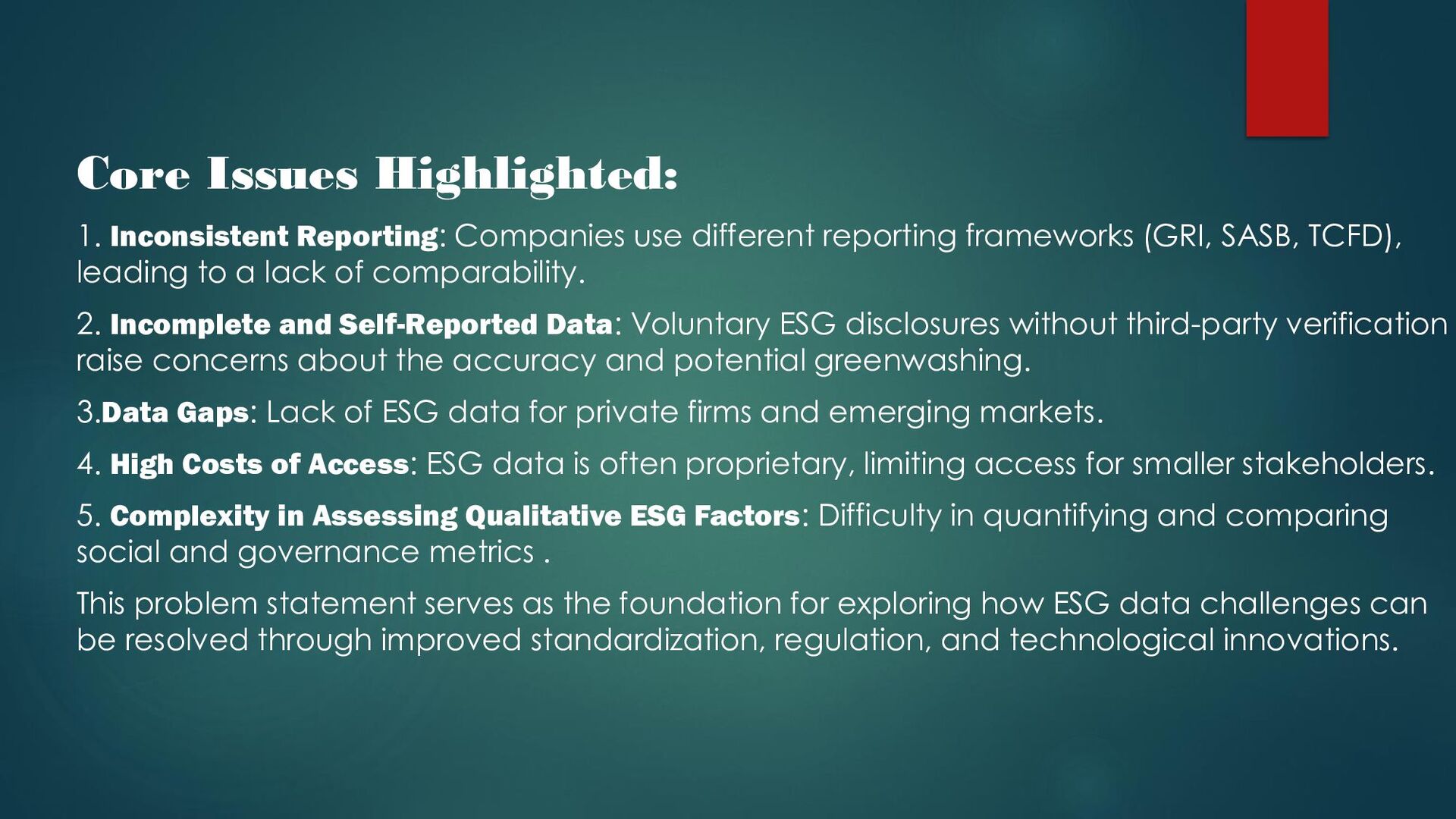
investment decision-making and corporate accountability, ESG data remains inconsistent, incomplete, and often unreliable. Companies follow diverse, non-standardized reporting frameworks, and ESG disclosures are typically voluntary and lack third-party verification. This results in fragmented data that is difficult to compare across industries and regions, making it challenging for investors, regulators, and stakeholders to accurately assess a company’s true ESG performance. Additionally, significant data gaps exist for private firms and companies in emerging markets, while the cost and proprietary nature of ESG data further restrict accessibility. Addressing these challenges is crucial to improving the transparency, accuracy, and utility of ESG data for decision-making in capital marke ts.
frameworks (GRI, SASB, TCFD), leading to a lack of comparability. 2. Incomplete and Self-Reported Data: Voluntary ESG disclosures without third-party verification raise concerns about the accuracy and potential greenwashing. 3.Data Gaps: Lack of ESG data for private firms and emerging markets. 4. High Costs of Access: ESG data is often proprietary, limiting access for smaller stakeholders. 5. Complexity in Assessing Qualitative ESG Factors: Difficulty in quantifying and comparing social and governance metrics . This problem statement serves as the foundation for exploring how ESG data challenges can be resolved through improved standardization, regulation, and technological innovations.
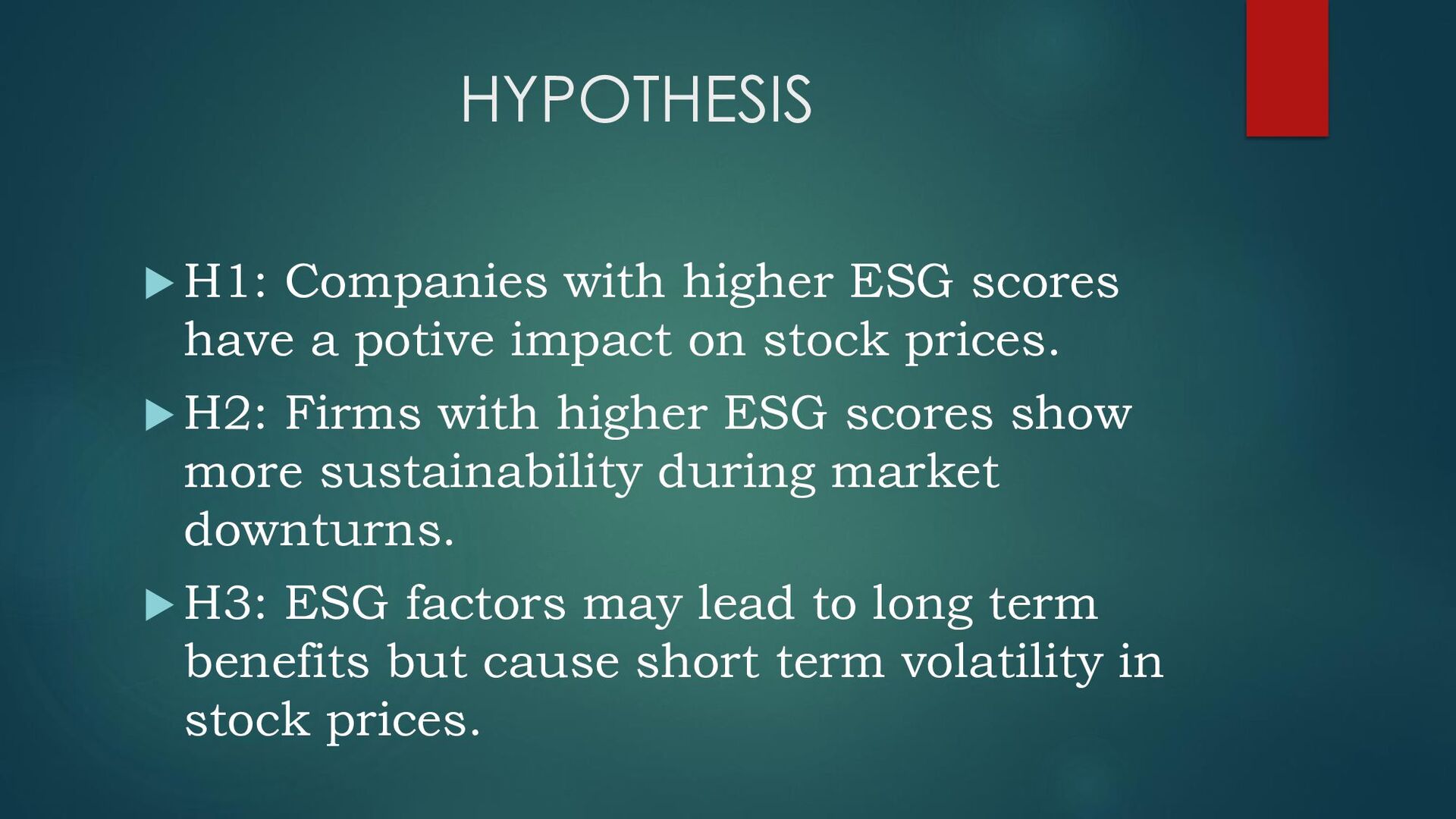
potive impact on stock prices. H2: Firms with higher ESG scores show more sustainability during market downturns. H3: ESG factors may lead to long term benefits but cause short term volatility in stock prices.
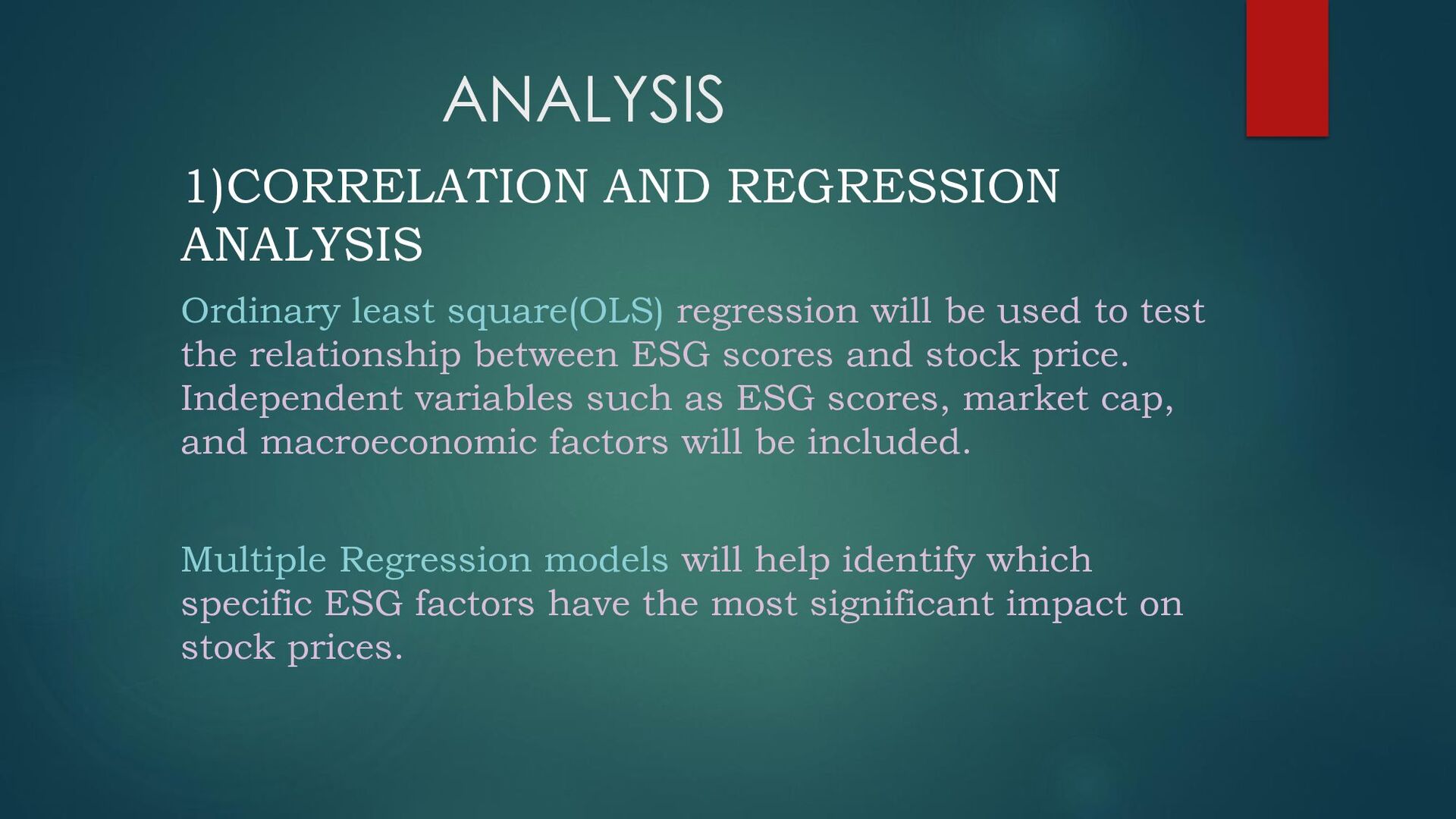
be used to test the relationship between ESG scores and stock price. Independent variables such as ESG scores, market cap, and macroeconomic factors will be included. Multiple Regression models will help identify which specific ESG factors have the most significant impact on stock prices.
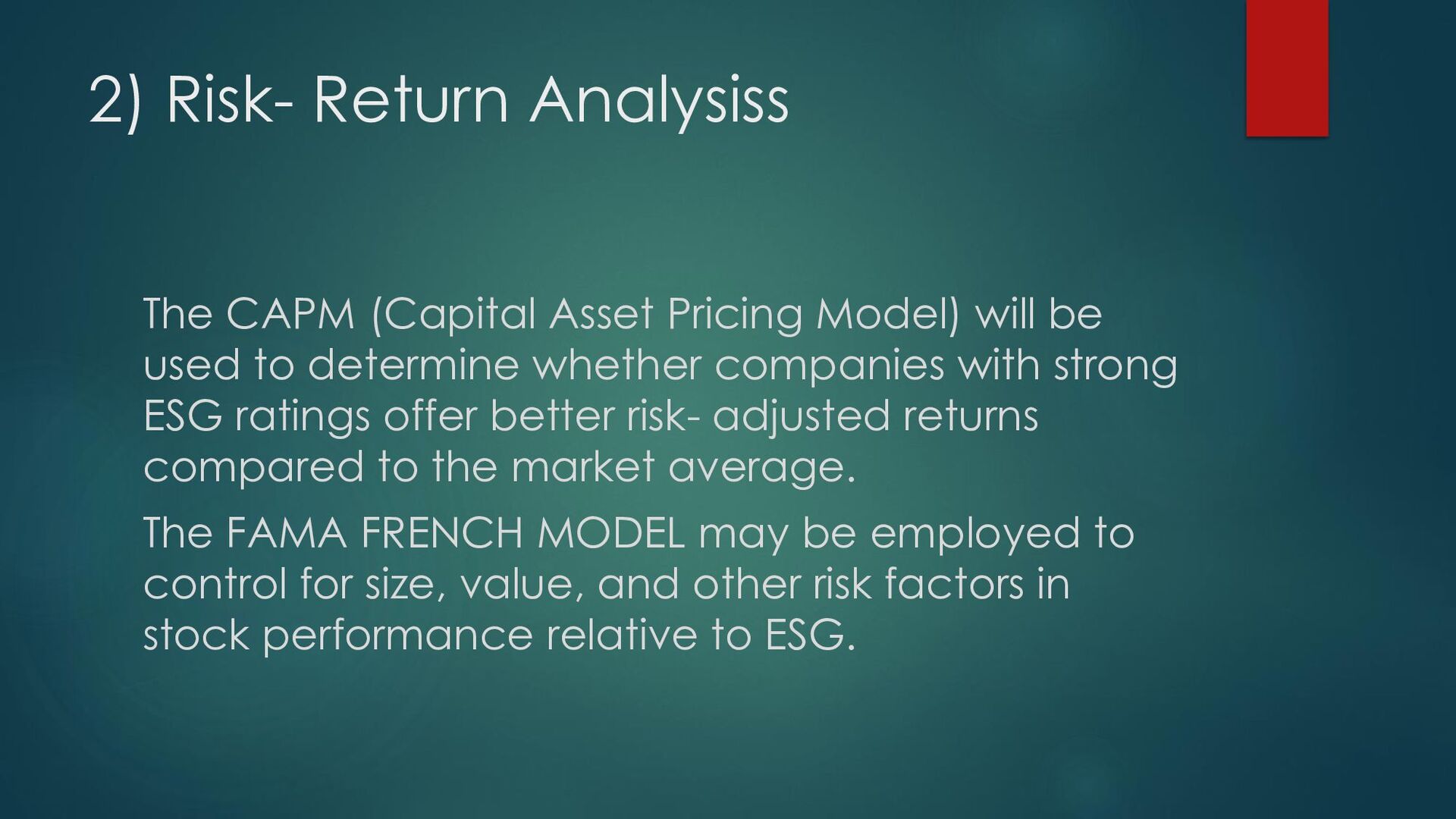
will be used to determine whether companies with strong ESG ratings offer better risk- adjusted returns compared to the market average. The FAMA FRENCH MODEL may be employed to control for size, value, and other risk factors in stock performance relative to ESG.
coverage, and corporate disclosures will be conducted to assess how companies communicate ESG initiatives and whether this influences stock performance. Narrative analysis of media coverage or earnings calls can offer insights into how investors perceive a firm’s ESG efforts. Case studies of companies that have either significantly benefitted or suffered fromESG-relatedd events (eg: Exxonmobil, Tesla) will provide a deeper understanding of qualitative factors driving stock price changes.
will help validate if the hypothesized relationships hold true. This involves testing the proposed models using past data to see if companies with high ESG ratings performed better over time. 5)OUT OF SAMPLE VALIDATION Running models on a different time period or using a different set of companies will confirm whether results are consistent across time and sectors


 leimatthew05
 swwweet
 stephenakadiri
 wjessup
 ks91
 csswizardry
 schroneko
 zakiyama
 scottboms
 62gerente
 takai
 brad_frost