lasting changes in our companies, in our communities, and in our own lives? The primary obstacle is a conflict that’s built into our brains [...] Psychologists have discovered that our minds are ruled by two different systems—the rational mind and the emotional mind—that compete for control. The rational mind wants a great beach body; the emotional mind wants that Oreo cookie. The rational mind wants to change something at work; the emotional mind loves the comfort of the existing routine. This tension can doom a change effort—but if it is overcome, change can come quickly.
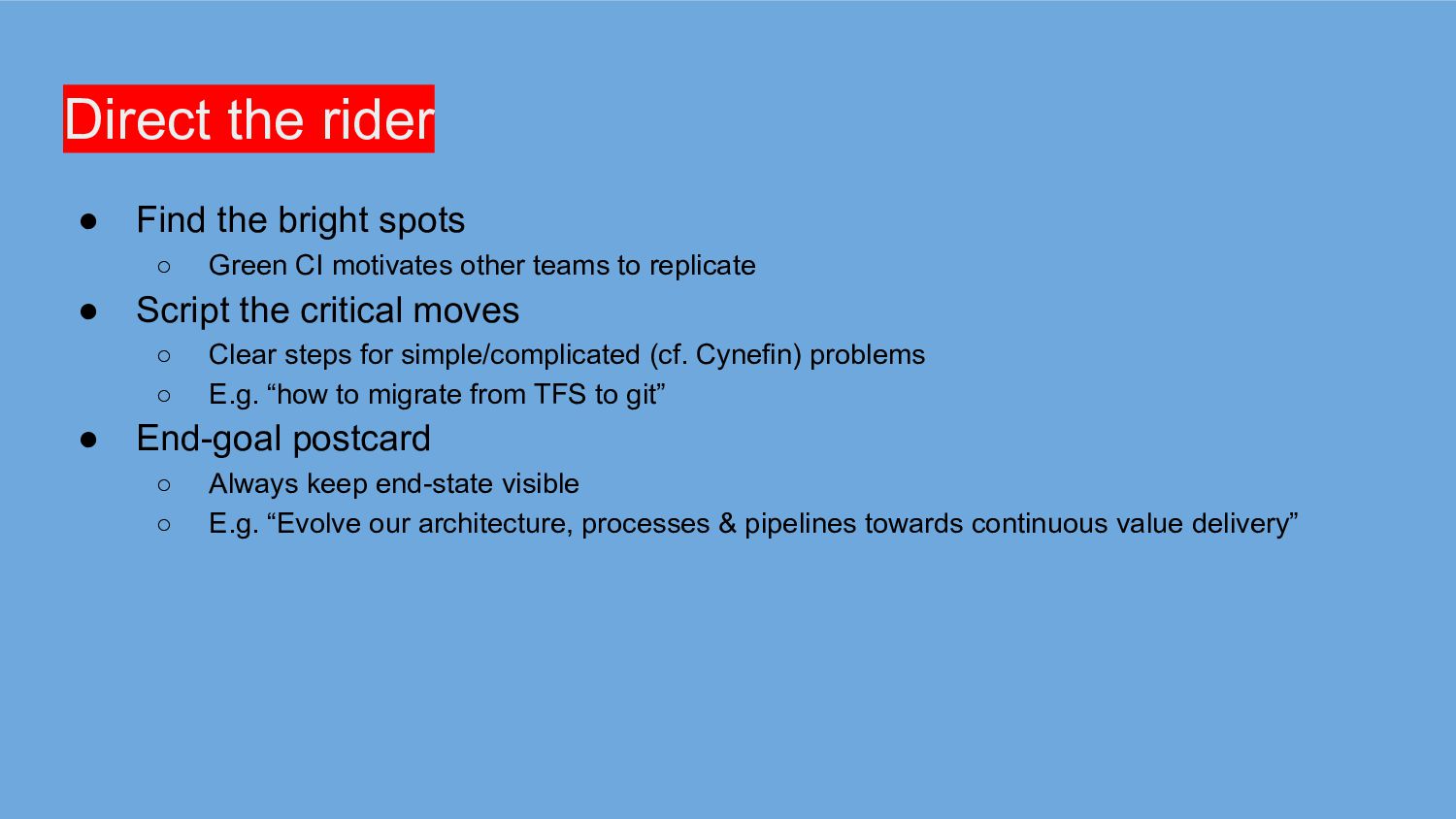
CI motivates other teams to replicate • Script the critical moves ◦ Clear steps for simple/complicated (cf. Cynefin) problems ◦ E.g. “how to migrate from TFS to git” • End-goal postcard ◦ Always keep end-state visible ◦ E.g. “Evolve our architecture, processes & pipelines towards continuous value delivery”
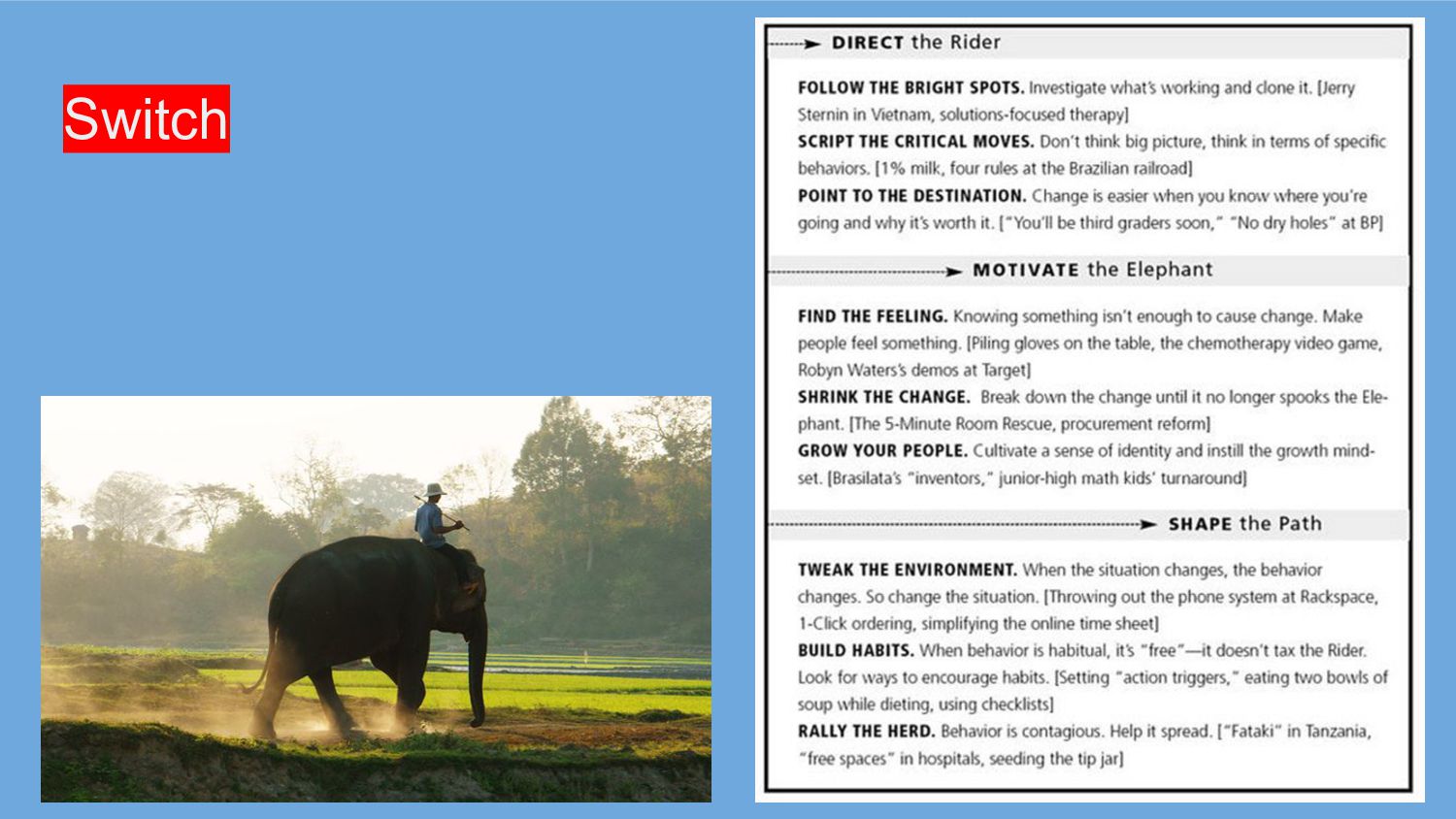
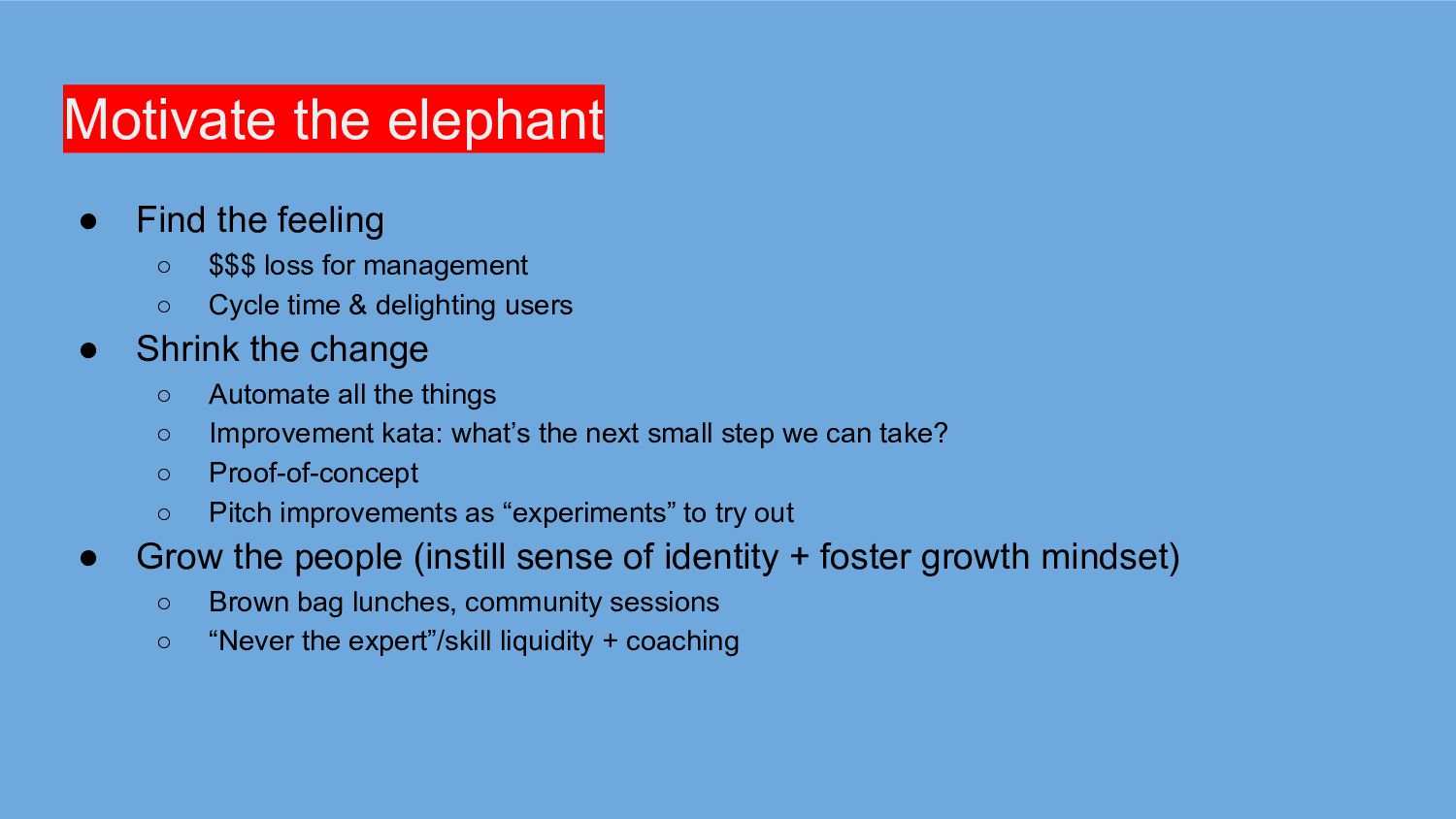
for management ◦ Cycle time & delighting users • Shrink the change ◦ Automate all the things ◦ Improvement kata: what’s the next small step we can take? ◦ Proof-of-concept ◦ Pitch improvements as “experiments” to try out • Grow the people (instill sense of identity + foster growth mindset) ◦ Brown bag lunches, community sessions ◦ “Never the expert”/skill liquidity + coaching
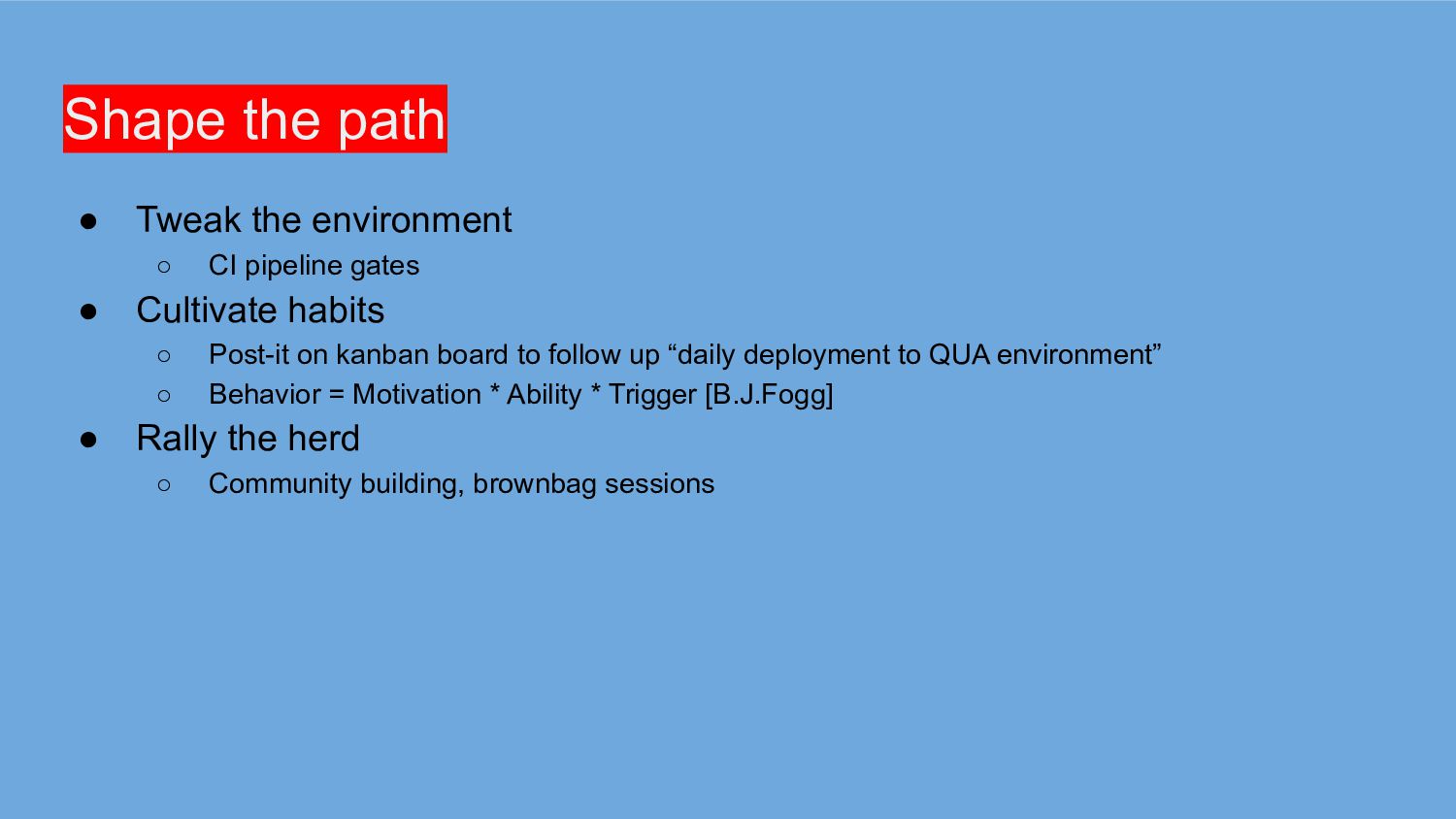
gates • Cultivate habits ◦ Post-it on kanban board to follow up “daily deployment to QUA environment” ◦ Behavior = Motivation * Ability * Trigger [B.J.Fogg] • Rally the herd ◦ Community building, brownbag sessions
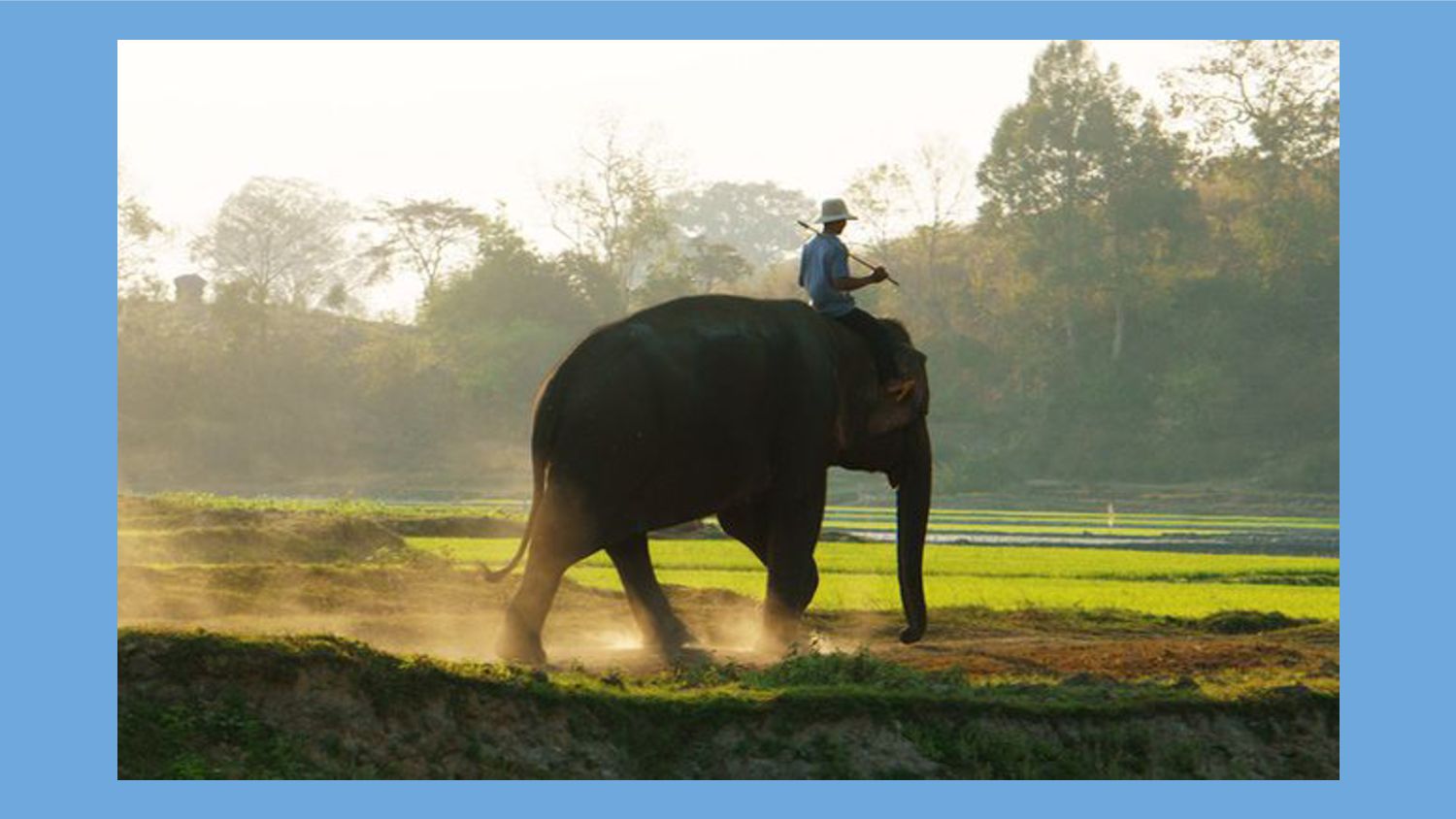
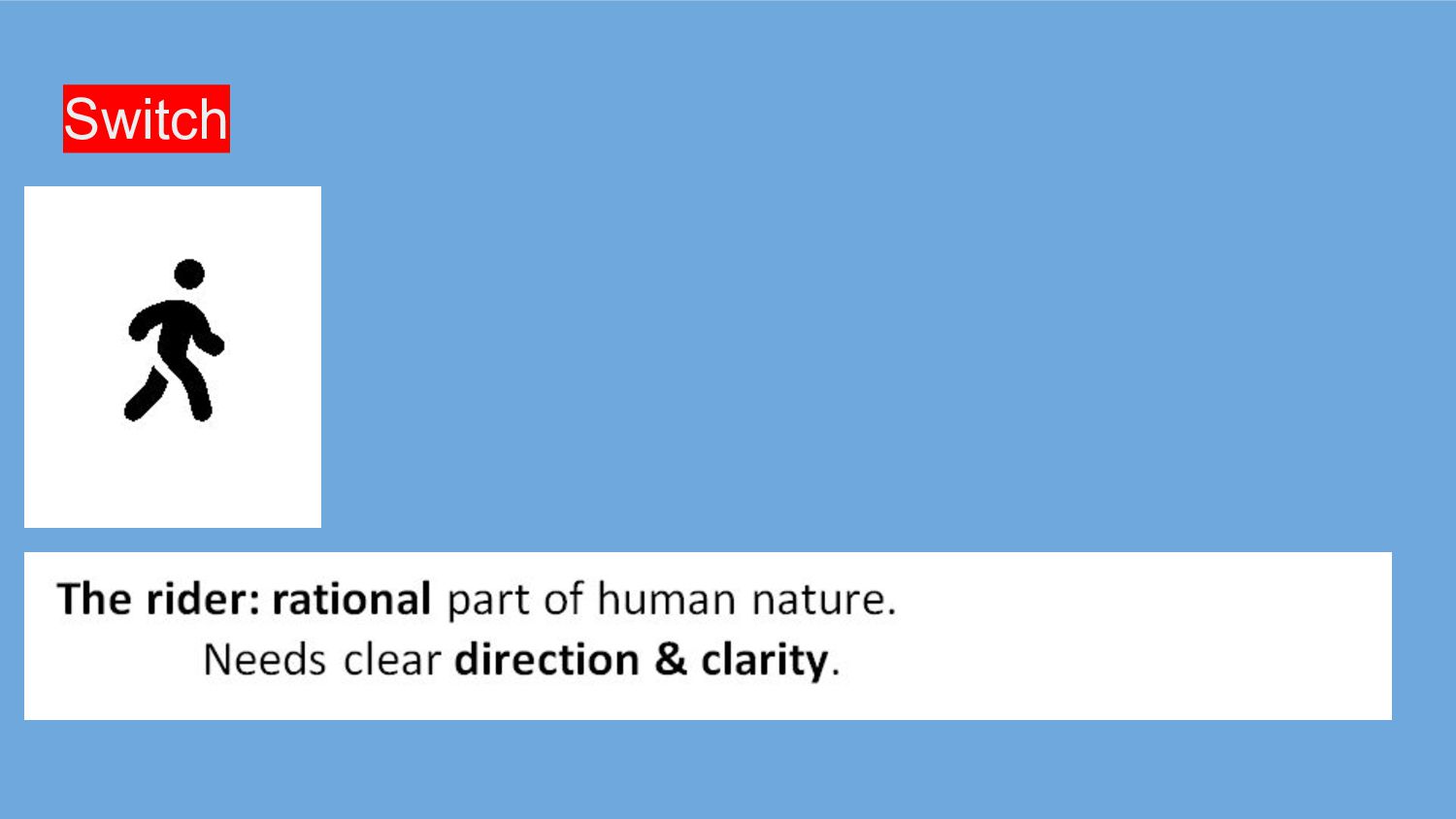
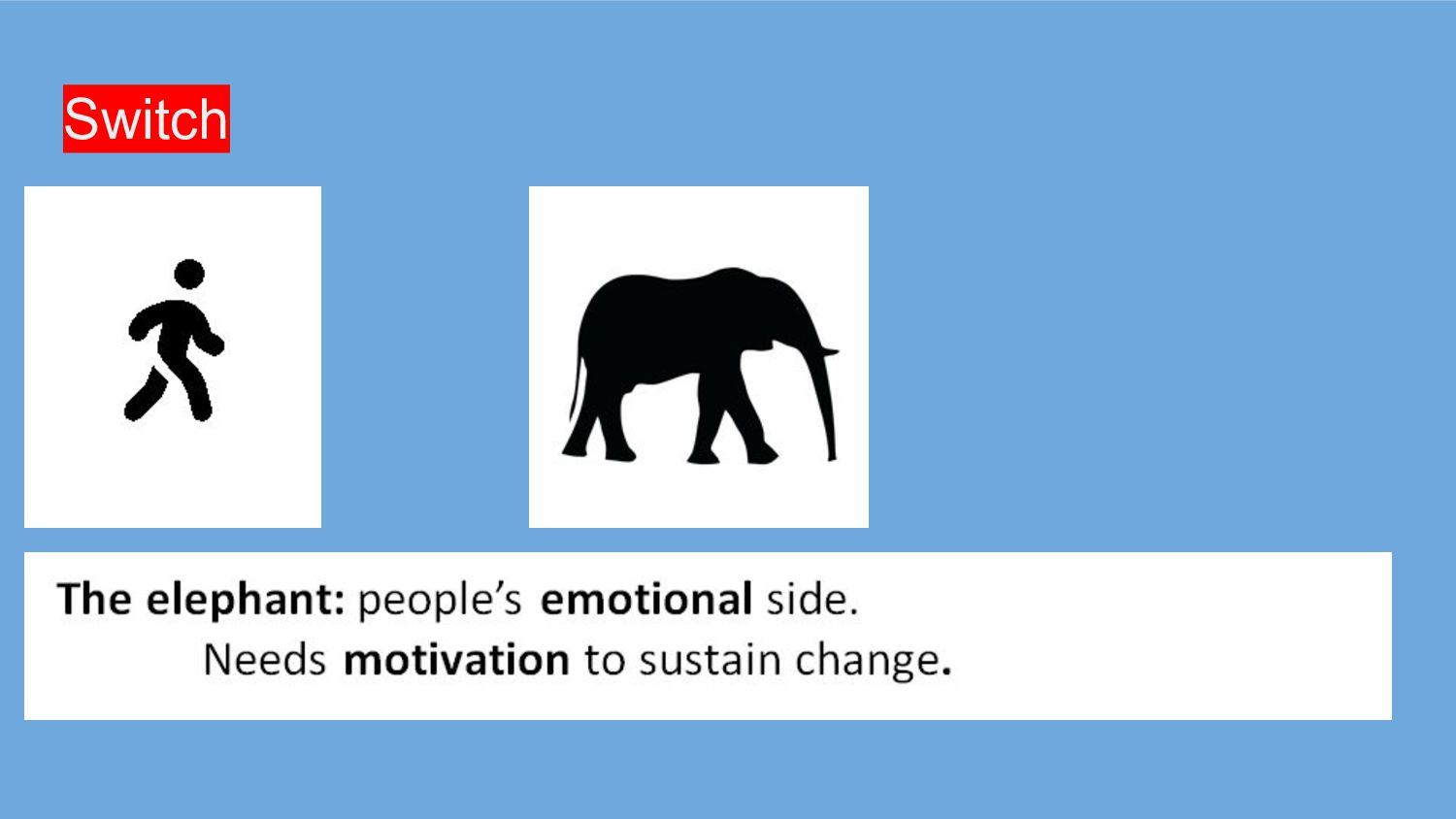
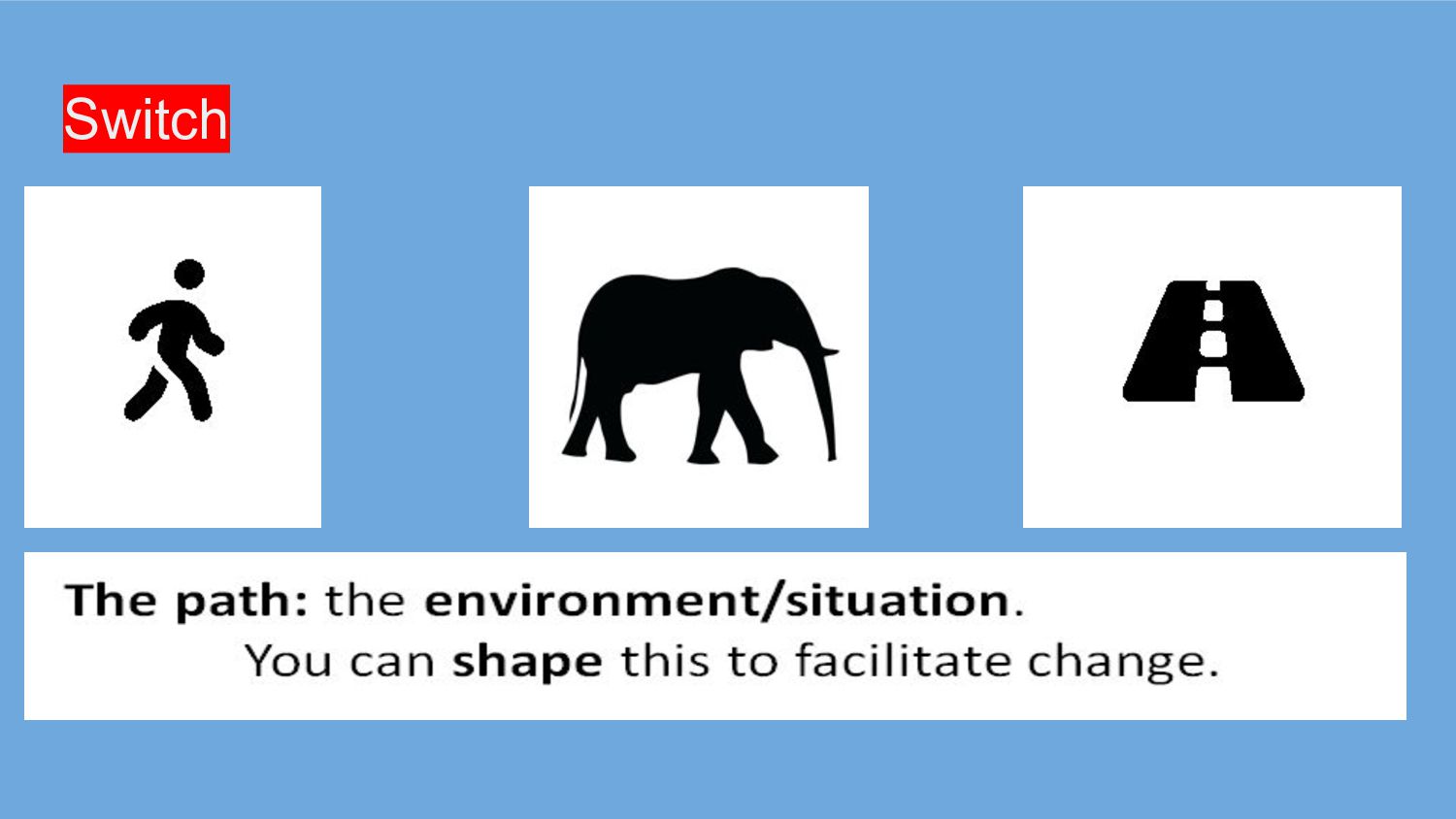
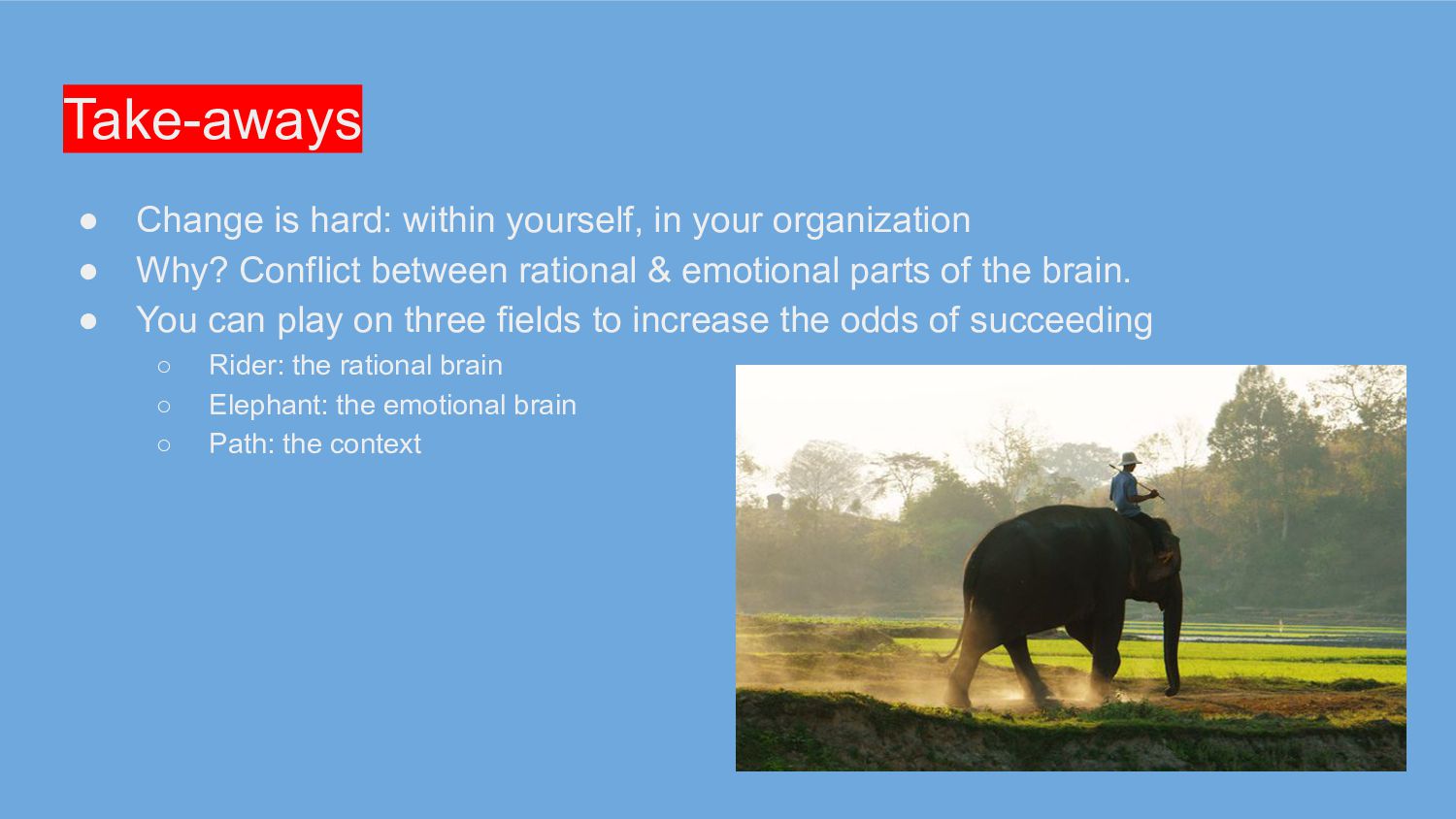
• Why? Conflict between rational & emotional parts of the brain. • You can play on three fields to increase the odds of succeeding ◦ Rider: the rational brain ◦ Elephant: the emotional brain ◦ Path: the context


 jovaneyck
 ks91
ks91
 aleyda
 marktimemedia
 uxyall
 palkan
 chrislema
 skipperchong
 mojombo
 scottboms
 axbom
axbom
 tammyeverts