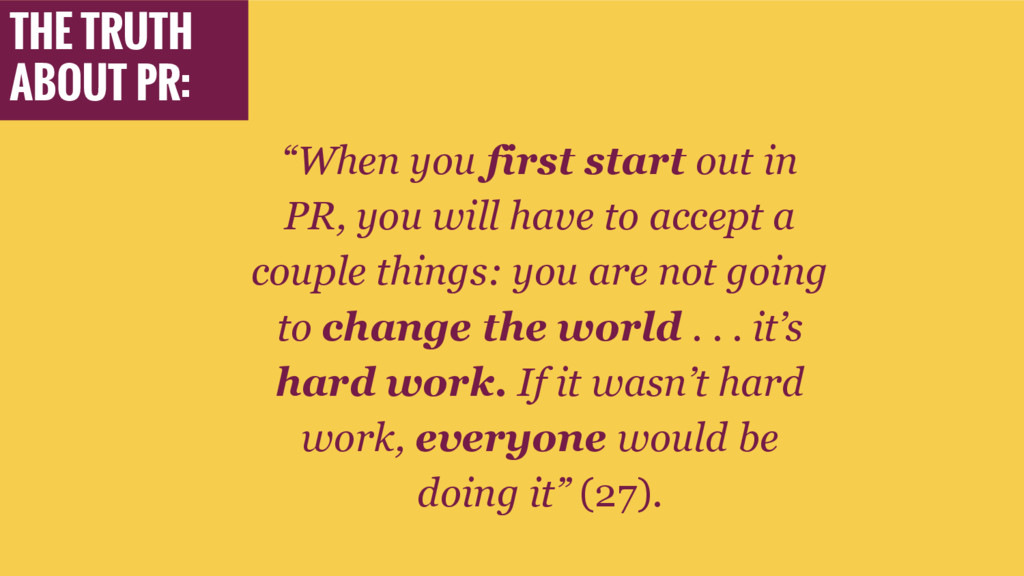
to accept a couple things: you are not going to change the world . . . it’s hard work. If it wasn’t hard work, everyone would be doing it” (27). THE TRUTH ABOUT PR:
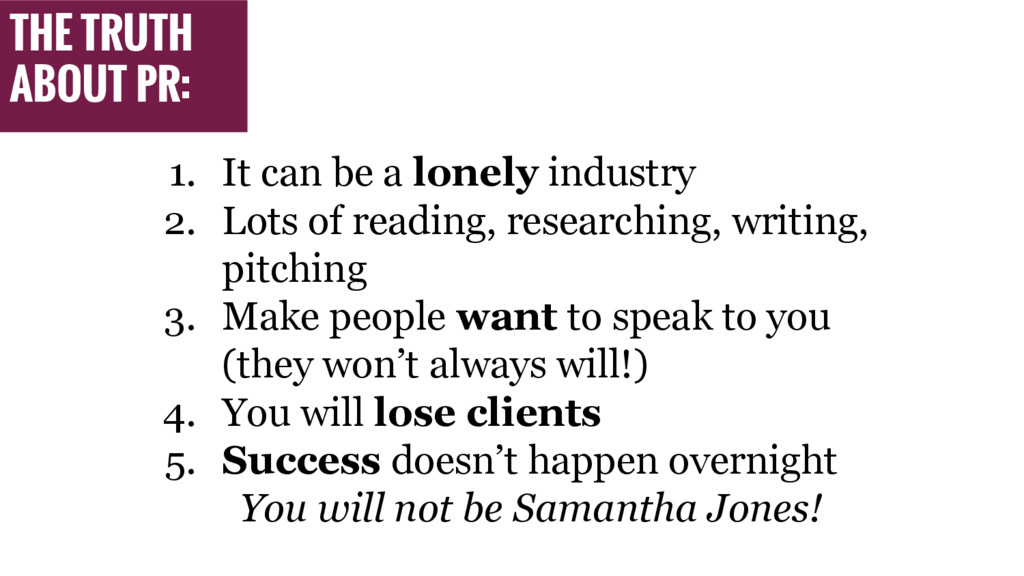
industry 2. Lots of reading, researching, writing, pitching 3. Make people want to speak to you (they won’t always will!) 4. You will lose clients 5. Success doesn’t happen overnight You will not be Samantha Jones!
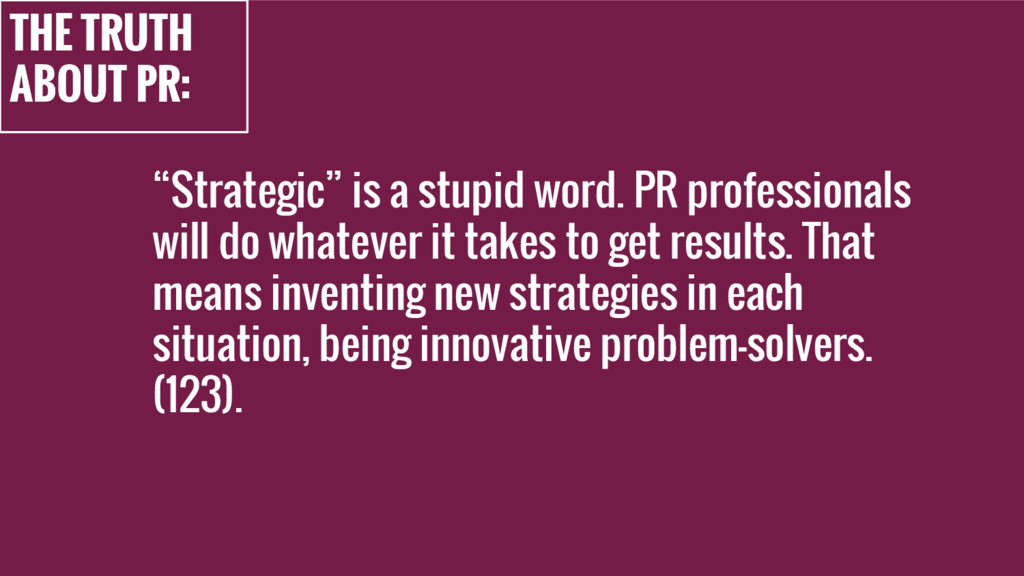
professionals will do whatever it takes to get results. That means inventing new strategies in each situation, being innovative problem-solvers. (123).
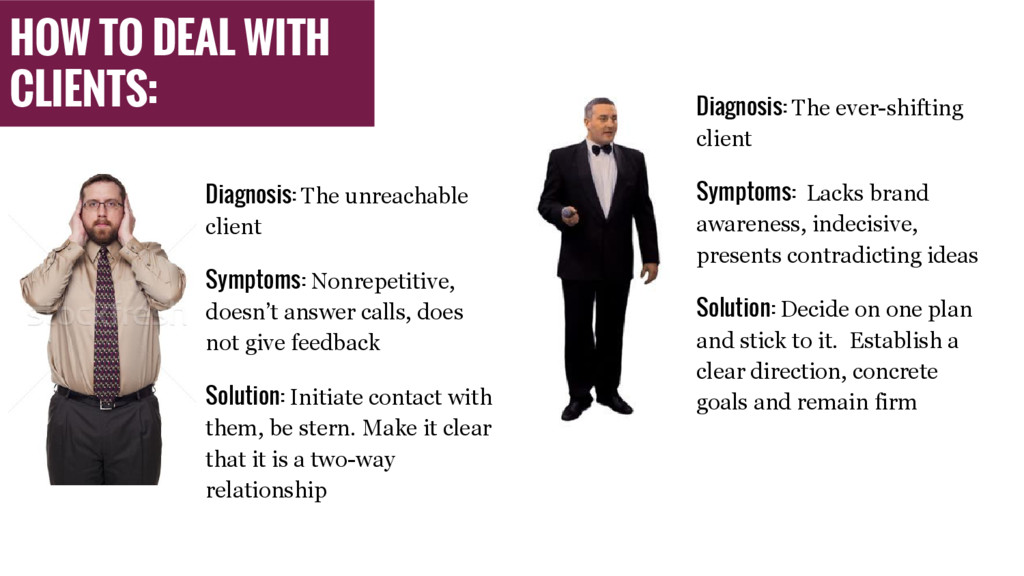
Nonrepetitive, doesn’t answer calls, does not give feedback Solution: Initiate contact with them, be stern. Make it clear that it is a two-way relationship Diagnosis: The ever-shifting client Symptoms: Lacks brand awareness, indecisive, presents contradicting ideas Solution: Decide on one plan and stick to it. Establish a clear direction, concrete goals and remain firm
Thinks they’re already popular with their audience, sees little need for PR Solution: Think about what they’re not doing/ should do. Push long-term goals and strategies Diagnosis: The demanding client Symptoms: Very high expectations, “I own your time” mentality Solution: Give regular updates and reports, prove your worth. Formulate clear mutual expectations
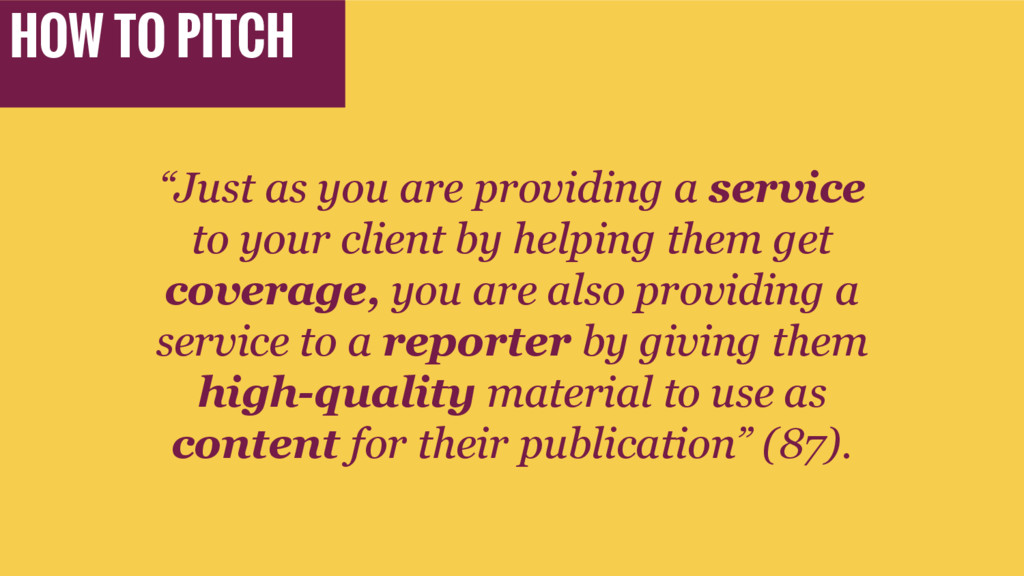
to your client by helping them get coverage, you are also providing a service to a reporter by giving them high-quality material to use as content for their publication” (87).
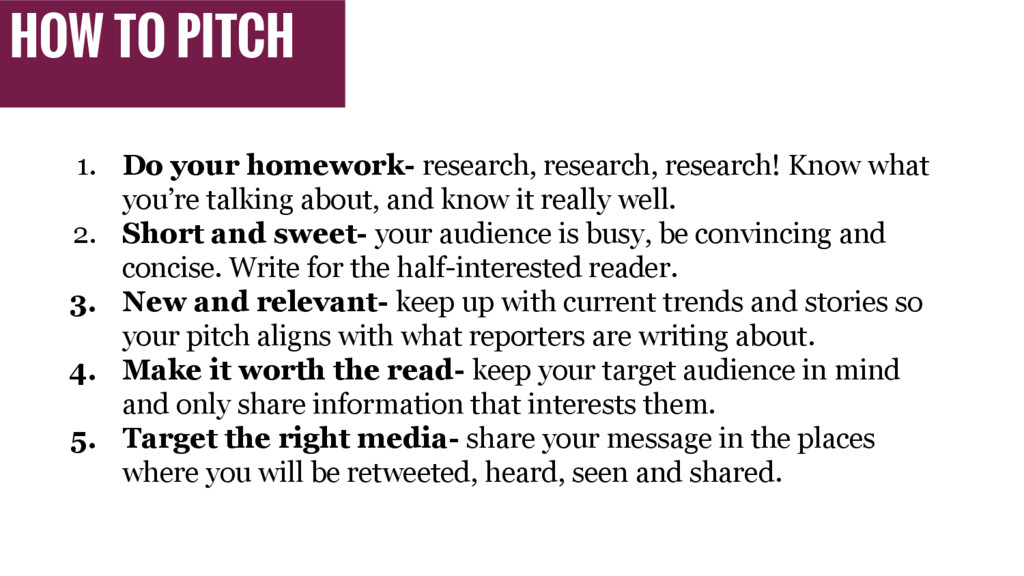
Know what you’re talking about, and know it really well. 2. Short and sweet- your audience is busy, be convincing and concise. Write for the half-interested reader. 3. New and relevant- keep up with current trends and stories so your pitch aligns with what reporters are writing about. 4. Make it worth the read- keep your target audience in mind and only share information that interests them. 5. Target the right media- share your message in the places where you will be retweeted, heard, seen and shared.
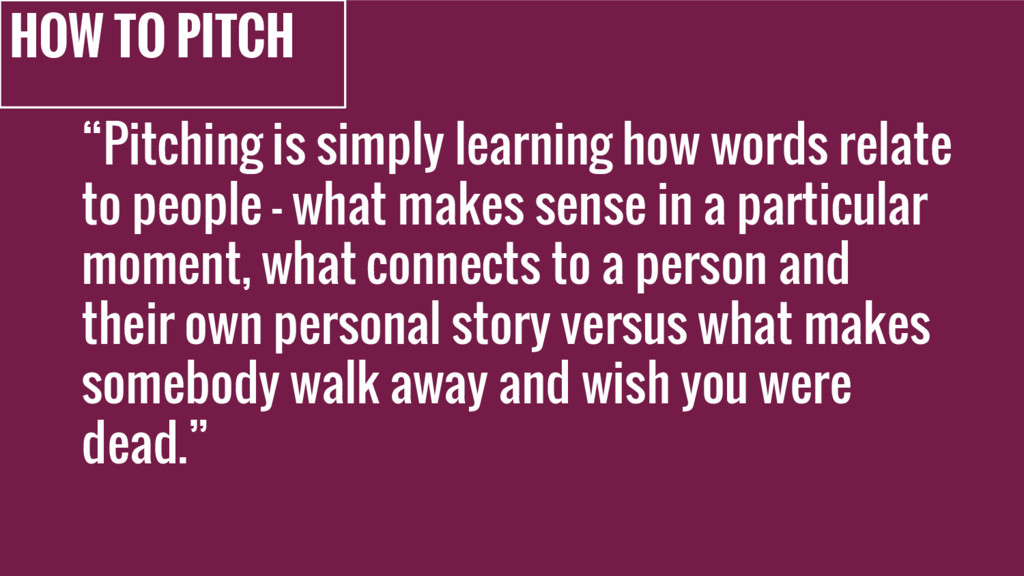
to people — what makes sense in a particular moment, what connects to a person and their own personal story versus what makes somebody walk away and wish you were dead.”
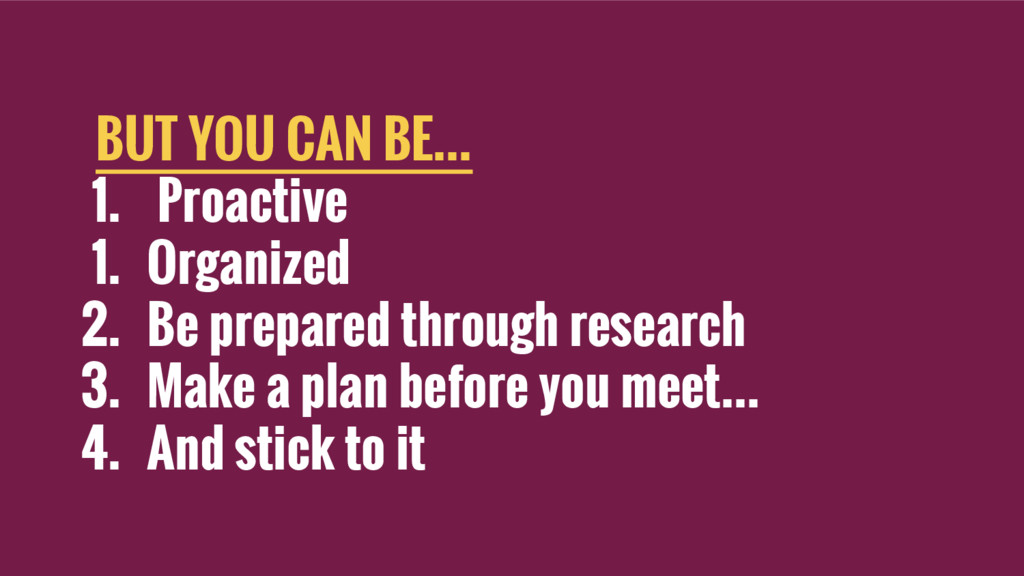
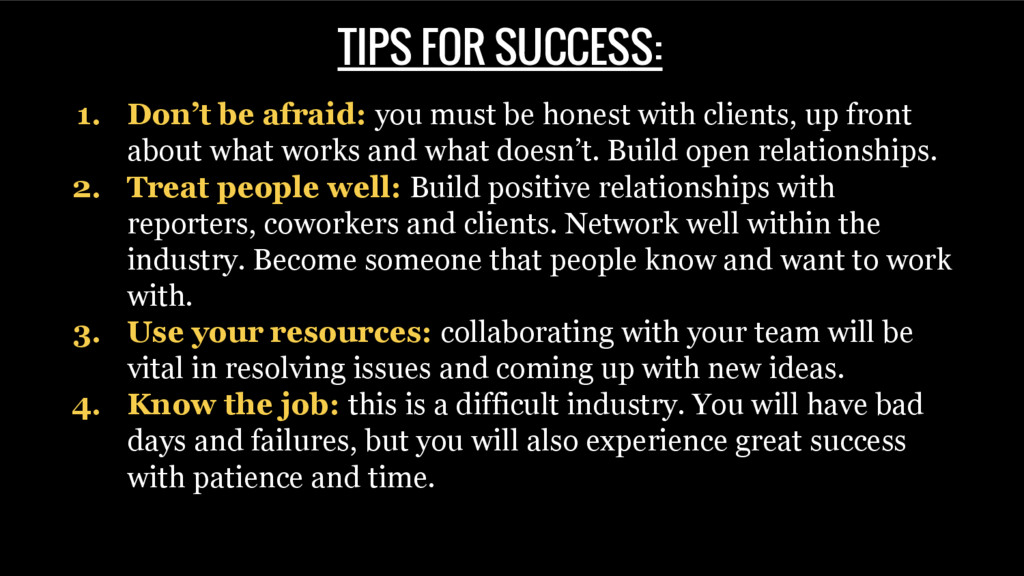
honest with clients, up front about what works and what doesn’t. Build open relationships. 2. Treat people well: Build positive relationships with reporters, coworkers and clients. Network well within the industry. Become someone that people know and want to work with. 3. Use your resources: collaborating with your team will be vital in resolving issues and coming up with new ideas. 4. Know the job: this is a difficult industry. You will have bad days and failures, but you will also experience great success with patience and time.
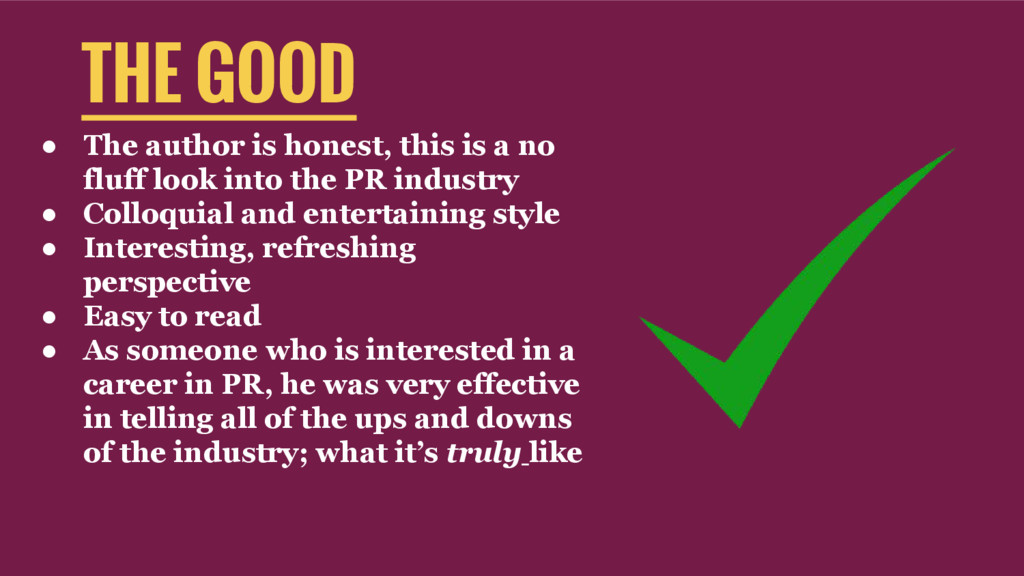
look into the PR industry • Colloquial and entertaining style • Interesting, refreshing perspective • Easy to read • As someone who is interested in a career in PR, he was very effective in telling all of the ups and downs of the industry; what it’s truly like THE GOOD
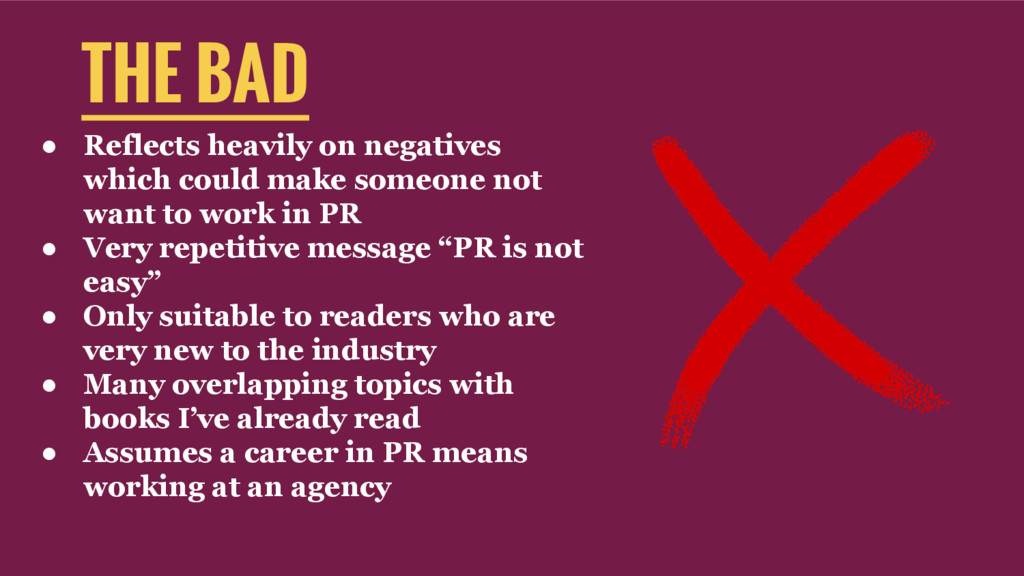
want to work in PR • Very repetitive message “PR is not easy” • Only suitable to readers who are very new to the industry • Many overlapping topics with books I’ve already read • Assumes a career in PR means working at an agency THE BAD


 inesmontani
 mayunak
 leimatthew05
 stephenakadiri
 techseoconnect
 sugarenia
 jonoalderson
 codingconduct
 reverentgeek
 chriscoyier
 tanoku
 tmiket