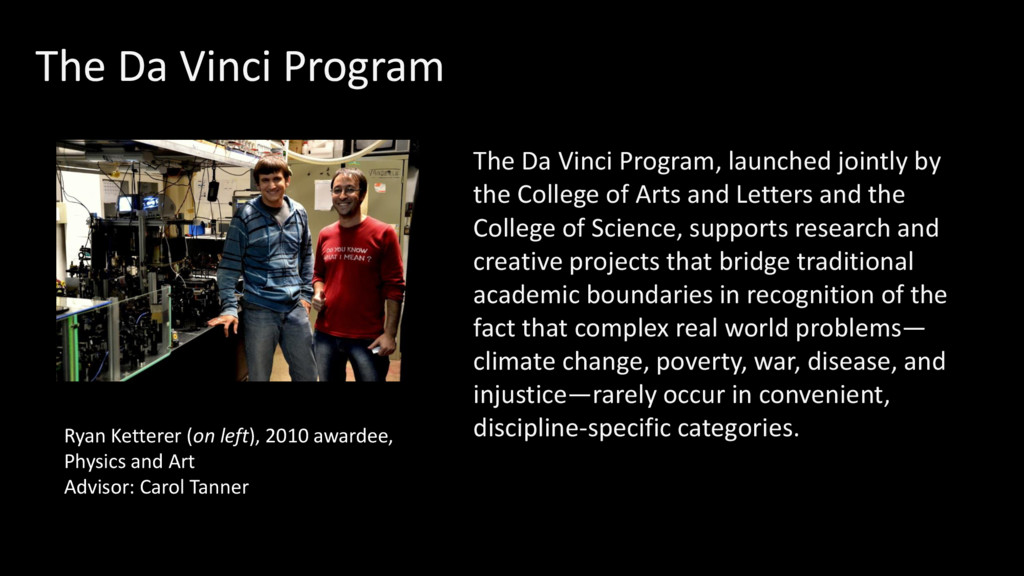
Physics and Art Advisor: Carol Tanner The Da Vinci Program, launched jointly by the College of Arts and Letters and the College of Science, supports research and creative projects that bridge traditional academic boundaries in recognition of the fact that complex real world problems— climate change, poverty, war, disease, and injustice—rarely occur in convenient, discipline-specific categories.
has made 52 awards for a total of $190,021. • Da Vinci projects have been carried out in Nicaragua, Croatia, China, Sri Lanka, Estonia, France, Dominican Republic, South Africa, Brazil, Ireland and Jamaica. • Da Vinci grants have funded 12 College of Engineering students since 2013, when Engineering joined the Program; 23 College of Science and 17 Arts and Letters students since the Program’s inception. Facts about the Program:
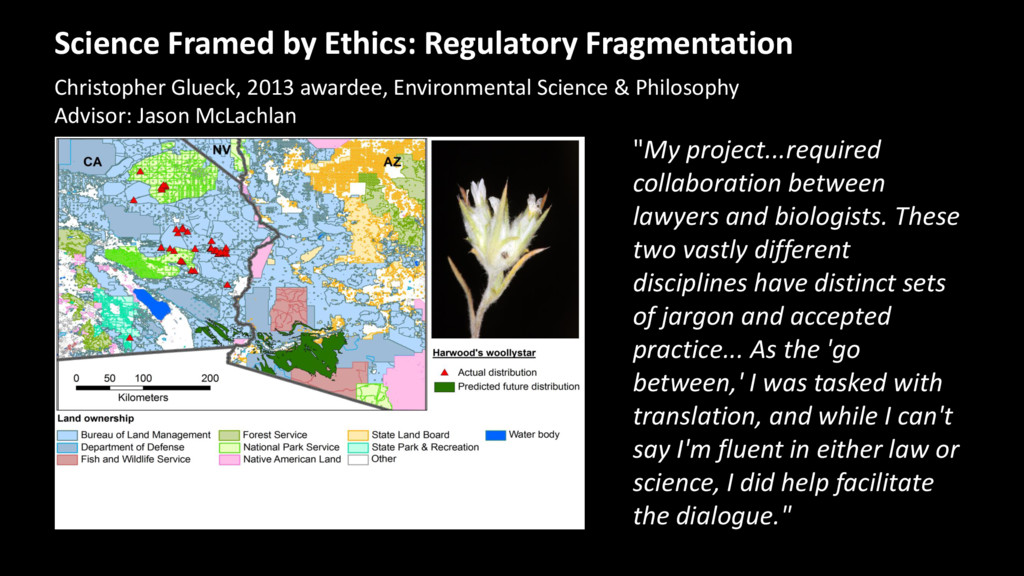
different disciplines have distinct sets of jargon and accepted practice... As the 'go between,' I was tasked with translation, and while I can't say I'm fluent in either law or science, I did help facilitate the dialogue." Science Framed by Ethics: Regulatory Fragmentation Christopher Glueck, 2013 awardee, Environmental Science & Philosophy Advisor: Jason McLachlan
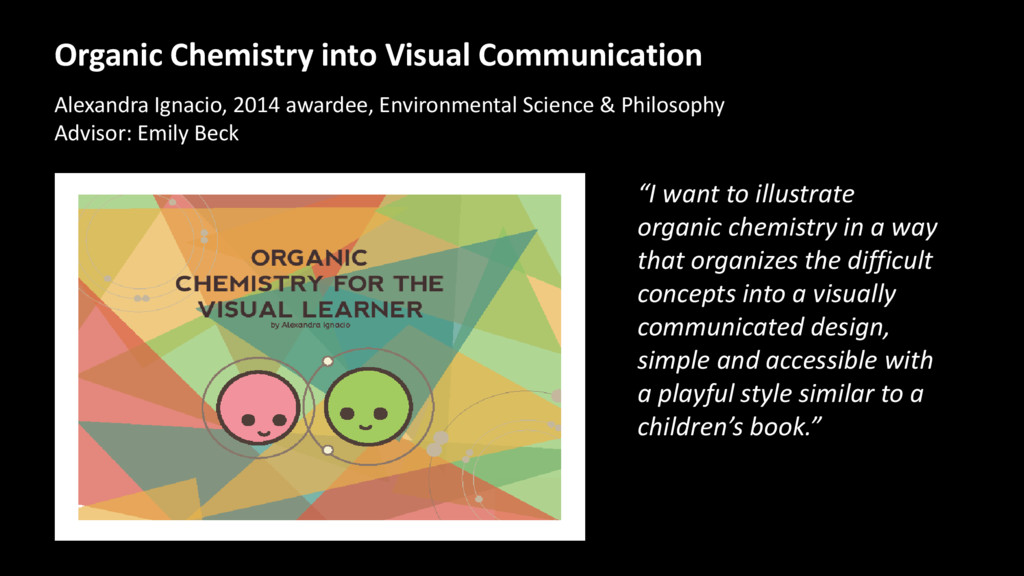
organizes the difficult concepts into a visually communicated design, simple and accessible with a playful style similar to a children’s book.” Organic Chemistry into Visual Communication Alexandra Ignacio, 2014 awardee, Environmental Science & Philosophy Advisor: Emily Beck
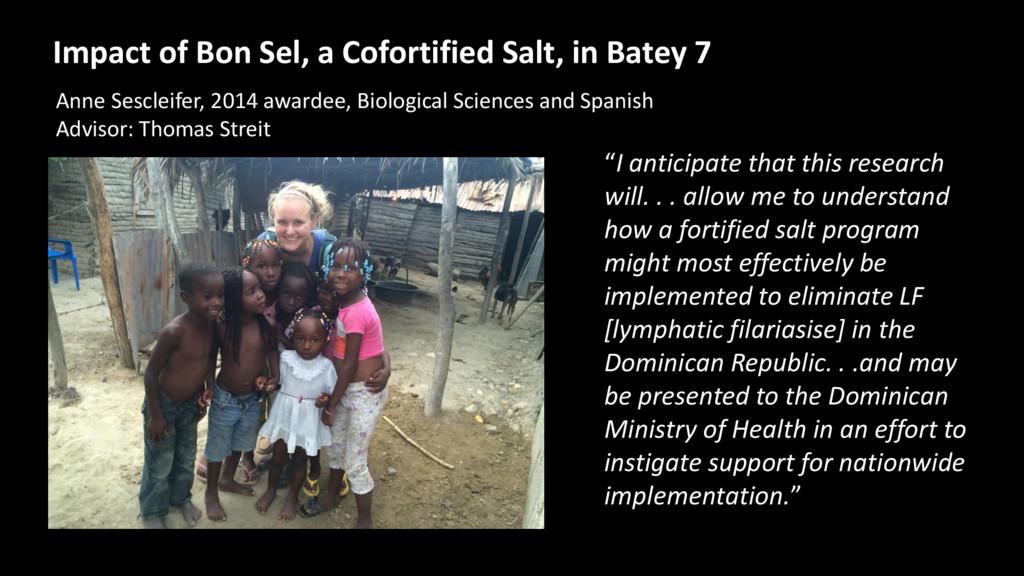
to understand how a fortified salt program might most effectively be implemented to eliminate LF [lymphatic filariasise] in the Dominican Republic. . .and may be presented to the Dominican Ministry of Health in an effort to instigate support for nationwide implementation.” Impact of Bon Sel, a Cofortified Salt, in Batey 7 Anne Sescleifer, 2014 awardee, Biological Sciences and Spanish Advisor: Thomas Streit
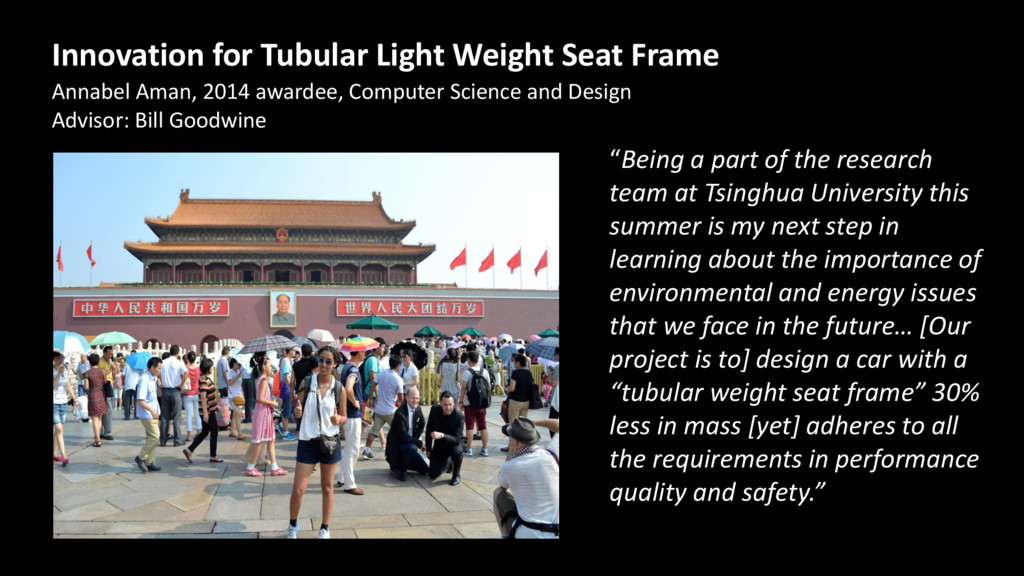
this summer is my next step in learning about the importance of environmental and energy issues that we face in the future… [Our project is to] design a car with a “tubular weight seat frame” 30% less in mass [yet] adheres to all the requirements in performance quality and safety.” Innovation for Tubular Light Weight Seat Frame Annabel Aman, 2014 awardee, Computer Science and Design Advisor: Bill Goodwine
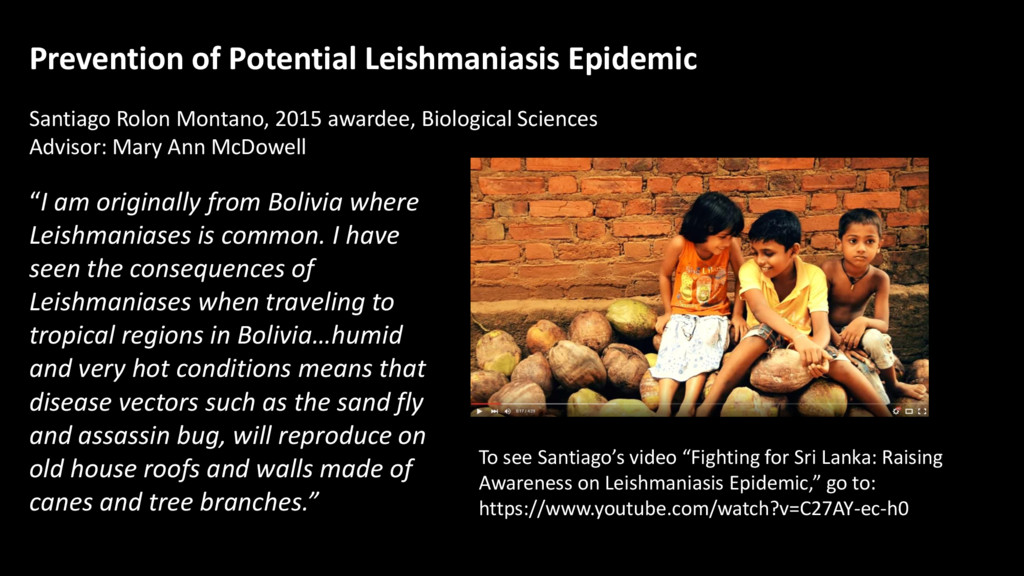
Biological Sciences Advisor: Mary Ann McDowell “I am originally from Bolivia where Leishmaniases is common. I have seen the consequences of Leishmaniases when traveling to tropical regions in Bolivia…humid and very hot conditions means that disease vectors such as the sand fly and assassin bug, will reproduce on old house roofs and walls made of canes and tree branches.” To see Santiago’s video “Fighting for Sri Lanka: Raising Awareness on Leishmaniasis Epidemic,” go to: https://www.youtube.com/watch?v=C27AY-ec-h0
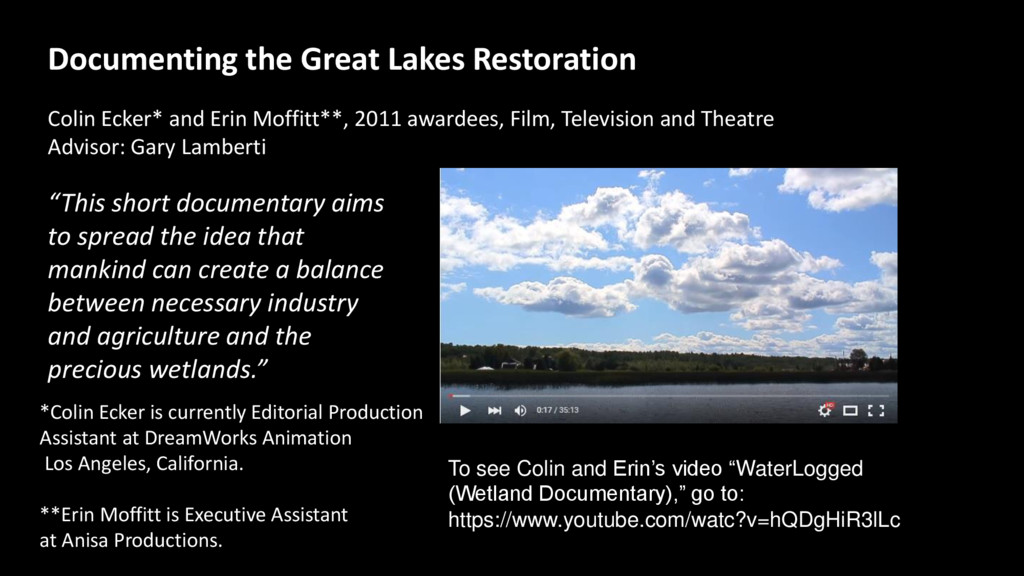
2011 awardees, Film, Television and Theatre Advisor: Gary Lamberti “This short documentary aims to spread the idea that mankind can create a balance between necessary industry and agriculture and the precious wetlands.” To see Colin and Erin’s video “WaterLogged (Wetland Documentary),” go to: https://www.youtube.com/watc?v=hQDgHiR3lLc *Colin Ecker is currently Editorial Production Assistant at DreamWorks Animation Los Angeles, California. **Erin Moffitt is Executive Assistant at Anisa Productions.
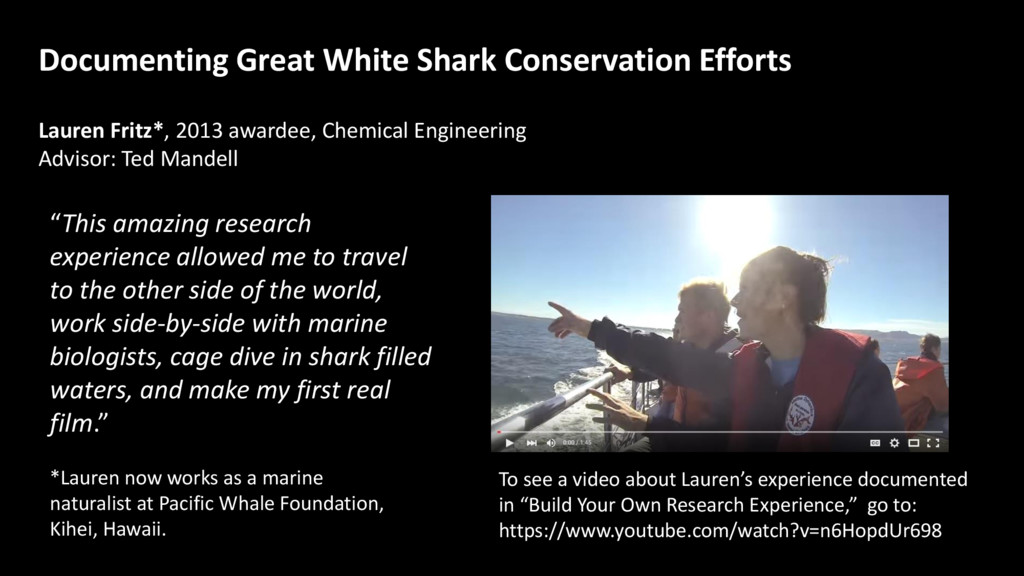
Chemical Engineering Advisor: Ted Mandell *Lauren now works as a marine naturalist at Pacific Whale Foundation, Kihei, Hawaii. “This amazing research experience allowed me to travel to the other side of the world, work side-by-side with marine biologists, cage dive in shark filled waters, and make my first real film.” To see a video about Lauren’s experience documented in “Build Your Own Research Experience,” go to: https://www.youtube.com/watch?v=n6HopdUr698
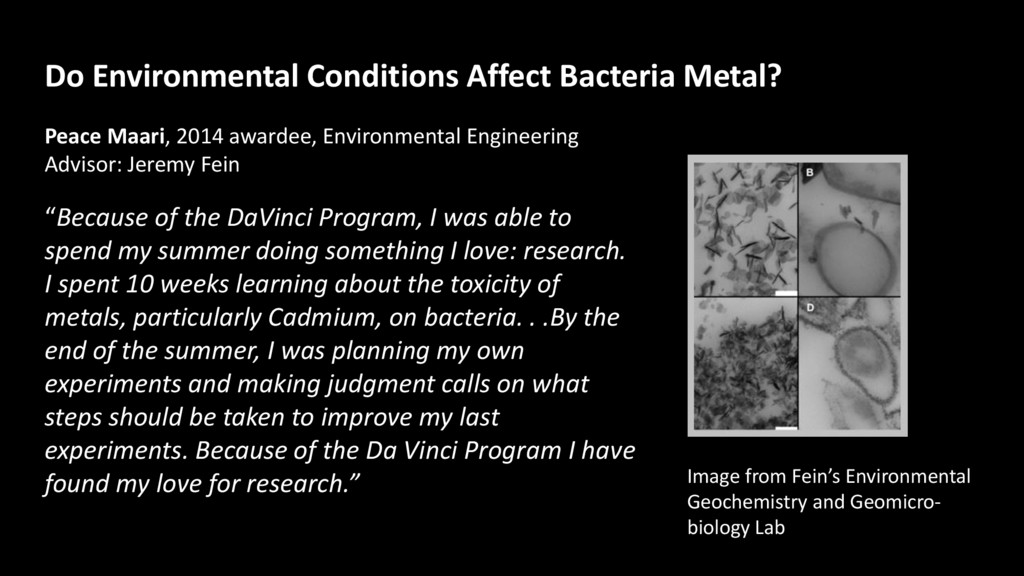
my summer doing something I love: research. I spent 10 weeks learning about the toxicity of metals, particularly Cadmium, on bacteria. . .By the end of the summer, I was planning my own experiments and making judgment calls on what steps should be taken to improve my last experiments. Because of the Da Vinci Program I have found my love for research.” Do Environmental Conditions Affect Bacteria Metal? Peace Maari, 2014 awardee, Environmental Engineering Advisor: Jeremy Fein Image from Fein’s Environmental Geochemistry and Geomicro- biology Lab
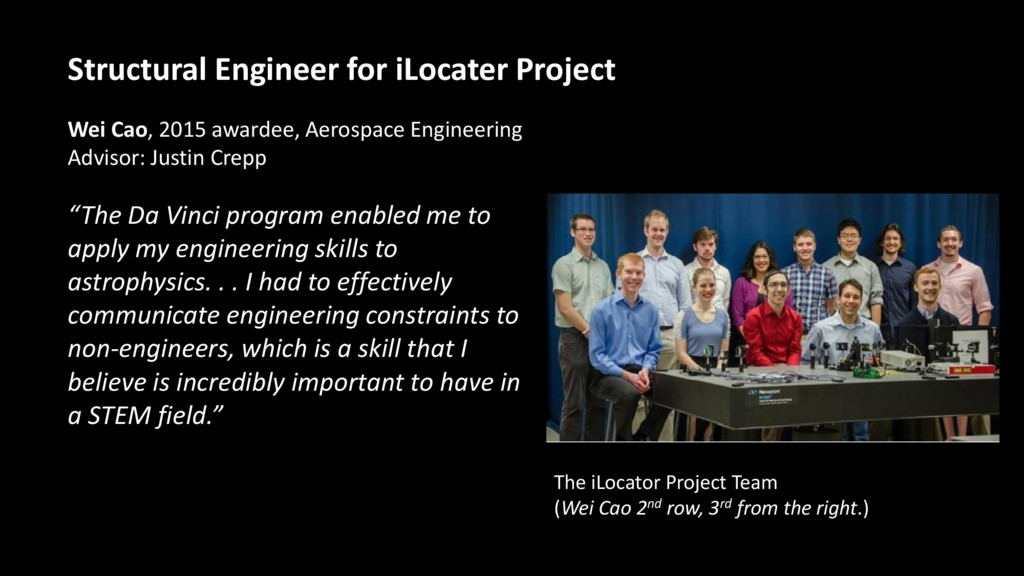
skills to astrophysics. . . I had to effectively communicate engineering constraints to non-engineers, which is a skill that I believe is incredibly important to have in a STEM field.” Structural Engineer for iLocater Project Wei Cao, 2015 awardee, Aerospace Engineering Advisor: Justin Crepp The iLocator Project Team (Wei Cao 2nd row, 3rd from the right.)
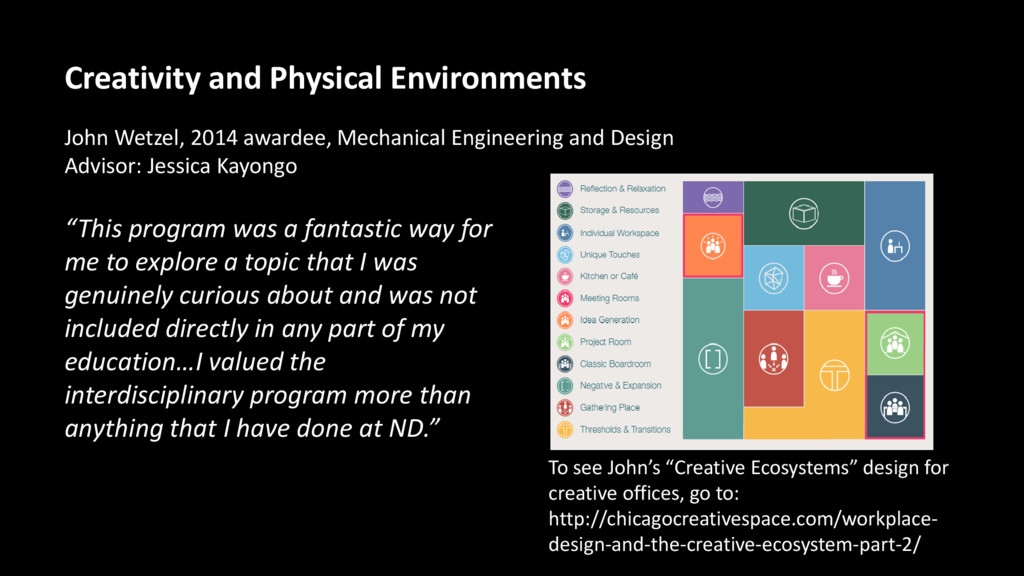
a topic that I was genuinely curious about and was not included directly in any part of my education…I valued the interdisciplinary program more than anything that I have done at ND.” Creativity and Physical Environments John Wetzel, 2014 awardee, Mechanical Engineering and Design Advisor: Jessica Kayongo To see John’s “Creative Ecosystems” design for creative offices, go to: http://chicagocreativespace.com/workplace- design-and-the-creative-ecosystem-part-2/
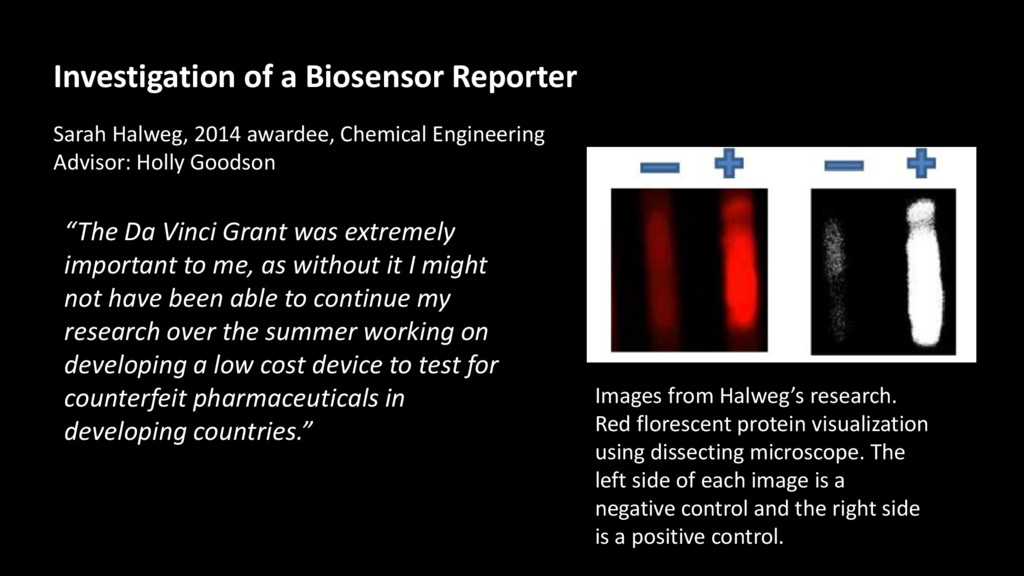
without it I might not have been able to continue my research over the summer working on developing a low cost device to test for counterfeit pharmaceuticals in developing countries.” Investigation of a Biosensor Reporter Sarah Halweg, 2014 awardee, Chemical Engineering Advisor: Holly Goodson Images from Halweg’s research. Red florescent protein visualization using dissecting microscope. The left side of each image is a negative control and the right side is a positive control.
and Letters, Architecture or Science, particularly those with interdisciplinary interests or majors/minors in multiple Colleges are encouraged to apply. Proposal Submission Deadline: March 18, 2016 Awarding of the grants will occur through collaborative assessment by ISLA in conjunction with faculty from the Colleges of Science, Architecture and Engineering. For more information, please contact Karla Cruise ([email protected]), Assistant Director for Student Programs, College of Arts and Letters; or Dom Chaloner ([email protected]), Undergraduate Research Coordinator, College of Science.
economics, or anthropology • the creation of a documentary featuring some aspect of science or engineering • science writing • design and mechanical/electrical engineering • theoretical physics and philosophy • sociology and bioinformatics • cancer biology and psychology • economics and sustainable energy • environmental science and political science • science and literature in the popular media Funded projects from 2014 here: https://isla.nd.edu/assets/155176/davinci_final_reports_summer_2014.pdf Examples of Possible Topics Include:


 kcruise
 techseoconnect
 jdejongh
 philnash
 rabernat
 eileencodes
 greggifford
 pauljervisheath
 tammyeverts
 yeseniaperezcruz
 aleyda
 addyosmani