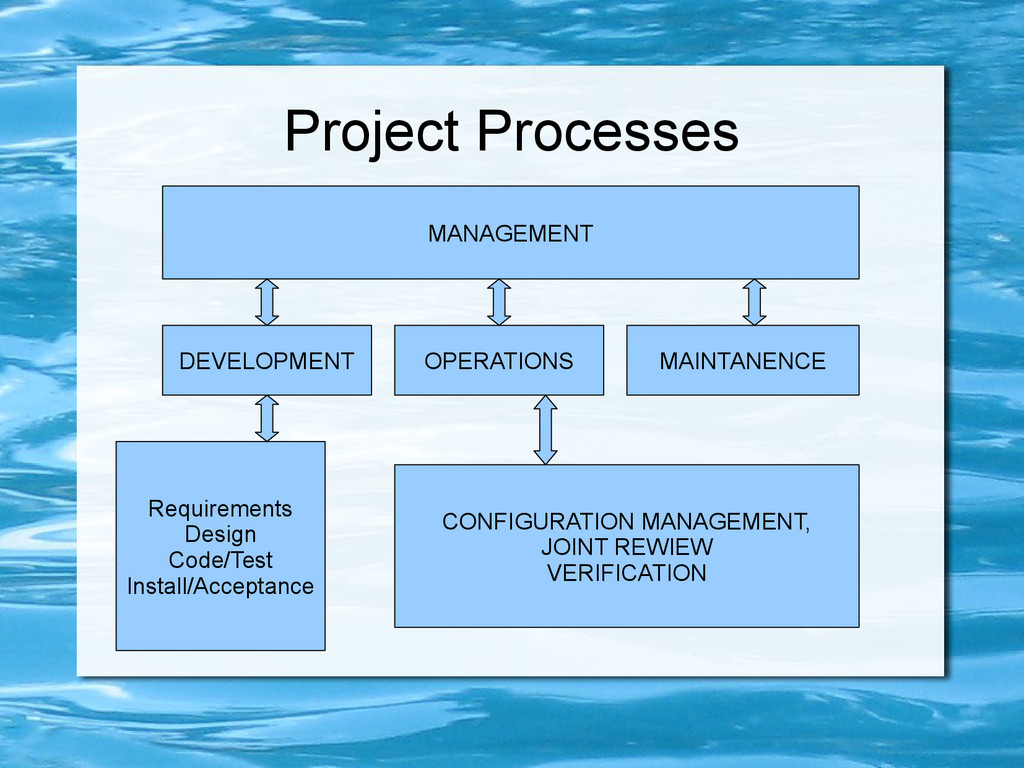
technology - Software life cycle processes Scope: Management of Software Development Projects IT project management ISO/IEC 12207 IT software projects have a poor success record YET ! The problems can be solved with this standard.
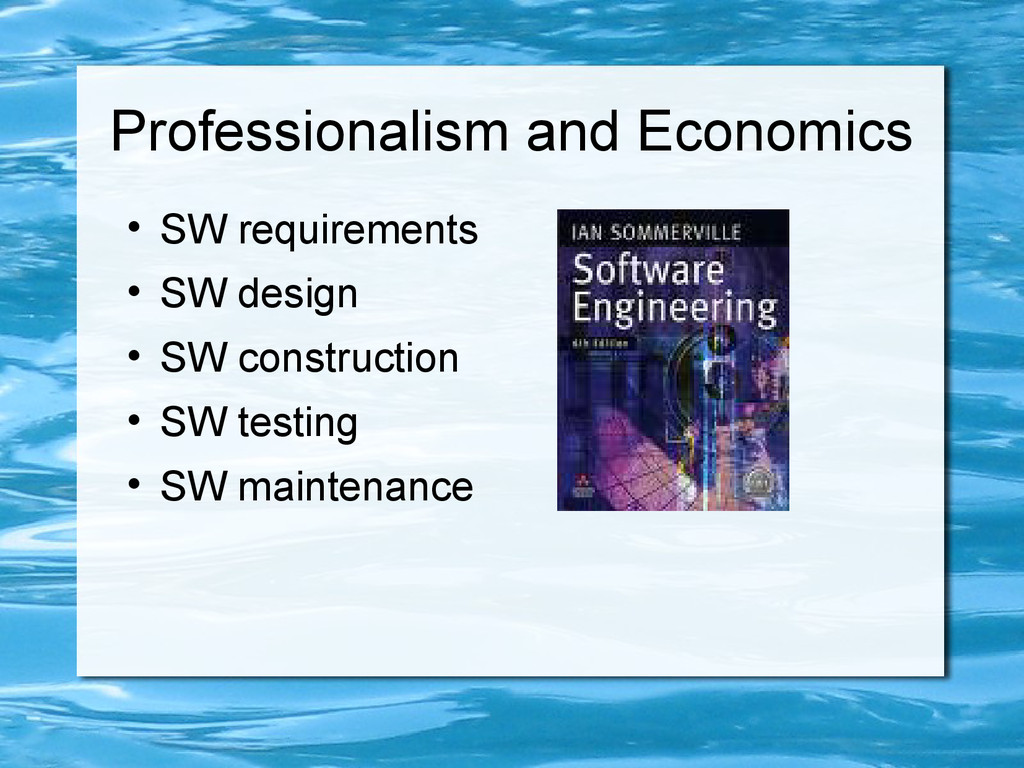
Technology - Software Life Cycle Processes IEEE Standard 1062, Recommended practice for software acquisition IEEE Standard 1058, Standard for software project management plans Books Software engineering project management, Edited by R. Thayer, IEEE Computer Society, 1997. Software Engineering by IAN Sommerville
service depends on software Software intensive products/services include: As local as embedded software As wide as the World Wide Web transportation of all kinds financial markets
master the software technology to stay competitive Produce quality products that satisfies user needs Meet committed costs Meet the planned schedules
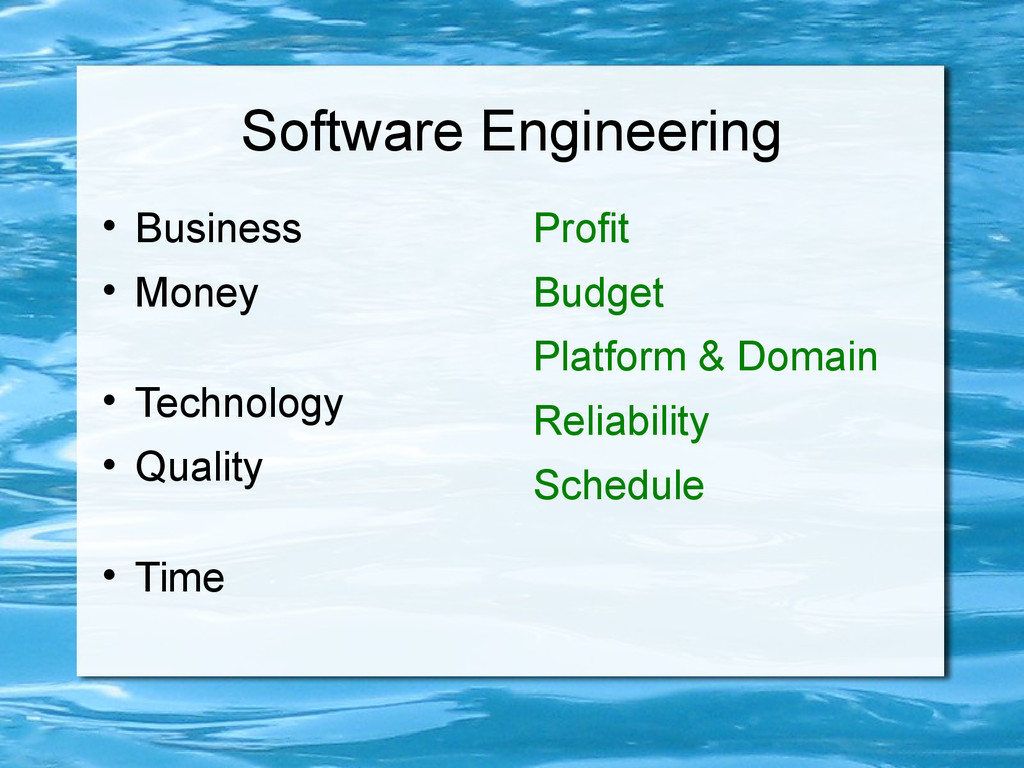
applying scientific principles and management skills to develop software intensive systems and products for use by society within the constraints of: Time, money, technology, quality, business.
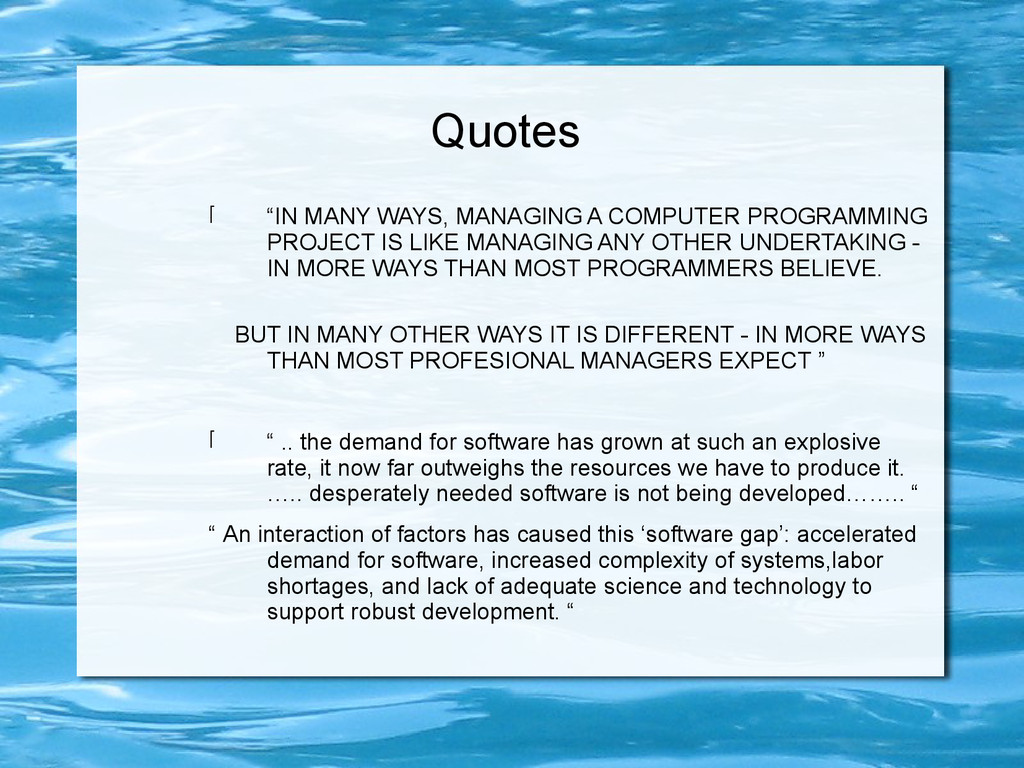
IS LIKE MANAGING ANY OTHER UNDERTAKING - IN MORE WAYS THAN MOST PROGRAMMERS BELIEVE. BUT IN MANY OTHER WAYS IT IS DIFFERENT - IN MORE WAYS THAN MOST PROFESIONAL MANAGERS EXPECT ” “ .. the demand for software has grown at such an explosive rate, it now far outweighs the resources we have to produce it. ….. desperately needed software is not being developed…….. “ “ An interaction of factors has caused this ‘software gap’: accelerated demand for software, increased complexity of systems,labor shortages, and lack of adequate science and technology to support robust development. “
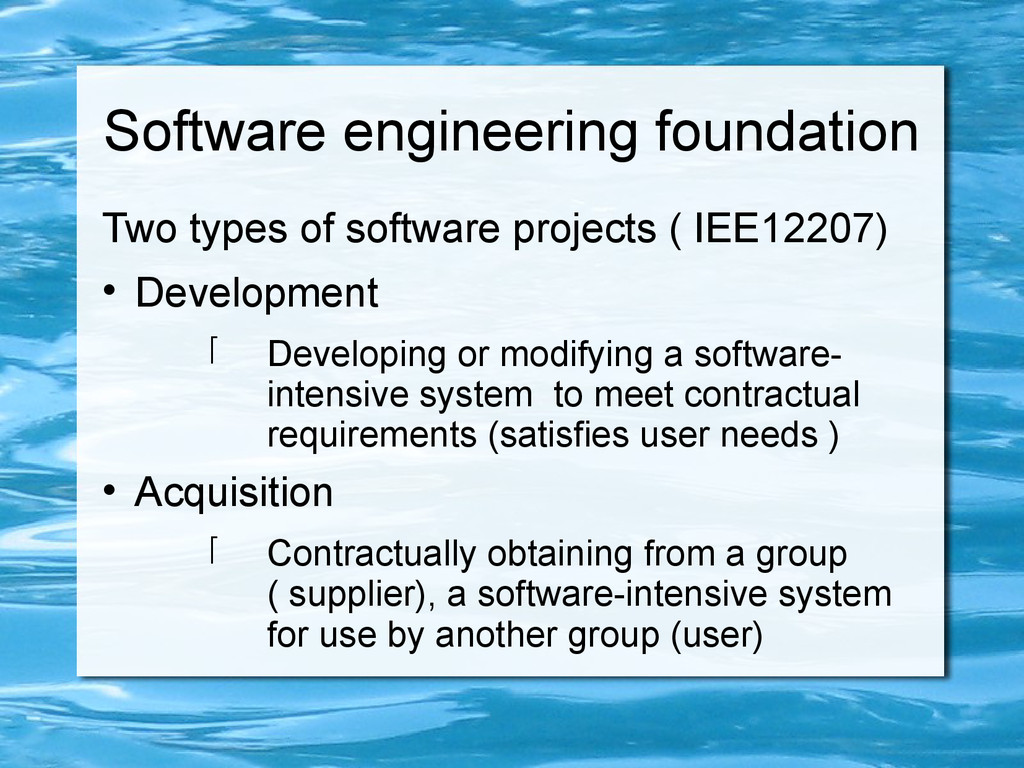
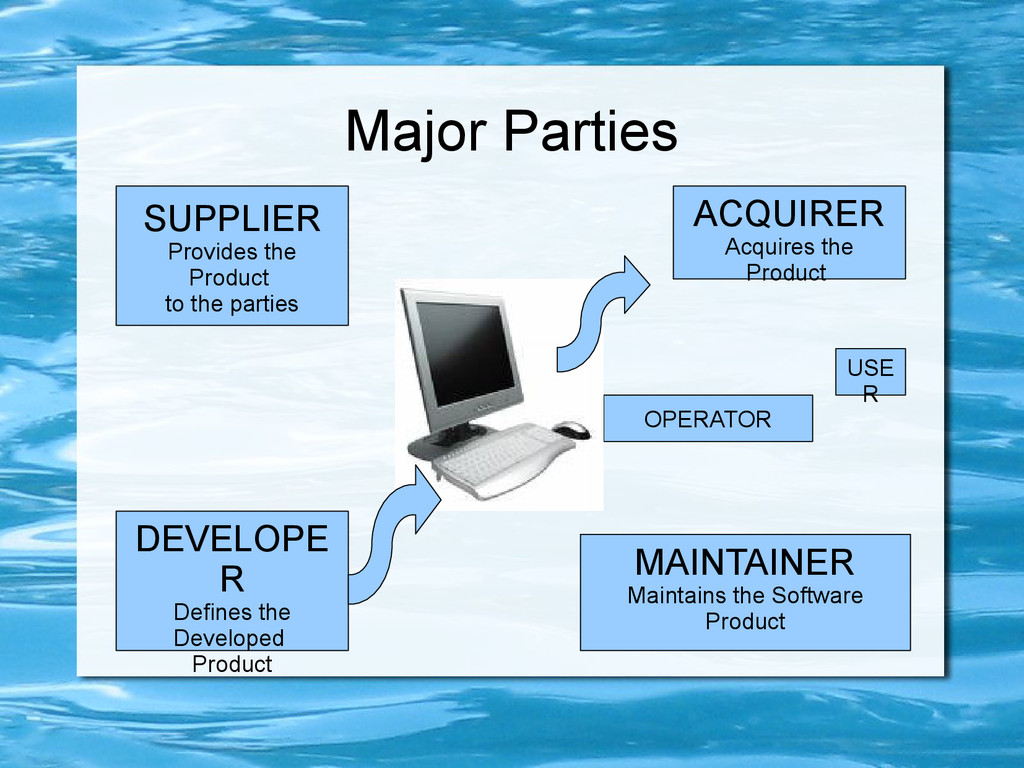
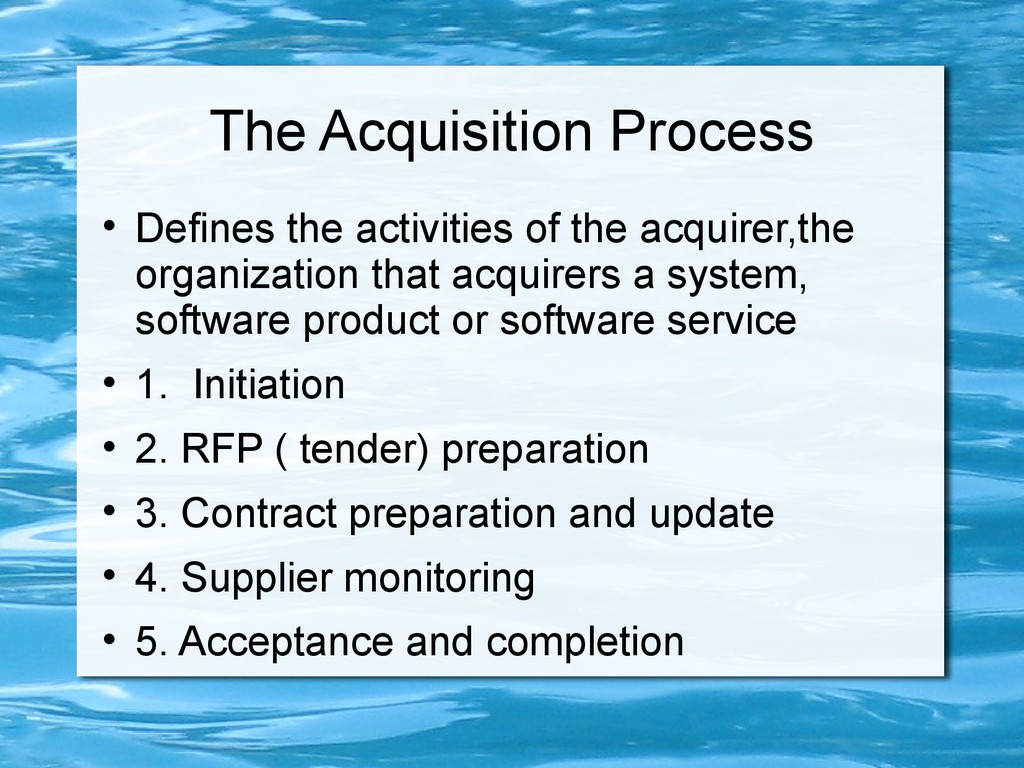
Development Developing or modifying a software- intensive system to meet contractual requirements (satisfies user needs ) Acquisition Contractually obtaining from a group ( supplier), a software-intensive system for use by another group (user)
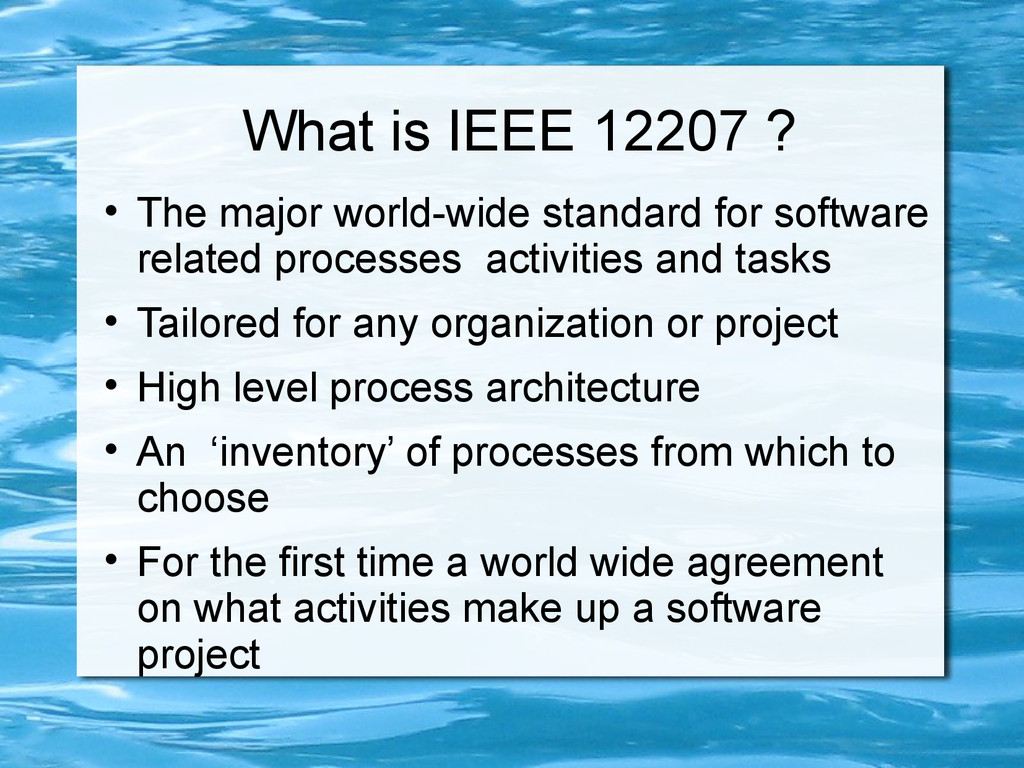
for software related processes activities and tasks Tailored for any organization or project High level process architecture An ‘inventory’ of processes from which to choose For the first time a world wide agreement on what activities make up a software project
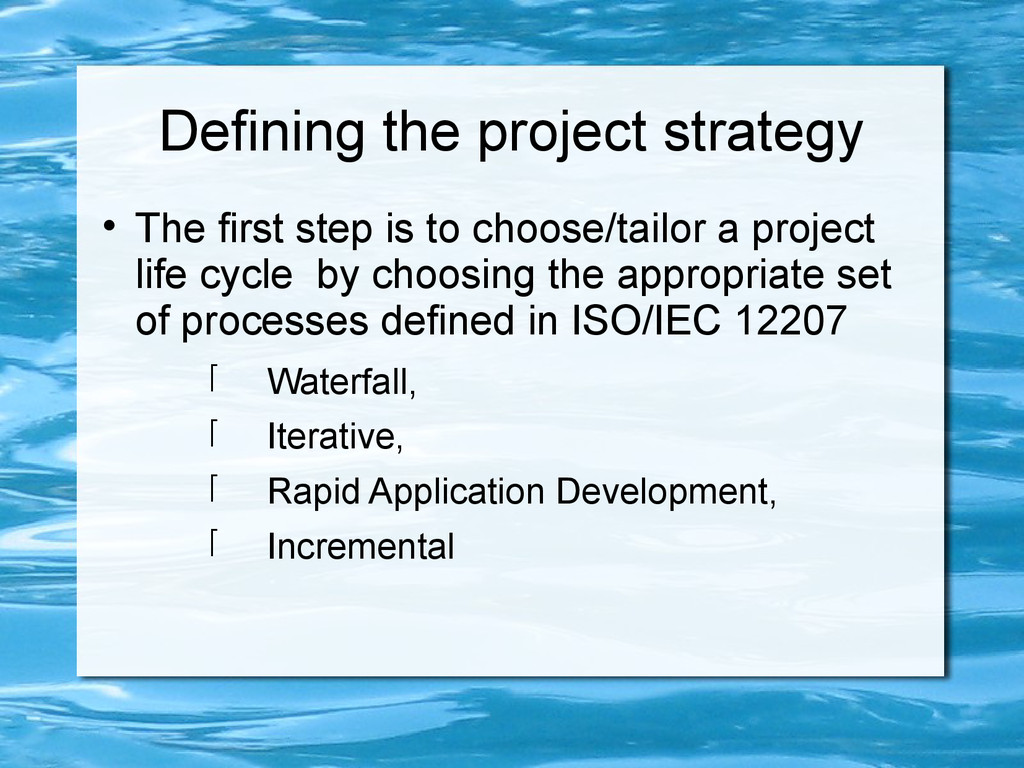
choose/tailor a project life cycle by choosing the appropriate set of processes defined in ISO/IEC 12207 Waterfall, Iterative, Rapid Application Development, Incremental
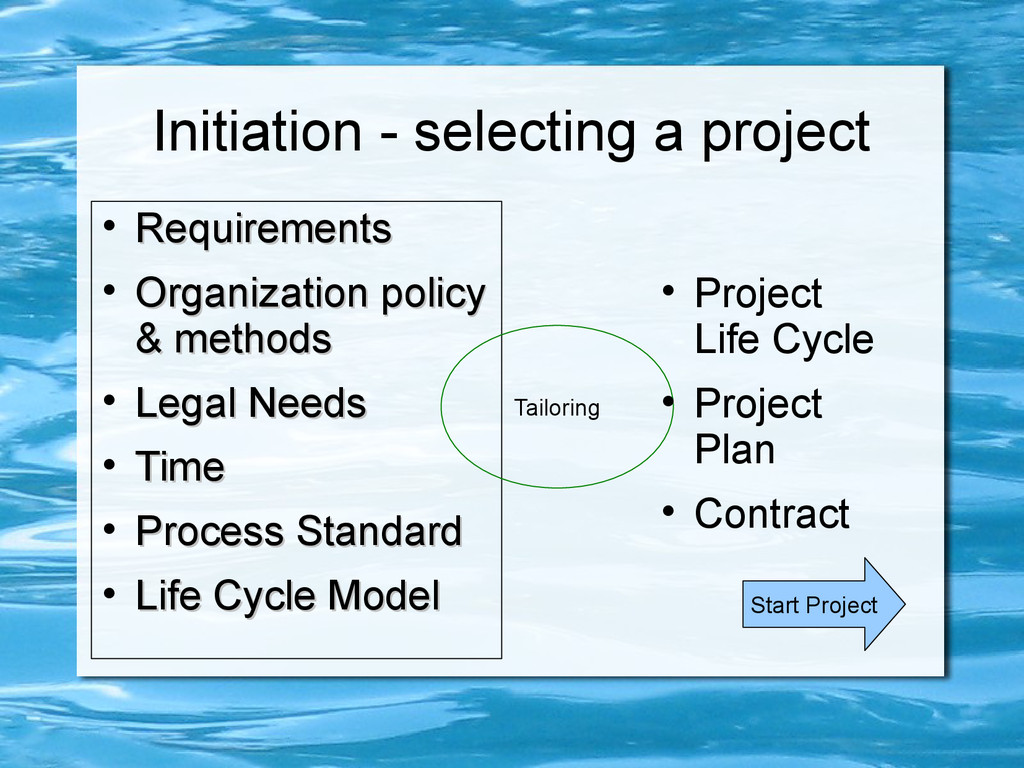
policy Organization policy & methods & methods Legal Needs Legal Needs Time Time Process Standard Process Standard Life Cycle Model Life Cycle Model Tailoring Project Life Cycle Project Plan Contract Start Project
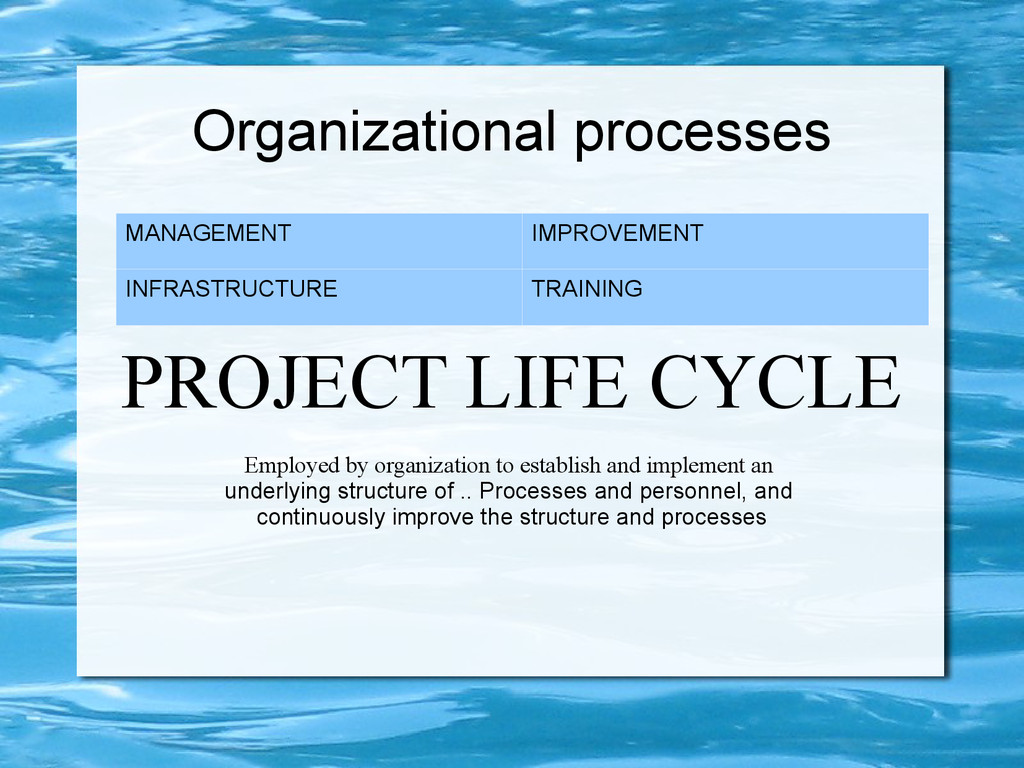
and implement an underlying structure of .. Processes and personnel, and continuously improve the structure and processes MANAGEMENT IMPROVEMENT INFRASTRUCTURE TRAINING
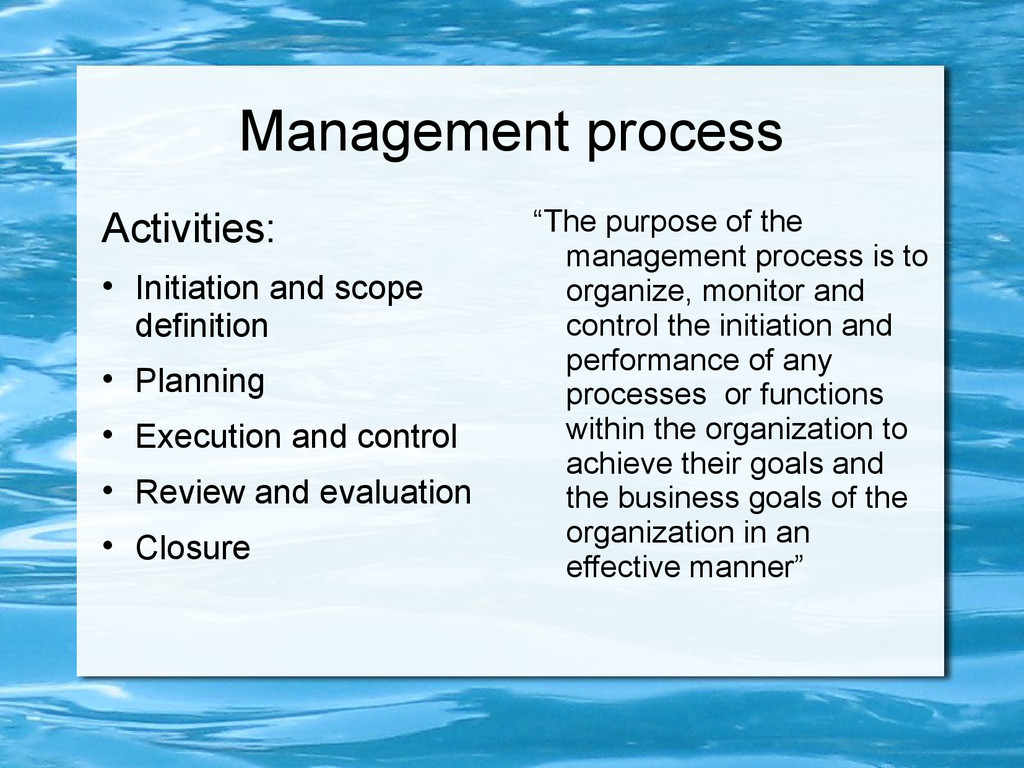
Execution and control Review and evaluation Closure “The purpose of the management process is to organize, monitor and control the initiation and performance of any processes or functions within the organization to achieve their goals and the business goals of the organization in an effective manner”
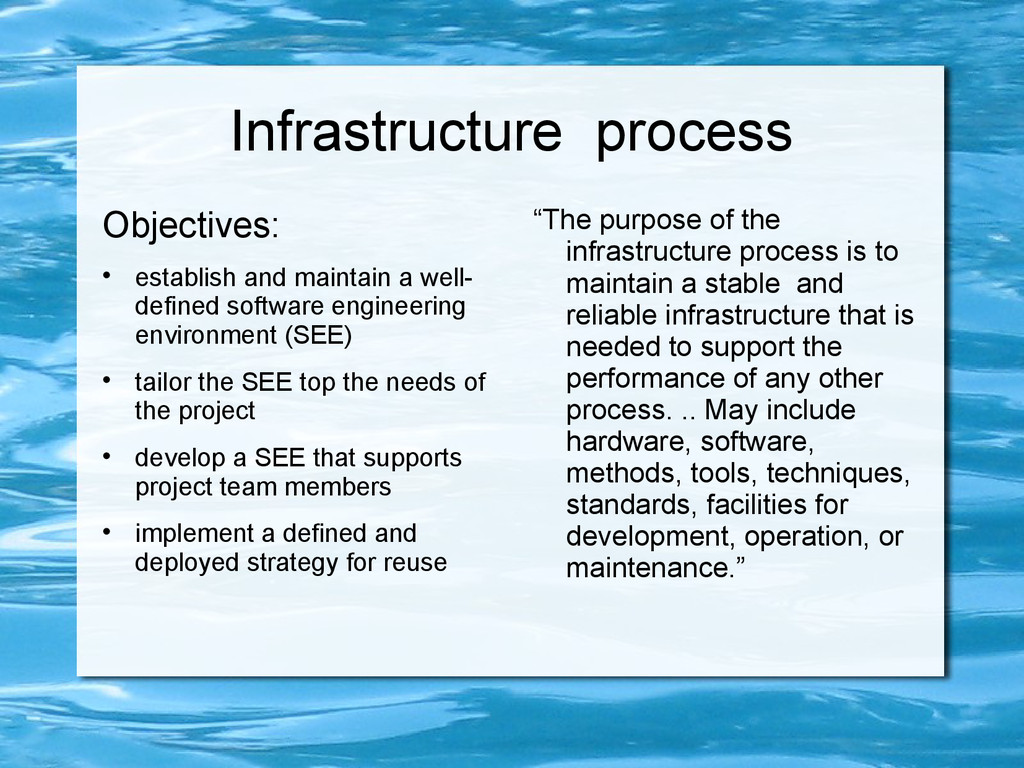
software engineering environment (SEE) tailor the SEE top the needs of the project develop a SEE that supports project team members implement a defined and deployed strategy for reuse “The purpose of the infrastructure process is to maintain a stable and reliable infrastructure that is needed to support the performance of any other process. .. May include hardware, software, methods, tools, techniques, standards, facilities for development, operation, or maintenance.”
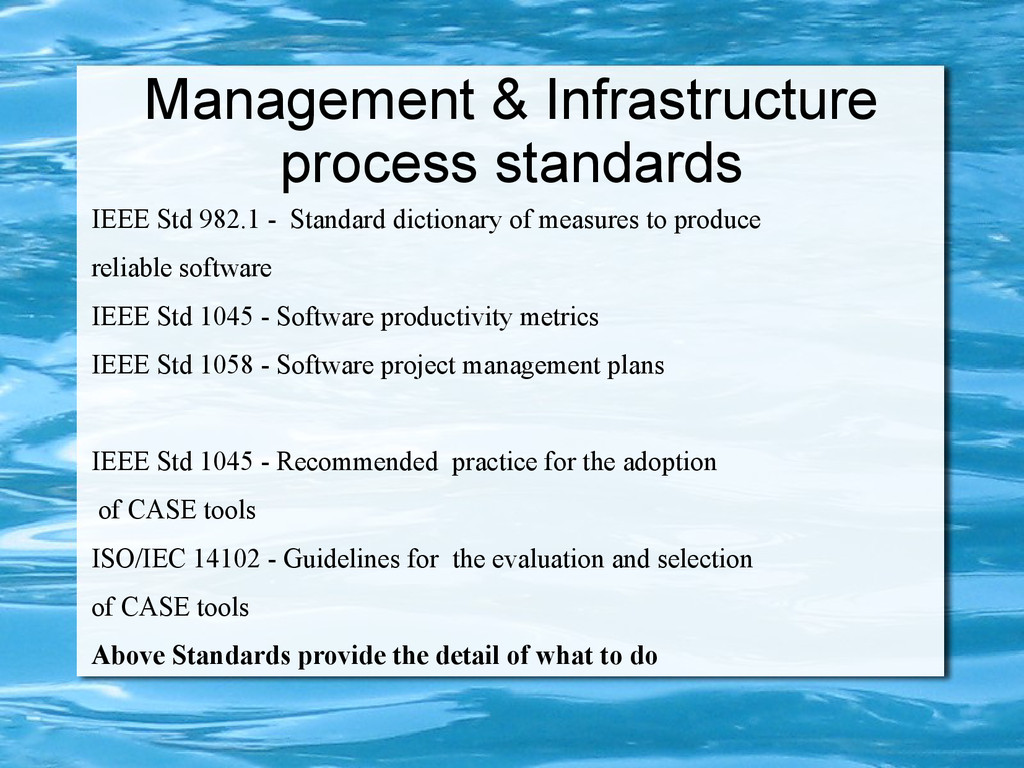
dictionary of measures to produce reliable software IEEE Std 1045 - Software productivity metrics IEEE Std 1058 - Software project management plans IEEE Std 1045 - Recommended practice for the adoption of CASE tools ISO/IEC 14102 - Guidelines for the evaluation and selection of CASE tools Above Standards provide the detail of what to do
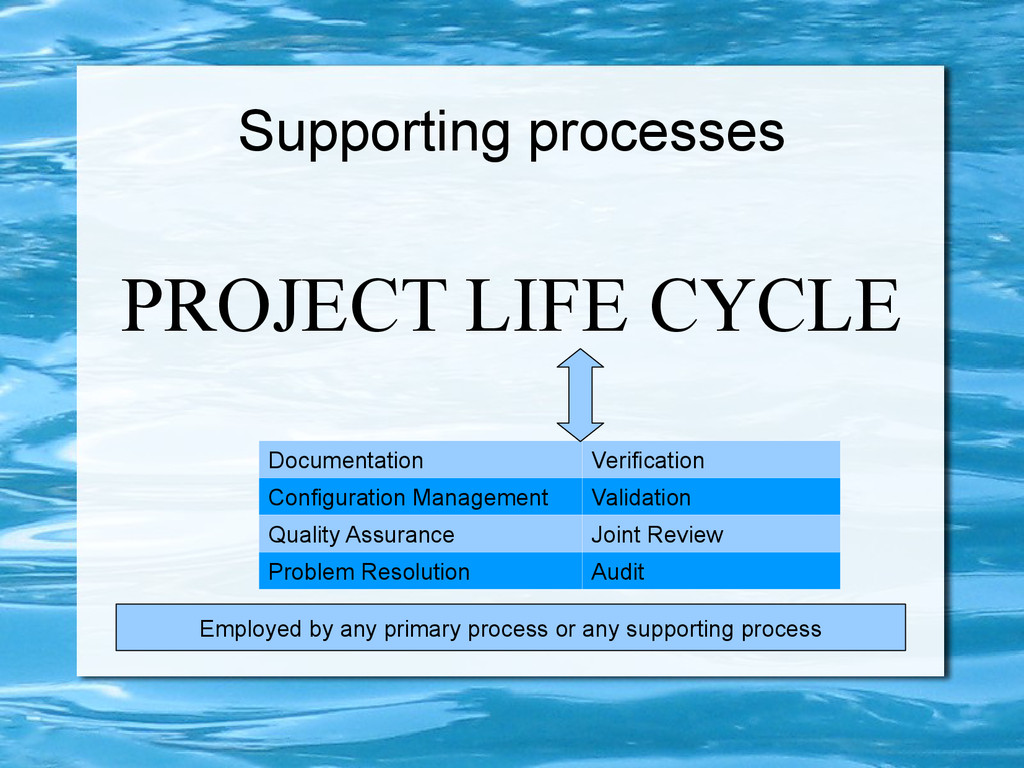
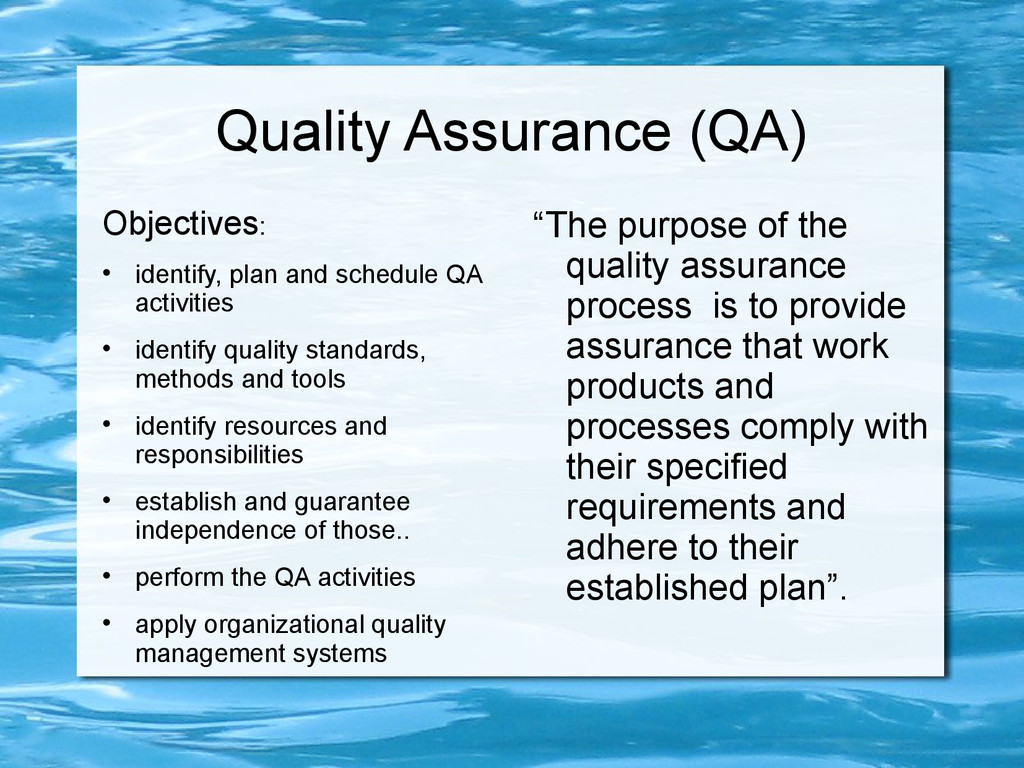
activities identify quality standards, methods and tools identify resources and responsibilities establish and guarantee independence of those.. perform the QA activities apply organizational quality management systems “The purpose of the quality assurance process is to provide assurance that work products and processes comply with their specified requirements and adhere to their established plan”.
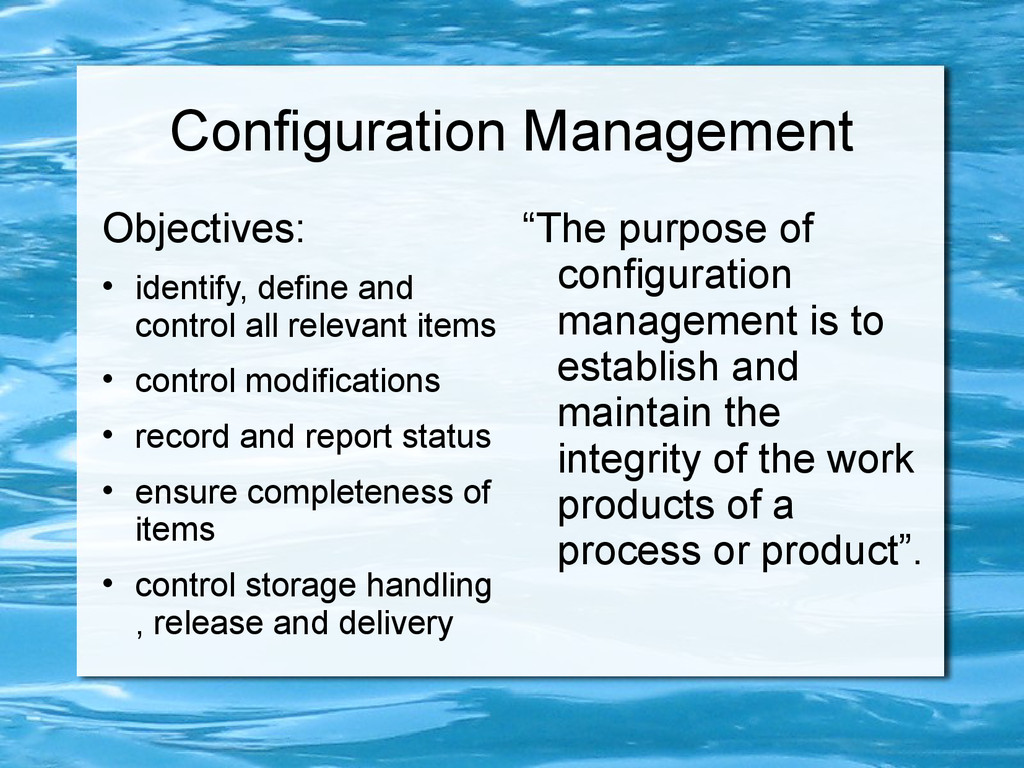
items control modifications record and report status ensure completeness of items control storage handling , release and delivery “The purpose of configuration management is to establish and maintain the integrity of the work products of a process or product”.
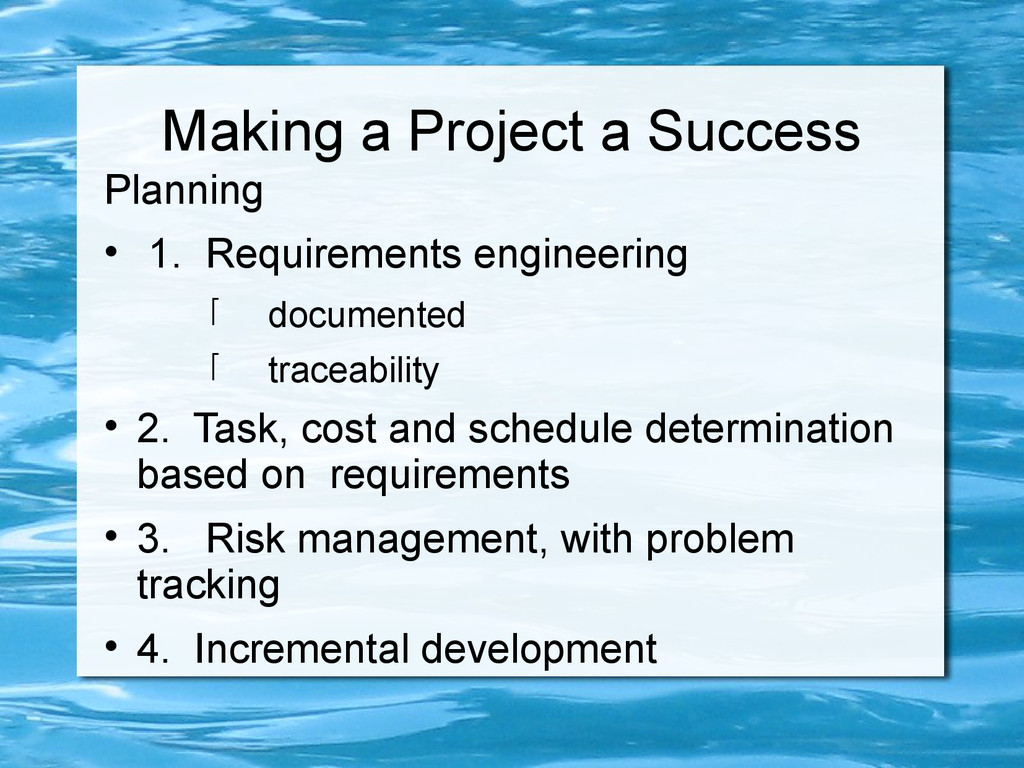
documented traceability 2. Task, cost and schedule determination based on requirements 3. Risk management, with problem tracking 4. Incremental development
software projects: Licensed Software Engineers Certified software practitioners Skilled software workers A stable Software Engineering Model A doubling of software workers 10 today to 50 or 100 in the future with an adequate level of competence
of IT projects containing software It demands good PM practices A basis for establishing a mature and successful process A road map for process and project improvements


 keavy
 portentint
 eitanlees
 livdayseo
 inesmontani
 tammyeverts
 csswizardry
 philnash
 aleyda
 bkeepers
 jakevdp