Upgrade to Pro — share decks privately, control downloads, hide ads and more …

Role of cybersecurity in software development

Sponsored · Your Podcast. Everywhere. Effortlessly. Share. Educate. Inspire. Entertain. You do you. We'll handle the rest.
Avatar for Makelink Innovation Makelink Innovation
February 28, 2025
2

Role of cybersecurity in software development

Cybersecurity is important for maintaining the honesty and safety of software programs in the current digital era. Risks that target software systems with private data continue to develop along with technology. Software development needs cybersecurity; it is no longer an optional feature. To avoid weaknesses and protect user data, developers must include security measures at every level of the software development process.

Avatar for Makelink Innovation

Makelink Innovation

February 28, 2025
Tweet

Transcript

  1. The Critical Role of Cybersecurity in Modern Software Development This

    presentation highlights cybersecurity's crucial role in software development. It outlines today's threats and secure development practices. Learn to build resilient and secure software. by Makelink Innovation
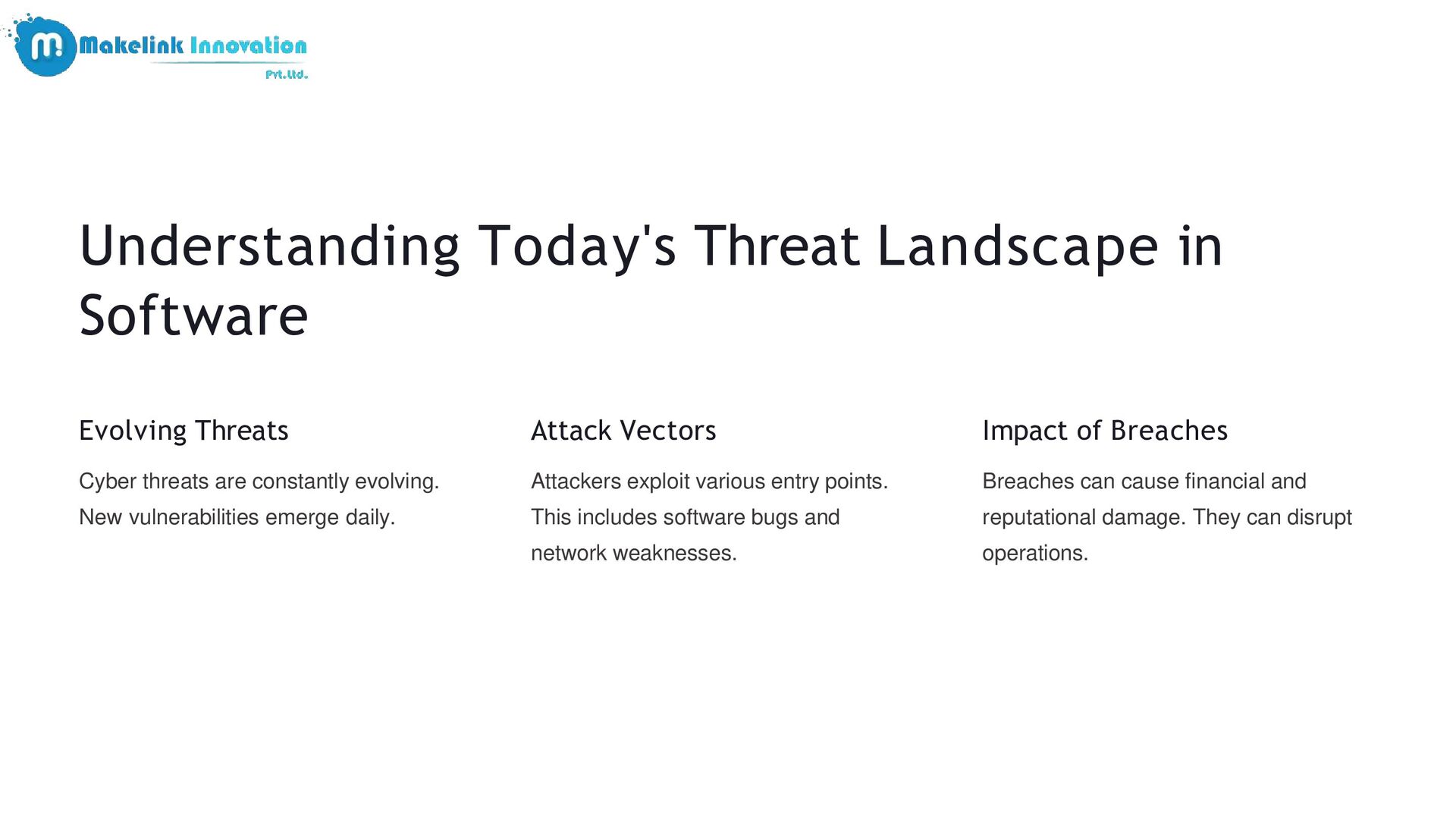
  2. Understanding Today's Threat Landscape in Software Evolving Threats Cyber threats

    are constantly evolving. New vulnerabilities emerge daily. Attack Vectors Attackers exploit various entry points. This includes software bugs and network weaknesses. Impact of Breaches Breaches can cause financial and reputational damage. They can disrupt operations.
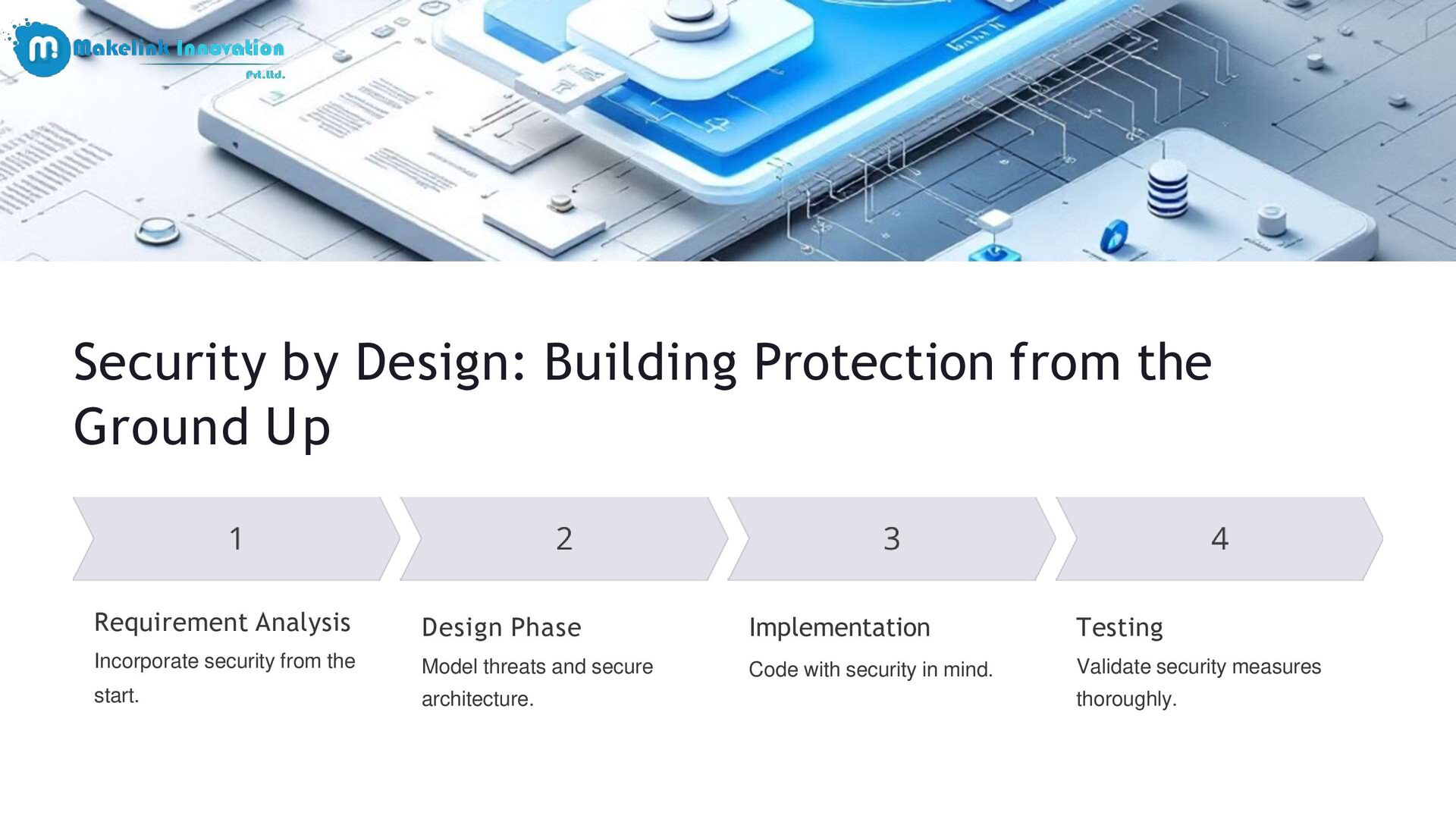
  3. Security by Design: Building Protection from the Ground Up Requirement

    Analysis Incorporate security from the start. Design Phase Model threats and secure architecture. Implementation Code with security in mind. Testing Validate security measures thoroughly.
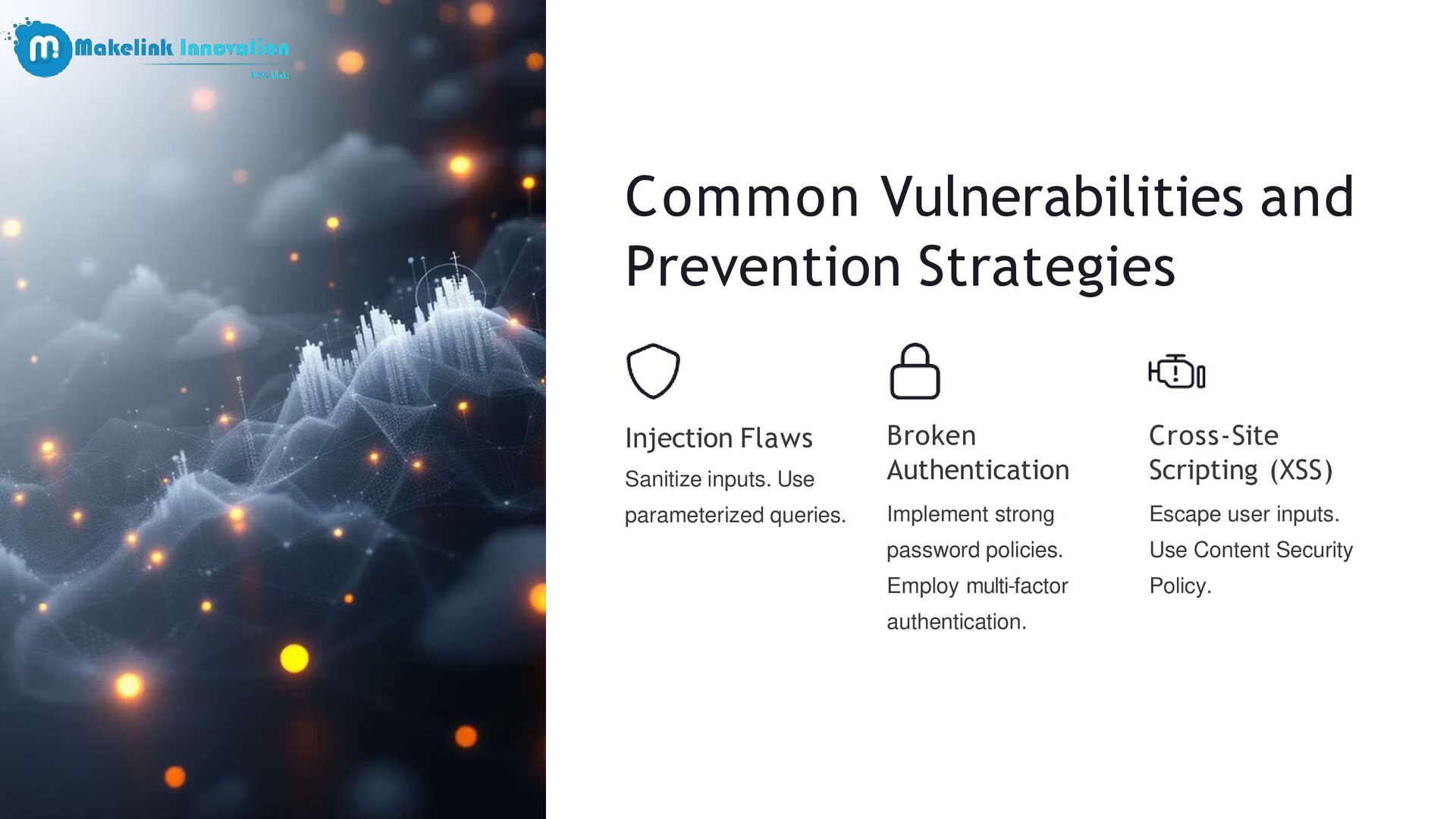
  4. Common Vulnerabilities and Prevention Strategies Injection Flaws Sanitize inputs. Use

    parameterized queries. Broken Authentication Implement strong password policies. Employ multi-factor authentication. Cross-Site Scripting (XSS) Escape user inputs. Use Content Security Policy.
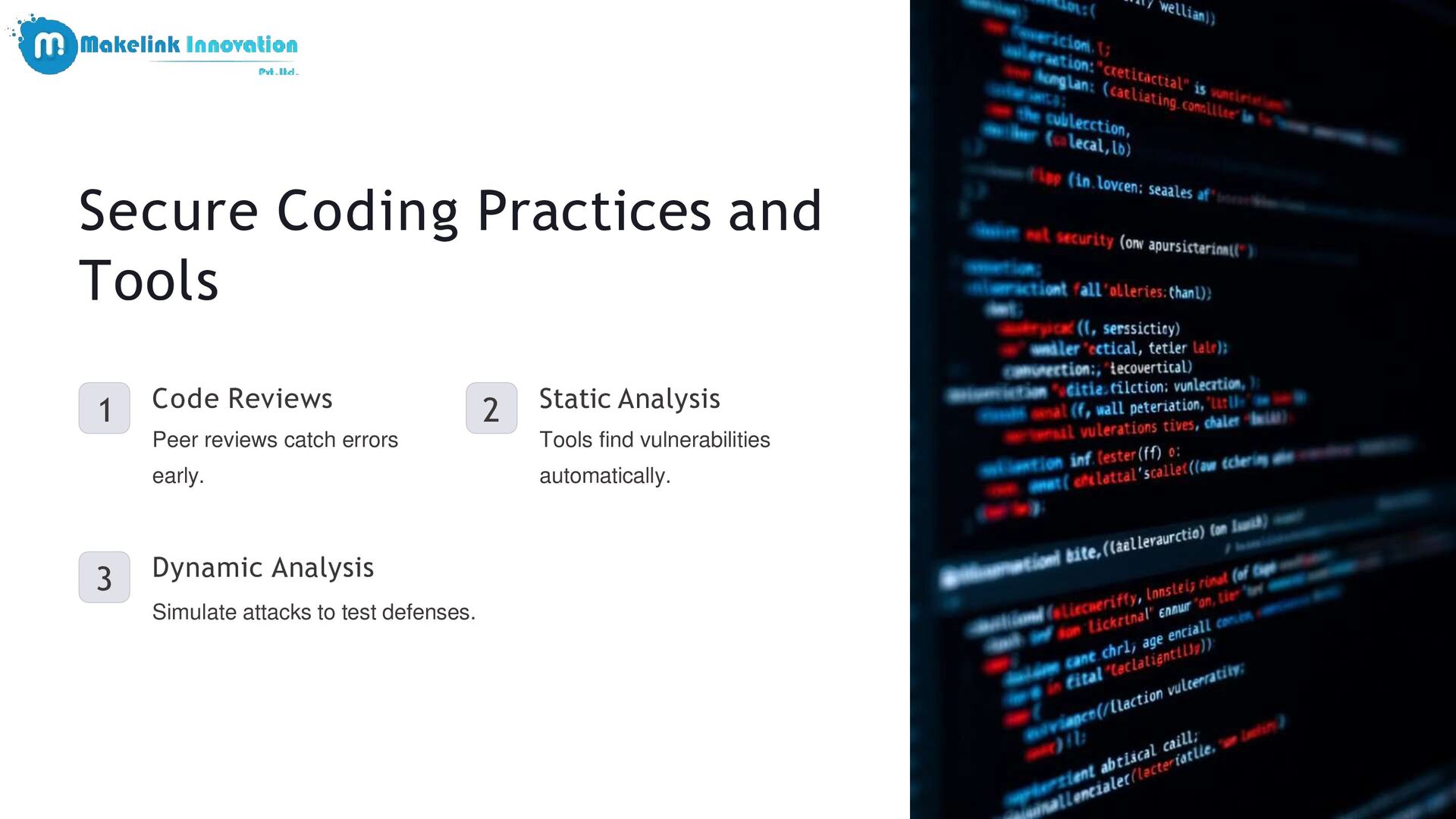
  5. Secure Coding Practices and Tools 1 Code Reviews Peer reviews

    catch errors early. 2 Static Analysis Tools find vulnerabilities automatically. 3 Dynamic Analysis Simulate attacks to test defenses.
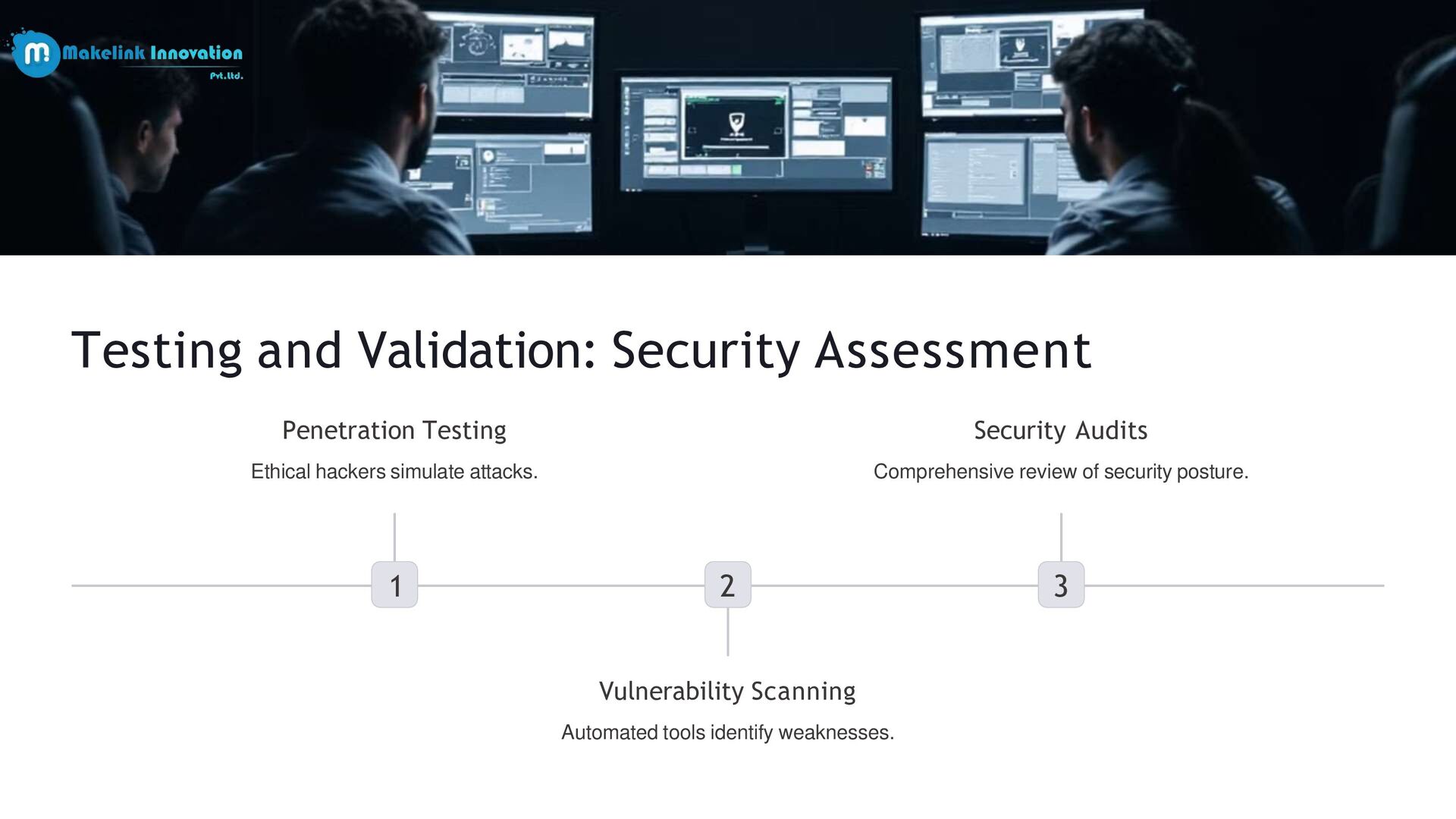
  6. Testing and Validation: Security Assessment 1 Penetration Testing Ethical hackers

    simulate attacks. 2 Vulnerability Scanning Automated tools identify weaknesses. 3 Security Audits Comprehensive review of security posture.
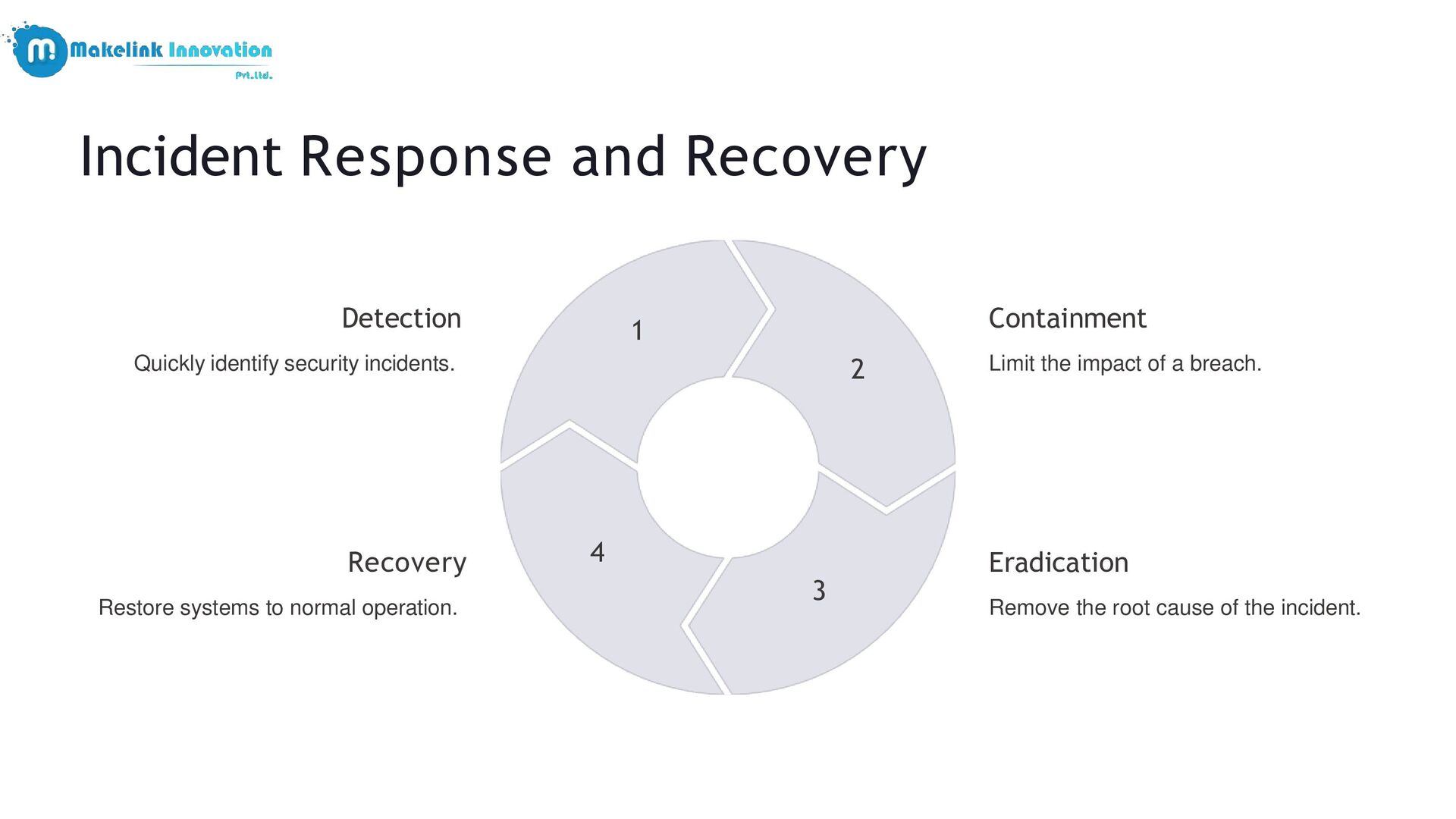
  7. Incident Response and Recovery Detection Quickly identify security incidents. 1

    Containment Limit the impact of a breach. 2 Eradication Remove the root cause of the incident. 3 Recovery Restore systems to normal operation. 4
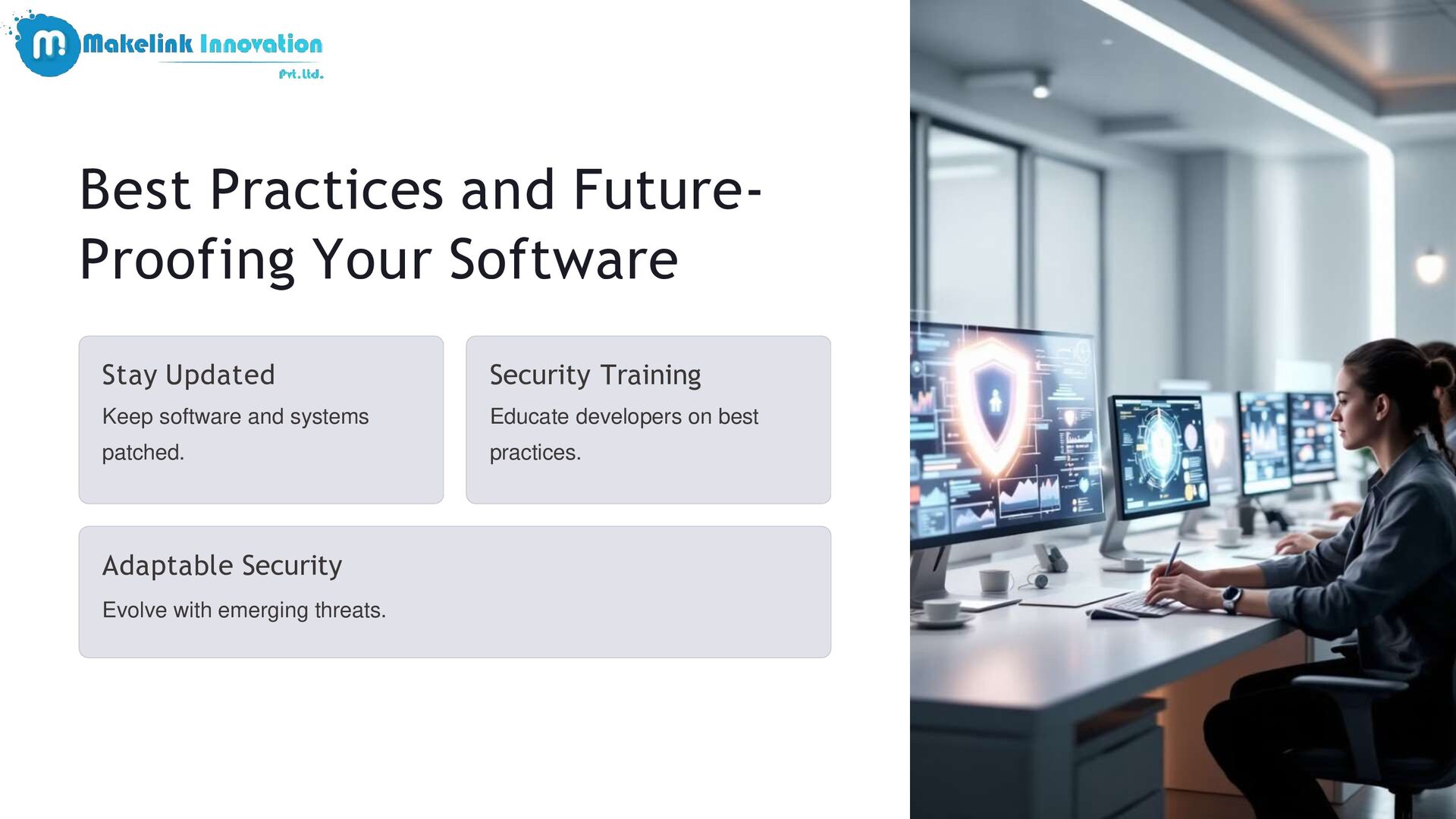
  8. Best Practices and Future- Proofing Your Software Stay Updated Keep

    software and systems patched. Security Training Educate developers on best practices. Adaptable Security Evolve with emerging threats.