Upgrade to Pro — share decks privately, control downloads, hide ads and more …

The Role of Fortune Tellers in Superstitions an...

Sponsored · Your Podcast. Everywhere. Effortlessly. Share. Educate. Inspire. Entertain. You do you. We'll handle the rest.
Avatar for Master Gurudev Master Gurudev
April 05, 2025
7

The Role of Fortune Tellers in Superstitions and Beliefs

Fortune Tellers have played a significant role in shaping human beliefs, traditions, and superstitions throughout history. From ancient civilizations to modern times, people have sought guidance from Fortune Tellers to understand their fate, make decisions, and find hope in uncertainty.

Avatar for Master Gurudev

Master Gurudev

April 05, 2025

Transcript

  1. Introduction A Fortune Teller is someone who claims to predict

    the future using mystical or intuitive methods such as tarot cards, palm reading, astrology, or crystal gazing. Superstitions and belief systems are deeply rooted in cultures worldwide, often shaping how people perceive luck, fate, and destiny. Many turn to a Fortune Teller for guidance in uncertain times—seeking answers about love, career, health, or personal struggles. Whether driven by hope, curiosity, or fear of the unknown, the appeal of a Fortune Teller lies in the promise of insight and reassurance in life's mysteries.
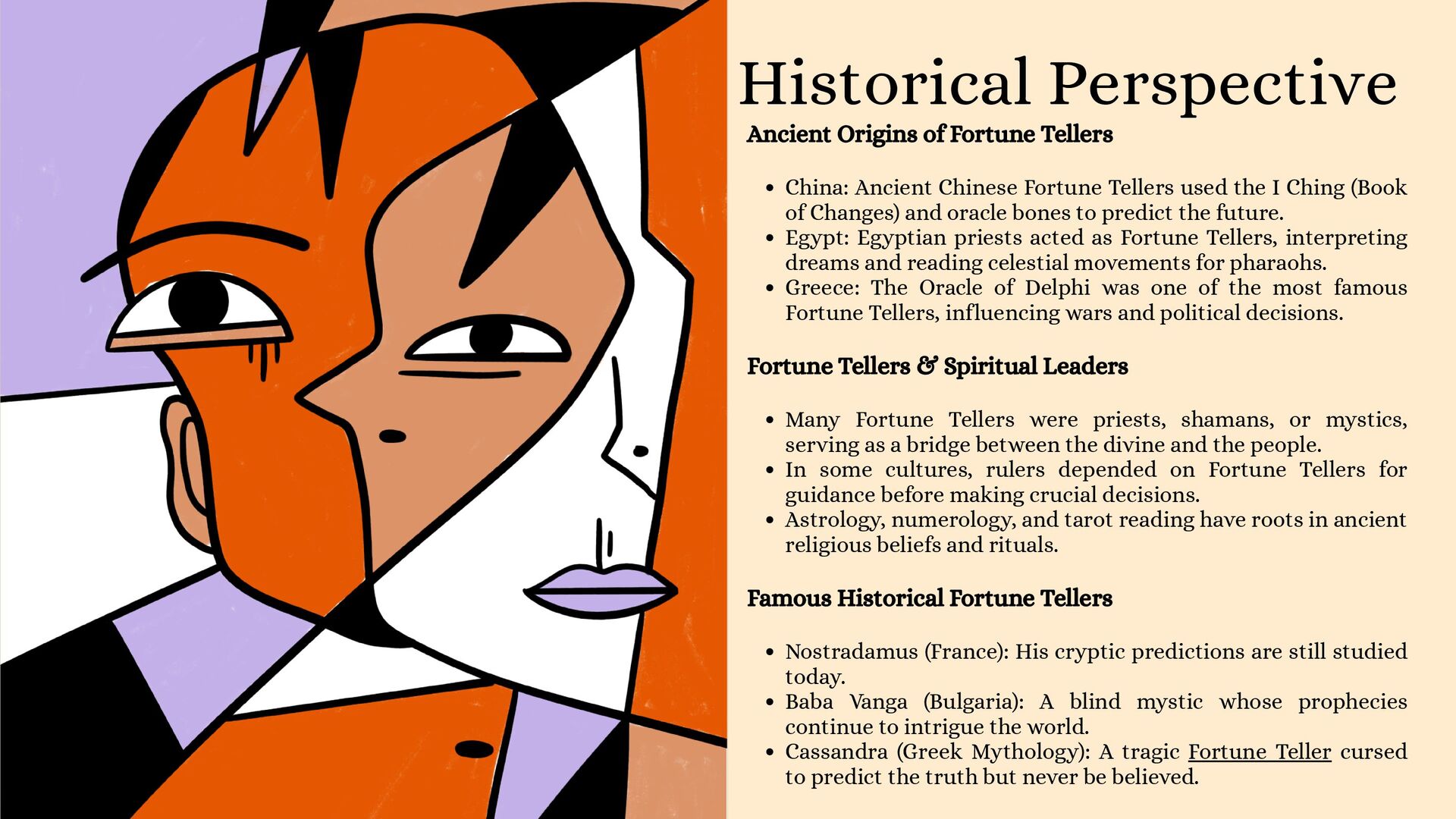
  2. Historical Perspective Ancient Origins of Fortune Tellers China: Ancient Chinese

    Fortune Tellers used the I Ching (Book of Changes) and oracle bones to predict the future. Egypt: Egyptian priests acted as Fortune Tellers, interpreting dreams and reading celestial movements for pharaohs. Greece: The Oracle of Delphi was one of the most famous Fortune Tellers, influencing wars and political decisions. Fortune Tellers & Spiritual Leaders Many Fortune Tellers were priests, shamans, or mystics, serving as a bridge between the divine and the people. In some cultures, rulers depended on Fortune Tellers for guidance before making crucial decisions. Astrology, numerology, and tarot reading have roots in ancient religious beliefs and rituals. Famous Historical Fortune Tellers Nostradamus (France): His cryptic predictions are still studied today. Baba Vanga (Bulgaria): A blind mystic whose prophecies continue to intrigue the world. Cassandra (Greek Mythology): A tragic Fortune Teller cursed to predict the truth but never be believed.
  3. Common Superstitions Associated with Fortune Tellers Superstitions and Fortune Teller

    have been intertwined for centuries. Many believe that Fortune Tellers can reveal hidden truths about destiny, using signs, symbols, and omens. But how much of it is real, and how much is just tradition? The Belief in Destiny and Fate People seek Fortune Tellers to uncover their future, believing fate is already written. Concepts like "soulmates," "bad luck," and "life paths" stem from ancient superstitions. Many cultures believe Fortune Tellers can alter or guide destiny through rituals. Symbols and Omens Used in Fortune Telling Crystal Balls Tarot Cards Palmistry Lines Tea Leaves
  4. How Different Cultures Embrace Fortune Teller Western Astrology: Zodiac signs,

    horoscopes, and planetary alignments guide life decisions. Eastern Palmistry: In China and India, hand lines reveal personality, destiny, and luck. African and Latin Spirituality: Shamans and oracles use visions, bones, and cards to foresee the future. Cultural Influence of Fortune Teller Role of Fortune Teller in Traditional Ceremonies Weddings & Births: Some cultures consult a Fortune Teller to choose dates or predict future harmony. New Year Rituals: Tarot readings and astrological forecasts set expectations for the year ahead. Religious Practices: In some traditions, Fortune Teller acts as a spiritual guide, interpreting divine messages.
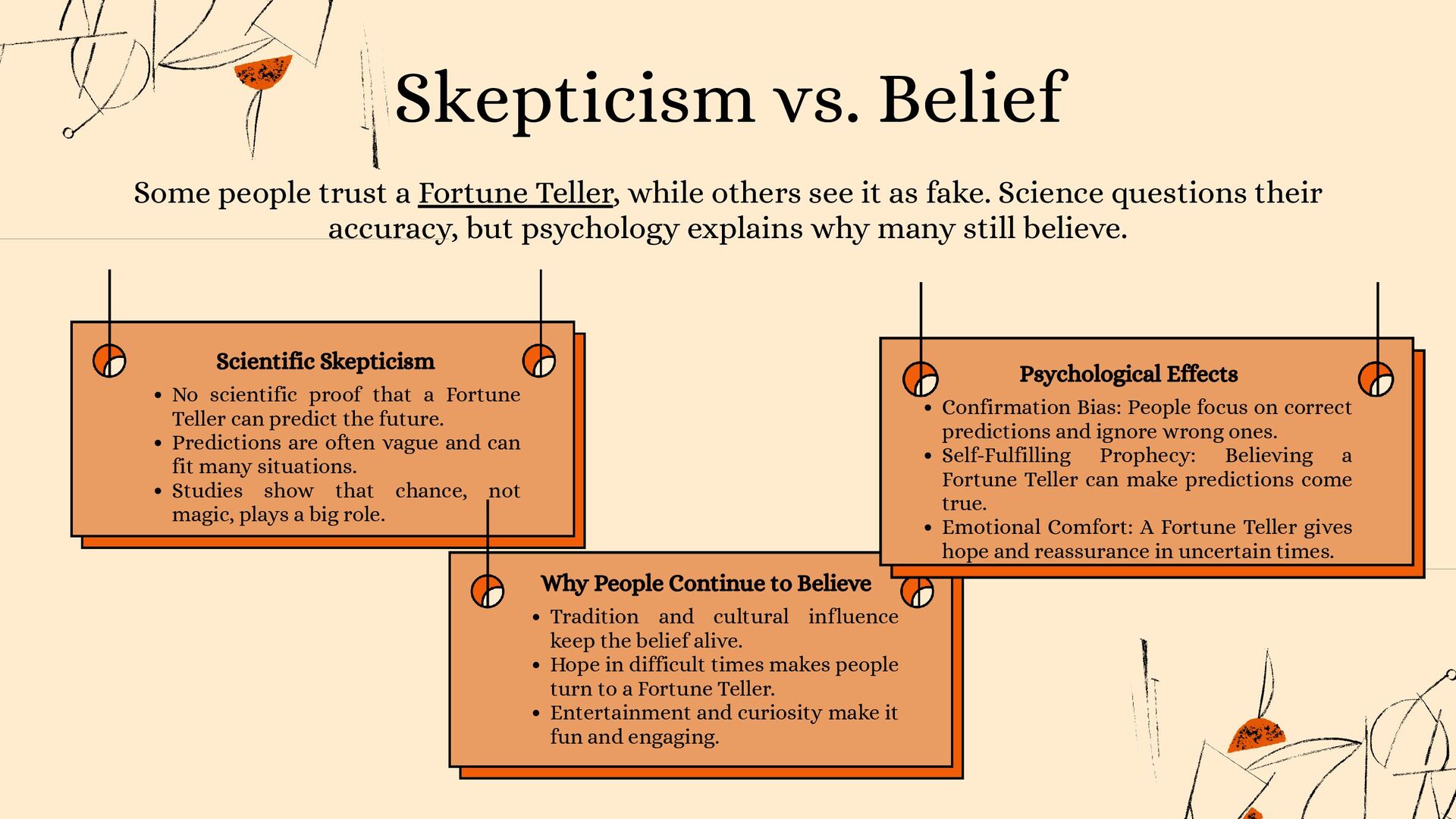
  5. Skepticism vs. Belief Some people trust a Fortune Teller, while

    others see it as fake. Science questions their accuracy, but psychology explains why many still believe. Scientific Skepticism No scientific proof that a Fortune Teller can predict the future. Predictions are often vague and can fit many situations. Studies show that chance, not magic, plays a big role. Why People Continue to Believe Tradition and cultural influence keep the belief alive. Hope in difficult times makes people turn to a Fortune Teller. Entertainment and curiosity make it fun and engaging. Psychological Effects Confirmation Bias: People focus on correct predictions and ignore wrong ones. Self-Fulfilling Prophecy: Believing a Fortune Teller can make predictions come true. Emotional Comfort: A Fortune Teller gives hope and reassurance in uncertain times.
  6. CONCLUSION Fortune Teller practices have deeply influenced human beliefs, shaping

    cultures, traditions, and personal decisions. Whether seen as mystical guides or mere superstition, Fortune Teller continue to captivate people worldwide. Some view them as a source of wisdom, offering clarity and hope, while others dismiss them as psychological illusions.