Share
Embed
Measuring & Analyzing Core Web Vitals
Philip Tellis
October 24, 2024
Transcript
40 slides
-
Measuring & Analyzing the Core Web Vitals What makes your
site feel snappy? -
Abbé Jean-Antoine Nollet 1700 - 1770 French Clergyman & Budding
Electrician Invented one of the first Electroscopes (we now call them beacon collectors) L'Abbé Jean Antoine Nollet — Maurice Quentin de La Tour Alte Pinakothek, Munich, Germany Public Domain -
Philip Tellis Principal RUM Distiller @ Akamai • Creator of
mPulse and tinkerer of the data • Author of the OpenSource boomerang RUM library social:@bluesmoon ⦿ github:@bluesmoon speakerdeck:@bluesmoon -
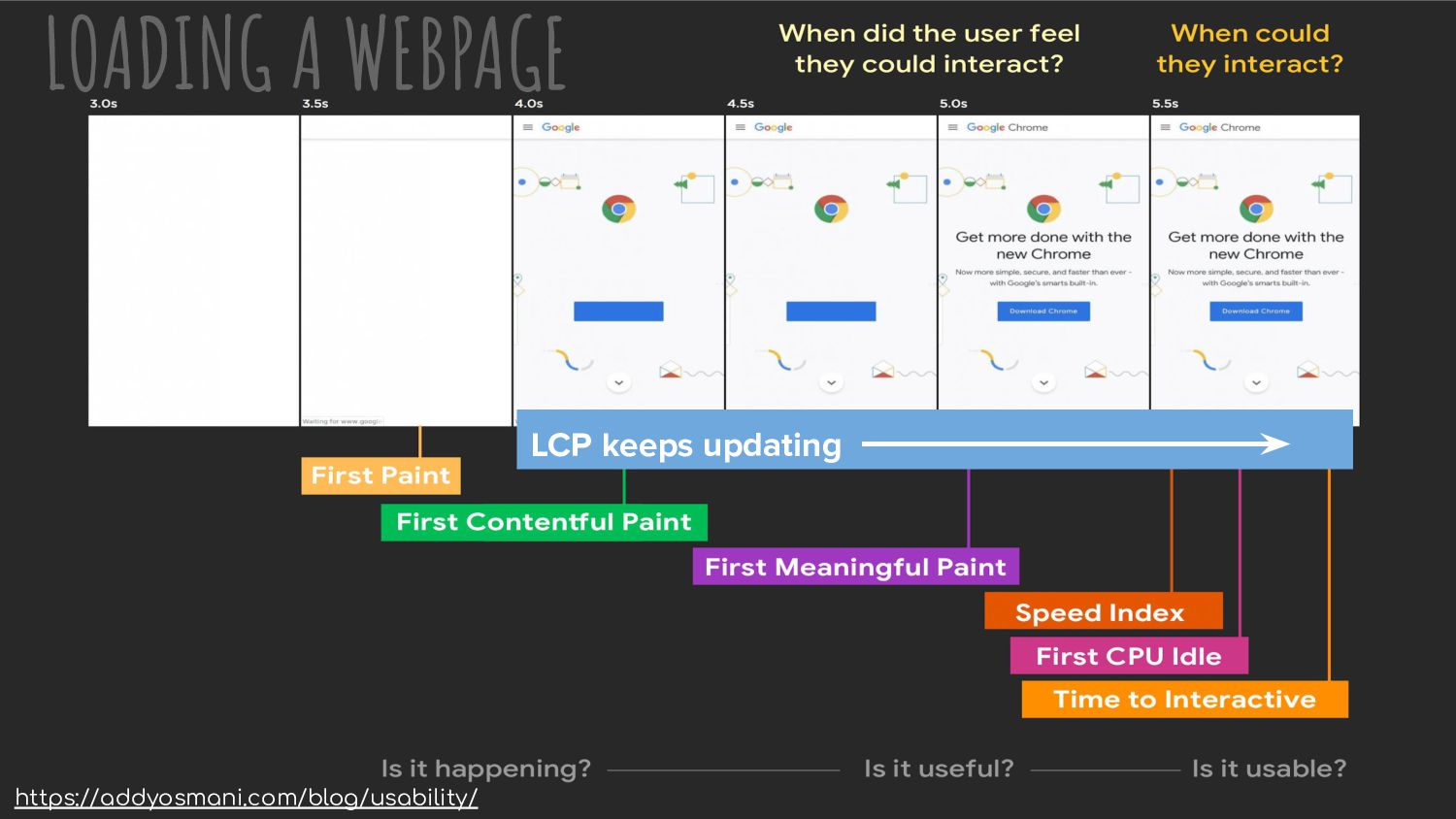
Core Web VitaLs ★ Largest Contentful Paint ★ Cumulative Layout
Shift ★ Interaction to Next Paint -
LCP reports the render time of the largest image, text
block, or video visible in the viewport. https://web.dev/articles/lcp -
★ Render time ★ Foreground or background Images including inline
★ “Largest” is related to rendered screen size ★ Text nodes ★ Only rendered portions after clipping ★ Not related to download time ★ No CSS gradient backgrounds ★ No placeholders or low entropy images ★ Nothing invisible ★ Text nodes using Web Fonts during the Font block period What does this include / exclude? -
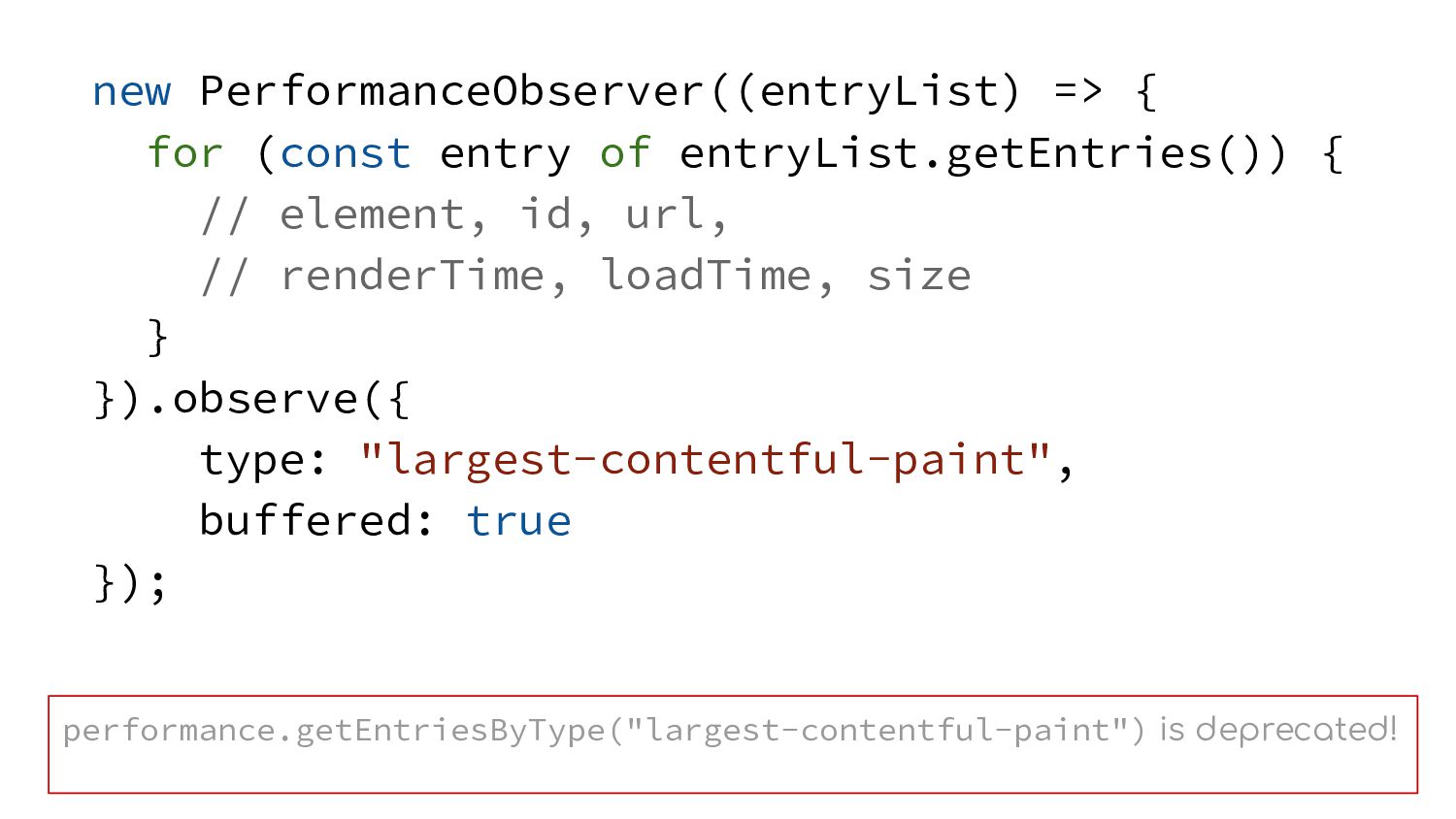
new PerformanceObserver((entryList) => { for (const entry of entryList.getEntries()) {
// element, id, url, // renderTime, loadTime, size } }).observe({ type: "largest-contentful-paint", buffered: true }); performance.getEntriesByType("largest-contentful-paint") is deprecated! -
Object Structure • element: A reference to the DOM element
that was painted • id: The id attribute of the element • url: The Url for images. This might also be a data uri. • renderTime: The relative timestamp when the object was rendered, 0 for cross-origin objects without T-A-O. • loadTime: The relative timestamp when the object was loaded. • size: The number of square pixels rendered (height x width) https://developer.mozilla.org/en-US/docs/Web/API/LargestContentfulPaint -
< 2.5s Google suggests keeping the value under 2.5s at
the 75th percentile (that’s about as long as a yawn) -
Split elements by Category Scale thresholds for different percentiles %
of screen covered, render/load time, correlation with other timers -
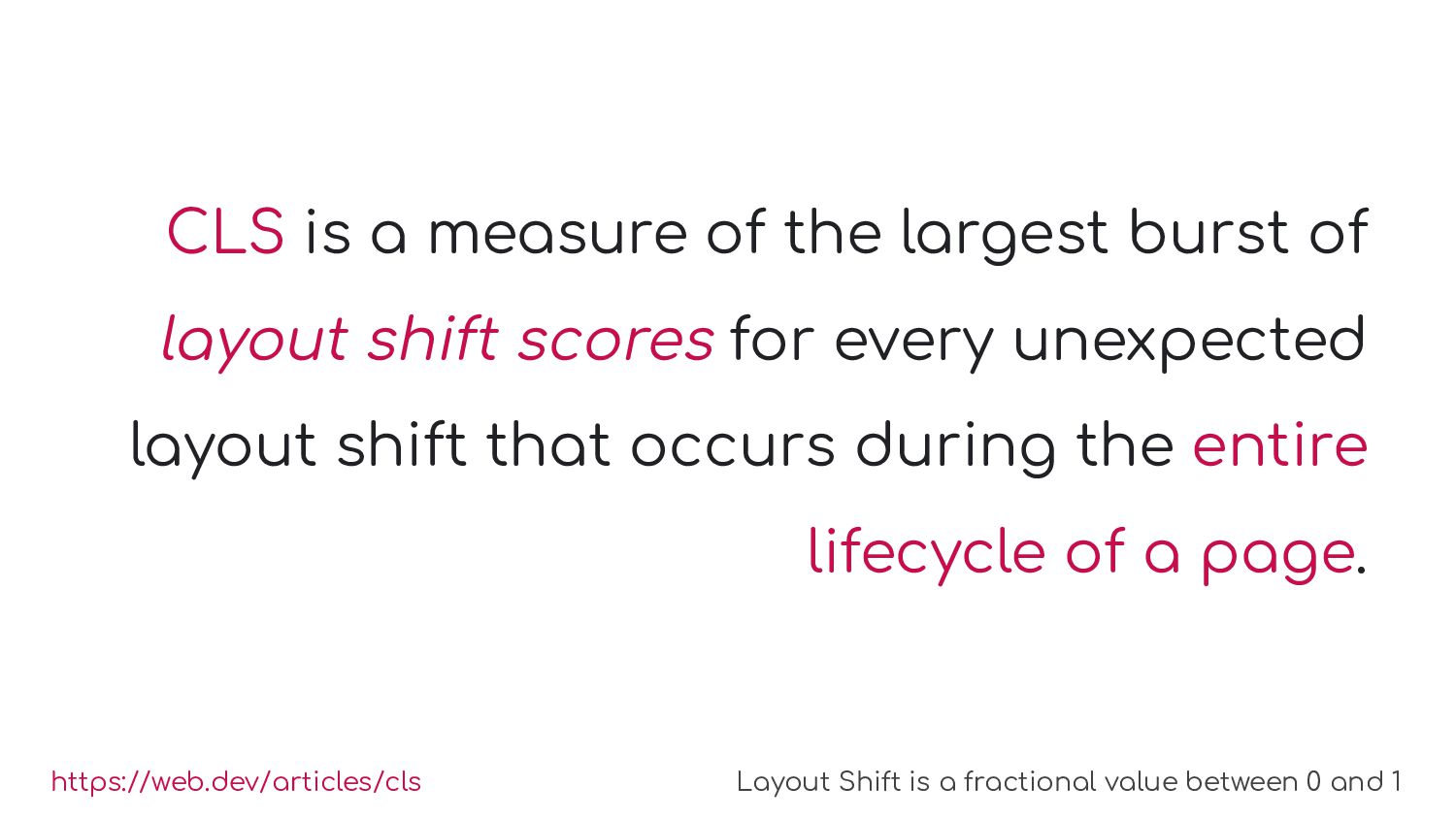
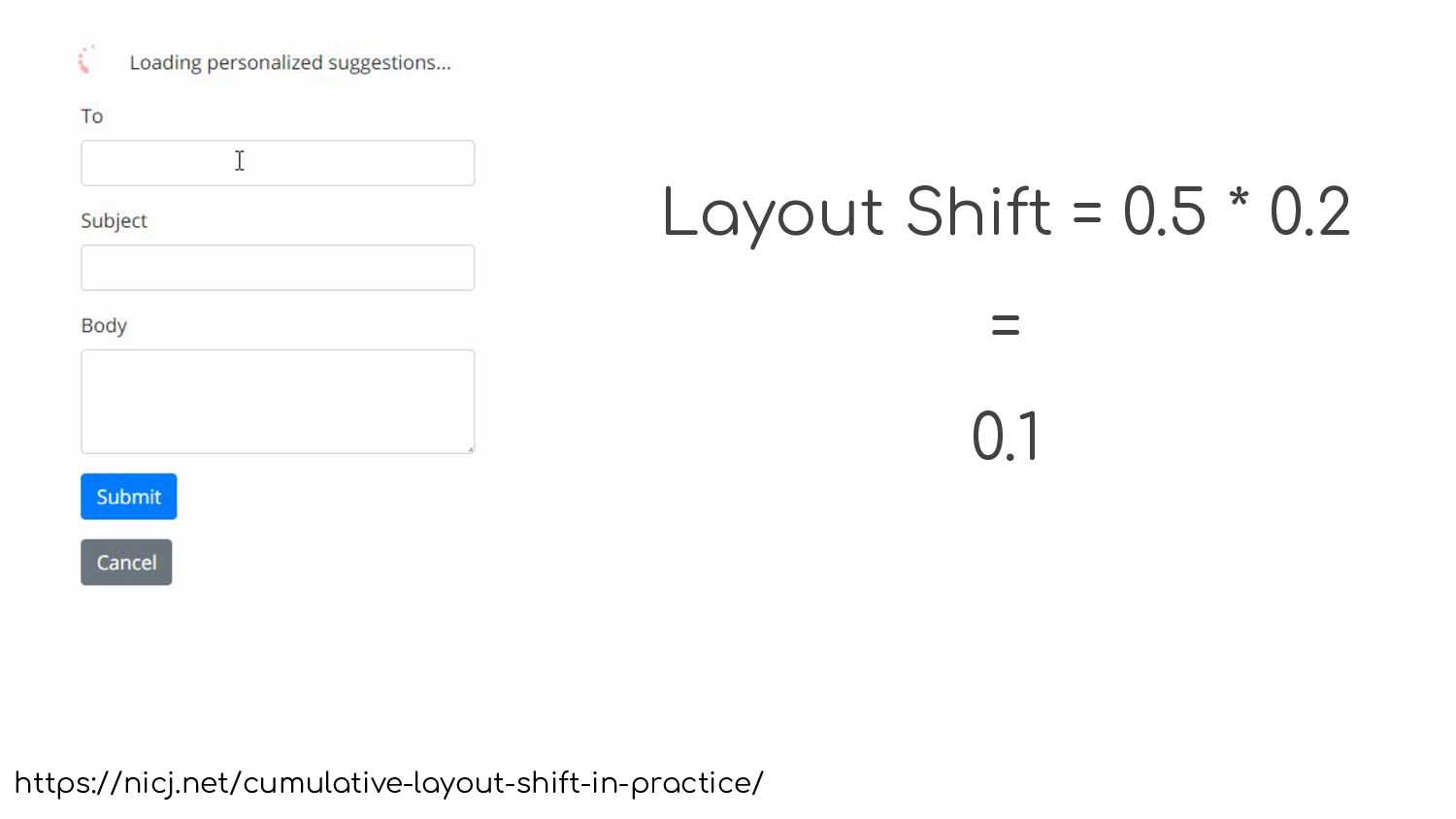
CLS is a measure of the largest burst of layout
shift scores for every unexpected layout shift that occurs during the entire lifecycle of a page. https://web.dev/articles/cls Layout Shift is a fractional value between 0 and 1 -
new PerformanceObserver((entryList) => { for (const entry of entryList.getEntries()) {
// sources, // value, // hadRecentInput, // lastInputTime, // startTime } }).observe({type: "layout-shift",buffered: true}); -
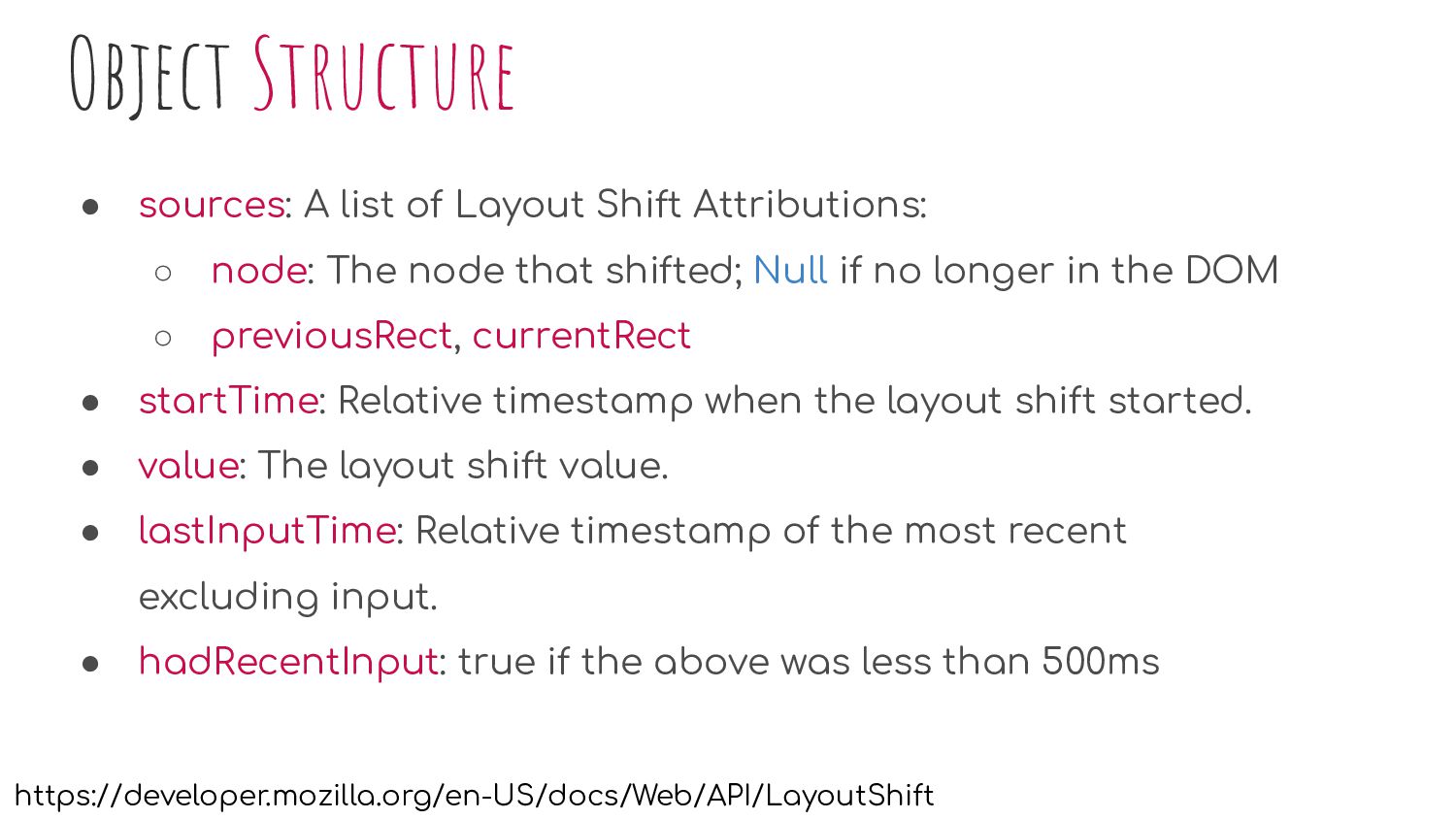
Object Structure • sources: A list of Layout Shift Attributions:
◦ node: The node that shifted; Null if no longer in the DOM ◦ previousRect, currentRect • startTime: Relative timestamp when the layout shift started. • value: The layout shift value. • lastInputTime: Relative timestamp of the most recent excluding input. • hadRecentInput: true if the above was less than 500ms https://developer.mozilla.org/en-US/docs/Web/API/LayoutShift -
< 0.1 Google suggests keeping the value under 0.1 at
the 75th percentile -
Look at LoAF* entries & Resource Downloads that happen at
the time of a layout shift. -
Interaction to Next Paint (INP) How long did the user
have to wait after doing something on the page? -
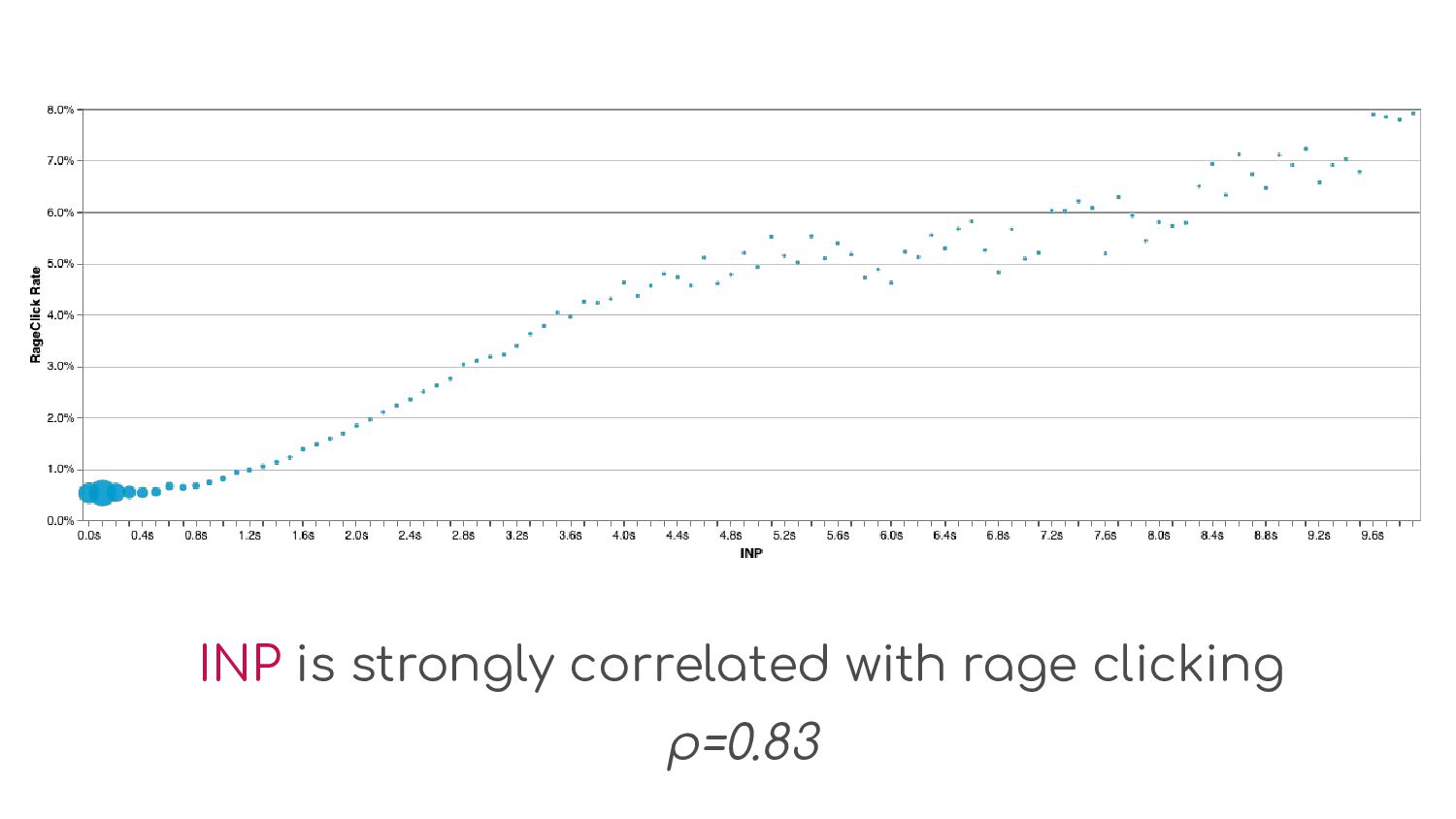
INP is a measure of the page’s overall responsiveness to
user interactions. https://web.dev/articles/inp INP is the (approx) longest observed interaction latency so far. -
new PerformanceObserver((entryList) => { for (const entry of entryList.getEntries()) {
// target (null if removed), // duration, // startTime, // processingStart, // processingEnd } }).observe({ type: "event", buffered: true, durationThreshold: 16 }); https://developer.mozilla.org/en-US/docs/Web/API/PerformanceEventTiming -
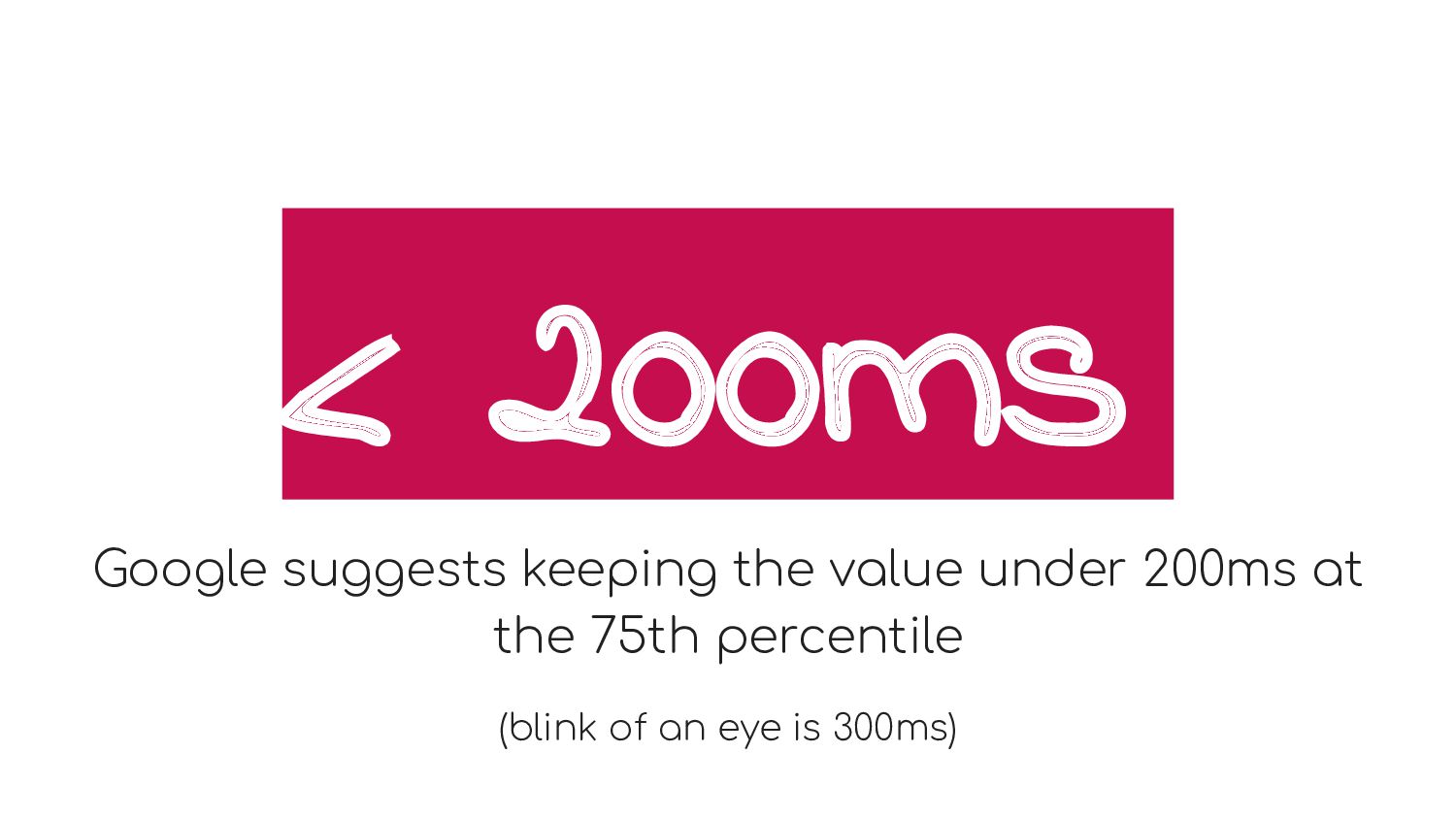
< 200ms Google suggests keeping the value under 200ms at
the 75th percentile (blink of an eye is 300ms) -
★ Includes a start time & duration ★ Can collect
this value incrementally to identify all INP durations on the page ★ You need to maintain your own interaction buffer. ★ Remember to reset the buffer for multiple transitions in a SPA. ★ Not all pages have an interaction. ★ Disable your listener if the page is not visible Notes… -
LoAF* / Resources / Errors that overlap INP start →
end might be interesting.