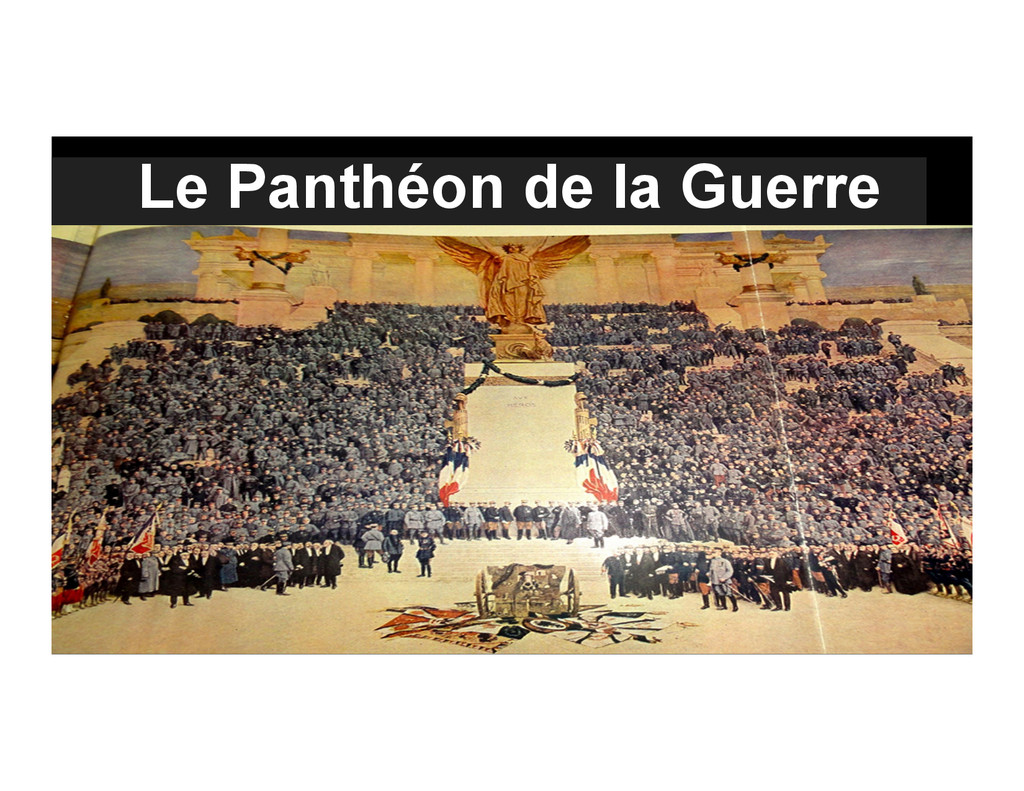
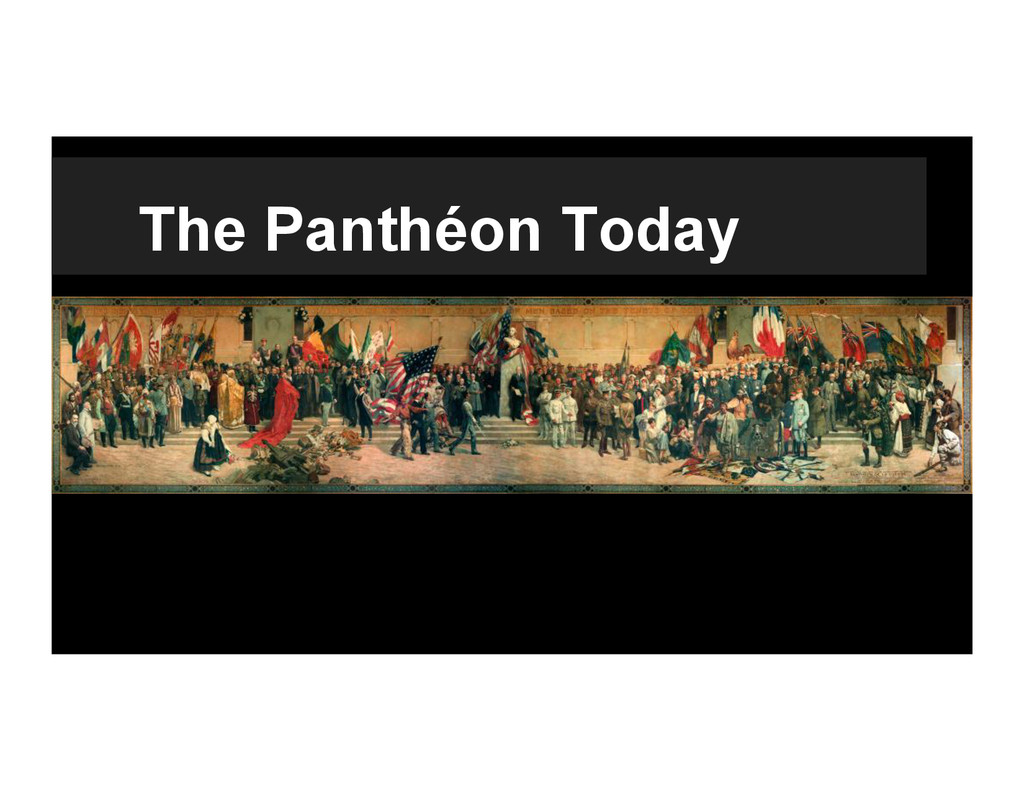
Marne • Finished on October 19, 1918 three weeks before the end of the war, which made it an “artifact of the war” • Portrait based panorama that depicted all of the major allies and their notable figures • Grounded in the “traditional” depiction of war with allegories and a complete absence of the modern aspect of the war
panthéon were first painted by the artists individually so that their likenesses were ensured, even the French Prime Minister devoted some time to sit for a portrait • Individualism was a rebuke to the anonymity of modern war
the realism of the painting and the gravity of the war but still lent a finality and a feeling of comprehension to the conflict • Around 8 million people visited the panthéon between 1918 and 1927 • Especially popular amongst Americans who were still in France • Popularity began to wane by 1920
departure was made amongst a huge fanfare, perceived as a solidification of the Franco-American bond • Arrived in New York, May 1927 • Toured the country 4 times until 1940 when it was stored for 12 years • Finally auctioned to a German WWI veteran,William Haussner, for $3400
saw the Panthéon in 1918 when he was still a doughboy, studied under one of the chief architects of the project, Gorguet • Unilaterally secured the panthéon from the last buyers and was therefore granted full privilege in it’s reshaping • Forever shaped the Liberty Memorial and the Panthéon • 1/16th original size, removed the western front battleground, detached the staircase of heroes and the temple of glory, cut out the monument to the dead, and placed America in the prominent position with the other nations as allies, which fit into America as the saviour cold war mentality of the time • reads as “authoritative history” in its current state and setting • a new “intentional monument”
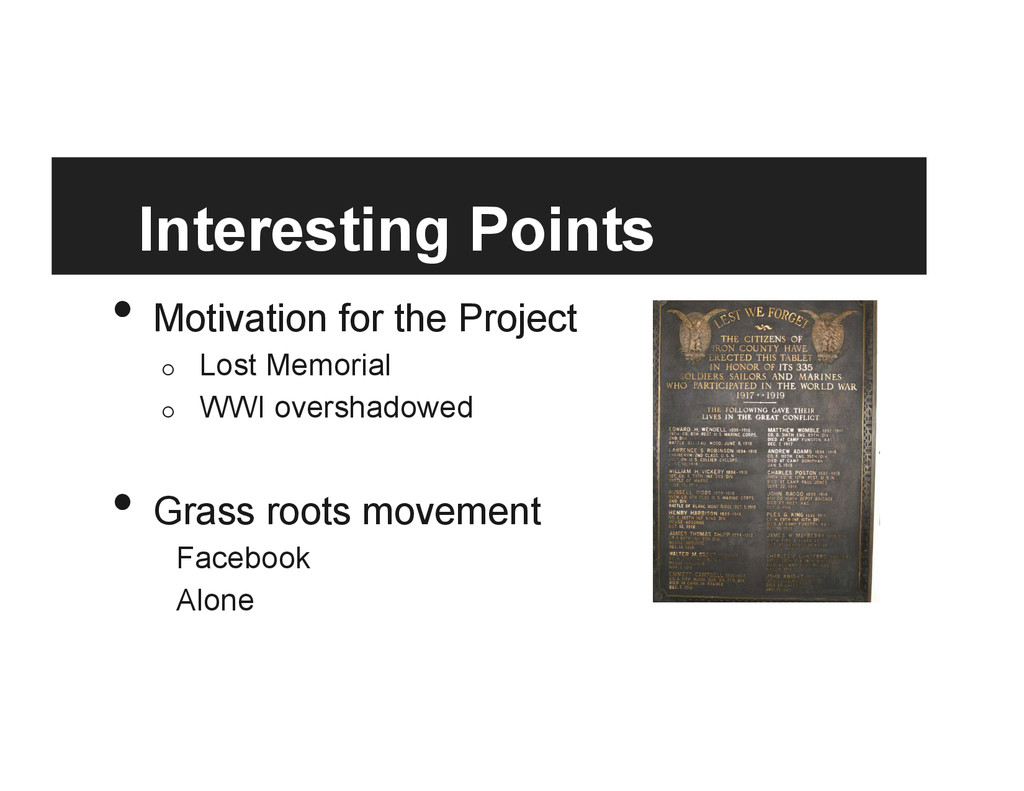
all over the place o a simple plaque to a towering monument • No existing base line for searching these sites o utilize all technological means for publicizing the Great War • American-centric? American apathy? o effective attempts at combating these hurdles
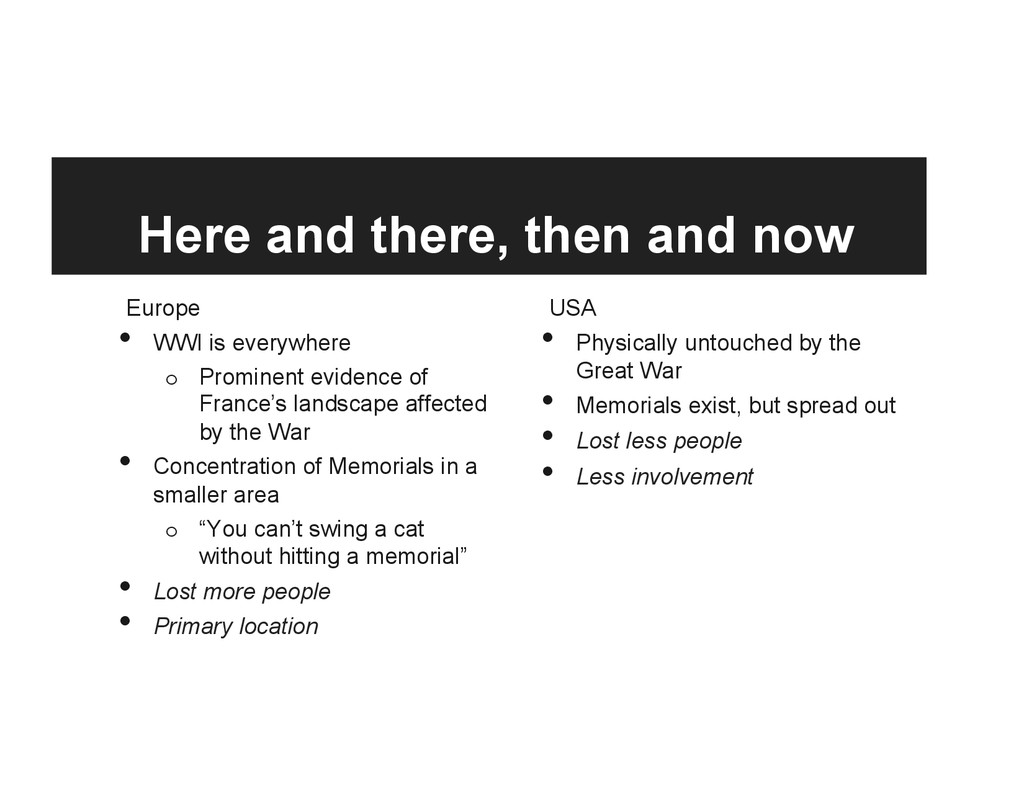
everywhere o Prominent evidence of France’s landscape affected by the War • Concentration of Memorials in a smaller area o “You can’t swing a cat without hitting a memorial” • Lost more people • Primary location USA • Physically untouched by the Great War • Memorials exist, but spread out • Lost less people • Less involvement
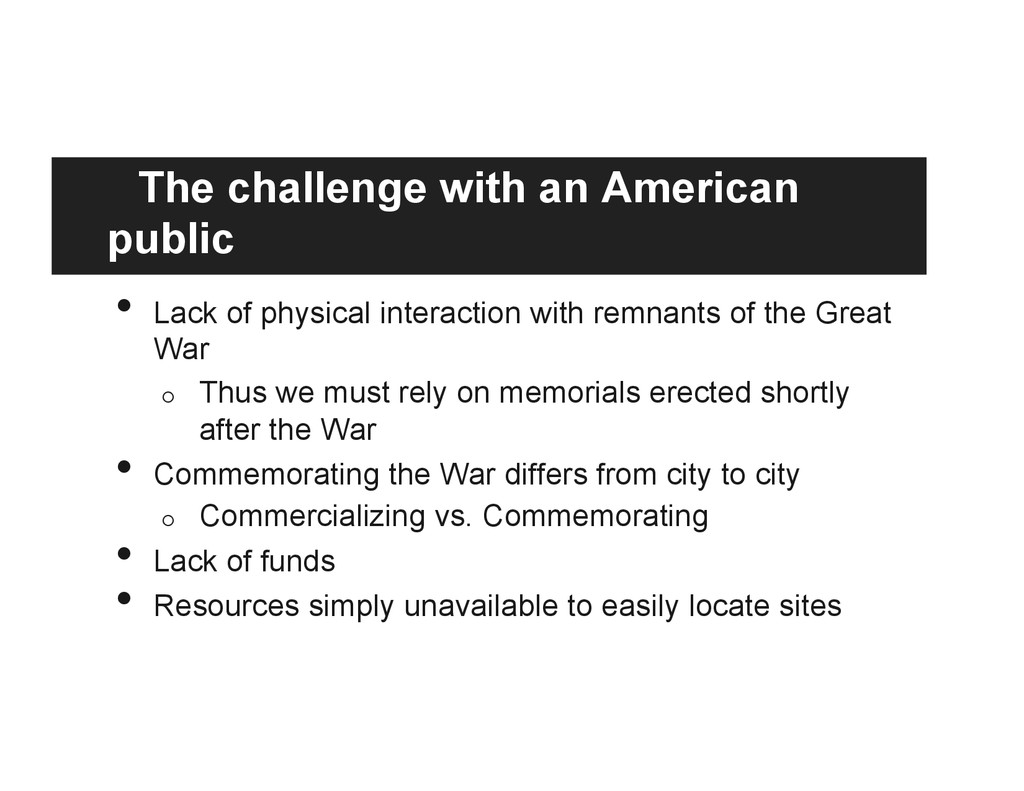
interaction with remnants of the Great War o Thus we must rely on memorials erected shortly after the War • Commemorating the War differs from city to city o Commercializing vs. Commemorating • Lack of funds • Resources simply unavailable to easily locate sites
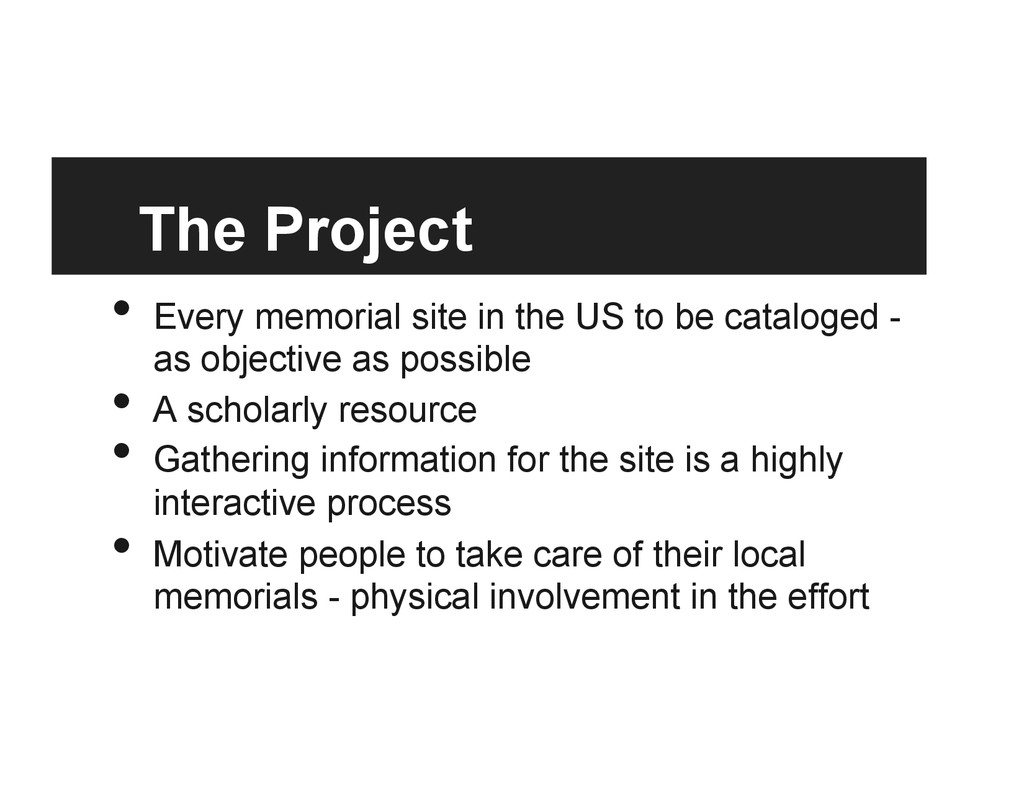
be cataloged - as objective as possible • A scholarly resource • Gathering information for the site is a highly interactive process • Motivate people to take care of their local memorials - physical involvement in the effort


 mkjames
 sferik
 samtorres
 jonoalderson
 swwweet
 shpigford
 khoart
 ryanjones
 mayatellez
 dougneiner
 thekraken