to interact with C code. Using cgo comes with trade-offs that can impact your project's development, performance, and deployment. It's crucial to carefully consider the implications of using cgo before incorporating it into your Go project.
code, significantly increasing build times. Complex Builds:cgo introduces dependencies on external tools and makefiles, complicating the build process. Cross-platform builds become more challenging, requiring additional configuration and managing multiple toolchains and build environments can be cumbersome and time-consuming.
a valuable tool for interfacing with low-level system APIs, hardware drivers, and legacy C code. In these cases, cgo may be the only viable option to achieve the desired functionality.
for your project? Will performance be a major factor in your application? How complex is your build and deployment process? Are your developers familiar with working with cgo and Go? Do you have the resources and expertise to manage the complexities of cgo?
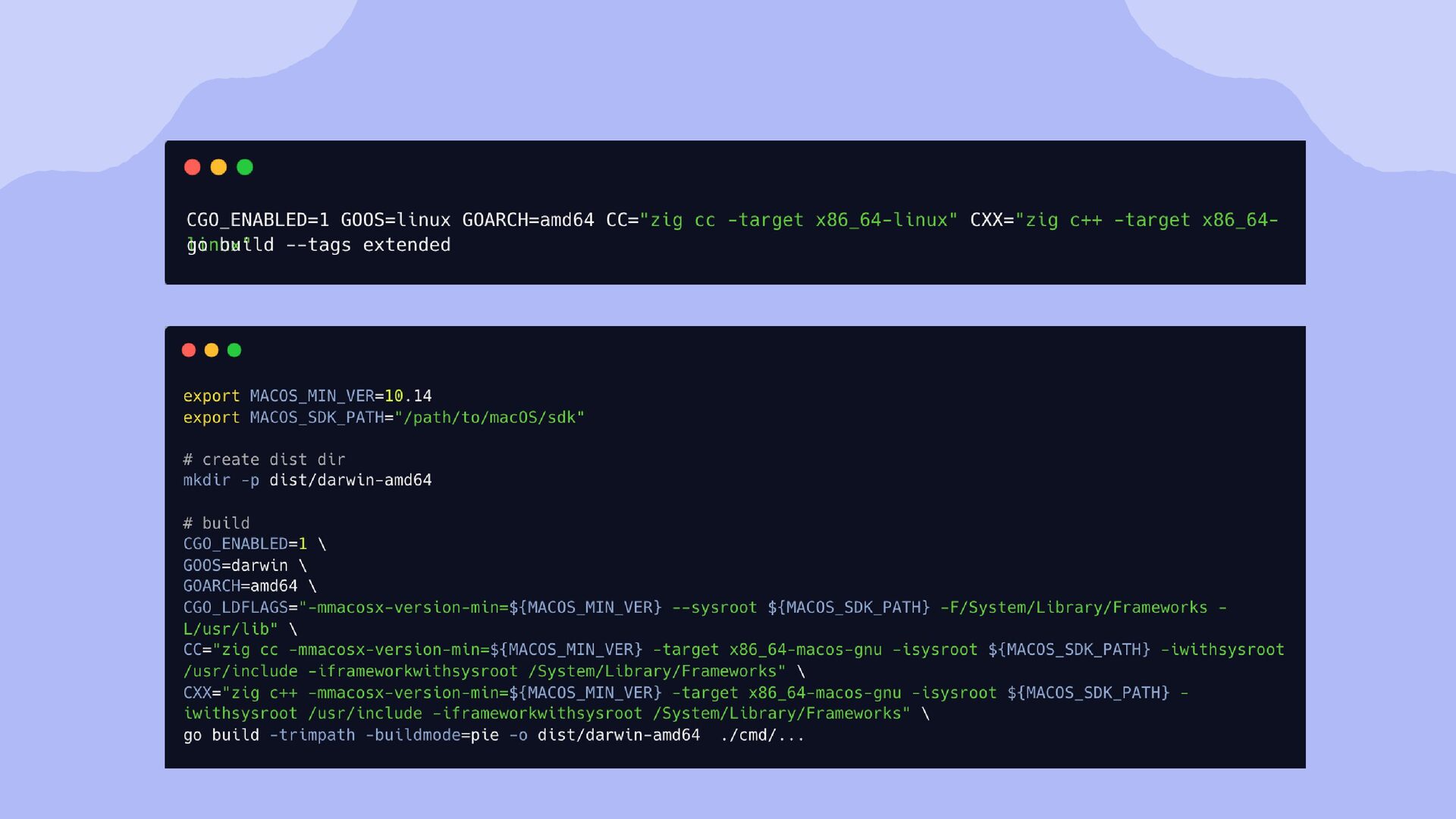
usually straighforward: set GOOS and GOARCH environement variables and then go build. Unfortunately for projects that uses CGO dependencies things can be harder. Depending on the target architecture it requires to install a C compiler like gcc, clang or x86_64-w64-mingw64-gcc and configure additional environment variables like CC along with the CGO_ENABLED=1 one.


 muratmirgun
 kenichiodo
 pfn
 persolserverworks
 kentapapa
 nealle
 prog893
 gogutan
 yut0naga1_fa
 takuroabe
 tetsuya28
 terapyon
 jcasabona
 carmenintech
 helmedeiros
 szymonslowik
 techseoconnect
 honzajavorek
 tmiket
 frankvandijk
 kimpetersen
 mfonobong
 jacobian
 shpigford