Upgrade to Pro — share decks privately, control downloads, hide ads and more …

Mastering_Java_in_community_and_preparing_for_c...

Sponsored · Your Podcast. Everywhere. Effortlessly. Share. Educate. Inspire. Entertain. You do you. We'll handle the rest. →
Avatar for Ronaldo Tavares Ronaldo Tavares
February 11, 2026
17

 Mastering_Java_in_community_and_preparing_for_certification.pdf

Avatar for Ronaldo Tavares

Ronaldo Tavares

February 11, 2026

Transcript

  1. Java 21 Certification • What are the benefits of getting

    the Java 21 certification? • Formally validate your knowledge of the latest Java features • Gain a competitive advantage in the job market. • Show deep understanding of Java fundamentals and best practices. • Receive international recognition of your expertise from Oracle. • It increases your chances of participating in new and challenging projects. • Improves your reputation as a Java specialist • It greatly increases your ability to read and understand code.
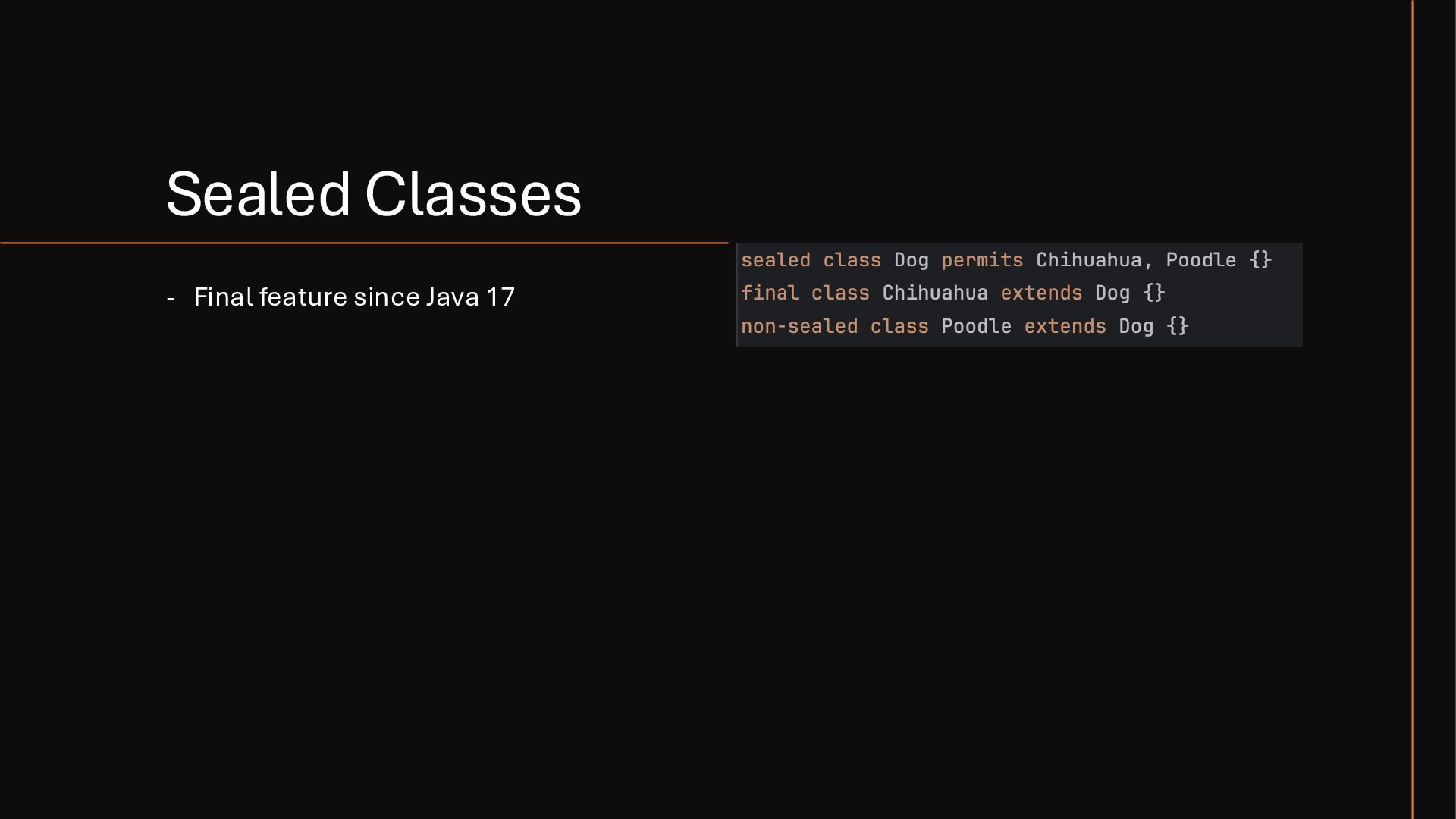
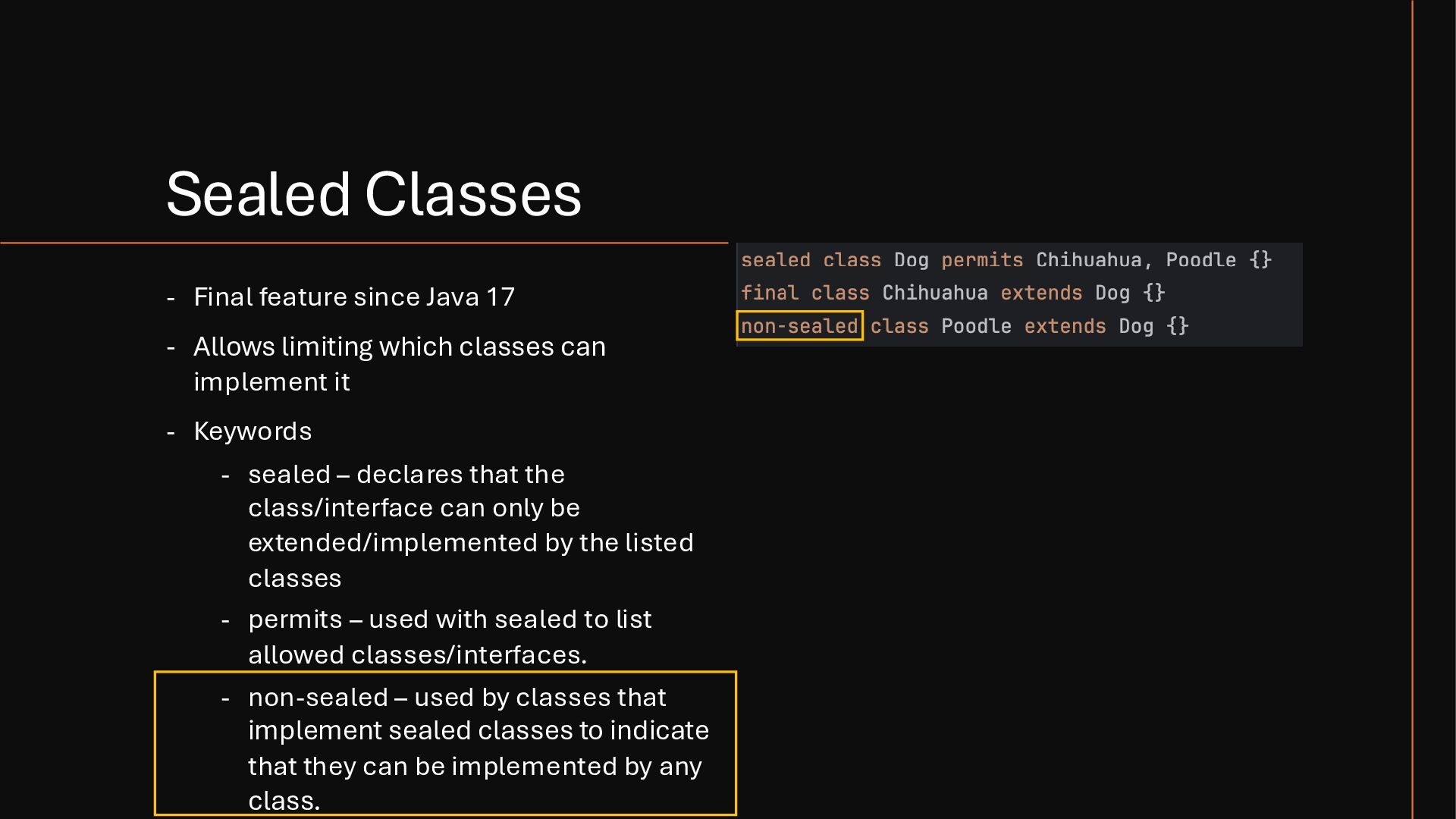
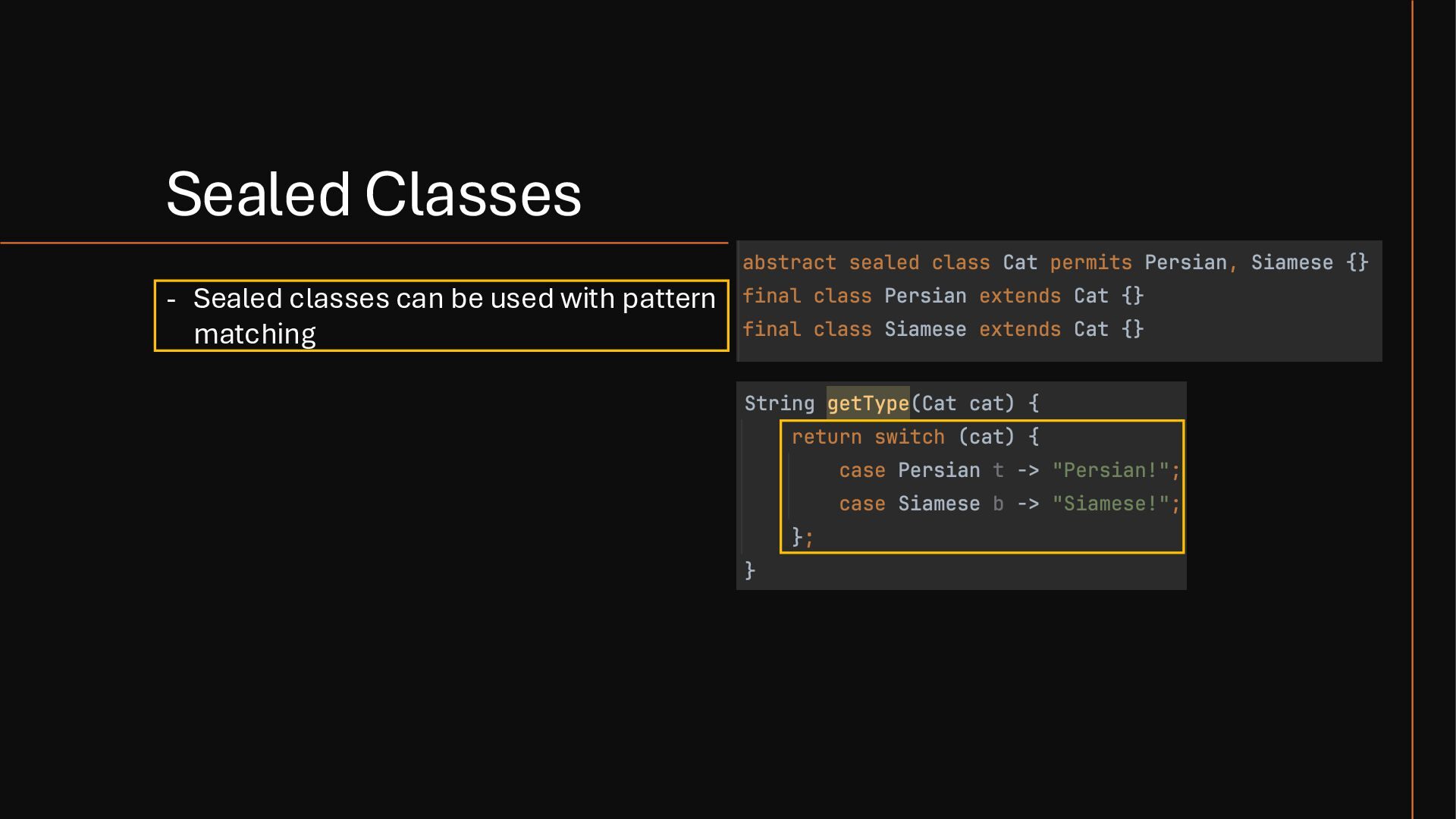
  2. Sealed Classes - Final feature since Java 17 - Allows

    limiting which classes can implement it
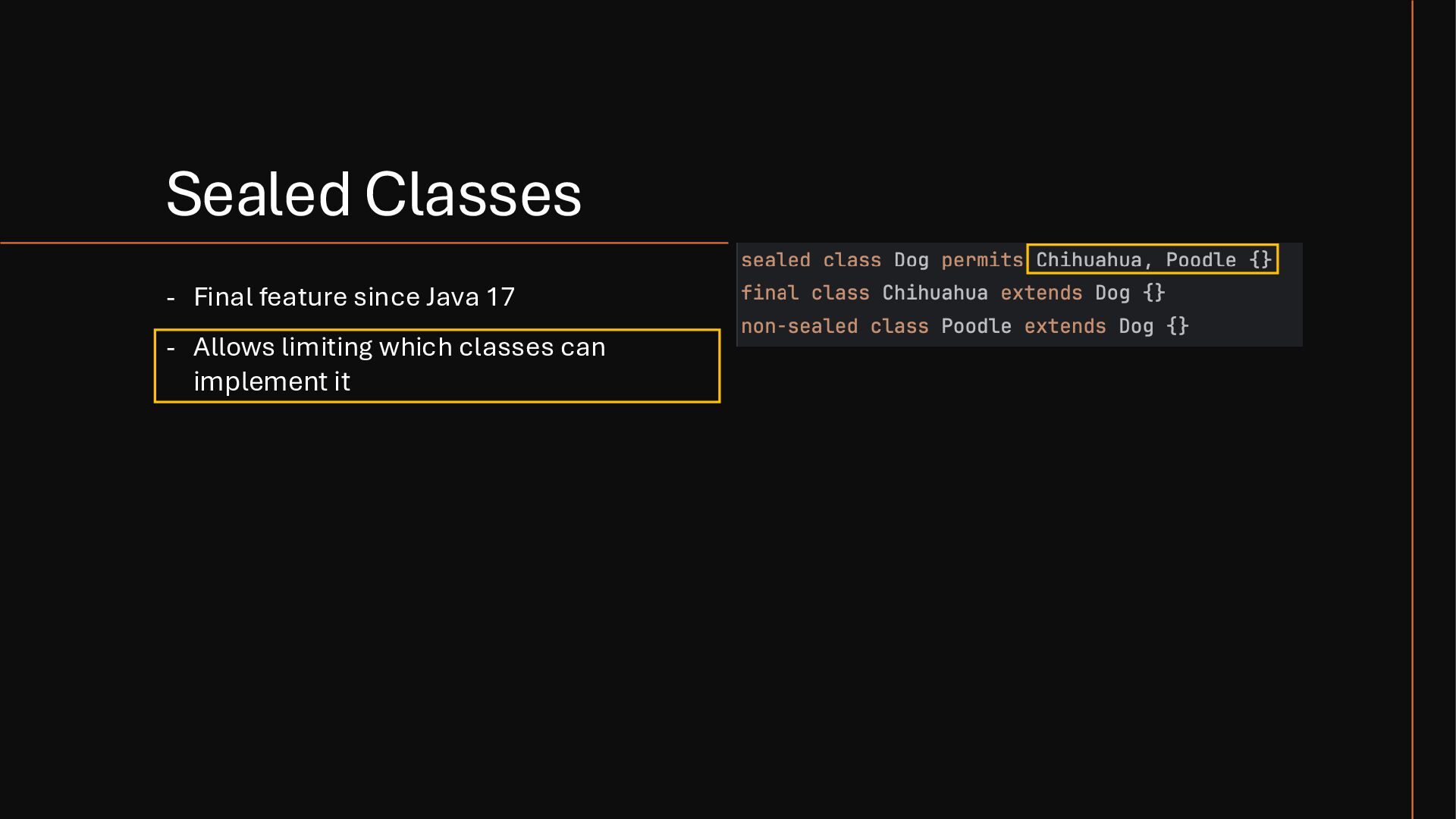
  3. Sealed Classes - Final feature since Java 17 - Allows

    limiting which classes can implement it - Keywords - sealed – declares that the class/interface can only be extended/implemented by the listed classes
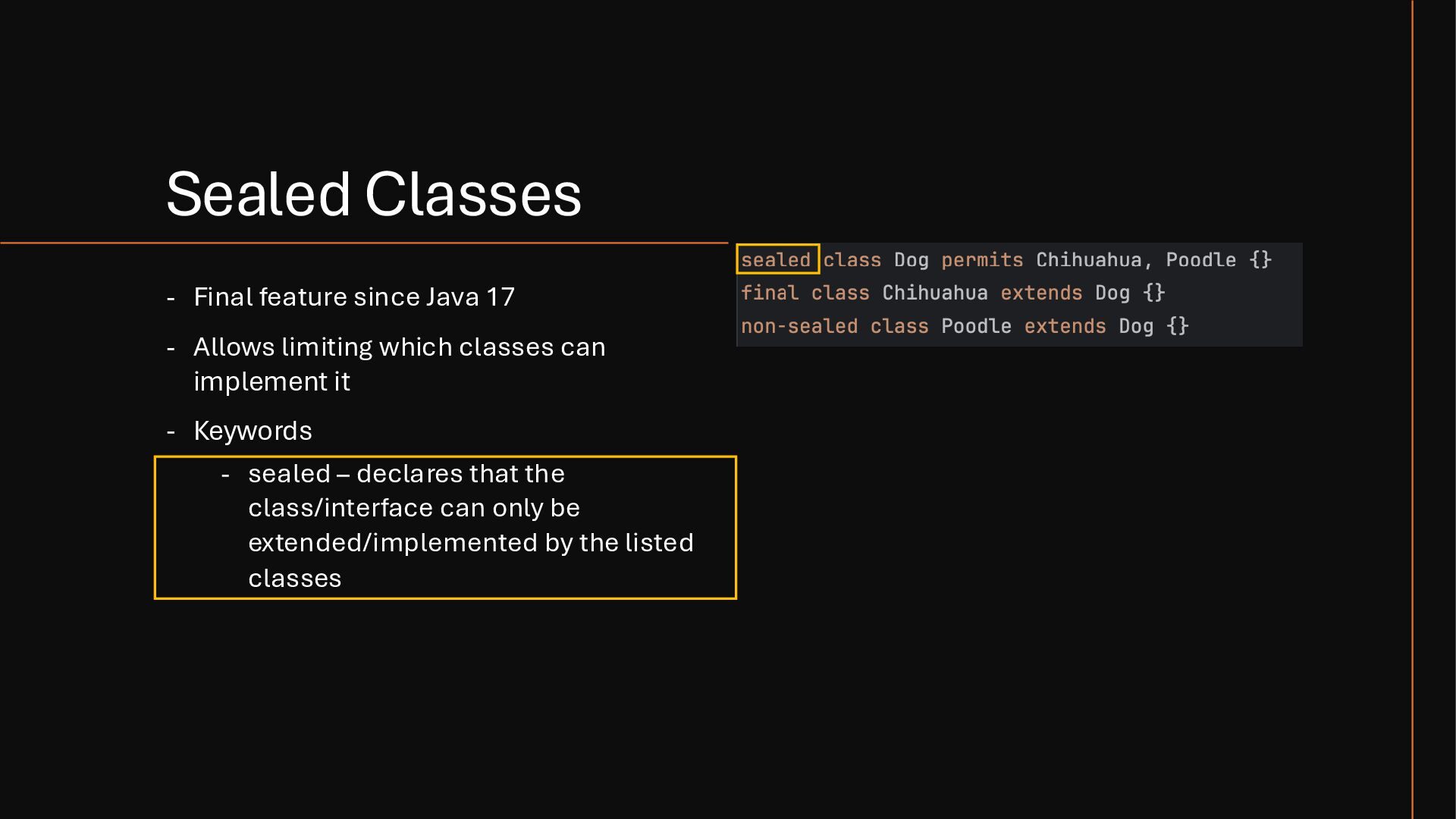
  4. Sealed Classes - Final feature since Java 17 - Allows

    limiting which classes can implement it - Keywords - sealed – declares that the class/interface can only be extended/implemented by the listed classes - permits – used with sealed to list allowed classes/interfaces.
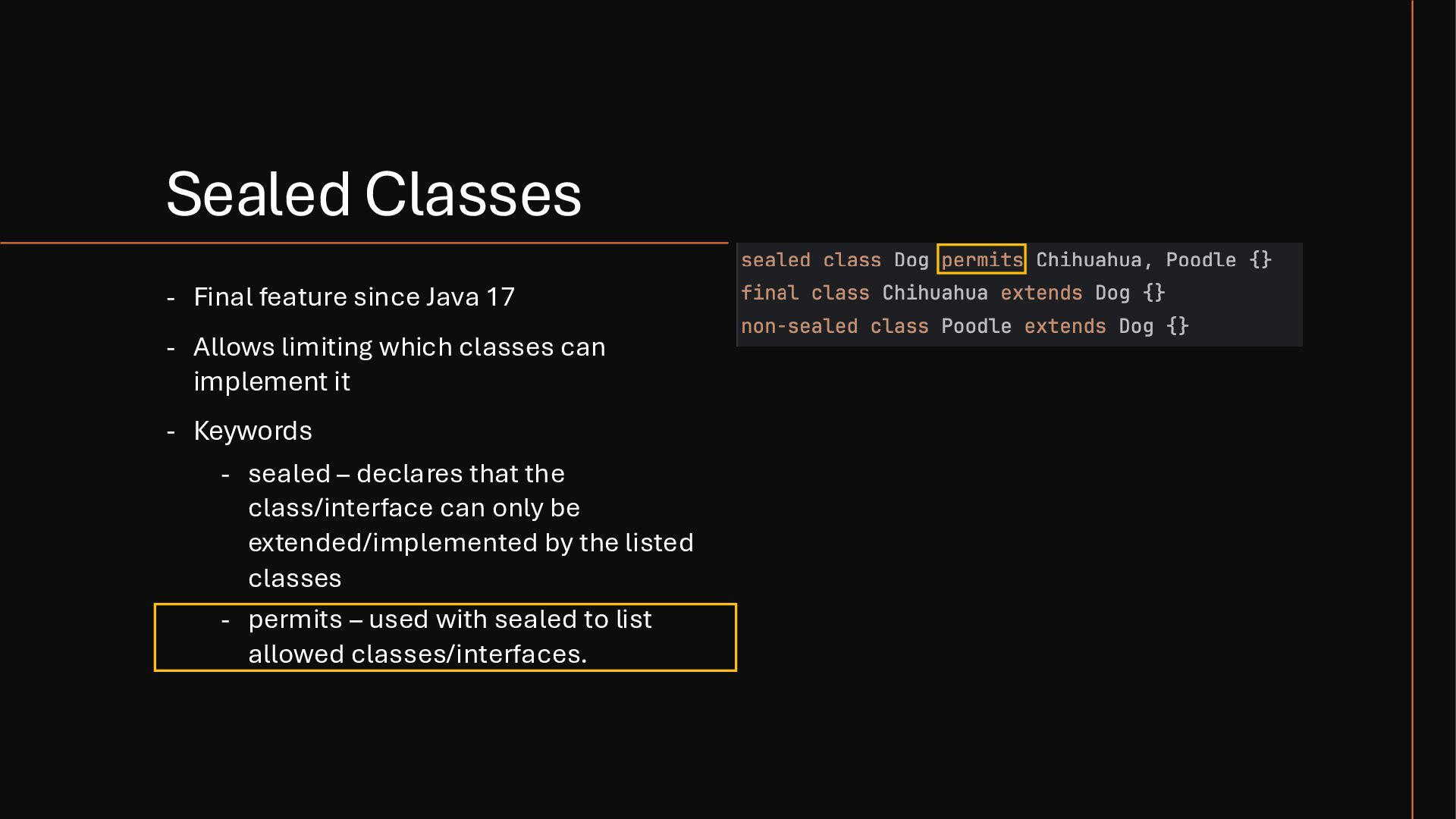
  5. Sealed Classes - Final feature since Java 17 - Allows

    limiting which classes can implement it - Keywords - sealed – declares that the class/interface can only be extended/implemented by the listed classes - permits – used with sealed to list allowed classes/interfaces. - non-sealed – used by classes that implement sealed classes to indicate that they can be implemented by any class.
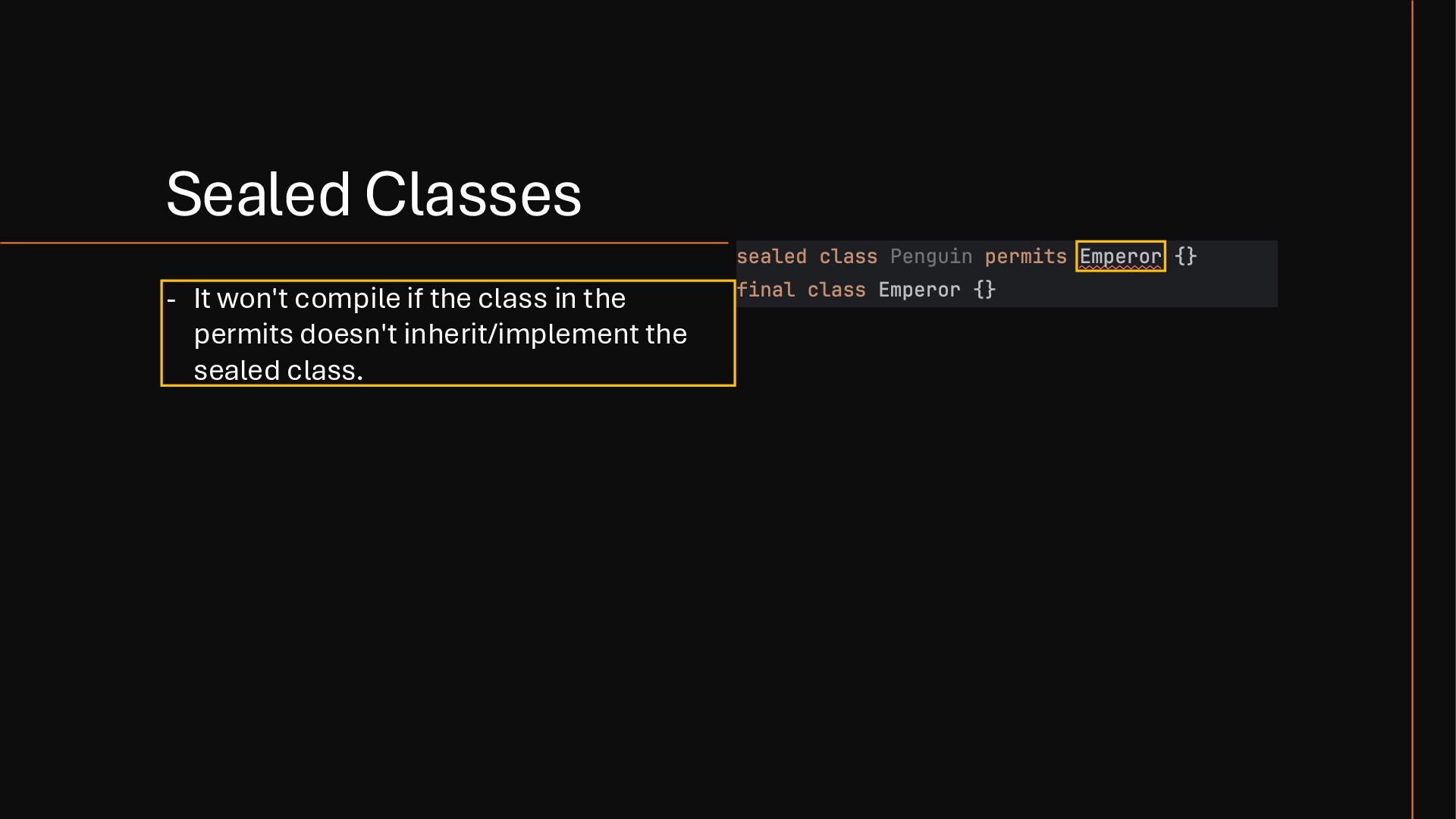
  6. Sealed Classes - It won't compile if the class in

    the permits doesn't inherit/implement the sealed class.
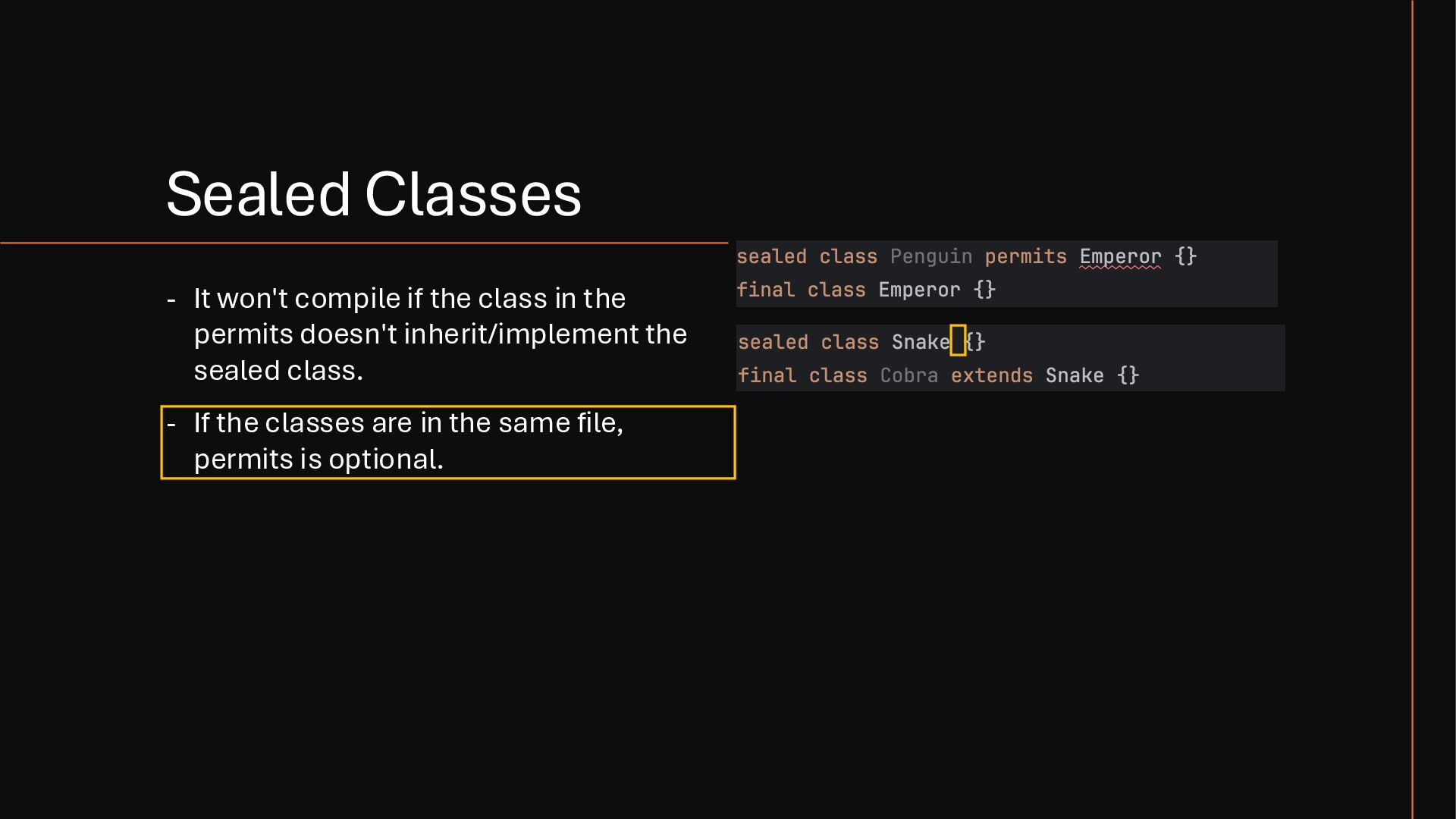
  7. Sealed Classes - It won't compile if the class in

    the permits doesn't inherit/implement the sealed class. - If the classes are in the same file, permits is optional.
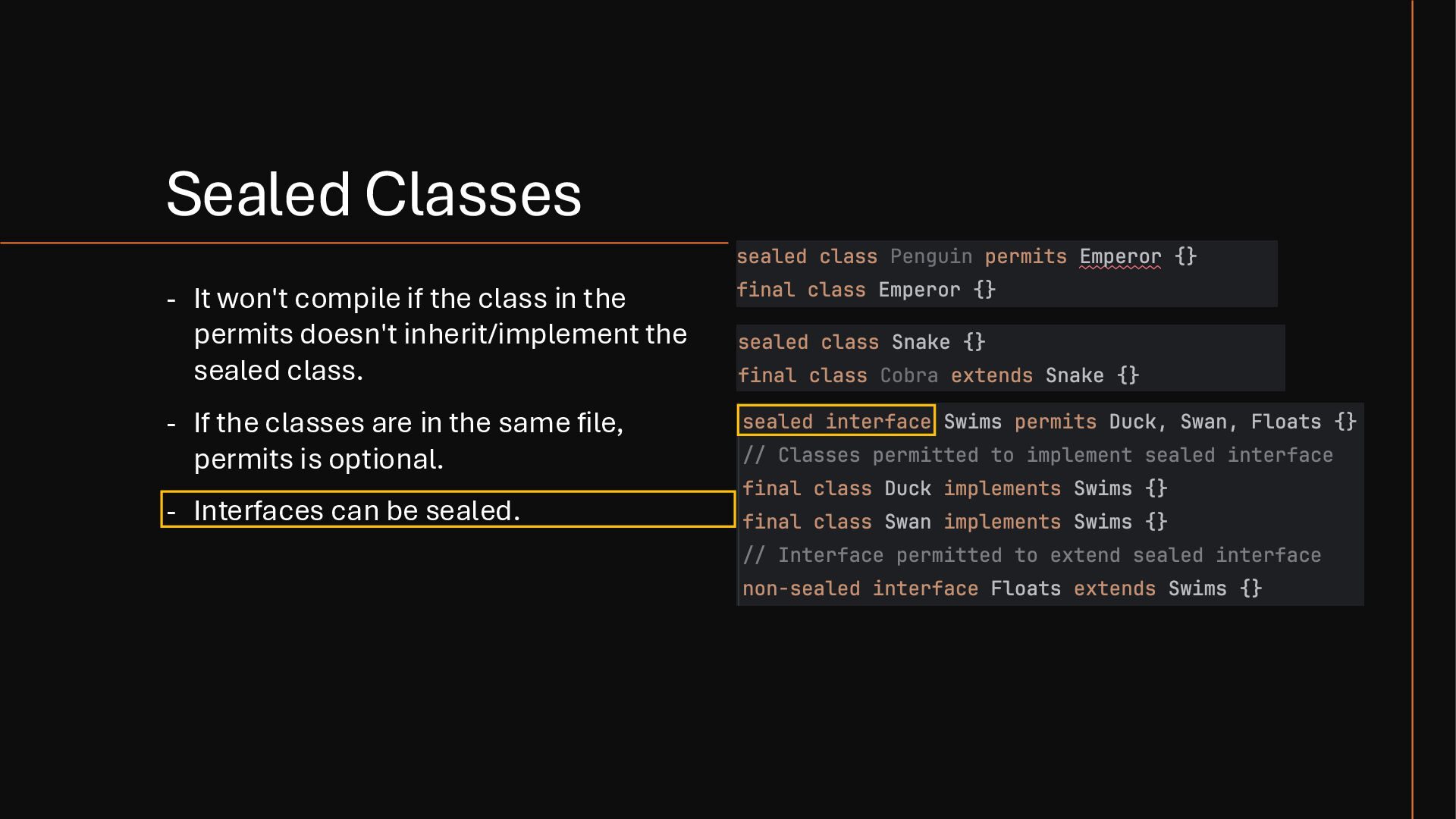
  8. Sealed Classes - It won't compile if the class in

    the permits doesn't inherit/implement the sealed class. - If the classes are in the same file, permits is optional. - Interfaces can be sealed.
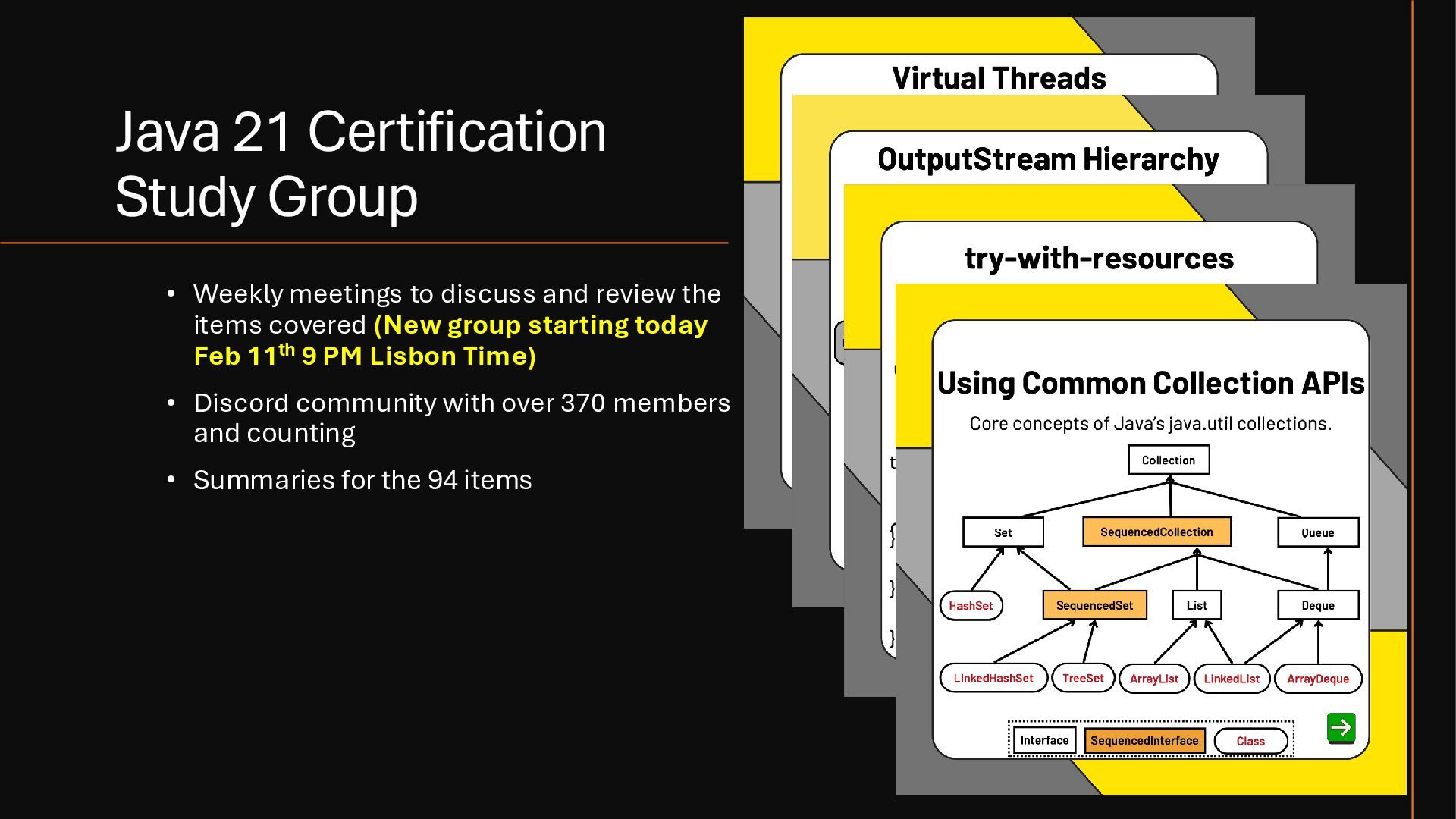
  9. Java 21 Certification Study Group • Weekly meetings to discuss

    and review the items covered (New group starting today Feb 11th 9 PM Lisbon Time)
  10. Java 21 Certification Study Group • Weekly meetings to discuss

    and review the items covered (New group starting today Feb 11th 9 PM Lisbon Time) • Discord community with over 370 members and counting
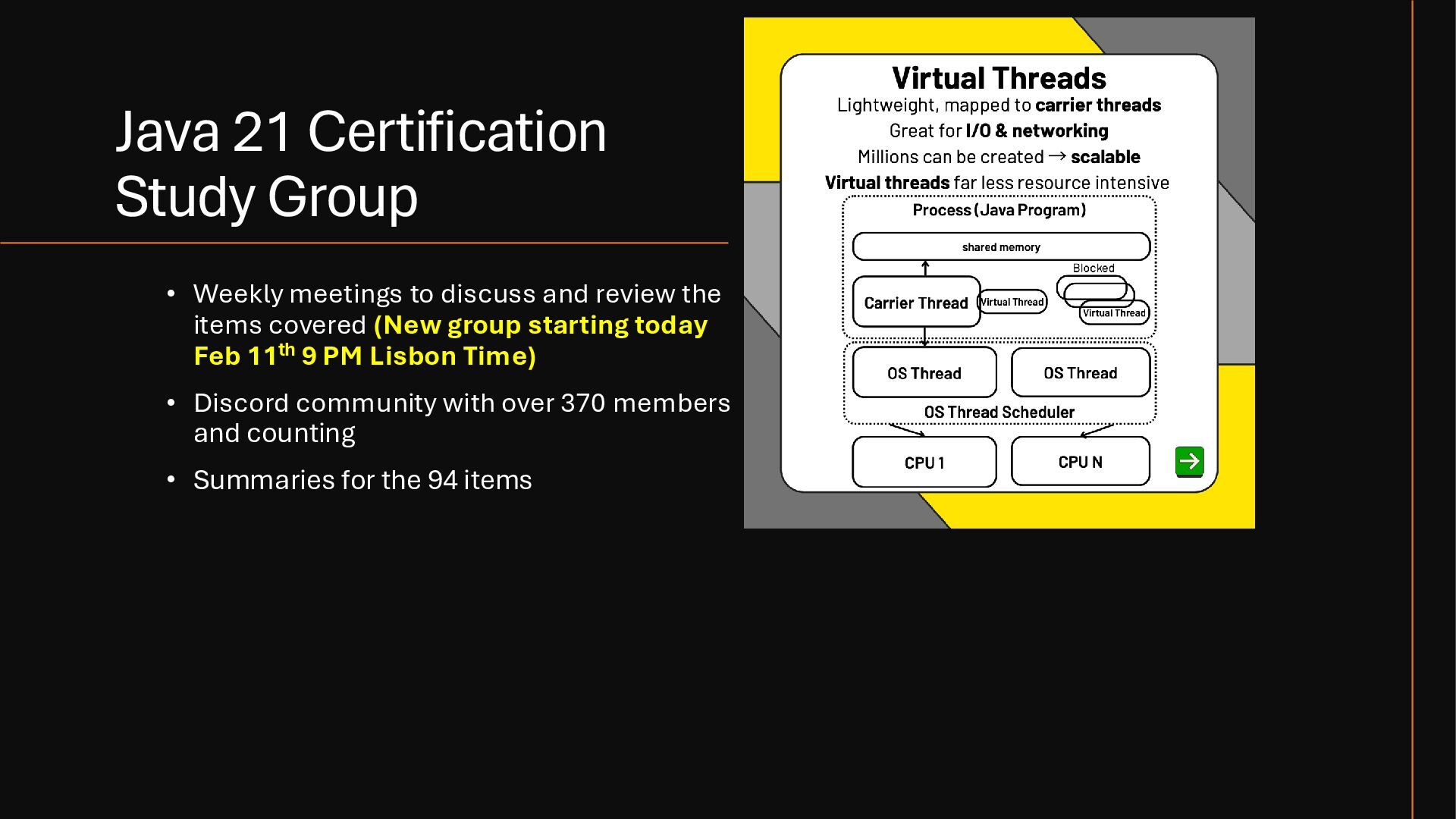
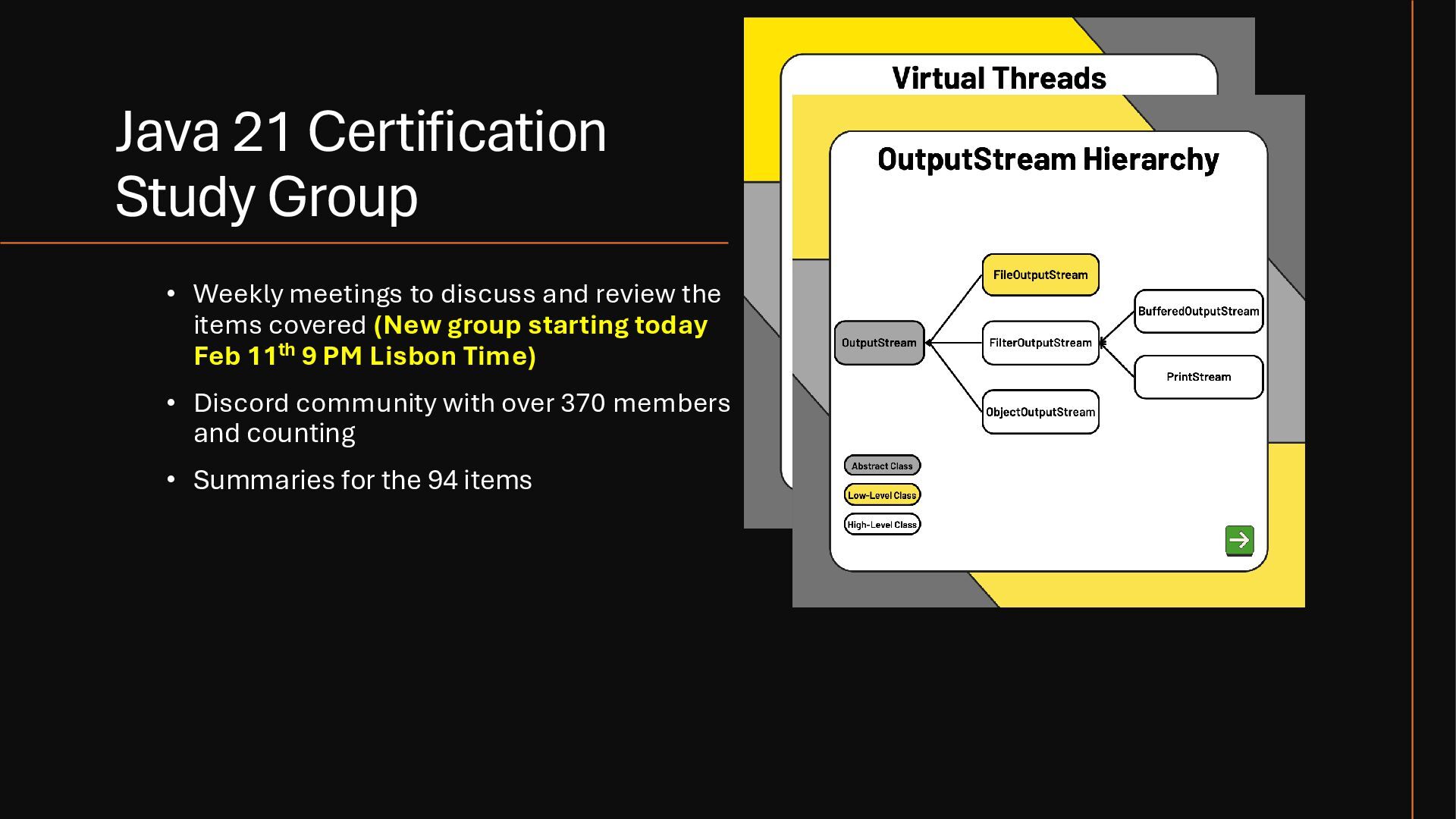
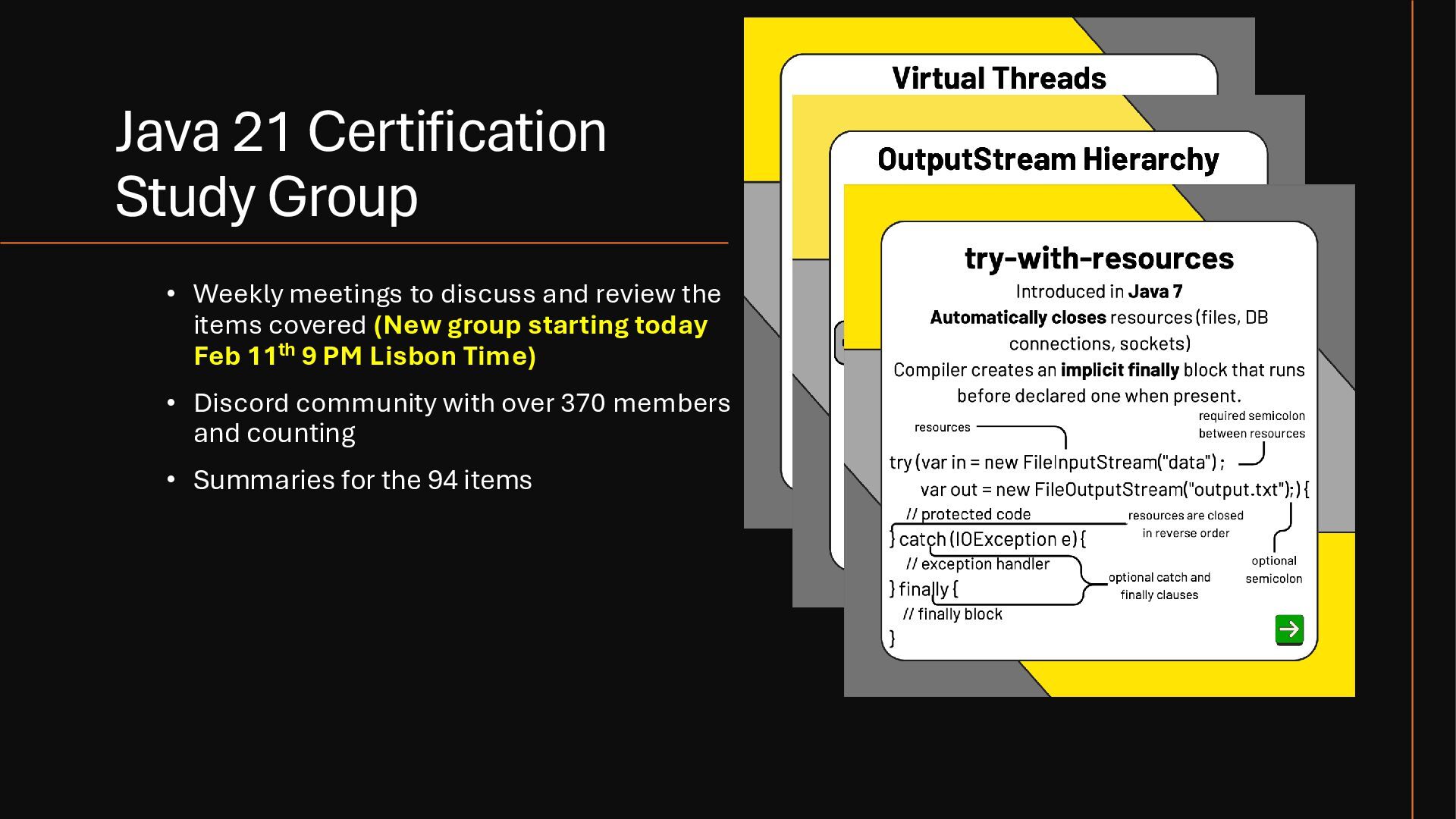
  11. Java 21 Certification Study Group • Weekly meetings to discuss

    and review the items covered (New group starting today Feb 11th 9 PM Lisbon Time) • Discord community with over 370 members and counting • Summaries for the 94 items
  12. Java 21 Certification Study Group • Weekly meetings to discuss

    and review the items covered (New group starting today Feb 11th 9 PM Lisbon Time) • Discord community with over 370 members and counting • Summaries for the 94 items
  13. Java 21 Certification Study Group • Weekly meetings to discuss

    and review the items covered (New group starting today Feb 11th 9 PM Lisbon Time) • Discord community with over 370 members and counting • Summaries for the 94 items
  14. Java 21 Certification Study Group • Weekly meetings to discuss

    and review the items covered (New group starting today Feb 11th 9 PM Lisbon Time) • Discord community with over 370 members and counting • Summaries for the 94 items
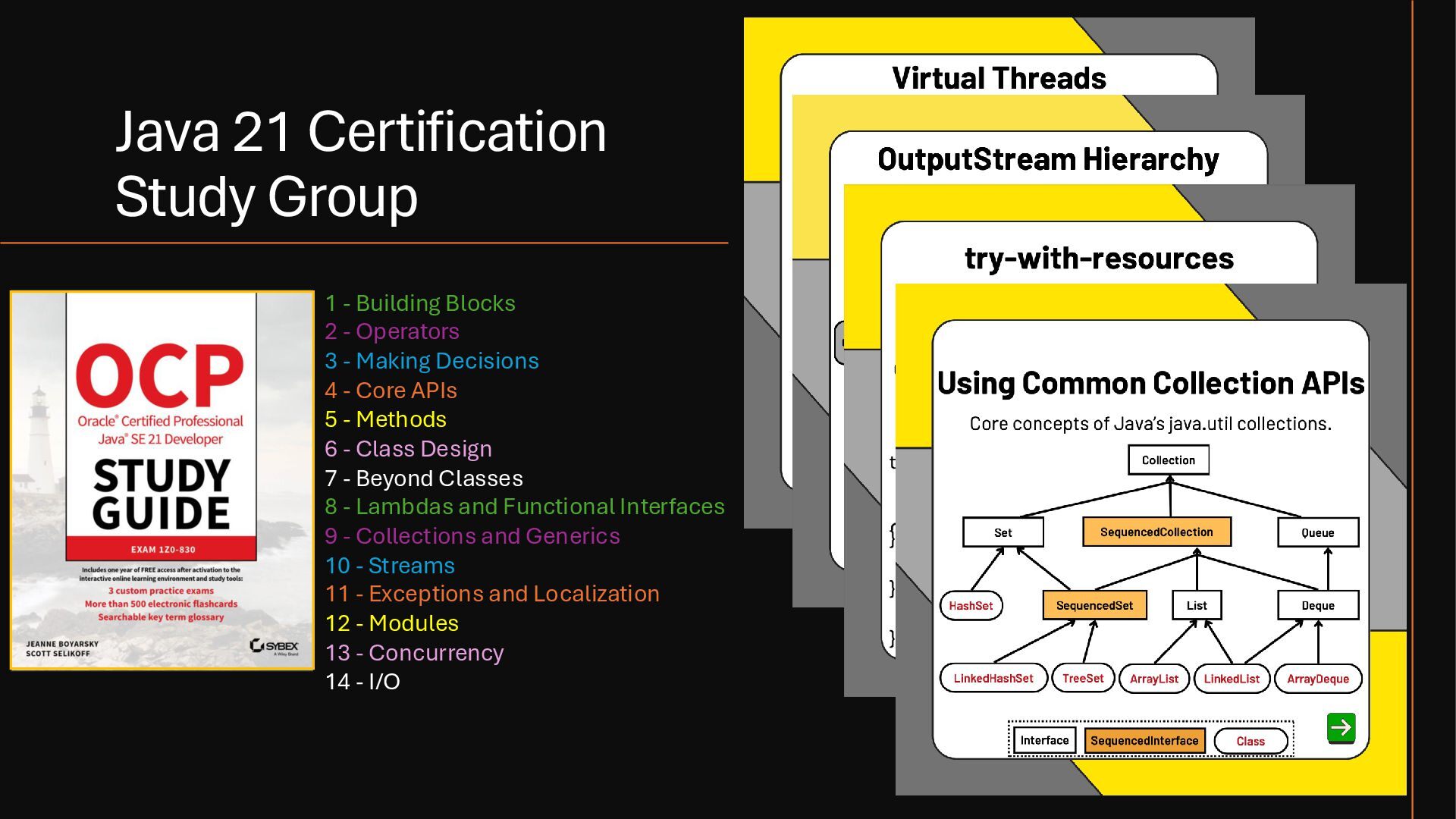
  15. Java 21 Certification Study Group 1 - Building Blocks 2

    - Operators 3 - Making Decisions 4 - Core APIs 5 - Methods 6 - Class Design 7 - Beyond Classes 8 - Lambdas and Functional Interfaces 9 - Collections and Generics 10 - Streams 11 - Exceptions and Localization 12 - Modules 13 - Concurrency 14 - I/O
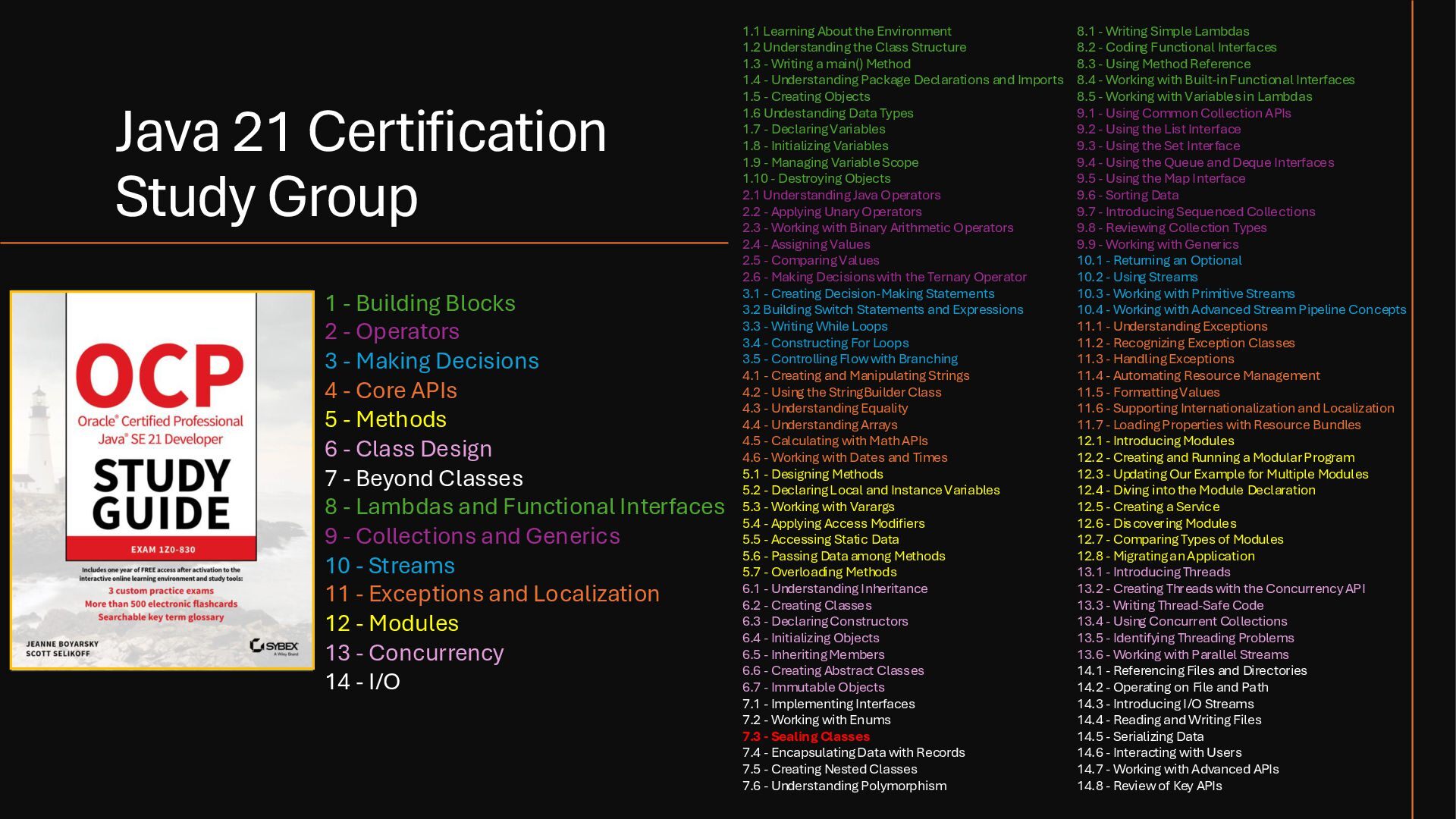
  16. Java 21 Certification Study Group 1.1 Learning About the Environment

    1.2 Understanding the Class Structure 1.3 - Writing a main() Method 1.4 - Understanding Package Declarations and Imports 1.5 - Creating Objects 1.6 Undestanding Data Types 1.7 - Declaring Variables 1.8 - Initializing Variables 1.9 - Managing Variable Scope 1.10 - Destroying Objects 2.1 Understanding Java Operators 2.2 - Applying Unary Operators 2.3 - Working with Binary Arithmetic Operators 2.4 - Assigning Values 2.5 - Comparing Values 2.6 - Making Decisions with the Ternary Operator 3.1 - Creating Decision-Making Statements 3.2 Building Switch Statements and Expressions 3.3 - Writing While Loops 3.4 - Constructing For Loops 3.5 - Controlling Flow with Branching 4.1 - Creating and Manipulating Strings 4.2 - Using the StringBuilder Class 4.3 - Understanding Equality 4.4 - Understanding Arrays 4.5 - Calculating with Math APIs 4.6 - Working with Dates and Times 5.1 - Designing Methods 5.2 - Declaring Local and Instance Variables 5.3 - Working with Varargs 5.4 - Applying Access Modifiers 5.5 - Accessing Static Data 5.6 - Passing Data among Methods 5.7 - Overloading Methods 6.1 - Understanding Inheritance 6.2 - Creating Classes 6.3 - Declaring Constructors 6.4 - Initializing Objects 6.5 - Inheriting Members 6.6 - Creating Abstract Classes 6.7 - Immutable Objects 7.1 - Implementing Interfaces 7.2 - Working with Enums 7.3 - Sealing Classes 7.4 - Encapsulating Data with Records 7.5 - Creating Nested Classes 7.6 - Understanding Polymorphism 1 - Building Blocks 2 - Operators 3 - Making Decisions 4 - Core APIs 5 - Methods 6 - Class Design 7 - Beyond Classes 8 - Lambdas and Functional Interfaces 9 - Collections and Generics 10 - Streams 11 - Exceptions and Localization 12 - Modules 13 - Concurrency 14 - I/O 8.1 - Writing Simple Lambdas 8.2 - Coding Functional Interfaces 8.3 - Using Method Reference 8.4 - Working with Built-in Functional Interfaces 8.5 - Working with Variables in Lambdas 9.1 - Using Common Collection APIs 9.2 - Using the List Interface 9.3 - Using the Set Interface 9.4 - Using the Queue and Deque Interfaces 9.5 - Using the Map Interface 9.6 - Sorting Data 9.7 - Introducing Sequenced Collections 9.8 - Reviewing Collection Types 9.9 - Working with Generics 10.1 - Returning an Optional 10.2 - Using Streams 10.3 - Working with Primitive Streams 10.4 - Working with Advanced Stream Pipeline Concepts 11.1 - Understanding Exceptions 11.2 - Recognizing Exception Classes 11.3 - Handling Exceptions 11.4 - Automating Resource Management 11.5 - Formatting Values 11.6 - Supporting Internationalization and Localization 11.7 - Loading Properties with Resource Bundles 12.1 - Introducing Modules 12.2 - Creating and Running a Modular Program 12.3 - Updating Our Example for Multiple Modules 12.4 - Diving into the Module Declaration 12.5 - Creating a Service 12.6 - Discovering Modules 12.7 - Comparing Types of Modules 12.8 - Migrating an Application 13.1 - Introducing Threads 13.2 - Creating Threads with the Concurrency API 13.3 - Writing Thread-Safe Code 13.4 - Using Concurrent Collections 13.5 - Identifying Threading Problems 13.6 - Working with Parallel Streams 14.1 - Referencing Files and Directories 14.2 - Operating on File and Path 14.3 - Introducing I/O Streams 14.4 - Reading and Writing Files 14.5 - Serializing Data 14.6 - Interacting with Users 14.7 - Working with Advanced APIs 14.8 - Review of Key APIs
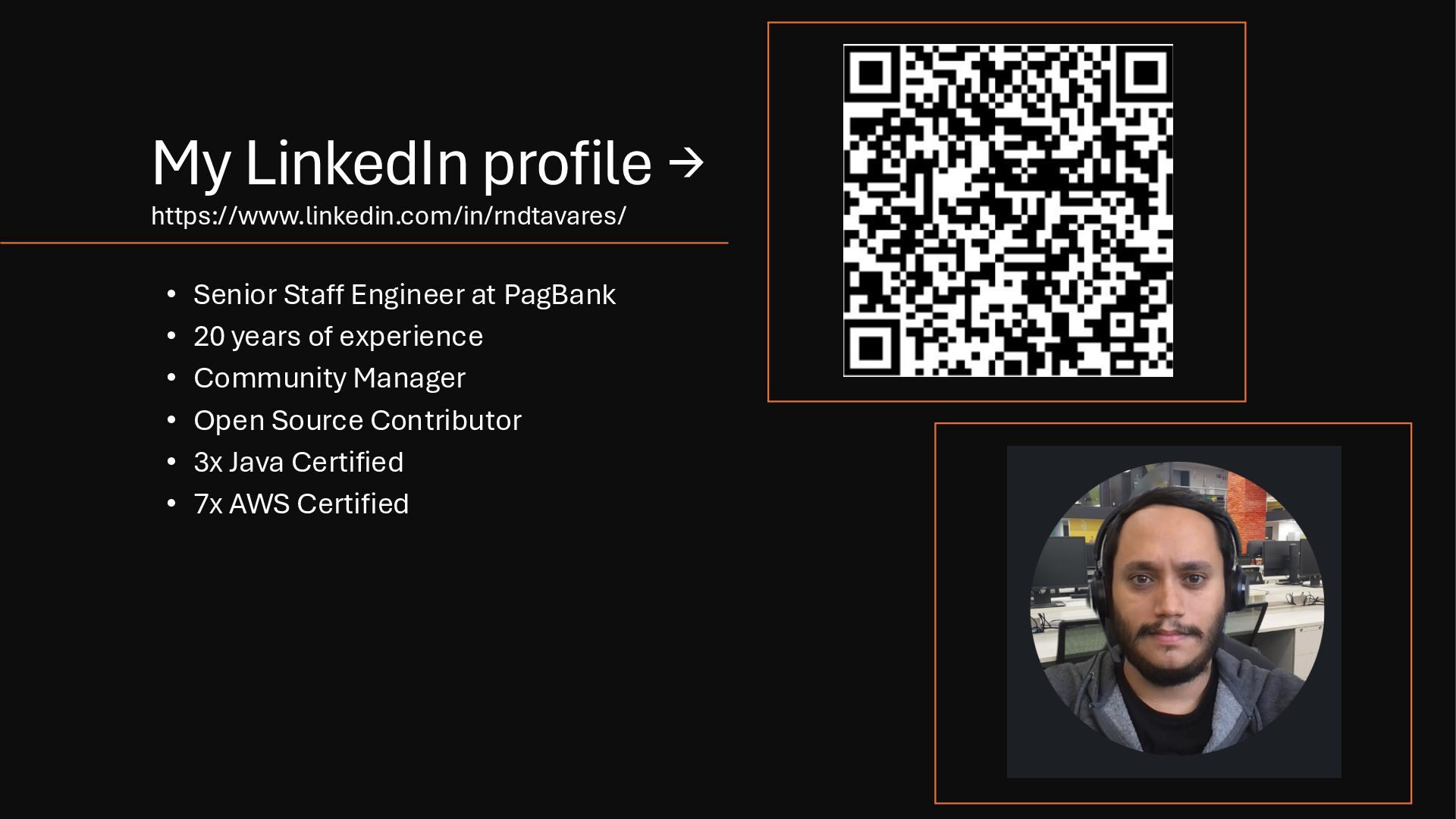
  17. My LinkedIn profile → https://www.linkedin.com/in/rndtavares/ • Senior Staff Engineer at

    PagBank • 20 years of experience • Community Manager • Open Source Contributor • 3x Java Certified • 7x AWS Certified