Python and Django Web Development Course in Kerala
Learn Python programming and Django framework concepts through a practical Python and Django course in Kerala. Develop modern web applications using project-based learning methods.
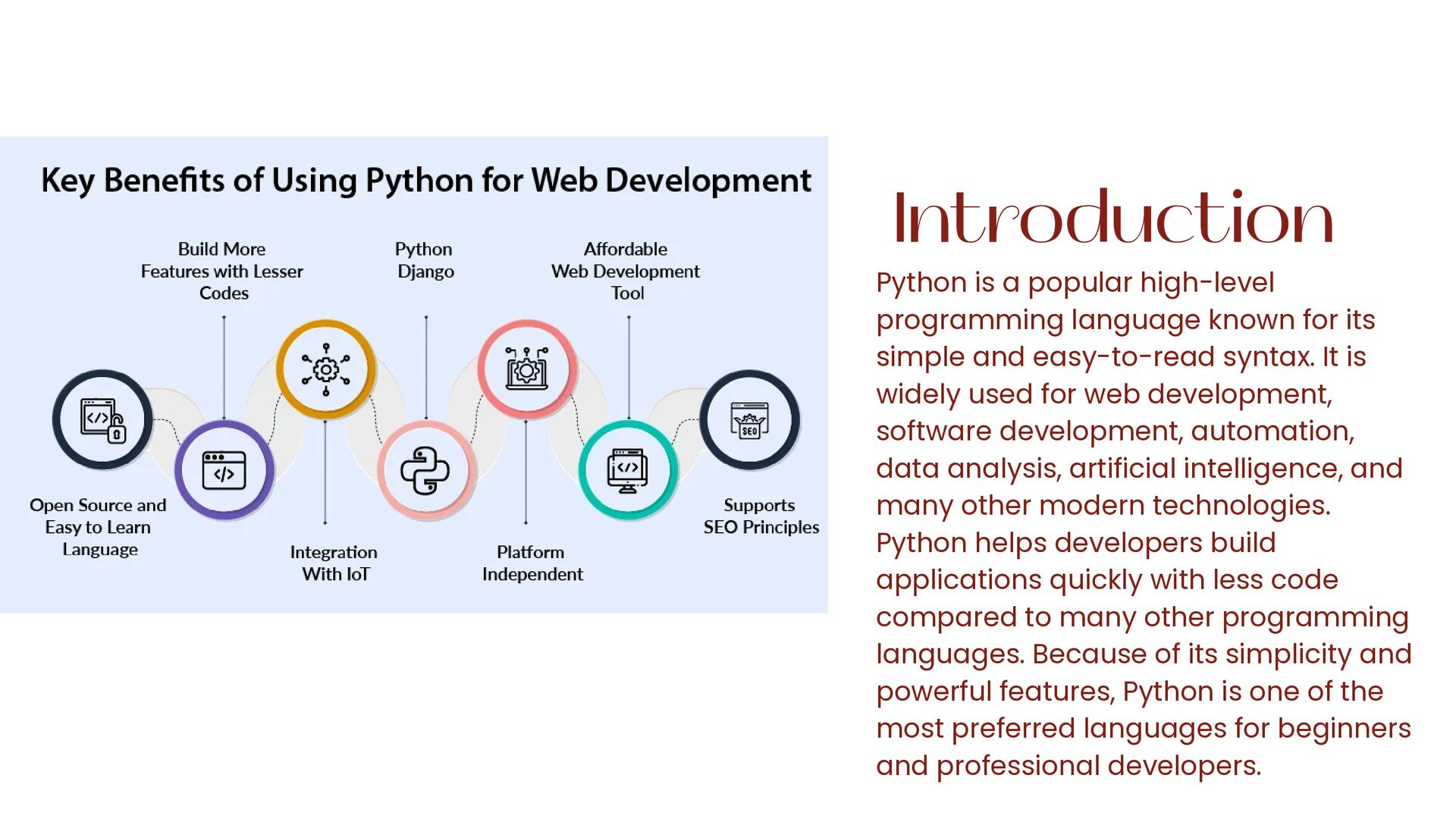
its simple and easy-to-read syntax. It is widely used for web development, software development, automation, data analysis, artificial intelligence, and many other modern technologies. Python helps developers build applications quickly with less code compared to many other programming languages. Because of its simplicity and powerful features, Python is one of the most preferred languages for beginners and professional developers.
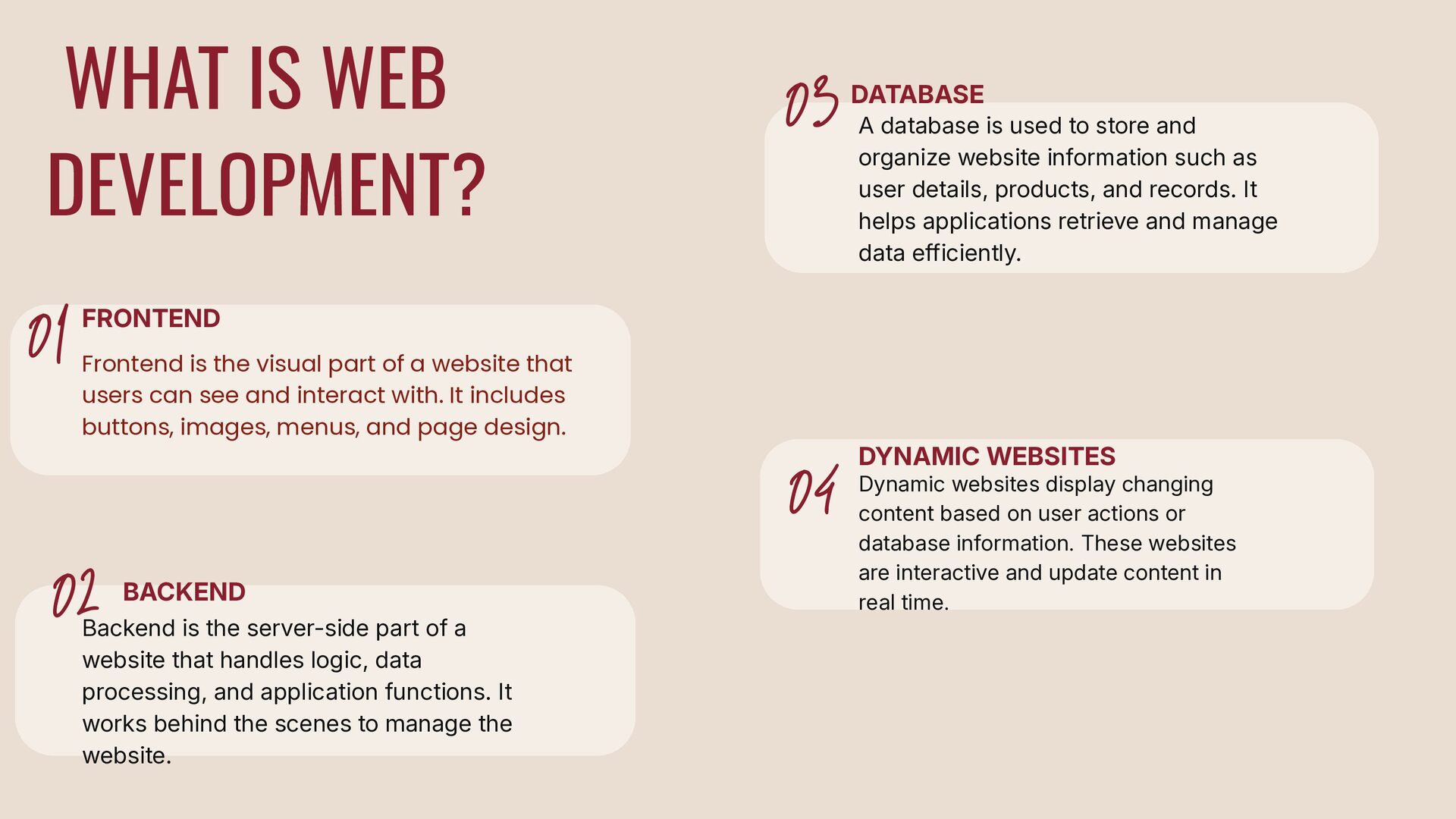
is used to store and organize website information such as user details, products, and records. It helps applications retrieve and manage data efficiently. Backend is the server-side part of a website that handles logic, data processing, and application functions. It works behind the scenes to manage the website. Dynamic websites display changing content based on user actions or database information. These websites are interactive and update content in real time. FRONTEND DATABASE BACKEND DYNAMIC WEBSITES Frontend is the visual part of a website that users can see and interact with. It includes buttons, images, menus, and page design.
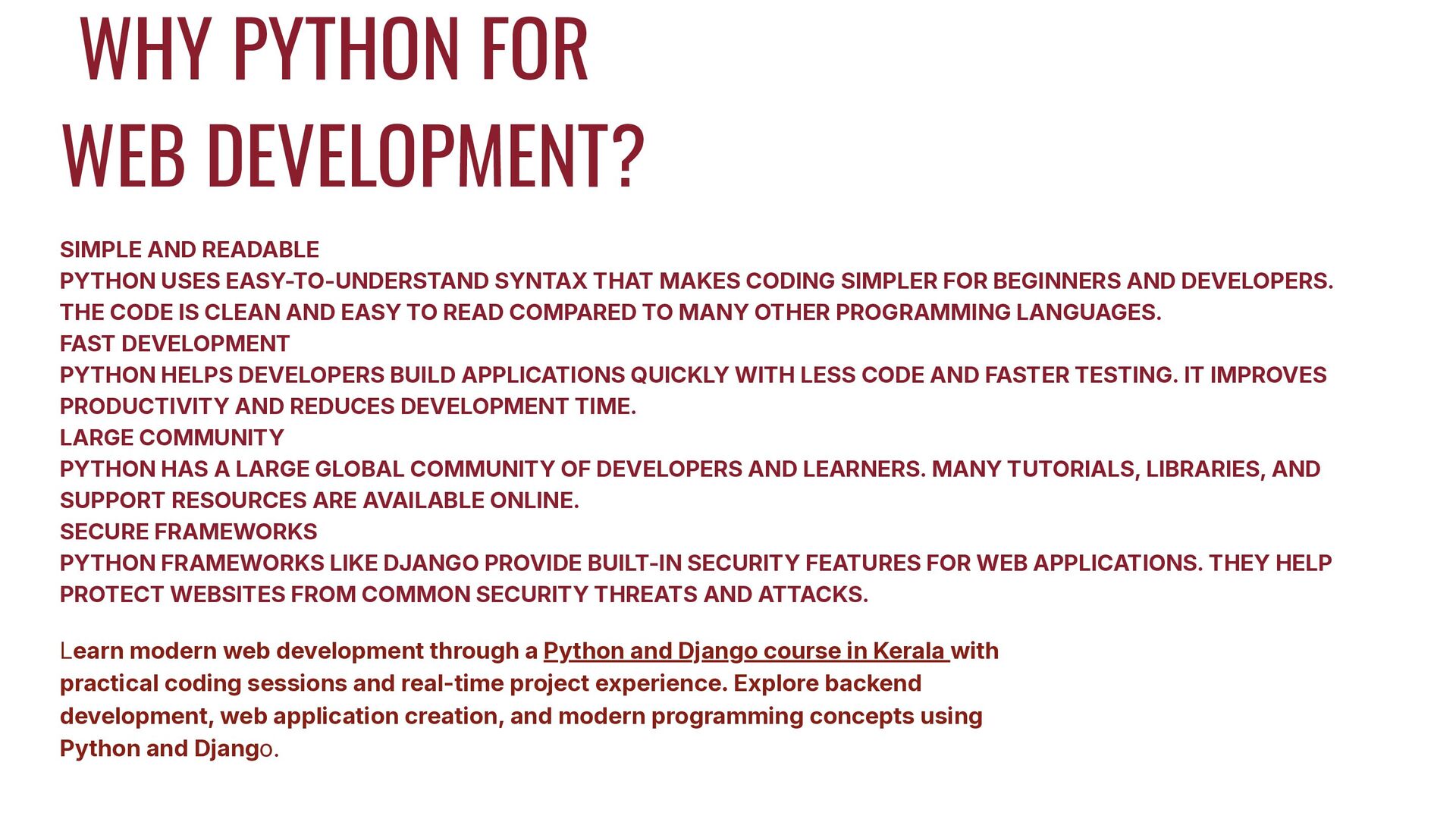
EASY-TO-UNDERSTAND SYNTAX THAT MAKES CODING SIMPLER FOR BEGINNERS AND DEVELOPERS. THE CODE IS CLEAN AND EASY TO READ COMPARED TO MANY OTHER PROGRAMMING LANGUAGES. FAST DEVELOPMENT PYTHON HELPS DEVELOPERS BUILD APPLICATIONS QUICKLY WITH LESS CODE AND FASTER TESTING. IT IMPROVES PRODUCTIVITY AND REDUCES DEVELOPMENT TIME. LARGE COMMUNITY PYTHON HAS A LARGE GLOBAL COMMUNITY OF DEVELOPERS AND LEARNERS. MANY TUTORIALS, LIBRARIES, AND SUPPORT RESOURCES ARE AVAILABLE ONLINE. SECURE FRAMEWORKS PYTHON FRAMEWORKS LIKE DJANGO PROVIDE BUILT-IN SECURITY FEATURES FOR WEB APPLICATIONS. THEY HELP PROTECT WEBSITES FROM COMMON SECURITY THREATS AND ATTACKS. Learn modern web development through a Python and Django course in Kerala with practical coding sessions and real-time project experience. Explore backend development, web application creation, and modern programming concepts using Python and Django.
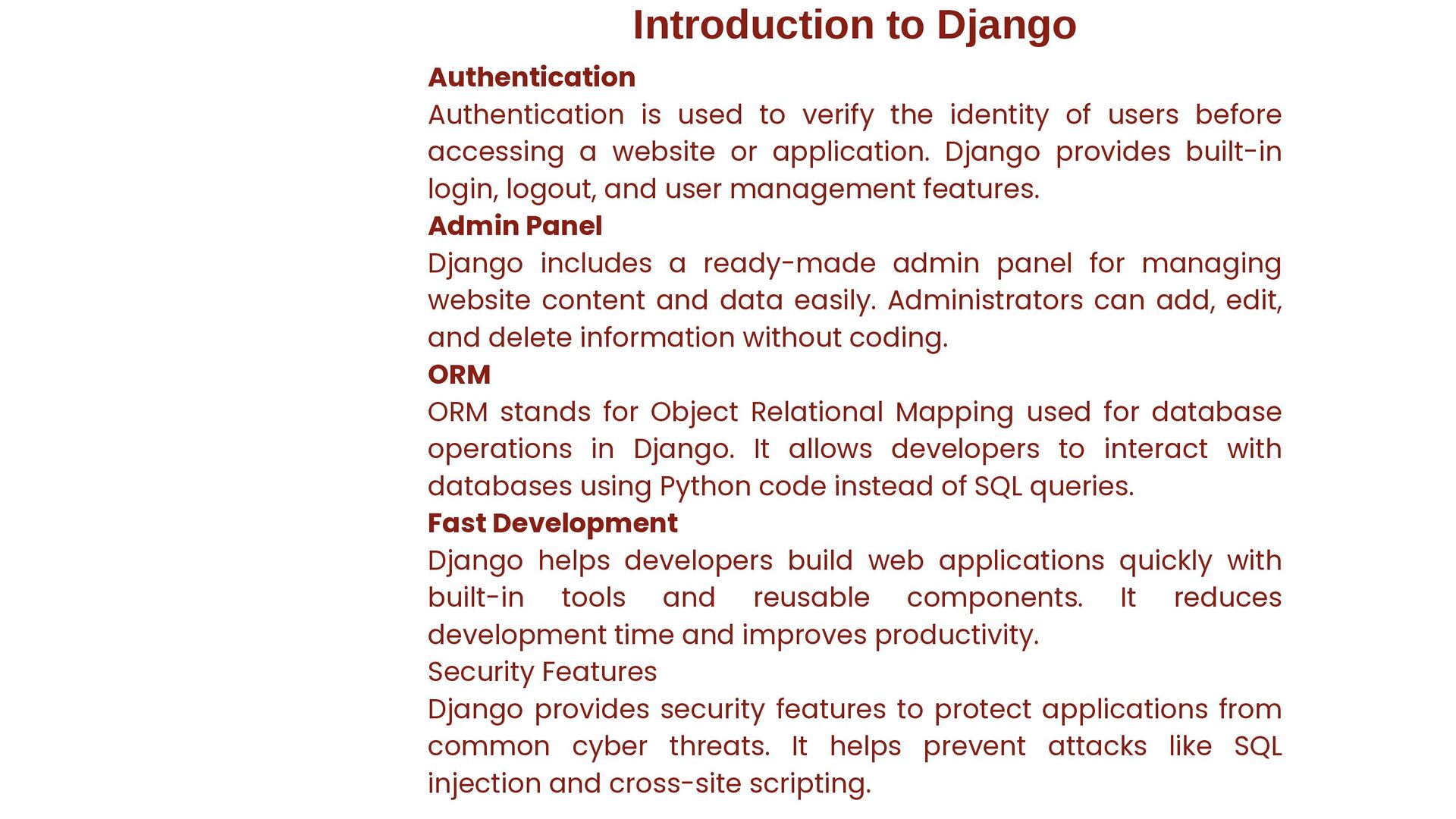
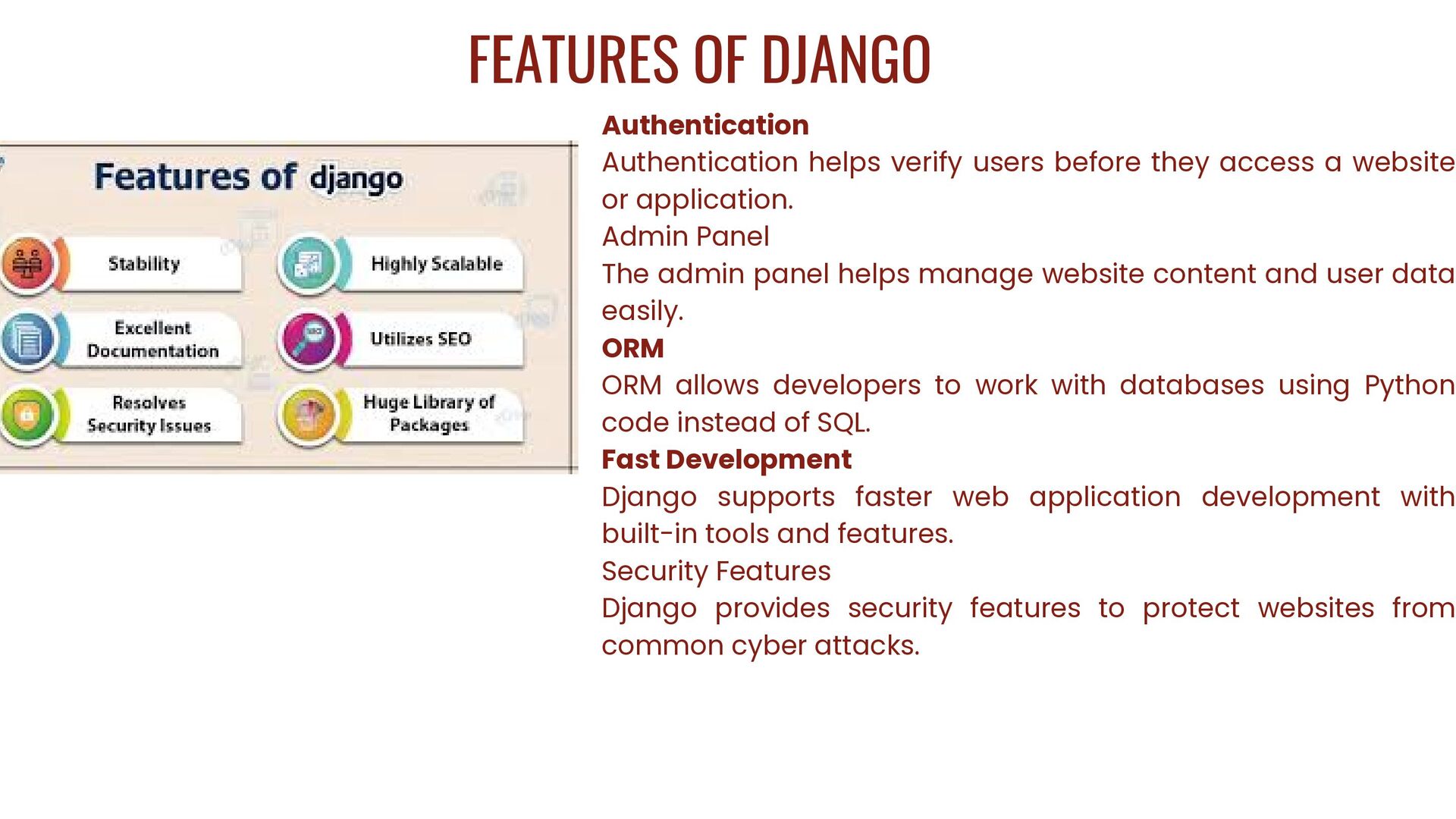
before accessing a website or application. Django provides built-in login, logout, and user management features. Admin Panel Django includes a ready-made admin panel for managing website content and data easily. Administrators can add, edit, and delete information without coding. ORM ORM stands for Object Relational Mapping used for database operations in Django. It allows developers to interact with databases using Python code instead of SQL queries. Fast Development Django helps developers build web applications quickly with built-in tools and reusable components. It reduces development time and improves productivity. Security Features Django provides security features to protect applications from common cyber threats. It helps prevent attacks like SQL injection and cross-site scripting. Introduction to Django
access a website or application. Admin Panel The admin panel helps manage website content and user data easily. ORM ORM allows developers to work with databases using Python code instead of SQL. Fast Development Django supports faster web application development with built-in tools and features. Security Features Django provides security features to protect websites from common cyber attacks.
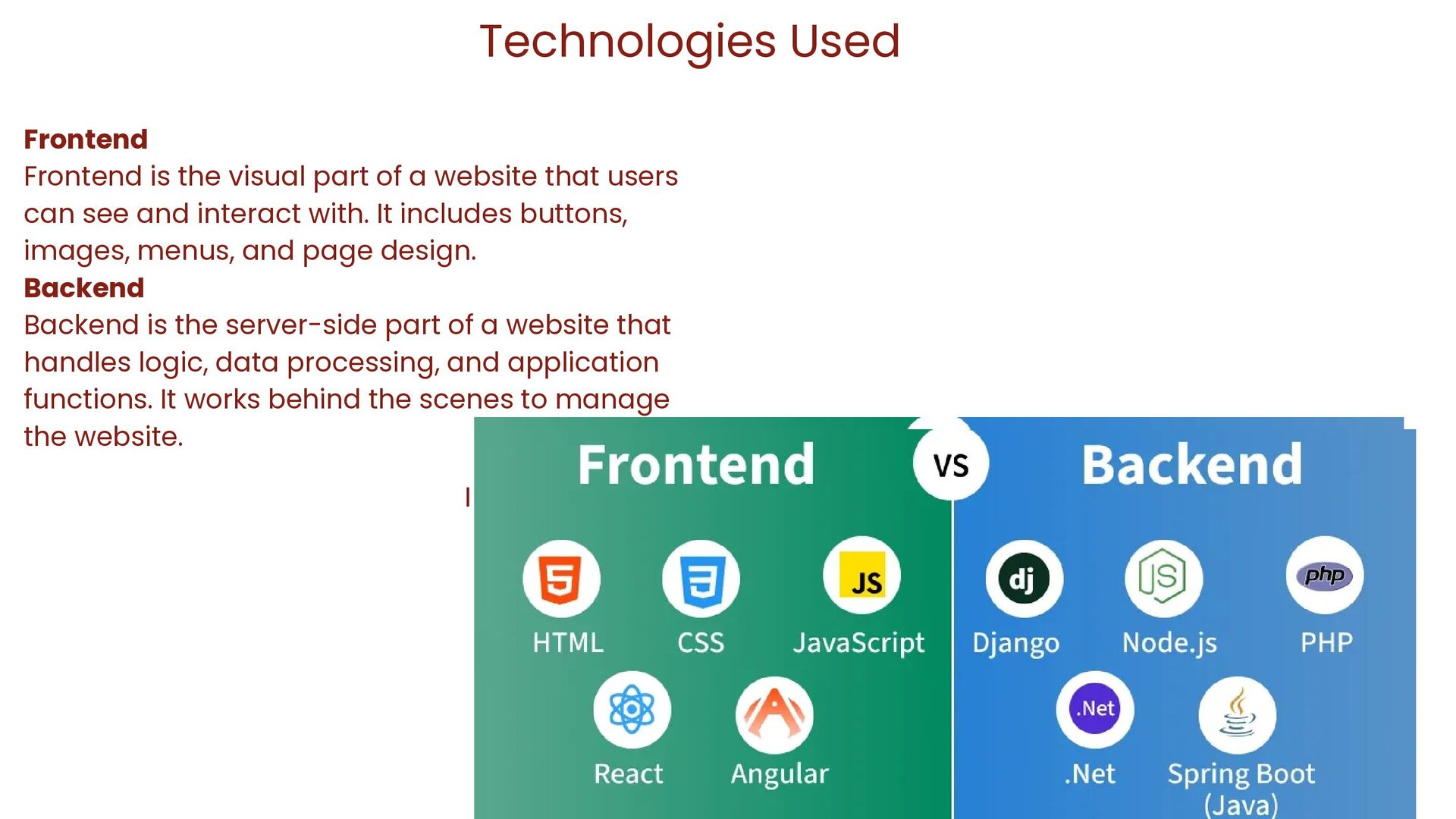
a website that users can see and interact with. It includes buttons, images, menus, and page design. Backend Backend is the server-side part of a website that handles logic, data processing, and application functions. It works behind the scenes to manage the website.
DEVELOPER FOR MORE INFORMATION ABOUT PYTHON AND DJANGO WEB DEJANGO COURCE IN KERALA , VISIT OUR OFFICIAL WEBSITE AND EXPLORE PRACTICAL LEARNING RESOURCES.
development with simple coding, fast development, and secure application features. Learning through a Python and Django course in Kerala helps build practical web development skills and real-world project experience for future career opportunities. CONCLUSION


 mlcsv
mlcsv
 rabernat
 mkilby
 addyosmani
 axbom
axbom
 codingconduct
 davidcarrasco
 tmiket
 inesmontani
 samanthasiow
 lara
lara