disease of the airways which is associated with airway hyper-responsiveness(AHR) that leads to recurrent episodes of wheezing, breathlessness, chest .ghtness and coughing par.cularly at night or early in the morning. • These episodes are o?en associated with variable but reversible airway obstruc.on. (Global INi.a.ve for Asthma-GINA).
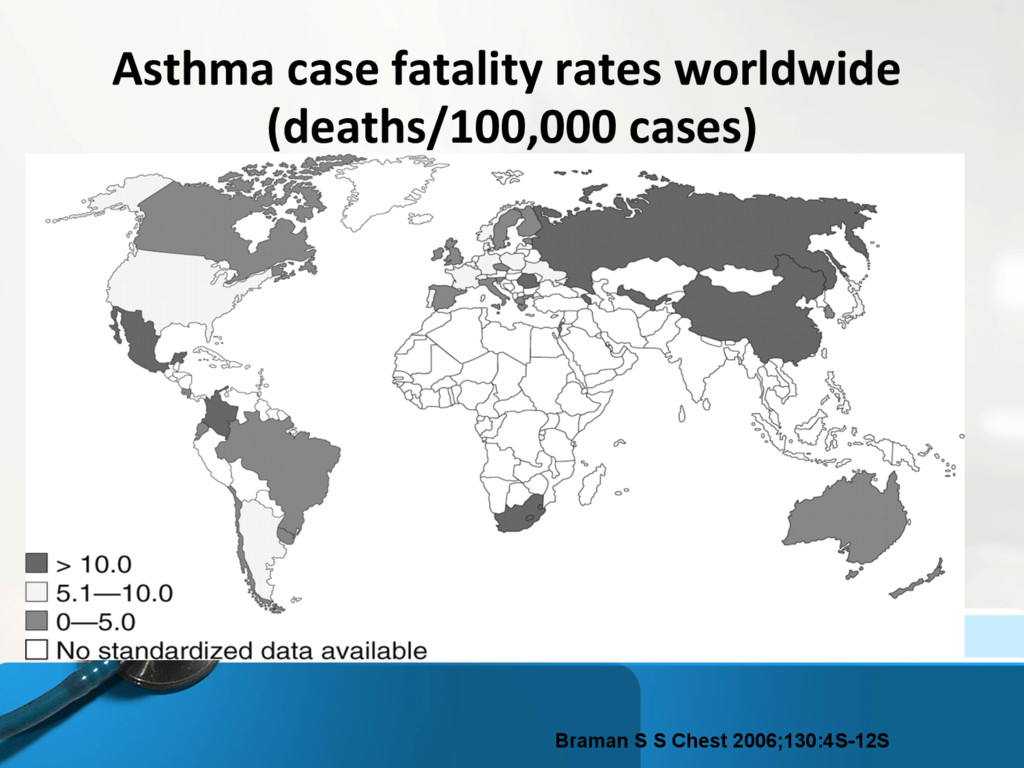
worldwide suffer asthma and prevalence is rising. • Rising prevalence follows urbanisa.on and industrialisa.on par.cularly in developing countries. • Globally, 250 000 people die of asthma annually. • Most asthma deaths are related to lack of proper treatment and are preventable. • Treatment for asthma is not available to all people who suffer asthma.
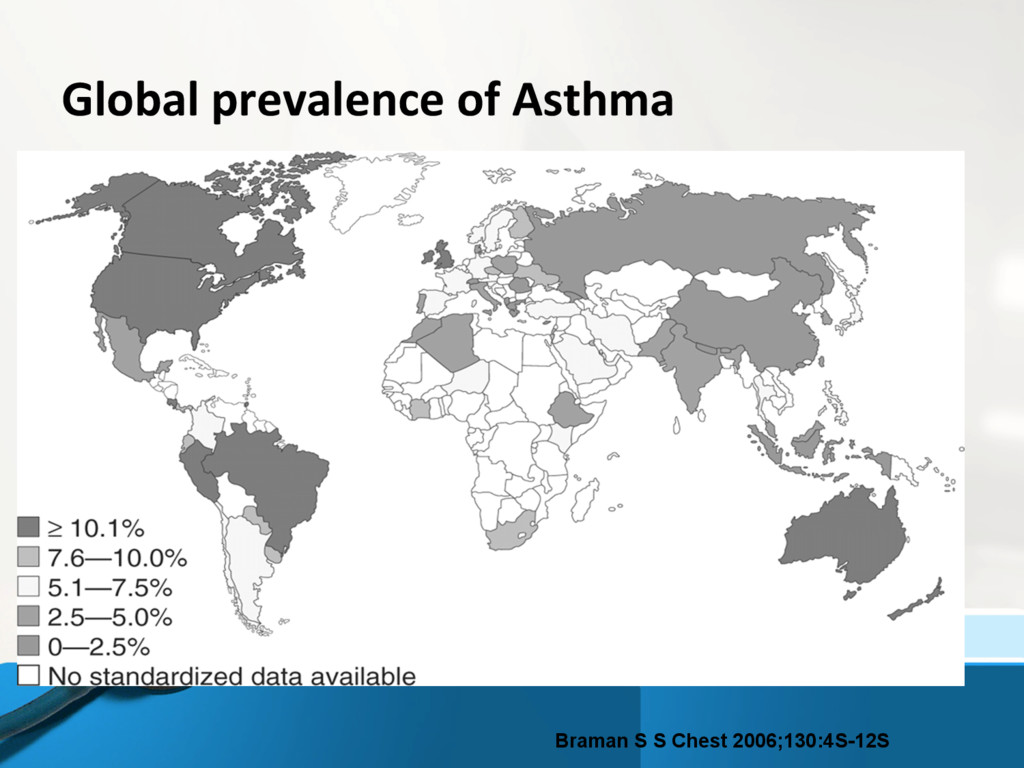
children and remains major cause of school absenteeism. • Pooled prevalence in Nigeria is roughly 10.1%. • It comes at great economic cost to the country affec.ng physical, psychological and social well-being of individuals with disability-adjusted life years- DALYs of about 15million per year.
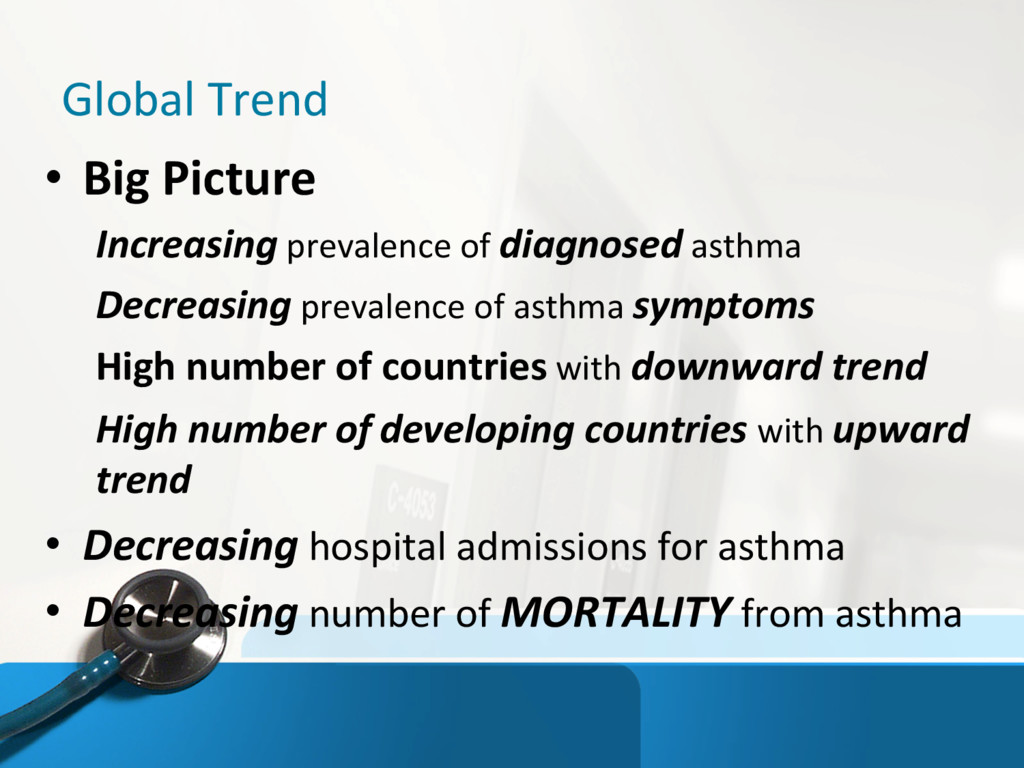
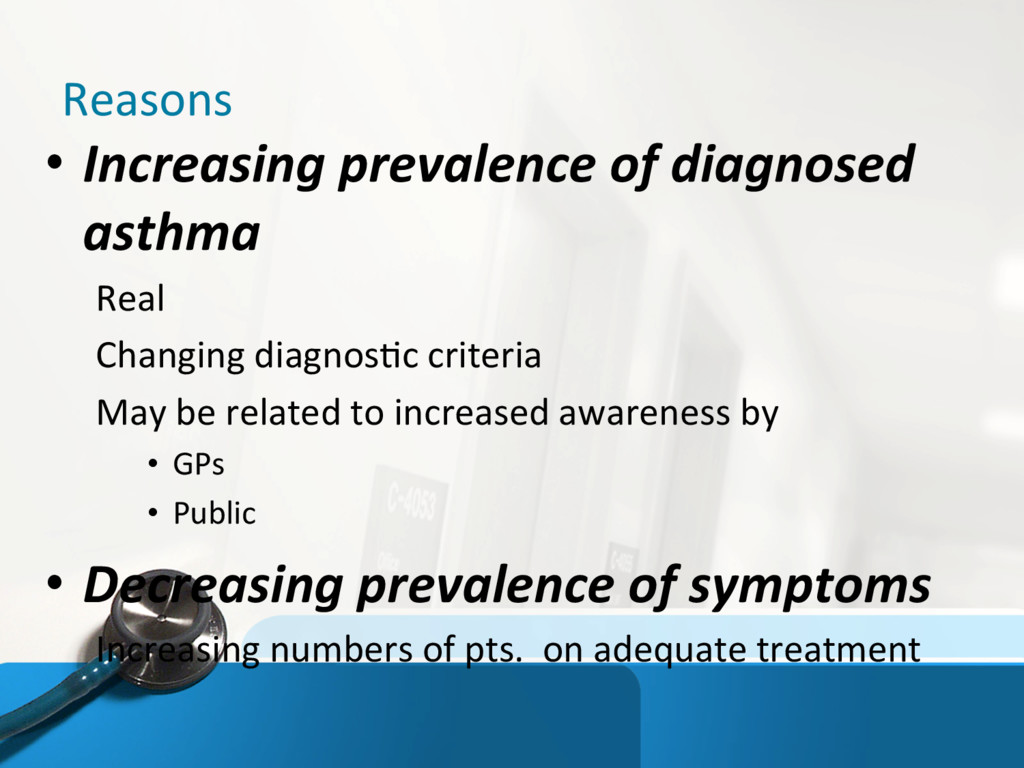
Decreasing prevalence of asthma symptoms High number of countries with downward trend High number of developing countries with upward trend • Decreasing hospital admissions for asthma • Decreasing number of MORTALITY from asthma
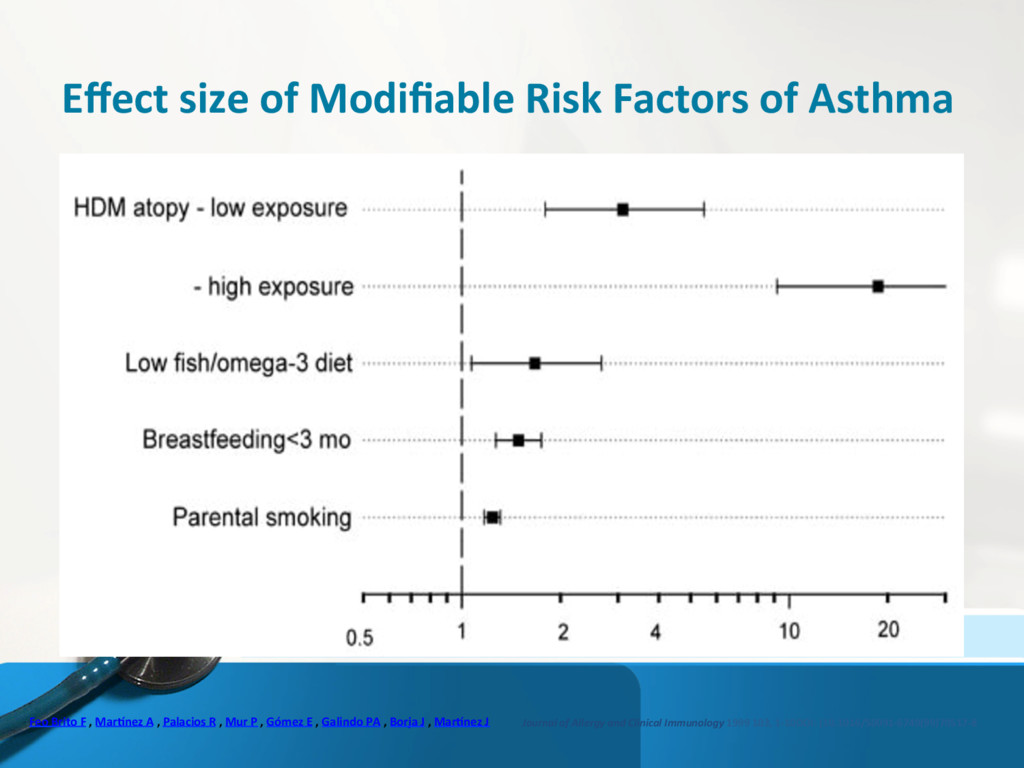
is yet not fully known. • Perhaps an interplay of Gene.c and environmental factors. • Certain risk factors had been highlighted therefore: a. Factors that aid development of Asthma- Genes. b. Factors that trigger asthma symptoms. • Non-modifiable risk factors(Genes, Gender) and Modifiable risk factors.
Indoor pollu.on including burning of fossil fuel for energy. • Out-door pollu.on including car exhaust emissions, factory emission fumes, burning of bush etc. • Allergens-Most common type of asthma. An.gen an.body IgE reac.on leads to asthma symptoms.
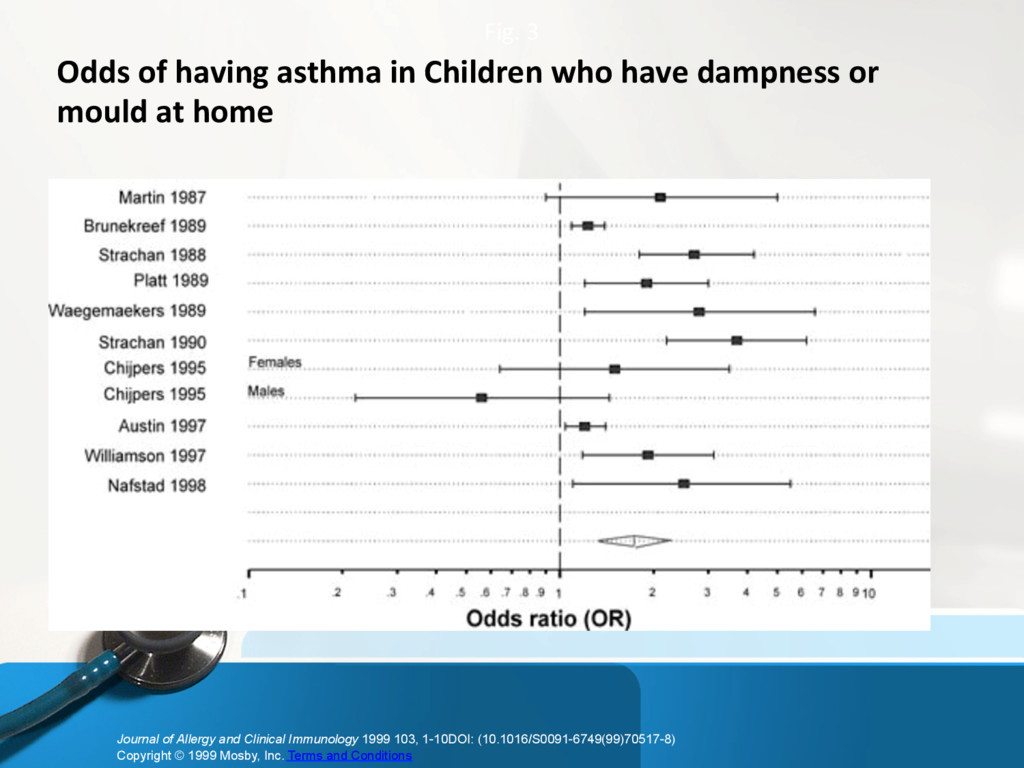
F , MarOnez A , Palacios R , Mur P , Gómez E , Galindo PA , Borja J , MarOnez J Journal of Allergy and Clinical Immunology 1999 103, 1-10DOI: (10.1016/S0091-6749(99)70517-8
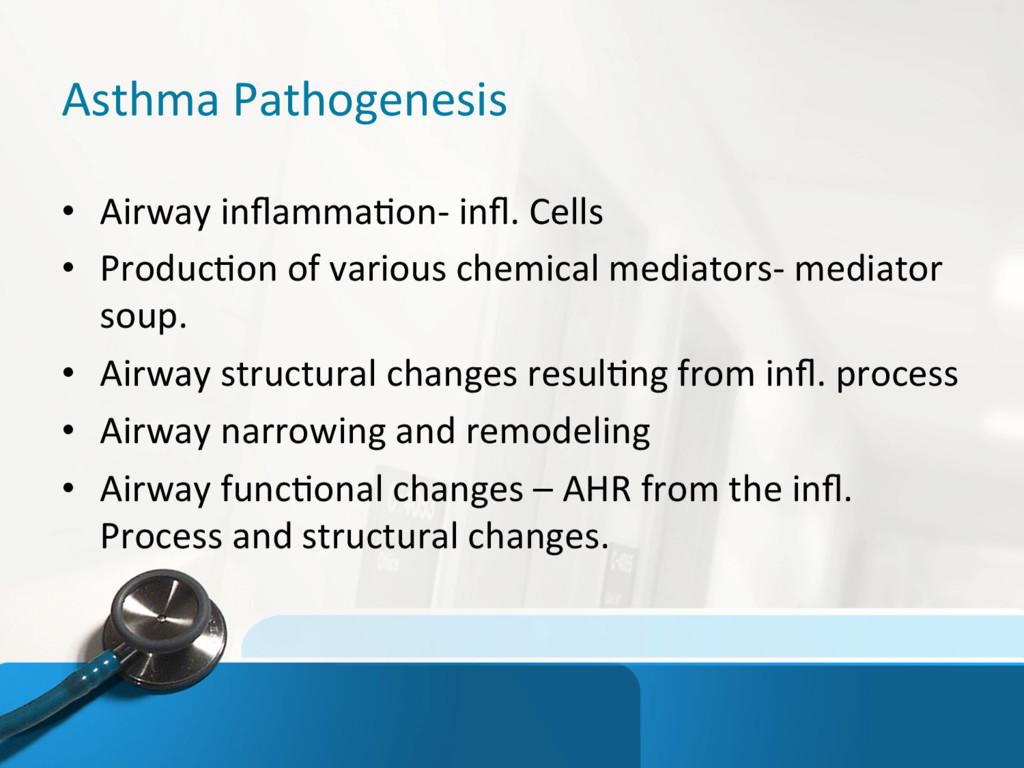
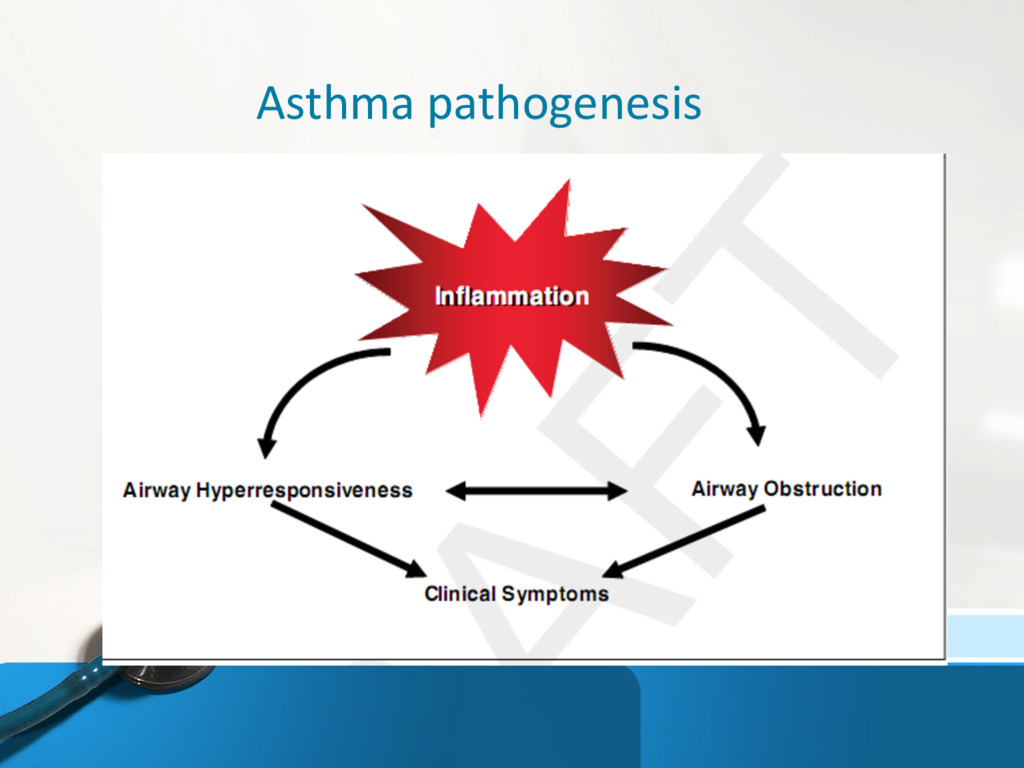
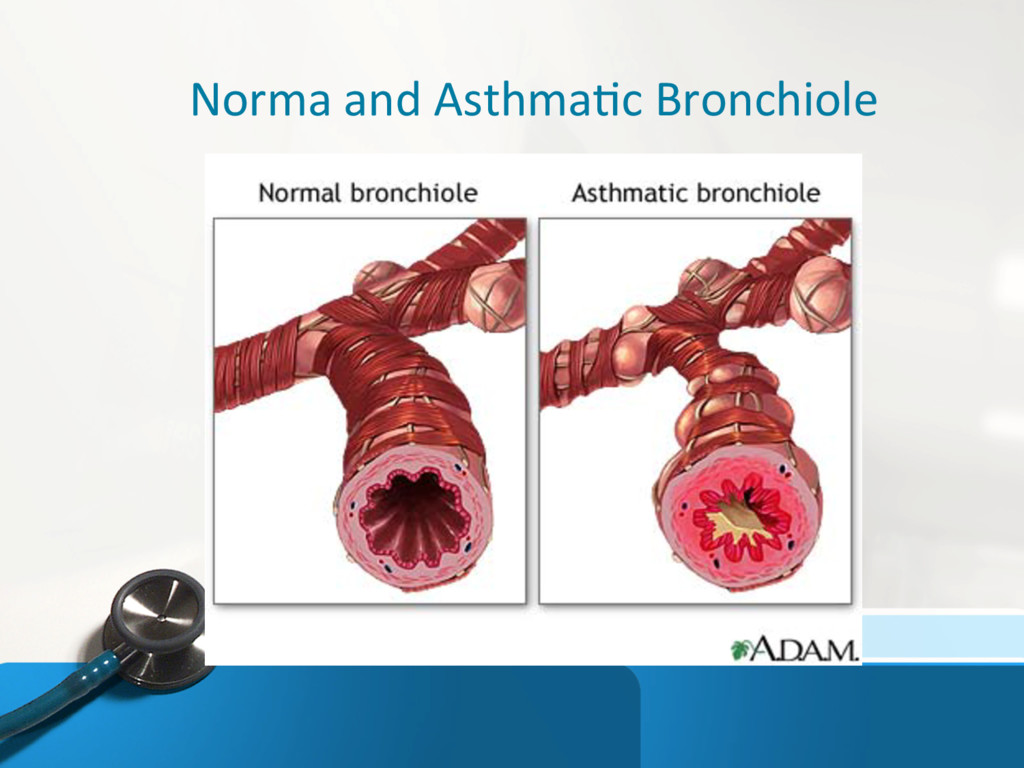
various chemical mediators- mediator soup. • Airway structural changes resul.ng from infl. process • Airway narrowing and remodeling • Airway func.onal changes – AHR from the infl. Process and structural changes.
concerning asthma ae.ology, pathogenesis and treatment had changed over the years. • New therapeu.c op.ons had emerged as well as devices. • Private prac..oners get to see more than half of the pa.ents. • In some places other members of the health team had to provide much needed care.
• Most countries that ins.tuted guidelines and follow them had recorded tremendous decrease in asthma symptom and deaths – Kenya inclusive. • Deaths in asthma are AVOIDABLE and PREVENTABLE. • Hence the need to harmonise these bodies of knowledge and provide framework for appropriate direc.on for GP who see the bulk of these pa.ents.
asthma. • Confirma.on of the diagnosis of asthma to minimise under and over-treatment of asthma. • Appropriate treatment modali.es according to current prac.ces- Stepwise mgt of asthma. • Strengthening of Self Management Prac.ces through appropriate instruc.ons and direc.ons on use of new devices in the mgt of asthma.
pa.ents in the management of asthma in a poor resource sehng. • Take into considera.on cultural influences on pa.ents and physician’s expecta.on. • Provision of easy assessment tools for follow up. • Provide current informa.on on mgt of asthma in condi.ons like pregnancy, children and in anesthesia.
be GPs prac.cing in private facili.es. • Residents and ALL other professionals who take care of asthma pa.ents might also find this guideline useful. • Commi`ee members were drawn from a list of eminent physicians and scholars including respiratory medicine, ENT, anesthesia, nursing, pharmacy and family medicine. 1st sihng was 5th of March 2015
Management and Preven.on 2014/Global Ini.a.ve for Asthma(GINA) Report Available at www.ginasthma.org • Oni A O, Erhabhor GE, Egbagbe EE. The prevalence, management and burden of asthma - a Nigerian study. Iran J Allergy Asthma Immunol. 2010 Mar;9(1):35-41. doi: 09.01/ijaai.3541. • Melani AS, Bonavia M, Cilen. V, et al. Inhaler mishandling remains common in real life and is associated with reduced disease control. Respir Med 2011; 105: 930–938. • Guideling for Asthma management in kenya Division of Leprosy Tuberculosis and Lung Diseases, Ministry of Public Health and Sanita.on publica.on 2011p1-35


 frankvandijk
 tessaabrams
 techseoconnect
 tmiket
 geoffreycrofte
 sstephenson
 sonatard
 aleyda
 eileencodes
 tenderlove
 uxyall
 thirion