for the use of cloud computing in digital product development Cloud computing is considered a – and possibly the – strategic driver of digital product development (Bharadwaj et al. 2013; Hanelt et al. 2015), with the main reasons being low entry barriers and high scalability In a recent review, only about 9% of the 285 articles under scrutiny were an attempt to conceptualize the phenomenon of cloud computing, the vast majority of papers (235) were classified as atheoretical, meaning that no theoretical frame was provided (Senyo et al. 2018) The product lifecycle was selected as an established theoretical model because benefits of cloud computing are not equally distributed across the lifecycle, therefore a detailed analysis by lifecycle stage is required
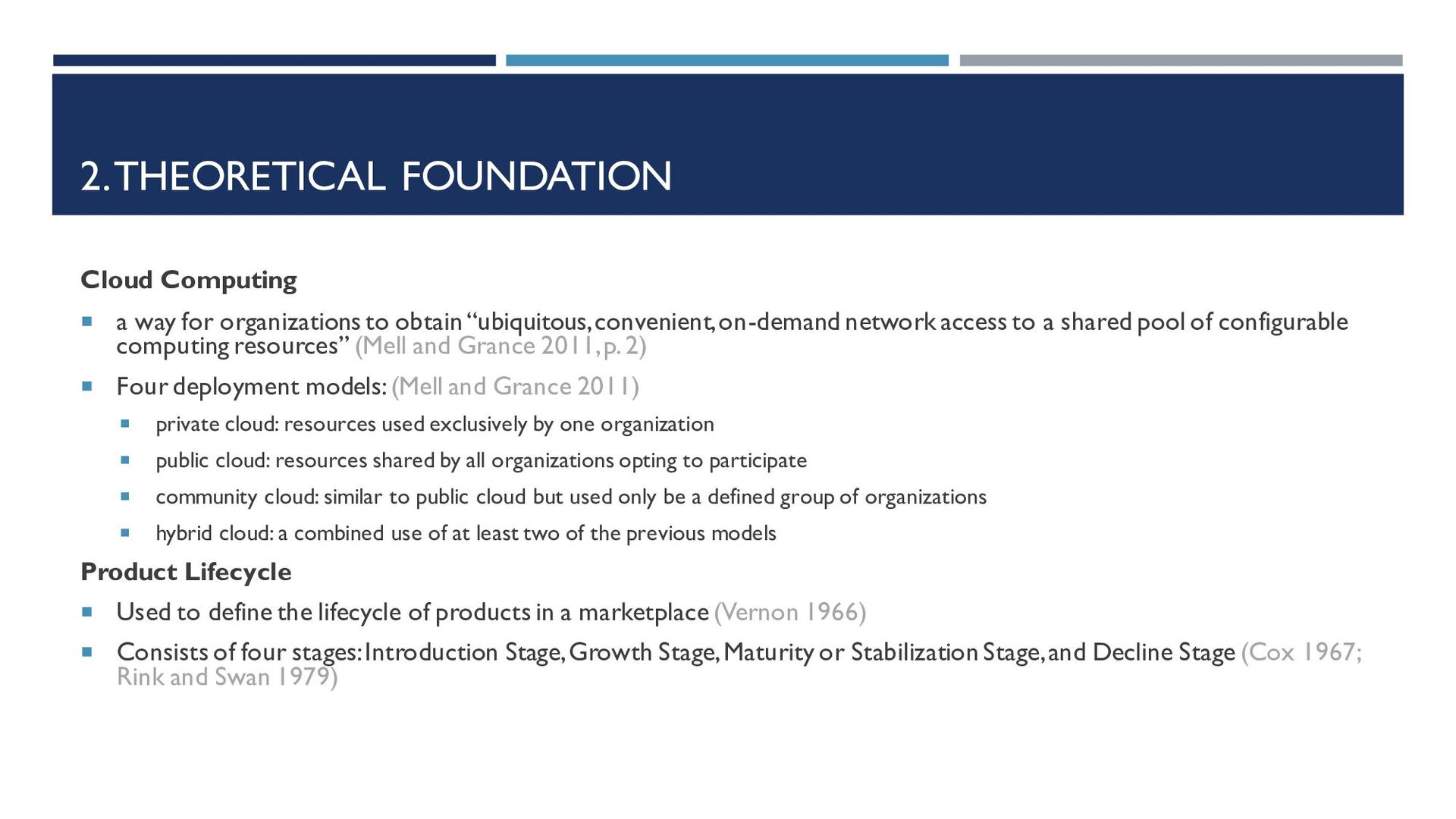
to obtain “ubiquitous, convenient, on-demand network access to a shared pool of configurable computing resources” (Mell and Grance 2011, p. 2) Four deployment models: (Mell and Grance 2011) private cloud: resources used exclusively by one organization public cloud: resources shared by all organizations opting to participate community cloud: similar to public cloud but used only be a defined group of organizations hybrid cloud: a combined use of at least two of the previous models Product Lifecycle Used to define the lifecycle of products in a marketplace (Vernon 1966) Consists of four stages: Introduction Stage, Growth Stage, Maturity or Stabilization Stage, and Decline Stage (Cox 1967; Rink and Swan 1979)
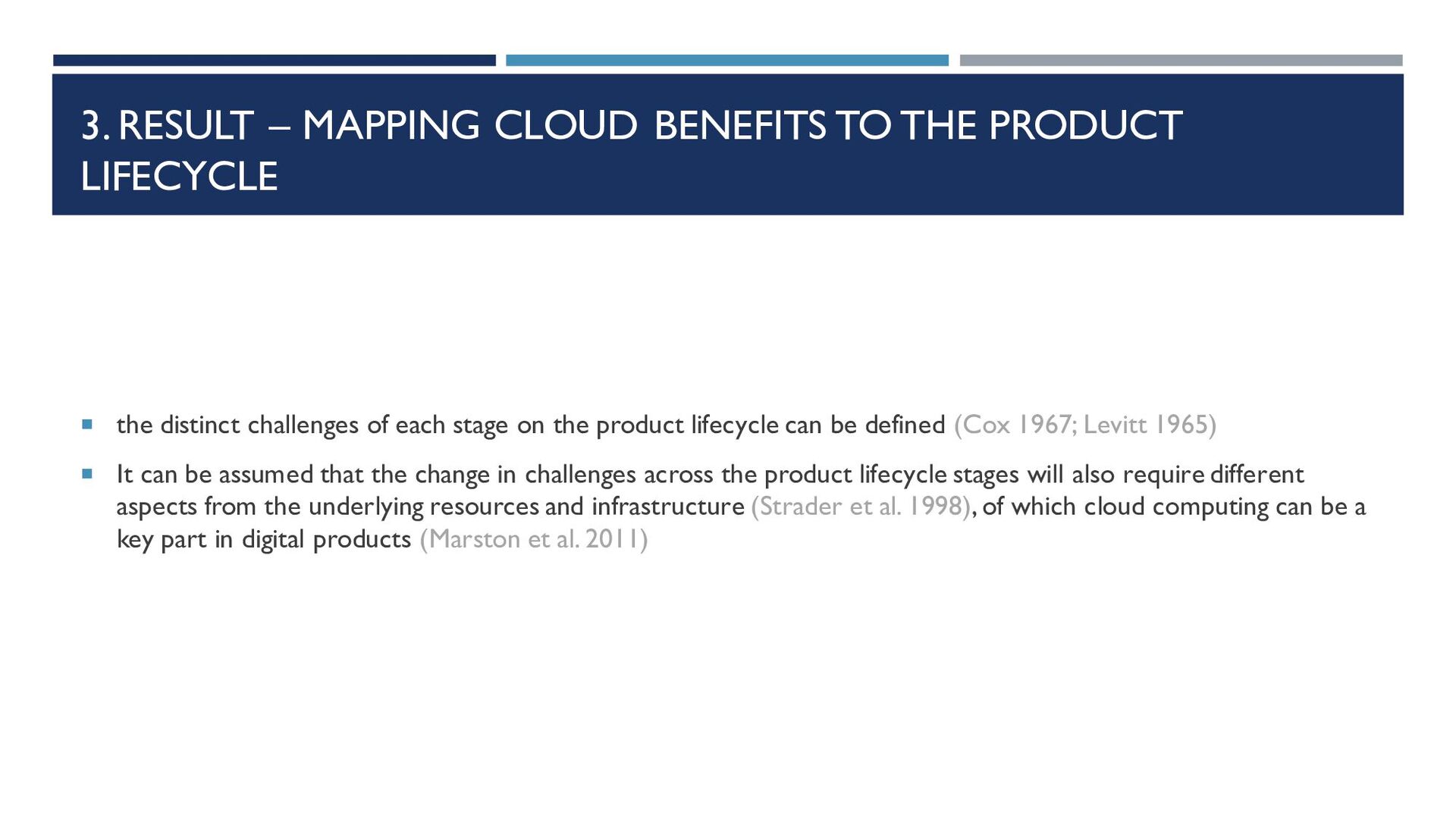
the distinct challenges of each stage on the product lifecycle can be defined (Cox 1967; Levitt 1965) It can be assumed that the change in challenges across the product lifecycle stages will also require different aspects from the underlying resources and infrastructure (Strader et al. 1998), of which cloud computing can be a key part in digital products (Marston et al. 2011)
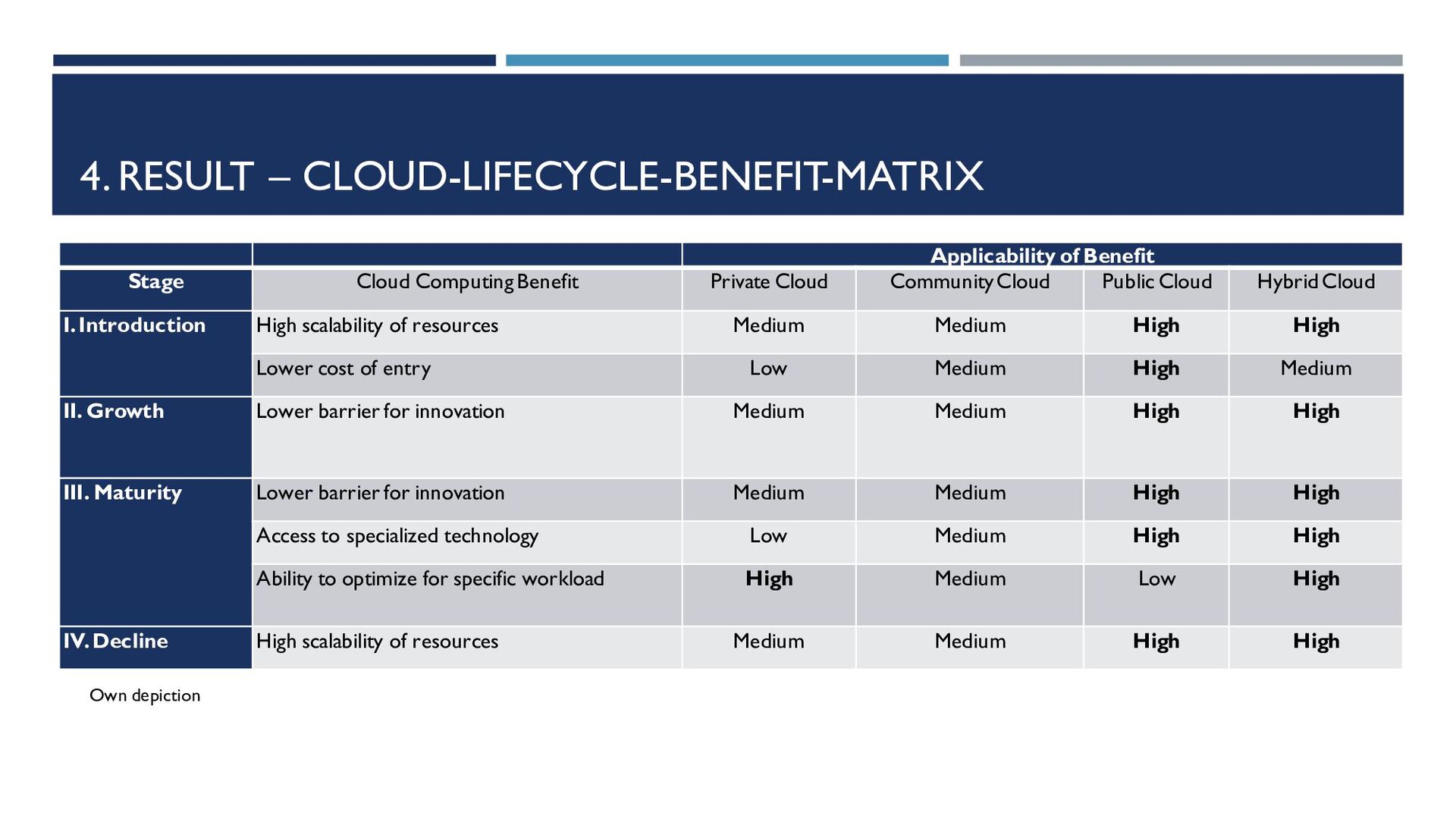
Benefit Private Cloud Community Cloud Public Cloud Hybrid Cloud I.Introduction High scalability of resources Medium Medium High High Lower cost of entry Low Medium High Medium II. Growth Lower barrier for innovation Medium Medium High High III. Maturity Lower barrier for innovation Medium Medium High High Access to specialized technology Low Medium High High Ability to optimize for specific workload High Medium Low High IV.Decline High scalability of resources Medium Medium High High Own depiction
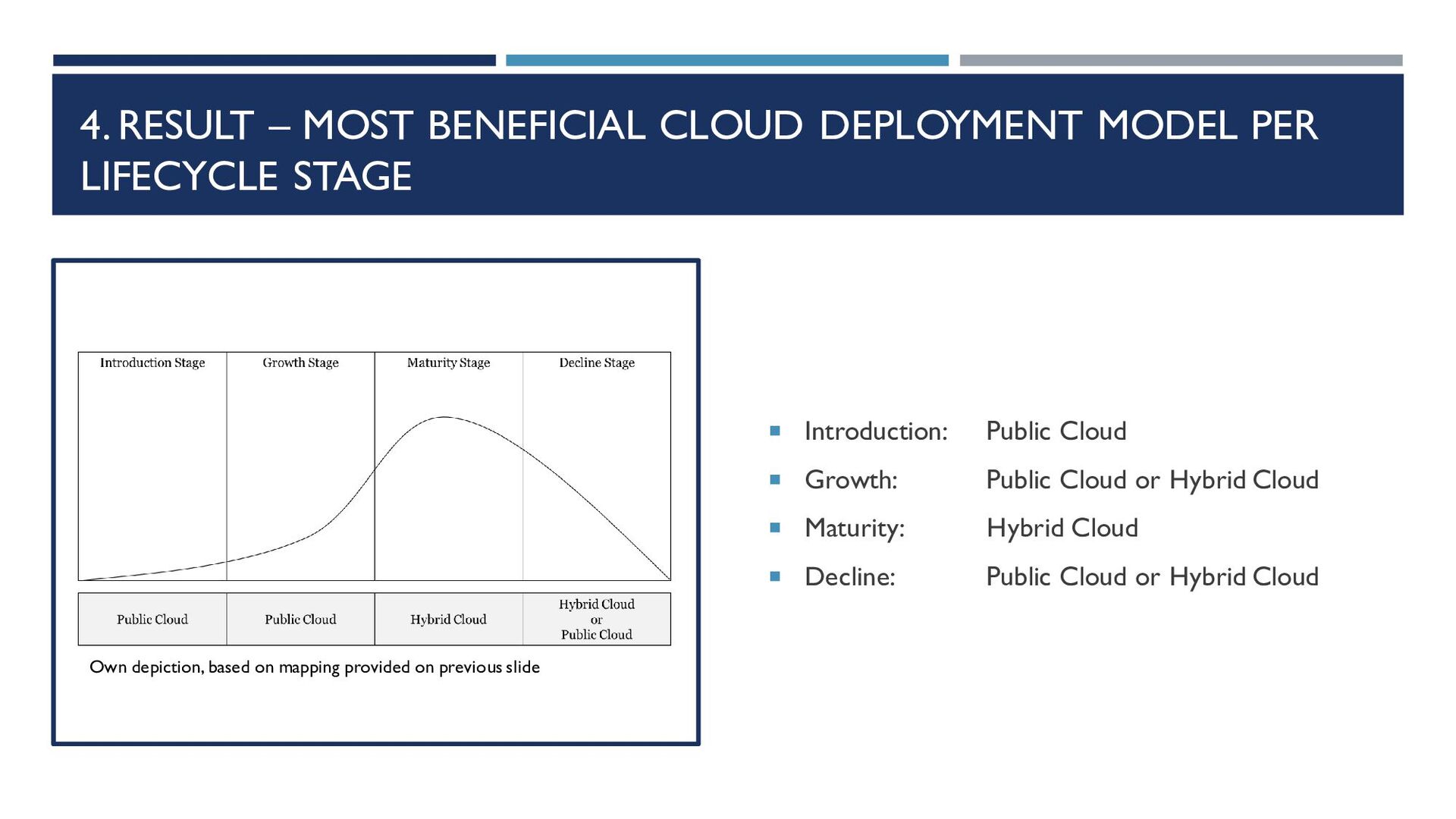
STAGE Introduction: Public Cloud Growth: Public Cloud or Hybrid Cloud Maturity: Hybrid Cloud Decline: Public Cloud or Hybrid Cloud Own depiction, based on mapping provided on previous slide
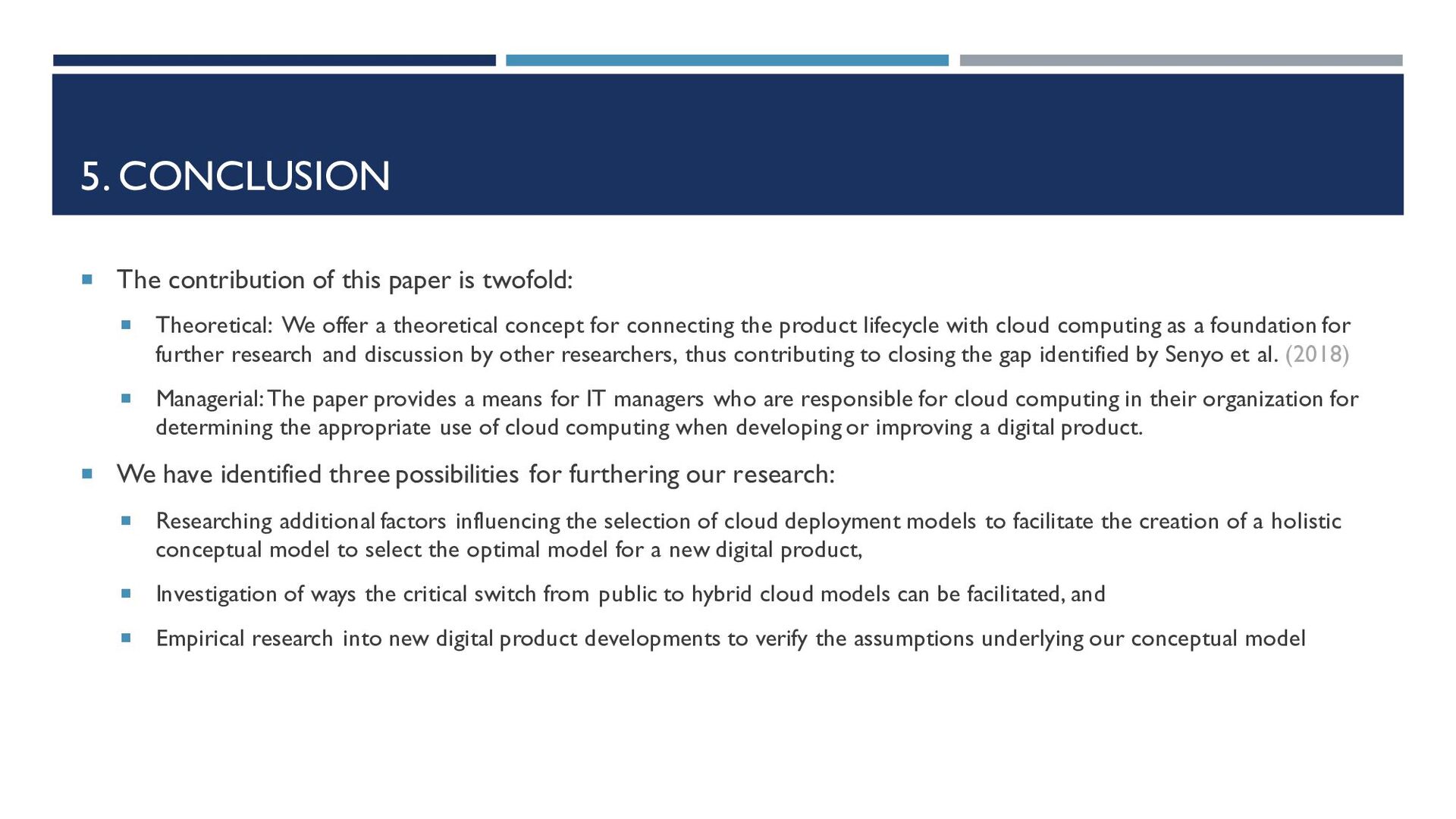
Theoretical: We offer a theoretical concept for connecting the product lifecycle with cloud computing as a foundation for further research and discussion by other researchers, thus contributing to closing the gap identified by Senyo et al. (2018) Managerial: The paper provides a means for IT managers who are responsible for cloud computing in their organization for determining the appropriate use of cloud computing when developing or improving a digital product. We have identified three possibilities for furthering our research: Researching additional factors influencing the selection of cloud deployment models to facilitate the creation of a holistic conceptual model to select the optimal model for a new digital product, Investigation of ways the critical switch from public to hybrid cloud models can be facilitated, and Empirical research into new digital product developments to verify the assumptions underlying our conceptual model

 Your Podcast. Everywhere. Effortlessly.


 inesmontani
 bethany
 chriscoyier
 mfonobong
 geshan
 asonas
 addyosmani
 mkilby
 jmmastey
 letsgokoyo
 codingconduct