Upgrade to Pro — share decks privately, control downloads, hide ads and more …

Cybersecurity Budget for MSMEs: Essential Costs...

Cybersecurity Budget for MSMEs: Essential Costs, Services & Planning

Learn how startups and MSMEs can build a practical cybersecurity budget based on real business risks. This presentation covers cybersecurity maturity levels, estimated annual budgets, essential security controls, compliance considerations, and practical planning strategies to help organizations invest wisely in security.

For a more detailed guide, read the complete blog on the Verentix website.

🌐 Visit: verentix.com

Avatar for Verentix Pvt Ltd

Verentix Pvt Ltd

July 10, 2026

Other Decks in Technology

Transcript

  1. Cybersecurity Budget for MSMEs: Essential Costs, Services & Planning Many

    small businesses assume cybersecurity is only for large enterprises. In reality, a single incident can cause data breaches, financial loss, operational downtime and reputational damage that erodes customer trust and long-term growth. This deck outlines practical security priorities, budgets by maturity, and a clear path for MSMEs to protect their top risks without overspending.
  2. Why Cybersecurity Matters for MSMEs Financial Impact Breaches and downtime

    cause direct financial loss and recovery costs that can cripple a small business. Operational Risk Attacks disrupt operations and customer service, reducing revenue and harming reputation. Customer Trust Data loss damages trust and long-term relationships — recovery is slow and costly.
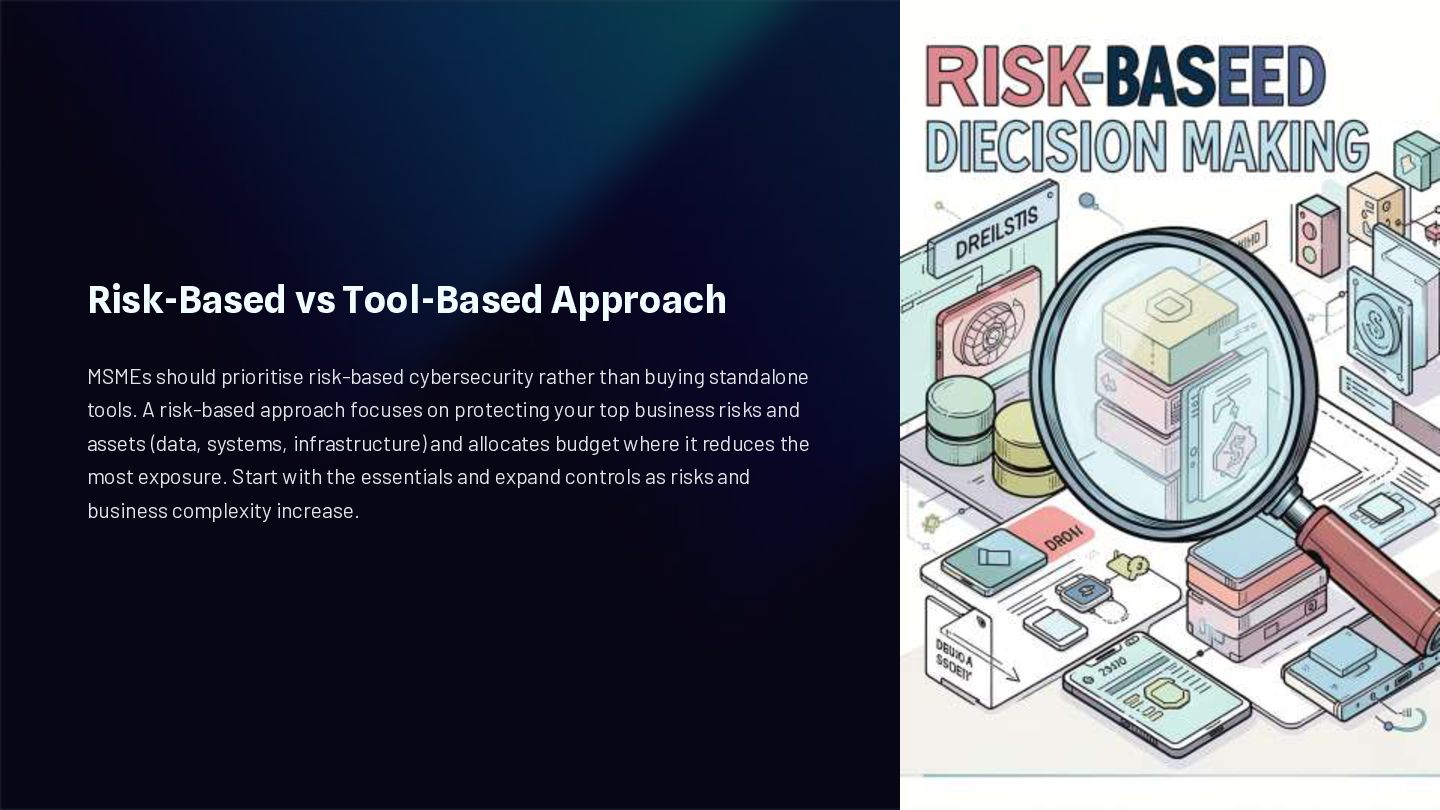
  3. Risk-Based vs Tool-Based Approach MSMEs should prioritise risk-based cybersecurity rather

    than buying standalone tools. A risk-based approach focuses on protecting your top business risks and assets (data, systems, infrastructure) and allocates budget where it reduces the most exposure. Start with the essentials and expand controls as risks and business complexity increase.
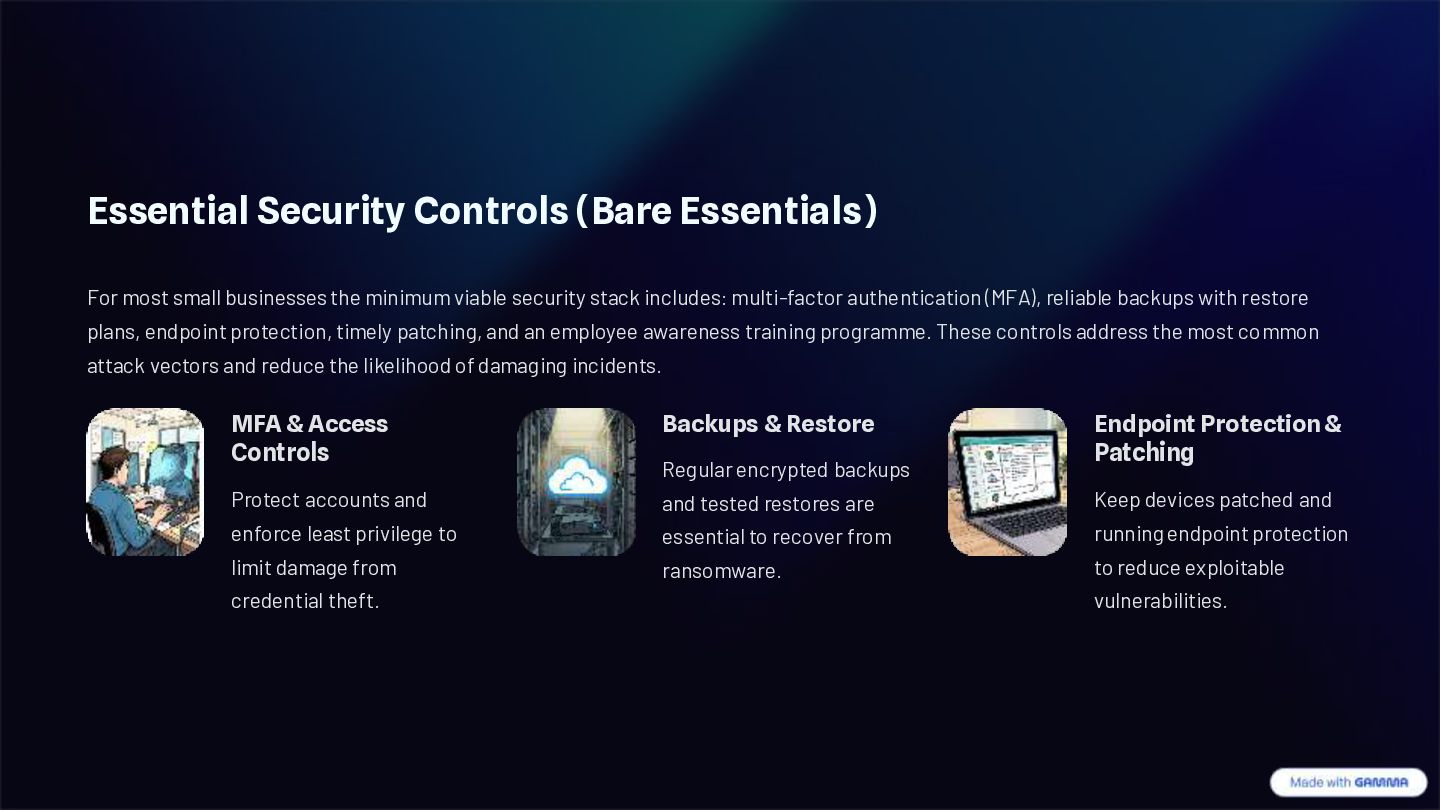
  4. Essential Security Controls (Bare Essentials) For most small businesses the

    minimum viable security stack includes: multi-factor authentication (MFA), reliable backups with restore plans, endpoint protection, timely patching, and an employee awareness training programme. These controls address the most common attack vectors and reduce the likelihood of damaging incidents. MFA & Access Controls Protect accounts and enforce least privilege to limit damage from credential theft. Backups & Restore Regular encrypted backups and tested restores are essential to recover from ransomware. Endpoint Protection & Patching Keep devices patched and running endpoint protection to reduce exploitable vulnerabilities.
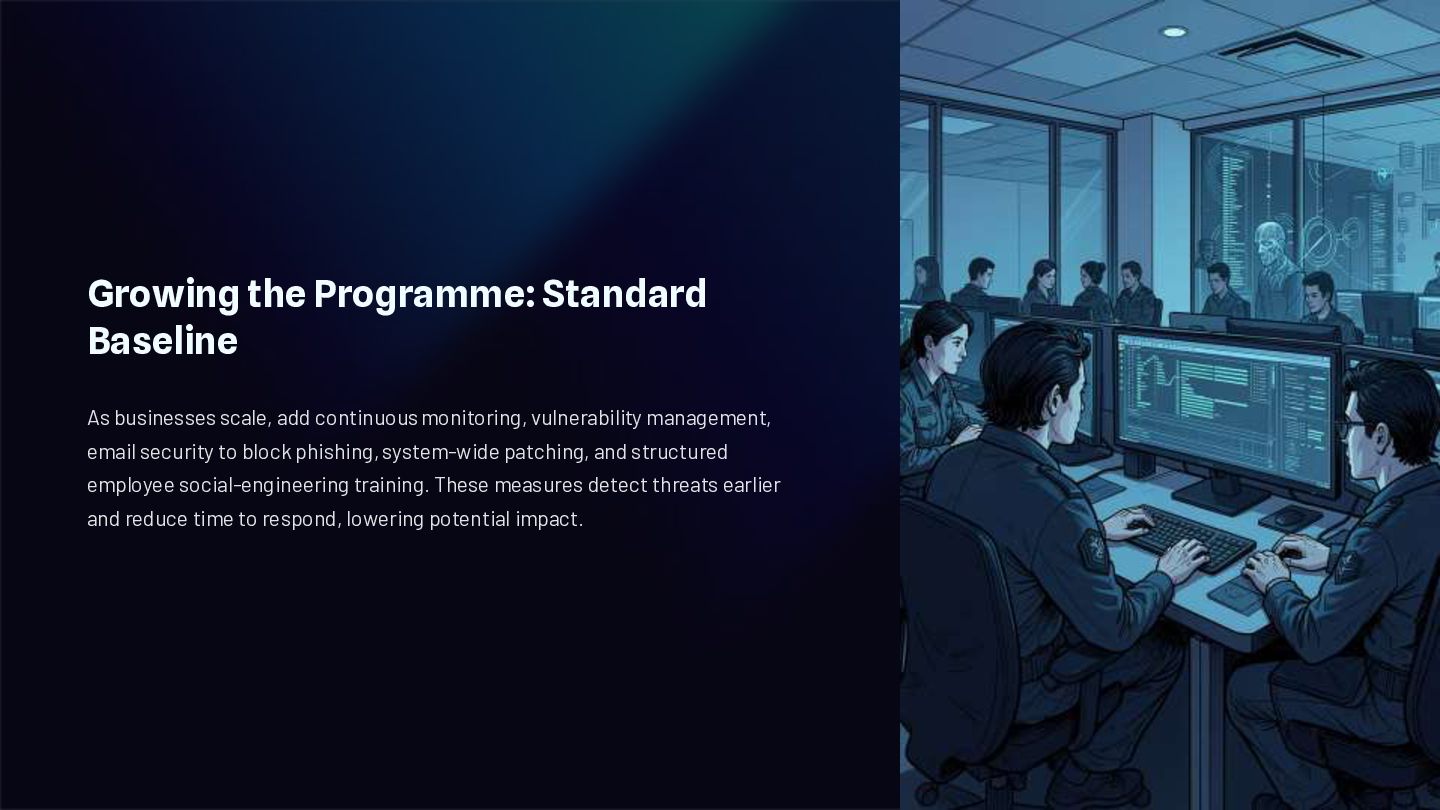
  5. Growing the Programme: Standard Baseline As businesses scale, add continuous

    monitoring, vulnerability management, email security to block phishing, system-wide patching, and structured employee social-engineering training. These measures detect threats earlier and reduce time to respond, lowering potential impact.
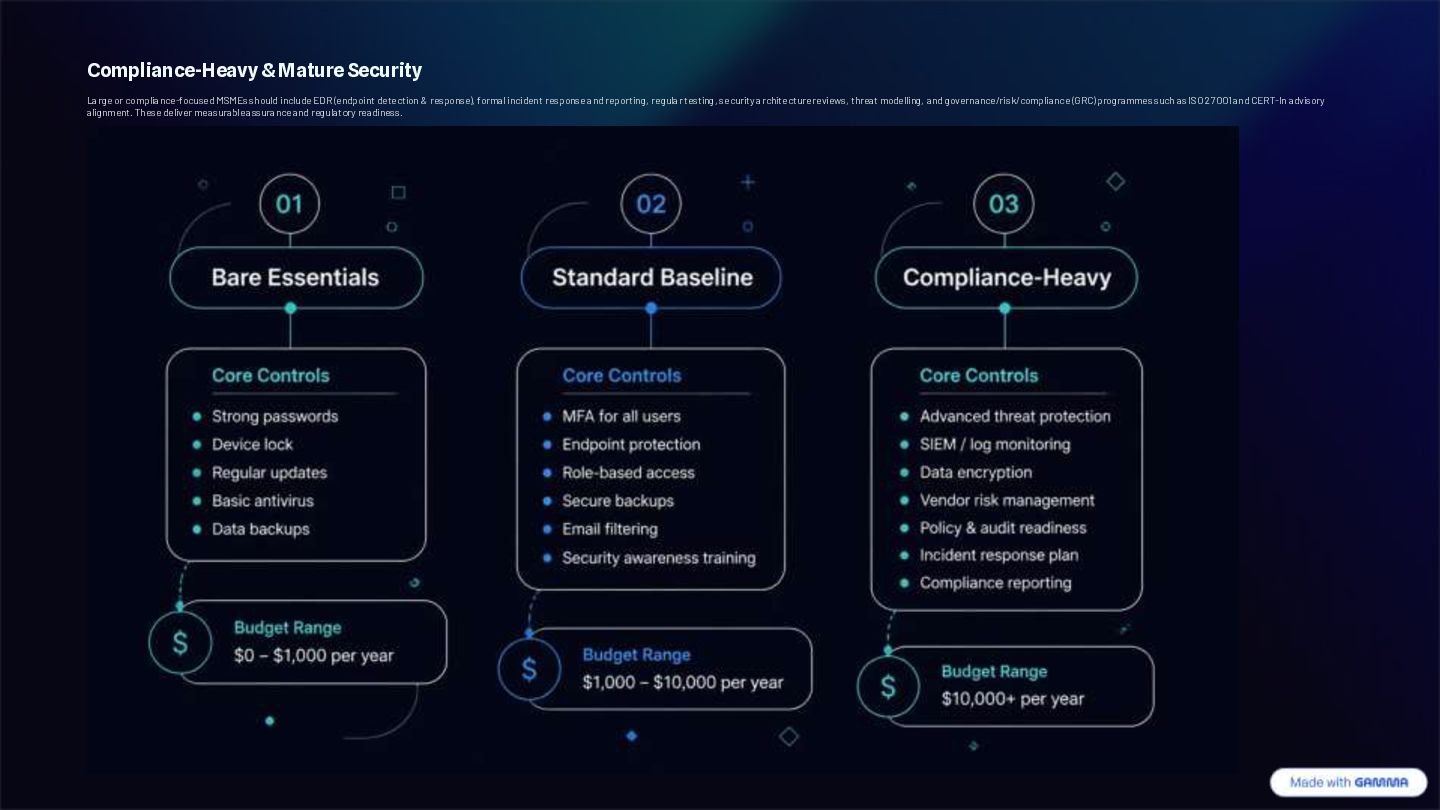
  6. Compliance-Heavy & Mature Security Large or compliance-focused MSMEs should include

    EDR (endpoint detection & response), formal incident response and reporting, regular testing, security architecture reviews, threat modelling, and governance/risk/compliance (GRC) programmes such as ISO 27001 and CERT-In advisory alignment. These deliver measurable assurance and regulatory readiness.
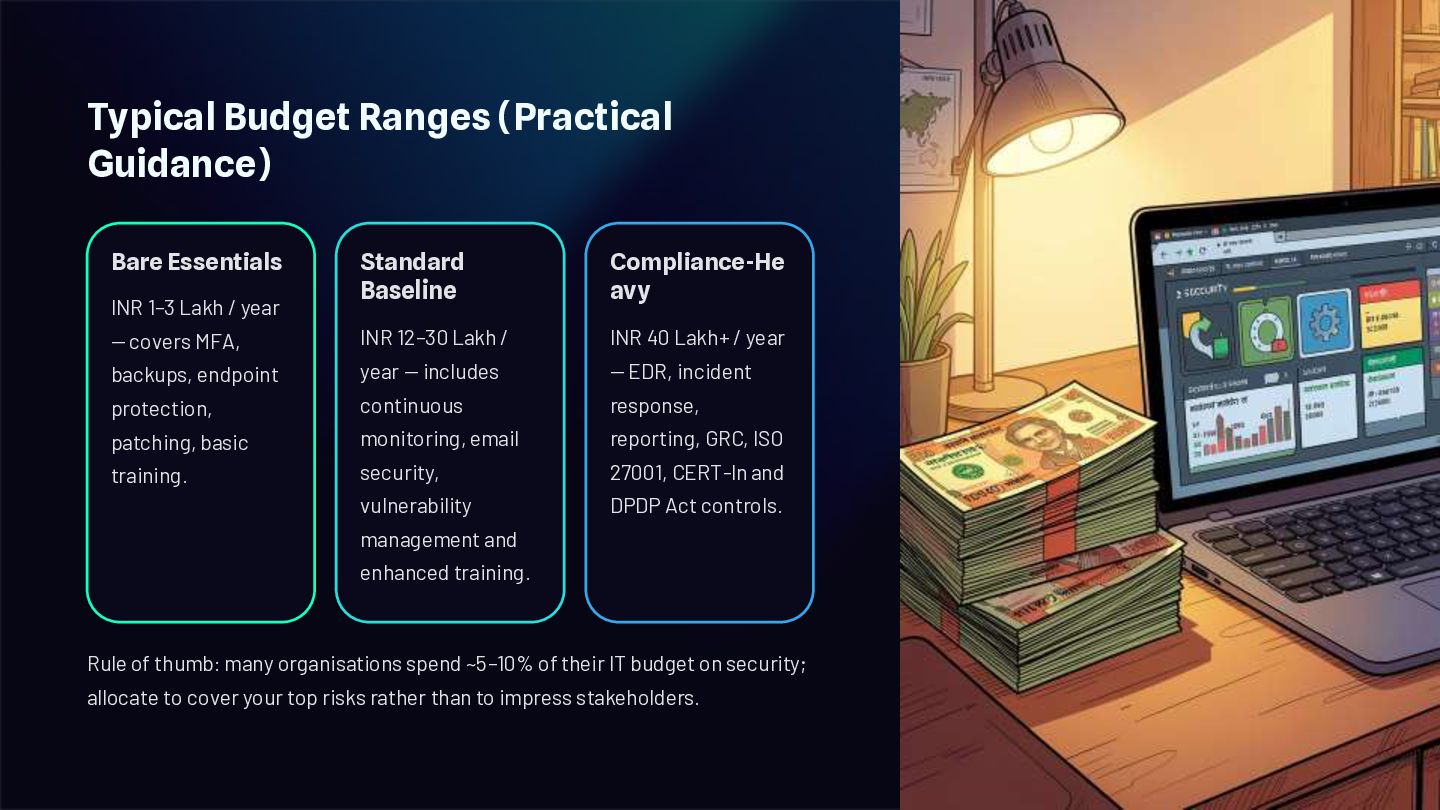
  7. Typical Budget Ranges (Practical Guidance) Bare Essentials INR 1–3 Lakh

    / year — covers MFA, backups, endpoint protection, patching, basic training. Standard Baseline INR 12–30 Lakh / year — includes continuous monitoring, email security, vulnerability management and enhanced training. Compliance-He avy INR 40 Lakh+ / year — EDR, incident response, reporting, GRC, ISO 27001, CERT-In and DPDP Act controls. Rule of thumb: many organisations spend ~5–10% of their IT budget on security; allocate to cover your top risks rather than to impress stakeholders.
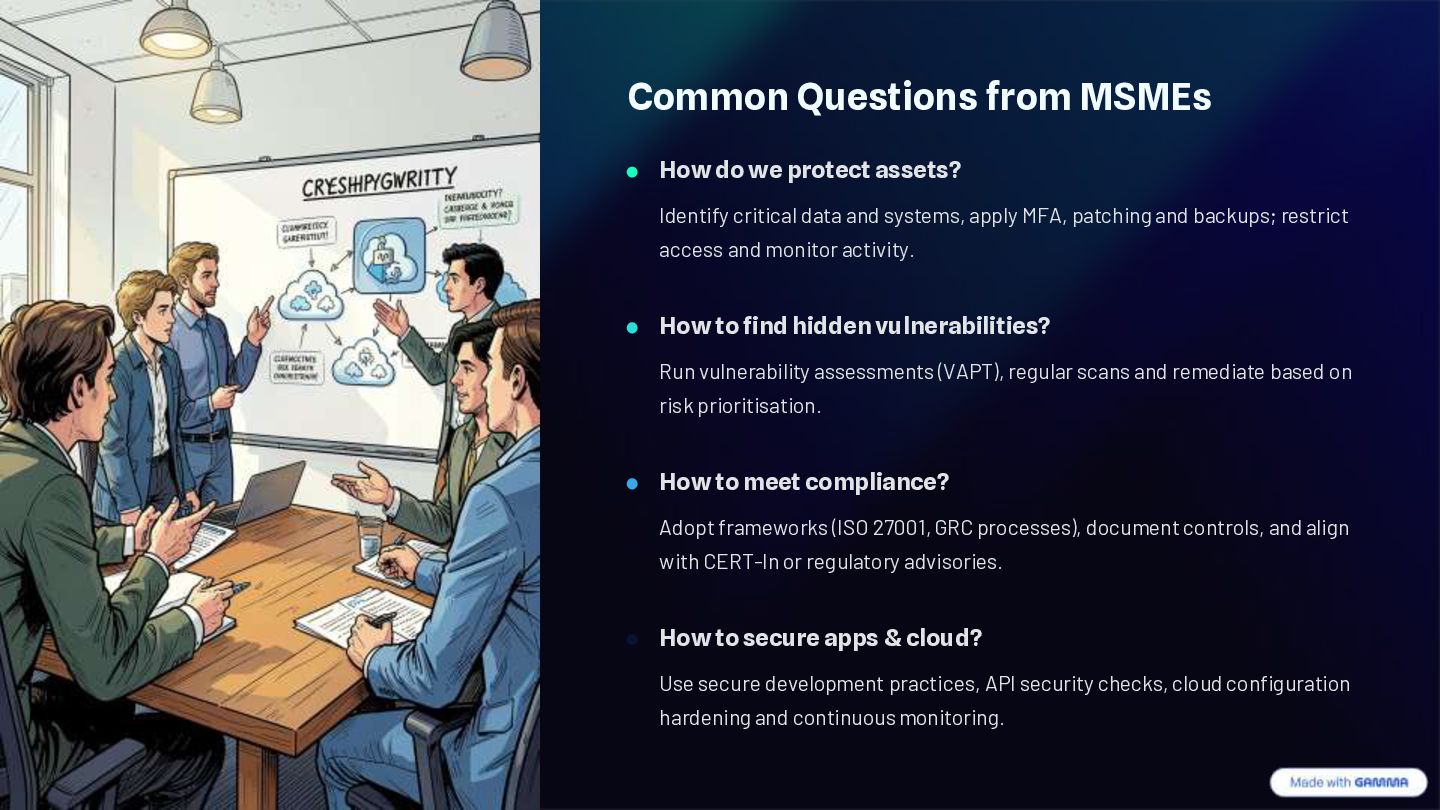
  8. Common Questions from MSMEs How do we protect assets? Identify

    critical data and systems, apply MFA, patching and backups; restrict access and monitor activity. How to find hidden vulnerabilities? Run vulnerability assessments (VAPT), regular scans and remediate based on risk prioritisation. How to meet compliance? Adopt frameworks (ISO 27001, GRC processes), document controls, and align with CERT-In or regulatory advisories. How to secure apps & cloud? Use secure development practices, API security checks, cloud configuration hardening and continuous monitoring.
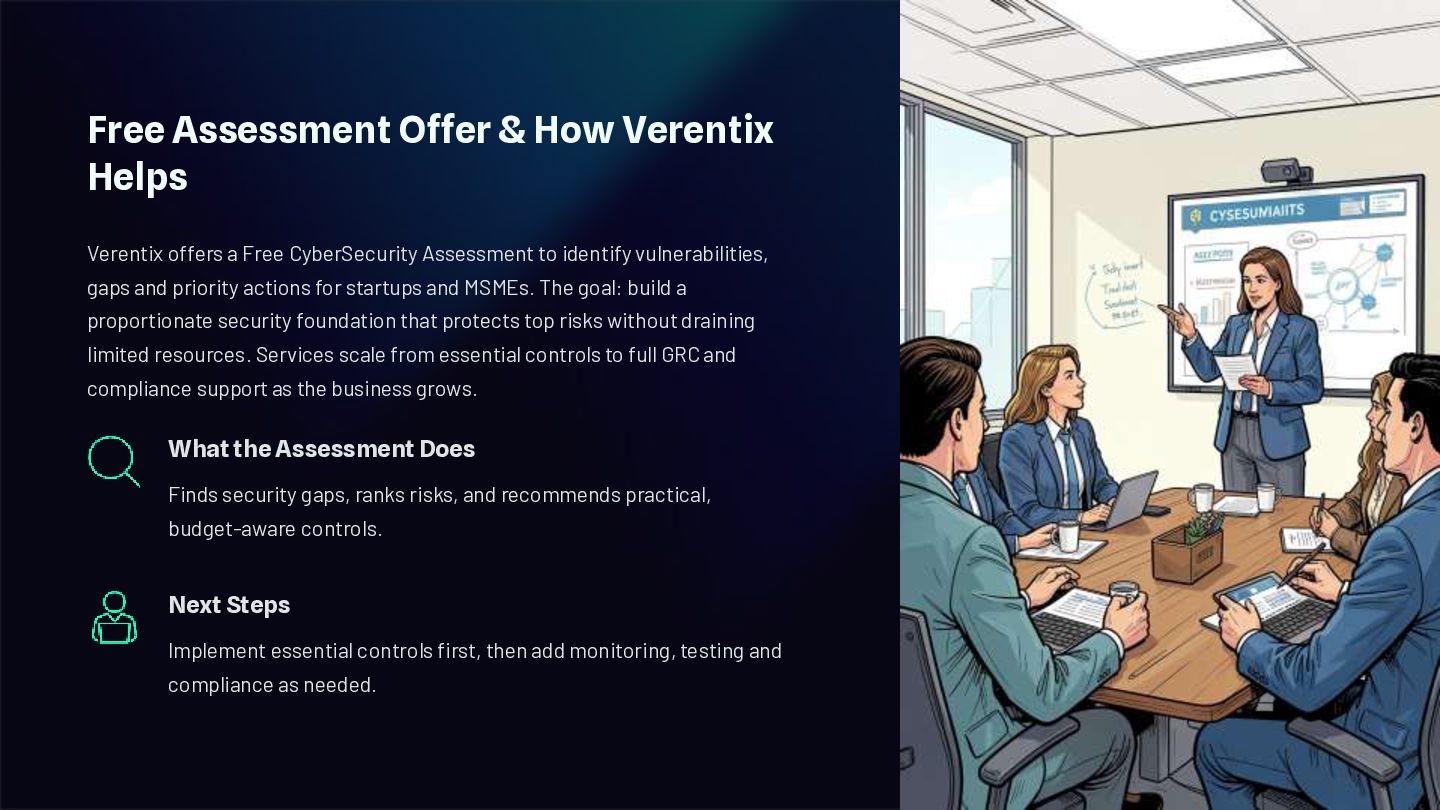
  9. Free Assessment Offer & How Verentix Helps Verentix offers a

    Free CyberSecurity Assessment to identify vulnerabilities, gaps and priority actions for startups and MSMEs. The goal: build a proportionate security foundation that protects top risks without draining limited resources. Services scale from essential controls to full GRC and compliance support as the business grows. What the Assessment Does Finds security gaps, ranks risks, and recommends practical, budget-aware controls. Next Steps Implement essential controls first, then add monitoring, testing and compliance as needed.
  10. Key Takeaways & Recommended Actions 1 Protect Top Risks Spend

    to mitigate your most critical exposures first — this is more effective than buying tools without a plan. 2 Start with Essentials MFA, backups, endpoint protection, patching and staff training are non-negotiable for MSMEs. 3 Budget Pragmatically Expect INR 1–3 Lakh for bare essentials, INR 12–30 Lakh for a standard baseline, and INR 40 Lakh+ for compliance-heavy setups. 4 Get an Assessment Use the Free CyberSecurity Assessment to prioritise work and build a scalable, risk-based programme. Focus spending on what will reduce your top business risk — not on impressing others. Contact Verentix for a pragmatic plan tailored to your scale and compliance needs.