baby are coming out through the gums. It usually starts at the age of four to seven months but can also differ from one baby to another. This whole process may cause discomfort to the infant. The teeth begin to come out of the gum line, resulting in drooling, irritability, and chewing on objects.
usually occurs between four and seven months of age, it typically means that the first teeth to emerge will be the two pairs of central primary incisors. In fact, by the time a child is three, they usually have 20 baby teeth in total. However, late teething in babies can occur when there is no manifestation of teeth within the first year. Delayed teething is generally not a cause for concern but can be a sign of late teething, which may be influenced by genetic factors or other health-related issues.
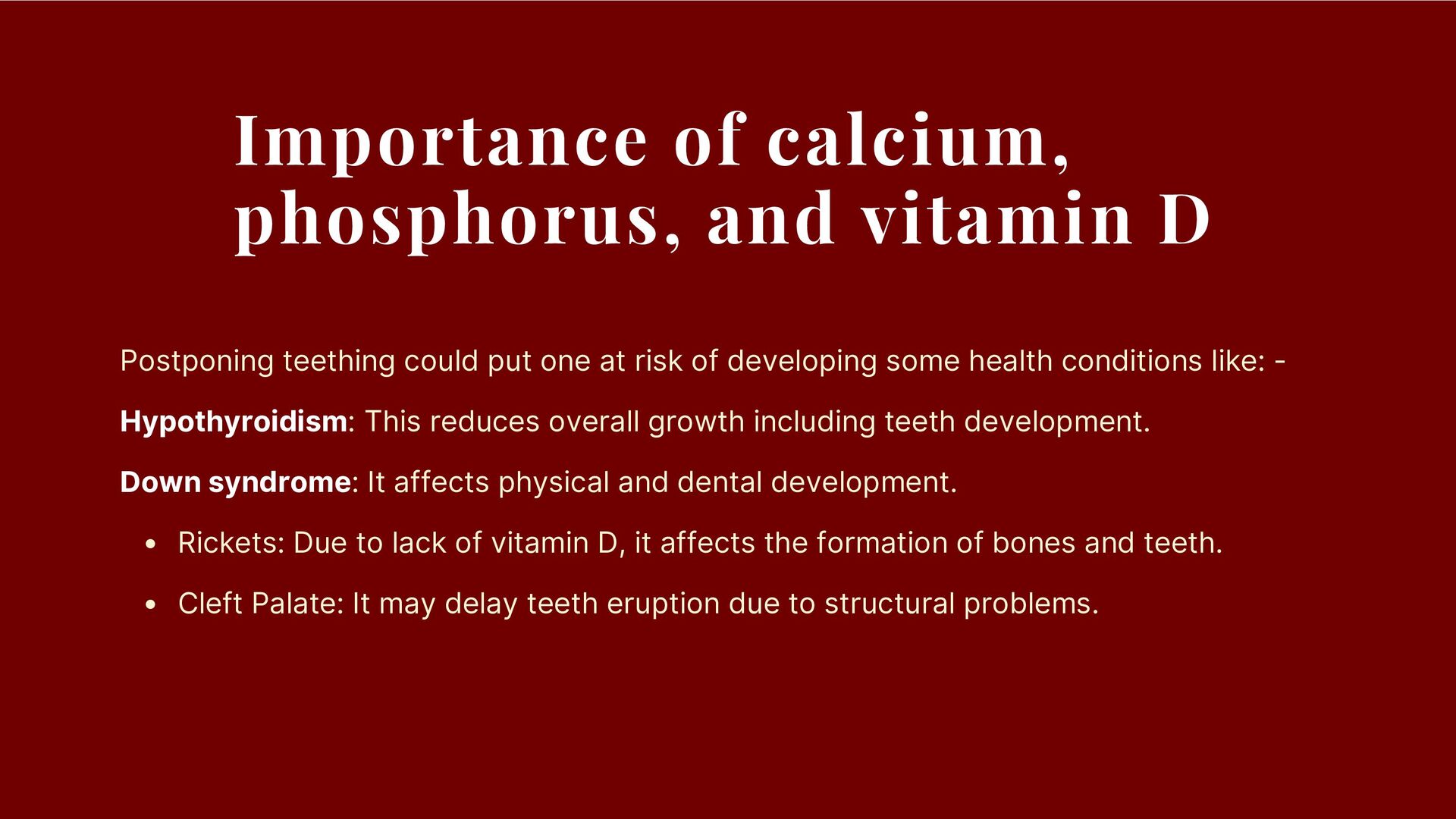
some health conditions like: Hypothyroidism: This reduces overall growth including teeth development. Down syndrome: It affects physical and dental development. Rickets: Due to lack of vitamin D, it affects the formation of bones and teeth. Cleft Palate: It may delay teeth eruption due to structural problems.
in babies generally refers to when a baby's first tooth doesn’t erupt by around 12 months of age. This can sometimes be a natural variation in development. However, the clinical term Delayed Dental Eruption is used when teeth, whether primary or permanent, fail to appear at their expected time. Delayed dental eruption may indicate a potential medical or developmental issue associated with the teeth. While late teething in babies signals the beginning of teething, delayed eruption encompasses any significant delay in tooth formation or appearance, often warranting further examination to rule out underlying concerns.
health conditions like: - Hypothyroidism: This reduces overall growth including teeth development. Down syndrome: It affects physical and dental development. Rickets: Due to lack of vitamin D, it affects the formation of bones and teeth. Cleft Palate: It may delay teeth eruption due to structural problems. Importance of calcium, phosphorus, and vitamin D
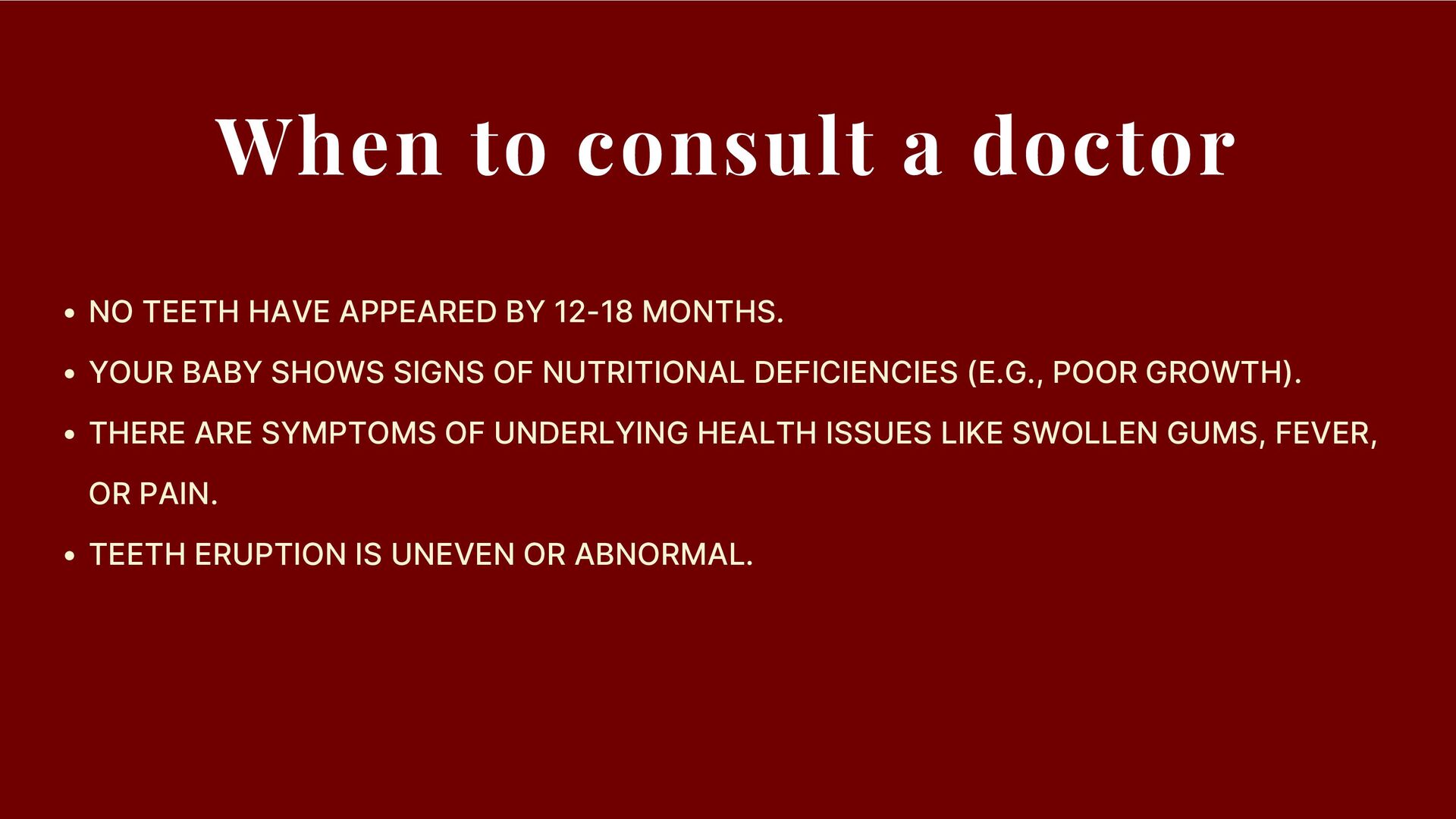
12-18 MONTHS. YOUR BABY SHOWS SIGNS OF NUTRITIONAL DEFICIENCIES (E.G., POOR GROWTH). THERE ARE SYMPTOMS OF UNDERLYING HEALTH ISSUES LIKE SWOLLEN GUMS, FEVER, OR PAIN. TEETH ERUPTION IS UNEVEN OR ABNORMAL.
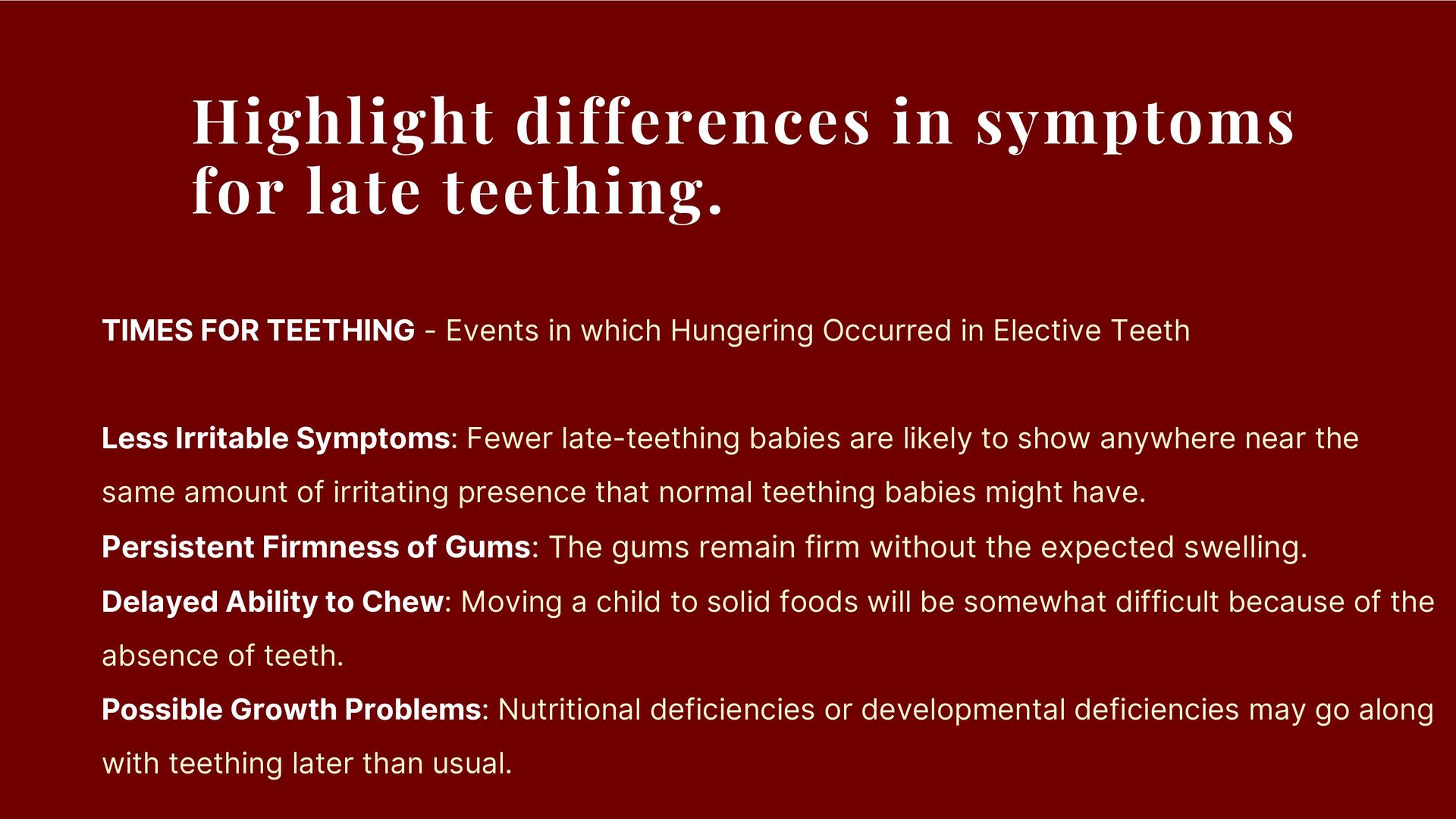
- Events in which Hungering Occurred in Elective Teeth Less Irritable Symptoms: Fewer late-teething babies are likely to show anywhere near the same amount of irritating presence that normal teething babies might have. Persistent Firmness of Gums: The gums remain firm without the expected swelling. Delayed Ability to Chew: Moving a child to solid foods will be somewhat difficult because of the absence of teeth. Possible Growth Problems: Nutritional deficiencies or developmental deficiencies may go along with teething later than usual.
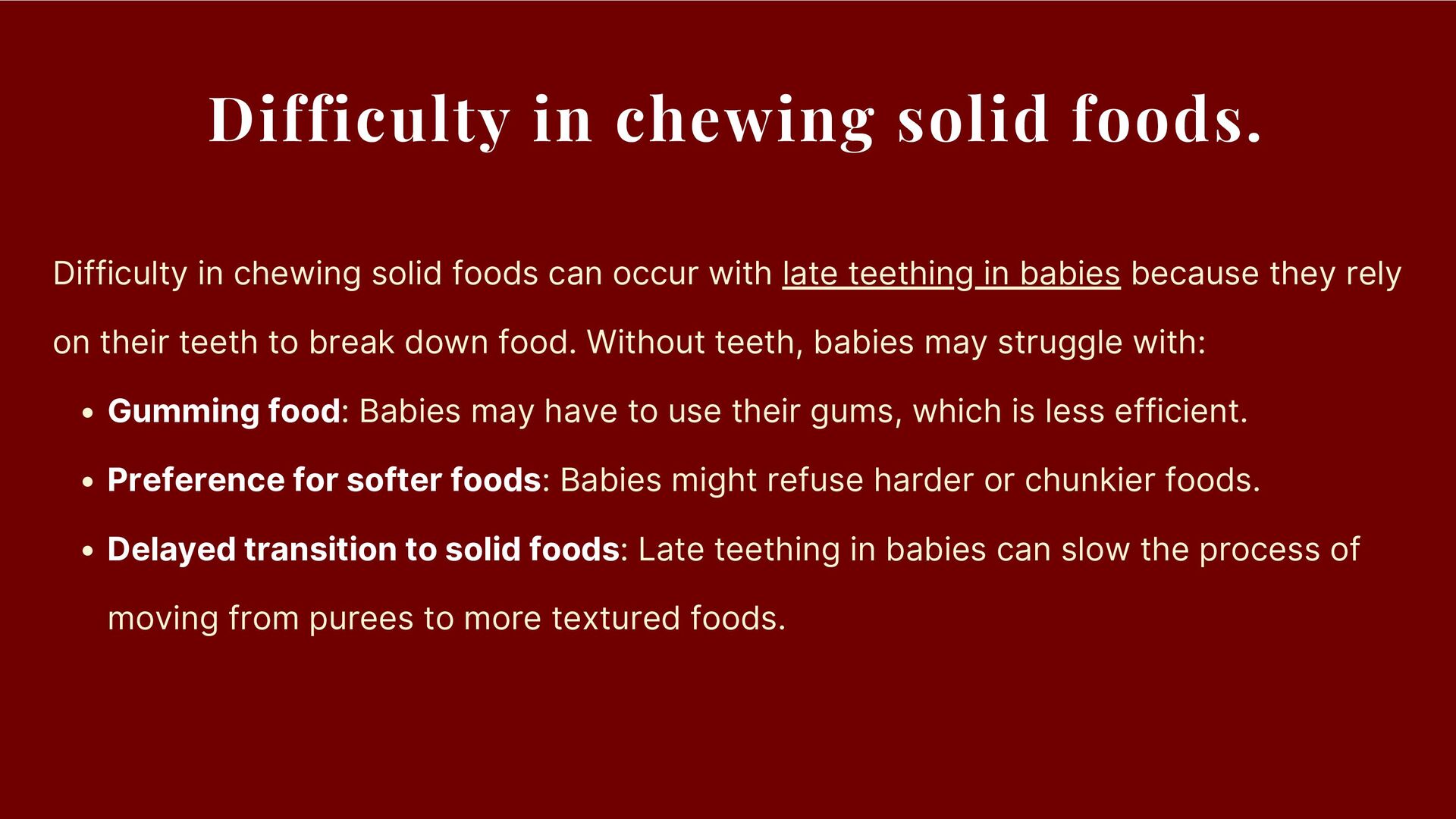
can occur with late teething in babies because they rely on their teeth to break down food. Without teeth, babies may struggle with: Gumming food: Babies may have to use their gums, which is less efficient. Preference for softer foods: Babies might refuse harder or chunkier foods. Delayed transition to solid foods: Late teething in babies can slow the process of moving from purees to more textured foods.
deficiency diagnoses that can help uncover the probable causes of late teething: calcium deficiency, which is required for the development of teeth; vitamin D deficiency, which is necessary for calcium absorption; phosphorus deficiency, which together with calcium contributes towards strengthening the teeth; and iron deficiency, which may affect general growth and development.
Help Soothe the Baby's Teeth:Gocyte has covered all the features of teething toys. It relieved gum discomfort due to its soft and chewable materials. Some toys can be chilled in the fridge to increase cooling relief. Cold Cloths: Cold, clean cloth gently rubbed on the gums provides soothing relief from swelling and pain associated with teething.
persistent health problems caused by teething: Excessive pain or swelling- Pain which persists beyond typical teething symptoms or is very severe Fever: A high fever which persists for long periods and is not related to teething might point towards an infection or some other medical issues. Gum infection: Signs of pus or redness around the gums, which might suggest an infection. Digestive disturbances- Prolonged diarrhea or vomiting does not correlate with normal teething symptoms.
crucial for both the mother and baby's healthy development, including teeth. Proper nutrition supports normal growth, but late teething in babies can sometimes occur, influenced by genetic factors or other conditions. Key components of a healthy diet include Calcium: Dairy products, green, leafy vegetables, fortified plant milks, and tofu. Vitamin D: Sunlight exposure, fortified foods, and fatty fish like salmon. Protein: Lean meats, eggs, beans, and nuts for healthy tissue and growth. Folic acid: Whole grains, legumes, cognitive enhancement by leafy vegetables, and fortified cereals. Iron: Red meat, spinach, legumes stop anemia and keep overall good health.
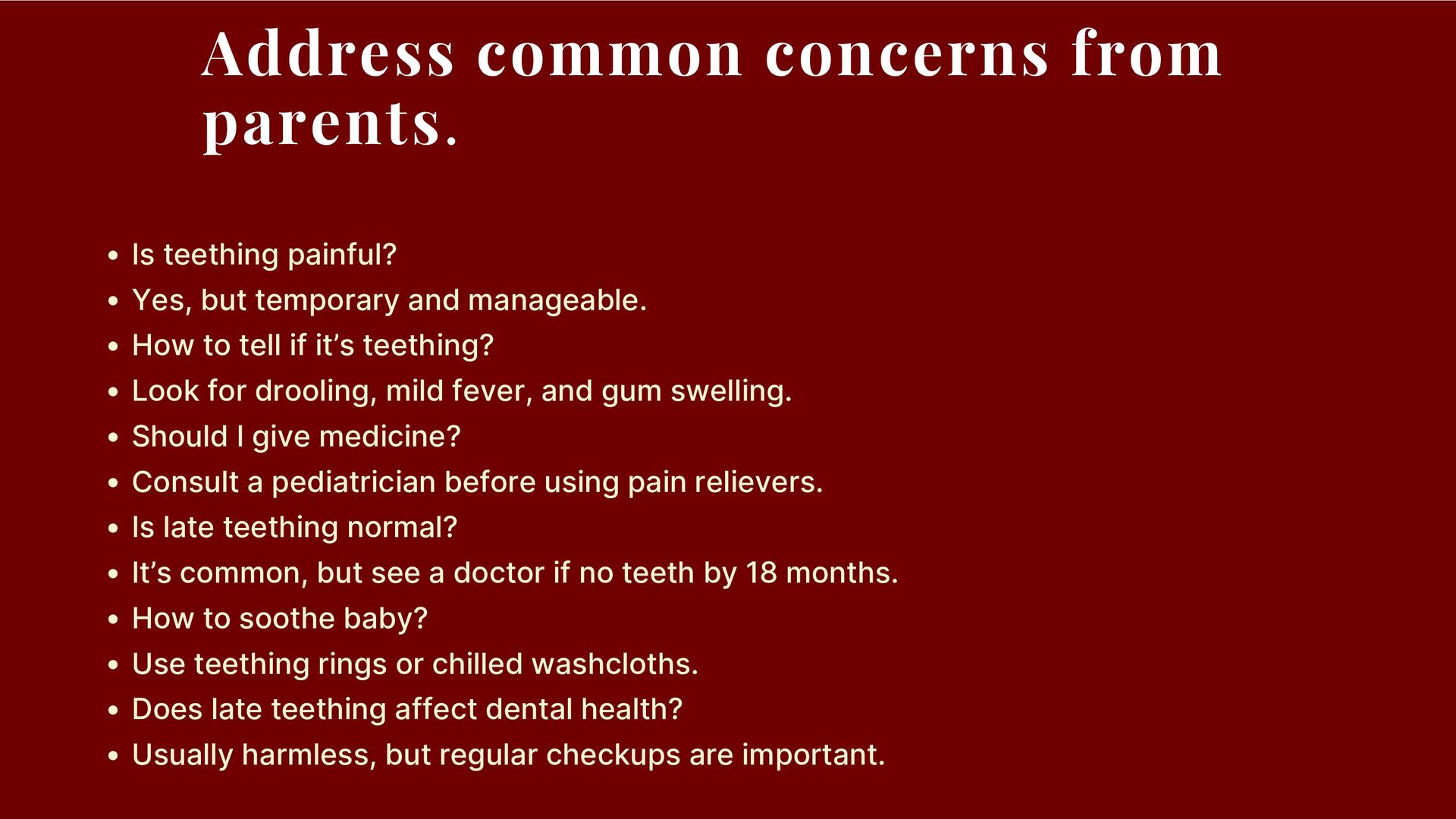
temporary and manageable. How to tell if it’s teething? Look for drooling, mild fever, and gum swelling. Should I give medicine? Consult a pediatrician before using pain relievers. Is late teething normal? It’s common, but see a doctor if no teeth by 18 months. How to soothe baby? Use teething rings or chilled washcloths. Does late teething affect dental health? Usually harmless, but regular checkups are important.
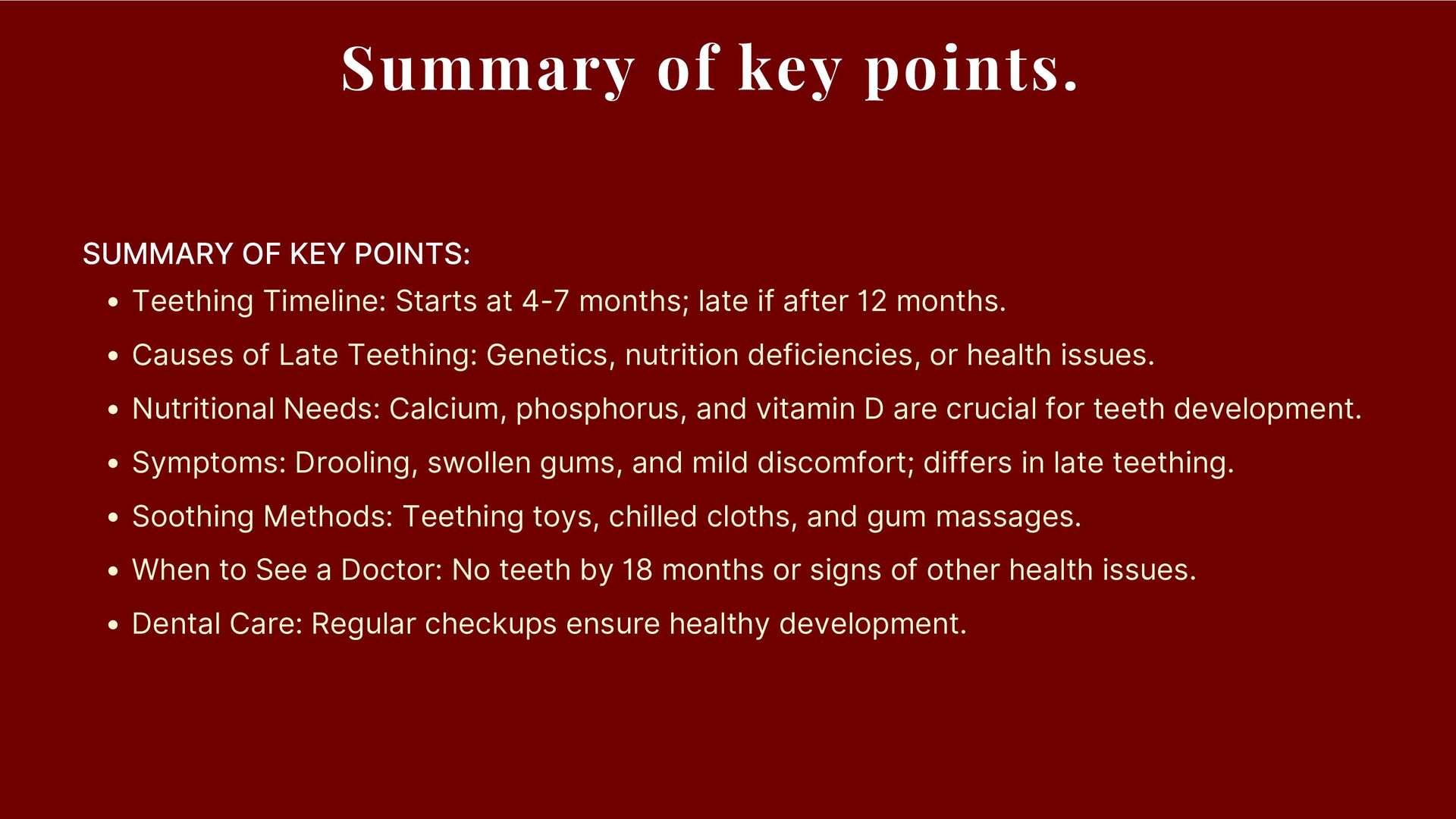
Starts at 4-7 months; late if after 12 months. Causes of Late Teething: Genetics, nutrition deficiencies, or health issues. Nutritional Needs: Calcium, phosphorus, and vitamin D are crucial for teeth development. Symptoms: Drooling, swollen gums, and mild discomfort; differs in late teething. Soothing Methods: Teething toys, chilled cloths, and gum massages. When to See a Doctor: No teeth by 18 months or signs of other health issues. Dental Care: Regular checkups ensure healthy development.


 vishuttan
 marcoroth
 techseoconnect
 cromwellryan
 codingconduct
 eileencodes
.png) helenjbeal
helenjbeal
 keavy
keavy
 signer
 cassininazir
 skipperchong
 axbom
axbom
 sugarenia