storage rework: One unit test is worth 20 future bug fixes. A bug fix does not finish until you write a test. Writing unit test is courtesy for your fellow developers. We really don’t have a choice.
not all changes are testable: Testable, as in with a reasonable amount of effort File import/export fixes are reasonably straightforward to test, don’t skip it Most LOK changes are testable in the tiledrendering suites If the change is not testable, do mention that in the commit message, so it’s explicit you considered it We focus on regression testing here, not e.g. proactive testing based on code coverage
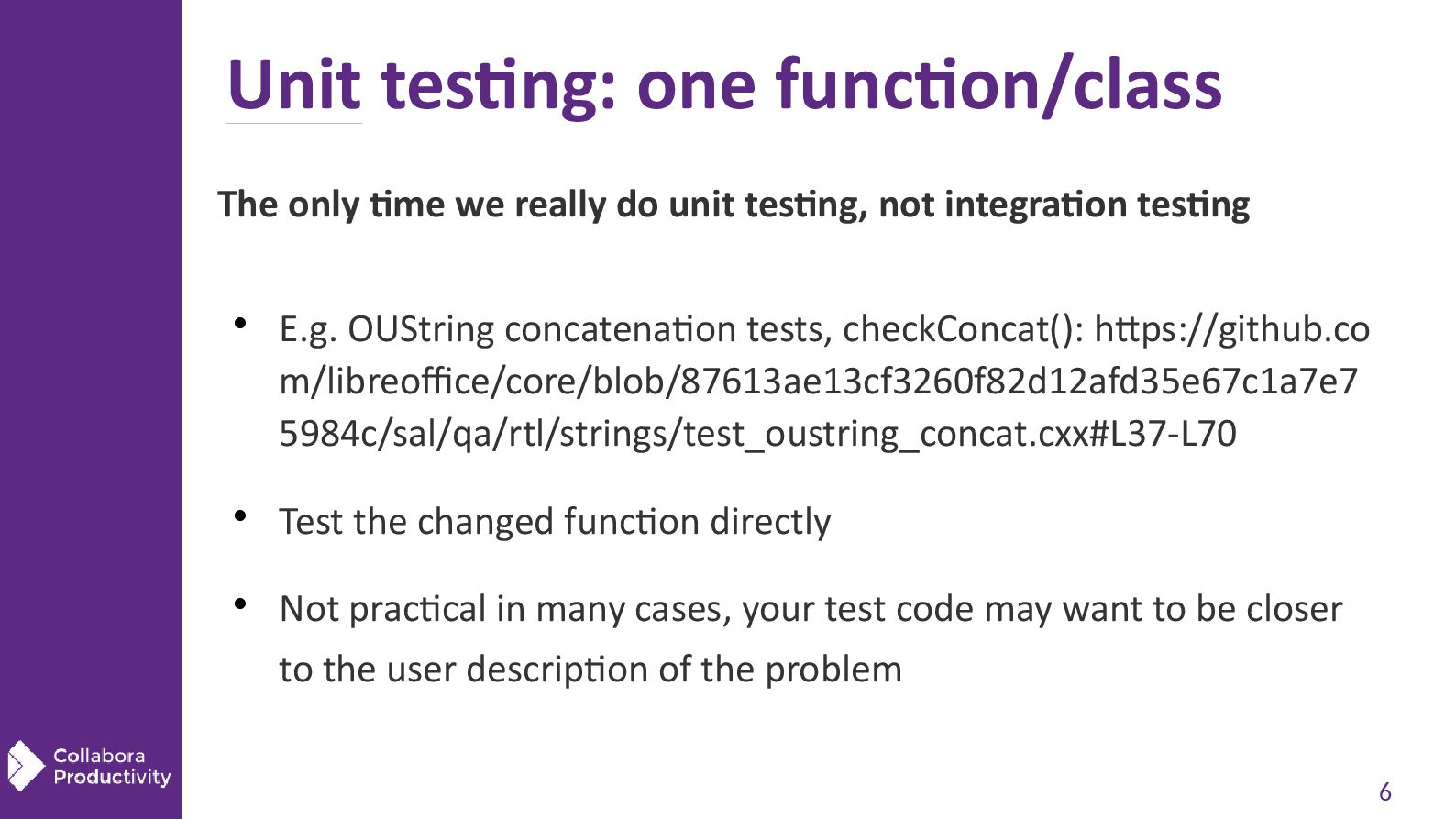
do unit testing, not integration testing E.g. OUString concatenation tests, checkConcat(): https://github.co m/libreoffice/core/blob/87613ae13cf3260f82d12afd35e67c1a7e7 5984c/sal/qa/rtl/strings/test_oustring_concat.cxx#L37-L70 Test the changed function directly Not practical in many cases, your test code may want to be closer to the user description of the problem
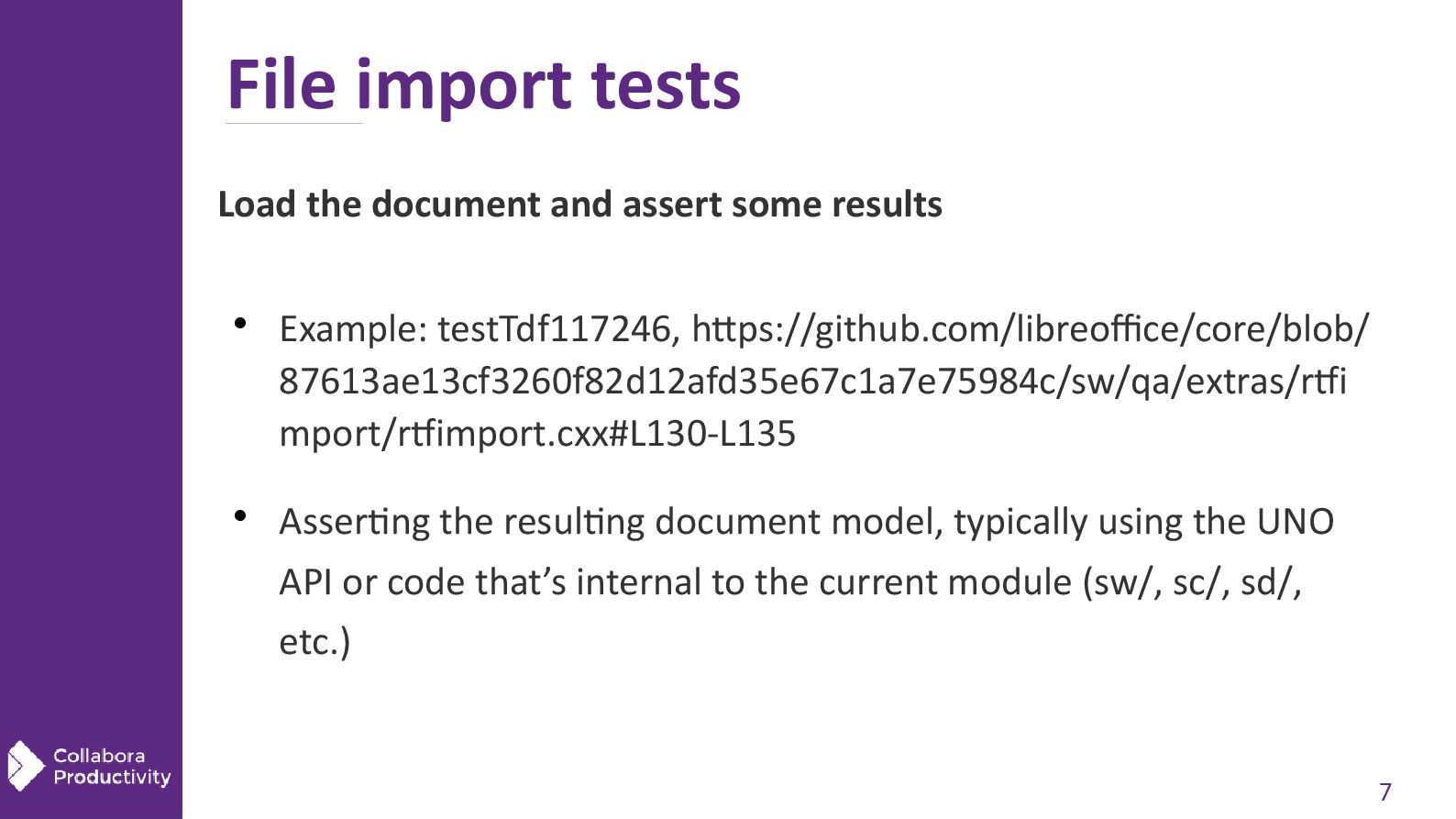
results Example: testTdf117246, https://github.com/libreoffice/core/blob/ 87613ae13cf3260f82d12afd35e67c1a7e75984c/sw/qa/extras/rtfi mport/rtfimport.cxx#L130-L135 Asserting the resulting document model, typically using the UNO API or code that’s internal to the current module (sw/, sc/, sd/, etc.)
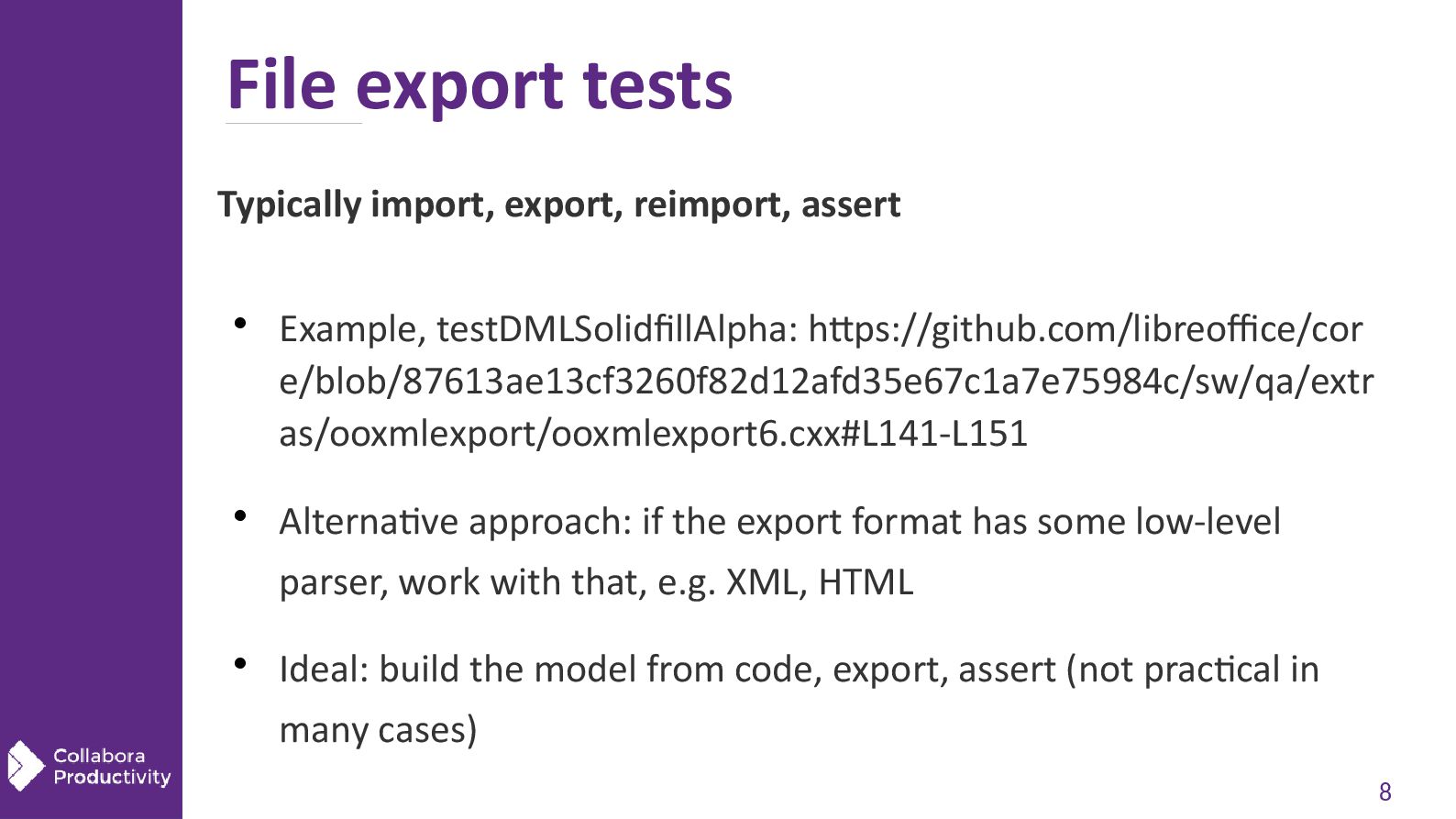
Example, testDMLSolidfillAlpha: https://github.com/libreoffice/cor e/blob/87613ae13cf3260f82d12afd35e67c1a7e75984c/sw/qa/extr as/ooxmlexport/ooxmlexport6.cxx#L141-L151 Alternative approach: if the export format has some low-level parser, work with that, e.g. XML, HTML Ideal: build the model from code, export, assert (not practical in many cases)
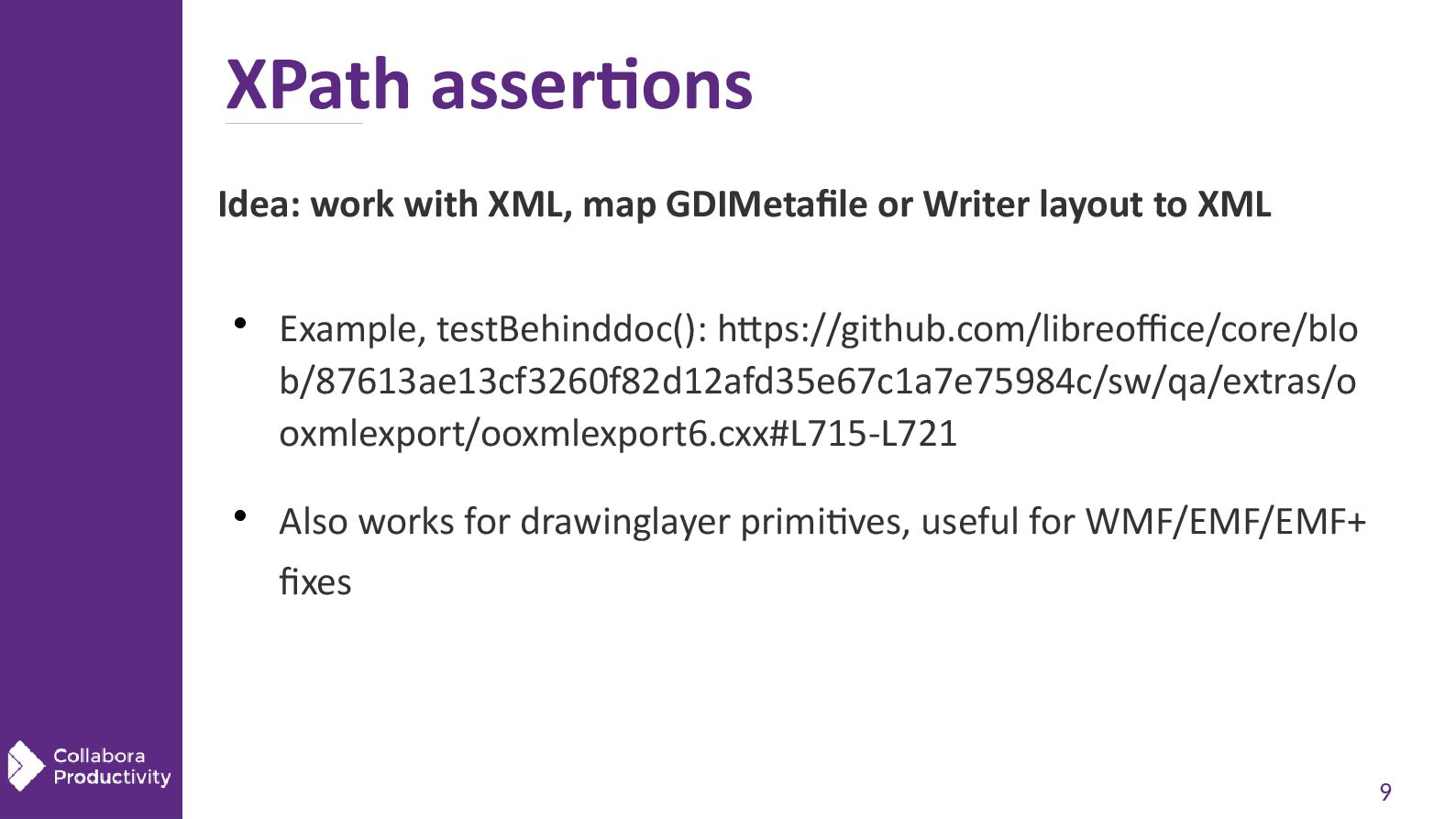
Writer layout to XML Example, testBehinddoc(): https://github.com/libreoffice/core/blo b/87613ae13cf3260f82d12afd35e67c1a7e75984c/sw/qa/extras/o oxmlexport/ooxmlexport6.cxx#L715-L721 Also works for drawinglayer primitives, useful for WMF/EMF/EMF+ fixes
a last resort: • Example, testFdo77229: https://github.com/libreoffice/core/blob/ 87613ae13cf3260f82d12afd35e67c1a7e75984c/cppcanvas/qa/extr as/emfplus/emfplus.cxx#L51-L60 • In most cases there is a better, more reliable way to test the rendering result, that doesn’t hardcode screen coordinates
tree, the inner parts are private Solution: dump it to XML, then use XPath assert “Make sure the textframe containing the text "third" appears on the 3rd page.” • Example, testFdo52052: https://github.com/libreoffice/core/blob/ 87613ae13cf3260f82d12afd35e67c1a7e75984c/sw/qa/extras/rtfi mport/rtfimport.cxx#L461-L467
API calls from online code Most importantly: turns on comphelper::LibreOfficeKit::isActive(), which is off everywhere else Allows testing user input like pressing a key as if it would be real keyboard input Example: testTdf89954, https://github.com/libreoffice/core/blob/8 7613ae13cf3260f82d12afd35e67c1a7e75984c/sw/qa/extras/uiwrit er/uiwriter7.cxx#L2456-L2468
and sometimes that’s not good Enter the world of core-side UI tests Example: test_insert_page_number, https://github.com/libreoffice /core/blob/87613ae13cf3260f82d12afd35e67c1a7e75984c/sw/qa /uitest/writer_tests3/pageNumber.py#L16-L38 See https://wiki.documentfoundation.org/Development/UITests fore more info
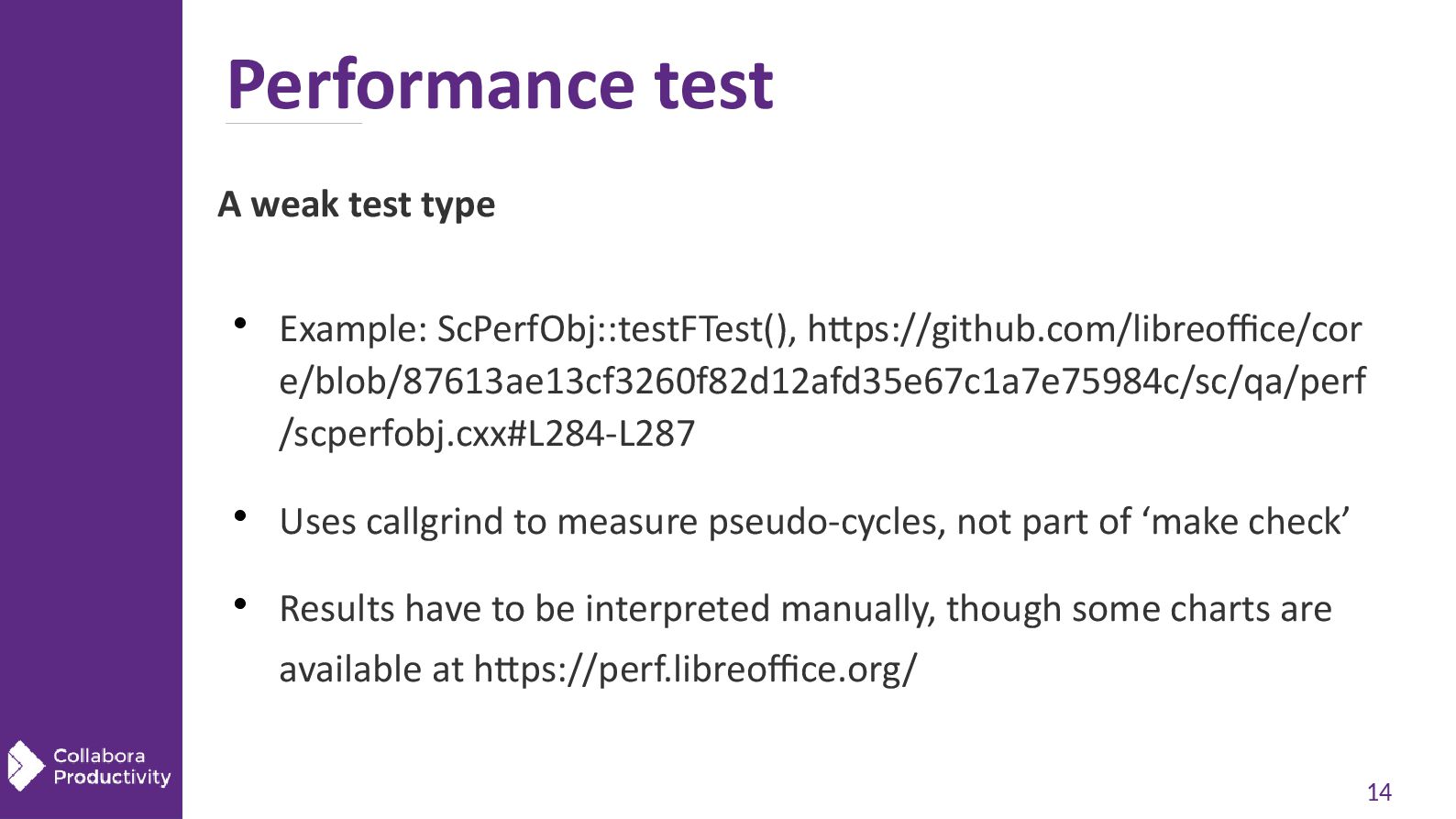
https://github.com/libreoffice/cor e/blob/87613ae13cf3260f82d12afd35e67c1a7e75984c/sc/qa/perf /scperfobj.cxx#L284-L287 Uses callgrind to measure pseudo-cycles, not part of ‘make check’ Results have to be interpreted manually, though some charts are available at https://perf.libreoffice.org/
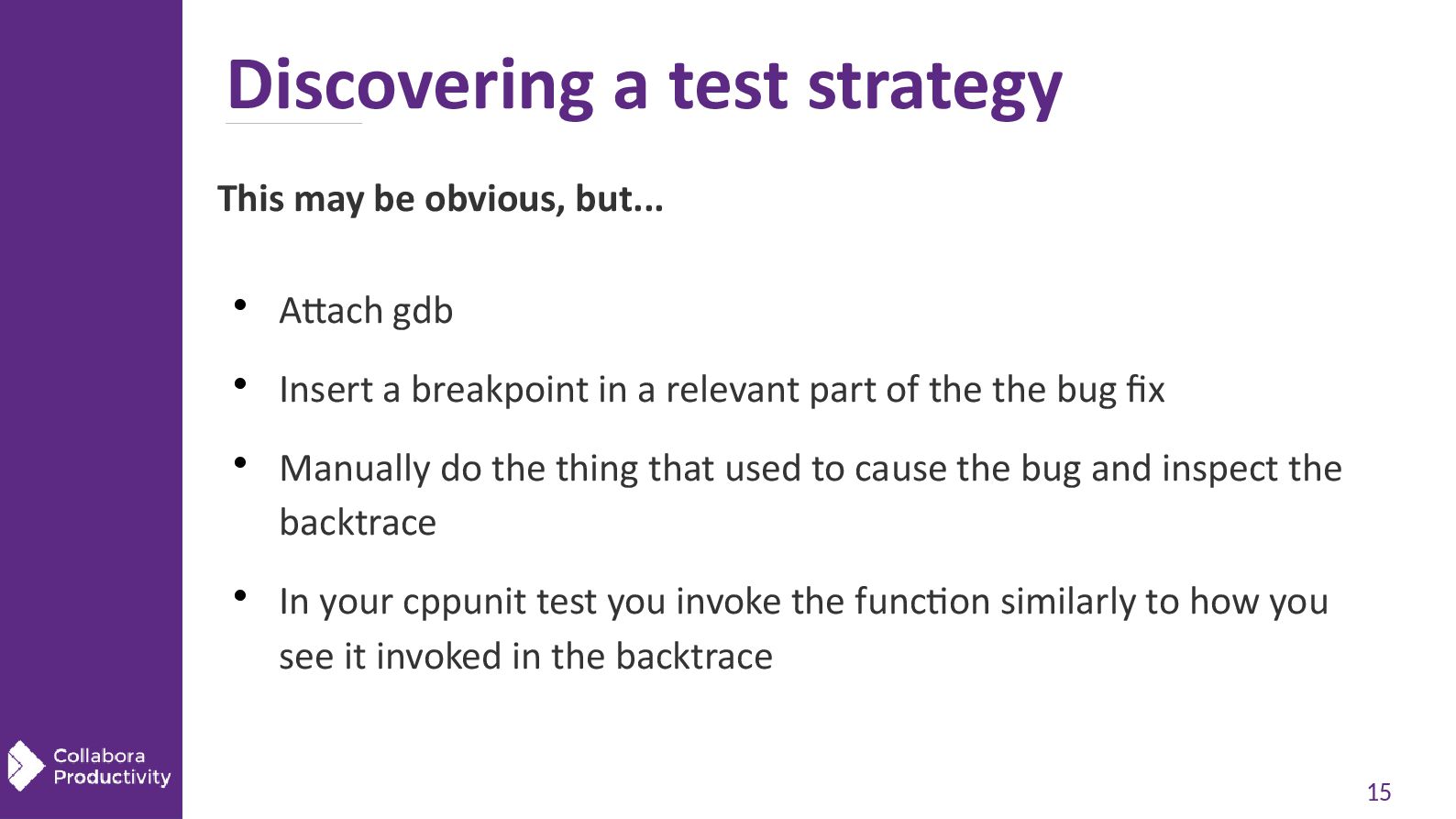
Attach gdb Insert a breakpoint in a relevant part of the the bug fix Manually do the thing that used to cause the bug and inspect the backtrace In your cppunit test you invoke the function similarly to how you see it invoked in the backtrace
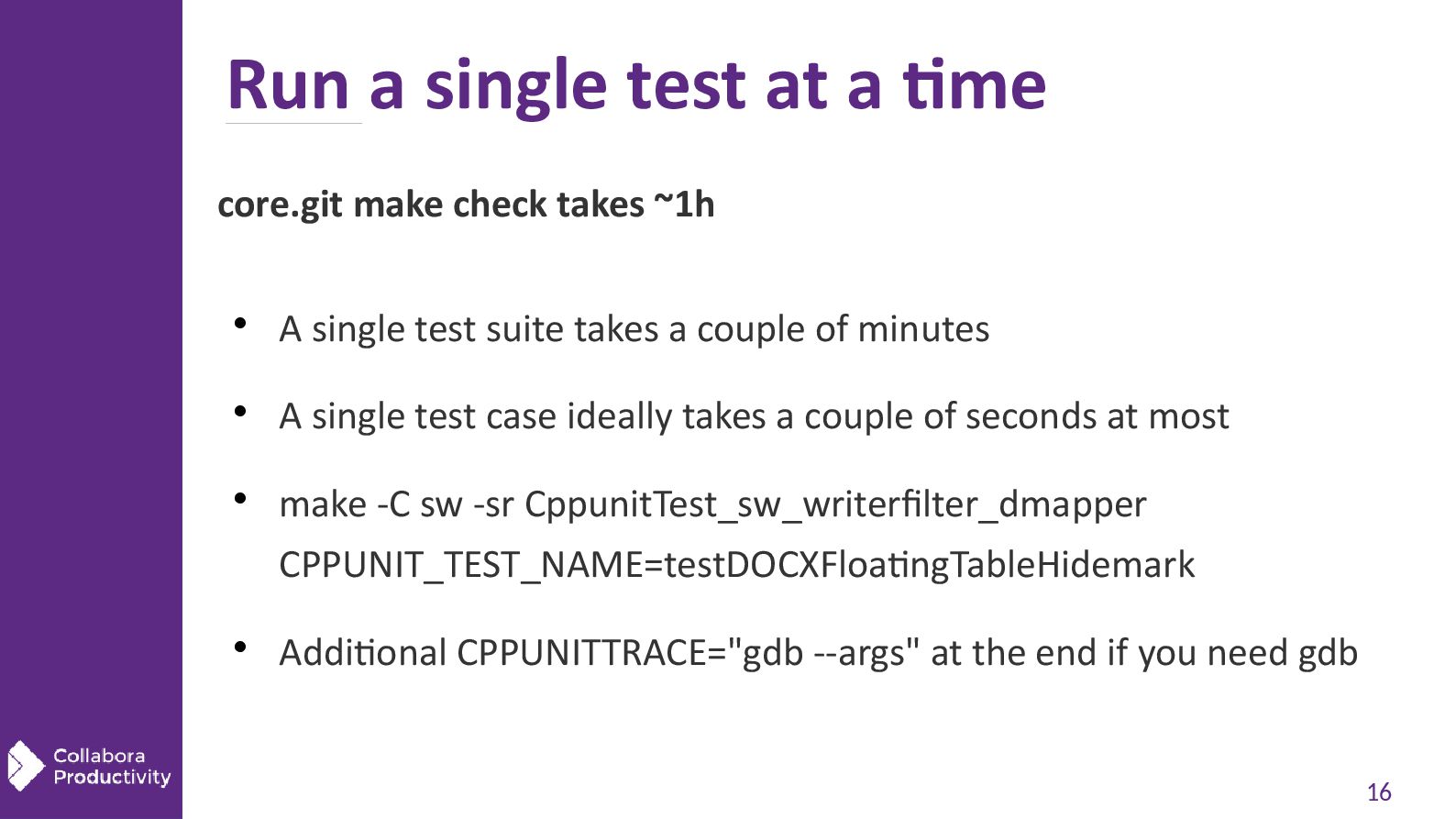
check takes ~1h A single test suite takes a couple of minutes A single test case ideally takes a couple of seconds at most make -C sw -sr CppunitTest_sw_writerfilter_dmapper CPPUNIT_TEST_NAME=testDOCXFloatingTableHidemark Additional CPPUNITTRACE="gdb --args" at the end if you need gdb
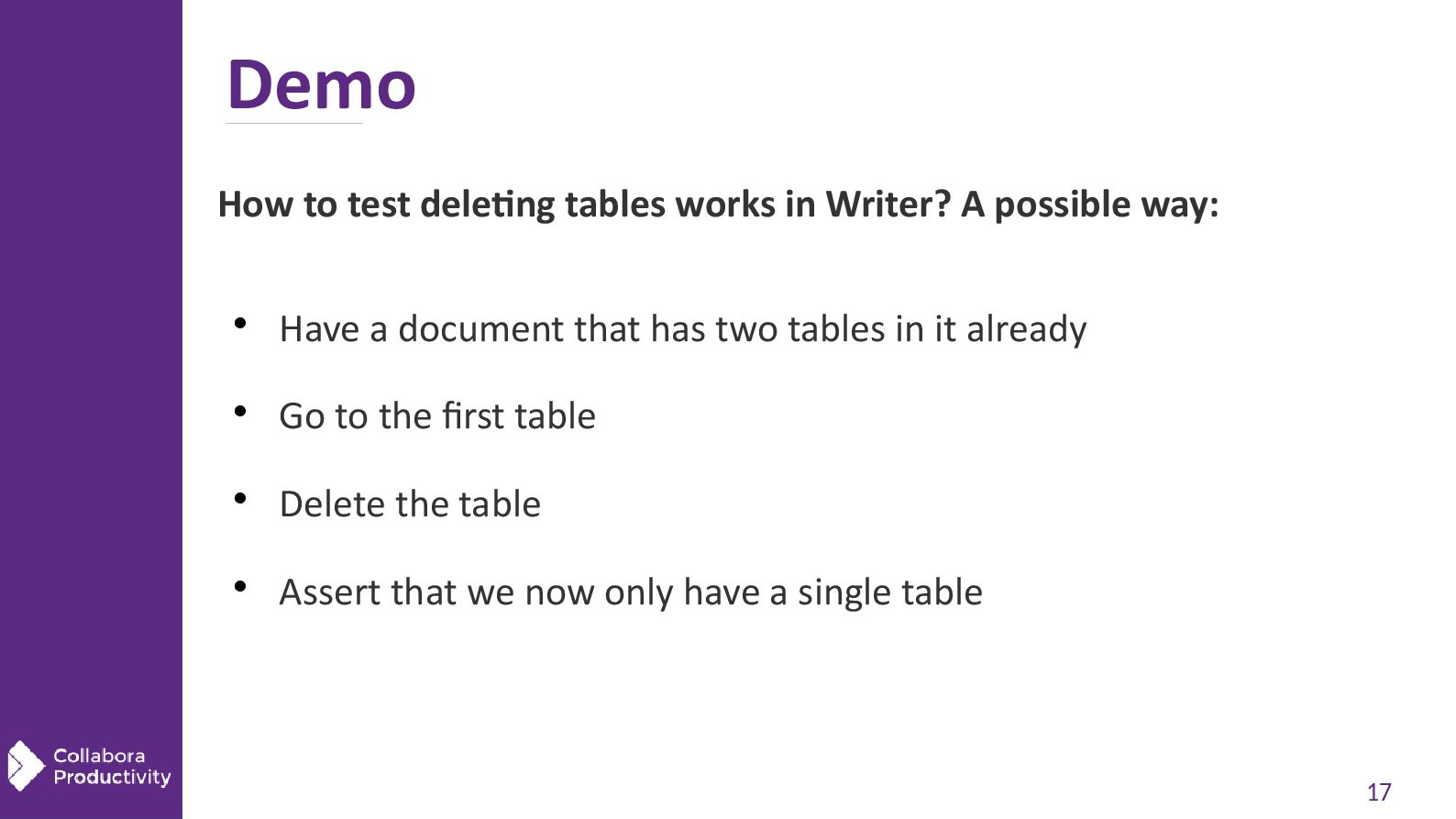
A possible way: Have a document that has two tables in it already Go to the first table Delete the table Assert that we now only have a single table
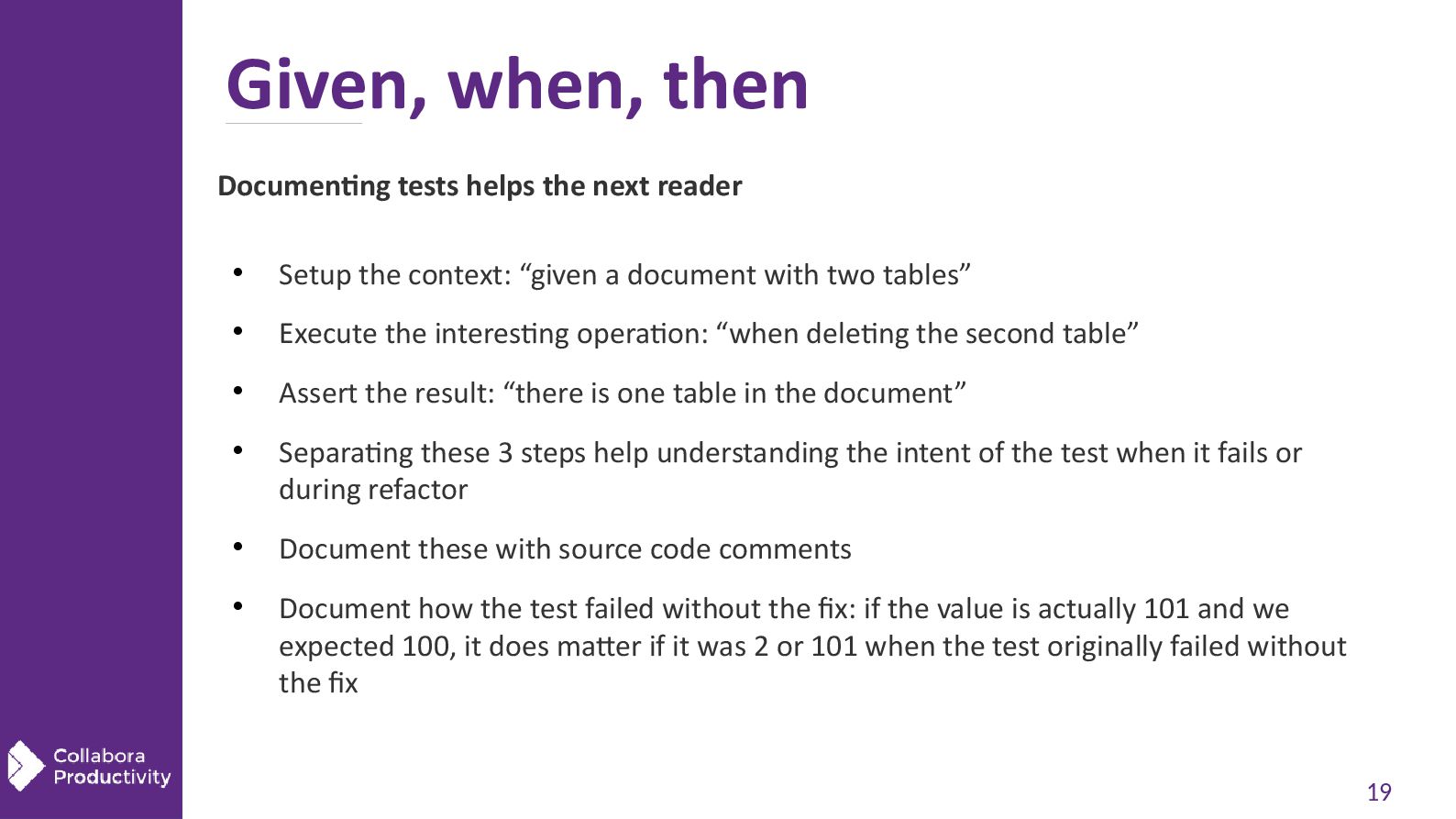
Setup the context: “given a document with two tables” Execute the interesting operation: “when deleting the second table” Assert the result: “there is one table in the document” Separating these 3 steps help understanding the intent of the test when it fails or during refactor Document these with source code comments Document how the test failed without the fix: if the value is actually 101 and we expected 100, it does matter if it was 2 or 101 when the test originally failed without the fix
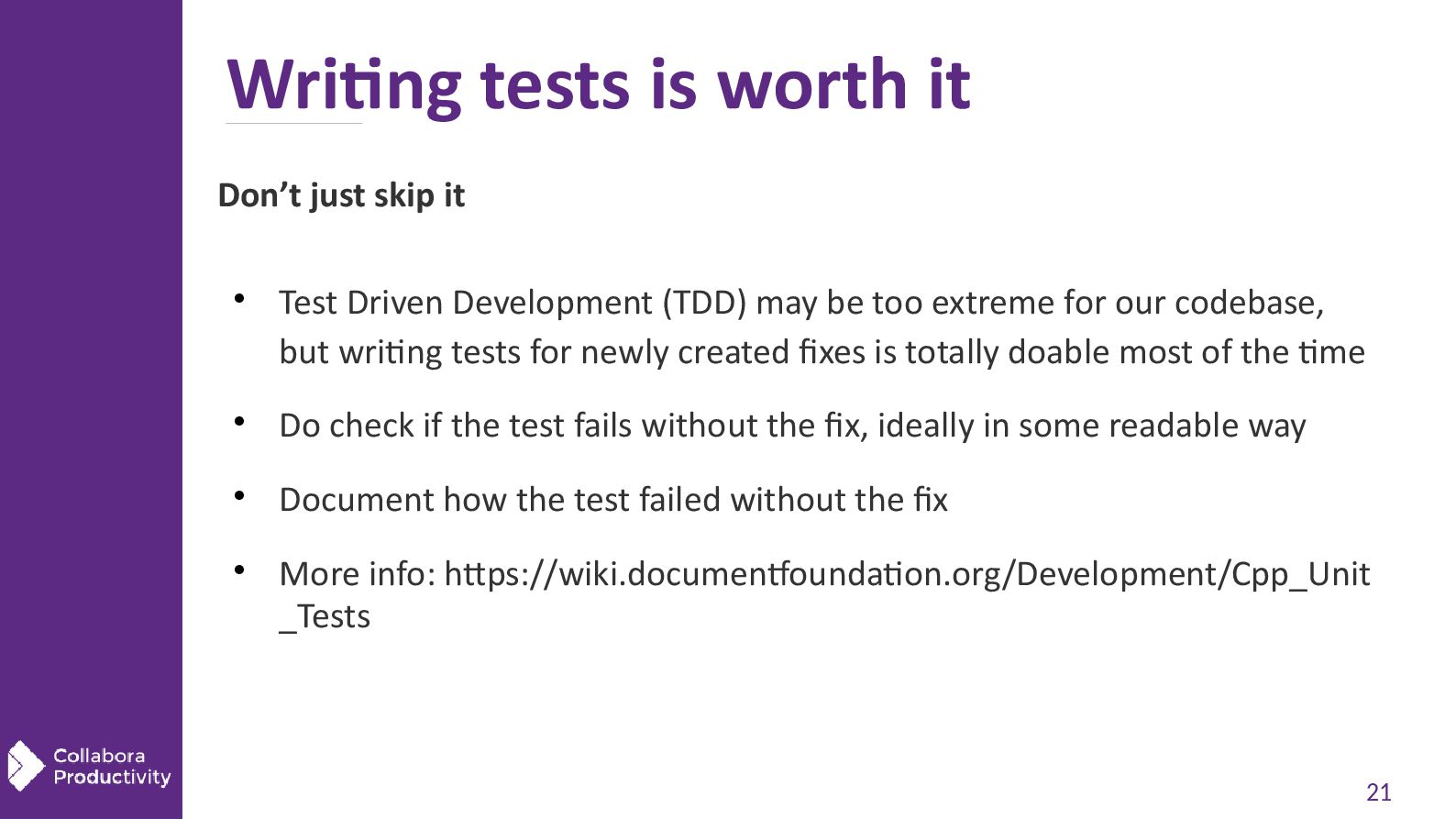
Test Driven Development (TDD) may be too extreme for our codebase, but writing tests for newly created fixes is totally doable most of the time Do check if the test fails without the fix, ideally in some readable way Document how the test failed without the fix More info: https://wiki.documentfoundation.org/Development/Cpp_Unit _Tests


 vmiklos
 uxyall
 helmedeiros
 soysaucechin
 inesmontani
 panda_program
 aleyda
 vanstee
 trishagee
 ammeep
 jct
jct
 427marketing
 retrage