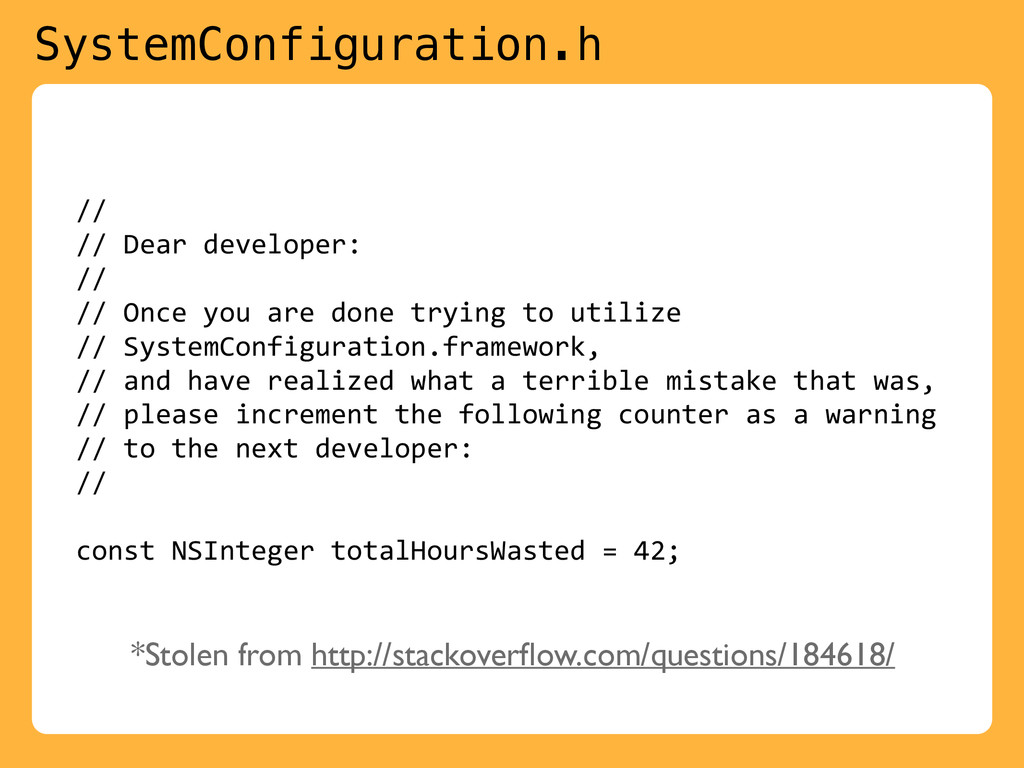
// Once you are done trying to utilize // SystemConfiguration.framework, // and have realized what a terrible mistake that was, // please increment the following counter as a warning // to the next developer: // const NSInteger totalHoursWasted = 42; *Stolen from http://stackoverflow.com/questions/184618/
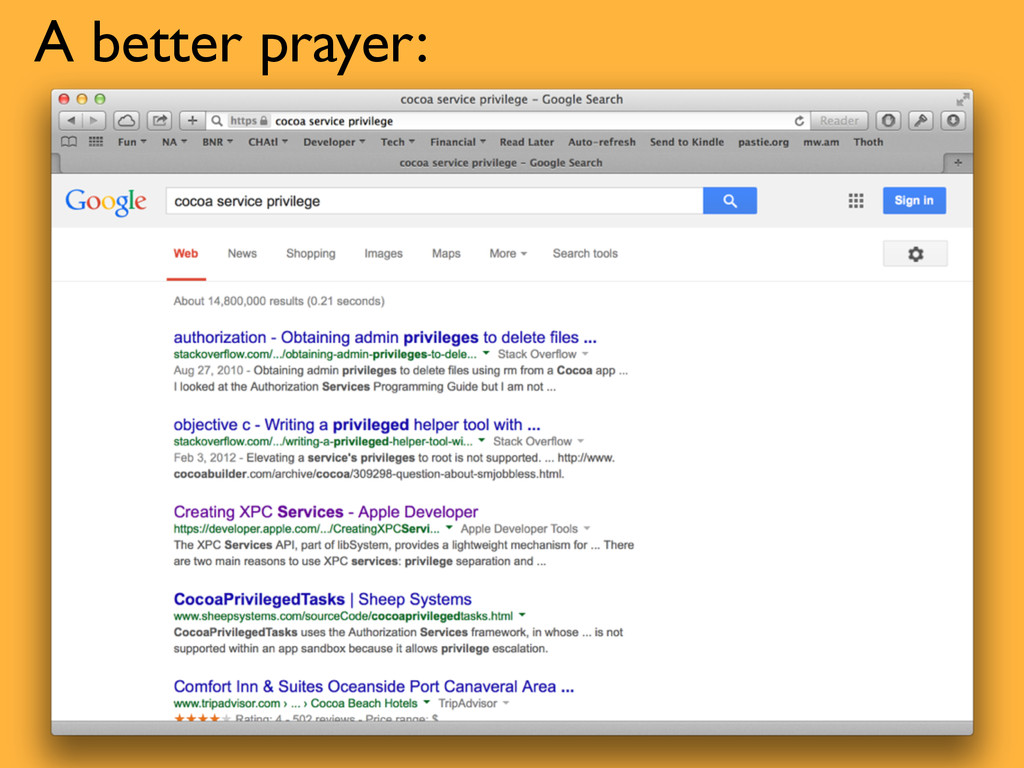
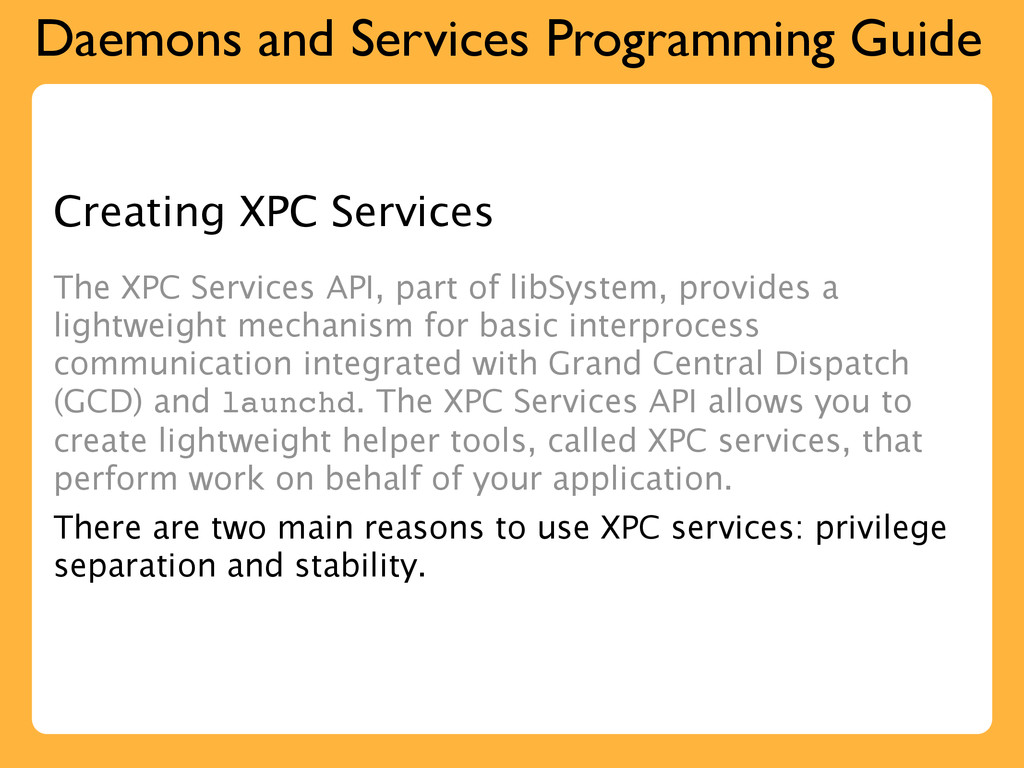
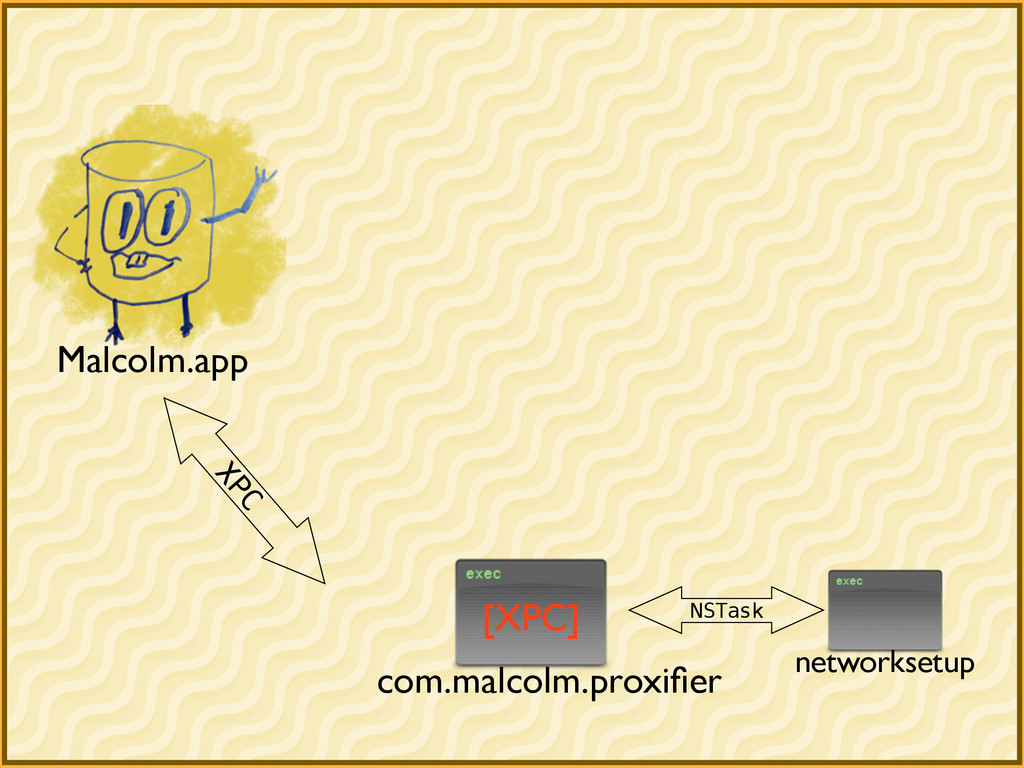
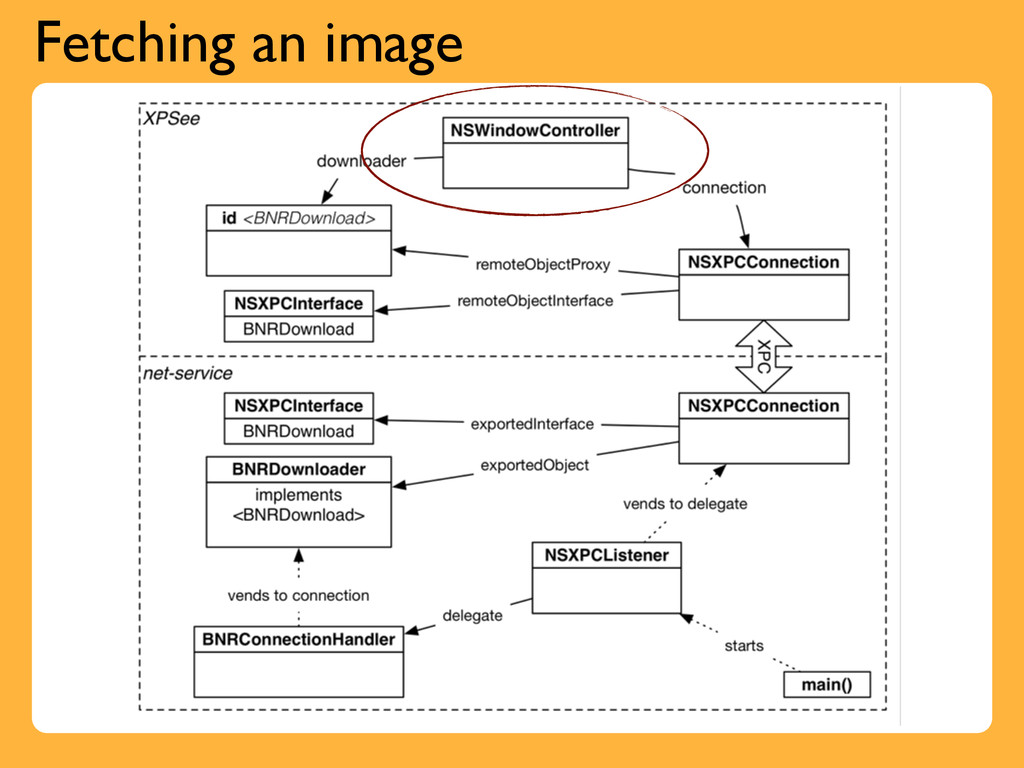
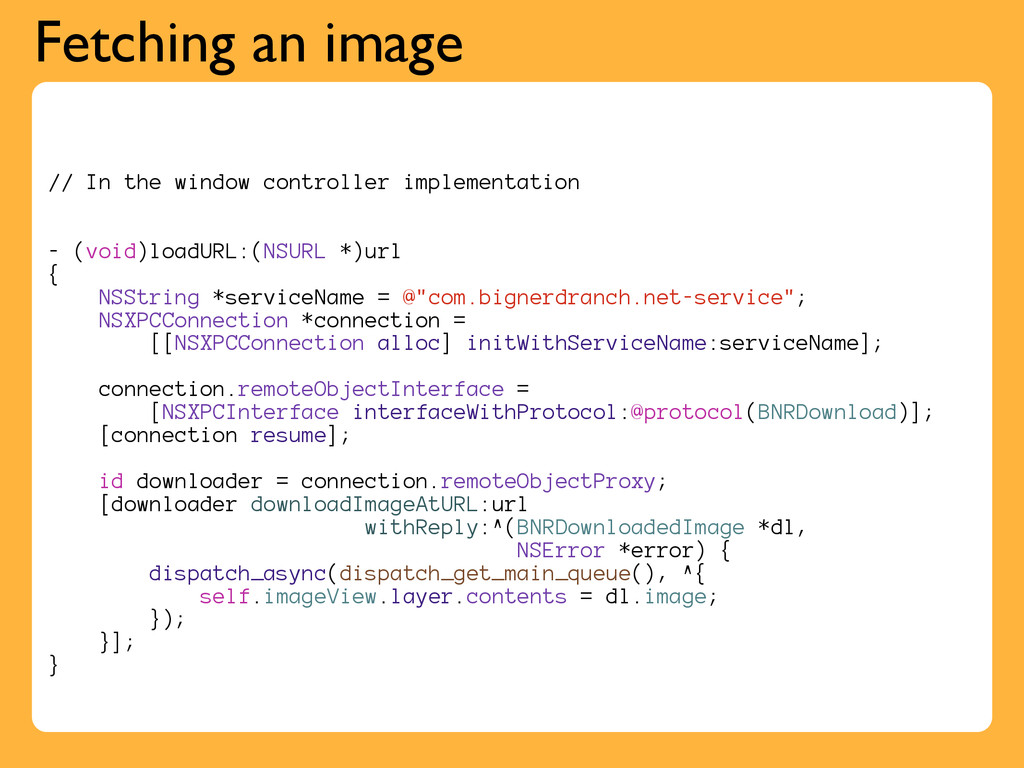
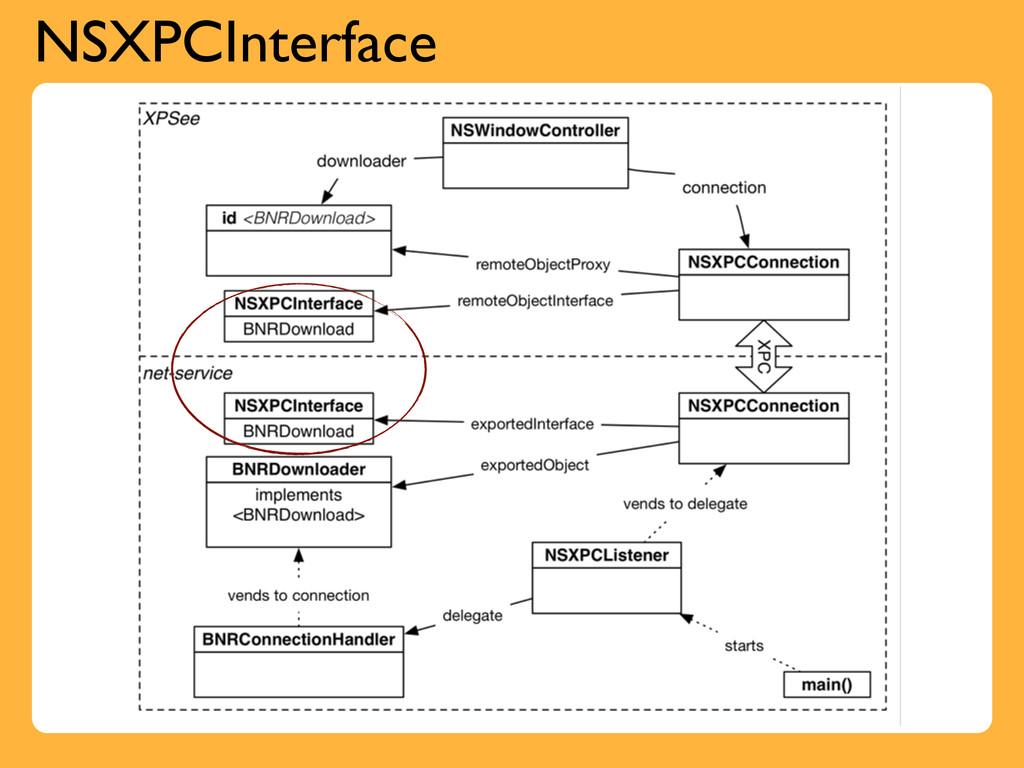
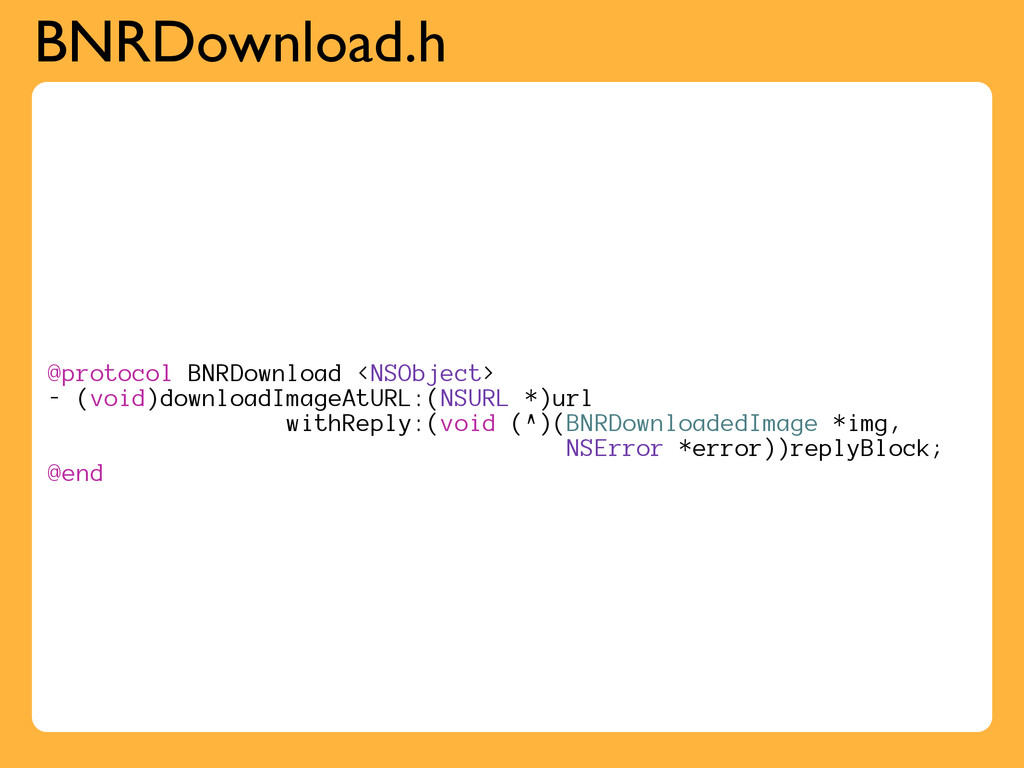
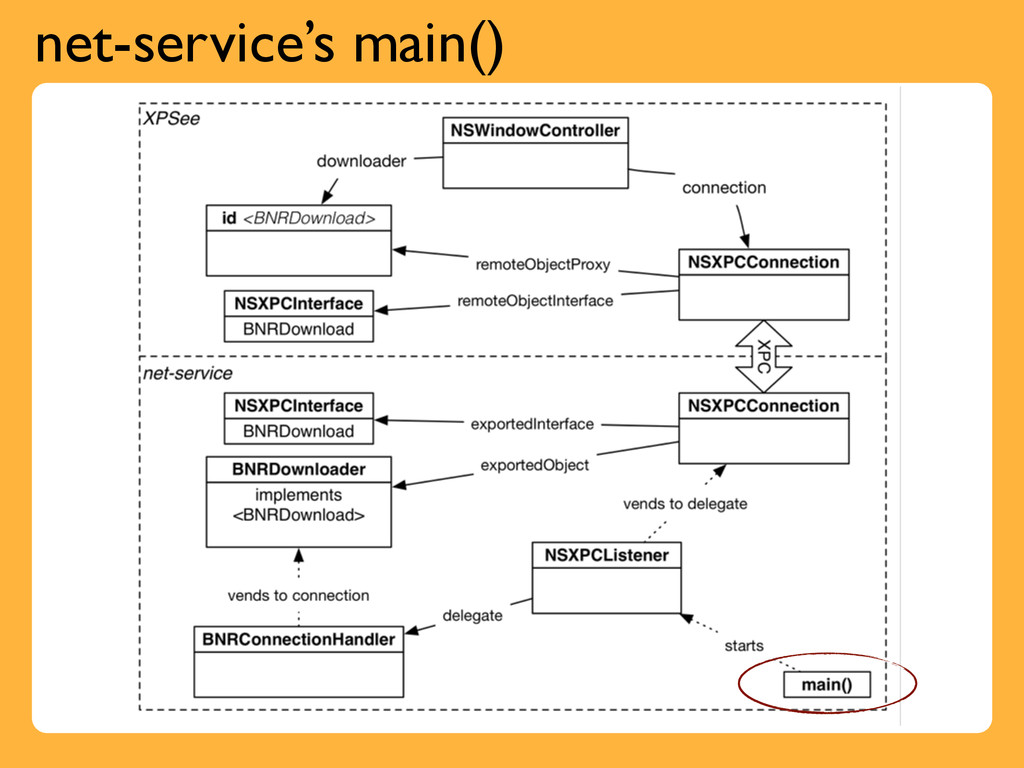
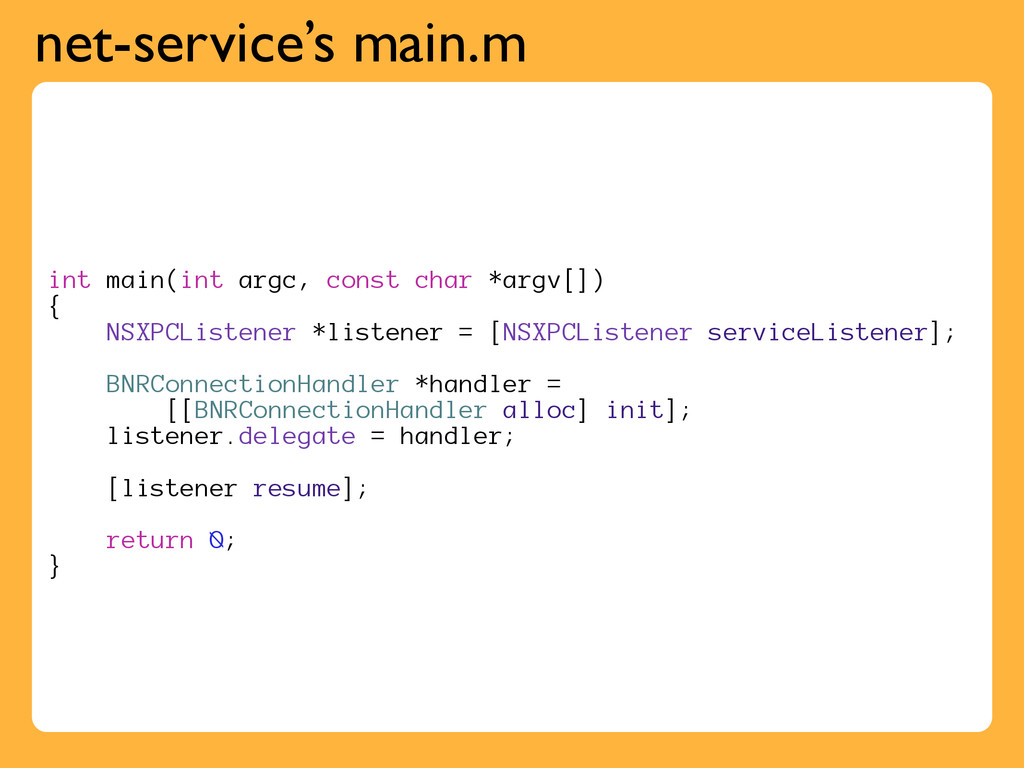
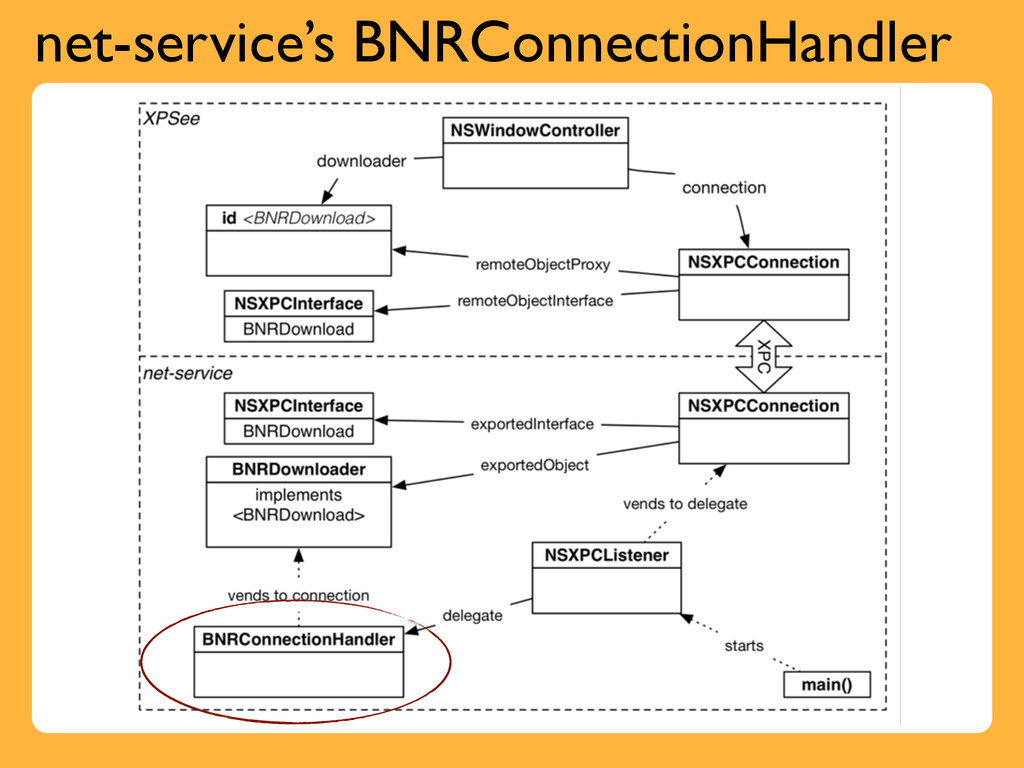
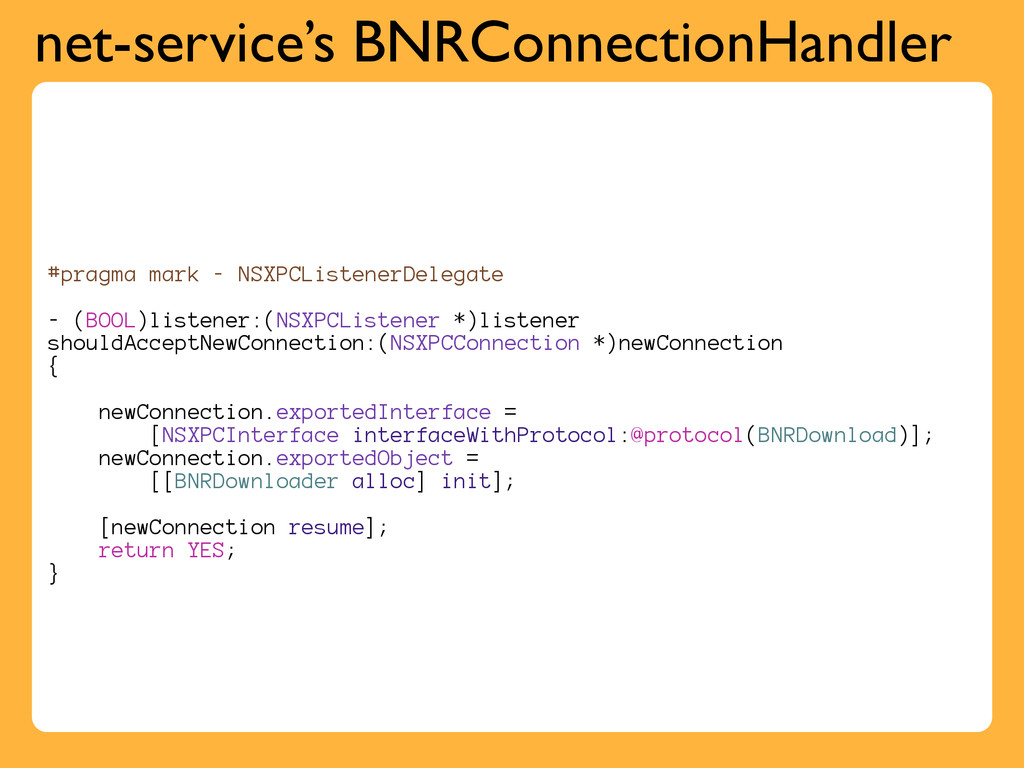
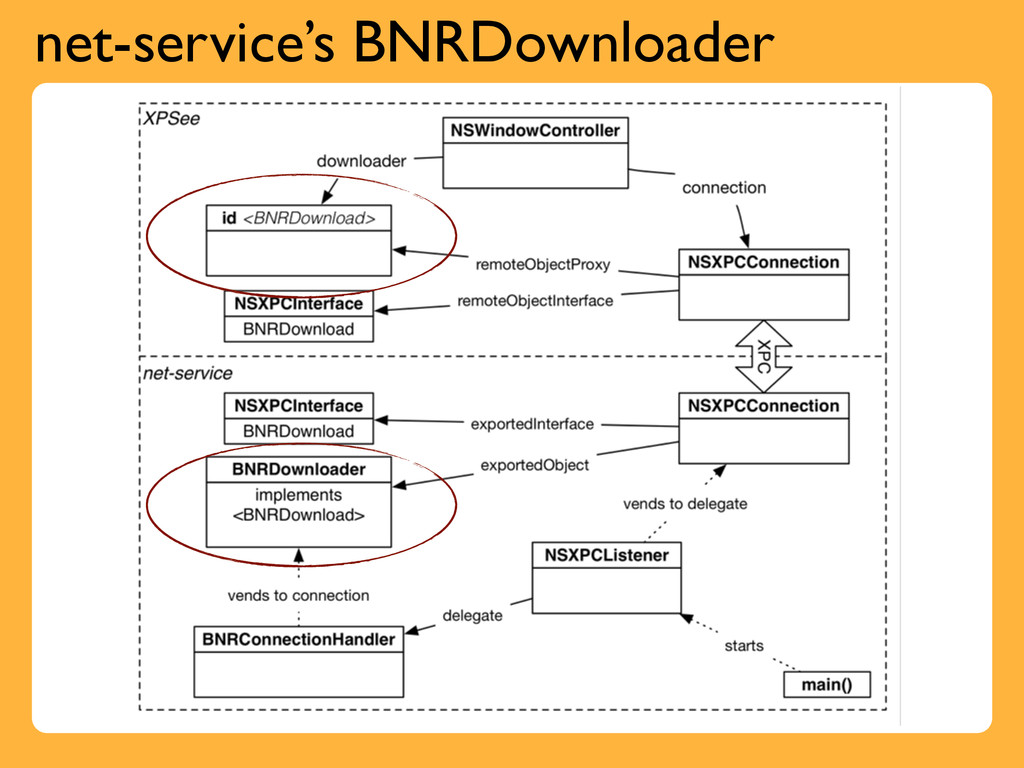
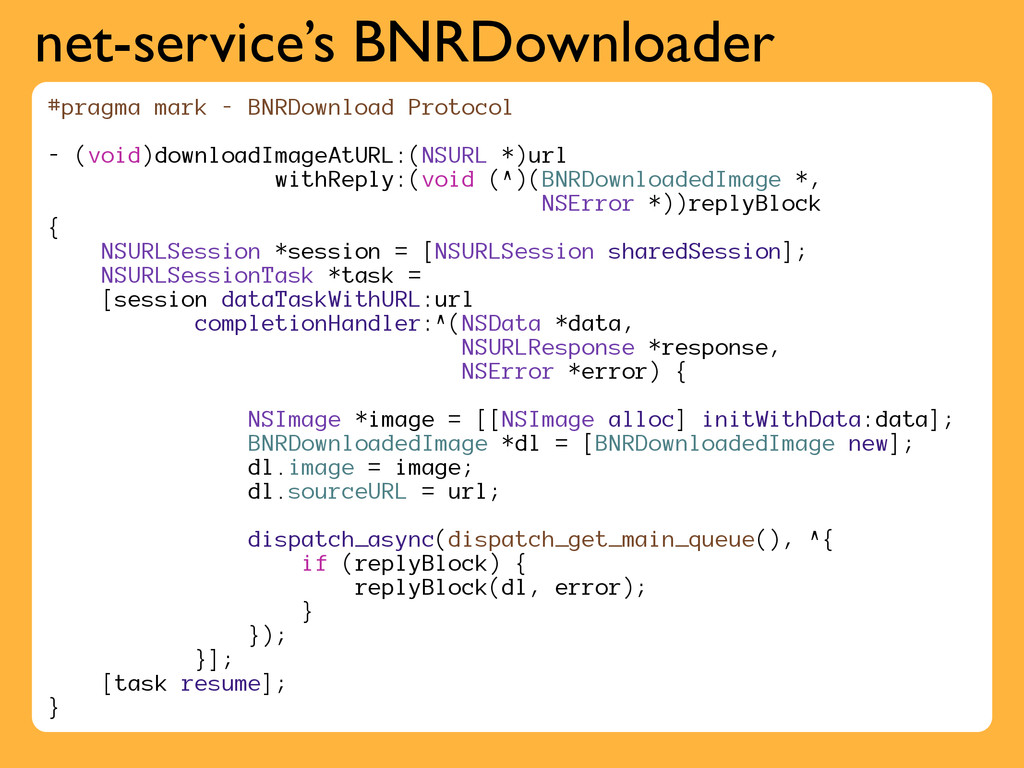
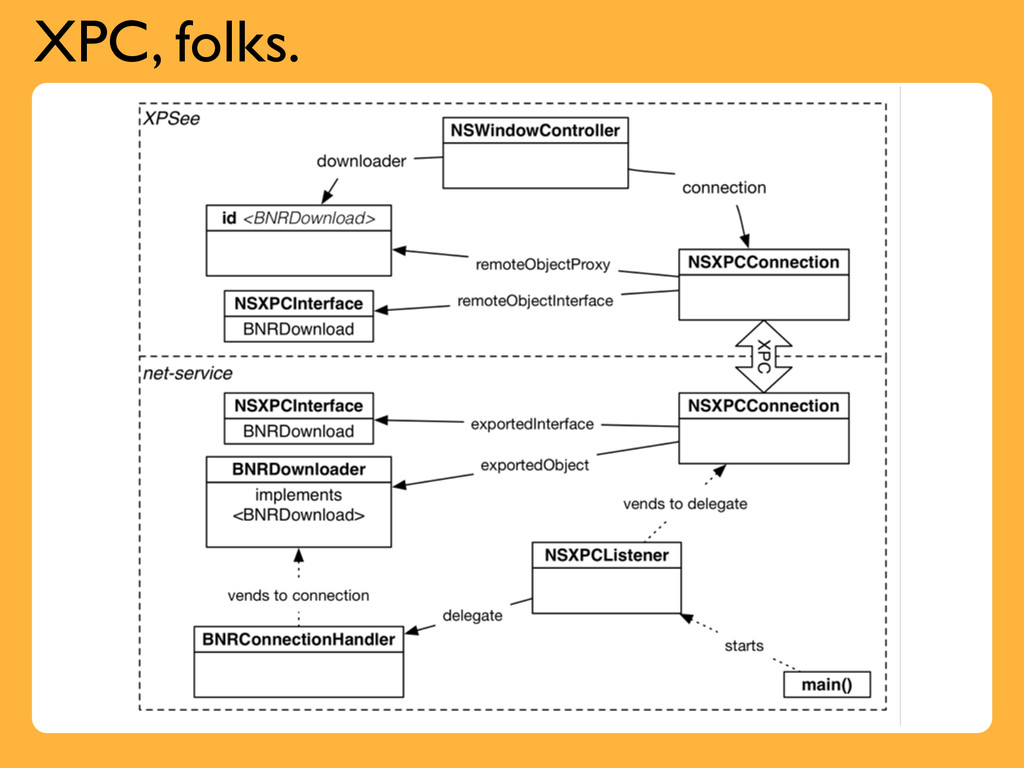
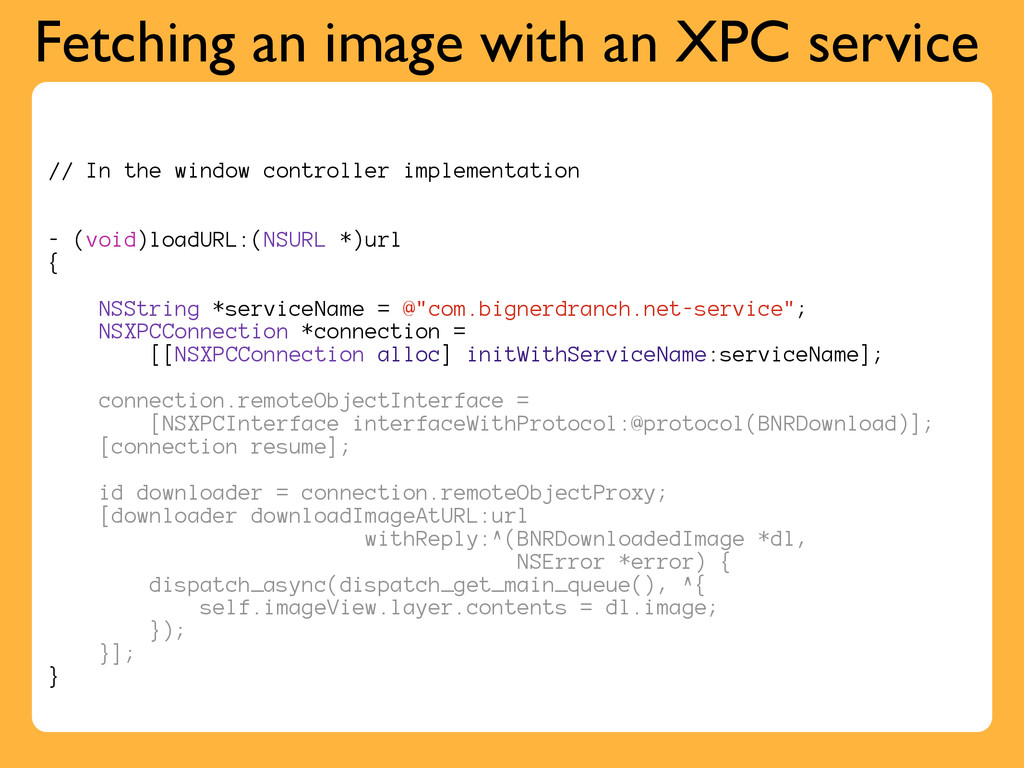
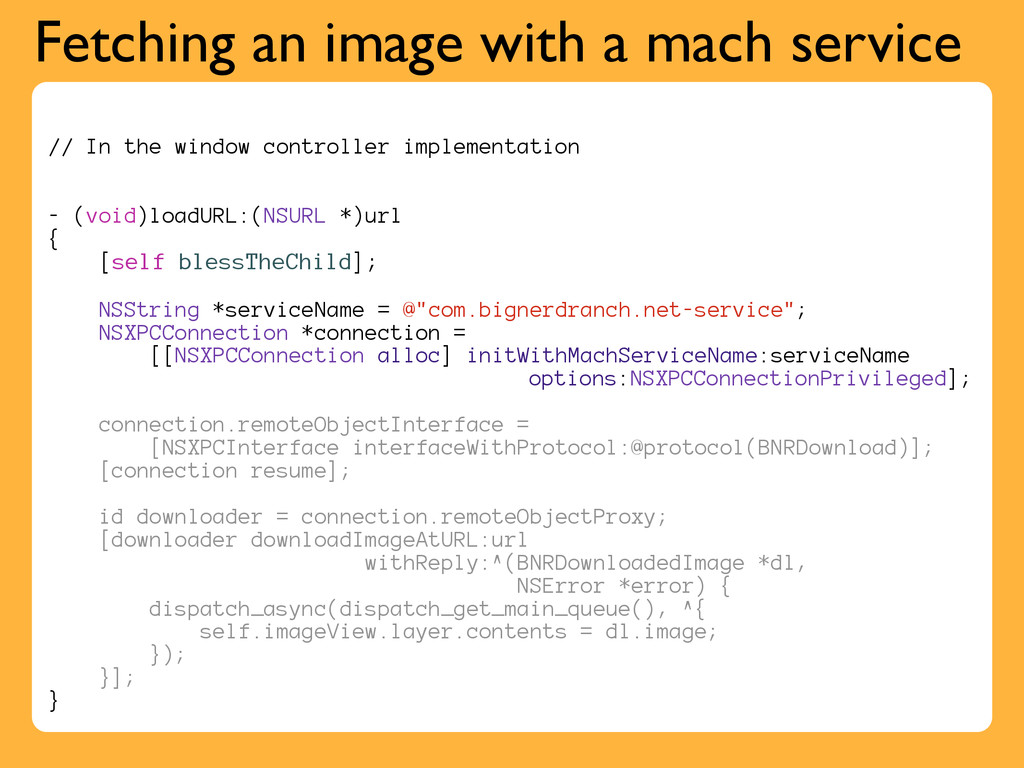
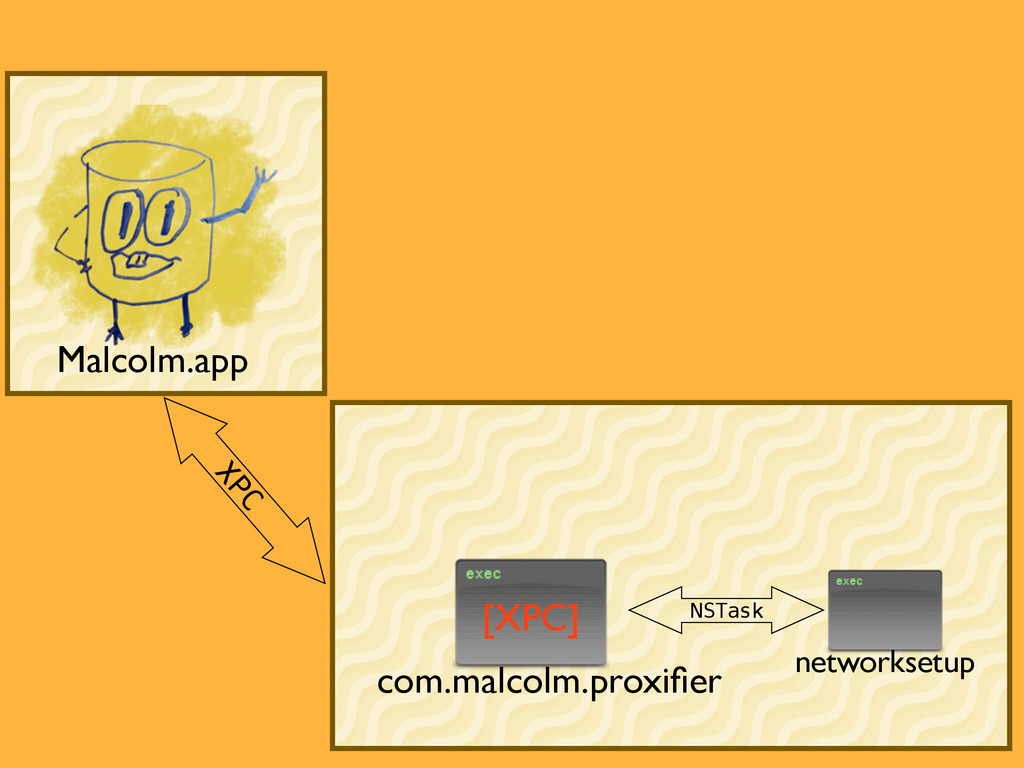
Services API, part of libSystem, provides a lightweight mechanism for basic interprocess communication integrated with Grand Central Dispatch (GCD) and launchd. The XPC Services API allows you to create lightweight helper tools, called XPC services, that perform work on behalf of your application. There are two main reasons to use XPC services: privilege separation and stability.
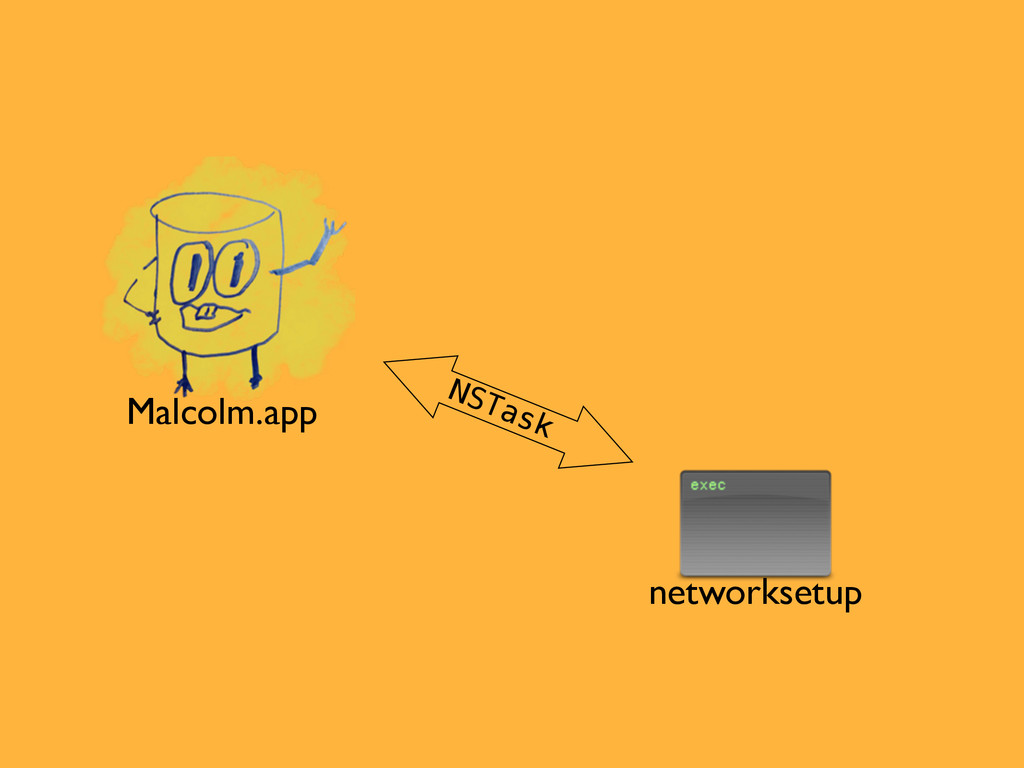
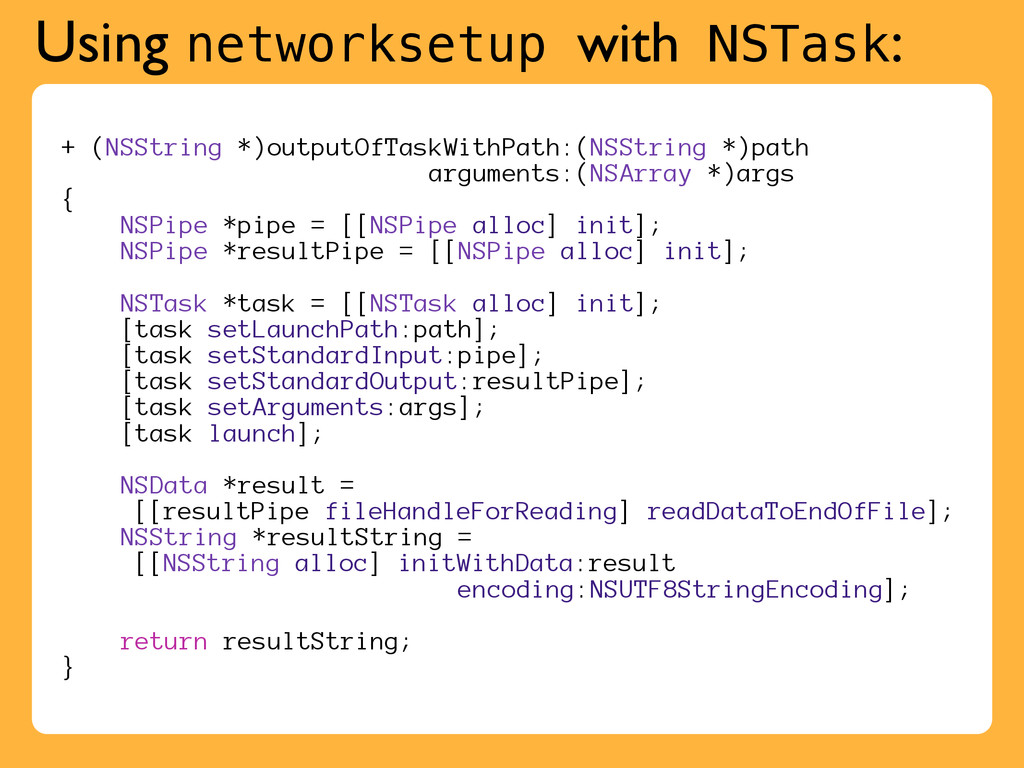
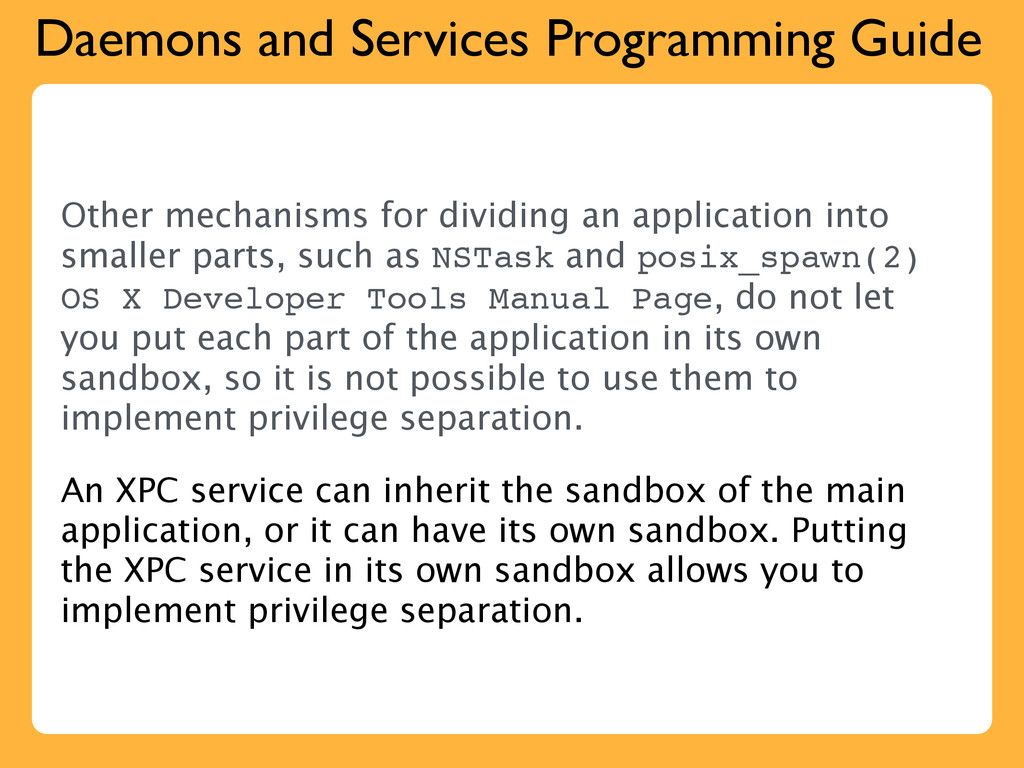
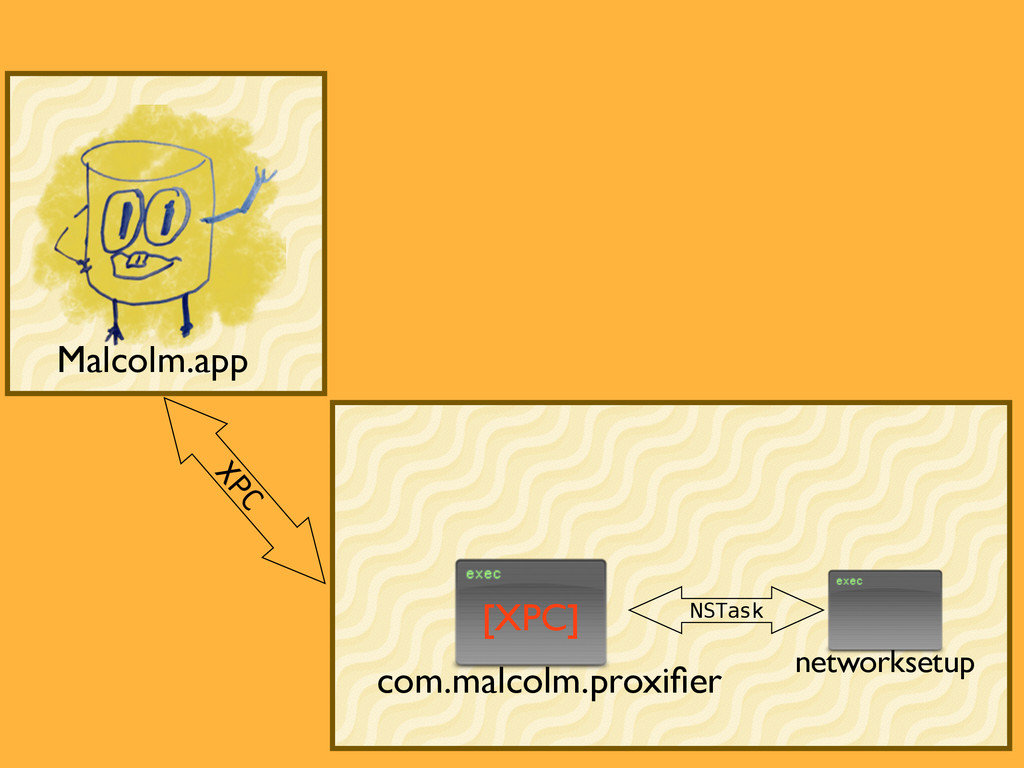
application into smaller parts, such as NSTask and posix_spawn(2) OS X Developer Tools Manual Page, do not let you put each part of the application in its own sandbox, so it is not possible to use them to implement privilege separation. An XPC service can inherit the sandbox of the main application, or it can have its own sandbox. Putting the XPC service in its own sandbox allows you to implement privilege separation.
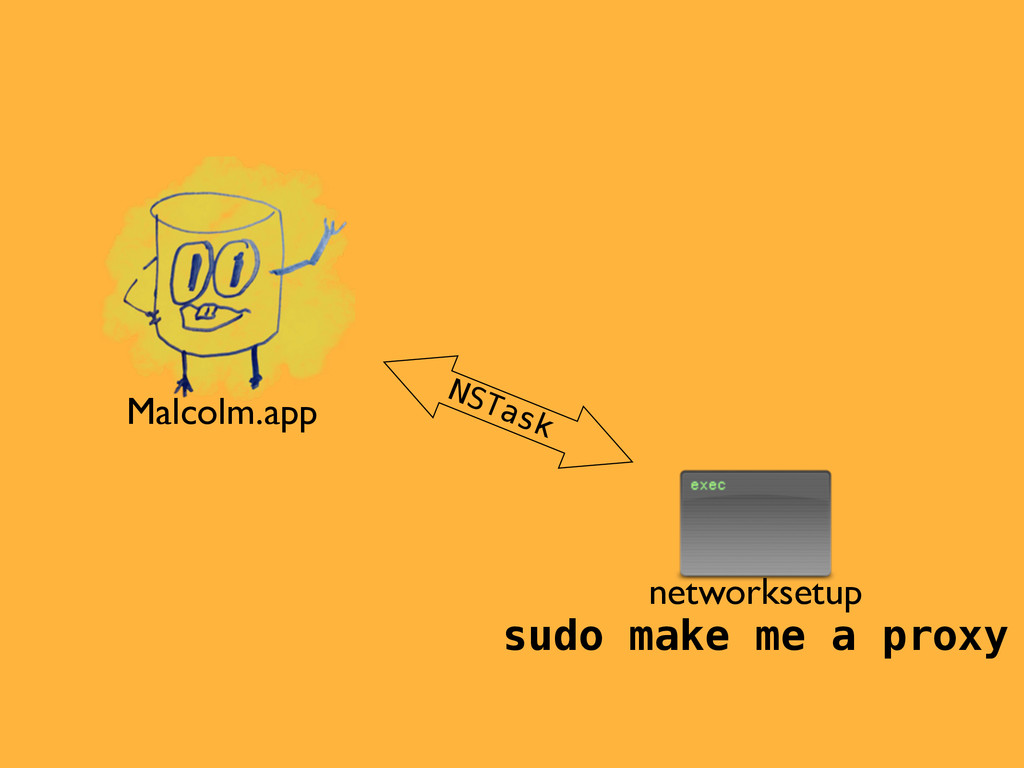
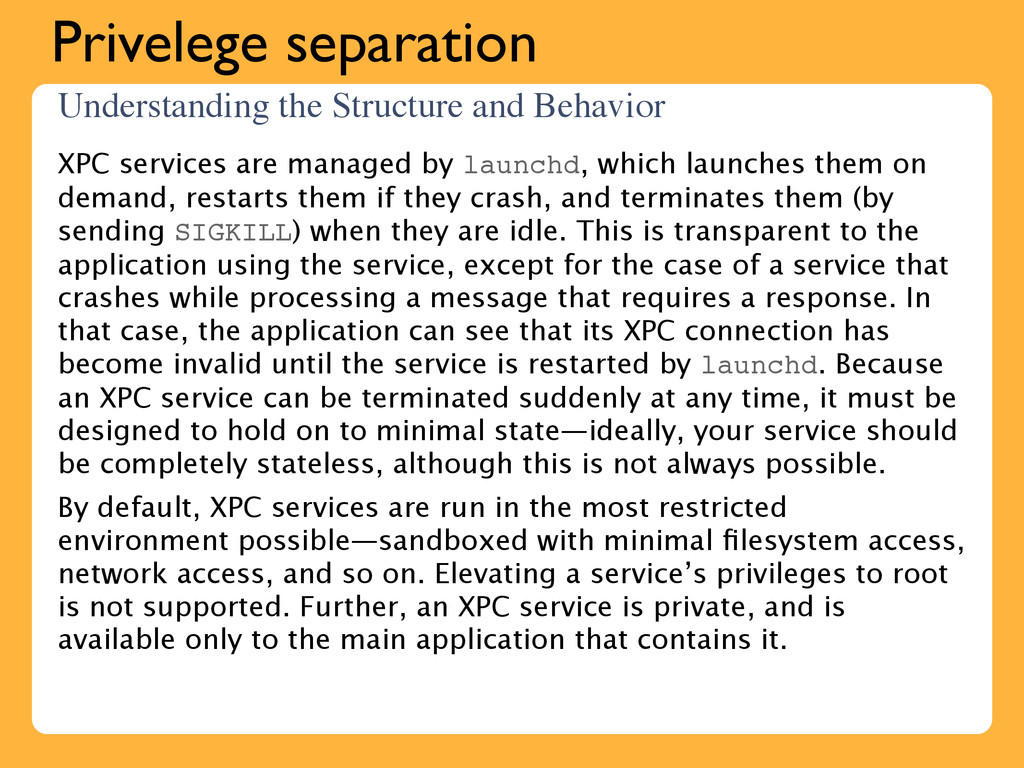
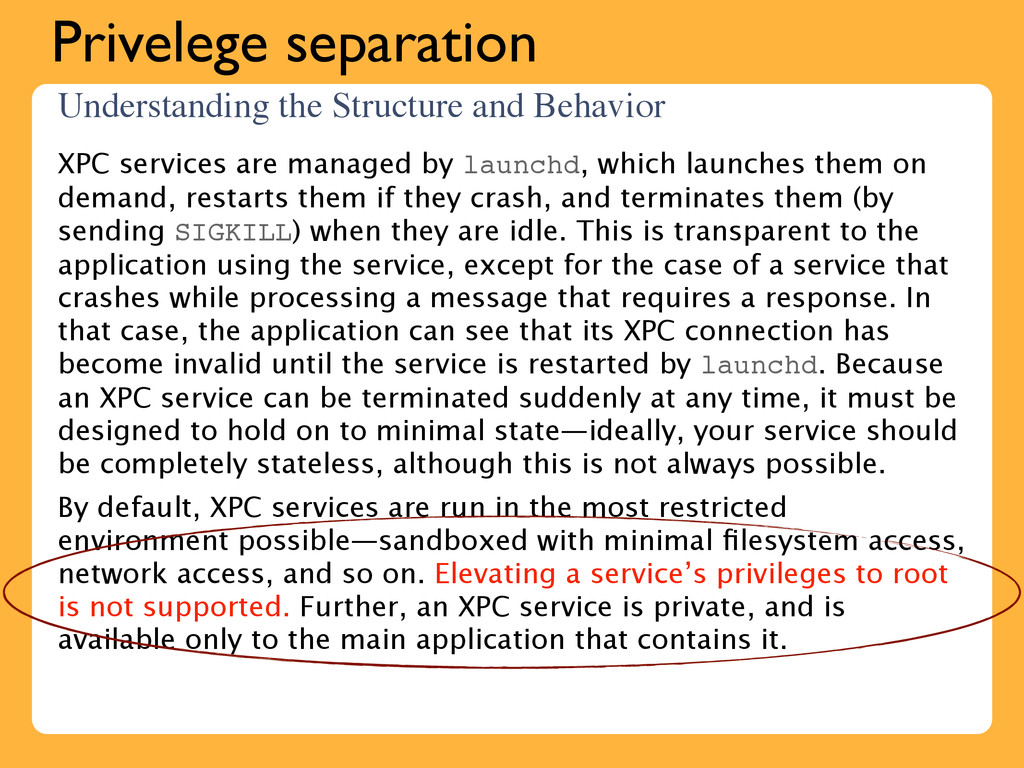
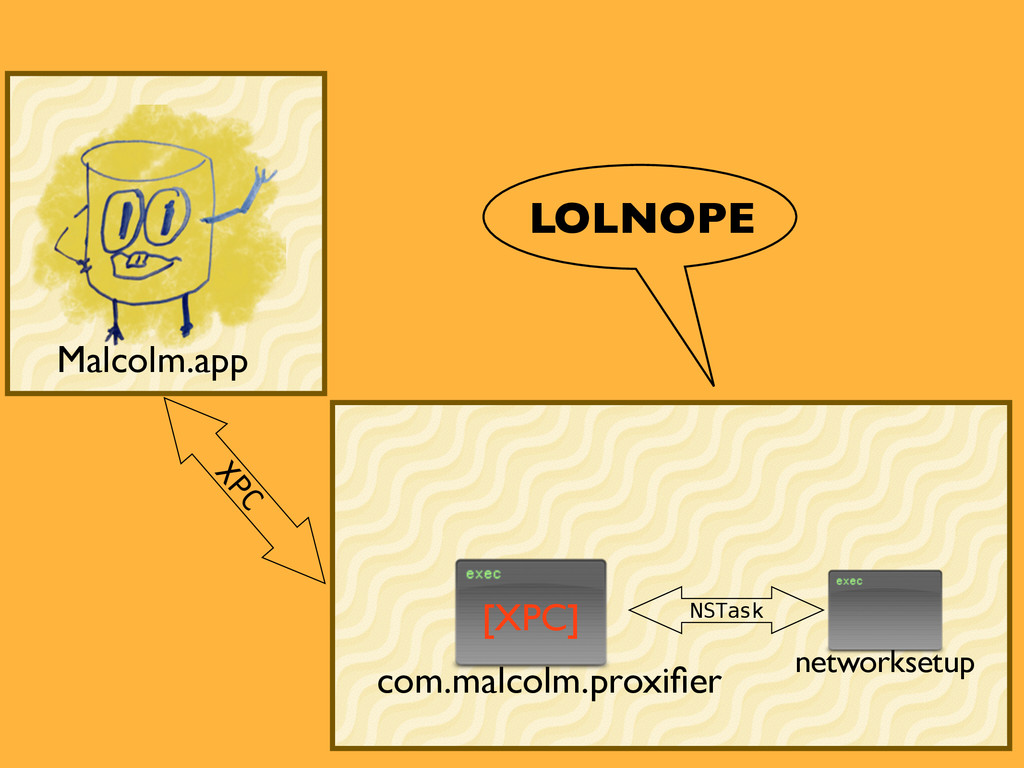
launchd, which launches them on demand, restarts them if they crash, and terminates them (by sending SIGKILL) when they are idle. This is transparent to the application using the service, except for the case of a service that crashes while processing a message that requires a response. In that case, the application can see that its XPC connection has become invalid until the service is restarted by launchd. Because an XPC service can be terminated suddenly at any time, it must be designed to hold on to minimal state—ideally, your service should be completely stateless, although this is not always possible. By default, XPC services are run in the most restricted environment possible—sandboxed with minimal filesystem access, network access, and so on. Elevating a service’s privileges to root is not supported. Further, an XPC service is private, and is available only to the main application that contains it. Privelege separation
launchd, which launches them on demand, restarts them if they crash, and terminates them (by sending SIGKILL) when they are idle. This is transparent to the application using the service, except for the case of a service that crashes while processing a message that requires a response. In that case, the application can see that its XPC connection has become invalid until the service is restarted by launchd. Because an XPC service can be terminated suddenly at any time, it must be designed to hold on to minimal state—ideally, your service should be completely stateless, although this is not always possible. By default, XPC services are run in the most restricted environment possible—sandboxed with minimal filesystem access, network access, and so on. Elevating a service’s privileges to root is not supported. Further, an XPC service is private, and is available only to the main application that contains it. Privelege separation

 SiteGround - Reliable hosting with speed, security, and support you can count on.


 oku053
 y0hgi
 yutobara
 kawashimo0
 kishida
 artoy
 eed3si9n
 htkym
 seike460
 moro
 falcon8823
 satoshi256kbyte
 chriscoyier
 katarinadahlin
 shpigford
 addyosmani
 mfonobong
 pedronauck
 panda_program
 tessaabrams
 tammyeverts
 samanthasiow
 cassininazir
 bkeepers