story of getting things done the agile way Not to be confused with... ”BC” - Boston College a university in Central America University Baptist Church Union of the Baltic Cities United BioSource Corporation Uganda Broadcasting Corporation
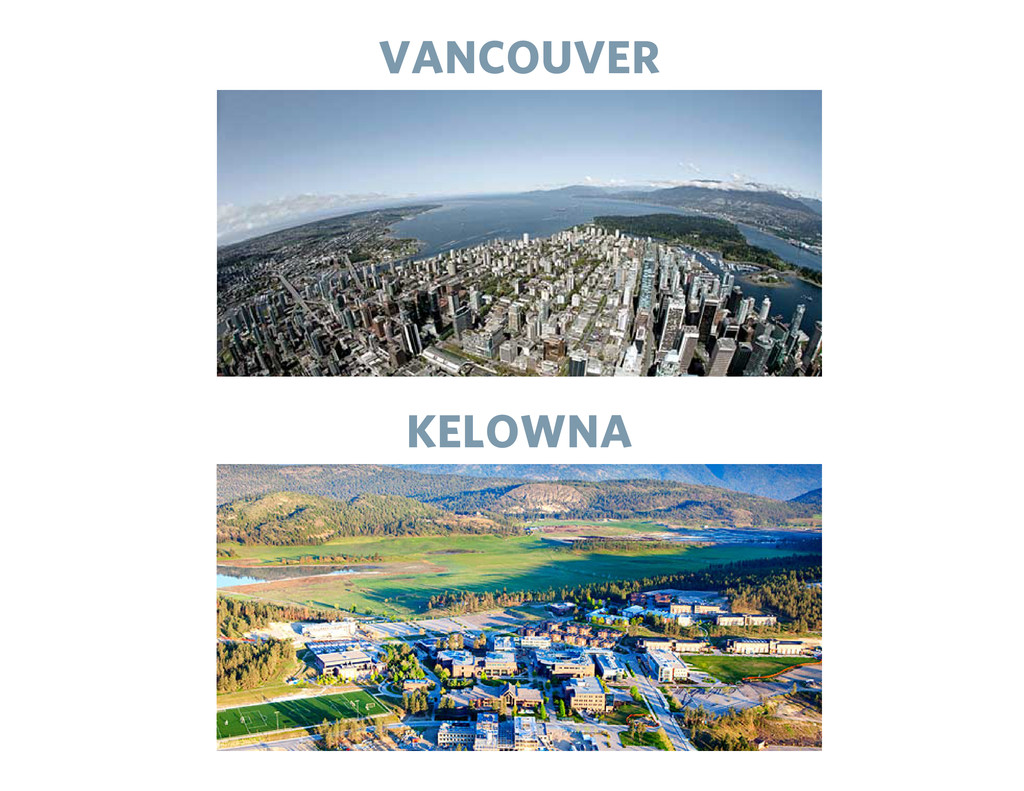
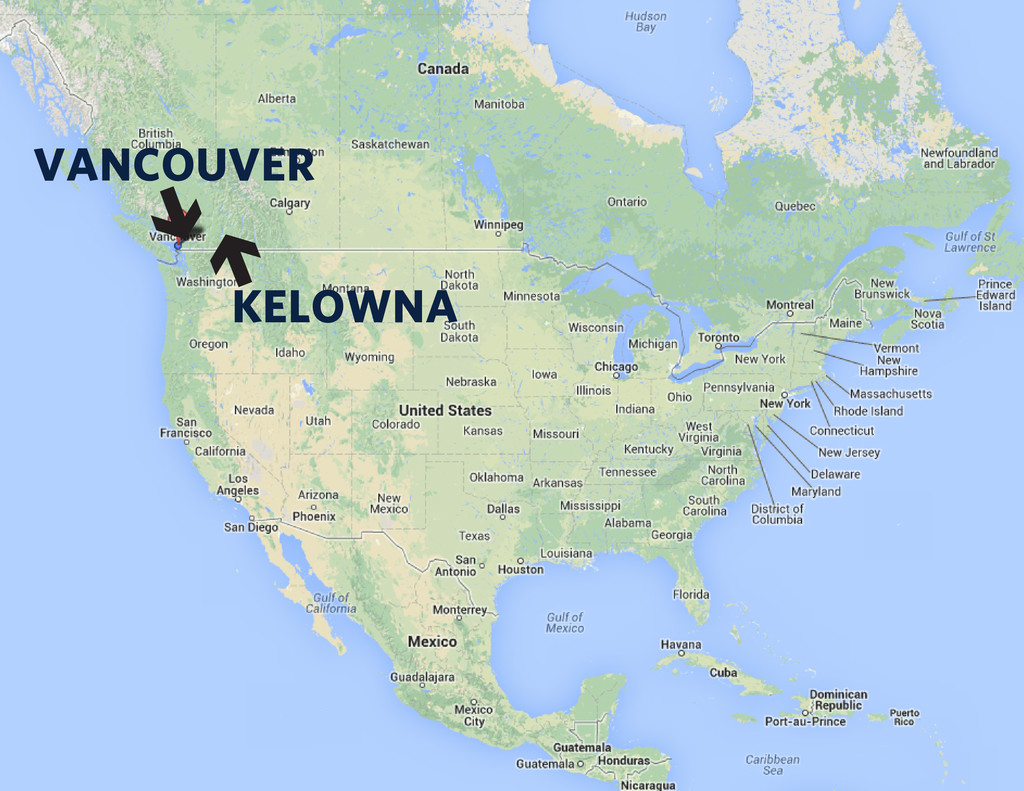
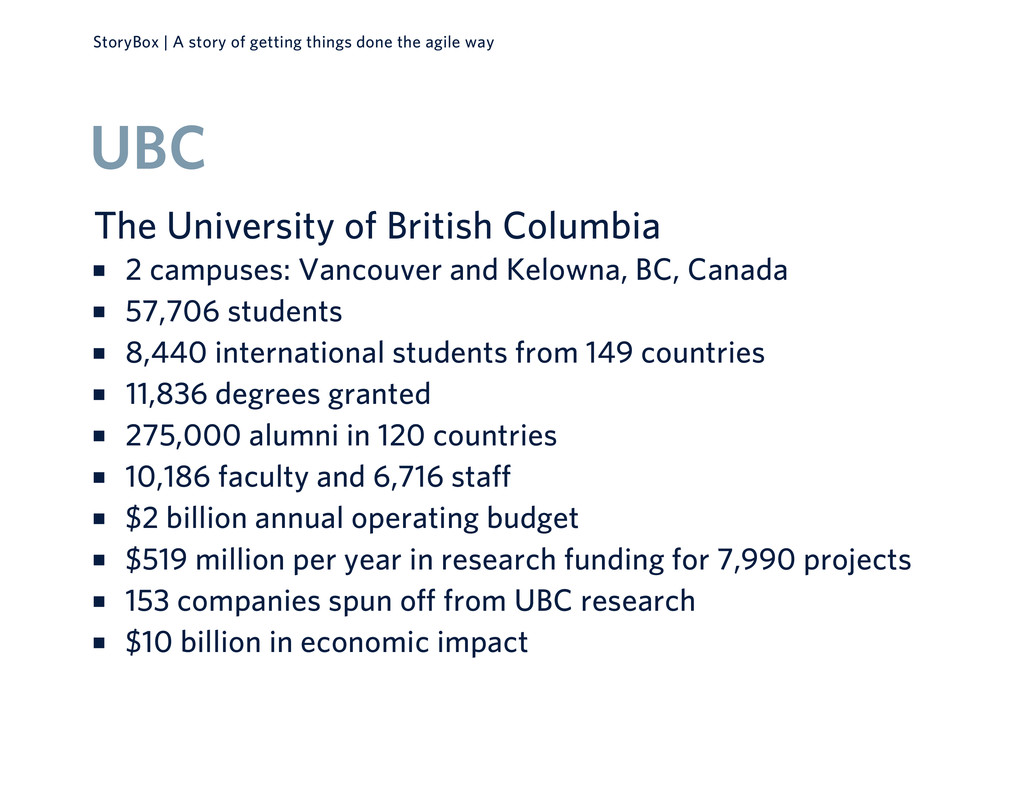
agile way The University of British Columbia 2 campuses: Vancouver and Kelowna, BC, Canada 57,706 students 8,440 international students from 149 countries 11,836 degrees granted 275,000 alumni in 120 countries 10,186 faculty and 6,716 sta $2 billion annual operating budget $519 million per year in research funding for 7,990 projects 153 companies spun o from UBC research $10 billion in economic impact
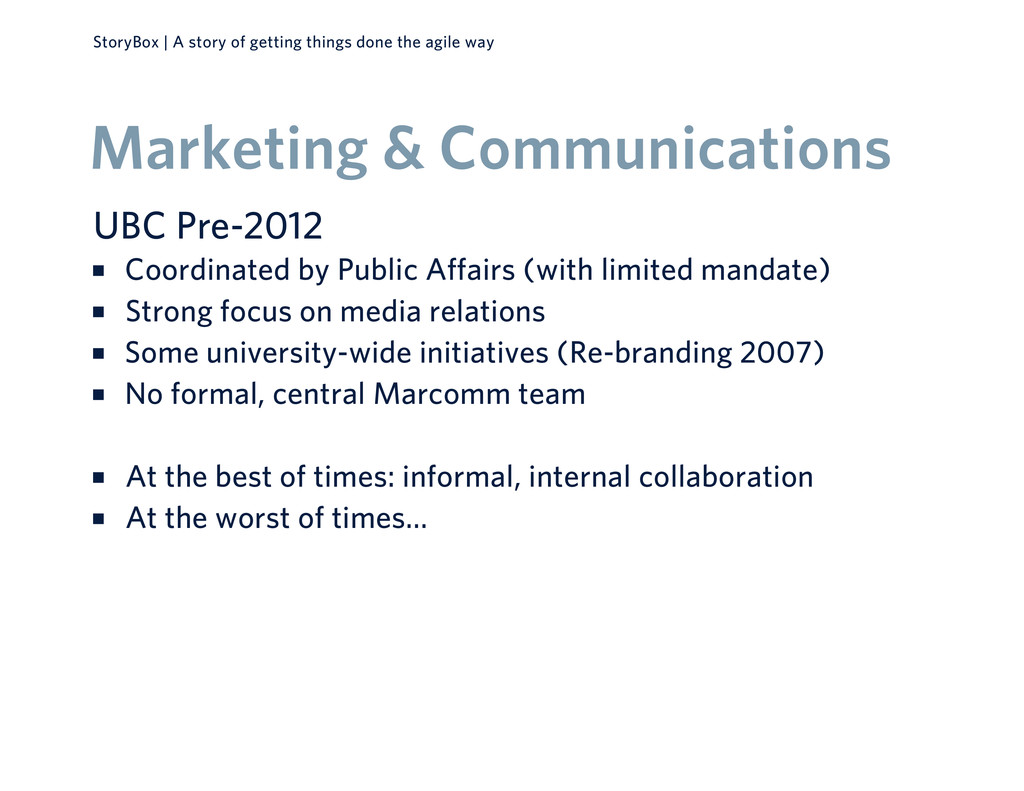
done the agile way UBC Pre-2012 Coordinated by Public A airs (with limited mandate) Strong focus on media relations Some university-wide initiatives (Re-branding 2007) No formal, central Marcomm team At the best of times: informal, internal collaboration At the worst of times...
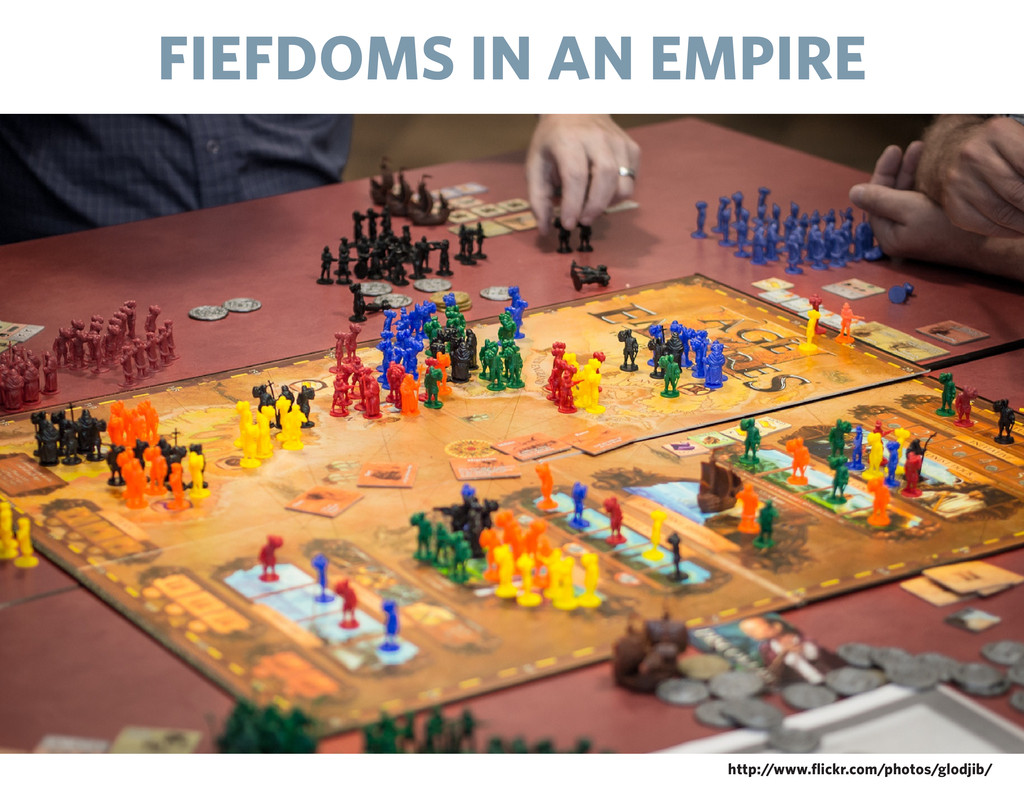
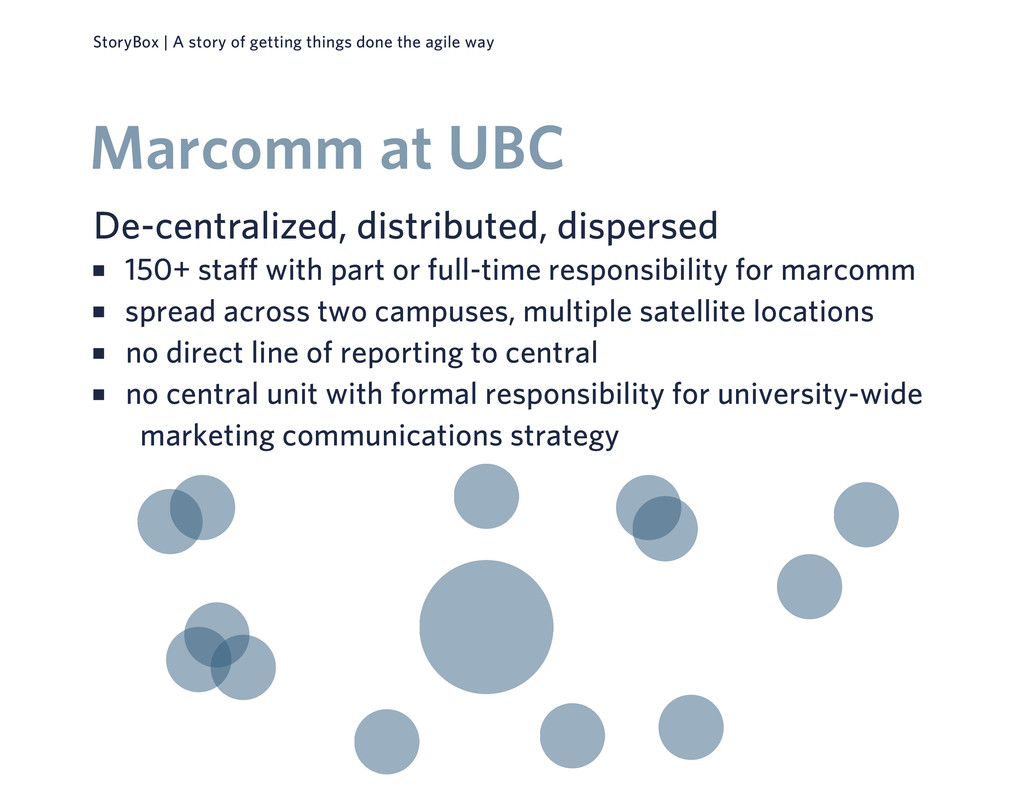
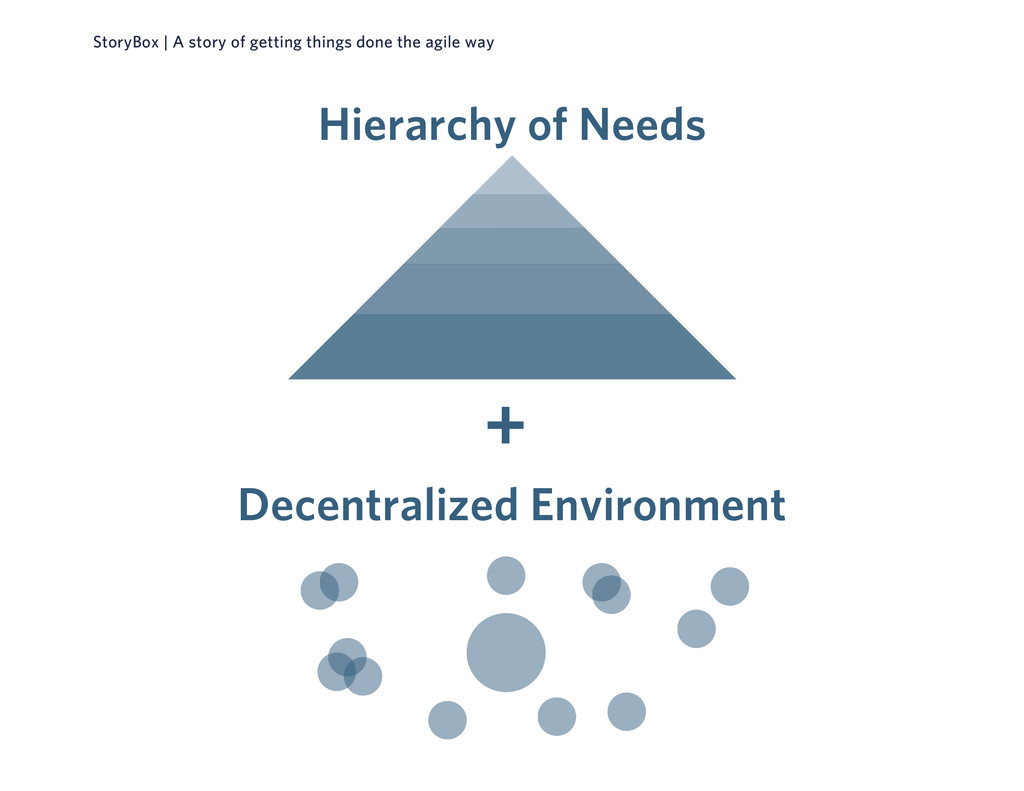
done the agile way De-centralized, distributed, dispersed 150+ sta with part or full-time responsibility for marcomm spread across two campuses, multiple satellite locations no direct line of reporting to central no central unit with formal responsibility for university-wide marketing communications strategy
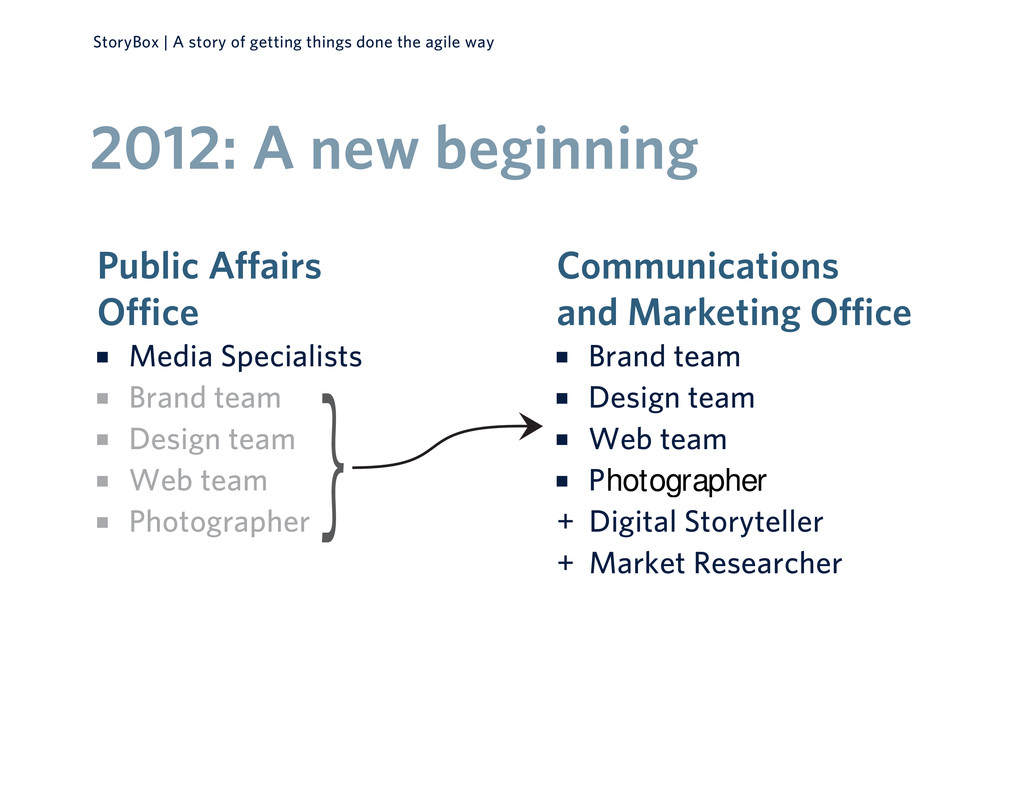
things done the agile way Communications and Marketing O ce Brand team Design team Web team P + Digital Storyteller + Market Researcher Public A airs O ce Media Specialists Brand team Design team Web team Photographer { hotographer
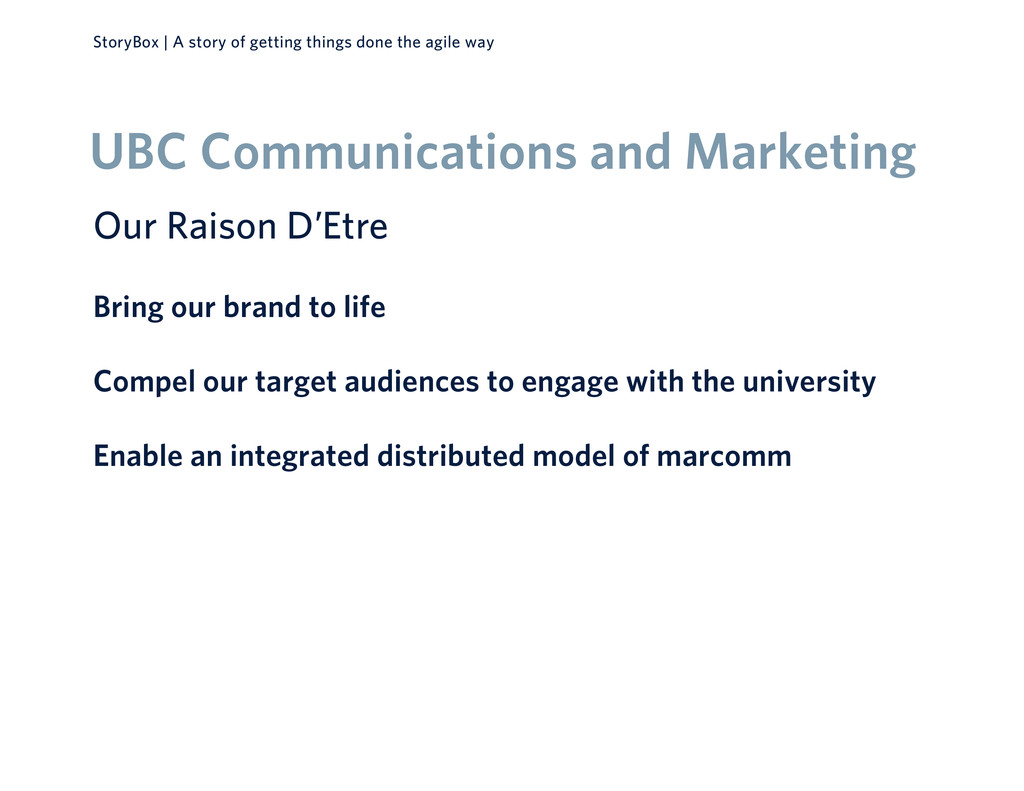
things done the agile way Our Raison D’Etre Bring our brand to life Compel our target audiences to engage with the university Enable an integrated distributed model of marcomm
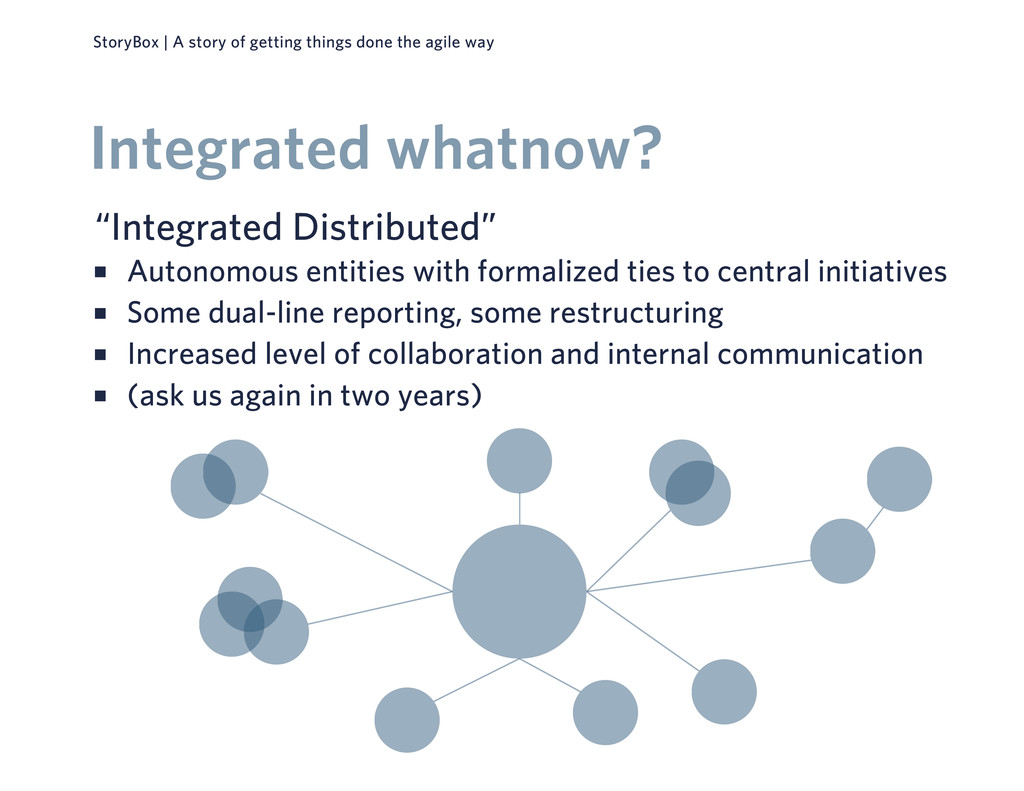
the agile way “Integrated Distributed” Autonomous entities with formalized ties to central initiatives Some dual-line reporting, some restructuring Increased level of collaboration and internal communication (ask us again in two years)
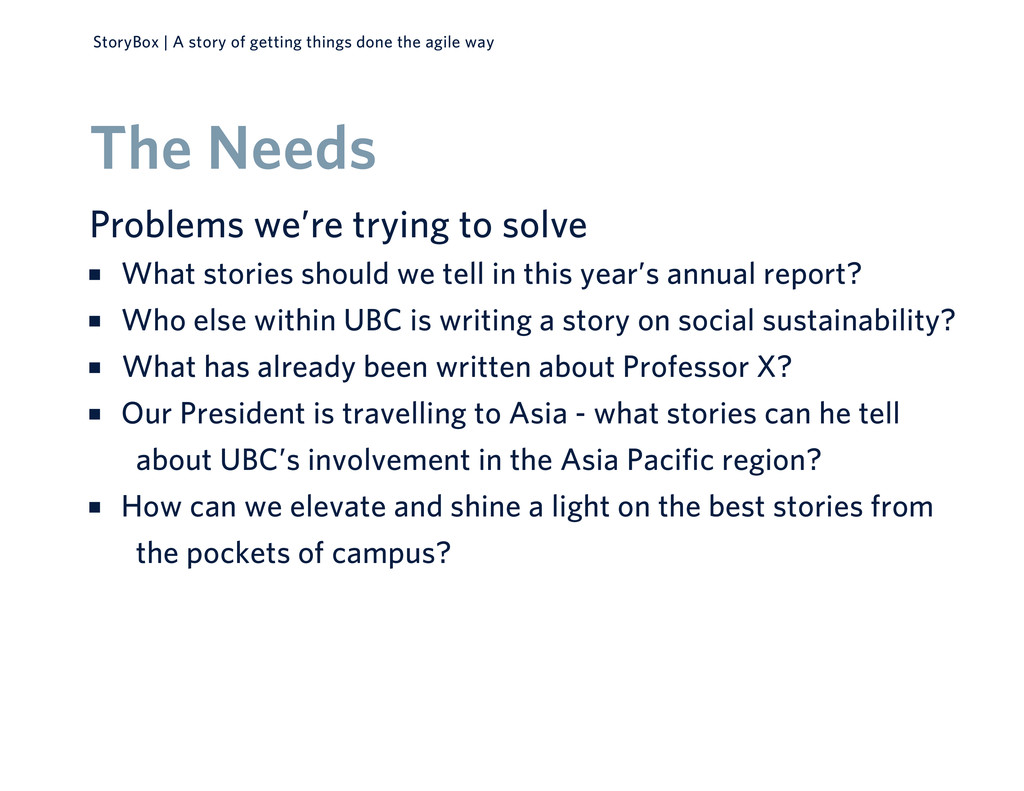
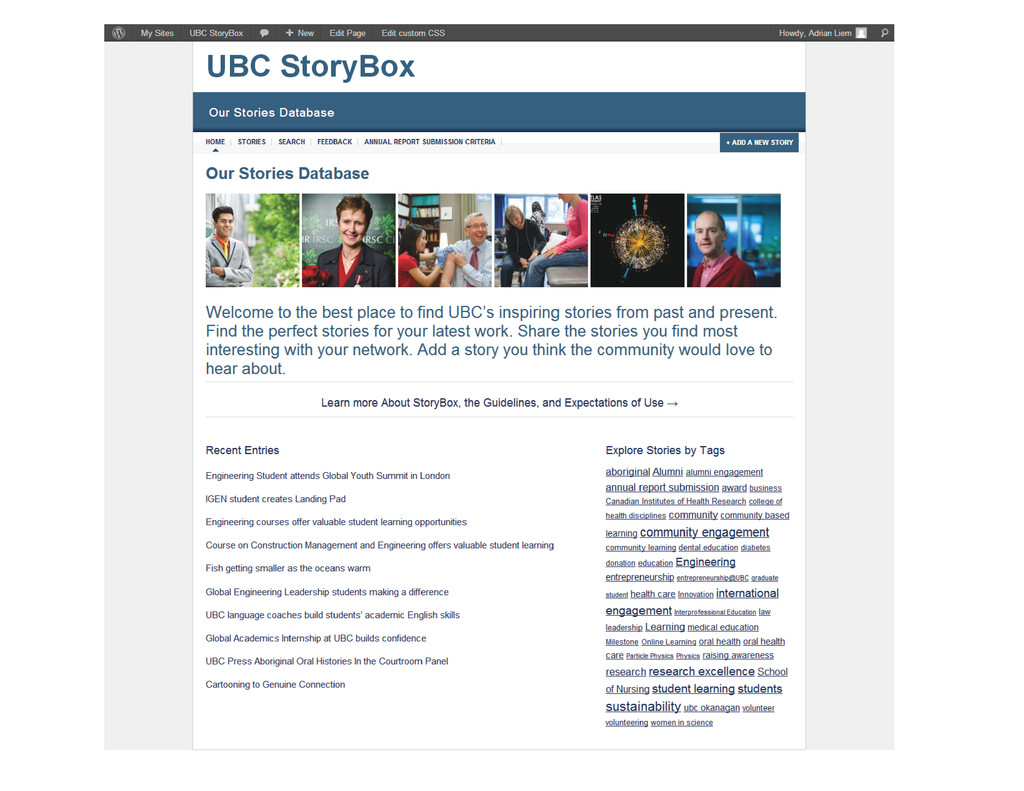
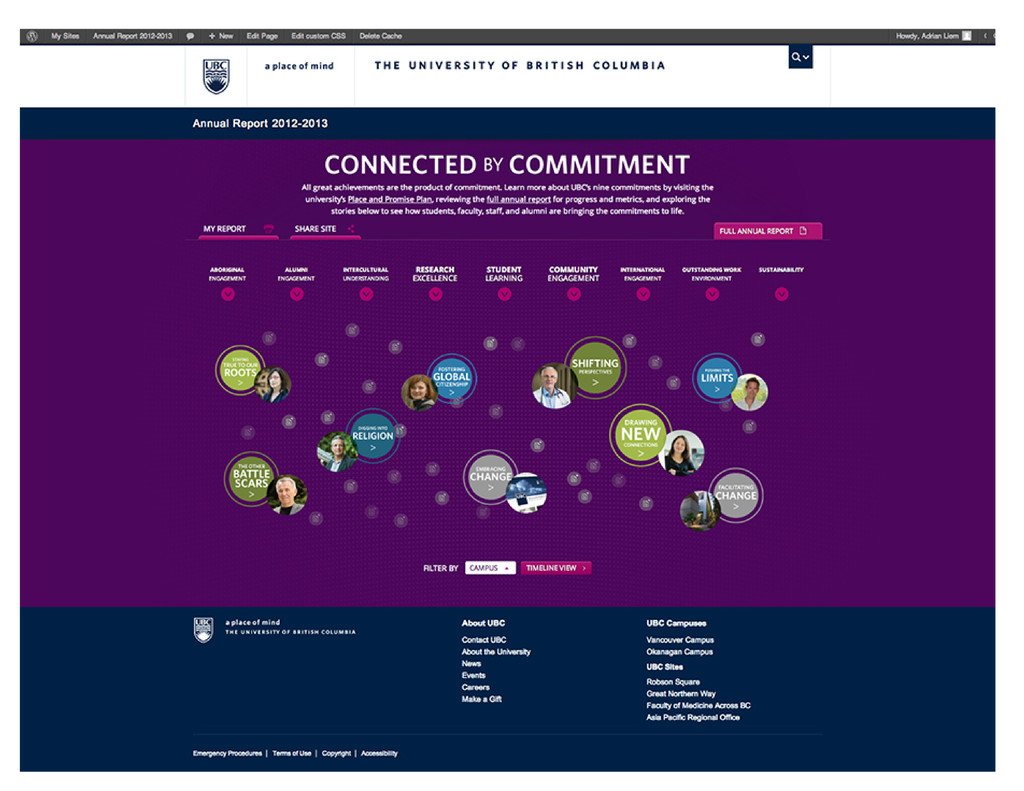
the agile way Problems we’re trying to solve What stories should we tell in this year’s annual report? Who else within UBC is writing a story on social sustainability? What has already been written about Professor X? Our President is travelling to Asia - what stories can he tell about UBC’s involvement in the Asia Pacific region? How can we elevate and shine a light on the best stories from the pockets of campus?
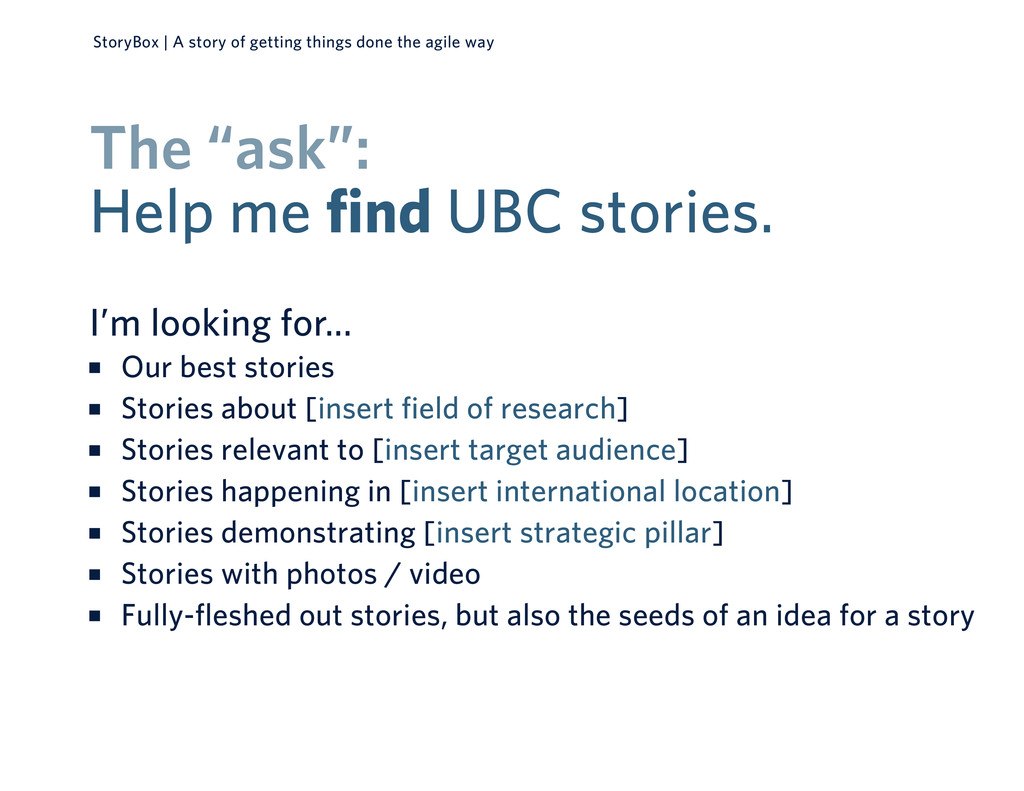
the agile way Help me find UBC stories. I’m looking for... Our best stories Stories about [insert field of research] Stories relevant to [insert target audience] Stories happening in [insert international location] Stories demonstrating [insert strategic pillar] Stories with photos / video Fully-fleshed out stories, but also the seeds of an idea for a story
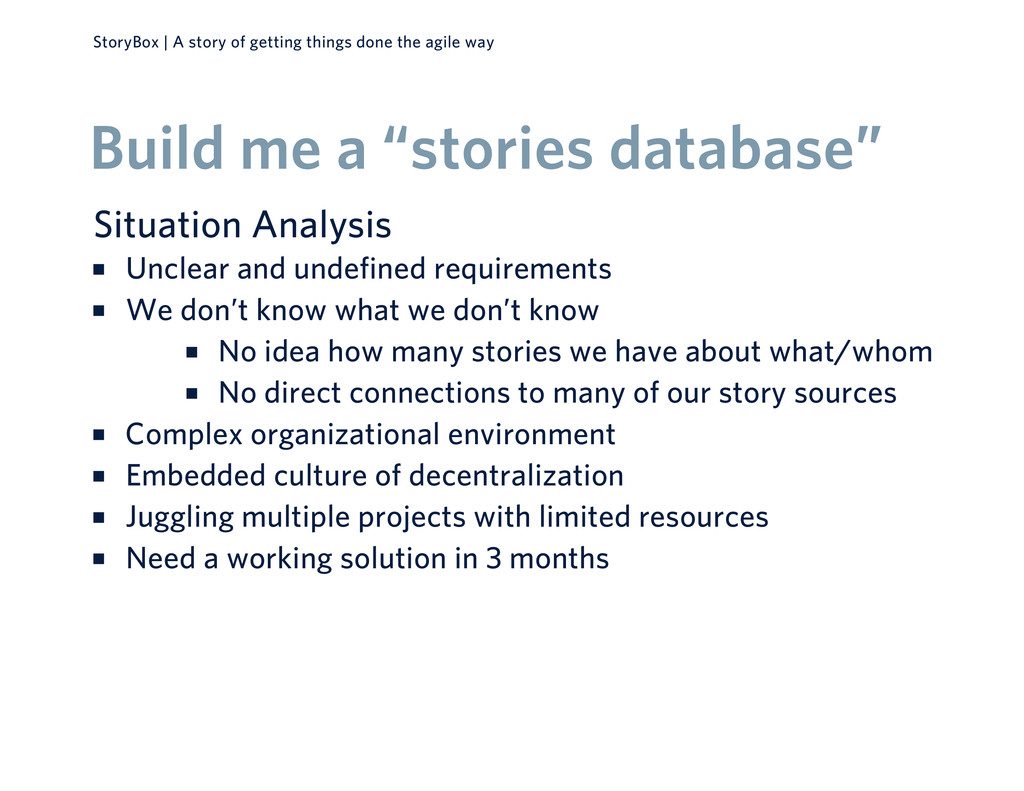
getting things done the agile way Situation Analysis Unclear and undefined requirements We don’t know what we don’t know No idea how many stories we have about what/whom No direct connections to many of our story sources Complex organizational environment Embedded culture of decentralization Juggling multiple projects with limited resources Need a working solution in 3 months
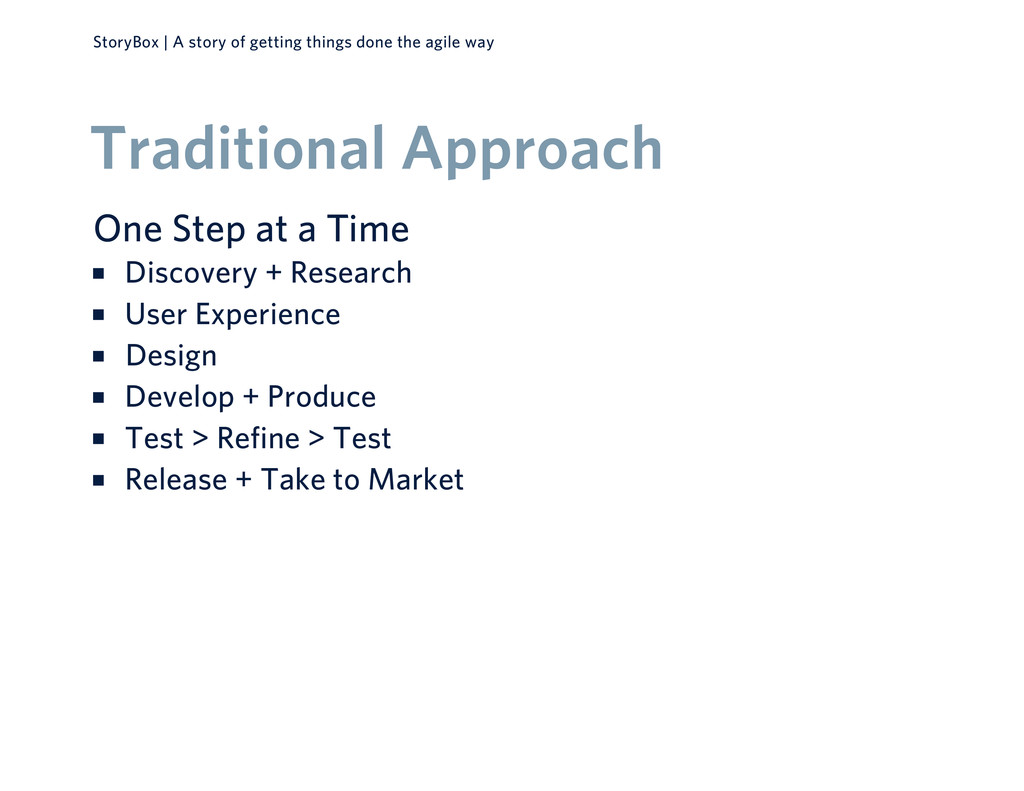
the agile way One Step at a Time Discovery + Research User Experience Design Develop + Produce Test > Refine > Test Release + Take to Market
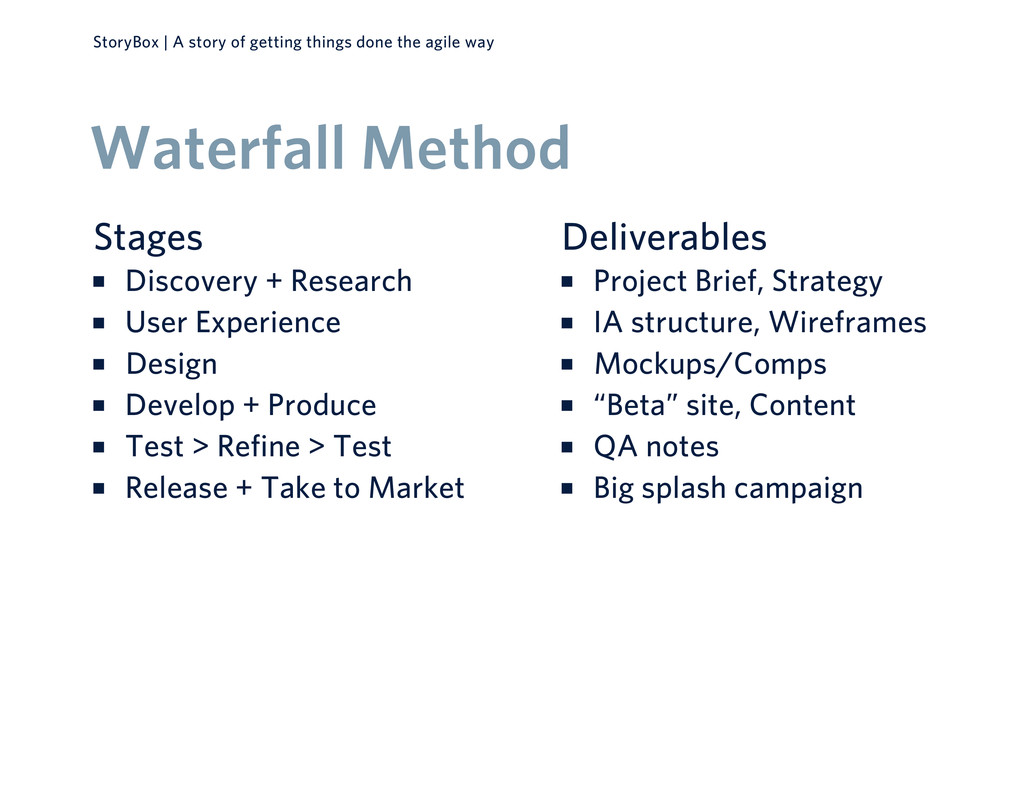
the agile way Stages Discovery + Research User Experience Design Develop + Produce Test > Refine > Test Release + Take to Market Deliverables Project Brief, Strategy IA structure, Wireframes Mockups/Comps “Beta” site, Content QA notes Big splash campaign
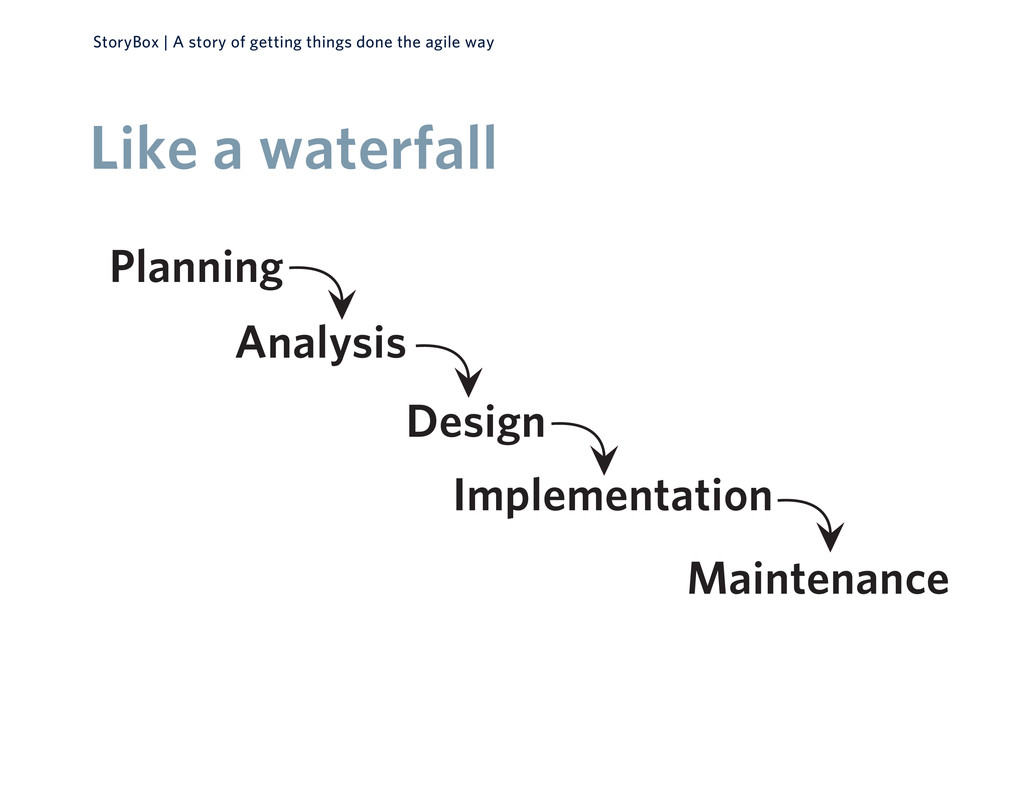
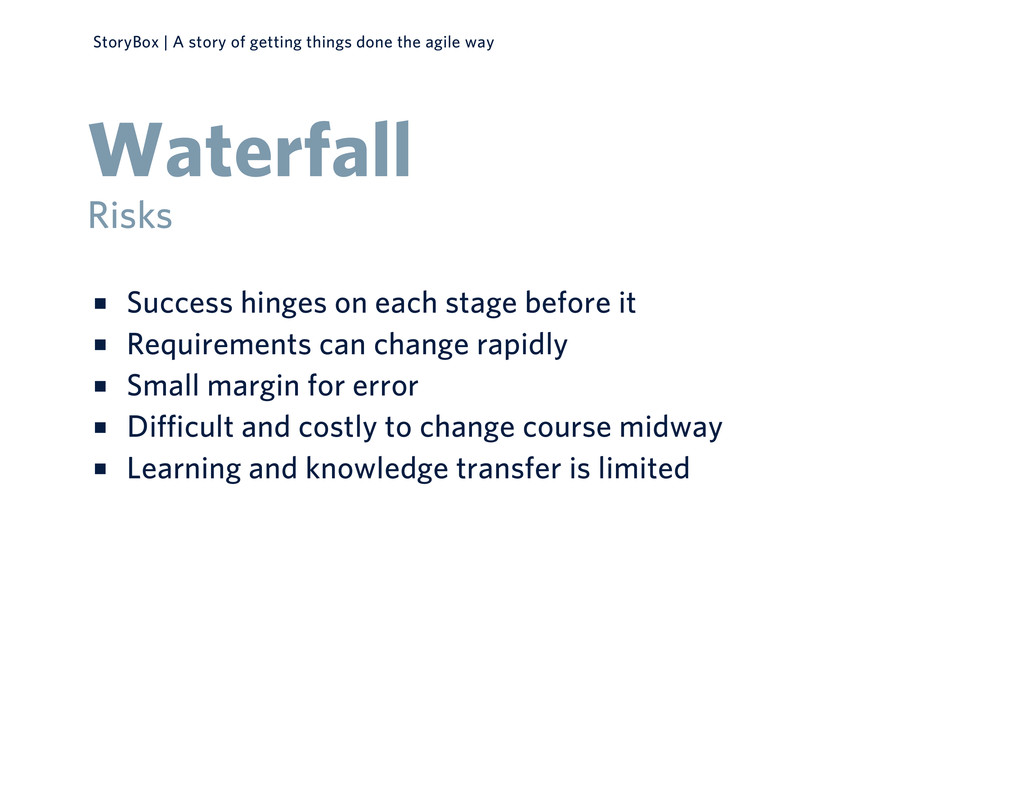
the agile way Success hinges on each stage before it Requirements can change rapidly Small margin for error Di cult and costly to change course midway Learning and knowledge transfer is limited
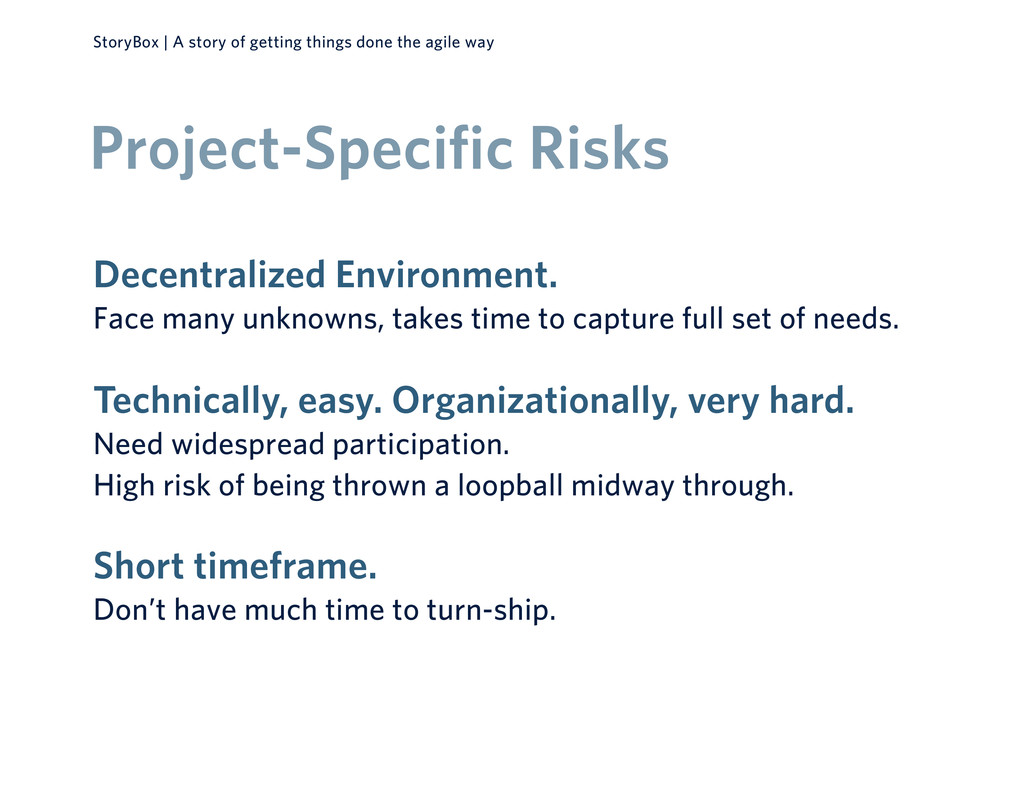
the agile way Decentralized Environment. Face many unknowns, takes time to capture full set of needs. Technically, easy. Organizationally, very hard. Need widespread participation. High risk of being thrown a loopball midway through. Short timeframe. Don’t have much time to turn-ship.
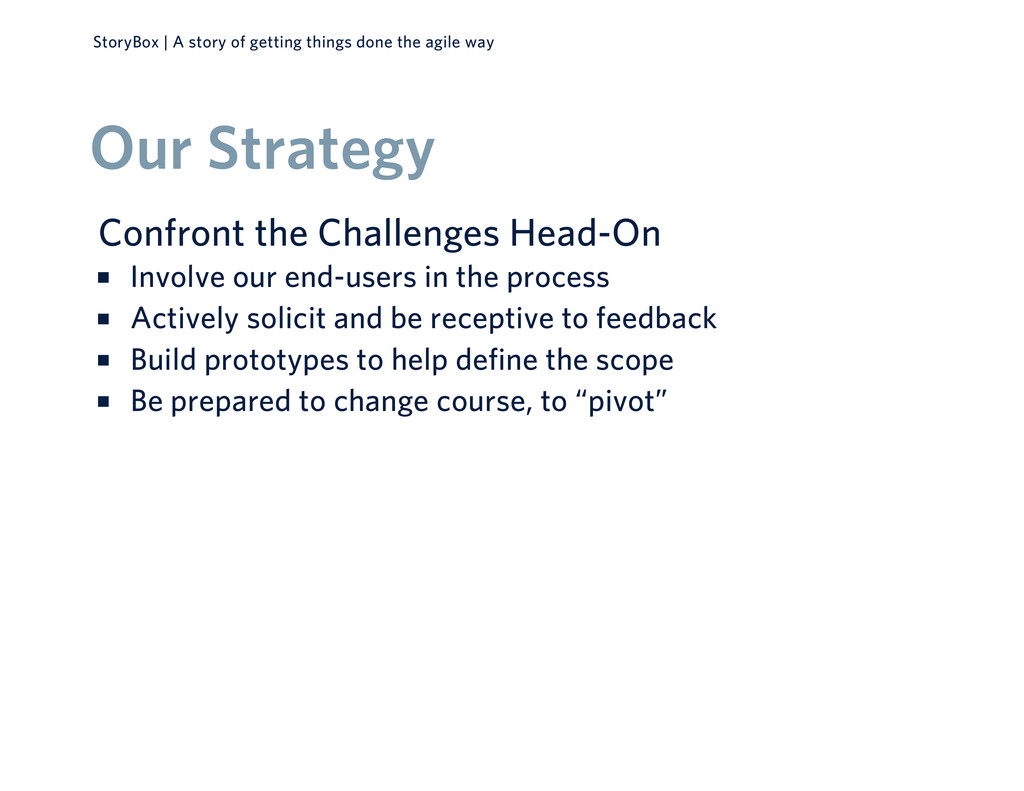
the agile way Confront the Challenges Head-On Involve our end-users in the process Actively solicit and be receptive to feedback Build prototypes to help define the scope Be prepared to change course, to “pivot”
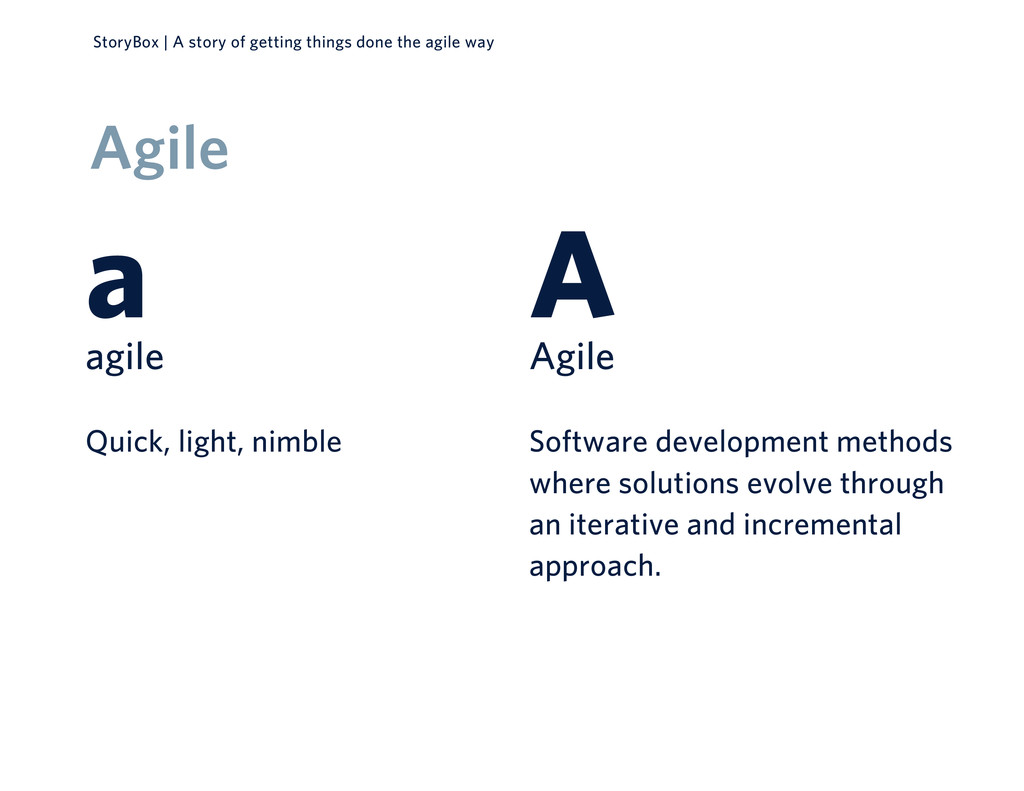
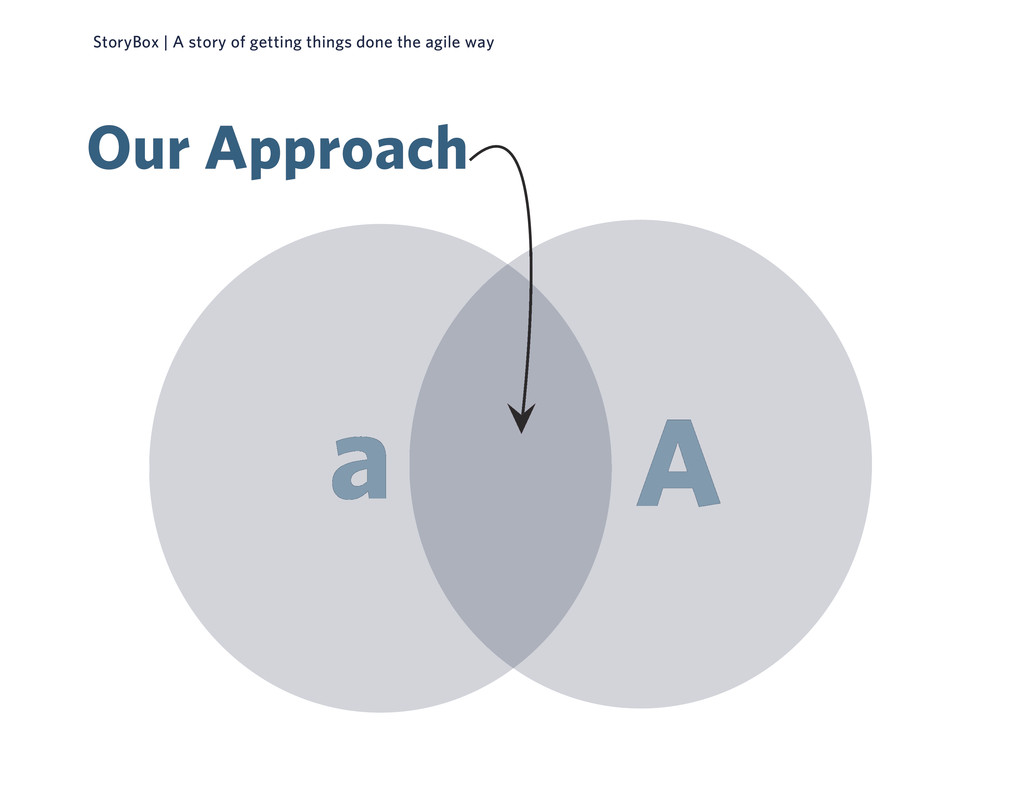
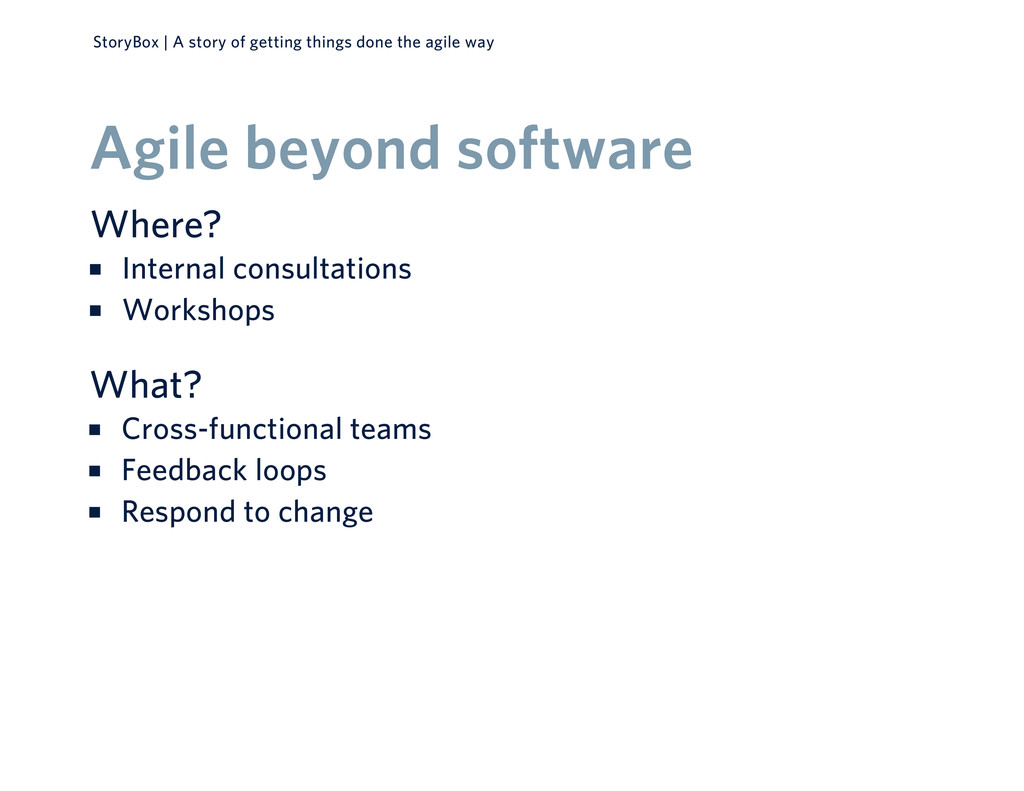
agile way Basics Reaction to heavyhanded nature of waterfall methods An iterative and incremental approach People and interactions over processes and tools Cross-functional, self-organizing teams ”Customer collaboration” Build working solutions that can be immediately evaluated Adapt and respond to change
agile way Key Principles Reaction to heavyhanded nature of waterfall methods An iterative and incremental approach People and interactions over processes and tools Cross-functional, self-organizing teams ”Customer collaboration” Build working solutions that can be immediately evaluated Adapt and respond to change
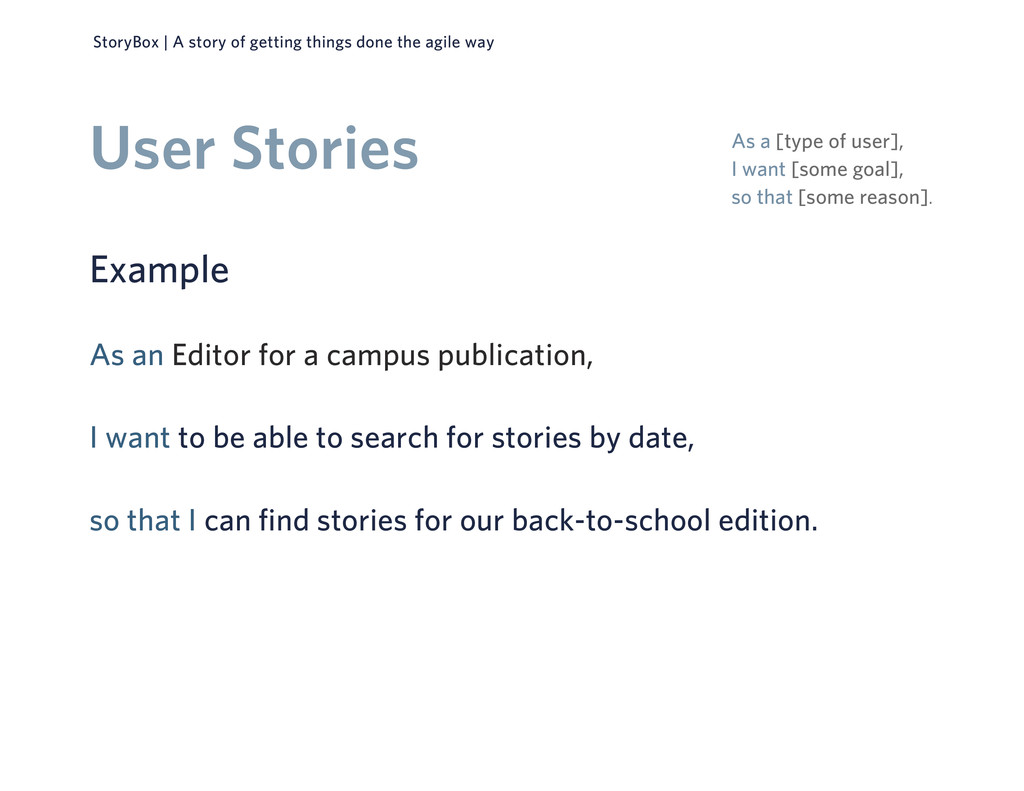
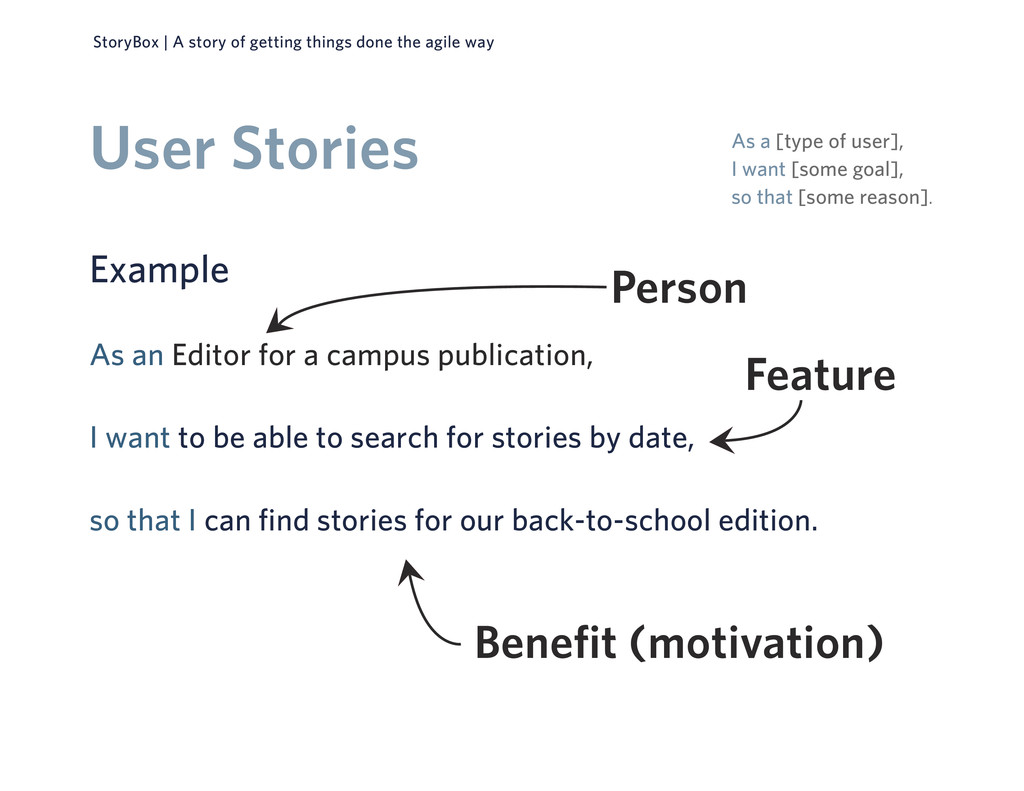
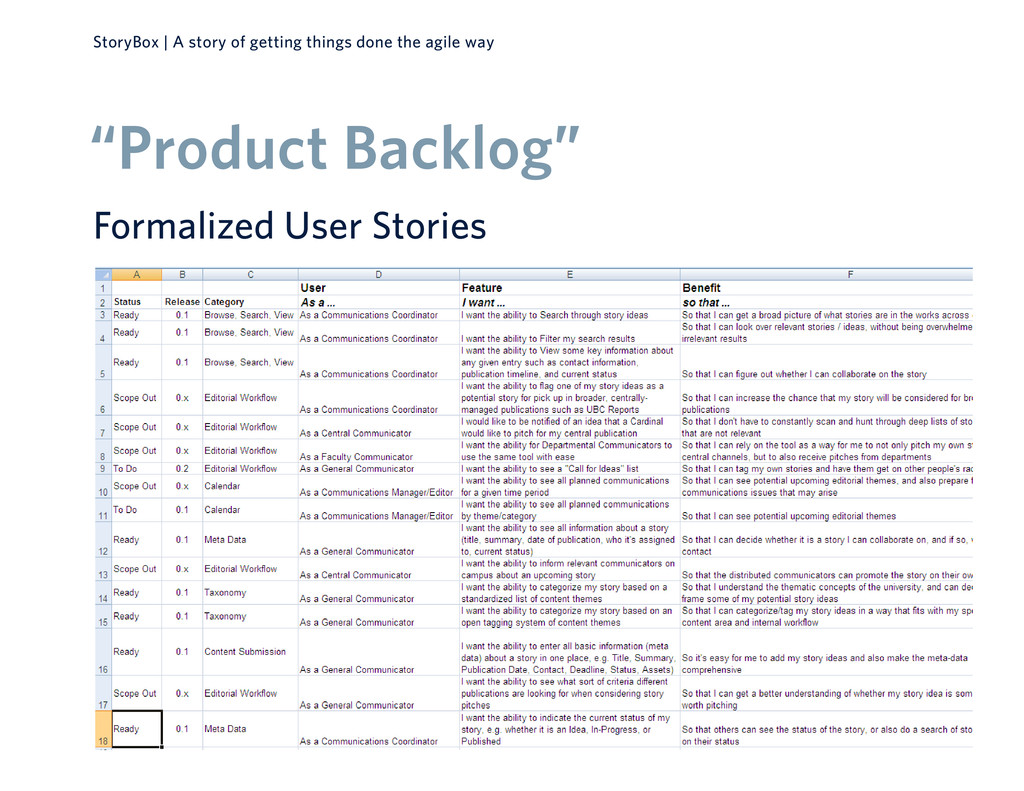
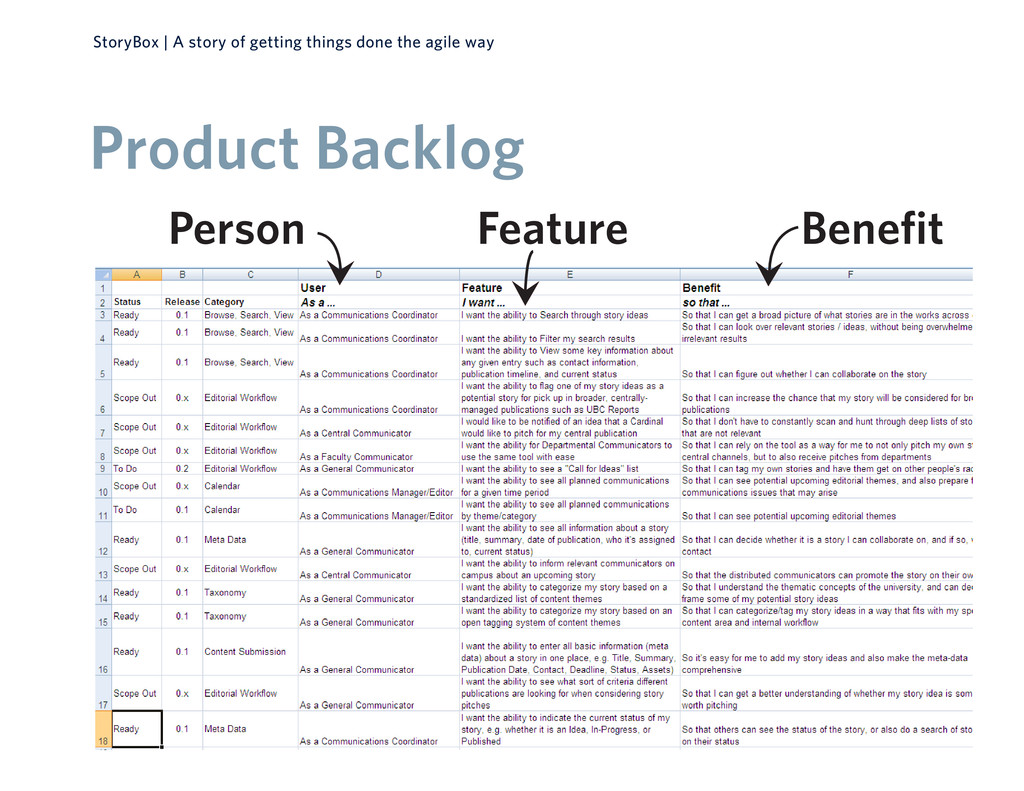
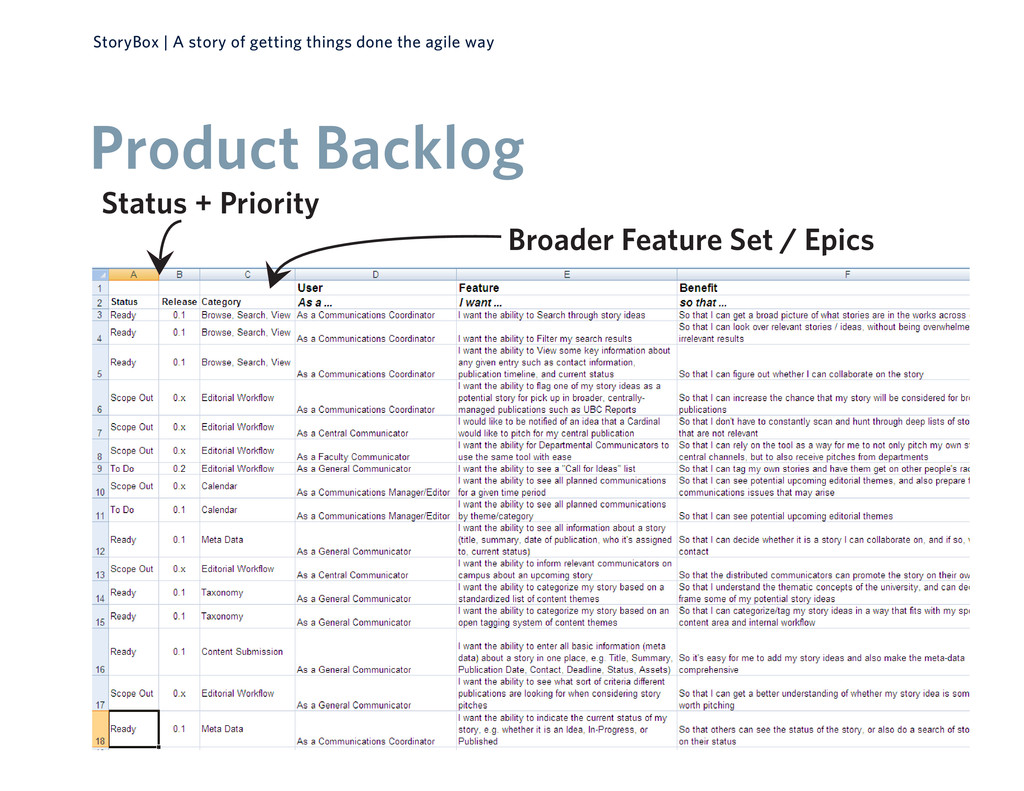
that [some reason]. User Stories StoryBox | A story of getting things done the agile way Example As an Editor for a campus publication, I want to be able to search for stories by date, so that I can find stories for our back-to-school edition.
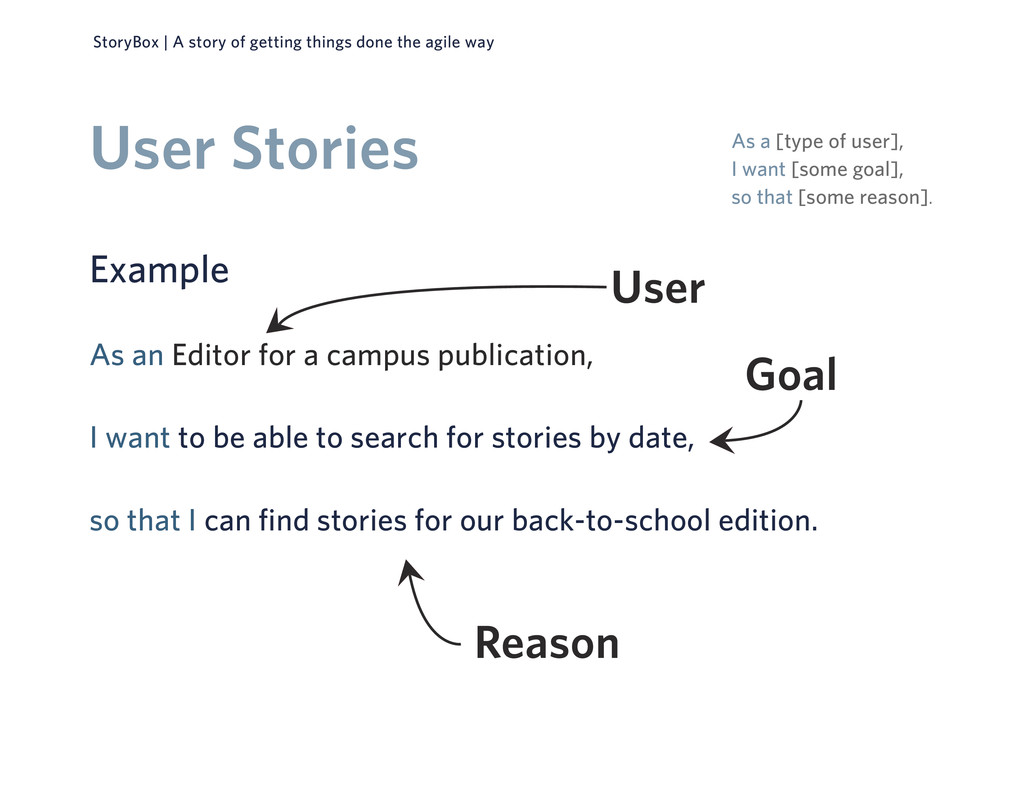
to be able to search for stories by date, so that I can find stories for our back-to-school edition. User Stories StoryBox | A story of getting things done the agile way User Goal Reason As a [type of user], I want [some goal], so that [some reason].
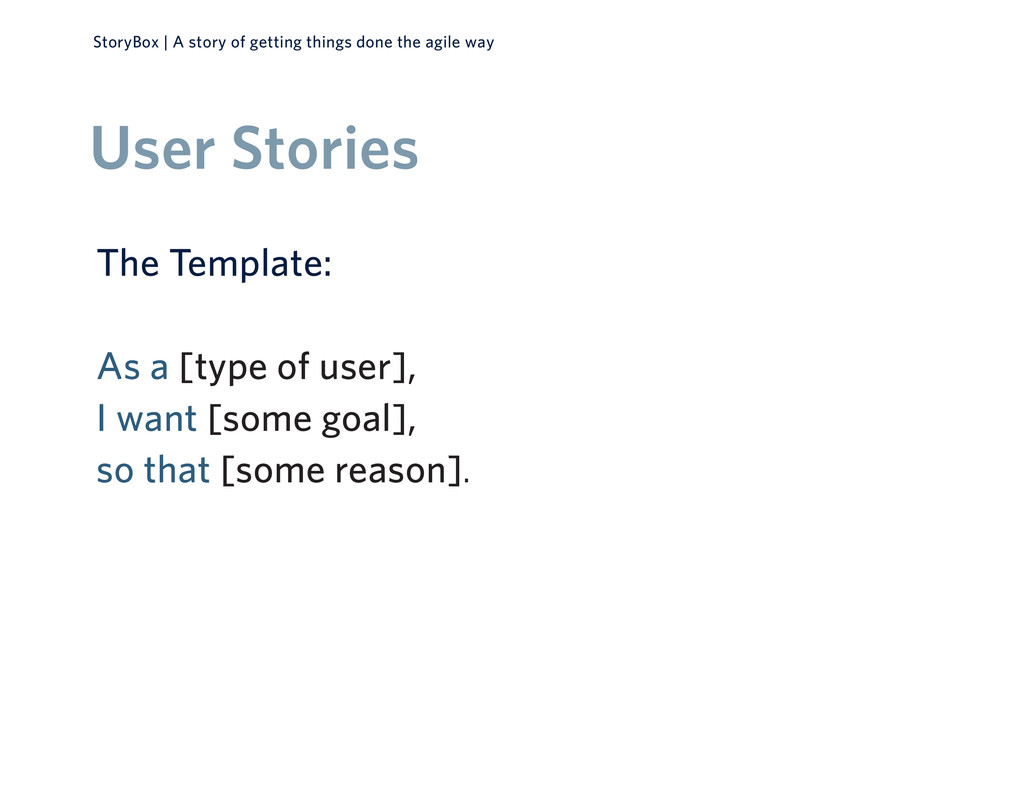
campus publication, I want to be able to search for stories by date, so that I can find stories for our back-to-school edition. As a [type of user], I want [some goal], so that [some reason]. User Stories StoryBox | A story of getting things done the agile way
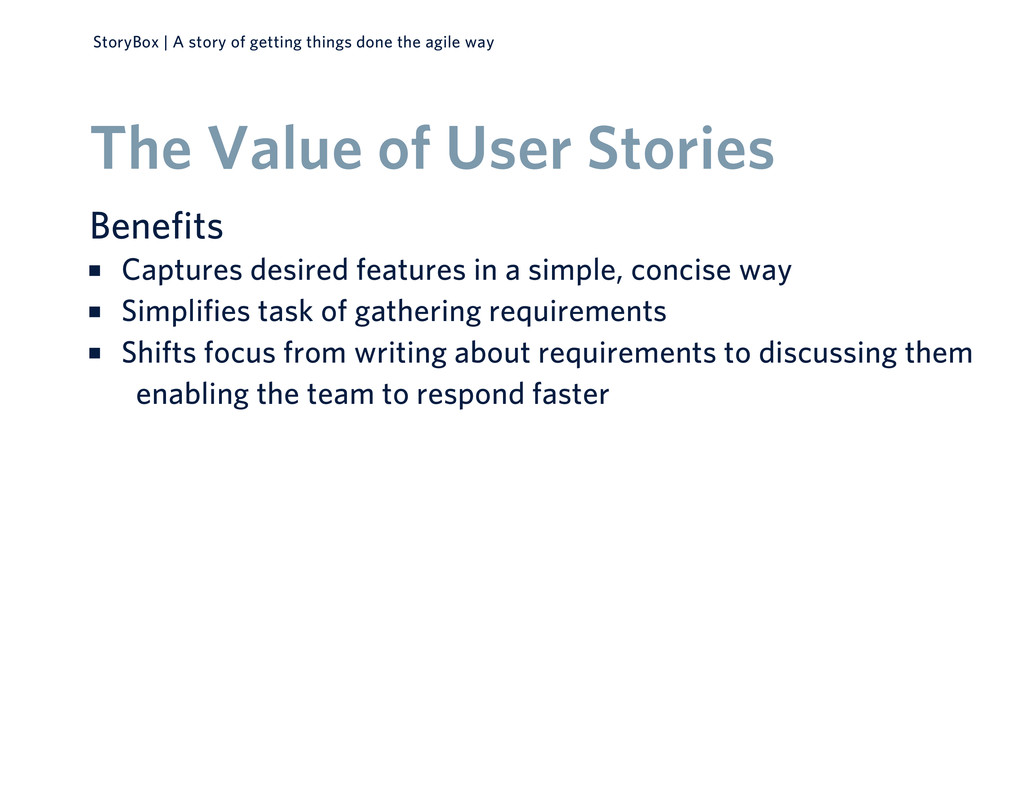
getting things done the agile way Benefits Captures desired features in a simple, concise way Simplifies task of gathering requirements Shifts focus from writing about requirements to discussing them enabling the team to respond faster
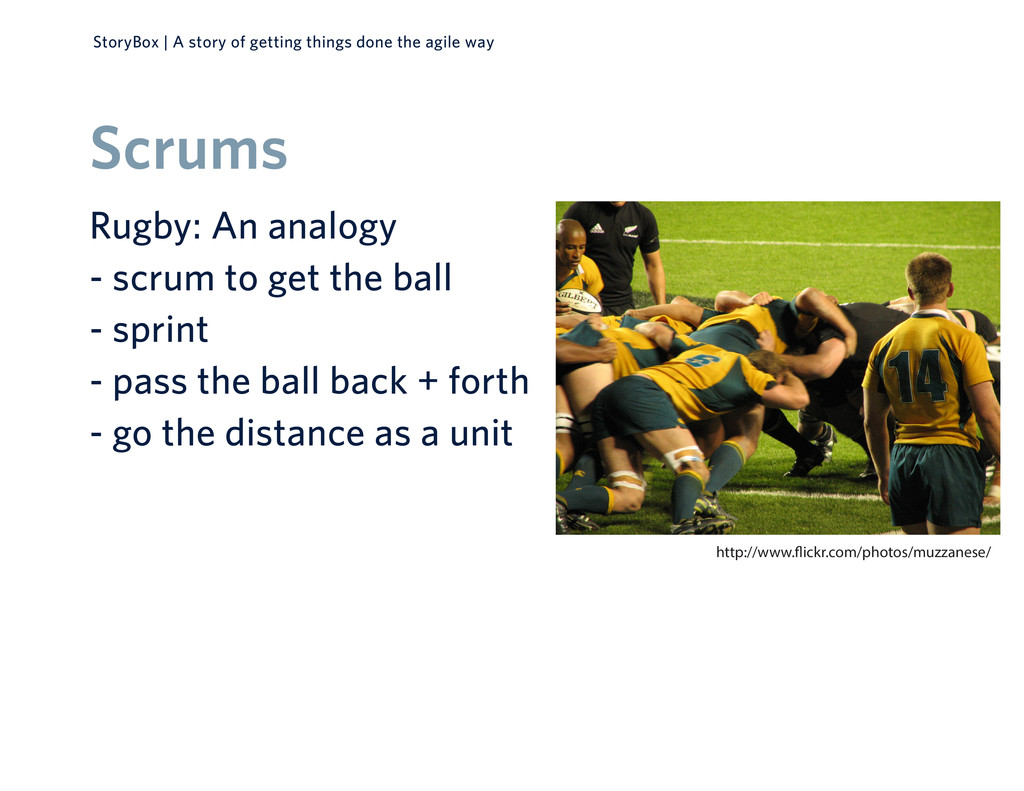
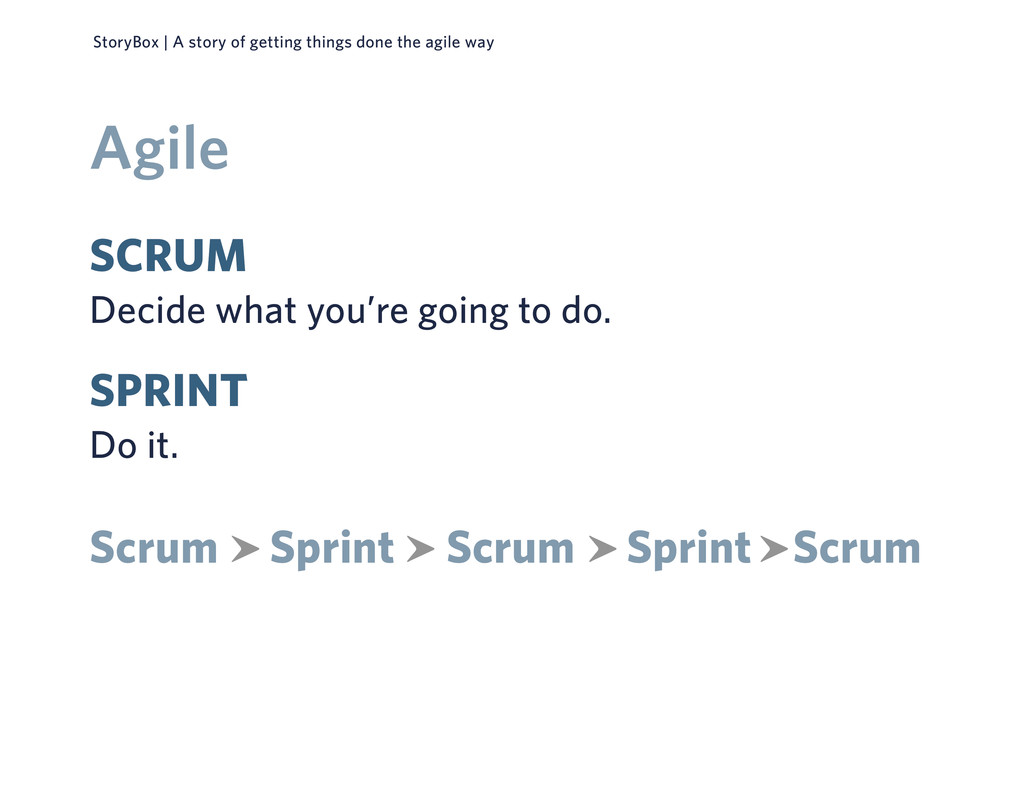
agile way Rugby: An analogy - scrum to get the ball - sprint - pass the ball back + forth - go the distance as a unit http://www. ickr.com/photos/muzzanese/
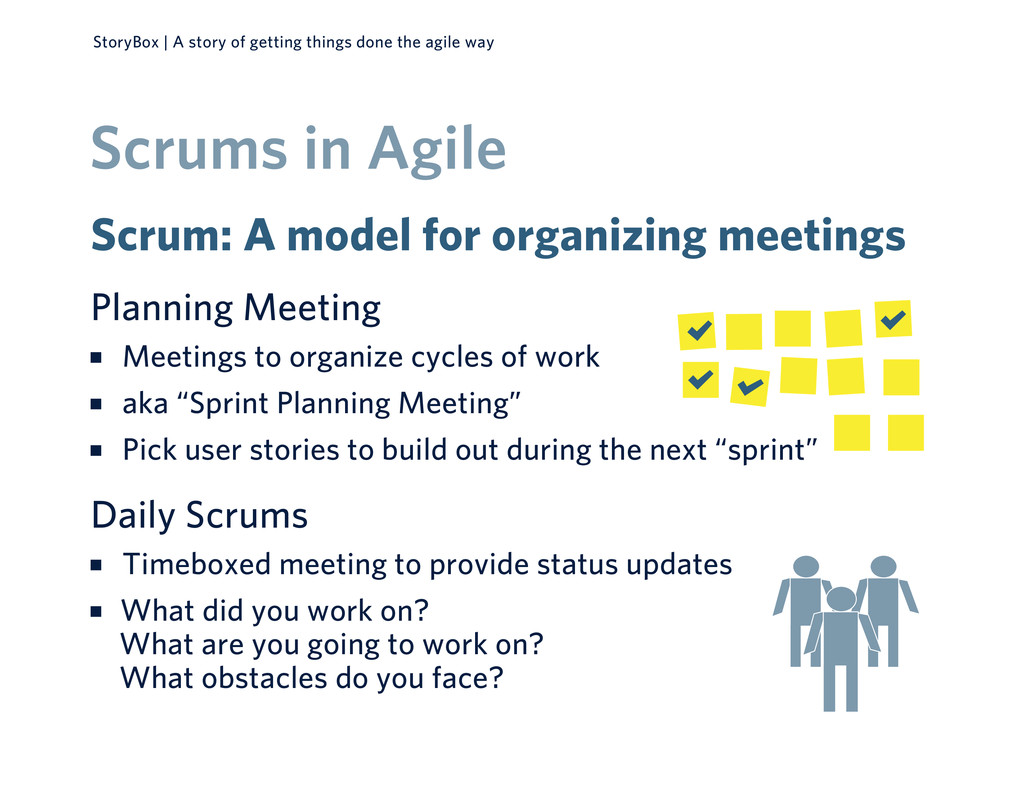
done the agile way Scrum: A model for organizing meetings Planning Meeting Meetings to organize cycles of work aka “Sprint Planning Meeting” Pick user stories to build out during the next “sprint” Daily Scrums Timeboxed meeting to provide status updates What did you work on? What are you going to work on? What obstacles do you face?
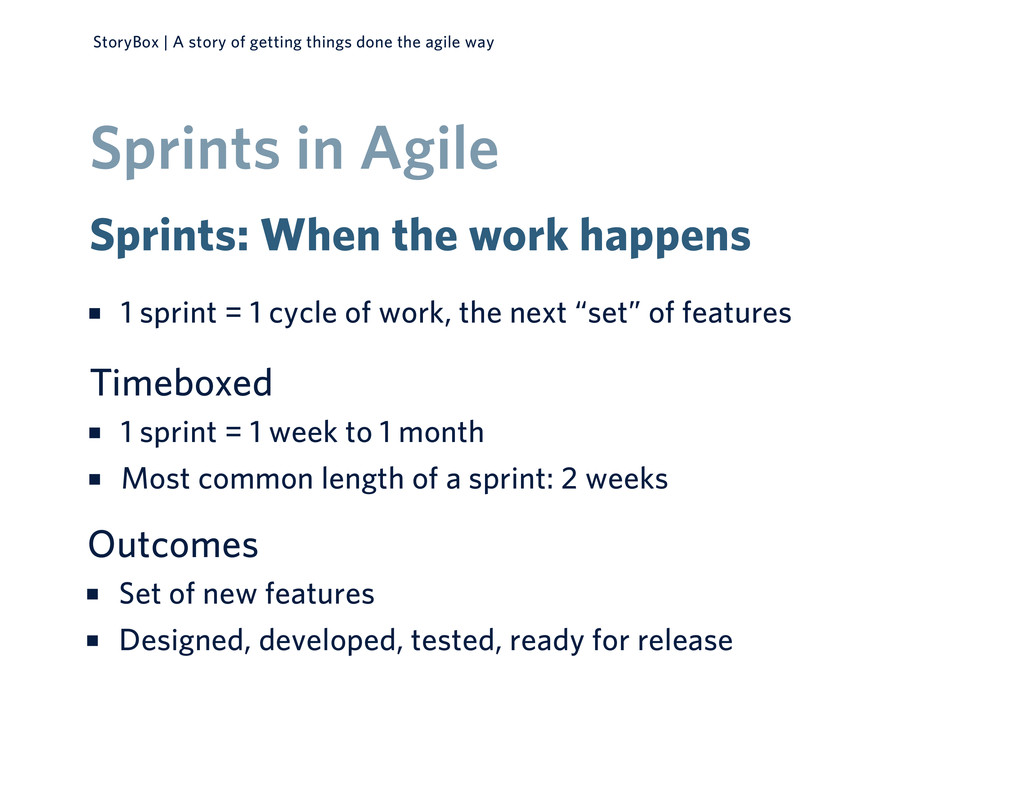
done the agile way Sprints: When the work happens Timeboxed 1 sprint = 1 week to 1 month Most common length of a sprint: 2 weeks Outcomes Set of new features Designed, developed, tested, ready for release 1 sprint = 1 cycle of work, the next “set” of features
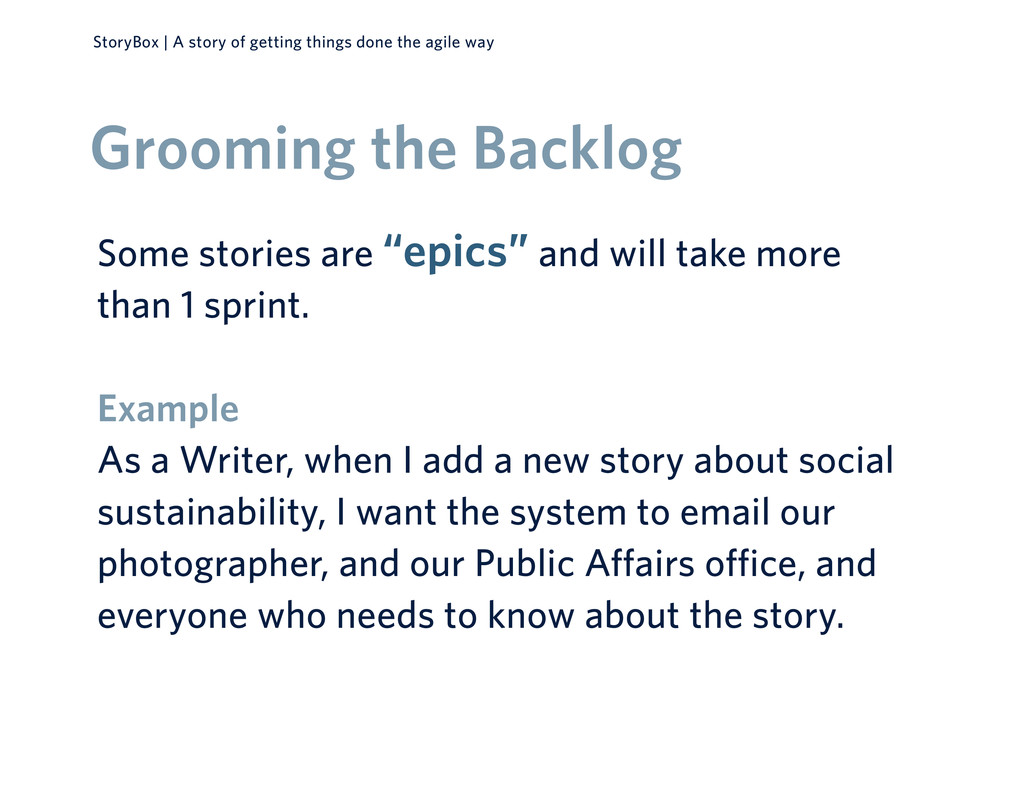
done the agile way Some stories are “epics” and will take more than 1 sprint. Example As a Writer, when I add a new story about social sustainability, I want the system to email our photographer, and our Public A airs o ce, and everyone who needs to know about the story.
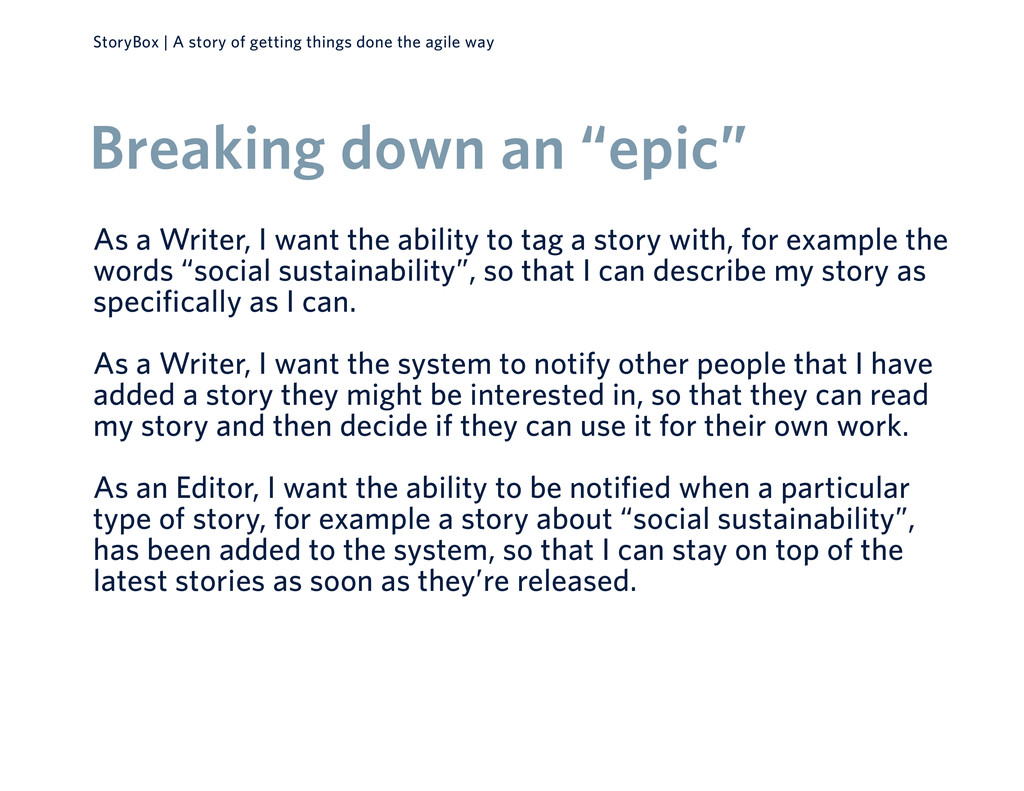
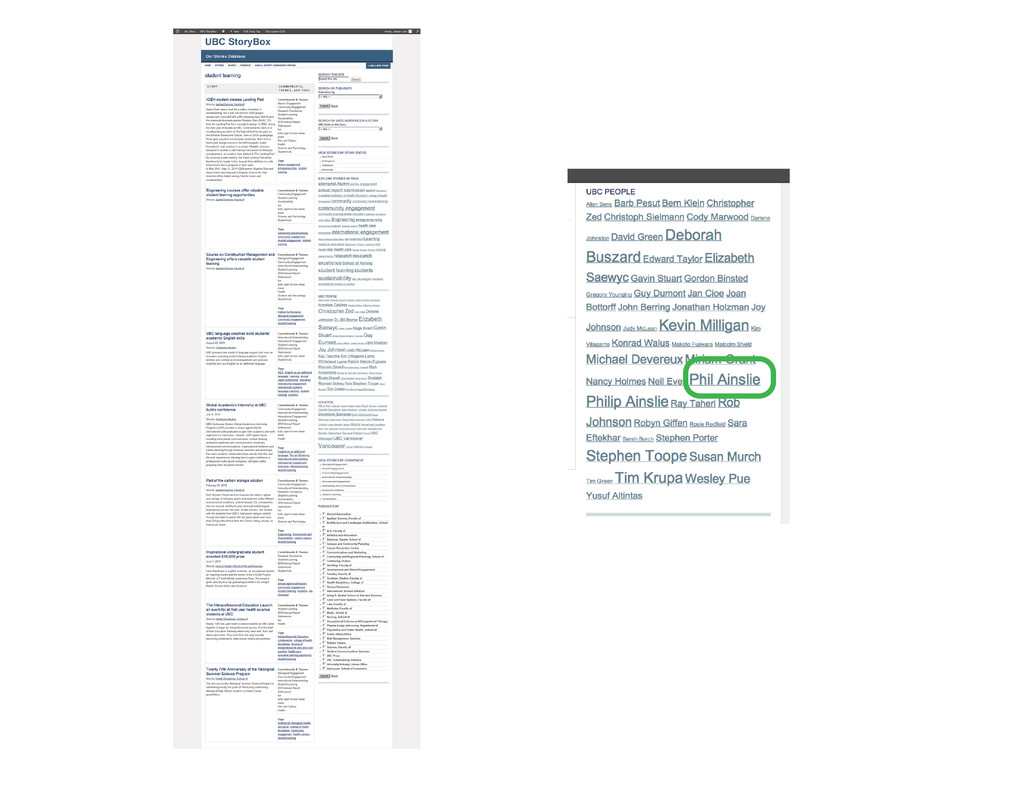
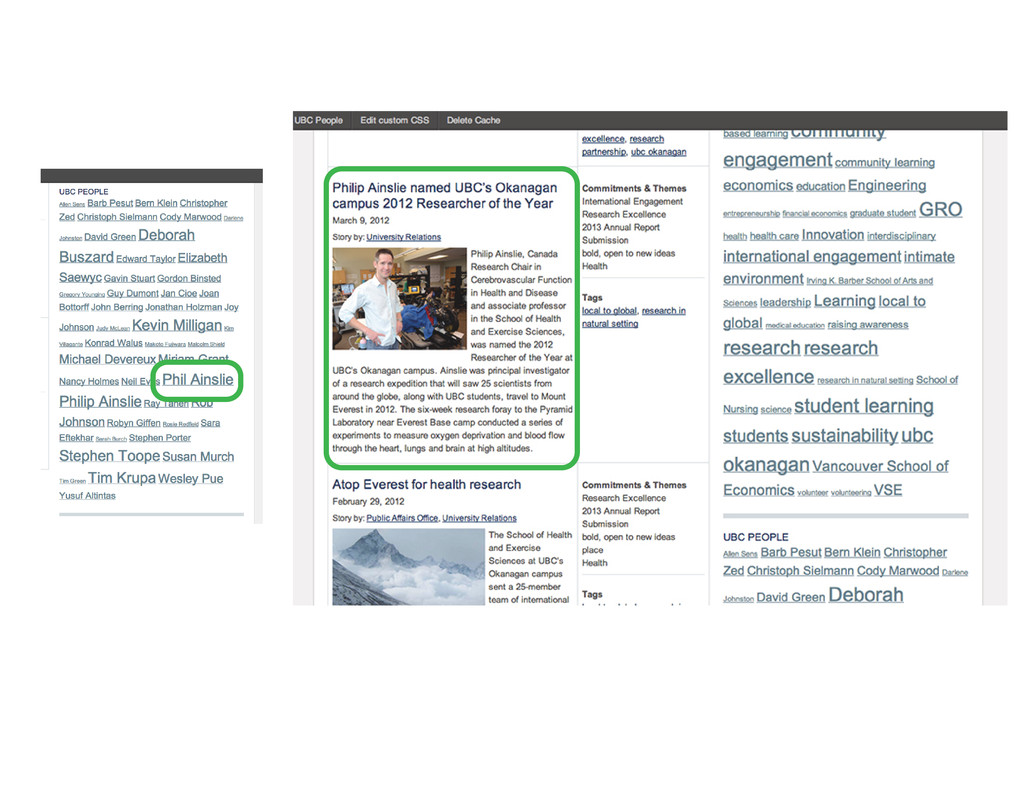
things done the agile way As a Writer, I want the ability to tag a story with, for example the words “social sustainability”, so that I can describe my story as specifically as I can. As a Writer, I want the system to notify other people that I have added a story they might be interested in, so that they can read my story and then decide if they can use it for their own work. As an Editor, I want the ability to be notified when a particular type of story, for example a story about “social sustainability”, has been added to the system, so that I can stay on top of the latest stories as soon as they’re released.
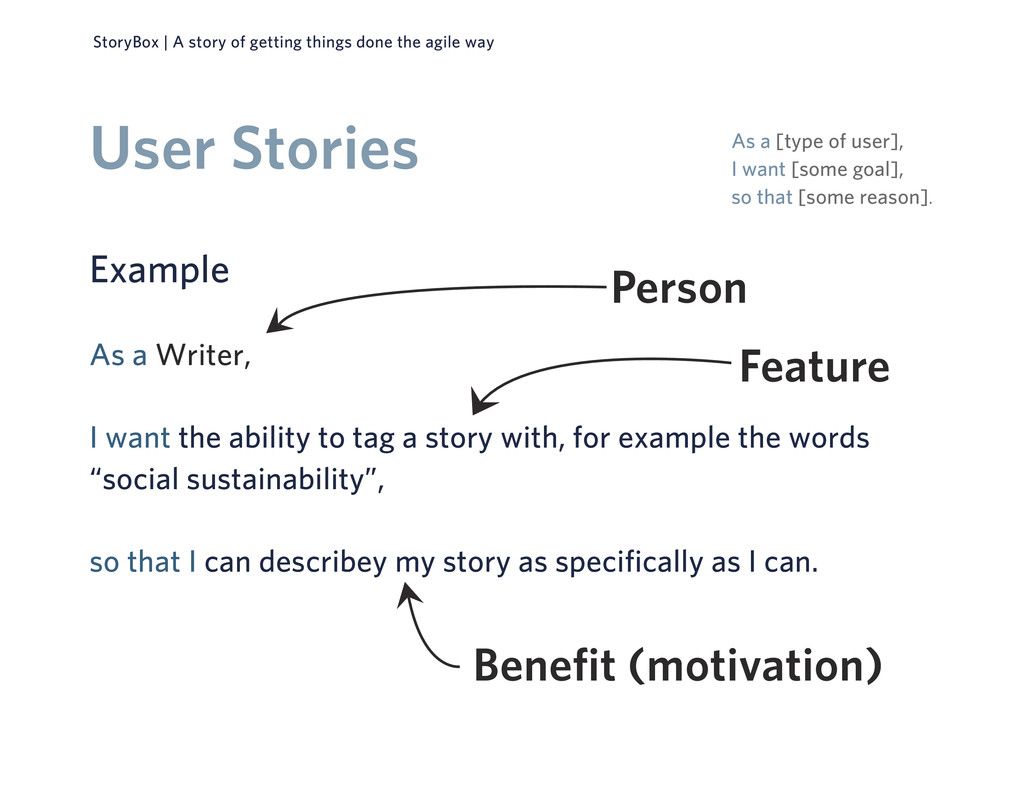
the ability to tag a story with, for example the words “social sustainability”, so that I can describey my story as specifically as I can. As a [type of user], I want [some goal], so that [some reason]. User Stories StoryBox | A story of getting things done the agile way
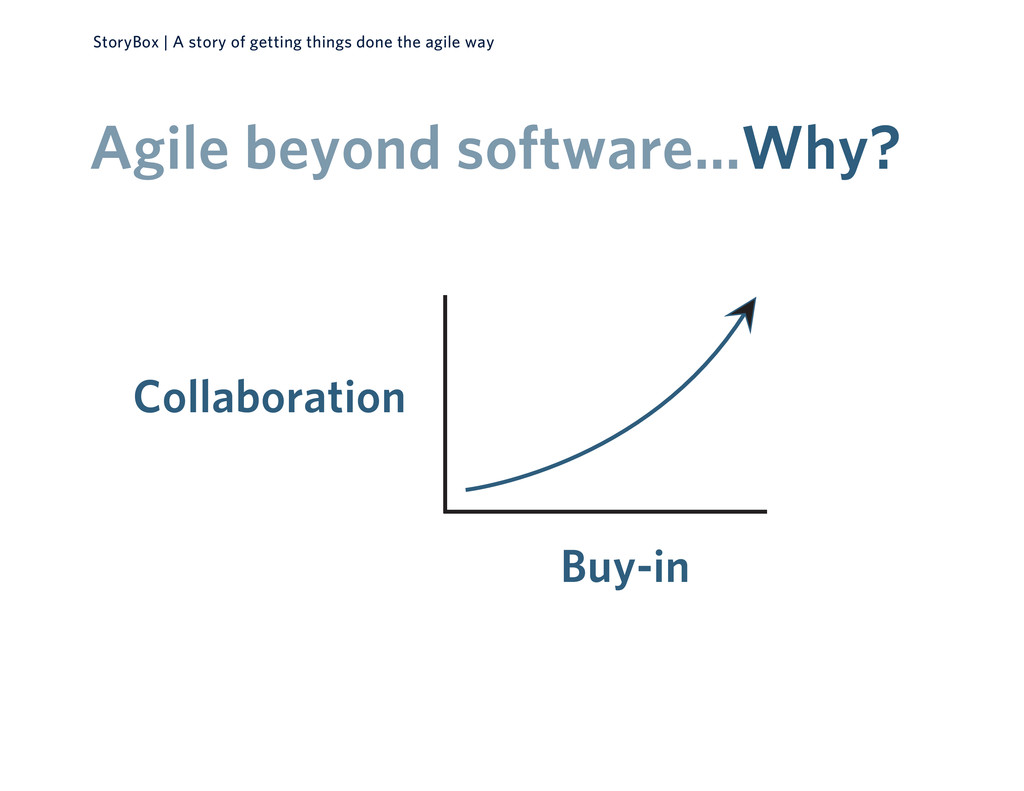
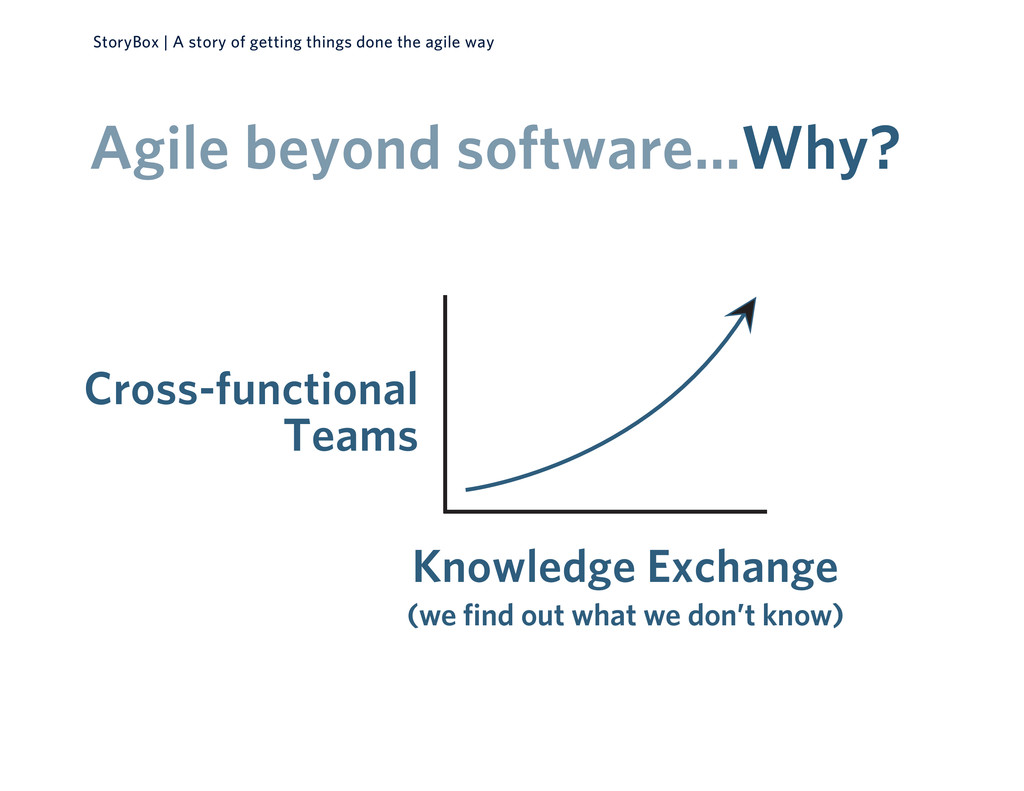
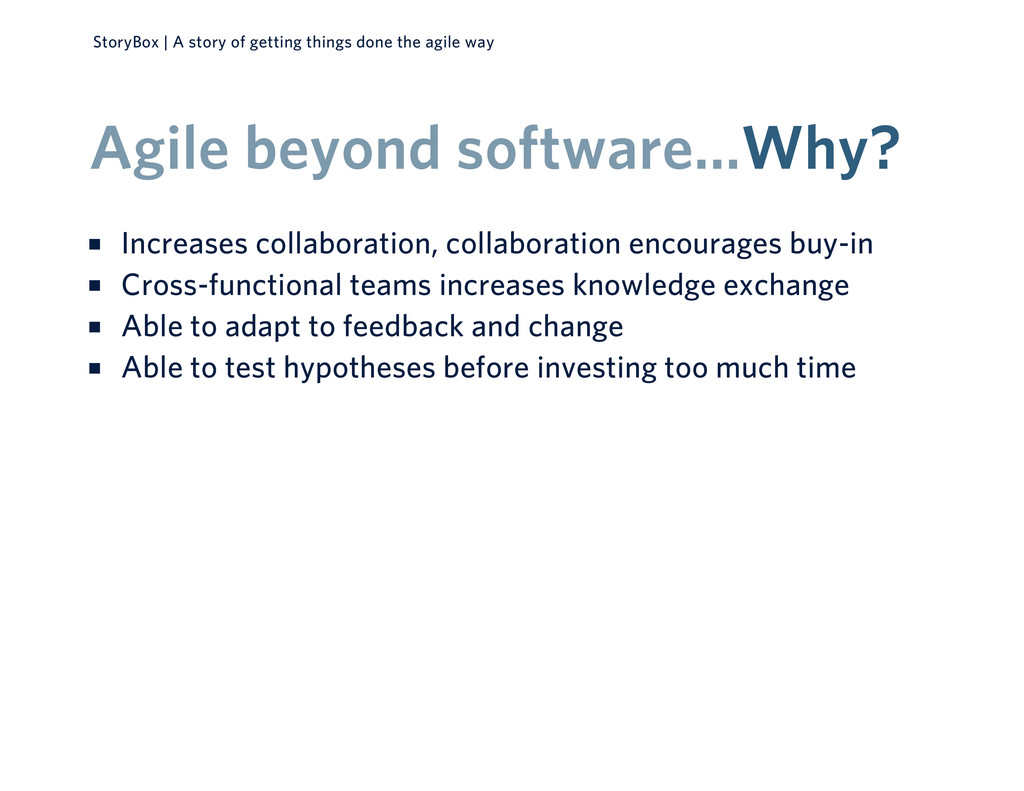
things done the agile way Increases collaboration, collaboration encourages buy-in Cross-functional teams increases knowledge exchange Able to adapt to feedback and change Able to test hypotheses before investing too much time
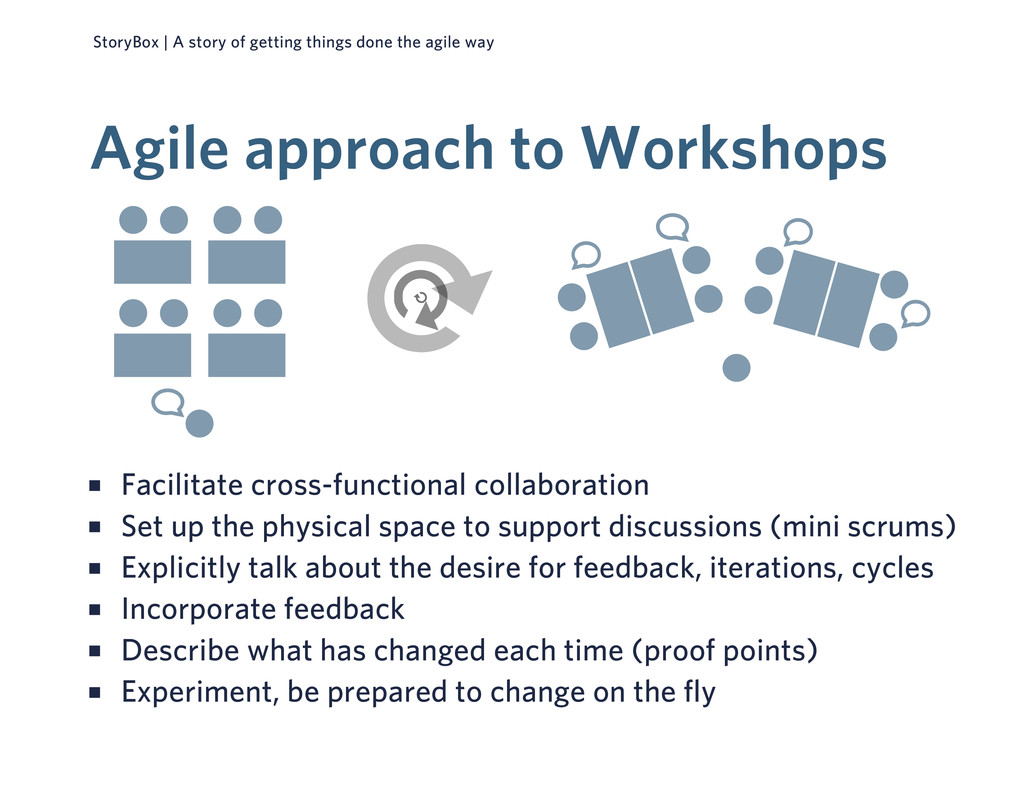
things done the agile way Facilitate cross-functional collaboration Set up the physical space to support discussions (mini scrums) Explicitly talk about the desire for feedback, iterations, cycles Incorporate feedback Describe what has changed each time (proof points) Experiment, be prepared to change on the fly
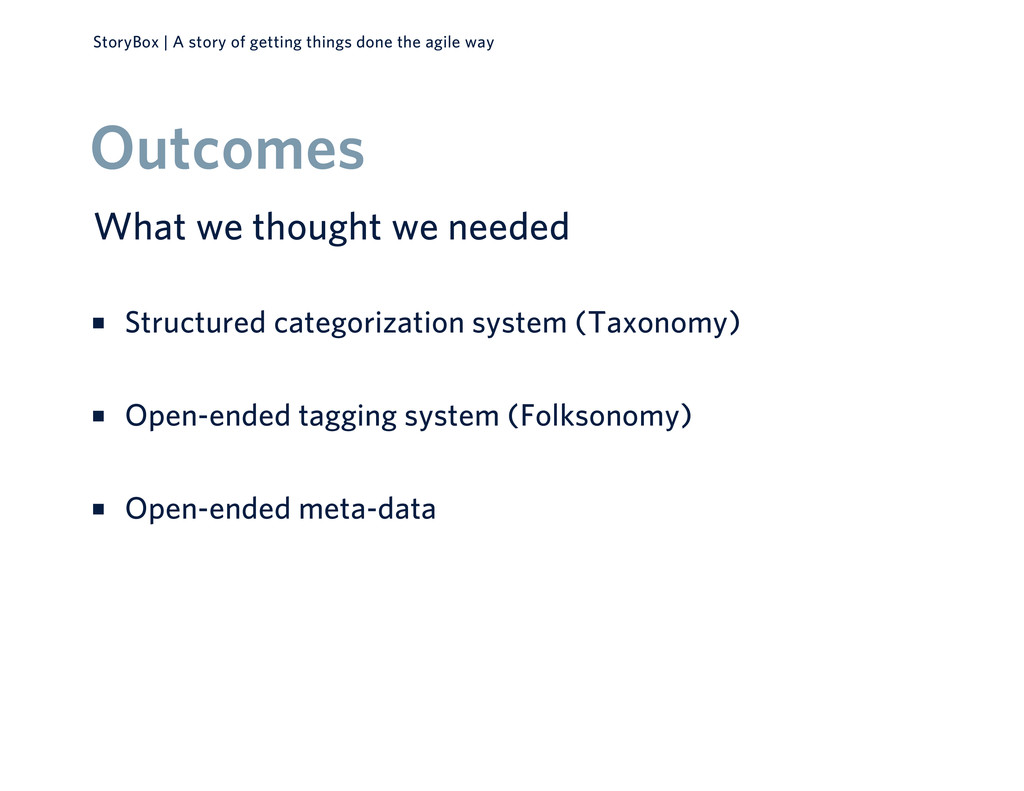
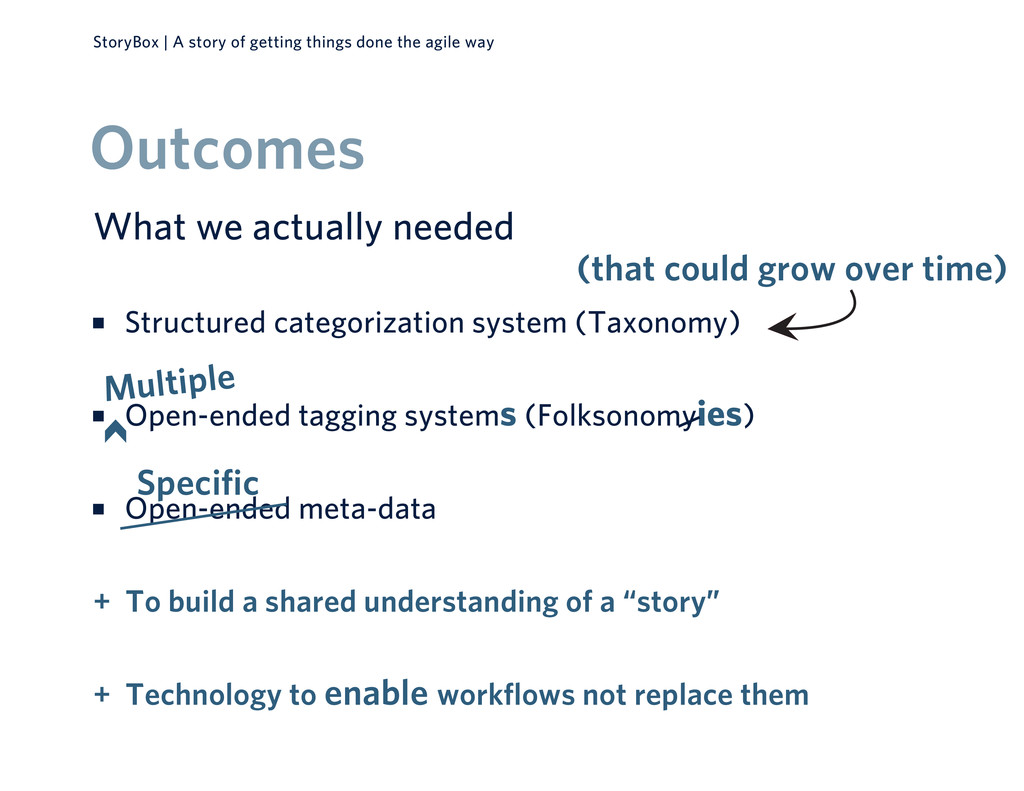
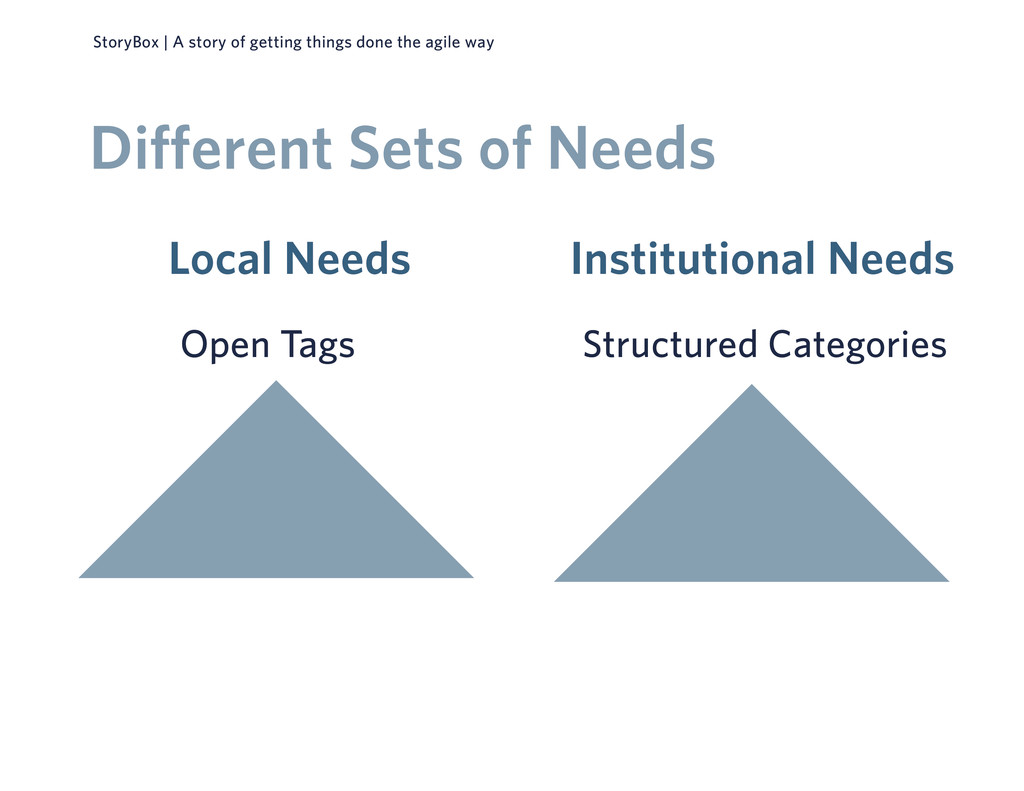
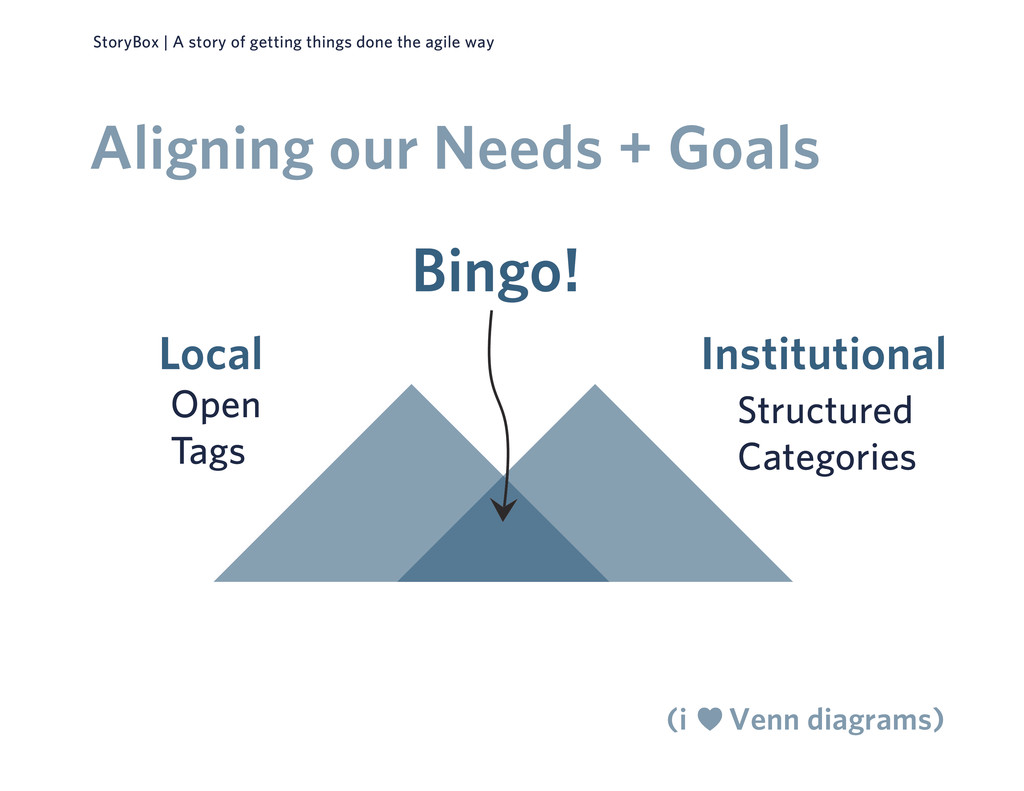
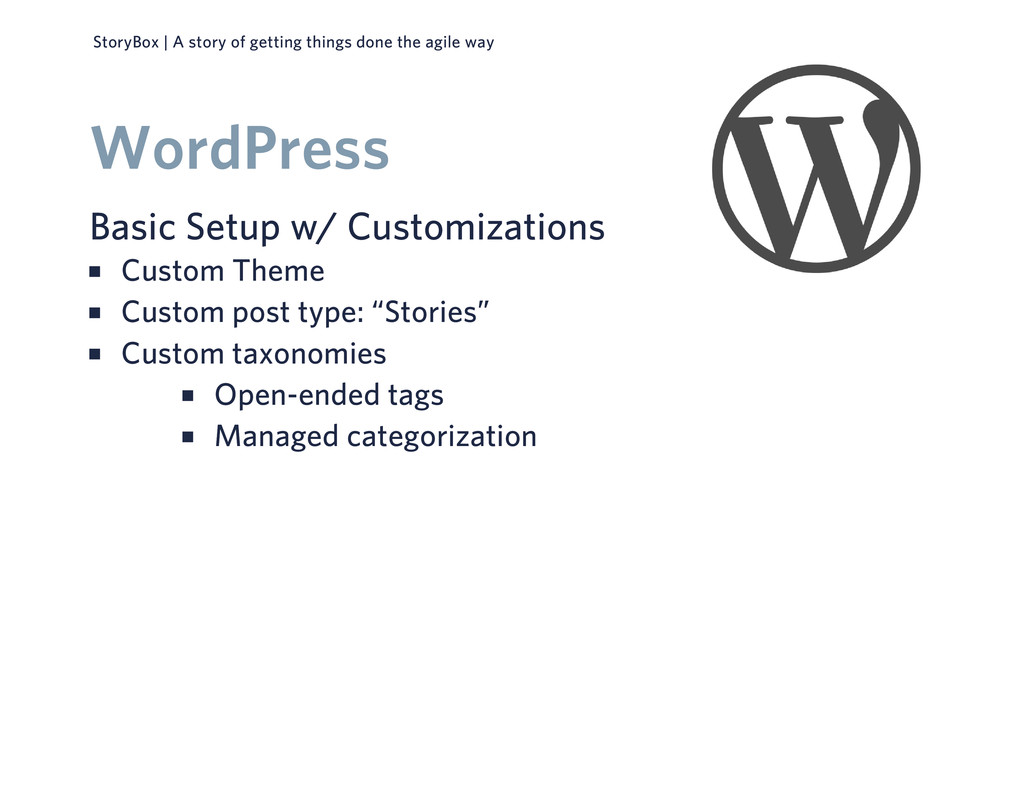
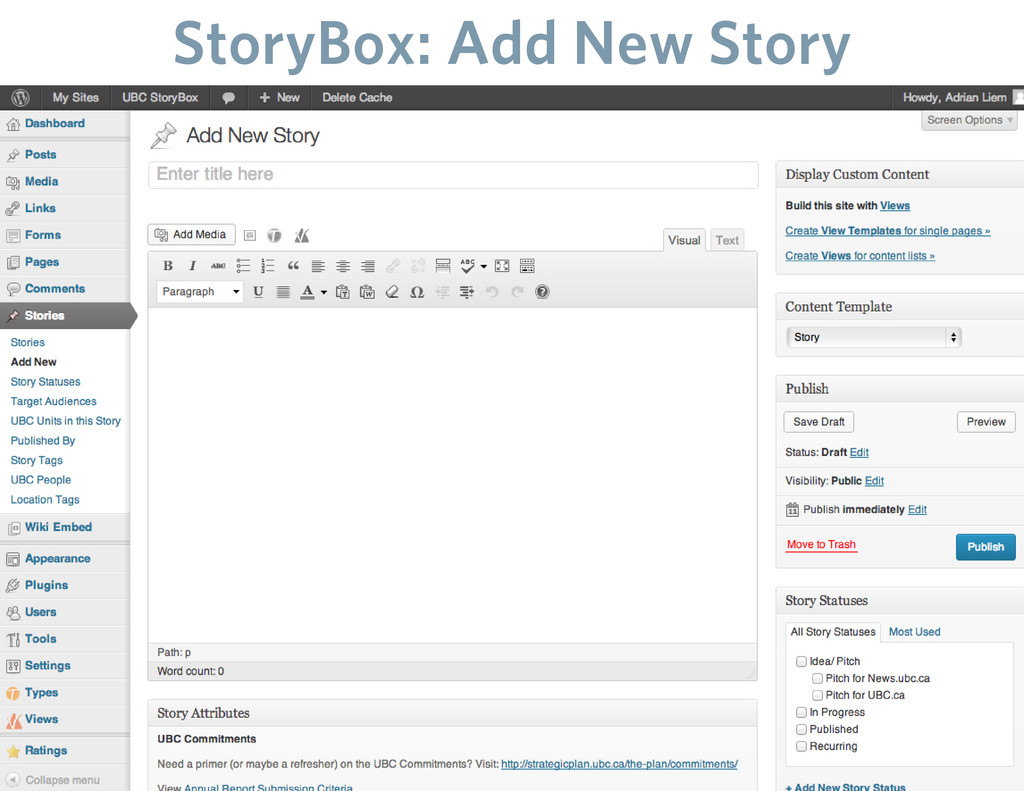
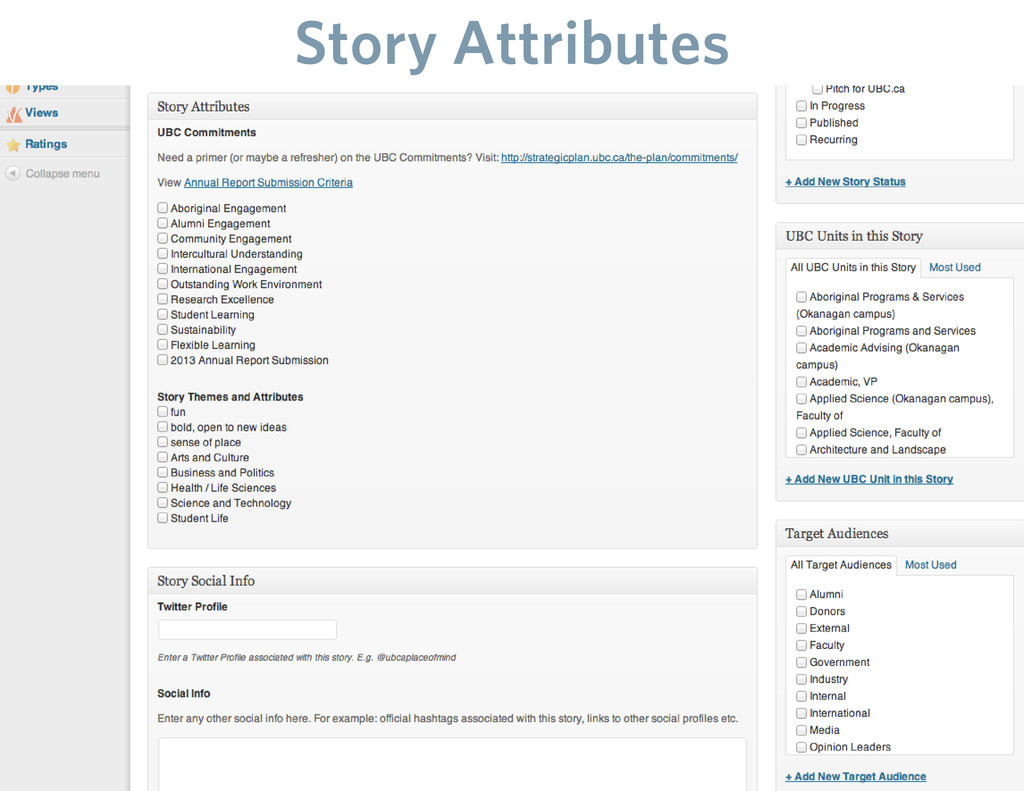
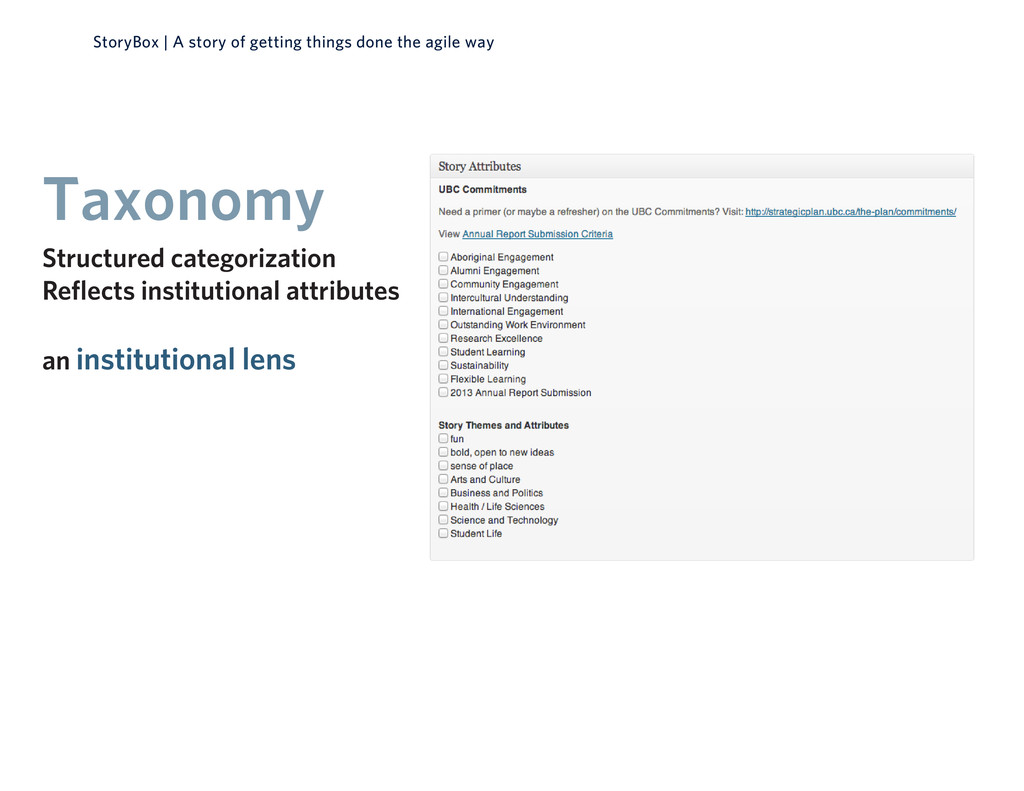
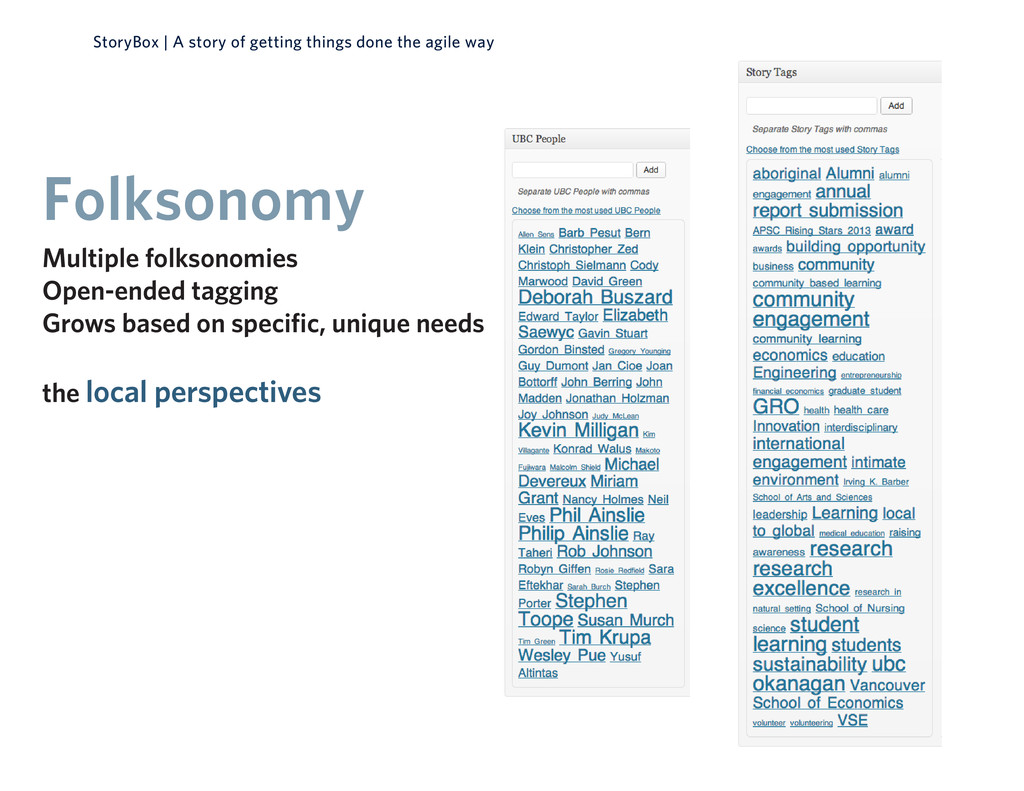
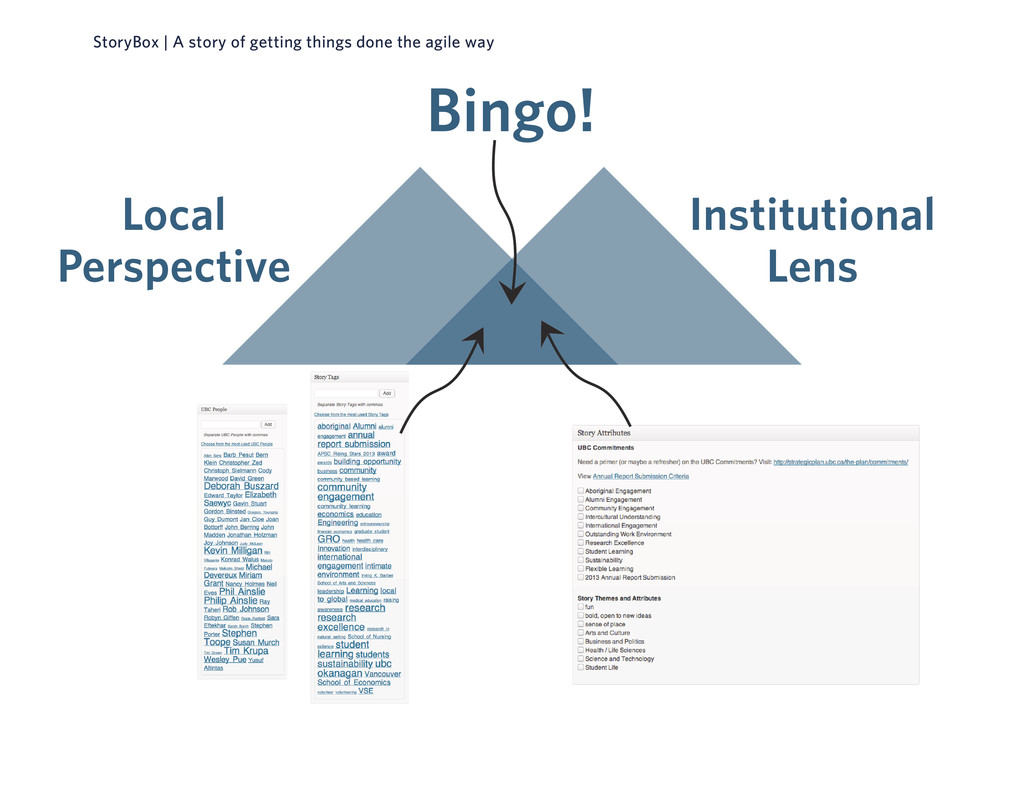
agile way What we actually needed Structured categorization system (Taxonomy) Open-ended tagging systems (Folksonomyies) Open-ended meta-data + To build a shared understanding of a “story” + Technology to enable workflows not replace them Multiple (that could grow over time) Specific
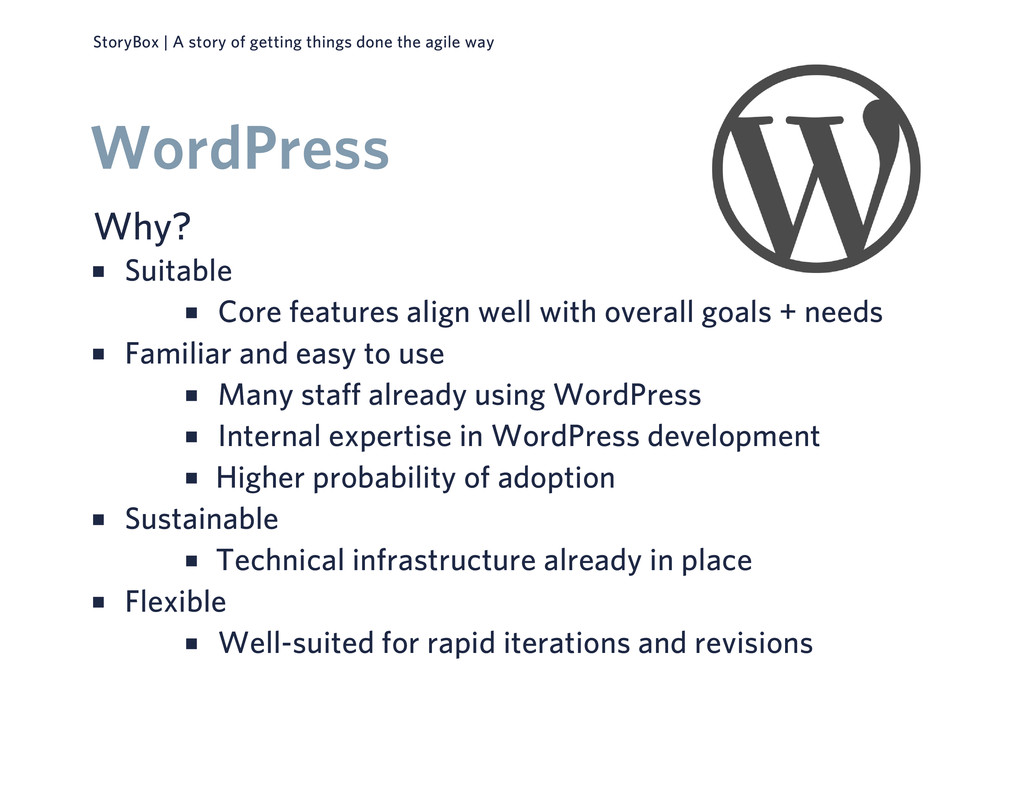
agile way Why? Suitable Core features align well with overall goals + needs Familiar and easy to use Many sta already using WordPress Internal expertise in WordPress development Higher probability of adoption Sustainable Technical infrastructure already in place Flexible Well-suited for rapid iterations and revisions
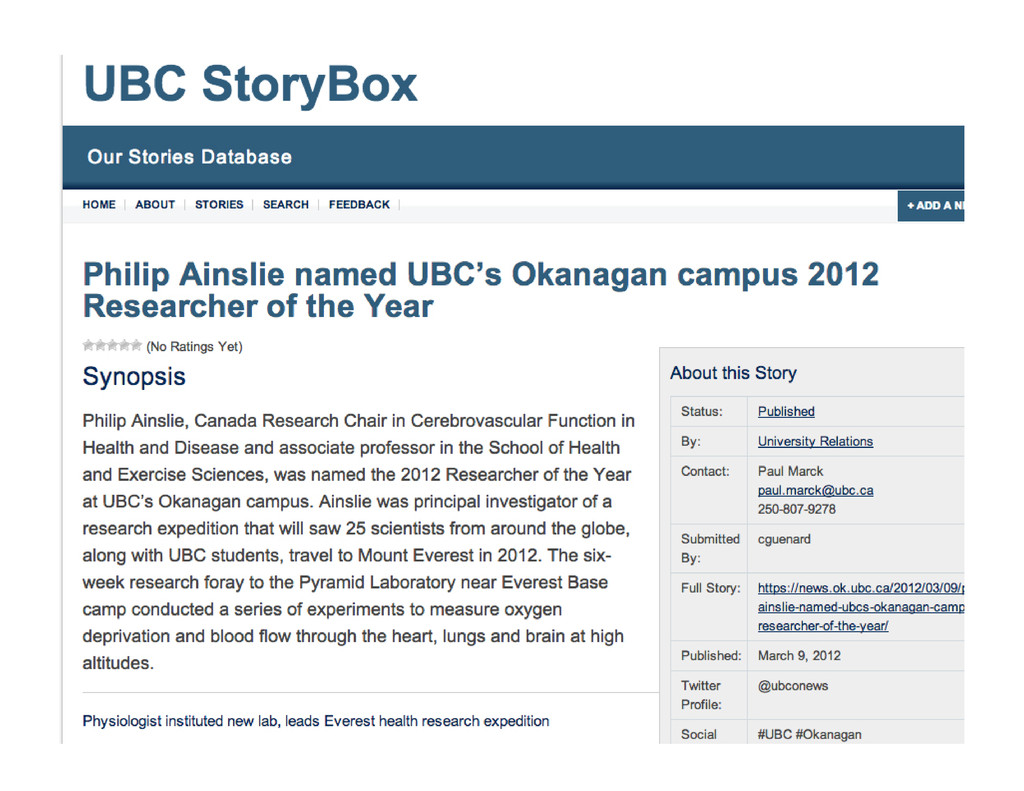
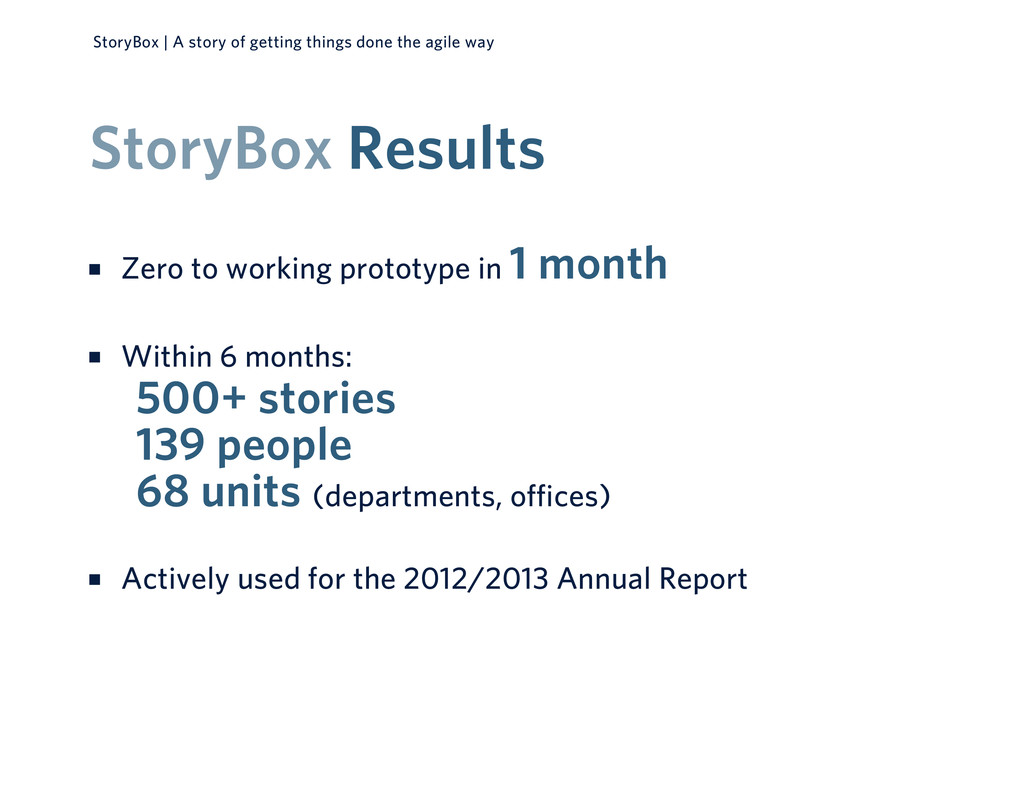
the agile way Zero to working prototype in 1 month Within 6 months: 500+ stories 139 people 68 units (departments, o ces) Actively used for the 2012/2013 Annual Report
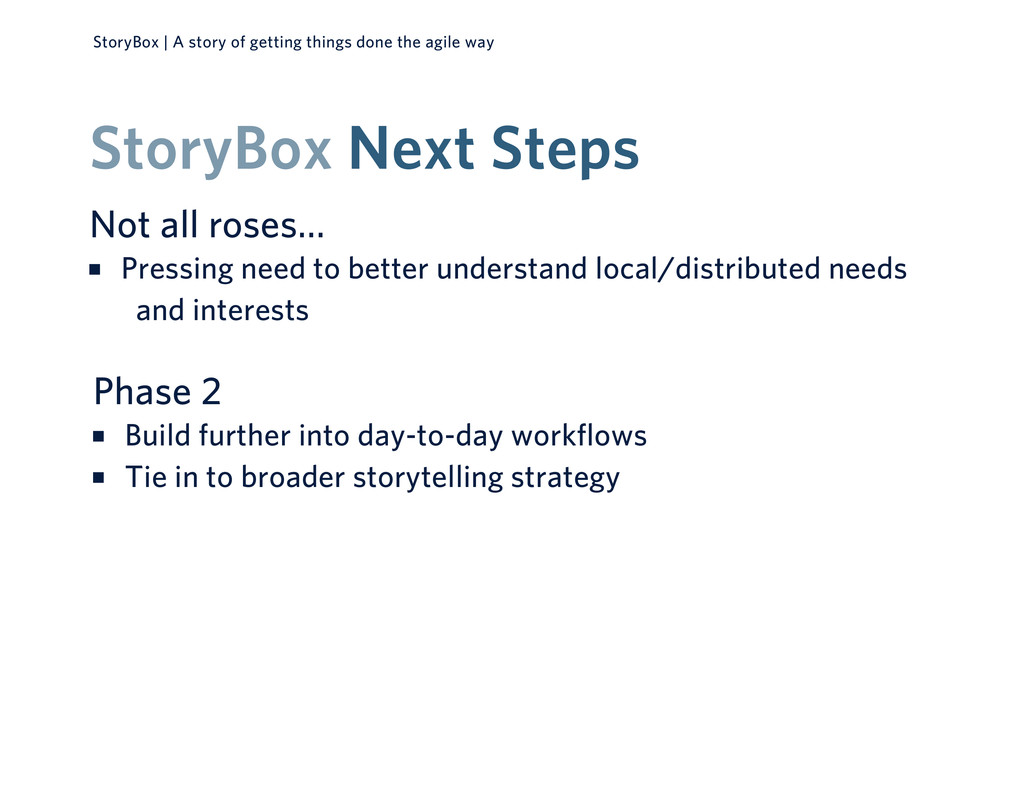
done the agile way Not all roses... Pressing need to better understand local/distributed needs and interests Phase 2 Build further into day-to-day workflows Tie in to broader storytelling strategy
story of getting things done the agile way Well-defined goals, unknown “end product” We knew the problem well, we weren’t sure about the solution Scratching our own itch We had direct access to our “end users” We were a sub-set of our end users Right team, right infrastructure We had people willing to be agile and to try Agile We had a suitable technical infrastructure in place
the agile way What to look for “In-house” projects Have “T-Shaped” people who work well in teams Undefined scope, unclear end product Need for speed, short timeframes Direct access to target market


 odashi
 shuta13
 persolserverworks
 sh_fk2
 masakiokuda
 glaforge
 minorun365
 akitoshiga
 ivry_presentationmaterials
 ykanoh
 greenmidori
 nealle
 codingconduct
 hannesfritz
 mkilby
 ryanjones
 mza
 khoart
 katiecoart
 destraynor
 davetheseo
 gurzu
 maltzj
 caitiem20