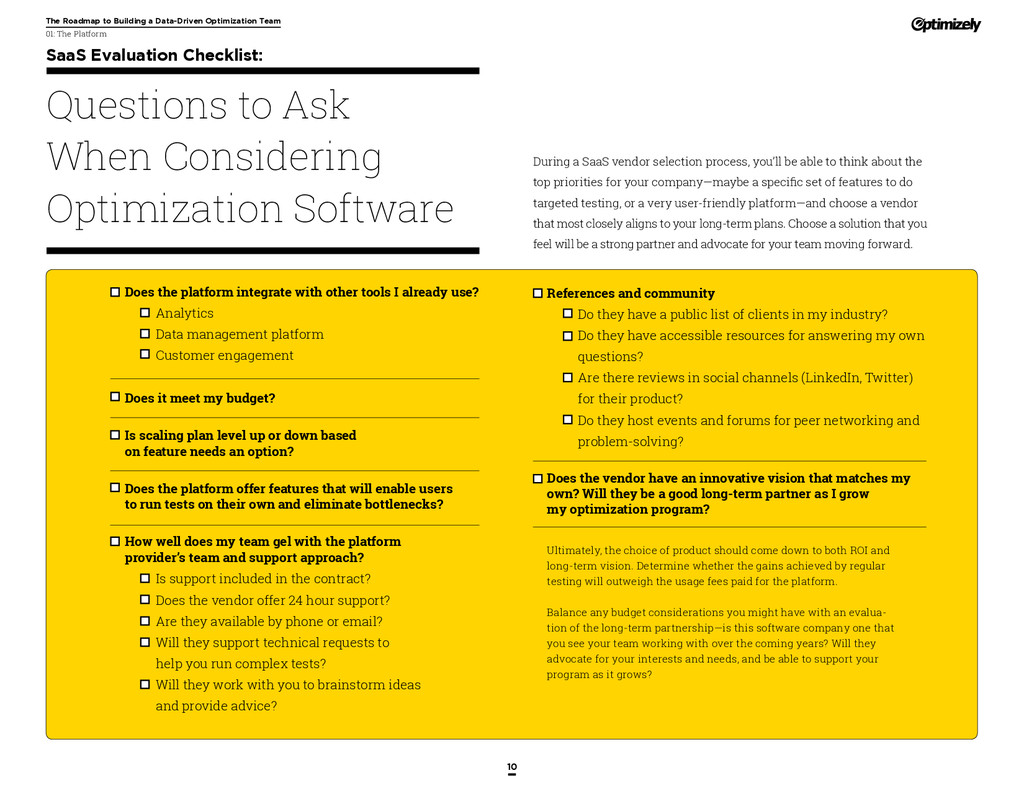
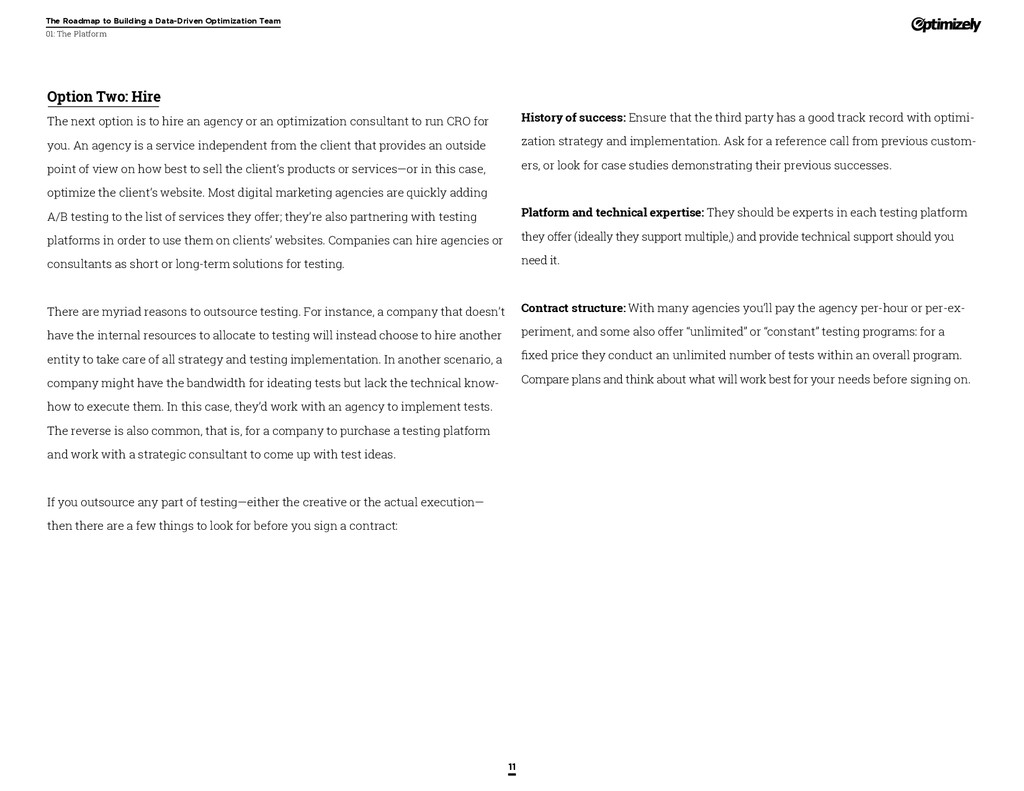
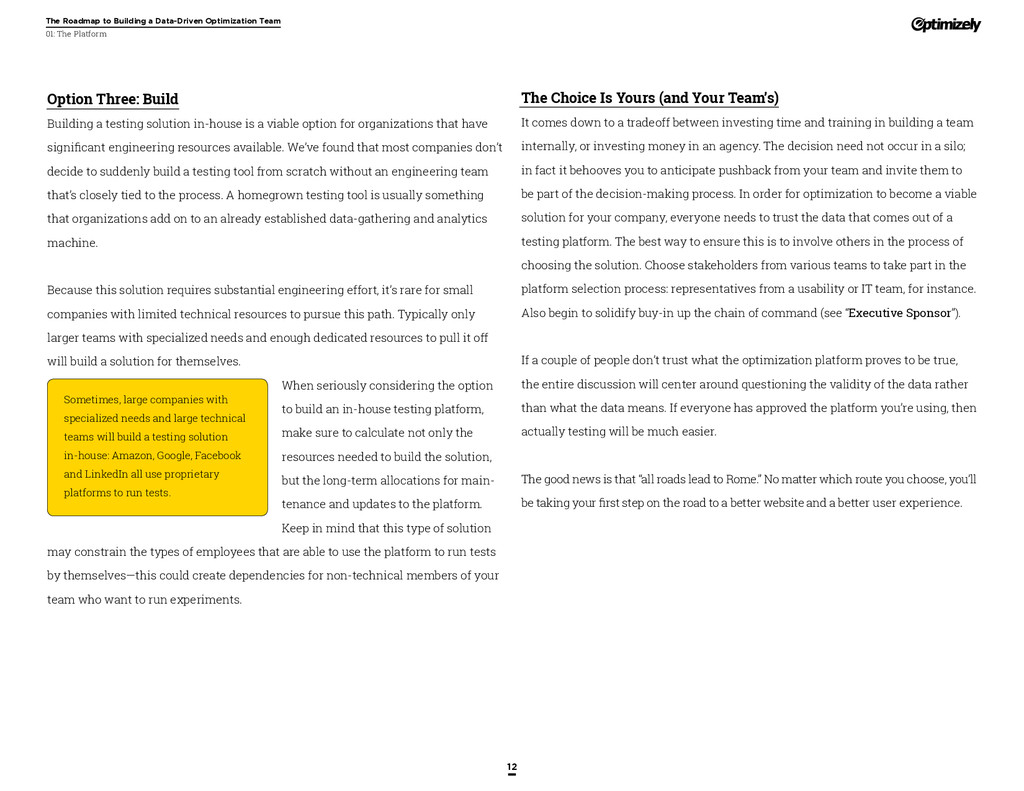
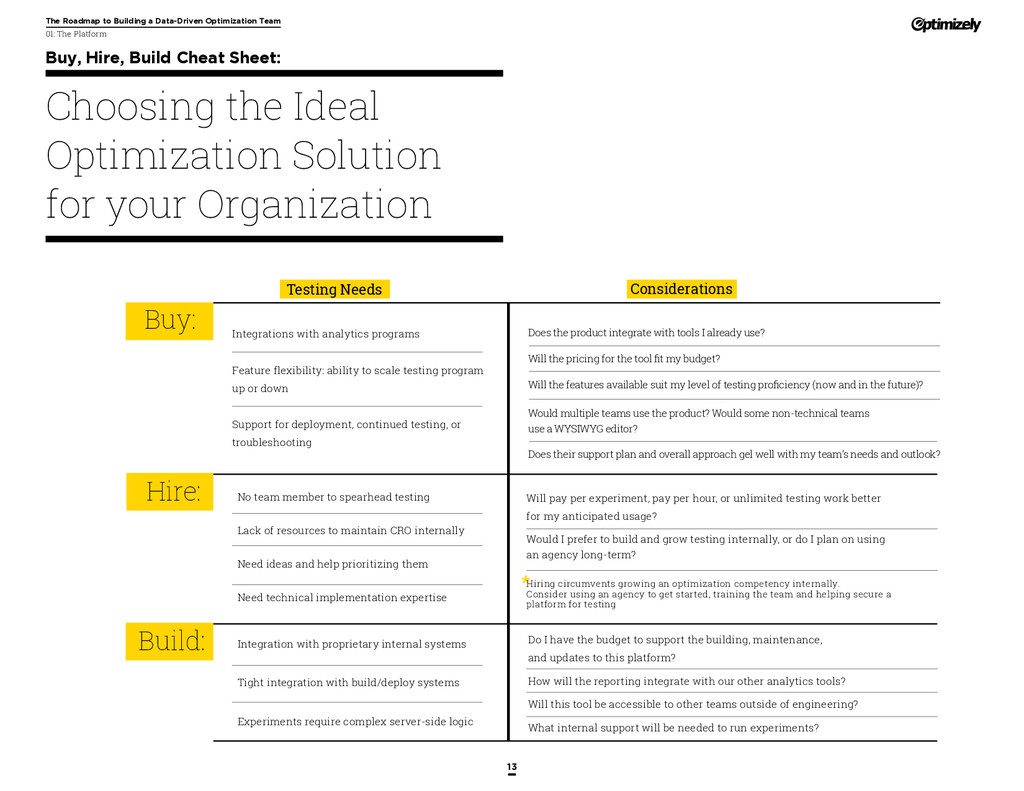
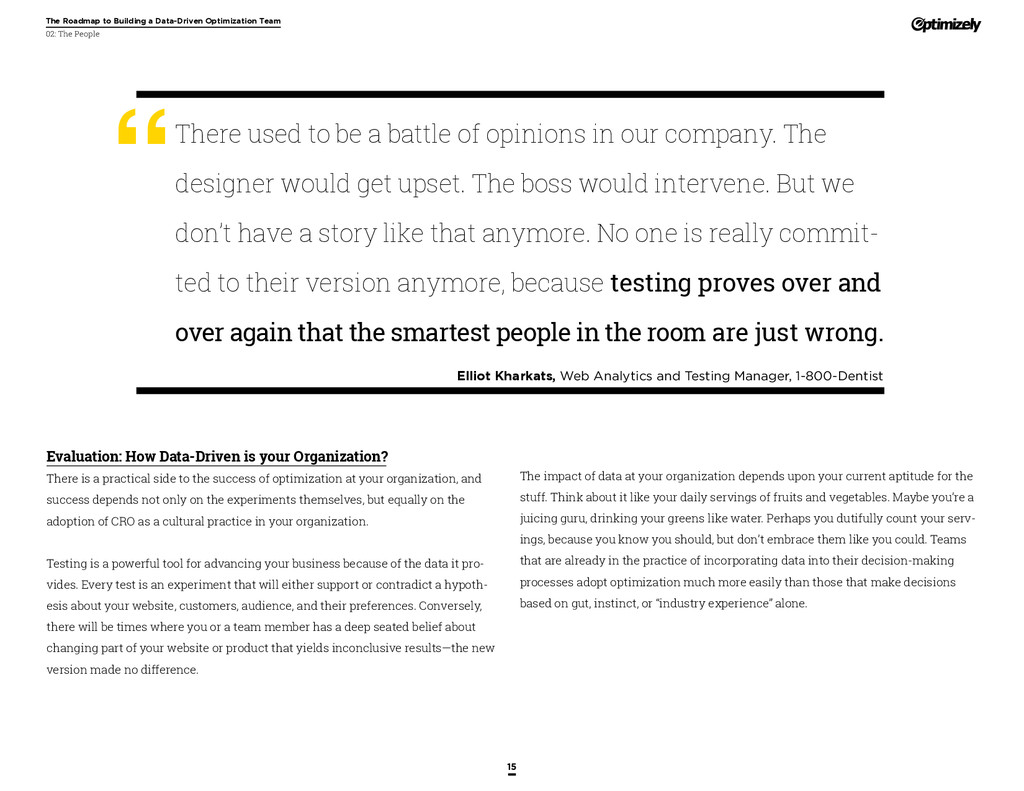
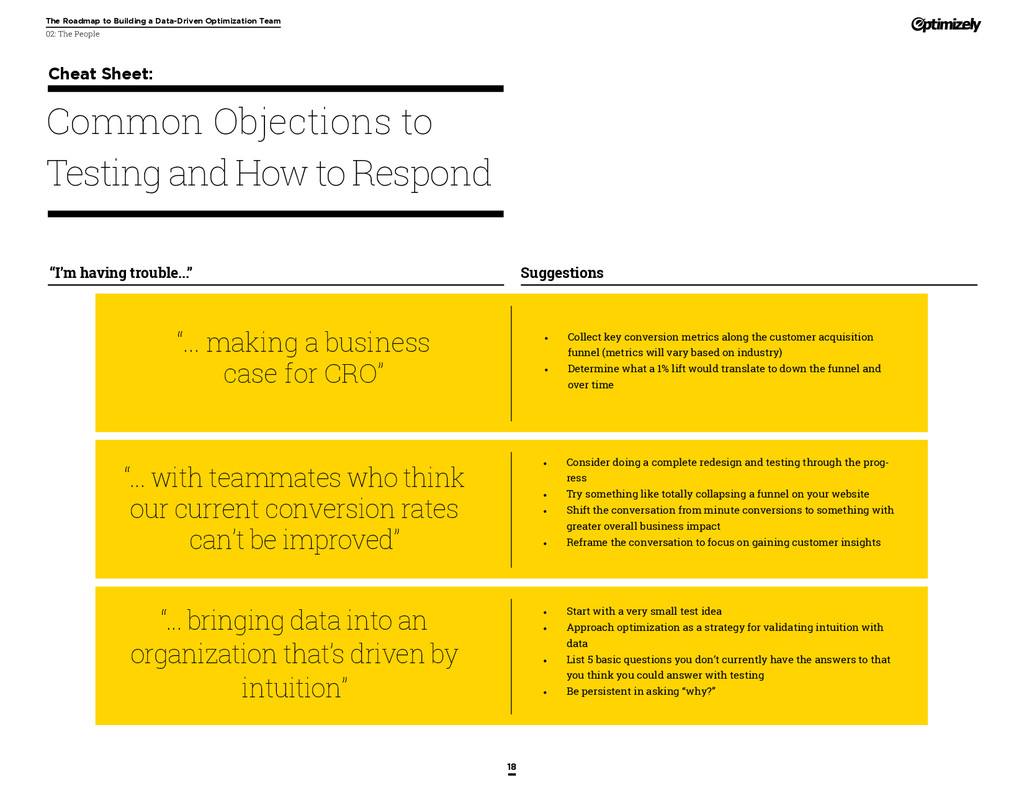
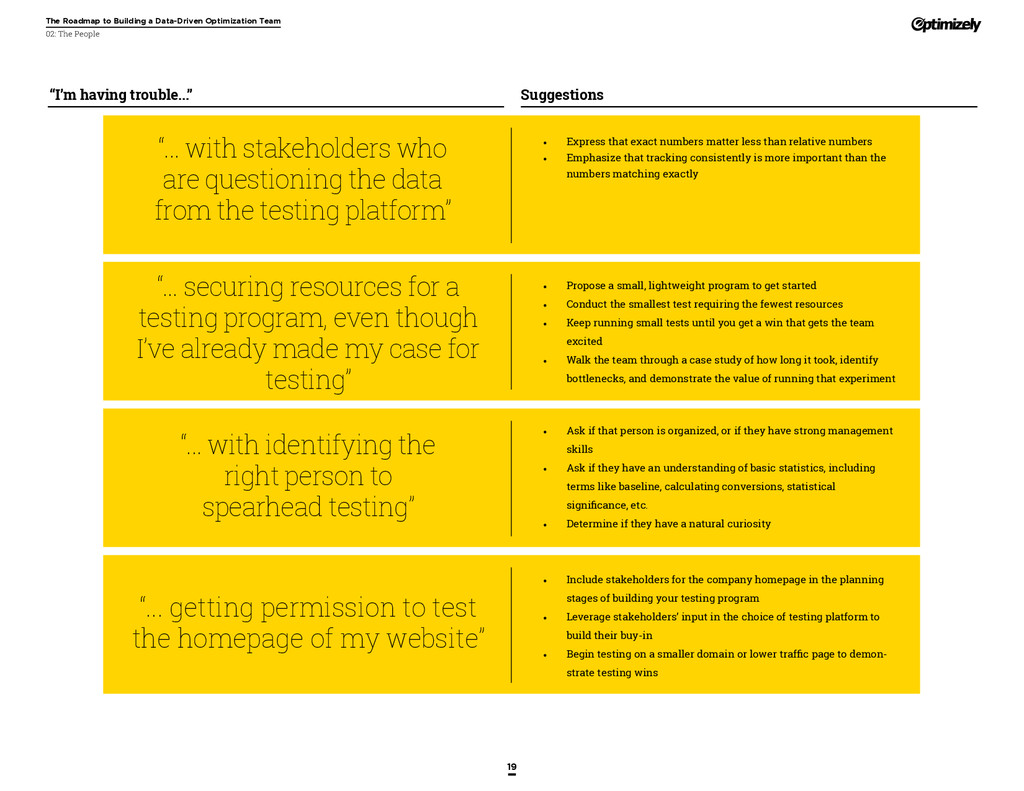
that that improvement has yielded. For many conversion rate optimizers, an incremental lift of 1-2% can translate into thousands, if not millions, in additional revenue. If you’ve ever been frustrated by a drawn-out deliberation over a website or product feature, disappointed by low conversion rates, or speculated about why you’ve ‘missed the mark’ with a certain feature or campaign, consider putting your questions to the test. With testing, you will take professional development steps toward becoming more data-oriented and informed in your day-to-day business decisions. Choosing data sources, incorporating a balance of qualitative and quantitative data points into decisions, invaluable skill set that will inform how you approach problems on the web, in a product, or in marketing in general *Data taken from a 2013 survey of Optimizely customers across e-commerce, media, and SaaS industries. How will my team benefit? Teams that practice CRO are able to align themselves around common metrics and goals. Decision-making is democratized, and all ideas have merit until they can be tested. You and your team will be able to: • Shorten meetings by avoiding deliberations • Avoid interpersonal conflict by putting differing opinions to the test • Empower all members of the team to optimize their work • Align teams around shared goals, rather than conflicting ones The concept of a controlled experiment can be applied to almost any stage of the sales, marketing, or product funnel: • Sales, support and other client-facing roles can test messaging, times of day, and subject lines for communications to determine which performs best. A “request for demo” or “call for support” CTA on your website can be optimized to increase inbound requests from customers. • Marketing can test display ads, landing pages for marketing channels, website calls to action, social sharing buttons, and more. • Product and engineering teams can test user flows, paths to purchase, in-prod- uct messaging, and more.


 samlambert
 sarafernandez
 trishagee
 eileencodes
 reverentgeek
 aleyda
 jmmastey
 smashingmag
 codingconduct
 jlugia
 watany
 tammyeverts