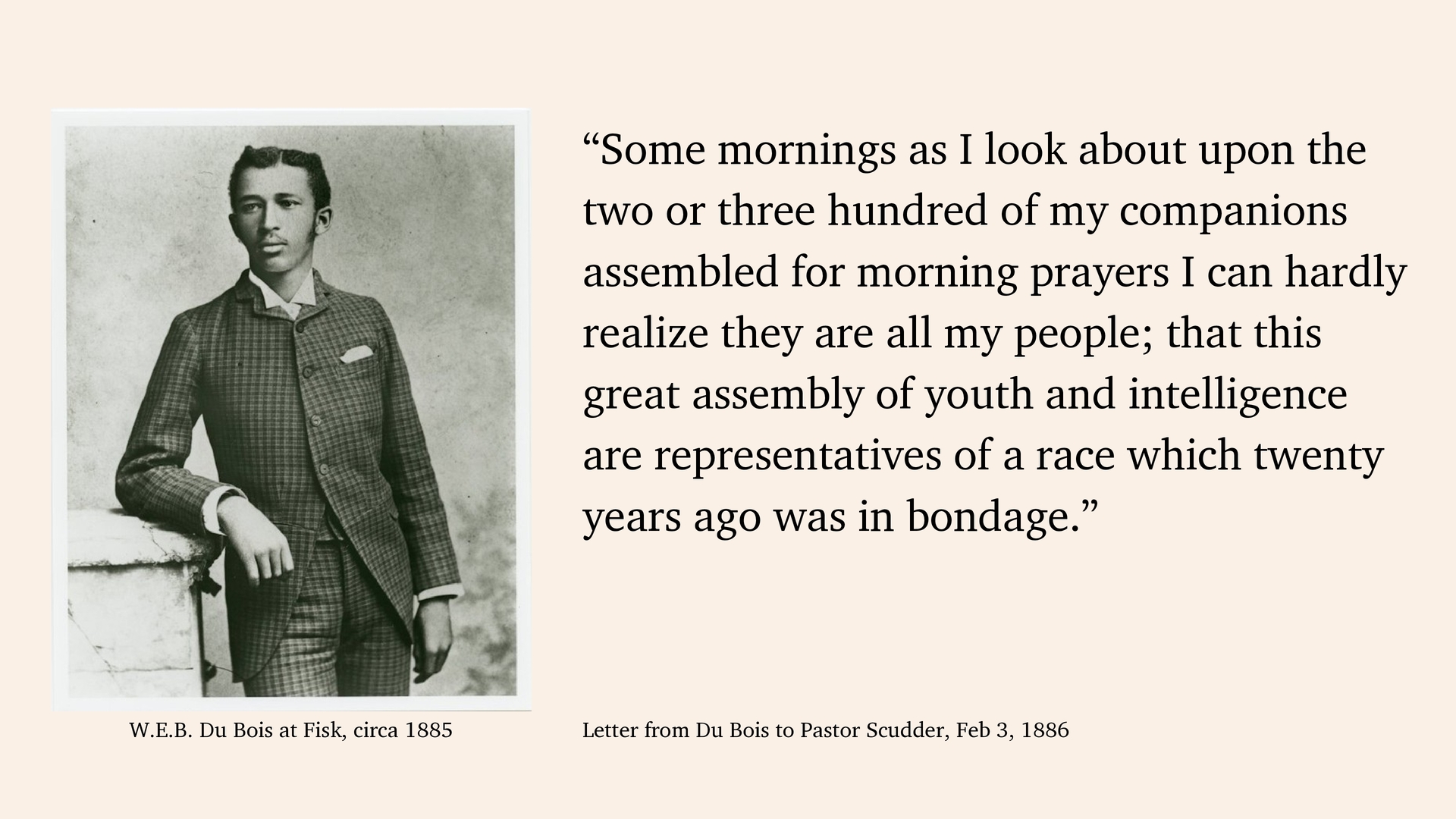
three hundred of my companions assembled for morning prayers I can hardly realize they are all my people; that this great assembly of youth and intelligence are representatives of a race which twenty years ago was in bondage.” Letter from Du Bois to Pastor Scudder, Feb 3, 1886 W.E.B. Du Bois at Fisk, circa 1885
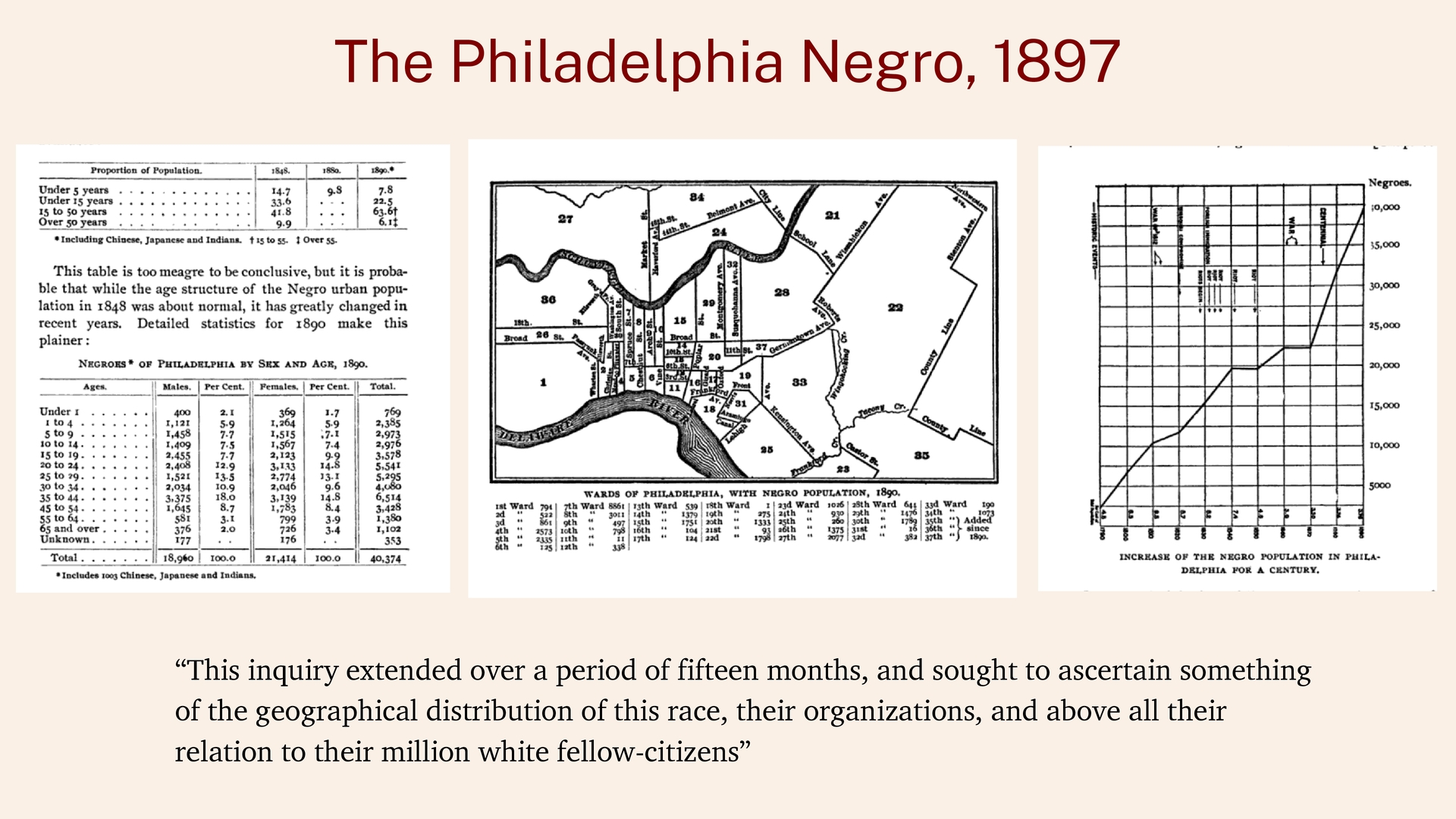
of fifteen months, and sought to ascertain something of the geographical distribution of this race, their organizations, and above all their relation to their million white fellow-citizens”
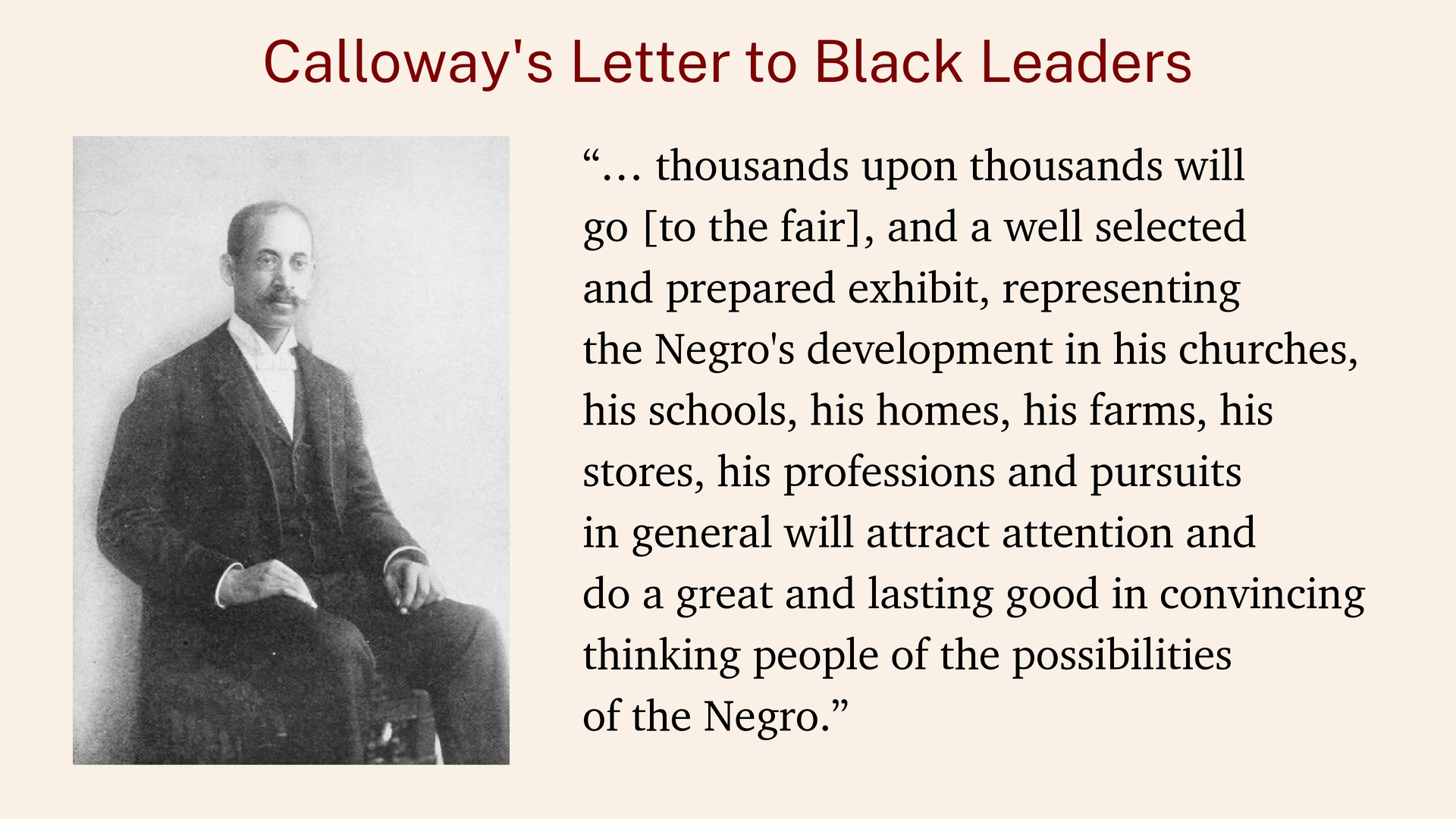
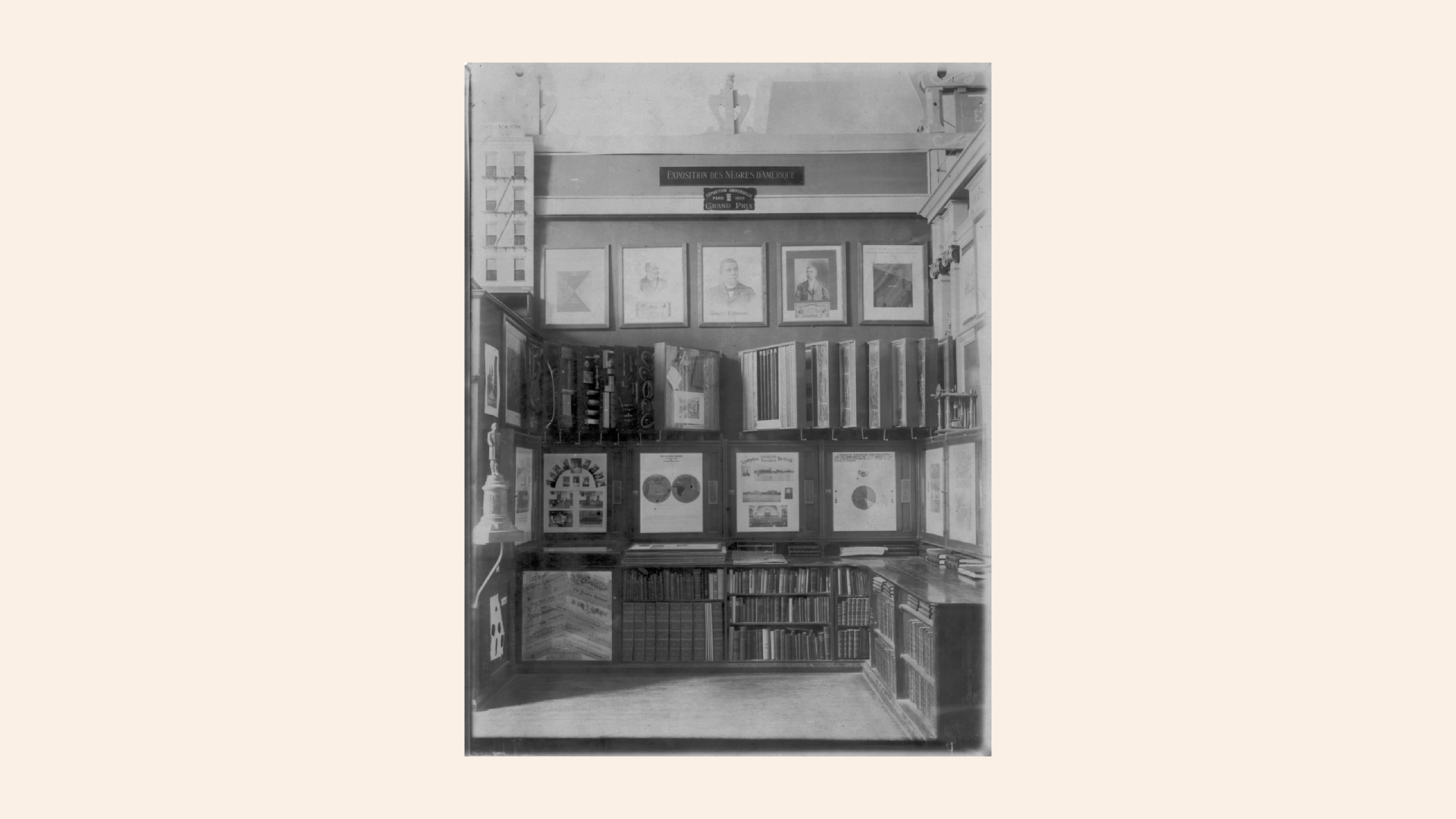
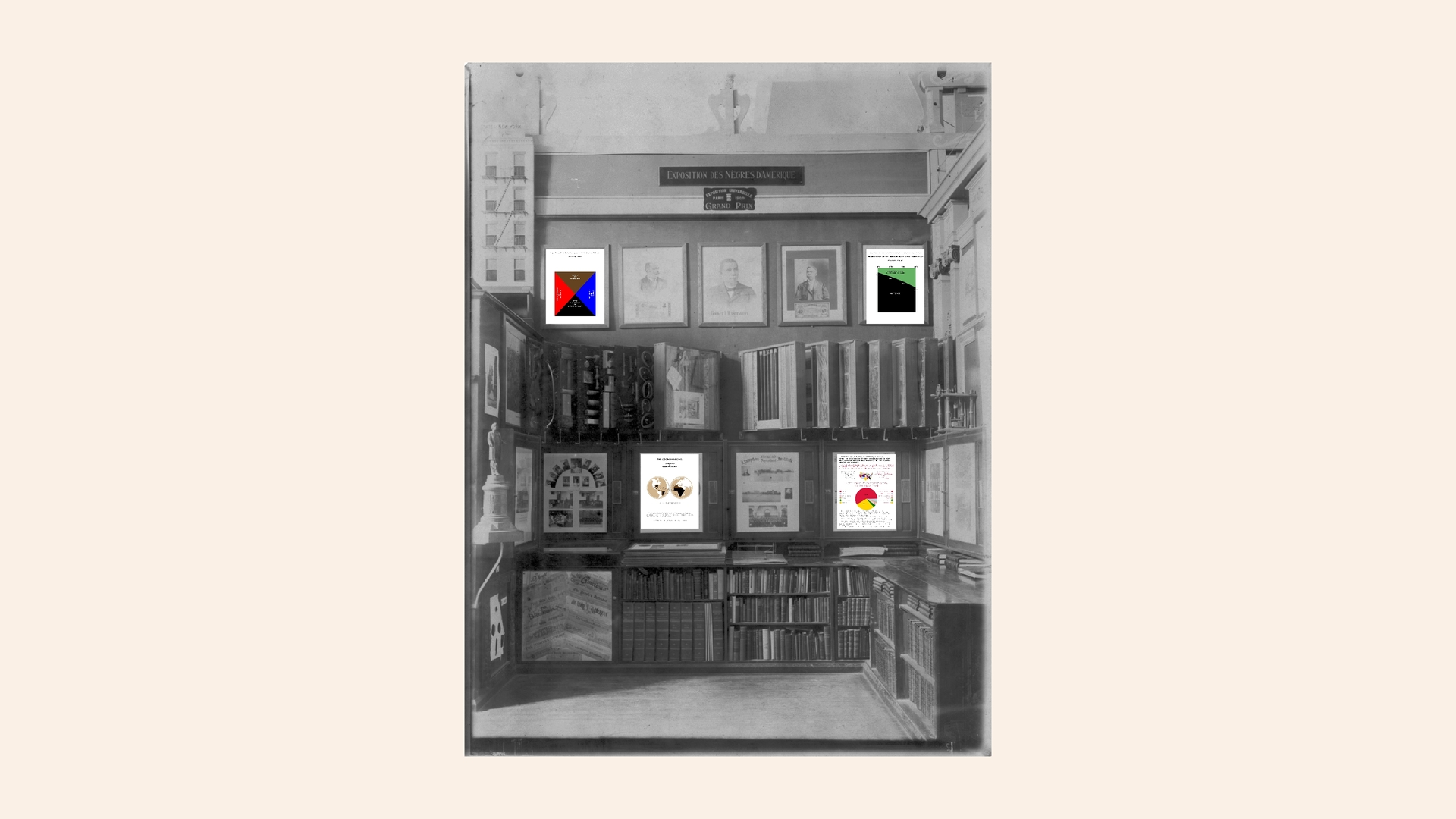
go [to the fair], and a well selected and prepared exhibit, representing the Negro's development in his churches, his schools, his homes, his farms, his stores, his professions and pursuits in general will attract attention and do a great and lasting good in convincing thinking people of the possibilities of the Negro.”
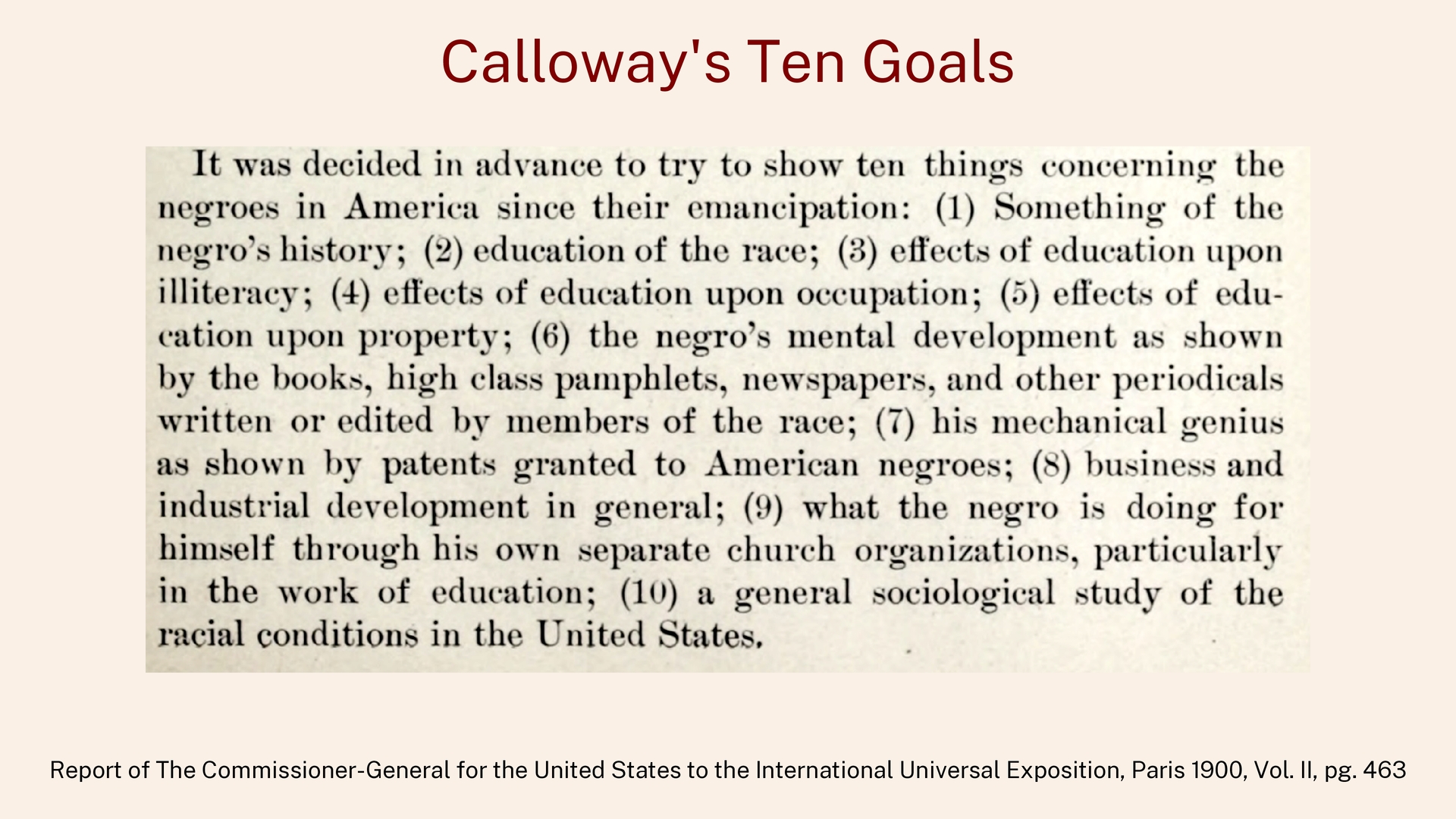
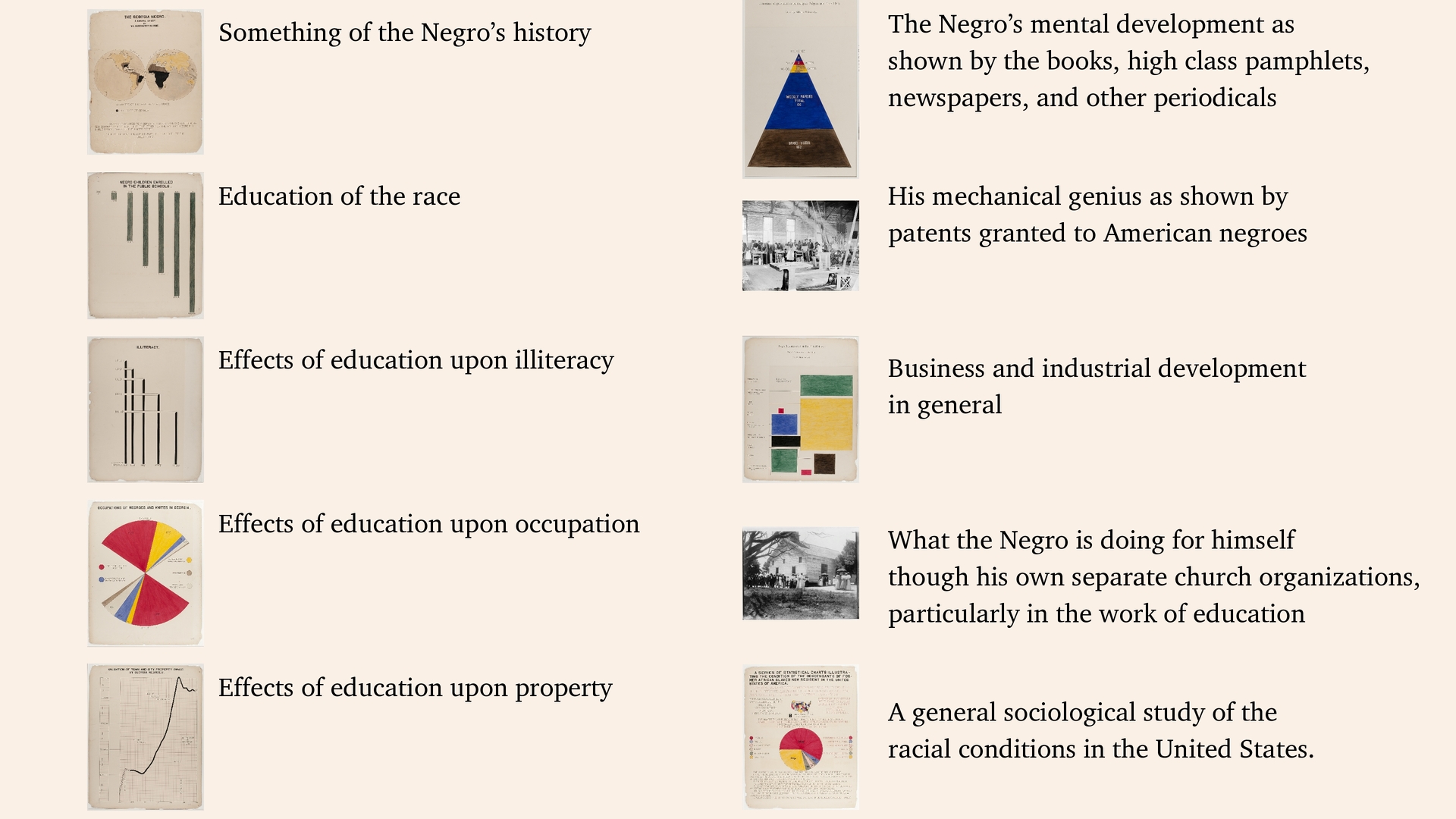
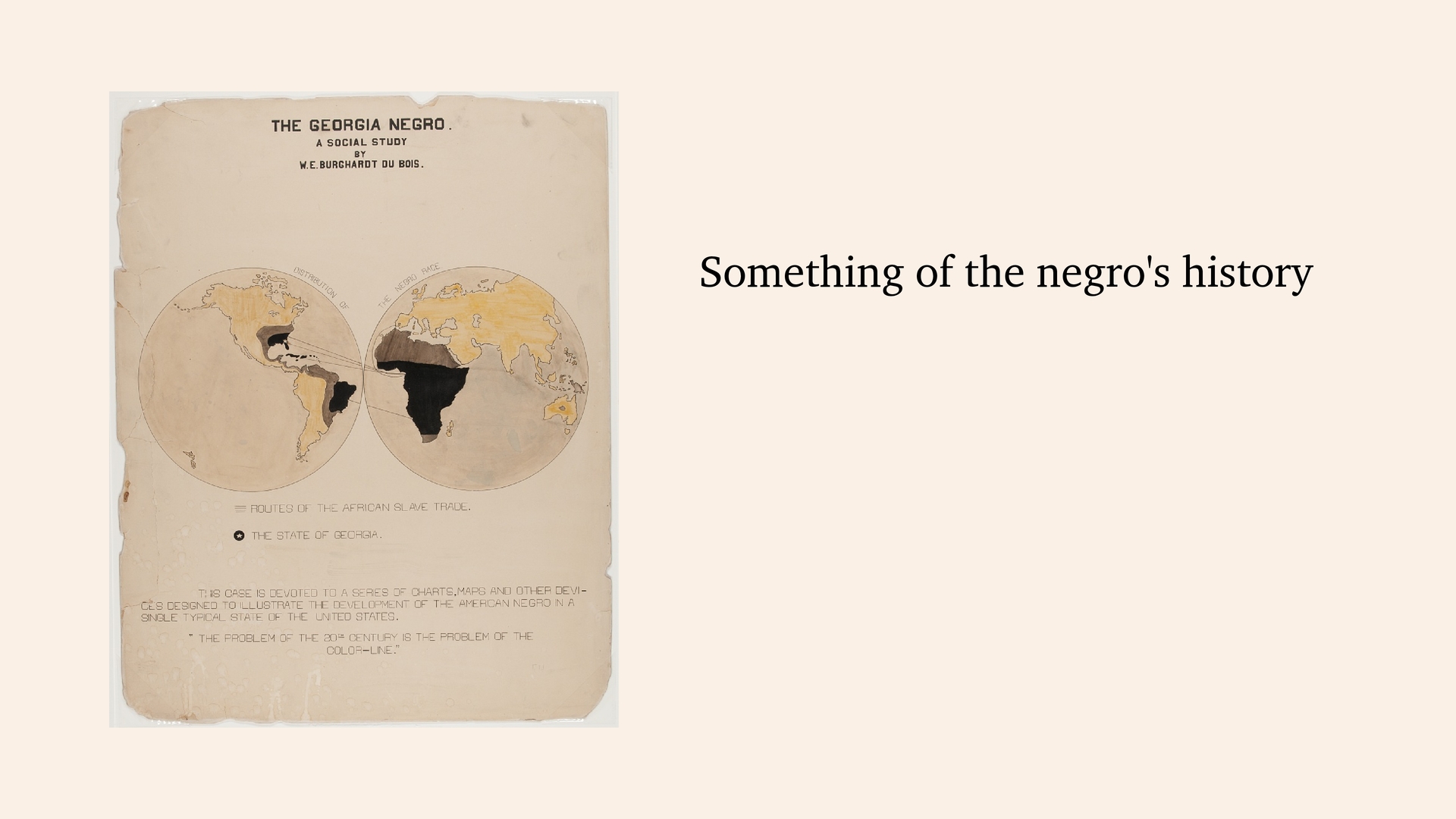
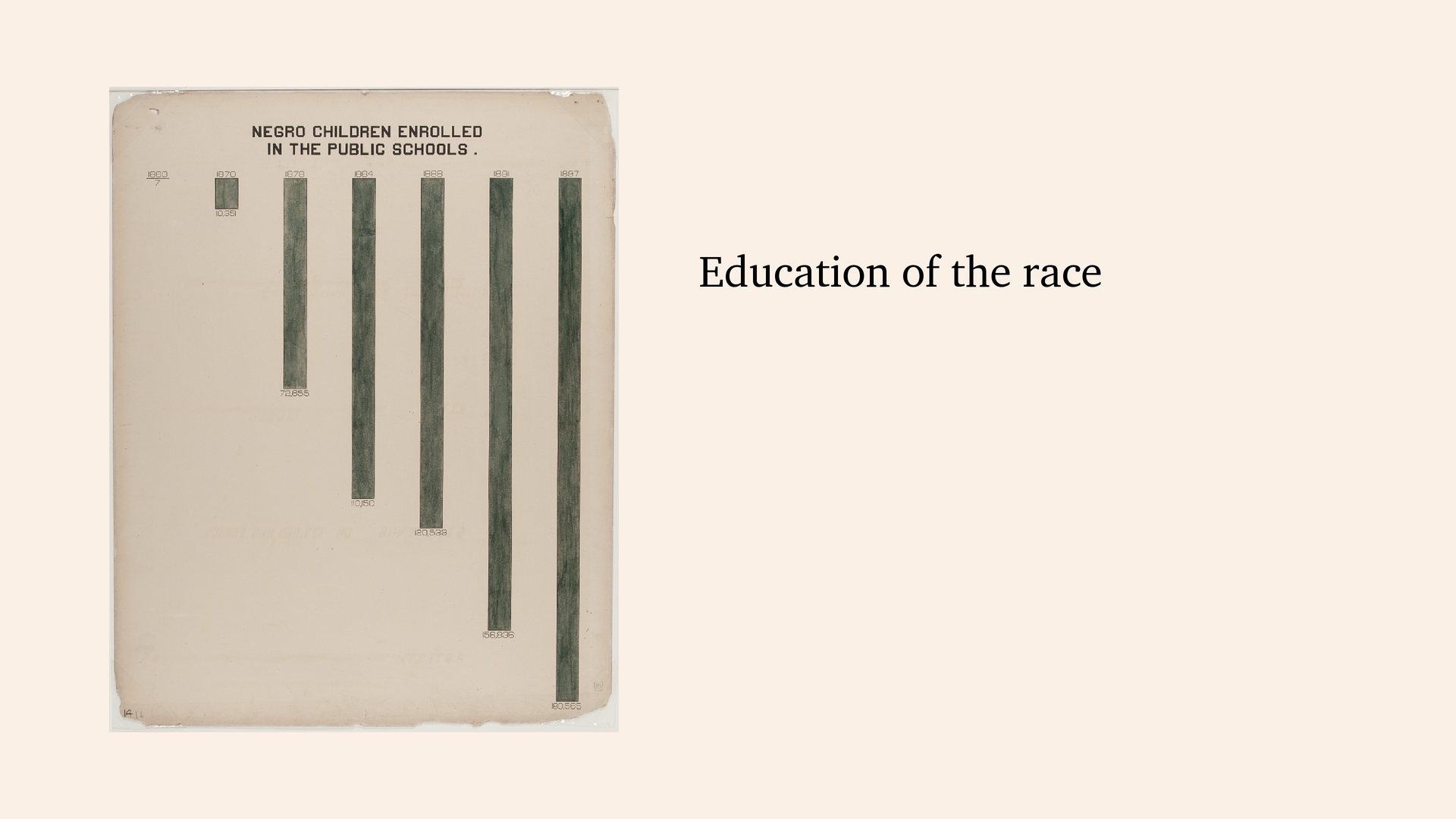
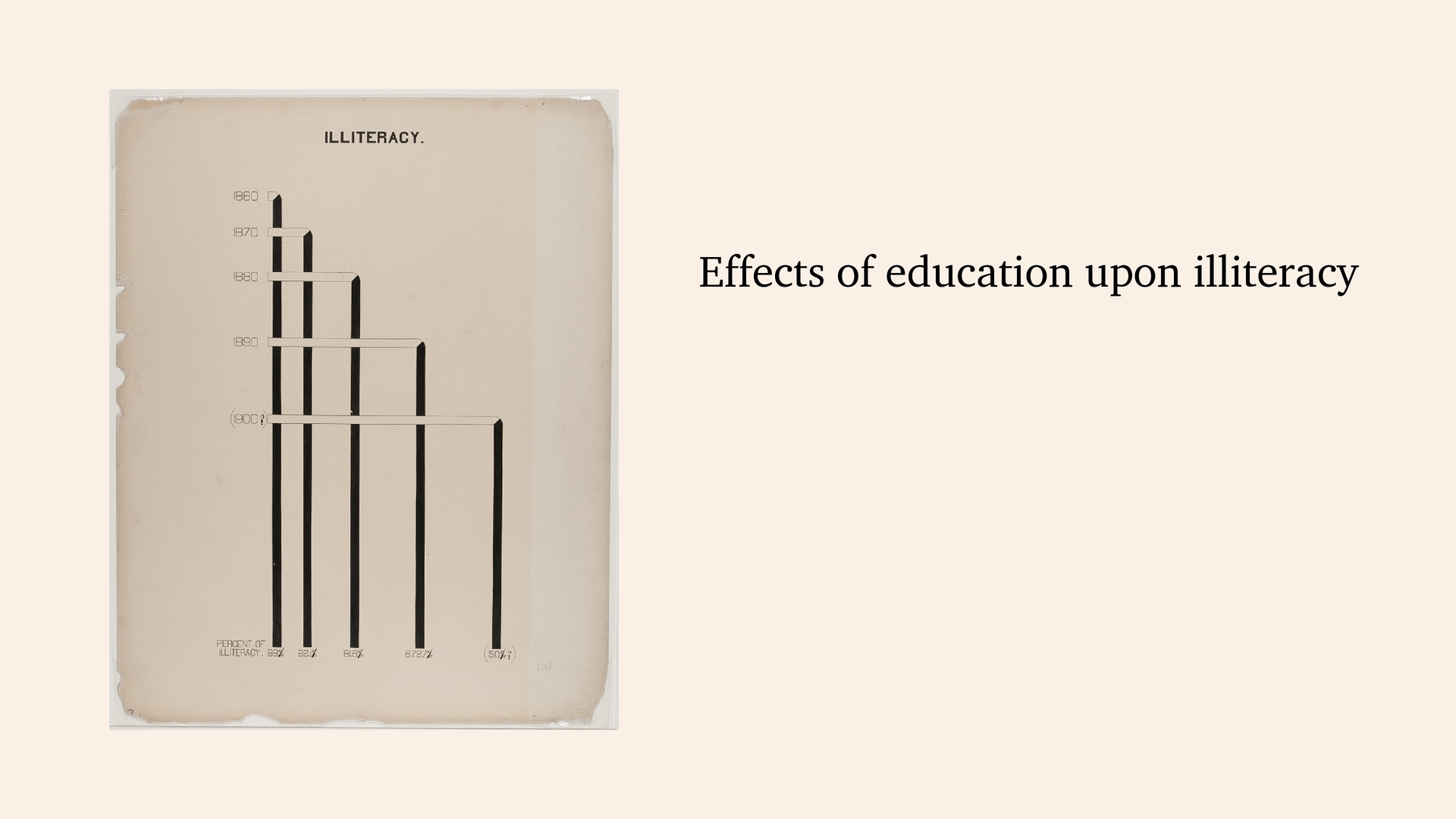
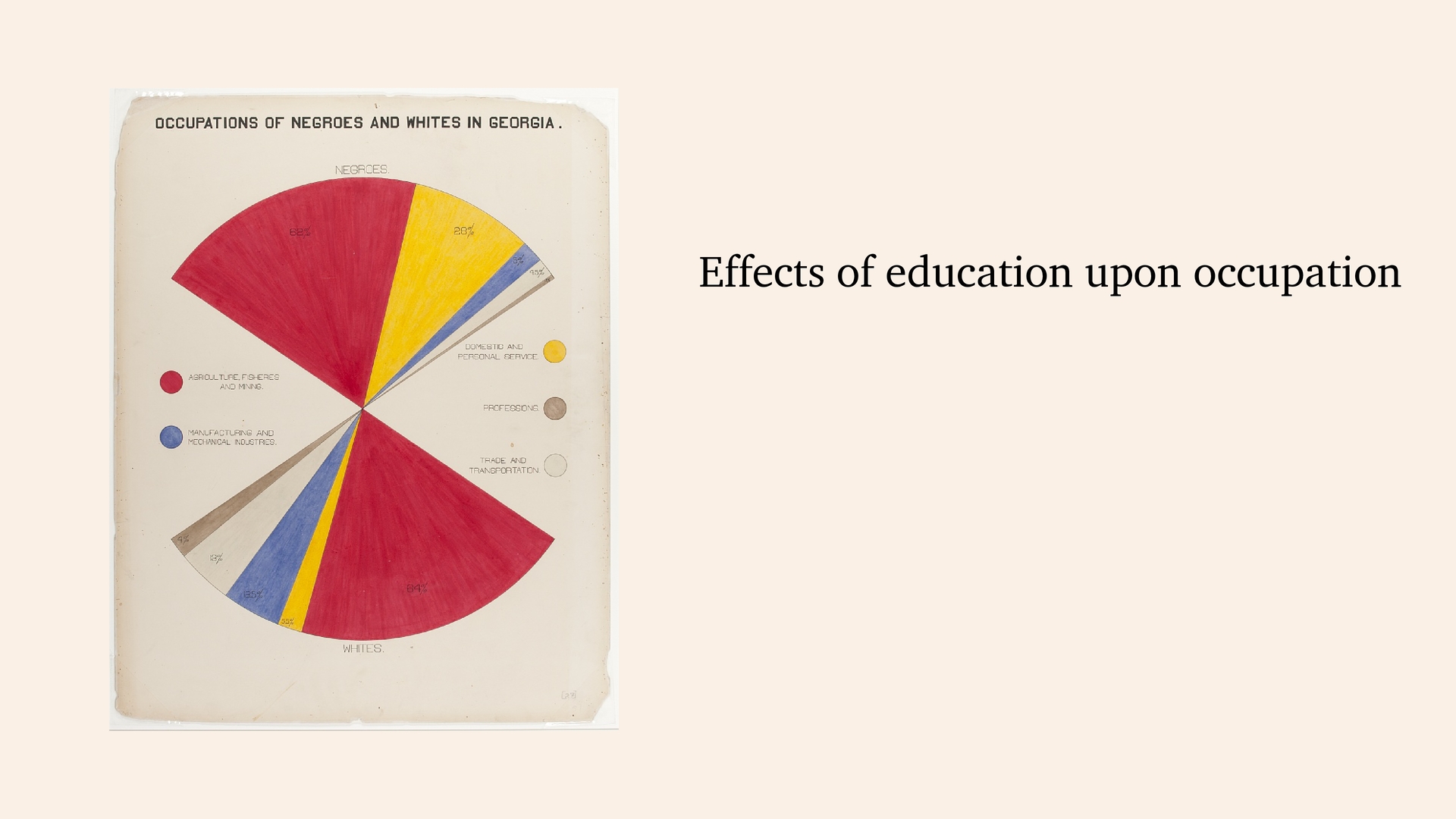
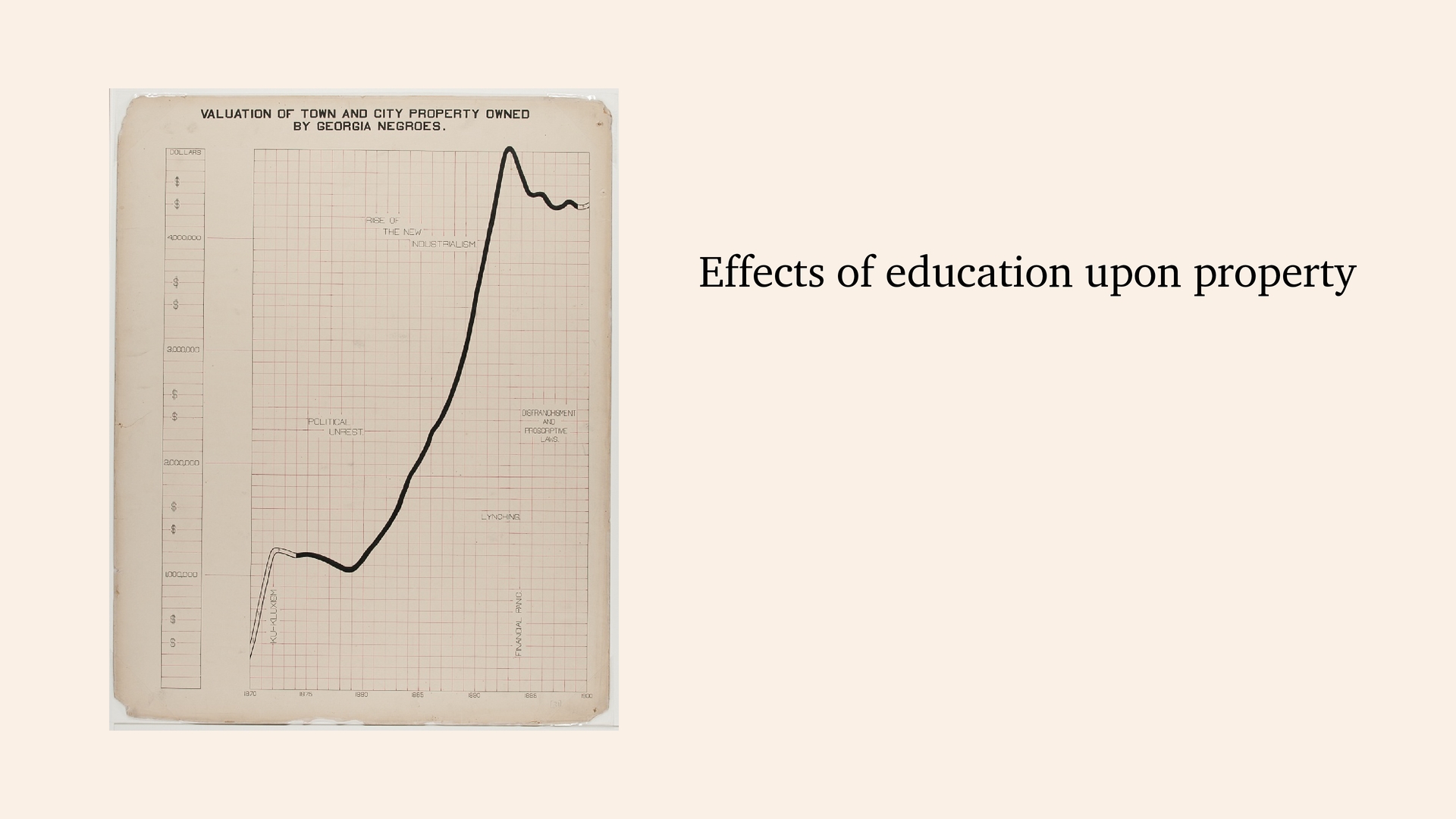
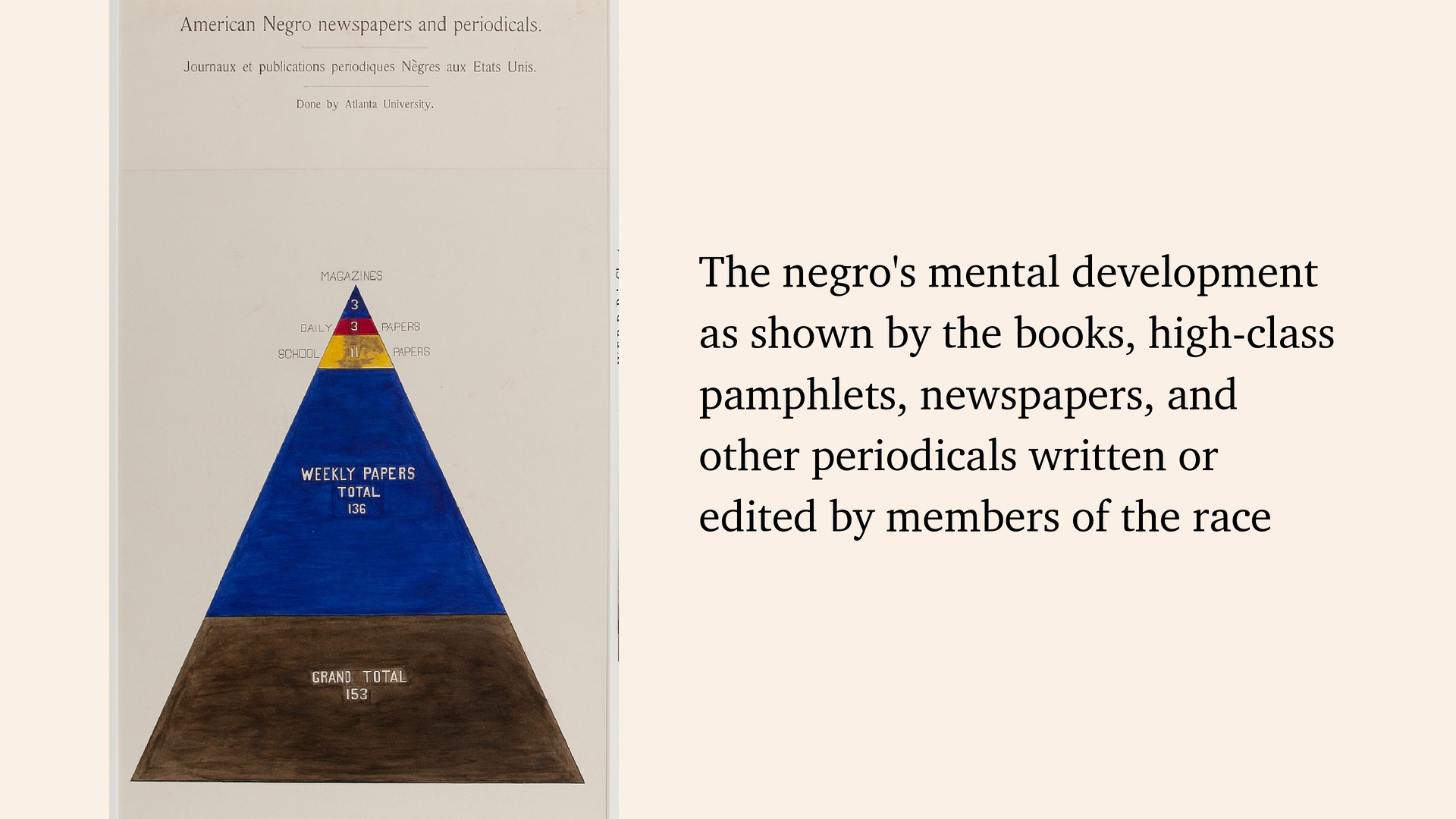
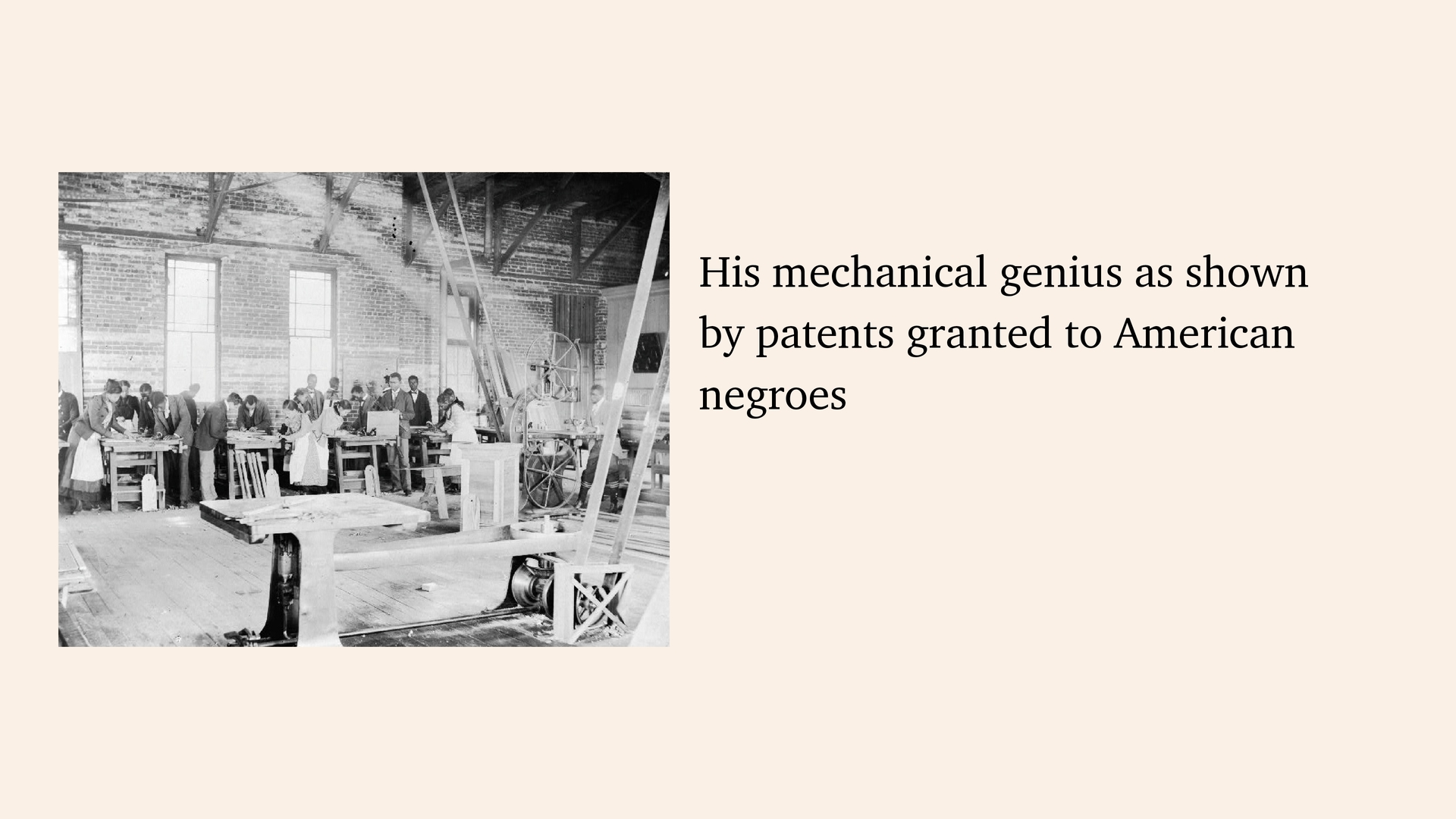
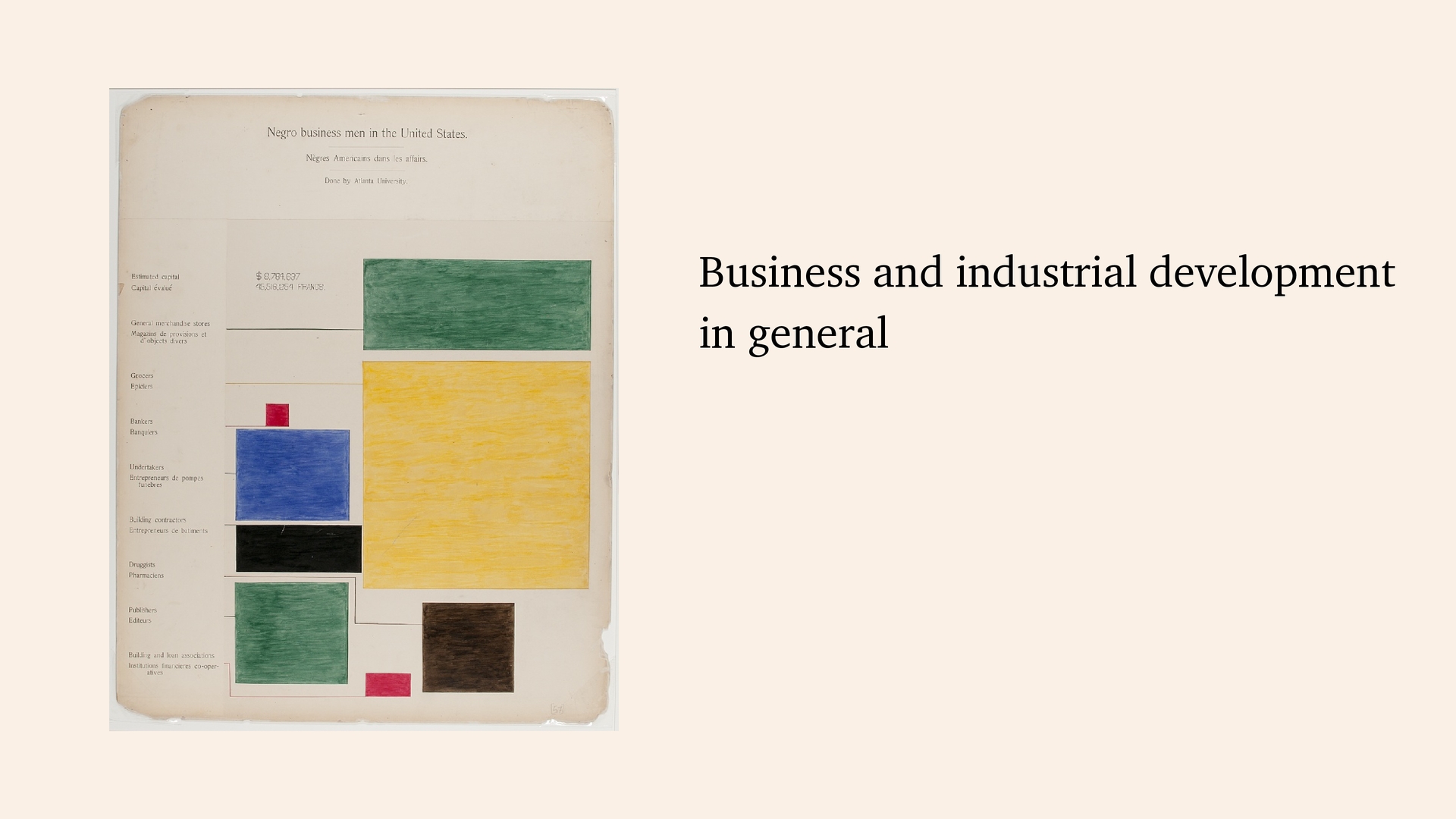
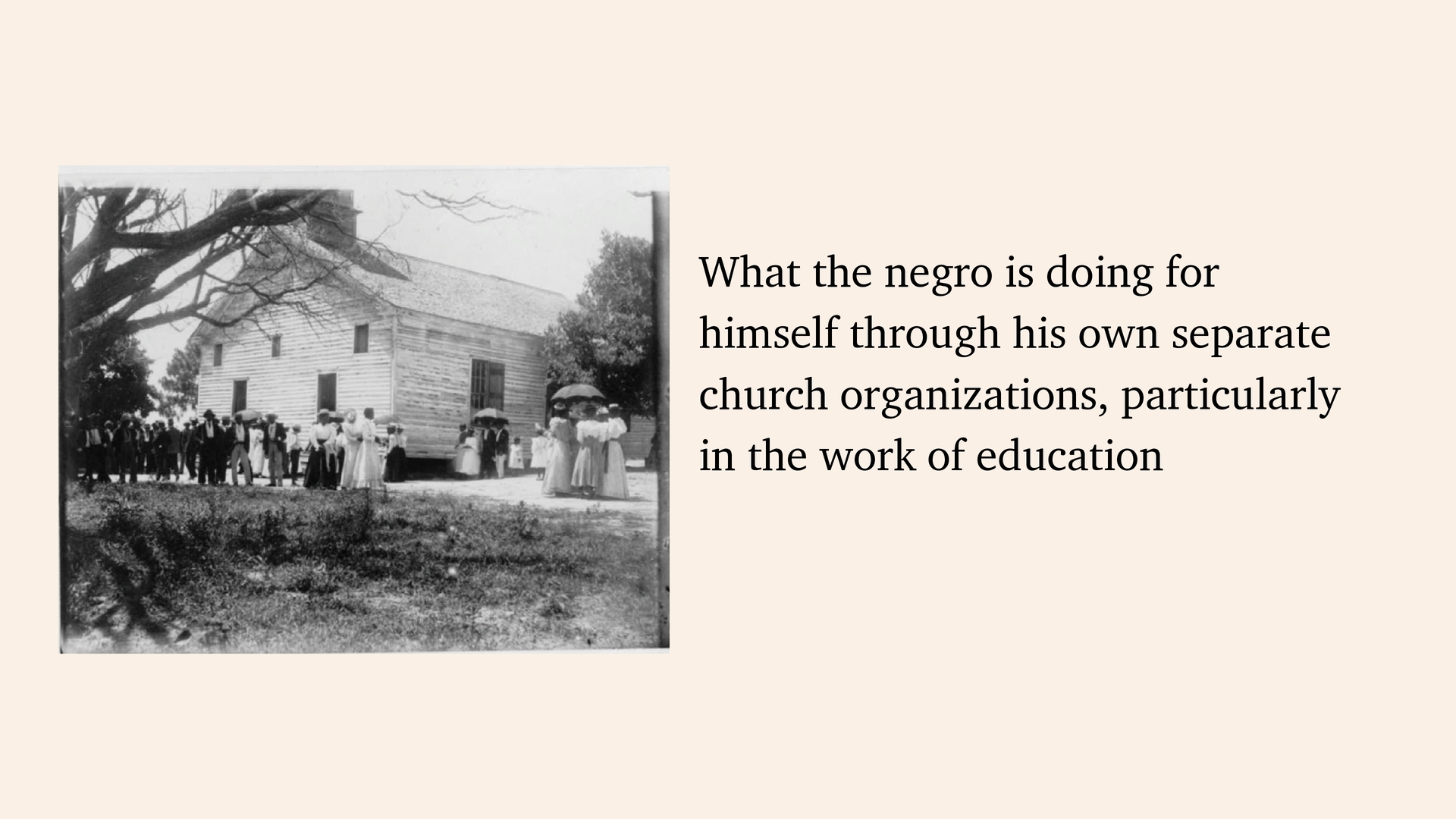
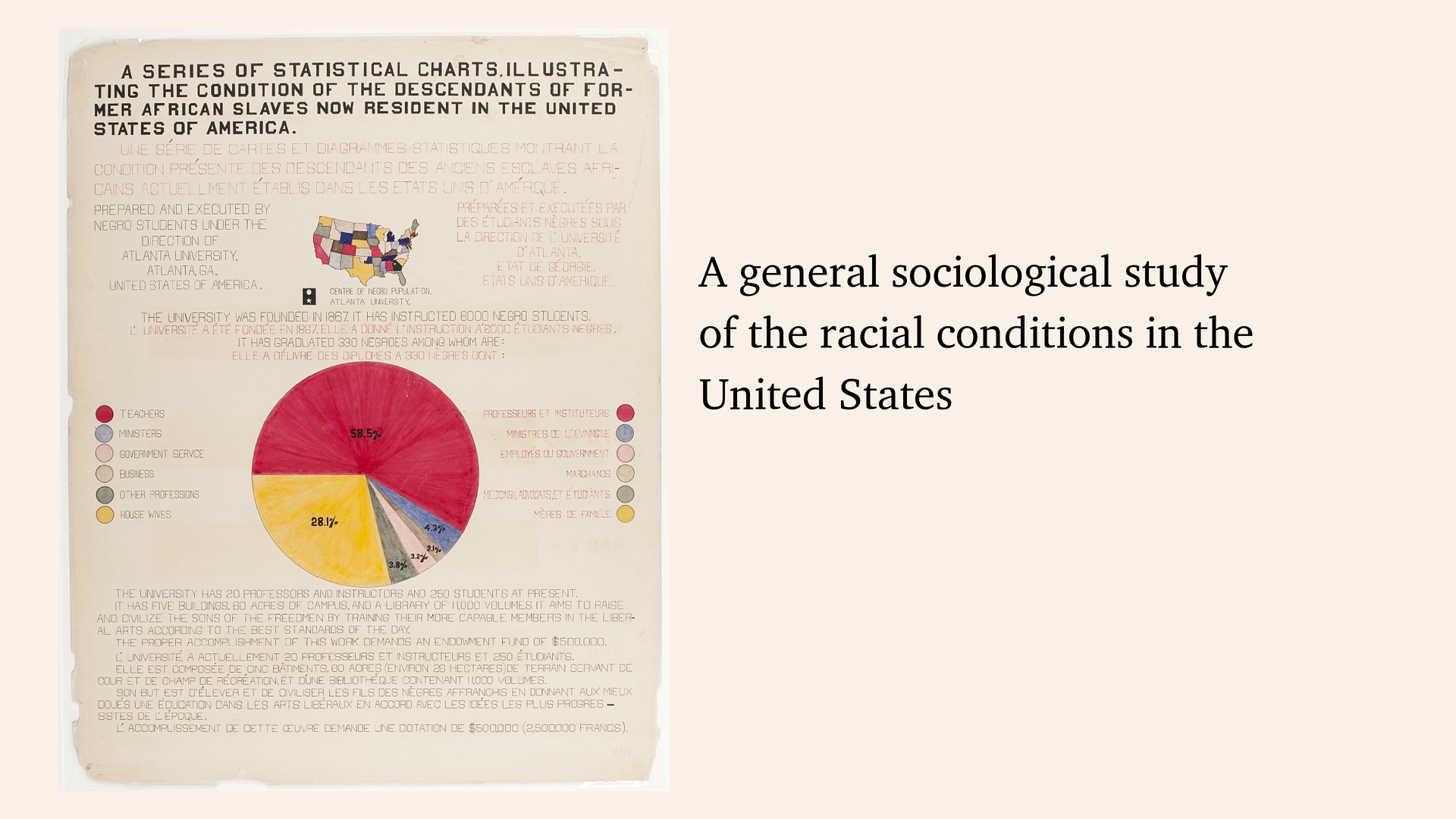
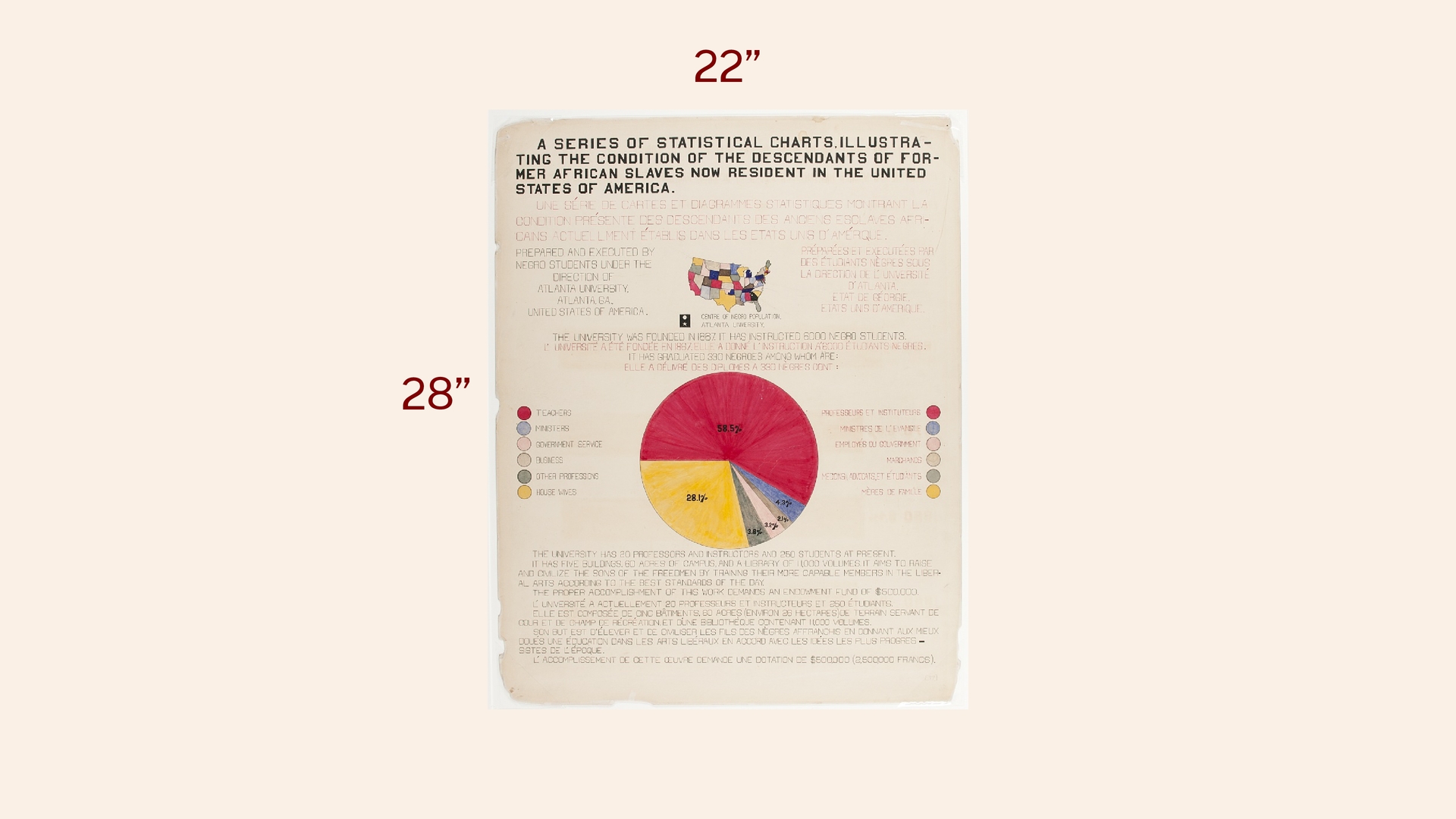
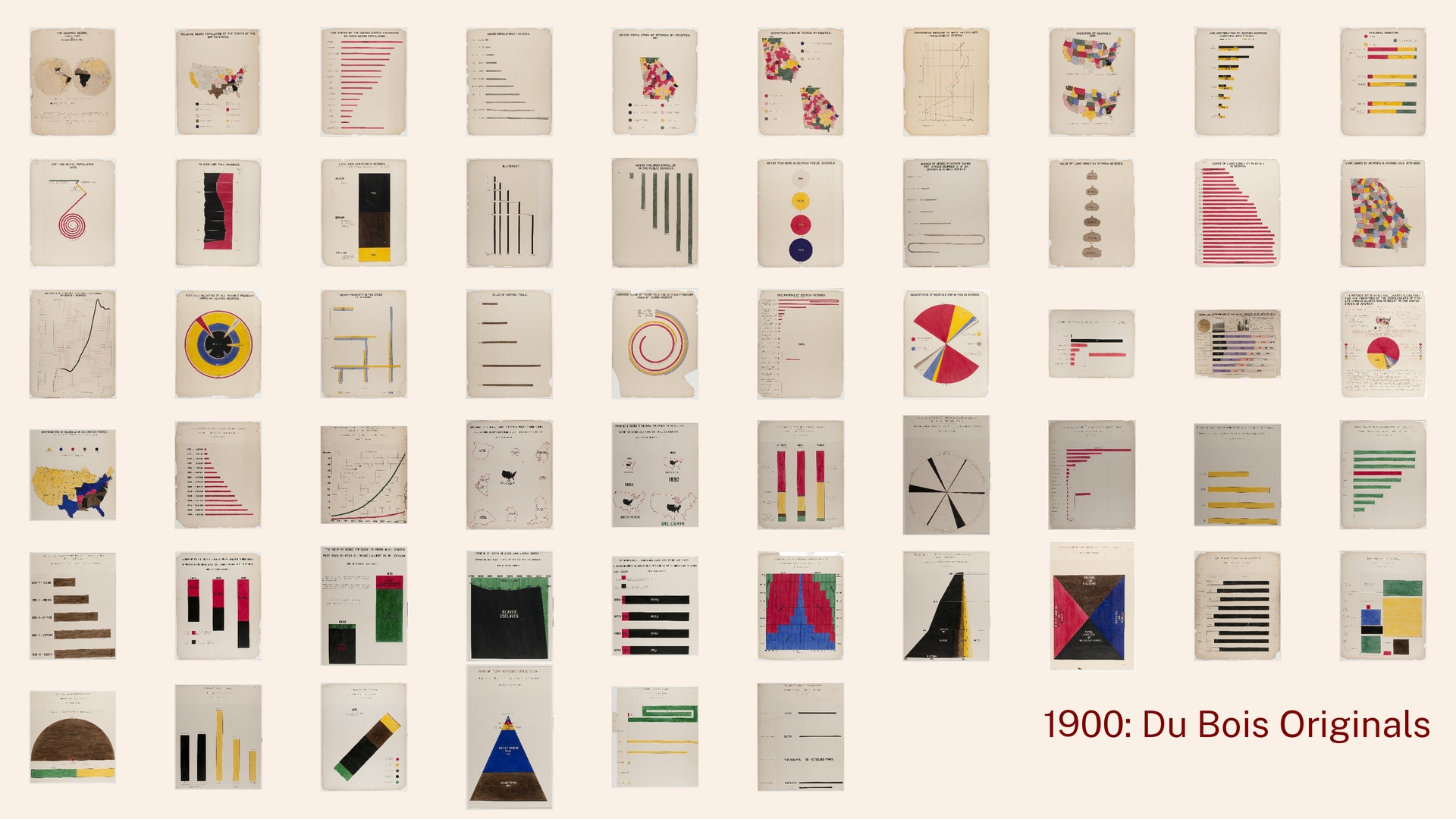
of education upon illiteracy Effects of education upon occupation Effects of education upon property The Negro’s mental development as shown by the books, high class pamphlets, newspapers, and other periodicals His mechanical genius as shown by patents granted to American negroes Business and industrial development in general What the Negro is doing for himself though his own separate church organizations, particularly in the work of education A general sociological study of the racial conditions in the United States.
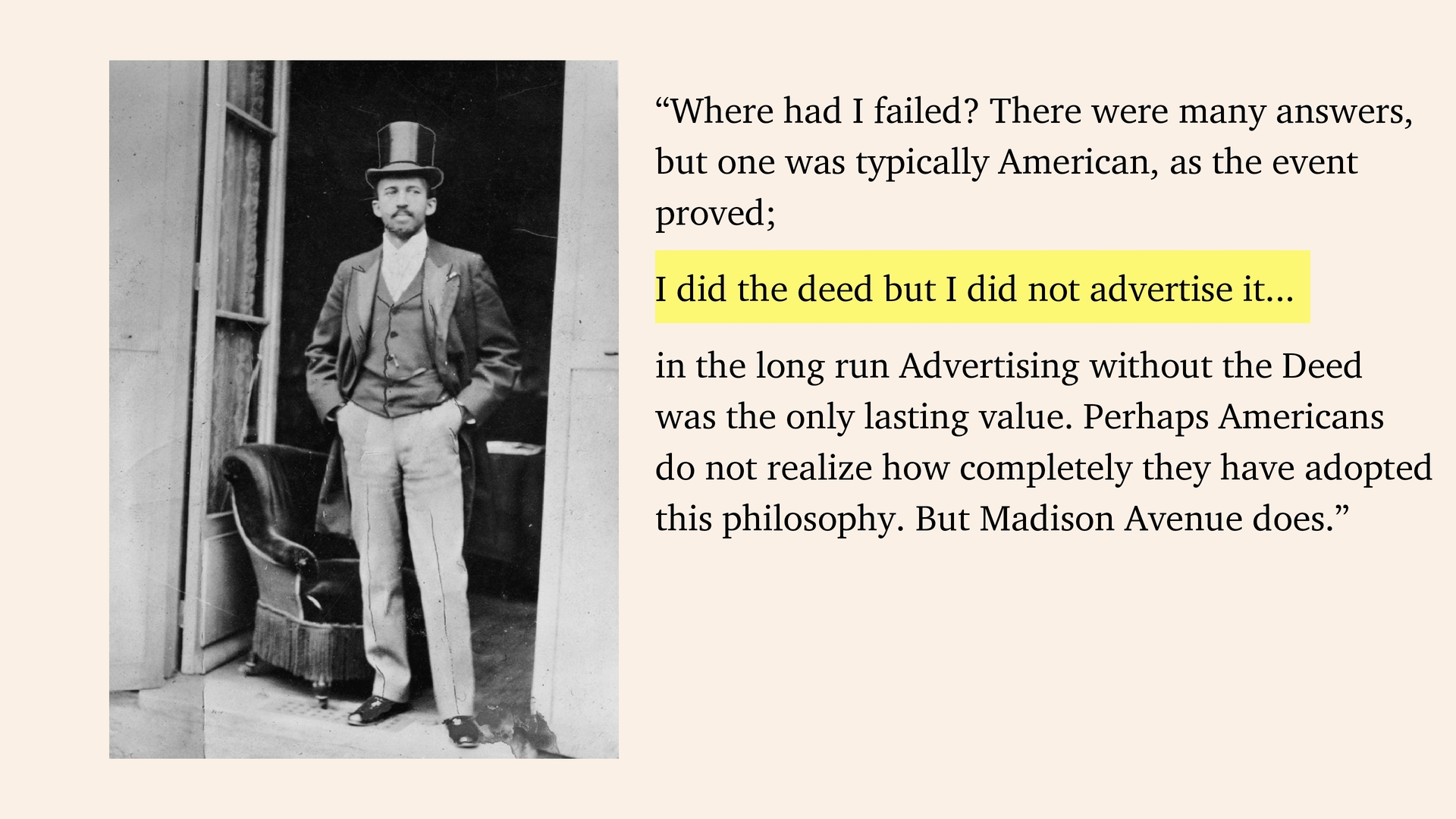
was typically American, as the event proved; I did the deed but I did not advertise it... in the long run Advertising without the Deed was the only lasting value. Perhaps Americans do not realize how completely they have adopted this philosophy. But Madison Avenue does.”
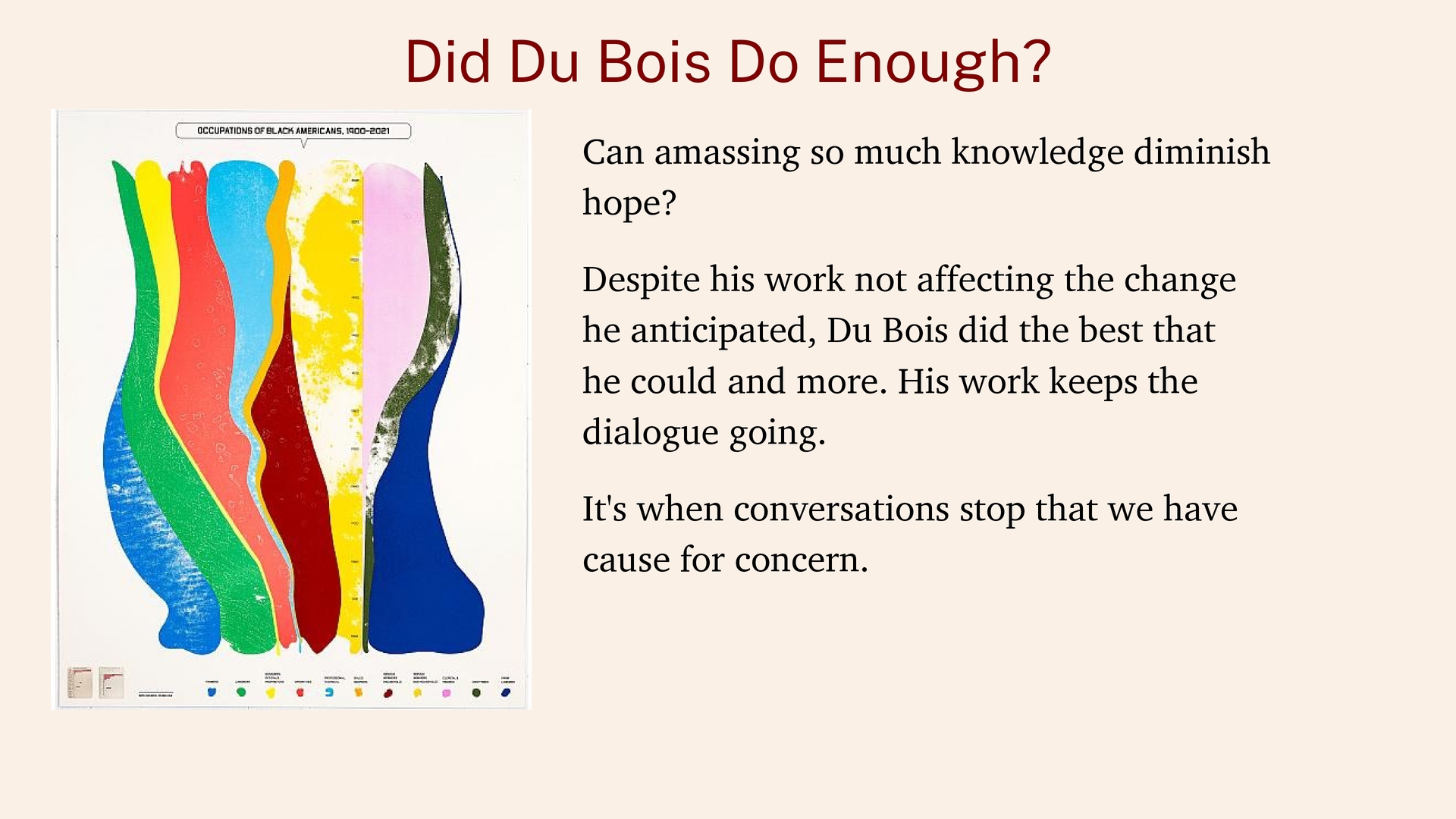
diminish hope? Despite his work not affecting the change he anticipated, Du Bois did the best that he could and more. His work keeps the dialogue going. It's when conversations stop that we have cause for concern.
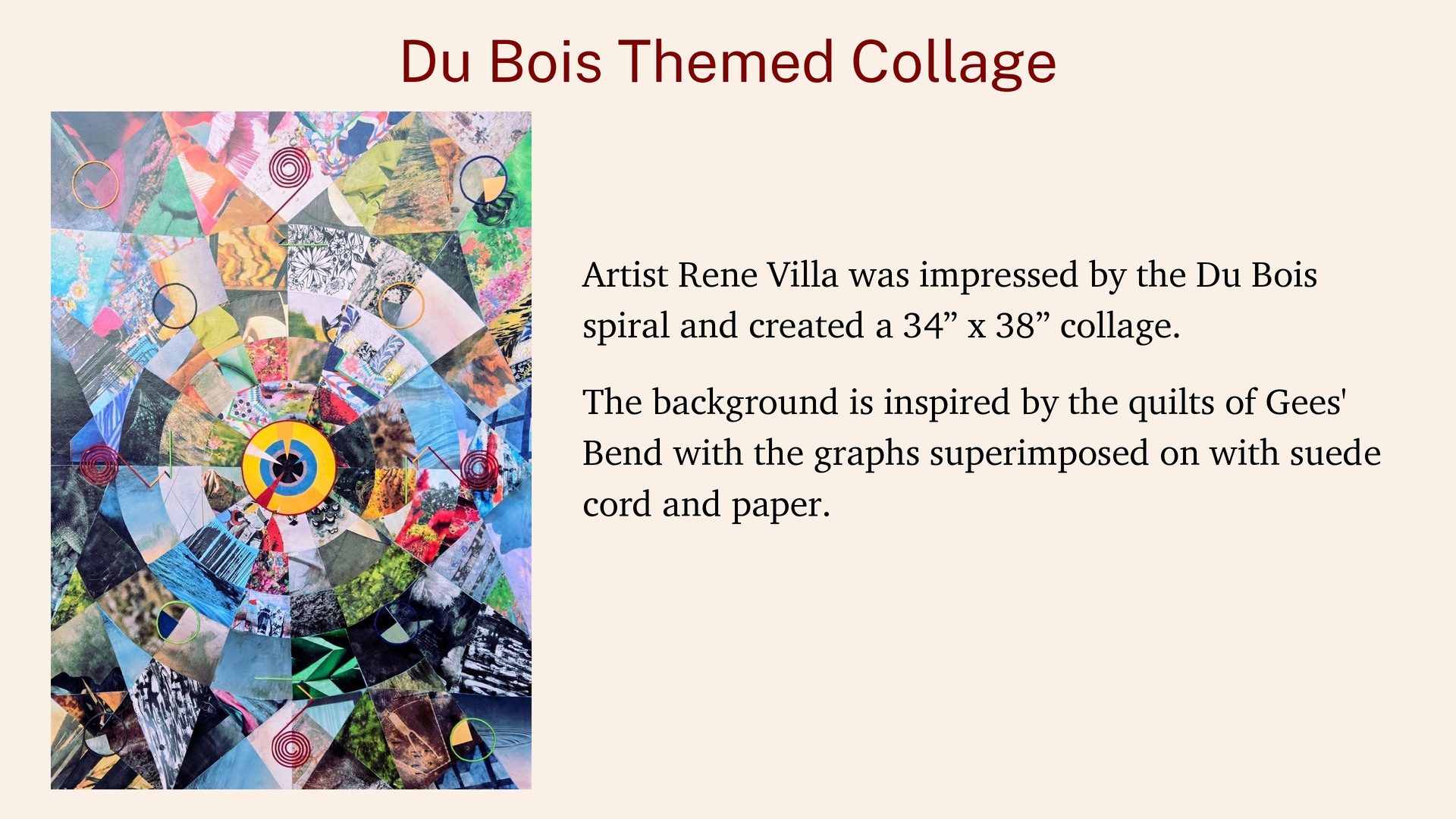
the Du Bois spiral and created a 34” x 38” collage. The background is inspired by the quilts of Gees' Bend with the graphs superimposed on with suede cord and paper.


 ajstarks
 shpigford
 badams
 cromwellryan
 aleyda
 skipperchong
 matthewcrist
 rkendrick25
 baasie
 thekraken
 apolaine
 tammyeverts
 techseoconnect