Upgrade to Pro — share decks privately, control downloads, hide ads and more …

Malware Unmasked: From Infection to Extraction

Sponsored · Your Podcast. Everywhere. Effortlessly. Share. Educate. Inspire. Entertain. You do you. We'll handle the rest.
Avatar for Athis SN Athis SN
March 15, 2026
6

Malware Unmasked: From Infection to Extraction

Slides for the topic that I presented at Panimalar Engineering College.

Agenda:

Introduction to Malware & Its Types
Initial Access & Infection Techniques
Persistence Techniques Used by Malware
Packers 101
OS Internals: PE Structure, DLL & Windows API
Malware Analysis: Static Analysis
Glimpse into Malware Reverse Engineering
Memory Forensics 101
Anti-Analysis Techniques

Avatar for Athis SN

Athis SN

March 15, 2026

Transcript

  1. Undergrad @VELS Security Engineer @Azefox Innovations Head @DEF CON Chennai

    DCG9144 CRTP & MCRTA Red Team Operations, Adversary Emulation/Simulation, Exploit Development, Malware Analysis & Threat Research Whoami
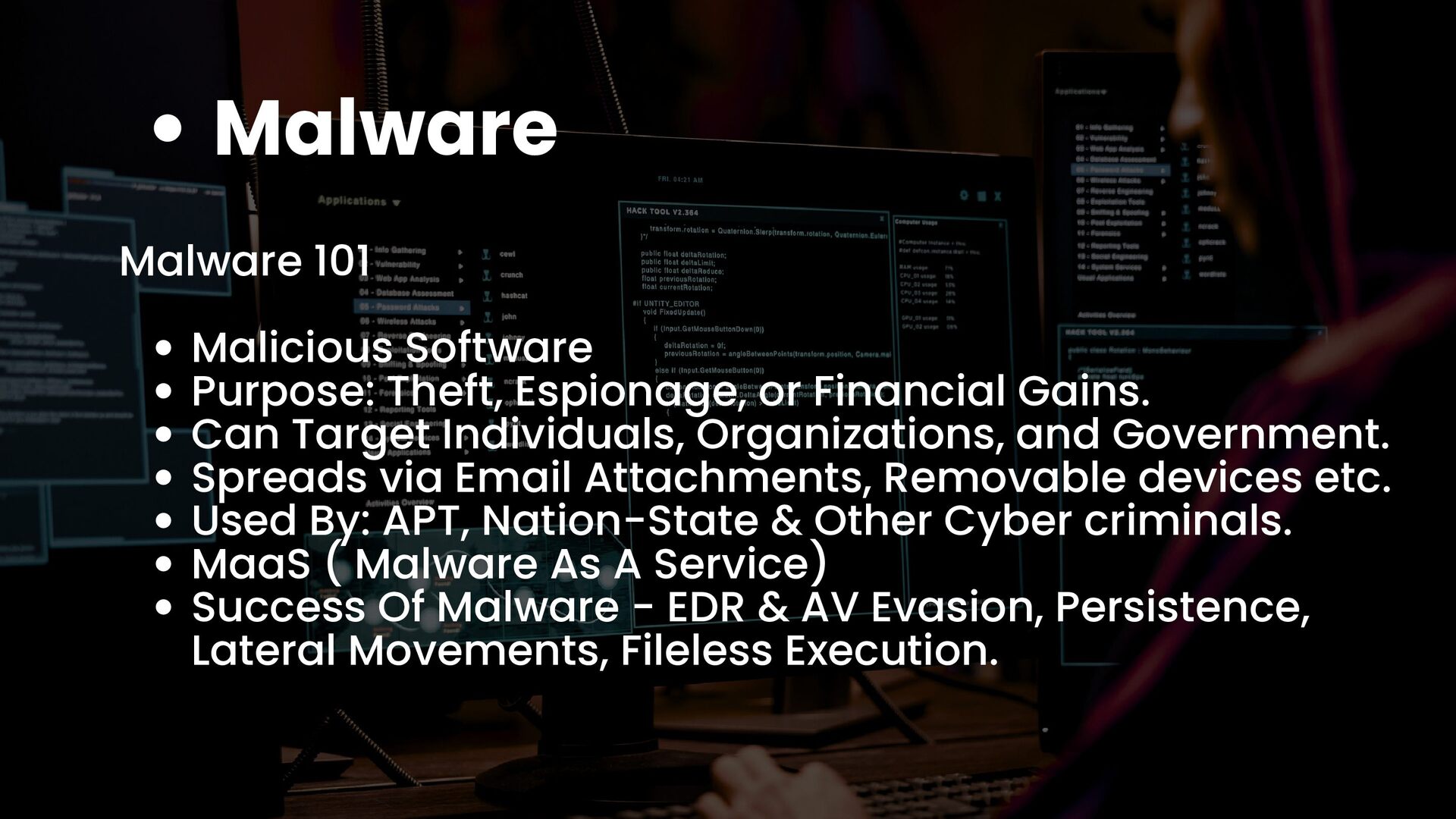
  2. Malware 101 Malicious Software Purpose: Theft, Espionage, or Financial Gains.

    Can Target Individuals, Organizations, and Government. Spreads via Email Attachments, Removable devices etc. Used By: APT, Nation-State & Other Cyber criminals. MaaS ( Malware As A Service) Success Of Malware - EDR & AV Evasion, Persistence, Lateral Movements, Fileless Execution. Malware
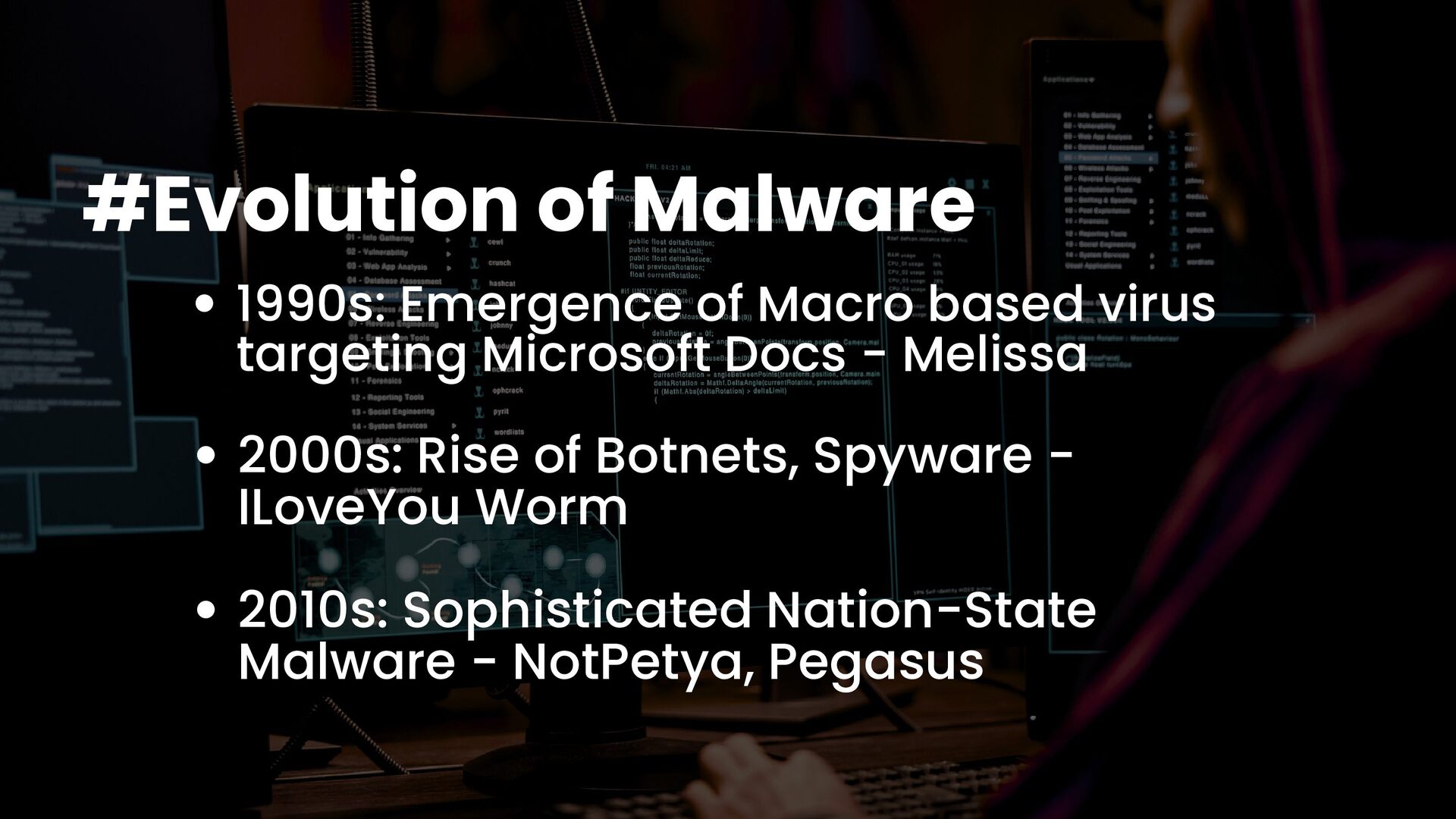
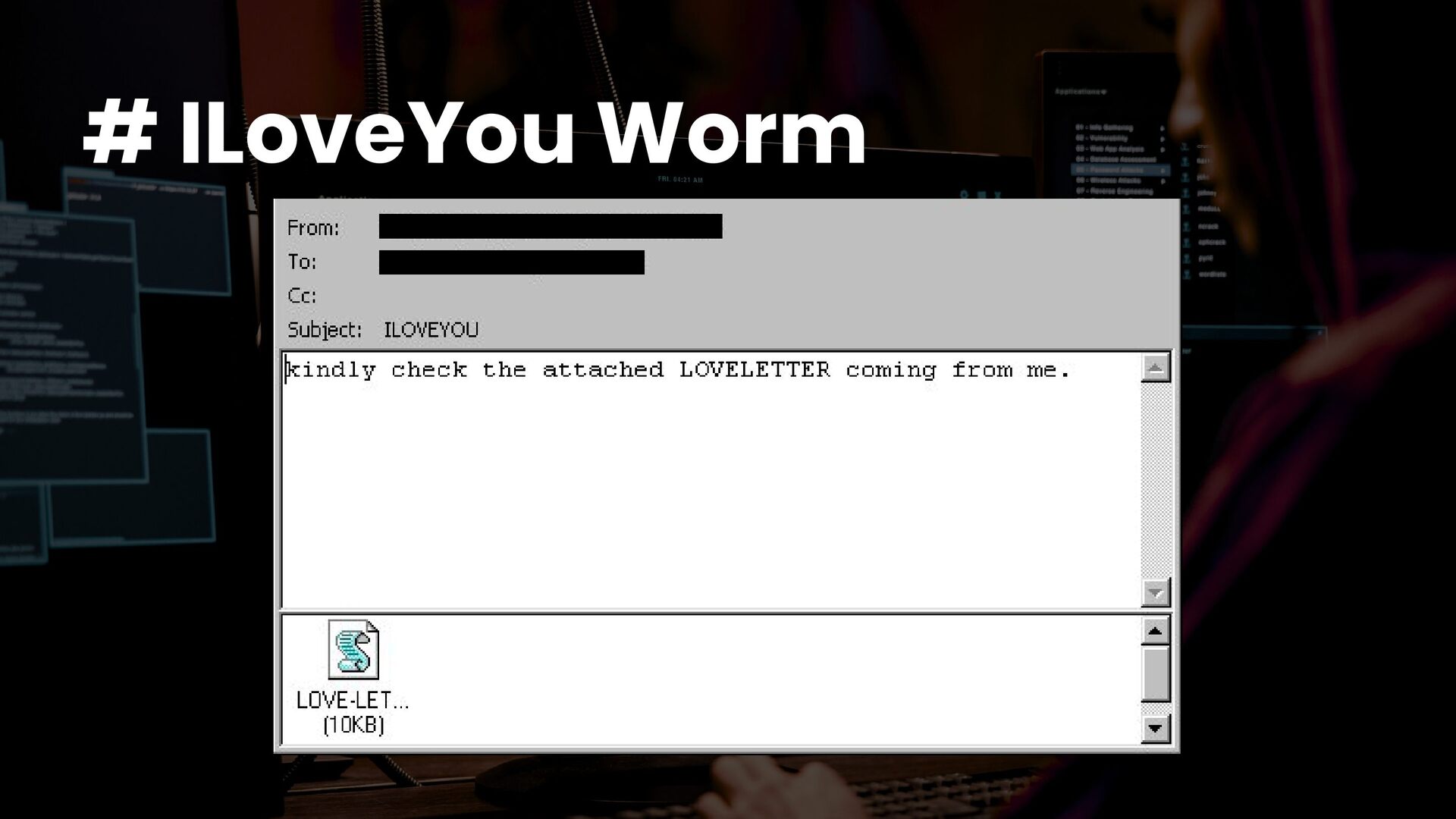
  3. #Evolution of Malware 1990s: Emergence of Macro based virus targeting

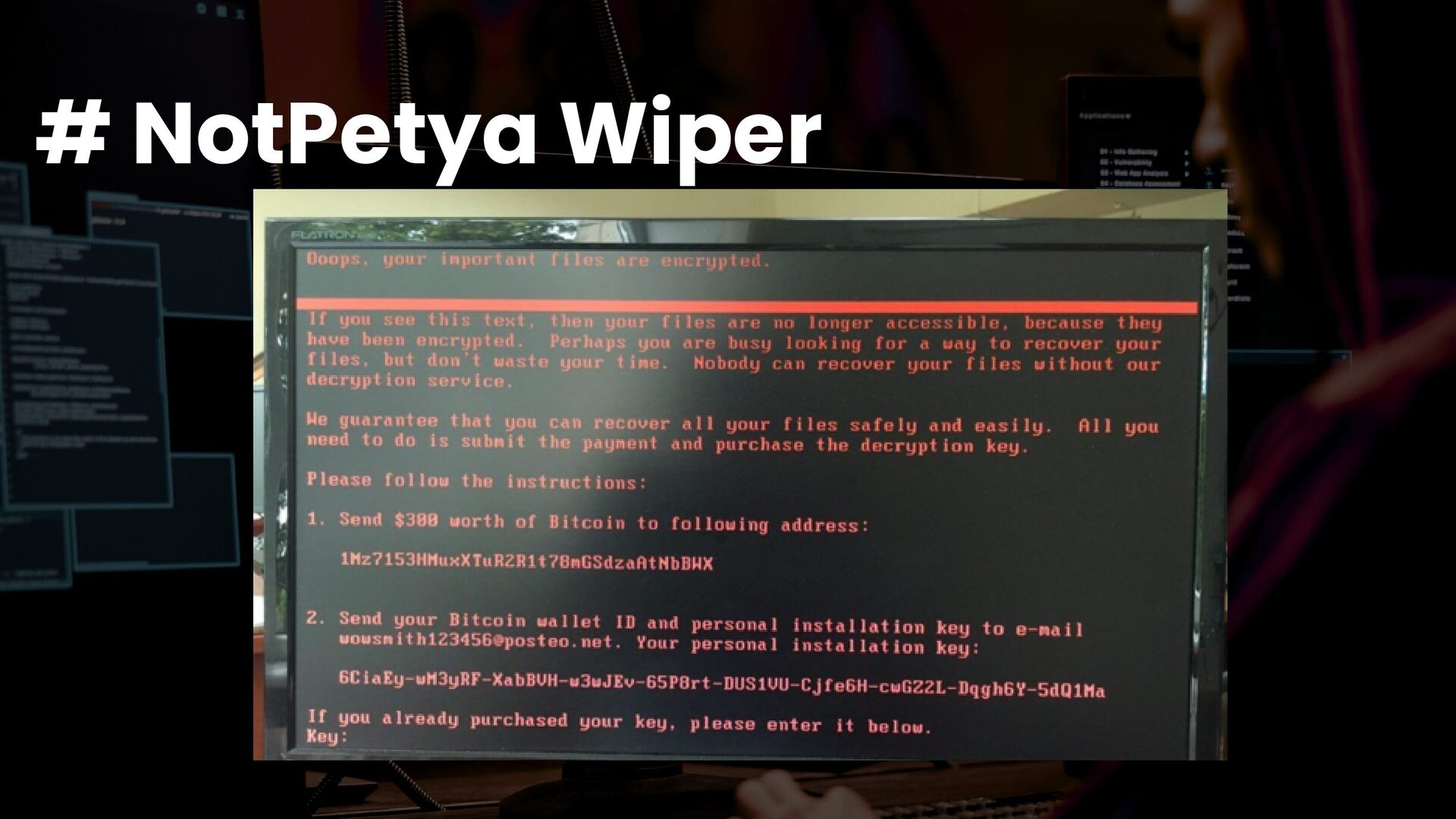
    Microsoft Docs - Melissa 2000s: Rise of Botnets, Spyware - ILoveYou Worm 2010s: Sophisticated Nation-State Malware - NotPetya, Pegasus
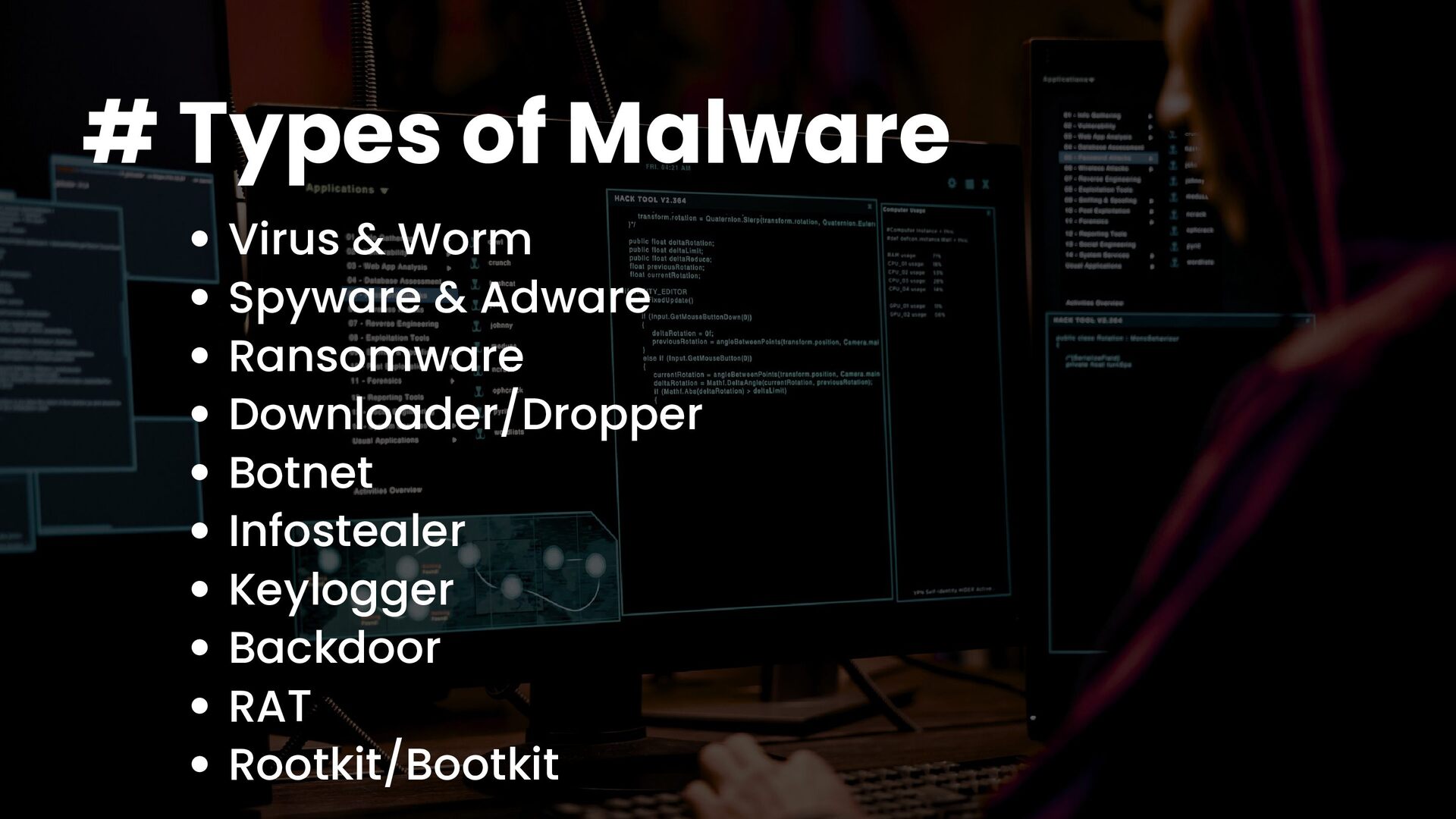
  4. # Types of Malware Virus & Worm Spyware & Adware

    Ransomware Downloader/Dropper Botnet Infostealer Keylogger Backdoor RAT Rootkit/Bootkit
  5. # Initial Access & Infection Techniques Supply Chain Attacks Drive-By

    Downloads Email Attachments Removable Devices Exploiting Vulnerabilities Malvertising Watering Hole Attack
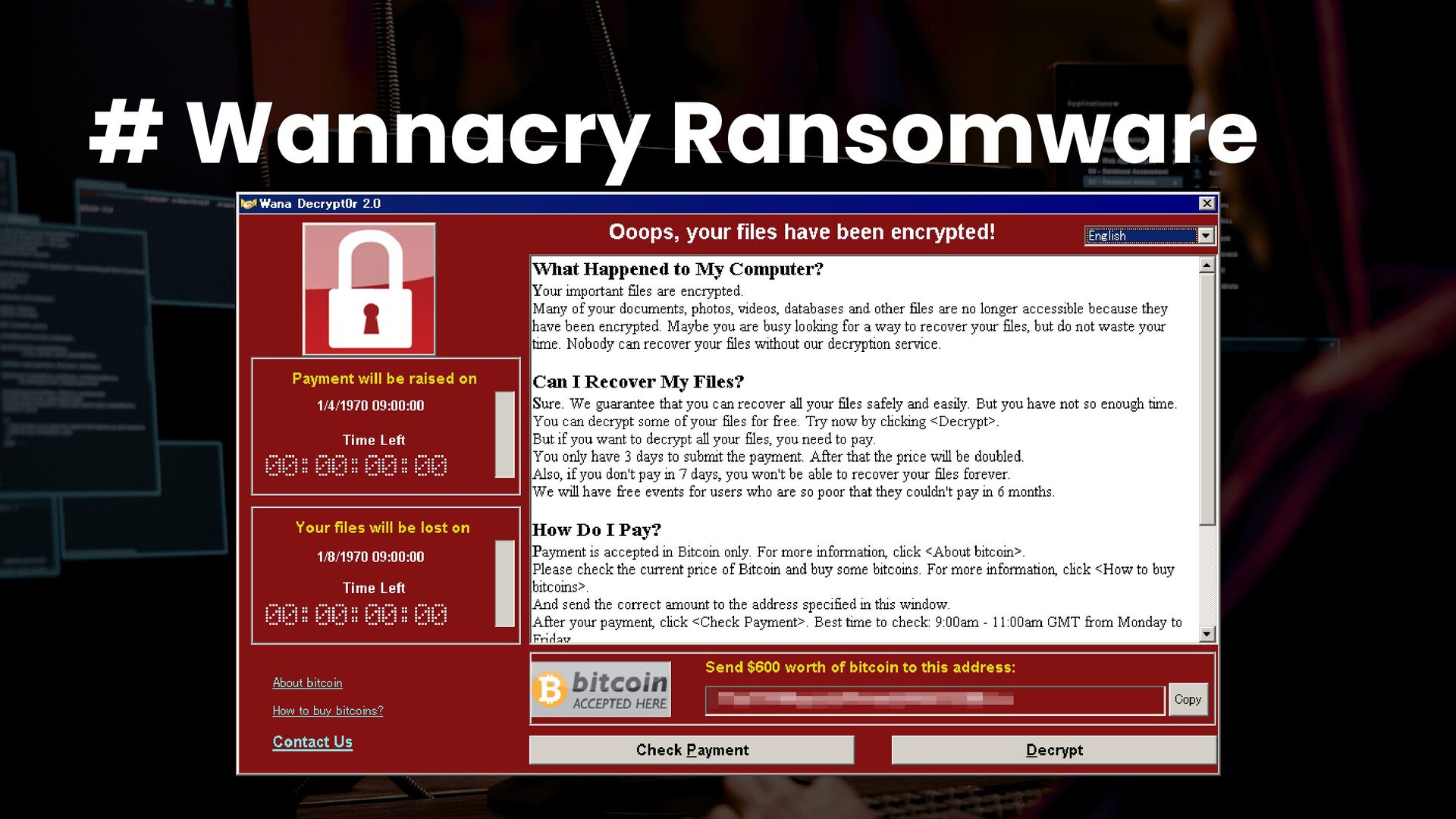
  6. # Well Known Malware Stunext (2010) NotPetya (2017) Mirai Botnet

    (2016) Wannacry Ransomware (2017) Zeus (2007) Emotet (2017) Ryuk Ransomware (2018)
  7. # Static Analysis Examining Suspected File without executing it Reveals

    different information about the file Initial Step Advantages - Safe and Quick
  8. # Techniques Determining File Type Fingerprinting AntiVirus (AV) Scanning String

    Analysis Detecting Packers Linked Libraries and Functions
  9. # Determining File Type Targeted OS and Architecture Can deduce

    our investigation Core Techniques - Manual Method - Hex Editor File Command DEMO: File Type Identification
  10. Generating Cryptographic Hashes of the file Commonly used Algorithms -

    MD5, SHA1, SHA256 Indicator of Compromise (IoC) Determine whether the sample has been previously searched DEMO: Hashmyfile # Fingerprinting The Malware
  11. # AntiVirus Scanning Multiple AV Scanning Commonly used AV -

    Virustotal Disadvantages - If not detected that doesn’t mean.. Scaned data is publically available DEMO: File Scanning in VT
  12. # String Analysis Sequence of Characters Can give clue about

    the program functionality Useful for Artifacts & IoC Generation & Extraction Obfsucated Strings FLOSS - Deobfuscation DEMO: String Analysis
  13. # Detecting Packers Based on Entropy (Randomness) Fewer Import Functions

    Check the Section in PE Header DEMO: PEid, DiE
  14. # Linked Libraries & Functions Malware Interacts with files, network,

    registries, etc but how? DLL & WinAPI Functions Imported & Exported Functions Examining PE Resources Examining Compiliation Timestamps DEMO: PEStudio, Resource Hacker