better than anyone. By focusing on the user – capturing their experiences through extensive user research and understanding the problems they face – we can gain a real understanding of what they need and create logical, intuitive solutions for them. Successful solutions require an extensive design process with a wide range of research methodologies. This is my focus - user centred design.
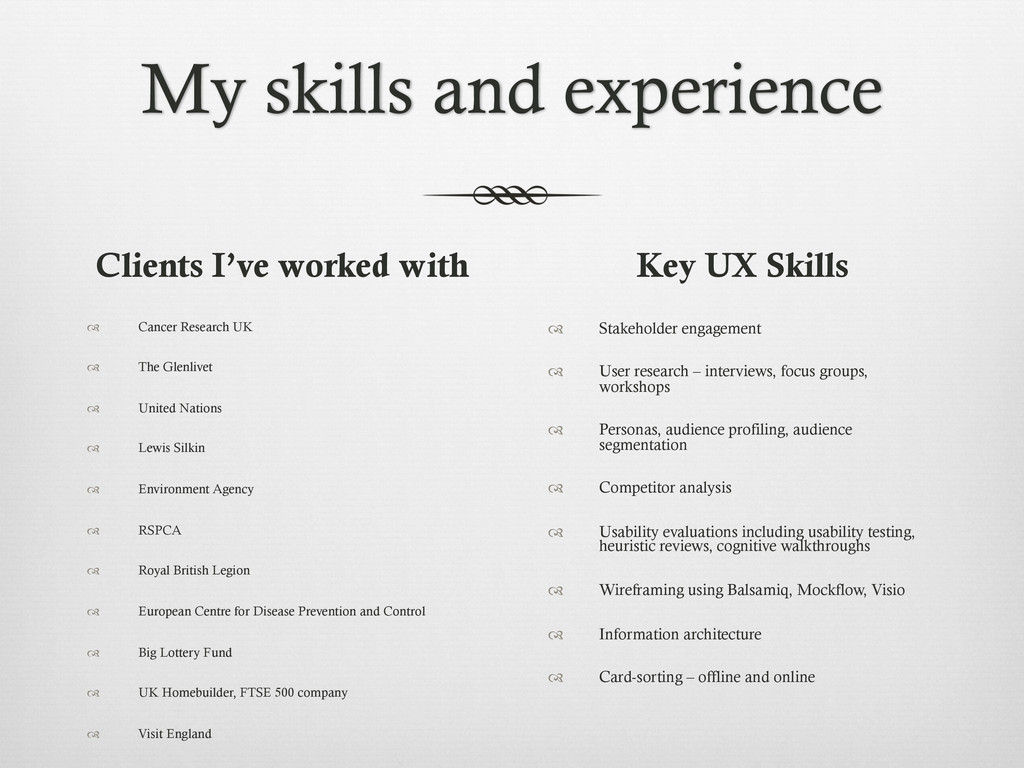
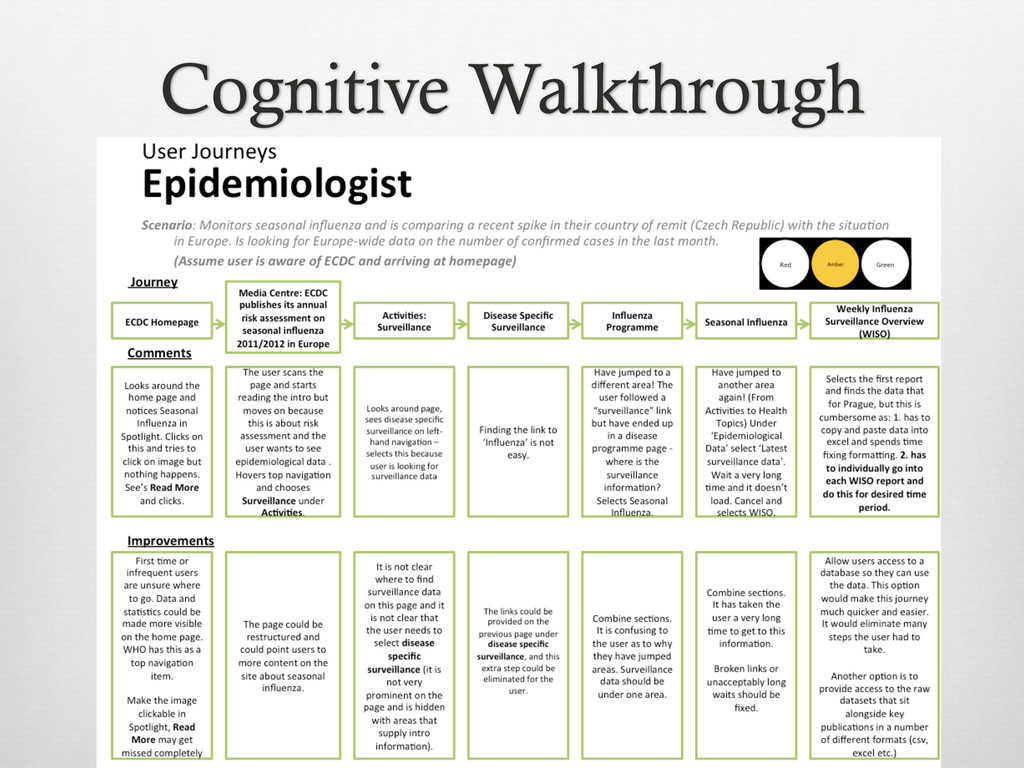
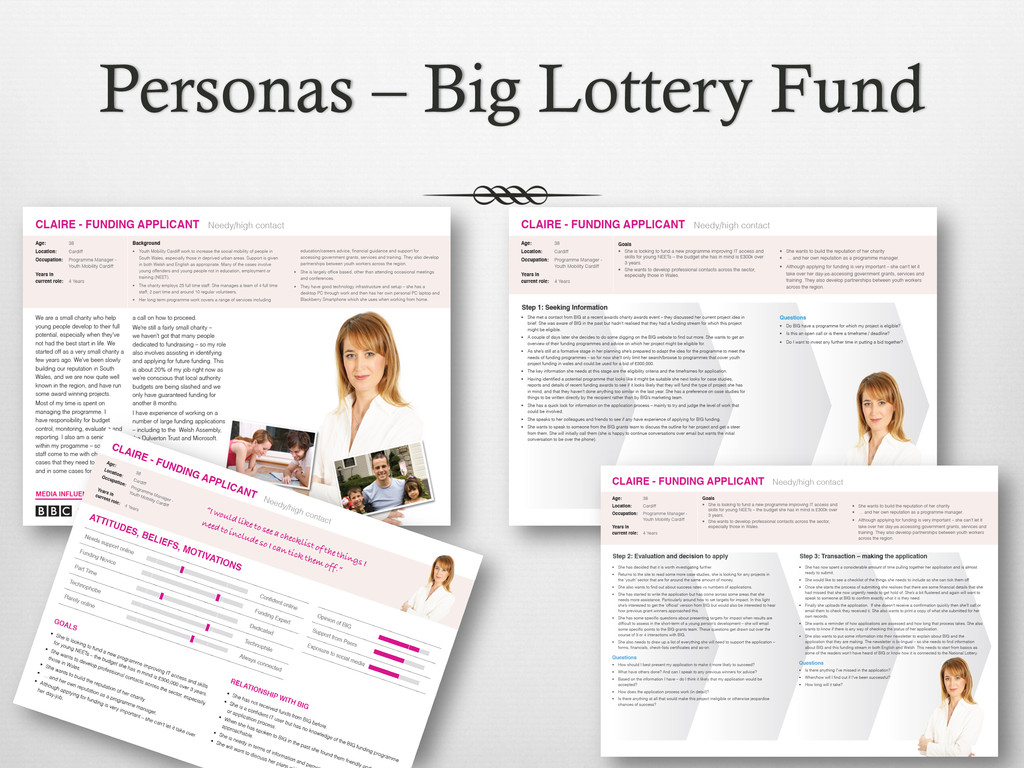
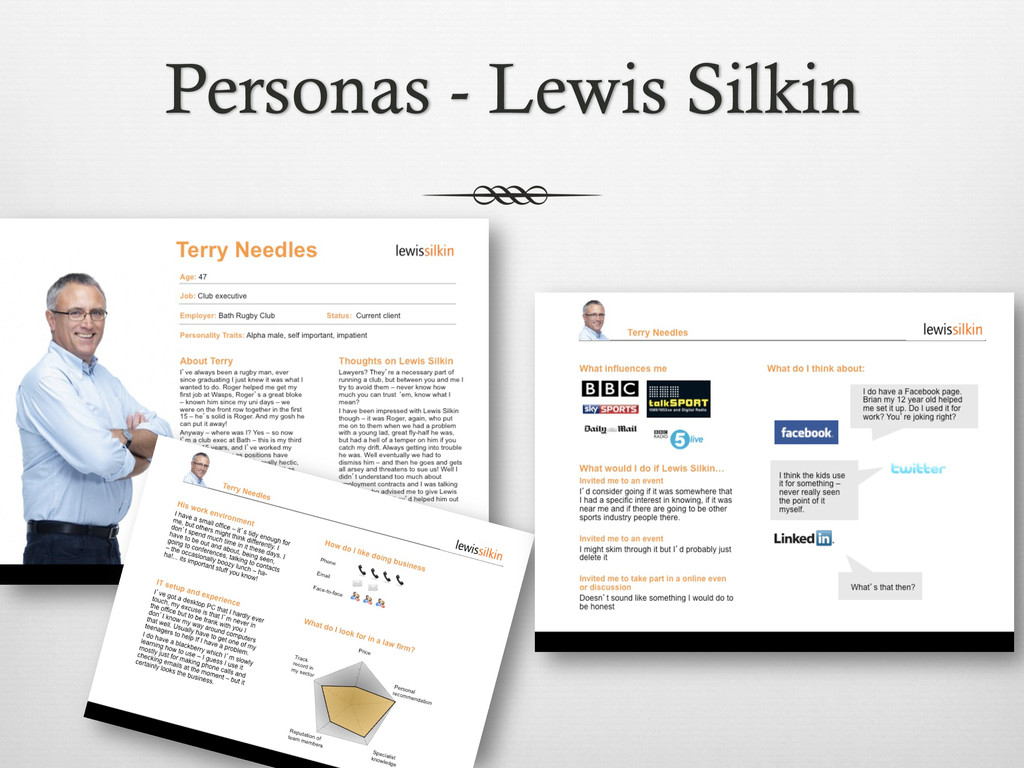
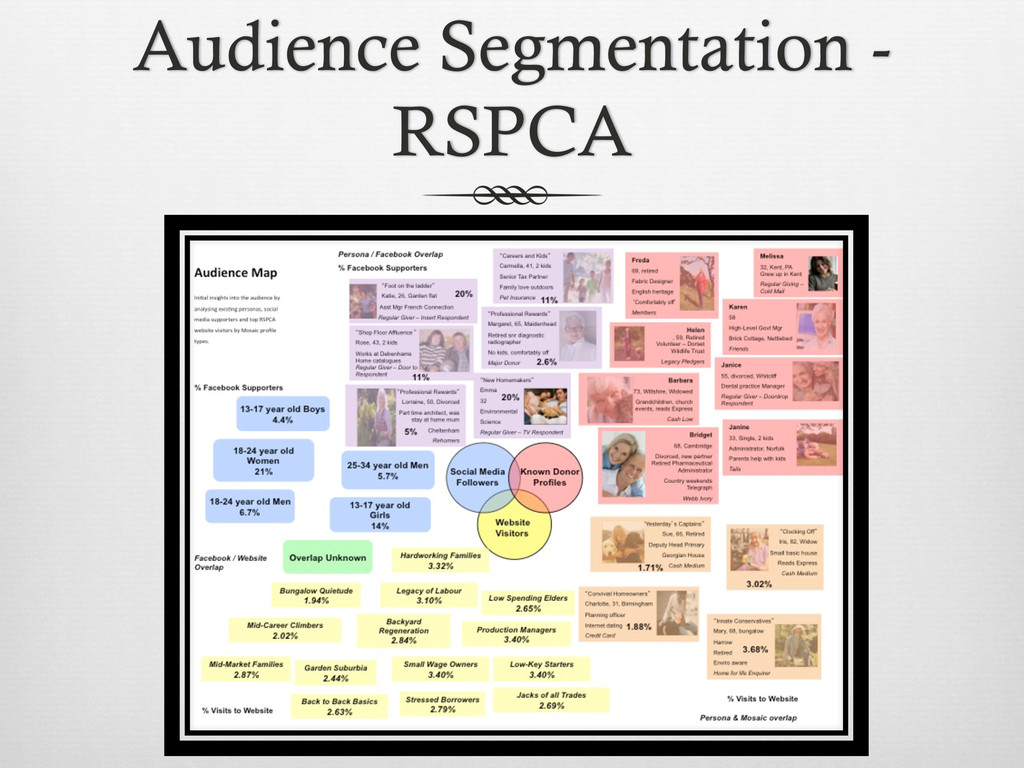
Research UK The Glenlivet United Nations Lewis Silkin Environment Agency RSPCA Royal British Legion European Centre for Disease Prevention and Control Big Lottery Fund UK Homebuilder, FTSE 500 company Visit England Key UX Skills Stakeholder engagement User research – interviews, focus groups, workshops Personas, audience profiling, audience segmentation Competitor analysis Usability evaluations including usability testing, heuristic reviews, cognitive walkthroughs Wireframing using Balsamiq, Mockflow, Visio Information architecture Card-sorting – offline and online
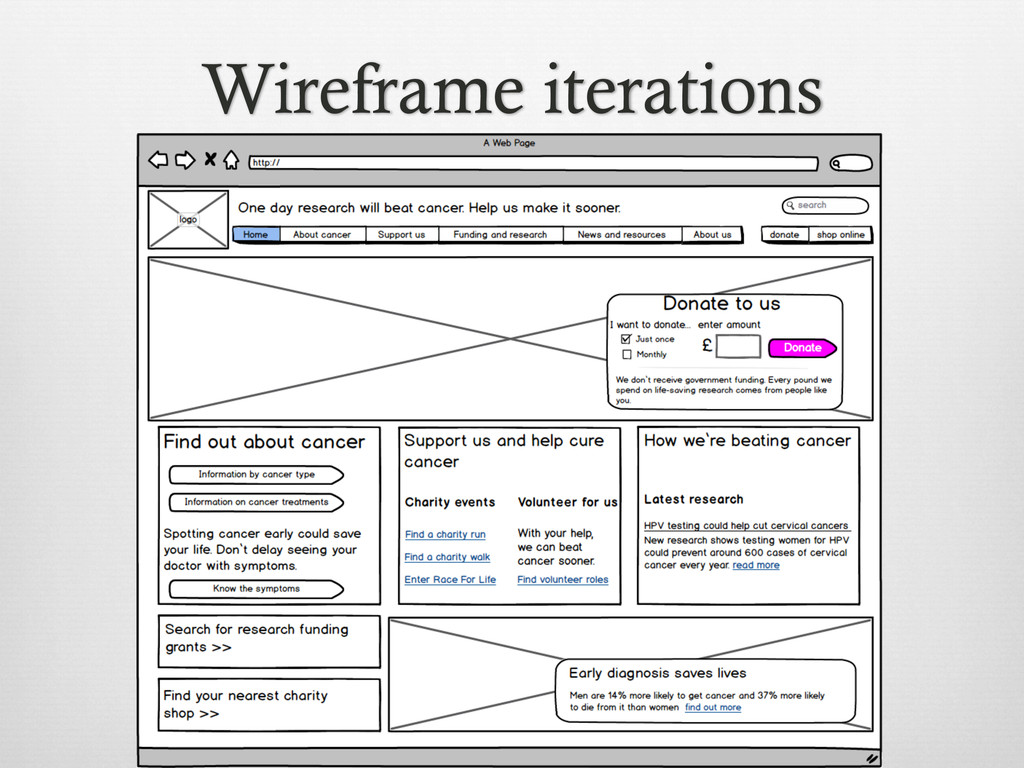
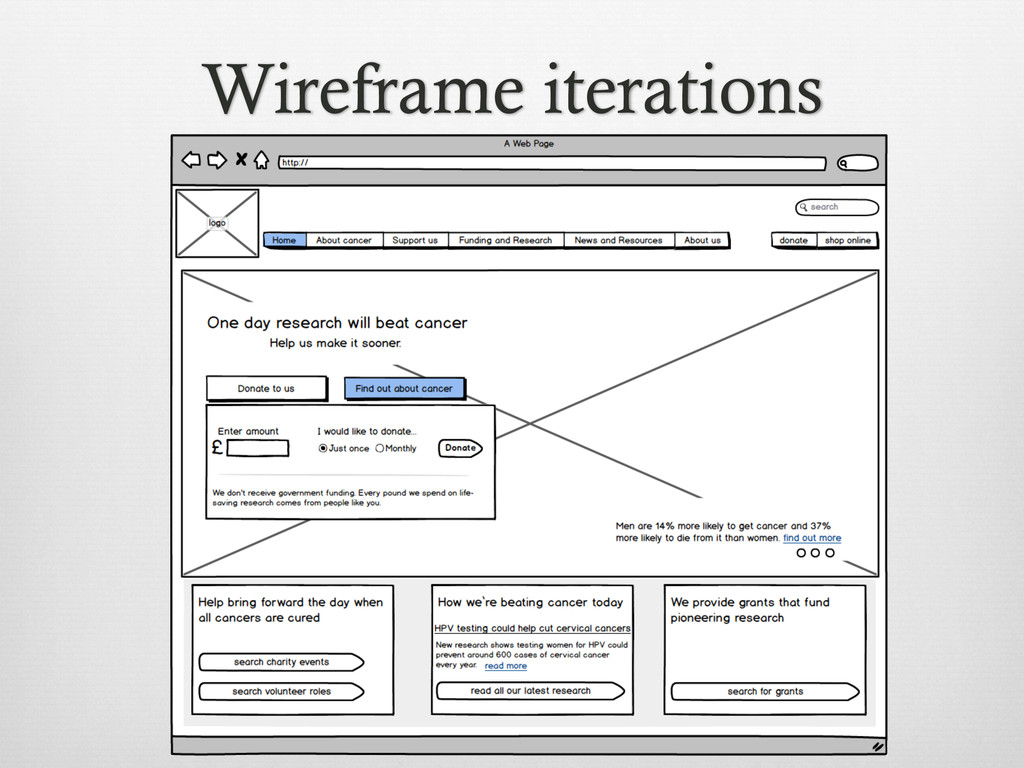
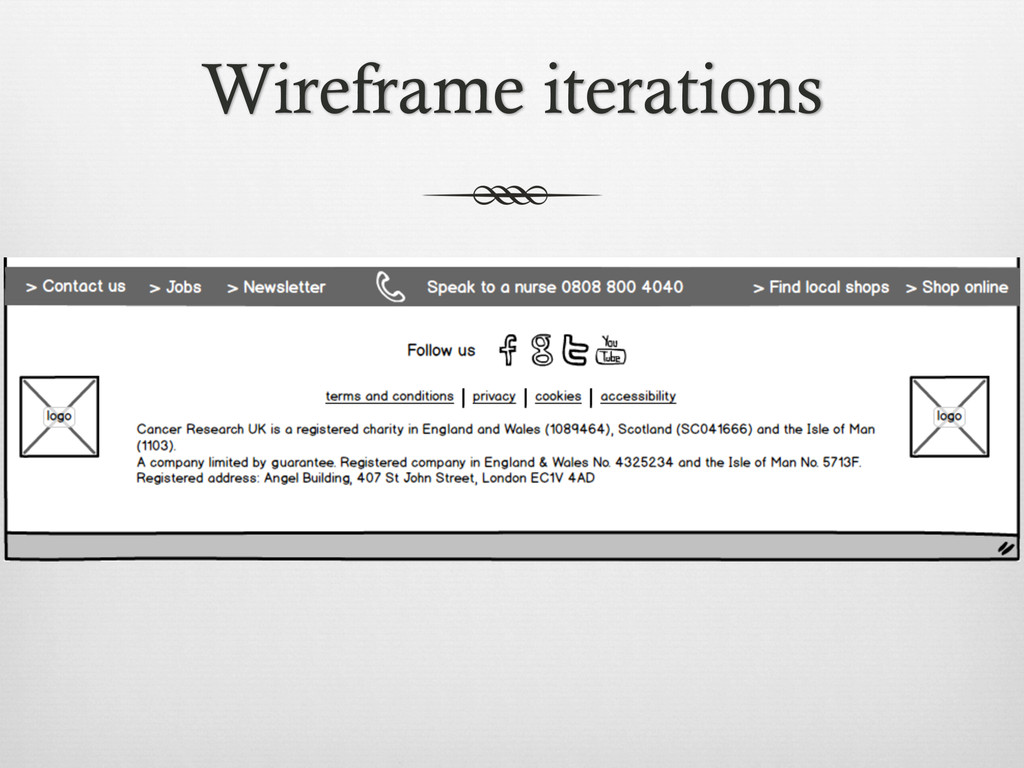
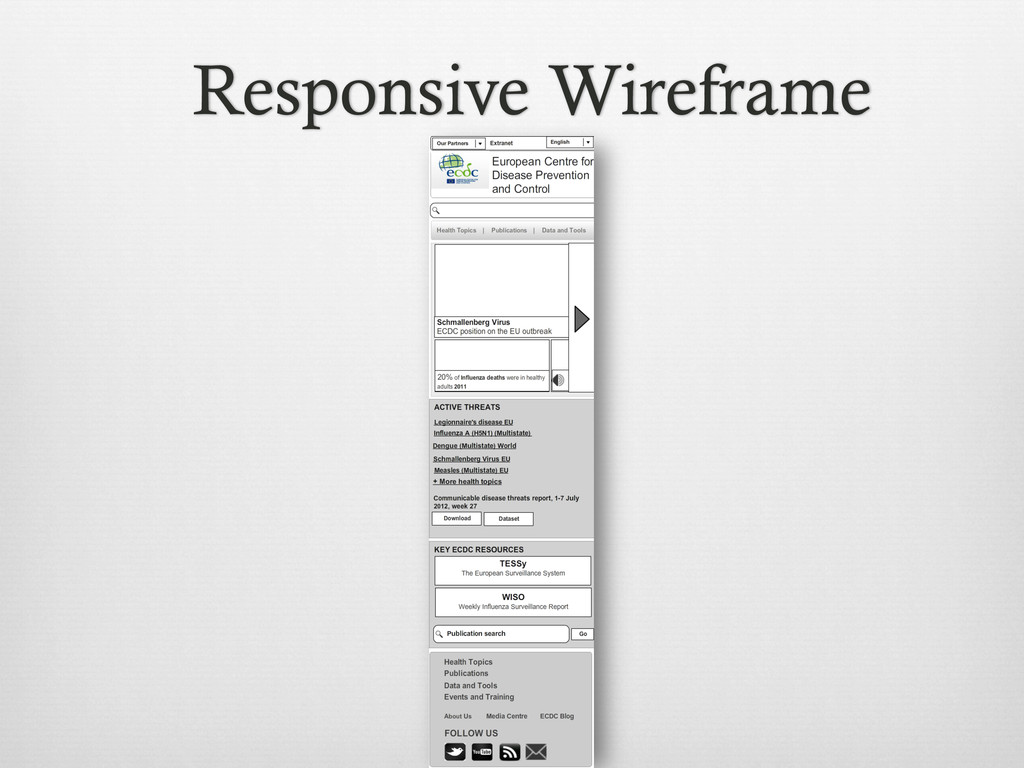
website redevelopment project redevelop the homepage, header and footer (responsively) – work within brand guidelines but be ambitious looking to the future of the website
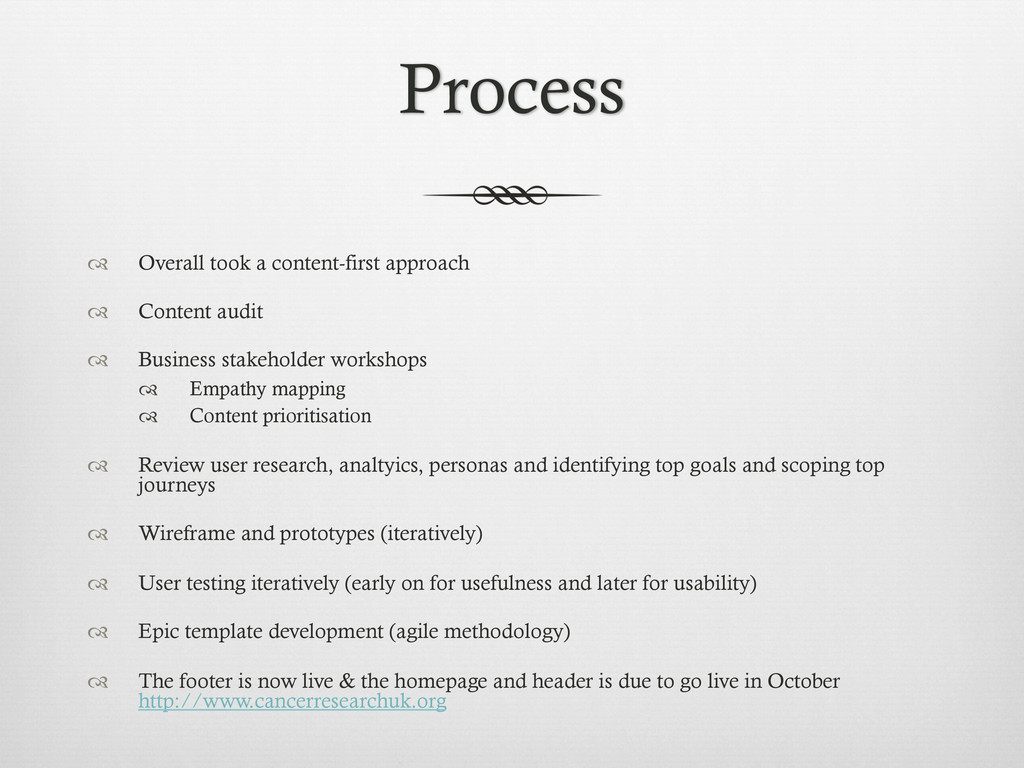
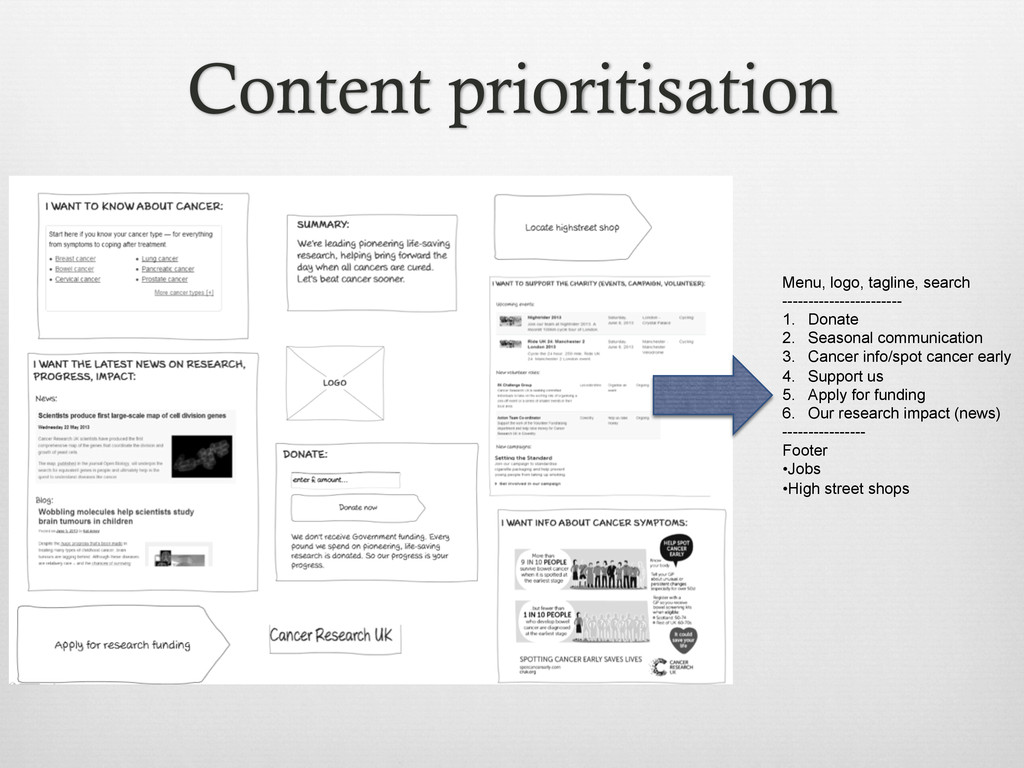
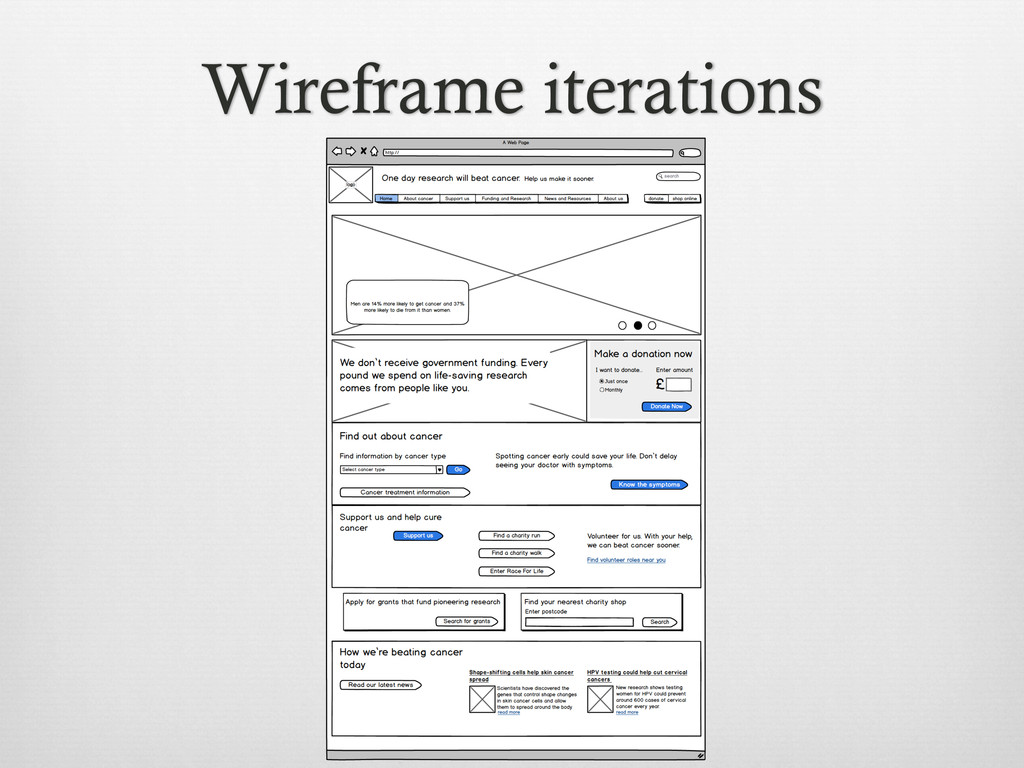
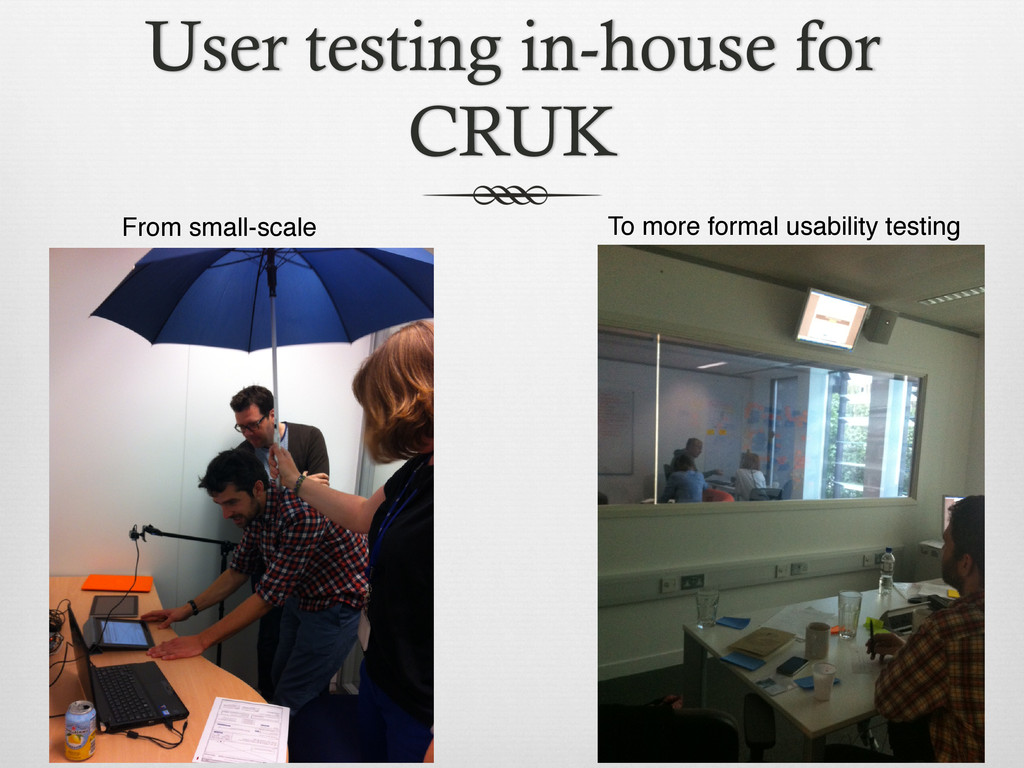
Business stakeholder workshops Empathy mapping Content prioritisation Review user research, analtyics, personas and identifying top goals and scoping top journeys Wireframe and prototypes (iteratively) User testing iteratively (early on for usefulness and later for usability) Epic template development (agile methodology) The footer is now live & the homepage and header is due to go live in October http://www.cancerresearchuk.org
Seasonal communication 3. Cancer info/spot cancer early 4. Support us 5. Apply for funding 6. Our research impact (news) ---------------- Footer • Jobs • High street shops
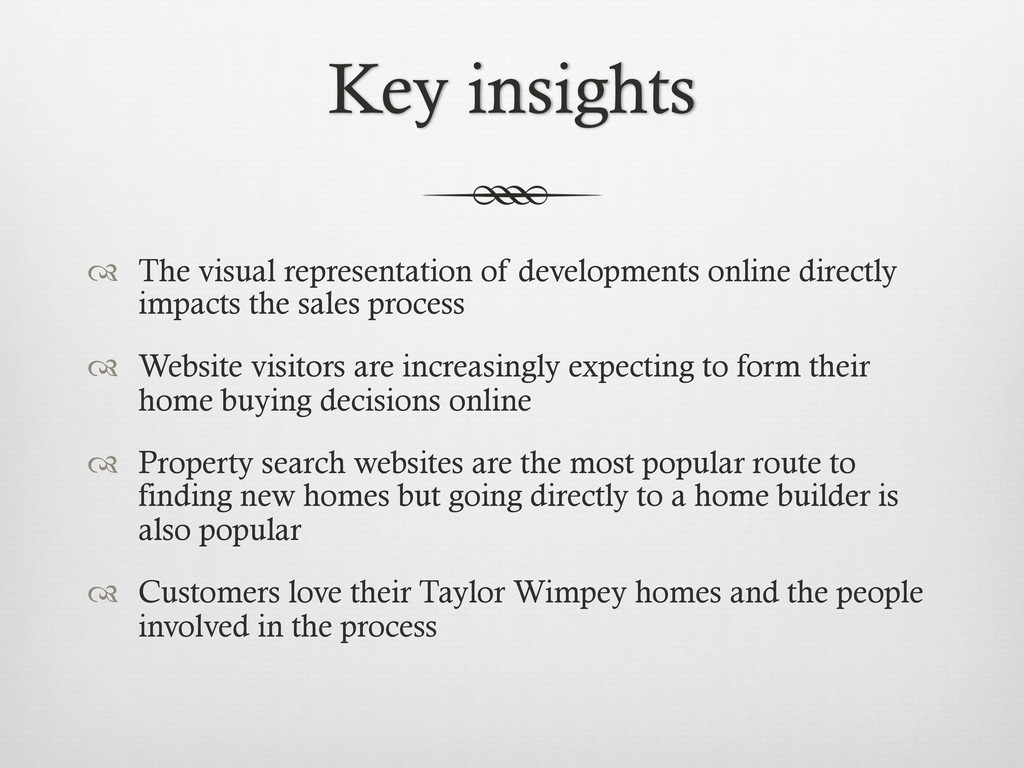
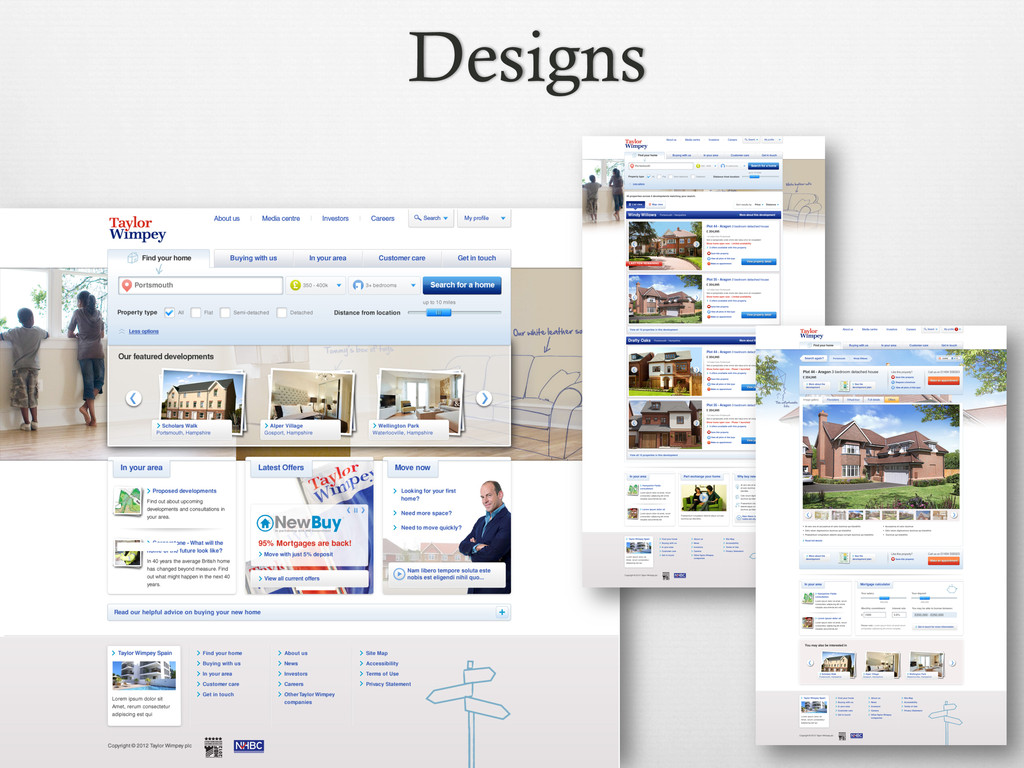
impacts the sales process Website visitors are increasingly expecting to form their home buying decisions online Property search websites are the most popular route to finding new homes but going directly to a home builder is also popular Customers love their Taylor Wimpey homes and the people involved in the process
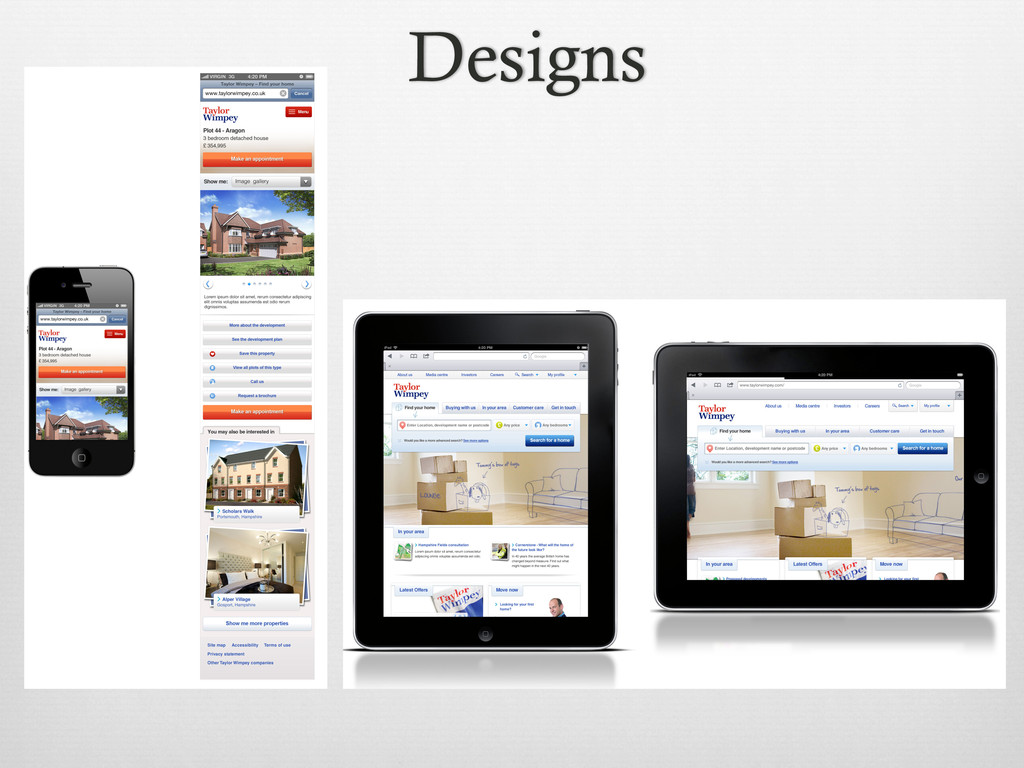
tasks in the same site visit Create one development site that adapts during the planning and sales lifecycle Developing a ‘best in class’ property search is a priority Users require the means to explore the different properties in a development Helping users visualise how their life may fit into a property is critical to sales The consultation process should be seen as an integral part of the site Customer feedback should be encouraged and consideration given to incorporating social feedback into site content Allow navigation of properties by property detail as well as development
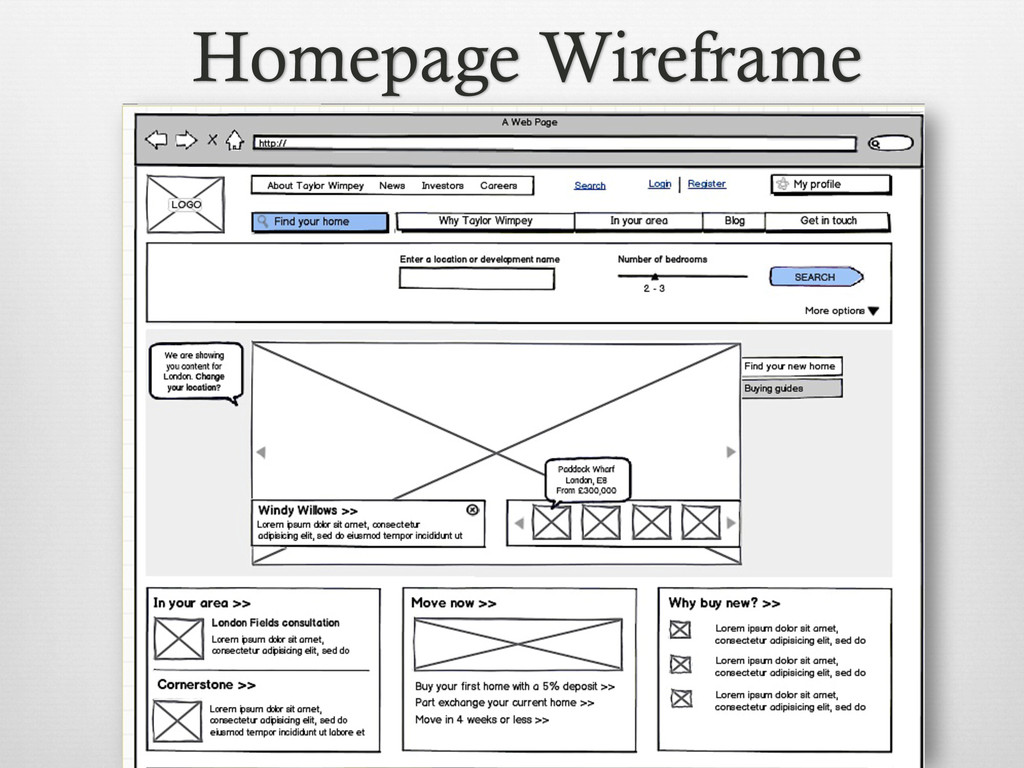
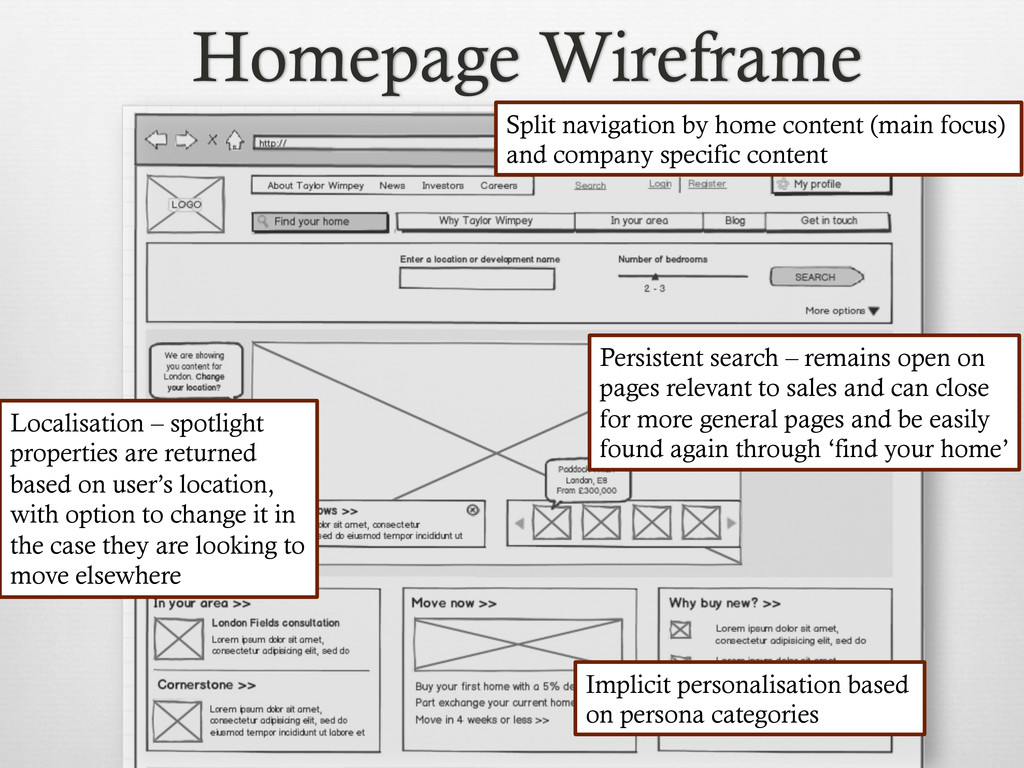
to sales and can close for more general pages and be easily found again through ‘find your home’ Localisation – spotlight properties are returned based on user’s location, with option to change it in the case they are looking to move elsewhere Implicit personalisation based on persona categories Split navigation by home content (main focus) and company specific content
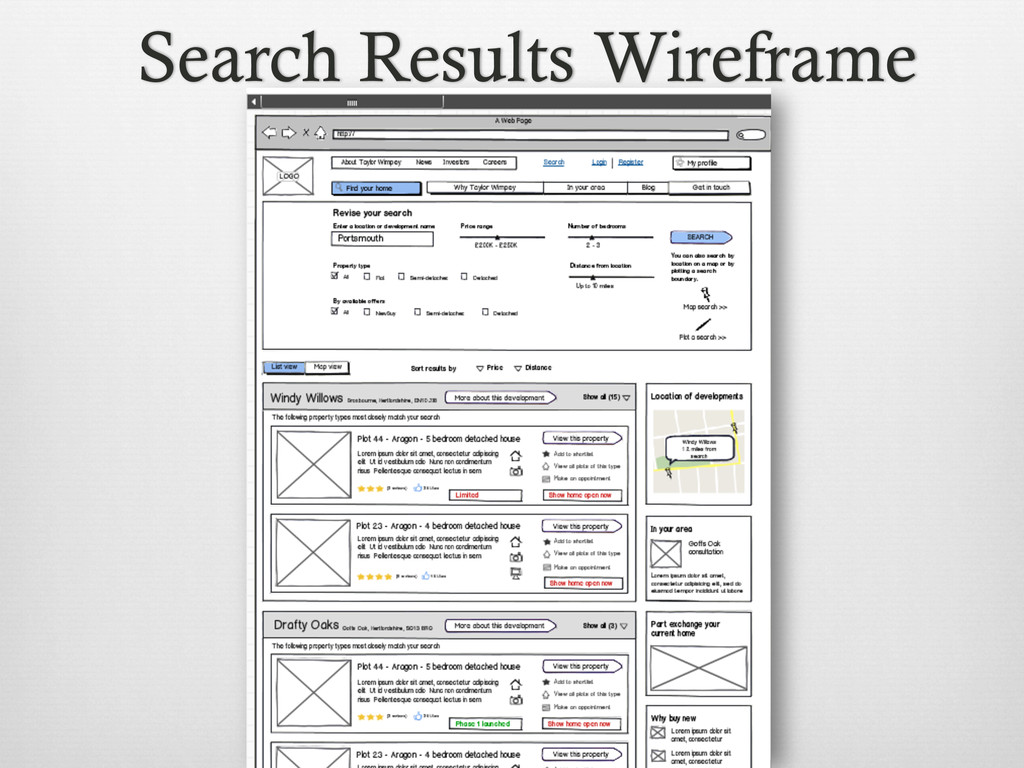
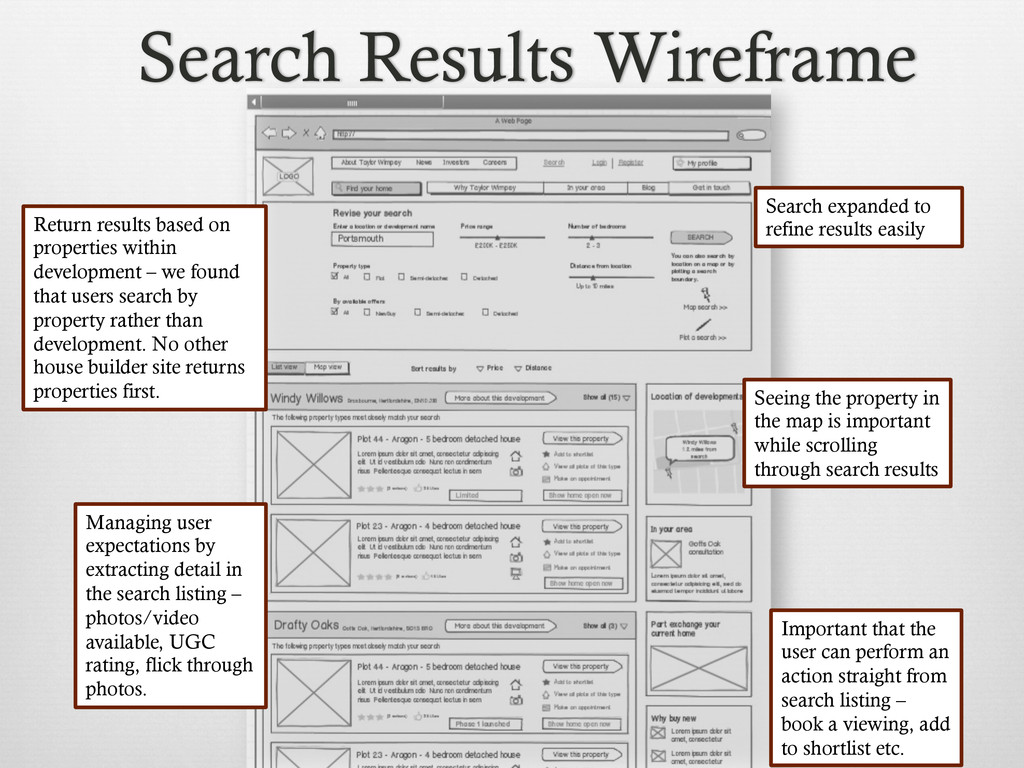
– we found that users search by property rather than development. No other house builder site returns properties first. Seeing the property in the map is important while scrolling through search results Managing user expectations by extracting detail in the search listing – photos/video available, UGC rating, flick through photos. Search expanded to refine results easily Important that the user can perform an action straight from search listing – book a viewing, add to shortlist etc.
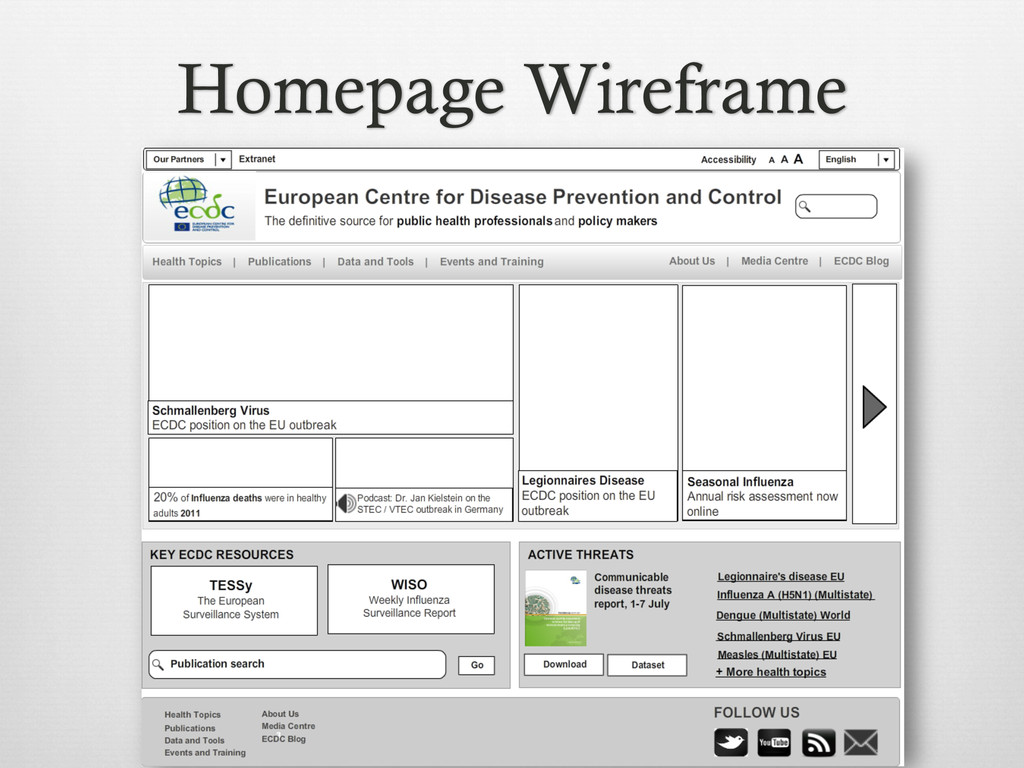
of issues related to communicable diseases among specific target EU audiences, establish ECDC’s reputation as the leading European authority in the field and the “go-to” source for information and data on communicable diseases within the EU.
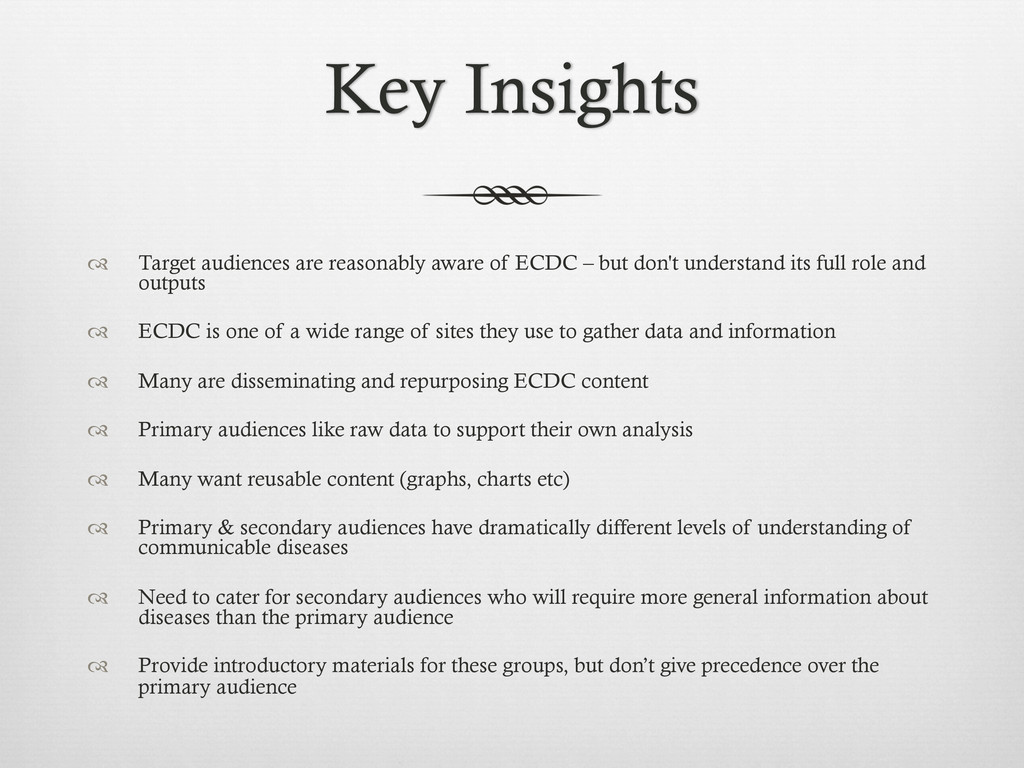
– but don't understand its full role and outputs ECDC is one of a wide range of sites they use to gather data and information Many are disseminating and repurposing ECDC content Primary audiences like raw data to support their own analysis Many want reusable content (graphs, charts etc) Primary & secondary audiences have dramatically different levels of understanding of communicable diseases Need to cater for secondary audiences who will require more general information about diseases than the primary audience Provide introductory materials for these groups, but don’t give precedence over the primary audience
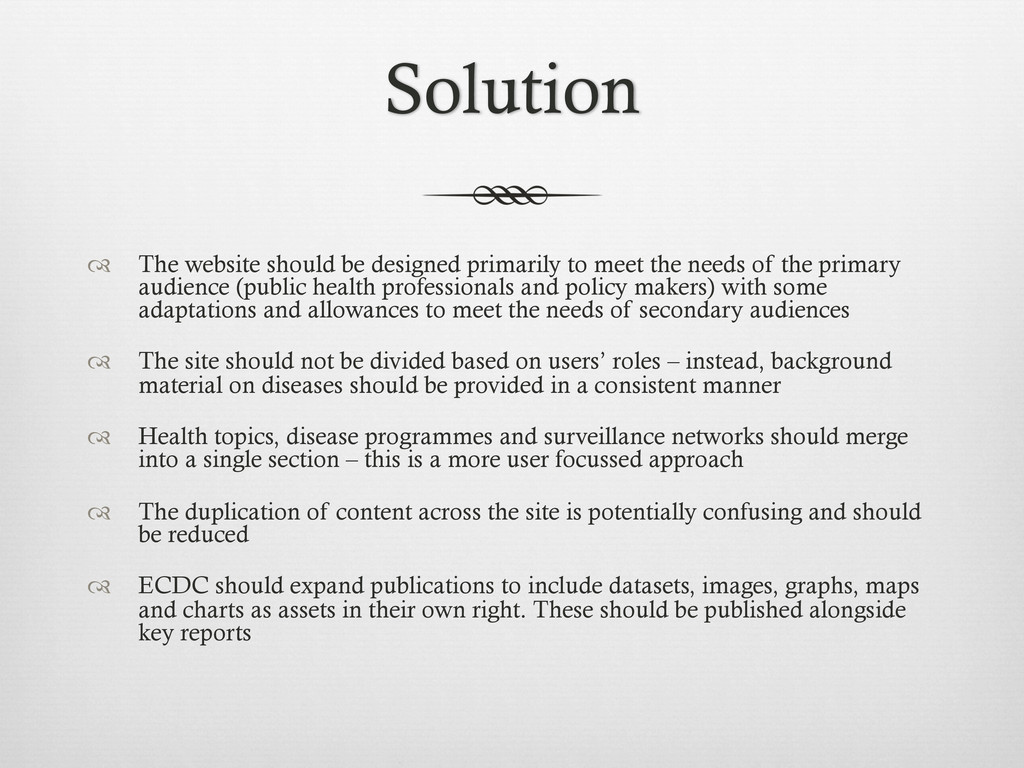
the needs of the primary audience (public health professionals and policy makers) with some adaptations and allowances to meet the needs of secondary audiences The site should not be divided based on users’ roles – instead, background material on diseases should be provided in a consistent manner Health topics, disease programmes and surveillance networks should merge into a single section – this is a more user focussed approach The duplication of content across the site is potentially confusing and should be reduced ECDC should expand publications to include datasets, images, graphs, maps and charts as assets in their own right. These should be published alongside key reports
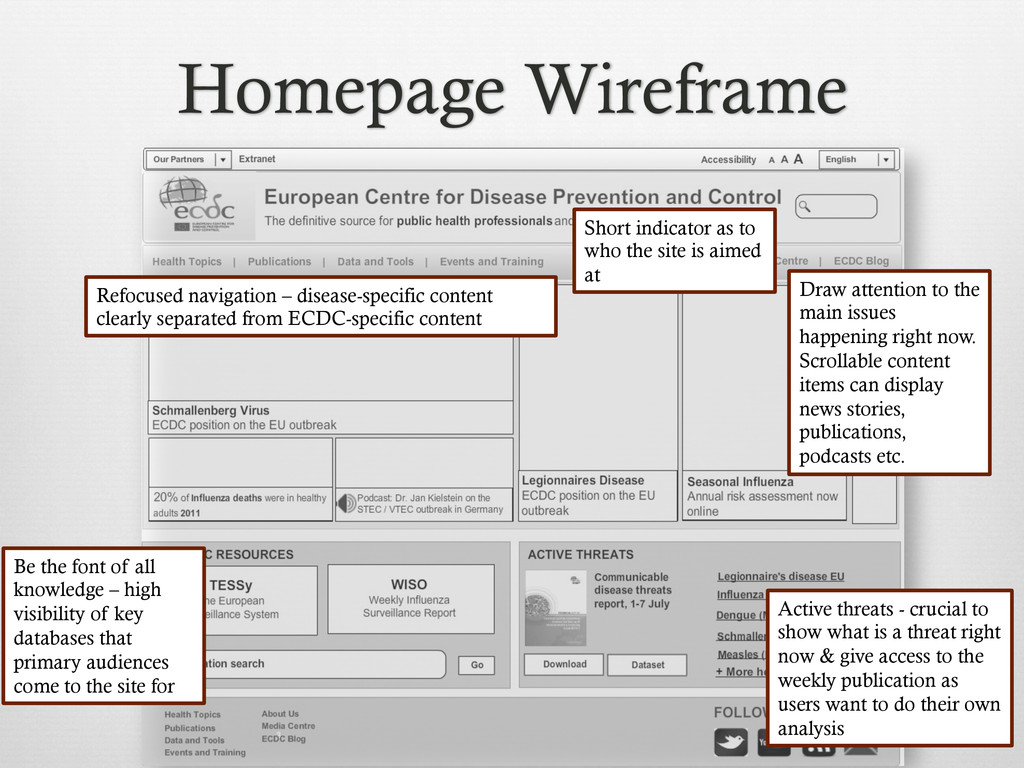
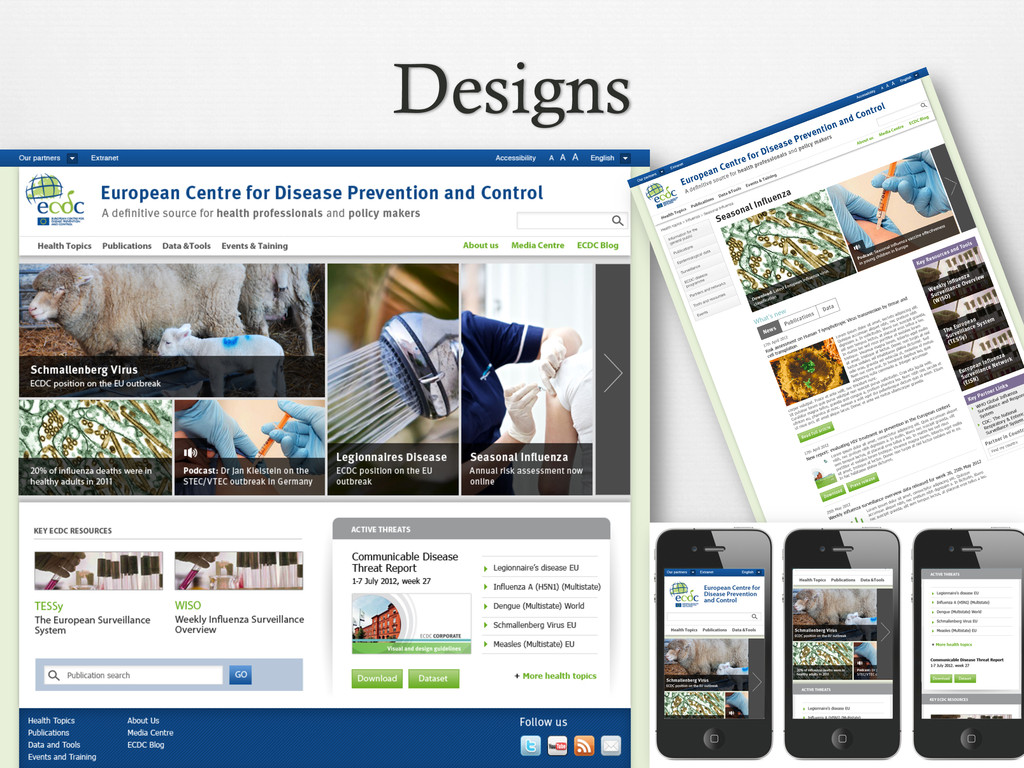
key databases that primary audiences come to the site for Draw attention to the main issues happening right now. Scrollable content items can display news stories, publications, podcasts etc. Active threats - crucial to show what is a threat right now & give access to the weekly publication as users want to do their own analysis Short indicator as to who the site is aimed at Refocused navigation – disease-specific content clearly separated from ECDC-specific content Homepage Wireframe
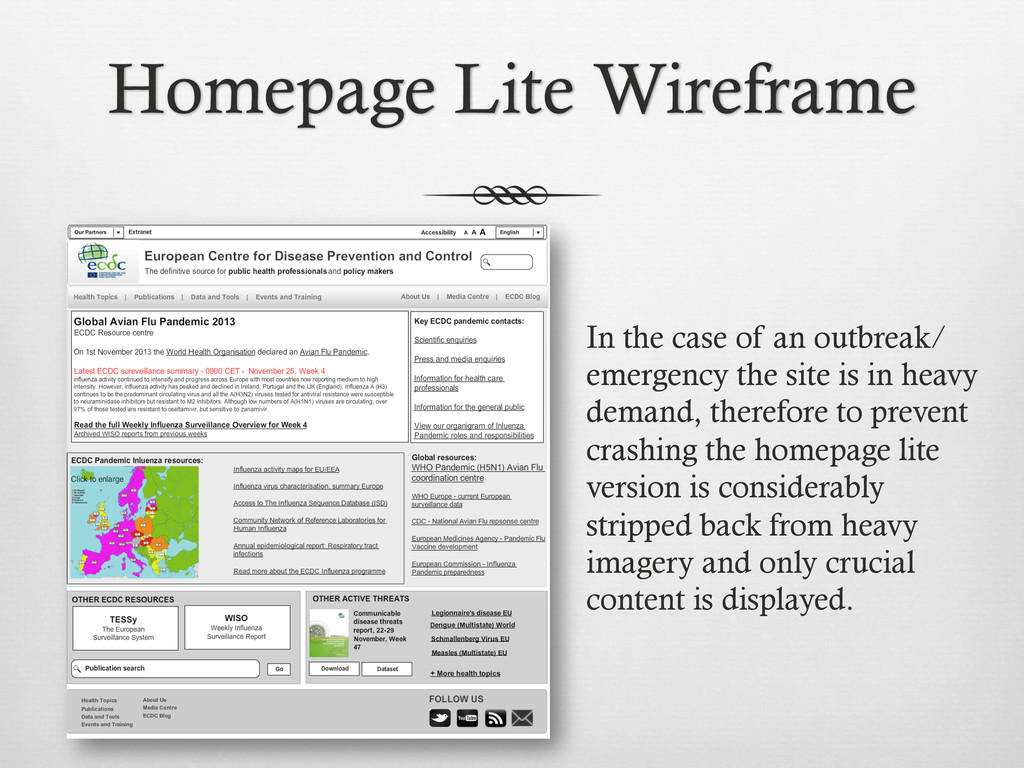
the site is in heavy demand, therefore to prevent crashing the homepage lite version is considerably stripped back from heavy imagery and only crucial content is displayed.
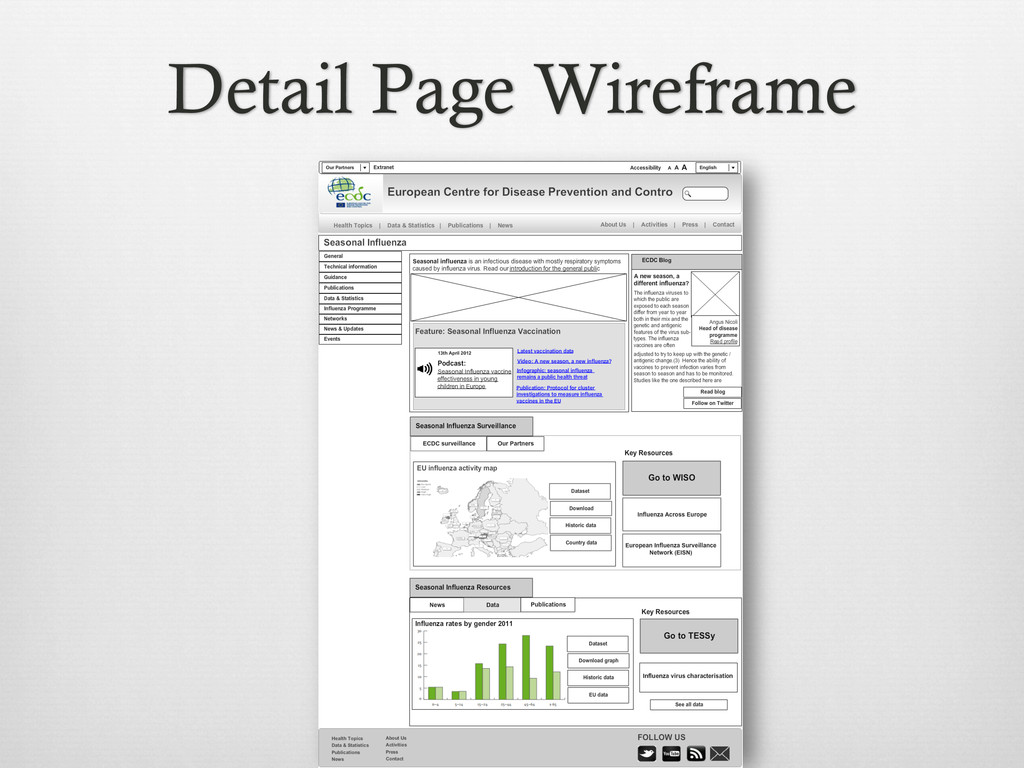
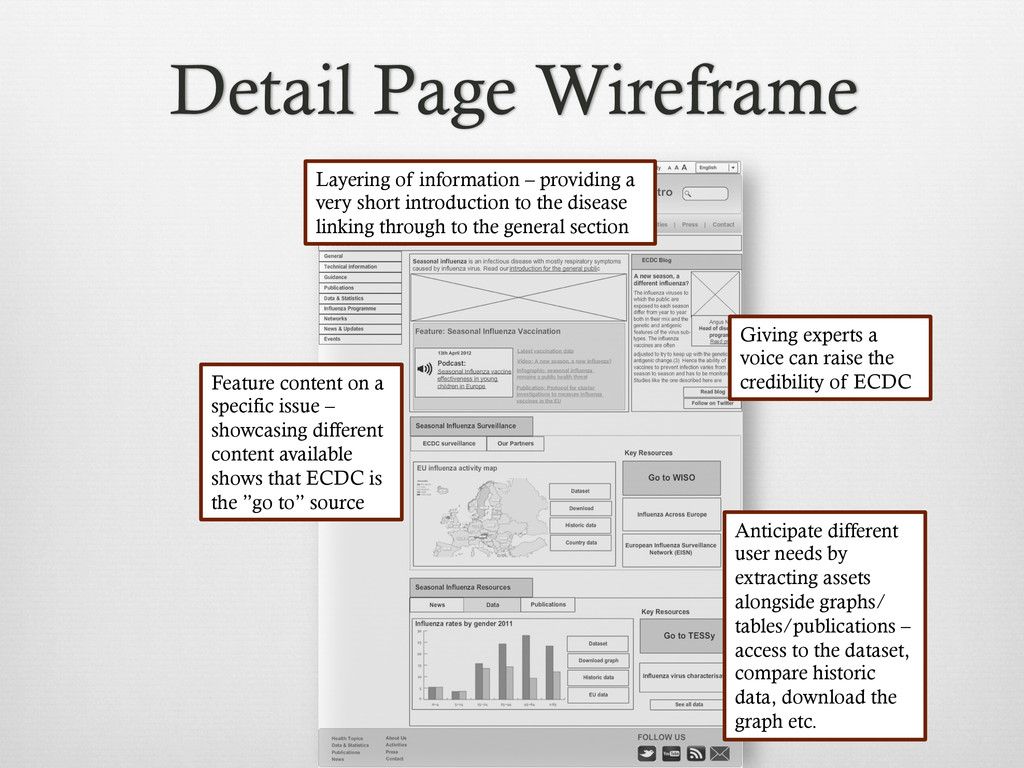
– access to the dataset, compare historic data, download the graph etc. Feature content on a specific issue – showcasing different content available shows that ECDC is the ”go to” source Giving experts a voice can raise the credibility of ECDC Layering of information – providing a very short introduction to the disease linking through to the general section Detail Page Wireframe


 becsmckavanagh
 inesmontani
 techseoconnect
 kimpetersen
 zakiyama
 tenderlove
 helmedeiros
 quramy
 ivargrimstad
 eileencodes
 bryan
 codingconduct
 garrettdimon