Upgrade to Pro
— share decks privately, control downloads, hide ads and more …
Speaker Deck
Sign up for free
Menu
Search
Features
All features
Private URLs
Password Protection
Custom URLS
Scheduled publishing
Remove Branding
Restrict embedding
Deck Collections
Notes
Features
All features
Private URLs
Password Protection
Custom URLS
Scheduled publishing
Remove Branding
Restrict embedding
Deck Collections
Notes
Explore
Featured decks
Featured speakers
Programming
Technology
Storyboards
Explore
Featured decks
Featured speakers
Programming
Technology
Storyboards
Pricing
Search
Sign in
Sign up for free
menu1
Search
Sponsored
·
Your Podcast. Everywhere. Effortlessly.
Share. Educate. Inspire. Entertain. You do you. We'll handle the rest.
→
benwhately
October 26, 2012
96
0
Share
Embed
Copy iframe code
Copy JS code
Copy link
Start on current slide
menu1
benwhately
October 26, 2012
More Decks by benwhately
See All by benwhately
how_to_type_in_chinese.pdf
benwhately
0
170
how to type in chinese.pdf
benwhately
0
15k
Futurism - Cristina Bogdan
benwhately
0
600
slideshow 1.pdf
benwhately
0
160
slideshow2.pdf
benwhately
0
120
menu3
benwhately
0
71
menu2
benwhately
0
76
How to type in Chinese
benwhately
0
1.2k
Introduction to pinyin
benwhately
1
43k
Featured
See All Featured
Navigating Team Friction
lara
192
16k
Jamie Indigo - Trashchat’s Guide to Black Boxes: Technical SEO Tactics for LLMs
techseoconnect
PRO
0
710
CoffeeScript is Beautiful & I Never Want to Write Plain JavaScript Again
sstephenson
162
16k
The Curse of the Amulet
leimatthew05
3
16k
Six Lessons from altMBA
skipperchong
29
4.5k
Put a Button on it: Removing Barriers to Going Fast.
kastner
60
4.6k
GraphQLとの向き合い方2022年版
quramy
50
15k
The untapped power of vector embeddings
frankvandijk
2
1.9k
The #1 spot is gone: here's how to win anyway
tamaranovitovic
4
1.2k
Responsive Adventures: Dirty Tricks From The Dark Corners of Front-End
smashingmag
254
22k
Have SEOs Ruined the Internet? - User Awareness of SEO in 2025
akashhashmi
0
520
職位にかかわらず全員がリーダーシップを発揮するチーム作り / Building a team where everyone can demonstrate leadership regardless of position
madoxten
69
67k
Transcript
You have already learned 5 of the most common characters
on the menu.
You learned them using some pretty neat animations.
That technique helps to learn a lot of characters, particularly
the commonest ones.
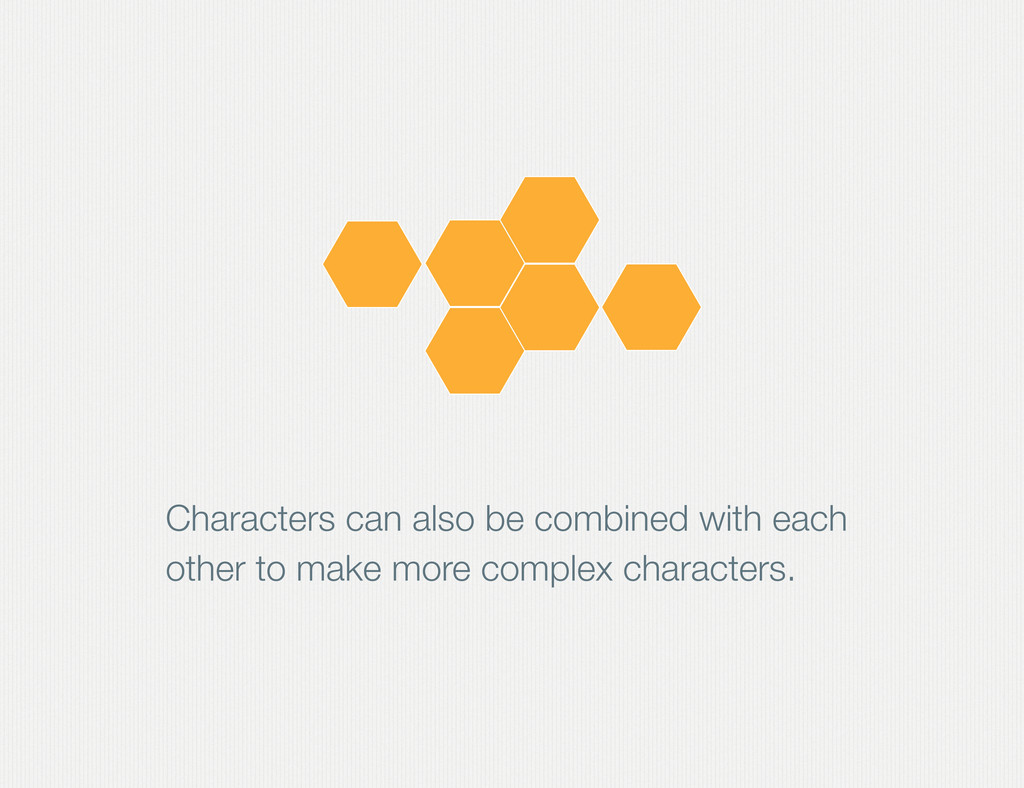
Characters can also be combined with each other to make
more complex characters.
Sometimes the meanings of components gives you a good idea
of the meaning of the combination character.
But often they don’t. They can seem very abstract indeed.
But don’t be disheartened!
These tricky characters are an opportunity to let your imagination
run wild.
The wilder, more ridiculous and absurd the mem... ...the more
memorable it will be.
So check out the mems that other people are using
to learn, and don’t be afraid to try adding your own!


 benwhately
 lara
lara
 techseoconnect
 sstephenson
 leimatthew05
 skipperchong
 kastner
 quramy
 frankvandijk
 tamaranovitovic
 smashingmag
 akashhashmi
 madoxten