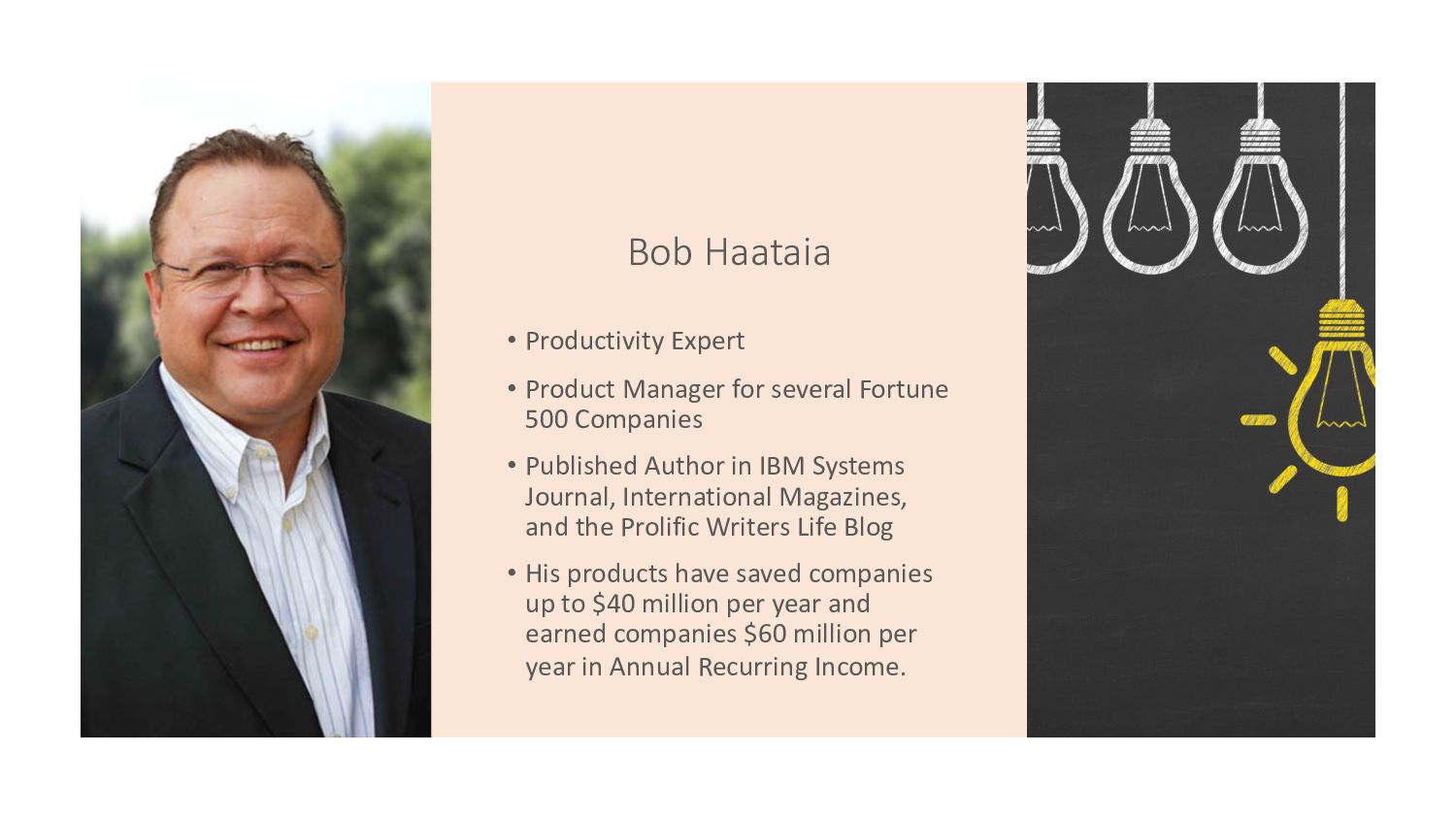
Fortune 500 Companies • Published Author in IBM Systems Journal, International Magazines, and the Prolific Writers Life Blog • His products have saved companies up to $40 million per year and earned companies $60 million per year in Annual Recurring Income.
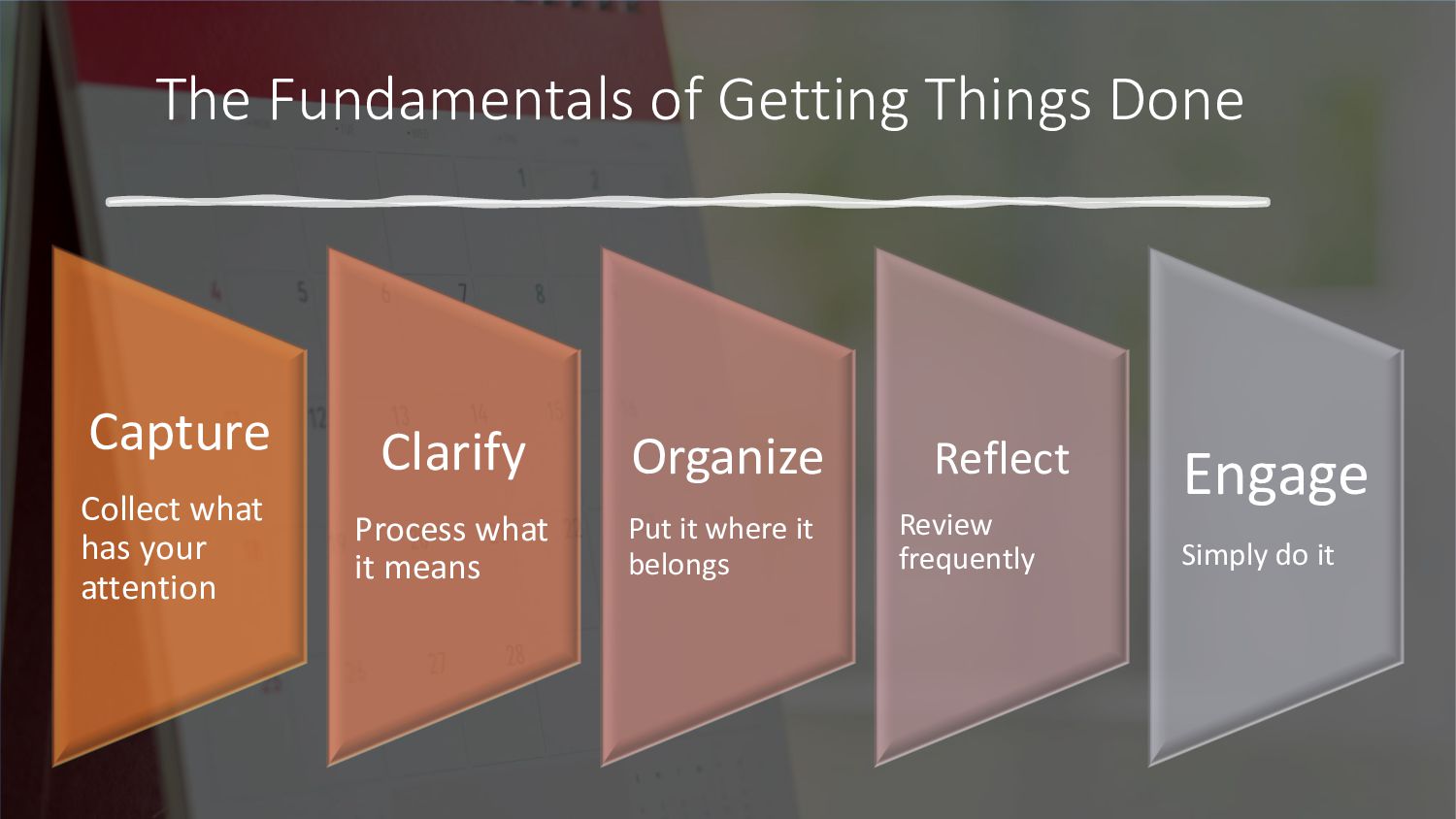
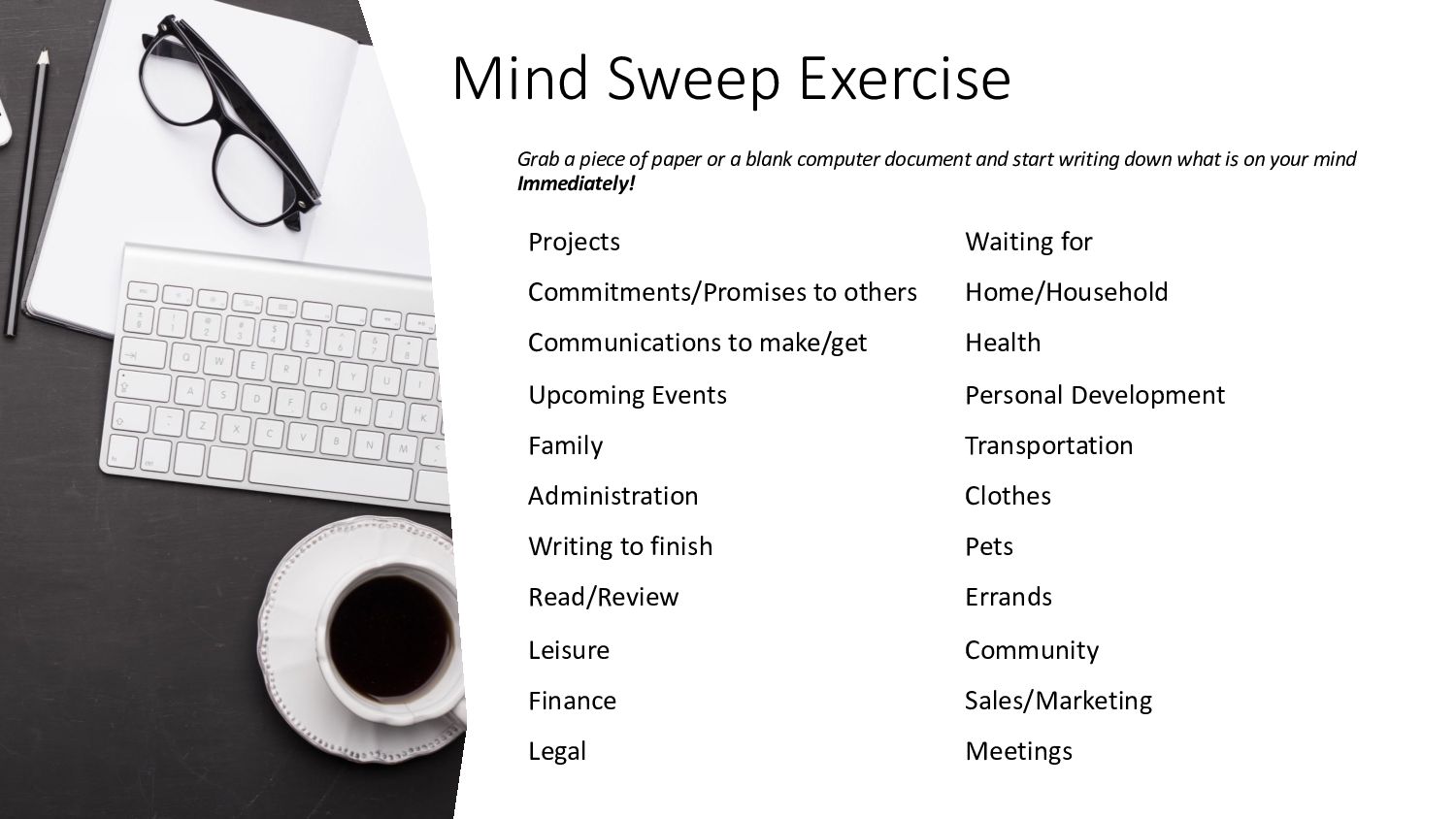
and start writing down what is on your mind Immediately! Projects Commitments/Promises to others Communications to make/get Upcoming Events Family Administration Writing to finish Read/Review Leisure Finance Legal Waiting for Home/Household Health Personal Development Transportation Clothes Pets Errands Community Sales/Marketing Meetings Mind Sweep Exercise
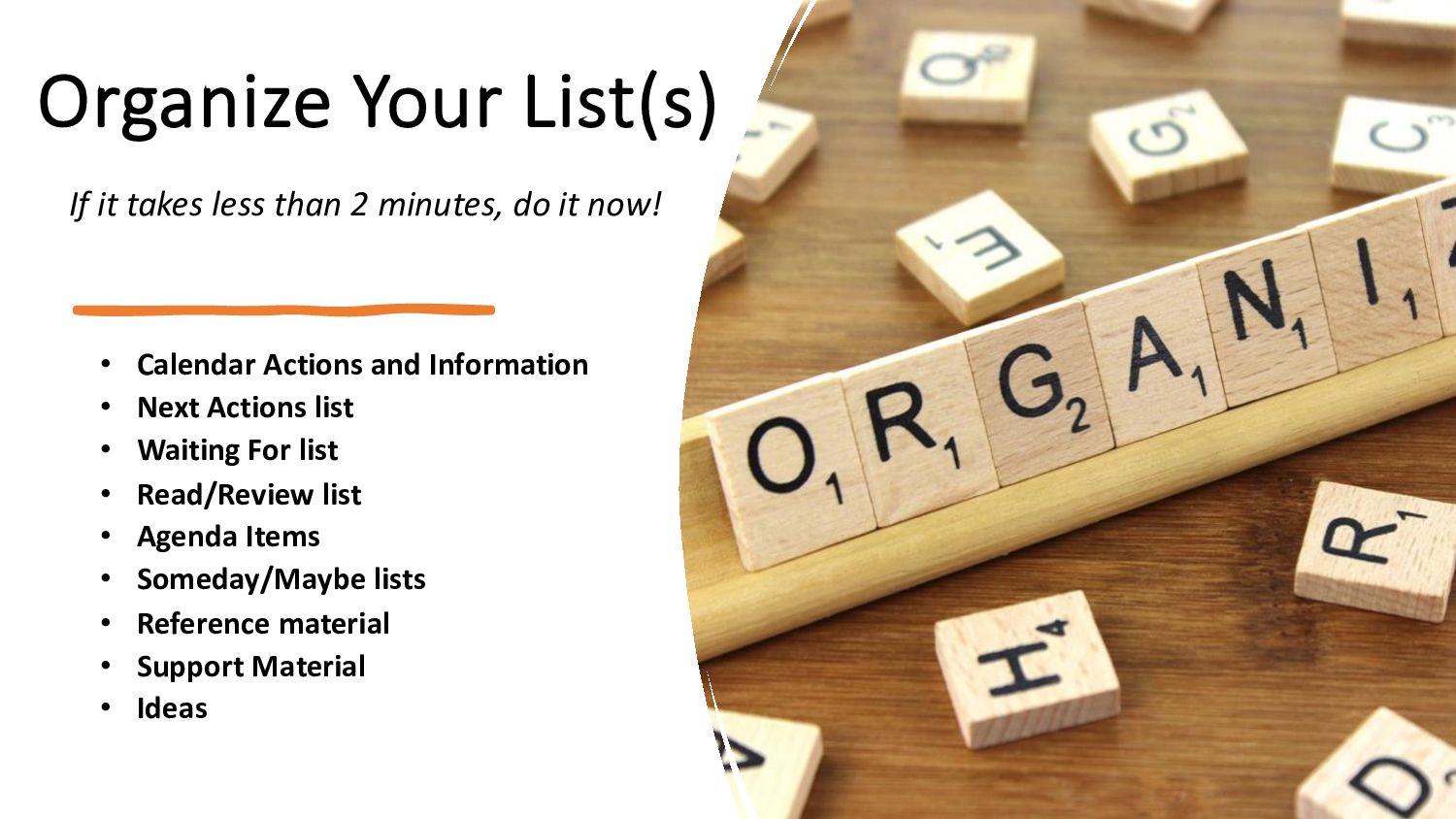
Actions list • Waiting For list • Read/Review list • Agenda Items • Someday/Maybe lists • Reference material • Support Material • Ideas If it takes less than 2 minutes, do it now!
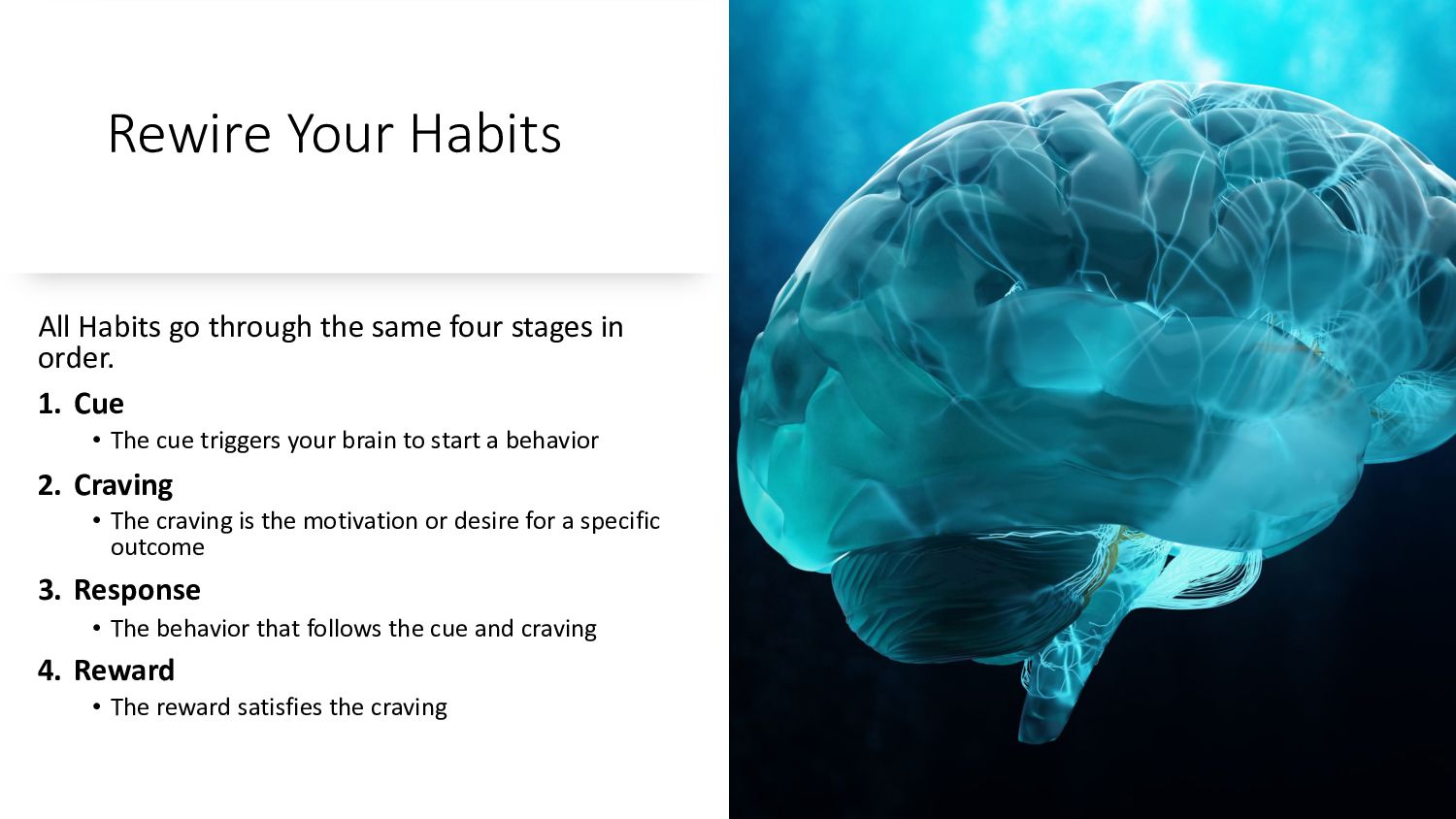
stages in order. 1. Cue • The cue triggers your brain to start a behavior 2. Craving • The craving is the motivation or desire for a specific outcome 3. Response • The behavior that follows the cue and craving 4. Reward • The reward satisfies the craving
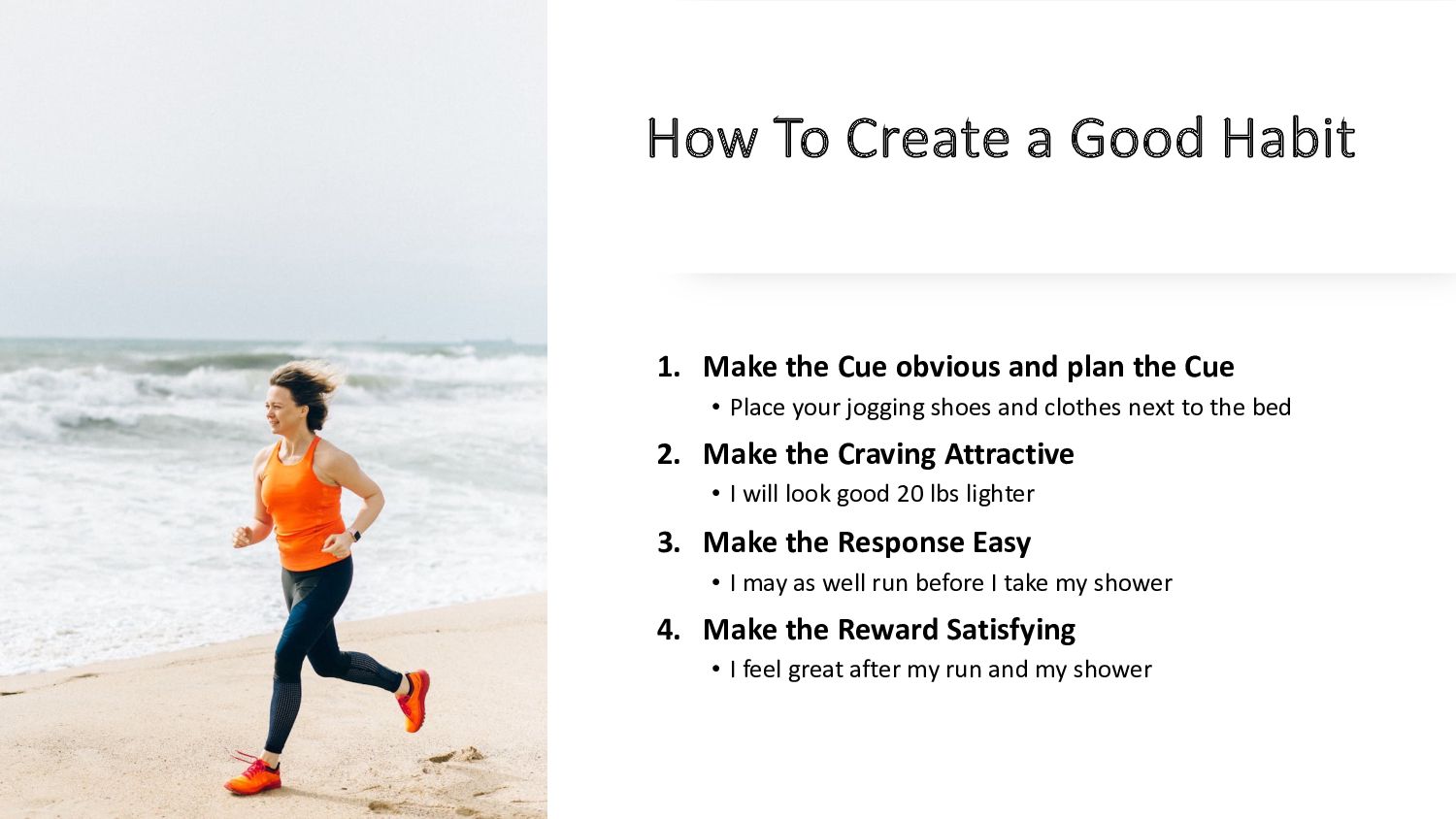
obvious and plan the Cue • Place your jogging shoes and clothes next to the bed 2. Make the Craving Attractive • I will look good 20 lbs lighter 3. Make the Response Easy • I may as well run before I take my shower 4. Make the Reward Satisfying • I feel great after my run and my shower
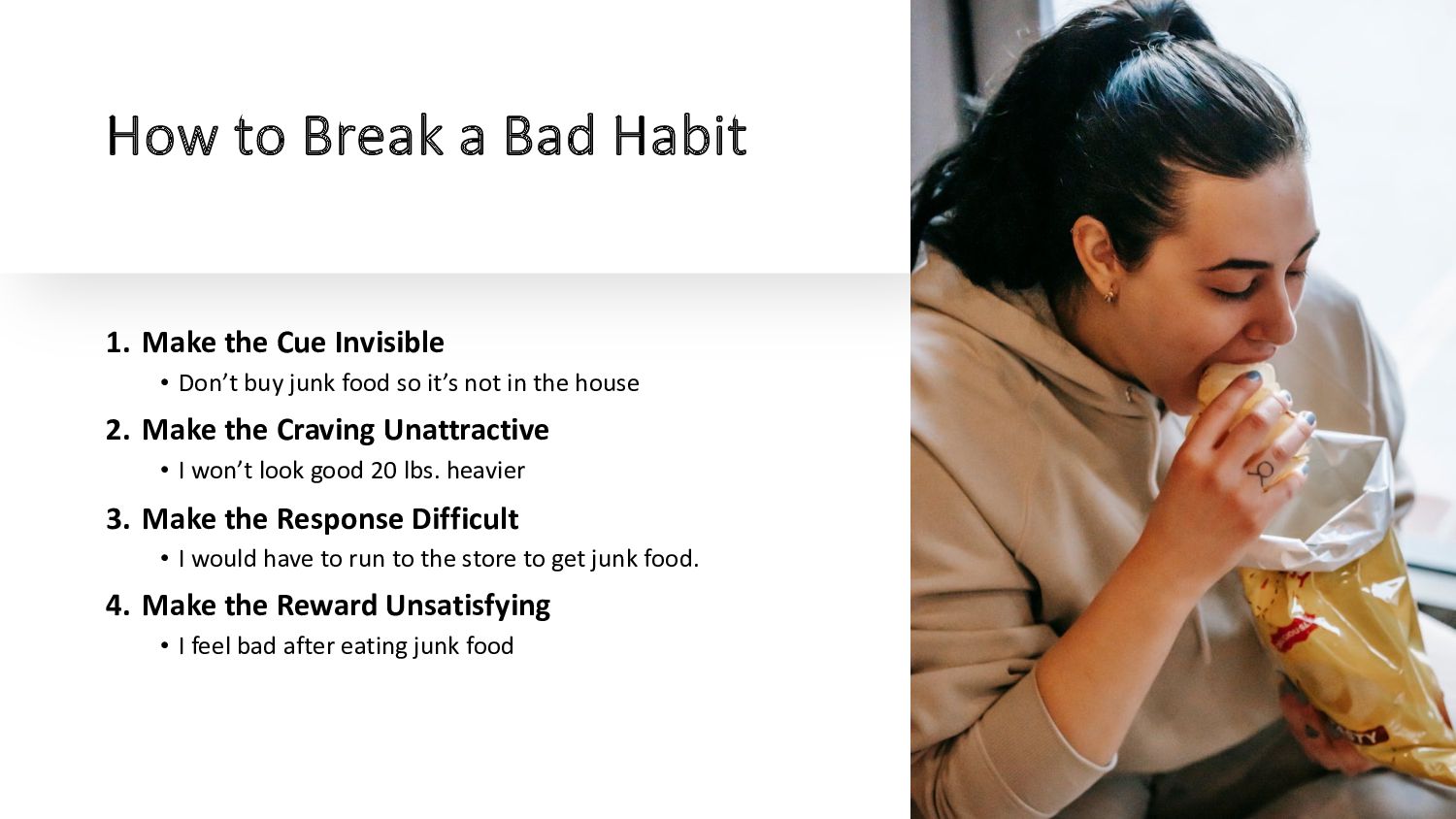
Invisible • Don’t buy junk food so it’s not in the house 2. Make the Craving Unattractive • I won’t look good 20 lbs. heavier 3. Make the Response Difficult • I would have to run to the store to get junk food. 4. Make the Reward Unsatisfying • I feel bad after eating junk food
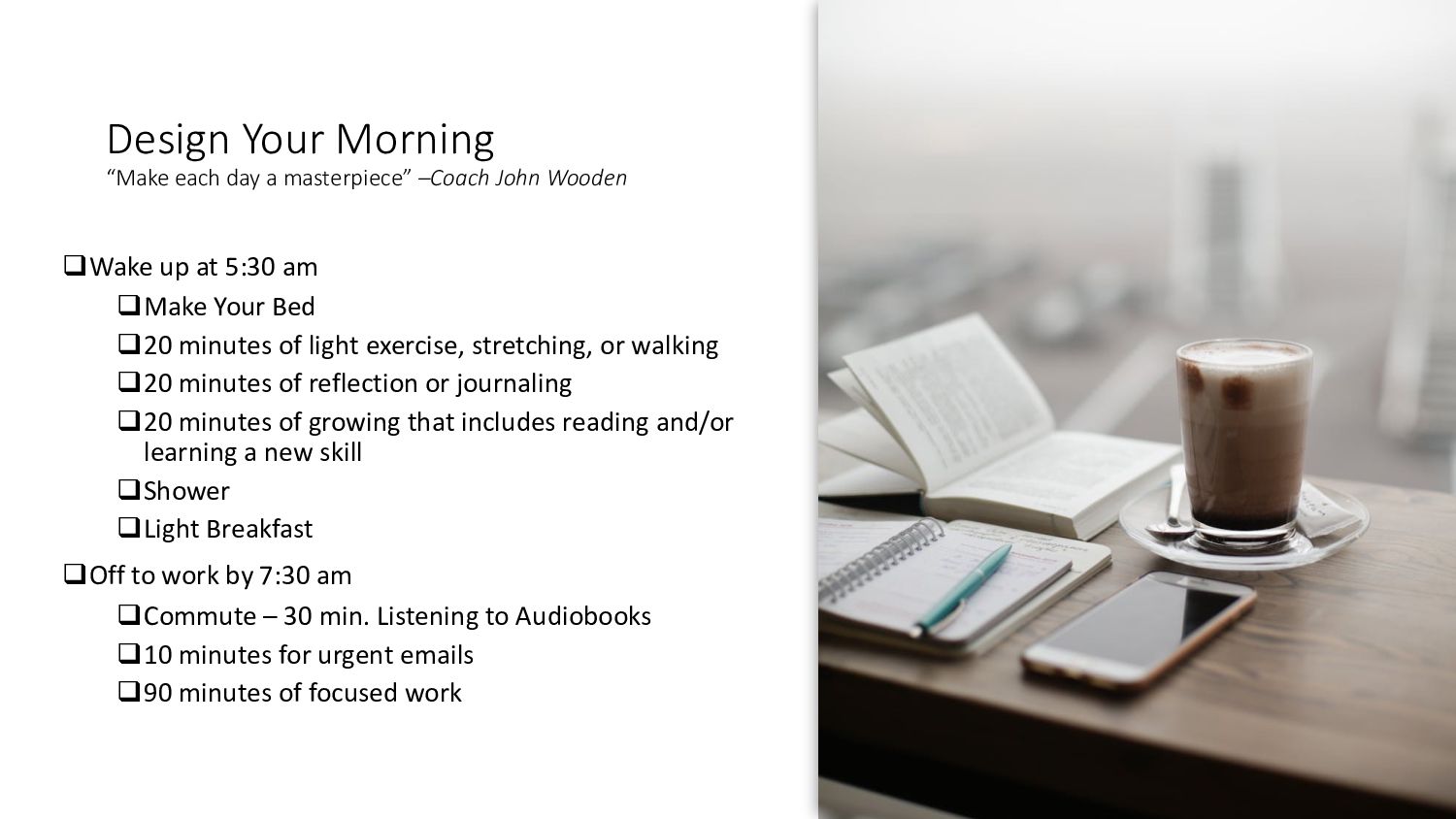
Wooden qWake up at 5:30 am qMake Your Bed q20 minutes of light exercise, stretching, or walking q20 minutes of reflection or journaling q20 minutes of growing that includes reading and/or learning a new skill qShower qLight Breakfast qOff to work by 7:30 am qCommute – 30 min. Listening to Audiobooks q10 minutes for urgent emails q90 minutes of focused work
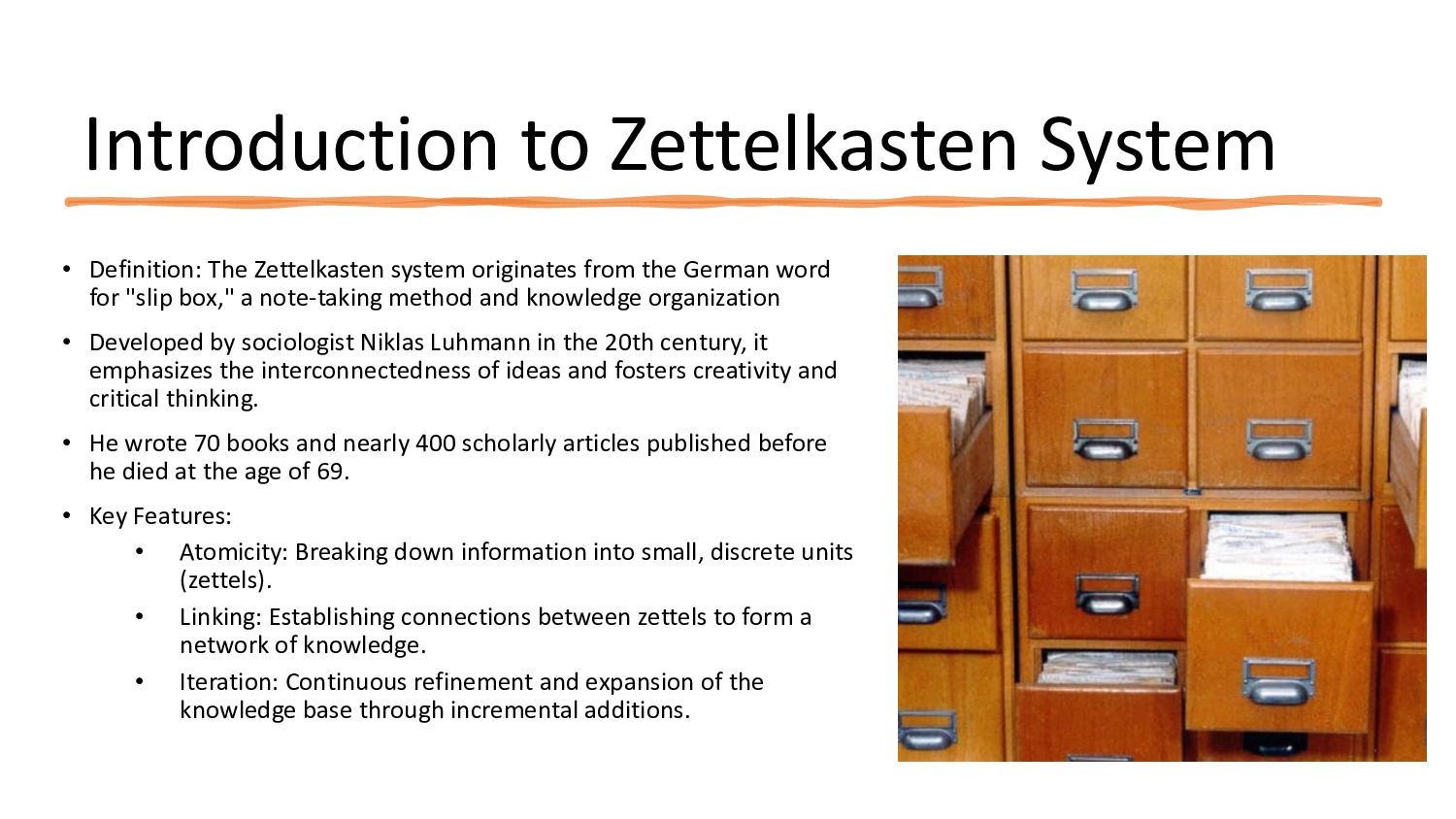
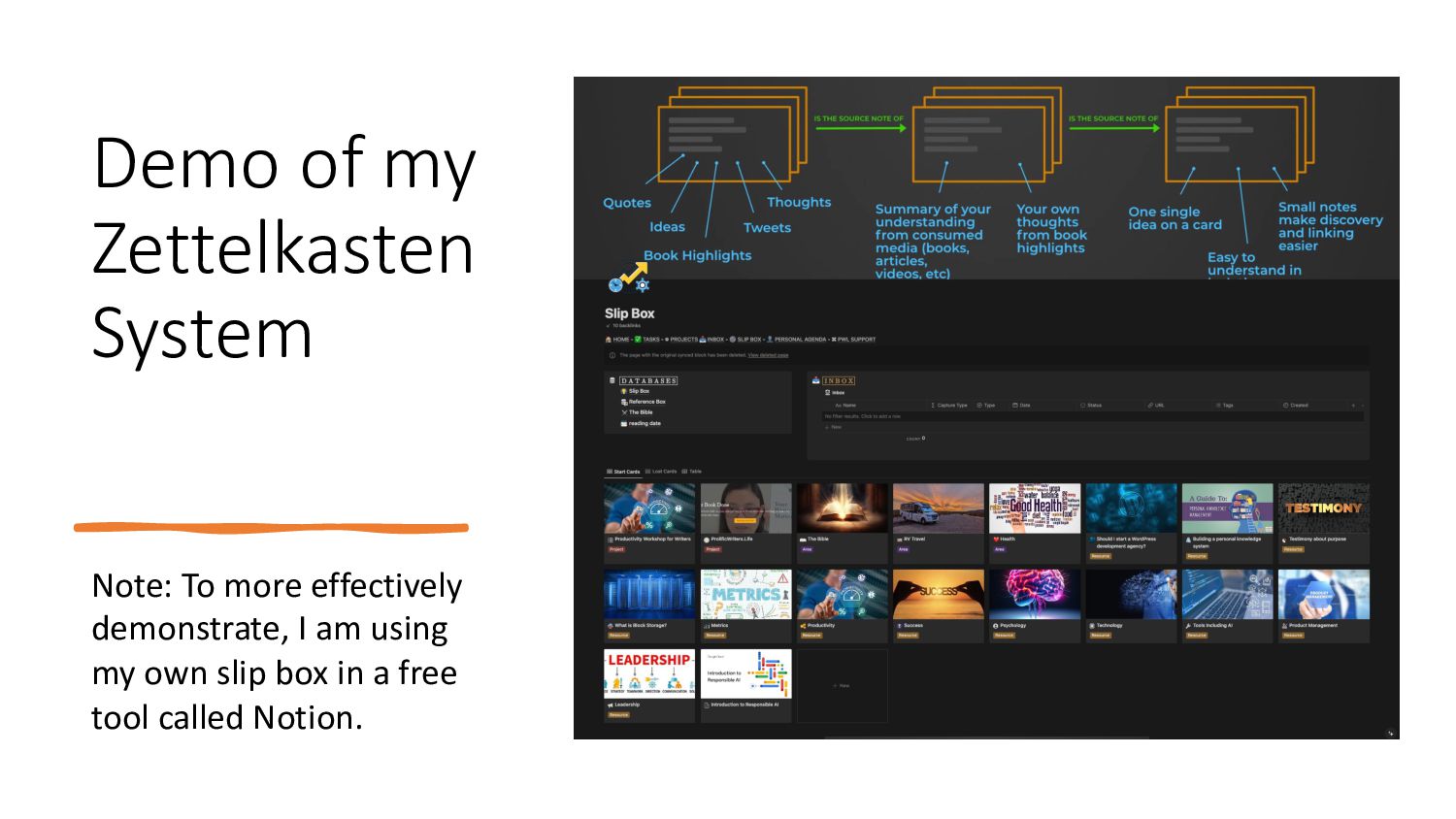
from the German word for "slip box," a note-taking method and knowledge organization • Developed by sociologist Niklas Luhmann in the 20th century, it emphasizes the interconnectedness of ideas and fosters creativity and critical thinking. • He wrote 70 books and nearly 400 scholarly articles published before he died at the age of 69. • Key Features: • Atomicity: Breaking down information into small, discrete units (zettels). • Linking: Establishing connections between zettels to form a network of knowledge. • Iteration: Continuous refinement and expansion of the knowledge base through incremental additions.
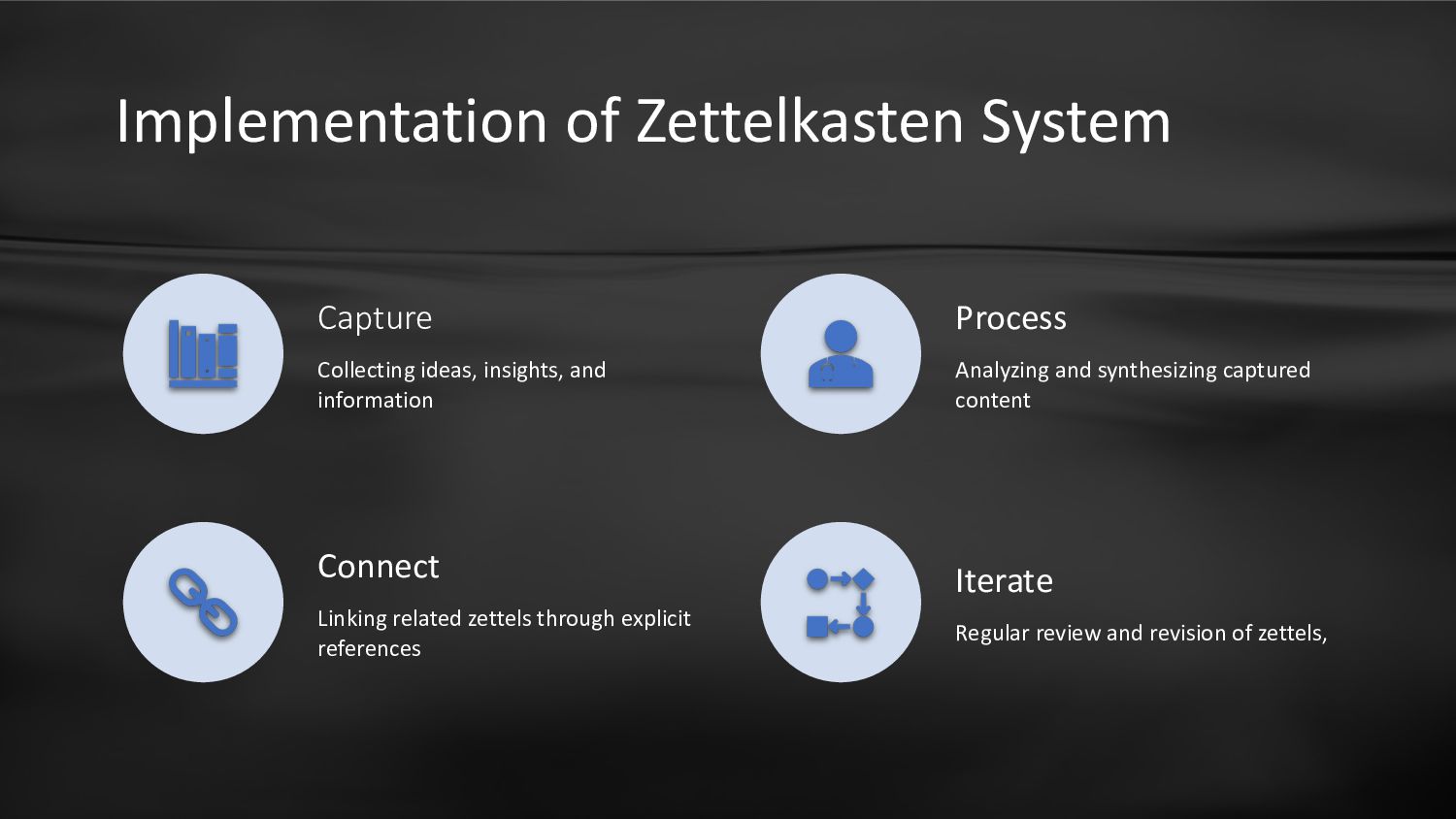
Process Analyzing and synthesizing captured content Connect Linking related zettels through explicit references Iterate Regular review and revision of zettels,
- by David Allan • The Bullet Journal Method – by Ryder Carroll • Atomic Habits - by James Clear • High Performance Habits – by Brendon Burchard • Digital Zettelkasten - by David Kadavy • How to Take Smart Notes - by Sonke Ahrens • The PARA Method - by Tiago Forte • Start with Why - by Simon Sinek
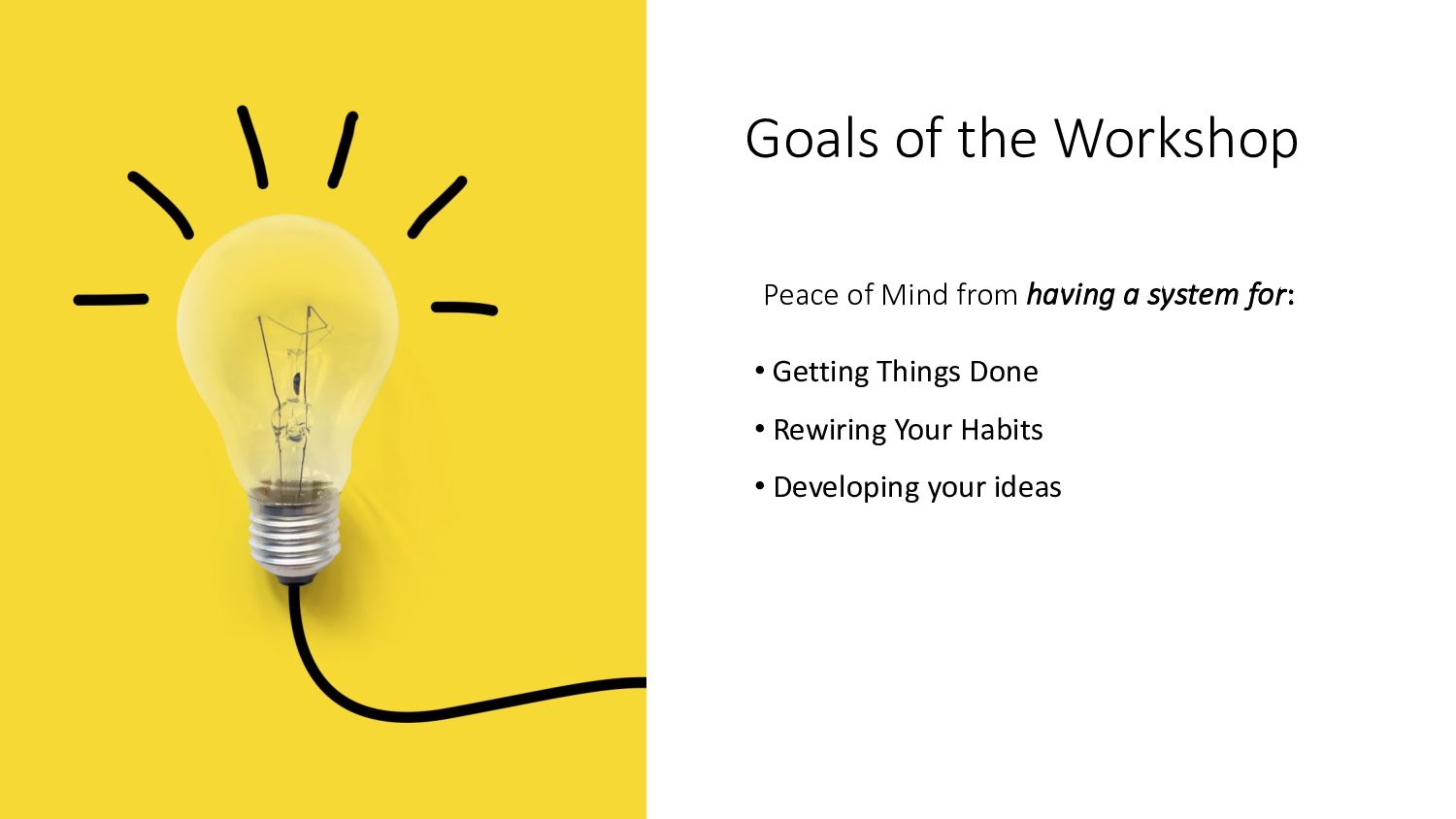
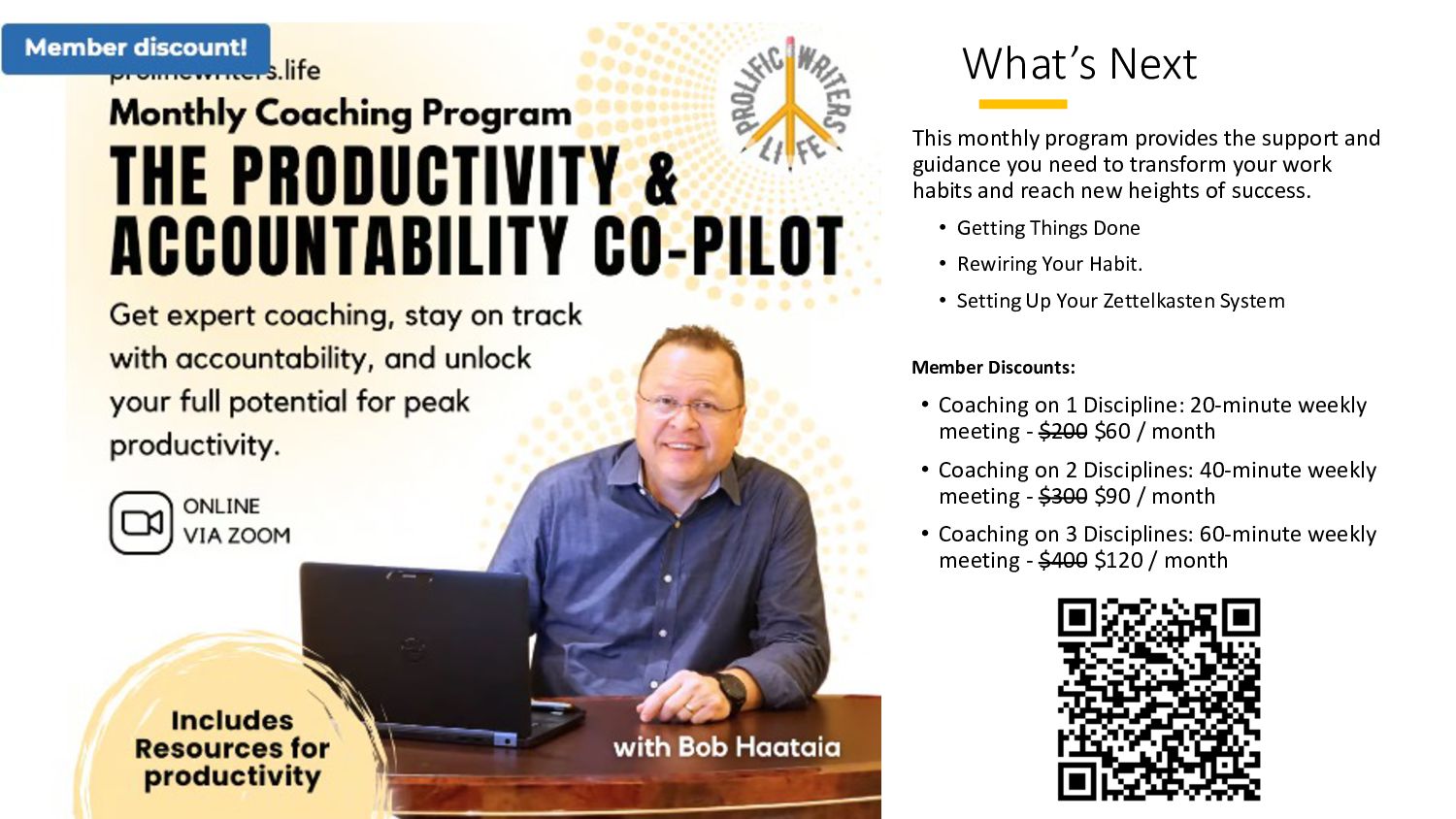
you need to transform your work habits and reach new heights of success. • Getting Things Done • Rewiring Your Habit. • Setting Up Your Zettelkasten System Member Discounts: • Coaching on 1 Discipline: 20-minute weekly meeting - $200 $60 / month • Coaching on 2 Disciplines: 40-minute weekly meeting - $300 $90 / month • Coaching on 3 Disciplines: 60-minute weekly meeting - $400 $120 / month


 ryanjones
 aleyda
 khoart
 ipullrank
 cromwellryan
 codingconduct
 cassininazir
 eileencodes
 lynnandtonic
 skipperchong