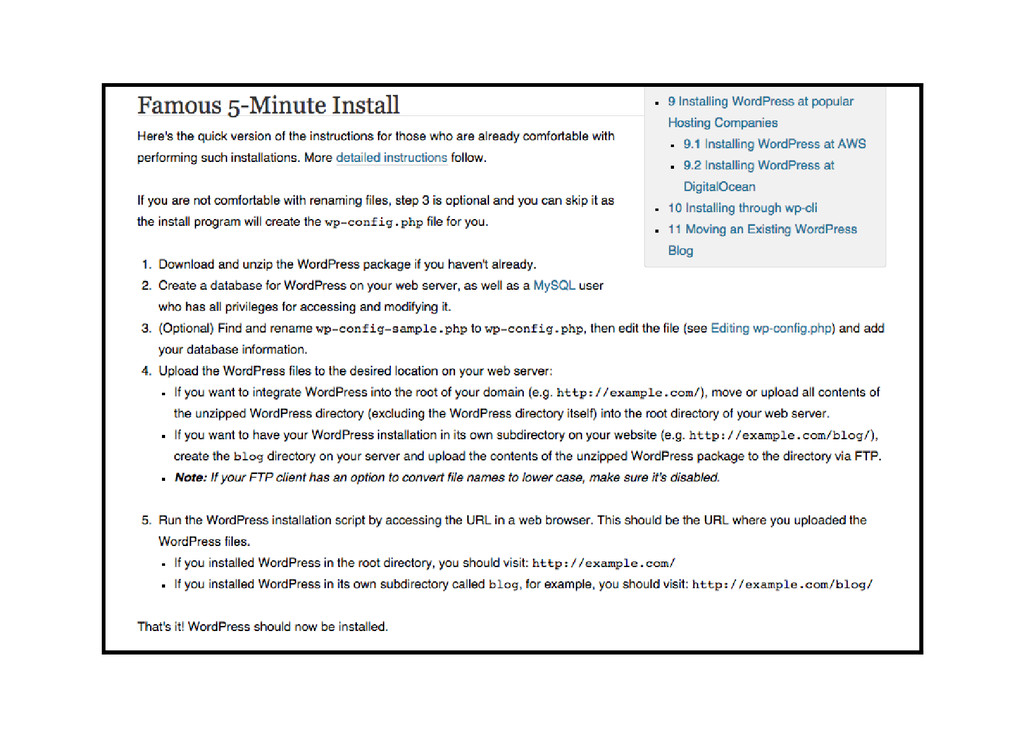
talk with about the technical requirements and skills needed for us to install SUMA and get it up and running. For example, do we need a computer programmer with such and such skills. I’m sure you have good documentation available, however, we would like to talk with someone. We are also curious as to how much time it would take to get SUMA working for us. I am not sure we have the expertise in-house." - librarian at a RU/H research university (with permission)
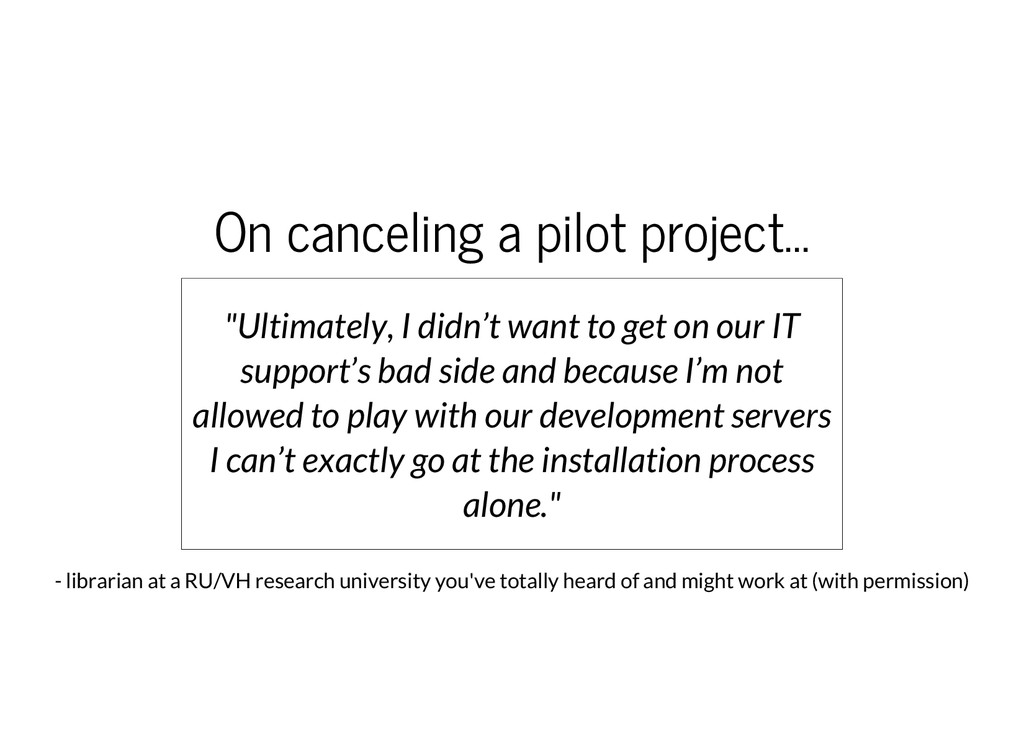
get on our IT support’s bad side and because I’m not allowed to play with our development servers I can’t exactly go at the installation process alone." - librarian at a RU/VH research university you've totally heard of and might work at (with permission)
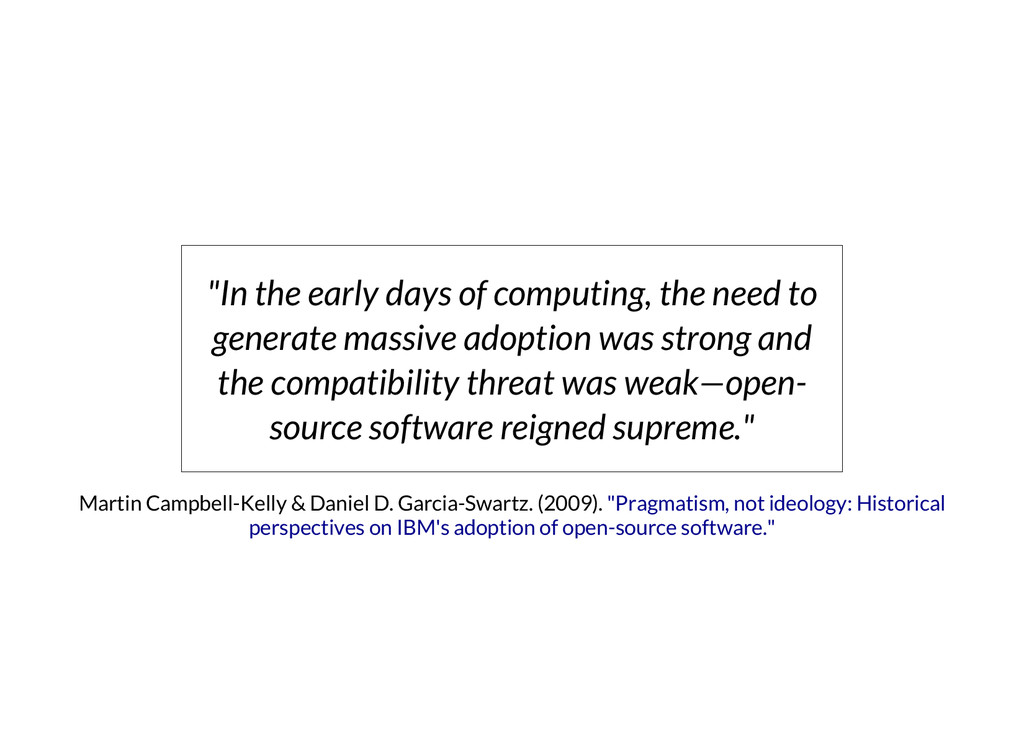
massive adoption was strong and the compatibility threat was weak—open- source software reigned supreme." Martin Campbell-Kelly & Daniel D. Garcia-Swartz. (2009). "Pragmatism, not ideology: Historical perspectives on IBM's adoption of open-source software."
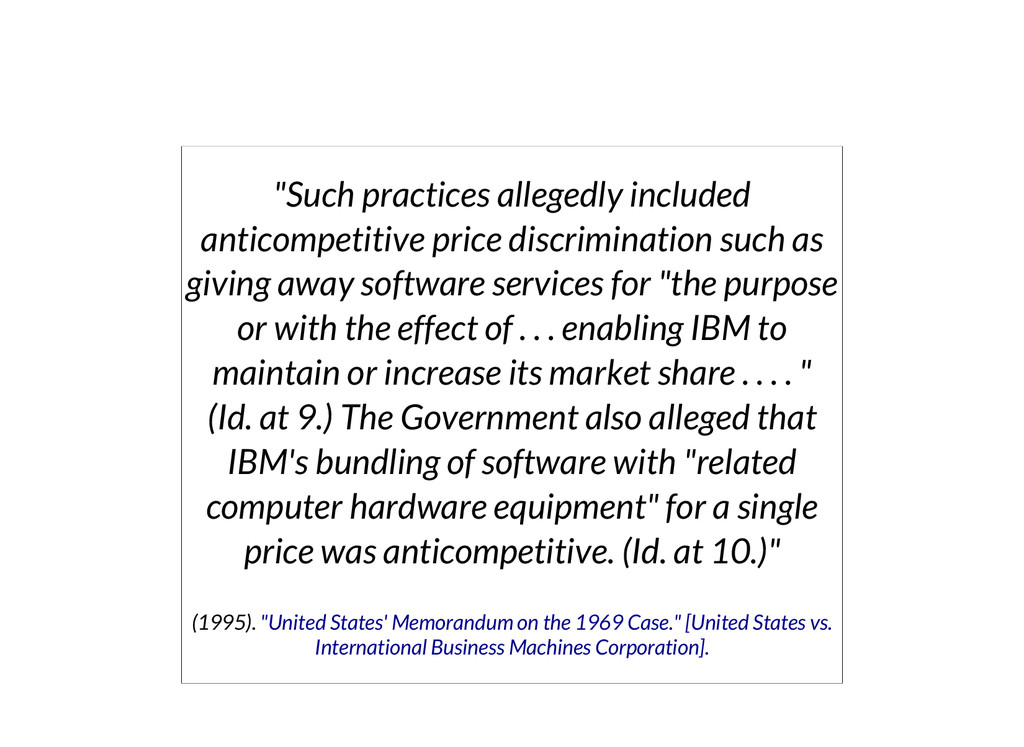
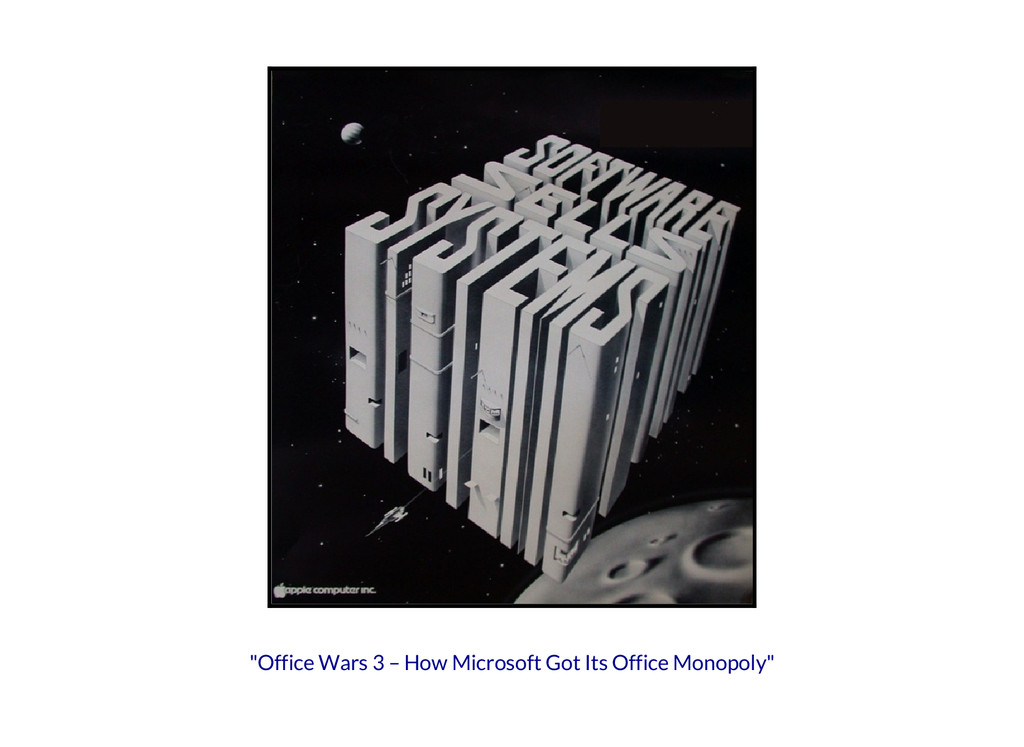
away software services for "the purpose or with the effect of . . . enabling IBM to maintain or increase its market share . . . . " (Id. at 9.) The Government also alleged that IBM's bundling of software with "related computer hardware equipment" for a single price was anticompetitive. (Id. at 10.)" (1995). "United States' Memorandum on the 1969 Case." [United States vs. International Business Machines Corporation].
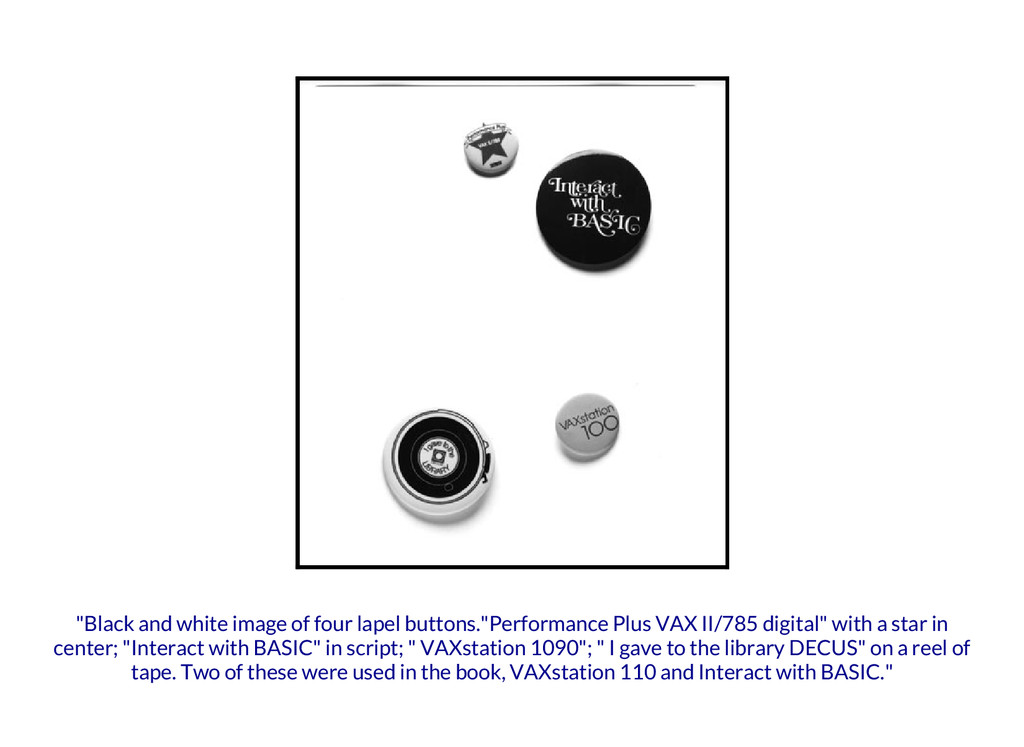
II/785 digital" with a star in center; "Interact with BASIC" in script; " VAXstation 1090"; " I gave to the library DECUS" on a reel of tape. Two of these were used in the book, VAXstation 110 and Interact with BASIC."
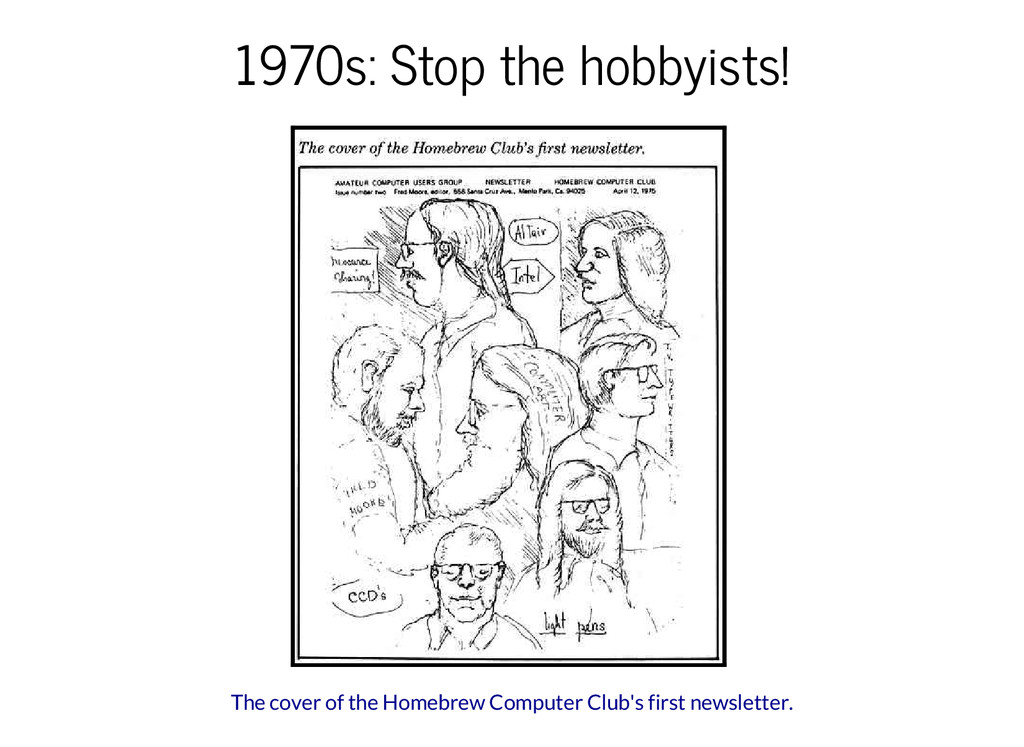
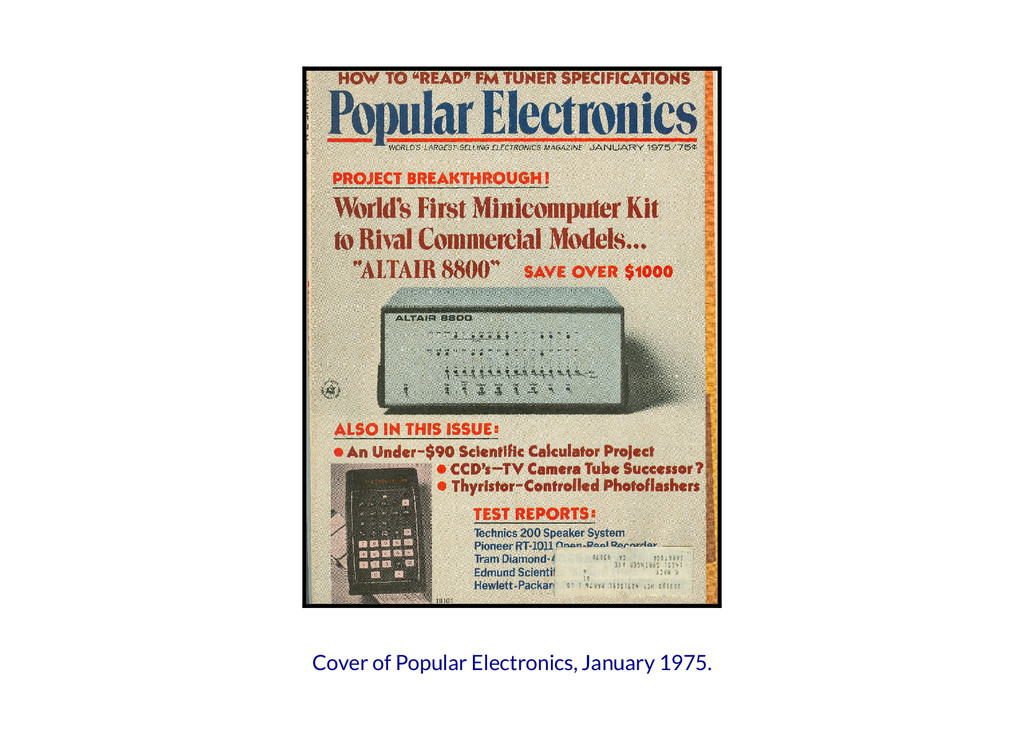
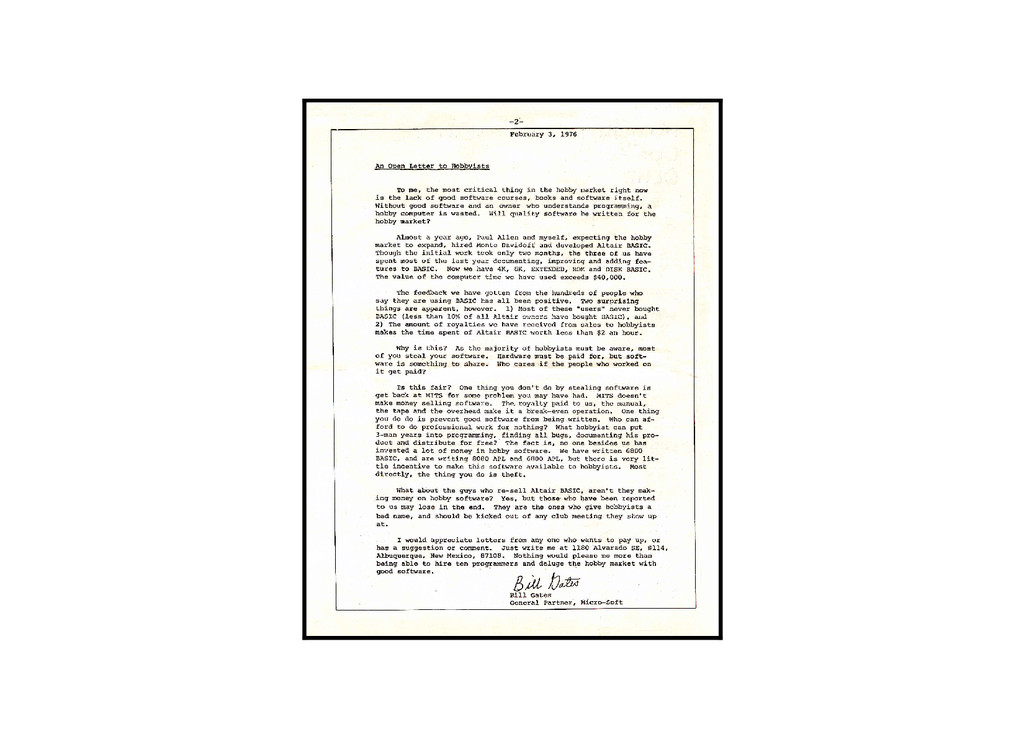
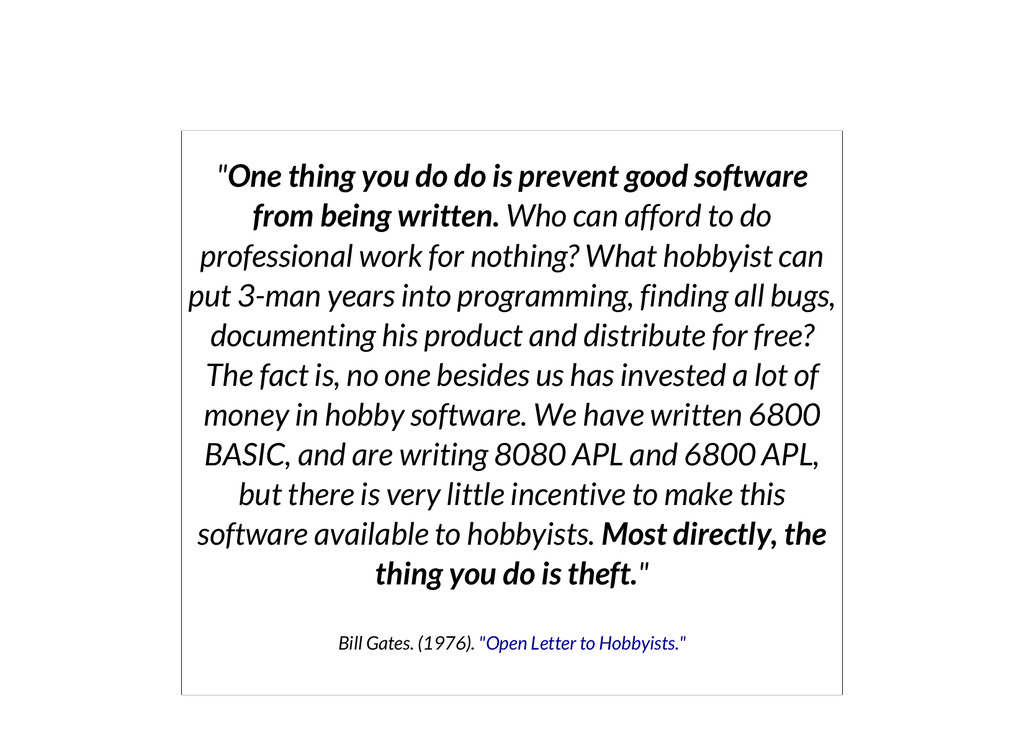
being written. Who can afford to do professional work for nothing? What hobbyist can put 3-man years into programming, finding all bugs, documenting his product and distribute for free? The fact is, no one besides us has invested a lot of money in hobby software. We have written 6800 BASIC, and are writing 8080 APL and 6800 APL, but there is very little incentive to make this software available to hobbyists. Most directly, the thing you do is theft." Bill Gates. (1976). "Open Letter to Hobbyists."
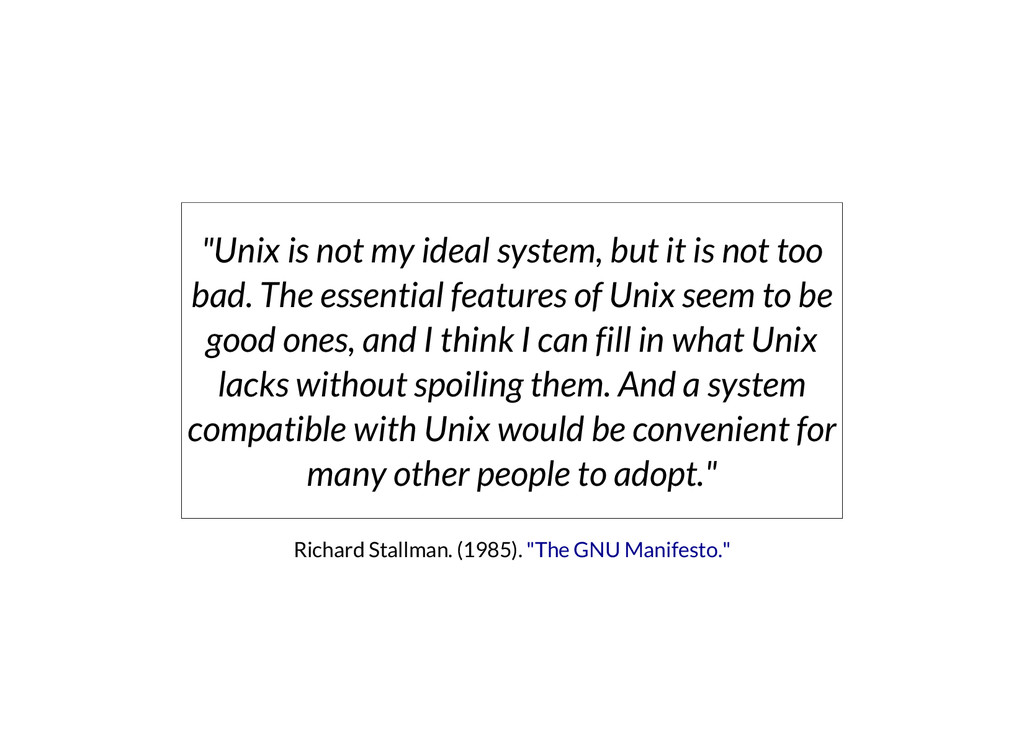
too bad. The essential features of Unix seem to be good ones, and I think I can fill in what Unix lacks without spoiling them. And a system compatible with Unix would be convenient for many other people to adopt." Richard Stallman. (1985). "The GNU Manifesto."
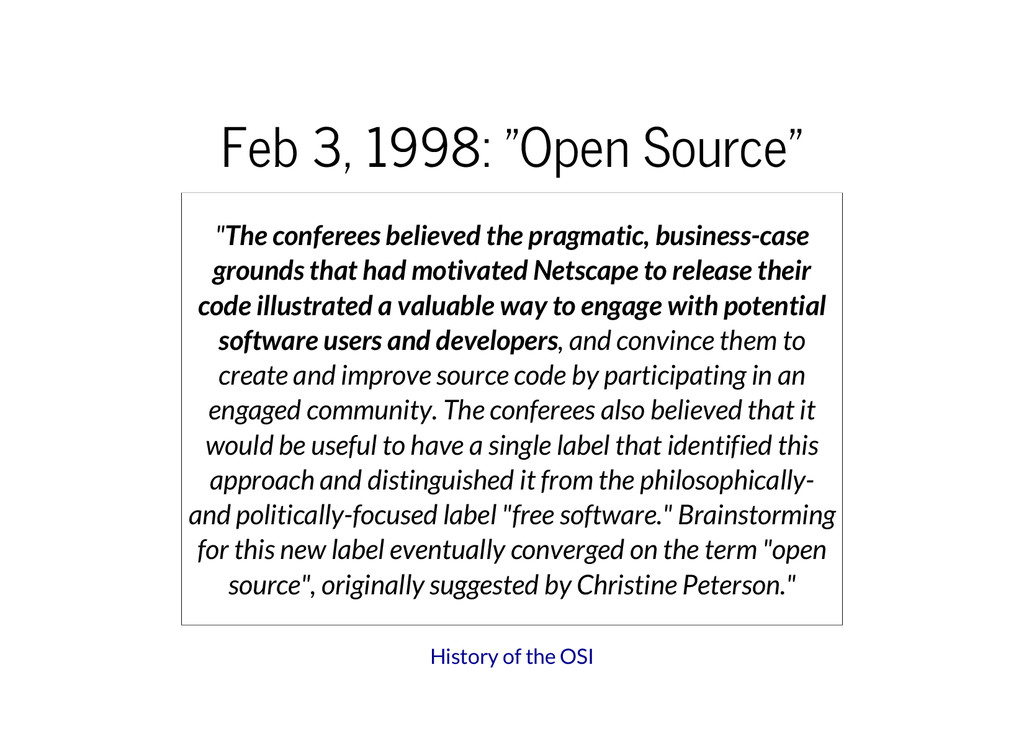
business-case grounds that had motivated Netscape to release their code illustrated a valuable way to engage with potential software users and developers, and convince them to create and improve source code by participating in an engaged community. The conferees also believed that it would be useful to have a single label that identified this approach and distinguished it from the philosophically- and politically-focused label "free software." Brainstorming for this new label eventually converged on the term "open source", originally suggested by Christine Peterson." History of the OSI
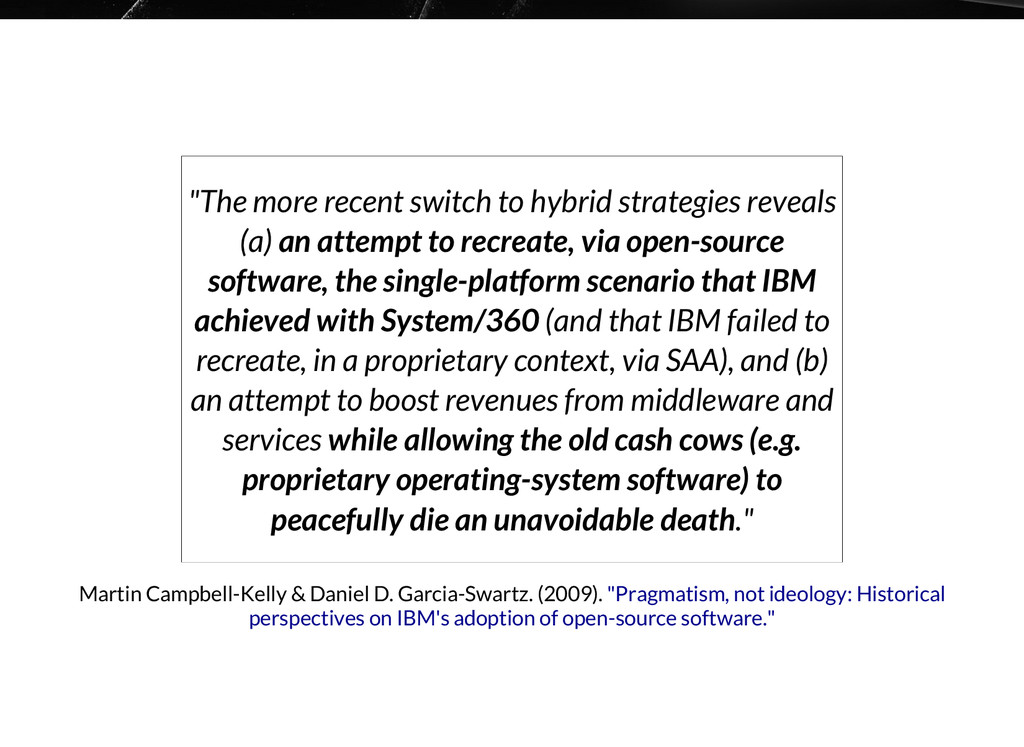
attempt to recreate, via open-source software, the single-platform scenario that IBM achieved with System/360 (and that IBM failed to recreate, in a proprietary context, via SAA), and (b) an attempt to boost revenues from middleware and services while allowing the old cash cows (e.g. proprietary operating-system software) to peacefully die an unavoidable death." Martin Campbell-Kelly & Daniel D. Garcia-Swartz. (2009). "Pragmatism, not ideology: Historical perspectives on IBM's adoption of open-source software."
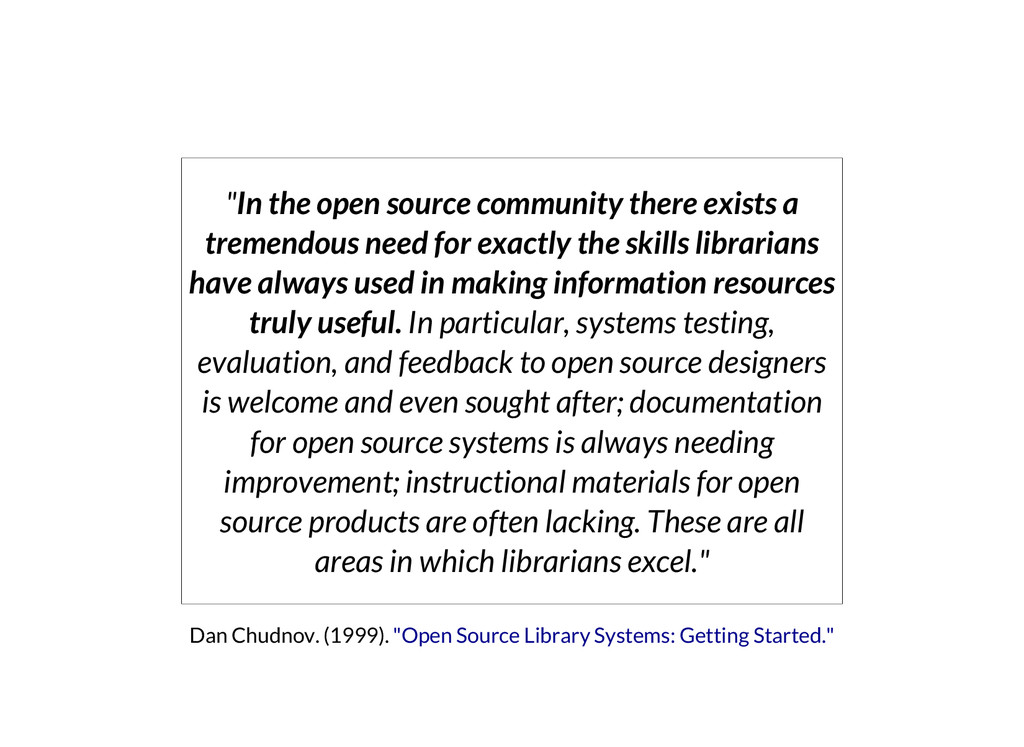
for exactly the skills librarians have always used in making information resources truly useful. In particular, systems testing, evaluation, and feedback to open source designers is welcome and even sought after; documentation for open source systems is always needing improvement; instructional materials for open source products are often lacking. These are all areas in which librarians excel." Dan Chudnov. (1999). "Open Source Library Systems: Getting Started."
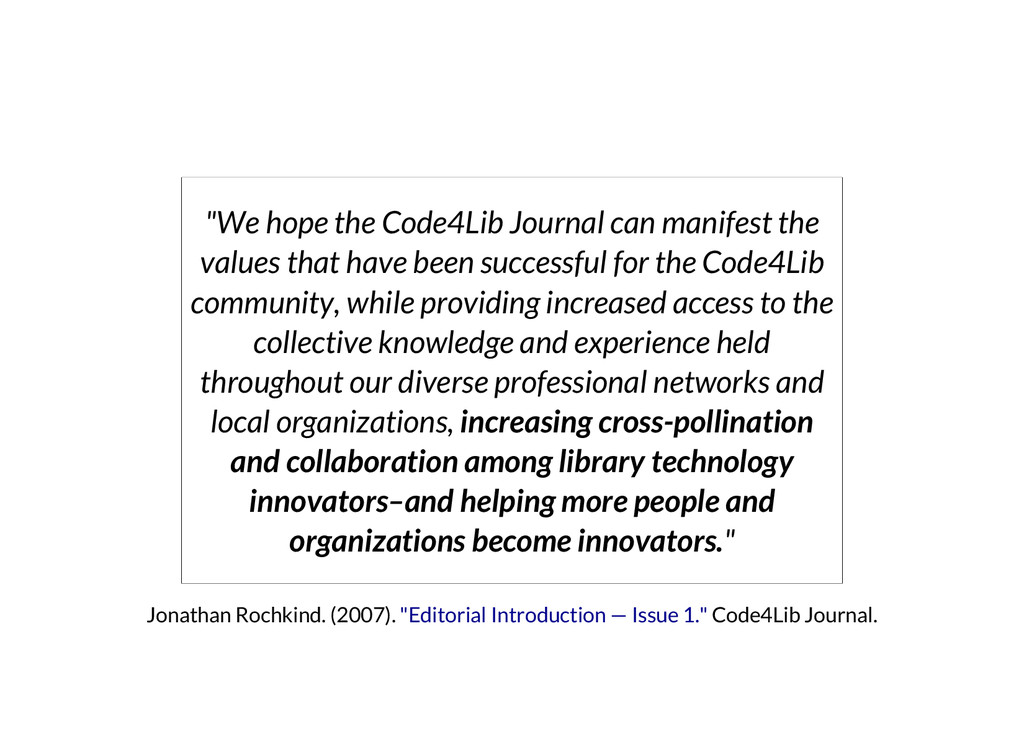
have been successful for the Code4Lib community, while providing increased access to the collective knowledge and experience held throughout our diverse professional networks and local organizations, increasing cross-pollination and collaboration among library technology innovators–and helping more people and organizations become innovators." Jonathan Rochkind. (2007). Code4Lib Journal. "Editorial Introduction — Issue 1."
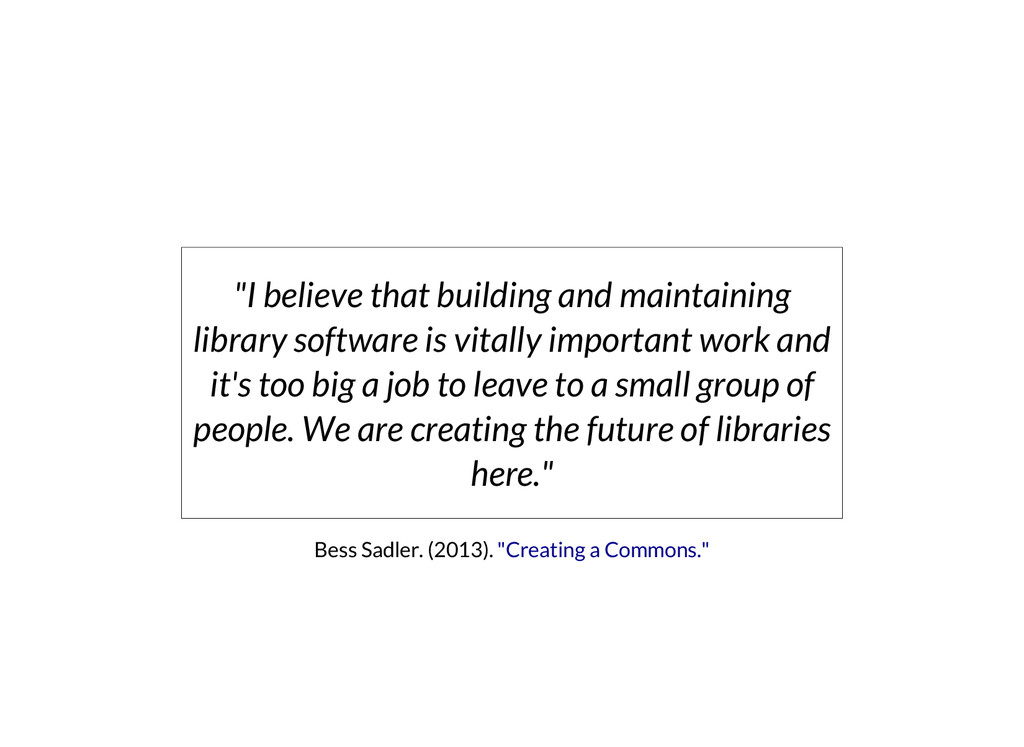
important work and it's too big a job to leave to a small group of people. We are creating the future of libraries here." Bess Sadler. (2013). "Creating a Commons."
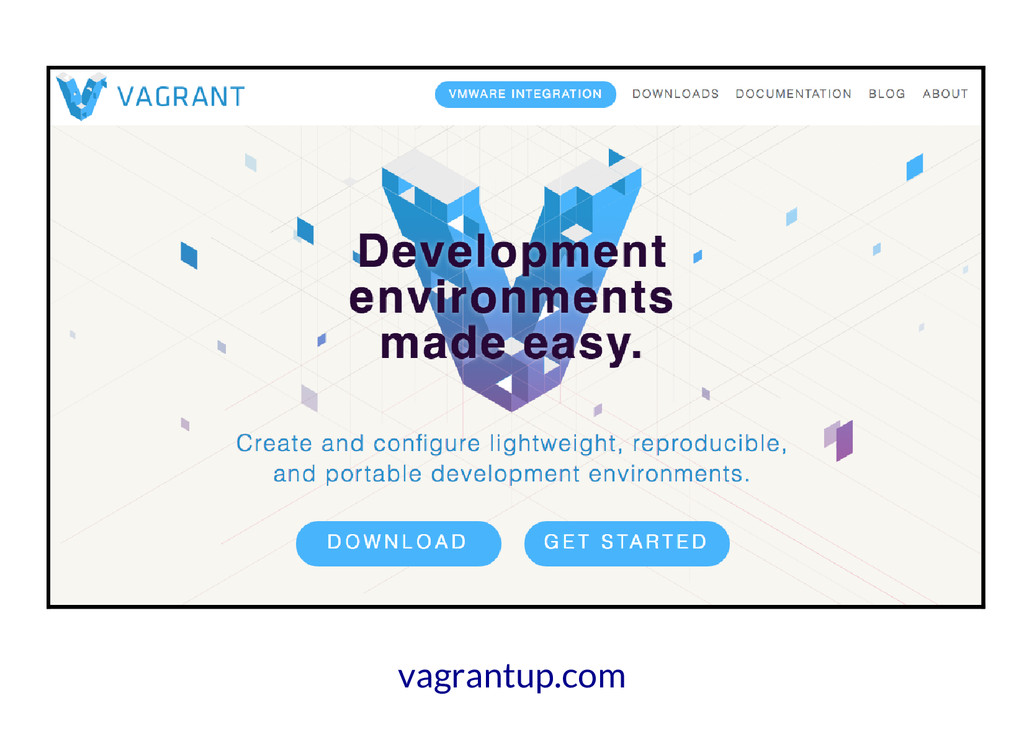
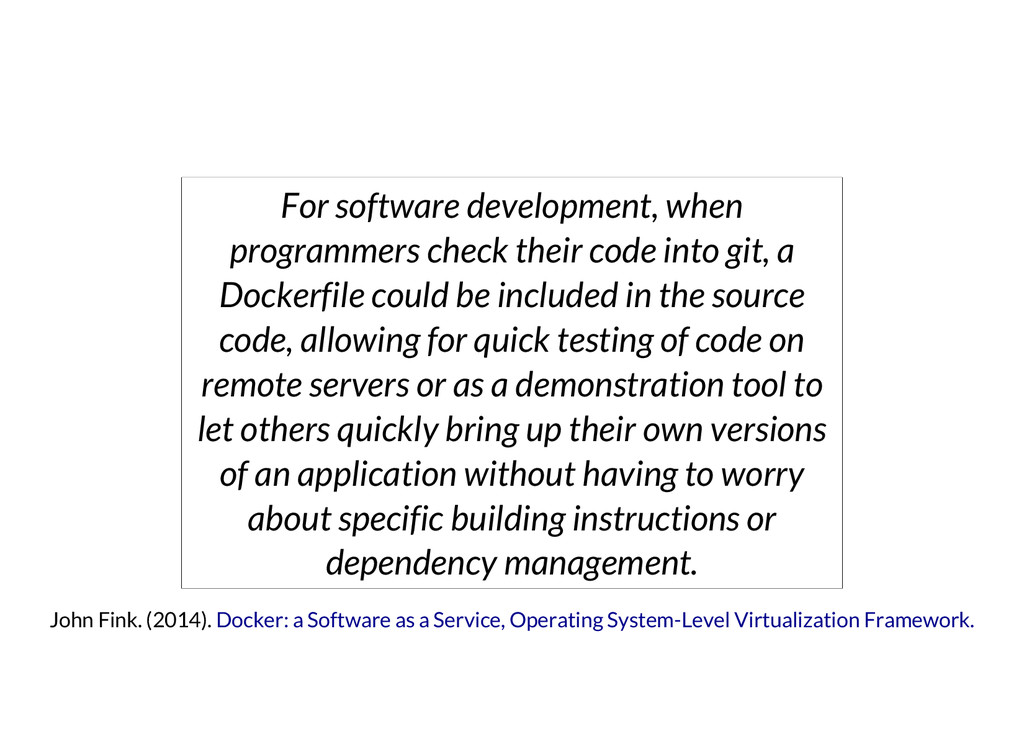
a Dockerfile could be included in the source code, allowing for quick testing of code on remote servers or as a demonstration tool to let others quickly bring up their own versions of an application without having to worry about specific building instructions or dependency management. John Fink. (2014). Docker: a Software as a Service, Operating System-Level Virtualization Framework.
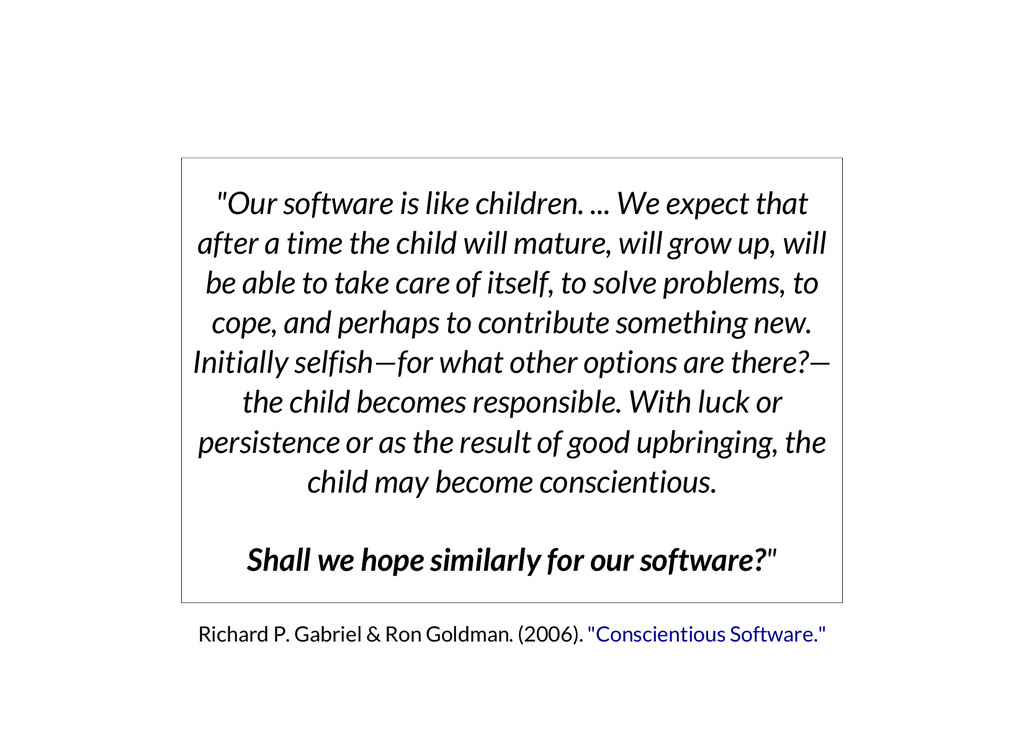
a time the child will mature, will grow up, will be able to take care of itself, to solve problems, to cope, and perhaps to contribute something new. Initially selfish—for what other options are there?— the child becomes responsible. With luck or persistence or as the result of good upbringing, the child may become conscientious. Shall we hope similarly for our software?" Richard P. Gabriel & Ron Goldman. (2006). "Conscientious Software."


 bretdavidson
 badams
 zakiyama
 carmenintech
 honzajavorek
 morganepeng
 popppiees
 reverentgeek
 kneath
 keavy
keavy
 samtorres
 emna__ayadi
 madoxten
!["[W]ho would be the best person on your team to](https://files.speakerdeck.com/presentations/a2efc365bffb402a8329a9379705552c/slide_5.jpg)

![Thanks! || @cazzerson || [email protected]](https://files.speakerdeck.com/presentations/a2efc365bffb402a8329a9379705552c/slide_66.jpg)