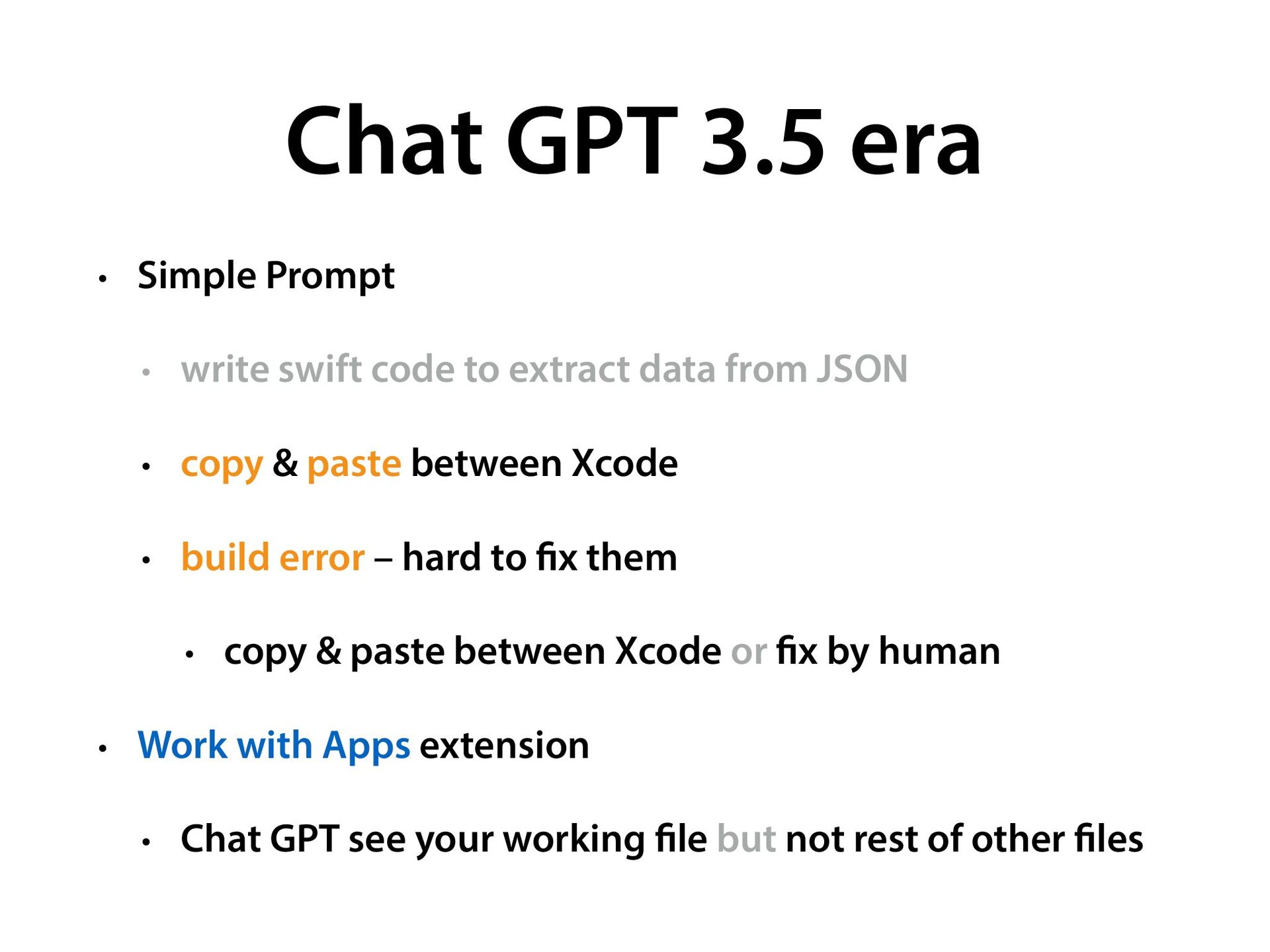
code to extract data from JSON • copy & paste between Xcode • build error – hard to fi x them • copy & paste between Xcode or fi x by human • Work with Apps extension • Chat GPT see your working fi le but not rest of other fi les
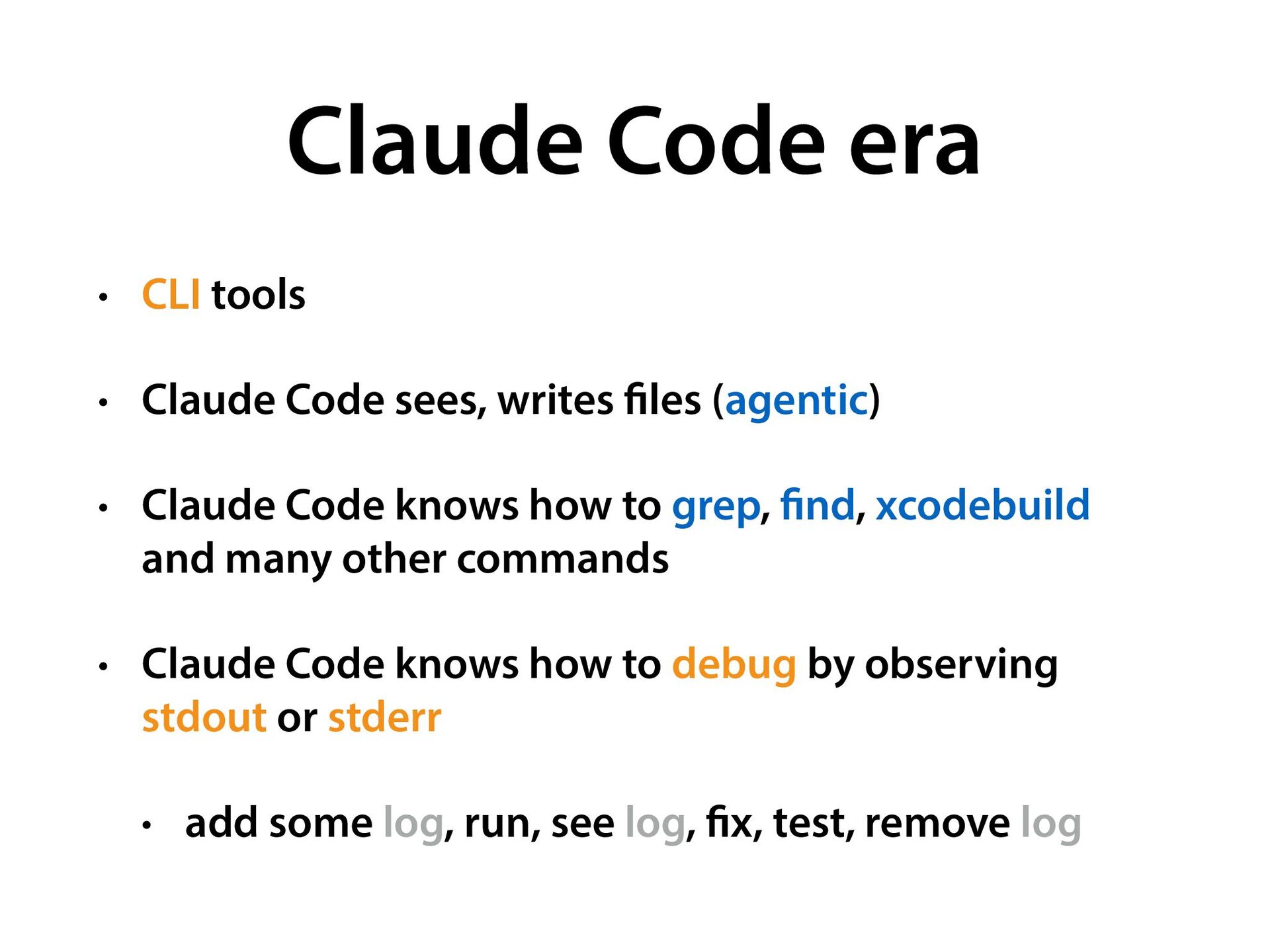
writes fi les (agentic) • Claude Code knows how to grep, fi nd, xcodebuild and many other commands • Claude Code knows how to debug by observing stdout or stderr • add some log, run, see log, fi x, test, remove log
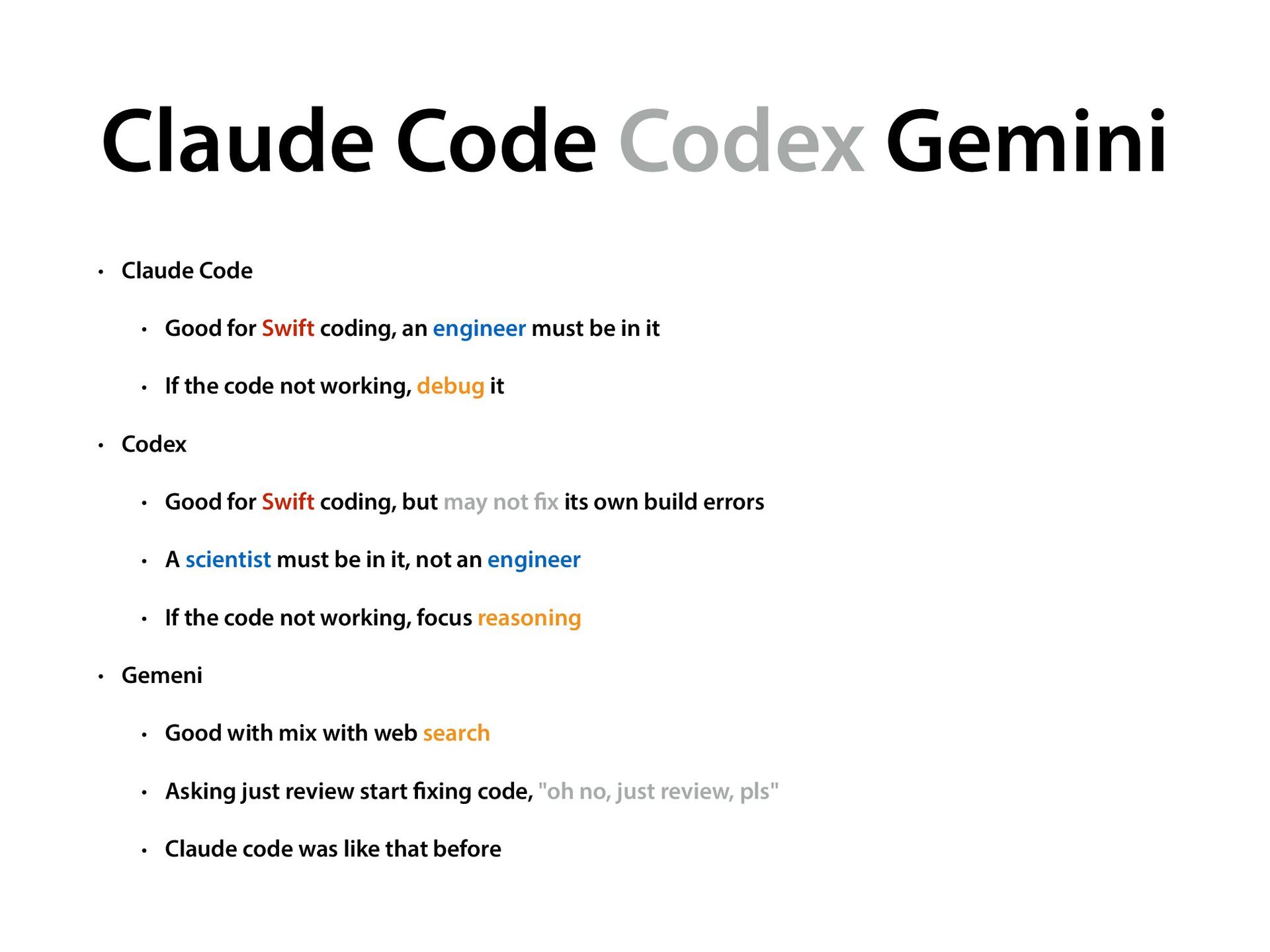
Swift coding, an engineer must be in it • If the code not working, debug it • Codex • Good for Swift coding, but may not fi x its own build errors • A scientist must be in it, not an engineer • If the code not working, focus reasoning • Gemeni • Good with mix with web search • Asking just review start fi xing code, "oh no, just review, pls" • Claude code was like that before
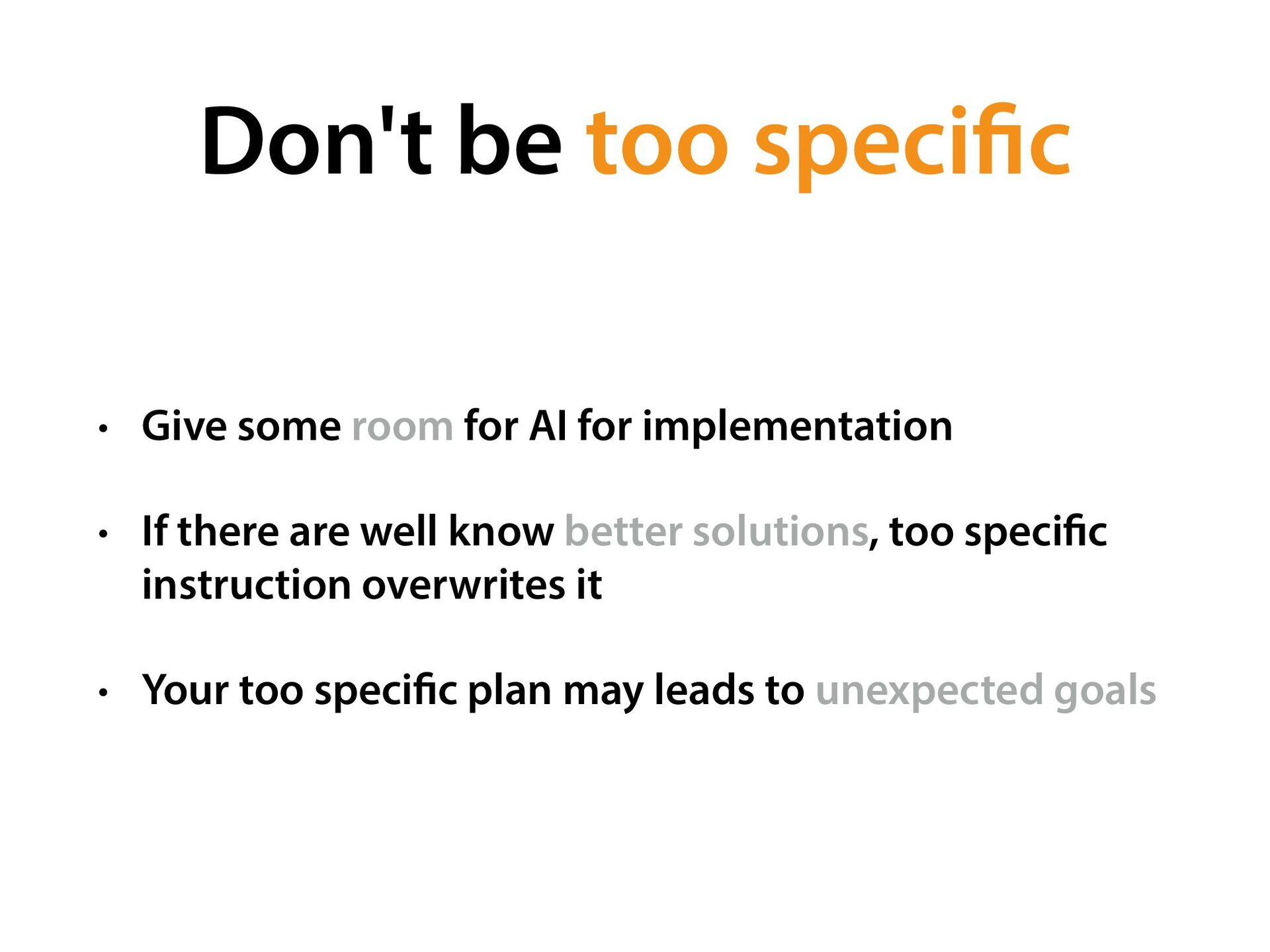
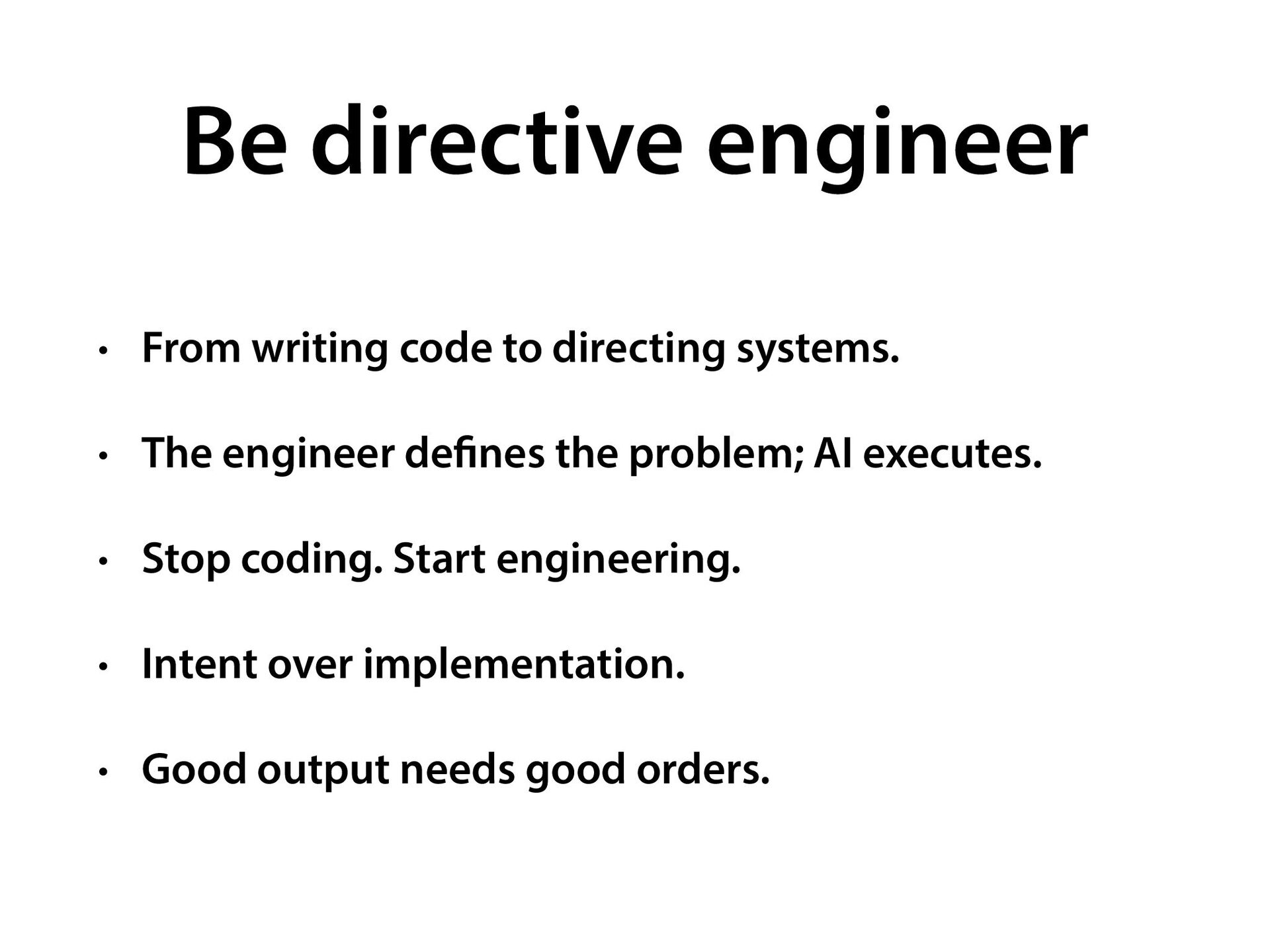
for AI for implementation • If there are well know better solutions, too speci fi c instruction overwrites it • Your too speci fi c plan may leads to unexpected goals
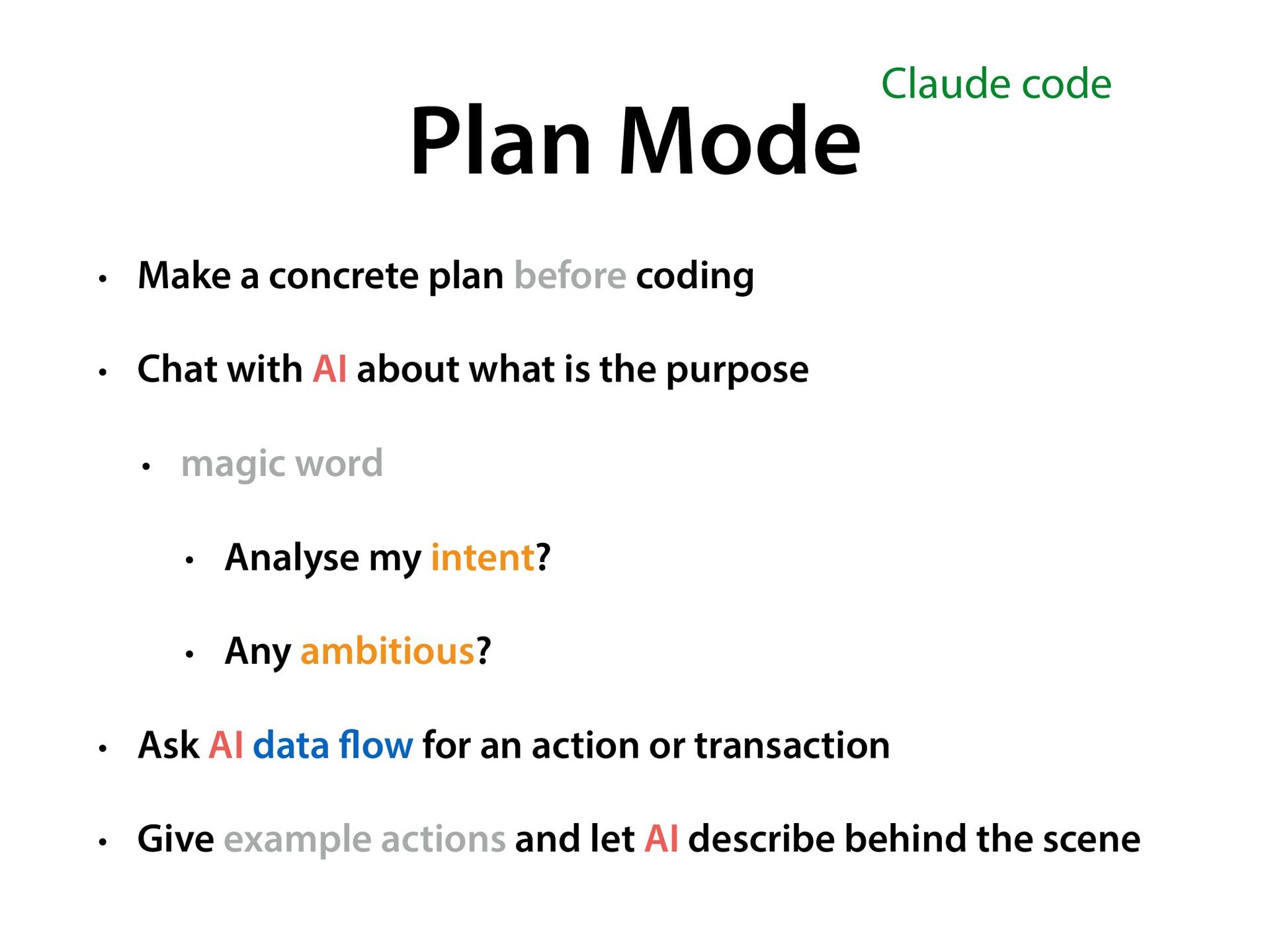
Chat with AI about what is the purpose • magic word • Analyse my intent? • Any ambitious? • Ask AI data fl ow for an action or transaction • Give example actions and let AI describe behind the scene Claude code
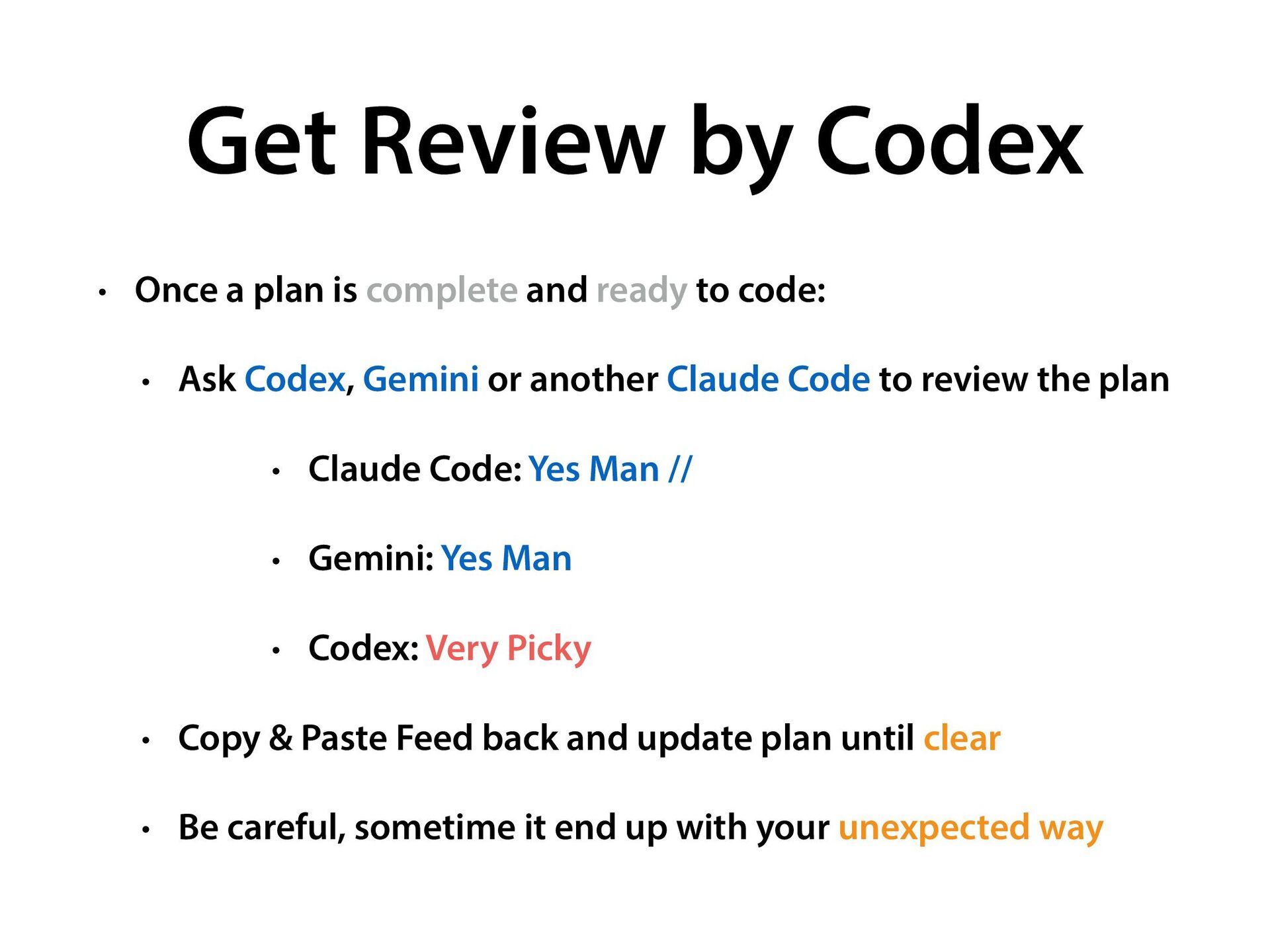
and ready to code: • Ask Codex, Gemini or another Claude Code to review the plan • Claude Code: Yes Man // • Gemini: Yes Man • Codex: Very Picky • Copy & Paste Feed back and update plan until clear • Be careful, sometime it end up with your unexpected way
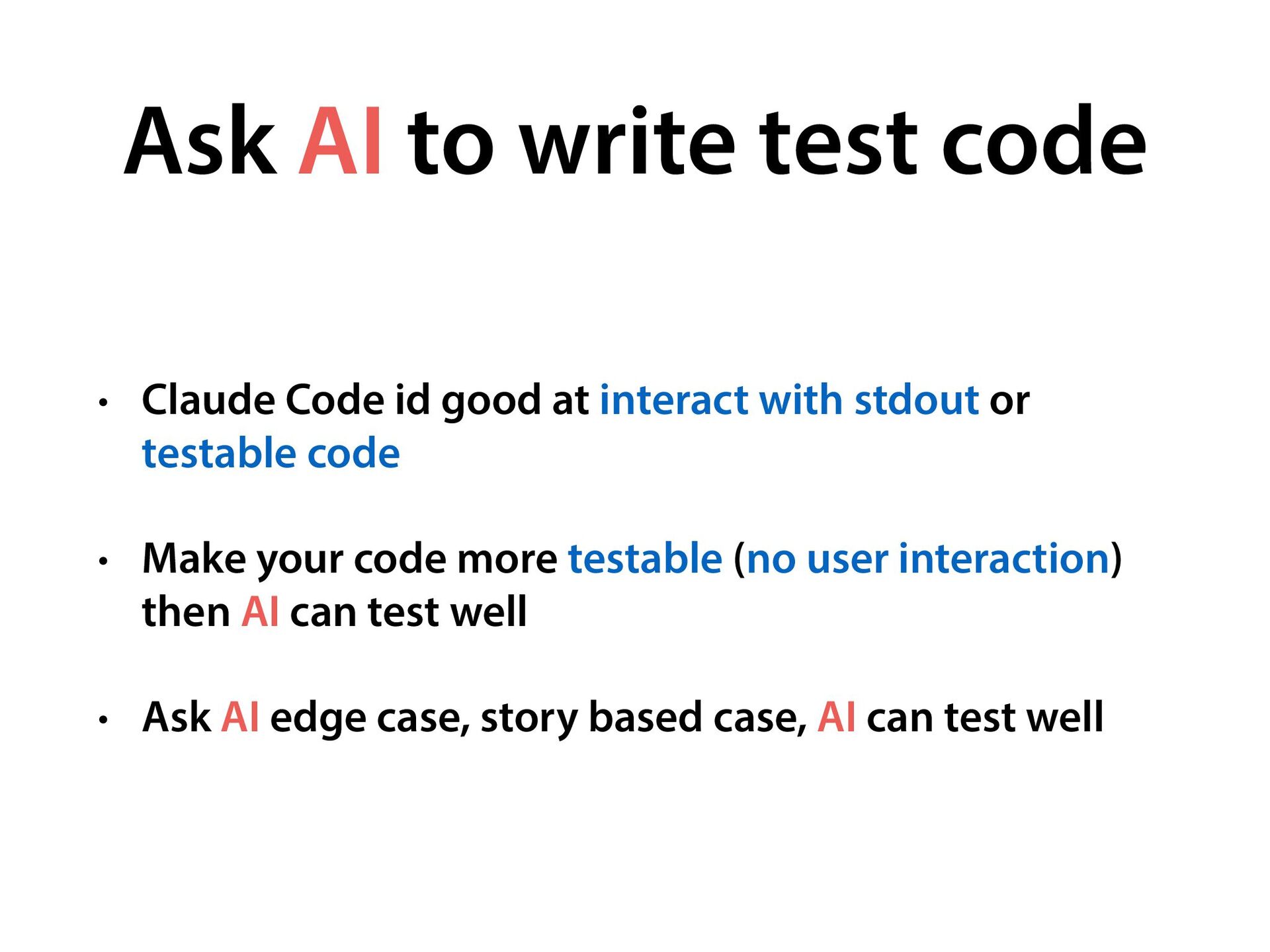
good at interact with stdout or testable code • Make your code more testable (no user interaction) then AI can test well • Ask AI edge case, story based case, AI can test well
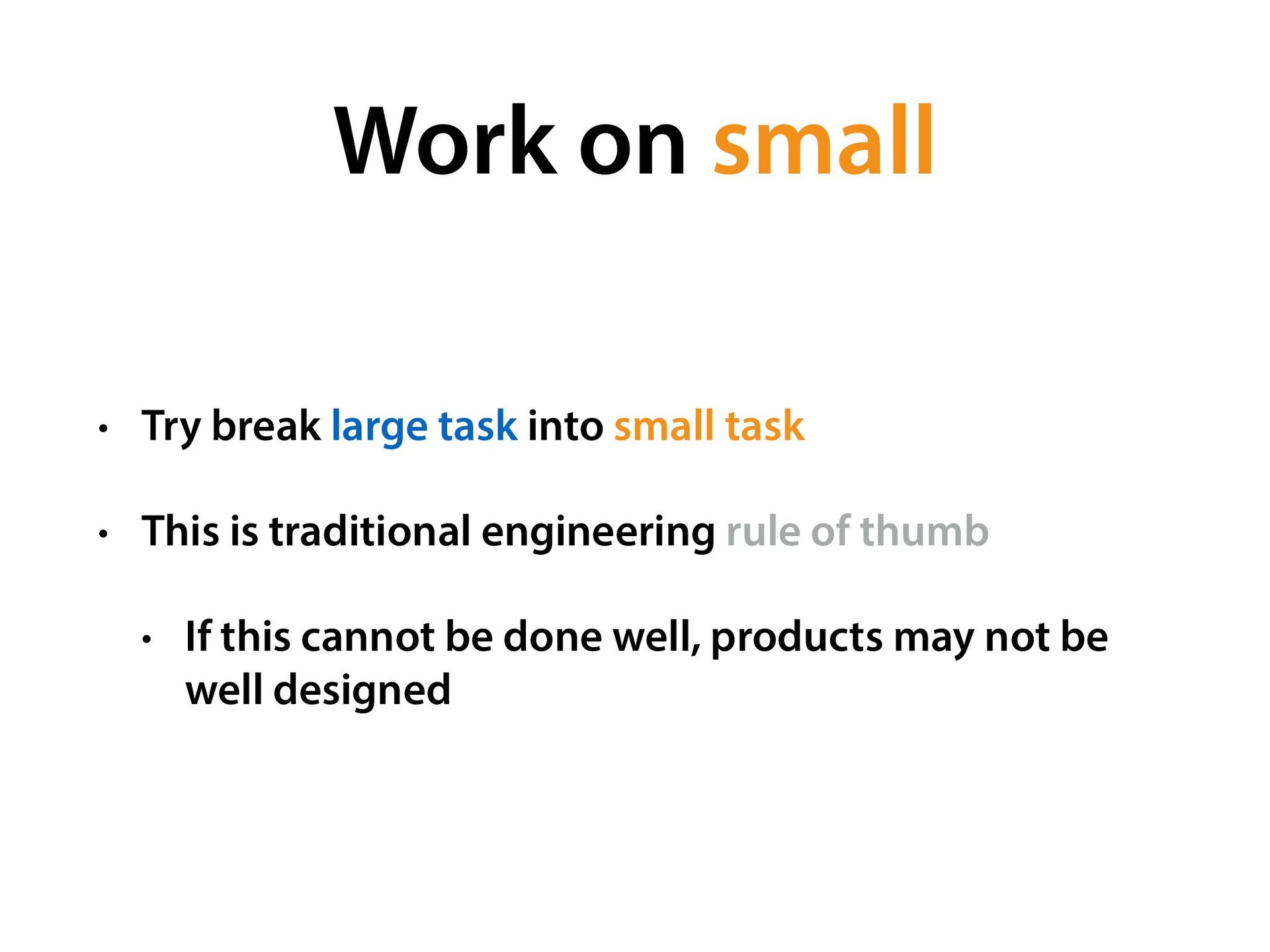
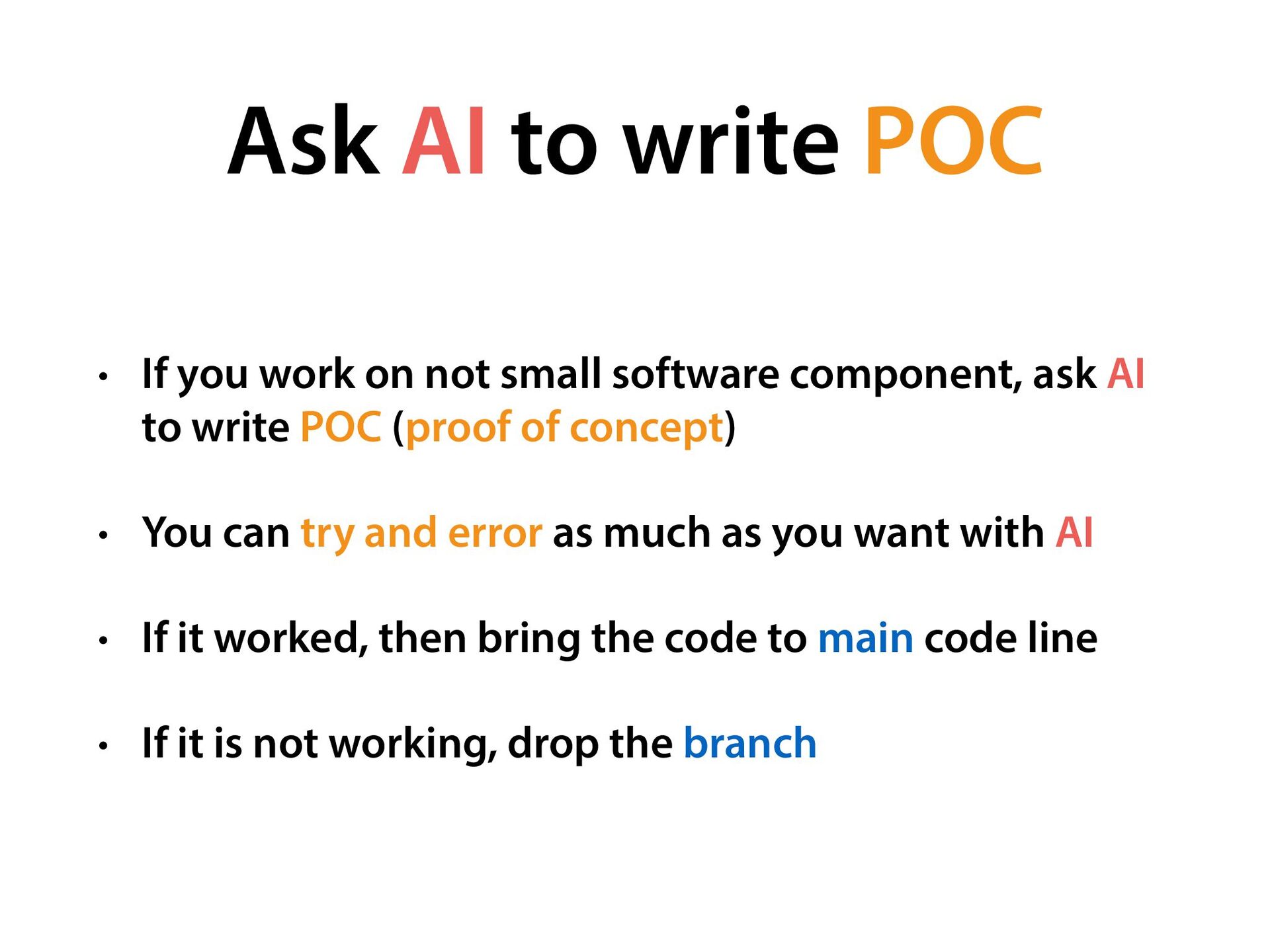
not small software component, ask AI to write POC (proof of concept) • You can try and error as much as you want with AI • If it worked, then bring the code to main code line • If it is not working, drop the branch
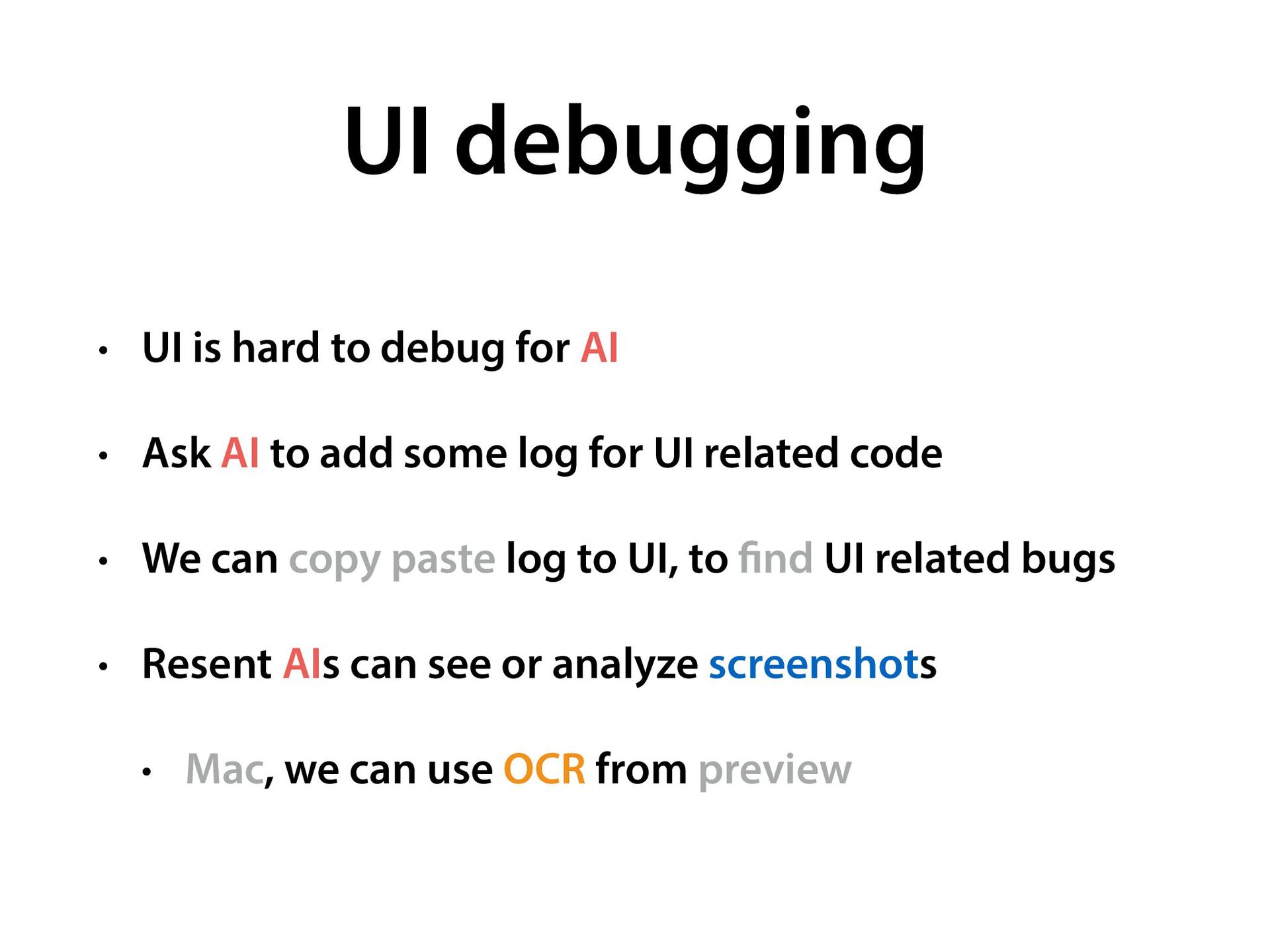
• Ask AI to add some log for UI related code • We can copy paste log to UI, to fi nd UI related bugs • Resent AIs can see or analyze screenshots • Mac, we can use OCR from preview
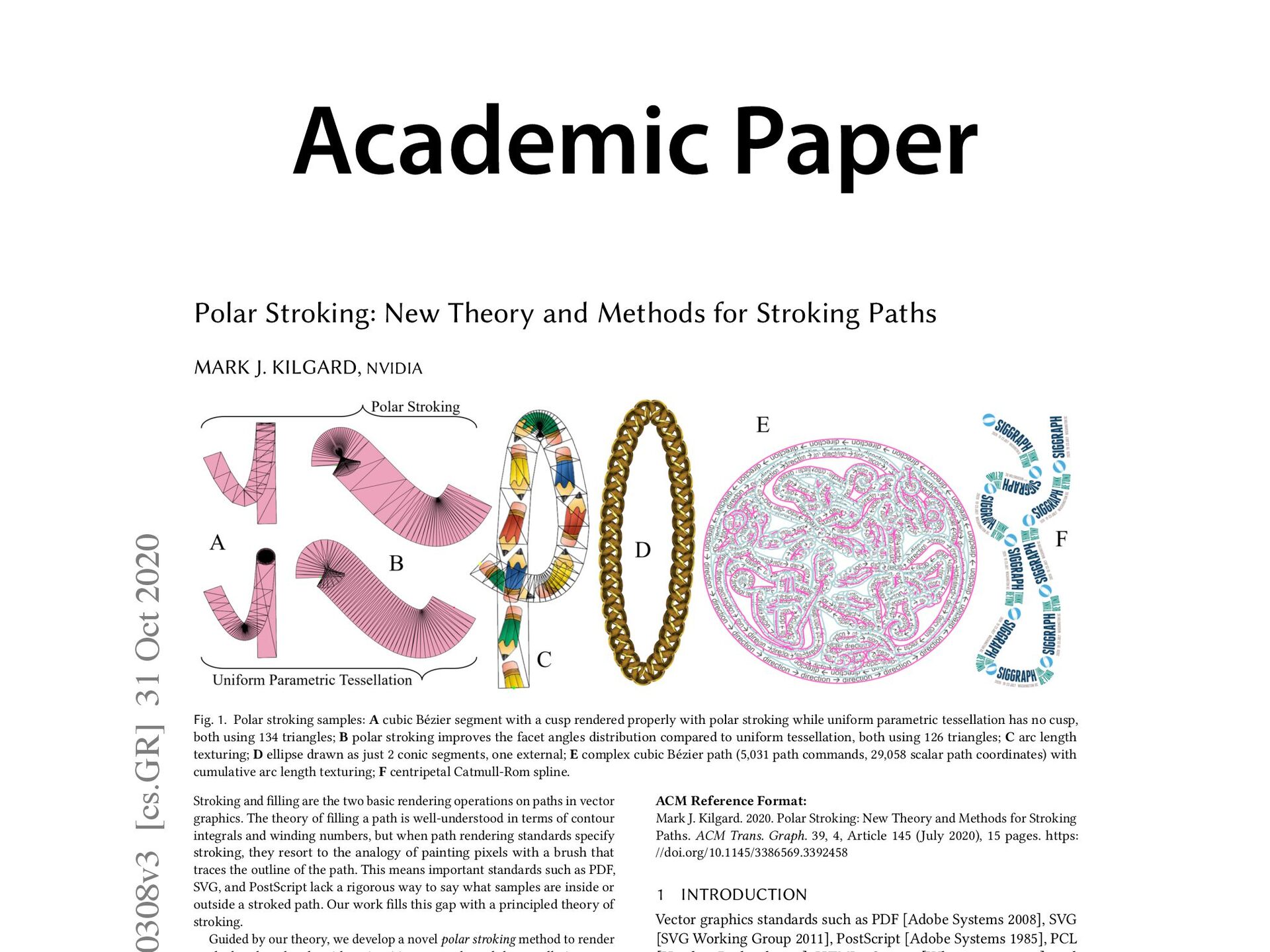
Paths MARK J. KILGARD, NVIDIA Fig. 1. Polar stroking samples: A cubic Bézier segment with a cusp rendered properly with polar stroking while uniform parametric tessellation has no cusp, both using 134 triangles; B polar stroking improves the facet angles distribution compared to uniform tessellation, both using 126 triangles; C arc length texturing; D ellipse drawn as just 2 conic segments, one external; E complex cubic Bézier path (5,031 path commands, 29,058 scalar path coordinates) with cumulative arc length texturing; F centripetal Catmull-Rom spline. Stroking and !lling are the two basic rendering operations on paths in vector graphics. The theory of !lling a path is well-understood in terms of contour integrals and winding numbers, but when path rendering standards specify stroking, they resort to the analogy of painting pixels with a brush that traces the outline of the path. This means important standards such as PDF, SVG, and PostScript lack a rigorous way to say what samples are inside or outside a stroked path. Our work !lls this gap with a principled theory of stroking. Guided by our theory, we develop a novel polar stroking method to render ACM Reference Format: Mark J. Kilgard. 2020. Polar Stroking: New Theory and Methods for Stroking Paths. ACM Trans. Graph. 39, 4, Article 145 (July 2020), 15 pages. https: //doi.org/10.1145/3386569.3392458 1 INTRODUCTION Vector graphics standards such as PDF [Adobe Systems 2008], SVG [SVG Working Group 2011], PostScript [Adobe Systems 1985], PCL 308v3 [cs.GR] 31 Oct 2020
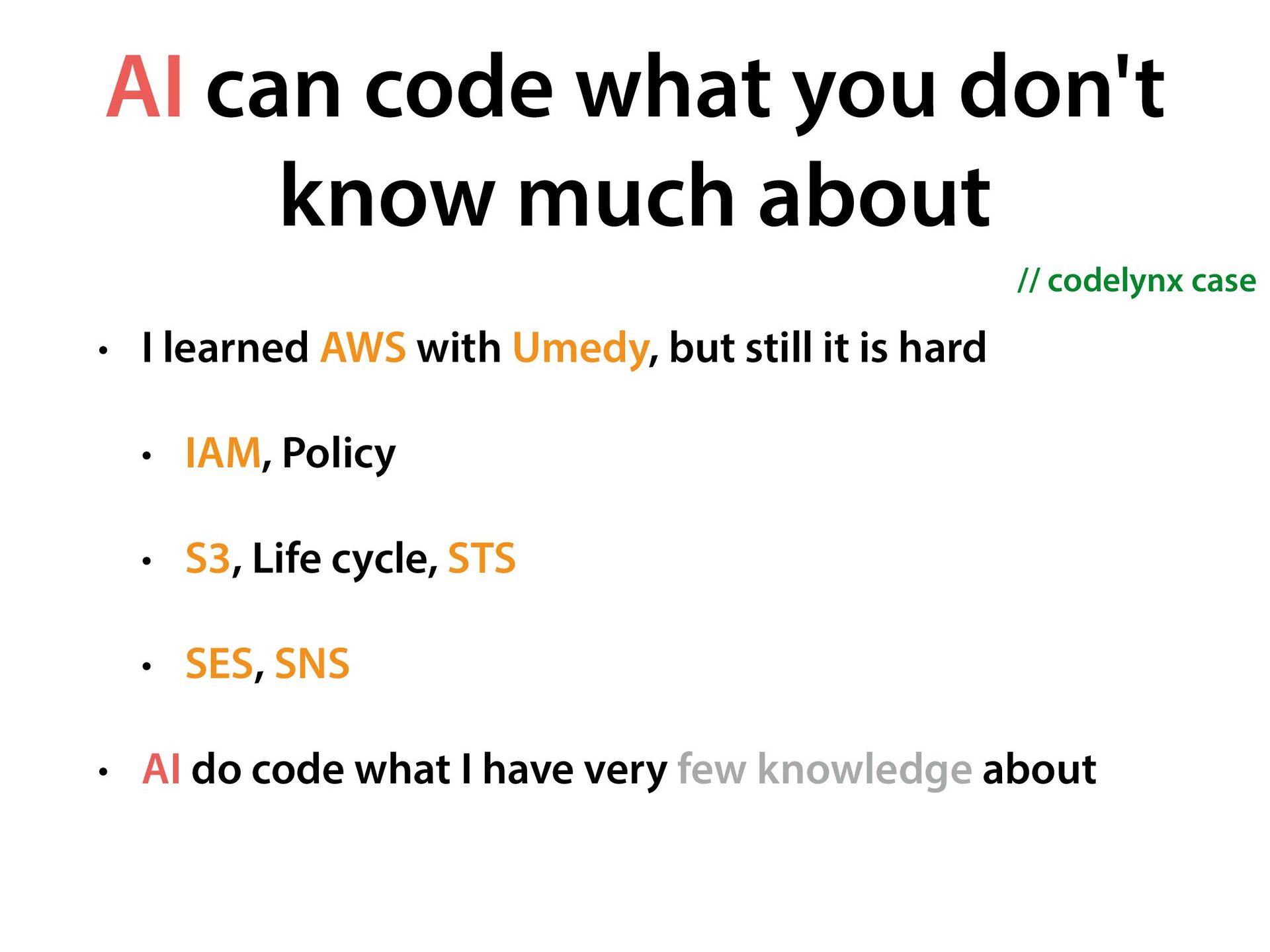
I learned AWS with Umedy, but still it is hard • IAM, Policy • S3, Life cycle, STS • SES, SNS • AI do code what I have very few knowledge about // codelynx case
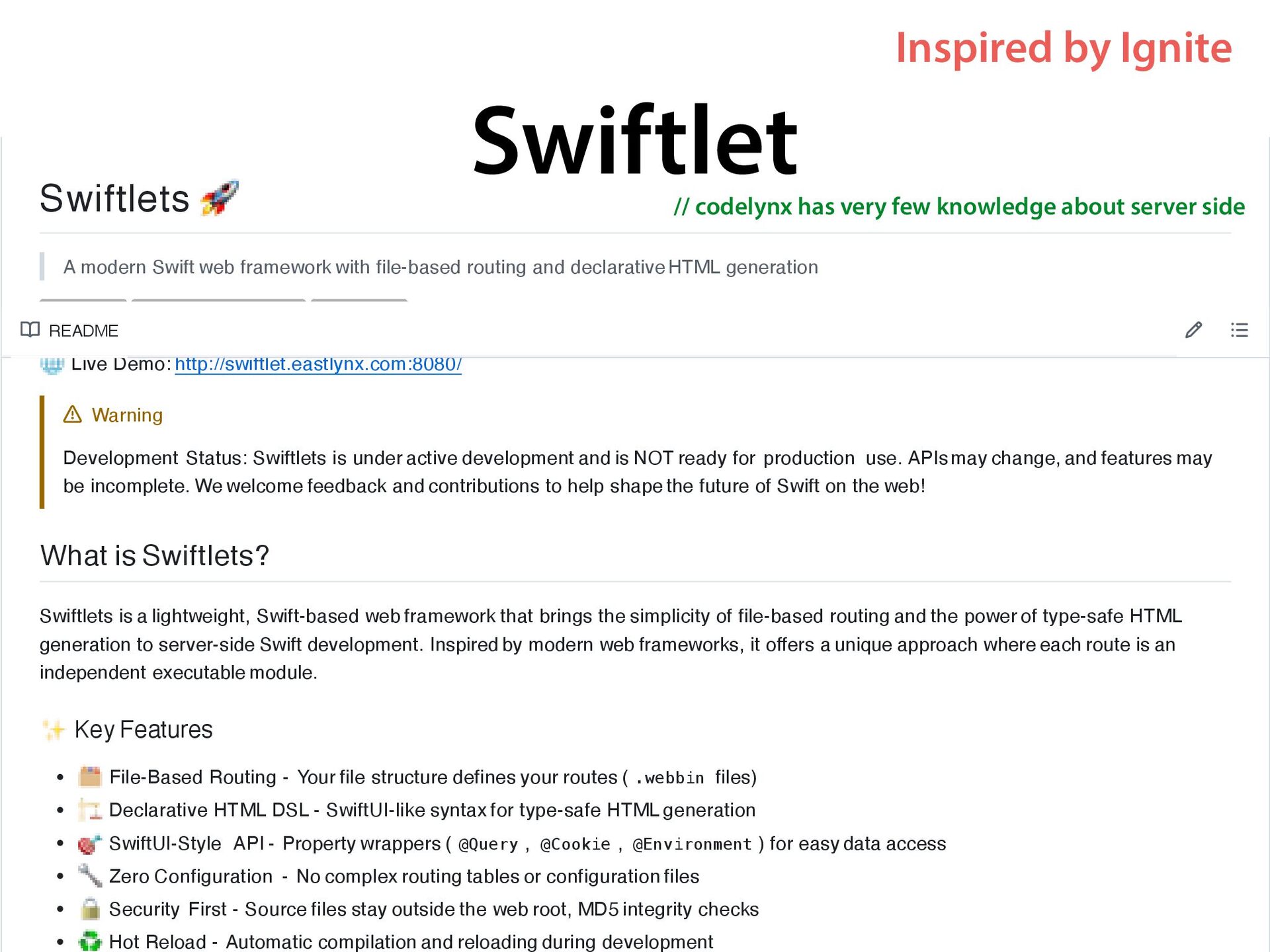
declarative HTML generation Swift Swift 6.0+ 6.0+ Platform Platform macOS | Linux macOS | Linux License License MIT MIT Live Demo: http://swiftlet.eastlynx.com:8080/ Warning Development Status: Swiftlets is under active development and is NOT ready for production use. APIs may change, and features may be incomplete. We welcome feedback and contributions to help shape the future of Swift on the web! Swiftlets is a lightweight, Swift-based web framework that brings the simplicity of file-based routing and the power of type-safe HTML generation to server-side Swift development. Inspired by modern web frameworks, it offers a unique approach where each route is an independent executable module. File-Based Routing - Your file structure defines your routes ( .webbin files) Declarative HTML DSL - SwiftUI-like syntax for type-safe HTML generation SwiftUI-Style API - Property wrappers ( @Query , @Cookie , @Environment ) for easy data access Zero Configuration - No complex routing tables or configuration files Security First - Source files stay outside the web root, MD5 integrity checks Hot Reload - Automatic compilation and reloading during development Swiftlets What is Swiftlets? Key Features README Inspired by Ignite // codelynx has very few knowledge about server side


 codelynx
 soyuka
 nokomoro3
 willnet
 mixplace
 kawashimo0
 naokihaba
 kishida
 y0hgi
y0hgi
 mofurune
 yutobara
 andpad
 ivargrimstad
 jakevdp
 szymonslowik
 palkan
 sarafernandez
 philnash
 productmarketing
 coloredviolet
 mfonobong
 akihiro_kokubo
 tammyeverts
 smashingmag
 inesmontani
![AI & Engineering Kaz Yoshikawa Jan 2026 [email protected]](https://files.speakerdeck.com/presentations/5e6bf098d8db4212822abc1e5e35e87c/slide_0.jpg)







![Thank you Codelynx / Kaz Yoshikawa [email protected]](https://files.speakerdeck.com/presentations/5e6bf098d8db4212822abc1e5e35e87c/slide_38.jpg)