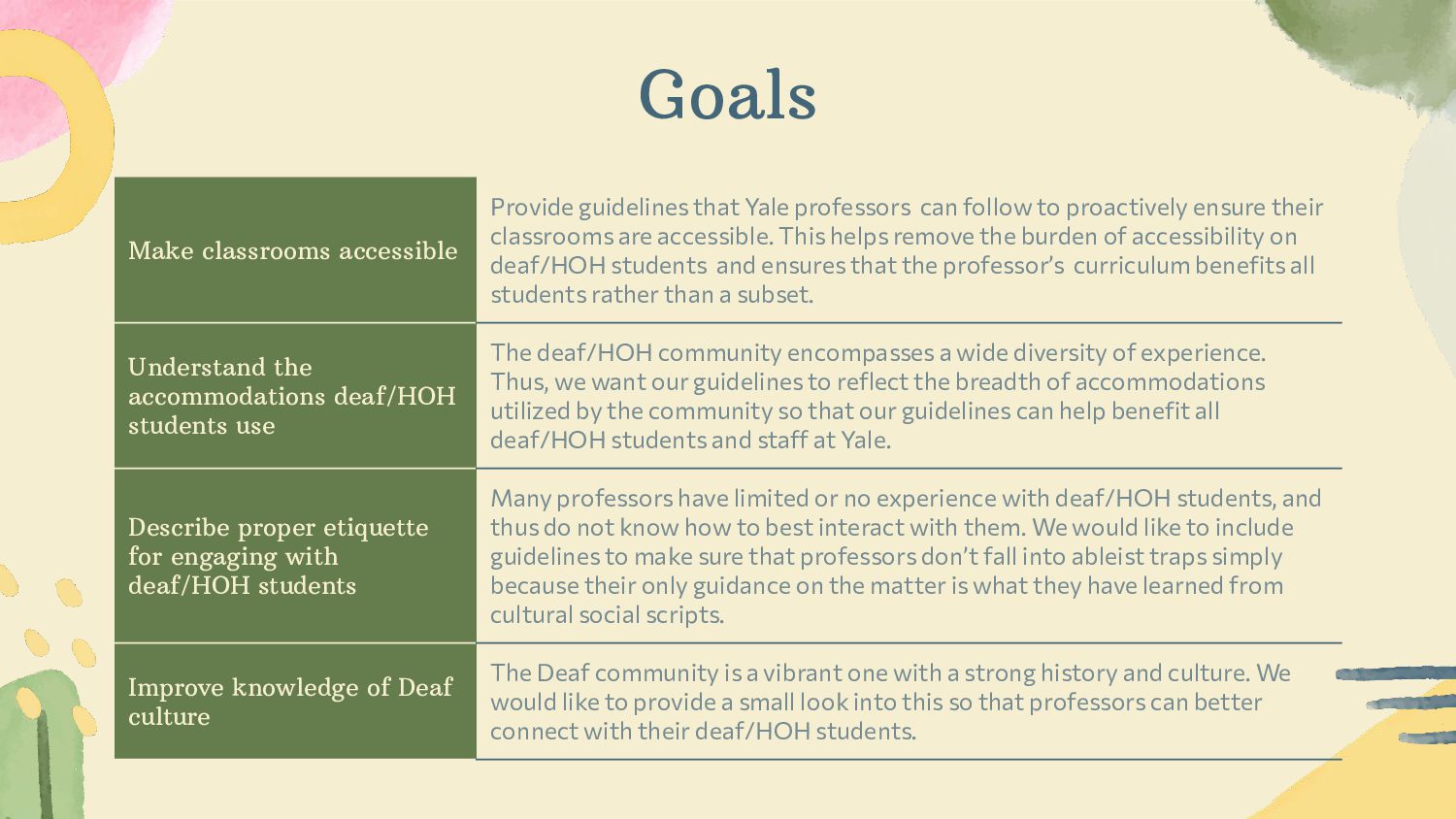
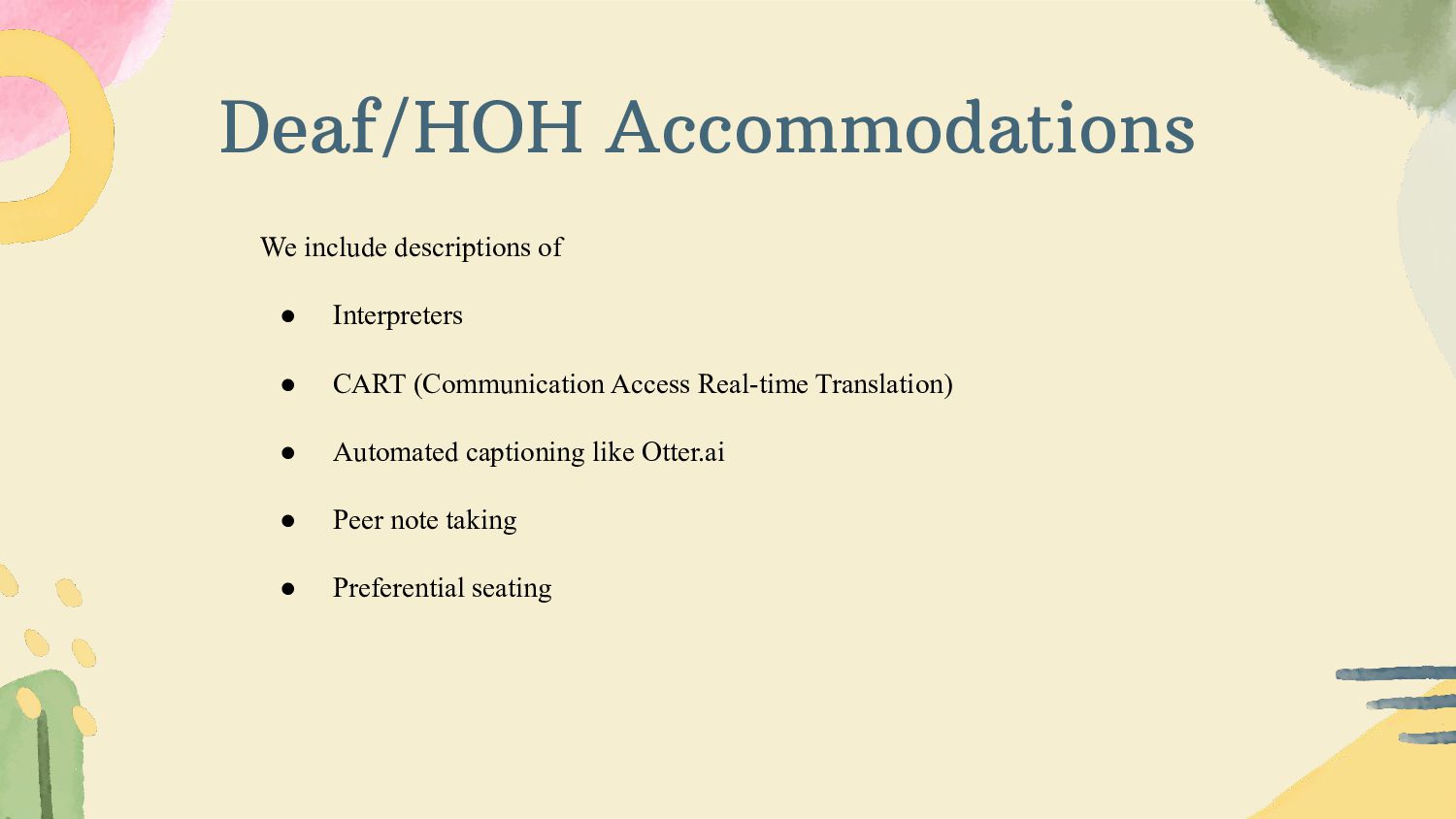
follow to proactively ensure their classrooms are accessible. This helps remove the burden of accessibility on deaf/HOH students and ensures that the professor’s curriculum benefits all students rather than a subset. Understand the accommodations deaf/HOH students use The deaf/HOH community encompasses a wide diversity of experience. Thus, we want our guidelines to reflect the breadth of accommodations utilized by the community so that our guidelines can help benefit all deaf/HOH students and staff at Yale. Describe proper etiquette for engaging with deaf/HOH students Many professors have limited or no experience with deaf/HOH students, and thus do not know how to best interact with them. We would like to include guidelines to make sure that professors don’t fall into ableist traps simply because their only guidance on the matter is what they have learned from cultural social scripts. Improve knowledge of Deaf culture The Deaf community is a vibrant one with a strong history and culture. We would like to provide a small look into this so that professors can better connect with their deaf/HOH students.
students ◦ The continued failure to ensure a smooth start of the semester accommodation-wise ◦ A lack of understanding from professors • The reluctance of some of the administration to support institution wide changes ◦ Yale requires professors and staff to be trained on social topics/issues such as gender and race, but fail to require training on disability.
on videos • Listen Assist System • Learn how to listen to what the student asks for • Circle format for seminars/discussion sections • Learn to repeat student’s answers • Recording lectures
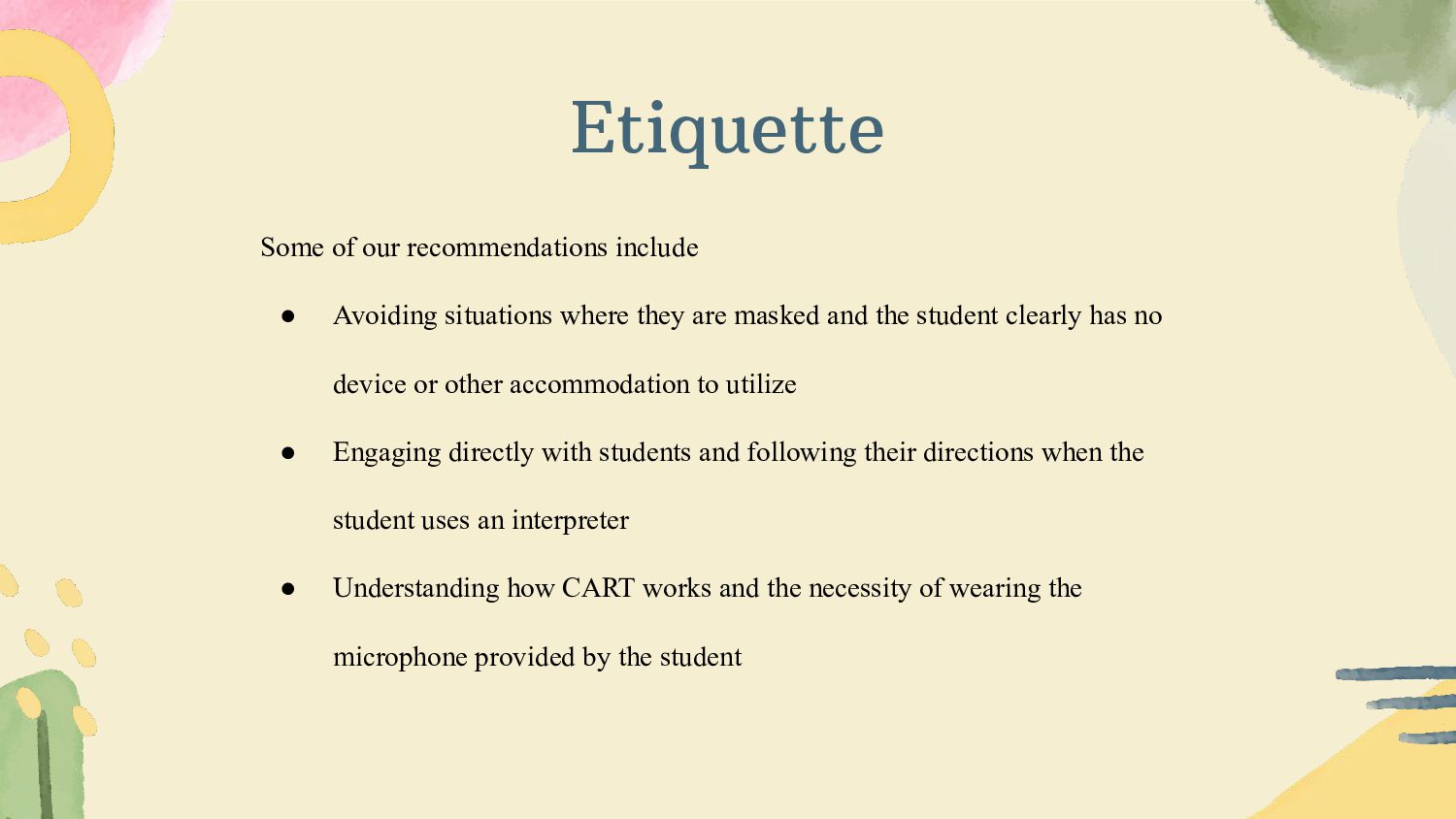
they are masked and the student clearly has no device or other accommodation to utilize • Engaging directly with students and following their directions when the student uses an interpreter • Understanding how CART works and the necessity of wearing the microphone provided by the student
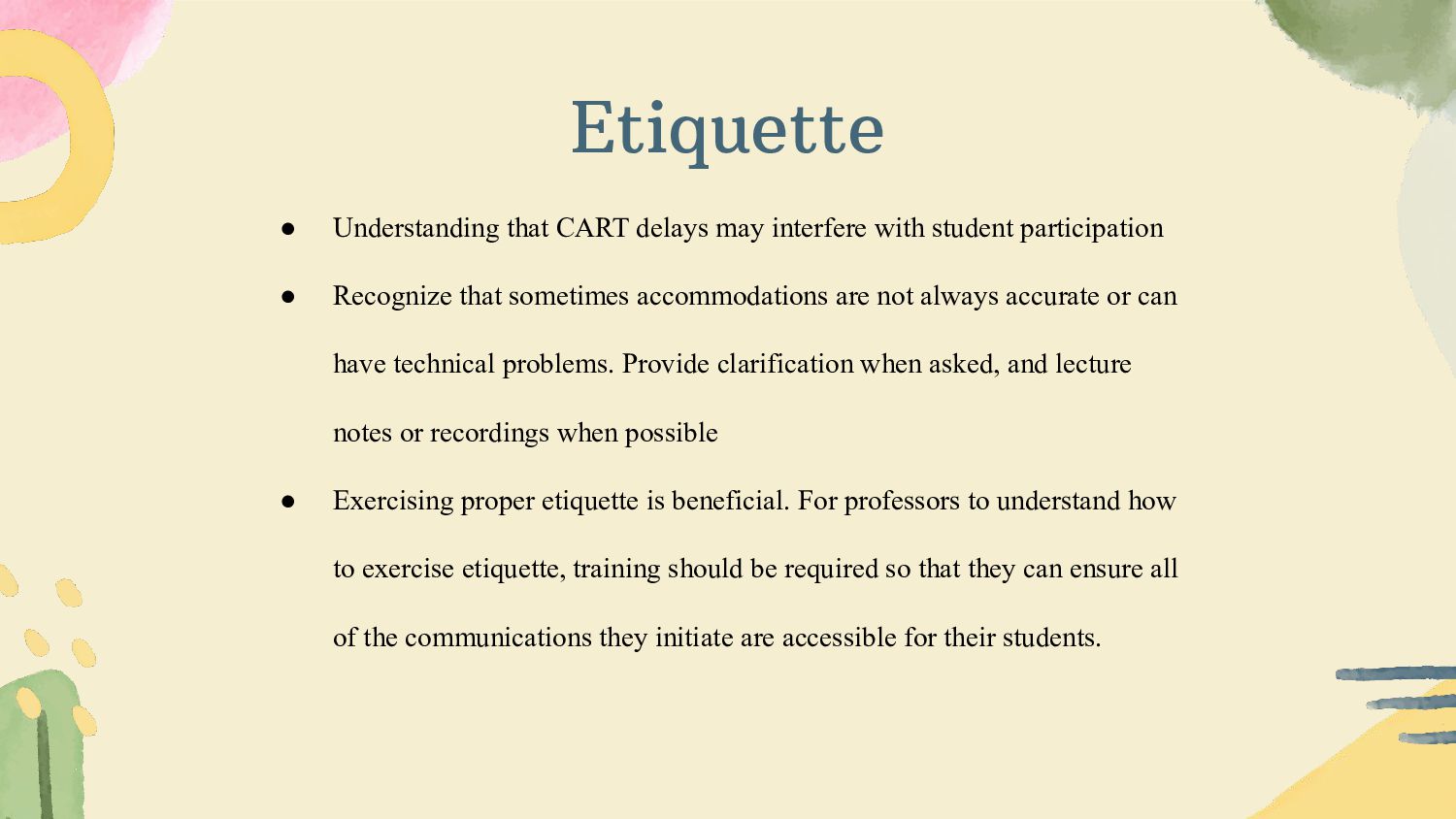
participation • Recognize that sometimes accommodations are not always accurate or can have technical problems. Provide clarification when asked, and lecture notes or recordings when possible • Exercising proper etiquette is beneficial. For professors to understand how to exercise etiquette, training should be required so that they can ensure all of the communications they initiate are accessible for their students.
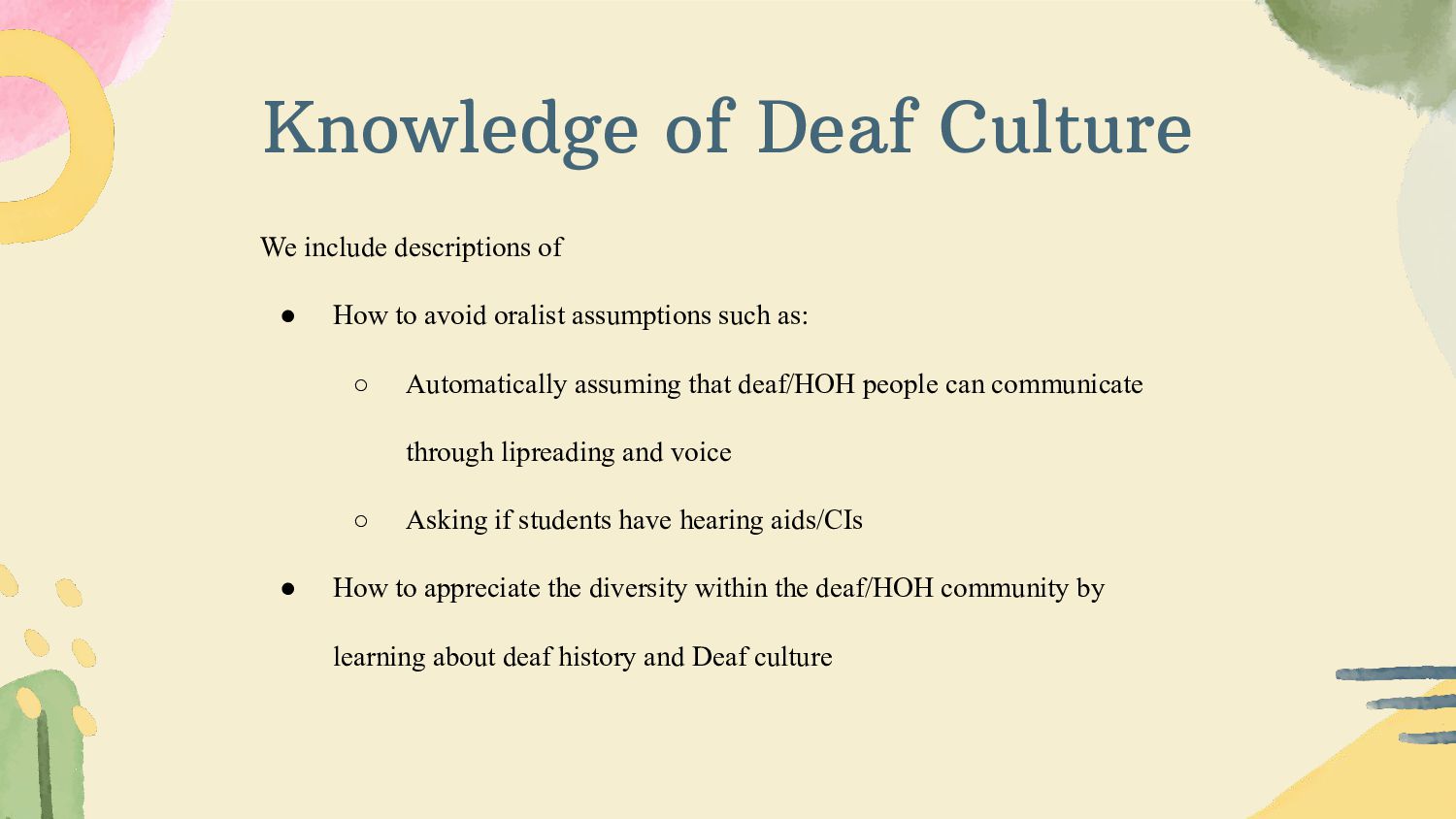
to avoid oralist assumptions such as: ◦ Automatically assuming that deaf/HOH people can communicate through lipreading and voice ◦ Asking if students have hearing aids/CIs • How to appreciate the diversity within the deaf/HOH community by learning about deaf history and Deaf culture
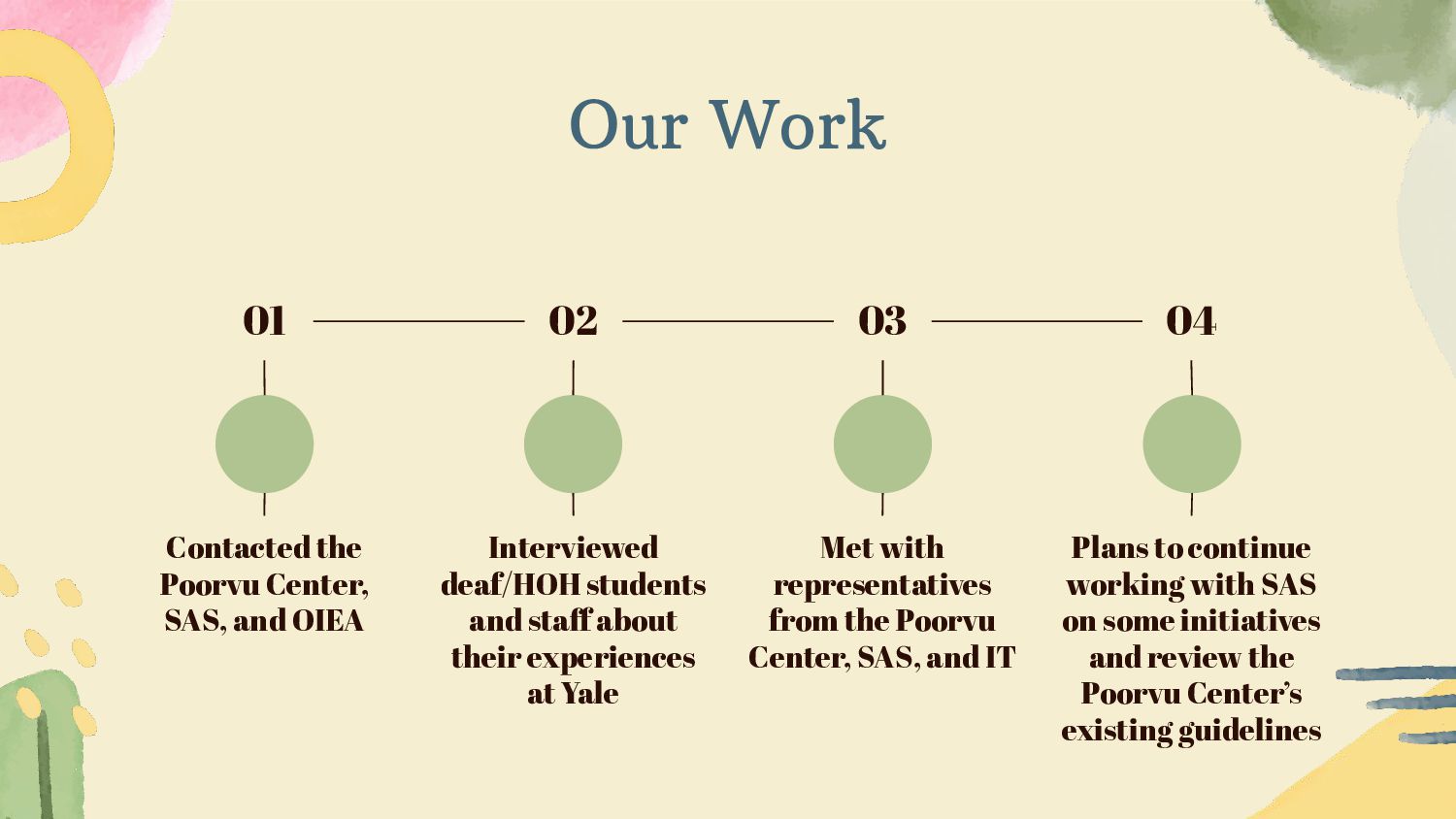
deaf/HOH students and staff about their experiences at Yale Met with representatives from the Poorvu Center, SAS, and IT Plans to continue working with SAS on some initiatives and review the Poorvu Center’s existing guidelines 01 02 03 04


 tmiket
 brettharned
 ianozsvald
 cassininazir
 aleyda
 charlesmeaden
 chrislema
 vanstee
 keavy
keavy
 greggifford
 nmsamuel
 gr2m
gr2m